Follow-up to the STYLIST study (Lifestyle Changes Through the Use of Delivered Meals and Dietary Counseling): the STYLIST EXTENSION study
Tomoyuki U EDA
1), Keita N ODA
1), 2), 3), Fumiaki K IYOMI
2), Toshihiko Y ANASE
4), Keijiro S AKU
1), 5)1)
Graduate School of Medical Sciences of Fukuoka University
2)
Academia, Industry and Government Collaborative Research Institute of Translational Medicine for Life Innovation of Fukuoka University
3)
Clinical Assist Center of Fukuoka University Hospital
4)
Department of Endocrinology and Diabetes Mellitus, Fukuoka University School of Medicine
5)
Department of Cardiology, Fukuoka University School of Medicine
Abstract
Background: The STYLIST study demonstrated that dietary counseling by registered dietitians for 4 to 8 weeks and the use of delivered calorie-controlled meals for 4 weeks significantly decreased body weight (BW) in 187 hypertensive and/or diabetic participants. However, it is unknown whether this beneficial effect persisted after the end of the study.
Methods and results: One hundred three participants in the STYLIST study were followed-up for one year after the end of the study. BW, waist circumference, blood pressure, glycoalbumin and hemoglobin A1c were examined and the participants completed a questionnaire regarding their lifestyle.
BW increased significantly by 1.0kg compared to that one year after the STYLIST study. Especially, BW of 69 participants who showed a decrease in BW at the end of the STYLIST study significantly increased by 1.2kg, while 34 participants who did not show a reduction in BW at the end of the STYLIST study showed an increase in BW of 0.5kg after one year, but this difference was not significant. The questionnaire revealed poor adherence to the lifestyle changes that followed dietary counseling and delivered calorie-controlled meals in the STYLIST study.
Conclusions: These results suggest that the short-term effect of dietary counseling by dietitians and calorie- controlled meals on BW reduction in hypertensive and/or diabetic patients does not persist for one year.
Key words: follow-up study, body weight, delivered meals, dietary counseling, registered dietitians
Introduction
The STYLIST study, which was a multicenter, randomized at outpatient clinics, single-blinded, comparative study, was conducted to determine whether dietary counseling and delivered calorie-controlled meals could be effective for reducing BW
1)Recently, the prevalence of obesity has increased in Japan
2)and other countries. Obesity has been associated with the cardiovascular disease burden and other metabolic disorders including hypertension, dyslipidemias,
diabetes mellitus, and metabolic syndrome
3-5). While similar trials have been performed to study BW reduction
6-13), there are major differences between these trials and the STYLIST study. For example, our subjects did not need to be classified as obese, and only needed to have a BMI of 20 or more. In the STYLIST study, meals were delivered twice a day on weekdays. Meals were calorie-controlled, but not calorie-restricted. Instead, the optimal calorie content was calculated from the ideal BW and physical activity. The results of the STYLIST study indicated that both dietary counseling for 4 to 8 weeks with calorie-controlled meals
Corresponding: Keijiro Saku, MD, FACP, FACC*, Department of Cardiology, Fukuoka University School of Medicine, 7-45-1 Nanakuma Jonan-ku, Fukuoka 814-0180, Japan.
Tel: +81-92-801-1011 E-mail: [email protected]
no counseling with counseling no counseling with counseling
Stylist study
Group A Group B Group C Group D
Ordinary diets(4 weeks)
0 5
= n 0
5
= n 0
5
= n 0
5
= n
Group A Group B Group C Group D
8 4
= n 0
5
= n 5
4
= n 8
4
= n
no counseling no counseling with counseling with counseling
Group A Group B Group C Group D
Delivered meals(4 weeks)
8 4
= n 0
5
= n 5
4
= n 8
4
= n
Group A Group B Group C Group D
8 4
= n 8
4
= n 4
4
= n 7
4
= n
1-year follow-up
Stylist Extension study
Group A Group B Group C Group D
(one year follow-up)
n=27 (one year follow-up)
n=23 (one year follow-up)
n=28 (one year follow-up) n=25
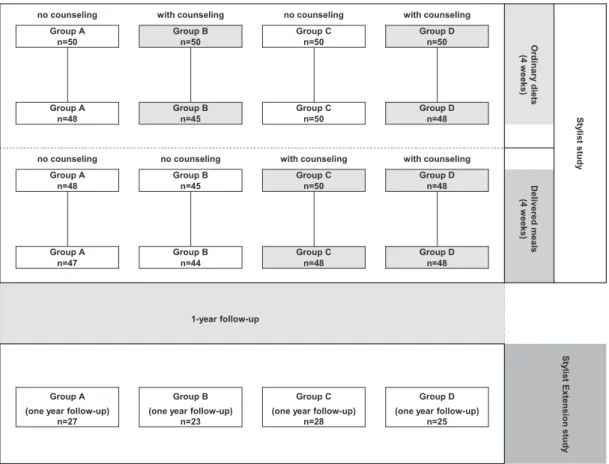
Fig. 1 Flow chart for the participants in the preceding STYLIST study and the STYLIST EXTENSION study.
for 4 weeks significantly reduced BW at the end of the 8-week study period. Additionally, the combination of dietary counseling and calorie-controlled meals decreased blood pressure and glycoalbumin and hemoglobin A1c
(HbA
1c) levels.
Subjects in previous trials that sought to reduce BW have been followed and the persistence of the effectiveness of the particular intervention after a certain interval has been reported
14-19). For many of these trials, the effectiveness of calorie-restriction did not persist for 1 or 2 years after the trial. The aim of the present study was to determine whether the BW reduction observed in the STYLIST study would still be evident one year after the study.
Subjects and Methods
Subjects:
The subjects were recruited from participants in the STYLIST study among out-patients at Fukuoka University Hospital and Yuai Hospital in Fukuoka, Japan. Major inclusion criteria in the STYLIST study were as follows:
type 2 diabetes mellitus ( DM ) including impaired glucose tolerance and/or essential hypertension (HT) , and
aged>= 20 years. Major exclusion criteria in the STYLIST study were as follows: secondary obesity, HbA
1c>12%, BMI<20, and height>1.8m. The protocol was approved by the Independent Review Board of Fukuoka University Hospital [No. 12-12-08]. Exclusion criteria in the STYLIST EXTENSION study were a change in BW caused by newly diagnosed disease including malignancy, a lifestyle change including the smoking status, participation in clinical trials for BW reduction after the STYLIST study, and admission to a hospital for more than 7 days within 3 months before the STYLIST EXTENSION study. Each subject at one year
± 12 weeks after the STYLIST study signed an informed consent form after the protocol was explained in detail.
Finally, 103 subjects were enrolled in this study, 27 from STYLIST group A (no dietary counseling but calorie- controlled meals for 4 weeks) , 23 from group B (dietary counseling from 0 to 4 weeks and calorie-controlled meals for 4 weeks) , 28 from group C (dietary counseling from 4 to 8 weeks and calorie-controlled meals for 4 weeks) , and 25 from D (dietary counseling from 0 to 8 weeks and calorie-controlled meals for 4 weeks) in the STYLIST study
(Fig. 1) .
Table 1. Background of the participants in STYLIST EXTENSION
Group A B C D B+C+D All
N 27 23 28 25 76 103
Age 68.3±9.6 66.6±11.2 68.±9.6 67.±9.9 67.4±10.1 67.7±9.9
Sex
Male 14 12 13 8 33 47
(51.9%) (52.2%) (46.4%) (32%) (43.4%) (45.6)
Female 13 11 15 17 43 56
(48.1%) (47.8%) (53.6%) (68.0%) (56.6%) (54.4%)
BMI 25.8±3.3 26.8±4.2 25.1±2.7 25.7±3.7 25.8±3.4 25.8±3.4
HT 24 18 20 19 57 81
(88.9%) (78.3%) (71.4%) (76.0%) (75.0%) (78.6)
DM 13 9 15 12 36 49
(48.2%) (39.1%) (53.6%) (48.0%) (47.4%) (47.6)
Table 2. Changes in body weight
(kg)in STYLIST EXTENSION during the STYLIST study
(0 weeks vs. 8 weeks)Group n 0w 8w 8w-0w P*
A 27 66.4±9.2 65.9±9.2 -0.5±1.2 0.048*
B 23 70.1±12.7 69.6±13.1 -0.5±1.6 0.152
C 28 64.4±10.8 63.5±10.4 -0.9±1.5 0.004**
D 25 63.5±8.8 63.1±9.1 -0.4±1.8 0.269
B+C+D 76 65.8±11.0 65.2±11.2 -0.6±1.6 0.001**
All 103 66.0±10.6 65.4±10.6 -0.6±1.5 <0.001**
*: paired –test *<0.05 **<0.01
Methods:
After informed consent was obtained, BW, waist circumference, systolic blood pressure (SBP) and diastolic blood pressure (DBP) were measured. Glycoalbumin and HbA
1c were measured by BML Corporation (Fukuoka, Japan) .
Statistics:
Groups B, C and D were merged together to secure the statistical power lost by the decrease in sample size.
This merger was considered to be reasonable because the results in the B+C+D groups were similar at 8 weeks
(STYLIST study) and the differences in both the duration
(4 or 8 weeks) and timing (0-4 weeks, 4-8 weeks or 0-8 weeks) of dietary counseling are expected to have almost no effect on outcomes at one year after the STYLIST study.
Statistical analyses were performed for both group A and groups B+C+D. The BW was also analyzed in all subjects and in each of the four groups.
Continuous variables were reported as the mean and standard deviation, and categorical variables were reported as the number of patients and percentage. The paired t-test was used to compare values at two visits. To explore the reasons for an increase in BW at 1 year, subjects were
classified into “Responder” and “Non-responder”, and the primary endpoint was summarized and analyzed in terms of Responder/Non-responder; Responder: change in BW from 0 to 8 weeks was less than 0 kg, Non-responder:
otherwise. The significance level was set at <0.05. All data analyses were performed using SAS (Statistical Analysis System Version. 9.4, SAS Institute Inc. Cary, NC, USA) .
Results
The STYLIST EXTENSION study recruited 103 patients from the 187 participants in the STYLIST study (Fig. 1) . Table 1 shows the background of each group and the B+C+D groups (dietary counseling and calorie-controlled meals) in the STYLIST EXTENSION study. The average age, sex ratio, BMI, and percentages of HT and DM were similar among the groups.
First, the changes in BW of the participants in STYLIST
EXTENSION were analyzed from 0 to 8 weeks in the
STYLIST study to confirm the efficacies of dietary
counseling and calorie-controlled meals. Groups A and
B+C+D showed significant reductions in BW of 0.5kg
and 0.6kg, respectively (Table 2) . BW at one year after
STYLIST was compared to that at the end of the study.
Table 3. Changes in body weight
(kg)Group n 8w 1y 1y-8w p
A 27 65.9±9.2 66.8±11.3 1.0±6.6 0.459
B+C+D 76 65.2±11.2 66.2±10.8 1.0±3.9 0.024*
All 103 65.4±10.6 66.4±10.9 1.0±4.7 0.032*
*: paired –test *<0.05
Table 4. Changes of body weight
(kg)in response and non-response groups
Group n 8w 1y 1y-8w p
responder 69 64.3±9.0 65.6±10.4 1.2±4.6 0.028*
Non-responder 34 67.5±13.2 68.1±11.8 0.5±5.0 0.532
*: paired –test *<0.05
Responder: Change in body weight from 0w to 8w was less than 0 kg Non-responder: Change in body weight from 0w to 8w was 0 kg and more
Table 5. Data in STYLIST EXTENSION during the STYLIST study
(0 weeks vs. 8 weeks)Group n
#0w 8w 8w-0w P*
Waist circumstance
(cm)
A 22 91.4±7.5 90.5±6.7 -0.9±2.4 0.104
B+C+D 52 92.0±8.2 90.8±7.7 -1.1±3.4 0.020*
SBP
(mmHg) A 22 128.3±13.6 132.4±19.9 4.1±19.7 0.342
B+C+D 56 135.6±15.9 133.0±15.0 -2.6±13.3 0.141
(mmHg) DBP A 22 77.5±10.5 79.6±10.2 2.1±9.5 0.315
B+C+D 56 80.0±8.0 78.3±9.4 -1.8±8.4 0.125
HbA
1C
(%) A 20 5.9±0.7 5.9±0.7 -0.1±0.2 0.09
B+C+D 50 5.7±0.6 5.7±0.5 -0.0±0.2 0.475
Glycoalbumin
(%) A 20 15.8±2.5 15.6±2.4 -0.2±0.7 0.304
B+C+D 70 14.9±2.0 14.7±1.7 -0.2±0.8 0.058
#: number of participants who have data at 0, 8 weeks and 1year
*: paired –test *<0.05
Group A showed an increase in BW of 1.0kg and groups B+C+D showed a significant increase of 1.0kg (Table 3) . Additionally, BW at one year after STYLIST was greater than that at week 0 in the STYLIST study in group A
(+0.4kg) and groups B+C+D (+0.4kg) (Tables 2 and 3) . To observe the rebound after the BW reduction in the STYLIST study, 103 participants were divided into two groups, responders (change in BW from 0 to 8 weeks was less than 0 kg ) and non-responders ( change in BW from 0 to 8 weeks was 0 kg or more) . While the BW in the responder group significantly increased from 64.3kg to 65.6kg (+1.2kg) , the increase in BW in the non-responder group at one year after the STYLIST study (0.5kg) was not significant (Table 4) .
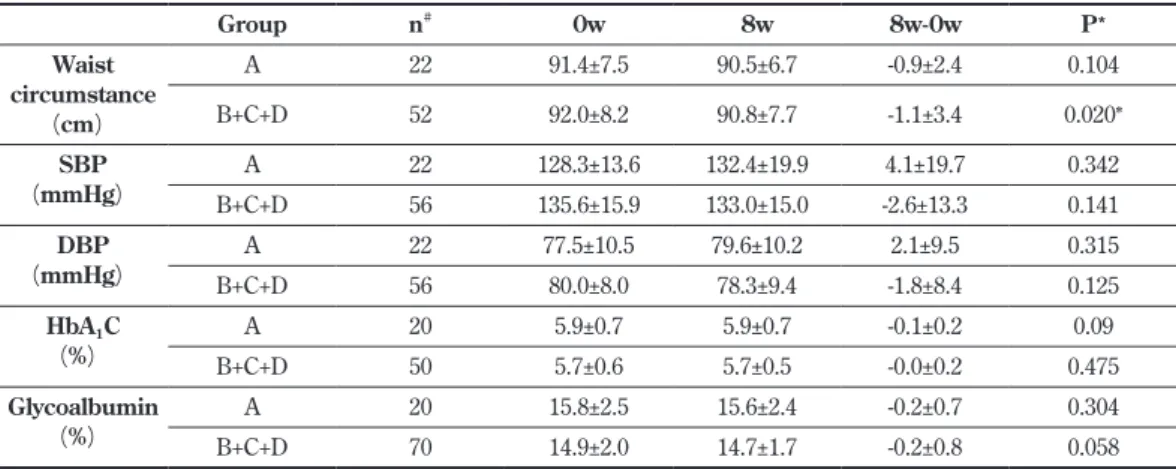
While significant reductions in waist circumference, SBP, DBP, glycoalbumin and HbA
1c were observed in the STYLIST study, only waist circumference showed a
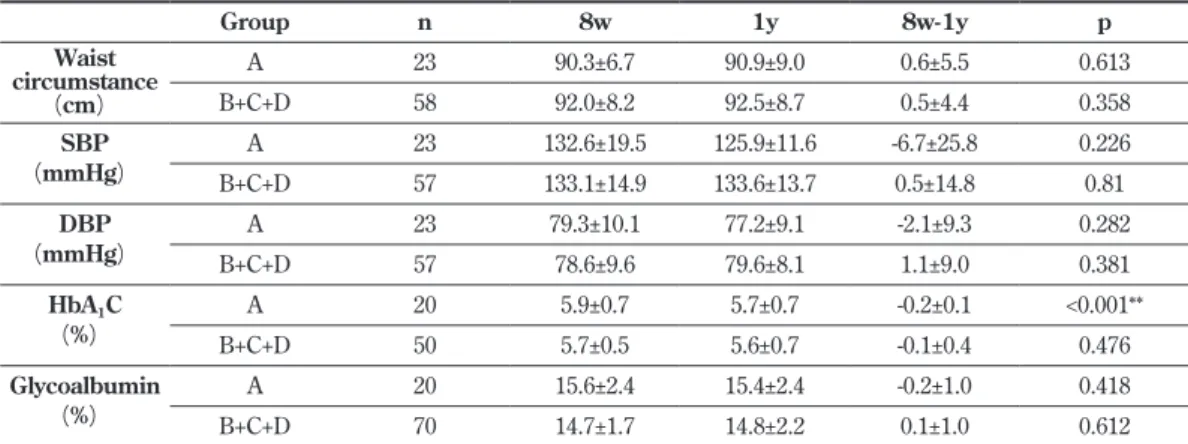
significant reduction in groups B+C+D at the end of the STYLIST study among the participants in the STYLIST EXTENSION study (Table 5) . After one year, there was no change in groups B+C+D (Table 6) . Despite the lack of a significant change in HbA
1c in group A in the STYLIST study, it significantly decreased from 5.9% to 5.7% in STYLIST EXTENSION (Table 6) .
To explore the factors that influenced the change in
BW in the STYLIST EXTENSION study, a questionnaire
survey was performed. Personal attitudes regarding
dietary counseling are summarized in Fig.2A. Q1 and
Q1-1 revealed that 73% of participants in groups B+C+D,
who received dietary counseling for 4 to 8 weeks during
the STYLIST study remembered it and about 80% of them
remembered the details. While group A did not receive
dietary counseling, 43% of participants answered that they
had received this intervention, probably because they
had met with a registered dietitian at the beginning of the
Table 6. Data in the STYLIST EXTENSION study
Group n 8w 1y 8w-1y p
Waist circumstance
(cm)
A 23 90.3±6.7 90.9±9.0 0.6±5.5 0.613
B+C+D 58 92.0±8.2 92.5±8.7 0.5±4.4 0.358
SBP
(mmHg) A 23 132.6±19.5 125.9±11.6 -6.7±25.8 0.226
B+C+D 57 133.1±14.9 133.6±13.7 0.5±14.8 0.81
DBP
(mmHg) A 23 79.3±10.1 77.2±9.1 -2.1±9.3 0.282
B+C+D 57 78.6±9.6 79.6±8.1 1.1±9.0 0.381
HbA
1C
(%) A 20 5.9±0.7 5.7±0.7 -0.2±0.1 <0.001**
B+C+D 50 5.7±0.5 5.6±0.7 -0.1±0.4 0.476
Glycoalbumin
(%) A 20 15.6±2.4 15.4±2.4 -0.2±1.0 0.418
B+C+D 70 14.7±1.7 14.8±2.2 0.1±1.0 0.612
*: paired –test **<0.01
43 57
22 44
33
0 22
67
11 78
33 22
11 73
27 35
43
15 8
39 53
8 89
34
3 39
0 20 40 60 80 100
yes no most some slight none yes yes,at least
initially no meals snacks alcohol exercise
. Did you receive nutritional counseling
during the trial?
1-1. How much of the nutritional counseling do
you remember? 1-2. Is the nutritional counseling still
being followed? 1-3. What aspects of contents the counseling are being followed?
pe rc ent ag e
B+C+D
Fig. 2A Results from self-monitoring questionnaires regarding dietary counseling in groups A and B+C+D. If the answer to Q1 is yes, answers for Q1-1, Q1-2, and Q1-3 were required.
STYLIST study to complete a questionnaire regarding their lifestyle. Only40% of the participants in groups B+C+D remembered the dietary counseling, mainly with respect to meals. The participant personal attitudes regarding calorie- controlled meals are summarized in Fig.2B. Q2 revealed that 76% of the participants in group A and 90% of those in groups B+C+D were satisfied with the volume of calorie- controlled meals. However, Q3 showed that only 10% of the participants in group A and 21% of those in groups B+C+D still had a good sense of the optimal number of calories based on the volume of their calorie-controlled meals. The STYLIST study involved calorie-control, rather than calorie- restriction, and, according to Q4, about 70% of participants in all groups would be willing to participate again in the
STYLYST study.
Discussion
The STYLIST study demonstrated that dietary counseling
by registered dietitians and delivered, calorie-controlled
meals for 4 weeks (groups B+C+D) were effective for
reducing BW in participants with HT and/or DM, while
there was no significant reduction in BW with only delivered,
calorie-controlled meals (group A)
1). Participants in groups
B+C+D showed significant BW reduction at the end of
the STYLIST study. On the other hand, a significant BW
reduction was observed in the STYLIST EXTENSION study
in the 27 patients from STYLIST group A but not in the
24
67
10 10
67
24
67
14 19
10
75
15 21
46
33
73
12 15
0 10 20 30 40 50 60 70 80
small moderate a lot good some no yes no undecided
2. How large were the meals in the lunch and
dinner boxes during the trial? 3. Do you still have a sense of your optimal
number of calories? 4. Would you be willing to participate in a trial like this again?
Pe rc ent ag e
B+C+D
Fig. 2B Results from self-monitoring questionnaires regarding calorie-controlled meals.
original 48 participants in group A in the STYLIST study itself. The reason for this discrepancy is unclear because the age, sex ratio, percentages of HT and DM, and BMI in the STYLIST EXTENSION study was similar to those in the STYLIST study. As the primary endpoint in the STYLIST EXTENSION study, BW had increased by 1.0kg in both group A and groups B+C+D one year after the STYLIST study, i.e., in the absence of any intervention for one year.
This indicated that the effects of dietary counseling for 4 to 8 weeks and delivered, calorie-controlled meals for 4 weeks on BW reduction did not persist for one year, and, in fact, BW increased at one year after the end of the STYLIST study. It has also been demonstrated that short-term dietary counseling was not effective for BW reduction in overweight hypertensive patients
16). In that trial, participants were classified into two groups: those who received dietary counseling four or more times over 4 years and those who received fewer than four consultations over 4 years. As a result, the mean change in BW in the former group (-3.6 kg) was significantly different from that in the latter group (+0.8 kg) .
Based on the results of self-monitoring questionnaires, two explanations were considered for the increase in BW in the STYLIST EXTENSION study. Short-term intervention with nutritional counseling for 4-8 weeks might not be enough because it was remembered by less than 40-50% of participants, and less than 40% among them were following this counseling one year after the STYLIST study. As another possible explanation, short-term intervention with calorie-controlled meals for 4 weeks might not be enough because less than 20% of participants had a good sense of
the calorie content in calorie-controlled meals one year after the STYLIST study, although about 70% of participants felt that calorie-controlled meals were of adequate volume and they experienced almost no discomfort when relying on calorie-controlled meals for 4 weeks.
BW at one year after the STYLIST study had increased by 0.4kg compared to that at week 0 in the STYLIST study in groups A and B+C+D. Based on a sub-analysis of BW, a rebound phenomenon was observed. A regain of 1.2kg of BW in 67% ( 69/103 ) of the participants who showed a BW reduction at the end of the STYLIST study contributed to a significant BW increase one year after the STYLIST study, although the participants were given calorie-controlled, but not calorie-restricted meals, where the optimal calorie count was calculated from the ideal BW and physical activity, and the participants had a mean BMI of 25.8, and thus were not extremely obese.
Many trials on BW reduction have demonstrated that non-pharmacological strategies were effective for weight loss
14-19). However, many clinicians question whether or not the beneficial effects of non-pharmacological strategies persist for the long term. Some studies have shown that the beneficial effects on BW reduction are no longer evident at one or two years after the initial intervention
15). Other trials have shown that BW reduction persists after the initial intervention
18-19). This difference may depend on the presence of an exercise intervention. In the STYLIST study, each participant completed a questionnaire regarding dietary habits and exercise and a registered dietitian provided counseling based on the results of this survey.
However, counseling was focused on the principles of good
nutrition and advice on meal planning, dietary calories, and alcohol consumption, rather than on exercise methods.
While waist circumference in groups C and D, blood pressure in group D, the glycoalbumin level in group C, and HbA
1c in groups B and C were reduced in the STYLIST study, the participants in the STYLIST EXTENSION study only maintained a significant reduction in waist circumference in groups B+C+D. After one year, there was no change in waist circumference in groups B+C+D, while there was a further significant decrease in HbA
1c in group A. The reason for this reduction in HbA
1c is unclear because there was no significant change in glycoalbumin, medication for DM was increased in only one patient in group A, and the influence on BW reduction at one year after the STYLIST study was eliminated by the exclusion criteria. In addition, the beneficial effects on blood pressure and glucose metabolism observed in the STYLIST study did not persist for one year, probably due to an increase in BW.
In conclusion, the reduction in BW due to dietary counseling by registered dietitians for 4 to 8 weeks and the use of calorie-controlled meals for 4 weeks did persist for one year, and a rebound increase in BW was observed at one year after these interventions in HT and/or DM patients with BMI of 25.8. Short-term intervention with both nutritional counseling and calorie-controlled, but not calorie-restricted, meals might not be enough to maintain a reduction in BW for the long term, even in patients without extreme obesity.
Limitations
The recruitment rate in STYLIST EXTENSION from the STYLIST study was only 55%. Therefore, some statistical power was lost. Since STYLIST EXTENSION was a cross- sectional study, individual changes in lifestyle were not followed-up continuously for one year and might not have been evaluated correctly by the self-monitoring questionnaires at one year after the STYLIST study. Since the STYLIST EXTENSION study did not survey the details of the participant’s lifestyles, including meals, snacks, alcohol, and exercise, objective parameters could not be compared to those in the STYLIST study.
References
1) Noda K, Zhang B, Iwata A, Nishikawa H, Ogawa M, Nomiyama T, Miura S, Sako H, Matsuo K, Yahiro E, et al. Lifestyle changes through the use of delivered meals and dietary counseling in a single-blind study. The STYLIST study・Circ J.; 76 (6) , 1335-44, 2012.
2) Ministry of Health Labour and Welfare of Japan.
Japanese obesity. http://www.Mhlw.Go.Jp/topics/
bukyoku/kenkou/seikatu/himan/number.html. 2009
(accessed January 9, 2012) .
3) Krauss RM, Winston M, Fletcher BJ, Grundy SM.
Obesity ・ Impact on cardiovascular disease. Circulation 98: 1472-1476, 1998.
4) De Bacquer D, Dallongeville J, Heidrich J, Kotseva K, Reiner Z, Gaita D, et al. Management of overweight and obese patients with coronary heart disease across Europe・ Eur J Cardiovasc Prev Rehabil 17: 447-454., 2010.
5) Mitsutake R, Miura S, Kawamura A, Saku K. Are metabolic factors associated with coronary artery stenosis on MDCT? ・Circ J 73: 132-138, 2009.
6) Anderson JW, Fuller J, Patterson K, Blair R, Tabor A.
Soy compared to casein meal replacement shakes with energy-restricted diets for obese women: Randomized controlled trial・Metabolism 56: 280-288, 2007.
7) Takahira M, Noda K, Fukushima M, Zhang B, Mitsutake R, Uehara Y, et al. Randomized, double- blind, controlled, comparative trial of formula food containing soy protein vs. milk protein in visceral fat obesity・Flavo study. Circ J 75: 2235-2243, 2011.
8) Jebb SA, Ahern AL, Olson AD, Aston LM, Holzapfel C, Stoll J, et al. Primary care referral to a commercial provider for weight loss treatment versus standard care・A randomised controlled trial. Lancet. 2011: 378:
1485-1492, 2011.
9) Mensink RP, Katan MB. Effect of dietary fatty acids on serum lipids and lipoproteins. A meta-analysis of 27 trials・Arterioscler Thromb. 12: 911-919, 1992.
10 ) Campbell N, Correa-Rotter R, Neal B, Cappuccio FP.
New evidence relating to the health impact of reducing salt intake・Nutr Metab Cardiovasc Dis. 1992; 21: 617- 619, 1992.
11) (JASSO) JSftSoO. Guideline of the treatment of obesity. 2006:
12) Li Z, Maglione M, Tu W, Mojica W, Arterburn D,
Shugarman LR, et al. Meta-analysis: Pharmacologic
treatment of obesity・Ann Intern Med. 142: 532-546,
2005.
13) Johnston HJ, Jones M, Ridler-Dutton G, Spechler F, Stokes GS, Wyndham LE. Diet modification in lowering plasma cholesterol levels・A randomised trial of three types of intervention. Med J Aust. 162: 524-526, 1995.
14) Katsuura T, Migita , Hoshimo A , Watanabe Y , Correlation between alteration of lifestyle and changes in obesity or risk factors of lifestyle-related disease・
Journal of Japan Health Medicine Association, 9 ( 1 ) :25- 37,2000.
15) Miura J, Arai K, Tsukahara S, Ohno M, Ikeda Y.
The long term effectiveness of combined therapy by behavior modification and very low calorie diet: 2 years follow-up・Int J Obesity,13 (2) : 73-77, 1989.
16) Torres M, Ferreira T, Nogueira L, Carvalho D, Sanjuliani A, Dietary counseling on long-term weight loss in overweight hypertensive patients・Clinics (Sao
Paulo) , 66 (10) : 1779-1785, 2011.
17) Wing RR, Blair E, Marcus M, Epstein LH, Harvey J, Yearlong weight loss treatment for obese patients with Type II diabetes: Does inclusion of an intermittent very low calorie diet improve outcome ?・Am J Med, 97, 354-360, 1994.
18) Pascale RW, Wing RR, Butler BA, Mullen M, Bononi P, Effects of a behavioral weight loss program stressing calorie restriction versus calorie plus fat restriction in obese individuals with NIDDM or a family history of diabetes・Diabetes Care, 18, (9) , 1241-1248, 1995.
19) Mitsuhashi E, Jung SL, Kawakubo K, Body weight fluctuation and LIFE-STYLE change after short-term weight reduction programs ・ Jpn J Public Health, 50 (2) , 136-145, 2003.
(平成 28.8.25 受付,平成 28.9.28 受理)
「The authors declare no conflict of interest.」