The Split Intransitivity Hierarchy in Second
Language Acquisition of English:An
Experimental Investigation
著者
Wu Lili
学位授与機関
Tohoku University
学位授与番号
11301
Doctoral Dissertation
The Split Intransitivity Hierarchy in Second
Language Acquisition of English: An Experimental
Investigation
(第二言語としての英語習得における自動詞階層--実証研究--)
Wu Lili
i
Acknowledgments
It is my great pleasure to acknowledge those people who have provided me support and encouragement in the process of writing this dissertation. Without their help, this dissertation would not have been possible.
First and foremost, I would like to express my sincere gratitude to my supervisor, Professor Naoyuki Ono, who has helped me with his consistent support, kind encouragement, and constant guidance throughout this study. Whenever I feel upset and confused, he always encourages me to stay positive and trust myself. His encouragement and trust have helped me overcome many difficulties at the different stages of my research.
I am also deeply grateful to my sub-supervisor Professor Daiko Takahashi for his dedicated support and careful guidance. He has spent time reading my dissertation and giving me valuable comments and advice. I have benefited a lot working as his TA for the syntax course, and it was him who first inspired my interest in the study of generative syntax with wonderful lectures in his class.
My appreciation also goes to Professor Takeshi Nakamoto, who is the member of the dissertation committee, for his effort in reading my dissertation and giving me valuable feedback for improvement. My gratitude is also due to Professor Mariko Nakayama, who has helped me with her patience and kindness. She has generously provided me enlightening suggestions and insightful comments on the research design and data analysis of my dissertation. My gratitude also goes to Professor Ryan Spring, who has helped me in data collection and data analysis.
ii
I would also like to thank all my friends, professors, and faculty members of the department of language sciences, Graduate School of International Cultural Studies at Tohoku University. Thanks go to all of them, and I am sorry that I cannot thank them all by name here.
Finally, I wish to thank my family, including my parents and my parents-in-law, for being so understanding and supportive in the past three years. I would also like to express my deepest love and thanks to my husband and my son, who have constantly reminded me the meaning of life.
iii
Table of Contents
Acknowledgments ... i
Table of Contents ... iii
List of Abbreviations ... vi
List of Tables ... vii
List of Figures ... viii
Chapter 1 Introduction... 1
-1.1 Research Background ... - 1 -
1.1.1 Universal Grammar and Language Acquisition ... - 1 -
1.1.2 Split Intransitivity ... - 3 -
1.1.3 Research Gaps ... - 5 -
1.2 Purposes of the Study ... - 9 -
1.3 Research Questions and Hypotheses ... - 10 -
1.4 Organization of the Dissertation ... - 12 -
Chapter 2 Review of Related Literature ... 14
-2.1 The Unaccusative Hypothesis ... - 14 -
2.2 The Split Intransitivity Hierarchy ... - 20 -
2.3 Syntactic Evidence for Split Intransitivity ... - 23 -
2.3.1 Prenominal Past Participles ... - 23 -
2.3.2. The For Hours Constructions ... - 26 -
2.4 Previous L2 Acquisition Studies on Split Intransitivity ... - 29 -
2.4.1 Previous Studies on the Core-peripheral Distinction... - 29 -
2.4.2 Previous Studies on Overpassivization... - 37 -
2.5 Summary and Unresolved Problems ... - 50 -
Chapter 3 Acquiring the CorePeripheral Distinction in English Split Intransitivity 54 -3.1 Introduction ... - 54 -
iv
3.2.1 Participants ... - 57 -
3.2.2. Task and Materials ... - 58 -
3.2.3 Procedure ... - 63 -
3.3 Results ... - 64 -
3.3.1 Results for PPPs ... - 65 -
3.3.2 Results for the For Hours Constructions ... - 74 -
3.2.3 Summary of Results ... - 86 -
3.4 Discussion ... - 86 -
3.4.1 L2 Acquisition of the Syntactic UA-UE Distinction ... - 87 -
3.4.2 L2 Acquisition of the Semantic Core-Peripheral Distinction ... - 94 -
3.2.3 Primacy of Core verbs in L2 Acquisition ... - 101 -
3.5 Summary ... - 106 -
Chapter 4 Telicity and Animacy Effects on the Overpassivization Tendency of Intransitive Verbs ... 107
-4.1 Introduction ... - 107 -
4.2 Methodology ...- 113 -
4.2.1 Participants ...- 113 -
4.2.2 Task ...- 114 -
4.2.3. Materials and Design ...- 116 -
4.2.4 Procedure and Scoring ... - 122 -
4.3. Results ... - 123 -
4.3.1 Results for UA Verbs ... - 123 -
4.3.2 Results for UE Verbs ... - 133 -
4.3.3 Results for UAs and UEs ... - 140 -
4.4 Discussion ... - 151 -
4.4.1 Telicity Effect ... - 151 -
4.4.2 Animacy Effect ... - 159 -
4.4.3 The SIH Effect ... - 164 -
v
Chapter 5 Conclusion ... 169
-5.1 Summary of Major Findings of the Present Study ... - 169 -
5.1.1 Summary of Chapter 3... - 169 -
5.1.2 Summary of Chapter 4... - 171 -
5.2 Implications ... - 175 -
5.2.1 Implications for Split Intransitivity ... - 175 -
5.2.2 Implications for the Overpassivization Tendency ... - 176 -
5.2.3 Implications for L2 Acquisition ... - 179 -
5.3 Future Work ... - 181 -
References ... 184
Appendixes ... 192
-Appendix A ... - 192 -
vi
List of Abbreviations
ALTE Association of Language Testers in Europe ASH Auxiliary Selection Hierarchy
ASP aspect CL classifier D-structure deep structure DUR durative
GB Government and Binding L1 first/native language
L2 second/non-native language
NOM nominalization particle (de)/nominative case (ga) NP noun phrase
NQ numeral quantifier PP prepositional phrase PPPs prenominal past participles PERF perfective
QPT Quick Placement Test SV subject-verb
SIH split intransitivity hierarchy TP tense phrase
UA unaccusative UE unergative
UTAH Uniformity of Theta Assignment Hypothesis UG Universal Grammar
V verb
VP verb phrase VS verb-subject
vii List of Tables
Table 3.1 Number of participants by proficiency level ... - 58 -
Table 3.2 Experiment templates used in the experiment ... - 59 -
Table 3.3 Intransitive verbs used in the experiment ... - 60 -
Table 3.4 Frequency of verbs in the past tense ... - 62 -
Table 3.5 Frequency of verbs in the present tense ... - 63 -
Table 3.6 Mean scores of the three groups in judging PPPs with core and peripheral UAs and UEs... - 66 -
Table 3.7 Mean acceptability judgments on the control structure (the NP-V order) ... - 76 -
Table 3.8 Mean acceptability judgments on the for hours constructions ... - 79 -
Table 4.1 Participants’ background information and proficiency scores ... - 114 -
Table 4.2 Intransitive verbs used in the experiment ... - 117 -
Table 4.3 Frequency of verbs in the past tense ... - 117 -
Table 4.4 Frequency of verbs in the present tense ... - 118 -
Table 4.5 Correct response rates by condition and proficiency level ... - 124 -
Table 4.6 Effects of groups, SIH types, causation types, animacy types, and interactions - 127 - Table 4.7 Correct response rates by condition and proficiency level ... - 133 - Table 4.8 Effects of groups, SIH types, causation types, animacy types and interactions - 136 -
viii List of Figures
Figure 2.1 The Split Intransitivity Hierarchy (SIH) ... - 21 -
Figure 3.1 Group 1: Mean acceptability scores on PPPs ... - 67 -
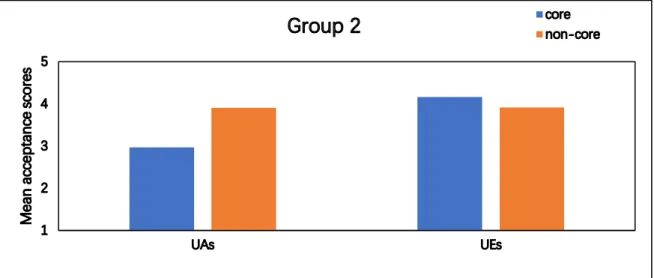
Figure 3.2 Group 2: Mean acceptability scores on PPPs ... - 67 -
Figure 3.3 NS Group: Mean acceptability scores on PPPs ... - 68 -
Figure 3.4 The interaction effect between groups and verb types ... - 70 -
Figure 3.5 The interaction effect between verb types and SIH types ... - 70 -
Figure 3.6 Group 1: The interaction effect between verb types and SIH types ... - 71 -
Figure 3.7 Group 2: The interaction effect between verb types and SIH types ... - 71 -
Figure 3.8 The NS Group: The interaction effect between verb types and SIH types ... - 72 -
Figure 3.9 The mean overall acceptability judgments of the three groups ... - 73 -
Figure 3.10 Mean acceptability judgments of the three groups on the control structure .... - 77 -
Figure 3.11 Group 1: The for hours constructions (FH) and the control structure (CS) ... - 78 -
Figure 3.12 Group 2: The for hours constructions (FH) and the control structure (CS) ... - 78 -
Figure 3.13 NS Group: The for hours constructions (FH) and the control structure (CS) .. - 79 -
Figure 3.14 The interaction effect between verb types and groups ... - 81 -
Figure 3.15 The interaction effect between verb types and SIH types ... - 82 -
Figure 3.16 Group 1: The interaction effect between verb types and SIH types ... - 83 -
Figure 3.17 Group 2: The interaction effect between verb types and SIH types ... - 83 -
Figure 3.18 The NS Group: The interaction effect between verb types and SIH types ... - 83 -
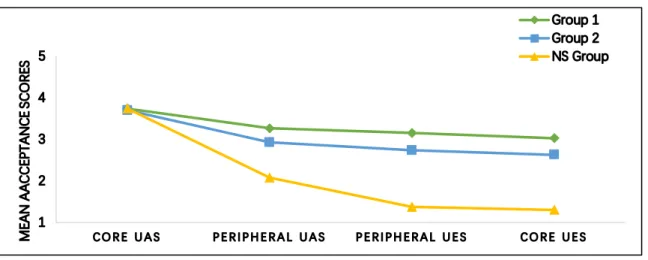
Figure 3.19 Mean acceptance scores of core and peripheral UAs and UEs ... - 84 -
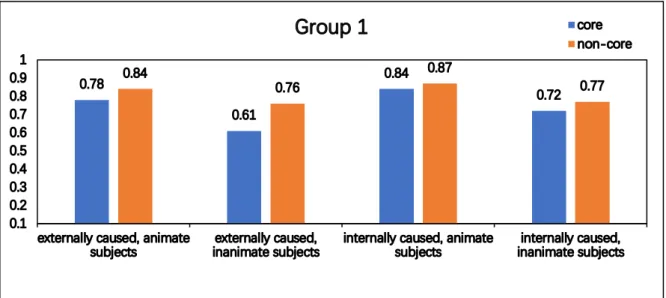
Figure 4.1 Group 1: Mean correct response rates for core and non-core UAs by causation types and animacy types... - 125 -
Figure 4.2 Group 2: Mean correct response rates for core and non-core UAs by causation types and animacy types... - 126 -
Figure 4.3 Group 3: Mean correct response rates for core and peripheral UAs by causation types and animacy types... - 126 - Figure 4.4 Correct response rates for SIH types (core/non-core UAs) by proficiency level- 128
ix
-Figure 4.5 Correct response rates for causation types by proficiency level ... - 129 -
Figure 4.6 Correct response rates for animacy types by proficiency level ... - 130 -
Figure 4.7 The interaction effect between causation types and SIH types ... - 131 -
Figure 4.8 The interaction effect between causation types and SIH types when subjects are animate ... - 131 -
Figure 4.9 The interaction effect between causation types and SIH types when subjects are inanimate ... - 132 -
Figure 4.10 Group 1: Correct response rates for core and peripheral UEs by causation types and animacy types ... - 134 -
Figure 4.11 Group 2: Correct response rates for core and peripheral UEs by causation type and subject animacy ... - 135 -
Figure 4.12 Group 3: Correct response rates for core and peripheral UEs by causation types and animacy types ... - 135 -
Figure 4.13 Correct response rates for animacy types by proficiency level ... - 137 -
Figure 4.14 The interaction effect between animacy types and SIH types ... - 137 -
Figure 4.15 The interaction effect between animacy types and SIH types for Group 1.... - 138 -
Figure 4.16The interaction effect between animacy types and SIH types for Group 2 .... - 138 -
Figure 4.17 The interaction effect between subject animacy and SIH type for Group 3 .. - 139 -
Figure 4.18 Mean correct response rates for the four verb types by groups... - 141 -
Figure 4.19 The interaction effect between groups and verb types... - 141 -
Figure 4.20 Group 1: The interaction effect between verb types and SIH types ... - 142 -
Figure 4.21 Group 2: The interaction effect between verb types and SIH types ... - 143 -
Figure 4.22 Group 3: The interaction effect between verb types and SIH types ... - 143 -
Figure 4.23 Mean correct response rates of the four verb types by groups ... - 144 -
Figure 4.24 The interation between groups and verb types ... - 145 -
Figure 4.25 The interation between groups and SIH types ... - 146 -
Figure 4.26 The interaction effect between verb types and SIH types ... - 146 -
Figure 4.27 Mean correct response rates for the four verb types by groups... - 147 -
x
Figure 4.29 Group 2: The interaction effect between verb types and SIH types ... - 148 -
Figure 4.30 Group 3: The interaction effect between verb types and SIH types ... - 149 -
Figure 4.31 Mean correct response rates for the four verb types by groups... - 149 -
Figure 4.32 The interaction effect between groups and verb types... - 150 -
Figure 4.33 The interaction effect between verb types and SIH types ... - 151 -
- 1 -
Chapter 1 Introduction
1.1 Research Background
1.1.1 Universal Grammar and Language Acquisition
Native language (L1) acquisition differs greatly from non-native language (L2) acquisition. It is widely assumed that native speakers’ grammars are constrained by Universal Grammar (UG), a biologically endowed language faculty (Chomsky, 1981; Pinker, 1984, 1994). UG allows the L1 acquirer to arrive at a grammar based on the primary linguistic data he/she is exposed to. UG provides a genetic blueprint and an inventory of possible grammatical categories and features in the broadest sense (White, 2003). UG constrains L1 acquisition and the knowledge of adult native-speakers, which suggests that the grammars of children and adults both conform to the principles of UG.
UG is motivated on the ground of learnability arguments, which means that the subtle and abstract knowledge acquired by young children goes beyond the linguistic input they are exposed to (Schwartz & Sprouse, 2000a, 2000b, 2013). In other words, there is a mismatch between the linguistic data L1 acquirers are exposed to and the unconscious knowledge attained by them. This mismatch leads to the so-called logical problem of language acquisition or the problem of the poverty of stimulus. Given that the knowledge attained by L1 acquirers is left unaccounted for, therefore, “UG is proposed as an explanation of how it is that language acquirers come to know, unconsciously, properties of grammar that go beyond the input in various aspects” (White, 2003, p. 4).
- 2 -
acquire their L1 with relative ease and rapidity, it is hotly debated whether there is still an access to UG in L2 acquisition (Rothman & Slabakova, 2018; White, 2003). The question of whether UG constrains non-native grammars, also referred to as interlanguage grammars, has been investigated and much debated since the early 1980s (White, 1989). Different hypotheses have been proposed to describe the nature of interlanguage grammars. The Fundamental Difference Hypothesis, representing the no access position (for example, by Cook & Newson, 1996), claims that child L1 and adult L2 acquisition are fundamentally different in major respects (Bley-Vroman, 1990, 2009). It suggests that L2 learners do not have direct access to UG, and UG does not constrain interlanguage grammars. The Full Transfer/Full Access Hypothesis, on the other hand, proposes that the entire L1 grammar constitutes the initial state of L2 acquisition (Schwartz & Spouse, 1994, 1996). It indicates that when the L1 grammar cannot accommodate the L2 input, L2 learners would resort to UG options not instantiated in their L1. Thus, the resulting interlanguage grammars are UG-constrained, and interlanguage grammars should be “restricted to properties found in the L1 and/or L2, and/or natural languages in general” (White, 2003, p. 43).
Previous L2 acquisition studies have found that there are undoubtedly many variables that are influential in interlanguage development, and they endeavor to provide an understanding of the interplay “ between knowledge that comes from the knowledge pertaining to all human languages (UG), knowledge that comes from the mother tongue (henceforth L1 transfer), and knowledge that comes from exposure to the target language” (Rothman & Slabakova, 2018, p.419). A good case to investigate if UG constrains interlanguage grammars in L2 acquisition is to find out if L2 learners are also faced with a logical problem of acquisition, or a learnability
- 3 -
problem, parallel to the situation in L1 acquisition. The claim that UG continues to be accessible in L2 acquisition is based on the learnability problem that some knowledge that is present in L2 interlanguage grammars but could not be acquired on L2 input, L1 transfer nor explicit teaching. In the L2 acquisition contexts, acquiring English intransitive verbs represents a classic learnability problem (Juffs, 2001; Montrul, 2004).
1.1.2 Split Intransitivity
The split of intransitive verbs into unaccusatives (UAs) and unergatives (UEs) is referred to as split intransitivity. The most widely accepted analysis of split intransitivity is the Unaccusative Hypothesis. It was first proposed by Perlmutter (1978) in the framework of Relational Grammar, and was later adopted by Burzio (1986) in the Government-Binding (GB) framework (Chomsky, 1981). The essential claim of the Unaccusative Hypothesis is that in all languages, intransitive verbs can be identified as either UAs or UEs based on their different syntactic and semantic properties. Examples of a UA verb and a UE verb are presented in (1a) and (1b), respectively.
(1) a. Mary arrived. (UAs) b. Mary worked. (UEs)
Although the two sentences look alike superficially, they are different in several aspects. They are assumed to have different underlying syntactic structures. For example, from the GB perspective, a UA verb takes a deep (D-) structure object and no subject, while a UE verb takes a D-structure subject and no object. More specifically, though the noun phrase (NP) Mary in
- 4 -
position like the object of a transitive verb. The subject of a UE verb, like Mary in Mary worked, is a true subject and it is base-generated in the subject position like the subject of a transitive verb. Alternatively, in terms of the argument structure, a UA verb is assumed to have an internal argument, whereas a UE verb has an external argument.
What’s more, UAs and UEs are also assumed to bear different thematic roles. The argument of UAs typically bears a theme or patient theta role, while that of UEs bears an agent theta role. Thus, in terms of thematic roles, the argument of UAs can be grouped together with the object of transitives, both bearing the agent theta role. The argument of UEs can be grouped together with the subject of transitive verbs, both taking a theme theta role. It is usually the agent that is the initiator of the action that maps to the subject position, whereas it is the theme, which is the person or thing that is acted on, that maps onto the object position.
Although the UA-UE distinction has been claimed to be a universal phenomenon, different languages display different syntactic and morphological realization of split intransitivity. All intransitive verbs are either UAs or UEs, which can be identified through language-specific diagnostics of split intransitivity. According to Levin and Rappaport Hovav (1995), split intransitivity is syntactically encoded but semantically determined. In other words, the UA-UE distinction is systematically associated with certain semantic characteristics of the predicate. However, myriad empirical studies have repeatedly shown inconsistencies in the alignment between the syntactic and semantic properties of split intransitivity (Levin and R. Hovav, 1995; Borer, 2005). Thus, verbs with similar meanings in and across languages might be classified differently with respect to split intransitivity. The so-called “unaccusative mismatches” pose great challenges to the Unaccusative Hypothesis, a binary syntactic distinction that assumes a
- 5 -
relationship of predictability between the syntax and semantics of intransitive verbs.
Various hypotheses have been proposed to tackle the so-called ‘unaccusative mismatches’ and try to identify the syntactically relevant semantic properties of the verb (Bard et al., 2010). One of the lexicon-syntax approaches explored the observation that in languages that manifest split intransitivity, certain semantic verb classes exhibit the UA-UE distinction consistently and reliably, whereas others show variation in classification. Sorace (2000, 2004, 2011) proposes a gradient approach, the Split Intransitivity Hierarchy (SIH), drawing on a series of empirical studies on both L1 and L2 acquisition of auxiliary selecting languages. She argues that monadic intransitive verbs are modulated along a gradient by the aspectual feature of telicity of the verb as well as by the degree of agentivity of the verb. Sorace (2000) assumes that core verbs tend to be categorical and consistent in selecting BE and HAVE, whereas peripheral verbs are predicted to be variable. Much evidence for the core-peripheral distinction in split intransitivity has been found in a dozen topologically diverse languages (Bard et al, 2010; Laws & Yuan, 2010; Montrul, 2004; Sorace, 1993, 1995; Vernice & Sorace, 2018). The SIH is, therefore, considered to be a potentially universal hierarchy of split intransitivity that may apply to many other syntactic diagnostics of unaccusativity in languages with or without auxiliary selection (Sorace, 2004).
1.1.3 Research Gaps
Previous studies on the L2 acquisition of split intransitivity demonstrate that learners of languages (such as English, Chinese and Japanese) in which split intransitivity is not overtly or unambiguously marked in the input are also aware of the UA-UE distinction (Balcom, 1997;
- 6 -
Hirakawa, 2001; Yuan, 1999). Previous studies also report that L2 learners often have difficulty in learning how the UA-UE distinction is manifested syntactically (Sorace & Shomura, 2001). Although the UA-UE distinction is universal, different languages encode the distinction in language-specific diagnostics (or configurations). For L2 learners, they have to discover the cross-linguistic variations in how languages encode the UA-UE distinction morphologically and syntactically. Researchers suggest that L2 learners would rely on semantic evidence in such a situation (Sorace & Shomura, 2001; Montrul, 2001). That is, the lexical semantic features of particular verbs facilitate their classification as either UAs or UEs.
Sorace (1993a, 1993b, 1995, 1996) investigates the influence of lexical-semantic properties on the acquisition of the syntax of split intransitivity in Italian and French. She finds that two of the main syntactic diagnostics of the UA-UE distinction—auxiliary selection and
ne-cliticization are lexically constrained by the SIH and tend to be acquired in a gradient manner,
suggesting that learners would resort to semantic evidence in the process of acquiring the distinction. She also suggests that the syntactic distinction is relatively easier to acquire in languages like Italian, which presents a consistent and clear-cut cue for the UA-UE distinction, than those languages such as French, which offers less consistent and more ambiguous cues for the distinction.
Sorace and Shomura (2001) also provide evidence for the core-peripheral distinction when investigating the acquisition of quantifier floating, a diagnostic of Japanese split intransitivity, by English-speaking L2 learners of Japanese. They demonstrate that English-speaking L2 learners of Japanese follow a developmental pattern as predicted by the SIH, i.e. core-verbs first, followed by peripheral ones. Given the fact that Japanese does not have overt and
- 7 -
consistent morphosyntactic markers for the UA-UE distinction, Sorace and Shomura (2001) suggest that L2 learners might resort more to semantic evidence when acquiring it in their L2.
Compared with Romance and other Germanic languages with auxiliary selection, English is a language without auxiliary selection. Instead, English presents many other syntactic diagnostics for split intransitivity. Although Baker (2018) suggests that the SIH is also plausible to capture the gradience of English split intransitivity, there is a lack of studies to investigate if it is possible for Mandarin-speaking learners, whose L1 does not have an overt morphological marker for the UA-UE distinction, to acquire the subtle properties of the core-peripheral distinction at the lexicon-syntax interface.
Furthermore, previous studies on the role of the SIH in predicting the overpassivization tendency of intransitive verbs remain divided and even conflicting. It has been observed that there are many factors influencing L2 learners’ tendency to overpassivize intransitive verbs, including syntactic (The Postverbal NP Movement Hypothesis and the Transitivization Hypothesis), semantic (animacy, telicity), and discourse factors (causation types). The Postverbal NP Movement Hypothesis proposes that L2 learners treat UAs like passives, so they mark the NP movement of UAs with an overt passive morphology. The Transitivization Hypothesis, on the other hand, suggests that L2 learners treat UAs as transitives, adding objects to them. One of the limitations of the syntactic accounts is that they cannot account for the fact that not all UAs are equally overpassivized, and that different rates of error production were observed on apparently similar UAs. It is suggested that overpassivization is not triggered solely by syntactic movement. There must be other factors that affect the tendency to overpassivize intransitive verbs.
- 8 -
Ju (2000) first investigates whether conceptualizable agents in the discourse play a role in English overpassivization errors. Assuming that the availability of conceptualizable agents or external causers is evoked by the meaning of the verb and causation types (whether the event is externally or internally caused), she examines if Chinese L2 learners of English are more likely to make overpassivization errors with UAs in externally caused events (in which an agent or an external causer may be represented in learners’ mental grammar) than in internally caused events (in which the cause or causer of the event is not clear). She also examines if L2 learners would make more errors with alternating UAs than with non-alternating UAs because the former is claimed to be more externally caused than the latter. The results, based on 13 alternating UAs and 5 non-alternating UAs, confirmed the first hypothesis but not the second. By recruiting four groups of different proficiency and testing an equal number of alternating and non-alternating UAs (six for each), Chung (2014) confirms both hypotheses, suggesting that the availability of agents, which are determined by both the verb meaning and causation types, affects the overpassivization tendency of UAs. In addition, Chung (2014) also examines the role of animacy (a semantic property of the subject argument) in L2 acquisition of passive UAs. She finds that Chinese and Korean L2 learners tend to passivize UAs with inanimate subjects more frequently than UAs with animate subjects. Animacy types affect the overpassivization tendency of UAs.
Some other studies investigate the effect of the SIH (telicity in particular) in L2 acquisition of passive UAs and examines if overpassivization of intransitive verbs of Japanese-speaking L2 learners is constrained by the SIH, but the results of the studies remain divided and even conflicting (Hirakawa, 2006; Yusa, 2003). Yusa (2003) argues that Japanese L2 learners of
- 9 -
English made more overpassivization errors with telic core UAs than with atelic non-core ones, while Hirakawa (2006) claims that there are no significant differences between telic core UAs and atelic non-core ones. One possible reason for the conflicting results is due to the task design in which the priming sentences and the subjects of target sentences are not controlled for causation types and animacy types. Therefore, it is of necessity to examine if L2 learner’s tendency to over-passivize intransitive verbs are subject to the SIH with causation types and the animacy of verb argument controlled in the experiment.
1.2 Purposes of the Study
First, this paper addresses to what extent the core-peripheral distinction for split intransitivity is cross-linguistically consistent and to what degree direct access to an aspectual and thematic hierarchy at the syntax-lexicon interface is possible, given the fact that Mandarin, like English, does not have an overt and consistent morphosyntactic marker for split intransitivity. Specifically, the present study investigates whether native English speakers and Mandarin-speaking L2 learners are not only sensitive to the UA-UE distinction but also to the lexical constraints underlying the core-peripheral distinction by testing their judgments on core and peripheral verbs in the two diagnostics of split intransitivity: prenominal past participles (PPPs) and the for hours constructions (Alexiadou et al., 2004, p. 5; Schoorlemmer, 2004, p. 227).
Second, the present study examines if the tendency of overpassivization of intransitive verbs is subject to the prediction by the SIH. Previous studies like Yusa (2003) and Hirakawa (2006) made different claims about the role of the SIH effect because their studies did not
- 10 -
control the causation types and animacy types. The present study will investigate if core UAs are more likely to be passivized than peripheral ones with the two variables of causation types and animacy types controlled. On the assumption that the argument of UEs is an agent, and agents are typically animate entities (Bock and Warren, 1985; Dowty, 1991), the present study also explores if the animacy of the verbs’ argument influences core UEs (denoting highly agentive events) to a greater extent than peripheral UEs (less agentive) and UAs (non-agentive).
Finally, this study also investigates the nature of interlanguage grammars. If interlanguage grammars are UG-constrained, it would be expected that UAs are represented differently from UEs, and core verbs are also represented differently from peripheral ones.
1.3 Research Questions and Hypotheses
Considering the purposes of the study, the present study aims to delve into the following two research questions.
Research Question 1
Do Mandarin-speaking L2 learners of English rely on semantic evidence in acquiring the syntax of split intransitivity?
Hypothesis Ⅰ
Mandarin-speaking L2 learners of English would rely on the lexical properties of verbs in acquiring the UA-UE distinction. They will be not only sensitive to the UA-UE distinction but also to the core-peripheral distinction. To be more specific, L2 learners know that these two types of intransitive verbs have different argument structures. They
- 11 -
might also have difficulties in acquiring the two diagnostics of split intransitivity—PPPs and the for hours construction because their Mandarin counterparts allow both UAs and UEs. They would rely on semantic evidence in such situation to acquire the UA-UE distinction, starting with core verbs and gradually spreading to peripheral ones.
Research Question 2
Do telicity and animacy play a role in influencing Mandarin-speaking L2 learners’ tendency to overpassivize intransitive verbs?
Hypothesis Ⅱ
Given the fact that the availability of agents (the existence of an external causer in a context) is evoked by the meaning of verbs and causation types, it could be predicted that it is easier to conceptualize an agent for core verbs that denote telic change than non-core UAs that are atelic and non-agentive. It is also easier to conceptualize an agent for UAs in externally caused events than in internally caused events. Therefore, it is hypothesized that core verbs might be more likely to be passivized than non-core ones in externally caused contexts. On the other hand, agentivity is a primary feature of UEs, with core verbs being more agentive than peripheral ones. Agentive arguments tend to be animate. It could be predicted that the animacy of the verbal argument should affect core UEs to a greater extent than peripheral ones. It could also be predicted that the animacy of the verbal argument should affect UEs more strongly than UAs since UAs typically require a non-agentive (theme) argument, whereas UEs involve an agentive (agent) argument.
- 12 - 1.4 Organization of the Dissertation
This dissertation consists of 5 chapters. Chapter 1 briefly introduces the research background and purposes of the study. It then presents the research questions and hypotheses that are to be answered and tested in Chapter 3 and Chapter 4. The chapter ends with a general outline for the dissertation.
Chapter 2 explains the two theoretical approaches to split intransitivity including the Unaccusative Hypothesis and the SIH. It also presents two syntactic diagnostics for English split intransitivity that are tested in the present study, and their Mandarin counterparts are briefly discussed as well. Previous studies on the core-peripheral distinction and different accounts for overpassivization of intransitive verbs are reviewed in detail and the unresolved problems are thus pointed out.
Chapter 3 presents the methodology and results of the first experiment aiming to examine the lexical constraints on L2 acquisition of English split intransitivity syntax. Native speakers as well as L2 participants will be tested on the two diagnostics of split intransitivity—PPPs and the for hours constructions in the experiment. The data on their judgments are reported and analyzed in detail. The results in relation to the research questions are presented and explanations of what this data means for L2 acquisition of split intransitivity are discussed at last.
Chapter 4 describes the second experiment aiming to investigate telicity and animacy effects on the overpassivization tendency of intransitive verbs. It first reports the methodology including the tasks used in the experiment and the design of the experiment. Then it reports the data collected from the experiment and the results concerning the research questions. Finally, it
- 13 -
gives an analysis of the results and addresses the hypotheses proposed in the beginning. Chapter 5 is a concluding part in which the overall results of this study as they relate to the purposes and hypotheses of this dissertation are summarized, and theoretical and pedagogical implications are suggested. It also presents the limitations of the study and offers suggestions as to how research on L2 acquisition of split intransitivity can be improved upon and continued in the future.
- 14 -
Chapter 2 Review of Related Literature
Section 2.1 briefly reviews the theoretical analysis of split intransitivity and the challenges posed for the Unaccusative Hypothesis. Section 2.2 presents a gradient approach that explores the empirical challenge posed by the Unaccusative Hypothesis and its predictions for L2 acquisition. Section 2.3 summarizes previous studies offering evidence for the core-peripheral distinction in some typologically different languages as well as different accounts for overpassivization errors of intransitive verbs. Section 2.4 points out the unresolved problems and the issues that are going to be tackled in the dissertation.
2.1 The Unaccusative Hypothesis
As discussed in Section 1.2, although UAs and UEs look alike identically, they have different underlying arguments at the level of D-structure (Perlmutter, 1978; Burzio, 1986). For UAs, the internal argument undergoes a NP movement from the VP-internal position to the specifier position of the tense phrase (TP) to receive Case in order not to violate the Case Filter, which states that all NPs must be marked with Case (Carnie, 2013; Chomsky, 1981). Burzio (1986) observed that there is a correlation between the ability of a verb to take an external argument and its ability to assign Case. According to Burzio’s Generalization, “all and only the verbs that can assign a theta-role to the subject can assign (accusative) Case to an object” (Burzio,1986, p.178).
UAs and UEs are also assumed to bear different thematic roles. The argument of UAs typically is a theme or patient as in (2a), while that of UEs is an agent, as in (2b). Thus, in terms of thematic roles, the argument of UAs can be grouped together with the object of transitive
- 15 -
verbs, as in (2c), both being a theme. The argument of UEs, on the other hand, can be grouped together with the subject of transitive verbs, as in (2c), both being an agent. It is usually the agent that is the initiator of the action that maps to the subject position, whereas it is the theme, which is the person or thing that is acted on, that maps onto the object position.
(2) a. The window broke. <theme>
b. John smiled. <agent>
c. Mary broke the window. <agent> <theme>
The systematic relation between the thematic roles and the syntactic positions where they are projected to is formulated as the Uniformity of Theta Assignment Hypothesis (UTAH) (Baker, 1988, p. 46).
(3) Uniformity of Theta Assignment Hypothesis
Identical thematic relationships between items are represented by identical structural relationships between those items at the level of D-structure.
It is assumed that the Unaccusative Hypothesis is motivated by the UTAH, a universal principle which links the argument structures and syntactic configurations in a systematic way (Hirakawa, 2003). The surface subject of a UA verb is a subject derived by NP movement, and it is an internal argument, typically bearing a theme theta role that is initially projected to the
- 16 -
direct object position, while the subject of a UE verb is a true subject, and it is an external argument, typically taking an agent theta role that is typically projected to the subject position.
The different syntactic configurations in various languages that are assumed to distinguish UAs from UEs are referred to as unaccusative diagnostics or diagnostics of split intransitivity. Although the UA-UE distinction is universal, different languages have different ways of encoding the distinction syntactically. Therefore, intransitive verbs can be identified as either UAs or UEs through language-specific diagnostics of split intransitivity. According to Levin and Rappaport Hovav (1995), split intransitivity is syntactically encoded but semantically determined. The UA-UE distinction is systematically associated with certain semantic characteristics of the predicate. For example, agentivity is often correlated with unergativity and patienthood with unaccusativity (Dowty, 1991; Perlmutter, 1978). However, the relationship between lexical semantic properties and syntactic expressions of split intransitivity is much more complicated than expected.
The Unaccusative Hypothesis is challenged empirically. Myriad empirical studies have repeatedly shown inconsistencies in the alignment between syntactic and semantic properties of split intransitivity (Borer 2005; Levin and Rappaport Hovav, 1995). The existence of “unaccusative mismatches”, which refer to “cases in which there seems to be an imperfect match between the verbs expected to be selected on semantic or syntactic grounds as UAs or UEs by various diagnostics and the verbs actually selected by those diagnostics” (Levin & Rappaport Hovav, 1995, p. 4), indicates that it is quite difficult to fit many verbs unambiguously into one class or the other. For instance, agentive verbs of manner of motion, which are generally considered UEs, can be regarded as UAs in the presence of a directional phrase such
- 17 -
as (4a). Also, sound emission verbs often function unergatively and can appear in the resultative construction, which is assumed to be mainly compatible with UAs, as in (4b).
(4) a. He ran into the classroom. b. The office door clicked open.
Similar mismatches can also be found in auxiliary-selection languages (Sorace, 2000). Across languages, some verb classes tend to be consistent in auxiliary selection, whereas others are not. Within languages, some verbs are categorical in selecting the same auxiliary regardless of context, while others exhibit variation in different contexts. For instance, some manner of motion verbs like run in Italian take either BE or HAVE, as in (5a), and only occur with BE when combined with a directional phrase, as in (5b). Examples are taken from Sorace (2000, p. 876).
(5) a. Maria ha corso/e corsa velocemente. Maria has run/is run fast
b. Maria e corsa/*ha corso in farmacia. Maria is run/*have run to the pharmacy
The theoretical challenge for the Unaccusative Hypothesis then is how to account for the variable behaviors of verbs based on the principle that the UA-UE distinction is syntactically manifested but semantically encoded. It is crucial to explain how lexical-semantic or aspectual properties underlying individual verbs are mapped onto the binary syntactic representations (Sorace, 2000, 2004, 2011). Different approaches have been proposed in the literature to
- 18 -
account for the “unaccusative mismatches” at the lexicon-syntax interface.
The projectionist approach mainly emphasizes the complex mappings between the level of lexical-semantic representation and the level of lexical-syntactic representation. The approach claims that the syntactically relevant semantic properties are first mapped onto the argument structure associated with unaccusativity or unergativity according to some linking principles. Then the lexical-syntactic representation is mapped trivially onto a syntactic structure representation. One of the most influential works of this type is Levin and Rapport Hovav’s model (1995). They propose four linking rules which map lexical semantic components of verb meaning underlying UAs and UEs onto positions at argument structure.
The first linking rule is ‘the Immediate Cause Linking Rule, which maps the argument of a verb denoting the immediate cause to the external argument’(Levin & Rappaport Hovav, 1995, p. 135). This rule captures the generalization that internally caused verbs typically receive a UE status. Agentivity is subsumed under internal causation, since most UEs are agentive. The Immediate Cause Linking Rule also classifies non-agentive verbs such as cough, shiver, tremble as UEs because they are also internally caused. Verbs of emission, though classified as UAs by Perlmutter (1978), are maintained as basically UEs.
The second linking rule is ‘the Directed Change Linking Rule, which proposes that the argument of a verb that corresponds to the entity undergoing the directed change described by that verb is its direct internal argument’(Levin & Rappaport Hovav, 1995, p. 146). This rule captures both verbs of change of state such as break and open and verbs of inherently directed motion such as fall and come. They distinguish verbs of agentive manner of motion like walk and swim from directed motion verbs like come and go. The former is UEs while the latter is
- 19 -
UAs.
The third rule is ‘the Existence Linking Rule, which maps the argument of a verb whose existence is asserted or denied onto the direct internal argument (Levin & Rappaport Hovav, 1995, p. 148). According to this rule, verbs of existence and appearance should be considered as UAs. Since the first three linking rules do not account for the behavior of all single-argument verbs, Levin and Rappaport Hovav (1995) put forward the fourth linking rule, the Default Linking Rule, which indicates that an argument of a verb that does not fall under the scope of any other linking rules is its direct internal argument.
To explain ‘unaccusative mismatches’, Levin and Rappaport Hovav (1995) assume that variable syntactic behaviors of certain verb classes are attributable to different lexical-semantic representations, each of which is mapped onto syntactic representations in a regular way. To summarize, Immediate Change, Directed Change and Existence are three important semantic properties to determine the mapping of the single argument as an external or internal argument. The external and internal argument, then, map onto the syntactic position of subject and direct object, respectively, distinguishing a verb either as UE or UA.
There are some problems with the projectionist approach on split intransitivity. First, the linking rules are language-specific instead of being language-universal. Secondly, the projectionist approach assumes that the variation is idiosyncratic and not rule-governed, but the cross-linguistic variations exhibited by the stative verbs indicate that variations are much more systematic and far from being exceptional. Finally, the projectionist approach cannot predict which verb classes are reliable and consistent in their mappings and which ones exhibit variations.
- 20 -
An alternative approach, namely the SIH, proposed by Sorace (2000, 2004, 2011), argues that there is a hierarchical organization of semantic classes within UA-UE verb classes which distinguishes between core and peripheral or non-core verbs. The hypothesis, also known as the gradient approach, aims to account for both the consistency and flexibility of different intransitive verbs in their syntactic behaviors. It is presented in the next section.
2.2 The Split Intransitivity Hierarchy
To capture the systematic differences in auxiliary selection, both cross-linguistically and language-internally, Sorace (2000) proposes an Auxiliary Selection Hierarchy (ASH) for monadic intransitive verbs to select the auxiliaries BE or HAVE. The ASH builds on the earlier observation (Baker, 1997; Grimshaw, 1990) that verbs denoting telic change and change-of state are associated with unaccusativity, and those denoting both agentive and unaffecting processes are associated with unergativity. It ranks verbs based on their lexical-semantic properties which distinguish core verbs from more peripheral ones. Core UA verbs at one end of the hierarchy are most consistent in selecting BE and core UEs at the other end are most consistent in selecting HAVE. Intermediate verbs are those in the middle that may be associated with either or both depending on the language. They are named “peripheral” or “non-core” because they exhibit variable behaviors in their choice of auxiliary not only within a language but also across languages (Sorace, 2000). To sum up, the choice of auxiliary selection is modulated in a gradient fashion by aspectual features (telicity/atelicity) of the verb and of the predicate in which the verb appears, as well as the degree of agentivity of the verb (Vernice & Sorace, 2018).
- 21 -
As the ASH is not only found in many auxiliary-selection languages, but also in other diagnostics of split intransitivity, such as quantifier floating in Japanese (Sorace & Shomura, 2001) and locative inversion in Mandarin (Laws & Yuan, 2010), Sorace (2004, 2011) argues that the ASH should be reclassified into the SIH because this model of gradience tends to be cross-linguistically universal as illustrated in Figure 2.1(adapted from Sorace, 2011, p. 69), regardless of whether or not the language exhibits such auxiliary selection.
Figure 2.1 The Split Intransitivity Hierarchy (SIH)
change of location (arrive) core UAs change of state (decay)
continuation of state (stay) existence of state (exist) uncontrolled process (sweat) controlled motional process (swim)
controlled non-motional process (work) core UEs
According to the SIH, intransitive verbs are organized in a hierarchy defined primarily by telicity and secondarily by degrees of agentivity. Telicity (goal-directedness) is the primary feature that can separate the UAs from the UEs, with “telic change” at the core of unaccusativity. Thus, verbs of change of location (e.g. fall) and change of state (e.g. die), are core UAs denoting telic change and therefore exhibit more consistent UA behaviors. Verbs of continuation of state such as stay and remain, as well as those of existence of state such as sit and stand are the least consistent in their UA behavior, for they denote neither change nor telicity. Agentivity is the
- 22 -
secondary feature that distinguishes core UEs from peripheral UEs, with “agentive atelic non motional activity” at the core of unergativity. Therefore, verbs of controlled non-motional process such as play and work, which are inherently agentive, are more consistent in their UE behavior than peripheral verbs of uncontrolled process such as cough and sweat. The core-peripheral distinction built on these two factors do not refer to gradients of unaccusativity/unergativity of verbs, because syntactic configurations of split intransitivity cannot have intermediate states. Instead, it refers to “their differential likelihood of allowing multiple syntactic behaviors” (Bard et al., 2010, p. 328). In short, the interaction of telicity and agentivity affects the syntax of split intransitivity and creates a gradient satisfaction of diagnostics for split intransitivity.
The SIH, in comparison with the projectionist approach, helps to account for both the consistency and flexibility of different intransitive verbs in their syntactic behaviors. The SIH also predicts that L2 acquisition of split intransitivity is lexically conditioned by the semantic properties of verbs. Core verbs are predicted not only to be categorical and consistent in syntactic behavior across languages and within individual languages, but also to elicit more determinacy of native speakers’ intuitions and primacy in acquisition. Peripheral verbs, on the other hand, are subject to a degree of inconsistency and thus are delayed in acquisition (Keller and Sorace, 2003).
Drawing on the experimental data of native speakers of English on different diagnostics of English split intransitivity, Baker (2018) also claims that there is a good correlation found between the verb classes identified by the diagnostics of English split intransitivity and the SIH. Thus, the core-peripheral distinction in split intransitivity seems to be cross-linguistically
- 23 -
consistent in languages with or without auxiliary selection, but it remains unknown whether learners of an L2 without auxiliary selection, such as English, whose L1 also lacks such selection, such as Mandarin, will exhibit the same gradience in split intransitivity as native speakers. Therefore, looking at how L1 Mandarin learners acquire the syntax of English split intransitivity and whether or not they are lexically constrained by the SIH will help shed light on this issue. However, in order to test this, diagnostics of split intransitivity will be necessary because they are always taken as the syntactic manifestations that are sensitive to the semantic properties of the verb.
2.3 Syntactic Evidence for Split Intransitivity
Neither Mandarin nor English has obligatory and unambiguous morphosyntactic markers that distinguish UAs from UEs, but have optional syntactic manifestations of split intransitivity. For example, subjects of UAs and UEs can appear in a preverbal position in subject-verb (SV) order, while subjects of UAs can also appear in a postverbal position in the There-insertion construction. The only valid syntactic evidence of the UA-UE distinction in Mandarin is the locative inversion construction, in which the single argument of UAs can appear either preverbally or postverbally (Yuan, 1999; Laws & Yuan, 2010). In the present study, I only focus on two diagnostics that are sensitive to telicity, which is assumed to be the primary feature that distinguishes UAs from UEs. The detailed account of the two diagnostics in both languages are presented in what follows.
2.3.1 Prenominal Past Participles
- 24 -
which correspond to their initial (D-structure) objects. PPPs were purported as a diagnostic of split intransitivity first in Dutch (Hoekstra, 1984), and they have also been found to work in English (Levin & Rappaport Hovav, 1986), because this construction is allowed only by UAs and transitive verbs in English, as illustrated in (6) and (7).
(6) fallen leaves, frozen lakes, *worked man, *slept baby (7) the newly built house, a well-served customer
In this construction, the participles of transitive verbs can be used to modify the nouns comparable to their direct object. UAs are also compatible with this construction since the modified nouns can be taken to correspond to the objects in D-structure, while UEs cannot be converted to such adjectival forms because the modified noun is a subject in D-structure. In summary, nouns that can be pre-modified by past participles are subjects of UA verbs or objects of transitive verbs.
In addition to the syntactic difference identified by PPPs, one semantic property, telicity, is also claimed to be decisive in the formation of PPPs. Most UA verbs that are found to be compatible with PPPs are telic verbs (Zaenen, 1993). Stative verbs, on the other hand, with no end-point, are not allowed in the formation, as illustrated by the unacceptability of remained
files and stayed problems.
Thus, it seems that there is a good correlation between the SIH introduced above and the verbs compatible with the PPPs. First, verbs of change of location are classified as core verbs because of their inherent telicity. For example, telic verbs like arrive and escape can occur prenominally in expressions like the recently arrived guests and an escaped prisoner.
- 25 -
Furthermore, this construction is also possible with monadic verbs of change of state like decay and appear, which are also allowed in the construction such as in the decayed building and a
recently appeared novel. It should be noted, however, that not all verbs denoting change of
location and state are compatible with the construction. Some UA verbs denoting change of location and change of state like arrive and appear are more compatible with this construction if they are modified by adverbs like newly and recently, as mentioned in Baker (2018). However, though there is some variation, it does not invalidate the SIH because Sorace (2000) argues that not all verbs in the same class show the same behavior and that variability is governed by semantic regularities, particularly telicity. The class of verbs of change of state includes various verbs that encode telicity to variable degrees, and permission of a subset of change of state verbs in the construction holds up well for the whole verb class. Finally, because of the telicity restriction, peripheral verbs in the middle of the SIH and UE verbs are much more restricted in the construction as shown in (8). Thus, the different behaviors of core and peripheral verbs in PPPs provide evidence for the core-peripheral distinction in English split intransitivity.
(8) *the existed problem, *the sweated man, *the run man
Mandarin does not have participles, irrespective of past or present, to modify nouns, but verbs can modify a noun prenominally if they are attached to by DE (Fang Yuqing, 2008). Thus, Mandarin does not have an identical structure to English PPPs. The V-DE structure shares certain similarity with English PPPs, but the V-DE structure in Mandarin does not serve as a syntactic manifestation for the UA-UE distinction. Instead, both UAs and UEs are possible with the construction, as in (9a & b).
- 26 -
(9) a. lai de ren arrive NOM man
“the man who has arrived/is arriving” b. xiao de ren
smile NOM man “the man who is smiling”
2.3.2. The For Hours Constructions
The aspectual notion of telicity has always been found to be relevant to the UA-UE distinction in several different languages (Dowty, 1991; van Hout, 2004; Van Valin, 1990). For example, Van Valin (1990) and van Hout (2004) stress the role of telicity in determining the status of a verb as either UA or UE in auxiliary selection of Dutch. Dowty (1991) also claims that the aspectual notion of telicity figures into predicting the class membership of intransitive verbs in English. The fundamental problem with these approaches to telicity is that they take it as a discrete property that a verb either does or does not have. The SIH, on the other hand, considers that telicity is a gradient notion that could distinguish core UA verbs from peripheral ones.
The for hours construction, as a diagnostic of split intransitivity, is assumed to occur with atelic or UE verbs. Core UEs that do not denote an endpoint are compatible with durative time adverbials such as for hours, for years and for days, as in (10a). Peripheral UEs are compatible with the for hours constructions, as in (10b). However, if peripheral verbs of manner of motion are combined with a directional prepositional phrase (PP), they become incompatible with the
- 27 -
for hours constructions, as in (10c). Furthermore, semelfactive verbs like jump, which is
classified as a peripheral UE, are controversial as to the degree of telicity. Some claim that they are basically telic (Rothstein, 2008), while others argue that they are basically atelic (Smith, 1997). The SIH helps to solve this issue, as it predicts that peripheral verbs such as these will exhibit variation.
(10) a. The man worked for hours. b. The man ran for hours.
c. *The man ran to the park for hours.
Since intransitive verbs on the UA end of the SIH are differentiated mainly on telicity, it becomes the primary feature to separate UAs from UEs, with “telic change” at the core of split intransitivity. Thus, verbs of change of location and state such as die are inherently telic. Therefore, inherently telic UA verbs are incompatible with the for hours constructions, as in (11a). However, some verbs allow the for hours constructions in a restricted way. For example, when arrive is used with a plural noun as the subject, the sentence becomes acceptable because of aspectual coercion, as in (11b), and most peripheral stative verbs such as exist and stay are acceptable in the for hours constructions, as in (11c).
(11) a. *The man died for hours.
b. The guests are arriving for hours. c. The building existed for years.
The Mandarin counterpart of the English for hours constructions does not function as a syntactic manifestation of split intransitivity. Both UAs and UEs can appear with durative time
- 28 -
adverbials with aspect marker LE after the verb, as in (12 a & b). UAs are compatible with durative time adverbials, suggesting a resultative reading, and UEs are also compatible with durative time adverbials, indicating either a resultative or progressive reading.
(12) a. Keren lai le san-ge xiaoshi le. guest come ASP three-CL hours ASP “The guest came and stayed for three hours.” b. Keren zou le san-ge xiaoshi le. guest walk ASP three-CL hours ASP “ The guest walked/has been walking for three hours.”
Thus, the availability of the PPPs and for hours constructions as indicators of the SIH holds in English, but not in Mandarin. Specifically, core UAs are mostly compatible with PPPs, but not with the for hours constructions in English, whereas in Mandarin, the UA-UE distinction does not manifest in either the V-DE construction or with durative time adverbials, as both UAs and UEs are possible with these two constructions.
The brief overview of split intransitivity has suggested that both English and Mandarin lack overt and consistent morphosyntactic markers for split intransitivity. That is, UAs in both English and Mandarin are not overtly identified by the presence of morphosyntactic markers such as auxiliary BE, nor are UEs overtly marked by morphosyntactic reflexes such as auxiliary HAVE. Furthermore, L1 Mandarin does not manifest the core-peripheral distinction in V-DE structure and durative time adverbial expressions. Then some interesting learnability problems arise. What evidence do Mandarin L2 learners rely on to acquire the UA-UE distinction? Would
- 29 -
they rely on semantic evidence to acquire the core verbs first? Would learners of English make the core-peripheral distinction part of their interlanguage grammar despite the less consistent and systematic evidence about split intransitivity in the English L2 input? These questions are related to previous research on the acquisition of split intransitivity to date.
2.4 Previous L2 Acquisition Studies on Split Intransitivity
Language acquisition, regardless of L1 or L2, is ‘an important testing ground for theories of the lexicon-syntax interface’ (Sorace, 2004, p. 251). Previous studies on split intransitivity have demonstrated that native speakers and non-native speakers of several languages are not only sensitive to the UA-UE distinction but also to the core-peripheral distinction (Baker, 2018; Balcom, 1997; Bard et al., 2010; Chung, 2014; Hirakawa, 2001, 2006; Ju, 2000, Kellar & Sorace, 2003; Laws & Yuan, 2010; Oshita, 2001; Pae et al., 2014; Sorace, 1993, 1995; 2000, 2004, 2011; Sorace & Shomura, 2001; Vernice & Sorace, 2018).
2.4.1 Previous Studies on the Core-peripheral Distinction
Evidence for the core-peripheral distinction of split intransitivity comes from studies employing both offline acceptability judgment tests and online processing tasks. These studies suggest that the SIH is found to explain gradience in many diagnostics of split intransitivity, and the syntactic manifestations of the UA-UE distinction tend to be acquired in a gradient fashion, starting with core verbs and gradually spreading to other verbs. The first evidence for the core-peripheral distinction comes from a series of studies by Sorace (1993a, 1993b, 1995, 1996).
- 30 -
Sorace (1993a, 1993b, 1995, 1996) investigates the role of lexical-semantic features on the acquisition of the syntax of split intransitivity. By testing L1 French L2 Italian learners’ knowledge on the UA-UE distinction, she examines two most important diagnostics of split intransitivity in Italian —auxiliary selection and ne-cliticization. In Italian, UAs generally occur with auxiliary BE and UEs typically go with auxiliary HAVE in the perfect tense. UAs allow
ne-cliticization, while UEs are not permissible with ne-cliticization (Belletti & Rizzi, 1981).
These empirical studies, adopting offline acceptability judgement tests, examined if the L2 acquisition of the syntax of split intransitivity is lexically constrained by the SIH and follows a developmental path that can be characterized by lexical-semantic terms. The experimental results show that stronger preferences for the correct auxiliary BE/HAVE over incorrect ones were found in core verbs than in non-core verbs at all the proficiency levels. Learners at the lower proficiency level have indeterminate judgments on most of stative verbs. The results also show that L2 learners’ judgments on ne-cliticized sentences exhibit a similar pattern. Stronger preferences were found for ne-cliticized sentences with core UAs selecting BE at all the proficiency levels, and weaker preferences were found to come with non-core UAs. Lower proficiency level learners have most difficulty in acquiring the peripheral verbs instead of core ones. The results generally support the prediction that not only auxiliary selection but also ne-cliticization are sensitive to the lexical-semantic properties of the verb.
Sorace (2004) suggests that core verbs are the first ones to be acquired with the accurate auxiliary BE or HAVE in both L1 and L2 acquisition. The experimental results indicate that both native speakers and non-native speakers show differential judgments towards core and peripheral verbs. The L2 acquisition of syntactic properties of auxiliary selection generally
- 31 -
follows the developmental path that is predicted by the SIH. That is, the syntax of split intransitivity is acquired earlier with core verbs and later gradually extended to more peripheral ones. It is the position of verbs on the SIH, rather than their frequency, which determines the order of acquisition.
These studies also show that it is relatively easier to acquire the UA-UE distinction in a language such as Italian than in a language such as French. In Italian, the UA-UE distinction is manifested in the form of different auxiliaries in the perfect tense. The evidence for the distinction is quite consistent with core verbs. Compared with Italian, French offers more ambiguous and less systematic evidence for the distinction. Therefore, Italian learners of French face more difficulties acquiring the correct auxiliary with peripheral verbs, and do not overcome the problem even at the advanced level. The studies by Sorace (1993a, 1993b, 1995, 1996) suggest that L2 acquisition of auxiliary selection, as a syntactic diagnostic of split intransitivity, is lexically constrained by the SIH. The developmental path of the UA-UE distinction crucially depends on the interaction of semantic and syntactic manifestations as well as the robustness and consistency of the evidence for the distinction.
In addition to the above studies on Italian and French, other studies also examined the native speakers’ different judgments on the core-peripheral distinction in Dutch (Sorace & Vonk, 1998), German (Keller & Sorace, 2003) and Paduan (Cennamo & Sorace, 2007). In order to demonstrate the cross-linguistic plausibility of the lexical-semantic hierarchy and the universality of the developmental routes in the acquisition of split intransitivity, Sorace and Shomura (2001) conducted a study on a language with different manifestations of split intransitivity from those auxiliary-selecting languages.
- 32 -
To investigate if the acquisition of the UA-UE distinction in L2 Japanese by English-speaking learners is sensitive to the lexical-semantic properties of verbs in a pattern similar to learners of Italian and French, who were found to be conditioned by the SIH, Sorace and Shomura (2001) tested knowledge of both native Japanese speakers and English-speaking L2 learners of Japanese on quantifier floating. In Japanese, evidence for split intransitivity is manifested in several phenomena such as quantifier floating (Miyagawa, 1989), case drop (Kageyama, 1993) and the form takusan (Kageyama, 1993, 1996).
Quantifier floating has also been analyzed as evidence for a movement analysis of scrambling in Japanese. According to Miyagawa (1989), a NP has to be adjacent to its numeral quantifier (NQ) because they must c-command each other. UAs allow quantifier floating as in (13a & b), while UEs disallow quantifier floating, as in (13 c & d).
(13) a. Gakusei-ga sannin Tokyo-ni tsuita. student-NOM three Tokyo-at arrived “Three students arrived in Tokyo.”
b. Gakusei-ga Tokyo-ni sannin tsuita. student-NOM Tokyo-at three arrived “Three students arrived in Tokyo.”
c. Gakusei-ga sannin wazato waratta. student-NOM three intentionally laughed “Three students intentionally laughed.”
- 33 -
student-NOM intentionally three laughed “Three students intentionally laughed.”
Examples like (13a) and (13c) are both grammatical because the subject NP (gakusei) and the NQ (sannin) are outside the VP and they c-command each other. (13b) is also grammatical because the surface subject NP is an underlying direct object, whereas (13d) is ungrammatical because the surface subject is a true subject and the NQ is inside the VP. Therefore, the mutual c-commanding relationship between the NP and NQ still holds for (13b) but not for (13d).
A total of 60 participants took part in the study, consisting of a group of 29 adult speaking L2 Japanese learners at the postbeginner level and a group of 31 adult English-speaking L2 Japanese learners at the intermediate level. There is also a group of 12 native Japanese speakers who served as a control group. The experiment had two tasks: a proficiency test and an acceptability judgment test. The native speakers were tested on two diagnostics of quantifier floating and Case drop. Since their performance on the Case drop test revealed that they did not accept the construction with any verb class, L2 Japanese learners were only tested on quantifier floating. For each UE verb, there was an acceptable sentence without quantifier floating, and an unacceptable sentence with quantifier floating. For each UA verb, sentences with and without quantifier floating are both acceptable. All the sentences were presented in random order.
The overall results for UEs indicate that native Japanese participants accept sentences without quantifier floating and reject those with quantifier floating. Furthermore, they show sensitivity to the finer distinctions among the verb types, rejecting core UEs more significantly than peripheral ones. Learners at lower proficiency level did not distinguish sentences with and