Navigating through the tides of a corrupt state:
Youths engagement with SMEs and ICT in rural Kenya
Kinyua Laban Kithinji Institute of Asian, African, and Middle Eastern Studies,
Sophia University, Japan
Abstract
The state building process in post-independent Kenya had decentralisation at its core. Decentralising state was fronted as one with the capacity to address some of the Kenya’s impediments to democrati- sation and development. In this regard, an agitation for decentralisation was seen as a solution to miti- gate the practice of rent seeking and patronage on the one hand. On the other hand, decentralisation was pursued as an attempt towards inclusion of the communities which were disenfranchised in distri- bution of resources by the central government. The result of politics that pursued decentralisation was a proliferation of state programmes seeking to bring services of the state closer to the people, and that culminated to inauguration of new devolved government structures in 2010. This has spurred hope for growth and equitable distribution of resources.
As the political pursuit of decentralisation ensued, the state policies and market liberalisation strat- egies had facilitated the innovation led by the private sector in banking and Information Communica- tion Technology (ICT) in the early 2000s that was improving the capacity of young generation in Kenya towards financial inclusion. As the programmes seeking to decentralise the state burgeoned, they converged with the revolution in banking and ICT. This convergence has expanded the capacity of rural dwellers to mitigate severe poverty through an engagement with the entrepreneurial activities that is seen to be bolstering new trends for growth and sustainability.
Keywords: state programmes, information communication technology (ICT), M-Pesa, small and me- dium sized enterprises (SMEs), decentralisation
tually culminated to semi-autonomous counties which have been bringing services closer to the peo- ple. Similarly, the result of the exercise of political power through pursuance of decentralised politics has been enhancement, utilisation, and implementation of new technologies that has made access to state and private owned resources readily available to the common people.
While thinking of new possibilities that may thrust developing states in Africa to new levels of growth, the approaches adopted in this paper use methodologies that allow for a rich account of pre- vailing economic conditions but most importantly, the political environment. The aim and choice of this methodology is to give a platform to elaborate vast and complicated networks of problems, defi- ciencies, and bottlenecks. The key focus in analysis is to discern not just the nature of the problem, but expand opportunities therein that can exponentially expand the communities participation in their wellbeing.
1.2. The characteristics of area of study
This study is based in the rural areas of Embu County in central Kenya. I have chosen Embu to allow myself to maximise the testing of the indicators that I have used. I however believe strongly that the findings in Embu can be widely replicated not only in the rest of rural Kenya, but also in many parts of sub-Saharan Africa. Embu is located in east-central Kenya on the southern slopes of snow-capped Mt.
Kenya. The boarders of the district are Mt. Kenya forest, rivers Kivwe and Ruvingaci on the west that separates them from Kirinyaga and river Thuci on the eastern side that forms the boarder between the Aembu and the Ameru. The lower part of Embu is lowland plains with relatively hot and dry weather compared to the upper region of Embu that enjoys cool and wet conditions throughout the year due to its proximity to the mountains. The population of the Aembu has grown from 90,000 in 1963 to 516,212 in 2009 (Kenya National Bureau of Statistics 2017).
The Aembu belong to the central tribes of the Bantu speaking tribes of Kenya that include the Agikuyu, Ameru, and the Akamba. The economic activities of the Aembu range from dairy farming, horticultural farming, and tea and coffee farming due to conducive climatic conditions of the upper Embu region. The Ambeere on the other hand, who have occupied the lower parts of Embu namely Gachoka and Siakago constituencies, live in relatively semi-arid conditions that receive low rainfalls and experiences drier seasons compared to the upper part of Embu. As a result, the people of Siakago and Gachoka often rely on livestock farming and crops that can endure harsh dry weather.
The smallholders farmers in Embu have mainly concentrated on cash crop production. The people of upper Embu have become main producers of tea and coffee for export. By the end of 1990s, two main state backed Kenya Tea Development Authorities (KTDA) factories had thrived in Embu to aid tea production. Mungania tea factory had been established since 1972 while just less than fifty kilome- tres apart Rukuriri tea factory was established in 1984. The overproduction and a search for quality control resulted to establishment of the third factory in the district at Kathangariri near Nguviu in 2002. The subjects of this study are therefore mainly smallholder farmers such as Mwaniki who is a 1. Introduction
1.1. Overview
One result of the effects of stumbling blocks to effective development that have plagued Africa in the past decades has been sensitization of stakeholders to the need for new and more effective methods and approaches to development. In sub-Saharan Africa, two new effective approaches seem to be emerging as a result of this sensitisation. One is a systematic focus on entrepreneurial activities espe- cially by the African youths and the other is an emphasis on skills and knowledge development. This two-tier approach calls for a prioritisation of education (especially vocational training), and support for the business environment by the state and the private sector.
Both the state and the private sector have been central to effecting the new trends. Although the state in Africa has often been described as a bottleneck to development, the penetration of state pro- grammes in the poor’s livelihoods burgeoned in the new millennium. One of the outcomes of the poor’s engagement with the state programmes has been an increment in the capacity and a facilitation of their mobility to entrepreneurship. The convergence of the state programmes in the early 2000s with the initiatives of the private sector, especially those related to banking and the Information Com- munication Technology (ICT) sector, has resulted to an unprecedented growth in entry to small scale business ventures by the sub-Saharan African youths as well as designing and further propelling of implementation of the state programmes through establishing new frontiers.
This paper targets to influence the manner in which the states in sub-Saharan Africa can tap into the capacity and the potential of the entrepreneurial skills of its youth. To do this, I will highlight the manner in which the youths in rural Embu villages of Kenya have utilised mobile phone technology (M-Pesa), and state’s development programmes, to enter, engage in, and improve their entrepreneurial capacities as can be seen in the thriving of the Small and Medium sized Enterprises (SMEs). The term SMEs depicts ranging types of firms, which may include fragile micro-business that employ a sizeable number of employees (maximum 250). Numbers notwithstanding, SMEs as used in this paper refers to the micro business with simple structures that generate income for subsistence use. The engagement not only highlights the opportunities for Information Communication Technology (ICT) in driving economic growth but also maps out strategies used by the youth to survive the harsh realities of mis- management of resources by a corrupt state.
Since resource has a close and ambiguous linkage with development (Takeuchi 2018), this paper will pay attention to how political power has been contested in the pursuit of administration of re- sources in post-independent Kenya. Through a brief analysis of politics of decentralising state in Ken- ya, this paper shows how allocation for resources has been carried out since independence in 1963.
The quest to allocate and manage resources created strong centres for power mobilisation whose foun- dations was mainly the tribe. Both the political elites and the constituents have somewhat managed to engage in power contestation for benefits of each actors. Thus, while clamour for districts as centres for administration of resources gave rise to strong tribal political kingpins, it can be said to have even-
tually culminated to semi-autonomous counties which have been bringing services closer to the peo- ple. Similarly, the result of the exercise of political power through pursuance of decentralised politics has been enhancement, utilisation, and implementation of new technologies that has made access to state and private owned resources readily available to the common people.
While thinking of new possibilities that may thrust developing states in Africa to new levels of growth, the approaches adopted in this paper use methodologies that allow for a rich account of pre- vailing economic conditions but most importantly, the political environment. The aim and choice of this methodology is to give a platform to elaborate vast and complicated networks of problems, defi- ciencies, and bottlenecks. The key focus in analysis is to discern not just the nature of the problem, but expand opportunities therein that can exponentially expand the communities participation in their wellbeing.
1.2. The characteristics of area of study
This study is based in the rural areas of Embu County in central Kenya. I have chosen Embu to allow myself to maximise the testing of the indicators that I have used. I however believe strongly that the findings in Embu can be widely replicated not only in the rest of rural Kenya, but also in many parts of sub-Saharan Africa. Embu is located in east-central Kenya on the southern slopes of snow-capped Mt.
Kenya. The boarders of the district are Mt. Kenya forest, rivers Kivwe and Ruvingaci on the west that separates them from Kirinyaga and river Thuci on the eastern side that forms the boarder between the Aembu and the Ameru. The lower part of Embu is lowland plains with relatively hot and dry weather compared to the upper region of Embu that enjoys cool and wet conditions throughout the year due to its proximity to the mountains. The population of the Aembu has grown from 90,000 in 1963 to 516,212 in 2009 (Kenya National Bureau of Statistics 2017).
The Aembu belong to the central tribes of the Bantu speaking tribes of Kenya that include the Agikuyu, Ameru, and the Akamba. The economic activities of the Aembu range from dairy farming, horticultural farming, and tea and coffee farming due to conducive climatic conditions of the upper Embu region. The Ambeere on the other hand, who have occupied the lower parts of Embu namely Gachoka and Siakago constituencies, live in relatively semi-arid conditions that receive low rainfalls and experiences drier seasons compared to the upper part of Embu. As a result, the people of Siakago and Gachoka often rely on livestock farming and crops that can endure harsh dry weather.
The smallholders farmers in Embu have mainly concentrated on cash crop production. The people of upper Embu have become main producers of tea and coffee for export. By the end of 1990s, two main state backed Kenya Tea Development Authorities (KTDA) factories had thrived in Embu to aid tea production. Mungania tea factory had been established since 1972 while just less than fifty kilome- tres apart Rukuriri tea factory was established in 1984. The overproduction and a search for quality control resulted to establishment of the third factory in the district at Kathangariri near Nguviu in 2002. The subjects of this study are therefore mainly smallholder farmers such as Mwaniki who is a 1. Introduction
1.1. Overview
One result of the effects of stumbling blocks to effective development that have plagued Africa in the past decades has been sensitization of stakeholders to the need for new and more effective methods and approaches to development. In sub-Saharan Africa, two new effective approaches seem to be emerging as a result of this sensitisation. One is a systematic focus on entrepreneurial activities espe- cially by the African youths and the other is an emphasis on skills and knowledge development. This two-tier approach calls for a prioritisation of education (especially vocational training), and support for the business environment by the state and the private sector.
Both the state and the private sector have been central to effecting the new trends. Although the state in Africa has often been described as a bottleneck to development, the penetration of state pro- grammes in the poor’s livelihoods burgeoned in the new millennium. One of the outcomes of the poor’s engagement with the state programmes has been an increment in the capacity and a facilitation of their mobility to entrepreneurship. The convergence of the state programmes in the early 2000s with the initiatives of the private sector, especially those related to banking and the Information Com- munication Technology (ICT) sector, has resulted to an unprecedented growth in entry to small scale business ventures by the sub-Saharan African youths as well as designing and further propelling of implementation of the state programmes through establishing new frontiers.
This paper targets to influence the manner in which the states in sub-Saharan Africa can tap into the capacity and the potential of the entrepreneurial skills of its youth. To do this, I will highlight the manner in which the youths in rural Embu villages of Kenya have utilised mobile phone technology (M-Pesa), and state’s development programmes, to enter, engage in, and improve their entrepreneurial capacities as can be seen in the thriving of the Small and Medium sized Enterprises (SMEs). The term SMEs depicts ranging types of firms, which may include fragile micro-business that employ a sizeable number of employees (maximum 250). Numbers notwithstanding, SMEs as used in this paper refers to the micro business with simple structures that generate income for subsistence use. The engagement not only highlights the opportunities for Information Communication Technology (ICT) in driving economic growth but also maps out strategies used by the youth to survive the harsh realities of mis- management of resources by a corrupt state.
Since resource has a close and ambiguous linkage with development (Takeuchi 2018), this paper will pay attention to how political power has been contested in the pursuit of administration of re- sources in post-independent Kenya. Through a brief analysis of politics of decentralising state in Ken- ya, this paper shows how allocation for resources has been carried out since independence in 1963.
The quest to allocate and manage resources created strong centres for power mobilisation whose foun- dations was mainly the tribe. Both the political elites and the constituents have somewhat managed to engage in power contestation for benefits of each actors. Thus, while clamour for districts as centres for administration of resources gave rise to strong tribal political kingpins, it can be said to have even-
Besides an emphasis that analyses the social policies of state in sub-Saharan Africa, yet another important focus in search for new paths towards development is underscoring the problems that arose from post-independent policies on development. In Kenya, such policies gave birth to unequal dis- bursement of resources, creating disenfranchised peoples and places. The policies also led to believa- bility in pursuance of projects on the grand level as the most effective means of development. It is perhaps without dispute that such strategies have performed dismally as most states in Africa either remained or became more bifurcated (Mamdani 1996) just like they had emerged from colonial struc- tures. Thus the prioritising of towns where quick rewards for capital is without question still acquires a special attention from leaders. This paper argues that a focus on new centre of development, the pe- ripheries, whose empowerment is emerging and exemplified within the structures of the devolved state in Kenya is paramount.
1.4. Contesting allocation of resources
The level of economic growth and expansion in sub-Saharan Africa is driven by two inter-related fac- tors. On the one hand, governance, and on the other hand resources. Several states are still dependent on primary products for growth from raw materials, which explains the significant roles of agriculture in sub-Saharan African economies (Bates and Block 2013). In this regard, pursuit of development also implores a prioritisation of an access to key resources. The clamour for resources made devolution gain a specific prominence in state building in Kenya since 1963 (Barkan and Chege 1989, Kanyinga 2016).
Table 1. Timeline for establishment of state programmes, banking services, and mobile phone banking that is seen to be boosting entrepreneurial activities among the youth.
Category Actor Description Date Estab-
lished Target Education State 1) Introduction of Free Primary Education
2) Rise of day secondary schools 1) 2003
2) 2005 Children & Youth Community
Projects State 1) Constituency Development Fund (CDF) 1) 2003 Community Community
Funds State 1) Women Enterprise Fund (WEF)
2) Uwezo (Ability) Fund 1) 2007
2) 2013 Women Youth Banking Private
Sector 1) Banking access
a) Equity Bank a) 2004 All
ICT Innovation Private
Sector 1) Mobile money transfer
a) M-Pesa by Safaricom a) 2007 All
Devolution State 1) Devolved governments 1) 2010 All representation of the most common characteristics of the residents of this area. He is first a victim of a
decline in commercial agriculture in a system which prioritises production, thus encouraging rural to urban mobility in search of wage labour. He is also an embodiment of the limits of state led initiatives.
His difficulties in navigating through poverty highlights the nature of state’s efforts to distribute re- sources as ineffective (corrupt), gendered (leaves men out), and myopic (relies on such categories as physically challenged, the old, and women). He is however also a conveyor of a new possibility.
Mwaniki has shown a viability of a ‘distributive political economy’ aided by ICT that he used to place claims in confronting poverty.
1.3. Development paths re-imagined?
A popular theme championed by development adherents is that sub-Saharan African states would be better off if they learnt from their counterparts that took off earlier. Thus, such ideas as promoting ‘Af- rica green revolution’ (Otsuka and Larson 2013) is seen as a potential to catapult agricultural led growth in Africa. This kind of analysis encourages a development model that sees a heavy investment by the state and the international development partners towards large-scale projects as a key driver for growth. The benefits of such engagement in sub-Saharan Africa notwithstanding, the high number of the poor who requires to be lifted out of severe poverty testifies against such approaches. Against the backdrop of state led large scale investment, the engagement of rural populations with the technology suited for their daily lives is beaming with hope not just for the poor but also for means through which development partners can debunk the myths of large scale technological transfer and infrastructural development as prerequisites for development. Not only does these new approaches to development suggest new means for spearheading development; they are also a remedy for a corrupt state that has continuously been an impediment to growth.
The increased participation of private sector in leading development as emerging from success of SMEs (De Sousa dos Santos 2015) does not mean that the state in sub-Saharan Africa has completely retreated. In actual sense, the state has increased her hurdle by penetrating into several new areas to govern its population. In this aspect, re-imagining development trajectories in sub-Saharan Africa calls for a much more engagement with the state which is seen as bouncing back from its once rolled back status (Riggirozzi 2010, Grugel and Riggirozzi 2012). I do not see this interaction as a mere complica- tion of development, but as creating new trajectories for sustainable development in Africa. A rolled back state (Bratton and Van de Walle 1994, Ake 1996) allowed scholars to analyse the consequences of related policies. Thus recommendations were made that emphasised importance of mitigating ef- fects of large-scale retrenchments and downscaling of social services. In the new millennium, the re- turn of the state in Africa has come in form of pursuance and advocacy of social policies that once were said they should be removed from the state’s responsibility (Barryet al. 1993, Rose and Miller 2013).
Besides an emphasis that analyses the social policies of state in sub-Saharan Africa, yet another important focus in search for new paths towards development is underscoring the problems that arose from post-independent policies on development. In Kenya, such policies gave birth to unequal dis- bursement of resources, creating disenfranchised peoples and places. The policies also led to believa- bility in pursuance of projects on the grand level as the most effective means of development. It is perhaps without dispute that such strategies have performed dismally as most states in Africa either remained or became more bifurcated (Mamdani 1996) just like they had emerged from colonial struc- tures. Thus the prioritising of towns where quick rewards for capital is without question still acquires a special attention from leaders. This paper argues that a focus on new centre of development, the pe- ripheries, whose empowerment is emerging and exemplified within the structures of the devolved state in Kenya is paramount.
1.4. Contesting allocation of resources
The level of economic growth and expansion in sub-Saharan Africa is driven by two inter-related fac- tors. On the one hand, governance, and on the other hand resources. Several states are still dependent on primary products for growth from raw materials, which explains the significant roles of agriculture in sub-Saharan African economies (Bates and Block 2013). In this regard, pursuit of development also implores a prioritisation of an access to key resources. The clamour for resources made devolution gain a specific prominence in state building in Kenya since 1963 (Barkan and Chege 1989, Kanyinga 2016).
Table 1. Timeline for establishment of state programmes, banking services, and mobile phone banking that is seen to be boosting entrepreneurial activities among the youth.
Category Actor Description Date Estab-
lished Target Education State 1) Introduction of Free Primary Education
2) Rise of day secondary schools 1) 2003
2) 2005 Children &
Youth Community
Projects State 1) Constituency Development Fund (CDF) 1) 2003 Community Community
Funds State 1) Women Enterprise Fund (WEF)
2) Uwezo (Ability) Fund 1) 2007
2) 2013 Women Youth Banking Private
Sector 1) Banking access
a) Equity Bank a) 2004 All
ICT Innovation Private
Sector 1) Mobile money transfer
a) M-Pesa by Safaricom a) 2007 All
Devolution State 1) Devolved governments 1) 2010 All representation of the most common characteristics of the residents of this area. He is first a victim of a
decline in commercial agriculture in a system which prioritises production, thus encouraging rural to urban mobility in search of wage labour. He is also an embodiment of the limits of state led initiatives.
His difficulties in navigating through poverty highlights the nature of state’s efforts to distribute re- sources as ineffective (corrupt), gendered (leaves men out), and myopic (relies on such categories as physically challenged, the old, and women). He is however also a conveyor of a new possibility.
Mwaniki has shown a viability of a ‘distributive political economy’ aided by ICT that he used to place claims in confronting poverty.
1.3. Development paths re-imagined?
A popular theme championed by development adherents is that sub-Saharan African states would be better off if they learnt from their counterparts that took off earlier. Thus, such ideas as promoting ‘Af- rica green revolution’ (Otsuka and Larson 2013) is seen as a potential to catapult agricultural led growth in Africa. This kind of analysis encourages a development model that sees a heavy investment by the state and the international development partners towards large-scale projects as a key driver for growth. The benefits of such engagement in sub-Saharan Africa notwithstanding, the high number of the poor who requires to be lifted out of severe poverty testifies against such approaches. Against the backdrop of state led large scale investment, the engagement of rural populations with the technology suited for their daily lives is beaming with hope not just for the poor but also for means through which development partners can debunk the myths of large scale technological transfer and infrastructural development as prerequisites for development. Not only does these new approaches to development suggest new means for spearheading development; they are also a remedy for a corrupt state that has continuously been an impediment to growth.
The increased participation of private sector in leading development as emerging from success of SMEs (De Sousa dos Santos 2015) does not mean that the state in sub-Saharan Africa has completely retreated. In actual sense, the state has increased her hurdle by penetrating into several new areas to govern its population. In this aspect, re-imagining development trajectories in sub-Saharan Africa calls for a much more engagement with the state which is seen as bouncing back from its once rolled back status (Riggirozzi 2010, Grugel and Riggirozzi 2012). I do not see this interaction as a mere complica- tion of development, but as creating new trajectories for sustainable development in Africa. A rolled back state (Bratton and Van de Walle 1994, Ake 1996) allowed scholars to analyse the consequences of related policies. Thus recommendations were made that emphasised importance of mitigating ef- fects of large-scale retrenchments and downscaling of social services. In the new millennium, the re- turn of the state in Africa has come in form of pursuance and advocacy of social policies that once were said they should be removed from the state’s responsibility (Barryet al. 1993, Rose and Miller 2013).
central loci. Thus, a new district was perceived as bringing the government closer to the people by providing access to state programmes. The overseers of decentralisation programmes, schools, infra- structure, and health (see figure 2 on decentralisation programmes) were established local political dynasties, with strong connections to the central governments. In 1992 when Daniel Toroitich Arap Moi visited Embu, he had a crucial mission to announce a new district for Ambeere. Mbeere district was curved out of proper Embu district separating the upper region from the lower. The new bounda- ries solidified the separation of Embu and Mbeere into two districts. At the time of separation, the cen- tral government had however taken a grip on local politics through solidifying support from the local populations through political dynasties that were in full control of local resources and development projects. Formalisation of district boundaries was pivotal to strengthening the role of dynasties in spearheading development since districts had become prominent to welfare of local populations. The political dynasties were the automatic chairs of both development committee and the ruling party branch in the district. Thus, the creation of Mbeere district gave rise to a new political dynasty to re- place Jeremiah Nyaga1who had chaired district development projects of the larger Embu district since 1963. When Mbeere and Embu became distinct districts, the prominence of Kamwithi Munyi2as a new point man for President Moi in Embu was actualised.
2. The outcomes of the state’s programmes
Besides the character of decentralisation that gave primacy to district boundaries, the state pursued a series of programmes intended to bring services of the state closer to the people (see table 1). In 2003, two key policies were enacted that bears significance to this study: the implementation of universal free primary education (Avenstrup et al. 2004, Oketch and Rolleston 2007) and the introduction of the Constituency Development Fund (CDF) enacted in 2003. The free primary education was a result of the politicians informal contract with the electorates during the presidential campaigns in 2002. On its part, enactment of CDF empowered the Member of Parliament (MP) involvement with grassroots to realise development. The act of parliament that introduced CDF to Kenya in 2003 put all MPs at the core of control of all centrally disseminated resources. CDF therefore become a critical turning point that deified the position of elected officials as providers of resources.
The placement of CDF management to the hands of MPs had various implications. The Westmin- ster system from which the system of governance has been based in Kenya has a special character that involves the MPs with their constituents. The MPs are elected on platform of the popularity they have created by their engagement with disbursement of development. This “transformative’ development
1 Nyaga was the legislative representative of the larger Embu district during the reign of Jomo Kenyatta and Daniel Moi. His retirement in 1992 did not absolve him from influencing politics of Mbeere since his successor what his son, Joseph Nyaga.
2 Kamwithi Munyi was a member of parliament for Embu since 1988. He was a key appointee of the then ruling party (KANU) in the region.
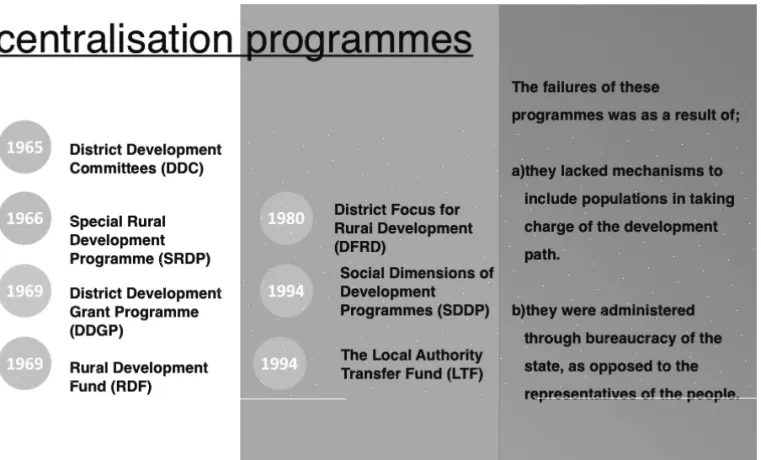
The inauguration of devolved governance in Kenya in 2010 was a culmination of a historically contested platform for allocation of resources (Ghai 2008, Kanyinga 2016) enhancing a social solution to facilitate sustainable development and bringing the historically disenfranchised locales to the centre of economic development. In pursuit of decentralisation, before the 2010 constitution, districts were Figure 1. The clamour for decentralisation in Kenya caused a sharp increase in the number of districts
as administration units (table made with data from KNBS, 2009).
Figure 2.Sample of decentralisation programmes in post-independent Kenya (Figure made with data from KNBS, 2009).
central loci. Thus, a new district was perceived as bringing the government closer to the people by providing access to state programmes. The overseers of decentralisation programmes, schools, infra- structure, and health (see figure 2 on decentralisation programmes) were established local political dynasties, with strong connections to the central governments. In 1992 when Daniel Toroitich Arap Moi visited Embu, he had a crucial mission to announce a new district for Ambeere. Mbeere district was curved out of proper Embu district separating the upper region from the lower. The new bounda- ries solidified the separation of Embu and Mbeere into two districts. At the time of separation, the cen- tral government had however taken a grip on local politics through solidifying support from the local populations through political dynasties that were in full control of local resources and development projects. Formalisation of district boundaries was pivotal to strengthening the role of dynasties in spearheading development since districts had become prominent to welfare of local populations. The political dynasties were the automatic chairs of both development committee and the ruling party branch in the district. Thus, the creation of Mbeere district gave rise to a new political dynasty to re- place Jeremiah Nyaga1who had chaired district development projects of the larger Embu district since 1963. When Mbeere and Embu became distinct districts, the prominence of Kamwithi Munyi2as a new point man for President Moi in Embu was actualised.
2. The outcomes of the state’s programmes
Besides the character of decentralisation that gave primacy to district boundaries, the state pursued a series of programmes intended to bring services of the state closer to the people (see table 1). In 2003, two key policies were enacted that bears significance to this study: the implementation of universal free primary education (Avenstrup et al. 2004, Oketch and Rolleston 2007) and the introduction of the Constituency Development Fund (CDF) enacted in 2003. The free primary education was a result of the politicians informal contract with the electorates during the presidential campaigns in 2002. On its part, enactment of CDF empowered the Member of Parliament (MP) involvement with grassroots to realise development. The act of parliament that introduced CDF to Kenya in 2003 put all MPs at the core of control of all centrally disseminated resources. CDF therefore become a critical turning point that deified the position of elected officials as providers of resources.
The placement of CDF management to the hands of MPs had various implications. The Westmin- ster system from which the system of governance has been based in Kenya has a special character that involves the MPs with their constituents. The MPs are elected on platform of the popularity they have created by their engagement with disbursement of development. This “transformative’ development
1 Nyaga was the legislative representative of the larger Embu district during the reign of Jomo Kenyatta and Daniel Moi. His retirement in 1992 did not absolve him from influencing politics of Mbeere since his successor what his son, Joseph Nyaga.
2 Kamwithi Munyi was a member of parliament for Embu since 1988. He was a key appointee of the then ruling party (KANU) in the region.
The inauguration of devolved governance in Kenya in 2010 was a culmination of a historically contested platform for allocation of resources (Ghai 2008, Kanyinga 2016) enhancing a social solution to facilitate sustainable development and bringing the historically disenfranchised locales to the centre of economic development. In pursuit of decentralisation, before the 2010 constitution, districts were Figure 1. The clamour for decentralisation in Kenya caused a sharp increase in the number of districts
as administration units (table made with data from KNBS, 2009).
Figure 2.Sample of decentralisation programmes in post-independent Kenya (Figure made with data from KNBS, 2009).
Local governments have taken numerous measures to develop SMEs through programmes and projects that act as means to curb poverty, create employment, and improve income generation. Do- mestically, the sessional paper No. 1 (Government of Kenya 1986) foresaw potential for the SMEs that it claimed would facilitate a setting out of mechanisms for an enabling environment where SMEs could thrive. Similar efforts were followed up with the state’s strategy for growth outlined in a gov- ernment’s report (Government of Kenya1989). In 1992, the state not only emphasised the potential in SMEs in general but also specified that Jua Kali (informal) sector would be supported to become an engine for industrial growth. Thus, sessional paper No. 2 (Government of Kenya 1992) addressed le- gal frameworks to create an enabling environment for business. In 2005, another sessional paper No. 2 (Government of Kenya 2005) also sought to address wealth creation through youth employment whose strategy was creating efficiency in the means of doing business. Thus, the state chose to en- hance better means for business registration, licensing, and taxation. In addition, the private sector was also made an integral part in promoting SMEs. The private development strategy for 2006 to 2010 underscored SMEs central role in promoting growth.
Emerging from all the state strategies and efforts by the private sector to facilitate growth through empowering an environment for SMEs are several strings of constrains and opportunities. In sum, the search for a policy sought to facilitate a) an improved environment for doing business, b) institutional transformations and adjustments, and c) support for the indigenous entrepreneurial tenants of the Ken- yan population. Furthermore, the state backed initiatives in the new millennium focused on facilitating access to capital. Such efforts were well articulated in the state’s enactment of SACCO act. Not only did the government enact financing acts but also expanded the borrowing capacities of the youths or-
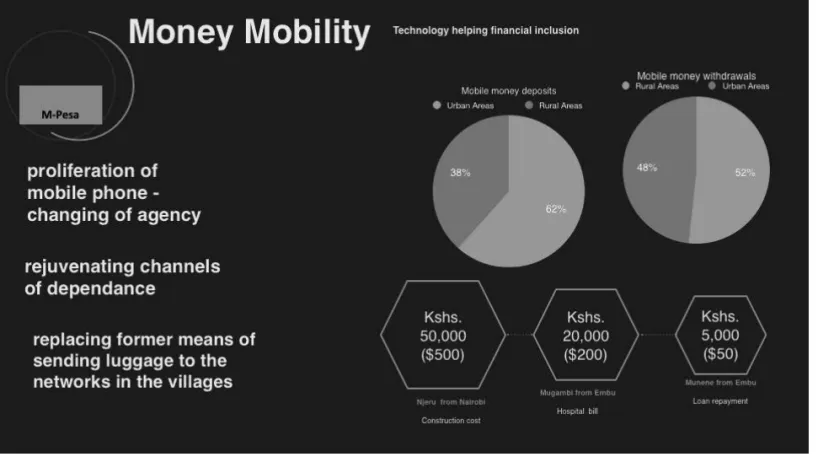
Figure 3.Sample adoption and utility of mobile money (Author’s data) agenda stand at the opposition with ability to make laws or engagement with important national de-
bates. It is for this reason that CDF gained prominence in promotion of day secondary schools. Since the MPs were eager to inscribe their names on CDF projects to boost their re-election bids, a platform was created that facilitated proliferation of day secondary schools that stood side by side with already existing primary schools in rural areas. One of the clear outcomes of the day secondary schools be- came access to education by more youths, but also an increase in the number of youths who had no access to higher education.
The savings and credit organisations (SACCO) established through a society act (2008) in Kenya facilitated financial access enabling increased access to day secondary schools. Wakaguna3narrated how happy he was that he had managed to take all his three daughters to secondary schools through the loans provided by his local SACCO, Nawiri. He however laments that even after scoring good grades, his daughters have not managed to access university for higher education. The daughters were however better placed compared to their counter-parts who only had attained primary education espe- cially with skills to self manage and become entrepreneurs. The SACCOs and the state programmes that have been providing start-up capital to youths like them made this even better. The success of CDF projects encouraged the proliferation of similar rolling out of intervention plans by the state in- tended to alleviate poverty. The Women Enterprise Fund (WEF) was introduced to incorporate women in entrepreneurship. After the 2013 elections, the government had introduced Uwezo Fund (ability) to encourage the youth, organised in groups, to access funding for small-scale businesses.
3. SMEs convergence with ICT
So far, this paper has shown that there has been an environment that has made thriving of entrepre- neurial activities of the rural Kenyan communities possible. This support stems from devolution pro- grammes rolled out by the state. Furthermore, it has been strengthened by the innovation being made in the ICT sector that have made banking easy, accessible, and affordable to the rural poor popula- tions. I will now turn to an analysis of the uniqueness of SMEs and their convergence with ICT as be- ing pursued by the rural populations in rural Embu.
The pursuit for a framework to facilitate growth of SMEs in Kenya is deep rooted in her economic growth strategies. As early as 1972, the International Labour Organisation (ILO) was outlining the primacy of SMEs in driving economic growth in Kenya (ILO 1972). Almost four decades after ILO’s declaration, the 2011 African Economic Outlook indicated that SMEs creates 80% of employment although performing dismally in terms of contribution to GDP (only 20%).
3 Informant during the fieldwork in August 2018, real name withheld.
Local governments have taken numerous measures to develop SMEs through programmes and projects that act as means to curb poverty, create employment, and improve income generation. Do- mestically, the sessional paper No. 1 (Government of Kenya 1986) foresaw potential for the SMEs that it claimed would facilitate a setting out of mechanisms for an enabling environment where SMEs could thrive. Similar efforts were followed up with the state’s strategy for growth outlined in a gov- ernment’s report (Government of Kenya1989). In 1992, the state not only emphasised the potential in SMEs in general but also specified that Jua Kali (informal) sector would be supported to become an engine for industrial growth. Thus, sessional paper No. 2 (Government of Kenya 1992) addressed le- gal frameworks to create an enabling environment for business. In 2005, another sessional paper No. 2 (Government of Kenya 2005) also sought to address wealth creation through youth employment whose strategy was creating efficiency in the means of doing business. Thus, the state chose to en- hance better means for business registration, licensing, and taxation. In addition, the private sector was also made an integral part in promoting SMEs. The private development strategy for 2006 to 2010 underscored SMEs central role in promoting growth.
Emerging from all the state strategies and efforts by the private sector to facilitate growth through empowering an environment for SMEs are several strings of constrains and opportunities. In sum, the search for a policy sought to facilitate a) an improved environment for doing business, b) institutional transformations and adjustments, and c) support for the indigenous entrepreneurial tenants of the Ken- yan population. Furthermore, the state backed initiatives in the new millennium focused on facilitating access to capital. Such efforts were well articulated in the state’s enactment of SACCO act. Not only did the government enact financing acts but also expanded the borrowing capacities of the youths or-
Figure 3.Sample adoption and utility of mobile money (Author’s data) agenda stand at the opposition with ability to make laws or engagement with important national de-
bates. It is for this reason that CDF gained prominence in promotion of day secondary schools. Since the MPs were eager to inscribe their names on CDF projects to boost their re-election bids, a platform was created that facilitated proliferation of day secondary schools that stood side by side with already existing primary schools in rural areas. One of the clear outcomes of the day secondary schools be- came access to education by more youths, but also an increase in the number of youths who had no access to higher education.
The savings and credit organisations (SACCO) established through a society act (2008) in Kenya facilitated financial access enabling increased access to day secondary schools. Wakaguna3narrated how happy he was that he had managed to take all his three daughters to secondary schools through the loans provided by his local SACCO, Nawiri. He however laments that even after scoring good grades, his daughters have not managed to access university for higher education. The daughters were however better placed compared to their counter-parts who only had attained primary education espe- cially with skills to self manage and become entrepreneurs. The SACCOs and the state programmes that have been providing start-up capital to youths like them made this even better. The success of CDF projects encouraged the proliferation of similar rolling out of intervention plans by the state in- tended to alleviate poverty. The Women Enterprise Fund (WEF) was introduced to incorporate women in entrepreneurship. After the 2013 elections, the government had introduced Uwezo Fund (ability) to encourage the youth, organised in groups, to access funding for small-scale businesses.
3. SMEs convergence with ICT
So far, this paper has shown that there has been an environment that has made thriving of entrepre- neurial activities of the rural Kenyan communities possible. This support stems from devolution pro- grammes rolled out by the state. Furthermore, it has been strengthened by the innovation being made in the ICT sector that have made banking easy, accessible, and affordable to the rural poor popula- tions. I will now turn to an analysis of the uniqueness of SMEs and their convergence with ICT as be- ing pursued by the rural populations in rural Embu.
The pursuit for a framework to facilitate growth of SMEs in Kenya is deep rooted in her economic growth strategies. As early as 1972, the International Labour Organisation (ILO) was outlining the primacy of SMEs in driving economic growth in Kenya (ILO 1972). Almost four decades after ILO’s declaration, the 2011 African Economic Outlook indicated that SMEs creates 80% of employment although performing dismally in terms of contribution to GDP (only 20%).
3 Informant during the fieldwork in August 2018, real name withheld.
The need to send money back home was also a product of socio-economic setting that spurred mi- gration to urban centres. Those who migrated to the towns in search for wage labour provided a cycle of ‘dependance’ between the man in the town and often the women and children in the villages. De- pendability between the rural and urban lives has remained uncertain especially due to the high cost of living in urban areas and a deterioration of economic drivers in the villages. Scholarship on M-Pesa and migration has emphasised that many migrants to urban areas remain strongly attached to their ru- ral homes (Mas and Morawczynski 2009, Aker and Mbiti 2010). Thus populations in rural Kenya and those in urban spaces enter into regular requirements for payments and financial linkages that allow families to self-insure each other against catastrophes.
Through interviews that were made to both agents and ordinary people to determine trends of do- mestic remittance, this paper reveals that M-Pesa is increasing financial inclusivity but it is also providing such effects as money borrowing which is boosting entrepreneurial activities among users.
From among the several observations, an agent of M-Pesa outlet commented;
‘I serve at least an average of one hundred customers everyday. It seems that most of my customers (since most of them are known to me) are those with relatives and close friends who live in the large cities, mostly Nairobi, lending money to aid their friends and relatives’.
Other sample interviewees expressed much more complex use of mobile money. Njue4says;
‘After high school, I spent ten years in the village before relocating to Nairobi. We did not have many banks then. My parents had to travel long distances from Kianjokoma to Runyen-jes to access banking at their coffee banking center. My mother had taught me to make small earnings from tea farms. I worked hard in tea farms during my school holidays and after my ordinary level examinations. I made small money regularly, but that money ended up in buy-ing necessities for myself. I wish then was now. These days, with my M-Pesa, I can keep track of my small earnings. That tracking also enables me to gain trust from my bank. I still do not earn much. But because it is regularly transacted through my phone, my bank ‘thinks’ I am rich, and since I do not a possess a title deed to use as a guarantee to get a loan, regular trans-actions have improved my credit worthiness’.
Another informant asserted;
4An informant during field study exercise in August 2018, real name withheld.
ganised in self-help groups. These efforts turning towards provision of capital emerge at a time when semi-skilled educated youth not in wage labour has been on the rise.
Besides the state efforts that have supported mobility to SMEs, an expansion of banking sector and a mobile phone network revolutionised the poor’s participation in entrepreneurship. The Equity Bank of Kenya had broken barriers that held thousands of the poor hostage to poverty before the now ac- claimed mobile banking. The strategies of Equity Bank included branching and business strategies that focused on the remote and less privileged portions of populations (Allenet al. 2012). Equity Bank in- creased the access to banking through dissolving barriers of entry that had been set in the banking sec- tor. Prior to that, joining some of the prominent banks in the country (such as Backlays Bank and the Kenya Commercial Bank), one needed a proof that he was earning a regular income from wage-labour or from stable business. Thus, the stringent measures requiring a signatory from colleagues to operate an account did not only make it cumbersome but also alienated the rural populations in access to bank- ing facilities.
In 2007, Nick Hughes and Susie Lonie launched what would turn to be the greatest innovation in this decade in history of Kenya, a mobile phone money exchange service called M-Pesa, which has become a revolution to lives of ordinary Kenyans. M-Pesa has grown spectacularly: in mid 2012, there were 19.5 million mobile money users in Kenya (83% of the adult population), transferring nearly US$8 billion per year (equivalent to 24% of GDP) of which M-Pesa is responsible for more than 90%
of transfers. Transfers are growing at nearly 40% per year. Over 50% of the adult population uses the service to send money to far-flung relatives, to pay for shopping, utility bills, or travel expenses ride.
This new concept about financing and banking has many people now saying, ‘my phone is my bank’
(Mas and Morawczynski 2009, Aker and Mbiti 2010).
M-Pesa enables anybody who possesses a mobile phone to exchange money without necessity of holding a bank account. Since mobile devices have become easy to acquire, money has become readi- ly and easily accessible to millions of Kenyans in rural and urban areas. It also has ensured that there is easy flow of cash. To use the service, customers first register with Safaricom at an M-Pesa outlet, usually a shop, chemist, or petrol station. They can then load money into their phones. The money is sent to a third party by text message. The recipient takes the phone to the nearest vendor, where they pick up the cash. The software application resides on the SIM card, a chip that identifies the subscrib- er’s phone number, and allows users to access various functions. The process is free and only requires the customer’s name, government ID number, date of birth, occupation, and mobile phone number.
Although M-Pesa has made sending money alive and popular in the recent years, the act of send- ing money transcends the invention of mobile phone technology in Kenya. Prior to 2007, the expan- sive Matatu (public transport) industry was a common platform to send luggage from urban to rural Kenya. This service depended on trust built over time between the regular clients and the drivers that took them from the villages to urban centres. The collapse of postal services facilitated Matatu to be- come one of the main actors that filled the gap of means of sending luggage across the country.
The need to send money back home was also a product of socio-economic setting that spurred mi- gration to urban centres. Those who migrated to the towns in search for wage labour provided a cycle of ‘dependance’ between the man in the town and often the women and children in the villages. De- pendability between the rural and urban lives has remained uncertain especially due to the high cost of living in urban areas and a deterioration of economic drivers in the villages. Scholarship on M-Pesa and migration has emphasised that many migrants to urban areas remain strongly attached to their ru- ral homes (Mas and Morawczynski 2009, Aker and Mbiti 2010). Thus populations in rural Kenya and those in urban spaces enter into regular requirements for payments and financial linkages that allow families to self-insure each other against catastrophes.
Through interviews that were made to both agents and ordinary people to determine trends of do- mestic remittance, this paper reveals that M-Pesa is increasing financial inclusivity but it is also providing such effects as money borrowing which is boosting entrepreneurial activities among users.
From among the several observations, an agent of M-Pesa outlet commented;
‘I serve at least an average of one hundred customers everyday. It seems that most of my customers (since most of them are known to me) are those with relatives and close friends who live in the large cities, mostly Nairobi, lending money to aid their friends and relatives’.
Other sample interviewees expressed much more complex use of mobile money. Njue4says;
‘After high school, I spent ten years in the village before relocating to Nairobi. We did not have many banks then. My parents had to travel long distances from Kianjokoma to Runyen-jes to access banking at their coffee banking center. My mother had taught me to make small earnings from tea farms. I worked hard in tea farms during my school holidays and after my ordinary level examinations. I made small money regularly, but that money ended up in buy-ing necessities for myself. I wish then was now. These days, with my M-Pesa, I can keep track of my small earnings. That tracking also enables me to gain trust from my bank. I still do not earn much. But because it is regularly transacted through my phone, my bank ‘thinks’ I am rich, and since I do not a possess a title deed to use as a guarantee to get a loan, regular trans-actions have improved my credit worthiness’.
Another informant asserted;
4An informant during field study exercise in August 2018, real name withheld.
ganised in self-help groups. These efforts turning towards provision of capital emerge at a time when semi-skilled educated youth not in wage labour has been on the rise.
Besides the state efforts that have supported mobility to SMEs, an expansion of banking sector and a mobile phone network revolutionised the poor’s participation in entrepreneurship. The Equity Bank of Kenya had broken barriers that held thousands of the poor hostage to poverty before the now ac- claimed mobile banking. The strategies of Equity Bank included branching and business strategies that focused on the remote and less privileged portions of populations (Allenet al. 2012). Equity Bank in- creased the access to banking through dissolving barriers of entry that had been set in the banking sec- tor. Prior to that, joining some of the prominent banks in the country (such as Backlays Bank and the Kenya Commercial Bank), one needed a proof that he was earning a regular income from wage-labour or from stable business. Thus, the stringent measures requiring a signatory from colleagues to operate an account did not only make it cumbersome but also alienated the rural populations in access to bank- ing facilities.
In 2007, Nick Hughes and Susie Lonie launched what would turn to be the greatest innovation in this decade in history of Kenya, a mobile phone money exchange service called M-Pesa, which has become a revolution to lives of ordinary Kenyans. M-Pesa has grown spectacularly: in mid 2012, there were 19.5 million mobile money users in Kenya (83% of the adult population), transferring nearly US$8 billion per year (equivalent to 24% of GDP) of which M-Pesa is responsible for more than 90%
of transfers. Transfers are growing at nearly 40% per year. Over 50% of the adult population uses the service to send money to far-flung relatives, to pay for shopping, utility bills, or travel expenses ride.
This new concept about financing and banking has many people now saying, ‘my phone is my bank’
(Mas and Morawczynski 2009, Aker and Mbiti 2010).
M-Pesa enables anybody who possesses a mobile phone to exchange money without necessity of holding a bank account. Since mobile devices have become easy to acquire, money has become readi- ly and easily accessible to millions of Kenyans in rural and urban areas. It also has ensured that there is easy flow of cash. To use the service, customers first register with Safaricom at an M-Pesa outlet, usually a shop, chemist, or petrol station. They can then load money into their phones. The money is sent to a third party by text message. The recipient takes the phone to the nearest vendor, where they pick up the cash. The software application resides on the SIM card, a chip that identifies the subscrib- er’s phone number, and allows users to access various functions. The process is free and only requires the customer’s name, government ID number, date of birth, occupation, and mobile phone number.
Although M-Pesa has made sending money alive and popular in the recent years, the act of send- ing money transcends the invention of mobile phone technology in Kenya. Prior to 2007, the expan- sive Matatu (public transport) industry was a common platform to send luggage from urban to rural Kenya. This service depended on trust built over time between the regular clients and the drivers that took them from the villages to urban centres. The collapse of postal services facilitated Matatu to be- come one of the main actors that filled the gap of means of sending luggage across the country.
4. Conclusion
4.1. Growth trajectories in sub-Saharan Africa
The new phase of globalisation in rural Africa is being propelled by the significant rise of ICT that is key to accelerating integration of economies around the world. This acceleration is among others con- necting the financial markets, increasing velocity between cross-borders, and thus facilitating the rise of cross-border political, social, and cultural connectedness. The results of ICT revolution are spurring growth through facilitating emergence of new forms of communication. These means have created platforms that have strengthened non-state actors to facilitate affairs of the once back-rolled state, thus highly demonopolising the state in Africa. The link between SMEs and the ICT is particularly im- portant link in exploring the poor’s own methods of encountering poverty. The approach in this prem- ise underscores the primacy of the poor not only as drivers of growth, but also as embedded with anti- poverty mechanisms. An emphasis on this method is key in that its proposition is to put an emphasis on what the poor have rather than what they lack. Defined in the language of either ‘lack’ or ‘posses’
the poor are seen through the lenses of financial, physical, and natural assets. Consequently, means of interventions are build after ‘lack’ vs ‘posses’ ideologies. However, the emphasis of the flow of re- sources whether little or much focuses on the networks of mobilising new or already available re- sources. This focus allows for an exploration that exposes how they reduce vulnerability and improve assets.
Improved business environment has fuelled increase in public and private investment in sub- Saharan Africa. The influx of China, India, and Korea and a significant improvement of trade ties with the OECD countries has propelled returns of capital that is encouraging investments. This is partly explained in the now prominent discourse on Africa rising, in which SMEs have been pointed out as bearing an important role. SMEs have become crucial in satisfying the demand for services at a local level. Thus, they are seen as engines for both sustaining the rise and also enhancement of industrial development.
As described in this paper, there are diverging definitions of SMEs depending on the specific countries and the volume of returns from capital. In this paper, I have described SMEs as an integral part of the informal economy, which is prevalent in vast sub-Saharan Africa economies. Thus, alt- hough SMEs are beaming with hope for reverberating the economic growth, they are also prone to the risks that faced the informal sector in the post-independent African states. In this respect, SMEs en- counter a corrupt state (weak states), which is characterised by a weak business environment, corrup- tion, and red tape bureaucracy. However, the corrupt state is also described as being dismantled by the efforts to dilute the overly centralised state. Thus, the implementation of devolution in Kenya although not a perfect remedy for corruption (there has risen such cases of decentralised corruption and patron- age (D'Arcy and Cornell 2016) is seen as reviving the hope for small scale businesses through maxi- misation of better coordination and mobilisation of resources. Majority of these business have thrived because of the generous assistance from the blooming micro-financing institutions in Embu, private
‘ndeto ino cia M-Pesa niciatethirie andu guku muno avai. Kamwana takaria urona varia twathomaga nako nariu nurona uria kagacirire mbiacarari. Na tiundu ati wa uria kai na mbia, aika, niundu wa turuni tutu tuninii mavecagwa ni andu a M-Pesa’. (The M-Pesa initiative has really helped people here. You see that young man over there, we went to school together, and now you see how economically advanced he has become. And it is not because he has money, but because of the small loans they get out of mobile money related transactions).
This is summed up by the founding vision of M-pesa as revolutionary in the words of Micheal Joseph, the Safaricom limited CEO (2000-2011), who asserted;
‘we needed to be revolutionary in order to be successful, if we applied the Western standards to all the things we do, we would probably still be in the dark ages in Africa’.
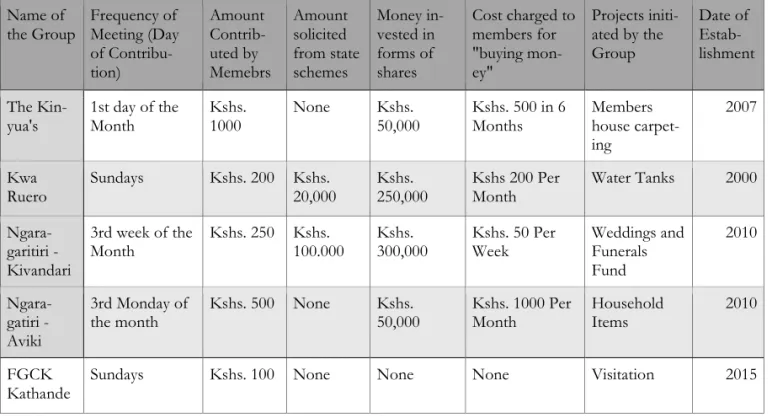
The nexus between ICT and SMEs is also evident in the rural poor’s participation in state-led pro- grams (Uwezo Fund and Women Enterprise Fund (WEF)). The consolidation for access to these fund- ing is either individual or in groups (self-help). Once funded, their activities are often scattered in what can be called ‘individual ambitions’. The funding from the government, although mobilised in a group is usually transferred to individual goals, something that constituent members seemed to encourage although strongly seeking for funding as a unified group. There is a logic for this; that most of the times the funds accessed by these people is insufficient, and takes a long time to process before matur- ing. Pursuance of a group activity is therefore to the detriment of the functionality and cohesion of the group. The cohesion of the group must be maintained by other regular activities that are beyond the stipulations and the requirement of the funding from the state. Consider the case of Ngaragatiri Kwa Ruero group who placed the WEF application in January 2016. They got a message of confirmation in December 2016 asking the group’s steering committee to visit the CDF offices at Runyenjes. When Riimi (the chairlady) came home that day, she reported that they had been offered Kshs. 30,000 ($300). After deliberations, the women decided that it was impossible to fund any formidable collec- tive program as envisioned by the state. They then decided that the best thing to do was to deposit the money in the group's M-Pesa account. Any member who wished could be loaned the money through their mobile phones. They however needed to pay Kshs. 100 ($1) for each Kshs. 1000 ($10) borrowed for a period of one month. Several women reported that they took the money despite having no partic- ular need for it. By depositing this money in their M-Pesa, they asserted that they were boosting their capacity to borrow from M-Pesa independently when they could be awarded larger amounts that can effectively be capital for a business project.
4. Conclusion
4.1. Growth trajectories in sub-Saharan Africa
The new phase of globalisation in rural Africa is being propelled by the significant rise of ICT that is key to accelerating integration of economies around the world. This acceleration is among others con- necting the financial markets, increasing velocity between cross-borders, and thus facilitating the rise of cross-border political, social, and cultural connectedness. The results of ICT revolution are spurring growth through facilitating emergence of new forms of communication. These means have created platforms that have strengthened non-state actors to facilitate affairs of the once back-rolled state, thus highly demonopolising the state in Africa. The link between SMEs and the ICT is particularly im- portant link in exploring the poor’s own methods of encountering poverty. The approach in this prem- ise underscores the primacy of the poor not only as drivers of growth, but also as embedded with anti- poverty mechanisms. An emphasis on this method is key in that its proposition is to put an emphasis on what the poor have rather than what they lack. Defined in the language of either ‘lack’ or ‘posses’
the poor are seen through the lenses of financial, physical, and natural assets. Consequently, means of interventions are build after ‘lack’ vs ‘posses’ ideologies. However, the emphasis of the flow of re- sources whether little or much focuses on the networks of mobilising new or already available re- sources. This focus allows for an exploration that exposes how they reduce vulnerability and improve assets.
Improved business environment has fuelled increase in public and private investment in sub- Saharan Africa. The influx of China, India, and Korea and a significant improvement of trade ties with the OECD countries has propelled returns of capital that is encouraging investments. This is partly explained in the now prominent discourse on Africa rising, in which SMEs have been pointed out as bearing an important role. SMEs have become crucial in satisfying the demand for services at a local level. Thus, they are seen as engines for both sustaining the rise and also enhancement of industrial development.
As described in this paper, there are diverging definitions of SMEs depending on the specific countries and the volume of returns from capital. In this paper, I have described SMEs as an integral part of the informal economy, which is prevalent in vast sub-Saharan Africa economies. Thus, alt- hough SMEs are beaming with hope for reverberating the economic growth, they are also prone to the risks that faced the informal sector in the post-independent African states. In this respect, SMEs en- counter a corrupt state (weak states), which is characterised by a weak business environment, corrup- tion, and red tape bureaucracy. However, the corrupt state is also described as being dismantled by the efforts to dilute the overly centralised state. Thus, the implementation of devolution in Kenya although not a perfect remedy for corruption (there has risen such cases of decentralised corruption and patron- age (D'Arcy and Cornell 2016) is seen as reviving the hope for small scale businesses through maxi- misation of better coordination and mobilisation of resources. Majority of these business have thrived because of the generous assistance from the blooming micro-financing institutions in Embu, private
‘ndeto ino cia M-Pesa niciatethirie andu guku muno avai. Kamwana takaria urona varia twathomaga nako nariu nurona uria kagacirire mbiacarari. Na tiundu ati wa uria kai na mbia, aika, niundu wa turuni tutu tuninii mavecagwa ni andu a M-Pesa’. (The M-Pesa initiative has really helped people here. You see that young man over there, we went to school together, and now you see how economically advanced he has become. And it is not because he has money, but because of the small loans they get out of mobile money related transactions).
This is summed up by the founding vision of M-pesa as revolutionary in the words of Micheal Joseph, the Safaricom limited CEO (2000-2011), who asserted;
‘we needed to be revolutionary in order to be successful, if we applied the Western standards to all the things we do, we would probably still be in the dark ages in Africa’.
The nexus between ICT and SMEs is also evident in the rural poor’s participation in state-led pro- grams (Uwezo Fund and Women Enterprise Fund (WEF)). The consolidation for access to these fund- ing is either individual or in groups (self-help). Once funded, their activities are often scattered in what can be called ‘individual ambitions’. The funding from the government, although mobilised in a group is usually transferred to individual goals, something that constituent members seemed to encourage although strongly seeking for funding as a unified group. There is a logic for this; that most of the times the funds accessed by these people is insufficient, and takes a long time to process before matur- ing. Pursuance of a group activity is therefore to the detriment of the functionality and cohesion of the group. The cohesion of the group must be maintained by other regular activities that are beyond the stipulations and the requirement of the funding from the state. Consider the case of Ngaragatiri Kwa Ruero group who placed the WEF application in January 2016. They got a message of confirmation in December 2016 asking the group’s steering committee to visit the CDF offices at Runyenjes. When Riimi (the chairlady) came home that day, she reported that they had been offered Kshs. 30,000 ($300). After deliberations, the women decided that it was impossible to fund any formidable collec- tive program as envisioned by the state. They then decided that the best thing to do was to deposit the money in the group's M-Pesa account. Any member who wished could be loaned the money through their mobile phones. They however needed to pay Kshs. 100 ($1) for each Kshs. 1000 ($10) borrowed for a period of one month. Several women reported that they took the money despite having no partic- ular need for it. By depositing this money in their M-Pesa, they asserted that they were boosting their capacity to borrow from M-Pesa independently when they could be awarded larger amounts that can effectively be capital for a business project.
borrowing by the county government and also develop blueprints for local governments. Thus the 47 local units in Kenya bears the responsibility to promote development through trade, regulating of mar- kets, and promotion of income generating activities such as tourism among others at a local level.
Most importantly, the county government carries the responsibility to manage cooperative societies in the counties. Throughout the pursuance of development plans to promote SMEs, a specific focus was hinged upon the improvement of accessibility to capital. Thus, this pursuit of capital renders, those initiatives by the county governments to mobilise funds, and the private sector aiming to provide easy access to capital is important to the state and growth of SMEs in Kenya.
money lenders (often refereed to as money sellers), and buying money from organised groups mostly run by women. Thus an easy access to capital is being provided and facilitated by such groups. Alter- native methods are increasingly through the use of mobile money transfers platforms. M-pesa has evolved not only as a mean for exchanging money from family members and friends in the urban areas to those in rural, but also as an aid to inclusivity of the most vulnerable groups of populations into economic empowerment through access to capital.
4.2. Governing local resources in devolved state: Lessons from the youths engagement with SMEs and ICT
It is generally agreed that the most common handicaps to SMEs potentials are access to finances or credit, regulation and rules that governs policy, and poor entrepreneurial skills among the communities that are supposed to carry the mandate of making SMEs work. The popularisation of SMEs and the calls for policies in support of it thereof stems out the understanding that SMEs are engines for devel- opment through industrialization. Moreover, tenants calling for industrial policies have not successful- ly worked in Africa. Among many reasons for this failure to reap from the focus on the need to indus- trialise is that it has not vehemently sought the locally working mechanisms that target poverty allevia- tion.
Despite the divergent variation in explaining SMEs in terms of composition, size, and contribu- tions to economies, in reference to Africa, it is no doubt that there has been a broad range of navi- gating SMEs through ICT platforms. From the analysis of engagement of SMEs and ICT among the youths in Embu region, key areas of concerns offer important lessons.
The government can do more to the youth by further easing credit access. Since the youths are breaking the current existing barriers to credit through the means that circumvent the system it is evi- dent that the banking sector can improve smooth operations of the SMEs. Such lessons have been learnt through successful operations stated earlier such as Equity Bank. The operations of the SACCO societies in Embu area (for example Daima and Nawiri) also attests to the same.
The two key areas associated with the devolution and promotion of entrepreneurship among the youths is financial management and an autonomy for investment. These have allowed a thriving of a local or domestic tailor made policies to mobilise and manage resources. Thus, one of the outcomes of the devolved governance in Kenya has been a favourable environment for micro-economic activities.
The favourable environment is as a result of interconnected factors. On the one hand, the radically de- centralised state has empowered the making of locally appropriate policies that fit the aspirations of the local communities. On the other hand, SMEs are able to withstand adverse and severe economic conditions and are also flexible (Kayanula and Quartey 2000). On their part, SMEs flexibility allows the use of scarce resources especially in the remote and rural areas (Kayanula and Quartey 2000).
Under the devolved governance, the county assembly is responsible for county’s budget as stipu- lated in the 207 article of the constitution. Furthermore, under article 212, the county may approve