九州大学学術情報リポジトリ
Kyushu University Institutional Repository
魚骨による焼却飛灰の重金属安定化に関する研究
牟, 悦
https://doi.org/10.15017/1807008
出版情報:Kyushu University, 2016, 博士(工学), 課程博士 バージョン:
権利関係:Fulltext available.
A Thesis Submitted
In Partial Fulfillment of the Requirements For the Degree of
Doctor of Engineering
UTILIZATION OF FISHBONE FOR THE STABILIZATION OF HEAVY METALS IN
MUNICIPAL SOLID WASTE INCINERATION (MSWI) FLY ASH
By
Yue MU
To the
DEPARTMENT OF URBAN AND ENVIRONMENTAL ENGINEERING GRADUATE SCHOOL OF ENGINEERING
KYUSHU UNIVERSITY Fukuoka, Japan
January 2017
DEPARTMENT OF URBAN AND ENVIRONMENTAL ENGINEERING GRADUATE SCHOOL OF ENGINEERING
KYUSHU UNIVERSITY Fukuoka, Japan
CERTIFICATE
The undersigned hereby certify that they have read and recommended to the Graduate School of Engineering for the acceptance of this thesis entitled, ‘‘UTILIZATION OF FISHBONE FOR THE STABILIZATION OF HEAVY METALS IN MUNICIPAL SOLID WASTE INCINERATION (MSWI) FLY ASH’’ by Yue MU in partial fulfillment of the requirements for the degree of Doctor of Engineering.
Dated: January, 2017
Thesis Supervisor:
______________________________
Prof. Takayuki SHIMAOKA, Dr. Eng.
Examination Committee:
______________________________
Prof. Takayuki SHIMAOKA, Dr. Eng.
______________________________
Prof. Takahiro KUBA, Dr. Eng.
______________________________
Prof. Koichiro WATANABE, Dr. Sci.
I
Abstract
As one of the most effective means for the disposal of municipal solid waste that daily generated in a huge amount, incineration is adopted increasingly as it can reduce the mass and volume of the waste dramatically and recovery energy. Municipal solid waste incineration (MSWI) fly ash is one of the main solid residues derived from the incineration process, which is classified as hazardous waste worldwide owing to the relatively high concentration of heavy metals. Thus, MSWI fly ash requires further treatment before the reuse or recycle, and the final disposal in landfill sites. There have been many technologies for the stabilization of heavy metals in MSWI fly ash, whereas most of them are too complicated or expensive to be practically accepted.
Therefore, simple and low-cost new technologies are in demand.
Fishbone is a common type of waste generated from the food and especially fish processing industries. As a bio-waste, fishbone or fish waste are usually treated as the source of organic matters for the by-production. In addition, fishbone is an enriched natural source of hydroxyapatite (HAP) which is reported to possess the ability on the stabilization of heavy metals by producing metal-HAP bonding. Ample efforts have been conducted for the utilization of HAP or fishbone on the heavy metal stabilization in the contaminated environments, while there is no practical investigation on the stabilization of heavy metals in MSWI fly ash. Therefore, this research was conducted with the aim of stabilizing the heavy metals by waste fishbone as an environmental- friendly technique for the utilization or final disposal of MSWI fly ash.
In the present research, the MSWI fly ashes from three plants in Japan and various types of fishbone from the market were used. The collected fly ash materials were firstly subjected to different tests for characterization. The feasibility of HAP on heavy metal stabilization was verified by adding fishbone during the leaching process of MSWI fly ash. Then two approaches were taken into account for improving the effectivity of fishbone HAP on the stabilization of heavy metals in MSWI fly ash.
The contents of the thesis are organized as follows:
Chapter 1 introduces the background and objectives of this thesis. The current states of municipal solid waste generation and treatments were reviewed, with the emphasis on the
II
strategies of MSWI fly ash disposal and the utilization of waste fishbone. Then the motivation and purpose of this research was presented.
Chapter 2 presents the characterization of MSWI fly ash. Various properties of MSWI fly ash were tested, including pH, particle size distribution, thermogravimetric and loss-on-ignition features, elemental composition and leaching property, as well as the mineral composition and transformation. Accordingly, Pb was identified as the main target of the heavy metal stabilization in MSWI fly ash.
Chapter 3 verifies the feasibility of fishbone on the stabilization of heavy metals in MSWI fly ash. Natural fishbone was added during the leaching process of MSWI fly ash. The effectivity of fishbone on Pb stabilization in MSWI fly ash was represented as Pb removal efficiency in the leachate at the presence of fishbone. The results indicated that either longer contact time or higher fishbone dosage benefited Pb stabilization. However, Zn and particularly Cu were encouraged to leach out rather than to stabilize. Besides, higher capacity of fishbone on Pb stabilization was obtained at lower dosage of fishbone, which implied that the relatively abundant supply of heavy metal ions might facilitate the stabilization reactions.
Chapter 4 focuses on the approaches to improve the effectivity of fishbone on the stabilization of heavy metals in MSWI fly ash. According to the observation to the experiments of Chapter 3, providing various L/S conditions and taking ignition as the further pre-treatment on natural fishbone were taken into account. The results from the experiments under various L/S indicated that the preferred effectivity of fishbone on Pb stabilization could be obtained at lower L/S conditions, and Zn turned to be stabilized concurrently. However, the leaching of Cu still existed at all L/S conditions. In the second approach, candidate ignition temperatures were selected based on the potential mineral phase transformation of fishbone. These ignited fishbone from different ignition temperatures was involved into the stabilization processes as natural fishbone subjected previously. Accordingly, 430 °C was chosen as the optimal ignition temperature for the pre- treatment of fishbone, because the product showed better performance on Pb stabilization, and prevented the leaching out of Cu and P into the leachate of MSWI fly ash. The fishbone ignited at 430 °C brought higher Pb removal efficiency than the natural one under various scenarios, while it was not proportionate to the mass loss during the ignition. The ignition process not only removed
III
the non-HAP fraction of fishbone but also promoted the crystallinity of HAP; however, the latter was not beneficial to the stabilization of heavy metals in MSWI fly ash.
Chapter 5 summarizes the conclusions of the study, and makes recommendations for the future researches.
IV
Acknowledgement
I would like to express my gratitude to all those who helped me during the experiments and the writing of this thesis. Without each of you, this research would not be worked out smoothly.
A special acknowledgement should be shown to Professor Takayuki Shimaoka, who accepted me as a doctoral student and made my study in Japan realized. He also helped construct me with a much stronger heart like a researcher, thanks to which, I could be encouraged to step over the difficulties during the research. Moreover, he also supplied me many precious opportunities for the communications to feel the interesting and meaning of researches.
I am particularly indebted to Prof. Amirhomayoun Saffarzadeh, who gave me many professional suggestions during the research. The discussion with him always brought me valuable inspirations, and showed me how to think, work and performed as a researcher. Besides, he is also a good friend who always patiently encouraged me to move on with hope, especially in those tough days. He really taught me a lot, and those things make me start to enjoy the research.
I wish to extend my thanks to all other members of our lab, who accompanied me in the whole or a part of my doctoral period- Prof. Hirofumi Nakayama and Dr. Teppei Komiya, who always gave me kind instructions anytime when I needed explanations; Ms. Syoko Arizono, a really kind and smart lady, who always gave me warm care and supports in life and in research; Mr. Yuki Kajino, a diligent partner, who make all experiment conditions settled down; Ms. Lixiang Song, who taught me how to well manage the experiments and to well operate the instruments, and took good care of me especially in the days when I just came to Japan; and all the other staff and students I met, who make the days in lab joyful. Thanks to all of you, and it is my pleasure to meet you, know you and make friends with you.
My gratitude also extends to Kyushu University; I am so lucky that I could be a student and member of Kyushu University. I greatly appreciated the financial support from the Ministry of Education, Science and Culture of Japan, and the support of the Ministry of Education of the People’s Republic of China.
Last but not the least, I would like to give the deepest thanks to my dear families, who are always supporting me with their tolerance and understanding.
i
Contents
Abstract ... I Acknowledgement ... IV
Contents ... i
List of Figures...v
List of Tables ... vii
List of abbreviations ... ix
Chapter 1 Introduction ...1
1.1 Municipal solid waste (MSW) generation and management ...1
1.1.1 General introduction of MSW ...1
1.1.2 MSW generation and management in Japan ...4
1.2 Municipal solid waste incineration (MSWI) fly ash ...7
1.2.1 Municipal solid waste incineration (MSWI) technology ...7
1.2.2 MSWI residues ...8
1.2.3 Utilization of MSWI ashes ...9
1.2.4 Technologies of heavy metal stabilization in MSWI fly ash ... 11
1.3 Fishbone and hydroxyapatite (HAP) on stabilization of heavy metal ... 13
1.3.1 Fish waste and fishbone ... 13
1.3.2 HAP and its effectivity on heavy metal stabilization in contaminated environments ... 14
1.4 Research motivation, purpose and objectives ... 15
1.5 Structure of this thesis ... 17
Chapter 2 Characterization of municipal solid waste incineration (MSWI) fly ash ... 19
ii
2.1 Introduction ... 19
2.2 Experiments ... 20
2.2.1 Sample collection and preparation ... 20
2.2.2 pH measurement ... 21
2.2.3 Particle size analysis ... 21
2.2.4 Thermogravimetry (TG) ... 22
2.2.5 Loss-on-ignition (LOI) ... 22
2.2.6 Mineral phase composition detection ... 22
2.2.7 Bulk compositional analysis ... 23
2.2.8 Leaching test ... 23
2.3 Results and discussion ... 23
2.3.1 pH of MSWI fly ash ... 23
2.3.2 Particle size distribution ... 24
2.3.3 Elemental composition and total carbon (TC) content ... 27
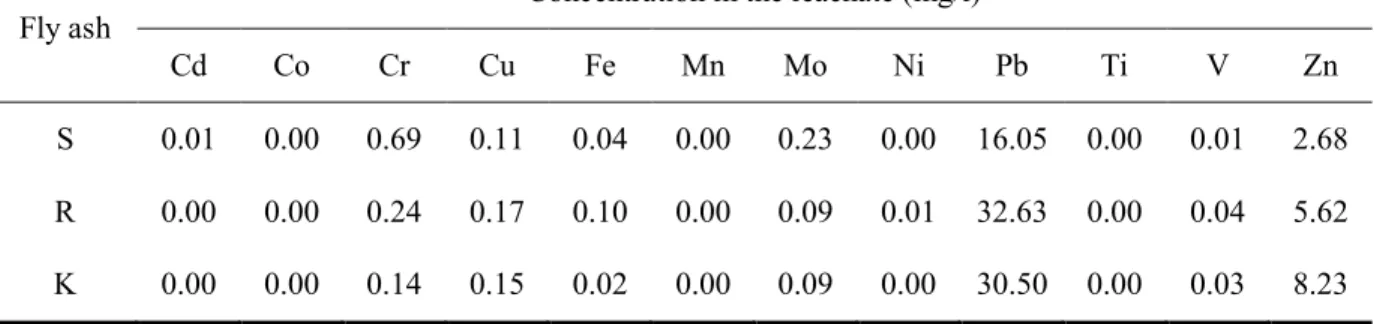
2.3.4 Leaching property ... 28
2.3.5 Mass loss feature as a function of temperature ... 29
2.3.6 LOI under various ignition conditions ... 29
2.3.7 Mineral phase and the transformation under various ignition conditions ... 31
2.4 Section summary... 38
Chapter 3 Feasibility of natural fishbone on the stabilization of heavy metals in MSWI fly ash ... 40
3.1 Introduction ... 40
3.2 Experiments ... 42
3.2.1 Collection and preparation of lime-treated MSWI fly ash ... 42
3.2.2 Collection and pre-treatment of fishbone ... 43
iii
3.2.3 Bulk compositional analysis ... 43
3.2.4 Mineral phase detection ... 44
3.2.5 Stabilization of heavy metals in MSWI fly ash via adding natural fishbone during leaching process (Plan A) ... 44
3.2.6 pH measurement ... 45
3.3 Results and discussion ... 46
3.3.1 Elemental and mineral composition of MSWI fly ash ... 46
3.3.2 Leachable elements from MSWI fly ash ... 47
3.3.3 Mineral and elemental composition of various fishbones ... 48
3.3.4 Effectivity of natural fishbone on heavy metal stabilization in MSWI fly ash during leaching process ... 49
3.3.5 Interaction with co-existing elements during heavy metal stabilization ... 58
3.3.6 Capacity of fishbone on heavy metal stabilization in MSWI fly ash ... 58
3.3.7 pH of leachate... 60
3.4 Section summary... 61
Chapter 4 Approaches of improving the effectivity of fishbone on the stabilization of heavy metals in MSWI fly ash ... 62
4.1 Introduction ... 62
4.2 Experiments ... 65
4.2.1 Collection and preparation of MSWI fly ash ... 65
4.2.2 Collection and basic pre-treatment on fishbone ... 65
4.2.3 Thermogravimetry and differential thermal analysis (TG-DTA) on fishbone ... 66
4.2.4 Ignition pre-treatment and mass loss of fishbone ... 66
4.2.5 Mineral phase detection of natural and ignited fishbone ... 66
4.2.6 Stabilization of heavy metals in MSWI fly ash by natural fishbone under various L/S conditions (Plan B) ... 67
iv
4.2.7 Selection of optimal temperature for ignition pre-treatment on fishbone ... 68
4.2.8 Stabilization of heavy metals in MSWI fly ash by ignited fishbone (IGN-430) via added in leaching process (Plan CA) and under various L/S conditions (Plan CB) 69 4.2.9 pH measurement ... 70
4.3 Results and discussion ... 70
4.3.1 Effectivity of natural fishbone on heavy metal stabilization in MSWI fly ash under various L/S conditions (Plan B) ... 70
4.3.2 Capacity of natural fishbone on the stabilization of heavy metals in MSWI fly ash under various L/S conditions (Plan B) ... 78
4.3.3 pH of the leachates of MSWI fly ash at the presence of natural fishbone under various L/S conditions (Plan B) ... 80
4.3.4 Mass loss feature and potential phase transformation of fishbone during ignition .. 81
4.3.5 Mineral phase transformation and mass loss of natural fishbone during ignition ... 83
4.3.6 Optimal temperature of ignition pretreatment on fishbone... 86
4.3.7 Effectivity of ignited fishbone on the stabilization of heavy metals in MSWI fly ash during leaching process (Plan CA) ... 90
4.3.8 Effectivity of ignited fishbone on the stabilization of heavy metals in MSWI fly ash under various L/S conditions (Plan CB) ... 92
4.3.9 Comparison of the capacities of natural and ignited fishbone on stabilization of heavy metals in MSWI fly ash ... 95
4.4 Section summary... 97
Chapter 5 Conclusions and recommendation ... 99
5.1 Conclusions ... 99
5.2 Recommendation ... 101
References... 103
v
List of Figures
Figure 1-1 Typical MSW processing technologies and there products (Ng et al., 2014) ...4
Figure 1-2 Amount and generation rate of MSW in Japan in 2004-2014 ...5
Figure 1-3 Flow of MSW management in Japan in 2014 ...6
Figure 1-4 Units and mass streams of a MSWI plant (Ecke et al., 2000) ...9
Figure 1-5 Groups of methods and subdivisions of heavy metal entrapment in APC residues .... 11
Figure 1-6 Structure of this thesis ... 18
Figure 2-1 Particle size distribution of MSWI fly ash ... 26
Figure 2-2 TG analysis results of MSWI fly ash ... 29
Figure 2-3 Representative LOI values under different ignition conditions... 30
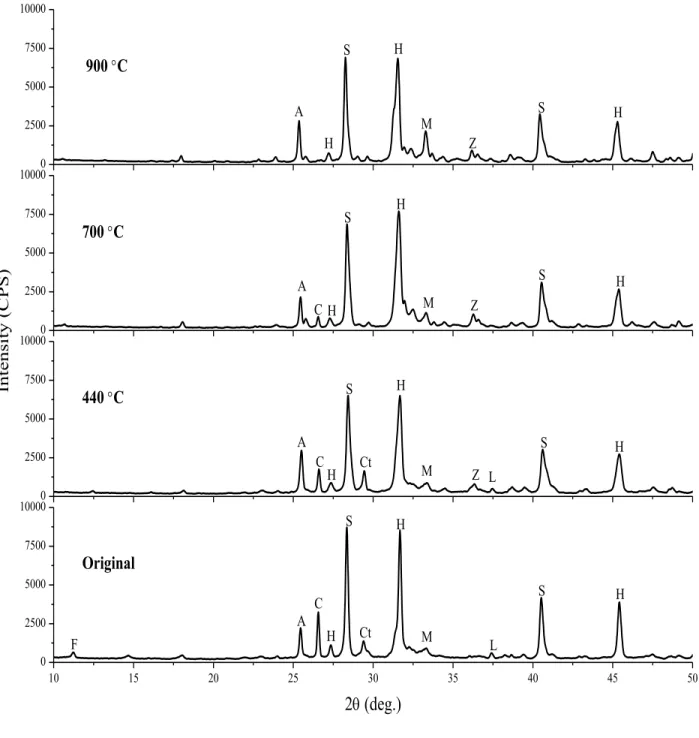
Figure 2-4 XRD patterns of Group S ... 35
Figure 2-5 XRD patterns of Group R ... 36
Figure 2-6 XRD patterns of Group K ... 37
Figure 3-1 Outline and structure of Chapter 3 ... 42
Figure 3-2 Pre-treatment process on fishbone (Eso as example)... 43
Figure 3-3 Experimental setup of Plan A ... 45
Figure 3-4 XRD pattern of MSWI fly ash K ... 47
Figure 3-5 XRD patterns of various fishbones ... 48
Figure 3-6 Correlation between Pb removal efficiency (solid lines) and P concentration in the leachate (vertical bars) under various Aji doses and different contact times (Plan A) ... 50
Figure 3-7 Correlation between Pb removal efficiency (solid lines) and P concentration in the leachate (vertical bars) under various Eso doses and different contact times (Plan A) ... 55
Figure 4-1 Outline and structure of Chapter 4 ... 64
Figure 4-2 Basic pre-treatment process on Eso fishbone ... 65
Figure 4-3 Experimental setup of Plan B ... 68
Figure 4-4 Correlation between Pb removal efficiency (solid lines) and P concentration in the leachate (vertical bars) under various L/S conditions and different settlement periods ... 74
Figure 4-5 TG-DTA results of natural Eso fishbone ... 82
Figure 4-6 Photos of natural and ignited Eso fishbone ... 84
vi
Figure 4-7 XRD patterns of natural and ignited Eso fishbone ... 85 Figure 4-8 Comparison of natural and ignited Eso fishbone on Pb removal efficiency in Plans CA and CB ... 87 Figure 4-9 Pb removal efficiency (solid lines) and P concentration in the leachates (vertical bars) at the presence of natural or ignited Eso fishbone under various doses after a 6 h-leaching process ... 91 Figure 4-10 Pb removal efficiency (solid lines) and P concentration in the leachate (vertical bars) with the presence of ignited or natural Eso fishbone under various L/S conditions for the settlement period of 24 h ... 93
vii
List of Tables
Table 1-1 Waste generation in selected OECD countries and China ...2
Table 1-2 MSW composition in various cities of China ...3
Table 1-3 Applications of MSWI ashes (Lam et al., 2010) ... 10
Table 2-1 Information of the incineration plants of sample sources ... 21
Table 2-2 Calculated mean diameter and surface area of MSWI fly ash ... 25
Table 2-3 Cumulative frequency for different particle size of MSWI fly ash ... 25
Table 2-4 Elemental composition of MSWI fly ash ... 27
Table 2-5 Heavy metal in the leachate of MSWI fly ash ... 28
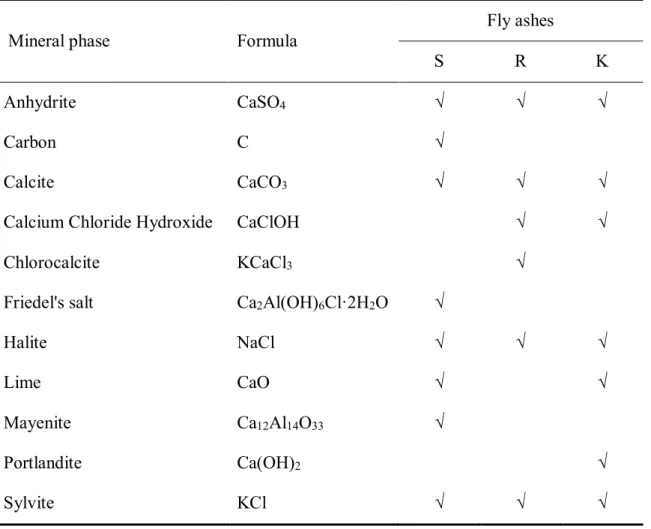
Table 2-6 Mineral phase composition in the original samples of fly ash ... 31
Table 3-1 Elemental composition of MSWI fly ash K ... 46
Table 3-2 Leachable elements from MSWI fly ash ... 48
Table 3-3 Elemental composition of fishbones ... 49
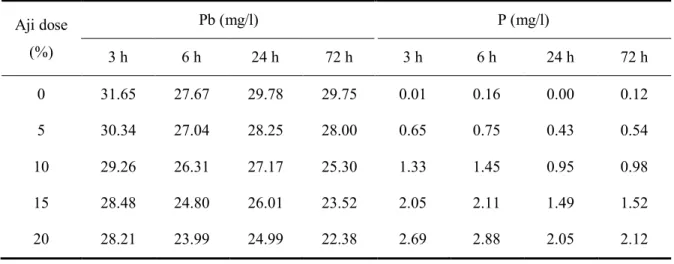
Table 3-4 Concentration of Pb and P in the leachates of fly ash with Aji fishbone (Plan A) ... 51
Table 3-5 Concentration of Cu and Zn in the leachates of fly ash with Aji fishbone (Plan A) .... 52
Table 3-6 Concentration of Pb and P in the leachates of fly ash with Eso fishbone (Plan A) ... 54
Table 3-7 Concentration of Cu and Zn in the leachates of fly ash with Eso fishbone (Plan A).... 56
Table 3-8 Concentration and removal efficiency of total heavy metal in the leachates of fly ash with Aji fishbone (Plan A) ... 57
Table 3-9 Concentration and removal efficiency of total heavy metal in the leachates of fly ash with Eso fishbone (Plan A) ... 57
Table 3-10 Capacity of fishbone (Aji and Eso) on Pb stabilization (Plan A) ... 59
Table 3-11 pH of the leachates of MSWI fly ash in Aji and Eso cases (Plan A) ... 60
Table 4-1 Alpha codes of experiment scenarios ... 70
Table 4-2 Concentration of Pb and P in the leachates of MSWI fly ash at the presence of natural Eso fishbone under various L/S conditions (Plan B) ... 73
Table 4-3 Concentration of Cu and Zn/Zn removal efficiency in the leachates of fly ash at the presence of natural Eso fishbone under different L/S conditions (Plan B) ... 76
viii
Table 4-4 Concentration and removal efficiency of total heavy metal in the leachates of fly ash at the presence of natural Eso fishbone under different L/S conditions (Plan B) ... 78 Table 4-5 Capacity of natural fishbone on the stabilization of Pb and total heavy metal under different L/S conditions (Plan B) ... 79 Table 4-6 pH of the leachates of fly ash at the presence of natural fishbone under various L/S conditions (Plan B) ... 81 Table 4-7 Mass loss of natural Eso fishbone under different ignition temperatures ... 83 Table 4-8 Concentration of P and heavy metals and their removal efficiencies of natural and ignited Eso fishbone in the leachates (Plan CA) ... 89 Table 4-9 Concentration of P and heavy metal and their removal efficiencies of natural and ignited Eso fishbone in the leachates (Plan CB) ... 89 Table 4-10 Concentration of heavy metals in the leachate at the presence of ignited or natural Eso fishbone under various doses after a 6 h-leaching process ... 92 Table 4-11 Concentration of heavy metals in the leachate at the presence of ignited or natural Eso fishbone under various L/S conditions for the settlement period of 24 h ... 94 Table 4-12 Capacities of ignited and natural fishbone on the stabilization of Pb and total heavy metal under various doses after a 6 h-leaching process ... 96 Table 4-13 Capacities of ignited and natural fishbone on the stabilization of Pb and total heavy metal under various L/S conditions for the settlement period of 24 h ... 96
ix
List of abbreviations
3R Reduce, reuse and recycle APC Air pollution control
BA Bottom ash
FA Fly ash
HAP Hydroxyapatite
L/S Liquid/solid
LOI Loss-on-ignition MSW Municipal solid waste
MSWI Municipal solid waste incineration
OECD Organization for Economic Co-operation and Development S/S Stabilization / solidification
TC Total carbon
TG Thermogravimetry
TG-DTA Thermogravimetry and differential thermal analysis
WTE Waste-to-energy
XRD X-ray diffractometry XRF X-ray fluorescence
1
Chapter 1 Introduction
1.1 Municipal solid waste (MSW) generation and management
1.1.1 General introduction of MSW
Municipal solid waste (MSW) is the trash that are generated as a result of the products after or brought by being used in the municipality, and for every city, the final disposal of MSW is the last phase of the unban sanitation system (Karak et al., 2012). According to the sources, MSW include primarily residential, institutional, commercial and municipal service (like street cleaning) wastes (Yousuf and Rahman, 2007; Zhang et al., 2010).
Accompanying with the fast economic development and urbanization, tremendous amount of the MSW is generated around the world (Islam, 2016). Only in 10 years, the generation of MSW has increased from 0.68 billion tons per year by 2.9 billion urban residents to 1.3 billion tons per year by 3 billion urban residents, which means that the growing rate of MSW is even faster than that of urbanization. And in the future, the situation seems to remain dire; the numbers are predicted as 2.2 billion tons per year and 4.3 billion unban residents by 2025 (Hoornweg and Bhada-Tata, 2012).
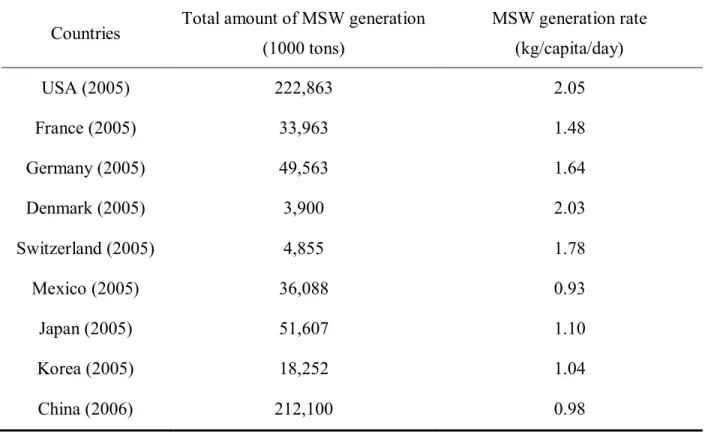
The quantity of MSW varies dramatically due to its association with the economic status of the local society (Shekdar, 2009). There is some data taken from a literature (Zhang et al., 2010) as an example to show the comparison among some selected countries of Organization for Economic Co-operation and Development (OECD) and China (Table 1-1).
2
Table 1-1 Waste generation in selected OECD countries and China Countries Total amount of MSW generation
(1000 tons)
MSW generation rate (kg/capita/day)
USA (2005) 222,863 2.05
France (2005) 33,963 1.48
Germany (2005) 49,563 1.64
Denmark (2005) 3,900 2.03
Switzerland (2005) 4,855 1.78
Mexico (2005) 36,088 0.93
Japan (2005) 51,607 1.10
Korea (2005) 18,252 1.04
China (2006) 212,100 0.98
The physical composition is a vital factor to classify the MSW for the design and operation of the proper management. The characteristics and composition of MSW vary dramatically, because they are affected not only by the economic status of the city, but also by the the topography of the area, seasons, food habits of the citizens and commercial status (Palanivel and Sulaiman, 2014).
The data extracted from a literature (Zhang et al., 2010) about the variation of the composition of MSW in various cities of China is shown in Table 1-2, which are located in different areas and quite varied in climate, food style and economic status.
3 Table 1-2 MSW composition in various cities of China
Composition (%) Organic
garbage Paper Plastic Glass Metal Textile fiber
Wood timber Beijing (2006) 63.39 11.07 12.70 1.76 0.27 2.46 1.78
Shanghai (2009) 66.70 4.46 19.98 2.72 0.27 1.80 1.21
Tianjin (2007) 56.88 8.67 12.12 1.30 0.42 2.47 1.93
Shenyang (2007) 73.70 7.60 5.20 2.40 0.30 0.90 1.70
Hangzhou (2009) 57.00 15.00 3.00 8.00 3.00 2.00 2.00
Tibet (2009) 72.00 6.00 12.00 — 1.00 7.00 —
Chongqing (2006) 59.20 10.10 15.70 3.40 1.10 6.10 4.20 Hong Kong (2009) 44.00 26.00 18.00 3.00 2.00 3.00 1.00
— : data absent
The matters that are contained in MSW could be sorted roughly into four kinds- compostable organic matters (like fruit/vegetable peels, food waste), recyclable matters (like paper, plastic, glass, metals, etc.), toxic substances (paints, used batteries, etc.) and soiled waste (Singh et al., 2011). And the ratio of various matters could be quite different according to the regions.
There is a variety of treatment processes of MSW management for conversing to other useful materials or energy, and the three most widely adopted ones are thermal conversion, biochemical conversion and landfilling. The typical MSW processing technologies and their products are shown in Figure 1-1.
4
As shown above, the main strategy of MSW treatment or processing is to converse the waste to various forms of energy, which is called waste-to-energy (WTE) concept. The technologies could be used separately or combined, based on the local economic status and other situations.
Sorting collection of MSW may contribute to the higher WTE conversion, but it is not the compulsory requirement, especially for incineration. Landfill is the primary and final disposal site for MSW.
1.1.2 MSW generation and management in Japan
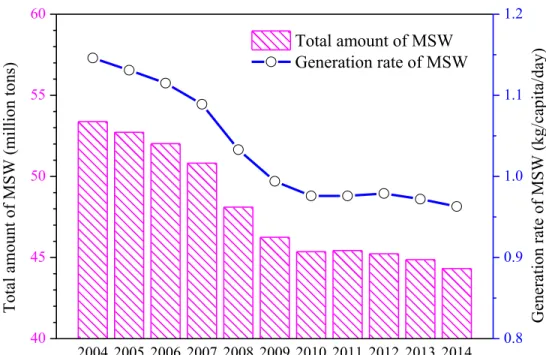
According to the statistical data released by Ministry of Environment of Japan (2016), totally 44.32 million tons of municipal solid waste were generated in the fiscal year of 2014, which decreased by 17% comparing with that of 2004 (53.38 million tons). The MSW generation rate was 0.95 kg/capita/day, which is also continuously reducing in the recent 10 years. The trend of the amount and generation rate of MSW in Japan in 2004-2014 is shown in Figure 1-2.
Figure 1-1 Typical MSW processing technologies and there products (Ng et al., 2014)
5
The generation of MSW in Japan kept decreasing year by year, while in the recent 5 years, the decreasing speed has become quite slow both in MSW generation and in the generation rate, which implies that the amount of MSW could be relatively constant in a foreseeable long period as observed in 2014. However, the generation of MSW is still quite huge. Therefore, the 3R approach (reduce, reuse and recycle) is playing a significant role in the waste management. 3R approach makes the demand of raw material for new production diminished, and the burden from the treatment of MSW (like energy consumption in the process) eased, as well as helps to alleviate the pressure that finding the final disposal location- the landfilling site- as the quick urbanization. All the advantages taken from the 3R approach implement would finally benefit to the environmental protection.
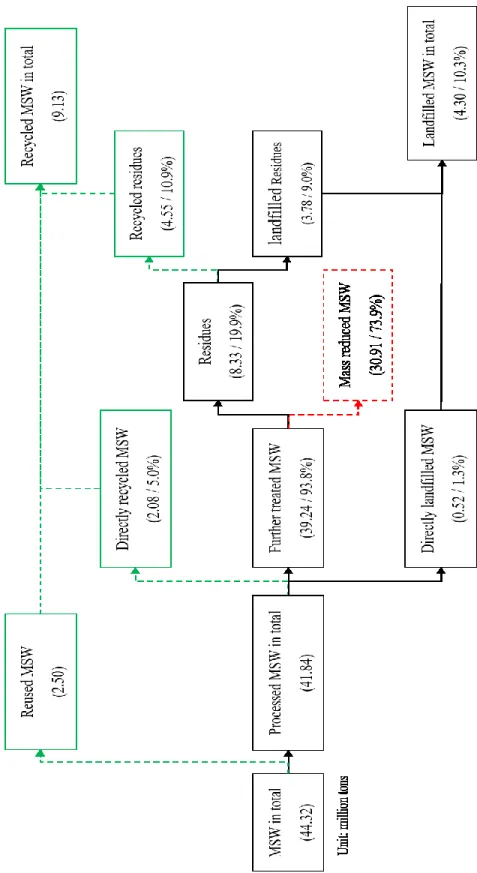
Japan is well known as a leader country in the waste management, especially in recycling. The flow chart of the MSW management is shown in Figure 1-3 with the data of fiscal year 2014 that released by Ministry of Environment of Japan (2016).
2004 2005 2006 2007 2008 2009 2010 2011 2012 2013 2014 40
45 50 55 60
Total amount of MSW Generation rate of MSW
Fiscal year
Total amount of MSW (million tons)
0.8 0.9 1.0 1.1 1.2
Generation rate of MSW (kg/capita/day)
Figure 1-2 Amount and generation rate of MSW in Japan in 2004-2014
6
Figure 1-3 Flow of MSW management in Japan in 2014
7
There are solid and dash lines in three colors in Figure 1-3. Green dash line means the waste could be reused or recycled; black solid line means the waste are going to landfill sites; and red dash line and box mean the waste are totally mass reduced. As shown in Figure 1-3, it could be found that reuse and recycling were considered during the whole process and led to 20% recycling of the original MSW (9.13/44.32). The waste for final disposal (landfilling site) only occupied 10.3% of the total processed MSW thanks to the huge amount reduction (73.9%) occurred in the further treatment step. Therefore, the technologies that adopted for further treatment of MSW are crucial for the implement of reducing MSW in final disposal. The technology, that could dramatically reduce MSW and make the inevitable residues in relatively lower environmental risk, as well as produce useful energy or products, would be definitely of high concerns. In Japan (2014), 33.47 million tons of MSW were directly transferred to incineration plants, which is 80% of total processed MSW (41.84 million tons).
1.2 Municipal solid waste incineration (MSWI) fly ash
1.2.1 Municipal solid waste incineration (MSWI) technology
As mentioned in the previous section, a huge amount of MSW is generated around the world day by day, and the increasing trend could be also foreseen, which has been a pressing issue. A variety of processing technologies has been developed for MSW management and recovery energy during the processing (see Figure 1-1 on Page 4), while as the simple and inexpensive method, landfilling was dominant in the fresh MSW disposal for a long period, even currently in some developing or underdeveloped countries. However, landfilling has high environmental risks, for example, it may cause groundwater pollution or soil contamination due to the leaching of toxic components (Saikia et al., 2007). Furthermore, along with the urbanization occurred around the world (see Section 1.1) and the resistance of the citizens nearby, the spaces for landfilling site have been shrunk gravely. Additionally, from the viewpoint of 3R approach (especially “reduce”), the technologies that could cut the amount of waste sent to landfill would be certainly preferred.
Accordingly, incineration is of increasing concerns in the recent decade.
Municipal solid waste incineration (MSWI) technology is deemed one of the commonest and most effective techniques for treating the generated waste with reduction, detoxification and utilization in many countries, as it can reduce the waste volume by up to 90% and the waste mass by 70% (Lei et al., 2016; Nixon et al., 2013). Although the residue from MSWI is still need to be
8
disposal into landfill, but it has efficiently reduced the demand of the space. As a renewable source of fuel instead of fossil fuel, MSWI could recovery energy and supply heat and electricity to the consumers (Sun et al., 2016). The solid residues (ashes) from MSWI could be partly used as a low cost and environmentally appreciated aggregate for constructions or additives in cement when pre- treated and verified as met some quality standards before sent to landfill, which is helped to further reduced the landfill usage (del Valle-Zermeño et al., 2013; Li et al., 2012). Same as other alternatives of MSW treatment, incineration also decompose the organic matters into simpler carbon forms such as carbon dioxide (CO2) and methane (CH4). Although the gaseous emission is unavoidable, incineration is the best way among all MSW treatments to reduce the elimination of CH4 by balancing the two gases generation (Rand et al., 2000). Both the contributions to the reduction of fossil fuel usage and CH4 emissions, MSWI helps to reduce greenhouse gas emissions.
The advantages mentioned as above make MSWI adopted by most developed countries currently (Rocca et al., 2012), while it still criticized due to its own drawbacks, mainly associated with the cost, the unavoidable gaseous emissions (carbon dioxide and dioxins) and hazardous discharge (Orozco et al., 2007; Quina et al., 2010). An incineration plant may involve both heavy investigation at the beginning and high maintaining cost throughout the operation, which makes it difficult to be accepted by developing and underdeveloped countries. Furthermore, the complexity of an incineration plant results to the requirement of highly skilled staff and careful maintenance, which may be a technical barrier for its popularization. In addition, with the dramatic reduction of the mass and volume of MSW, the toxic components or elements would be concentrated, which lead to the evident increase of the environmental risk and difficulties during processing the residues. Therefore, finding the practical, proper and effective methods for the treatment of solid residues is of high concerns.
1.2.2 MSWI residues
After incineration process, the MSW was combusted into solid residues which are generally classified as bottom ash (BA) and fly ash (FA) (Quina et al., 2008a). Bottom ash is mainly the residues from combustion, and fly ash is captured by fabric filters or electrostatic precipitators in the flue gas cleaning unit- air pollution control (APC) system. In this unit, the sorbent, such as slaked lime (Ca(OH)2) or caustic soda (NaOH), is added for removing the acid gas (mainly HCl) (Chen et al., 2012; Lin et al., 2003; Wang et al., 1998). Thus the APC residue actually a mixture
9
of scrubber residues and real fly ash. The units and mass streams of a MSWI plant is shown in Figure 1-4.
Although taking a quite big portion (about 80% in amount), bottom ash that is rich in calcium oxide and silica but poor in heavy metal is commonly treated as a non-hazardous waste, and is relatively easily recycled as a secondary material or landfilled (Chimenos et al., 1999; del Valle- Zermeño et al., 2015; Forteza et al., 2004; Huang et al., 2006; Song et al., 2015). On the contrary, fly ash is worldwide classified as hazardous waste, as it contains various organic compounds, high contents of toxic heavy metal metals and soluble chlorides (Colangelo et al., 2012; Zhang et al., 2011, 2016). Hence, adequate pretreatments on fly ash are required for stabilizing the heavy metal in order to avert undesirable environmental risks before the utilization or final disposal (Ferreira et al., 2003; Garcia-Lodeiro et al., 2016). As shown in Figure 1-4, fly ash is rarely exhausted separately, and it is the major source of the toxic matters in APC resides, thus many researches with the objective of fly ash may launch the experiments using the sample of APC residue, as we did in this work.
1.2.3 Utilization of MSWI ashes
Both of bottom ash and fly ash have been detected the potentials in recycling. Otherwise they would be disposed into landfill sites after proper treatments (see Figure 1-1 on Page 4). Therefore,
Figure 1-4 Units and mass streams of a MSWI plant (Ecke et al., 2000)
10
the studies about MSWI residues have raised concerns in the field of waste management (Sabbas et al., 2003). Many efforts have been made to recycle the MSWI residues as a second raw materials or additives in constructions after some proper treatments, and some examples of the applications summarized by researchers are shown in Table 1-3.
Table 1-3 Applications of MSWI ashes (Lam et al., 2010)
Type Application Composition% Country
BA Aggregate in concrete Up to 50% France
BA Road base Spain
BA Adsorbent for dyes India
BA Concrete Italy
Mixed ash Cement clinker Up to 50% Portugal
Mixed ash Cement clinker 44% Japan
Mixed ash Aggregate in concrete Spain
FA Concrete 50% France
FA Eco cement 50% Japan
FA Ceramic tile
(Binder for stabilizing) China
FA Sludge 45% China
FA Glass ceramic 75% FA, 20% SiO2, 5% MgO, 2%
TiO2
Korea
FA Glass ceramic
(low melting temperature) China
FA Cement clinker Replace up to 30% of raw material China
FA Blended cement Up to 45% UK
11
It could be seen that the main utilization of MSWI ashes is in concrete or cement field.
Although the composition of MSWI in the products of different countries varied, the ratio of MSWI ashes in the products is rarely beyond 50%, maybe due to the consideration of engineering and the material safety. Because of the toxic property, fly ash needs more complex pre-treatments that raised the cost of its utilization. Therefore, from the perspectives of recycling and final disposal, the effective, low-cost and environment-friendly techniques for processing MSWI fly ash are in demand.
1.2.4 Technologies of heavy metal stabilization in MSWI fly ash
APC residues, same as the MSWI fly ash included, is classified as hazardous material attributing to containing high content of leachable heavy metals (e.g. Pb, Zn), soluble salts (e.g.
NaCl, KCl, Ca-bearing salts) and toxic organic micro-pollutants (e.g. dioxins and furans) (Quina et al., 2008b). The heavy metal and organic micro-pollutants are mainly from the combustion of fresh MSW, i.e. MSWI fly ash; and soluble salts are generally the products of the absorption of acid gas by sorbent (see Section 1.2.2 on Page 8). Accordingly, stabilizing the heavy metal is one of the crucial missions for processing APC residue and MSWI fly ash.
Many endeavors have been made for the heavy metal treatment in APC residues / MSWI fly ash, and the appropriate treatments could be sorted into three groups; (i) physical/chemical separation, (ii) stabilization / solidification (S/S) and (iii) thermal methods (Hu et al., 2015). Figure 1-5 shows a scheme of the methods, where further subdivisions for each kind of treatment are also indicated (Quina et al., 2008a; Zacco et al., 2014).
Figure 1-5 Groups of methods and subdivisions of heavy metal entrapment in APC residues
12
Separation processes are in practice used as a pre-treatment step aiming to improving the quality of the residues, and the major techniques are washing and leaching. Plenty of water or other fluid solutions is involved to dissolve salt and heavy metal into liquid phase and the target species could be easily recovered after the separation. Then thermal or S/S treatments are usually needed for the further disposal.
Thermal treatment technologies are certificated the validity on preventing the leaching out of heavy metal after treatment by creating a more homogeneous and denser product. However, the disadvantage of this thermal treatment is quite obvious, that is the economic issues due to energy consumption during the process. In some cases, the cost of thermal treatment may be up to 10 times than that of S/S treatment (Lindberg et al., 2015). Although the high temperature in thermal treatment could destroy the dioxin, furans and other organic pollutions effectively (Sakai and Hiraoka, 2000), the high economic burden on operation makes it hard to be adopted enduringly and widely.
Stabilization/solidification (S/S) treatment is now the most common option for heavy metal immobilization in MSWI fly ash. Stabilization is to convert the contaminants (such as heavy metal) into less soluble or less toxic forms; and solidification involves the transformation of target components from a liquid or sludge phase to solid phase. Stabilization is not obligatorily followed by solidification. The stabilization by additives is dominant among the techniques in S/S treatment field, and the additives could be hydraulic binder or chemical or chemical products from natural or synthetic resources (Zacco et al., 2014). Additives and water are well mixed with APC residue, and the reactive products are supposed to be of low dissolubility, by which the heavy metals are immobilized by various mechanisms. Many techniques have been actually developed, while some of them are step-tedious or costly (Lundtorp et al., 2002; Piantone et al., 2003). The most frequently and widely used S/S treatment is cement-based process, which is considered as being easily and simply operated and providing stable products under a relatively low cost (Cinquepalmi et al., 2008). However, the drawback of this technique could not be neglected; the volume of the final product would be almost doubled as that of initial residues, which excessively occupied the landfill space (Sun et al., 2016). Another thing needs to point out that S/S processes are not effective for treating soluble salts.
13
As mentioned above, the new techniques in S/S field, which are low-cost, easy-operated, and with low volume increasing, are worth to be of concern. And the selection of the additives that should be cheap, effective and of easy availability would be the crucial point.
1.3 Fishbone and hydroxyapatite (HAP) on stabilization of heavy metal
1.3.1 Fish waste and fishbone
Fish is supplied to retail customers or small-sized shops for daily life or underwent further treatment for products, and from both of them fish waste is inevitably generated. On the one hand, there is a large amount of fishbone waste daily exhausted (Ozawa and Suzuki, 2002). The fish tissue residues that involved into waste is probably over 50% of the total fish capture (Kristinsson and Rasco, 2000). Hence the daily exhausted fish waste is in a huge amount; on the other hand, comparing with other wastes, this type of waste needs to be managed properly in a quite short period of time, in order to avoid the attendant environmental risks incidentally caused by their rapid corruptibility of the organic fractions (Bin et al., 2013). As a result, fish waste, which is common in coastal areas (especially from the fish processing industry), is becoming one of the pressing issues for such communities, regions, even some countries.
As a kind of highly perishable commodity, a big portion of fish is required for various kinds of processing, the percentage in 2000 was over 60% of total world fisheries production (Arvanitoyannis and Kassaveti, 2008). Thanks to this situation, fish waste is naturally agminated- exhausted as other wastes from industries. It is suggested that finding out the appropriate approaches for treatment or recycling of fish wastes is of practical significance and of certain feasibility for both environmental management and economic benefits. That treating fish waste as a by-product is an important chance updating for cleaner production, as it may not only generate additional revenue but reduce the cost for waste disposal.
Fish waste is traditionally treated as a kind of bio-waste. Fish waste has been used as the ingredient of the animal feed for decades owing to its high-quality protein and energy containing, especially the offal (Gabrielsen and Austreng, 1998). It could serve as the common source of proteins or nitrogen and meet partial requirements of the animals (Esteban et al., 2007; Hammoumi et al., 1998; Kotzamanis et al., 2001). In the recent decades, due to containing required oils and fats, fish waste is used as a supplier of the raw materials for biodiesel, which is an additive or substitute of diesel fuel derived from petroleum (Alcantara et al., 2000; Kato et al., 2004). A third
14
important utilization of fish waste is extracted useful segments for food industry and cosmetics.
And a number of compounds has been successfully isolated as reported including fish protein hydrolysate (FPH) for cryoprotectant (Khan et al., 2003), enzymes (Tavares et al., 1997), collagen (Morimura et al., 2002; Nagai and Suzuki, 2000) that have antimicrobial capability. There are still some miscellaneous uses of fish waste not listed here.
It is found that the major methods for recycling fish waste are focused on the recovery the useful components (mainly proteins) in the organic fractions, which are rich in meat, offal and skin; while waste fishbone, which is holding the significant portions of inorganic material, has not been fully taken advantage. And the inorganic part of fishbone has its distinct value from other fish wastes as it is the natural supply of hydroxyapatite (HAP), whose calcium possesses the exchange capacity with heavy metal ions (Narasaraju and Phebe, 1996; Tan et al., 2014; Vila et al., 2012).
1.3.2 HAP and its effectivity on heavy metal stabilization in contaminated environments Apatite is a group name for a series of related phosphate minerals, which is naturally the main mineral component of phosphate rocks. Apatite has gained certain attention owing to its effectivity on heavy metal reduction from the polluted environments by forming insoluble metal phosphate (Chen et al., 1997; Nzihou and Sharrock, 2010), thus many researches were conducted by apatite mineral (Aklil et al., 2004; Saxena and D’Souza, 2006).
Hydroxyapatite (HAP) is a naturally occurring mineral phase of calcium apatite. The formula of HAP is Ca5(PO4)3OH, while it is also written as Ca10(PO4)6(OH)2 in some cases or researches to denote that the crystal unit is comprised of two entities. As a member of apatite family, HAP is also found in a significant capacity on heavy metal stabilization, and the mechanism was reported as a dissolution-precipitation process shown in Equations 1-1 and 1-2 (Admassu and Breese, 1999):
Ca5(PO4)3OH + H2O → 5Ca2+(aq) + 3PO43-(aq) + 2OH-(aq) 1-1 5M2+(aq) + 3PO43-(aq) + 2OH-(aq) → M5(PO4)3OH + H2O 1-2 where M2+ is a divalent metal.
There are two points indicated from these formulas- (ⅰ) there should be water (liquid) as media involved in the reaction process; (ⅱ) the stabilization of heavy metal is that new-formed metal-
15
HAP is in solid phase or of low dissolubility, by which the heavy metal could be isolated from the contaminated environments or immobilized in the solid phase.
Although two formulas were used to describe the reaction between metal ions and HAP, there are actually two hypotheses about the mechanism of the formation of metal-HAP. The one is the dissolution-precipitation mechanism as mentioned above, that Ca cations of HAP were firstly dissolved into liquid phase and then the divalent metals containing in the aqueous solution linked to the vacancy of HAP. The other one is concerned that the divalent metal cations were adsorbed to the surface of HAP by their diffusion and then the replaced cations were released, which could be described as ion-ion exchange mechanism (Kizilkaya and Tekınay, 2014; Oliva et al., 2011;
Sugiyama et al., 2003). Many researches have conducted some discussions while the conclusion is still open to debate. However, there is no dispute about the necessity of the aqueous condition and the formation of metal-HAP as the final product.
The effectivity of HAP on heavy metal stabilization or removal capacity has been successfully observed on a series of elements like Pb, Zn, Cu, Ni, Cd et al. from contaminated environments, mostly in or from aqueous solutions (Choi and Jeong, 2008; Feng et al., 2010; Gupta et al., 2012;
Yaacoubi et al., 2014). Both synthetic and natural HAP have proved effectivity for heavy metal stabilization, while synthetic HAP has been investigated more extensively (Corami et al., 2008;
Dybowska et al., 2009; Suzuki et al., 1981). In the recent decade, considering that most synthetic HAP products may be too expensive for the application , the biogenic HAP has raised more attention as a cheaper and environmental-friendly alternative (Oliva et al., 2012; Ozawa and Kanahara, 2005; Wang et al., 2016; Zayed et al., 2013). Fishbone, a natural source of HAP from waste material, is deserved to be concerned, not only for its effectiveness on decreasing the concentration of heavy metals, but also for recycling the waste itself. Some researches of heavy metal removal using HAP derived from natural or treated fishbone have been conducted (Admassu and Breese, 1999; Kizilkaya et al., 2010; Lim et al., 2012; Oliva et al., 2010; Ozawa et al., 2003).
In addition, these researches were mainly conducted using standard metal solutions or in low metal concentrations under a relatively controlled condition.
1.4 Research motivation, purpose and objectives
As mentioned above, owing to the urbanization and economic development, the space for new landfilling sites has become insufficient, thus the enormous amount of MSW that daily generated
16
could not be processed directly into the landfill sites as the way used in the past long period. From the viewpoint of material and energy recycling, incineration an available and acceptable option for MSW treatment, which is adopted increasingly. Though the mass and volume of MSW could be decreased dramatically during incineration, the solid residues exhausted needs to treat in a proper way, especially the part of fly ash that is worldwide classified as hazardous waste.
As the major toxic components in MSWI fly ash, heavy metal has got great attention in the research field of waste management. Many methods have been developed for stabilizing the leachable heavy metal (major in divalent, e.g. Pb, Zn) in MSWI fly ash. However, most of the technologies were step-tedious or costly, thus the relatively cheap, easy-operated cementitious S/S treatment is taking the major share of the stabilization of heavy metal in MSWI fly ash, even with the obvious drawback that increasing the mass and doubled the volume of the waste after the treatment. Therefore, the attempt for developing the new techniques, which would be environmental-friendly, low-cost, easily operated, and better with low volume increasing, should be of certain concerns.
Fishbone was taken into account as a candidate of additive for the heavy metal stabilization in MSWI fly ash in this research, because it is a natural source of HAP and a waste needed to be treated. Calcium in HAP possesses the exchange capacity with heavy metal ions and newly-formed metal-HAP is supposed to be in low solubility, thus the heavy metal could be stabilized. HAP- based treatment on heavy metal stabilization has been used in some contaminated environments, while no researches have specifically focused on MSWI fly ash to date. Additionally, the experiments in the previous researches was usually conducted using standard metal solutions of heavy metal and in relatively high concentration under a relatively controlled condition, which may be hard to simulate the real situation provided by MSWI fly ash samples. Furthermore, the mechanism of the stabilization of heavy metal by HAP is still controversial.
Therefore, the present research was conducted with the aim to (a) confirming the feasibility that using waste fishbone stabilized the heavy metal in MSWI fly ash; (b) improving the effectivity of fishbone on heavy metal stabilization in MSWI fly ash; (c) providing more evidences for the discussion of the mechanism of the reaction between HAP (waste fishbone) and heavy metals.
Based on the consideration of the practicability of the technique, the experiments and the conditions for the reactions were designed with the respect of the original state of MSWI fly ash
17
and fishbone, and the simpler techniques would be given the priority when the pre-treatment is considered. It means that excessive tough work on modifying the samples properties or controlling the reactive conditions was out of concerns in this research. If could be treated as a by-product instead of a waste, fishbone may get a further opportunity for cleaner production of both fish processing and MSWI fly ash processing, as it can potentially generate additional revenue as well as reduce disposal costs for these materials.
1.5 Structure of this thesis
Totally five chapters are included in this thesis (Figure 1-6).
There is an introduction in Chapter 1 to provide the background and basic information about the two key research objectives- MSWI fly ash and waste fishbone. Their generation, current disposal approaches and potential utilizations as well as relative technologies were reviewed in this chapter, by which the motivation of this research were presented.
The experiments with the results and discussions are stepwise described in Chapter 2-4. The investigation is started from characterizing MSWI fly ash, and the target elements that should be focused on would be distinguished (Chapter 2). Then waste fishbone working as an additive for the stabilization of heavy metal in MSWI fly ash was of concern. The feasibility of fishbone on the stabilization of heavy metal in MSWI fly ash would be verified firstly, and the real condition for the reaction of the stabilization and the major co-existing elements could be confirmed (Chapter 3). The following attention would be taken by the approaches for improving the effectivity of fishbone on the stabilization. Considering that the complexity and cost may be the barriers for the adoption of the techniques for waste disposal, the proposals are designed with the respect of the primary conditions provide by MSWI fly ash and limiting the input of energy and extra materials.
When the pre-treatment is launched, the simpler techniques would take the priority (Chapter 4).
Finally, there is a conclusion of this study, and some recommendations would be also released in the last chapter.
18
Figure 1-6 Structure of this thesis
19
Chapter 2 Characterization of municipal solid waste incineration (MSWI) fly ash
2.1 Introduction
The characters of diverse kinds of solid wastes quite differ from one to another according to their original properties and generated processes. And these characters are deemed as the determinant factors for evaluating the potential and possibilities of reuse or recycling, or making the decisions of the proposal strategies of the wastes.
As a non-negligible kind of solid wastes, various parameters have been employed to describe the physical, chemical and mechanical properties of the incineration residues (Ibáñez et al., 2000;
Kim et al., 2010; Yang et al., 2014). There are some factors like pH, particle size distribution and bulk composition widely used in many research fields of wastes; while there are also some factors employed in other research fields or industries of solid waste or material not having caused enough concerns in the field of municipal solid waste incineration (MSWI) fly ash yet, for instance loss- on-ignition (LOI) and related mineral phase transformation.
LOI is one of those parameters that refers to the mass loss of solid samples, which can be due to the loss of moisture, carbon, and so forth, when it is heated in an oxidizing atmosphere at specific temperatures. LOI is widely used to estimate the organic and/or carbonate content of different kinds of samples (Heiri et al., 2001). As a proxy for the characteristics of solid samples, LOI has been employed for decades in several research fields and industries tested under varied ignition temperature and time for particular purposes. In the soil science, LOI is measured stepwise at 360- 800 °C for 2-12 h for estimating the soil organic carbon, organic matter or inorganic carbon contents (Ghabbour et al., 2014; Massaccesi et al., 2015; Wang et al., 2013). In the geological science field, the ignition conditions are controlled between 550-950 °C for over 2 h of exposure in order to estimate the organic and inorganic carbon contents (Santisteban et al., 2004; Wang et al., 2011). In the environmental science field, LOI is used to provide a rough approximation of the amounts of total organic matter, volatile species (at 500/550 °C) and carbonates (at 900 °C) in the solid fraction of sludge when samples are heated for specific periods (Shathika Sulthana Begum et al., 2013; Vemic et al., 2015). LOI is also used in the field of combustion materials. In the coal-
20
fired power generation industry, there has been a standard method of using LOI for measuring the carbon content of fly ash at the relatively high temperatures to describe the efficiency of the combustion process and to estimate further utilities (Burris et al., 2005; Styszko-Grochowiak et al., 2004; Zhang and Honaker, 2015). In addition, LOI is a prerequisite parameter commonly used for measuring the bulk chemical composition of the solid materials using X-ray fluorescence (XRF) technique (Husillos Rodríguez et al., 2013; Kiattikomol et al., 2001), thus a relatively precise and reasonable LOI result is required. Though sharing a certain resemblance with other combustion materials as generated from the high-temperature combustion process and being captured by an air pollution control (APC) system, MSWI fly ash has distinctive features in mineral and chemical compositions resulting from the complexity of raw materials, which may lead to different LOI results under different ignition conditions. However, there has been no universal standard protocol for estimating LOI in MSWI fly ash until now.
Ignition time and temperature were mentioned as the critical factors that can compromise the reproducibility and the comparability of the results (Hoogsteen et al., 2015; Konen et al., 2002).
Various volatile salts, structural water and inorganic carbon may also contribute to LOI as a function of ignition temperatures (Sutherland, 1998; Walter E. Dean, 1974). The ignition time may affect the existence of unstable components in the residues. Hence ignition condition also may effect on the transformation of minerals in MSWI fly ash, which is a considerable aspect for understanding the LOI variations (Brown and Dykstra, 1995; Vandenberghe et al., 2010). To date, no researches have specifically focused on this matter.
In this chapter, the common parameters (like pH, particle size distribution and elemental composition) of MSWI fly ash were included. Besides, the less-discussed parameters (like thermogravimetric and LOI features, mineral phase composition and transformation) were also focused on. In addition, the critical factors about the hazardous property and treatment as the leaching behaviors of major elements were also of concern.
2.2 Experiments
2.2.1 Sample collection and preparation
As mentioned in Section 1.2.2, fly ash is usually exhausted as a part of APC residue, thus many researches investigating on the heavy metal entrapment in MSWI fly ash used the sample of APC residues instead, as what we did in this research. Considering that fly ash is the major source
21
of heavy metals in the residues, the samples were directly called as MSWI fly ash in the experiments.
The MSWI fly ash were obtained from three incineration plants- S and R located in City F, and K in City K, Japan. These incineration facilities are used to treat the municipal solid waste generated by the corresponding regions of the two cities. The facilities S, R, and K employ the stocker-type technology with the waste treatment capacity of 750, 900 and 300 tons per day, respectively. For the APC system, electrostatic precipitator is used in plant S, while fabric filters are used in plants R and K (Table 2-1). The original samples were at dry state, the moisture of which were 0.69%, 2.72% and 0.73% for S, R and K tested by freeze-drying, respectively. The original samples were well homogenized and then stored in airtight containers before proceeding to the following experiments.
Table 2-1 Information of the incineration plants of sample sources
Incineration plants S R K
Location (city) F K
Incinerator Stocker-type
Capacity (t/d) 750 900 300
APC unit Electrostatic
precipitator (EP) Bag filter (BF)
2.2.2 pH measurement
For measuring the pH of solid sample, the additional liquid phase is requisite. In this research, super-pure water was added to get a mixture with a liquid/solid (L/S) ratio of 10. Then the pH of mixtures of different fly ash sample was tested by pH meter (F-53, Horiba).
2.2.3 Particle size analysis
The particle size distribution was measured by laser diffraction analyzer (Macrotrac MT3000) using the freeze-dried original sample. An adequate amount of sample was suspended in water, and the analysis was launched after 1 min of ultrasonic treatment. The tests for each sample were run in duplicate. The measurements were carried by an external service.
22 2.2.4 Thermogravimetry (TG)
Thermogravimetry (TG) was conducted to detect the relationship between the mass loss of the sample and the temperature in a TG-DTA 2000SA (Bruker AXS) apparatus. Approximately 20 mg of the freeze-dried fly ash sample was taken for each test and aluminum oxide (Al2O3) was used as the inert control material. Both the fly ash sample and aluminum oxide were simultaneously settled and heated in the air atmosphere and the tests were run in triplicate. The temperature program was set to elevate from the ambient temperature to 1100 °C in the step of 10 °C/min. The temperature was held constant at maximum for 15 min at the end of each test.
2.2.5 Loss-on-ignition (LOI)
Fly ash consists of fine particles (see Section 2.3.2 on Page 24), which provide a property to easily absorb moisture from the atmosphere. To avoid the deviation caused by the moisture absorption, the stored fly ash samples were ground by mechanical milling machine for 1 min and then dried in an oven at 105 °C for over 6 h to attain a relatively constant mass before the ignition process. According to the curves obtained from TG tests (see Section 2.3.5 on Page 29), three conditions (440, 700 and 900 °C) were selected as the ignition temperatures. About 2 g of pulverized samples were placed in the capped crucibles, heated in a muffle furnace from the ambient temperature to the target temperatures, and then ignited for 1 or 2 h. The weights of the samples before and after ignition were recorded and the difference was noted as LOI through Equation 2-1:
LOI (%)= mass loss of sample
mass of original sample × 100 = WW1-W2
1-W0 × 100 2-1
Where W0, W1 and W2 are the masses of blank crucible, crucible with sample before and after ignition, respectively.
The LOI measurements were launched in duplicates in each scenario, and the average LOI was deemed as the representative value.
2.2.6 Mineral phase composition detection
The mineral phases of the freeze-dried original samples and the samples after ignition in each condition mentioned in Section 2.2.5 were analyzed by X-ray diffractometry (XRD, Rigaku Multiflex) using CuKα radiation generated at the voltage of 44 kV and the beam current of 30 mA.
23
Specimens were scanned from 2-75 deg. (2θ) by 0.02 deg. (2θ)/step, and the X-ray irradiation time of 2 sec./step. The mineral phases were identified by the software Jade 6.0.
2.2.7 Bulk compositional analysis
Major, minor, and, trace elements were determined by XRF (ZSX Primus II, Rigaku) using the pulverized samples described in Section 2.2.5. Considering that higher ignition temperature could induce structural change of the mineral phases by which extra components might contribute to the LOI results, the minimum LOI value obtained from 440 °C/2 h scenario was used as an essential parameter for conducting XRF analysis. Total carbon (TC) content was measured using the fly ash samples by TOC-Z (Shimadzu) combined with solid sample combustion unit (SSM- 5000A, Shimadzu) at 900 °C.
2.2.8 Leaching test
The leaching tests of MSWI fly ash were conducted in 250 ml polypropylene bottles at room temperature. Each bottle contained 10.00 g of fly ash and 100.0 ml of super-pure water as leachant.
All bottles were shaken at a speed of 200 rpm with leak-proof lid for 6 h. Then to obtain leachate, bottles were centrifuged at 3000 rpm for 20 min, and then solid and liquid parts were separated by vacuum filtration through 0.45 µm pore-size membrane. The leachate was stored in a polypropylene bottle for further analyses. The concentration of heavy metals in the leachate was analyzed by inductively coupled plasma atomic emission spectroscopy (ICP-AES, 720 ICP-OES, Agilent Technologies).
2.3 Results and discussion
2.3.1 pH of MSWI fly ash
The fly ash samples were well mixed with super-pure water to L/S 10, then the pH meter was used to test the pH of the mixture, which is represented the pH of MSWI fly ash. The samples from different sources were called as fly ash S/R/K corresponding with the plants. The pH of fly ash S, R and K was 12.28, 12.11 and 12.26, respectively. Though different APC units were employed in the three incineration plants, the pH of fly ash samples was quite high and almost the same due to the big amount of alkaline salt addition (see Section 2.2.1).
It is indicated that MSWI fly ashes were sharing the same property in pH regardless of the sources. The influence of the extremely alkaline condition should be of high concern when considering the disposal of fly ash. The methods or technologies that need to adjust the reaction
24
condition to relatively low pH for the treatment or utilization of MSWI fly ash should be adopted very cautiously, because it would cost a large amount of acid, which may bring big cost and extra risk on the operation.
2.3.2 Particle size distribution
The MSWI fly ash samples was suspended in water and then the particle size distribution was measured by laser diffraction analyzer. The results for the calculated mean diameter and surface area, as well as the particle size distribution of MSWI fly ash are presented in Table 2-2, Table 2-3 and Figure 2-1.
According to Table 2-2, the mean volume diameter (MV), mean number diameter (MN), mean area diameter (MA) of each sample were quite different due to defined calculated methods.
Therefore, the indicator chosen from them should be decided based on the specific targets.
However, when comparing the three samples, the data from the same index were analogical, which is indicated that the fly ash from varied resources are sharing resemblance, regardless of the type of APC system.
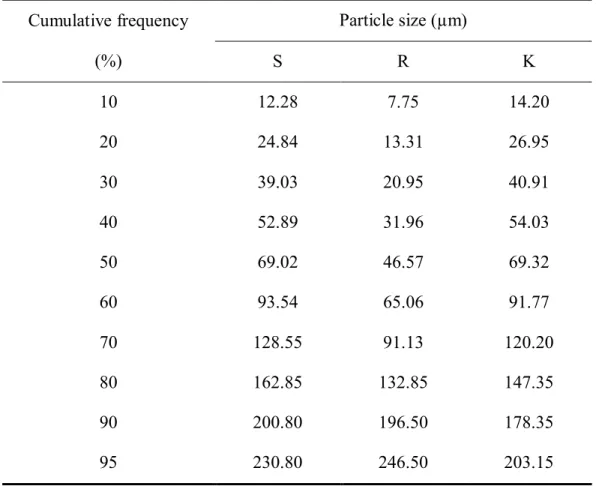
As shown in Figure 2-1 and Table 2-3, the particle diameters of the three kinds of fly ash were 3-350 µm, and 90%-95% were below about 250 µm, which is accordant with the common description that fly ash consists of fine particles (Hartmann et al., 2015). Clear bimodal distribution was observed on the curves of frequency (solid line) in Figure 2-1 (a) and (c), and more than one peaks could be designated on Figure 2-1 (b) as well, which is indicated that the particle size distribution of MSWI fly ash is lead to be bimodal form regardless of the type of APC system.
This phenomenon was also mentioned by some researchers (Thipse et al., 2002). The peaks were almost appeared at the same positions; the left peak were at 65 µm for the three samples, and the right peaks were shown at between 160-190 µm. However, the relative strength of the two peaks were case by case. The most particles were in the diameter of 160-190 µm for the samples of fly ash S and K (Figure 2-1 (a) and (c)), which occupied 4%-4.5% of the total particles; while the most frequent particle size for fly ash R is about 65 µm. In addition, the particles of fly ash R were generally fine and uniform comparing with other two samples.
25
Table 2-2 Calculated mean diameter and surface area of MSWI fly ash
Parameter Fly ash S Fly ash R Fly ash K
Mean Volume Diameter (MV, μm) 92.29 76.73 86.58
Mean Number Diameter (MN, μm) 5.00 4.85 6.27
Mean Area Diameter (MA, μm) 30.59 20.91 34.22
Calculated Surface Area (CS, m2/cm3 ) 0.20 0.29 0.18
* The data are the average of duplicate measurements for each sample.
Table 2-3 Cumulative frequency for different particle size of MSWI fly ash Cumulative frequency
(%)
Particle size (µm)
S R K
10 12.28 7.75 14.20
20 24.84 13.31 26.95
30 39.03 20.95 40.91
40 52.89 31.96 54.03
50 69.02 46.57 69.32
60 93.54 65.06 91.77
70 128.55 91.13 120.20
80 162.85 132.85 147.35
90 200.80 196.50 178.35
95 230.80 246.50 203.15
* The data are the average of duplicate measurements for each sample.