• 検索結果がありません。

薬学事前学習とコミュニケーションスキルトレーニ ングの評価

N/A
N/A
Protected

Academic year: 2021

シェア "薬学事前学習とコミュニケーションスキルトレーニ ングの評価"

Copied!
215
0
0

読み込み中.... (全文を見る)

全文

(1)

薬学事前学習とコミュニケーションスキルトレーニ ングの評価

エップ, デニース, アドライン

https://doi.org/10.15017/1931859

出版情報:Kyushu University, 2017, 博士(臨床薬学), 課程博士 バージョン:

権利関係:

(2)

Doctoral Dissertation

AN EVALUATION OF

JAPANESE PRE-CLERKSHIP PHARMACY EDUCATION AND COMMUNICATION SKILL TRAINING

March 2018

DENISE A. EPP

Clinical Pharmacy

Department of Clinical Pharmacy and Pharmaceutical Care Graduate School of Pharmaceutical Sciences

Kyushu University, Fukuoka, Japan

(3)
(4)

PH.D. in Clinical Pharmacy (Education) Doctoral Dissertation

AN EVALUATION OF

JAPANESE PRE-CLERKSHIP PHARMACY EDUCATION AND COMMUNICATION SKILL TRAINING

DENISE A. EPP Ph.D. Candidate

Clinical Pharmacy

Department of Clinical Pharmacy and Pharmaceutical Care Graduate School of Pharmaceutical Sciences

Kyushu University, Fukuoka, Japan

(5)

Denise A. Epp, BEd, MSEd

Lecturer, Department of Foreign Languages Daiichi University of Pharmacy

22-1 Tamagawa, Minami-ku, Fukuoka Japan 815-8511

Email: [email protected] Phone: +81 92-541-0161 Ext. 370

Key words: communication skill training, Japan, pharmacy education, pre-clerkship

(6)

Table of Contents

(7)
(8)
(9)
(10)
(11)
(12)

Publications and Presentations

(13)
(14)

1

Publications

Epp D, Kubota T, Yoshida M, Kishimoto J, Kobayashi D, Shimazoe T. Promoting patient care through communication training in pre-clerkship pharmacy education in Japan. Am J Pharm Educ. Accepted Jan 31, 2018 [in press].

Epp D. Initiating further training in communication skills in pre-clerkship pharmacy education through English. J Med Eng Educ. 2016 Oct; 15(3):114-118.

Presentations

Epp D. Building confidence in communication in pre-clerkship pharmacy education.

[poster presentation]. 2

nd

Annual Meeting of the Japan Society for Pharmaceutical Education. Nagoya City University: Nagoya. Sep 2, 2017.

Epp D. Building a case for using more social media in Japanese clinical pharmacy classes. [presentation] 20

th

JASMEE Academic Meeting. Orque d’or salon: Nagoya.

Jul 23, 2017.

Epp D. Initiating further training in communication skills in pre-clerkship pharmacy

education through English. [presentation] 19

th

JASMEE Academic Meeting, Keio

University Hiyoshi Campus, Yokohama. Jul 16, 2016.

(15)
(16)

Abstract

(17)
(18)

3

Abstract Objectives:

1) To initiate pre-clerkship communication training that promotes patient education for lifestyle change and drug adherence and equips students with communication skills beyond prime questions for dispensing.

2) To assess changes in student perspectives towards communication from pre-clerkship to post-clerkship with a communication questionnaire.

Methods:

1) An 8-week communication training course was integrated into the pre-clerkship training from 2015 to 2017 at Daiichi University of Pharmacy to develop communication skills necessary to communicate with patients during the pharmacy clerkship. Student assessment in the course was based on participation in the research and discussion activities, creation of a pamphlet and assessed with a rubric, and the final written exam.

2) A communication questionnaire was created to collect data from students about their perspectives pre and post-training and again post-clerkship to determine changes in attitude towards pharmacy communication and self-efficacy.

Results:

The fourth-year post-training results of groups D (2016) and G (2017) showed that students understood fundamental pharmacy communication through participation in SGD and partner role-play activities, responses on mini-tests, creation of a pamphlet, and the final written exam responses. Mini-test scores progressively increased throughout the term and the final grade average for the two classes were 77% to 79%.

An exploratory factor analysis of the questionnaire data produced three distinct

factors that showed a positive change between the pre-training and post-training

(19)

4

attitudes and perceptions of the students towards communication. A McNemar’s test showed an increase in the negative to positive responses following the training in the students’ confidence to apply communication skills in their future clerkships.

The fifth-year student response scores decreased pre to post-clerkship in perceived ability to communicate. A comparison of the same student responses from pre-training to post-training to post-clerkship showed a rise in total score responses after the training, but a decline in the post-clerkship responses.

Conclusion:

The recent changes to pharmacy practice with new government policies for

more patient-centered care focus, such as point of care testing, home visits, and family

pharmacy, require that pharmacy students be equipped with communication skills that

prove competency in practice. There is an insistent need for specialized communication

training in the pre-clerkship program to provide students with skill and practice to

communicate effectively with patients and with the medical team to achieve health

outcomes. Although students recognized the need for communicating effectively with

patients, their perceptions did not reflect the confidence to communicate in their

pharmacy clerkship. Recommendations focus on providing more opportunities to

communicate directly with patients during the clerkships, improving the pre-clerkship

education to emphasize pharmacy communication skills, and adding a post-clinical

clerkship OSCE to assess communication ability and confirm patient-care skills.

(20)

Introduction to the Study

(21)
(22)

5

Introduction

Communication skills are essential in a clinical pharmacist’s job and the training of these skills should be an integral part of the six-year clinical pharmacy program. A focus is often placed on passing the national licensing exam and other common achievement test results rather than the practical training and skill development necessary for pharmacy practice. Although emphasis is placed on strong dispensing skills and presentation skills in small group discussions and team-based learning, skill training with working pharmacists to create a well-balanced program of science-based knowledge and communication skills is limited to the twenty-two weeks of clerkship experience. In addition to the academic knowledge from compulsory science-based courses, social skills and communication training are a requirement for a medical-related field like Pharmacy to enhance patient care and to encourage collaboration with other health professionals. The addition of specialized communication training to the pre-clerkship program will improve future pharmacist communication skills for health outcomes and patient care beginning with the pharmacy clerkship. A supplementary training program was initiated in a Japanese pharmacy university in 2015 to expand the pre-clerkship training to include patient care communication skills. This functional mixed method research study focused on the communication skills training in pre-clerkship education with the purpose of improving the six-year clinical pharmacy education program offered in Japan. A questionnaire was used to evaluate student perspectives and attitudes towards patient-focused communication and the resulting self-efficacy in using communication skills in the clerkship.

(23)
(24)

Chapter I

Research Summary

- The basic students need to be taught principles of patient-oriented counselling to adapt that approach from the very beginning. (Airaksinen) -

Airaksinen M. The role of communication skills: Developing patient-centered practice in community pharmacies. The Chronicle. 2004 Summer; 8. Available from:

www.mcppnet.org/publications/ISSUE8-3.pdf

(25)
(26)

7

An evaluation of Japanese pre-clerkship pharmacy education and communication skill training

Introduction

Presently in Japan, the pharmacist’s role still centers around dispensing, which is why this is the main focus of clinical pharmacy education. It is believed that this will soon change, and they will have more responsibilities with patient care, perhaps even in prescribing medicines. To train the future generation of pharmacists, there should be communication skill building in the pre-clerkship training that helps students with not only the basic patient questioning for dispensing, but also communication that guides patients to think critically about his or her own health and lifestyle. A communication training course was integrated into the pre-clerkship training in 2015 at Daiichi University of Pharmacy to develop skills necessary to fulfil the responsibilities the government was beginning to place on the pharmacists in home visits and family pharmacy. The initial goals of the fourth-year pre-clerkship training were to initiate conversation with patients beyond prime questioning, to equip students with greater knowledge of medicines and sicknesses, to promote patient education and counseling for lifestyle change and drug adherence, and to provide the students with the opportunity to use their knowledge in role-play and interview activities, small group discussions and with standardized patients.

Main Research Question

How does special communication training in pre-clerkship studies influence the pharmacy clerkship experience?

Sub-Research Questions

1. Topics of Study: What is the greatest need for communication training for

pharmacy students (both pre-clerkship and during the clerkship)?

(27)

8

2. Teaching Method: What kind of structured communication training class would benefit the students during their pharmacy studies?

Background

Communication training during the pre-clerkship period makes the clerkship experience more meaningful to the students and leads to competent communication practice in the pharmacy. This study began with an idea to create a program of study, implement it, develop a questionnaire to collect data, analyze the data, and review the results to assess if the course was effective or not in changing communicative behavior in students.

The students are often trained to communicate effectively for the hospital pharmacy because of the time they need to spend with each patient individually on the wards. Here they are able to build up a relationship with the patient over the time spent together, and are able to explain their knowledge and check for patient adherence and interactions immediately. In the outpatient pharmacy setting, though, especially in chain pharmacies with time restraints and pressure to meet the financial expectations of the company, the pharmacists often are not able to communicate effectively with the patients. There are various communication training workshops and seminars available to working pharmacists to improve communication skills and ensuring that patients will receive quality care that monitors their drug therapy, adherence and interactions*.

Within the six-year pharmacy education program, there is little training offered to students about community pharmacy communication, and this is where a program was implemented to meet the need of improved communication skills for pharmacy practice.

Method

There were three main groups of students in their fourth and fifth years of

(28)

9

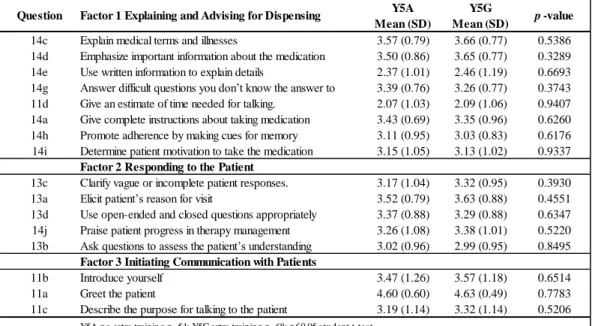
clinical pharmacy study involved in this research study. Group A were students who received no extra patient-focused communication training in their fourth-year pre-clerkship and completed their pharmacy clerkship at the time of the initial questionnaire in 2015. Groups D and G were students who received the extra communication training in their fourth-year pre-clerkship and completed the questionnaire after their community pharmacy clerkships in their fifth-year in 2016 and 2017. Each group participated in a communication questionnaire that covered student attitudes towards communication and what they observed in pharmacy practice, as well as their confidence to communicate with patients during the clerkship. The goal was to evaluate a change in behavior and perspective during the pharmacy clerkship of Group D and G after receiving the specialized communication training, as compared to not having any extra pre-clerkship training (Group A).

A special eight-week communication class was created and taught (Chapter 3)

during the fourth-year pre-clerkship training that was combined with a

pharmacist-taught medical terms class to make a one-credit compulsory Clinical

Pharmacy English class. All class materials were provided in English, but the

discussions and lectures were conducted in Japanese. The communication component

focused on pharmacist-patient communication beyond dispensing explanations with

the goal of improved patient health outcomes and patient education. The six topics of

the class included explaining to patients about the importance of not missing

medication doses and the dangers of mixing medication with alcohol, as well as

providing science-based responses about food and drug interactions. There were also

topics on Epipen

©

use and anaphylaxis shock and lifestyle changes for patients with

Type 2 diabetes mellitus. The classes included reading, writing, speaking and listening

activities based on research, with role-play and small group discussions (SGD).

(29)

10

Student assessment in the course was based on participation in the research and discussion activities, creation of a pamphlet and assessed with a rubric, and the final written exam. The purpose of this communication class was to create a base of learning about patient education and improving health outcomes through pharmacist-patient communication.

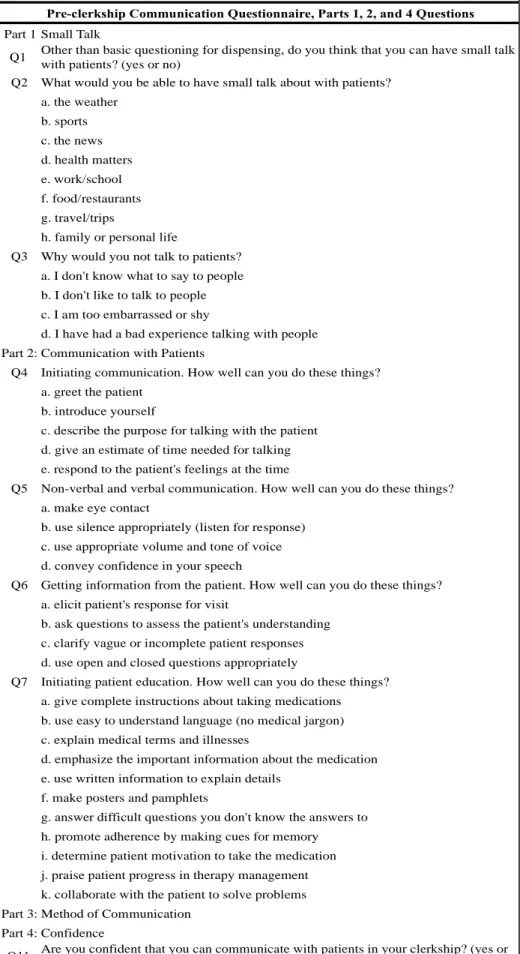
The communication questionnaire (Chapter 4) was created to gather data about student perspectives pre and post-training and again post-clerkship to determine any changes in attitude towards pharmacy communication and self-efficacy. It was based on pharmacy practice in Japan and overseas, using various existing communication assessment tools. There were four main parts with a total of 23 questions and used the Likert 5-point scale. The data analysis focused mainly on the second part of the questionnaire, which was the communication skills section. Other sections were included to further understand the students and to present the setting of the pharmacy practice in Japan. The data from the pre and post-training questionnaire were used to study the changes in student perspectives and their understanding of pharmacy communication beyond dispensing procedures. The post-clerkship questionnaire included the students’ self-reflection on ability to communicate with patients in their pharmacy clerkship.

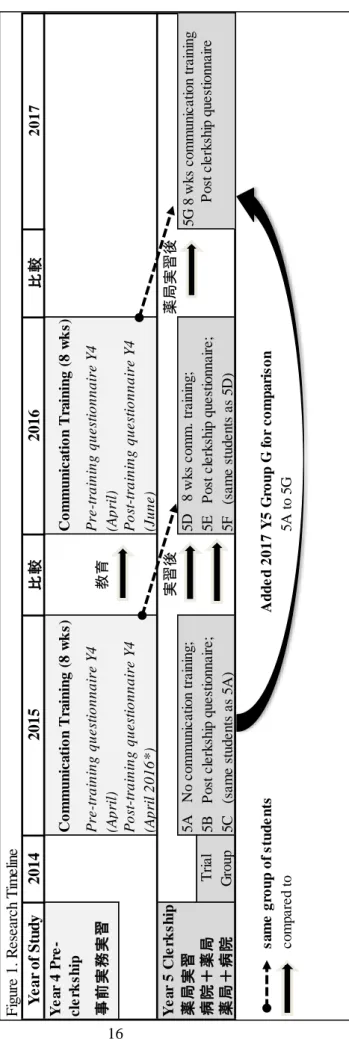
The research data collection covered a four-year span, from September 2014

to July 2017. (Figure 1) A trial questionnaire was first developed and the effectiveness

of it was assessed with a group of 75 fifth-year students in 2014 following their

clerkship experiences. Following the trial, an improved and revised questionnaire was

given to the fifth year students after their community pharmacy and hospital clerkships

in July and December 2015. They were called Group A because they did not receive

the communication training in their fourth year of pre-clerkship study. At the same

(30)

11

time, a modified questionnaire was produced for the fourth-year pre-clerkship students and given to the students pre-training and again before their clerkship. In the next year this group of students identified as Group D completed the questionnaire after their clerkships in July and December. A statistical analysis was done on the differences between Groups A and D responses. As further extension, the second group of students to receive communication training in pre-clerkship and followed through to their post pharmacy clerkship (ending July 2017) were called Group G. Their data was used for comparisons between Group A (no communication training) and Group D (with communication training).

Signed consent was received from all participating students. Data was collected from the questionnaires and stored in a computer that was not connected to the school’s internet system. The privacy of the students was maintained through a referencing system and not open to the public. The Daiichi University of Pharmacy ethics review committee provided permission to conduct this study with the fourth and fifth year students between 2014 and 2018. (Appendix A) Permission was also received from Kyushu University in September 2017 as a retrospective study.

(Appendix B) Results

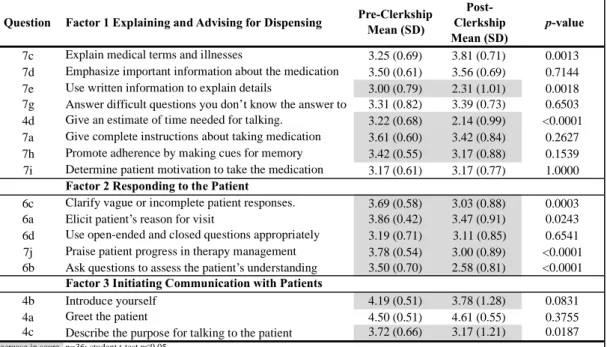
The fourth-year post-training results of groups D and G showed that students understood and were more aware of essential communication for patient education (Chapter 5). Student understanding of fundamental pharmacy communication was demonstrated through responses to proposed patient questions and the creation of a pamphlet using simple language and visual materials. Mini-test scores progressively increased throughout the term and the final grade average for the two classes were 77%

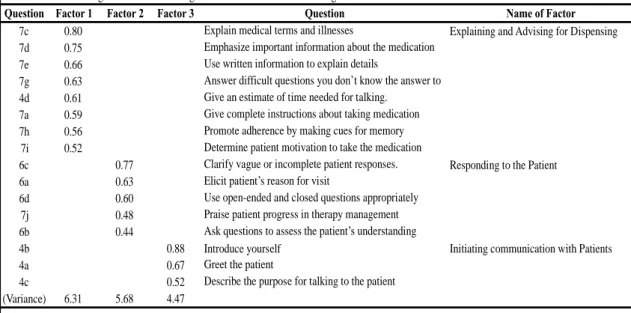
to 79%. An exploratory factor analysis of the questionnaire data produced three distinct

(31)

12

factors on JMP Pro Version 12 software that showed a positive change between the pre-training and post-training attitudes and perceptions of the students towards communication. Significance was observed in the pre to post-training p-values, particularly with patient education responses of Factor One. Confirmatory factor analysis with a path diagram using AMOS Version 24 software demonstrated a reasonable goodness of fit with strong correlations observed. A McNemar’s test on JMP compared the pre- and post-training responses and showed an increase in the negative to positive responses following the training in the students’ confidence to apply communication skills in their future clerkships.

The post-clerkship questionnaire responses of the three groups (Chapter 6) revealed a consistency in attitude towards the pharmacy activities and the opportunities to communicate during the clerkship. The same three exploratory factors were used to compare the post-clerkship responses for Groups D and G after receiving communication training. The resulting response scores decreased pre to post-clerkship in perceived ability to communicate. A comparison of the same student responses from pre-training to post-training to post-clerkship showed a rise in total score responses after the training, but a decline in the post-clerkship responses. Post-clerkship confidence responses were strongest for “No to Yes” responses with the McNemar’s test with Group G post-clerkship meaning that they would communicate with patients for outcomes in the future. In contrast, Group D was strongest with “No to No”

responses. Areas of empathy and a necessity to have well-rounded knowledge were two specific points that showed greatest difference between the students who had communication skill training and those without.

Discussion

There was a positive change in perspective and behavior between the two

(32)

13

groups of students that received the extra communication training during pre-clerkship studies. The response scores for the communication skills section of the questionnaire increased pre to post-training, indicating an increase in perceived ability to communicate with patients. The training focused on pharmacist-patient communication to improve health outcomes in adherence, self-management, and lifestyle changes, and was practiced through pharmacist-patient role-play. The mini-test scores also improved as students recognized the pattern of communication for patient education and science-based responses.

Pre-clerkship students obtain a strong knowledge base of the pharmaceutical sciences, but need training to transfer that specialized knowledge to patients through communication and speech as practiced in pre-clerkship and clerkship experiences.

Education and practice are necessary to build both communication skills and confidence to interact with patients that improve the quality of life and health outcomes of patients. This level of communication requires extra pre-clerkship training to make communication a regular and natural practice and ensures that the students are well prepared for clerkship communication.

The fifth-year pharmacy clerkship was consistent throughout the three years in

providing opportunities to use and develop dispensing skills, but was limited

opportunity for students to practice patient education focused communication. The

difference in response results of Group D and G post-clerkship regarding confidence,

for example, possibly stemmed from the lack of opportunity to talk to patients, as well

as the attitudes of both preceptors and students during the pharmacy clerkship. The

preceptor evaluation checklists, which focused only on counter communication in

attitude towards communication, explanation of OTC medications, and dispensing

explanations, supported students’ motivation and ability to communicate at the

(33)

14

expected level. Post-clerkship student responses from the questionnaire were strict in self-evaluation of their interaction with patients and decreased in mean scores.

The collected data support that communication skill training is essential in the pre-clerkship pharmacy education for greater patient-care in the clerkships and beyond.

Presently, the clerkship experience limits student access to direct contact with patients and the opportunity to use the learned skills is tightly controlled. There will also be an improvement in patient education skills with emphasis on patient-focused care practice, as communication becomes regular practice in their pharmacy education and in the clerkships. The communication skills presented and practiced in the pre-clerkship studies will lead to more opportunities to talk to patients during the clerkship as the clerkship guidelines adjust to the changes in the pharmacy practice. The new clerkship guidelines that will be implemented in 2019 focus on communication for patient care and education from the beginning of the clerkship, so the student response scores toward communication ability and confidence will increase rather than decrease in the future.

Conclusion

The changes to pharmacy practice have been made through new government

policies and programs for more patient-centered care and a health counseling focus,

especially with the family pharmacy and home visit programs. Japan still relies on the

top-down approach to change. For this reason, the communication training in

pre-clerkship will progressively change over the years because pharmacy practice in

Japan is changing. The pharmacy students need communication skills that prove

competency in practice. Eventually, the education of the pharmacy schools will have to

match the changes in practice as outlined by the changes in the government pharmacy

healthcare policies and provide communication-based social training as well as the

(34)

15

science-based dispensing skills. Recommendations focus on providing more

opportunities to communicate directly with patients during the clerkships, improving

the pre-clerkship education to emphasize communication skills, and adding a

post-clinical clerkship OSCE to assess communication ability and confirm patient care

skills (Chapter 7). The pharmacy education will influence patient care and improve

health outcomes in pharmacies, as students are equipped with the skills and confidence

to communicate effectively with patients.

(35)

16

F ig ur e 1. R es ea rc h T im el in e Y e ar of S tu d y 2014 2015

比較

2016

比較

2017 Y e a r 4 P re - c le rk s h ip C o m m u n ic a ti o n Tr a in in g (8 w k s ) C o m m u n ic a ti o n Tr a in in g (8 w k s )

事前実務実習

P re -t ra in in g q u e st io n n a ir e Y 4 (A p ri l)

教育

P re -t ra in in g q u e st io n n a ir e Y 4 (A p ri l) P o st -t ra in in g q u e st io n n a ir e Y 4 (A p ri l 2 0 1 6 * ) P o st -t ra in in g q u e st io n n a ir e Y 4 (J u n e ) Y e a r 5 C le rk s h ip

実習後薬局実習後 薬局実習

5 G 8 w k s c o m m u n ic a ti o n t ra in in g

病院+薬局

P o st c le rk sh ip q u e st io n n a ire

薬局+病院

s a m e g ro u p o f s tu d e n ts A d d e d 2 0 1 7 Y 5 G ro u p G f o r c o m p a ri s o n c o m p a re d t o 5 A t o 5 G T ri a l G ro u p

5 A N o c o m m u n ic a ti o n t ra in in g ; 5 B P o st c le rk sh ip q u e st io n n a ire ; 5 C (s a m e s tu d e n ts a s 5 A )

5 D 8 w k s c o m m . tra in in g ; 5 E P o st c le rk sh ip q u e st io n n a ire ; 5 F (s a m e s tu d e n ts a s 5 D )

(36)

Chapter II

Background and Literature Review:

Communication Skill Training

in Japanese Pre-Clerkship Pharmacy Education

- The work in pharmacy is regarded as expert work requiring good communication skills. Still, little attention has been paid on developing competency in this field.

(Airaksinen) -

Airaksinen M. The role of communication skills: Developing patient-centred practice in community pharmacies. The Chronicle. 2004 Summer; 8. Available from:

www.mcppnet.org/publications/ISSUE8-3.pdf

(37)
(38)

17

Communication skill training in Japanese pre-clerkship pharmacy education Background

Clinical pharmacists convey their expert knowledge of medicines and pharmaceutical practice through communication with other professionals, the patients, and the public. Five years ago, the pharmacists in Japan were not required to communicate beyond the prime questioning for dispensing and attaining patient information in their daily duties. As a result, pharmacy students were instructed and tested only on prime questioning to assess communication skills. The frontline responsibility of the community pharmacists was dispensing medicine, so the focus was on training the students to explain about how to take the medicine, dosing, and any food and drug interactions. Overseas, pharmacists were often referred to as "pill counters" and "chemists," that reflected their distance from patient care. In the past 20 years, though, pharmacists have transformed their role into that of healthcare advisors and professionals. Along with the changes in global pharmacy, pharmacy education and practice in Japan is moving from primarily dispensing towards patient-care, creating the need to communicate with patients through education and counseling.

The World Health Organization (WHO) states that strong communication skills are a requirement for clinical pharmacy, together with “solid knowledge of the medical terminology, drug monitoring skills, provision of medicines information, therapeutic planning skills, and the ability to assess and interpret physical and laboratory findings."

1

Included in the same report

1

, the International Pharmaceutical Federation (FIP) designated eight specific roles for pharmacists in its patient-care initiatives:

1) caregiver, 2) decision-maker, 3) communicator, 4) manager, 5) life-long learner, 6)

teacher, 7) leader, and 8) researcher. In agreement with these designated roles,

(39)

18

pharmacy education programs around the world moved from a dispensing-only focus to one that includes interaction with patients and other professionals in the medical team with the goal of patient care. Patient care is defined as taking responsibility for a patient’s needs through “respect, listening, understanding, informing, empowering, assisting, and continuing care.”

2

The school programs have initiated the move towards the inclusion of patient care through greater practical studies in clinical pharmacy and an increasing focus on health outcomes and patient quality of life.

3

Clinical Pharmacy Education Objectives in Japan

The present Japanese model core curriculum for pharmacy education includes an objective for pharmacist communication, based on building mutual trust with the patient and using empathy, as outlined in Section A on basic communication skills.

4

The challenge is how these communication standards can be taught practically to the students. The previous curriculum contained a section called Pre-Clerkship Studies and was replaced with Clinical Pharmacy Practice, which outlines standards for practice in patient interviewing and verbal and non-verbal communication skills. The new model core curriculum covers fundamental practice skills, and explicitly mentions interviewing a patient about lifestyle patterns and habits, medical history, allergies, side effects to medicines, and any information to promote drug adherence.

4

This shift to patient care as initiated by the government recognizes the need for specialized training in communication for health outcomes before entering the pharmacy clerkship.

As a result, pharmacy schools must consider how and when to include more communication training in the six years of pharmacy study.

Observation through participation in the pre-clerkship communication training

sessions at the university revealed that the students understood the necessity of talking

to patients and basic questioning scripts (with both open and closed questions) to

(40)

19

dispense medicine to a patient for the first time and to confirm that the patient knows how to take the medication. Role-play activities supported the training and ensured success in the objective structured clinical examination (OSCE) with interviewing and dialogue practice. The students also were provided sample question-answer style conversations in their pre-clerkship training textbook to compare the different styles of questioning specifically used in the pharmacy, hospital, and drugstore settings. These dialogues were practiced and memorized for a very brief communication skills test at the end of the unit. They also learned the importance of eye contact, smiling, and using polite and professional language. Skill practice in how to obtain information about the patient’s background, drug adherence, lifestyle patterns, or personal needs for health outcomes or greater patient care was not observed in this pre-clerkship communication study.

For this reason, communication training was believed to be an essential addition to the pre-clerkship studies. Changes to the education system often begin with the government or administration, but the working pharmacists and their motivation to assist patients for better health outcomes can advance practical education that will prepare students for the reality of their professional responsibilities. Observation of pharmacists working onsite led to an appreciation of their ability to inspire and educate patients in their care. Pharmacist behaviors discovered in articles from overseas and Japan also reinforced that self-perception and a deeper understanding of communication for patient care are necessary to improving pharmacy communication.

To build a strong case supporting more communication training in the pre-clerkship

pharmacy program, literature was explored from both perspectives of education and

clinical pharmacy to understand how these programs were developed overseas, and

how they could be applied to the Japanese pharmacy program.

(41)

20

Method

A literature search was conducted on communication skills and training programs in Japan and the Western world through PubMed and ERIC databases (focusing initially on years 2004 to 2014) to create a research protocol that reflected global changes in pharmacy practice and education. To further understand communication skill training for pharmacy education, searches performed on PubMed connected topics on communication and education for pharmacy students and pharmacists. A search of professionalism in pharmacy introduced articles on inter- professional and interpersonal communication, the use of simulation and simulated patients to enhance the education, and preceptor responsibilities for effective mentoring of pharmacy students. A search of related topics in Japan on PubMed led to some reports on communication skills for community pharmacy. Many articles related to Japanese pharmacy education were written in Japanese, which made it difficult to research them further. At the same time, a search on ERIC, an American educational sciences reference site, provided articles specifically on pharmacy education, communication training in pharmacy, improving the clerkship experience, English communication in pharmacy, student perspectives on communication training, confidence surveys, and even some information on communication training in Japan.

A search was then made on PubMed regarding student perspectives toward

communication training to create the communication questionnaire based on student

perspectives in the responses. There were no articles found on student perspectives of

communication training in pharmacy or regarding questionnaires that focused on

student perspectives of communication ability or the confidence to communicate with

patients. There were some articles on surveys that studied communication ability in

pharmacy, but most were skill assessment tools. Student perspectives on pharmacy

(42)

21

residency programs and self-efficacy in inter-professional and interpersonal communication were found, and even some articles on patient perspectives of social media in the pharmacy. Articles on communication training from the field of medicine and dentistry, the Calgary-Cambridge interview guidelines, and pedagogy of pharmacology and professionalism from Sweden were also discovered. Finally, to construct the questionnaire on pharmacy communication, searches were made on PubMed for specific interview questions, survey questions, and pharmacist behaviors in the pharmacy. The combination of information collected from these various topics contributed to the creation of the communication questionnaire.

Educational techniques from compulsory education could be directly applied to pharmacy education with the move towards student-focused learning and active learning. Training students in communication and pharmacy practice by using case studies, simulated patients, small group discussions (SGD), and patient education strategies of diabetic care and medical educators was a concept observed in the pharmacy schools in Canada and the USA and highlighted in the educational-based articles. Searches of educational strategies were performed in 2014 and 2015 from public education and compulsory education websites, and these articles were used to develop the communication training class used for the pre-clerkship students.

Results

Keywords and phrases that stood out in the Internet searches were patient

education, patient counseling, pharmacist-patient relationships, real world settings, the

role of pharmacists, pharmacy practice and pharmacy education. Educational topics

included active learning, team-based learning, blended learning styles, case studies,

small group discussions, simulated patients, and mindfulness.

(43)

22

The move from teacher-focused lecture style classes to student-focused active learning was observed globally as schools adjusted to the new roles of pharmacists and the patient-focused practice in pharmacies. Firsthand observation of pharmacy practice in Japan and the 6-year pharmacy-training program, though, revealed a deficit in the communication-related training for roles beyond dispensing. The strong focus on the knowledge-based exams meant time was an issue in teaching students communication skills beyond those required for the fourth year of study and OSCE. A search of the government issued guidelines for pharmacy education in the Ministry of Health, Labor and Welfare (MHLW) and the Ministry of Education, Science and Technology (MEXT) did not reveal communication skills training initially, but the new initiatives for pharmacy practice in 2014 made communication a forefront skill necessary for patient-care.

This study chose to focus on understanding student perspectives rather than on skills assessment in pharmacy communication because of the fundamental idea that

“our perceptions of others affect the way we communicate with them and influence how we view ourselves and others.”

5

It was decided that a questionnaire could be made that asked students about their perspectives before and after training, and again after the clerkship to determine any changes made by educating the students in communication.

The Role of the Pharmacist

Society has shifted towards easy access to public health, thanks to recent

government initiatives and technology. This has encouraged pharmacists to develop

their profession as active members of the medical team with expert pharmaceutical

knowledge.

3,6

The public, in general, does not expect pharmacists to counsel on

(44)

23

lifestyle and drug adherence or to build personal relationships with them as they do with nurses and doctors.

7,8

The role of the pharmacist is a primary consideration when developing the guidelines and curriculum for a pharmacy program that produces future pharmacists who can meet the changing demands of the profession beyond dispensing. The implementation of recent government programs for point of care testing in the community pharmacy, home visits, and family pharmacy indicate a greater role of

“communicator” pharmacist, and have challenged pharmacy schools to prepare students to initiate discussions in patient care for health outcomes.

9

The pharmacy education programs must respond to these changes by offering more opportunities for the students to learn how to communicate with patients, other professionals, and the community, in general. The pharmacy and hospital clerkships are also changing, creating a growing need for communication training during the pre-clerkship study. By providing communication specific training to students before the clerkships, students can receive targeted skill practice and the application of attained knowledge of drugs and diseases to realistic situations with patients. After such communication skill training, the students can communicate with confidence to receive a positive response from the patient for drug adherence, lifestyle change, and a better quality of life.

In the United States, the Accreditation Council for Pharmacy Education

(ACPE) has standards of clinical skills to be achieved in the clerkships, that include

both verbal and written communication skills to support the role pharmacists play in

advising and counseling patients.

10

The communication standards encompass “health

literacy, collaboration with patients and other health professionals, interviewing

techniques, active listening and empathy, problem-solving skills, cultural

understanding, group presentation skills, documentation of pharmacist

(45)

24

recommendations, and practicing principles of behavior modification.”

11

These skills are developed through various exercises in written and verbal communication throughout the pharmacy studies. Written skills include research papers and essays, patient care plans, medical histories, personal reflective writing, and even the curriculum vitae and letters. Presentations, discussions, consultations, as well as daily interaction and counseling with patients, reinforce verbal skills.

As a supplement to oral communication with diverse patients, visual aids of pamphlets and posters are created and used by the pharmacist to help in educating the patient on a specific concept. The communication practice with visual tools allows students to comprehend the central role communication holds in their profession and to consider patient individual needs. A more active learning style used in communication training for the Japanese pre-clerkship students can reflect the present and developing role of Japanese pharmacists.

To begin to think about oneself as a member of the medical team can be a

challenging, new experience for many students in their learning. The students often

need new skills to build social relationships with their peers and to start thinking more

as a team member. The students are encouraged to work together in groups to discuss

possible solutions and search for answers to patient questions that will be easily

understood and lead to a potential change in behavior from the patient. On the

professional level, the pharmacist plays a vital role on the collaborative medical team

with the provision of knowledge in pharmacology and pharmacokinetics and patient

drug monitoring. This role also requires communication skills with other professionals

using appropriate language that reflects their position: “Pharmacists acquire a much

greater level of expertise in these areas in the course of their training than physicians,

and collaborative care would be synergistic” to their experience.

8

This special place for

(46)

25

the pharmacist is one that only they can do and that it requires being able to bring their specialized knowledge to the team, to be creative, and to share it through speech that is appropriate to that setting.

Pharmacy Communication Basics

Effective communication in the pharmacy can be defined as verbal or non- verbal messages passed to a recipient (patient) that lead to a specific response when it is understood.

12

This response is what determines if the communication was effective between the pharmacist and the patient. If the pharmacist’s message is received and understood, the patient will respond to what the pharmacist says, whether it be by following simple instructions, directions, or specific health activities. The students should realize that communication with pharmacists could directly influence patient health outcomes. As the patient and pharmacist develop a relationship of trust through talking, “the quality of pharmacist-patient counseling sessions has the potential to directly influence patients’ subsequent self-care routines and behaviors.”

13

As a result, pharmacists should focus on developing skills to build these essential relationships with patients.

In a patient-centered approach, the pharmacist regards each patient individually to determine what kind of education is necessary at that specific time. The information about medications should be concise with instructions and directions and include benefits of adherence, possible side effects and potential precautions and warnings.

Verbal responses to the patient should be positive reinforcement and encouragement on

a psychological level, which can improve a patient’s attitude and behavior towards

self-management and adherence.

14,15,16

One study of patients with Type 2 Diabetes

Mellitus found that “there was an improvement in glucose markers, HbA1c results,

blood pressure and cholesterol levels when there was verbal communication with the

(47)

26

pharmacists. However, decisions regarding compliance and long term prospects might depend not only on what pharmacists say and how, but also on what patients understand and expect from pharmacists.”

13

This patient response proves that a professional relationship built on trust and communication is required between the pharmacists and patients to achieve specific patient health outcomes.

14

Pharmacist intervention through patient education to improve drug adherence and patient self- monitoring can even result in a decrease in the burden on the health system.

3,17,18

The expectation to communicate for patient care is reinforced in the clerkship as it is modeled to the students by the working pharmacists.

Communication Training

The pre-clerkship students in Japan are tested on their basic pharmacy knowledge through the computer-based test (CBT) given during the fourth year of study and a practical skills exam with the OSCE that is based on a pre-determined list of professional behaviors and procedures. The evaluation checklist of the OSCE used by the examiners includes the fundamentals of pharmacy communication, which cover tone and volume of voice, eye contact, clarity and speed of speech, greetings, a self- introduction, and specific questions and explanations for dispensing the medications.

19

Extra communication training outside of these examination preparations provides insight into higher level communication skills required to perform in a patient-care oriented pharmacy practice and ability to talk to patients outside of the prime questioning.

Some post-clerkship students in previous years expressed that although they

realized how important communication with patients was, especially when talking with

the patients of cancer and AIDS, they had no background on how to communicate with

these patients. They did not understand what was appropriate or inappropriate when

(48)

27

speaking to them. The lack of knowledge led to a fear of talking to the patients, and many admitted that they began to avoid situations where they would encounter these patients. They also felt that they lacked a scientific understanding of the disease states, and were unable to convey their knowledge and empathy into conversation with the patients. They expressed the desire to have more learning of and exposure to these common diseases and illnesses together with some communication training in their pre-clerkship study that would make their clerkship experience more positive in this kind of situation.

This problem is not isolated to Japanese students. The predetermined role of

“pharmacist as a communicator” led to an American review of pharmacy education literature on communication training. This search revealed that pharmacy students frequently struggle with communication with patients, pharmacists, and with other students and that the breakdown was mainly due to poor communication skills.

11

One solution is to provide greater communication training in their pre-clerkship studies before the students are in contact with patients, other professionals, and the community.

The understanding of communication with patients should be like “an agreement between the participants, making the understanding possible of how an interpersonal relationship can assist in solving and preventing problems related to pharmacotherapy,"

and not an option based on feeling or emotion.

12

While mastery of communication may not be expected or a goal of the pre-clerkship study, the exposure to various situations with patients and an awareness of a patient’s needs, creates an experience that solidifies the previous learning.

The pre-clerkship education often gives the students their first encounter with

direct patient interaction and communication to pass on a specific message that will

potentially result in a lifestyle change, increased drug adherence, and a better quality of

(49)

28

life. Communication of this nature requires relaying information concisely to patients as pharmacists through the application of pharmaceutical and pharmacological knowledge. Effective communication requires carrying the science-based information about medications and diseases into the social encounter and translating it into understandable language for the patient.

6

This training is key to developing specialized communication skills in the pre-clerkship pharmacy studies to prepare students for their clerkships.

Community pharmacists are not the first contact a patient has with a health professional in Japan, but they are often the first one that the patients are willing to talk to, mainly because they are easily accessible in the community and provide a setting that promotes conversation. The trust between a pharmacist and patient is often dependent on the empathy of the pharmacist, which is the ability to understand the patient’s feelings, thoughts, and perspectives towards health and lifestyle. There are many ways to develop empathy in the pharmacy students, primarily through the active learning of their studies and the practical experience of the clerkship. It needs to be taught and practiced in order for it to become an integral part of these new pharmacists’

practice.

20

In having the clerkship students begin “on the floor” in the retail pharmacy with the over-the-counter (OTC) medicines, they learn to take their academic, scientific knowledge and translate it into simple language for the patient (Wei C.

Pharmacist. Personal communication. 2014 Aug 5). They begin to understand the patients better and how to relate to the patients as human beings, not subjects in a textbook.

The experience of talking casually and professionally to the customers helps

the students build up their confidence and communication skills, which they will need

after moving on to duties behind the counter. The opportunity to apply science and

(50)

29

social knowledge into pharmacy communication leads to motivation and professional behavior in class and prepares students for their future role within the collaborative medical team.

21

“Skills of effective communication do not necessarily improve with practice experience. However, communication skills can be improved with education and training.”

17

For this reason, the students should learn to link the knowledge of the earlier years of pharmaceutical science study directly into a conversation and the building of relationships with patients.

An American study on improving inter-professional and interpersonal communication for health professional students created a communication course with the understanding that the motivation to communicate comes from one’s self-beliefs (self-efficacy) and having knowledge and skill in communication.

22

All nursing, medical, and pharmacy students took the required communication course together. The research aimed to assess the communication skill self-efficacy beliefs pre-course and post-course of health professional students and observe an improvement in the self- efficacy with team-based practice. The results showed that pharmacy students maintained lower self-efficacy beliefs compared to nursing and medical students in the ability to communicate with healthcare team, reaching common ground with patients, involving patients in health care plans, and contributing to the healthcare team.

At the same time, the pharmacy students had the most significant increase in

pre to post-course self-efficacy beliefs. The decided reasoning for this was that the

students already had experience onsite and had “more realistic, lower estimation of

confidence” in their abilities than the nursing and medical students who were in their

first professional year. The study reported that “course participation resulted in similar,

positive self-efficacy beliefs across all professions, thus supporting engagement in

interpersonal and inter-professional communicative behaviors” post-course.

22

The

(51)

30

introduction to relevant practices during the short study and then later observing them in the clerkship solidified the learning and increased the understanding of communication and self-efficacy for these students.

Based on the objective to enhance the pharmacy curriculum with greater practice in communication skill development, the University of Kentucky, College of Pharmacy offered elective courses that allowed students more opportunity to apply their class/theoretical learning on site in a pharmacy. In cooperation with faculty members, the students created and implemented collaboration between the college and a local supermarket chain community pharmacy to work with OTC and self-care products. The students reported “a new confidence began to emerge as (they) noticed how receptive patients were to self-care recommendations (and their) ability to collect information from the patient to make appropriate recommendations.”

23

Understanding the patient's perspective through empathy and developing mutual trust between the pharmacist and patient is learned during pre-clerkship studies and best followed-up with opportunities to practice it in the clerkship.

Active Learning

Active learning has been established as an alternative to the lecture-style

teaching for clinical pharmacy courses. It is defined as “a style of teaching that

requires the learner to formulate answers to questions based on acquired knowledge

while continuing to search for new knowledge to provide better, more complete

answers,” and places learning responsibility directly on the students.

24

Pharmacy

schools use active learning activities, such as role-play, standardized patients, case

studies, and team-based learning as alternative teaching styles. These activities require

student self-study and preparation outside of class before cooperation and participation

(52)

31

can be observed in class. It develops fundamental behaviors and attitudes necessary to medical team participation in the future.

A team-based learning structure in the communication-training course employs the instructors as facilitators to guide students through SGD on related case studies and to provide support in the active learning scheme. As facilitators, the instructors supply the necessary background information, guide the discussion, evaluate student participation, provide feedback, model professional behavior, and encourage new problem-solving skills.

25

The students are challenged through discussions to practice

“communication to interpret and integrate drug and disease-state-specific information in the formulation of a cohesive verbal response.” The use of simulated patients or standardized patients (SPs) can provide a realistic setting to guide the students through these communicative case studies and “allow students to practice clinical skills without patient risk, allowing the practice of specialized skills, and enhancing knowledge, clinical performance, self-efficacy, and confidence.”

26

Communication labs for training students are often constructed with working pharmacists to focus on oral communication activities and case studies “to build confidence, attain exam competencies and performance of the skills.”

25

The students are exposed to various situations and given time to practice the skills in a non- threatening environment to build up their confidence and have "an apprehension- reducing effect through habituation.”

12

These labs ideally begin with cases that focus on one topic or medication first and then move into ones with multiple medicines, drug-related problems, and side effects that require some patient counseling and directed conversation.

Case studies also allow students to apply their knowledge to real-life situations

and to solve problems based on the pharmacology (dosing, drug monitoring,

(53)

32

pharmacokinetics) while discussing it with the group. The students learn to contribute knowledge and ideas, make suggestions, ask questions, and be an active member on the team. Participation is essential as a member of a team by sharing accurate information with others, not working in isolation. The early exposure to the reality of communicating with a medical team about patients and medications provides “the highest level of learning (that) occurs during the application exercises, which are team activities that build on the readiness materials and encourage students to engage the content at a deeper, more meaningful level.”

27

Such classes “replicate pharmacy practice” and give students regular feedback from observation, interviews, rubrics, and discussions.

12

The benefits of using SPs and case studies with SGDs have been proven effective in training pharmacists to communicate naturally without fear or hesitation and to increase confidence in effective communication. Students are invited to think critically about various human and uncontrolled factors involved in any conversation, like the lifestyle, culture, and personality of the patient, instead of memorizing predetermined responses. The students are provided with opportunities to gain practical knowledge that can be applied directly to communication with patients in their clerkships later.

The definition of the clinical pharmacist's role on the medical team is as an

expert who "supplements a detailed knowledge of clinical pharmacology and

therapeutics with the pharmaceutical aspects that are largely unfamiliar to doctors."

28

The understanding and familiarity with medications to the extent of possible

substitutes, additives that could trigger allergies and adverse reactions, OTC medicines

and supplements, and connections between a patient's drug history and what can

worsen the problem or disease. This unique role as the expert requires practice in

(54)

33

expressing science-based knowledge forward to the team and being ready to offer the information clearly with appropriate language. The students have to learn how to prepare these expert responses.

In a team-based learning system, for example, the students have to prepare in advance for class by researching and learning the information needed to actively participate in the discussions. If the students are not motivated, the traditional lecture- style courses lead to increasing absences and the inability to link prior learning to the new learning. Team-based learning leads to active participation as the “students are motivated to prepare and engage in the readiness assurance process because they are graded on their individual performance.”

27

This learning method helps students understand their role within the medical team that requires personal responsibility not only to attend a meeting (or class) but to be prepared with the necessary information and knowledge.

In recent years, it has been necessary for an increasing number of students to

retain part-time jobs to pay for their schooling, while others enjoy spending time in

club activities, but this has led to a serious lack of study time outside of class. Survey

results from the university's student affairs committee in 2010 and 2011 showed that

the fourth and fifth-year students scored themselves higher for attendance (3.86 out of

5, 77%) and lower for study outside of class (3.20 out of 5, 64%). Two years later, as

pressure rose for compulsory attendance, the students performed higher with 4.17 out

of 5, 83% for attendance, but maintained the same lower score for study outside of

class at 3.25 out of 5, 65%.

29

Course content and teaching style must be seriously

considered to increase student interest, participation, and attendance through relevancy

to pharmacy educational goals, but students must also generate some motivation to

learn independently through self-study.

(55)

34

Mindfulness

A keyword trending in society and education these days is “mindfulness,” a reflective state of mind that can be applied to everyday activities. It has been defined merely as "the process of actively noticing new things."

30

For a pharmacist, this is especially necessary when interacting with patients. Combined with empathy, the pharmacist responds to each patient individually, understanding the cultural, emotional, physical and spiritual aspects of the present situation, whether it is in the hospital or the community. Mindfulness is reflected in the pharmacist's behavior and attitude towards patients, as they are "able to take advantage of opportunities when they present themselves."

30

The pharmacist knows when to praise, console, or advise because he or she is paying attention to the patient's needs.

Educator John Wiltshier stated that the purpose of feedback is to motivate the other person. Teachers give feedback regularly on student work and behavior to encourage students to become better at what they are studying (Good education versus gamification: Who wins? Presentation. JALT Fukuoka, 2017 Oct 21). In the same way, pharmacists give feedback to patients to motivate them to better health outcomes.

Pharmacists pay attention to a patient's reason for asking a particular question, for example. What is prompting the patient to ask about missing a dose or how to lower their HbA1c number? Why is a mother showing fear about her child taking an anti- viral medication? That patient's motivation to ask questions provides opportunities for the pharmacist to provide patient education. Becoming mindful of a patient's behavior and words is a necessary step in being a real communicator in the pharmacy.

A problem commonly found in test-based learning is that "students do not

sufficiently think about the information they memorize in school to transform it into

something truly meaningful."

31

If classes are filled with "inert information" that is only

Figure 1. Research Timeline Year of Study20142015 比較2016比較2017 Year 4 Pre- clerkshipCommunication Training (8 wks)Communication Training (8 wks) 事前実務実習Pre-training questionnaire Y4 (April)教育Pre-training questionnaire Y4(April) Post-training questionnaire Y
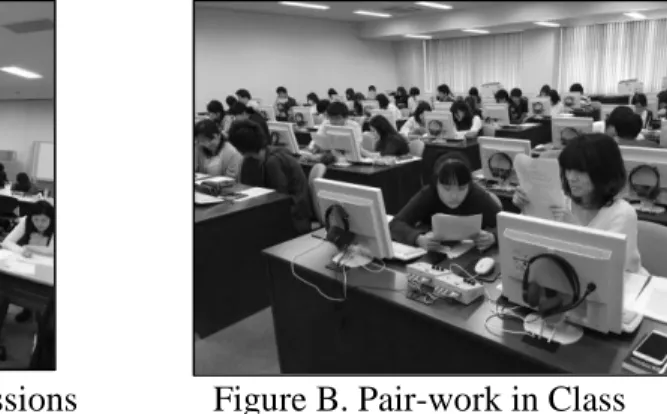
Figure A. Small Group Discussions    Figure B. Pair-work in Class  The  students  were  given  a  final  project  of  creating  a  pamphlet  to  explain  a  specific  topic  with  simple  written  language,  diagrams,  and  pictures  to  aid  in  patient
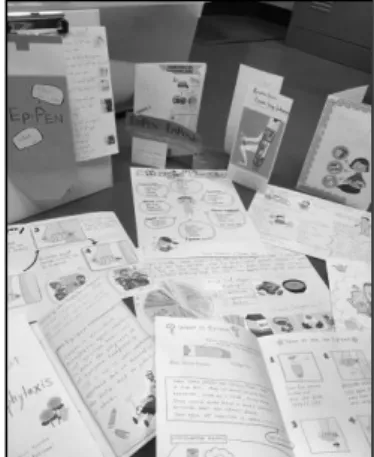
Figure C. Pamphlet Project
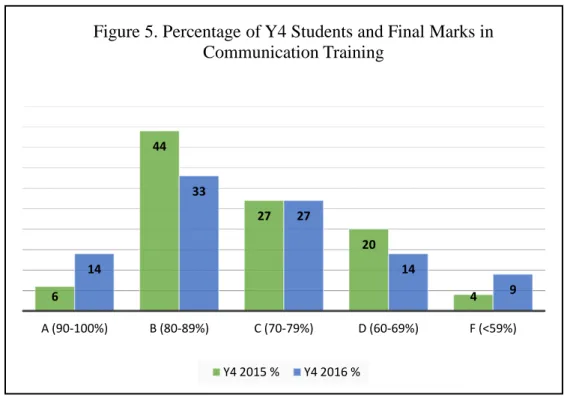
Figure 5. Percentage of Y4 Students and Final Marks in  Communication Training
+7

参照

関連したドキュメント

Keywords: continuous time random walk, Brownian motion, collision time, skew Young tableaux, tandem queue.. AMS 2000 Subject Classification: Primary:

To address the problem of slow convergence caused by the reduced spectral gap of σ 1 2 in the Lanczos algorithm, we apply the inverse-free preconditioned Krylov subspace

As Riemann and Klein knew and as was proved rigorously by Weyl, there exist many non-constant meromorphic functions on every abstract connected Rie- mann surface and the compact

This paper presents an investigation into the mechanics of this specific problem and develops an analytical approach that accounts for the effects of geometrical and material data on

While conducting an experiment regarding fetal move- ments as a result of Pulsed Wave Doppler (PWD) ultrasound, [8] we encountered the severe artifacts in the acquired image2.

From this figure it is clear that the counter-propagation network is composed of three layers: an input layer that reads input patterns from the training set and forwards them to

Soil Fumigant Training Program: Certified applicator training that provides information on (1) how to correctly apply the fumigant, including how to comply with new

・ The direct causes leading to the reactor core damage accident of Fukushima Daiichi Units 1 to 3 are, in the case of Unit 1, the total loss of cooling capacity at an early stage