Gatherers and Farmers : Some Implications of 1,800 Years of Interaction in the Maloti
Drakensberg Region of Southern Africa
著者(英) Mitchell Peter
journal or
publication title
Senri Ethnological Studies
volume 73
page range 15‑46
year 2009‑03‑31
URL http://doi.org/10.15021/00002586
15
Edited by K. Ikeya, H. Ogawa and P. Mitchell
Hunter-Gatherers and Farmers:
Some Implications of 1,800 Years of Interaction in the Maloti-Drakensberg
1)Region of Southern Africa
Peter Mitchell
University of Oxford
INTRODUCTION
Southern Africa is among the best possible regions in the world for studying the interactions between communities practising different forms of subsistence and organised at varying levels of social and political complexity. Put simply, and over- reductively, hunter-gatherers, herders, mixed farmers (some organised in small-scale chiefdom societies, others in much larger state-level polities, including those of the Zimbabwe Tradition) and settler communities of European descent, more-or-less tightly organised into formal colonial structures, have been present for part or all of the past 2,000 years. The possibility of exploring these interactions to learn about the specific forms they took within southern Africa and to contribute to broader theory has not been lost on archaeologists, anthropologists and historians.
The famous – or infamous – Kalahari debate precipitated by the research of Ed Wilmsen and Jim Denbow is the best known example of such exploration, though drawing on earlier observations by Schrire (1980) and Headland and Reid (1989).
As is well known, it focused on the degree to which Kalahari Bushman2) peoples described in the ethnographic literature of the late 1950s and 1960s as “hunter- gatherers” can be considered to have been “pristine” at that time. Wilmsen and Denbow (1990; Wilmsen 1989) used historical and archaeological sources to argue instead that such groups, including the well-known Ju/’hoãnsi (!Kung) of the northwestern Kalahari, had been intimately involved with food-producing peoples throughout the past two millennia. They proposed that, far from being autonomous or unaffected by such contact, hunter-gatherers were incorporated into wider farmer- centred political economies from early in the first millennium AD and forced into positions of dependency that foreshadowed their current situation as a marginalised rural proletariat. This conclusion, and their sustained critique of Richard Lee’s (1979) pioneering anthropological fieldwork on the Ju/’hoãnsi, did not go uncontested. Solway and Lee (1990) and Silberbauer (1991) are but some of those who have identified faults with specific elements of their use of the historical and/or ethnographic records. Archaeologically speaking, less has been said, but Sadr (1997) showed that far too little of Denbow’s own research has yet received the detailed
publication needed to allow his conclusions to be widely accepted, and that the tangible evidence for possible contact between putative hunter-gatherers and farmers – in the form of potsherds or bones of domesticated livestock – is not large.
The Kalahari debate – as a debate in the Kalahari itself – may have run out of steam in recent years as the realisation has taken hold that there is no reason to expect interactions between foragers and farmers to be uniform across time and space or that interaction should necessarily imply subordination (Kent 1992;
Guenther 1996; Reid 2005). What is of interest to me, however, as an archaeologist working in southern Africa is how regionally specific, indeed isolated, the Kalahari debate has been within the wider region. Granted, it finds echoes in the continuing discussion as to the subsistence and ethnic identities of groups with – and without – sheep in the far western part of what is now South Africa’s Western Cape Province, a discussion that currently pits Andrew Smith (2005; Smith et al. 1991) against Karim Sadr (2003; 2004) and previously saw him and others contending with Carmel Schrire (1992; and see Mitchell 2002 for further references on this debate). Other than occasional calls for broadening our analogical base (Parkington 1984; Hall 1990; Humphreys 2004/05, 2007), there has been little further consideration of the wider theoretical implications raised by the Kalahari debate for the ways in which archaeologists employ a largely Kalahari hunter-gatherer ethnography to give voice and colour to the Later Stone Age archaeological record that they excavate or study.
Archaeologically focused studies of interaction between hunter-gatherers and farmers, or between hunter-gatherers and settlers of ultimately European origin, are now plentiful, at least south of the Limpopo River (see Mitchell 2002; Mitchell and Whitelaw 2005 for recent summaries of such research). However, the consequences of such interactions there, or in the Kalahari, for archaeological use of concepts like gift-exchange, aggregation and dispersal, patterning in the use of space, or gender relations have been little explored. The principal example to the contrary concerns the interpretation of specific rock paintings in the Maloti mountains of Lesotho and was raised by Pieter Jolly in his 1994 MA thesis (Jolly 1994; 1995; 1996a). As this relates directly to my own fieldwork focus, it is on this particular region of southern Africa that I concentrate here.
HUNTER-GATHERERS OF THE MALOTI-DRAKENSBERG REGION The Maloti-Drakensberg mountains are southern Africa’s highest. The Drakensberg escarpment itself reaches 3,000 m above sea level and constitutes the eastern border of the kingdom of Lesotho with the KwaZulu-Natal and Eastern Cape provinces of South Africa (Figure 1). West of the escarpment and thus within Lesotho itself, the landscape remains highly rugged, dissected by the Senqu River and its numerous tributaries. Beyond the Senqu, two further mountain chains – the Central and Front Ranges of the Maloti – must be crossed before one enters Lesotho’s lowlands and reaches the Caledon River, the country’s western border with South Africa’s Free State province.
Part of southern Africa’s summer rainfall regime, the Maloti-Drakensberg region’s climate is largely affected by variation in altitude and distance from the Drakensberg escarpment, which exercises a pronounced rain-shadow effect on areas to its west. Major local anomalies are also evident, with valleys experiencing marked temperature inversion effects and aspect having a significant impact on vegetation and present-day settlement location. Because of the broadly north-south alignment of both the escarpment and the Indian Ocean coast to its east, regional ecology can best be described as a series of north-south trending slices. Forest and scrub forest interspersed with grassland once dominated along KwaZulu-Natal’s coast and below about 900 m above sea level. Further inland, grassland alone was increasingly common, with trees and shrubs confined to sheltered locations, especially along the escarpment and in the Senqu Valley. Several different grassland types are recognised, varying in their palatability and suitability for large ungulates:
areas above 2,130 m (or less on south-facing slopes) and those receiving higher rainfall typically sustain “sourer” grass species. While nutritious in early summer, these taxa are of little use to grazers at later times of the year, in contrast to lower Figure 1 Southern Africa showing the location of the Maloti-Drakensberg mountains, the maximum precolonial extent of agropastoralist settlement (dashed line) and the nineteenth-century location of South Sotho- and Nguni- (Xhosa- and Zulu-) speaking groups.
altitude “sweetveld”. Cold is also a critical factor, with mean annual temperature in the higher reaches of the Maloti and the Drakensberg as low as 6˚C and frost a serious problem for crop growth across almost all of Lesotho.
This brief description of the climate and ecology of the Maloti-Drakensberg has a particular significance for understanding its history over the past 1,800 years. This is because the Maloti-Drakensberg region remained beyond the reach of the mixed farming, iron-working (Bantu-speaking) communities who began entering southern Africa shortly after the start of the Christian era and started settling the coastal belt of KwaZulu-Natal around AD 400.3) This situation continued right through the first millennium AD, with Msuluzi Confluence (Maggs 1980) in the middle of the Thukela Valley among the furthest inland agropastoralist settlements. The reason for this distribution is simple and relates to the primarily agricultural basis of these early farmers: sorghum (Sorghum bicolor) and pearl millet (Pennisetum americanum), their principal staples, are intolerant of cold and thus effectively excluded from the Drakensberg escarpment and the Maloti mountains (Huffman 1996). Even when second-millennium farming communities ancestral to the modern Nguni and Sotho did begin colonising higher-altitude parts of the landscape after AD 1300, they did not settle along the escarpment itself or in the Maloti ranges beyond (Mitchell and Whitelaw 2005). Today’s Zulu-speaking escarpment-foot communities were first established in the nineteenth century as a deliberate strategy of British imperial control to create a buffer for lower-lying white-owned farms threatened by hunter- gatherer raids originating from within Lesotho (Wright 1971). West of the escarpment, Sotho-speaking farmers may have begun settling on the highveld grasslands of the northeastern Free State as early as the fifteenth century (Maggs 1976: 146; Mitchell and Whitelaw 2005), but more substantive settlement of this region, including the northern half of the Caledon Valley, only commenced around 1640 (Vogel and Fuls 1999). However, their colonisation of the Maloti and of the Senqu Valley was a (mid/late) nineteenth-century phenomenon, precipitated by population growth, military conflict, and the loss of much of Lesotho’s lowland territory to the Afrikaner Orange Free State republic (Vinnicombe 1976; Eldredge 1993). As an example, the first Basotho village east of the Senqu River (at Sehonghong) dates from as recently as 1878. Acquisition of maize (first introduced to southern Africa in the 1500s by the Portuguese) as a substitute for sorghum and millet was instrumental in this nineteenth-century expansion of agropastoralist settlement (Gill 1993).
The consequence of all this is clear: the Maloti-Drakensberg mountains were among the last areas of Africa south of the Limpopo/Gariep rivers in which Later Stone Age (LSA) hunter-gatherers were able to pursue an independent existence.
Though increasingly pressed from all sides and subject to periodic raiding by the Orange Free State, Britain’s Natal colony and the crystallising and expanding Lesotho state itself, Bushman communities survived well into the third quarter of the nineteenth century. They did not, of course, do so unchanged. Several studies have documented their acquisition of the horse, their development of mounted hunting
and raiding, their assimilation – forced and voluntary – into Sotho and Nguni communities, their production of rain for at least some of those communities and the likely transformation of their social relations that resulted from all of these processes (Wright 1971; Vinnicombe 1976; Campbell 1987; Dowson 1994; Blundell 2004).
Limited firsthand observations made at this time provide fragments of ethnohistoric detail that help illuminate aspects of these changes. For example, Ellenberger (1953) was able to record snippets of information from an elderly Sotho woman who remembered visiting Bushmen living at the massive and well-known site of Sehonghong rock-shelter around 1872, while Sir Walter Stanford recorded the testimony of Silayi, a Thembu man who spent three years living with a mostly – but not entirely – Bushman group slightly earlier (Macquarrie 1962). More recent work emphasises how much more comparable information has been lost without trace (Jolly 1995). Above all, however, it is the record made by Joseph Orpen (1874) of his conversations with the Bushman Qing that has attracted archaeological attention, and it is to this that I now turn.
ROCK ART: THE JOLLY/HAMMOND-TOOKE DEBATE
Over the southern summer of 1873/74, Joseph Orpen was one of two British military officers sent into the highlands of Lesotho to reconnoitre the area for fear that the Zulu chief Langalibelele might take refuge there following the failure of his revolt against the colonial government. As a guide, Orpen employed a Bushman named Qing, a hunter in the service of the son of the Basotho chief Moorosi. The accounts given by Orpen and his fellow expedition leader, J. M. Grant, provide one of the first detailed descriptions of Lesotho’s eastern highlands (Figure 2) and predate by several years the area’s settlement by the Basotho (Lewis-Williams 2003;
Mitchell and Challis 2008). Visiting several rock-shelters featuring Bushman rock paintings, Orpen (1874) took advantage of Qing’s presence to obtain from him a series of myths and legends and brief, but apparently verbatim, interpretations of three particular rock art scenes. One of these, featuring three antelope-headed figures, came from Melikane; a second, showing two rain-animals, from Sehonghong; and the third, depicting a line of “tailed” figures, from a site probably to be equated with Pitsaneng, a small shelter 1 km upstream from Sehonghong (Smits 1973). Shortly thereafter, Qing’s interpretations were substantially corroborated by /Xam Bushman informants working with Wilhelm Bleek and Lucy Lloyd in Cape Town, but originally from South Africa’s Northern Cape Province (Lewis-Williams 1981; 2003). While we cannot exclude the possibility that the paintings predated Qing’s visit by perhaps several centuries, his words nevertheless remain today the only interpretations of Bushman rock paintings provided by someone for whom it can be plausibly claimed that the production of rock art was still a living tradition. Oral testimony published by the Lesotho historian Victor Ellenberger (1953) suggests that some paintings at Sehonghong (Figure 3) were produced no more than two years before Orpen’s visit, while evidence from the
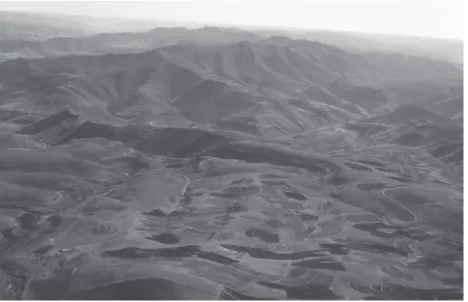
Figure 2 The Maloti mountains of eastern Lesotho.
Figure 3 Sehonghong shelter, Lesotho. This was one of three sites at which Qing provided an explanation of paintings to Orpen (1874) and was occupied by Bushmen both before and after this visit by Orpen. Note the human figure in the foreground which provides a scale for this massive rock-shelter.
Drakensberg escarpment indicates that paintings were still being produced several years thereafter (Vinnicombe 1976). Indeed, we now know that some paintings were probably still being produced in the first decades of the twentieth century (Jolly 1997, 2000; Blundell 2004).
Because of the uniqueness of Qing’s words, his interpretations have been pivotal to the development of an ethnographically informed understanding of Bushman rock art. As first outlined by David Lewis-Williams over twenty years ago (Lewis-Williams 1981; 1982), this draws on the much larger archive compiled from /Xam people by Bleek and Lloyd, as well as more recent Kalahari ethnography.
Together, these sources show that southern Africa’s hunter-gatherer rock art is most convincingly understood as a representation, record and active constituent of the worldview of Bushman shamans and their experiences in altered states of consciousness. Although additional perspectives have been developed (e.g.
Parkington 1989, 2003; Solomon 1992, 1997; Hollmann 2001), the consensus is that these should be seen as complementary, rather than antagonistic, to a shamanistic understanding of the art (Lewis-Williams 1998; Mitchell 2002; Lewis-Williams and Pearce 2004). Another perspective, however, took serious issue with the very notion that the production of the images interpreted by Qing should be understood solely from a Bushman perspective. Writing a decade or so ago, Pieter Jolly (1995; 1996a;
1996b) argued that Maloti-Drakensberg hunter-gatherers were intimately involved with Nguni- and Sotho-speaking farmers for centuries. He marshalled oral and written histories to argue that this interaction took the shape of intermarriage, co-residency, and exchange, and that it gained strength during the nineteenth century. Jolly went on to draw attention to possible parallels between the therianthropic, stick-supported figures recorded by Orpen and described by Qing at Melikane and the behaviour of traditional Nguni healers. He further compared the
“lizard-tailed” figures recorded and described from Pitsaneng with the leaders of Sotho male initiation rituals (see also Jolly 2006a). Far from providing a platform for the interpretation of Bushman rock art in shamanistic terms, he concluded that these images should be viewed as concrete evidence for the encapsulation and assimilation of Maloti-Drakensberg Bushmen by their expanding agropastoralist Bantu-speaking neighbours. Though acknowledging that these interactions took a symbiotic and bi-directional form (Jolly 1995), “the primary direction of cultural flow, particularly once black farmers had settled and established themselves firmly within San-occupied areas, would have been from the politically dominant, encapsulating Nguni and Sotho groups to the San” (Jolly 2000: 86).
In developing his arguments, Jolly helpfully drew attention to the wealth of ethnohistoric evidence for interaction between hunter-gatherers and farmers in the Maloti-Drakensberg region in and before the nineteenth century. However, the proposition that the iconic texts – verbal and painted – of the shamanistic understanding of Bushman rock art were nothing of the sort, but rather produced by processes akin to those previously postulated by revisionist scholars in the Kalahari, met with considerable resistance. As was pointed out at the time (comments in Jolly
1996a), there is no a priori reason why resemblances between Bushman beliefs or ritual practices and those of Sotho or Nguni peoples should reflect the influence of the latter on the former. Indeed, the reverse seems at least as likely, given the extensive genetic and linguistic evidence for intermarriage and contact between Bushmen and Bantu-speaking peoples (Richards et al. 2004). Papers by the late David Hammond-Tooke, a social anthropologist with a specialisation in Nguni ethnography, show this convincingly. Not only is the Xhosa term for diviner – igqirha – clearly cognate with the /Xam term for shaman !gi:xa (“owner of potency”), but numerous specific features of the ritual practices of Nguni diviners appear to have a Bushman source. These include trance, the use of fly-whisks, dancing rattles and supporting sticks, and an emphasis on wild game as divinatory animals (Hammond-Tooke 1998, 1999; cf. Tesele 1992; Prins 1999). Two conclusions emerge from this debate:
first, that Nguni and Sotho ethnography may contain elements derived from interaction with hunter-gatherers capable of expanding the range of ethnographic evidence on which Bushman rock art researchers can draw (cf. Thackeray 1994; Hoff 1998);
but second, that it seems unwarranted to discount Qing’s words as a primary (indeed, in some respects, the primary) source for understanding Bushman rock art on the grounds that they reflect Nguni/Sotho influence on Bushmen beliefs and practices.
While Jolly’s primary challenge to Lewis-Williams’ use of Qing’s testimony has thus been forestalled, and he has recently modified his own position with regard to some aspects of the Orpen scene at Melikane (Jolly 2006b), the wider issue of long- term continuity between nineteenth-century Maloti-Drakensberg hunter-gatherers and their predecessors remains. Any attempt to generalise from nineteenth-century observations, including those of Qing, to the broader rock art corpus has to contend with this question, and it is not one that has been dispelled by the debate over Jolly’s initial work. Indeed, his more recent observations provide compelling evidence that Maloti-Drakensberg Bushmen did incorporate some elements acquired from their Bantu-speaking neighbours into their own religious beliefs and practice, including the wearing of beaded or leather bandoliers and the preparation of ritual medicines by churning their ingredients in pots (Jolly 2005). Additional features of Maloti- Drakensberg rock art that are particularly well developed there, but absent from regions where agropastoralist settlement by Bantu-speakers did not take place, may reinforce this conclusion (Jolly 2005: 97). So, too, does recently completed research showing that at least one historically attested nineteenth-century “Bushman” group, the Thola, were a heavily creolised community of mixed Bushman, Khoe, and Xhosa origin (Challis 2008). To take these issues further demands that we now step beyond rock art to investigate the archaeological record as a whole, including, in particular, its excavated component.
ARCHAEOLOGICAL SIGNATURES OF FORAGER/FARMER INTERACTION IN THE MALOTI-DRAKENSBERG REGION
The excavated archaeological record relevant to the study of forager/farmer interactions in the Maloti-Drakensberg region over the past two millennia takes many forms and has most recently been reviewed by Mazel (1989; 1997), Jolly (1996b), and Hobart (2003). It derives from excavations at open-air sites and from within rock-shelters and includes, but is not restricted to, finds of pottery, metal, glass beads, and domestic livestock at sites presumed to have been occupied by hunter-gatherers. Beyond the margins of the area of main concern here, but still relevant, it takes the form of ostrich eggshell beads, stone tools, and bone points at sites believed to have been farmer-occupied villages. The word “presumed” is important here since archaeologists may too readily assume that rock-shelters were uniquely employed by people whom we think were hunter-gatherers. The recent
Figure 4 Southeastern southern Africa showing the locations of sites mentioned in the text.
Names are abbreviated thus: BEL Belleview; CLA Clarke’s Shelter; CSH Collingham Shelter; DI1 Diamond 1 Shelter; DR Driel; GH Good Hope; LIK Likoaeng; LIT Lithakong; MC Msuluzi Confluence; MHL Mhlwazini; MEL Melikane; MOS Moshebi’s Shelter; PIT Pitsaneng; SHE Sehonghong; STA Strathalan A.
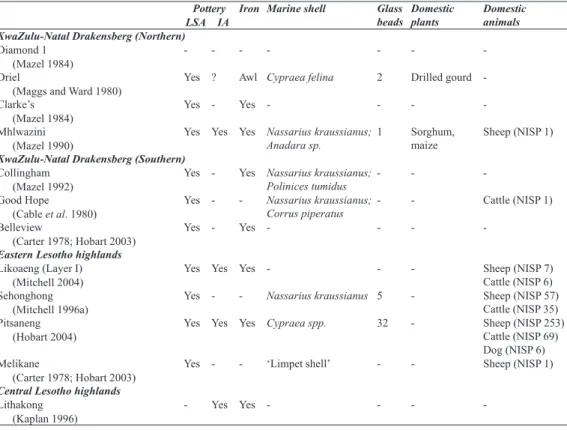
Table 1 Evidence of potential contact between Maloti-Drakensberg LSA hunter-gatherers and farmers over the past 1,800 years.
Pottery Iron Marine shell Glass beads
Domestic plants
Domestic animals LSA IA
KwaZulu-Natal Drakensberg (Northern) Diamond 1
(Mazel 1984)
- - - - - - -
Driel
(Maggs and Ward 1980)
Yes ? Awl Cypraea felina 2 Drilled gourd - Clarke’s
(Mazel 1984)
Yes - Yes - - - -
Mhlwazini (Mazel 1990)
Yes Yes Yes Nassarius kraussianus;
Anadara sp.
1 Sorghum, maize
Sheep (NISP 1) KwaZulu-Natal Drakensberg (Southern)
Collingham (Mazel 1992)
Yes - Yes Nassarius kraussianus;
Polinices tumidus
- - -
Good Hope (Cable et al. 1980)
Yes - - Nassarius kraussianus;
Corrus piperatus
- - Cattle (NISP 1)
Belleview
(Carter 1978; Hobart 2003)
Yes - Yes - - - -
Eastern Lesotho highlands Likoaeng (Layer I) (Mitchell 2004)
Yes Yes Yes - - - Sheep (NISP 7)
Cattle (NISP 6) Sehonghong
(Mitchell 1996a)
Yes - - Nassarius kraussianus 5 - Sheep (NISP 57) Cattle (NISP 35) Pitsaneng
(Hobart 2004)
Yes Yes Yes Cypraea spp. 32 - Sheep (NISP 253)
Cattle (NISP 69) Dog (NISP 6) Melikane
(Carter 1978; Hobart 2003)
Yes - - ‘Limpet shell’ - - Sheep (NISP 1)
Central Lesotho highlands Lithakong
(Kaplan 1996)
- Yes Yes - - - -
historical record of Lesotho itself – and, in a few rare instances, contemporary practice – show that this is not necessarily true (e.g. Mitchell 1993). Mazel (1990;
1999) draws similar conclusions in respect of the Thukela Basin of KwaZulu-Natal, but warns of the difficulties of discriminating between agropastoralist and hunter- gatherer occupations of the same site. One reason for this lies in the time-averaging effects of the formation of the archaeological record and its subsequent excavation and analysis. Deposits may often be insufficiently fine-grained to permit the recovery of short-lived occupation events, resulting in their blurring and mixing as soil layers form, while analyses may compound this in the pursuit of statistically
“meaningful” sample sizes (cf. Parkington 1993). A second concern is the general predilection for assigning particular categories of material culture to one or other of the (generally just two) divisions that we are contrasting. Read thus, stone tools
“must” be of forager manufacture (but see Hobart 2003), domestic animals “must”
have been owned by farmers, or obtained directly from them. The danger is self- evident: to argue thus runs the risk of running in a circle that merely confirms what we already believe. Tackling these problems is not easy, but, as a minimal requirement, we should attempt to work with multiple lines of evidence, pay detailed
attention to context, and strive for direct dating of finds of interest.
What, then, is the evidence that we have from the Maloti-Drakensberg region for hunter-gatherers having interacted with farmers during the last 1,800 years? In this paper I restrict myself to Lesotho and KwaZulu-Natal, leaving a broader assessment that would include neighbouring regions to another occasion. Published, excavated evidence is available from 12 sites that span the entire period of forager/
farmer interaction in the region, from before the establishment of the first agropastoralist communities in KwaZulu-Natal through to the end of the nineteenth century (Figure 4).
Five classes of material are represented: pottery, metal, jewellery, domestic plants, and domestic livestock (Table 1). Though not considered here in detail, some sites also retain rock paintings showing cattle, people of apparently Nguni or Sotho origin, and horses and Europeans (of nineteenth-century date). Sehonghong, Melikane, and Belleview all provide instances of this (Vinnicombe 1976).
1) Pottery
Pottery is present at all twelve sites, but is not necessarily of agropastoralist origin. In most cases, its overall characteristics, especially an absence of decoration and a strong preference for thin-walled vessels, distinguish it from the ceramics found with both first-millennium and second-millennium farmers. There is little doubt that such pottery was made by the Maloti-Drakensberg Bushmen themselves (Figure 5), and there are ethnohistoric references to confirm this (Ellenberger 1953:
86). What is of interest, however, with this ceramic tradition, which Hobart (2003;
2004) has dubbed “Coarse Bushman Ware”, is its age. Although initial claims for its presence at Clarke’s Shelter as far back as some 2,200 radiocarbon years ago are now viewed with more scepticism (Mazel 1999; cf. Mazel 1992), there is little doubt that such ceramics were present at the edges of the Maloti-Drakensberg region some while before the beginnings of farming settlement in KwaZulu-Natal. As I have indicated, this is currently set no earlier than AD 400 (Mitchell and Whitelaw 2005).
However, at Collingham Shelter pottery is present in several stratified and securely sealed contexts dated, at two standard deviations, from the first to early fourth centuries AD (Mazel 1992). This suggests that knowledge of pottery manufacture spread in advance of agropastoralist settlement, and was taken up and developed by indigenous foragers. The social and economic contexts in which this took place remain to be established, although the lack of decoration and minimal evidence for economic intensification hint, in comparison with other parts of the world, that a collective, rather than a prestige-building, motivation may have been strongest (cf.
Pearson 2005). Whatever the reasons, by the middle third of the first millennium AD, ceramics were widespread in Maloti-Drakensberg hunter-gatherer material culture (Mazel 1992).
Not all pottery, however, is of this kind. While in some cases sherds are so fragmented and adiagnostic as to make attribution uncertain, in others it does seem likely that pottery was obtained from farmers. One of the oldest instances of this in
the Maloti-Drakensberg region is a single decorated sherd of Msuluzi/Ndondonwane type from my own excavations at Likoaeng, an open-air campsite on the banks of the Senqu River: multiple radiocarbon determinations fit the typology of the sherd in question to suggest a date for its presence there of between the mid-eighth and mid-ninth centuries AD (Mitchell et al. 2008). From the second millennium AD, undecorated sherds from Mhlwazini Cave in the Drakensberg escarpment are probably of Nguni origin (Mazel 1990), while a sherd belonging to the Moloko tradition of South Africa’s Sotho-speakers comes from Pitsaneng and is directly dated by OSL to the late sixteenth century (Hobart 2004). Whether we are looking here at the introduction of isolated sherds (valued for their exotic – shamanistic? – connotations; cf. Kinahan 1991), the use of broken pieces of pottery reused as plates or other items, or the acquisition of whole pots is uncertain. Different implications for the social context of the use of these ceramics by hunter-gatherers and for the mechanisms by which they were obtained follow from these various possibilities.
The scarcity of such finds might suggest that exotic, farmer-made pottery had relatively little impact on hunter-gatherer economies or social systems. Not so, however, with the pottery manufactured by hunter-gatherers themselves. No systematic technological, stylistic, or residue study of these ceramics has yet been
Figure 5 Undecorated pottery of hunter-gatherer origin from a pit in the GAP Layer at Sehonghong Shelter. A radiocarbon determination on charcoal from this feature suggests it is of ninth-century AD age.
attempted, whether at the site or the regional level. In some cases, such as Likoaeng, it is clear that a relatively small number of sherds are drawn from a surprisingly large number of vessels, suggesting that fragments of pottery were perhaps recycled after breakage. There can be little doubt, however, from the ethnohistoric record, that pots were also extensively used for preparing food, in particular for boiling meat, extracting fat, and, probably, cooking plants (Bollong et al. 1997). The absence from the archaeological record of fire-cracked rock and the failure of the ethnohistoric record to document a well-developed basketry technology or techniques for boiling water in animal paunches combine to suggest that pottery offered an important suite of new cooking methods with real nutritional gains that may, inter alia, have facilitated infant survival (Mazel 1989; Gifford-Gonzalez 2000). Its incorporation into Maloti-Drakensberg cuisine, storage, and mythological (Orpen 1874: 4; Jolly 2005: 95) repertoires implies a significant difference in these spheres between hunter-gatherers of the last two millennia and those who preceded them.
2) Metal
The nineteenth-century historical record documents the use of iron tools and weapons by Maloti-Drakensberg Bushmen, and examples of iron-bladed spears are represented in some rock paintings (Vinnicombe 1976). Excavated finds suggest that iron was available long before this. An iron point from Mhlwazini is likely to date to within the last 600 years (Mazel 1990), while Hobart’s (2003; 2004) excavations at Pitsaneng produced almost 40 pieces of corroded iron, at least some of which may be as much as 900 years old. Potentially older are the “rusted iron wire” found in an early first millennium AD layer at Belleview (Carter and Vogel 1974), a probable spearhead or knife fragment from a broadly mid-first millennium AD context at Clarke’s Shelter (Mazel 1984) and an awl or tang from Driel (Maggs and Ward 1980). However, in none of these cases can we wholly exclude stratigraphic displacement or poor association with the relevant radiocarbon dates. The same may be true of the copper and iron beads found at Collingham Shelter in contexts that just predate the establishment of farming communities in KwaZulu-Natal (Mazel 1992). However, at Likoaeng we are on much more solid ground, for here a piece of corroded iron, coming from the same layer that produced the hunter-gatherer pottery and Msuluzi/Ndondonwane sherd just discussed, is directly dated to 1290 ± 30 BP (GrA-26831), calibrating to the eighth or early ninth centuries AD (Mitchell et al.
2008). Though the process is necessarily destructive, other examples of metalwork might also be directly dated in this way. In the meantime, and given the inevitable preservation/recycling problems associated with the long-term survival of iron objects, indirect evidence may support the idea that iron was (increasingly?) available to hunter-gatherers through the late first/second millennia AD. This is suggested first by the paucity in most lithic assemblages of the last 2000 years of backed microliths, artefacts that microwear analyses imply were used in a variety of cutting situations (Wadley and Binneman 1995). Also relevant is evidence from the
later first millennium AD farming village of Msuluzi Confluence, located at the western edge of contemporary agropastoralist settlement, where iron was produced on a very large scale, quite possibly for trade with hunter-gatherers (Maggs 1980).
The presence at the same site of a small flaked-stone tool assemblage strengthens the possibility of interaction with hunter-gatherers, though what form it took we are hard pressed to say. Comparison with the stone tools found at other first millennium AD farming settlements in KwaZulu-Natal does, however, emphasise the specifically Later Stone Age character of those from Msuluzi Confluence, suggesting perhaps that they were made or brought there by hunter-gatherers (Hobart 2003).
3) Jewellery
Prior to about 2,000 years ago, archaeological evidence for personal ornamentation in the Maloti-Drakensberg region principally takes the form of ostrich eggshell beads and seashell beads or pendants; a very few bone and stone beads are also known. That marine shell necessarily originated along the Indian Ocean coast and that ostriches are virtually absent from the region renders these two classes of artefacts an excellent means of trying to track spatiotemporal patterning in the long-distance interaction of hunter-gatherer communities. Earlier analysis of their movements suggests that soon after 2,000 years ago, hunter-gatherers in Lesotho’s eastern highlands, and perhaps the Drakensberg escarpment as well, substantially reoriented their contacts to the west, away from more coastward parts of KwaZulu-Natal (Mitchell 1996b). This change, though not absolute, is reinforced by the appearance in highland Lesotho of a variety of pressure-flaked stone points and backed microliths otherwise found almost entirely in South Africa’s central interior (Mitchell 1999). I have argued that, taken together, these differences reflect a partial reorganisation of exchange ties as hunter-gatherers living in lowland KwaZulu-Natal encountered more interesting opportunities for exchange in the form of incoming Iron Age farmers (Mitchell 1996b). By default, Maloti-Drakensberg foragers intensified exchange with people to the west.
In the specific context of southeastern southern Africa, the origins of ostrich eggshell and marine or estuarine shell can thus inform us about regional networks of interaction. However, the choice of jewellery items also has other connotations:
connotations of display, communication, and identity creation. One instance of this may be the innovation around, or soon after, 2,000 years ago of new ways of wearing ostrich eggshell beads in an alternating “brickwork” fashion, probably employed in headbands or stitched onto fabric (Maggs and Ward 1980). Intriguingly, Mazel (1989) suggests on the basis of recent observations in the Kalahari that the elaboration of beadwork seen here might partly be a response by women to changes in gender relations brought about if men took the lead in trading with farmers.
Though difficult to “test”, the suggestion points up the importance of considering the implications of such interactions across as broad a front as possible. Glass beads may have provided a further vehicle for such changes. First introduced to southern
Africa from across the Indian Ocean in the late first millennium AD and widely traded by advancing European settlers in the eighteenth and nineteenth centuries, they are best known from agropastoralist contexts. Examples have, however, been recovered from Sehonghong (Carter et al. 1988), Mhlwazini (Mazel 1990) and Pitsaneng, where some, at least, seem to have been derived via farming communities in northern South Africa (Hobart 2004). This observation reminds us that Maloti- Drakensberg hunter-gatherers no doubt maintained links of some kind to all points of the compass, but more generally implies still further novel opportunities for creating and displaying individual identities, ones that did not exist before farmers were present on the regional scene.
4) Domestic plants
Finds of cultigens in hunter-gatherer contexts should provide unambiguous evidence for contact with those agropastoralists for whom sorghum, millet and other crops were essential staples. Fragments of drilled gourd, identified as Lagenaria siceraria, at Driel (Maggs and Ward 1980) hint at the acquisition of a further kind of container at a few sites, but are less interesting than finds of edible plants. For the region considered here, however, these are rare, being found only at Mhlwazini, where both sorghum and maize (the latter directly dated to 190 ± 45 BP (Pta-5102)) were recovered (Mazel 1990). Farther south, in the Maclear area of the Eastern Cape Province, Strathalan A also yielded sorghum heads, directly dated in this instance to 300 ± 40 BP (Pta-7144; Opperman 1999). Other sites with some degree of plant preservation, such as Collingham (Mazel 1992), Sehonghong (Carter et al. 1988), and others in the Barkly East/Maclear areas of the Eastern Cape (Opperman 1987) show no trace of cultigens. Incorporation of domesticated plants into hunter-gatherer diets may therefore have proceeded on only a limited scale within the Maloti- Drakensberg region, perhaps because of the difficulty of transporting large quantities of vegetable produce in the absence of navigable rivers or pack animals (but see below). Much more readily transportable, and perhaps more appealing, will have been two cultivated narcotics: cannabis and, from the sixteenth or seventeenth centuries, tobacco. Hard archaeological evidence in the form of detectable residues or substance-specific pipebowls remains lacking, but the ethnohistoric record for the nineteenth century, supported by more recent observations (e.g. Jolly 1994), confirms the widespread use of both substances by Maloti-Drakensberg foragers. As well as obtaining them through trade, it is also possible that they were grown; the place name “Likoaeng”, for instance, meaning “Place of the tobacco plants”, is remembered locally to derive from the fact that Bushmen had been growing tobacco or cannabis there prior to Sotho settlement at the end of the 1870s (Mitchell 2001).
Though both drugs were used recreationally, cannabis at least may also have been used in ritual contexts to facilitate access to those altered states of consciousness sought by Bushman shamans (Mitchell and Hudson 2004).
5) Domestic animals
Unlike plant foods, livestock are eminently movable resources. They may also be more readily incorporated into a mobile hunter-gatherer lifestyle since they do not demand the sedentism that substantial commitment to cultivation requires. This certainly holds for domesticated horses, which were acquired in number by Maloti- Drakensberg Bushmen in the nineteenth century (Wright 1971; Vinnicombe 1976), but also, arguably, for sheep and other animals. While Smith (1990; 2005) argues strongly that the social barriers to establishing private ownership of livestock were always immense and that the technical challenges of successfully rearing sustainable numbers of animals should not be underestimated, Sadr (1998; 2003; 2004) has taken an alternative view. Citing Ikeya’s (1993) work with contemporary Kalahari foragers, he suggests that it is possible to “graft” small-scale herding of sheep (in his archaeological case, goats in Ikeya’s example) onto a hunter-gatherer lifeway. (Here and elsewhere I refer only to “sheep”, even though most of the bones concerned are identified as Ovis/Capra; Capra hircus itself has yet to be identified in the relevant sites, whereas Ovis aries is certainly present at some of them, including Likoaeng, to which I turn shortly). At least in the short term, no significant changes in social organisation or ideology may result, though Sadr’s (1998; 2004) reading of the South African archaeological record suggests that this was not true over a time span of several centuries. The ease with which horses were acquired by hunter-gatherers in the Maloti-Drakensberg mountains and the eastern Free State in the 1800s suggests that the factors Smith identifies were not always as inhibiting as he indicates. The same can be said of the successful take-up of goats, sheep, and cattle by Bushmen in the Riet River area of the western Free State in the centuries immediately before this (Humphreys 1988). How do these points relate to the archaeology of the Maloti-Drakensberg region?
Experience elsewhere shows how readily small sheep bones or teeth can move downward through archaeological deposits (Sealy and Yates 1994), making it clear that we should strive to base arguments upon skeletal elements that have been unambiguously identified and unambiguously dated (by the AMS technique). In the case of some sites, such as Good Hope (Cable et al. 1980) and Melikane (Carter 1978), isolated finds of cattle or sheep bones therefore remain difficult to assess. At Pitsaneng, however, Hobart (2004) argues that the number of bones of both species through the stratigraphic sequence of what is by any account a small rock-shelter indicates that its hunter-gatherer occupants combined livestock-keeping with the exploitation of wild resources. Although confirmation of this is still required by direct dating of the relevant specimens, Hobart’s (2004) more general point that archaeologists have been too dismissive of these possibilities is well made. As he suggests, it follows that cattle and sheep bones in other hunter-gatherer contexts in the Maloti-Drakensberg region and the Caledon Valley to its west need re-evaluation to ascertain if they too document the availability of domestic livestock to foragers centuries before the local arrival of farming communities.
Only at one Maloti-Drakensberg region has AMS dating yet been applied to domestic livestock remains. At Likoaeng (Figure 6), sheep and cattle were both identified in the faunal assemblage from Layer I, the same layer that produced the ceramics and iron already discussed (Mitchell et al. 2008). Specimens of both species were submitted for AMS dating via the Pretoria and Groningen radiocarbon laboratories. The sheep sample yielded a determination of 1285 ± 40 BP (Gra-23237), most likely calibrating to the mid-eighth to mid-ninth centuries AD.
This wholly unexpected result fits almost exactly the two other radiocarbon determinations from the same layer, and the likely age of the Msuluzi/Ndondonwane sherd already mentioned. It provides compelling evidence for the presence of sheep in the Lesotho highlands over a millennium before the local establishment of the first Sotho farming villages, but there is more. Although the cattle sample submitted did not have enough collagen to make dating possible (S. Woodborne, Quaternary Dating Unit, Pretoria, pers. comm.), there can be little doubt that the few cattle bones from the site are of the same age as the sheep. The only alternative involves postulating the discard at the same physical location of a few cattle remains that somehow ended up over 50 cm below the surface in an otherwise much older archaeological context that showed no sign of subsequent disturbance. Moreover,
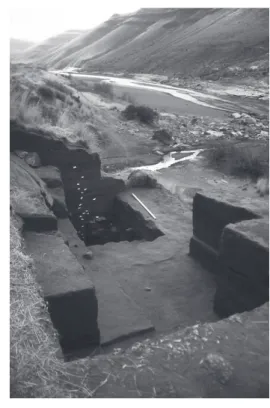
Figure 6 Likoaeng at the end of the 1998 excavation season, looking north along the Senqu Valley. Layer I is the uppermost dark horizon visible in the section to the rear.
Layer I is the youngest archaeological context at the Likoaeng site and there is not the slightest sign of any late nineteenth/twentieth-century Sotho activity there other than a modern maize field and footpath. The site is, in fact, several kilometres from the nearest village midden or cattle pen. Given this evidence, it is surely more parsimonious to assume that the cattle bones too are of late first millennium AD age.
Residue analysis of the ceramics from Layer I has not yet been completed, but may be able to establish whether caprine and/or bovine milk was consumed by the site’s inhabitants (cf. Craig 2002).
Likoaeng, then, confirms Hobart’s (2004) suggestion that hunter-gatherers in highland Lesotho acquired at least some livestock long before agropastoralist settlement of the area, just as some of them are known to have done in the nineteenth century (Vinnicombe 1976: 61). What form this acquisition took remains unclear. One could read the Likoaeng evidence literally and postulate the presence of just two or three sheep and a single cow, the minimum number of individuals required by the faunal data (Mitchell et al. 2008). Could this be the result of a single act of exchange with agropastoralists in KwaZulu-Natal? Perhaps yes, but the likelihood of excavation just happening upon such a one-off event is surely small.
More likely, the Likoaeng evidence speaks to something else, not least because the site is – as the hunter-gatherer walks – at least 100–150 km and a 3000-m-high escarpment away from the nearest contemporary farming settlement; the immediate slaughter of livestock expected of foragers by Smith (1990) sits uneasily with Likoaeng’s location. Were Likoaeng a nineteenth-century site one might think of these animals as the product of raiding (cf. Wright 1971), but we lack evidence of such conflicts between hunter-gatherers and farmers in the first millennium AD when the territorial and economic pressures that existed in the 1800s were surely lacking. Another possibility is that the totality of the Likoaeng evidence (pottery, iron, sheep, cattle) speaks to quite close relations between foragers and farmers, perhaps organised on a systematic basis that saw hunter-gatherers visiting agropastoralists on the other side of the Drakensberg escarpment on a regular (seasonal?) basis, perhaps to trade. Patron-client relations in which livestock were loaned out to hunter-gatherers on a more-or-less permanent basis and animals were taken into the Maloti mountains to graze seasonally can also be envisaged. However, given the territorial extent of agropastoralist settlement in the late first millennium AD, one would imagine that there must have been ample opportunity for such grazing far closer to home on the eastern side of the Drakensberg escarpment. The final alternative then is that we are, by chance, sampling a situation in which, as Hobart (2004) argues, some foragers had acquired domestic livestock and integrated them into their economy. If so, then Likoaeng provides the first directly dated evidence that Sadr’s (2003) “neolithic” phase in southern Africa reached beyond the historically known areas of herder settlement to include the Maloti-Drakensberg mountains. The challenge now is to locate and excavate other sites with fine-grained chronologies and good organic preservation that can help explore and select between the possibilities just identified. If confirmed, however, the Likoaeng evidence and
Smith’s (2005) arguments about the many animals needed to maintain a successful breeding population suggest that at least some of the Maloti-Drakensberg region’s inhabitants during the past 1,800 years were not the “pure” or “pristine” hunter- gatherers that we have previously imagined.
Before moving on, one final domesticated animal requires noting, the dog.
Dogs are notoriously difficult to distinguish osteologically from jackals in many samples and have thus far only been identified at Pitsaneng (Hobart 2004).
Observations elsewhere show they were kept by agropastoralists from at least the sixth/seventh centuries AD (Plug 1996), so they could have been available to hunter- gatherers in the Maloti-Drakensberg from then, if not before. We know from ethnographic sources and from rock art that they were (and are) used in southern Africa to hunt a wide range of game, from eland to hares (Schapera 1930: 136;
Vinnicombe 1976: 89; Lee 1979: 214; Ikeya 1994; Mitchell 2008). Although it is difficult to estimate how far they may have improved hunting success, they were clearly unavailable prior to 2,000 years ago. Moreover, dogs could also have been used to help guard livestock, such as those that seem to have been present at Likoaeng.
CHRONOLOGICAL PATTERNING IN ROCK ART AND REGIONAL SETTLEMENT HISTORY
Cattle, horses, sheep and dogs are all represented in the rock art of the Maloti- Drakensberg region (Vinnicombe 1976). Furthermore, it is clear that horses and cattle were also incorporated into Bushman belief systems, something that the conflated eland/horse creatures from Melikane show particularly well (Campbell 1987; Figure 7). Examples of cattle therianthropes make the same point, and Lewis- Williams (1981) early drew attention to the many physical and behavioural similarities between cattle and eland that may have facilitated their assimilation into existing beliefs. Such data demonstrate how Bushman rock art, and the beliefs and practices that produced it and that it, in turn, reinforced have been far from static over time. Changes in them during the nineteenth century in particular have been the subject of much research, aided by the extensive historical record available for that period, the closer dating that images of horses and Europeans can provide, and the obvious rapidity of social and economic change at that time (e.g. Campbell 1987;
Dowson 1994; Blundell 2004; Challis 2008). However, since cattle were probably known from the onset of agropastoralist settlement in southeastern southern Africa around AD 400 (Huffman 1998), and may have been kept in the Lesotho highlands only a few centuries thereafter, there is no reason to suppose that their incorporation into Bushmen systems of belief was a wholly recent phenomenon.
Neither is there any reason to believe that other changes have not taken place.
Demonstrating this is not easy, since in relation to the size of the surviving rock art corpus AMS dates that can be related to specific images are few in the extreme.
However, it is now clear that some of the surviving art reaches back beyond 2,000
years ago (Mazel and Watchman 2003). Furthermore, it is apparent that some of the stylistic sequences previously proposed can be supported by these dates and by detailed studies of superpositioning (Russell 2000). What is of particular interest from these studies is the evidence for change in content that is now emerging. In particular, eland seem to be absent from the earliest surviving phase in the KwaZulu- Natal Drakensberg escarpment, therianthropes may appear only after eland, and rhebuck are restricted to the middle and later parts of the sequence, a conclusion independently supported by a recent assessment of that animal’s significance in the region’s rock art (Challis 2005). As Swart (2004: 31) writes when summarising these results, “these introductions of different subject matter more likely indicate varying emphases in the hunter-gatherer belief system over time”. What was recorded in the late nineteenth century, in other words, is the end product of a long history, and not all of its specific features may therefore be transposable backward in time.
That the Maloti-Drakensberg hunter-gatherer societies known to us ethnohistorically were themselves constituted through a long series of historical processes has been the underlying premise of this paper. One further demonstration of this comes from a preliminary assessment of chronological patterning in the region’s settlement history. It is, of course, true that using temporal patterning in the spread of radiocarbon dates as proxy evidence for the presence or absence of people in an area is fraught with difficulty; bias in the selection of which archaeological contexts to date and how often, and bias in the choice of sites excavated, can be immense. The fact that different materials (charcoal, bone, wood etc) produce results
Figure 7 Conflated horse/eland creatures painted in the mid-nineteenth century on the wall of Melikane shelter, Lesotho, one of the three sites at which Qing provided an explanation of painted scenes to Orpen (1874).
of varying accuracy and precision poses a further problem. Nonetheless, a preliminary look at the radiocarbon database from the Maloti-Drakensberg region (Table 2) suggests that trends do exist. For example, the periods 1,250–1,000 and 800–500 radiocarbon years ago, in particular, have produced very few dates.
Allowing for variability between datasets, these periods broadly coincide with cooler, drier pulses of climate in southern Africa’s summer rainfall region, the more recent of which represents the initiation of the Little Ice Age (Tyson and Lindesay 1992). The effects of such climatic changes on agropastoralist settlement have been explored by Huffman (1996) and by Vogel and Fuls (1999). Changes in rainfall will have had an obvious consequence on the viability of agricultural harvests and grazing, but temperature and rainfall changes in the Maloti-Drakensberg region must also have affected the productivity of wild plant and animal resources. Direct
Table 2 Radiocarbon dates from hunter-gatherer contexts in the Maloti-Drakensberg region of southern Africa.
Date BP Lab. No. Site Material Reference
260 ± 46 Pta-314 Moshebi’s Charcoal Carter and Vogel (1974) 320 ± 40 Pta-4850 Mhlwazini Charcoal Mazel (1990)
420 ± 340 OZB13OU Clarke’s Plant fibres in rock painting Mazel and Watchman (2003) 510 ± 40 Pta-7072 Lithakong Charcoal Kaplan (1996)
650 ± 50 Pta-5092 Collingham Wood Mazel (1992)
810 ± 50 Pta-5092 Pitsaneng Human skeleton Hobart (2003; 2004) 820 ± 35 Pta-448 Belleview Charcoal Carter and Vogel (1974) 840 ± 40 Pta-8491 Pitsaneng Charcoal Hobart (2003; 2004) 890 ± 35 Pta-7077 Lithakong Charcoal Kaplan (1996)
1030 ± 50 Pta-449 Belleview Charcoal Carter and Vogel (1974) 1240 ± 50 Pta-8064 Sehonghong Charcoal Mitchell (1996a) 1260 ± 50 Pta-5408 Collingham Charcoal Mazel (1992)
1285 ± 40 GrA-23237 Likoaeng Sheep bone S. Woodborne, pers. comm.
1290 ± 30 GrA-26831 Likoaeng Iron S. Woodborne, pers. comm.
1310 ± 80 Pta-7877 Likoaeng Charcoal S. Woodborne, pers. comm.
1400 ± 50 Pta-885 Sehonghong Charcoal Carter and Vogel (1974) 1440 ± 40 Pta-1364 Melikane Charcoal Carter (1978)
1580 ± 50 Pta-2973 Clarke’s Charcoal Mazel (1984)
1590 ± 60 Pta-291 Belleview Charcoal Carter and Vogel (1974) 1710 ± 20 Pta-6063 Sehonghong Charcoal Mitchell (1996a) 1770 ± 50 Pta-5274 Collingham Charcoal Mazel (1992)
1775 ± 40 Pta-1381 Driel Charcoal Maggs and Ward (1980)
1800 ± 50 Pta-5096 Collingham Charcoal Mazel (1992) 1810 ± 60 Pta-5265 Collingham Charcoal Mazel (1992)
1830 ± 15 Pta-7865 Likoaeng Charcoal S. Woodborne, pers. comm.
1830 ± 50 Pta-5098 Collingham Wood Mazel (1992)
1850 ± 15 Pta-7097 Likoaeng Charcoal J. Vogel, pers. comm.
1850 ± 40 Pta-7092 Likoaeng Charcoal J. Vogel, pers. comm.
palaeoclimatic evidence from the region itself is limited, but stable carbon isotope analysis of soils and archaeological sediments in the Likoaeng/Sehonghong area does show that the Little Ice Age, and earlier climatic pulses, both registered there (J. Lee Thorp University of Bradford, pers. comm.).
Changes in settlement history, at least on the KwaZulu-Natal side of the Drakensberg escarpment, may also have been a response to the presence or absence of farmers nearby. Thus, Mazel (1989; Mazel and Watchman 2003) has suggested that hunter-gatherers relocated downslope from the escarpment toward the central part of the Thukela Basin as farmers occupied this in the mid-first millennium AD.
The attractions of exchange with incoming farming communities are postulated as the cause of this change. Much later, evidence for hunter-gatherer presence at sites such as Clarke’s Shelter, Diamond 1 and Mhlwazini re-emerges just as Nguni- speakers began settling closer to the escarpment from about 600 years ago (Mazel 1990). Attraction to the edge of this newly expanded frontier and/or the displacement of foragers beyond it could be at work in this second instance.
Whatever the respective roles of changing climate or changing possibilities of exchange with farmers, hunter-gatherer settlement of the Maloti-Drakensberg region is therefore unlikely to have been continuous over the past 1,800 years. At the very least, it surely experienced fluctuations in density and, quite possibly, composition and organisation. Work is currently being undertaken to provide a more rigorous assessment of the relevant radiocarbon dates and examine patterning among them on a calibrated timescale.
CONCLUSION
Interaction between farmers and hunter-gatherers has been the subject of much archaeological interest in southern Africa and remains topical today. In southeastern southern Africa, within which the Maloti-Drakensberg region falls, much of this work has focused on rock art, as we have seen (Jolly 1995; 1996a; 2005). Working from excavated sites in KwaZulu-Natal’s Thukela Basin, Mazel (1989; 1997) proposes that the relations between foragers and farmers took a more equitable form in the first millennium AD than in the second, with a pattern of less intense and more hierarchical connections replacing an earlier situation of mutual alliance, founded upon the exchange of goods and marriage partners. Whether the arrival in the area of Nguni-speakers early in the second millennium AD (Huffman 2004) contributed to such changes is a matter for future research. However, it is already clear that in several respects not only their ceramics and language, but also their worldview and social organisation (and thus perhaps their attitudes to hunter- gatherers), differed from those of their predecessors (Mitchell and Whitelaw 2005).
The precise chronology of the genetic and linguistic evidence for interaction also remains to be determined, as does the date of the transmission of elements of shamanistic belief and practice from Bushmen to the Nguni (Hammond-Tooke 1998, 1999; pace Jolly 1995, 1996a).
In contrast to lower-lying parts of KwaZulu-Natal where foragers had probably long been assimilated into agropastoralist societies, it is clear that in most of the Maloti-Drakensberg region hunter-gatherers remained in sole occupation of the landscape well into the 1800s. The archaeological record reviewed here shows, however, that they had contacts of many kinds with farmers in the centuries before this. This evidence takes the form of finds of farmer-made pottery or metalwork, agricultural produce, glass beads, and domesticated animals in what, from their location and overall context, seem quite clearly to be hunter-gatherer sites. Such finds suggest significant differences between the hunter-gatherers who occupied the region during the last 1,800 years and those who were there before. Since it is improbable that all the innovations listed in Table 3 were acquired at the same time, a mosaic pattern of (continuous?) change and adjustment becomes likely. These shifts in economy, technology, symbolism, and belief have to be set against the evidence now beginning to emerge from the rock art record itself of potentially
Table 3 Innovations in the hunter-gatherer record of the Maloti-Drakensberg region over the past 1,800 years.
Domestic horses (for hunting and transport, but restricted to the mid-nineteenth century)
Access to domesticated cereals and other cultivated foodstuffs, but probably only on a small scale Technology
Pottery for use in cooking and storage
Iron as a partial substitute for stone (and bone?) in tools and weapons Symbolism and belief
Incorporation of horses, cattle, dogs and sheep into rock paintings (also Black people and Europeans)
Evidence for sequential change in the representation of other imagery in rock art (eland, rhebuck, therianthropes etc.)
New forms of personal decoration and identity creation (glass beads, new forms of ostrich eggshell beadwork)
Availability of new narcotics (cannabis, tobacco) Regional networks of interaction
Possibly reorientation of hunter-gatherers downslope of the Drakensberg escarpment toward incoming farmers from the mid-first millennium AD
Substantial reorientation of hunter-gatherers in the Lesotho highlands toward the west (as shown by increased frequencies of ostrich eggshell beads and adoption of pressure-flaked arrowheads and pressure-flaked backed microliths)
profound changes in Bushman belief systems, or at least their representation and re-presentation in the images painted on rock-shelter walls (Swart 2004; Challis 2005, 2008; Jolly 2005). They have also to be situated within the context of changing palaeoclimatic regimes and social landscapes that encouraged discontinuities in regional settlement history. Furthermore, the presence of domesticated sheep and cattle in eighth/ninth century AD contexts at Likoaeng (Mitchell et al. 2008) means that we must at least entertain the possibility that some Maloti-Drakensberg hunter-gatherers successfully integrated livestock-keeping into their economies, a finding that now demands more detailed investigation of other finds of domestic livestock elsewhere in the region (cf. Hobart 2004).
The conclusion to be drawn from this review is that the last 1,800 years were a period of dynamic change for Maloti-Drakensberg hunter-gatherer societies.
Moreover, we must expect that people will have been open to such changes: the ethnographic record from the Kalahari emphasises the ease and willingness with which Bushman groups borrow new rites and beliefs, even when these are incongruent with those they already hold (Silberbauer 1996; Guenther 1999; Lee 2003: 136‑137). Evidence for changes in both belief and technical knowledge can be found in the archaeological record, and is evident if we return for a moment to the comments that Qing made to Orpen at the close of hunter-gatherer occupation in the Maloti-Drakensberg region.
Bushmen have lost different arts. They formerly knew how to make things of stone over rivers, on which they crossed, and knew how to spear fishes. It was formerly said when men died they went to Cagn [/Kaggen], but it has been denied. (Orpen 1874: 10) Just as much as in the Kalahari or the Western Cape, we cannot assume that ethnohistoric observations made in the mid/late-nineteenth century can be generalised across space or time. As Barham (1992: 52) forcefully points out, “for much of the LSA record, there are few direct links with the recent past”. We have, for example, virtually no ethnographic observations relating to the manufacture or use of stone tools, and virtually none that inform us on how people structured their use of space inside rock-shelters as opposed to open-air campsites. This is not to suggest that we cannot make use of Kalahari, Maloti or /Xam ethnography. We can and we should, albeit as part of a broader corpus of comparative data that includes a wider range of Bushman ethnographies (cf. Guenther 1996) and examples from beyond southern Africa itself (e.g. Humphreys 2004/05; 2007). Rather, it is to raise awareness among archaeologists interested in developing and applying models grounded in those ethnographies that the ethnography itself has a history, that it derives from historically constituted processes of social change. As Ann Stahl (2001) has argued in the very different context of Ghana, we might do well to work backwards step-by-step from the ethnographic “present”. By so doing, it may be possible to trace the ways in which ethnographically known societies have formed and to gain a more sensitive appreciation of the degree to which we can use
information derived from them to guide our interpretations of their predecessors.
Hobart’s (2004) critique of previous archaeological research in the Maloti- Drakensberg is well made. It has indeed been divided for too long by disciplinary and political boundaries (Iron Age/Later Stone Age, South Africa/Lesotho, rock art/“dirt archaeology”) that had no relevance to the people about whom we wish to learn. A more holistic approach, and one that takes the last two millennia as its central project, rather than as an add-on extra, is urgently required.
ACKNOWLEDGEMENTS
I am grateful to Drs. Ikeya and Ogawa for inviting me to take part in Session 6 of the 2006 Osaka WAC Inter-Congress and to Dr. Ikeya for obtaining funds from the Japanese Ministry of Culture to allow me to attend. I should also like to thank him and the many other Japanese colleagues whom I met in Osaka for their very generous hospitality.
My own fieldwork in the Lesotho part of the Maloti-Drakensberg region was undertaken on five separate occasions between 1992 and 2006 with the permission and assistance of Lesotho’s Preservation and Protection Commission. I am grateful to it and to all those who have helped in the excavation and post-excavation parts of the work at Sehonghong and Likoaeng, funding for which was obtained from The Leverhulme Trust, The Arts and Humanities Research Board (now Council), The British Academy, The Society of Antiquaries of London, The Prehistoric Society, The Swan Fund, and the Universities of Cape Town, Lampeter and Oxford. I should also like to thank Dr. I. Plug (for analysing the fauna from both sites), Drs. J. Vogel and S. Woodborne (for radiocarbon dates), Dr. T. Maggs (for identifying the Msuluzi/Ndondonwane sherd at Likoaeng), Prof. G. Bailey (for co-directing the analysis of the Likoaeng fauna), Dr. W. Challis, Dr. R.
Charles, Dr. J. Hobart, and all those other colleagues whose work has helped shape my own thoughts on the relations between hunter-gatherers and farmers in the region.
NOTES
1) The mountain range that lies at the heart of the region considered in this essay has multiple names, none of them, as far as we know, used by the hunter-gatherers of whom I write. In Lesotho the term “Maloti” (“Mountains”) is used to refer to the highlands that cover the centre and east of the country. In South Africa the same mountains and the escarpment that forms Lesotho’s eastern border have historically been called the Drakensberg by Afrikaans- and English-speaking people, but more recently been renamed the uKhahlamba-Drakensberg in recognition of the name applied to them by the Zulu-speaking majority population of KwaZulu-Natal. I use “Maloti-Drakensberg” as a compromise term suitable for both countries and recognisable to a wide audience. Its usage by an ongoing international transfrontier conservation project substantiates my choice (Peace Parks Foundation 2006).
2) No single, universally acknowledged or approved term exists to refer to southern African hunter-gatherers of the past or present. Seeing little sense in employing a Nama-derived term (“San”) that itself carries pejorative overtones, and still less in extrapolating the modern Botswanan’s government coinage “Basarwa” to a wholly different context, I use the long- established English word “Bushman” here. In so doing, of course, I reject any derogatory, racist or sexist connotations that it may have acquired.
3) Except for a few references to uncalibrated radiocarbon dates, expressed as “radiocarbon years