• 検索結果がありません。

Development of Combined Downscaling Method for High-resolution Rainfall Estimation and River-Runoff and Inundation Simulation under Global Warming Condition

N/A
N/A
Protected

Academic year: 2021

シェア "Development of Combined Downscaling Method for High-resolution Rainfall Estimation and River-Runoff and Inundation Simulation under Global Warming Condition"

Copied!
96
0
0

読み込み中.... (全文を見る)

全文

(1)

Development of Combined Downscaling Method for High‑resolution Rainfall Estimation and

River‑Runoff and Inundation Simulation under Global Warming Condition

著者 チアン アン クワン

著者別表示 Tran Anh Quan journal or

publication title

博士論文本文Full 学位授与番号 13301甲第4832号

学位名 博士(工学)

学位授与年月日 2018‑09‑26

URL http://hdl.handle.net/2297/00053080

doi: 10.1186/s40645-018-0185-6

Creative Commons : 表示 ‑ 非営利 ‑ 改変禁止 http://creativecommons.org/licenses/by‑nc‑nd/3.0/deed.ja

(2)

Dissertation

Development of Combined Downscaling Method for High-resolution Rainfall Estimation

and River-Runoff and Inundation Simulation under Global Warming Condition

Graduate School of

Natural Science and Technology Kanazawa University

Division of Environmental Design

Student ID No: 1524052013 Name: Tran Anh Quan

Chief Advisor: Associate Professor. Kenji TANIGUCHI

Date of submission: 2018/06

(3)

Development of Combined Downscaling Method for High-resolution Rainfall Estimation

and River-Runoff and Inundation Simulation under Global Warming Condition

By

Tran Anh Quan

A dissertation submitted in partial fulfillment of the requirements for the Degree of Doctor of Engineering

Examination Committee Assoc. Prof. Kenji Taniguchi (Chairman)

Prof. Masatoshi Yuhi Prof. Masakatsu Miyajima Prof. Yasuo Chikata

Assoc. Prof. Shinya Umeda

Nationality Vietnamese

Previous Degree Bachelor of science

Vietnam National University

Master of Engineering Kanazawa University

Scholarship Donor Japan Ministry of Education, Culture, Sports, Science and Technology (MEXT)

Kanazawa University

Graduate School of Natural Science and Technology Kanazawa, Japan

June 2018

(4)

Abstract

In this study, the present and future rain-fall-runoff and inundation conditions of Cau-Thuong-Luc Nam river basin during rainy season (Jun-July-August) were also examined using the combination of the Weather Research and Forecasting (WRF) and River Run-off and Inundation model (RRI). We investigated the rainfall-runoff and inundation characteristics of the watershed in connection with the correspondence climate condition of the present (2000-2009) and future (2060-2069). The RRI model was used for the simulation of watershed hydrological characteristics. The essential future precipitation inputs for RRI were achieved by using the WRF model nested inside GFDL-CM3, and MIROC-5 models. Both WRF and RRI models are capable of deploying further assessment on the future river basin condition. The future downscaling results by GFDM-CM3 and MIROC-5, indicated heavier rainfall conditions in the mid-21st century and consequently cause severe inundation with higher depth, wider radius and longer period. Heavy rainfall and inundation were expected to increase in the second half of rainy season. In both GFDL-CM3 and MIROC-5, the impacted areas due to flood will increase in both spatial and temporal extent, intensity, and density. Future inundation condition will affect mostly the agricultural and residential areas in the lower Cau-Thuong-Luc Nam river basin.

The hybrid dynamical-statistical downscaling approach is an effort to combine the ability of

dynamical downscaling to resolve fine-scale climate changes with the low computational cost of

statistical downscaling. In this study, we propose a dynamical-statistical downscaling technique by

incorporating WRF with artificial neural networks (ANN) to downscale rainfall information over the

Red River Delta in Vietnam. First, WRF downscaling was performed to produce nested 30-km and 6-

km resolution simulations. Then, in the statistical downscaling step, the ANN was trained to predict

rainfall in the 6-km domain based on weather predictors in the 30-km simulation. The evaluation shows

that the WRF modeling system can reproduce temporal variation in the JJA daily rainfall reasonably

well, but underestimates the total precipitation. Owing to the higher precision of WRF, the region

appears to have more drizzle, resulting in significantly fewer dry days than were observed. The best

performing ANN model produced high-resolution rainfall patterns that are highly correlated with WRF

(r = 0.91) and have low RMSE (12 mm/day). High-resolution rainfall in each grid cell was downscaled

by taking the climatological variables from the four grid cells in the coarse domain. ANN was

configured as an MLP-BG network with three hidden layers using the hyperbolic tangent sigmoid

activation function. Running 30-km WRF and using ANN to downscale to 6 km is 89% less expensive

than running nested 30-km and 6-km WRF simulations.

(5)

Acknowledgment

Firstly, I would like to express my sincere gratitude to my supervisor Assoc. Prof. Kenji TANIGUCHI for the continuous support of my Ph.D study and related research, for his patience, motivation, and immense knowledge. His guidance helped me in all the time of research and writing of this thesis. I could not have imagined having a better supervisor and mentor for my Ph.D. study.

Besides my supervisor, I would like to thank the other member of my thesis examination committee: Prof. Masatoshi YUHI, Prof. Masakatsu MIYAJIMA, Prof. Yasuo CHIKATA, and Assoc.

Prof. Shinya UMEDA for their insightful comments and encouragement, but also for the hard question which incented me to widen my research from various perspectives.

Special thanks to all the fantastic people that I have met especially in the Lab, for all their support and friendship, especially my sincere thanks also goes to Dr. Tran Quoc Lap, Mr. Koki Nakaya, and Dr. Nguyen Trinh Chung for their great support in my research and living in Japan.

I am indebted to the Japan Ministry of Education, Culture, Sports, Science and Technology, who funded the study with half a year of research student and 3-years Ph.D. scholarship in Kanazawa University, and I want to thank Hanoi University of Mining and Geology - Department of Geo-Ecology and Environmental Technology, who allowed me to persuit my study.

Last but not the least, I must express my very profound gratitude to my parents and to my wife

and son for providing me with unfailing support and continuous encouragement throughout my years

of study and through the process of researching and writing this dissertation. This accomplishment

would not have been possible without them. Thank you.

(6)

ABBREVIATIONS

ADPC CTLN IOA IPCC JJA JMA JRA-55 MAE MLP MLP-BP MM5 MONRE NCEP NCEP-FNL NCHMF NOAA

NOAA OI SST NOAA PSU/NCAR

RCM RMSE RRI RRTM SLP WRF

Asian and Pacific Development Centre Cau-Thuong-Luc Nam river

Index of agreement

Intergovernmental Panel on Climate Change Jun, July, August

Japan Meteorological Agency Japanese 55-year reanalysis Mean absolute error

Multi-layer perceptron

Multi-layer perceptron trained using back-propagation learning algorithm

Fifth-generation mesoscale model

Ministry of Natural Resources and Environment National Center for Environmental Prediction NCEP Final Operational Global Analysis data

Vietnam National Centre for Hydro-meteorological Forecasting National Oceanic and Atmospheric Administration

Optimum Interpolated 1/4 Degree Daily Sea Surface Temperature Analysis

Pennsylvania State University/National Center for Atmospheric Research

Regional climate model Root mean square error

River runoff and inundation model Rapid radiative transfer model Single layer perceptron

Weather research and forecasting

(7)

i

Table of Contents

CHAPTER 1. INTRODUCTION ... 1

1.1. Background and motivation of the research ... 1

1.1.1. Climate change ... 1

(a) Global warming ... 1

(b) Climate change and rainfall ... 2

(c) Climate change and water resources ... 3

1.1.2. Development of climate change in Southeast Asia and in Vietnam ... 5

(a) Climate change in Southeast Asia ... 5

(b) Northern region of Vietnam... 6

1.1.3. Inundation and flood in Cau Thuong Luc Nam river basin ... 9

1.1.4. Downscaling methods for climate change ... 11

(a) The needs of weather information downscaling ... 11

(b) Dynamical downscaling ... 14

(c) Statistical downscaling ... 16

1.1.5. Significance of coupling dynamical downscaling and statistical downscaling . 17 1.1.6. Objectives ... 19

1.2. Structure of the dissertation ... 20

CHAPTER 2. DATA AND METHODOLOGIES ... 21

2.1. Data and methodology in researching rainfall runoff and inundation in Cau- Thuong-Luc Nam watershed in Vietnam under global warming ... 21

2.1.1. Research data and materials ... 21

(a) In-situ daily observation data ... 21

(b) Coupled Model Inter-Comparison Project (CMIP5) multi-model dataset ... 21

(c) Initial and boundary conditions for numerical weather simulation ... 22

(d) Topography and global land cover data ... 23

2.1.2. Design of numerical simulation ... 23

(a) The Weather Research and Forecasting (WRF) model ... 24

(b) High-frequency-anomaly Pseudo Global Warming (PGW) ... 24

(8)

ii

2.1.3. River Runoff and Inundation (RRI) model setup ... 25

(a) Introduction of RRI model ... 26

(b) Design of RRI model ... 28

2.1.4. Conclusion ... 29

2.2. Data and research methodology in coupling dynamical and statistical downscaling for high-resolution rainfall forecasting ... 30

2.2.1. Domain and data ... 30

(a) Study area ... 30

(b) In-situ observation data ... 32

(c) JRA-55 ... 32

(d) The sea surface temperature ... 33

(e) Land surface condition ... 33

2.2.2. Experimental setup ... 33

(a) Introduction of the Weather Research and Forecasting (WRF) model ... 33

(b) Numerical weather simulation ... 36

(c) Artificial Neural Network (ANN) ... 38

(d) ANN downscaling experiment ... 41

2.2.3. Conclusion ... 47

CHAPTER 3. RESULTS AND DISCUSSION OF RESEARCHING RAINFALL RUNOFF AND INUNDATION IN CAU-THUONG-LUC NAM WATERSHED IN VIETNAM UNDER GLOBAL WARMING ... 48

3.1. Introduction ... 48

3.2. Simulation result of historical flood inundation ... 48

3.2.1. Reproducibility of WRF model ... 48

3.2.2. Simulation of RRI models for historical flood events ... 49

3.3. Future flood forecasting ... 50

3.3.1. Future trend in rainfall intensity ... 50

3.3.2. Future trend of flood and river runoff ... 51

3.3.3. Duration of extreme flood events ... 53

3.4. Chapter Summaries ... 54

(9)

iii

CHAPTER 4. RESULTS AND DISCUSSION OF COUPLING DYNAMICAL AND

STATISTICAL DOWNSCALING FOR HIGH-RESOLUTION RAINFALL

FORECASTING: CASE STUDY OF THE RED RIVER DELTA, VIETNAM ... 55

4.1. Introduction ... 55

4.2. Results of coupling dynamical and statistical downscaling for high-resolution rainfall ... 55

4.2.1. Dynamical Downscaling Experiment ... 55

4.2.2. Results of the ANN preliminary training stage ... 58

4.2.3. Results of WRF-ANN downscaling of an independent dataset ... 62

4.2.4. Predictor sensitivity analysis ... 67

4.2.5. Computational Cost ... 68

4.3. Chapter Summaries ... 68

CHAPTER 5. CONCLUSIONS AND RECOMMENDATIONS ... 70

5.1. Conclusions ... 70

5.1.1. Research problems and overview of the thesis aims ... 70

5.1.2. Key findings ... 71

(a) Coupling WRF and ANN for high-resolution rainfall forecasting ... 71

(b) Inundation and flood in Cau-Thuong-Luc Nam river basin under climate change ... 72

5.2. Limitations of the study ... 72

5.3. Future research and some recommendation ... 73

APENDIXES ... 74

REFRENCES ... 78

(10)

iv

List of Tables

Table 2.1 Configuration of WRF model used in researching inundation and flood condition in

CLTN river basin ... 24

Table 2.2 Original and Reclassified MODIS land cover types ... 28

Table 2.3 Configuration of WRF model used in coupling DDS and SSD ... 37

Table 2.4 Predictor variables considered in the preliminary test ... 41

Table 2.5 Distinctive ANN models considered in the preliminary test ... 46

Table 4.2 Temporal correlation, RMSE, and MAE between CTL and Observation daily rainfall averaged for 38 locations for the JJA period in 1996, 1997, 1998, and 2006... 56

Table 4.1 Statistical measures for WRF simulated rainfall over JJA periods ... 56

Table 4.3 Comparison of the percentage of DDE in JJA among 38 rain gauge locations ... 58

Table 4.4 RMSE and R2 for training and test sets of different ANN model configurations ... 60

Table 4.5 The second stage testing results of ANN models ... 62

Table 4.6 Performance statistics for ANN sensitivity analysis for 1996-1998 dataset ... 67

(11)

v

List of Figures

Figure 1.1 Map of Vietnam ... 7

Figure 1.2 Illustration of the components involved in developing global and regional climate projection... 13

Figure 2.1 Locations of CTLN watershed and hydro-meteorological stations ... 22

Figure 2.2 Topography and land use inputs for RRI model ... 22

Figure 2.3 The target areas for WRF and ANN models, in which (a) The outer 30 km resolution (D01) and inner 10 km resolution domains (D02) are shown in the grey and white colors, respectively, the red rectangular indicate the locations of the researching area ... 23

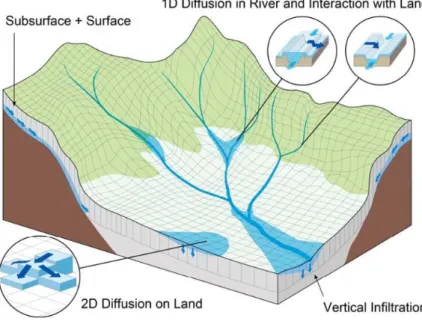
Figure 2.4 Schematic diagram of Rainfall-Runoff-Inundation (RRI) Model ... 26

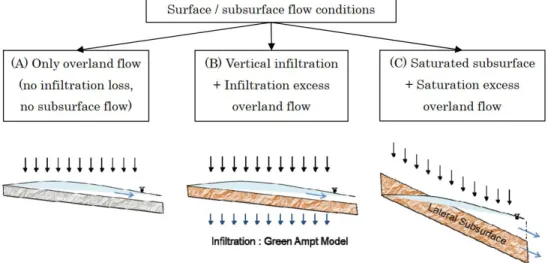
Figure 2.5 Surface and subsurface flow conditions considered in RRI ... 27

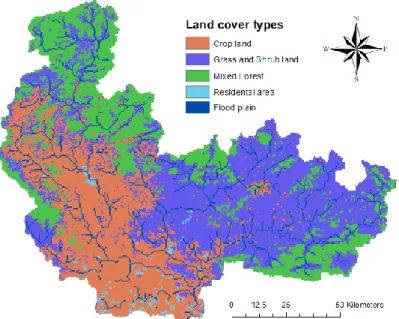
Figure 2.6 Spatial distribution of Reclassified Land cover types ... 29

Figure 2.8 Averaged rainfall in JJA and DJF in northern Vietnam from 2002 to 2014 ... 31

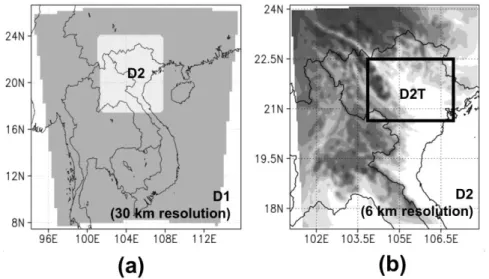
Figure 2.7 Target areas for downscaling with WRF and ANN. (a) The outer (D1) and inner (D2) domains are indicated by gray shade and white, respectively. The spatial resolution was 30 km for D1 and 6 km for D2. (b) The target area for ANN downscaling (D2T) is indicated by a rectangle inside D2. ... 30

Figure 2.9 Geographical distribution of the 38 rain gauges providing data for this research are indicated by black dots. ... 31

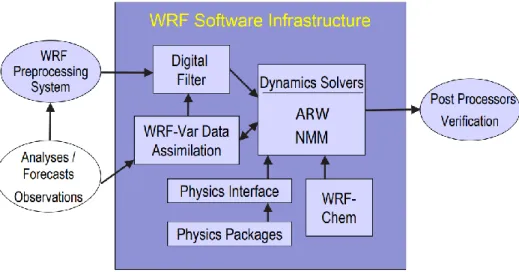
Figure 2.11 The infrastructure of the WRF software ... 34

Figure 2.10 WRF system flow chart. In this study, External data is fed into the WPS module which output the domain containing meteorological data then this data is inputted to the ARW model solver. ... 35

Figure 2.12 Simple multilayer perceptron ANN ... 39

Figure 2.13 Predictor and predictand grid selection principles... 42

Figure 3.1 JJA rainfall averaged for 56 observation sites and corresponding grids in CTL from

2002 to 2009 (mm) ... 49

(12)

vi

Figure 3.2 Basin mean precipitation and river discharge by RRI model and observation data in

Gia Bay and Chu stations during JJA in 2009 ... 49

Figure 3.3 Daily precipitation and river discharge for present and future condition at Chu and Gia Bay stations ... 50

Figure 3.4 Spatial distribution of 10-years average JJA rainfall ... 50

Figure 3.5 Maximum level of inundation depth in CTLN watershed during JJA ... 51

Figure 3.6 Average period of inundation depth of over 100 cm ... 52

Figure 3.7 Maximum period of inundation depth of over 100 cm ... 52

Figure 4.1 Correlation coefficients for the ANN model test sets ... 59

Figure 4.2 Regression plots for target and forecasted rainfall in 2006 ... 62

Figure 4.3 Histogram plot of JJA rainfall (mm) in 2006 ... 63

Figure 4.4 Spatial distribution of cumulative rainfall (mm) in JJA of 2006 ... 64

Figure 4.5 Differences between simulations in cumulative rainfall (mm) in JJA of 2006 results

and RD2T. The purple contour dash lines indicate the areas with terrain height of over 1.000m

... 66

(13)

1

CHAPTER 1.

INTRODUCTION

1.1. Background and motivation of the research 1.1.1. Climate change

(a) Global warming

Climate change has become a complicated and most destructive environmental issues around the world in the recent decades. The development of climate change exhibited through the variations in increasing trend of temperature which is mainly acknowledged as “Global warming”. This warming was resulted from the over consumption of fossil fuel since the Industrial Revolution which lead to the increasing amount of carbon dioxide in the atmosphere.

Carbon dioxide and other gases are the main culprit that enhanced greenhouse effect that potentially increase the temperature of the Earth. (Houghton, 2004, Zveryaev and Aleksandrova, 2004).

According to the IPCC, “climate change refers to a statistically significant variation in either the mean state of the climate or in its variability, persisting for an extended period (typically decades or longer). Climate change may be due to natural internal processes or external forcing or to persistent anthropogenic changes in the composition of the atmosphere or in land use” (IPCC, 2001). Therefore, the definition by IPCC pointed out both the concept of anthropogenic and natural component aspects.

Climate change has become one of the most pressing issues in the world today. While

civilization has always had to live with, deal with and adapt to environmental and climatic

challenges and risks, the challenges posed by climatic change are however believed to be

exceed historical experiences. Changes in climate system presenting an unprecedented

challenge to the global community at large and local scales. New adaptation measures to this

problem are required (Christoplos et al., 2009). With the fourth IPCC report reviewed the

linkage between anthropogenic activities and climate change, much of the climate change

debate and research has focused on the issue of climate change mitigation (IPCC, 2007). Yet

as the report discloses, due to the scope of climate change, mitigation efforts aiming at reducing

emissions will not suffice. Adaptation will be necessary as the impacts of warming linked to

past emissions cannot be avoided. Human systems are closely tied to climate systems, the globe

(14)

2

local communities will have to adapt to new climatic conditions, which in many regions will entail warmer temperatures, increased climate variability and an intensification of extreme weather

How to use the knowledge from the previous studies and experiences to understand the natural characteristics of the ongoing changes of the world is one of the growing concern recently. The recent efforts of the recent researches are reflected through the synthesis reports of IPCC. When cooperating the issues at the high level of techniques, both detection and attribution have different objectives. Detection of the change in global climate condition is to prove that climate has changed in some statistical range without the need of pointing out any specific reason for that (IPCC, 2007). In the past and current time, there have been many evidences of regional climatic changes that cementing this pressing problem. For instance, a lot of evidences has been found that showed the major parts of the cryosphere components are being generalized reduced in response to climate change. Meanwhile, there are several cases of growth that mainly related to increased snowfall. The reduction of glaciers that we have seen during the recent decades is the largest recession of all time throughout over 5,000 years of history, which is beside of the cover of any normal observation climate change. This problem probably resulted by anthropogenic warming for an certain extent (Jansen et al., 2007). As we can see in the Arctic and the Antarctic, the several-thousand-years-old ice blocks have gradually collapsing as the consequent of warming. For many cases, there has been a significant increasing trend in the shrinkage of the cryosphere during the past century which is proven to be consistent with the enhanced observed warming.

(b) Climate change and rainfall

The most significant impact of climate change to the world is shown in the variation of rainfall and precipitation in all forms. Compare to temperature, rainfall is much more difficult to be forecasted. However, the efforts of scientist in determining this problems have helped us to point out some of the important statements with confident about our future.

Precipitation is a scientific terms related to rainfall, snowfall or other kinds of water, from frozen to liquid matters or even vapor of cloud. Therefore, precipitation happens periodically and it occurrence is heavily depended on the temperature and weather scheme.

Weather situation effecting precipitation chance related to the formation of storms, the change

of moisture by winds with evaporation effects and how it was accumulated to form clouds.

(15)

3

Precipitation in the form of water vapour is usually condensed in the uprising air that diffused and reduce temperature of the atmosphere (IPCC, 2007).

Warmer atmospheric condition potentially keep more moisture, it is calculated that for every one warmer degree centigrade the water vapour in the earth increase for over 7% (Kevin E. Trenberth 2011). The ways vapour moisture transformed into precipitation is not yet to be fully understand but it is likely to rise 1-2% of rainfall water per a degree of warming (IPCC, 2007). This is a proof to illustrate that if a region is wet already, under global warming it can get even wetter. However, the details of the extent of wetter and its consequences in a regional scale are extremely difficult to be certain. By contrast, the dry regions are likely to become even drier. This symptom is found gradually shift toward the two poles.

Predicting the trend of changing in rainfall is particularly difficult due to the different characteristics of global weather patterns. Since most of climate models agree well in the future warming of global scale, they do not agree well when predicting how the change in temperature effect the variation in distribution, density and intensity of rainfall patterns, especially in detailed level of assumption. However, it is very possible that the warmer climate will enhanced heavy rainfall that produced from less extreme weather events. It could resulted in the longer dry periods and extended floods duration.

As far as we have pointed out, any impact of global warming to local scale rainfall cannot be differentiate from the natural processes. However, in several particular evidences, the signal has started to emerge. In a recent study (Kevin E. Trenberth 2011), anthropogenic climate change can greatly increase the odds of damaging floods occurring in England and Wale during autumn. For England, current findings have pointed out that the intensity of heavy rainfall during winter time might increase and become distinguishable from natural variations from 2020s. The climate models as well as our observation data is always being improved along with the advancement of technologies. The more reliable of climate forecasting results is also likely to be significantly improved in the coming future. For instance, new satellites and more high-resolution models are being established with updated possibilities for understanding and interpreting the flows of water cycles though our climate system.

(c) Climate change and water resources

There is a strong connection between climate system and hydrologic cycle which are

both energized by the solar radiation. The climate system is a complicated systems including

(16)

4

the atmosphere, topography surface, oceans and other forms of water bodies, snow and ice patterns of the earth, and also the living species (IPCC, 2007). Climate systems do not stay still but evolves relentlessly over time through the interaction between its inner components. Inside the climate systems, all the components are linked together with internal dynamics and the exchange of external information and other factor effecting the climate or “forcings”. The external forcings consist of natural phenomena such as storms, earth quakes, and volcanic eruptions was well as man-made changes that potential effect the atmospheric components and the change in land use. Any fluctuations in those factors can affect the balance between the incoming and outgoing radiation of the earth. It leads to the responses of the climatic systems to such changes, directly or indirectly.

The hydrological cycle is influenced by any impact to the climate system. Hydrologic cycles is considered as the uninterrupted flows of water between oceans, atmosphere, and the land surface. Solar radiation powered the hydrologic cycle started from the surface evaporation from water bodies. Since moisture is floated into the air, it cools down and gradually condenses in the form of clouds. Clouds and moisture is moving around the planet and comeback to the land surface by precipitation. As long as the water touch the soil, it can evaporate back to the air or penetrated through the surface soil layers and reach the ground water layers in the aquifers.

Groundwater poured into sea, river, and streams. The part of water remain on the surface of the earth is water runoff which then seeps into lakes, rivers, and stream before finally flow back to the ocean where the hydrologic cycle begins again.

Many clear evidences have been found that climate change have already affected hydrologic cycle. Even when the long term tendency of hydrological indicators are difficult to establish due to the lack of observation variability in both spatial and temporal scale, the insitu observation changes of hydrologic cycle at continent scale are very consistent and associated with the variability of the climate system in the recent decades. (Bates, et al., 2008;.Kundzewicz, et al., 2007):

Global warming could significantly influences the future distribution of water

availability around the world as well as the use of water. Water security and shortage is

becoming the crucial matters in many pattern of the globe, at both global scale and regional

scale, especially in agriculture sectors. Of course, the evidence of increase water variability

have also been found in some regions and that changes can potential have exponential losses,

for example the magnitude of extreme rainfall or flood. Hence, it can be highlighted that global

warming is one of the factors effecting the future variations of water availability and use.

(17)

5

Water stress may become worsen as the results from climate change affecting hydrological condition. Many studies pointed out that water resources related problem will increase with the severe condition of climate change, and other than that, the impacts of other factors—demographic, socio-economic, and technological changes—are even more significant, especially in shorter time space (influences after the 2050s are pretty much dependent on the future population/discharge scenarios used). Depends on how the climate model was designed as well as other factors are embed in the model assessment, the differences between studies results might become larger. When finding the connection between climate change and population growth, Arnell (2004) has estimated that about 0.4 to 1.7 billion of people will be experienced with water stress in the 2020s and it will rise to 1 to 2.7 billion up to 2050s.

1.1.2. Development of climate change in Southeast Asia and in Vietnam (a) Climate change in Southeast Asia

Recorded climatological data in the Asia and Pacific region has illustrate the increasing trend in the intensity and density of many extreme weather events including tropical cyclones, longer period of dry days, prolonged rainfall spell, snow avalanches, thunderstorms, dust storms, and heat waves. Besides, this regions is also expose to natural disaster which can be seen through the Ocean Tsunami in India in 2004, the 2005 Earthquake in Pakistan, and the landslide calamity in Philippines at late 2006. Those impacts added more risks for the already highly exposed communities who are striving to fight against poverty and find suitable adaptation strategy.

About 91% of the death and 49% of damage worldwide due to natural hazards happens in the Asia/Pacific region during the 20

th

century. Thus, we can recognize the serious threat caused by climate change especially to poor smallholders and rural people living in the remote mountainous regions or marginal areas. The areas limited access in natural resources, communication and transport facilities often face more trouble in combating climate change.

Particularly, the region of Asia/Pacific has been forecasted with the increased

temperature of 0.5 to 2°C at the end of 2030 and up to 1 to 7°C by late 2070. Higher temperature

is predicted to be more intense in the dry areas in the North of Pakistan, India, and the western

China. Furthermore, rainfall is also expected to accumulate higher regional wide, especially

during the summer monsoon period. Besides, total precipitation during winter time seems to

decrease in the South and Southeast Asia which indicate the higher chance in increased dry

(18)

6

condition. As the consequence of climate change, this region is believed to be effected by global sea level rise of about 3-16 cm in 2030 and goes up to 7-50 cm in late 2070 in accordance with regional sea level variation. Intense tropical cyclones are expected to experience substantial changes under the effect of large scale climatic driven like the El Niño-Southern Oscillation.

Many factors have pointed out that the Asia/Pacific areas are now highly vulnerable to the impacts of climate changes which may worsen the living condition of millions farmers who are already living in poverty. The major proportion of about 500 million rural poor in Asia are subsistence farmers who mainly depend on precipitation for farming. Influences of various hazards can much vary from the lack of daily food to likely to be harmed by disease, to the reduction in income and worsening livelihoods. Climate change is surely the fact of the modern development problems in the region.

(b) Northern region of Vietnam

Vietnam is divided into three main economic region which are the Northern, Central, and Southern. The Northern Vietnam is the oldest region among the three. It has more than 2000 years of historical culture-social development around the Red River Delta. Vietnamese then started to migrate southward to the Southern region which centralized in the Mekong Delta.

Hanoi is the capital of Vietnam and locate in the Northern area, next to Hanoi in the east is Hai Phong city – the second biggest city in the North.

The total area of Northern Vietnam is approximately 116.332 km

2

consists of several sub-regions:

- The Northwestern region of 6 provinces locate on the right bank of the Red River including Lao Cai, Yen Bai, Dien Bien, Hoa Binh, Lai Chau, Son La.

Among these provincese, Lao Cai and Yen Bai are also considerred as the sub- region Northeast.

- Northeastern region of 9 provinces including Ha Giang, Cao Bang, Bac Kan, Lang Son, Tuyen Quang, Thai Nguyen, Phu Tho, Bac Giang, Quang Ninh.

- The Red River Delta region of 10 provinces: Bac Ninh, Ha Nam, Ha Noi, Hai Duong, Hai Phong, Hung Yen, Nam Dinh, Ninh Binh, Thai Binh, Vinh Phuc.

- Nothern Region Vietnam located at 23◦23’ North – 8◦27’ West with the total

length 1,650 km.

(19)

7 Northern Region is the biggest region in Vietnam:

- North is next to China.

- West is share the boder with Laos.

- East is next to Western Pacific Ocean..

Topography feature

Topography of Northern Vietnam is diverse and complicated. It includes mountain, plain and coastal plain. This place experienced through long time of terrain development and strong weathering condition. The land elevation is lower toward the Northwest-Southeast, that ware illustrated by the direction of main rivers (ADPC, 2003).

The vast land formed by the Red River delta has the total area 14.800 km2, accounts for 4.5% total area of the country. The delta has the triangular shape, with the highest point in Viet Tri city and the bottom side is the eastern coast. The Red River Delta (RRD) is the second biggest delta in Vietnam (The biggest is Mekong River Delta). RRD was formed by Red river

and Thai Binh river. The topography of the Red River Delta is flat with height from 0.4 to 12m above sea level, in which about 56% of the area is lower than 2m.

Next to the RRD into the West and Northwest in the Northern mountainous region with the total area about 102,900 km2, accounted for 30.7% of the total area. The terrain includes high and dangerous mountains, from the northern borderline to the western Thanh Hoa province.

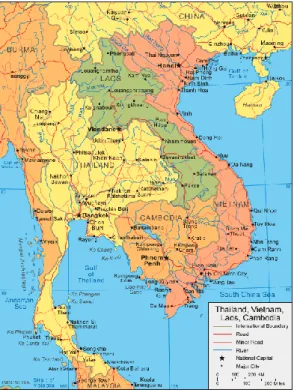
Figure 1.1 Map of Vietnam

(20)

8

In the Northeast is the low mountainous region, next to the Western Pacific Ocean. This region is covered with small islands. In then Gulf of Tokin, there are about 3,000 small islands scattering around the area.

Regional advantages

Location advantages: having the Hanoi city which is the capital of economic, culture and politic, the Northern Vietnam has a great potentiality for developing socio-economic than other cities. In 2017, the total population of the region was about 34.3 million with density of 278 people/km

2

. This region consists of the seven most important centrally municipal cities and provinces including Hanoi, Hai Phong, Hung Yen, Ha Tay, Hai Duong, Vinh Phuc, and Bac Ninh. The formation of these dynamic economic zones in the Northern region of Vietnam plays the very important role for development of the country (ADPC, 2003).

- Transportation strength: The door to the South of the contry found in this region.

Therefore, this region has various transportation methods to meet the needs of the development including roadway, waterway, seaway, airway, railway (Hai Phong seaport, Noi Bai International airport). Hanoi is placed at the centre of the economic zone and links with others other national economic zones in the region as well as international points around the world.

Northern region borders with China which is the largest market in the world and North-East Asian countries.

- Natural resource strength: The region is diversity in ecological environment from flat plain to midland and mountainous areas. Red river delta is most fertile agriculture area in the North that suitable for the adoptation of any comprehensive development plans of agriculture- forestry-fishery. This region is the second most productive agricultural production through the country, second to the Mekong delta in the South. This advantage ensures food security and economic for the vast region. Besides the potential in agriculture development, Northern Vietnam has various type of mineral resources with large capacity of coal (about 98% of natural reserves), kaolin (accounts for 40% of the whole country), and limestone (about 25% of total reserves)

- Advantages of labour resource: The region is abundant in labour sources especially the high education labours with about 26% of university and colleges of the whole country.

Meteorological Condition

The climate system in Vietnam is effected by the South East Asia tropical monsoon

system; the average annual rainfall of the whole country is about 1,940 mm. Water is a precious

resource and plays a very important role in the development of socio-economic. However, the

current condition of surface water in Vietnam is now in danger, threatening by the negative

(21)

9

increasing of wide scale depletion and contamination. About 75% of the total lands is covered by mountains. Thus, precipitation is unevenly distributed between regions and fluctuate over times. The temporal distribution of mean annual rainfall vary in a wide range, in some specific mountainous areas the annual rainfall can get over 4,000 – 5,000 mm, an even up to 8,000 mm in such as Bach Ma Mountain. However, in some areas such as Nha Ho and Binh Thuan the annual rainfall is usually very low at 600 to 800mm (MONRE, 2006).

The climate system in Vietnam shifts upward from humid tropical climate in the Southern provinces to temperature in the Northern region. The Red river deltal is popularized by a tropical monsoonal climate affected by ocean-like climate. The main characteristic of this climate is seasonal and moist subtropical (Pfeiffer, 1984). The two distinguish seasons are wet and dry. The wet (rainy) season starts from Jun to September and dry season from December to March. The average temperature of the whole country is 23◦C.

The annual average precipitation varies from 1,300mm to 1,800mm. The rainy season accounts for over 85% of the annual rainfall (Li et al., 2006). During the year, July has the highest amount of rainfall while December and January are the driest. Even when the temperature between the sub-basin regions was not much different, the regions closer to the coastal zone always had higher rainfall intensity. In some special cases such as the Day Estuary and the lower Red River basins have annual rainfall up to 1860 and 1757 mm, respectively.

Meanwhile, the average annual rainfall among other three sub-basins was only 1,600 mm (Luu et al., 2010). The historical observation climate record for 11 years found the peak in August 2006 (450 mm/month). Generally the total annual rainfall in the basin has reduce in recent years, but it happened with much higher intensity. It has resulted in the imbalance in rainfall distribution throughout the year (Luu et al., 2010).

1.1.3. Inundation and flood in Cau Thuong Luc Nam river basin

Vietnam has been known as a rapidly developing country but highly exposed to natural hazards. Inundation and flooding are the two major natural risks that the country have to face.

According to the-the Intergovernmental Panel on Climate Change (IPCC), the global surface

temperature is expected to rise 1-2°C by the year 2050 and up to about 2–5 °C at the end of

21

st

century (IPCC 2013). Global warming leads to the increasing trend of harmful disaster

worldwide. Furthermore, climate change is forecasted to increase sea level rise accompany

with the upward trend in frequency and intensity of floods, globally and in Southeast Asia

(IPCC 2014; World Bank 2014). Observing the country’s population distribution, population

(22)

10

density, and the economic assets in vulnerable regions, Vietnam has been considered as one of the five most effected countries by climate change worldwide.

Recent findings from IPCC's Fifth Assessment Report (AR5) indicated that climate change has already caused damages in many regions, especially the Southeast Asia (SEA) regions. Vietnam is believed one of the highly climate vulnerable countries in SEA region.

Flood is the most destructive disaster in the Northern mountainous region in Vietnam. Since the occurrence of flood events has been increasing in recent decades, it has raised the needs and awareness of flood risk and management. Variations in density and intensity of rainfall directly cause impacts on the generation of floods. Flooding and inundation occur when the watershed system cannot handle the excessive amount of precipitation for either a short or prolonged rainfall events, it results in the unusual high stream flow that exceeds the capacity of a river channel (Vu and Ranzi 2017).

The Cau-Thuong-Luc Nam (CTLN) locates in the northern mountainous region in Vietnam, was formed by three small river basin including Cau river in the west, Thuong river in the middle, and the Luc Nam river in the east. The whole CTLN watershed is surrounded by mountain ranges the north, the terrain gradually lower toward southeast direction with the lower river basin places on the flat plateau. That is the reason why the majority of rivers, especially tertiary rivers have the great gradient.

CTLN river system is the upstream of Thai Binh river. The whole basin is influenced by the tropical region of the northern hemisphere. Under the impact of monsoon winds, this region has two distinctive seasons including the dry season starts from November to next April and the rainy season lasts from May to October. Strong hot south-west wind comes with complicated climatic turbulences like storms or air convergence are the main causes for the hot and humid weather with large amount of annual rainfall.

Annual water volume of the basin contributed by Cau, Thuong, and Luc Nam rivers is

4.5 billion m

3

, 4.2 billion m

3

and 2.4 billion m

3

which made the total volume of the system of

approximately 11 billion m

3

. High rainfall has resulted in annual normal flow of average 22 l/s

per km

2

. However, this amount of river discharge is still far less than northern east region of

the north coastal provinces and some regions in Red River Basin. The flow of the whole CTLN

region varies upon rainfall regime which distinguished into 2 seasons, the flood season from

Jun to August and low flow season from September to May.

(23)

11

CTLN watershed plays an important role in the development of the Northeastern Vietnam region. It provides domestic and production water source for the vast populated- economic regions including Thai Nguyen, Bac Ninh, Bac Giang, Lang Son, Quang Ninh, and the lower Thai Binh river basin.

In CTLN watershed, the lower river channel capacity is sometimes under accommodating the high discharge of surface flow over the upstream which cause flood. The number of flood occurrence in CTLN watershed is recorded rapidly increasing recently. In the theme of global warming, it is important to prepare the countermeasures to and mitigation methods to cope with the potential risks. It is impossible to establish the action plan without the deep understanding of the characteristics of the flood in accordant with the present and future hydro-meteorological conditions. The traditional simulation method for inundation researches combines both rain-fall-runoff models for river discharge and hydraulic model for water propagation. However, this method not suitable for flat watershed with large inundation area as it requires significant calculation between the river and flood water. This study, therefore, used the Rainfall-Runoff Inundation (RRI) model, which is a fully coupled model of rainfall-runoff model and hydraulic inundation model (Sayama et al. 2012). Besides, the Weather Research and Forecast (WRF) model (Skamarock et al. 2008) was also employed to provide present and future input precipitation for RRI model.

1.1.4. Downscaling methods for climate change (a) The needs of weather information downscaling

To meet the requirements of management agencies to cope with global warming, a lot of materials such as synthesis report, statistic recrods offer forecasted climate influences at long-term and large scales which are finer than the original projections are prepared. It is necessary to know the group of assumptions embed in the techniques which were adopted to derive this climate details and the drawbacks they made on the results (Trzaska and Schnarr 2014). The most popular tools for projecting climate variation are General Circulation Model (GCMs), which are climatological models that contain numerous physical theories of the earth climate system. These physical theories are generally very famous but difficult to be always fully inserted in the models because of the limitations on computing capability and input data.

Therefore, GCM simulation outputs can only be utilized at very coarse scale, which are global

or continental scale to research climatological condition at averaged monthly, seasonal, annual,

(24)

12

and even longer time periods. Any data of finer spatial detail less than 100 square kilometres and temporal frequency of lower than monthly data has to be processed by a mathematical process to increase its resolution which is called downscaling.

Downscaling method outputs climatic details at higher resolution, it provides much more detail than the original GCM projections. For implementation of this method, downscaling process requires additional information, calculation, and contain more assumptions, and thus exhibiting more uncertainties and drawbacks of the final projection. A problem that these limitations are usually not made available to end-users (Hunt and Watkiss 2011). Currently, scientific organizations or management offices cannot provide instruction which helps researchers and decision makers for selecting projection model, climatological variable, the approach to downscaling dat, and the sources of data that are suitable for their purposes (Trzaska and Schnarr 2014). Since downscaling methods are still under development of researching organizations, users often have to rely on complex technical report and specialized guidance to understand the model and appropriately apply their results for impacting studies, planning related purposes, or decision-making. The following are important considerations and recommendations to be aware and remember when simulating and describing fine-scale climatological detail on climate variability and its consequences.

 Downscaling techniques considers that the local climate was formed by the combination of large scale climate indicators (such as global, hemispheric, continent, and region) with local variables (including the topographic condition, land cover, surface layers of the earth, water availability). Local variables can only be acquired at the high detail level of assimilation model which cannot be provided by the current GCMs.

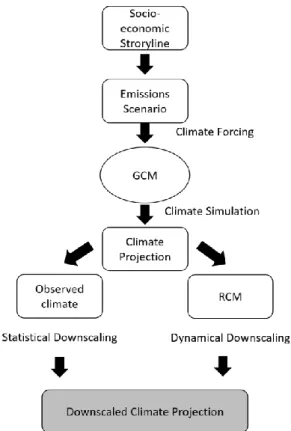
 The process of downscaling global climate projections to local scale is a complicated

multistep process as can be seen in Figure 1.2. During the process, the additional

assumptions and similarity are generated. Confusions and suspicions are made from

projections of variation in climate system with their impacts. Those uncertainties

originated from various sources and need to be knowledgeable, whether accurately

calculated or not.

(25)

13

Deriving climate information to local detail can be performed spatially and temporally.

Popularly, different downscaling approach are fused to achieve the projection data at preferable spatial and temporal levels.

 The two main approaches to combine the climate change information at local scale with large-scale climate indicator are discussed as follows (Trzaska and Schnarr 2014):

- Dynamical: by incorporating supplement data and physical theories in regional climate models which are similar to GCMs but offer a more detailed resolution but cover only a small part of the global. Such approach has many benefits but very computing expensive and needs large amount of data with an extreme level of knowledge to apply and discussing the results. Dynamical downscaling requirements are too high that often higher than the capability of researching facility in developing countries.

- Statistical: this approach creates an empirical relationship between large-scale historical climate characteristics between outputs of GCMs and local climate features. Contradict to the dynamical downscaling approach, the statistical downscaling is computational inexpensive and much easier to demonstrate.

Figure 1.2 Illustration of the components involved in

developing global and regional climate projection

(26)

14

They need minimal computing resources but most importantly that they rely explicitly on historical climate in-situ data and the hypothesis that the currently established statistical relationships will continue to hold true in the future.

Nonetheless, long term and good quality historical climatological observation data are not always accessible in many developing countries.

For most purposes, different downscaling methods aim to obtain climate detail of the fine scale resolution but the findings from previous researches have shown climate change and its consequences has exhibiting the problems mentioned below:

 Detail information on downscaling results with their uncertainties are usually inappropriately expressed which lead the user to think that the projections are truthful and believable at the resolution achieved. Carefully examining of technical notes is always recommended to deeply understand all the simulation steps and hypothesis that included in the final results.

 Uncertainties included in downscaling output and additionally inherited from the used downscaling approach are usually not shown in detail. This important information is lack of quantification and discussion, that lead the numerical results are considered at face value.

 Verification of downscaling results using observation data are often omitted; it would be better to compare downscaled results to high-resolution observed data to made clear systematic biases as well as the limitations in assumptions.

The above key findings mostly resulted from simple oversight by the authors of this dissertation. However, they are sometime very important and heavily influence the final assessment of the problem. An end user would better be recognizing them and understand the limits of the results.

(b) Dynamical downscaling

Dynamical downscaling is performed by using a regional climate model (RCM) model

driven by large-scale GCM outputs to achieve local climate information. RCM models are

similar to GCMs but provide finer details which having more regional characteristics. This

advantage helps them better capture local topography with the micro-physics processes of local

atmospheric (Trzaska and Schnarr 2014). The GCM model contains the feedbacks of the global

circulations which will develop in the atmospheric balance following various meteorological

(27)

15

processes. However, a part of this processes need to be approximated because of the very low resolution seen in GCM models. Besides, under the high-resolution of lower than 50 km which cover a smaller region of the earth, RCM models are able to distinguish those smaller-scale processes more reasonably. Meteorological variables such as temperature, pressure, horizontal and vertical wind, heat flux, and humidity which simulated by a GCM are taken as the boundary conditions of the regional model. In which, the meteorological data and physics processes are then utilized to calculate this information to achieve the downscaled information results. The main advantage of regional climate models is that they are able to handle atmospheric equations and variation in land cover accurately. (Trzaska and Schnarr 2014).

Even when many improvements in the ability of RCMs models during these recent decades to better capture the regional climate condition, there still exist a lot of difficulties, drawbacks, uncertainties, and challenges to overcome. As the high resolution grid cells require additional surface information and the RCMs are also embed with more physical processes which is even higher than in GCM models at global scale, dynamical downscaling thus need to perform the enormous amount of calculations. Therefore, RCMs are usually extremely computationally expensive and may consume extensively computing time compare to GCMs (Wilby et al., 2009). RCMs also need a large amount of data, such as land-surface conditions with high frequency of meteorological variables from GCM. In addition, dynamic downscaling requires complicated calibration procedures to generate realistic simulations.

Similar to GCMs, RCMs often have troubles in calculating convective precipitation accurately. This is a big major problem for studying tropical climate zones. RCMs models also have low accuracy in simulating extreme rainfall events which is considered as a systematic bias that may further worsen at the higher resolution of climate projection. Biases correction methods are often required to calibrate the model results to match the observations (Brown et al., 2008). In several cases, small adjustments in the convective schemes would significantly enhance the reproducibility of the simulated rainfall. However, these changes need a lot of expertise while reducing geographic portability. For that reason, this generate a sub-version of the model which was properly calibrated to a specific region but might potentially perform awful in other places.

Applicability of RCM simulated results depends substantially on the quality of the GCM information fed in it. For instance, if the GCM poorly tracks the location of a storm, this will generate errors that continue to exhibited in the RCM simulation (Wilby et al., 2009).

Furthermore, different RCMs models are often designed separately so they are having the

(28)

16

different dynamic schemes with wide range of physical parameters. This cause the variation in the downscaling results even if RCMs were driven by the same GCM output.

(c) Statistical downscaling

Statistical downscaling works by generating the empirical relationships between large- scale atmospheric variable of the past with the regional climate condition. When a relationship is created and verified, the large-scale meteorological variables provided by GCMs can be taken to forecast local climate conditions in the future. In another demonstrative way, GCM simulations provide predictors to continue simulate local climate information or predictands (Trzaska and Schnarr 2014). Statistical downscaling holds within it a diversified collection of methods which very different in clarification and applicability.

Statistical downscaling methods are easily to implement since it need a very small computation load. On the other hand, RCM model involving complex computing of physical processes that need significant amount of computational power and time. For that reason, statistical downscaling methods are a replaceable method for dynamical downscaling and sometimes advantageous alternative for researching organizations which cannot access to the computational power and technical knowledge needed for dynamical downscaling (Trzaska and Schnarr 2014). Different to RCMs which can provide downscaled details at a high spatial resolution of about 6-10 kilometres, statistical downscaling can provide up to station-scale climate information and even finer scale.

Even when statistical method is flexible, computationally cheaper, and having of a diverse group of methods, it usually inherits the implicit assumptions as follows:

- The empirical relationship generated from the large scale predictor and local climate condition remain constant over time and continue to hold true in the coming future.

- The predictor always carries the climate change signal.

- Relationship between the predictor and predictand is trong enough for making the realistic relationship

- GCMs generate the predictor with high accuracy

The first mentioned viewpoint is understood as the stationary hypothesis and indicate

that the created empirical relationship remains stable which can be brought into the future. The

fact that we need to accept that we cannot verify if this relationship will remain under future

conditions. The second assumption is the GCM output can accurately represents the studying

(29)

17

climate condition and its simulated results could capture any variations that may be seen in the future. The third assumption believe that the significant of the statistical empirical relationship can be evaluated in advance to assess its validity and applicability. The last assumption is on the accuracy of GCM to reproduce historical climate events and also to simulate the future development of this climate condition. The validation process for predictors must be adopted first to demonstrate the use of GCM model in downscaling the climate characteristic of the selected domain. (Wilby et al., 2013).

1.1.5. Significance of coupling dynamical downscaling and statistical downscaling Rainfall is one of the most important meteorological phenomena on Earth. It not only provides a vital freshwater source supporting all life forms, but also causes various types of natural disasters such as floods, landslides, storms, and drought. It is important to have a deep understanding of the rainfall formation mechanism to forecast the timing, density, intensity, and trends in a specific region to better manage water resources, maximize the use of water for economic development, and minimize the impacts of extreme events. In many countries, including Vietnam, rainfall is the object of regional planning strategies involving the production and construction sectors. Since the efficiency of water resource management depends on the accuracy and detail of rainfall forecasts, a method to obtain reliable and accurate predictions of rainfall at high spatial resolution is indispensable (Arritt and Rummukainen 2011; Caldwell et al. 2009; Giorgi and Mearns 1991).

Multiple general circulation models (GCMs) have been developed by various research groups to provide future climate predictions using numerical weather simulation. GCMs represent the physical processes and feedbacks for the atmosphere and oceans, which can be used to forecast future climate changes. Although GCM models can make useful predictions about global large-scale climate indicators, their spatial resolution of 100–200 km are too coarse to satisfy the requirements of regional planning. A GCM simplifies the complexities of land-sea distribution, vegetation cover, topography, and terrain. Therefore, downscaling methods, which translate coarse-scale GCM to finer spatial scales, have been developed to use on limited-area domains at higher horizontal resolutions.

Dynamical downscaling works by employing a regional climate model (RCM), which

is based on the same principles as a GCM but has higher resolution over a limited area. An

RCM uses large-scale atmospheric conditions as determined by a GCM for the lateral boundary

(30)

18

conditions. Higher resolution topography and land-sea distribution are incorporated to generate realistic climate information at a much finer spatial resolution (Seaby et al. 2013). Currently, RCMs are considered the most helpful method for producing climate information at the scales required for actionable strategic planning (Kjellstrom et al. 2016).

Over the years, the applicability of dynamical downscaling has significantly improved owing to the continuous development of computing technology and advances in numerical models. Even though the use of dynamical downscaling has become easier, it continues to be an extremely demanding method that requires considerable computational cost, simulation time, and output storage. Statistical downscaling is an alternative to dynamical downscaling for high- resolution climate downscaling that can overcome the drawbacks of dynamical downscaling methods. Statistical downscaling takes into account the empirical, spatial, and temporal relationships between large-scale climate indicators (predictors) and local-scale climate variables (predictands) and are trained on a historical period. Subsequently, these relationships are presumed to hold in the future, where they can be used to determine future predictands.

Statistical downscaling methods are computationally inexpensive and significantly faster than dynamical downscaling, so they can be applied for even higher resolutions, up to station-scale.

Since statistical downscaling methods rely on the assumption of an unchanged statistical relationship, they require long historical climate observation data for validation, which is not always available for every region. In contrast, dynamical downscaling operates based on physical realism with complex local processes, which allows it to map important fine-scale variations in climate that otherwise might not be included (Salathé et al. 2008; Pierce et al.

2012; Walton et al. 2017).

While statistical downscaling and dynamical downscaling methods are widely used in climatology research, both face drawbacks that limit their applicability. Recently, the approach of combining dynamical downscaling with statistical downscaling has been explored. Dynamical- statistical downscaling is a blended technique, where an RCM model is initially adopted to downscale the GCM output, followed by the application of statistical formulas to further downscale the RCM output to a higher resolution. Dynamical downscaling methods can utilize the advantages of RCM to provide better predictors for use in statistical downscaling (Guyennon et al. 2013). Berg et al. (2015) demonstrated this promising method by using a hybrid of the Weather Research and Forecasting (WRF) model with the Empirical Orthogonal Function to effectively forecast precipitation changes.

In other research, Walton et al. (2015) introduced a new dynamical-statistical downscaling method

by coupling WRF with Principal Component Analysis. The statistical-dynamical downscaling

(31)

19

method is another approach for blending techniques where dynamical downscaling is applied after a selected statistical downscale. While statistical-dynamical downscaling is a more complex blending technique, it is computationally less expensive. These methods use a statistical approach to refine the GCM outputs into a few characteristic states, which can be later used with the RCM models (Fuentes and Heimann 2000).

Limited efforts have been made to date to combine dynamical and statistical downscaling methods for precipitation research. In this study, we have introduced a combined dynamical- statistical downscaling technique for rainfall using WRF with an Artificial Neural Network (ANN).

The WRF-ANN method aims to downscale high-resolution daily rainfall data for a seasonal length to satisfy the requirements for purposes such as agriculture or water resources planning. This method works by making statistical relationships between moderate- and high-resolution WRF outputs using ANN. The statistical relationships can be used directly to downscale moderate-resolution WRF outputs to fine-resolution rainfall. In this method, we first validated the accuracy of the WRF model to reproduce known climate conditions. Subsequently, the WRF output was downscaled to a finer spatial resolution using ANN. While this method used atmospheric variables from WRF, the relationship between physical and dynamical processes could potentially be included in the ANN. In addition, a bias correction for the ANN input and output (rainfall) was applied to reduce error in the final output. Moreover, the sensitivity of each predictor was also considered to examine their statistical relationships with rainfall.

1.1.6. Objectives

Firstly, the inundation and flood problems in future condition will be addressed in this study, using the combination of weather researching model and hydrological model driven by CMIP5 multi- model dataset.

There is a growing trend in the demands of using high-resolution climatological data for planning and management activities and that thus, raising the need of adopting weather downscaling techniques. The drawbacks of the available methods hinder the further application of these techniques while they are neither too costly nor too limited in reliability. The second aim of this study is to investigate the ability to couple both dynamical downscaling with statistical downscaling for high- resolution rainfall forecasting that can be easily adopted whilst maintaining the accuracy. The case study chose in the Red River Delta in Vietnam.

Finally, giving the key findings, research limitations and suggestion for future works in

upgrading the proposed methods and extend its applicability.

(32)

20 1.2. Structure of the dissertation

Chapter 1 gives the brief information about the background and literature reviews of the related researches on climatology and hydrology that have motivated this research. The next section was then followed by the research’s goals.

Chapter 2 considers the data and methodologies used in this dissertation. The material and methods to study the possibility of coupling dynamical and statistical downscaling for high resolution rainfall are reviewed. The major focus is placed upon the use of WRF and ANN in climatological information downscaling. For the second major goal of this dissertation, the data and methods required to perform investigation of rainfall runoff and inundation condition of Cau-Thuong-Luc Nam watershed are also illustrated.

The results for the first goal of this study – researching rainfall runoff and inundation condition of Cau-Thuong-Luc Nam watershed under global warming were discussed in Chapter 3.

In Chapter 4, results for the second goal of this study – coupling dynamical and statistical downscaling for high-resolution rainfall forecasting, were shown in detail with discussion.

In the last chapter, Chapter 5, the significant findings of this study were summarized with

limitations and recommendation.

Figure 1.1 Map of Vietnam
Figure  1.2  Illustration  of  the  components  involved  in  developing global and regional climate projection
Figure 2.2 Topography and land use inputs for RRI model  Figure 2.1 Locations of CTLN watershed and hydro-meteorological stations
Figure 2.3 The target areas for WRF and ANN models, in  which (a) The outer 30 km resolution (D01) and inner 10 km  resolution domains (D02) are shown in the grey and white  colors,  respectively,  the  red  rectangular  indicate  the  locations of the res
+7

参照

関連したドキュメント

On the other hand, when M is complete and π with totally geodesic fibres, we can also obtain from the fact that (M,N,π) is a fibre bundle with the Lie group of isometries of the fibre

Keywords: Convex order ; Fréchet distribution ; Median ; Mittag-Leffler distribution ; Mittag- Leffler function ; Stable distribution ; Stochastic order.. AMS MSC 2010: Primary 60E05

It is suggested by our method that most of the quadratic algebras for all St¨ ackel equivalence classes of 3D second order quantum superintegrable systems on conformally flat

In Section 3, we show that the clique- width is unbounded in any superfactorial class of graphs, and in Section 4, we prove that the clique-width is bounded in any hereditary

Inside this class, we identify a new subclass of Liouvillian integrable systems, under suitable conditions such Liouvillian integrable systems can have at most one limit cycle, and

This paper develops a recursion formula for the conditional moments of the area under the absolute value of Brownian bridge given the local time at 0.. The method of power series

Next, we prove bounds for the dimensions of p-adic MLV-spaces in Section 3, assuming results in Section 4, and make a conjecture about a special element in the motivic Galois group

Transirico, “Second order elliptic equations in weighted Sobolev spaces on unbounded domains,” Rendiconti della Accademia Nazionale delle Scienze detta dei XL.. Memorie di