Challengges of Agricultural Laborers in
Northern Bangladesh: From the View of Migrant
, Womeng and Tribal Laborers
著者
SEFAT-E-ZERIN Mosammad
学位授与機関
Tohoku University
学位授与番号
11301甲第19310号
i
Challenges of Agricultural Laborers in Northern Bangladesh: From the
View of Migrant, Women and Tribal Laborers
(バングラディシュ北部における農業労働者の課題―出稼ぎ,女性,少数
民族労働者の観点から
―)
ii
Challenges of Agricultural Laborers in Northern Bangladesh: From the
View of Migrant, Women and Tribal Laborers
(バングラディシュ北部における農業労働者の課題―出稼ぎ,女性,少数
民族労働者の観点から
―)
THESIS SUBMITTED FOR THE DEGREE OF DOCTOR OF PHILOSOPHY (AGRICULTURAL SCIENCE)
TO
THE GRADUATE SCHOOL OF AGRICULTURAL SCIENCE, TOHOKU UNIVERSITY
BY
SEFAT-E-ZERIN MOSAMMAD (ID: B7AD1103)
SUPERVISING PROFESSOR: KATSUHITO FUYUKI February, 2020
iii
DEDICATION
iv
DECLARATION
I hereby declare that this thesis entitled “Challenges of Agricultural Laborers in Northern Bangladesh: From the View of Migrant, Women and Tribal Laborers”, submitted to the Graduate School of Agricultural Sciences, Tohoku University, in partial fulfillment for the degree of Doctor of Philosophy (Agricultural Science) is my own work except for quotations, which have been duly acknowledged. The research work has not been presented before, in part or full, for any degree or diploma of any University or Institute.
SEFAT-E-ZERIN, Mosammad
Graduate School of Agricultural Science, Tohoku University, Sendai, Japan
v
ACKNOWLEDGEMENTS
Obtaining a doctoral degree is a hard but very interesting “Journey” in the stimulating environment of an academic institution. At the end of this journey, I would like to express my heartfelt gratitude to my thesis supervisor Professor Dr. Katsuhito FUYUKI for his kind permission to carry out this research work, enthusiastic encouragement, tenacious supervision, fruitful discussions and the advice in various phases of the research work and preparation of this thesis. His father-like guardianship, generosity, and personality will direct me for the rest of my life.
I am very much pleased to express my sincere thanks and gratitude to Associate Professor Dr. Nina Takashino for her constant help. During the past 3 years, sometimes I could not explain my thoughts and questions but she read my heart. Her continuous help, support, and encouragement have made my research life smooth and fruitful. The way she guided me will indeed enlighten me in my future research life. She was not only my academic mentor for the last 3 years but also a great motivator and advisor in my personal life in Japan. When I came to Japan, I was quite unknown to her but she has made the world of knowledge open to me.
I would also like to express my appreciation to all professors and staff of the Resource and Environment Economics Course, who taught and supported me in this university where I greatly broadened my horizons both of knowledge and of my understanding of Japan.
I owe my thanks to all lab members of International Development Studies. My thanks especially go to Nobutaka Ishitsuka, the best friend during my studying in Japan. He has made my Japanese life easy.
I really appreciate the Toshimi Otsuka Scholarship Foundation which provided me with financial support.
Last, but not least, I am indebted and very much grateful to my parents Md. Hasir Uddin and Most. Nazli Banu for their contributions through affection, support, and encouragement.
vi
My parents have always been the source of inspiration and spiritual support as well as being real initiator of the journey of my life. It was their love that raised me up again when I became weary. The mental support and encouragement of my younger brother Eftakhar Anam has helped me to become more confident. My heart-felt regard goes to my father-in-law, Mohammad Ali, and mother-in-law, Latifa Begum. Their infallible love and support have always been my strength. And most of all, I find it difficult to express sufficiently my appreciation and gratitude to my husband Dr. Mohammad Abdul Latif, because his support for me is so boundless. Without his sunny optimism, this dissertation would have taken even longer to complete. I owe my deepest gratitude to him for his affection, encouragement, understanding and patience. My thesis acknowledgement would be incomplete without thanking my baby-son, Ahmad Fardid Siyaf. His adorable face gives me the fuel for hard working in a life outside my native country.
vii ABSTRACT
For more than a decade, the agricultural sector has played a major role in the eradication of poverty in Bangladesh. Agriculture is the main source of the food supply in this country, and it also plays an important role in industrial development and other areas. About seventy percent of the country's population has access to this agricultural sector. The country's economy is enriched by exporting farmers' raw materials abroad. So, agriculture is the largest sector of employment in Bangladesh and agricultural laborers are the major contributors to the agriculture sector.
The agricultural laborers of Bangladesh are the most neglected section of society. They are socially handicapped; they do not assert themselves as important to realize their demands. From morning to evening they sell their labor in various types of farming. Wages earned through the sale of labor are the main economic source of their lives and livelihoods. Without the opportunity to sell labor, they have no alternative but to remain unemployed. As laborers, they have the right to receive a fair wage or remuneration but to date, no effective precise wage policy has been set for this group of laborers. More than two decades ago, a policy was formulated by the government to establish fair labor wages for agricultural laborers but there is no evidence of its implementation anywhere. Consequently, a large number of agricultural laborers in the country are deprived of their rights and dues. Regarding the compensation of agricultural laborers, it is stated that if a person appoints another person as an agricultural laborer, he will be obliged to pay the wages due to that laborer.
From these points of view, it can be understood that, despite making a significant contribution to the agriculture and entire economy of Bangladesh, agricultural laborers have various problems and challenges. Unfortunately, often they are deprived of their rights and it is becoming difficult for them to live a normal life. However, what is most worrying is that, despite having so many problems, there are very few organizations working only for the
viii
development of agricultural laborers. So over the years they have had to deal with these problems themselves while they try to make a living.
Given this background, the research for this thesis has attempted to identify the challenges and problems faced by agricultural laborers in Bangladesh, from the viewpoints of migrant, women and tribal agricultural laborers. The objectives of this study are to check the issues and problems of the migration of agricultural laborers; what kind of work-related problems affect women agricultural laborers; and any socio-economic factors that hinder the role of tribal agricultural laborers. It was decided that this study would focus on the role, degree of activity and contribution of various organizations to solving the problems of agricultural laborers in the study area in order to provide a better future for them. By a well-structured questionnaire, a total of 700 respondents from 14 villages of 3 districts were interviewed between January 2018 and September, 2019. Graphs, charts, mean value, t-test analysis and a regression model were used to analyses whether or not the explanatory variables significantly influence the dependent variable.
The first two chapters of the present research expand on the introduction and provide an overview of the research issue and objectives.
The third chapter focuses on the first objective, which is to elucidate the issues and problems of migration of agricultural laborers. A t-test has been used to compare the effects of migration between migrant and non-migrant laborers. In addition, the problems they face during migration were also investigated. In conclusion, it can be said that, naturally, the laborers who migrate are able to earn more than before, a conclusion also obtained from the results of this study. There is a statistically significant difference in wage rates between agricultural laborers who have migrated and those who have not: higher for those who have migrated, with a significant difference between pre- and post-migrated wage rate. The difference in wages before and after the migration of the same laborer was ascertained also: the pre-migration wage rate being lower than that post migration. Migration is one way for agricultural laborers to
ix
obtain good wages but, due to lack of accurate information, lack of medical care and the problem with accommodation, they may be prevented from taking full advantage of the benefits of migration. The present study suggests that initiatives taken by the government and non-government organizations to provide all the information available to the agricultural laborers could help them to obtain their desired wages and improve their standard of living.
Chapter 4 focuses on women agricultural laborers and their problems in the three districts of the study area. Agriculture remains the largest source of employment in Bangladesh, providing employment for 63 percent of the population. Not only men but also women are a large part of this sector but, in the system of a male-dominated society, women have always been deprived through the presence of social barriers and discrimination. The objectives of the present study are to discover the work-related problems that women agricultural laborers have to face, and also to identify and discuss some factors impacting on the wage rate of women in the survey area. To test these factors, a regression model was being used. The results show that women agricultural laborers have many problems on the way to work. There is significant inequality between men and women in terms of wages. Women are deprived of their fair wage rate even though they do the same work as men. The working environment also is not in their favor. At work, they are often mistreated by their male colleagues or even by the landlords and this is considered as a barrier to their participation in the work. Since women are in an important position in agriculture, their problems should be resolved very quickly but the most important is to reduce wage inequality because it is a major obstacle to the economic empowerment of women through equal wages. If wage discrimination were reduced, women would be more interested in participating in the work. Another important need is to provide training for women to improve their skills, which all government and non-governmental organizations should do. Women should be recognized for their work by society at large, since progress is being made in all respects. The participation of women in agriculture on the one hand is increasing the food security of the country, and on the other hand it is contributing to the rising per capita income.
x
It is therefore important to recognize this contribution of women socially and nationally for further improvement and growth in agriculture. Through the research presented here, it is hoped that more awareness can be generated among policymakers. In the future, such awareness will give women agricultural laborers in the country a chance to work in a safe environment with equal wages.
In chapter 5, problems concerning tribal agricultural laborers are described. It can be concluded that, although there is no difference financially, the tribes are discriminated against in terms of social issues. The tribal agricultural laborers face several constraints in improving their livelihood. In the absence of adequate assistance, tribal households in the study area met their stress situation in their own way. Social perspectives concerning tribal agricultural laborers must be changed by lobbying for strong government initiatives.
In chapter 6, the role of institutions for agricultural laborers is discussed. It is noted that formal and informal support for agricultural laborers is insufficient. The overall development of life and livelihood is always a complex phenomenon and is inversely proportional to the number of agricultural laborers. It is shown that, in Bangladesh, industrial laborers are considered more important with regard to labor policies. Although a large part of the labor force is agricultural, not everyone is interested in working with them. There is no customized and consistent labor policy for agricultural laborers. The occupation of the agricultural laborer is not permanent and they also work in other jobs, .so it is not easy to organize them. The social and living standards of agricultural laborers are on a marginal level in society, so to improve their lives and livelihood, and to convey the benefit to their door, it is necessary to consider developments at the level immediately above them (i.e., at that of the landowners). More explicitly, parameters that affect the life and livelihood of agricultural laborers (such as wage, availability of work, and technological support) must be addressed. It is not possible to ensure the development of development packages for agricultural workers through their appointing body (such as landowners). Government and non-governmental organizations must come
xi forward in this regard.
Finally, chapter seven draws some conclusions and indicates some policy recommendations.
Keywords: Agricultural laborers, northern region, migration, women agricultural laborers, tribal, institutions.
xii
TABLE OF CONTENTS
DEDICATION ... iii DECLARATION ... iv ACKNOWLEDGEMENTS ... v ABSTRACT ... viiTABLE OF CONTENTS ... xii
LIST OF TABLES ... xv
LIST OF FIGURES ... xvi
LIST OF BOXES... xvi
CHAPTER 1: INTRODUCTION ... 1
1.1 Background ... 1
1.2 Who Are the Agricultural Laborers?... 3
1.3 Number of Agricultural Laborers ... 4
1.4 Literature Review ... 5
1.5 Justification of the Study ... 9
1.6 Objectives of The Study ... 10
1.7 Methodology of the Study ... 10
1.7.1 Types of Data Required ... 10
1.7.2 Selection of the Study Area ... 11
1.7.3. Analysis of Data ... 12
1.8 Organization of the Study ... 13
1.9 Limitations of the Study... 13
CHAPTER 2: AN OVERVIEW OF THE AGRICULTURAL LABORERS OF BANGLADESH... 16
2.1 Introduction ... 16
2.2 Agricultural Laborers of Northern Bangladesh ... 18
2.3 Some Characteristics of the Agricultural Laborers of Northern Bangladesh ... 19
CHAPTER 3: MIGRATION: A BETTER WAGE OR CHALLENGES?... 29
3.1 Introduction ... 29
3.2 Methodology ... 30
3.3 Result Analysis ... 33
xiii
3.3.2 Problems Faced During Migration ... 34
3.4 Conclusion ... 41
CHAPTER 4: CHALLENGES OF WOMEN AGRICULTURAL LABORERS IN THE NORTHERN PART OF BANGLADESH ... 43
4.1 Introduction ... 43
4.2. Methodology ... 47
4.3 Result Analysis ... 48
4.3.1 Work-Related Problems Faced by Women Agricultural Laborers in the Survey Area ... 48
4.3.2 Factors Impacting the Wage Rate of Women ... 55
4.4 Conclusion ... 61
CHAPTER 5: SOCIO-ECONOMIC CONDITION OF TRIBAL AGRICULTURAL LABORERS... 64 5.1 Introduction ... 64 5.2 Methodology ... 65 5.3 Result Analysis ... 65 5.3.1 Economic Factors ... 65 5.3.2 Social Factors ... 68 5.4 Conclusion ... 78
CHAPTER 6: ORGANIZATIONS FOR AGRICULTURAL LABORERS ... 81
6.1 Introduction ... 81
6.2 Methodology ... 82
6.3 Results ... 82
6.3.1 Commitment to Laborers by the Government of Bangladesh ... 82
6.3.2 A Brief History of the Labor Laws of Bangladesh... 83
6.3.3 Some Organizations for Agricultural Laborers in Bangladesh ... 84
6.3.4 Views of the Agricultural Laborers On the Role of the Various Organizations .. 91
6.3.5 Reason for the Lack of Effective Institutions for Agricultural Laborers ... 92
6.4 Conclusion ... 93
CHAPTER 7: CONCLUSION AND RECOMMENDATIONS ... 95
7.1 Conclusion ... 95
xiv
PUBLICATIONS ... 98 APPENDIX ... 99 REFERENCES ... 104
xv
LIST OF TABLES
Table no
Title
Table 2.1 Sectoral Composition (%) Of Employment in Bangladesh Table 3.1 Demographics of The Survey Area
Table 3.2 Difference Between Migration and Non-Migration Daily Wage Rate In BDT
Table 3.3 Difference Between Pre and Post-Migration Daily Wage Rate in BDT
Table 4.1 Sources of Employment Information
Table 4.2 Daily Wage Rate (In Terms of Gender) Agricultural Laborers in BDT Table 4.3 Description of The Variables Used in The Regression Model
Table 4.4 Descriptive Statistic of Explanatory or Independent Variables Table 4.5 Result of Regression Analysis
Table 5. Educational Status of the Tribe and Non-Tribe Agricultural Laborers Table 5.2 The Language Issue
Table 5.3 T-Test Analysis of Social Factors Between Tribal and Non-Tribal Agricultural Laborers
xvi
LIST OF FIGURES
Figure no.
Title
Figure1.1 Types of Agricultural Laborers in Bangladesh
Fig. 1.2 Maps of the three districts in which villages were selected for this study
Figure 2.1 Contribution of Agriculture in GDP
Figure 2.2 Main Sources of Income in Rural Northern Bangladesh
Figure 2.3 Graphical Distribution of Agricultural Laborers
Figure 2.4 Education of the Agricultural Laborers
Figure 2.5 Land Ownership Among Agricultural Laborers
Figure 2.6 Occurrence of an Extra Income Source Among Agricultural
Laborers Surveyed in the Present Study
Figure 2.7 Reason for Being a Laborer
Figure 3.1 Domestic Migration of Laborers Figure 3.2 Luck of Accurate Information Figure 3.3 Transportation Problem
Figure 3.4 Accommodation Problem in Migrated Place Figure 3.5 Food Problem During Migration
Figure 3.6 Lack of Medical Care
Figure 4.1 Sanitation facilities for Women Laborers in the Workplace Figure 4.2 Being Harassed
Figure 4.3 Sufficient Job Information Figure 4.5 More Working Hours then Men Figure 4.6 Migration Condition of Women
xvii
Figure 5.1 Percentage of Agricultural Laborers with Their Own Land Figure 5.2 Percentage of Agricultural Laborers with Their Own House Figure 5.3 Percentage of Agricultural Laborers with Extra Income Source Figure 5.4 Educational Status of Tribal and Non-Tribal Children
Figure 5.5 Proportion of laborers who have work experiences Figure 5.6 Mean Duration of Work Experience
Figure 5.7 Unwillingness of Landowner
Figure 5.8 Daily Wage Rate of Tribal and Non-Tribal Agricultural Laborers in BDT
Figure 5.9 A Good Working Environment
Figure 5.10 Possibility of Bargaining with the Landowner for Wage (percentage of total laborers in each group)
Figure 6.1 Perceived Activity of Organizations Purporting to Aid Agricultural Laborers
xviii
LIST OF BOXES
Box no
Title
Box 3.1 Sadly, He Does Not Get Right Job Information Box 3.2 Problem with Staying
1
CHAPTER 1
INTRODUCTION
1.1 Background
Rural working-class mainstream laborers are involved in the management of various farming activities such as crop production, livestock, fisheries and forestry. Prior to British rule in India, there was no provision of any agricultural labor market or wage labor organized for agriculture (World Vision Bangladesh, 2016). Landowners usually distributed their land among the poor farmers for cultivating their land (landowner’s). In return, poor farmers used to get crops to eat. Again, sometimes landowners often cultivate their land through slaves or permanent laborers throughout the year. Even the landowners cultivated a portion of the land in exchange for food and labor. The poor and small-scale farmers used to work for their family members, friends or relatives. Again, some poor farmer used to exchange labor to one another by helping and sharing according their needs. With the increase of landlessness and the introduction of the currency economy, the wages with money almost replaced the practice of exchange. In 1843, the slavery policy was abolished by law. The wages of the laborers were partly paid by the harvest crops and partly by the money. Even, this paying system still operates in some villages in Bangladesh (Ullah, 2016).
In this country, thousands of agricultural laborers, silently shedding tears, who are the main elements of production. The laborers, peasants and hard-working people of Bangladesh sacrificed their lives in the liberation war, believing that it would mean freedom for the laborers. These hard-working people had dreams that, if the country became independent, there would be no more exploitation; basic needs would be ensured for their food, clothing, children's education and medical care. That desire remains unchanged. Although it is nearly five decades since independence, their problems have not been resolved. Agricultural laborers are still working in risky environments and deprived of fair wages (BBS Report 2017). Workplace
2
accidents, health problems, unpaid wages, dismissal of laborers without notice, sexual harassment of women laborers are driving the agricultural laborers away.
The majority of the population in Bangladesh is composed of agricultural laborers. They sell their labor in various types of farming. Wages earned through the sale of labor are their main source of income to live their lives. Without the opportunity to sell labor, agricultural laborers have no alternative but to be unemployed. As laborers, they have the right to receive fair remuneration but to date, no effective precise wage policy has been set for this group of laborers. More than two decades ago, a policy was formulated by the government to establish fair labor wages for agricultural laborers, but there is no evidence that it has been implemented anywhere (Banglapedia, 2016). Consequently, a large number of agricultural laborers in the country are still deprived of their rights and dues. Regarding the compensation of agricultural laborers, it is stated that if a person appoints another person as an agricultural laborer, he will be obliged to pay the wages due to that laborer. If the laborer employed in agriculture cannot earn his wages, he can file a case in the 'village court' and obtain his money. In that case, he can receive double the amount of wages the laborer was entitled to. But the fact is that even though they are in the law, these rules do not really apply in rural Bangladesh.
A major problem of agricultural laborers is, there is no fixed wage rate for them. Their wages fluctuate between 50 and 100 Bangladeshi Taka () per day, depending on the area and time (Yearbook of Agricultural Statistics-2016). Their average wages are insufficient because three-fourths of the agricultural laborer household have only 1 member to earn income in a family of four members. In addition, it is not possible to work all year long, only for a maximum of 6 months (Author’s Field Survey, 2018). Families of farm laborers have fallen below the criteria that researchers and policymakers set for measuring poverty conditions by consuming a mean of only 1500 calories a day (Ullah, 2016). Rice prices have risen by an average of 5 percent in the last five years. As recently as 2000, 9 kg of rice could be purchased with daily wages but currently not more than 5 kg can be bought (BBS Report, 2016). As a result, the
3
poorest working-class people live their lives with less food all year long
Another aspect of the reality of unfair wages is that there is wage discrimination between women and male laborers, and wage differentials between different areas in the country are also a problem. But where the wage rates for agricultural laborers are high, there is no one to monitor whether laborers are being paid high wages in those areas or not However, it is clear that, although agricultural laborers make a great contribution to the agricultural sector as well as to the whole economy, they are inherently involved in various problems; and sadly, it is true that these problems have long remained unresolved.
1.2 Who Are the Agricultural Laborers?
It is very difficult to define agricultural laborers like industrial laborers1. A definition of
agricultural laborers has been given in the Bangladesh Labor Act, 2006 (Bangladesh Employers Federation, 2009) a law which states that ‘an agricultural laborer, who is employed on a daily, monthly or annual contract or on a contractual basis to obtain a fixed work, in exchange for wages, produces various kinds of crops, vegetables, fruits, various types of vegetable farming and livestock and fisheries production and other agricultural production’. Another definition is that of Ullah (2016), who defines an agricultural laborer as a person who works on another person’s land for wages and he or she has no risk in production as they have no decision making power. A third definition arose from the field survey for the year 2018-2019, where it was found that agricultural laborers are those people who work on others' land just for the wage to live. However, despite these definitions, it is still very confusing to understand the concept of the agricultural laborer because from the survey in the present study it was found that some small-scale and marginal farmers also work on their own land as a laborer. Further, there are many
1 An industrial worker is a person who is employed in a company or industry directly or through a contractor to work for wages or money
4
people who work as an agricultural laborer on the land of their poor peasant relatives; and sometimes the wife of a small-scale or marginal farmer also works on her husband’s land. The agricultural laborers are engaged in small-to-medium and large industrialized farms and forestry (Ullah, 2016). They are wage-based workers because the land on which they work is not their own. Therefore, it is said that agricultural laborers comprise a different group of farmers from those engaged in farming. So agricultural laborers can be categorized as in Figure 1.1.
Figure1.1 Types of Agricultural Laborers in Bangladesh
Sources: Ullah, 2016 and Field survey, 2018.
1.3 Number of Agricultural Laborers
According to the Bangladesh Statistical Bureau's Labor Force Survey Report 2015, only 12.5% of the total workforce is in the formal sector and the remaining 87.5% in the informal sector. Of the male laborers, 14.15% are employed in the formal sector and 85.5% in the informal sector. In the present day, 47.5% of all laborers are engaged in the agricultural sector (Labor Force Survey, 2015). According to the BBS's survey of 2010, the number of people comprising the labor force employed in agriculture in Bangladesh is more than 25 million, of these, the number of female agricultural laborers is about 11 million. A decade ago, the number
Non-waged
• Marginal farmers • Small farmers • Medium farmers
• Work free for family/friends/relatives
Waged • Work with the landowner or any agricultural firm to a fixed wage rate per day/monthly/seasonally/yearly
5
of women was 3.8 million. That means, 6.7 million women have been involved in agriculture in the last ten years. According to Bangladesh Statistics Bureau's data, in the financial year 2015-2016, there were 25.4 million agricultural laborers in Bangladesh but in financial year 2016-2017, 24.7 were employed: that is, the number of agricultural laborers has declined by 0.7 million in one year. Many people throughout Bangladesh are leaving farming: some have moved abroad; some are running a rickshaw or Easy bike in a city or village; and others are working in various industrial establishments, including garment or shoe factories. People are leaving the agriculture sector in the hope of more income and a better life.
1.4 Literature Review
To have a proper understanding of the different aspects of the agricultural laborers and their problems in developing countries such as Bangladesh, it is useful to have in brief a review of the studies made in the past. However, indiscriminate comparison of the experience of one country with that of another country may not be appropriate. Nevertheless, much knowledge and guidelines on the subject can be gained from experiences of other developing countries. Some of the relevant studies are reviewed here.
Saha and Shahabuddin (2013) indicated that the overwhelming majority of agricultural laborers and sharecroppers are either landless or marginal farmers in Bangladesh. And most of these agricultural laborers are experiencing extreme and chronic poverty.
Ahmed (1981) tried to show how the actual wages of agricultural workers are determined and what determines the wage setting. According to him, over the last thirty years the course of real wages has been dominated by some long-term factors, all of which have tended to depress real wages.
Kanagarathinam (2014) presented in detail the performance, problems, and prospects of agricultural laborers in in India. He attempted to highlight all the visible problems related to agricultural laborers. According to him, the class of agricultural laborers stands out as the most
6
neglected group of the population, both in terms of policy attention as well as that of being a unit of the sociologically analytical unit
Jiam & Hossain (2011) briefly mentioned the changes and determinants of the participation of women in Bangladesh’s agriculture during 1988-2008. They described unpublished longitudinal panel data from a survey of 62 villages from 57 districts in Bangladesh. Using the t-test and Probit model they conclude that the participation of women in Bangladesh's agriculture increased by 12% from 2000 to 2008. Even their allocated time in agriculture has also increased. Their analysis also shows that certain factors have a negative impact on women's participation in agriculture, such as the level of education of the household head, the distance of the bus stop from their village, their landholding status, and age above some limit. In contrast, the age of female laborers, their NGO membership status and their wage rate has a positive effect on women participating in agriculture.
Rahman (2010) highlighted in his study that women are actively involved not only in the post-harvest processing of crops but also at every stage of the production process. He chose two agro-ecological areas of Bangladesh as his area of study. He found that diversification of agriculture and increasing ownership of land by women increased the demand for women laborers. Finally, he suggested creating the same working opportunities for men and women, and gender-sensitive educational programs, as well as institutional measures to promote women’s participation in agriculture.
Swamikannan and Jeyalakshmi (2015) discussed some issues of Indian agricultural laborers in their paper. They studied the recruitment of women laborers in different seasons. In only one of the three seasons do women laborers have the opportunity for full employment. The rest of the time they are busy with household chores. Besides this issue, the authors focused on the general characteristics of women agricultural laborers in India, finding that the age limit of women laborers is 35-54 years old. Most women have experienced primary education and 19.2% of them are illiterate. Most women laborers are deprived of a good working environment
7
in addition to experiencing a high incidence of wage discrimination. Low social status and poverty are the main characteristics of Indian women agricultural laborers.
Damisa et al. (2007) discussed women’s participation in agriculture production in Nigeria. Nigerian women are regarded as the most neglected group of society, despite playing an important role in agriculture. In trying to elucidate the reasons for this apparent contradiction, they focused on the constraints faced by women laborers, using a Probit model to analyze their data. Since the participation of women laborers has a very good effect on the Nigerian agriculture sector, they noted the importance of overcoming all the obstacles to engage more and more women in agriculture as laborers.
Sraboni et al. (2014) compared the contribution of both men and women to agriculture in Bangladesh and tried to understand the likely effects of empowering women in agriculture. To do that, they used a survey method called the Women’s Empowerment in Agriculture Index (WEAI). Despite similar contributions by both sexes, they found many disparities between men and women. Weak leadership, lack of control over resources and lack of control over income are the three factors shown to be the leading causes of women being disempowered.
Seymour (2015) stated that although the contribution of women in agriculture is not well evaluated, it is unfortunate that women suffer the highest discrimination in this sector, attributing the lack of strategic skills provision to women as the cause of this discrimination. According to him, women are less powerful than men in owning property and making decisions. A stochastic frontier production function model has been used to compare the level of technical efficiency achieved on plots operated by households with different levels of gender discriminations.
Upali (2017) chose Sri Lanka's dry zone as the sample area for his research. He found that the wage rate of male laborers is 31% higher than that of female laborers, which is considerable, but he did not find any specific reason for this discrepancy. He added that this wage inequality is not the same in all areas of Sri Lanka. According to him, the characteristics of the informal
8
labor market are disproportionately influenced by wages compared to personal factors such as age, education, etc. He points out, in his findings, that these unequal wages have a negative impact on improving the livelihoods of rural farmers.
Lal & Khuran (2011) referred to the agriculture sector as a major part of women's employment. They propose a reorganization where women are full-fledged farmers, not just laborers. He states that women are discriminated against in terms of wages and commissions, even though they are equal to men. Lack of efficiency is one the reasons cited for discrimination, so they recommend providing accurate and modern training to women agricultural laborers to reduce discrimination.
The main purpose of Chowdhury et al. (2009) was to clarify the environment for women in Bangladesh who participate in farm and non-farm activities in addition to household work. In the case of non-farm activities, they showed the percentage of household income that women earn. Farm activities of rural women accounted for income from farming, poultry and livestock. These researchers have tried to show how, in their sample area, women have the ability to make decisions about farm activities. They found that the power of women is far less than that of men, although the income of women gained from farm activities is somewhat higher than that from non-farm activities. Consequently, rural women are more involved in agricultural work.
Zaman (2002) has tried to show in his studies the contribution of women to agriculture as well as their ownership of wealth in rural society. He discusses the problems women have to face to participate in socio-cultural activities mentioning the socioeconomic characteristics of women farmers by reporting from five agro-ecological zones and one non-agro-economic zone of Bangladesh. In terms of property ownership, the position of women is very low. There is also a tendency to discriminate between men and women in terms of wages. The author blames the social infrastructure of Bangladesh for creating these kinds of problems for women, and the presence of government or non-governmental organizations was very rare in his sample areas.
9
On the basis of the above literature review, the present study is rational, contemporary and important. Previous studies mostly have tried to highlight the general characteristics of the agricultural laborers and their contribution to the economy. In contrast, the present study tries to show the challenges of agricultural laborers from three different viewpoints, which are migrants agricultural laborers, women agricultural laborers and tribal agricultural laborers and focuses on the activity and contribution of government and non-government institutions of Bangladesh to overcome these challenges.
1.5 Justification of the Study
• There is a strong and powerful link between agricultural workers and the productivity of the farms on which they work. Their contribution cannot be separated from the contribution of other laborers of an economy.
• Agricultural laborers are an integral part of economic and social life. It is increasingly recognized that more rational use of the potential of agricultural laborers could accelerate the pace of economic and social progress and thereby contribute to the overall welfare of humankind.
• Not only in agriculture but also in the whole economy, despite having a significant role in the economy, agricultural laborers have no social or state recognition and are mainly employed as a low-paid laborers.
• Through social and state neglect, they have to face various challenges throughout their life. If the same situation continues, they will lose interest in their work and choose another job that will adversely affect Bangladesh's economy.
• In view of these problems, it is imperative to study and analyze in detail the conditions of agricultural laborers in the unorganized agricultural sector.
10 1.6 Objectives of The Study
1. To elucidate the issues and problems of migration of agricultural laborers in the survey areas.
2. To elucidate the type and degree of work-related problems that women have to face, and also to identify and analyze the factors impacting on the wage rate of women agricultural laborers.
3. To identify any socio-economic factors that hinder the role of tribal2 agricultural laborers.
4. To investigate the activity and contribution of various organizations to resolve the problems identified in order to create a better future for agricultural laborers and, through them, Bangladesh as a whole.
1.7 Methodology of the Study
There are various methods in vogue to conduct such socio-economic studies, such as case-study methods, comparative methods, and statistical methods. A combination of two or more methods is expected to provide the most useful result. Types of data required, selection of study area, and analysis of data are presented and discussed below.
1.7.1 Types of Data Required
Given the nature of the study, it was necessary to collect data both from both primary and secondary sources. Care was taken to collect data in order to accomplish the objectives.
I) Primary Data
Data were collected on the basis of the objectives of this present study. The data were
2Tribes refer to people who have not been able to form a separate state but have been able to create a separate culture of their own.
11
collected from January 2018 to August 2019 using an interview by a well-organized questionnaire. A total of 700 agricultural laborers was selected randomly from each district. The respondents were required to answer a questionnaire. They were asked about the socioeconomic characteristics of their household, such as age, marital status, family type, number of family members, religion, and wage. They were also asked whether or not they faced problems during working time, and whether or not they are members of any NGO or other organization.
II) Secondary Data:
Secondary data were required to fulfill one of the objectives: elucidating information about institutions that work for agricultural laborers in Bangladesh. These data were collected by consulting various documents, including BBS reports (e.g. Yearbook of Agricultural Statistics-2016) and statements, and various government reports such as summaries of the activities of financial institutions.
1.7.2 Selection of the Study Area
A questionnaire survey was conducted from January 2018 to August 2019 in three districts of northern Bangladesh: Kurigram, Rangpur, and Naogaon. A total of 14 villages were chosen where the majority of residents were engaged in agricultural activities, and the number of agricultural laborers is readily available (Ullah, 2016). Six villages, Panthapara (Village 1), Komorvangi (Village 2), Dhonigagla (Village 3), Azoyatari (Village 4), Baparitari (Village 5) and Kalamdartari (Village 6) were chosen from Kurigram district; Ghola (Village 7), Habu (Village 8), Kashinathpur (Village 9), Bahadurpur (Village 10), Zanki Hajjerpara (Village 11) and Bhaktapur (Village 12) were chosen from Rangpur district; and from Naogaon district, Bashpur (Village 13) and Rasulpur (Village 14) villages were selected. Only two villages selected from this latter district fulfilled the study criteria for large numbers of agricultural
12
laborers. The distance of each villages is 10-15 km from the city center.
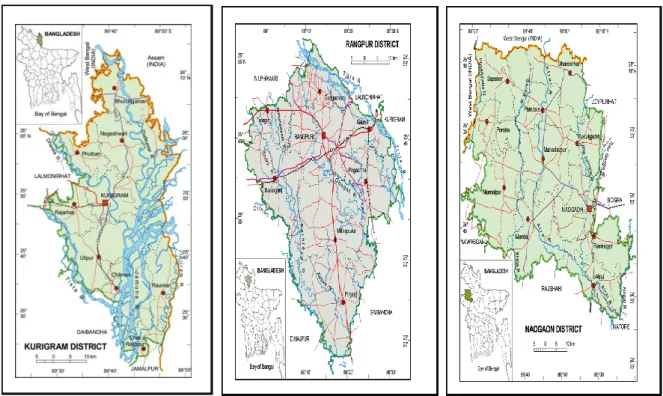
Ullah (2016) subdivides all districts of Bangladesh into special categories based on the availability and numbers of agricultural laborers, which he classified as: high deficit, deficit, moderate deficit, sufficient, surplus and high surplus. Kurigram and Naogaon districts are both high surplus districts and Rangpur district is considered as a surplus district. The map of those three districts are presented in Fig. 1.2.
Fig. 1.2. Maps of the three districts in which villages were selected for this study (Source: Wikipedia)
1.7.3. Analysis of Data
To collect, examine, tabulate and analyze the collected data, various statistical tools as graphs, charts, measures average value, etc. have been used in the present study by using STATA-14. A t-test was used to compare the effects of migration between migrant and non-migrant laborers in Chapter 3. In Chapter 4, a regression model was used to test the factors
13
impacting on the wage rate of women, and a graphical comparison and t-test were used in Chapter 5 to clarify the differences for some important issues between tribal and non-tribal agricultural laborers. Data from secondary sources have been used to describe the activity and role of different government and non-government institutions who work for agricultural laborers in Bangladesh.
1.8 Organization of the Study
Of the seven chapters in this study, Chapter 1 introduces the research, and justification, objectives and limitations of the study. Chapter 2 focuses on the present situation of agricultural laborers in the northern part of Bangladesh. Chapter 3 covers the challenges of the migration issues of agricultural laborers. Chapter 4 deals with the problems faced by women agricultural laborers in Bangladesh Chapter 5 discusses the socio-economic problems of tribal agricultural laborers in Bangladesh. In Chapter 6, an attempt is made to show what kind of government and non-government institutions work to overcome the problems of agricultural laborers. Lastly, Chapter 7 provides a summary of the study, drawing some conclusions and indicating some policy recommendations.
1.9 Limitations of the Study
There are some limitations of the study, as discussed below:
a) The study was confined to the 14 villages of 3 districts and the results obtained might not be adequate to make any generalizations.
b) This study could not cover the maximum numbers of agricultural laborers in the study area.
c) The respondents answered the questionnaire by depending on memory, and (due to lack of proper education) they might not be able to answer all the questions 100% accurately.
14
e) During the survey, only agricultural laborers were interviewed.
Notwithstanding all these limitations, the study fulfilled the objectives and is able to indicate some recommendations for future research. It is also expected to contribute to the final achievement of improving the situation of agricultural laborers in Bangladesh.
16
CHAPTER 2
AN OVERVIEW OF THE AGRICULTURAL LABORERS OF
BANGLADESH
2.1 Introduction
According to the Bangladesh Bureau of Statistics, 30.5 million (63.2%) were employed in agriculture in the financial year 1995-1996. Of the total number of agricultural laborers, 18% were salaried day laborers and the remainder were unpaid peasants and their families. The number of agricultural laborers in the country increased substantially from 17.5 million in 1995-1996, 33.3 million in 1990-1991, and 34.5 million in 1995-1996. At the root of this growth are the activities of livestock farming, poultry farming and harvesting, irrigation, drying and processing and preserving food. According to government data, Bangladesh has achieved self-sufficiency in the production of major cereal rice in the country and is now exporting. Bangladesh's success in food security is the highest in South Asia (United Nations Food and Agriculture Safety Report, 2015).
Agriculture is the basis of cereal self-sufficiency in the Bangladesh economy. Since the main infrastructure of this country is dominated by agriculture, the role of agriculture in the national economy is immense. Not only will there be a shortage of food when agricultural production is low, production will be disrupted or halted in industries dependent on agricultural raw materials. And commodity prices will rise. However, when agricultural production is good, the economy of the country is strong.
There is a demand for agricultural laborers, so many people can earn a living there. Also, since the raw materials of agriculture are required in some other industries, these industries, too, require many workers. Therefore, agriculture creates employment for many people. And is the mainstay of rural living, playing a major role in reducing poverty. The following figure 2.1 presents the contribution of Bangladesh agriculture to GDP during 1980-2017.
17
Figure 2.1: Contribution of agriculture in GDP
Source: Bangladesh Bureau of Statistics, 2018.
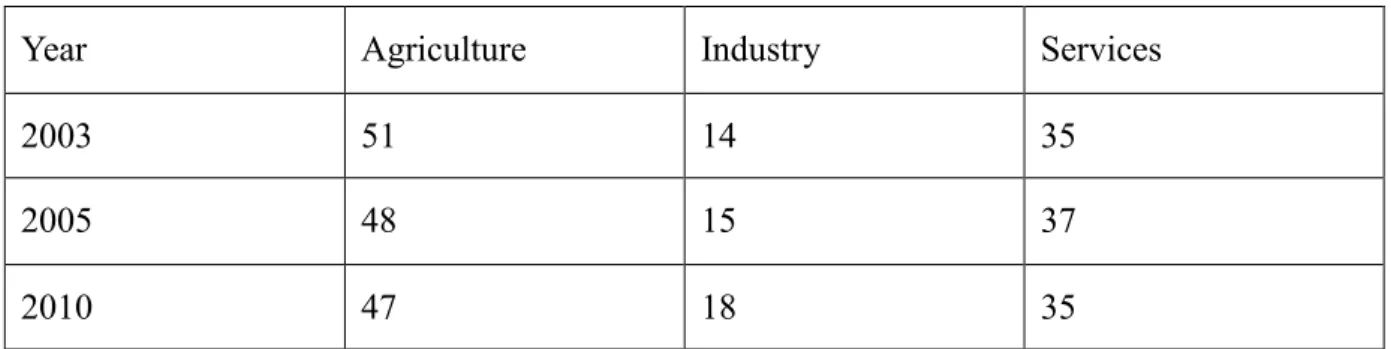
The contribution of agriculture to domestic production and GDP has declined (Table. 2.1) due to the expansion of the industrial and service sectors but, still now, the main role of poverty alleviation and employment is in the agricultural sector. Employment in agriculture is increasing in rural villages, which enjoy twice the total employment of cities. Bangladesh is an independent agricultural and rural landmark country. The economy is primarily dependent on agriculture. About 14% of GDP comes from the agricultural sector and 41% of the total labor force (World Bank report, 2019) is employed in this sector. Considering developed countries, it is clear that most countries originally adopted agriculture as a driving force, so the first phase of industrial development involves industries dependent on agricultural products. In Bangladesh, the general policy for the national economy stems from government measures for agricultural development. The agricultural sector is diverse for several technical reasons, the main one being the changing of eating habits and the benefits of urbanization. Table 2.1 shows the sectoral composition of employment of Bangladesh, suggesting a trend for a modest rise in
33.07 31.15 29.23 25.68 25.03 19.01 18.01 17.38 16.78 16.33 14.05 13.41 0 5 10 15 20 25 30 35 Shares in GDP Shares in GDP
18
the industrial sector, at the expense of the agricultural sector.
Table 2.1: Sectoral Composition (%) of Employment in Bangladesh
Year Agriculture Industry Services
2003 51 14 35
2005 48 15 37
2010 47 18 35
Source: Labor Force Survey, 2012.
2.2 Agricultural Laborers of Northern Bangladesh
A large portion of the people of northern Bangladesh depend on agriculture for their livelihood. Due to the abundance of fertile land and water, rice paddies are grown and cultivated three times a year in this area, so this northern region is sometimes known as the golden land of agriculture. The agricultural sector is also very strong in this area because of a relatively low contribution from the industrial sector, so agricultural sector economy here is rich. About 70% of the population is engaged in agricultural work, either directly or indirectly. Consequently, the number of agricultural laborers is high in this area, and because of the abundant availability of work, agricultural laborers from other areas travel here.
An agricultural laborer is defined as a person who works on another person’s land for wages, takes no part in decisions concerning cultivation, and consequently takes no part in the risks of production, (Ullah 2016). Their wage is defined as a daily amount of money received either in cash or in kind for standard daily working hours; or earnings of low-paid labor who work on an hourly basis (both have been included here as wage earners; BBS Report, 2018).
19
Figure 2.2: Main Sources of Income in Rural Northern Bangladesh
Source: Bangladesh Statistical Year Book (2016).
As shown in Fig. 2.2, the main source of income of 27% of the rural household is from day labor in agriculture, while 12% are employed in in non-agricultural work and another 32% of rural households depend on other forms of income from agriculture. Considering the main and secondary sources of income, the majority of rural households depend on agriculture labor.
2.3 Some Characteristics of the Agricultural Laborers of Northern Bangladesh
Considering the geography of Bangladesh (a small country, divided into eight regions; Fig. 2.3), the (mainly rural) northern region has the largest number of agricultural laborers. Some of the major reasons for this are: inadequate opportunities for off-farm employment; a less well-developed industrial sector; high crop yields due to good soil quality; and a large number of landless people who depend on wage-labor income.
27% 32% 12% 9% 16% 4% 0 5 10 15 20 25 30 35
Agricultural day laborer Agriculture related Non-agricultural day laborer Service Small business Others
Main Source of Income (in percentage)
20
Figure 2.3: Geographical distribution of agricultural laborers in Bangladesh
Source: Bangladesh Statistical Year Book (2016).
Some basic characteristics of agricultural laborers of northern Bangladesh will now be described.
Low rate of education
As for other developing countries, lower education rates are observed among agricultural laborers of Bangladesh. From the survey, it was found that more than 75% of agricultural
21
laborers are illiterate, unable even to write their own name. At the time of the survey, no agricultural laborers were found who have completed secondary school education (Fig. 2.4).
Figure 2.4: Education of Agricultural Laborers
Source: Author’s Field Survey, 2018.
Landlessness
Landlessness is one of the main characteristics of agricultural laborers. With employment and income declining, most of them are living below the poverty line. Their rights over landless properties are very limited. From the survey, it was found that 87% of agricultural laborers are landless. The rest have very little of their own land (Fig. 2.5), which is impossible to live off. They cannot be effectively organized in the prevailing socio-economic system to claim the fair value of their work, an adequate amount of institutional credit, and so on. The following figure is showing the percentage of having own land among the agricultural laborers
66% 67% 82% 28% 27% 11% 6% 6% 7% 0 20 40 60 80 100 120
Kurigram Rangpur Naogaon
Education of Agricultural Laborers (in percentage)
22
Figure 2.5: Land Ownership Among Agricultural Laborers
Source: Author’s Field Survey, 2018.
Irregular employment
Irregular (seasonal) employment is seen among agricultural laborers because they are usually employed for agricultural labor only between times of planting and harvesting (Ullah, 2016). For half of the year, there is no work for them. There is no statistical record of the number of working days for agricultural laborers but from the survey in the present study, it was found that, generally, there is no work for agricultural laborers for 4-5 months a year. In the absence of other employment, agricultural laborers are unemployed during this time.
Having an extra source of income
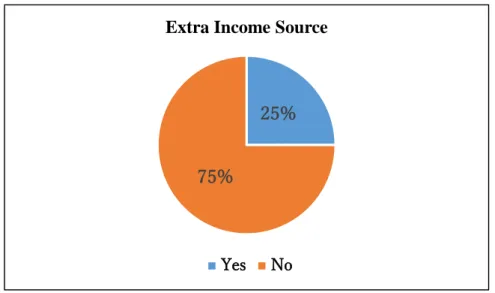
Since there is no full employment as an agricultural laborer for a whole year, it is necessary to have other, additional work in order to survive. Common second occupations3 are as day laborers, hawkers or rickshaw pullers. Among the agricultural laborers in the survey for the present study, 25% of them have an extra income source besides being an agricultural laborer (Field survey, 2018). Many of them go to the nearby city in search of new jobs when not
3 Besides working as an agricultural laborer, being employed in another profession
13%
87%
Having own land
23
employed as an agricultural laborer. There is a difference between male and female laborers: male laborers can migrate but female laborers cannot, because they are required to take care of their family (Fig. 2.6).
Figure 2.6: Occurrence of an Extra Income Source Among Agricultural Laborers Surveyed in the Present Study
Source: Author’s Field survey, 2018
There is a vicious circle of being an agricultural laborer
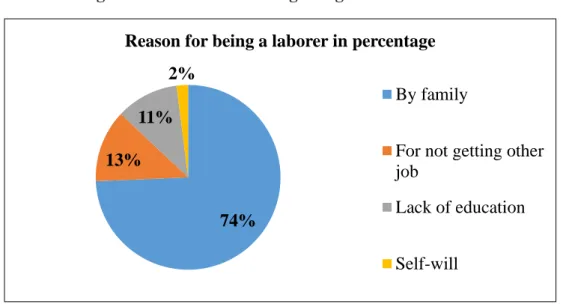
Working as an agricultural laborer is mostly a decision of the family. It was commonly found that several generations of a given family were agricultural laborers also, by tradition. So, here is acting like a cycle. From the survey, it was found that: 74% of respondents became an agricultural laborer by pressure from the family; and only 2% choose this occupation willingly (Fig. 2.7). So it is true that a vicious circle has an effect on agricultural laborers to be an agricultural laborer. About three-thirds of the people employed in the agricultural sector are laborers.
25%
75%
Extra Income Source
24
Figure 2.7: Reason for being an agricultural laborer
Source: Author’s Field Survey, 2018
Low Social Status
Bangladesh is advancing, and the economy of the country is growing, by the sweat of its agricultural laborers. Tragically, though, there is no social acceptance or acknowledgement of their contribution. They are a neglected group in society. They are socially handicapped: they do not assert themselves as important in order to realize their demands. They are in the lowest position in terms of social status. In this situation, inclusive development and advancement for the country as a whole is not possible.
Various Types of laborers and wages
In Bangladesh, there are three types of agricultural laborers (Ullah, 2016). Temporary day labor is the shortest contract that can take from a half-day (or an hour) to a few days (usually a 'hut' time)4. The laborers have the most freedom in this recruitment and also suffer the most insecurity. Day laborers receive wage increases during the busy season, but they may suffer
4 Village huts are assemblies of different products, such as vegetables or household items, which are usually held for once or twice a week at a particular place of village.
74% 13%
11% 2%
Reason for being a laborer in percentage
By family
For not getting other job
Lack of education
25
from starvation during a recession. Year-end laborers stay at the employer's home and receive food and clothing as well as cash. Teenagers begin working for food and clothing. In some cases, bargaining laborers are tied to a kind of 'debt-slavery', and they act as employers for debt repayment. Seasonal laborers are usually employed for 2 to 6 months for harvesting in the winter. They travel from one region to another and receive food and rice or cash as wages. Wage paddy is usually part of the crop harvested (1/12 to 1/3). Although there is a regional difference between the number of different types of wages and the type of payment of wages, the conditions for the appointment of wage laborers throughout Bangladesh is almost identical. In most places, the employer paid the laborers' lunch (rice and ancillary food) and large portions of the wages in cash. The wages of women were relatively low, usually in the form of commodities, amounting to one-tenth of the plowed or weeded grain. Santal4, Bowery5 and other indigenous women are very hard working laborers.
In terms of wage, there are two types of wage system (Field survey, 2018). One is wage-with-food and the other is wage-without-food. Wage-wage-with-food means the laborers receive their wage money and one or two meals per day. And without food means that they receive only wage money, no food. Generally, the amount without food is higher than the with-food wage because the landowner deducts the food price from the wage money.
Migration for a short period
Migration is the transfer of people from one region to another. Agricultural laborers also do migration from their village to new place for a short period for agricultural work. They migrate because of the difference in the wage rate, which generally varies from region to region.
26
Inequality of wage rate between men and women
Women agricultural laborers from different places in the country are being deprived of the fair value of labor. Even though they are doing work equal to that of men, there is discrimination in the wages of men and women, despite the government's policies. Female laborers work in the field from morning till night or at work home. They have to be satisfied with low wages even if they work side-by-side with the men. Women laborers receive (50-100) BDT less daily compared to men at work, although male laborers claim that women work less than in comparison with them.
Tribes are not well accepted as an agricultural laborer
Although a large number of agricultural laborers are of tribal origin, they are discriminated against in many ways (Toppo et al., 2016). Compared to the Bengali people who work as agricultural laborers, tribal agricultural laborers have much less access to work. Because socially tribal agricultural laborers suffer from discrimination. In terms of wages, the difference between tribal agricultural laborers and non-tribal agricultural laborers can be seen also.
Deprived groups of the society
There is no proper recognition of the agricultural laborers employed in important sectors of the Bangladesh economy. They are deprived of the benefits of society. Although labor law includes agricultural labor in national labor laws, there is no provision for setting a minimum wage for them. Also, there is no government or private organization to solve their problems. They are lacking in sufficient calorific intake, and include those who are landless and those who have no cultivated land. The lowest 20% of these families have a monthly income of less than 1,000 BDT. Agricultural laborers are politically unorganized, so no claims are currently active in the political arena for the benefit of the laborers. Apart from this, there are people who are not working. However, working in the one million agricultural farms in the country, got
27
much lower wages. The minimum wage for the work of the agricultural laborers of the country is not yet confirmed by the government of Bangladesh. In villages, unskilled workers who come to the city without a job are given very low wages. This means that real wages in both agriculture and non-agricultural sectors have decreased. Overall, the condition of the agricultural workers is getting worse day by day. With the wages received, it is not possible for a farmer to live a life of reasonable quality.
The agricultural laborers are not able to join any other type of work because of their traditions associated with agriculture, even though they are facing many problems. They are proud and these people associated with the soil do not even think of leaving it and joining another types of work. However, these people have become marginalized in the fight against modern agriculture and are withdrawing themselves from agriculture, which is jeopardizes the whole agricultural sector. As the population of the country increases, the total number of agricultural laborers is also increasing, but the employment rate in the agricultural sector is decreasing in comparison with the non-agricultural sector.
29
CHAPTER 3
MIGRATION: A BETTER WAGE OR CHALLENGES?
3.1 Introduction
Most of the male migrants moving from the villages to the cities are agricultural laborers. Apart from this, the main area of agriculture has shifted. Migration occurs to protect the family's existence and in many cases to increase family income through new ways of earning. Unemployment and low wages prevailing in the domestic market pushes laborers to look for better employment abroad. Agriculture laborers face so many problems in their living conditions and these problems push them from their native place to migrate to other places, seeking better employment and income opportunities. Economic conditions are the main reasons for people migrating from villages to small towns. According to many, income inequality is not the only reason for increasing the city-wide population in urban Many of the destitute, disadvantaged people living in villages are facing downturns due to poverty and lack of employment opportunities. It is becoming to persuade agricultural laborers to work in the villages. Often there is no minimum living facility. Therefore, to discourage the urban-oriented migration of the rural population, the government to create interesting employment opportunities in the villages. To create opportunities for work throughout the year, agro-based activities have to be increased.
However, one of the characteristics of agricultural laborers is migration. Most of them migrate but their migration is not the same as traditional immigration. They move to a new place within the country generally for a short time (2-6 months) and in most cases, they migrate by themselves, not including family members. They migrate only in the peak time of harvesting. Almost 53% of agricultural laborers (Field survey, 2018) are expected to increase their wages by moving to a different place of work. Therefore, the word ‘migration’ in their life is very important and this migration is one of the determinants of their income generation. Both poor
30
and better-off people choose migration as a way of life. Wherever they go, the benefits or risks depend on the economic and social power of the migrants. However, it is also true that migration cannot be explained for any specific reason. Figure 3.1 shows the overall migration rates per 1000 for each region.
Figure 3.1: Domestic migration of laborers
Source: Report on Bangladesh Sample Vital Statistics 2018
Based on above information, this study tries to examine the effects of migrating on the wage rate of agricultural laborers, and to determine the problems they face during migration.
3.2 Methodology
A survey was conducted from December 2017 to January 2018. Three districts, Kurigram (District 1), Rangpur (District 2) and Naogaon (District 3) were selected. All three districts are situated in the northern part of Bangladesh. The reason for choosing these districts is, the number of agricultural laborers is very high, (BBS Report-2016). A total of 14 villages were chosen (refer to p-29) These 3 districts have an almost highly surplus of agricultural laborers (Ullah, 2016). The total number of people surveyed by questionnaire was 300, 100 from each
31
district. They were asked to answer the questionnaire on their household and economic issues. Table 3.1 shows that agricultural laborers are a large part of the total population in the sample areas. From district 3 only two villages were selected because they have less diversity among the agricultural laborers. Due to the high number of agricultural laborers in the sample area, the survey is easily accessible. The villages that have been designated as sampling areas are similar to the characteristics of other villages in Bangladesh and therefore it is expected that the findings of the study would represent actual situation of Bangladesh. All possible care and measure are taken to make sure the quality of the data to achieve the objectives of the study. The northern part of the country is known as the country's food grain reservoir, and it has added a new dimension of food security by producing rice at an average increase of 5 per cent per year over the previous year, for the last five years (Ullah, 2016). According to agricultural scientists and experts, the production of paddy per hectare is increasing steadily as the farmers of this region use sophisticated varieties of seeds in addition to sophisticated agricultural technology in their land and this trend will continue in the future. The number and contribution of agricultural laborers is very high in this area with great potential for better wages of for agricultural laborers.
32
Table 3.1: Demographics of the survey area
Name Total village population Number of agricultural laborers % of the village population Number of respondents Kurigram Village 1 Village 2 Village 3 Village 4 Village 5 Village 6 1500 1675 1337 1495 500 150 630 910 565 320 250 75 42 54.33 42.26 21.41 50 50 20 20 20 20 10 10 Rangpur Village 1 Village 2 Village 3 Village 4 Village 5 Village 6 2500 5000 800 1900 300 300 1310 2000 160 300 67 75 52.4 40 20 15.79 22.33 25 20 20 20 20 10 10 Naogaon Village 1 Village 2 1600 950 750 430 46.89 45.26 50 50
33 3.3 Result Analysis
The results of this chapter are presented in two parts to show the issues of agricultural labor on migration. It firstly shows the effect of migration among agricultural laborers, including both men and women laborers, and then addresses the problems they face during migration.
3.3.1 Effect of migration
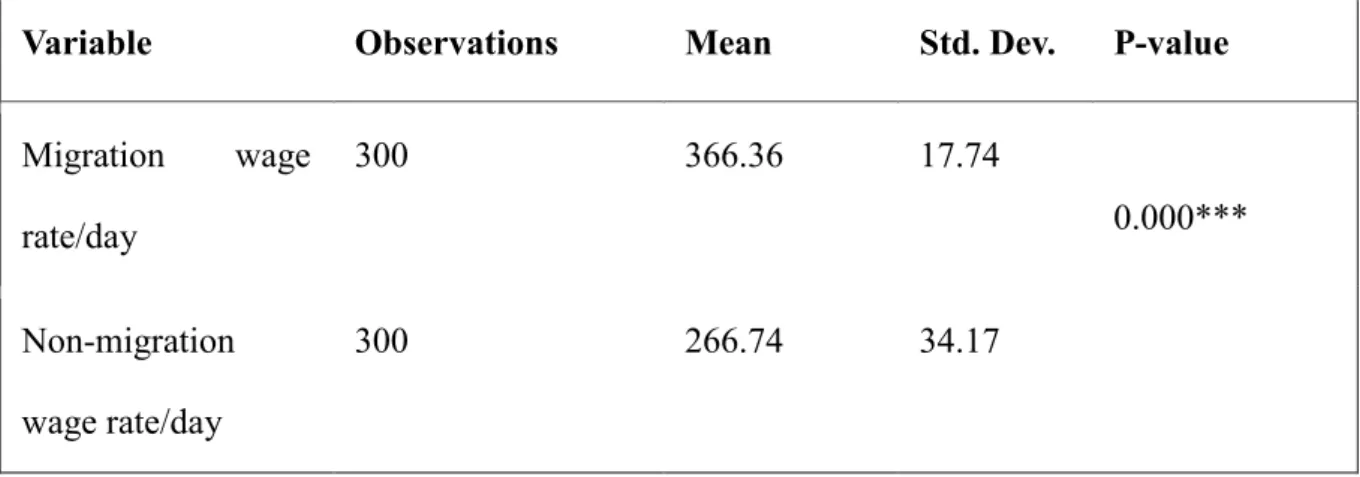
Table 3.2: Difference Between Migration and Non-Migration Daily Wage Rate in BDT
Variable Observations Mean Std. Dev. P-value
Migration wage rate/day 300 366.36 17.74 0.000*** Non-migration wage rate/day 300 266.74 34.17
Source: Author’s Field Survey, 2018.
Table 3.2 shows the difference between the daily wage rate in BDT of those who migrate and those who do not, a difference which is statistically significant. the wage rate of migrant laborers is about 100 BDT more than the wage rate of non-migrant laborers. The main reason for migrating laborers is to earn more wages. Since there is no fixed wage for agricultural laborers, different types of wages occur in different areas, and the variation is not the same in all areas. The demand for and supply of laborers determines their wage rate.