
見えないものの厳存 : 証人 : 『ピェール』
23
0
0
全文
(2) The Certainty of the Inscrutabilities A Witness : Pierre. Fumio AYABE. Contents Metaliterature. Lights of Meaning. Secrets of Grief. Whispers of Silence. Words and the World. At the Rim of the Fountain. Metaliterature It is almost a madness to doubt the existence of things visible. So is it to insist upon the non-existence of 'things invisible^'. When we are awake, we are constantly forced to close our eyes, and with a mere movement of our eyes, 'the solidest things melt into dreams, and dreams into solidifies2''. This is so natural that we are surprised to learn that we are usually not even conscious of it. In order to begin to see 'the circumambient mysteries31' in the midst of which we wake, work, and sleep, 'the slightest hint will suffice4)>. Now then, could you answer the. following questions satisfactorily? Why is it that 'when one is made to feel very happy, one is sometimes apt to say very silly things5)'? Which is a more authentic state of man : to be awake or asleep, alive or dead, visible or invisible, happy or gloomy? How about this : 'why should we always be longing for peace, and then be impatient of peace when it comes?6>> 'Oh, tree! so. mighty thou, so lofty, yet so mournful! This is most strange!71' In a way, these questions may seem foolish, but at the same time they are the wisest ones that 'we blind moles8)> can ask, for. 'every misconceivedly common and prosaic thing' in all the world is 'steeped a million fathoms in a mysteriousness wholly hopeless of solution9^.. Experience knows that in the hours of our deepest distress something that is now dead but used to be familiar suddenly returns from the invisible world and talks to us about 'the other world101' into which 'the physical world of solid objects"'' slidingly displaces itself, as if 'the roughest stones, without transformation, put on the softest aspects120' in the lagoon. It might. be better to stop challenging such tedious, abstruse, never-ending problems. But what would you do if the problems themselves should so possess you that you are forced to step into the dark woods? The alternative to standing all alone 'as at the Polel3)> 'deep down in the gulf of the soull4)> would be to submit oneself to 'the never-entirely repulsed hosts of Commonness, and Conventionalness, and Worldly Prudent-mindednessl5)>. So, if your soul seeks 'different food. from happiness16'', then you have to 'keep thinking, and thinking, and thinking, and thinkingl7)' 73.
(3) Fumio AYABE. of some such difficult questions as the ones posed above. Words will be the only guide, but you will be flabbergasted at the jagged blades of words, which are the glorious but pathetic remains of our ancestors' struggle for 'the sweet angels that are alleged guardians to manl8)>. Among the various modes of understanding a man, there seem to be 'two grand practical. distinctions'. By the one mode, we know him in person and judge him according as we like him or not, while by the other mode, whether we know him directly or indirectly, we judge him mostly through the opinions of others. But 'I elect neither of these ; I am careless of either ; both are well enough in their way19''. The same distinctions could be applied when we attempt to understand a literary work. We get more or less excited, at least while we are reading it.. This is the way we usually enjoy or reject it. On the other hand, those of us who want to approach it intellectually pry into commentaries and criticisms on the work, and then hypothesise or conjecture freely with their full support, which is often considered a privilege of a scholastic life. If a scholar follows this way, he will sooner or later receive 'not only vast credit and compliments from his more immediate acquaintances, but the less partial applauses of the always intelligent, and extremely discriminating public20)'. But if you are young, beware. of panegyrics and self-complacency, for, believe it or not, 'if there be anything a man might well pray against, that thing is the responsive gratification of some of the devoutest prayers of his youth29'. Since our concern is 'not the book, but the primitive elementalising of the strange. stuff, which in the act of attempting that book, has upheaved and upgushed in his soul22)', 'I write precisely as I please23''. I write a brief article on the book, Pierre ; or, The Ambiguities, by Herman Melville, in the way that I write down as I hear it speak to me. So 'do not blame me if I here make repetition24''. 'I shall follow the endless, winding way, — the flowing river in the cave of man ; careless whither I be led, reckless where I land251'. Call my attempt metaliterature.. Secrets of Grief When we are in an ecstasy of delight, we cannot really comprehend the sad heart of the less fortunate. Almost unconsciously we fail to feel 'the interior gash' of 'the poniarded heart26)>. Words are considered a convenient means of communication, but once the feeling of the infinite forlornness27)' of life overwhelms a man, they get out of control. 'Is grief a self-willed guest. that will come in?28)> Who could describe in words the wail, grief, or misery of a mother who has lost her child? The lines that shall precisely define his present misery, and thereby lay out his future path ; these can only be defined by sharp stakes that cut into his heart29)>. We do not know whether we are born sinful or not, but no one will deny that the faces of real infants, in their earliest visibleness, do oft-times wear a look of deep and endless sadness301'. Are we all. doomed to sadness? 'There is nothing so slipperily alluring as sadness ; we become sad in the first place by having nothing stirring to do ; we continue in it, because we have found a snug sofa at last31)>. Does sadness come to us in order to console us? When a man is 'on all sides assailed by prospects of disaster, whose final ends are in terror hidden from it', heaven, 'after all', is 'a little merciful to the miserable man ; not entirely untempered to human nature are the. most direful blasts of Fate32)>. What lurks at the heart of sadness? 'Wherefore have Gloom 74.
(4) The Certainty of the Inscrutabilities. and Grief been celebrated of old as the selectest chamberlains to knowledge? Wherefore is it, that not to know Gloom and Grief is not to know aught that an heroic man should learn?33'' 'Endless is the account of Love34)>, and so is that of sadness. Love has many more believers. than any other religion. But just 'as the glory of the rose endures but for a day, so the full bloom of girlish airiness and bewitchingness, passes from the earth almost as soon35''. There. is always a danger of rapid or gradual deterioration in everything, and yet 'always is love love, and cannot know change36)>. Otherwise, why do we long for the light of love 'in the hour of remorsefulness and woe37)? Man must be 'wholly a disclosed secret38'' to 'the most celestial of all innocents39)>, 'the not-to-be-named things4*"'. This may be the reason why when the soul of man is involved in 'some terrible jeopardy41'' he recalls 'a flawless, speckless, fleckless, beautiful. world421' where Love reigns. Wliat a revelation! He feels himself suddenly 'brushed by some angelical plume of humanity, and the human accents of superhuman love, and the human eyes. of superhuman beauty and glory, suddenly burst on his being ; then how wonderful and fearful the shock!43'' This is probably what is described as religious conversion, and, first of all, what we experience in our daily life. It is beyond words but true that 'the sweetest joys of life grow in the very jaws of its perils44)>. Joys do not last long. The next instant clouds swiftly come, and all goes 'confused in whirling rack and vapour as before45)>. Then, miraculously enough,. in the depth of the soul the heavier woes 'purge the soul of gay-hearted errors and replenish it with a saddened truth' ; 'so that in these flashing revelations of grief's wonderful fire, we see all things as they are' ; and 'now, even in the presence of the falsest aspects, we still retain the impressions of their immovable true ones, though, indeed, once more concealed46)'. Human curiosity very often lives on secrets, so if one wants something known publicly, one has only to pretend to keep it secret. But there are 'no secrets but those which would also be secrets in heaven47)'. Furthermore, 'Love's self is a secret, and so feeds on secrets48''. So it necessarily follows that we cannot see Love face to face. And yet 'in some cases Fate drops us one little hint, leaving our own minds to follow it up, so that we of ourselves may come to the grand secret in reserve49)>. Such a hint is revealed even in what seems trivial and vulgar.. 'If you buy the best seat in the coach, to go and consult a doctor on a matter of life and death, you shall cheerfully abdicate that best seat, and limp away on foot, if a pretty woman, travelling, shake one feather from the stage-house door50>'. Is it not Love that has gifted all beautiful women with 'a magnetical persuasiveness, that no youth can possibly repel61)>? These secrets abhor human surmises, 'as nature is said to abhor a vacuum521'. We 'keep wondering still' when we pass 'fifty531'. This is the sphere where a mere rhetoric can be of no help, for it is 'sweet in the orator's mouth, bitter in the thinker's belly54)>. Remember that we are facing 'the infinite cliffs and gulfs of human mystery and misery55)>. In trying to treat such transcendental subjects, a conscientious teacher would feel 'his tongue cleave to the roof of his mouth56)',. for they are not among the school subjects that could be taught at schools. It is generally considered that the aim of school education is to train the student to prepare himself for his future life : 'that thing which is called happiness ; that thing whose token is a laugh, or a smile, or a silent serenity of the lip57)'. And there is no subject-in the curriculum which deals in a question like this : 'whether some things that men think they do not know, are not for all that 75.
(5) Fumio AYABE. thoroughly comprehended by them ; and yet, so to speak, though contained in themselves, are kept a secret from themselves?58'' Not infrequently we feel in our daily life as if one were seven, and one and one made zero. Nevertheless, 'some imaginatively heterodoxical men are. often surprisingly twitted upon their wilful inverting of all common-sense notions, their absurd and all-displacing transcendentals, which say three is four, and two and two make ten59)>.. Accursed be a man who clings to the magic formula of two and two make four! Do not close your eyes to the ambiguities. Words and the World Human life is a continuous struggle with words. Words do not always proceed straight in 'the realms of mortalness60>>. They are adept in disguising themselves according to the wishes of one who uses them. For example, if a man uses the word love as a tool for attaining his earthly 'ambition611', it immediately loses 'thrills eternally untranslatable62)>, and vanishes 'as ghosts at cock-crow63)>. What is left behind is nothing but 'Love's museum', which 'is vain and foolish as the Catacombs, where grinning apes and abject lizards are embalmed64''. We cannot. deceive Love or Word, for her light is intenser than any light. Love does not smile on a man when he tries to hide his hatred of some other person under the cloak of the mere term of love. 'Love's eyes are holy things ; therein the mysteries of life are lodged650'. But 'in us love is profane66)', though the noble term is still retained. If you hear some one say, 'such a bridalparty as this morning's — why, it's as sad as funerals67)', the words will almost stab you, for the words themselves must be perplexed with 'Fear and Wonder68)'. Words, whether they be analogies, metaphors, or similes, get insipid the moment they are uttered, so we cannot be too careful in quoting words, phrases and sentences. We are in a sense victims of words. Enacting a human drama, 'we but vainly seek to explain the inexplicable691'. Dogmas and hypotheses serve us extensively, but we seldom ask. ourselves about the meaning of life. Philosophers are eager to objectify every phenomenon into transcendental generalisation, and as a matter of course, 'in the inexorable and inhuman eye of mere undiluted reason, all grief, whether on our own account, or that of others, is the sheerest unreason and insanity70)'. They are no more the only people who have much to do with 'the soul of man711' than teachers are the only people who deal in education. 'Away, ye. chattering apes of a sophomorean Spinoza and Plato, who once didst all but delude me that the night was day, and pain only a tickle721'. No philosophising will stand 'the final test of a real impassioned onset of Life and Passion73'' upon them. 'Tell me not, thou inconceivable coxcomb. of a Goethe, that the universe cannot spare thee and thy immortality, so long as — like a hired waiter — thou makest thyself "generally useful"74''. Words deride scholars as pretentious,. pedagogues as pedantic, or philosophers as garrulous the more because of their plausible labels of profession. From Silence, 'Kant75)>, Tlotinus761', and many more 'impostor philosophers. pretend somehow to have got an answer ; which is as absurd, as though they should say they had got water out of stone ; for how can a man get a Voice out of Silence?77''. Derision usually. leaves an unpleasant taste behind, but here we hear 'the scorn which thinks it not worth the while to be scornful78''. For who has the right to scorn those philosophers except Silence? If 76.
(6) The Certainty of the Inscrutabilities. there should be anything that is to blame, it must be 'the malice of this earthly air79)\ 'Ah, muskets the gods have made to carry infinite combustions, and yet made them of clay!80)>. Therefore 'don't know, all's wrong81)> : 'one is apt to look black while writing Infernoes82)'. Or, rather, it is a blessing that we are made of 'clay and mud', for they are 'immensely the most endurable83)', and then 'have deeper secrets than wood or fell84)>. Human nature does not seem to change fundamentally, and 'man cannot wholly escape his surroundings89'. How many years have passed since Jesus cried "EH, Eli, lema sabachthani?", persecuted by 'the unretarded malice of the Evil One86'? 'Lies only never vary87)>, 'no average. son of man' will 'turn the left cheek if the right be smitten88)>, and 'he who is already fully provided with what is necessary for him, that man shall have more89''. Young Christians will continue to stumble at 'the only great original moral doctrine of Christianity', 'because after 1800 years' inculcation from tens of thousands of pulpits, it has proved entirely impracticable90^. One of the most ineradicable evils is perhaps the vanity of man. 'He likes to be not only his own Alpha and Omega, but to be distinctly all the intermediate gradations, and then to slope off on his own spine either way, into the endless impalpable ether91)>. Ridiculous but strong is his temptation to a 'good nominal title921' and to the one-upmanship of subscribing his name 'to the title-page93'' of his book. It is, however, of no use to deplore things base and vulgar, for it. is like waiting one hundred years for pigs to fly. One hundred years from now, none of us know the place where we stand now. 'Decreed by God Omnipotent it is, that Death should be the last scene of the last act of man's play ; — a play, which begin how it may, in farce or comedy, ever hath its tragic end ; the curtain inevitably falls upon a corpse941'. The issue is. already decided. 'Oh, what quenchless feud is this, that Time hath with the sons of M^en!95)' Grudgingly convinced that 'the before undistrusted moral beauty of the world is forever fled96)' a young man asks himself 'what is Virtue97)', what is the real basis of human relationship, where is 'the entire, one-pillared temple of his moral life98''. Things are not what they seem.. There are many happy maxim-men in the world who are willing to say openly that their mottoes are sincerity and endeavour, as if they had not 'an ugly devil99)> within them. -Most of them are respected, but 'everyone, even the best of us, at times, is apt to act very queerly and unaccountably ; indeed, some things we do, we cannot entirely explain the reason of, even to ourselves100''. Sometimes 'fine coats and full pockets1011' stand for a gentleman, a politician, or. something of a sort. Consult your world-dictionary, and you will find a lot of interesting definitions there. Here is one example of new lexical meanings. Gentleman: 'gentlemen that. are gentlemen never go abroad without their diplomas. Their diplomas are their friends ; and their only friends are their dollarslo2>'. One more example. Jealousy : 'A crowd of women eye. a transcendent beauty entering a room, much as though a bird from Arabia had lighted on the window-sill. Say what you will, their jealousy—if any—is but an afterbirth to their open admiration103''. Why don't you add a better one? By the way, there live not a few officious. match-makers in the world, who believe that charity begins abroad. They are proud of giving advice to others, and yet they do not see that 'advice often seems the most wantonly wasted of. all human breath ; man will not take wisdom on trust ; maybe it is well ; for such wisdom is worthless ; we must find the true gem for ourselves10'0'. Consequently, they often make their. 77.
(7) Fumio AYABE. own merit of the success of the one who they think acted on their advice, while they put the blame upon him for his failure. Very often we cannot be certain of the validity of our own acts. 'Of our sufferings, as of our talents, others sometimes are the better judges1051'. But 'in. a world so full of all dubieties as this, one can never be entirely certain whether another person, however carefully and cautiously conscientious, has acted in all aspects conceivable for the very bestlo6)'. Now, therefore, don't expect others to solve your own moral problems, whatever. professional titles they may make a display of. In reality they do not know 'more of the moral obligations of humanity than other peoplelo7)'.. We cannot expect any man of profession to be well versed in 'that mysterious thing in the soul, which seems to acknowledge no human jurisdiction, but in spite of the individual's own innocent self, will still dream horrid dreams, and mutter unmentionable thoughts108''. For his. 'profession is unavoidably entangled by all fleshly alliances, and cannot move with godly freedom in a world of beneficeslo9)'. A clergyman or a counsellor might only smile when annoyed at the question : 'should I honour my father, if I knew him to be a seducer?llo)>, for 'a smile is the chosen vehicle of all ambiguities1111'. We smile not so much because we do not know the surface meaning of what is asked, as because we are quite at a loss how to understand and answer it. And almost all we could say about moral problems seems to be that 'by one universal maxim, to embrace all moral contingencies, —this is not only impossible, but the attempt, to me, seems foolish1121'. Then is there no yardstick by which to regulate moral. problems? Now comes a doctrine of 'virtuous expediency', which 'seems the highest desirable or attainable earthly excellence for the mass of men', and at the same time 'the only earthly excellence that their Creator intended for themll3)>. In our peaceful and generous society, venial sins are usually forgiven with leniency, and 'men in general have always done some small self-sacrificing deed for some other manll4)'. But from a man 'who is deplorably destitute of what is necessary for him, 'even that which he hath' will be 'taken away1151'. And 'invisible. devils do fitter at us when we most nobly strivell6)', with the result that we just jeer at the sour grapes of 'those laurels which in the very nature of things, can never be impartially bestowed1171'. It is not so easy to live conventionally.. Faced with the problem of 'the possible reconcilement of this world with our own souls1181', a certain wise man 'so complacently expatiates1191' to the effect that 'in an artificial world like. ours, the soul of man is further removed from its God and the Heavenly Truth, than the chronometer carried to China, is from Greenwich', and that 'the chronometric soul, if in this. world true to its great Greenwich in the other, will always, in its so-called intuitions of right and wrong, be contradicting the mere local standards and watchmaker's brains of this earthl20>'.. After much reasoning he authoritatively holds up 'a practicable virtue129' to the wicked, which is, however, so shallow and 'so exceedingly trivial, that Juggularius' smallest child might well have been ashamed of it1221'. Shallow men are 'the very last to despond. It is the glory of the. bladder that nothing can sink it ; it is the reproach of a box of treasure, that once overboard it must drownl23)'. It may be that the wise man, being 'a scholar', does not interfere with 'what is wise, or what is foolish in the great world124'', where 'the conflicts of a noble soul with a dastardly world125'' will never cease. Now, 'let me here offer up three locks of my hair, to the. 78.
(8) The Certainty of the Inscrutabilities. memory ofl26)' : 'His Reverence127*', 'many speculative nut-crackersl28)>, 'gold-laced, virtuoso Goethel29)>, 'Civilisation, Philosophy, Ideal Virtuel30)>.. It is not among our tasks just to despise 'the simplest principles' of the world, which 'scorns all ambiguities, all transcendentals, and all manner of juggling1311'. Let us wait patiently for the self-degeneration of such childish principles. We do not intend to X-ray the psychology of a patient, as it were, for the intellect of man is 'but the pretentious, heartless part of a man132''.. The intellect or the head is liable to assume the title of the legislator of all the universe. But 'the Empire of Human Knowledge can never be lasting in any one dynasty, since Truth still gives new Emperors to the earth1331'. In spite of that, or because of that, we cannot but. approach everything intellectually. 'Pretensions and substitutions are only the recourse of undergraduates in the science of the worldl34)>. And what is to be deplored is that they unconsciously pretend to self-importance and great knowledge, in the name of 'full graduates in the University of Famel35)'. It is true that the head approves 'the manly enthusiast cause' of the heart of a man or 'the most magnanimous and virtuous resolutions', but quite strangely the head seems 'to cast a reproach upon that cause itself1361'. The head could not possibly stand. alone. The head of a man tries to make all things 'objective' as reflected in the mirror of his self-consciousness by 'his morbid SM6jectivenessl37)>. Through the eye of the intellect, the. profoundest sadness turns into but a rag of petrified sentimentality. Or, if you suddenly saw in your vision 'Enceladus the Titan, the most potent of all the giants, writhing from out the imprisoning earth138'', 'the Kantists might say, that this was a subjective sort ofl39)> writhe. Here. everything is caught in a net of the thorough objectification of the universe by the intellect. But it is not into the cold head of the subject-object dichotomy but into the warm heart of 'innocencel40>', that 'Fate puts the chemic key of the cipher141'' to unravel the Talismanic Secretl42)>. For 'the brains grow maggoty without a heart ; but the heart's the preserving salt itself, and can keep sweet without the head143''.. It is of great significance that the heart is preferred to the head. It is just as 'the most heavenly bounteousness most seeks the lowly places ; making green and glad many a humble mortal's breast, and leaving to his own lonely aridness, many a hill-top prince's state1410'. But though it 'almost seems some supernatural thingl45)>, the heart, 'stirred to its depths, finds. correlative sympathy in the head, which likewise is profoundly moved146*'. And then, deeply carried thus by enthusiasm, the head begins to walk on by itself, and comes to realise bitterly that the ominous silence of the universe returns no response to its intellectual grumbles. In the end, a young enthusiast finds his own way. The odds are that he 'openly runs, like a mad dog, into atheisml47)>, into 'the Descartian vortices1481', or into 'those four syllables of sound which. make up that vile word Propriety1491'. It is not without reason that 'youth gives itself up to an infidel scornl50)' or to a 'winding or manufactured nobilityl51)'. He must not be rash before 'one. infinite, dumb, beseeching countenance of mystery, underlying all the surfaces of visible time and space1525', for 'old people never like to be hurriedl53)>. What lies in front of us is not such a question as 'can be conscientiously answered with a yes or nol54)'., but 'some imperfectly. discerned, but heavenly ideals : ideals, not only imperfectly discerned in themselves, but the path to them so little traceable, that no two minds will entirely agree upon itl55>>. Agreeing to 79.
(9) Fumio AYABE. disagree, self-styled pacifists are obliged to 'run clean away into all manner of moral abandonment, self-deceit, and hypocrisy (cloaked, however, mostly under an aspect of the most respectable devotion)156)>. It is a great pity that 'such mere illustrations are almost universally. taken for solutions (and perhaps they are the only possible human solutions)157''. If a man of authority is obstinate enough to act God in the theater of the world, he will prove disgusting, for he has to play a beast, or, more exactly the Evil One. In the same manner, a 'young enthusiast158'', if he follows the trail of 'the deeper truths in manl59)' 'too far', will entirely lose. 'the directing compass of his mind ; for arrived at the Pole, to whose barrenness only it points, there, the needle indifferently respects all points of the horizon alike16*"'. But he must not be dissuaded from his attempt itself. There is 'no shadow of dubiousness as to the direct point he must aim at. But if the object was plain, not so the path to it. How must I do it?161)> is a problem.. Lights of Meaning It is one thing to follow the trail of truth, and another to pretend to do so. In this misty world, however, it is next to impossible to distinguish the two. 'And thus — thanks to the world! — are there many spies in the world's camp, who are mistaken for strolling simpletons.. And these strolling simpletons seem to act upon the principle that in certain things, we do not so much learn, by showing that already we know a vast deal, as by negatively seeming rather ignorant162''. But we all are really ignorant of 'the hearts of a man ; descending into which is. as descending a spiral stair in a shaft, without any end, and where that endlessness is only concealed by the spiralness of the stair, and the blackness of the shaftl63)>. Some say that 'in youth we arew)>, but that 'in age we seem165'', and yet we would have to say here that we have no time to seem. As we know that 'not always in our actions, are we our own factors1661', it would be better to say that we always are, or else, we seem both in youth and in age. 'For. surely no mere mortal who has at all gone down into himself will ever pretend that his slightest thought or act solely originates in his own defined identity167)>. Only the shallow and immature amuse us with the bungling masks by which they vainly try to justify the unjustifiable. Now that 'thou dost not pine for empty nominalness, but for vital realnessl68)>, thou shalt 'now learn,. and very bitterly learn, that though the world worship Mlediocrity and Commonplace, yet hath it fire and sword for all contemporary Grandeur ; that though it swears that it fiercely assails all Hypocrisy, yet hath it not always an ear for Earnestnessl69)'. If this is all true, a man must. be 'almost superhumanly prepared to make a sacrifice of all objects dearest to him, and cut himself away from his last hopes of common happiness170*'. Who would not flinch from such an inhuman task? Who would dare to feel 'entirely lonesome, and orphan-like', like. 'Ishmaell71)>? But what if 'cruel father and mother' should both let go the hand of their 'little soul-toddlerl72)? He falls 'a prey to all manner of devouring mysteries173''. Will he become a. nihilist? The soul-orphan, led by a 'heavenly magnet17'0', as it were, enters 'into the Switzerland of his soul', where 'heaven' has 'wisely ordained' that 'man shall not at once perceive its tre-. mendous immensity ; lest illy prepared for such an encounter, his spirit should sink and perish.
(10) The Certainty of the Inscrutabilities. in the lowermost snowsl75)>. He is also to thank earth for its tender care : 'high majestic beings, dumb and grand, stand up with out-stretched arms, and hold their green canopies over merry angels — men and women — who love and wed, and sleep and dream, beneath the approving glances of their visible god and goddess, glad-hearted sun, and pensive moon!176)' But whether he likes it not, he soon perceives 'an almost impenetrable blackness177*' all round him.'All round. and round does the world lie as in a sharp shooter's ambush, to pick off the beautiful illusions of youth, by the pitiless cracking rifles of the realities of the agel78)>, till the young man cannot find 'one single agreeable twig of thought whereupon to perch his weary soull79)>. He then asks himself where 'all faith in Virtue1801' is gone, 'and so, for the moment, grows madly reckless and defiant of all obstacles181^. 'He curses Fate ; himsjlf he curses ; his senseless madness, which is himself182)>. For the moment he makes sharp animadversions on 'the truest book in the world183'', since 'by all odds the most Mammonish part of this world — Europe and America — are owned by none but professed Christian nations184''. 'What think you would have been our blessed Saviour's thoughts on such a matter?1851' All he hears, however, is the rude voices of 'the ever-interrupting and ever-marring world186''. Questions crop up one after another in his soul. 'WT-io brought me to the house ; how I came there, I do not knowl87)> ; 'why I had been. brought to the house, or how long I was to stay in the house'; 'for what cause I had been brought into the world1881'. 'What was it to be dead? What is it to be living? Wherein is the difference between the words Death and Life? Had I been ever dead? Was I living?189*' No mortal being could answer these questions convincingly, for inferences or surmises are in no way correct answers in this case. Moreover, 'when a man is in a really profound mood, then all merely. verbal or written profundities are unspeakably repulsive, and seem downright childish to him190''. Where words fail him, a man has only to steel himself 'to the worst, and to the lastl91)>.. But it does not necessarily follow that his readiness 'never to expect any good from anything' but 'always to anticipate ill1921' leads to 'the earnest thoughts of murder193'', though 'rebellion and. horrid anarchy and infidelity1910' may agitate him in his soul, at least for a time. 'Youth has not yet completely gone with its beauty, grace, and strength ; nor has age, at all come with its decrepitudes ; though the finest undressed parts of it — its mildness and its wisdom — have gone on before, as decorous chamberlains precede the sedan of some crutched king195''. Young or old, therefore, we have only to 'stand unflinched both at our own and at some loved one's. united suffering19^'. It is then that all the questions we have asked converge and merge into one great question, to answer which is the very aim of our exploration. 'Ten million things' are 'as yet uncoveredl97>' to us. Now try the following : 'what it might be, to be old, and poor,. and worn, and rheumatic, with shivering death drawing nigh, and present life itself but a dull and a chill!198)' This is also too familiar for our deep thinking, but too esoteric for our feeble brains.. Even so, why does 'the caprice of the minutest event — the falling of a leaf, the hearing of a voice, or the receipt of one little bit of paper scratched over with a few small characters by a sharpened featherl99>' — sometimes strike up in us 'rapturous pulsations of legendary delights eternally unexperienced and unknown200)> to us? This is probably because there lurk some 'strangely concealed lights' of meaning deep in the soul of man. Human life consists of such. 81.
(11) Fumio AYABE. minutest events, and every human being is soaked in miracles, 'unconsciously throwing himself. open to all those ineffable hints and ambiguities, and undefined half -suggestions, which now and then people the soul's atmosphere, as thickly as in a soft, steady snowstorm, the snowflakes people the air201)>. Everything, and especially 'the merest little accident202'' could be the best hint. For example, 'something like a look of half-regret, accompanied rather strangely with a half-smile of gentle humour2031', 'two leeches2041', 'lean rows of broken-hearted pelicans on a beach209', 'the handkerchief2061'. Through the medium of those lights of meaning, a man sees. rthe charred landscape within him207)>, or he is held spellbound by the deep fathoms of his lover's eyes. 'The eye is Love's own magic glass, where all things that are not of earth, glide in supernatural light. There are not so many fishes in the sea, as there are sweet images in lovers' eyes2081'. But rapture does not last long; grief returns. And yet we now have some 'inklings of something else than the pure povertiresque in poverty209)>. 'Welcome then be Ugliness. and Poverty and Infamy, and all ye other crafty ministers of Truth, that beneath the hoods and rags of beggars hide yet the belts and crowns of kings2101'. Though these members of poverty look as they used to do, they are now seen in a new light. 'From without, no wonderful effect is wrought within ourselves, unless some interior, responding wonder meets it. That the starry vault shall surcharge the heart with all rapturous marvellings, is only because we ourselves are greater miracles, and superber trophies than all the stars in universal space2111'. 'Hark thee to thy furthest inland soul212)>, and not to the 'mere sounds of common words2131'. When you hear a human voice, you will find yourself answering 'in a voice that seems to come from under your great-grandfather's tomb!214)>, or 'from the fair fields' of your 'great-great-great-grandfather's manor2151'. Or, 'something heavenly should answer thee2161'. If you can believe in 'the sun-like. glories of god-like truth and virtue ; which though ever obscured by the dense fogs of earth, still shall shine eventually in unclouded radiance, casting illustrative light upon the sapphire throne of God217)>, you surely have 'an indefinite but potential faith, which could rule in the interregnum of all hereditary beliefs, and circumstantial persuasions218'', and 'rail as all atheists will, there is a mysterious, inscrutable divineness in the world — a God — a Being positively present everywhere21^'. So far as you have this belief deep in your soul, you are 'a peak inflexible in the heart of Time, as the isle-peak, Piko, stands unassaultable in the midst of waves220)>. But. this dauntless independence of the soul is entirely different from the inveterate arrogance of the ego. It is needless to say that this potential faith, unlike all hereditary beliefs, does not need any churches, ceremonies, or canonical books. We hear words such as 'beautiful221'', (Dead222Y, God, divine, 'the certainty of this irremova-. ble obscurity223''. Every word is dry as dust in itself, unless accompanied by its solid objective correlative. But everything in the world is 'continually changing22'0' and it cannot be kept tied up by any word. Nevertheless, words are busy tying it up from morning till night. But who could utter in words his own 'deep-down, unutterable mournfulness225)'? 'Some nameless. struggles of the soul cannot be painted, and some woes will not be told. Let the ambiguous procession of events reveal their own ambiguousness226)'. The soul of man is a confessional, with no priests in attendance. There everything is 'lit by supernatural light227)>, and not a single atom of what has happened is ever lost. 'Time and space cannot contain2281' this space of the. 82.
(12) The Certainty of the Inscrutabilities. soul. Even if you should 'hate a mystery229)>, you must have experienced the 'blessed sereneness which lurks ever at the heart of sadness — mere sadness — and remains when all the rest has gone230''. From the depth of sadness there looms dimly a light, whether it be 'a lantern231)>, or a 'lamp232''. As the light of sadness becomes intenser in the soul of man, 'all objects are seen in a dubious, uncertain, and refracting light233)>, and then'cat-like he distinctly sees all objects through a medium which is mere blindness to common vision2310'. How appalling it is, that, under 'the tyranny of Time and Fate235)>, 'man should soil and rust on the stalk, and be wilted. and threshed ere the harvest hath come236)'! It is also made clear by the lights of darkness that 'the deeper that some men feel a secret and poignant feeling, the higher they pile the belying surfaces237)'. And it is needless to refer to 'the utter unsatisfactoriness of all human fame2381', 'the evils of enlarged foreign travel2391', or the evanescence of 'abundant hair, swelling chest, and sweet docility240>'. The deeper we go down the stair of human hearts, the more ominously our every step. echoes in the shaft. 'Not the gibbering of ghosts in any old haunted house ; no sulphur ous and portentous sign at night beheld in heaven, will so make the hair to stand, as when a proud and honourable man is revolving in his soul the possibilities of some gross public and corporeal disgrace241)'. We tremble also to see on the wall 'the long-lurking and yet linhealed wound of. all a rejected lover's most rankling detestation of a supplanting rival, only intensified by their former relationship, and the unimpairable blood-relation between them242*'. You cannot say. that you have nothing to do with these appalling scenes. Then, by tremendous imagery, the murderer's mark of Cain is felt burning on the brow, and the already acquitted knife blood-rusts in the clutch of the anticipating hand243''. On the wall of man's heart there hangs another picture in which 'some empty x244)> is, 'by a silent and tyrannic call challenging him in his deepest moral being, and summoning Truth, Love, Pity, Conscience, to the stand245>'. These virtues, which seem to 'hold us to no essential good246>', 'become marbleised247'', and thus preserved. intact. This is also a miracle which occurs every instant. But at the same time everything human, virtue or vice, is forever preserved as it is, in that shaft of human hearts, though the soul of man 'cannot, and does never intelligently confront the totality of its wretchedness248)'. Here and now, as we cannot turn back halfway, repetition is unavoidable in order to set down every. moment the flashing revelations, 'though indeed the dread of tautology be the continual torment of some earnest minds, and, as such, is surely a weakness in them249''. In the world 'the invisible agencies are plotting treasons against our loves250>', and 'the whole man droops into nameless melancholy2515', which leads him to the 'no common pride' of 'lasting suffering and grief2B2)>. And only through 'the immortalness and universalness of the Sadness2531', we learn that 'man was not made to succumb to the villain Woe254>>, that 'man's life seems but an acting upon mysterious hints2551', and that 'that divine thing without a name2561' charges every soul of man with 'a divine unidentifiableness' which has 'no earthly kith or kin257)>. Benevolently. guided in this way by the light of grief, 'we mine into the pyramid258'' of the soul of man. The light of grief, like a lantern in a mine, is 'not so much intended to dispel the general gloom, as to show some dim path leading through it, into some gloom still deeper beyond269''.. But before going on, we have to think of a relationship between the soul of a man and the body. 83.
(13) Fumio AYABE. The body is the only place in the visible world that the soul could live in, and yet at times we are impatient of the 'dog of a body260''. Some people may be proud of being 'ambidexter and quadruple-armed261)l, and some others may loathe their own bodies. 'Is yonder ox fatted. because yonder lean fox starves in the winter wood? And prate not of despising thy body262)'. So long as the two abide in one yoke, we see a heartening cooperation between them.. Experience well knows that 'when the mind is cast down, only in sympathetic proneness can the body rest ; whence the bed is often Grief's first refuge2631'. Wonderful is the linked correspondence between the two. 'Therefore — if consolation be not wholly spurned by thy great grief, which too often happens, though it be but grief's great folly so to feel — therefore, two true friends of thine do here beseech thee to take some little heart to thee, and bethink thee, that all thy life is not yet lived ; that Time hath surest healing in his continuous balm264)>. So beware of a crude dichotomy. As 'there can be no perfect peace in mdividualness265)', the one cannot stand when the other departs. Besides the pair of body and soul, there are many pairs of words. For example, man and. woman, night and day, gloom and delight, hell and heaven, folly and sense, foe and friend, death and life, hate and love. Young lovers, to whom 'Love is both Creator's and Saviour's gospel266)',. will before long come to regard each other 'with distrust, dislike, and often, downright though, ofttimes, concealed — fear and hate267)>. The same kind of peril never fails to visit any human association. In such a situation it would make things worse to condemn the other party. for the breach of friendship. What is essentially needed to us now is to comprehend the meaning of hate, and not to 'confirm and solidify our hate2681'. And 'in this case, to compre-. hend, is himself to condemn himself, which is always highly inconvenient and uncomfortable to a man2691'. Furthermore, to condemn himself is to ring himself in with 'the grief of Eternity270'',. in which, however, 'light as gossamer, and thinner and more impalpable than airiest threads of gauze' could 'he hold all common conventional regardings27l)' and the 'heartless, proud, icegilded world272''. Hence the actual love and hate are resurrected in a completely new light. In. this view, foes are far more desirable than friends ; for who would hunt and kill his own faithful affectionate dog for the sake of his skin? and is a dog's skin as valuable as a tiger's?2731' What a mystery a human creature is, 'whose whole history may be told in little less than two-score words, and yet embody in that smallness a fathomless fountain of ever-welling mystery27'0'!. Similarly, 'it is either the gracious or the malicious gift of the great gods to man275)>, that 'only by being guilty of Folly does mortal man in many cases arrive at the perception of Sense', or that 'though Folly be our teacher, Sense is the lesson she teaches276''. So 'repented Sin' has 'its sacredness, not less than holiness', while 'self-complacent Virtue277)' looks happy but is miserable and unattractive. 'Happiness and silliness — ah, it's a suspicious coincidence278*'.. As for the problem of life and death, 'the most mighty of Nature's laws is this, that out of Death she brings Life279''. But no one knows how to approach this problem, except by being devoured by it. 'Seek not to mystify the mystery280)>, 'amid the wide mysteriousness of things281''..
(14) The Certainty of the Inscrutabilities. Whispers of Silence It is a common practice in 'the short-sighted world282)> to draw a conclusion quickly as to. the causality of an event. But just stop to think. 'Sucked within the Maelstrom, man must go round. Strike at one end the longest conceivable row of billiard balls in close contact, and the furthermost ball will start forth, while all the rest stand still ; and yet that last ball was not struck at all283)>. Who can now be proud of the autonomy of Free Will? It is very interesting to hear an old man say autobiographically that he is a self-made man. 'Why this cheek kindles with a noble enthusiasm ; why that lip curls in scorn ; these are things not wholly imputable to the immediate apparent cause, which is only one link in the chain ; but to a long line of dependencies whose further part is lost in the mid-regions of the impalpable air284)>. So humility must be the only corollary. But we are not humble enough to keep the presence of mind with the remarks of the wise, for 'men in general have still some secret thing of selfconceit or virtuous gratulation2851'. Everyone often pretends to comprehend what he does not really comprehend, and he 'will — more or less unconsciously — try hard to hold himself back from the self-admitted comprehension of a matter' which condemns 'his general life-theory and practical course of life286''. We like to brag of what we believe we have achieved for ourselves,. and, 'we are only too thankful when the gapes of the audience dismiss us with the few ducats we earn287''. Probably they amuse themselves looking at 'the inexhaustible self-riches of vanity, and folly, and a blind self-complacency288>> of us speakers. The audience know very. well that 'the brightest success could not be the sole offspring of Merit ; but of Merit for the one thousandth part, and nine hundred and ninety-nine combining and dovetailing accidents for the rest2891'. This is not an exaggeration.. It seems as if we were floating in the starless sea of Silence, surrounded by ambiguities. Are we subordinated 'not to ourselves, but to Fate290)>, just like 'Russian serfs291)? 'Thou Black. Knight, that with visor down, thus confrontest me, and mockest at me ; lo! I strike through thy helm, and will see thy face, be it Gorgon!292)> The more irritated an earnest man is, the. more tantalised he finds himself, as if 'in him, the thews of a Titan were forestallingly cut by the scissors of Fate293)>. It would be rather easy but dangerous for him to jump into some already established creeds or categories, for 'the profounder emanations of the human mind,. intended to illustrate all that can be humanly known of human life ; these never unravel their own intricacies, and have no proper endings, but in imperfect, unanticipated, and disappointing sequels (as mutilated stumps), hurry to abrupt intermergings with the eternal tides and fate294)'. A spasmodic outburst of anger only hastens 'the untimely, timely end295'' of what is mysterious and miraculous. 'Like the air, Silence permeates all things, and produces its magical power,. as well during that peculiar mood which prevails at a solitary traveller's first setting forth on a journey, as at the unimaginable time when before the world was, Silence brooded on the face of waters2919'. As we are apt to take Silence for an utter lack of voice or substance, we do not. see that Silence speaks of Fate. Silence speaks of 'those Three Weird Ones, that tend Life's loom297)'. The profoundest Silence does not respond to our mere taciturnity, much less to our self-righteousness. 'Happy is the dumb man in the hour of passion. He makes no impulsive. threats, and therefore seldom falsifies himself in the transition from choler to calm298)'. The 85.
(15) Fumio AYABE. best way to listen to 'the only Voice of our God2991' is to be moved only 'by unconscious inspiration, caught from the agencies invisible to man300)'; to 'obey the dreamy prompting3011',. with that angelic childlikeness, which our Saviour hints is the one only investiture of translated souls302)>; to 'find at length the surest solution of perplexities, and the brightest prerogative of command', 'not in a determinate and sordid scrutiny of small pros and cons — but in an impulsive subservience to the god-like dictation of events themselves3031'. Silence permeates everything : 'the gray and grand old tower30'0' ; 'June skies, when all clouds are swept by3051' ; 'certain verses in Ecclesiastes306>'. Everything in this world seems to be purified and redeemed by Silence, just as we wake up in the morning, 'dewily refreshed and spiritualised by sleep307)'.. 'What a silence is that with which the pale bride precedes the responsive I will, to the priest's solemn question, Will thou have this man for thy husband?ww. Silence speaks of 'Fate, a mere heartless trader in men's joys and woes3091'. 'Fate will be Fate310)>, and 'through her ever-primeval wilderness Fortune's Knight rides on, alike ignorant of the palaces or the pitfalls in its heart3111'. Our ancestors have left us 'a thousand forms of bygone times, and many an old legendary family scene3121', by which we learn that the history of man is a succession of excruciating attempts at overleaping 'the stony walls all round3131' that hem him in. Here are some examples : 'Romeo3141', 'Francesca315)>, Tluto stealing Proserpine316)', 'Solomon the Wise3171', 'Laocoon318)), 'Othello3191', 'the Cenci320)', 'Prometheus3211'.. These remind us of the inexorable, 'inextricable twist of Fate3221'. In response to the whispers of Silence, 'Memnon's sculptured woes did once melodiously resound', 'but in a bantering, barren, and prosaic, heartless age, Aurora's music-moan is lost among our drifting sands, which. whelm alike the monument and the dirge323)>. A real poet does not call himself a poet; he just lets 'gentle whispers of humanness, and sweet whispers of love' run through his 'thought-veins, musical as water over pebbles324''. He clearly sees that 'heaven' is fitting him 'for a celestial mission in terrestrial elements325'', and that he is to bear witness to 'the existence of that allcontrolling and all-permeating wonderfulness, which, when imperfectly and isolatedly recog-. nised by the generality, is so significantly denominated The Finger of God', but which is more correctly 'the whole outspread Hand of God' — 'a Hollow326''. 'By some mere hocus-pocus of chance, or subtly designing knavery327)' of Fate, human souls are lured on 'through gay gardens to a gulf328)>, where they, like drowning men, know that they are in peril well enough ; 'nevertheless, the sea is the sea, and these drowning men do drown3291'. No one-can 'reverse the decree of death3301', and 'in the grave is no help, no prayer thither may go, no forgiveness thence come3311'. Is it for this wretched purpose that man is born, bred and educated? Is it man or. Fate that is 'a vile juggler and cheat3325'? Any way, the thought that the soul of man is at the mercy of Fate is 'unspeakably humiliating to his gold-laced and haughty soul333)'. But shrink from 'the infernal catacombs of thought3341'. It is not among the aims of education to teach a. young person to 'clap a celebrated friend on the shoulder', or to inculcate him with the worldly truth that 'the portrait is better entitled to reverence than the man335)>.. Fate does not respond to any interrogation, for 'anything which is thus a thing by itself never responds to any other thing3361'. Now it would be better to keep Fate at a respectful distance, 'as every incomprehended idea is not only a perplexity, but a taunting reproach to one's.
(16) The Certainty of the Inscrutabilities. mind337)>. Though it might be worth the while to 'see whether this wee little bit scrap of latinity be very far out of the way — Nemo contra Deum nisi Dezis ipse33s)', 'let the gods look after their own combustibles339)> and their own inscrutable faces. 'Ever are such mysteries best and soonest unravelled by the eventual unravelling of themselves3405'. We dream a dream, not only when we are asleep, but also when we are awake. We do not look forward to dreaming a dream. Something seems to dream through us, or it may well be said that 'silence3411' speaks to us in the word of a dream. Human life may be a succession of. dreams, and only a part of a big Dream that Silence dreams. Dreams, like anything else that belongs to the soul, are 'unsuspected without, and undivulgible from within342''. In dreams everything becomes fictitious, and there is 'no sex343)>, 'no vulgar vigour3441', 'no father, no mother, no sister, no brother, no living thing in the fair form of humanity, that holds me dear345)>.. Everything is seen in a new light, as if 'things which in themselves were evanescent, thus became unchangeable and eternal346)'. We can catch a glimpse of the jail of human soul, where 'men are jailors all ; jailors of themselves347)>. Now 'tell me why' man's 'four limbs should be clapped in a dismal jail — day out, day in — week out, week in — month out, month in — and himself the voluntary jailor!348)> There is no response ; 'well may my heart knock at my ribs, prisoner impatient of his iron bars349''. But we all know that in dreams 'in the minutest moment momentous things are irrevocably done350)'. 'In the heart of such silence, surely something is at work. Is it creation, or destruction?351^ In a dream we are entangled 'in a. fictitious alliance, which, though in reality but a web of air, yet in effect would prove a wall of iron352)>. Why is it that especially in dreams 'strange accidents will sometimes happen3631'?. Just as a breath of love changes hatred into smile, so a dream lights up all the 'objects which before, in the uncertainty of the dark, assumed shadowy and romantic outlines', *in their substantial realities3610'.. We seldom doubt that blood relationships are the strongest of all the human ties. But a mother cannot really suffer agonies of death in place of her dying son. In this sense, the parent and the child are none other than complete strangers to each other. This tremendous conceit could be applied to any other human bond. Here we 'seem to see the mere imaginariness of the so-supposed solidest principle of human association35^'. Newspapers inform us every day. that the very fact of kinship may cause 'a wound, never to be completely healed but in heaven356''. Besides 'a certain fictitiousness in one of the closest domestic relations of life357)>, there does exist 'some indirect cousinship358)> of mankind on this round but small earth. Then. if you abhor others, you are abhorring your own flesh and blood. A fictitiousness is also present in what is thought to be 'a personification of perfect human goodness and virtue359)>.. And there is always something 'awfully symmetrical and reciprocal360^ between fictitious realities and their immovable realities. This strange relativeness and transmittedness between, say, a music audible from without and an unheard music audible only within the soul, can no more be spoken in words, than the reason why 'mournfulness' is 'infinitely sweeter and more attractive than all mirthfulness361)>. 'No old housewife goes her daily domestic round. with one-millionth part the precision of the great planet Jupiter in his stated and unalterable revolutions36^'. It is no doubt that the difference between 'Virtue and Vice' is blurred in this 87.
(17) Fumio AYABE. fictitious world, merging into 'two shades cast from one nothing'. A man torments himself. with the consciousness that he tormented himself with the vision that he torments himself. He indeed torments himself with the conceit that he might be 'a nothing'. In other words, 'we dream that we dreamed we dream363)>. 'Surprising, and past all ordinary belief, are those strange oversights36^', which Fate has prepared for us. Is it *a too rare mischance3651' or a special Providence, that a man, one 'in a city of hundreds of thousands of human beings', has to bear up 'like a demi-god366)', in the 'utter nothing of his acts3671'?. At the Rim of the Fountain The soul of man almost falters amid a 'comprehensive equivocalness, which shall absorb all minor ones in itself ; and so make one pervading ambiguity the only possible explanation for all the ambiguous details3681'. But 'while still dreading your doom, you foreknow it. Yet how foreknow and dread in one breath, unless with this divine seeming power of prescience, you blend the actual slimy powerlessness of defence?' — 'a presentiment369)'. Though unlearned by. any experience, still the inspired linnet divinely knows that the inland migrating time has come370''. Here there would seem to be no need to insert or add a word to these consecutive quotations. We feel now that we have managed to reach the rim of the fountain. 'We lie in. nature very close to God; and though, further on, the stream may be corrupted by the banks it flows through; yet at the fountain's rim, where mankind stand, there the stream infallibly bespeaks the fountain3711'. The situation will never vary, however, in which the soul has to bear. to see the dastardly world 'with inhuman hootings deride all its nobleness as mere eccentricity327)>. In this foggy world, 'the sweetest and the loftiest religion of this earth373)', Love, is sometimes 'left stranded' on the bank of Time, or 'away beyond, in the young, green countries374''. Our task here at the rim of the fountain is made manifest to us by 'nameless flutterings' of our 'inmost soul3751'. In the world, when two people are 'intensely excited by one object', 'their two minds and memories' are 'thereby dictated to entirely different contemplations376)>, but here in the soul there can be no such things as a difference of opinion, for it is not. we but Silence that speaks. Silence warns us not to go too near the rim of the fountain, because 'unfortunately for the. earnest and youthful piercers into truth and reality', 'the horrible allegorical meanings of the Inferno', 'when first discovered, infuse their poison into a spot previously unprovided with that sovereign antidote of a sense of uncapitulatable security, which is only the possession of the furthest advanced and profoundest souls377''. 'Ah, miserable thou, to whom Truth, in her first tides, bears nothing but wrecks!3781' Don't be rash, young Hamlet! Remember that 'all the world does never gregariously advance to Truth379*'. What we are asked to do by Silence is to. be a witness to the real existence of the fountain. And in order to accomplish the task, it is imperative for us to build a temple deep in our soul, for which purpose we are gifted with words. 'Or, — to change the metaphor, — there are immense quarries of fine marble ; but how to get. it out; how to chisel it; how to construct any temple? Youth must wholly quit, then, the quarry, for a while; and not only go forth, and get tools to use in the quarry, but must go and thoroughly study architecture38^'. The fountain needs our tongue, as the quarry needs the hands of.
(18) The Certainty of the Inscrutabilities. workers. Don't be reckless, old enthusiasts, for the young were not the only victims of 'a vile enemy who ne'er will show front38"'. They should have seen by 'infallible presentiment' that. 'not always doth life's beginning gloom conclude in gladness ; that wedding-bells peal not ever in the last scene of life's fifth act382)>, although it is a great consolation that 'though in life some heads are crowned with gold, and some bound round with thorns, yet chisel them how they will, head-stones are all alike383''. We usually enjoy surmising various subjects, such as the origin of man, tomorrow's weather, the theme of a book. But surmise will always be surmise. There are a countless number of 'entomological critics384'' and scholars whose open secrets are surmises or conjectures ; 'but what are surmises worth?' 'Oh', 'better, a million times, and far sweeter are. mysteries than surmises : though the mystery be unfathomable, it is still the unfathomableness of fulness ; but the surmise, that is but shallow and unmeaning emptiness385)>. A scientist may well observe, analyse, explain the materials of his specialty. For example, 'far as any. geologist has yet gone down into the world, it is found to consist of nothing but surface stratified on surface. To its axis, the world being nothing but superinduced superficies386)'. But to us 'dame Nature3871' is the mother-body where 'Death itself becomes transmuted into Life388>>. And, whatever a medical doctor may say about the germ of the soul, 'on all sides it. is closely folded by the world, as the husk folds the tenderest fruit3891'. But all these are not unusual. We know 'the mountain once called Delectable, but now styled Titanic390)'. 'Say what some poets will, Nature is not so much her own ever-sweet interpreter, as the mere. supplier of that cunning alphabet, whereby selecting and combining as he pleases, each man reads his own peculiar lesson according to his own peculiar mind and mood391)'. The same is true with literary works.. Literature, together with philosophy, is one of the best materials we could offer to construct the temple, 'the crown of the world3921'. Words become this temple, just as 'silence becomes this grave393)>. And words are not gifted to us just to utter 'independent personal threats of personal vengeance against your foe' and then, to hire 'with sops a pack of yelping. pettifoggets394)'. Is a man 'gifted with loftiness, merely that it might be dragged down to the mud396)'? We have now 'the ever-multiplying freshets of new books3961', but how many of them. are likely to be really worth reading? How many of them will survive the test of Silence and Time? Most of the new books fulfil their duties with a clink and rustle of 'the merest cash3971'. Mammonish publishers, vainglorious authors, and 'infinitesimal critics398>' know well that they could 'reasonably hope for both appreciation and cash' with 'some shallow nothing of a novel, composable in a month at the longest399)>. Such being the case, 'the countless tribes of common novels laboriously spin veils of mystery, only* to complacently clear them up at last', and 'the countless tribe of dramas do but repeat the same400)' ; while the world, as it does not always dislike to hear the rumours of the 'three fierce allies, Woe and Scorn and Want401'' that other people are striving against, welcomes the books, and then loses its own 'sharp individuality', agreeably 'merged in that soft social Pantheism, as it were4021'. No matter how many books. public or private libraries may be furnished with, the number of the books a man could read with appreciation during his brief lifetime is dreadfully small. So, if a man would taste 'the.
(19) Fumio AYABE. felicity of the Dilettante in Literature403'', to whom a sense of 'horrible forlornness, feebleness, impotence, and infinite eternal desolation' is 'merely mental', but not 'corporeal4041', he will find no difficulty in selecting, 'for his complete intellectual aliment405)>, 'many very original books' which are 'the product of very unoriginal minds4061'. Such authors are only original in having written 'such matters as publishers would pay something for in the way of a mere business transaction4070'. It would be wiser to stay away from a professed bibliophile, a showy literary review, an adult who has never loved in the true meaning of the word. Please do not be offended with raillery, 'for where fundamental nobleness is, and fundamental honour is due, merriment is never accounted irreverent408''. Let us quote a metaphor : 'lifted to exalted mounts, we can dispense with all the vale; endearments we spurn; kisses are blisters to us', though again 'glad to hide these god-like heads within the bosoms made of too-seducing clay4091'.. We will return to the subject. It would seem paradoxical that when a man is writing a book another one is also being written. Two books are being writ ; of which the world shall only see one, and that the bungled one. The larger book, and the infinitely better410)>, which is for his 'own private shelf, 'is elephantinely sluggish, and will not budge at a breath411>'. And yet these two books, the one of paper, and the one of the soul, constitute one good book only in reciprocal correlation. Just as 'never was there a child born solely from one parent', so no good book is composed by either. one of the two books, 'self-reciprocally efficient hermaphrodites being but a fable', and 'the only original author being God4121'. On this point the world is deceived into babbling of originality, and 'much earthly rubbish' and 'the fine gold of genius4131' are miserably confounded. It is noble to do things well 'without the least hope of reward4 )>, and a man 'must always continue to be a child' even at the age of 'three-score years and ten415)', even if 'Truth come in the dark, and steal on us, and rob us so, and then depart, deaf to all pursuing invocations416^. 'It is impossible to talk or to write without apparently throwing oneself helplessly open4171'. How inscrutable is the reciprocality of two books in one book ; 'not in words can it be spoken418)>, and yet "tis Love's own self that now speaks through me419)>. 'One only way' ; 'to the world, that never. throbbed for thee in love, a most deceitful way ; but to all a harmless way ; so harmless in its essence420'' ; the way is to dedicate a temple with 'poetry', which should become, as of old, 'a consecration and an obsequy to all hapless modes of human life4211'. For that purpose, 'Oh, seems to me, there should be two ceaseless steeds for a bold man to ride, — the Land and the. Sea ; and like circus-men we should never dismount, but only be steadied and rested by leaping from one to the other, while still, side by side, they both race round the sun422)>. Now you will. begin to see a dew to 'those Cretan labyrinths, to which thy life's cord is leading thee423''. A young enthusiast will excitedly say, 'I cannot speak — I know it all4241', but before gasping out 'All's o'er'425), 'grieve how he will, yet work he must426>'. 'When we would most dearly embrace, we first throw back our arms4271'. And 'ere that vile book be finished4281', we must get on with the better book written in our soul.. Great is a book which has stood the test of time for more than one hundred years. That world is already gone, which 'thrice said Vain! Fool! Quit!429>' and 'Ass!430)> to it. To a man who was digging for precious metals in his soul-mine, the unexpected, expected plaudits must have. 90.
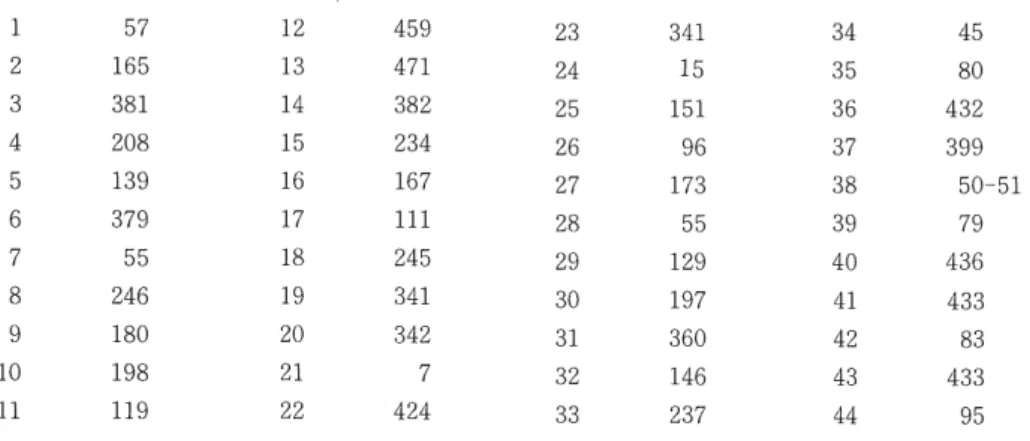
(20) The Certainty of the Inscrutabilities. been rather embarrassing. For, 'to most of the great works of humanity, their authors had given, not weeks and months, not years and years, but their wholly surrendered and dedicated lives431)'. Furthermore, 'no one great book must ever be separately regarded, and permitted to domineer with its own uniqueness upon the creative mind', but 'all existing great works must be federated in the fancy ; and so regarded as a miscellaneous and Pantheistic whole4321'. No one single book is complete in itself. 'Nor book, nor author of the book' of Life, 'hath any. sequel, though each hath its last lettering43^'. In the light of 'the universal lurking insincerity of even the greatest and purest written thoughts43'0', every great book, whether it be 'the Apocalypse435'','the Inferno of Dante436)>, or the Moby Dick of Melville, is, 'after all, but a thing. of breath, evoked by the wanton magic of a creative hand, and as wantonly dismissed at last into endless halls of hell and night 7)>. 'But deep volcanoes long burn, ere they burn out438)> ;. which is the only honour to all the great books in the world, for they are 'but the mutilated shadowings-forth of invisible and eternally unembodied images in the soul439)'. The Hamlet of Shakespeare, 'the English tragedy is but Egyptian M^emnon, Montaignised and modernised; for being but a mortal man Shakespeare had his fathers too440)>. 'Our God is a jealous God441>>, and. Melville must not be superhumanly great to us. 'With the soul of an Atheist, he wrote down the godliest things ; with the feeling of death and misery in him, he created forms of gladness and life442)'. 'Well, life's a burden, they say ; why not be burdened cheerily?443)' Oh, do you see 'our soul's arches'; 'beneath yon skyey load of majesty', they 'prevent the upper arch from falling on us with unsustainable inscrutableness444)>. And, significantly enough, our soul's arches, like our soul's temple, need renewing with words, and that always.. Table of Quotation Pages The book for all the quotations in this article is Herman Melville, Pierre; or, The Ambiguities (New York: Grove Press, 1957). The following table shows the pages in the book which correspond to the quotation numbers respectively.. 1. 57. 12. 459. 2. 165. 13. 471. 3. 381. 14. 382. 4. 208. 15. 234. 5. 139. 16. 167. 6. 379. 17. Ill. 7. 55. 18. 245. 8. 246. 19. 341. 9. 180. 20. 342. 10. 198. 21. 7. 11. 119. 22. 424. 45. 341. 34. 24. 15. 35. 80. 25. 151. 36. 432. 26. 96. 37. 399. 27. 173. 38. 28. 55. 39. 79. 29. 129. 40. 436. 30. 197. 41. 433. 31. 360. 42. 83. 32. 146. 43. 433. 33. 237. 44. 95. 23. 50-51. 91.
(21) Fumio AYABE. 45. 147. 46. 123. 47. 456-57. 48. 50. 49. 214. 50. 32. 51. 46. 52. 113. 53. 282. 54. 57. 55. 74. 56. 126. 57. 167. 58. 410. 59. 365. 60. 200. 61. 82. 62. 45. 63. 403. 64. 275. 65. 45. 66. 2. 67. 282. 68. 47. 69. 491. 70. 260. 300. 135. 349. 180. 91. 363. 136. 234. 181. 464. 92. 13. 137. 392. 182. 252. 93. 348. 138. 480. 183. 365. 94. 275. 139. 409. 184. 288. 95. 8. 140. 222. 185. 142. 96. 141. 96. 186. 431. 97. 89 381. 142. 290. 187. 170. 98. 93. 143. 445. 188. 173. 189. 175. 190. 288. 96. 99. 355. 144. 48. 100. 109. 145. 450. 101. 324. 146. 155. 191. 266. 102. 340. 147. 299. 192. 460. 31. 193. 468. 194. 285. 103. 148. 372. 104. 388-89. 149. 272. 105. 224. 150. 96. 195. 138. 106. 72. 151. 11. 196. 249. 107. 143. 152. 70 102. 197. 396. 153. 198. 386 95. 108. 97-98. 109. 230. 154. 143. 199. 110. 144. 155. 416. 200. 177. Ill. 117. 156. 299. 201. 117-18. 112. 143. 157. 293. 202. 205. 113. 299. 158. 245. 203. 207. 114. 192. 159. 236. 204. 425. 231. 205. 372. 115. 364. 160. 71. 146. 116. 189. 206. 205. 472. 122. 421. 117. 161. 72. 162. 310. 207. 120. 73. 403. 118. 290. 402. 208. 45. 74. 421-22. 119. 236. 163 164. 115. 209. 386. 75. 120. 294. 165. 116. 210. 126. 76. 372 418. 121. 300. 166. 69. 211. 70. 77. 290. 122. 292. 167. 246. 212. 381. 78. 472. 123. 389. 168. 213. 159. 233. 124. 267. 79. 106. 169. 368. 214. 64. 80. 150. 125. 377. 170. 149. 215. 411. 81. 445. 126. 372. 171. 125. 216. 159. 82. 441. 127. 135. 172. 413. 217. 156. 128. 372. 173. 438. 218. 122. 129. 422. 174. 220. 219. 130. 421. 175. 396. 220. 441 424. 43. 221. 174 175. 83. 92. 90. 196. 84. 323. 85. 385. 86. 194. 131. 364-65. 176. 87. 469. 132. 422. 177. 84. 222. 88. 298. 133. 233. 178. 303. 223. 194. 89. 364. 134. 314. 179. 34. 224. 469.
(22) The Certainty of the Inscrutabilities. 148. 225. 421. 270. 424. 315. 57. 360. 226. 253. 271. 149. 316. 81. 361. 151. 227. 58. 272. 126. 317. 187. 362. 415. 228. 45. 273. 309. 318. 257. 363. 382. 229. 64. 274. 195. 319. 302. 364. 244. 230. 57. 275. 244. 320. 489. 365. 191. 231. 84. 276. 233. 321. 500. 366. 471. 232. 129. 277. 248. 322. 245. 367. 238. 233. 231. 278. 139. 323. 191. 368. 312. 16. 369. 400. 234. 237. 279. 9. 324. 235. 274. 280. 72. 325. 432. 370. 34. 236. 422. 281. 436. 326. 196. 371. 151. 237. 313. 282. 360. 327. 488. 372. 234. 238. 357. 283. 254. 328. 90. 373. 45. 92. 329. 423. 374. 116. 303. 284. 240. 25. 285. 192. 330. 275. 375. 241. 467. 286 287. 291. 331. 398. 376. 490-91. 361. 332. 380. 377. 236. 317. 333. 313. 378. 90. 239. 34. 242. 313. 243. 468. 288. 244. 253. 289. 472. 334. 69. 379. 232. 245. 67. 290. 385. 335. 354. 358. 252. 291. 189. 336. 408. 380. 246. 381. 377. 247. 94. 292. 91. 337. 407. 382. 199. 248. 146. 293. 471. 338. 17. 383. 387. 249. 317. 294. 199. 339. 381. 384. 473. 340. 72. 250. 51. 295. 502. 251. 234. 296. 284. 341. 1. 252. 216. 297. 96. 342. 471. 253. 171-72. 298. 453. 343. 209. 344. 82. 345. 88. 254. 90. 299. 284. 255. 246. 300. 147. 256. 290. 301. 171. 257. 125. 302. 198. 258. 397. 303. 122. 259. 320. 304. 378. 260. 417. 305. 437. 261. 364. 306. 187. 262. 418. 307. 1. 263. 129-30. 308. 284. 264. 227. 309. 148. 265. 167. 310. 223. 266. 45. 267. 232. 268 269. 385. 215. 386. 397. 387. 30. 388. 9. 389. 412. 390. 479. 391. 476 358. 346. 94. 347. 127. 348. 422. 392 393. 349. 127. 394. 467. 350. 116. 395. 471. 351. 424. 396. 368. 89. 352. 244. 397. 348. 353. 328. 398. 472 425. 354. 123. 399. 355. 200. 400. 199. 356. 89. 401. 377. 311 312. 244. 357. 247. 402. 349. 497. 313. 469. 358. 432. 403. 236. 291. 314. 23. 359. 93. 404. 129. 67-68. 93.
(23) Fumio AYABE. 405. 390. 415. 208. 425. 505. 435. 381. 406. 361. 416. 90. 426. 411. 436. 235. 407. 363. 417. 361. 427. 463. 437. 237. 408. 372. 418. 177. 428. 485. 438. 272. 409. 252. 419. 50. 429. 408. 439. 395. 410. 424-25. 420. 267. 430. 409. 440. 191. 411. 425. 421. 191. 431. 471. 441. 364. 412. 361. 422. 485-86. 432. 395. 442. 413. 472. 359. 423. 245. 433. 502. 443. 414. 424. 29. 4Fr. 273. 434. 472. 444. 70. August, 1980 ^?^, Professor of English Literature Hokkaido University of Education, Sapporo, Japan. 94.
(24)
図
関連したドキュメント
Therefore, in these kinds studies, we want to observe if the growth curves can be represented by a cubic, quadratic or linear polynomial in time, and if the response surface can
Therefore to find conditions which guarantee that singular homoclinic solutions do not exist while φ − 1 ∈ / Lip loc ( R ) is an open problem and we plan to solve it in our next
The variational constant formula plays an important role in the study of the stability, existence of bounded solutions and the asymptotic behavior of non linear ordinary
In this article we prove the following result: if two 2-dimensional 2-homogeneous rational vector fields commute, then either both vector fields can be explicitly integrated to
So, it appears that extending the skew Howe duality phenomenon to the affine case by evaluation representation gives a coherent process, but is too weak to recover the skein module
Actually it can be seen that all the characterizations of A ≤ ∗ B listed in Theorem 2.1 have singular value analogies in the general case..
While our Code does not cover all of the legal or ethical situations that we might face, it embodies ethical guidelines for each of us to apply in our day-to-day business
Where a rate range is given, the higher rates should be used (a) in fields with a history of severe weed pressure, (b) when the time between early preplant tank-mix and
