
JAIST Repository: 創発するパプア部族統治 ~社会的知識創造の事例研究
243
0
0
全文
(2) The Emergence of Papuan Tribal Governance: A Case Study of Societal Knowledge Creation. by Totok Hari Wibowo. Submitted to Japan Advanced Institute of Science and Technology In partial fulfillment of the requirements For the degree of Doctor of Philosophy. Supervisor: Professor Dr. Katsuhiro Umemoto School of Knowledge Science Japan Advanced Institute of Science and Technology June 2005 Copyleft. 2005 by Totok Hari Wibowo.
(3) STATEMENT BY AUTHOR This dissertation has been submitted in partial fulfillment of the requirements for an advanced degree at Japan Advanced Institute of Science and Technology and is deposited in the Institute Library to be made available to borrowers under rules of the Library. Quotations from this manuscript in whole or in part are allowable without special permission, provided that accurate acknowledgment of the copyleft holder is made. It is the Author’s hope that this work will spawn new ideas for research.. ii.
(4) ACKNOWLEDGMENTS It has been an exceptional journey - one that I had never dreamed of before. My research track was started right after I became a graduate student in 2001, when I was accepted by Dr. Katsuhiro Umemoto at the Japan Advanced Institute of Science and Technology in Tatsunokuchi, Ishikawa. I am deeply indebted to Dr. Umemoto for his encouragement, advice, mentoring, and research support throughout my doctoral studies. I also truly appreciate his patience and tolerance during my numerous mishaps. This dissertation is part of the research carried out through his vision throughout the last four years. I regard myself fortunate to have the opportunity to work with a group of enthusiastic people in Dr. Umemoto’s Social System Lab. I have enjoyed every moment that we have worked together including all those late night lab activities. Former and present Umemoto Lab members have taught me many things about life and research. I appreciate their friendship and their collective encouragement to me in the pursuit of finishing this dissertation. I want especially to thank Shunji Iwatsuki, for his continued support, friendship and openness to share his wisdom; Go Kamada, Masaki Ogushi and Satoshi Suenaga, for their help and friendship; Marcelo Machado, Tunc Medeni and Andre Saito for their suggestions and friendship. My fieldwork might not be possible without support from people whom I would like to direct my thanks to: Decky Rumaropen for his hospitality, openness, and sharing his experience; Agus Sumule for offering me place to stay, his hospitality and his wisdom; Thaha Alhamid, Beni Giay, Theo van de Broek and Deny Yomaki, for their hospitality, openness and sharing of their experiences and ideas. My thanks also go to the members of my evaluation committee: Prof. Yoshio Kawamura, Prof. Shuji Kondou, Prof. Yasuo Ikawa and Associate Prof. Ryoko Toyama for reading previous drafts of this dissertation and providing many valuable comments that improved the presentation and contents of this dissertation. This research has been partially supported by the Grants from Murata Foundation and Rotary Yoneyama Foundation during the final year of my study.. iii.
(5) Getting Ph.D. however, is like getting any other success. It is only possible due to the contribution of many people, which numbers greatly exceed the allotted space for that purpose. For those whose names I do not mention here, please forgive me. For you also I would like to direct my sincere thank. Finally, it is impossible to have my research done without my family’s love and support, as well as my parent’s encouragement. This dissertation is dedicated to them. To all of you, thank you.. iv.
(6) DEDICATION This dissertation is a result of collective efforts from my family and parents. They often gave me valuable advice, reminders, and wisdom about life, when I had hard time understanding. However, they always give me room to explore and make mistakes. This dissertation is dedicated to my family, who has to endure my constant absence, who have given their love, understanding and support, and who never give up their hope of togetherness. A special appreciation goes to Wita Purwasih, my beloved wife, who sometimes had to make long nights to deal with our two ‘saru-sans’, Adisti and Icha and households; who often anxiously reminded me of not working hard enough, who herself also a doctoral student with her own obligation. A combination of student and family life is hard, but never hard enough to her. I am indebted for her continued support, patient, friendship, caring and love. Throughout my four plus years studentship at JAIST, I have always accompanied by Adisti and Icha, my two lovely ‘saru-sans’, who live their precious lives in a mixed culture. Their fights, cries, giggles and laughter have colored my days, made the days better enjoyable, and lighten unbearable. They have taught me how to live a life, love, and feel; these, in turn, become the catalyst to my desire of finishing this dissertation. This dissertation is also dedicated to my parents, who have given me all their love and support and let me freely do whatever I want. Special devotion goes to my late mother, who passed away while I was at the height of my study. Without them, there was no way that I could possibly have accomplished this. Their understanding on the value of education is truly beyond my comprehension. I am just a lucky beneficiary. Along the way, my sister Sri Wibawanti has also shared her caring thought. I truly thank all of them from the bottom of my heart.. v.
(7) ABSTRACT. The Emergence of Papuan Tribal Governance: A Case Study of Societal Knowledge Creation Key words: societal knowledge creation, social movement, institutional theory, selfgovernance, boundary spanner, knowledgeable outsider. This case study of the emergence of Papuan tribal governance examines the process of production-and-reproduction of new institution through societal knowledge creation, thereby answering the major research question: “Why and how has the Papuan tribal governance emerged?” Drawing on recent advances in the studies of social movements, self-governance, boundary spanner, and Papuan movements; the followings were found: (1) Papuan movements emerge as a reaction to the disagreement between civil society and social order, and aim at a social change. (2) There is no past research on the emergence of Papuan tribal governance as an entry to draw a model of societal knowledge creation. The study presents a chronological analysis tracing the process of how the ideas and policies constructing the new reality came into being, including the key-roles played by knowledgeable outsiders as boundary spanner. Further, this study discusses issues of re-scaling resource and environmental politics in the region, and the extent to which challenges have been advancing from sub-national to national development agendas. The case analysis found the followings: (1) The Papuan’s determination to revise their primordial concept of continuity with new worldview is the fundamental antecedent for change. (2) There are patterns of interdependencies between Identities, Social capital, and Sense of place. (3) The Papuan, being obedience to their sacred value system, has made reflection on their being, and decided to bring some adjustment to it through a process of self-knowledge creation. (4) There is evident of the involvement of knowledgeable outsiders in the preparation phase of the Special Autonomy Law. (5) Two important outcomes of the process of societal knowledge creation are the PDP or the Papua Presidium Council and the Law nr. 21/2001 on. vi.
(8) Special Autonomy. (6) The Papuan tribal governance is characterized by better public involvement in policy process that has resulted in better accommodation of public initiatives. (7) There need not be ‘identity behind the action’, but that the ‘identity’ is variably constructed in and through the societal knowledge creation process. As a theoretical implication, this study proposes a model of societal knowledge creation, which works as follows: (1) Antecedents, which is interconnected with outcomes (structure) and identity, which comprises of residual sense of place, and social capital, initiate a recursive process of agenda setting, direction setting, and structuring. (2) The process stage involves agenda setting, direction setting followed with structuring, whereby each are feedback-linked to the earlier step. This stage begins to work after receiving a hint from antecedent, while interconnected with identity. (3) The final end of process, the structuring stage produces outcomes, which is interconnected with identity and antecedents, implies formal processes of policymaking. As practical implications, this study found that the Umbrella Institutions are a product of societal knowledge creation, and the Special Autonomy Law is a product of the Umbrella Institutions through a process of societal knowledge creation. Further, references toward multiculturalism are given as follows: (1) It is imperative to distinguish policies that promote tolerance for cultural pluralism from those which cause divisions. (2) Introduce a scheme of ‘handicap’ for a better equity, which aims to increase the number of minorities in mainstream. (3) A ‘handicap’ system offers grace period for minority group to deal with its backwardness and catch up with development. (4) An integrative policy should replace ‘handicap’ system to help minorities integrate into the mainstream after the ‘handicap’ system expired. (5) It is important to distinguish that in some cases, the absence of neutrality is unfair to ethnic minorities, while in other cases it is either perfectly fair or unavoidable. This study suggests the following future research: (1) Baseline research on the key component of societal knowledge creation, which comprising of: (a) the identification of acts needed to improve policy area, which aim at improving indigenous peoples’ life being; (b) Study on the antecedents; and (2) Evaluation of the success of societal knowledge processes in terms of their impacts on the well being of the people concerned.. vii.
(9) TABLE OF CONTENT Chapter. Page. Title Page. i. Statement by Author. ii. Acknowledgement. iii. Dedication. v. Abstract. vi. Table of Contents. viii. List of Tables. xii. List of Figures. xiii. ABBREVIATIONS AND GLOSSARY. xiv. Chapter I. INTRODUCTION. 1. 1. 1. A General Overview of the Study Area. 2. 1. 2. Significance of the Study. 4. 1. 3. Problem Statements. 5. 1. 4. Scope of the Study. 5. 1. 5. Research Questions. 6. 1. 6. Research Objectives. 7. 1. 7. Research Methods. 7. 1. 8. Organization of the Study. 9. Chapter II. LITERATURE REVIEW. 10. 2. 1. Introduction. 10. 2. 2. Theories and Models of Social Movement. 10. 2. 3. Sources of Social Movement. 13. 2. 3. 1. Social Change. 13. 2. 3. 2. Domination in the Society. 14. 2. 3. 3. Ethnic Identity and Citizenship. 16. 2. 3. 4. Toward Multicultural Society. 20. 2. 4. Learning Dimension of Social Movement. 20. 2. 4. 1. Modus of action. 20 viii.
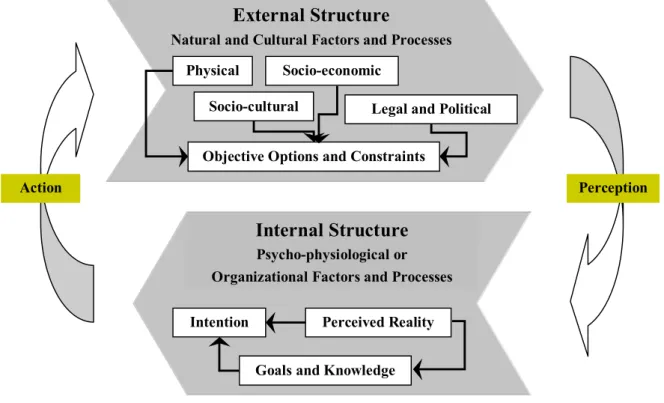
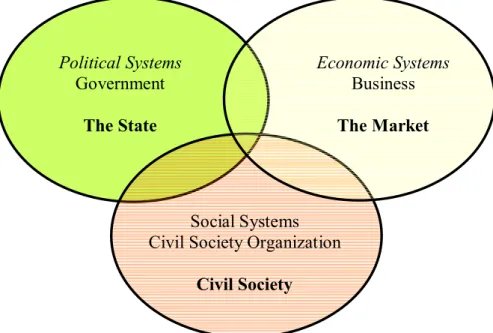
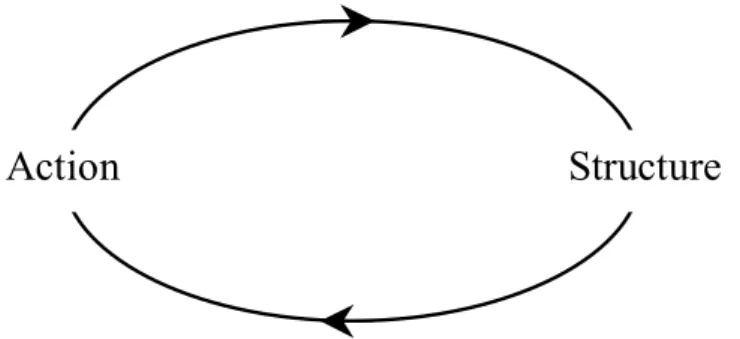
(10) 2. 4. 2. Model of Human Action. 24. 2. 4. 3. Cognitive Aspect of Social Movements. 25. 2. 4. 4. The Concept of Societal Learning. 27. 2. 4. 5. Institutionalization. 28. 2. 4. 6. Theory of Structuration. 29. 2. 4. 7. Theory of Knowledge Creation. 33. 2. 4. 8. Argyris and Schön’s Theory on Learning. 39. 2. 5. Governance. 39. 2. 6. Boundary Spanner. 42. 2. 7. Papuan Movements in Context. 44. 2. 8. Conclusions. 48. Chapter III. HISTORICAL BACKGROUND. 51. 3. 1. Introduction. 51. 3. 2. The Fragmented Communities. 52. 3. 2. 1. The Papuan Realm. 52. 3. 2. 2. The System of Belief. 52. 3. 2. 3. The Papuan Worldview. 54. 3. 3. Antecedents Leading to Aspiration for Independence. 55. 3. 3. 1. Event in History. 55. 3. 3. 1. 1. Pre-condition phase 1961-1969. 56. 3. 3. 1. 2. Period 1970-1990: Learning process 1970-1990. 57. 3. 3. 1. 3. From 1991 until 1998: Consolidation & Adaptation. 59. 3. 3. 1. 4. From 1999 until to day: Institutional Building. 60. 3. 3. 2. Changes. 60. 3. 3. 2. 1. Social and Demographic Change: Transmigration. 61. 3. 3. 2. 2. Environmental Change. 63. 3. 4. Institutional Arrangement. 67. 3. 4. 1. Decentralization in Indonesia. 68. 3. 4. 2. Focus on Papua. 71. 3. 4. 3. Summary of Institutional Arrangements. 74. 3. 5. Brief History of Papuan Movements. 82. 3. 6. Conclusions. 84. ix.
(11) Chapter IV. CASE ANALYSIS. 85. 4. 1. Introduction. 87. 4. 2. Grass-root reality: various learning processes. 88. 4. 3. Political Reality. 93. 4. 3. 1. OPM from 1964 to date. 93. 4. 3. 2. The Establishment of PDP. 98. 4. 4. Structuration: The Process of Law Making. 107. 4. 5. Potentials for Conflicts: Impetus for new Cycle of Learning. 111. 4. 6. Business Corporation Reality. 115. 4. 6. 1. Logging Business. 115. 4. 6. 2. Mining Business. 116. 4. 6. 3. Impacts. 122. 4. 6. 4. The Security Forces. 122. 4. 7. The Role of Boundary Spanner. 123. 4. 8. Conclusions. 126. Chapter V. CONCLUSIONS. 131. 5. 1. Introduction. 131. 5. 2. Summary of Findings. 131. 5. 2. 1. Answering SRQ 1. 135. 5. 2. 2. Answering SRQ 2. 137. 5. 2. 3. Answering SRQ 3. 139. 5. 2. 4. Answering SRQ 4. 140. 5. 3. Theoretical Implications. 141. 5. 3. 1. A Model of Societal Knowledge Creation. 141. 5. 3. 2. How the Model Works. 143. 5. 4. Policy Implications. 147. 5. 5. Suggestions for Future Research. 149. REFERENCES. 151. Appendix 1. Timeline of Papuan History. 173. Appendix 2. New York Agreement and Rome Agreement. 184. Appendix 3. Papuan Congress II Resolution. 193. x.
(12) Appendix 4. Autonomy Law No. 21 Year 2001. 196. Appendix 5. List of Interviewees. 221. xi.
(13) LIST OF TABLES. Table 2. 1. General Strategies for Facilitating or Inhibiting a Social Movement. 12. Table 3. 1. Key Changes in Indonesian Local Autonomy Laws. 70. Table 3. 2. Comparison of UU No. 45/1999 and UU No. 21/2001. 78. xii.
(14) LIST OF FIGURES. Figure 1. 1. Map of Papua Province. 1. Figure 1. 2. Languages in Papua. 3. Figure 2. 1. Model of Human Action. 24. Figure 2. 2. Three Key Systems in Society. 27. Figure 2. 3. Mechanism of Structuration. 30. Figure 2. 4. Time - Space Dimension of the Process of Structuration. 33. Figure 2. 5. Nonaka’s SECI Model. 35. Figure 2. 6. Interconnectedness of Context and Understanding. 36. Figure 2. 7. Umemoto’s EASI Model of Knowledge Creation. 37. Figure 2. 8. ‘Ba’, the Shared Context. 38. Figure 2. 9. Single and double-loop learning. 39. Figure 2. 10. The Nature of Boundary-Spanning Roles. 43. Figure 2. 11. Mechanism of Social Movement. 49. Figure 3. 1. New Resettlement Site in Prafi, Manokwari. 61. Figure 4. 1. Knowledge Rediscovery Resource Mechanism. 129. Figure 5. 1. A Model of Societal Knowledge Creation. 142. xiii.
(15) ABBREVIATIONS AND GLOSSARY ABRI (Angkatan Bersenjata Republik Indonesia). Indonesian Armed Forces. APBD (Anggaran Pendapatan dan Belanja Daerah). Budget of the autonomous regions. APBN (Anggaran Pendapatan dan Belanja Nasional). Central government budget. AR (Autonomous Regions). The Law No. 5 (1974) formed AR on the level of the provinces (First Level Autonomous Region) and on the level of the regencies/ municipalities (Second Level Autonomous Region). AR have a certain jurisdiction of their own, own sources of revenue (like local taxes) and a Regional House of Representatives. ARG (Autonomous Regional Government). The ARG consists of the Kepala Daerah or Regional Chief as highest representative of the regions, and the DPRD or Regional House of Representatives. BAPPEDA (Badan Perencanaan Pembangunan Daerah). Regional Development Planning Board, regional equivalent of BAPPENAS, element of the regional administration. BAPPENAS (Badan Perancanaan Pembangunan Nasional). National Development Planning Board. Nondepartmental institution (LPND) in charge of preparing the annual development budget and the Five-Year Development Plan (Repelita). Bhinneka Tunggal Ika. “Unity in Diversity”. National motto that reflects the wish for national unity despite the huge cultural, religious, social and economic differences between the various ethnic groups and regions in Indonesia. BPS (Biro Pusat Statistik). Central Bureau of Statistics. One of the LPND. BRIMOB (Brigade Mobil). Police Mobile Brigade. Bupati. Head of a kabupaten, as such simultaneously head of the autonomous regional government (Kepala Daerah) and head of the wilayah administration. The bupati represents directly the President at the kabupaten level.. Camat. Head of the kecamatan administrative tier below the kabupaten level. Career civil servant. Official usage of the term kecamatan has declined in recent years and been replaced by the term district.. Daerah. Literally “region”. In the terminology of the Indonesian public administration, daerah stands for two levels of the autonomous regions as defined in the Law No.5 (1974) on regional administration.. Daerah administrasi. Administrative apparatus of the daerah-government, consisting of technical agencies (dinas), xiv.
(16) implementation units (UPD, UPDT), regional enterprises (BUMD), and the regional BAPPEDA Dati I (Daerah Tingkat I). First Level Autonomous Region. Its territory is identical with the provinces. Dati II (Daerah Tingkat II). Second level autonomous regions. Its territory is identical with the kabupaten or the kotamadya. Democracy Pancasila. Term used to describe the political system under the “New Order”-government of President Suharto. The government describes “demokrasi pancasila” as “government from the people, by the people and for the people”. Dep.; Dept.; (Departemen). Department; Main institution of the central government. Depdagri (Departemen Dalam Negri). Ministry of Home Affairs. Desa. Village, Sub-district. Dewan. Literally board or council. District. Kecamatan. This is the administrative and political unit below the kabupaten / municipal / regency / “Second Level Autonomous Region” (Pemda Tingkat II) level. In the past few years, this term has come to replace kecamatan in official discourse.. DOM (Daerah Operasi Militer). Military Operational Zone. DPR (Dewan Perwakilan Rakyat). House of Representatives. The working parliament of the Indonesian Republic and one of the lembaga tinggi negara - the State’s High Institutions. DPRD I and II (Dewan Perwakilan Rakyat Daerah Tingkat I and II). Regional House of Representatives. Representative body at the levels of the autonomous regions, which forms a constituent part of the regional government.. FORERI (Forum Rekonsiliasi untuk Rakyat Irian Jaya). Forum for Reconciliation of the People of West Papua/Irian Jaya. FPKPB (Front Persiapan Kemerdekaan Papua Barat). Independence Preparatory Front for West Papua. GBHN (Garis-Garis Besar Haluan Negara). Broad Guideline of State Policy. The GBHN are approved by the MPR every five years at the beginning of the presidential term, and constitute the political program of the administration during these five years. The GBHN are the framework for the formulation of the Repelita and the annual budgets. GDP. Gross Domestic Product. GNP. Gross National Product. GOI. Government of Indonesia. xv.
(17) Hankam (pertahanan keamanan). Defense and security. INPRES (Instruksi Presiden). Presidential Instruction. Administrative directive of the President. Kabupaten. Regency. Administrative and political unit below the provincial level / the “First Level Autonomous Region”. Kabupaten is a Pemda Tingkat II or “Second Level Autonomous Region”. KANDEP (Kantor departemen). Local office (vertical institution) of a central government department at the Dati II level. KANWIL (Kanwil, Kantor wilayah). Provincial office (vertical institution) of a central government department. Kecamatan. District, Administrative level below the kabupaten. Part of the wilayah administration, and headed by the Camat Lit. “Big family”. A concept to describe that the relationship between the staff of an institution or firm are not only functional, but like between members of one family. Official usage of the term kecamatan has declined in recent years and been replaced by the term district.. Kelurahan. Urban village, Sub-district. Kepala Daerah. Head of an autonomous region. Kepala desa. Village Head. Non-career civil servant like the Camat but elected by the population and then appointed by the Bupati.. KEPPRES (Keputusan Presiden). Presidential Decision. Executive order from the President to the administration. Keputusan Tata Usaha Negara. Decision of the state administration which is based on public law, and which can be contested by a natural or legal person in the administrative court if the rights of that person are infringed by the keputusan.. KODIM (Komando Distrik Militer). District Military Command. KOMNAS HAM. National Commission on Human Rights. KOPASSUS. Army’s Special Force. KOREM (Komando Resort Militer). Regional Military Command. Kota administratif. Lit. “Administrative municipality”. A KA is still part of the kabupaten or the province, but has already received substantial responsibility for the implementation of governmental matters. Usually, the status of KA preludes the establishment as kotamadya. xvi.
(18) Kotamadya. Municipality. Like the kabupaten, the municipality constitutes the “Second Level Autonomous Region”. KPKPB (Komite Persiapan Kemerdekaan Papua Barat). Preparatory Committee for the Independence of West Papua. LEMASA (Lembaga Musyawarah Adat Suku Amungme). Traditional Consultation Council of the Amungme Tribe. LKMD (Lembaga Ketahanan Masyarakat Desa). Village committee which discusses and approves proposals for village development projects. Local government. Autonomous regional government. LPND (Lembaga Pemerintah Non-Departemen). Non-departmental, specialized agencies of the central government which often report directly to the President. Lurah. Head of the kelurahan. Non-career civil servant like the Camat but elected by the population and then appointed by the Bupati.. Mekanisme Kepemimpinan Nasional. National Leadership Mechanism. The NLM describes the five year cycle of 1. general election to the member of DPR, 2. the election of the President, 3. approval of the GBHN and its 4. annual implementation. MPR (Majelis Permusyarawatan Rakyat). People’s Consultative Assembly. The MPR is the highest state organ which elects the President and the Vice-President, and which determines the policies of the government in the form of the GBHN. The MPR consists of the members of the DPR, representatives of the provinces and delegates appointed by the president. It meets usually every five years at the beginning of the Mekanisme Kepemimpinan Nasional.. NICA. Netherlands Indies Colonial Administration. NLC. National Liberation Council of West Papua. OPM (Organisasi Papua Merdeka). Free Papua Movement. OPSUS (Operasi Khusus). Special Operations Section of Indonesian military.. Orba (Orde Baru). New Order. Period since 1966 when Suharto replaced Sukarno as president until his demise in 1997.. Orla (Orde Lama). Old Order. Term used for the political period before 1966 under Indonesia’s first president, Sukarno, which in its last years was characterized by economic recession and political instability.. Otda (Otonomi daerah). Regional autonomy. Describes those areas of government and administration which fall under the jurisdiction and competence of the Daerah-government. Otsus (Otonomi Khusus). Special Autonomy. Denotes the special forms of xvii.
(19) autonomy granted to the provinces of Aceh and Papua (Irian Jaya). PAD (Pendapatan Asli Daerah). Locally raised revenue of the Daerah-governments. Pancasila. Official state ideology of Indonesia. Pancasila consists of five principles: 1) Belief in the One and Only God, 2) Just and civilized humanity, 3) The unity of Indonesia, 4) Democracy guided by the inner wisdom of deliberations of representatives, 5) Social justice for all the Indonesian people National Liberation Army, The military wing of the PEMKA group, also called TEPENAL.. PAPENAL (Pasukan Pembebasan Nasional) PBB (Pajak Bumi dam Bangunan). Land and Building Tax. The PBB is collected by the central government and redistributed to the autonomous regions as their own funds. The PBB is the most important element of the PAD. PDP (Presidium Dewan Papua). Papua Presidium Council. Pejabat negara. Politically elected or appointed functionary. Examples are the president, the ministers, the members of the MPR and the DPR, and the Kepala Daerah. PELITA. Pembangunan Lima Tahun (Five Years Development). Pemda Tingkat I (Pemerintah Daerah Tk. I). Government of the First Level Autonomous Region. Formally the p. consists of the Kepala Daerah and the DPRD I. Pemda Tingkat II (Pemerintah Daerah Tk. II). Government of the Second Level Autonomous Region. Formally the p. consists of the Kepala Daerah and the DPRD II. Pemerintah Daerah. Government of an autonomous region. It consists of the DPRD and the Kepala Daerah. Pemerintah Daerah. Regional government. Pemerintah pusat. Central (national) government. PEPERA (Penentuan Pendapat Rakyat). Decision of Public Opinion. Perda (Peraturan Daerah). Regional Regulation. Legal instrument of the daerahgovernment.. PNS (Pegawai negeri sipil). Civil servant. PNS Daerah. Civil servant of the government of an autonomous region. PNS Pusat. Civil servant of the central government. PP (Peraturan Pemerintah). Government Regulation. Legal instrument, which is one level below a law (UU/undang-undang). Usually the law authorizes the government to detail legislation in the form of a PP. xviii.
(20) Propinsi, provinsi. Province. PT (Perseroan Terbatas). Public limited company. PT. FMI. Freeport McMoran Indonesia Company. PTTN (Pengadilan Tinggi Tata Negara). High State Administrative Court. Second level of the administrative court system.. PTUN (Pengadilan Tata Usaha Negara). State Administrative Court. First level of the administrative court system. PTUN (Peradilan Tata Usaha Negara). Court of the administrative law. PVK (Papua Vrijwilligers Korps). Papua Volunteer Corps. Military force of around 450 West Papuans formed and led by the Dutch in 1960. Disbanded by Indonesia when it took control of West New Guinea. Regional autonomy. R.A. is defined in the Law No. 5 (1974) on regional administration as “the right, the authority and the obligation to manage the region according to the existing statutes”.. Regional government. Pemerintah Daerah (Pemda). Formally the RG consisted of the Kepala Daerah and the DPRD. Repelita (Rencana Pembangunan Lima Tahun). Five-year Development Plan. Repelitada (Rencana Pembangunan Lima Tahun Daerah). Five-year development plan of the autonomous region. RMCOPM. Revolutionary Military Council of the OPM. RPGWP. Revolutionary Provisional Government of West Papua. SK Menteri (Surat Keputusan Menteri). Ministerial decision. SKB (Surat Keputusan Bersama). Joint ministerial decision between two or more ministers. Sub-district. Administrative and political unit below the district (kecamatan). This term replaces the official usage of kampung.. TNI. Indonesian Armed Forces. TPN. Tentara Pembebasan Nasional (National Liberation Forces). UNMO. United Nations Military Observers. Deployed in West New Guinea August to September 1962.. UNRWI. United Nations Representative in West Irian. Position held by Ortiz Sanz during the Act of Free Choice.. xix.
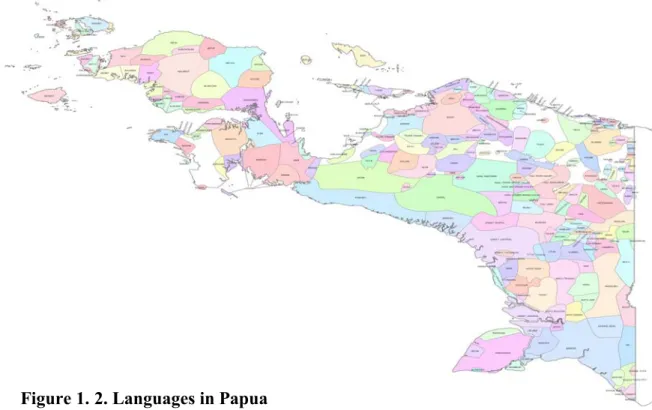
(21) UNSF. United Nations Security Force in West New Guinea during UNTEA. UNTEA. United Nations Temporary Executive Authority. Administered West New Guinea 1 October 1962 to 1 May 1963.. UU (Undang-undang). Law, passed by the DPR. UUD 1945 (Undang-Undang Dasar 1945). Indonesian State Constitution from 1945. Wilayah. Territorial sub-division of the state administration. Its territorial boundaries are identical with the provinces as “first level autonomous regions”. Wilayah-administration. Administrative apparatus of the wilayah, consisting of the instansi vertikal, implementation units (UPW), the regional inspectorate and the BKPMD. WPNC. West Papua National Council. xx.
(22) Chapter One INTRODUCTION Located to the north of Australia, Papua province of Indonesia makes up the western half of the world’s second largest island, New Guinea (see Figure 1. 1). The Papuan Society is changing. It changes along with the major changes that affect the position and role of the Indonesian state, market and civil society, and the interrelations between them. Traditional distinctions and boundaries between these three sectors are questioned. These societal changes are extensively reported in national and international mass media recently. How can indigenous Papuan communities manage these changes? And how can they survive these persistent phenomena? Yet, the future of these communities depends not only on ‘development’, but also on the extent to which people are able to deal with problems and anticipate change. Social and economic shifts have increased pressure on the ability of local people to communicate their aspirations widely, think strategically and decide upon them.. Figure 1. 1. Map of Papua Province 1.
(23) This ability depends on the community’s capability to ‘create knowledge’. With knowledge is justified true belief that increases an entity’s capacity for effective action (Nonaka, 2000), knowledge creation is defined as the extent of a process of reconstructing existing perspectives, frameworks, or premises that results in new knowledge. This case study attempts to explain why and how has the Papuan tribal governance emerged, by examining the underlying factors of learning and adaptation, the role played by its actors, the influence of the rapid changing environment as a result of globalization, and the social movement that comes forth as a result of the interplay between all these factors. This section will describe the significance of this study in terms of what is believed to be the gap of current literature on knowledge creation aspect of social movement in Indonesia, with focus on Papuan movement. These will lead to specific purposes for doing this research. Next, this section will present the conceptual framework used in this case study. Based on what is perceived to be the weaknesses of present Indonesian NGO literature, and in reference to the previously mentioned framework, this section will present the research scope and the main research questions, which helped limit the exploration in order to better contain the stated problem. Finally, this section will present the research design, which was of an explorative and emergent nature. 1. 1. A General Overview of the Study Area Geography Consisting of ca. 419,580 sq km of land area and a number of offshore islands, Papua (formerly Irian Jaya) is Indonesia’s largest province. The capital is Jayapura or Port Numbay. Papua is a rugged, densely forested region, with snow-capped mountains rising to over 5,000 m. Papua possesses remarkable geological and biological characteristics with ecosystems ranging from coral reefs and lowland swamps to high altitude mountain rainforests and tropical glaciers rising, make it a highly praised centre of biodiversity. People The indigenous population is of Melanesian descent, markedly different from the Malay inhabitants of the neighboring Indonesian archipelago. The present population of about a million indigenous peoples is distributed in small communities largely isolated from one another by the rugged terrain. While traditional trade has established weak links 2.
(24) between these groups, their relative isolation has given rise to 312 (see Figure 1. 2) mutually unintelligible languages and more than 600 dialects; 15% of the world’s languages are spoken here by just 0.01% of the world’s population (Silzer and Clouse, 1991). Papua province counts about 30% of its population new settlers from other areas in Indonesia who come over mostly under the Government’s sponsored transmigration program. The island’s indigenous inhabitants, the Papuans, are hunters - foragers that practice low intensity farming.. Figure 1. 2. Languages in Papua Source: Summer Institute of Linguistic International (2003). History The arrival of the first people on the island dates back thousands of years to the time when the whole Pacific region was ethnically Negrito (Giay, 2000). Contacts were established with Javanese seafarers long before the first voyages of discovery by Europeans in the 16th century (see Appendix I). In 1828, the Dutch were the first to make permanent outposts in West Papua, the former name of Papua province. In 1848 the 141st meridian, the markedly straight line dividing the West and East Papua, was established as the border between Dutch and British territorial claims.. 3.
(25) The Japanese invasion in 1942 brought many Papuans to think that they would be liberated from the Dutch. However, massive repression by the Japanese forces soon convinced them otherwise. At the end of the Second World War, mounting resistance to the Dutch led to the creation of an independent Indonesian Territory. The challenge to their commercial interests by a newly independent Indonesia led the Dutch government to secure the creation of an independent West Papuan state in order to preserve control and access to the mineral wealth of the region. From the time of independence in 1945, Jakarta resisted this initiative and claimed sovereignty over West Papua. The dispute ended in 1962 when the U.S. administration exercised pressure on the Dutch, fearing the rise of communism in the region. The resulting New York agreement obliged the Dutch to transfer their control (via the United Nations) to Indonesia. Economy The local economy has been subsistence-based. Early Javanese traders came to the region mostly for exotic items such as birds of paradise. However, the actual economic revolution did not take place until the discovery of the vast wealth of minerals on the island, which began with Dutch geological exploration in 1907. Among the many minerals found, copper has been the most heavily exploited; with Freeport McMoran running the world’s largest copper mine in Timika. 1. 2. Significance of the Study The societal transformation that brings about changes to Indonesian society did serve good impact to certain communities; mainly the communities with the proximity to the center of power, political or economic. Unfortunately, the same transformation does serve anything but good to the indigenous communities in the peri-areas that includes the Papuan. Against these setting, a study on indigenous Papuan movements is important for it is an extreme case. Feagin (1991, p. 232) states, “…social theorists have examined extreme case in order to inform normal case.” Now, as societies invariably move towards the creation of multicultural society, the adoption of multiculturalism is becoming inevitable. For that purpose, the extremely fragmented Papuan society of more than 312 distinct language user. 4.
(26) communities is chosen for it can serve as living laboratory. The society’s dynamic offers lessons to learn. 1. 3. Problem Statements Social movement initiatives are expanding across geographical and cultural boundaries of Papua (Human Rights Watch, July 2001). Recent analyses of such initiatives have highlighted the fact that only a number of these initiatives can be considered successful. Examples for these were reported by the Government in her official documents; by Sumule (2001) on processes leading to the issuance of Special Autonomy Law; and by YPMD - a local NGO in Jayapura in its project reports. Against all expectations however, a July 2001 issue of Human Rights Watch (HRW) and an Online Harvard E-Conference had reported the horror side of such a movement. With many publications wrote on failures, and only few reported the best practices, Osborne (2001, p. 405-410) once mentioned, “…seemingly the Papuan learns more from their failures rather than from successes” and “…couldn’t a collection of worst practices be as useful as best practices?”. Project reports and most studies on Papua looking for causes of civil movement initiatives failure indicate similar finding in that: “…self-organizational culture and the eroding trust between local communities are the main barrier to success. So, it is imperative to address this issue as important precondition.”1 In the preliminary assessment it was found that there is yet little attempt done to explain “Why most of the Papuan movements ended up in failure?” from the perspective of knowledge creation. Moreover, issue on social cognition in Papua seems to remain remote from the mainstream study and research. Having this backdrop, it is thus imperative to derive explanatory study to the above assessment from empirical assessment on the state of the art of the phenomena of Papuan movement. 1. 4. Scope of the Study This study will not examine the horizontal conflict in Papua in such a detailed fashion. Instead, it focuses on occurrences and some highlights, which show traces of knowledge creation in Papuan society. For this effort, much emphasis will be put on grassroots movements and the role of boundary spanner for two reasons: firstly, there are already a. 1. PARUL Sorong project report, 2001 and DP-KTI Interim Report on Progress of KAPET Biak and KAPET Timika, 1999.. 5.
(27) number of studies on Papuan movements focused on elites, in which most of them share the tendency in reducing much the importance of the activity of civil society to the margins. In this attempt, with a believe that ordinary people do make difference and that most of their approach for problem-solving can be related with knowledge creation, we are interested in the idea of the participation of ordinary people to be the agents of change. Secondly, because of the intermingled vested interests and the incapability of the state and her institutions to address intra-state movements of discontented Papuan communities, it is unlikely that the stance of state elites concerning Papua will be altered to support drastic policy change leading to significant societal change of Papua by high-level discussion or lobbying alone. This study will examine societal knowledge creation process in Papua as occurred mainly within the timespan between 1961 to today. However, due to the limited resource and the constraints of time for primary data collection, this study will not attempt a detailed discussion of the various components of the Papuan people movements including: strategy, organization, leadership, communication, program, etc. Important to note that although some of these topics may be briefly mentioned, a detailed exploration of each of these vitally important elements in relation to the Papuan movements is beyond the scope of this study. What this study does discuss is how grassroots action inside and outside Papua can make difference. More precisely, this study assesses the knowledge creation process of how ordinary Papuan tribesmen have been able to quickly adapting themselves to the everchanging local and national political constellation, dictate their agenda, and achieve measurable advancement. For this purpose, this study lays out a strategic framework that could guide analysis and approach the stated problem from various realities. This study argues that a comprehensive societal knowledge creation may dramatically maximize the effectiveness of the movements in Papua. 1. 5. Research Questions This study poses one major research question: Why and how has the Papuan tribal governance emerged? and the following subsidiary questions:. 1) What are the antecedents of Papuan tribal governance? 2) Who are the agents of the movements that lead to the tribal governance, and what are their roles?. 6.
(28) 3) What kind of the learning process occurres in the movements and what are the mechanisms? 4) How has the current context of the movements evolved? 1. 6. Research Objectives The purpose of this study is to examine and assess one type of knowledge creation process as shown in the phenomena of tribal governance in Indonesian province of Papua. 1. 7. Research Methods This study’s primarily concern is to provide answer to why and how of the research questions posed in section 1. 5. According to Yin (2003, p. 5), case study method suits well for the above purpose. Motivated by this suggestion, this study adopts case study research methodology in combination with historical analysis. A case study is an empirical inquiry that investigates contemporary phenomenon within its real-life context, especially when the boundaries between phenomenon and context are not clearly evident. A case study can deal with technically distinctive situation by inquiring on events of interest and their context and referring to multiple sources of evidence, such as documents, interviews, observations, and artifacts; with data needing to converge through data triangulation. Gillham (2000) suggested that since context determines human behavior, thoughts, feeling and meaning, “if we want to understand the people in real life, we have to study them in their context - in the real setting in the way they operate…”(Ibid, p.11). Mazumdar and Geis in Barnartt, e.a (2001, p. 255-275) state that case studies are strong in richness of data, in-depth understanding, depicting the complexity and considering the context. Moreover, they assert, “Case studies often provide a history or a sense of the historical development of the phenomenon being studied… Such histories can lead to a better understanding why things are the way they currently are…” (Ibid, p. 264). Gomm (2000) has classified case studies into the following three types: (1) Intrinsic when the researcher has an interest in the case; (2) Instrumental - when the case is used to understand more than what is obvious to the observer; and (3) Collective - when a group of cases is studied. Yin (2003) presented another classification, i.e., Exploratory, Descriptive, and Explanatory. Based on these classifications, this case study can be regarded as both explanatory as it aims at shedding more light on social phenomena and instrumental for it attempts to understand detailed processes in the social phenomena.. 7.
(29) A strength of case study as a research strategy is triangulation, which can corroborate a fact with more than two sources of evidence. In the early stage of data collection for this study, relevant published documents from secondary sources in the forms of books, newspaper and journal articles were collected first and then followed with collecting unpublished materials such as governmental, corporate, or NGO documents through personal correspondences and through the Internet, and relevant information from several mailing lists regarding Papuan movements. During the stage of data collection, this study assessed the validity of each data by questioning such questions as: Is the document relevant? Are data consistent with those from other sources? How well do the contents cover areas of interests?, etc. While doing this, this study found that document research bore some weaknesses i.e. incomplete, irrelevant, biased, or even falsified. At that point of research, we decided to take more assertive stands, for instance: from initially being a passive member of online discussion group, we change our stance to become a more active member of the list. Information that was collected through document research and the contacts that were made from active participation in online discussion groups proved to be efficient in shaping understanding about the background information and the processes going on in the study area. These also helped to proceed with the second data collection approach: interview. This study adopted open ended or semi-structured interview approach in which topics to be covered were specified in advance but actual ordering and phrasing of questions were improvised on the spot during interview. Itemized questionnaire was prepared but it served merely as checklist for the interviewer to make sure that all relevant topics were covered. Topics of interviews are the same for all interviewees. The interview aims at uncovering information on issues related to: place; natural resource; modus to collaboration; information sources; history and community. On the latter, we put much emphasize to accumulate more detailed information on: perspectives, situations, base values, strategies, outcomes and effects. Interviewees include: NGO representatives, religious serviceman, bureaucrats, academics, tribal leaders and tribal members, political dissidents, and business corporation representatives. Out of the interviewees, some bureaucrats and NGO representatives wished to remain anonymous. We have been able to identify and short-list the prominent resource persons for interview purposes through the earlier document research.. 8.
(30) Validity of an interview is the extent to which it conforms to the evidence from other interview and/or to the evidence from other sources. In attempt to increase validity, efforts were made to cross-check questionable evidence by comparing the results of individual interview with that of others. In some cases, providing contradictory introduction tailored to different interviewees proved to be efficient to quicken the responses to converge. After summarizing and synthesizing evidence from multiple sources into wellstructured and concise accounts of key events, their nature, relationships, and sequences; we analyzed them to find the overall patterns; and only by then we were in a better position to draw the model of societal knowledge creation. 1. 8. Organization of the Study Chapter 2 provides a review of literature relevant to the current study. It begins with reviews on theories and models of social movement, followed with assessment on sources of social movement. Next, this chapter discusses about learning dimension of social movement, governance, boundary spanner and closes with review on Papuan social movement. Chapter 3 illustrates the historical background of this study. This chapter begins by describing the social system in the study area with the aim of clarifying for the reader the particular cultural distinctiveness of the indigenous inhabitants. This is followed with description about history, social system, demographics, local politics and culture of the indigenous Papuan. Chapter 4 analyses and discusses categorical findings and contrasts from interviews with respondents in three observation sites i.e. Jayapura, Biak and Manokwari. This chapter also compiles the main categorical features to draw conclusions and to identify the implications of the movements. Chapter 5 concludes the main findings in the three observation sites. The results are related to the theorizations presented in Chapter 2, and implications are outlined in terms of societal knowledge creation. Some limitations of the study are presented and suggestions for further research are detailed.. 9.
(31) Chapter Two LITERATURE REVIEW 2. 1. Introduction This chapter reviews two strands of literature, about the social movement in general, and the emergence of tribal governance in the Indonesian province of Papua in particular. Specifically, this chapter reviews literature on: theories and models of social movement, sources of social movement, learning dimension of social movement, governance, boundary spanner and Papuan movement. 2. 2. Theories and Models of Social Movement The incidents of social movements are closely connected with the general problems of a society’s development (Blumer, 1969 in Johnston and Klandermans, 1995, p. 180). In which he says, Social movements can be viewed as collective enterprises seeking to establish a new order of life. They have their inception in a condition of unrest, and derive their motive power on one hand from dissatisfaction with the current form of life, and on the other hand, from wishes and hopes for a new system of living… On the same issue Blumer adds, As a social movement develops, it takes on the character of a society. It acquires organization and form, a body of customs and traditions, established leadership, an enduring division of labor, social rules and social values - in short, a culture, a social organization, and a new scheme of life. The career of a social movement depicts the emergence of a new order of life. Social movements, according to Eyerman and Jamison (1991, p. 10), is a form of acting in public, a political performance that involves representation in dramatic form, as movements engage emotions attempting to communicate their messages. Social movements were conceptualized as potentially dangerous forms of non-institutionalized collective political behavior, which if left unattended, threatened the stability of established social system, “Social movements are … best conceived of as temporary public spaces, as moments of collective creation that provide societies with ideas, identities, and even ideals”. 10.
(32) (Ibid, p. 4). Such performance is always public, as it requires an audience, which is addressed and must be moved. Johnston & Klandermans (1995) suggest that in analyzing how movement is performed and what movement means, it is necessary to distinguish three distinct, yet interrelated social spaces in which opposition is performed: an emerging social movement, its opponents and, finally, the general public. In their perspectives, a social movement emerges when groups of distinct individuals sense they are united and moving in the same direction. To achieve this, it is required that collective identity and solidarity must be forged, a process which involves marking off those inside from those outside of the group. Social movements move by transforming identities and emotions, by focusing attention and by directing and coordinating actions (Swidler, 1995). In the perspective of social learning, movements are often driven into existence by cognitively framed emotions, which move individuals and groups to protest, to publicly express and display discontent, engaging in what Tilly (1978, 1997) call ‘contentious’ actions. If sufficient numbers turn out, one may call this a ‘protest event’. Such an occurrence may contain and collect enough energy and coherence to generate similar events in the future, as well as recall the memory of those in the past. This sequence of events can set in motion a process of collective will formation whereby individual identities are fused into collective identities characterized by feelings of group belongingness, solidarity, common purpose, and shared memory. A ‘movement’ is thus, once in motion, has both situational (manifest) and long-lasting (latent) affects (Eyerman and Jamison, 1991, p. 45-65). In the structuralists point of view, there is a set of requirements need to be met for a social movement to begin. These are,”…informal networks based on shared beliefs and solidarity, which mobilize about conflictual issues, through the frequent use of various forms of protest.”2 Social movements are characterized by a low degree of institutionalization, high heterogeneity, a lack of clearly defined boundaries and decision making structures, a volatility matched by few other social phenomena (Acton in Bedou, 1988, p. 15-27). To analyze social movements separately in abstraction from the aggregate social structure is thus not fruitful, as it does not provide a better insight about the nature of social movements. For that reason all the theories of social movements are based on general approaches to the principles of society development. 2. http://www.wsu.edu/~amerstu/smc/apa.html. 11.
(33) External Efforts to Damage or Facilitate Social Movements Eyerman (1991) and Zald (1990) indicate that external factors can influence social movements in two ways, either facilitating or damaging. An example for this is about how an outside group such as the government exerts their power to damage or facilitate a movement. A review of Eyerman’s and Zald’s works suggests a number of broad strategies and specific tactics that have been undertaken to achieve the desired goal. Many of the actions taken with the aim of damaging a movement are the reverse of those taken to enhance a movement. These can be characterized in terms of opposing organizational, tactical, and resource mobilization tasks. The actions of those seeking to further the cause of the social movement lay on the left side of Table 2. 2, and those seeking to damage the movement lay on the right side. Table 2. 1. General Strategies to Facilitate or Inhibit a Social Movement To Facilitate the Movement. To Inhibit the Movement. Facilitate capacity for corporate action. Inhibit capacity for corporate action. Make it possible for energies of movement to go toward pursuit of broader social change goals, as well as maintenance needs. Direct energies of movement of defensive maintenance needs and away from pursuit of broader social goals. Create favorable public image; develop and Create unfavorable public image and support ideology counter-ideology Give information to movement. Gather information on movement. Facilitate supply of money and facilities. Inhibit supply of money and facilities. Facilitate freedom of movement, expression, and action; offer legal immunity. Inhibit freedom of movement, expression, and action; create myth and fact of surveillance and repression; apply legal sanctions. Build and sustain morale. Damage morale. Recruit supporters. Derecruitment. Build leaders. Destroy or displace leaders. Encourage internal solidarity Encourage external coalitions with potential allies and neutral relations (or conflict only insofar as it is functional) with potential opponents. Encourage internal conflict Encourage external conflict with potential allies and opponents. Facilitate particular actions. Inhibit or sabotage particular actions. Adapted from Eyerman (1991) and Zald (1990). 12.
(34) 2. 3. Sources of Social Movement 2. 3. 1. Social Change The term ‘social change’ applies to modifications in social relationships or culture (Johnson, 2000). The same phenomena are called ‘cultural change’ from the perspective of anthropology. However, since society and culture are interdependent, Preston (2000) proposed a new term, which is a combination of the earlier terms, ‘socio-cultural change’. Checkland (1999) emphasizes in a discussion about the difference of Hard - and Soft System Methodologies that a study of socio-cultural change is a systematic study of variation in social and cultural ‘systems’, as there are inherent methodological problems of identification and measurement of change. Checkland also implies that in social and cultural systems, there rarely does one cause produce one effect. All societies are involved in a kind of process of social change; however, this change might have been so evolutionary incremental that the members of the society are hardly aware of it (Geertz, 1973). Individuals living in traditional societies would be in this category (Vygotsky in Cole, 2000; Vygotsky, 1978). Societies are characterized by change: the rate of change, the processes of change, and the directions of change. The actions of individuals, groups, organizations and social movements will have an impact on society and may become the impetus for social change (Arendt, 1968, 1976; Bedou, 1988; Carter, 1990; Eyerman and Jamison, 1991, Gergen and Gergen, 2003; Giddens, 1984). The actions of individuals, however, occur within the context of culture, institutions and power structures inherited from the past. And usually, the society itself is not ready for change for these individuals to effect dramatic social change, (Douglas, 1986; Haferkamp and Smelser, 1992; Johnston and Klandermans, 1995; Melucci, 1996). Properties of development often alter social trends as in the shifts of demographic variables, industrialization, politics and public administration. These shifts can lead to significant social change. In the past, this has been associated with modernization, the process whereby a society moves from traditional, less developed modes of production to technologically advanced industrial modes of production (Malecky, 1997; Rostow, 1990; Sen, 1999). Trends like population growth and urbanization have a significant impact on other aspects of society, like social structure, institutions and culture (Douglass, 1990). Because social change is a continual process, social continuity cannot simply be defined as the absence of social change. Although, nothing “remains the same” in the society, within societies there are structures, which are essentially resistant to change, and 13.
(35) in this sense, we can illustrate them as being the proponents of social continuities (Watzlawick, 1974). Individuals within societies need social continuities to a lesser or greater extent, depending on how significant is their vested interest. Even institutions like the family, the law, and religions are subject to change, even though they represent social continuity (Cole and Wertsch, 2000; Vygotsky, 1978). Social and cultural continuities found evidence in individuals’ habits, in the comfortable patterns of behavior that give individuals a sense of security and personal control over the changing environment (Vygotsky, 1978). There is a high correlation between the rate of social and cultural change and resistance to that change (Cole and Wertsch, 2000; Vobruda, 2000; Watzlawick, 1974). In times when members of a society feel that change tends to be ‘out of control’, it is likely that the desire for continuity becomes more extreme, resulting in backward-looking idealizations of the past (Watzlawick, 1974). While social change itself evolves in continuity, certain periods of human history have created great transformations (Polanyi, 1973), which characterized by: • • • •. the rise of capitalistic economy and growth in production and wealth, new ways of thinking about causation, moving from religious to secular, population growth, immigration and urbanization, a political move to ‘nation’, which involved governments expanding their control to social, economic and cultural life, followed by the extension of that control to other, “less advanced” territory either through military conquest or trade conquest and today, perhaps, characterized by conquest through semiotics and communication.. Varshney (2003), on the prime mover behind social changes asserts, A key sign of the magnitude of the social changes is found in the ways people continued talking about the experience of loss, ‘the world we have lost’. Phrases like ‘the death of God’, ‘demise of the family’, and the ‘loss of community’ reflect the long-standing feelings of mourning and loss that accompanied the modernizing experience. 2. 3. 2. Domination in the Society On how society is structured, Bordieu says that the dominant class is, “…an autonomous space whose structure is defined by the distribution of economic and cultural capital among its members.” There are fractions within each class that correspond to different lifestyles through the habitus. The habitus is a system of choices that are influenced by inherited asset structures.. 14.
(36) All knowledge of the social world is an act of cognition process involving construction and implementing schemes of thought and expression (Korsgaard, 2002; Smelser and Haferkamp, 1992). Between the conditions of ‘struggles for existence’, there intervenes the structuring activity of the agents who respond to the changing environment whose meaning they have helped to produce (habitus). The principle of this structuring activity is not a system of universal categories but a system of internalized schemes that have been constituted locally, collectively and historically, which are acquired in the course of individuals’ practical lives (Eyerman and Jamison, 1991). What is at stake in the struggle about the meaning of the social world is power over the presumed schemes and systems which are the basis of the representations of groups and therefore of their mobilization. Only in and through struggle do the internalized limits become boundaries and barriers that have then to be moved. Just as the dominated and dominant classes oppose each other3, each competing group tries to impose the legitimate principle of domination. The dominant class can only ensure its perpetuation if it can overcome crises that arise from factions competing to impose the dominant principle. Each fraction within the said society or within the dominant class has its own worldviews, mode of living, different interests, and habitus. Their conflicts represent attempts to impose the dominant principle of domination, as well as secure the conversion rate for the type of capital with which each group is provided the best. The dominated are not only dominated in their heads, but they unconsciously reproduce the structures of domination (Bourdieu, 1986, p. 52). Domination (and submission) therefore forms more than a one-way process since cultural, linguistic and other forms of symbolic domination are exerted “not in the pure logic of knowing consciousness but in the obscurity of the dispositions of habitus.” It is the absence of any real sense either of what drives the system to reproduce itself, besides the mechanical process of reproduction itself, which makes the otherwise fruitful concept of habitus appear trapped in a recursive process, as Bourdieu (Ibid, p. 54) put it, “Habitus is thus at the basis of strategies of reproduction that tend to maintain separations, distances, and relations of order, hence concurring in practice in reproducing the entire system of differences constitutive of the social order.” Through the same pattern, the core values of the dominant culture of totalitarianism and hegemony is transferred and preserved (Arendt, 1976), and also purposively managed 3. Fractions within the dominant classes oppose each other as well.. 15.
(37) to become inscribed in the apparently insignificant details of daily lives of the people (Gramsci, 1971 and Strinati, 1995). 2. 3. 3. Ethnic Identity and Citizenship Theory of Ethnicity Developing a sense of self is an essential part of every individual. Each person’s selfconception is a unique subject of various kinds of identifications. Although self-identity seems to coincide with a particular human being, identities are actually much wider than that. They are also collective identities extend to ethnic communities and countries. These identities are constructed on the basis of various traits and experiences (Anderson, 1991). To add to his explanation on the emerging phenomena of ethnicity, Anderson identified the importance of ‘sense of place’ as a building brick for ethnic identity. ‘Sense of place’ is according to Anderson, “…the collection of meanings, beliefs, symbols, values, and feelings that individuals or groups associate with a particular locality.” Some analysts see ethnicity as a primordial phenomenon, which is relatively ancient and static, while other analysts stress that ethnicity is socially constructed, with people choosing a history and common ancestry and creating, as much as discovering, differences from others. Johnson (2000), stresses that what was meant with ‘ethnicity’ is a concept referring to a shared culture or way of life. The importance of the concept of ethnicity is because it is often a major source of social cohesion and social conflict (Ibid, 109; Anderson, 1991). Despite the wide use of the term ‘ethnic identity’ in anthropological literature, it is very difficult to distinguish it in this context from other related concepts, and often it is simply used as a synonym for ‘ethnicity’. Indeed, identity is often taken for granted as a term which does not need to be defined, and is, used to define ethnicity, as in Berger’s (1971) definition: “Ethnicity is a set of conscious or unconscious beliefs or assumption about one’s own or another’s identity, as derived from membership in a particular type of group or category.” Ethnic identity will thus be treated as a conceptualization of one’s membership of an ethnic group. Explanations of ethnic phenomena within sociology can be divided into two categories, which were primordialism and structuralism (Liebkind, 1989). The former views ethnicity irrational, deep-seated loyalties and attachments to kin, territory or religion. The latter, on the contrary, considers ethnicity more or less as false consciousness, or 16.
(38) ideology, which is rationally manipulated or consciously adopted as a strategy for pursuing the political and economic goals of ethnic groups. The instrumental, pragmatic and changeable aspects of ethnicity are emphasized, and ethnic identity is viewed as a rational reaction to social pressure. For the purpose of this study, we consider ethnicity to be largely socially constructed, and that some traits of ethnicity are not easily modified by social processes. Although there are a number of different approaches, which consider ethnic identity from the psychological point of view, it is possible to distinguish some general features. The main feature that we can also find in the anthropological and sociological approaches discussed above is the dualistic character of ethnic identity: from the point of view of the ethnic group as a whole (group ethnic identity) and from the point of view of individual actors (individual ethnic identity). These two levels do not exist in isolation one from another but they influence each other and overlap. The formation of individual and collective consciousness is always interrelated and provides another dynamic underlying the process of ethnic consciousness (Berger, 1971). Individuals differ in the extent to which they behave in terms of group memberships. In reality, however, it is impossible to act in terms of group membership only, just as social identities always play a role even in the most personal relationships. Theories about identity are always embedded in a more general interpretation of reality: they are built into the symbolic universe, and the theoretical legitimations vary within the character of symbolic universe. Any theorizing about identity therefore, must occur within the framework context of the theoretical interpretation within which they are located (Niezen, 2003, p. 200-202). The socio-historical context becomes the major component of the ethnic identity of a particular ethnic group or subgroup. It is important to be aware that ethnic identity is not an entity, but a series of complex processes in time in which people construct from ‘historical’ facts (Melucci, 1996, p. 68-86). For Melucci, the concept of collective identity… cannot be separated from the production of meaning in collective action (1996, p. 69). Melucci explores how social actors form a collectivity and recognize themselves as being part of it or not. Melucci also argues that a focus on collective identity is essential to breaking down the status quo of apparent empirical unity of a society (Melucci, 1996, p. 68). Arendt (1966) and Niezen (2003) make important assessment on the formation of tribal nationalism, with a focus on pan-movements. In their respective assessments, 17.
(39) tribalism - a manifestation of ethnicity -appeared as the nationalism of those people who had not participated in national emancipation and had not achieved the sovereignty of a nation-state. Unlike the nationalism developed in the Western nation-states, which was come into being by the utilization of the state by the nation, tribal nationalism started among those who lack the sense of patriotism, or of the unification of people, state, and territory. The tribes’ rootlessness can be explained by their condition that their panmovements transcend the boundaries of a national community that would remain a political factor even if its members are dispersed all over the earth (Ibid, p. 29-94). Social capital is an advanced concept that emerges once shared identity is in place. In Putnam’s (1995) conception social capital is, “…features of social organization such as human networks, norms and trust that facilitate coordination and cooperation for mutual benefit.” Social capital consists of the stock of active connections among people; the mutual understanding, trust, and shared values and behaviors that bind the members of human networks and communities and make cooperative action possible. Social capital is also defined as ”…the web of relationships that give a sense of connection, belonging, and community and helps people work together” (New Hampshire Center of Social Capital Research)4. While according to Francis Fukuyama, social capital is, “… an instantiated informal norm that promotes cooperation between two or more individuals.” (Francis Fukuyama, Social Capital and Civil Society)5 Theory of Citizenship There is no single plausible definition of what a citizen is, or what a good citizen does, according to Turner (2001). There are however, two main conceptions of citizenship: one focuses on legal status and the other focuses on citizenship as a practice, as active participation in affairs of the state for the good of the wider community.6 The active participation interpretation of citizenship involves participation to the political sphere or includes also participation in the civil society - that is the realm of voluntary associations and informal networks in which people engage for personal and social as well as political purposes.. 4. http://www.bettertogethernh.org/amazing.htm Accessed on October 24, 2004 http://www.imf.org/external/pubs/ft/seminar/1999/reforms/fukuyama.htm#I Accessed on October 24, 2004 6 T.H. Marshall first characterized these rights as in three areas: legal, political and social (Citizenship and Social Class, 1950). Bryan S. Turner expands these rights to include global rights, in particular environmental, cultural and aboriginal (Turner, 2001). 5. 18.
(40) For the purpose of this thesis we take citizenship to be not simply a legal status, which is a passive set of rights and responsibilities; but is also an active practice. Citizenship as practice assumes the existence of legal rights and responsibilities. It forces us to look not just at citizen action but also at the responsibility of the state to facilitate citizen action. Ruth Lister suggests the need for a synthesis of the two strands of thought about citizenship i.e. ‘to be’ a citizen and ‘to act as’ a citizen: Citizenship as participation can be seen as representing an expression of human agency in the political arena, broadly defined; citizenship as rights enables people to act as agents. … I want, however, to draw a distinction between two formulations - to be a citizen and to act as a citizen. To be a citizen means to enjoy the rights necessary for agency and social and political participation. To act as a citizen involves fulfilling the full potential of the status. Those who do not fulfill that potential do not cease to be citizens (Lister, 1998, p. 228-229). The actions of citizens in a democracy are not confined merely to voting. Instead, citizenship should be viewed as taking part in decisions that affect people’s lives. The Citizens and Governance research by the Commonwealth Foundation7 found association and participation to be key needs expressed by citizens once basic survival needs have been met, “Citizens say that the spirit of a good society is embodied in caring and sharing.” But beyond helping one another, people want to see a society in which they can participate, first in terms of equal rights and justice, and second in responsive and inclusive governance. Citizens believe that a good society is one in which they can participate in public spheres to make their own contribution toward the public good … They want to be heard and consulted on a regular and continuing basis, not merely at the time of an election. They want more than a vote. They are asking for participation and inclusion in the decisions taken and policies made by public agencies and officials (Commonwealth Foundation). Citizen attributes can be derived from the earlier handled understanding. If citizenships were primarily a legal status, then citizen attributes would most likely be knowledge of one’s rights and perhaps the attitude to take those rights seriously. If citizenship is participation in a community then attributes might include those required for association, communication and collaboration. Citizenship as political engagement would focus more on knowledge of the political structure and appropriate skills related to that.. 7. Commonwealth Foundation http://www.commonwealthfoundation.com/programmes/programme.cfm?id=46. 19.
(41) 2. 3. 4. Toward Multicultural society Multiculturalism, as a set of political ideals, aims at advancing equality in diverse societies by ensuring that membership in an ethnic minority is not a source of social, political or economic disadvantage for any citizen (Johnston, e. a. 1999; Steinmetz, 1999; and Young, 1998). The policies that advance these ideals include for instance: antidiscrimination legislation, employment equity, aculturation, education, and in more specific cases, special rights and special recognition for minority groups. An important objection to multiculturalism is that by recognizing distinctive groups and by distributing resources to groups for the purpose of strengthening ethnic communities and organizations, multiculturalism could erode social solidarity and fragment communities. This objection has been recently developed in a way that highlights the connections between trust and community in one hand, and community and equality in the other. The suggestion is that multiculturalism could exacerbate the community in a way that it is antagonistic to the sort of trust that exists between members of society (Johnston, e. a. 1999 and Mervola, 2003). The suggestion that multiculturalism might jeopardize social trust has been linked to arguments, which imply that in the absence of trust, inequality and social injustice are more likely to prevail. The irony of this conclusion is that multiculturalism is meant to enhance social equality, and in doing so, it would seem to enhance the conditions upon which trust depends. But according to many critics of multiculturalism and many social capital theorists who analyses and measure social trust, multiculturalism is conceptually related and empirically correlated to the absence of trust, not its presence (Wentzell, 2003). Nevertheless, multiculturalism as a political ideal might plausibly affect trust by amplifying the importance of ethnic identities. But whether it thereby diminishes trust largely depends on how ethnic identities are treated in the absence of multicultural policies employed by public institutions (Eisenberg, 2002 and Rostboll, 2003). 2. 4. Learning Dimension of Social Movement 2. 4. 1. Modus of action On ‘why human acts?’, Korsgaard (2002) defines that action is a process of production, and accordingly its function is to bring something about. Whether an action is good depends on whether what it brings about is good. The very act of human agent to. 20.
図


+7
関連したドキュメント
We show that a discrete fixed point theorem of Eilenberg is equivalent to the restriction of the contraction principle to the class of non-Archimedean bounded metric spaces.. We
This paper develops a recursion formula for the conditional moments of the area under the absolute value of Brownian bridge given the local time at 0.. The method of power series
We present sufficient conditions for the existence of solutions to Neu- mann and periodic boundary-value problems for some class of quasilinear ordinary differential equations.. We
In Section 13, we discuss flagged Schur polynomials, vexillary and dominant permutations, and give a simple formula for the polynomials D w , for 312-avoiding permutations.. In
Analogs of this theorem were proved by Roitberg for nonregular elliptic boundary- value problems and for general elliptic systems of differential equations, the mod- ified scale of
Then it follows immediately from a suitable version of “Hensel’s Lemma” [cf., e.g., the argument of [4], Lemma 2.1] that S may be obtained, as the notation suggests, as the m A
So far, most spectral and analytic properties mirror of M Z 0 those of periodic Schr¨odinger operators, but there are two important differences: (i) M 0 is not bounded from below
Definition An embeddable tiled surface is a tiled surface which is actually achieved as the graph of singular leaves of some embedded orientable surface with closed braid
