Industry in Small Islands : is it Really
Restrictive? A Case Study of Fiji Islands
著者
RAM-BIDESI Vina
journal or
publication title
南太平洋研究=South Pacific Study
volume
31
number
1
page range
17-42
Employment
Opportunities
for Women in the Tuna
Industry
in Small Islands: is it Really Restrictive?
A Case Study of Fiji Islands
RAM-BIDESI Vina 1, 2
1
: Research Center for the Pacific Islands, Kagoshima University 1-21-24 Korimoto, Kagoshima 890-8580, Japan
2 : Division of Marine Studies
, University of the South Pacific
Suva, Fiji Islands
Email: [email protected] Fax: 679-323-1558
Abstract
Having close proximity to world's most productive tuna fishing grounds and with limited formal employment choices, most Pacific Islands countries see the labour intensive nature of tuna fishing and processing as extremely important means to support their economic development. Whether this economic development is equitable and fair and benefits both men and women equally or whether it creates greater disparity has always been a concern. Many Pacific Island countries are a party to several international agreements and have formulated national policies to support the advancement of women and to eliminate gender discrimination. Have these addressed women's concerns in the tuna industry or supported labour and fisheries policies to be more sensitive to their needs?
Using Fiji as a case study, employment in the tuna industry is investigated with emphasis on identifying problems and prospects for women and where policy intervention might be most effective given that several
studies have raised concerns about employment conditions and inequitable policies. The paper points out that there are other external factors that have a strong bearing on the productivity and profitability of the industry which in turn directly impact on employment opportunities that become available to women. Understanding these factors
can provide a more balanced and realistic approach to address gender issues in the tuna industry. The study argues that gender policies for the tuna industry must be aligned within this broader context in order to effectively address women's vulnerabilities, concerns and aspirations, otherwise they may be ineffective and may in turn disadvantage women further.
Key words: employment of women, gender and fisheries, Pacific Islands, tuna industry
Introduction
The fisheries sector in many Pacific Island Countries (PICs) is seen as an area that holds the highest potential for creating employment and improving incomes of local people. Consequently, many PICs have over the years specifically formulated policies on domestic development so that it can translate into more employment and wages hence retain greater
Received: 9 March, 2010 Accepted: 29 July, 2010
benefits from tuna resources within their economies. However, employment opportunities for men and women in the tuna industry have been uneven and often critiqued (ALEXANDER 1995, EMBERSON-BAIN 1994, 2001, EMBERSON-BAIN & SLATTER 1995, MATTHEWS 1995, RAJAN 2005). The sector is generally categorized as industrial, therefore requiring skilled labor, high technology and capital which in turn tend to marginalize women because they often do not possess some of these essential factors of production (RAM-BIDESI 1995). Other reasons for the disparity in employment opportunities are often the cultural stereotyp-ing about women's ability to perform tasks that require greater physical strength and endurance (NATSUKO 2009) giving the perception that it is a "male" industry. Further reasons include a combination of factors among which include things like women's primary task being caregivers of the household and their reproduction role; or inadequate attention to gender roles in fisheries policies which then constrains women's access to employment opportunities, access to resources, training and education, or perhaps a lack of corporate sensitivity towards gender issues. Hence, it is perceived that employability of women in the sector is limited to few specific tasks, usually at the lower end (LAMBETH & LENISTON 2002, LAMBETH et al. 2002). In addition, there is often inadequate attention given to their working conditions or their ability to cope with multiple roles thereby creating greater gender disparity and social and economic ills (EMBERSON-BAIN 2001, RAJAN 2005). NELSON & TUARA (2000) and LAMBETH & LENISTON (2002) argue that employment practices have economic and social impacts that change the dynamics of family life differently for men and women. Gender equality should be promoted so that both men and women receive equitable benefits from development opportunities (ibid).
In the Pacific Islands women have played a key role in coastal fishery to support household food and nutritional security (KRONEN & VUNISEA 2007, RAM-BIDESI 1995). The pressure on coastal resources on the other hand has led many governments to move fishing effort further outwards to the oceanic environment which primarily focuses on the tuna fishery.
To what extent can women's participation in the tuna fisheries be enhanced? A number of important regional studies have been commissioned to consider this question (ARAMA & ASSOCIATES LTD. 2000, DEMMKE 2006, LAMBETH & LENISTON 2002, SULLIVAN & RAM
-BIDESI 2008, TUARA & NELSON 1998). This study therefore looks at women's participation in the tuna industry using Fiji as a case study of a small island country to identify the extent of the above problems and some ways to reduce or overcome them. The study also considers whether mitigating the given factors can improve employment opportunities for women. It asserts that strengthening and implementing gender policies and changing perception about women's ability to perform are insufficient to secure more jobs for women and improve their work conditions. Given that tuna is an export commodity driven by multinational companies and a shared resource by a number of countries, understanding the dynamics of these influences on the local industry setting may provide better clues on how the industry may fare and therefore what vulnerabilities or opportunities could exist for improving women's status and or their greater participation. Such background can provide a better understanding on the formulation and design of a more balanced and appropriate
means of addressing gender issues in the tuna industry and help ease some of the gender-related tensions within the sector in small islands. Ignoring such issues can not only undermine opportunities for women but the communities that are heavily dependent on the
industry.
Study Method and Approach
Background information has been solicited through a review of previous studies and reports while primary data was obtained through interviews at the major processing plants by talking to workers and management. Key informant interviews included discussions with relevant government departments and community groups.
In terms of the explanatory framework, background to the tuna fisheries sector and the policy framework for gender and fisheries is presented to outline the context of the study. Current level of employment of women, work conditions and their incomes are considered to identify the issues and concerns as major components of focus. Discussion is then based on identifying the major internal and external drivers that influence the firms' (individual operators) decisions on employment and how these factors in turn impact on women's employment and related concerns. Some key external influences beyond the control of the industry such as market forces, competitiveness, trade agreements and resource status that have a strong bearing on an individual firm's profitability are highlighted to show that these are important relevant factors for consideration when identifying employment opportunities or constraints. Individual firms in small islands remain as price takers. Discussion of these factors provides a wider picture to understand the underlying problems and hence to address gender related issues in the tuna industry in a small island context.
Importance of the marine resources for Pacific Island economies
The economic importance of tuna in terms of providing employment, income and foreign exchange to island economies has been highlighted in a number of studies (for example, GILLETT et al. 2001, GILLETT & LIGHTFOOT 2001, RAM-BIDESI 2003, REID 2006). With high rates of unemployment, the labour intensive nature of fishing and processing together with scarcity of formal jobs heightens the relative importance of tuna related employment (GILLETT et al. 2001).
Employment can be direct as on fishing vessels and processing establishments or indirectly connected to the tuna industry such as in selling fishing gears, mending nets or boat repair and maintenance. Jobs can also be created by spin-offs from activities related to the sector such as entertainment, manufacture of packaging materials like cartons and plastics, and food and beverage industry. While the latter links are generally indirect and cannot be easily distinguished, a number of studies have pointed out that spin-offs increase as the domestic harvesting and processing of tuna increases (GILLETT et al. 2001, PHILIPSON 2006). Consequently, many of the PICs have aspired to develop their own domestic tuna industries using various strategies. Evidence of these can be seen since the 1970s in the
national development and national strategic plans and which are further elaborated into fisheries sector strategies and national tuna management plans.
The governments of the Federated States of Micronesia, Fiji, Kiribati, Marshall Islands, Papua New Guinea, Solomon Islands, and Tonga have invested millions of dollars of either aid funds or public revenue in the tuna industry (POLLARD 1995). A number of new processing projects are already underway in a number of Pacific Islands. A new plant has been established in Vanuatu for exporting sashimi to Japan. The tuna loining plant in the Marshall Islands has been re-opened under a new management and the Marine Industrial Zone in Papua New Guinea had its ground-breaking ceremony last year (CAMPLING et al. 2009). The Parties to the Nauru Agreement (PNA countries) are further trying to consolidate effort to operate a tuna cartel that will enable them to harvest and process tuna within the PICs (AQORAU 2010).
Structure of the tuna industry in Fiji
Fiji is located between 15 degrees and 22 degrees south and 177 degrees west and 174 degrees east longitude. The land area is about 18,272 km2 while the EEZ area is about 1.3 million km2. Fiji adopted a production-based strategy to develop its domestic tuna industry with the aim of creating greater local employment and income through export development. As a result, the tuna industry in Fiji is spread across two sectors: the processing sector and the harvesting sector which is predominantly long-line operations. The shore-based processing industry can be categorised as: cannery operations together with loining (operations of PAFCO); fresh whole tuna, frozen skinless tuna loins, pre-cooked tuna loins for sashimi exports; frozen tuna exports for cannery; and domestic sales of tuna and by-products (domestic marketing and near-shore pelagic). The harvesting sector is comprised of locally-owned vessels, domestic-based foreign vessels and foreign vessels all of which may either fish in Fiji's Exclusive Economic Zone, neighbouring zones and/or in international waters.
An overview of the harvesting and processing of tuna is presented before reflecting on the gender division of labour. It is important to consider the factors that have shaped the current industry and how these may have influenced or are influencing employment and labour conditions.
Cannery and loin production: Pacific Fishing Company (PAFCO)
A joint-venture between the Fiji Government and C. Itoh Company of Japan was established in 1976 to operate a cannery in Levuka. The joint-venture agreement included an assurance on the progressive localisation of personnel employed and purchase of tuna from local fishers and fishing enterprises. Through the agreement, it was hoped that by 1979, 92% of the people employed by PAFCO would be locals with an anticipated employment of about 400 people (RAM-BIDESI 2003). During the joint-venture period, local employment increased but remained at below supervisory levels. The establishment of PAFCO also coincided with depressed global tuna markets that affected its profitability. The Fiji Government took over the operations in 1986 but the Company continued to face
problems. One of PAFCO's major problems had been the inconsistent supply of fish to maintain supplies of "originating fish" to fulfil its market obligations under the ACP-Lome Convention IV, Protocol 1 to qualify for preferential access to the European market (free of 24% duty). During the mid to late 1990s, the cannery closed down a number of times and generally operated well below its capacity (ARTHUR ANDERSEN CORPORATE FINANCE 1997).
Besides problems of fish supply, high costs such as transport and freight between Suva and Levuka, electricity for freezers and the cost of cans also affected PAFCO's perform-ance. PAFCO has continued to rely heavily on the government for financial assistance to provide for both working capital and infrastructural development.
In August 1997, a Memorandum of Understanding was signed between Bumble Bee and Fong Chen Formosa (FCF) Company. Under this agreement Bumble Bee provides raw tuna for processing through FCF which is a global company that supplies fish to Bumble Bee plants for processing (SULLIVAN & RAM-BIDESI 2008: 10). In 1998 an agreement was signed between PAFCO and Bumble Bee for the latter to supply tuna loins to its cannery in USA. Bumble Bee provides technical expertise and is responsible for marketing of processed fish while PAFCO provides facilities for canning, loining, labour and infrastructure. In March 2001 an extension of the agreement was signed and as part of the agreement PAFCO had to further improve operations to meet sanitary requirements. Consequently, in 2002, PAFCO's employment increased to about 800 workers and the facilities were up-graded to meet the quality requirements for export to the EU market (THE Fiji TIMES 30 September 2000). Bumble Bee has subsequently renewed contracts with
PAFCO on a 3 yearly basis.
The number of staff directly employed by PAFCO during any given period is dependent on the production requirements. In the early 1990s, there were around 900 workers but by mid 1997, there were around 600 workers and by 2007, there were around 750 workers. PAFCO operates one eight hour shift except when fish supply is high or when production orders are high, then it operates two eight-hour shifts.
According to the Management staff, productivity of the workers continues to be an issue while workers complained about the productivity based bonuses where standards set are high and so targets seldom could be reached. Employees stated that supervisors impose strict working regimes on factory floor workers to help meet their targets which some workers resent.
In 2009, PAFCO was awarded Fiji's Exporter of the Year. During the award ceremony, the Chairman of PAFCO Board announced that it was to receive $5 million from Bumble Bee to up-grade its cold storage. In addition, about $10-15 million is needed for a general operational uplift to increase its operational capacity (FIJiLIvE 2009). The Chairman further stated that 2008 was a break-even year and a profit of $3 million was forecast for 2009 (ibid). In addition to loining, canning tuna and fish meal for export, the company has also started canning sardines and mackerel in natural oil and tomato sauce for the local market.
Fresh/chilled/frozen long-line tuna for sashimi
The locally based long-line fishing industry targets yellow-fin and big-eye for high value sashimi and albacore mostly for canning. The Fiji government began economic reforms through export-oriented development to improve economic growth after the coups of 1987. Incentives such as currency devaluation, duty exemptions on imports of fishing equipment, bait, duty concessions on import of fishing vessels, duty rebate on fuel and income tax concessions were granted to the private sector (Fin ISLANDS TRADE AND INVESTMENT BUREAU 2002). A tax-free status was also granted in 1997 to assist local
operators.
The long-line industry expanded until 1995. Around 1996, weaker Japanese prices were experienced because the Japanese economy weakened due to the Asian economic crisis (LIGHTFOOT 1998). Difficulties were further exacerbated in 1997 when the catch of large yellow-fin and big-eye contracted due to seasonal environmental changes (ibid). With tax-free status and further devaluation of currency in 1998, the long-line industry expanded with exports of fresh and chilled tuna to Japan and the United States. The industry was at its peak in 2004 and thereafter catches have been variable. The catch composition has also changed with more than 50% of tuna being albacore and increasing catches of billfish like marlin and swordfish (MINISTRY OF FISHERIES AND FORESTS 2008). Export of fresh fish in 2008 was estimated to be $117 million (FIJI ISLANDS BUREAU OF STATISTICS 2009). In 2007, 58 licensed and 80 non-Fiji locally based vessels landed their catch in Fiji (MINISTRY OF FISHERIES AND FORESTS 2008). Foreign-based vessels also come for short visits for trans-shipment and for bunkering, provisioning and general repairs. In 2007, there were 1419 off-loading by these foreign vessels (ibid). The 2007 annual catch of domestic long-line vessels licensed in Fiji was 11,238mt while in 2008, it was 14,238mt (AMOE 2009). The economic performance of the industry has been affected by the declining catches of big-eye tuna, fluctuating tuna prices and exchange rates in the major markets, and more recently the increase in world price of fuel.
There are currently six major companies that have large processing and packaging operations of which four operate their own fishing fleet. They are Fiji Fish Marketing Group Limited, Golden Ocean, Hangton Pacific, Solander (Pacific) Limited, Celtrock Holdings Limited, Tosa Bussan and TriPacific Marine Limited. The latter three provide handling and processing services only.
Relevant policy framework
While employment of women in the tuna industry has increased in the last two decades, these are almost exclusively in shore-based activities such as processing, market-ing and administration which are largely at the bottom end of the industry (LAMBETH et al. 2002, SULLIVAN & RAM-BIDESI 2008) Although, gender issues transcend various sectors, three key sectors were investigated to identify the national policy framework: fisheries, gender and labour.
Fisheries:
Fiji's current Tuna Management Plan (2006-2010) provides the key policy framework for the tuna industry. This Tuna Management Plan is phase II of the First Tuna Management Plan (2002-2005) which was the first comprehensive policy framework for tuna fisheries in Fiji. Besides achieving resource sustainability and enhancing catch history, the policy objectives specifically state that economic gains from tuna resources are to be realised by providing jobs for men and women through export earnings and government revenue. Another key objective of the Plan is to enhance participation of indigenous Fijians as
investors and owners of tuna resources.
While there has been consultation with women's groups in the planning process and a gender impact of the tuna industry carried out during the first phase (see LAMBETH & LENISTON 2002), real progress in addressing social impacts of the industry has stalled. From the fisheries policy framework, it is implicit that the gender issue is not seen as critical a factor as inequality based on ethnicity by the government. The number of women technical officers at the Fisheries Department has increased and includes women scientists and extension workers although their work does not focus on how women's involvement in shore-based activities could be enhanced. Employment of women in the private sector such as in processing plants has also increased but the exact number employed has been difficult to determine due to the casual nature of employment of many women workers. However, the increased trend in employment in the processing sector is not considered as a direct outcome of any specific government affirmative action to increase women's employment in the sector but because women need to join the cash economy to support themselves and their families.
Gender:
Fiji has made commitments to a number of international agreements and programmes for action on gender equality and the advancement of women. It has also made commit-ments to achieving the Millennium Development Goals (MDGs), including those associated
directly or indirectly with the status of women and gender equality (ASIAN DEVELOPMENT BANK 2006). For example, the goals and policy objectives for gender and development and gender equality in the National Strategic Development Plan have been closely based on the endorsement by government of the Women's Plan of Action (1999-2008). In advancing the status of women, five areas of focus have been identified. These include incorporating women's and gender concerns in the planning and policy areas, including balancing partnerships in decision making; review of legislation; allocation of additional resources to
enhance economic participation and to reduce gender violence.
Advances in legislative reform have been possible following the enactment of the 1997 Constitution. The Bill of Rights within the Constitution establishes an equal employment opportunity policy. The Fiji Human Rights Commission employs an officer specializing in gender equity cases. A Law Reform Commission has been established to review laws relating to sexual and family violence. The Family Law Act (2003) also provides the
The ASIAN DEVELOPMENT BANK (2006) assessment report highlights that the responsibility for achieving gender policy goals are assigned to the Department of Women under the Ministry of Women, Social Welfare and Housing. The Department of Women however is not a policy agency but a line department focusing on practical aspects of community development and therefore its influence on policies of the Fisheries Department is somewhat limited. The current Tuna Management Plan is also vague on specific gender issues because its priorities are towards consolidating and strengthening domestic development through increased indigenous participation. Indigenous women's participation is therefore implied but not explicitly stated.
Labour:
The Ministry of Labour and Industrial Relations administers the labour laws and oversees labour relations and welfare of workers. After a lengthy lobbying by unions, NGOs and the Fiji Women's Rights Movement, a new Industrial Relations Law was passed in October 2006 which incorporated provisions that address equal employment opportunities for women. However, the implementation of this law was postponed due to strong opposition (THE FIJI TIMES 15 September 2007). Eventually, a revised version of it was promulgated in 2007 (INTERIM GOVERNMENT OF FIJI 2007a) as Employment Relations (Employment Agencies) Regulations (2008). Improvements for women include inter alia: provisions for maternity leave and pay, spot checks at workplaces, transport and overtime for workers at night, minimum wages across all sectors and representation on Labour Advisory Board.
In theory, the new labour law seems to provide adequate support to address women's concerns under the gender policy framework. If effectively implemented, this can also strengthen the mechanism for addressing gender issues in the fisheries sector. However, the impact of this new employment regulation on the various sectors of the tuna industry is yet to be assessed. Concerns were raised in relation to the hiring of casual workers. According to the factory production manager of a prominent processing company, the regulation is likely to deter the employment of casual workers for longer periods because employers will be required to have proper documentation and follow employment procedures similar to those of permanent workers. "This is likely to increase cost of administration, therefore use of casual workers will have to be minimised". This can indirectly affect the informal workers who are mostly women who work at processing plants on a needs basis. On the other hand, this law can provide support to those women workers who have been on full-time employment as "casuals" for several years (see for example: RAJAN 2005).
Results and Discussion
Employment levels from interviews with tuna industry operators and workers are outlined and discussed. The first part looks at employment at PAFCO cannery followed by long-line tuna operations and the artisanal sector.
Employment at PAFCO
While direct records on employment were not available, interviews with management staff provided some insight into the nature of employment. What is certain is that the company's operations are influenced by the availability of fish and the market price for frozen tuna. Much of PAFCO's supply comes from outside Fiji's EEZ since tuna is seasonal in Fiji waters. As a result, the factory has temporary shut downs during periods of low supply. Interviews with workers indicated that temporary closures were equivalent to about six weeks per year. However there are times when the supply of fish is high and the factory operates two shifts, generating employment for additional casual workers.
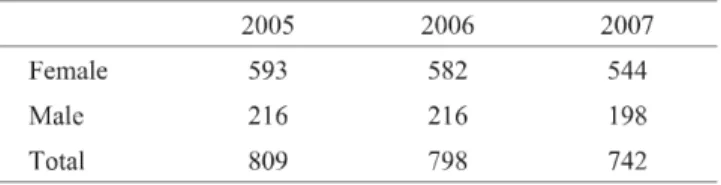
PAFCO employs three categories of workers: permanent staff (main list), casual (temporary appointment) and pooled workers. In May 2007, there were 580 permanent, 110 casual and about 100 pooled workers. Information from company sources provided the following summary on employment status shown in Table 1.
Table 1. Summary of employment at PAFCO by gender.
2005 2006 2007 Female Male Total 593 216 809 582 216 798 544 198 742
In the processing area, the only task in which men dominate is the skinning of fish, which requires manual handling of large and heavy fish. Other areas where men are more dominant workers are in unloading of fish, the freezer area and in maintenance of machines. Women are dominant in the processing lines which include tasks like butchering, cleaning, sorting, canning, moulding, labelling and quality control.
About 70% of the PAFCO workers are women (PRAKASH pers. comm.). There were 580 workers on an hourly-paid rate, and 40 salaried staff on monthly wages, of which about 25 were middle management and 14 at senior management level (ibid). The bulk of PAFCO employees are in the production section. Table 2 provides the breakdown of employment by gender in a typical production shift.
Table 2. Staffing of a typical production shift at PAFCO.
Activity Supervisor Salaried staff Non-salaried staff
Preparation Cleaning Canning Freezing& moulding Labelling Quality control Total M F 0 0 0 14 0 2 0 2 0 2 2 2 2 22 MF 02 00 80 00 00 04 86 M F 2 2 13 150 0 18 4 18 0 0 2 2 21 190
Table 2 shows the dominance of women as supervisors and non-salaried staff in production. 90% of non-salaried workers are women. On the dominance of women in processing, interviews with men and women reaffirmed the view stated by RAJAN (2005) of the Quality Control Manager that, "women are capable of dexterous work, better with their hands, more productive and more committed than the men". EMBERSON-BAIN & SLATTER (1995) had earlier noted that women had replaced men at PAFCO because men refused to do monotonous and `demeaning' tasks like cleaning, gutting and preparing fish to be canned (RAJAN 2005). Women with minimal skills or education are willing to take up whatever employment opportunities are available to them as a means of earning income to
support their families.
PAFCO workers also stated that women are not barred from work otherwise dominated by men, such as electrical and mechanical tasks, or operating forklifts and machines. One interviewee stated that a female worker has to be exceptionally good and physically fit to perform such duties. Women generally do not seek jobs that require heavy lifting or pose health risks, such as stevedoring or work in the freezer section. A number of employees stated that production line work has its own risks but this could not be verified as viewing factory processing areas by visitors is not allowed (PRAKASH per. comm.)
PAFCO - assessment of incomes and wages
Based on an hourly rate of F$ 2.75 for "unskilled" and from F$3.10 to F$3.50 for "skilled" category
, SULLIVAN & RAM-BIDESI's (2008) study estimated that the annual female factory floor workers' wages for a single-shift operation to be F$ 2,182,756 in comparison to male workers in these categories whose annual wage bill was estimated at F$ 1,072,336. If all female senior staff salaries were included, the apparent wages for all women working at PAFCO was estimated to be F$ 2,260,756. The wages for 6 male staff at the senior management level was not available to make any meaningful comparison. While there was clear division of labour by gender, it was not possible to compare the relative wages of males and females in other areas. However, interviews at the Department of Labour stated that wage differentials that previously existed between genders for the same work at PAFCO was no longer the case due to the new Labour Laws in Fiji.
The annual through-put at PAFCO was given as between 20,000mt to 30,000mt (PRAKASH pers. comm.) and that PAFCO charges a fixed processing fee within the range of F$ 3,000-F$ 4,000 per mt (ibid). If average of 25,000mt is the through-put for processing, the company is likely to earn gross revenue of at least F$ 87.5 million. More recent estimates indicate that the company's exports are in excess of US$120 million (THE FIJI TIMES 12 December 2008). Therefore, given such estimates, it can be deduced that women's wages are roughly 3% of the gross revenue of PAFCO.
SULLIVAN & RAM-BIDESI's study in 2008 further pointed out that the pattern of income and expenditure for workers on the factory floor showed that female workers' savings after expenses and deductions were generally very low, although, deduction at source allowed them to keep up with their repayments. Women are the major clients of the Employees Credit Union who often borrow money to pay for food or family related
expenses.
The study shows that the current wage rate of F$2.75 compares favourably with a wage rate three years ago for permanent workers of F$1.75 (RAJAN 2005). Comparing the minimum wages of workers at PAFCO to other manufacturing and retail industries one can say that wages at PAFCO are competitive. For example, comparing wage rate of PAFCO to that of garment factory workers such as machinists in the Kalabo tax free zone near Suva who receive a normal wage of $1.80 per hour, the wage rate is at least 25% higher at PAFCO. (see details in SULLIVAN & RAM-BIDESI 2008). The current minimum wage rate
for unskilled workers in Fiji is $2.50 an hour (THE FIJI TIMES 2010). PAFCO - social considerations
Under the Partnership Agreement with Bumble Bee, there have been improvements in the working conditions for workers. A laundry for cleaning uniforms; access to canteen and morning and afternoon tea breaks and an hour lunch is allowed. The shifts are staggered, and overtime workers get transport free. They have an active union and a credit union that facilitates local credit card arrangements.
Membership in the Workers Union is voluntary. In May 2007, 70% of the factory workers were union members. The Union claims that PAFCO has failed to comply with the requirements of the company's Occupational Health and Safety Scheme. The workers claimed that the working environment is hot with only few fans, sick leave is without pay and maternity leave may be without reinstatement. Workers claimed that supervisors are often abusive and women are sometimes forced to carry heavy loads.
One problem that continues to persist at PAFCO is the management and worker attitudes that influence the state of affairs within the company. The ongoing concerns of PAFCO workers (as expressed by the Union) range from unjustified lay-offs and inadequate settlements from prior disputes to the inability to make a living wage. Interviews with the union workers and management indicated that relations have been polarized and that there
is little interaction between the production floor and the senior management level.
In all tuna processing plants there is a marked difference between the air-conditioned suites of the management floor and the hot, noisy and smelly factory floor below (SULLIVAN & RAM-BIDESI 2008). On the other hand, the work conditions at PAFCO have improved as the plant itself has been refurbished to meet the export quality and food safety standards.
There have been several industrial disputes over the years between the employees' union and PAFCO management. Employees feel that PAFCO management is not sensitive to their needs and is serving the shareholders interests despite a majority government share-holding. The Management's response is that Levuka is a high cost production area where the pool of labour is limited on the island and the people feel that they have monopoly power over the company. Management claims that it is difficult to attract skilled labour from elsewhere because the people from Lomaiviti are given the first preference (PRAKASH pers. comm.) Pooled workers also have to operate on a rotational basis village by village and are chosen by their own communities. The company management also continues to raise concerns over worker absenteeism that affects productivity. The company
feels constrained by social obligation and Union pressure to retain older women workers even though there are more productive younger ones already seeking employment (SENIOR PAFCO OFFICIAL pers. comm.).
Workers expressed support for previous management style where there was close communication through staff meetings to inform staff about performance of the company in contrast to current practice where PAFCO is more task-oriented. Interviews with officials at the Lomaiviti Provincial Council also indicated that previously the management used to brief the Council on operations of the company but since 2004, there have been no briefings and PAFCO management does not communicate with the Provincial Council unless there are conflicts with village workers.
Strategic alliance with Bumble Bee
The continued partnership agreement between PAFCO and Bumble Bee indicates that the business venture is mutually beneficial to both even though PAFCO is a small partner for Bumble Bee which is the only company that currently operates tuna canneries in the United States. According to the CEO Christopher Lischewski, Bumble Bee is the market leader in albacore tuna with 40% of the market share, followed by Star-Kist (34%) and Chicken of the Sea (16%) (US DEPARTMENT OF LABOR EMPLOYMENT STANDARDS ADMINISTRATION WAGE AND HOUR DIVISION 2007). So far, PAFCO has been an important
supplier of albacore loins to Bumble Bee's Los Angeles plant in the West Coast (CAMPLING 2008). It is therefore important for PAFCO to continue this relationship since Bumble Bee is a major player in the tuna retail market and is part of a major food industry in the United States. The location of PAFCO close to the southern albacore fishing grounds is also another factor that is of strategic importance to Bumble Bee in comparison to loin supplies coming from Thailand or Mauritius to its cannery in Los Angeles. PAFCO's survival so far has largely depended on its continued target for the higher end of the market as premium albacore tuna. If PAFCO can convince of this comparative advantage by maintaining its quality standards and differentiated product, then it is likely that its operations can remain stable for a while particularly in the light of the closure of the cannery in American Samoa. Some of the raw material supply can be re-directed to PAFCO as the closest processing location to the albacore fishing grounds. This also partly depends on the negotiation tactics of the PAFCO Board and initiative of the management when formulating the terms for renewing the partnership agreement with Bumble Bee. Under the most recent negotiations, the current Chairman of the PAFCO Board has indicated that as part of the agreement, Bumble Bee would provide funds for a freezer up-grade (THE FIJI TIMES 9 November 2009). Likewise, PAFCO can also seek assistance in other areas of research and product development and to up-grade the facilities. For example, the cannery in Ecuador has invested in a new industrial kitchen for research and development with the objective of launching new ready-to-eat tuna products (CAMPLING 2008). Ecuador and Thailand are already exporting tuna-pouches which are more convenient to use and are becoming more popular among consumers. Indirectly, any improvements in infrastructure or value-added processing is likely to improve the working conditions and or the employment opportunities
for women.
Trade policy and other factors
On the other hand there are a number of factors that are external to PAFCO that can negatively impact the stability of investments and the profitability of PAFCO and therefore its ability to provide an acceptable work environment or increase employment for women. Among these are the international trade policies such as the proliferation of free trade agreements. Both the US and the EU are the major markets for canned and loined tuna and both are increasingly engaging in FTAs with third countries in the ASEAN and Latin American regions. Thailand, Philippines and Ecuador are the major suppliers of tuna to the US market. Bumble Bee also has major commercial interests in Thailand and therefore is more likely to support the US-Thailand FTA (CAMPL1NG & HAVICE 2007). The reduction in tariffs for Asian processors means that they will have a greater competitive advantage with the lower unit cost of production and economies of scale, therefore making PAFCO
operations uncompetitive unless PAFCO has something different to offer.
Another factor that may also have implications for PAFCO is the new labour law requirements. It is however early to speculate on what exactly these may be for PAFCO but increase in wages and better work conditions is likely to increase cost of operations for PAFCO where wage costs are already higher than in the Asian processing plants (see for example CAMPLING et al. 2007). The recent experience of American Samoa which led to the closure of the Chicken of the Sea cannery in 2009 is illustrative of what could be a possibility given that Workers Union at PAFCO has been very vocal on labour issues. Under the Fair Labour Standards Act of 2007 (Public Law 110-28), mainland US laws also apply to its territories which apparently led to increase in minimum wages, making American Samoan wages uncompetitive (see CAMPLING & HAVICE 2007). This therefore puts casual workers in vulnerable positions as they would be the first ones eliminated.
Other factors that can influence the employment of women workers in otherwise labour intensive tasks are technological changes to improve efficiency and reduce costs. The introduction of "tuna block" which can more uniformly pack loins into plastic bags before blast freezing has already been adopted by PAFCO (CAMPLING 2008). The impact on potential employment or reduction in labour demand has not been assessed but it illustrates the point that women who generally are employed in labour intensive tasks are more vulnerable to loss of jobs under such circumstances.
The likelihood of increasing workers' welfare (a large percentage of whom are women) should also be seen within the above macroeconomic context. If the industry is economically viable and stable, all workers irrespective of gender are more likely to reap the rewards of their labour. One of the basic principles for increasing women's involvement and improving their economic and social status therefore lies in having a profitable company with management that is both technically competent and gender sensitive.
To achieve this goal, professional training on fisheries-sector policy and planning, business economics, international relations and diplomacy and technical aspects of tuna industry operations such as marketing and product development, is required for the
government administrators of PAFCO and senior company management. More women could be encouraged to take up career opportunities at these higher levels of decision making wherever possible. This could be through the provision of scholarships and other training opportunities for young females already employed at PAFCO. It makes more sense to target female workers (who make up almost 70% of the cannery workers) as they are likely to be more sensitive to addressing women and communities' economic needs.
On the other hand, the social pressure on PAFCO management by the community can also be overwhelming in terms of demands on employment and use of land (CHAND 2009), utilities and facilities given that the location of the cannery on a small island already imposes diseconomies of scale and higher transaction costs. The relationship between PAFCO management and the workers needs to be improved through genuine dialogue where decision-making is transparent. This requires a team approach to improve the morale
of the workers and the management for their mutual benefit.
Adopting a gender policy for PAFCO can also assist the company to be more transparent and avoid any unwarranted discrimination by union, feminists and groups supporting women and from the local community. Women and men working at PAFCO need training to improve time-management to increase efficiency and productivity so that the cannery can continue to operate in a competitive global environment. Workers in this context need to understand that loss of time means indirectly, the loss of revenue. Employment in the long-line harvesting sector
The harvesting sector consists of about 138 domestic-based, long-line vessels. These vessels off-load their catches in Fiji for processing, packing or trans-shipment into carrier vessels or refrigerated container vessels. The shore-based, long-line operations include packing of whole fresh fish for sashimi, loining of frozen fish and vacuum packing, frozen
fish for further canning, and by-catch processing into steak, loins and other products.
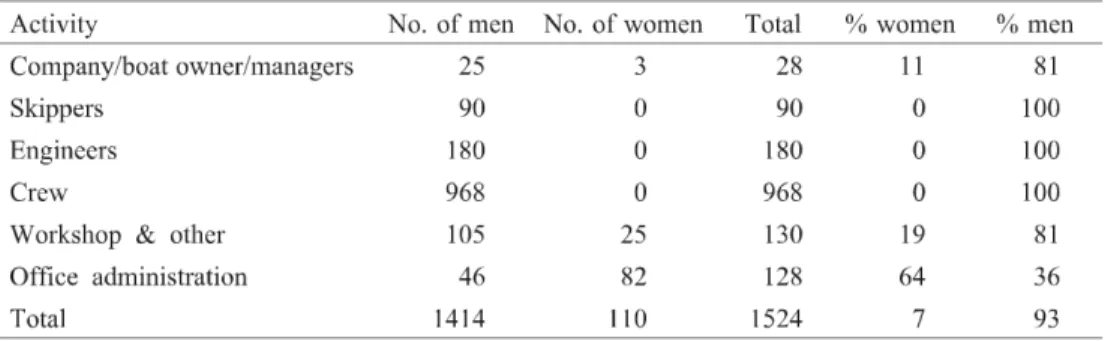
Direct participation of women varies depending on the nature of work and type of business operation. If these companies own a shore-based office there is direct employment for a few women as clerical staff but all vessel operations and harvesting is done by men. As NAKAMICHI (2009) states, in today's society, women are still entrusted with housework, child-care and care of the elderly. It is impossible for women to carry out work at sea and at the same time provide labour for housework, caring for children, sick and elderly because of the long duration of fishing trips. Other types of fishing companies include one where the company operates a fishing fleet but uses the processing services of another company and exports the processed fish. Women also work as office support staff and administrators while the fishing operations, engineering and mechanical work is predominantly done by men. Shipping agents that facilitate customs clearance, border inspections and provide other services and provisioning for vessels also employ women in clerical positions. Table 3 below provides the estimated direct employment in the tuna harvesting sector by gender.
Table 3. Employment in the Fiji tuna long-line harvesting sector in 2007.
Activity No. of men No. of women Total % women % men
Company/boat owner/managers 25 3 28 11 81
Skippers 90 0 90 0 100
Engineers 180 0 180 0 100
Crew 968 0 968 0 100
Workshop & other 105 25 130 19 81
Office administration 46 82 128 64 36
Total 1414 110 1524 7 93
Comparing the above table to direct employment in fishing and related activities in 2001 reported by DEMMKE (2006), the trend shows the number of women in shore-based activities related to fleet operations increased from 3% to 7% despite a reduction in number of local fishing licenses. Employment of women in office administration under fleet operations has also increased since 2001, indicating that women are actively seeking employment where possible in areas that have been previously dominated by men. Indirect employment related to fleet operations is more complex to quantify by gender.
In shore-based, long-line tuna processing, the involvement of women depends on the level of primary or secondary processing. The two major companies involved in combined harvesting and processing are the Fiji Fish Marketing Company and Hangton Pacific Limited. TriPacific Marine and Celtrock Holding Limited provide processing services to other companies. Two other large processing establishments are Golden Ocean and Tosa Bussan which rely on fish mostly from contracted vessels and other vessels to provide the raw materials for further processing. Table 4 provides a breakdown of employment at these
shore-based processing establishments (excluding PAFCO).
Table 4. Employment in the Fiji tuna long-line processing sector in 2007.
Activity No. of men No. of women Total % women % men
Company/managers 11 5 16 31 69
Processing/packing 238 125 363 34 66
Office administration 56 38 94 40 60
Workshop & other 52 5 57 9 91
Total 357 173 530 33 67
Women make up 40% of labour in office administration, 31% as company managers and one-third in processing and packing-related employment. The latter includes mostly stock-control, loining, packing, labelling, quality control and supervisors. All the long-line companies also employ casual or temporary workers upon demand who are paid on an hourly basis and are drawn from nearby settlements or through networking with permanent workers. In two processing companies women are known to make up one-third of these
casual workers who assist in cleaning, loining and packing. In the case of vessel unloading, the pool of casual labour is generally male.
In recent times, there has been increase in processing and unloading in Fiji, particularly in Suva which is being used as a trans-shipment and transfer base for foreign crew, vessel-provisioning, and for vessel-repair and dry-docking because of its strategic location within the western-central Pacific. The number of shipping agents handling fishing vessels for immigration, customs and quarantine clearance has also increased since the implementation of the first tuna management plan. Crew can spend up to one to two weeks in port. As a result, there is demand for more night-life related activities (sex workers, night-clubs, restaurants and other entertainment-industry employment). Indirect formal employment benefits for women include areas such as airline services, hotels, banks and port sampling but more specific data in these areas are difficult to obtain.
In the processing sector, there are indirect employment benefits as a result of horizontal linkages such as the supply of packaging materials and processing equipment, operation of ancillary facilities such as canteens. While many of these activities depend on raw materials that may be originally imported, employment is created if these are semi-processed locally or supplied by local companies which may employ women. More direct
spin-off activities result from women employed within the long-line related operations who spend their income on purchasing food, clothing and other household items. Thus, the increase in direct employment of women in the industry has a multiplier effect on employment opportunities for women, although quantification is difficult.
All tuna processing establishments are export-oriented and therefore have to meet the factory HACCP standards of the importing country; the consequences of this for female factory workers is better working environments, with the requirement to wear protective gear (boots, overalls, hand gloves and scarves).
Employment at Fiji Fish Marketing Company
According to interviews, Fiji Fish operates a fleet of about 38 vessels and handles about 30-40mt of fish a week. There are no women engaged in the harvesting sector. The on-shore facilities are divided into two sections: Support Services and Processing & Administration. The Support Services includes the engineering workshop, dry-docking and electrical services which are dominated by male workers. In the engineering section, there were five men and two women engineers, both with trade certificates from the Fiji Institute of Technology. In the Administration Office the Secretary, Chief Accounts Officer, Accounts Officer and other clerical staff (five in total) were women. The processing section consisted of about 50 workers as permanent staff, of which 70% were women divided into two processing lines: packaging and loining.
The company mostly employs women from the nearby settlements, and provides transport when over-time and night-shift work is required. Since the factory is focused on exports, maintaining quality standards is critical. Therefore workers are required to adhere to good hygienic practices including wearing of personal protective and safety gear provided by the company. In comparison with the minimum wage rate of F$1.79 set for the manufacturing sector by the Wages Council during the time of study, the workers at Fiji Fish Company received a much higher wage of F$2.25 per hour for unskilled work. The
working environment at Fiji Fish is more open, well-lit and ventilated, and fish handling shifts usually last for 5- 6 hours only.
Employment at Tossa Bussan (Fiji) Limited
Tossa Bussan is a Japanese joint-venture which started its operations in Fiji with the processing of skipjack for tataki through blast freezing to ultra-low temperature (-60° C), then loining the frozen fish, partially cooking and vacuum packaging in plastics and blast frozen again for export to Japan. Besides making tataki, Tossa Bussan is also involved in ultra-low temperature frozen skinless loins for the Japanese sashimi market. The company buys frozen big eye and yellow-fin from vessels that off-load in Suva.
The Tossa Bussan Company processes about 15mt of frozen fish daily and about 120mt of fish are exported to Japan per week. The company employs about 89 workers of which 90% are men and 10% women. Men dominate the production line because they have to lift heavy fish and work in the freezer areas (ie. very cold working conditions) whilst women concentrate on packing and inspection. The company also from time to time
employs casual workers who are both male and female.
Employment of women is at all levels including a shareholder who is also the Factory Manager. The quality control manager, supervisors, factory workers and office administrators also include women. Wages are determined on levels of experience for hourly-paid workers starting from F$2.00 up to F$2.40 per hour for those that operate the machines. Although the current minimum national wage for unskilled workers is now F$2.50 (Fiji ISLANDS TRADE AND INDUSTRY BUREAU 2009) while wages for process-workers including machine operators is between F$3.00 and F$3.25 (SINGH 2010). While wages may not be comparable to the national minimum, the workers interviewed did not complain. The middle-management interviewees indicated that workers were generally happy with their work
environment, particularly in comparison with their previous jobs. They felt that joining the company had placed them in a progressive context because the company provides a workers' kitchen where tea is free and they are supplied with free uniforms and safety gear. Employment at Solander Pacific
The company is a New Zealand based joint-venture which operates a fishing fleet and employs about 250 people and about 100 casual workers from time to time. There are six women employed in the Accounts/Payroll Department and one female receptionist. While these were all office workers, they stated that women should be allowed to work as crew on board if they wish. It is however noted that generally in a number of developed industrial fisheries such as those of Canada or Iceland women work on vessels mostly in on-board processing rather than on actual harvesting of large fish.
Employment at CPK Shipping
CKP operates as a shipping agent mostly for Korean vessels and also facilitates supply of Fijian crew. They are agents for about 20-30 vessels. They no longer off-load fish in Fiji but send it directly to Japan, Korea or Pago Pago. The vessels dock locally for bunkering
and crew change. The company has three female workers: a boarding officer, accounts manager, and a clerical officer. Vessels that come for maintenance stay 2-3 weeks while
those with other activities stay in port for only 3-5 days. The Company facilitates crew change and arranges accommodation for the captain, officers and crew. One of the officers interviewed said that they did not experience any problems with prostitution. However, this claim could not be substantiated given the rapid increase in night-life activities around Suva City with boat crews.
Long-line - assessment of incomes and wages
Details on earnings by women engaged in the individual companies were difficult to obtain because the information was treated as commercially confidential. This was the case for the processing plants which operate in a very competitive environment. Some workers interviewed had moved from one processing plant to another because of a slight variation in wages or better terms and conditions of work. For example, one factory manager in one prominent company has worked for several years for another processor where she had received most of her training in quality control and HACCP. Another factory team-leader of a processing line for loins had worked for another processor for seven years and decided to move to the current position where wages are F$0.90 per hour higher.
The economic contribution by women in fleet-operating business is largely limited to office-based clerical and administrative work. Companies were also reluctant to reveal their annual turnover in order to determine women's wages as a proportion of the total wages and company returns. Two companies provided some details. Company I operates a fleet and a processing plant and employs 90 men (mainly boat crew) and 10 women; 3 in the processing area and 7 in office administration. According to the company's estimate, the total wages bill for the company in 2006 was about F$300,000 while the annual turnover was recorded as F$8.9 million (see SULLIVAN & RAM-BIDESI 2008). Women represented 11% of the workforce with a combined annual wages of F$67,680. This represented 23% of the total wage cost but 0.7% of the total turnover of the company. On the other hand, Company II operates a processing plant by providing services to other companies. The Company employs about 43 workers of which 6 (13%) are women. Two women are in the packaging section while 4 are in office administration and accounts. The annual wages bill for the company was given as F$450,000 while annual turnover was around F$3.5 million (see SULLIVAN & RAM-BIDESI 2008). The total annual combined wages for these women was F$50,880 which represented about 11% of the total wages bill for the company and about
1.5% of the total gross earnings of the company.
In comparing the wages of the two companies, it seems that company II has a slightly higher wage bill for women but this represented a much smaller proportion of the total earnings of the company. On the other hand, Company I had only 10% of their staff as women but their wages bill was almost 23% of the total annual wages cost. One possible explanation for this difference in wages is that Company II employed women in more skilled positions in the office and in the packing line as supervisors compared to Company I which employed more people as crew (mainly men) and women performed less skilled
tasks on the factory floor.
In contrast to the cannery operation, the women in the long-line processing sector perform more specialised tasks even though some may still be categorised as "unskilled" when compared to tasks performed by men. Women mostly work in management and administration, quality control, specialised cutting and packaging or as technicians while the majority of the men work as stevedores, fish-handlers or as crew.
Few women have excelled in middle to high positions including business executive positions in their own right. Success depends on individual skills and ability. There are no jobs reserved for men, although there are tasks that may well attract more men than women because of the gendered division of labour within households. Having specific training and skills in shore-based activities such as in the processing sector, marketing and business administration provide better options for women than in work related to vessel operations which require long periods of absence away from home.
A realistic economic assessment of the role of women in the long-line industry is more difficult to ascertain because women are largely involved in office work with fewer involved in processing and packaging (particularly secondary processing). While women are engaged in loining and supervising, men still predominate in the actual processing and handling of fresh fish because of the large size of the whole fish. The general perception of most people interviewed in the industry (from factory worker through to management) is
that this situation is unlikely to change because of the heavy lifting required.
Women are also employed on a casual basis depending on the demand for urgent labour. Employment of casual labour can vary between a couple of hours work a day to weeks and months per year. Companies were again reluctant to disclose information on the level of employment of casual workers because of the variability in supply of catches to their processing plants. One company however indicated that casual labourers were paid F$20-30 per day. This rate is similar to other casual workers in the manufacturing and retail industry in Suva who receive the basic minimum wage of F$2.50 per hour. When compar-ing wage rates for unskilled labour, women at fish-processcompar-ing plants are much better paid than garment factory workers. For example the garment workers get F$1.80-2.50 per hour and female food-packers and cashiers in retail supermarket chain outlets in Suva receive F$2.11-2.30 per hour. In the case of the long-line harvesting sector unlike PAFCO, there is no organised labour union and workers' wages varies from one operation to the other.
It was quite apparent from the various industry interviews that employment and economic returns increase in the domestic economy as companies expand the amount of value-added processing locally. This increases the chances of employing more women, as in the case of the Fiji Fish Company and Tosa Bussan Company where there is some secondary processing (pre-packed sashimi and tuna steak). In contrast, Hangton Pacific, which exports fresh and frozen fish does no secondary processing, the employment of women was therefore limited. This suggests that as the amount of value-adding increases (cutting, cleaning, cooking, processing and packing) into secondary products, so does the number of jobs for women.
Long-line - social considerations
Anecdotal information suggests that increased unloading and trans-shipment of fish in port also leads to an increased demand in the sex trade, plus increased cases of alcoholism, drug and substance abuse when crews come ashore after spending long periods of time at sea (VUNISEA 2005). The extent of the problem in Fiji associated with the tuna fishing industry is still largely unknown. Young women loitering around the wharf area has been minimised by fencing and by the presence of security officers at the entry points to the wharves. There is, however, little control over such activities within the urban areas outside
the port.
An informant from a key national women's organisation indicated that most sex workers operate from small hotels in Suva, where they meet the men who come ashore. These are low-budget hotels and in some cases their proprietors arrange with the shipping agents tasked with booking the shore stays for crews. For the women acting as `call girls', these men are an important source of income, and it may be assumed that quite a few households are dependent upon them (SULLIVAN & RAM-BIDESI 2008).
Non-Governmental Organisations such as the Fiji Council of Churches and Fiji Aids Task Force provide technical and social support such as educational materials (public-awareness information such as epidemiological fact-sheets on HIV/AIDS and other STI), counselling services and short-term refuge. However a more coordinated multi-sectoral approach is needed with a clear mandate to look at the problems and issues associated with the sex trade and other social problems relating to seafarers. The Crime Decree (2009) is likely to provide some recourse to scrutinise brothel operators and girls loitering in the streets. Strengthening of counselling services and finding alternative ways to earn decent incomes for some of the disadvantaged women who are forced into the sex trade is needed. External influences on the long-line industry
PHILIPSON (2006) shows that the combined long-line harvesting and processing operations provide the highest returns to the national economy. Practically this may not always be feasible because the fresh and chilled tuna from Fiji is highly dependent on market demand, prices and exchange rates in Japan and the US (the main markets), the food-sanitary measures of the importing countries and transportation costs. Competition also exists from Indonesia and Philippines and also from Chinese and Taiwanese long-line vessels. In the face of such fluctuations, it is likely that the industry will continue to rely on
casual labour on a needs basis rather than expand operations.
The declining catch rates of highly priced tuna such as big-eye and yellow-fin together with increase in fuel prices are other factors that directly impact on the costs and
profitabil-ity of the industry and therefore on the status of employment. Furthermore, the impact of regulatory decisions on the conservation and management of regional tuna stocks by the Western and Central Pacific Commission (WCPF) on the long-line industry has been more complex and both positive and negative for Fiji. The reduction in the number of vessel licenses has been to ensure stocks remain sustainable and ultimately fishing operations can become viable and profitable for the industry. Fiji, like many other Pacific Island countries
has sought to expand operations into neighbouring zones and high-seas areas in order to maintain supplies of raw materials. As these long-line operations increase, like other Commission members, Fiji has the responsibility to strengthen its monitoring, control and surveillance measures to ensure that its flagged vessels and those that come to its ports comply with the Commission's management measures. At least some if not all of the management costs have to be transferred to the industry, thereby raising industry's operational costs (INTERIM GOVERNMENT OF FiJI 2007b). In addition, the decision by the WCPF Commission at its 6th Regular Session Meeting in December 2009 to close two high-seas pockets and possibly close other high-seas areas also has implications for the long-line industry that supply raw materials to Fiji based processing operations. Almost 40% of Fiji's tuna is caught outside of Fijian waters (FIJI FISHERIES DEPARTMENT 2006). Therefore, if supplies are constrained, it is likely that operations will down-size and therefore directly impact on employment levels making casual workers most vulnerable. Another WCPF Commission decision that is also likely to affect vessels that off-load within Fiji's ports and supply raw materials in the near future will be the administration of catch-documentation scheme. This is aimed to ensure that the fish from the fishing ground has been caught legally in compliance with the required management measures. The likely impact of this will be mixed in that illegal, unregulated and unreported (IUU) vessel operations can be minimised that under-cut legitimate operators. At the same time, it is likely that supply to some of the secondary processing plants where women work may be constrained since Fiji has been used as an off-loading port by a number of foreign vessels that are not licensed in Fiji and possibly are engaged in IUU fishing (ISLANDS BUSINESS 2007).
Other factors that have influenced the recent industry performance have been the loss of access to the EU market since May 2008. A number of companies with processing operations were engaged in exports to the EU countries and have practically met the food-safety requirements but the government has been unable to convince the EU authorities with the type of guarantees they require in terms of procedures for export. If Fiji is able to meet the EU standards of exports, EU therefore can represent a potential market particularly for processed and semi-processed tuna such as vacuum-packed loins and
tuna-pouches. This is likely to generate more employment for women.
Fiji's fresh and chilled long-line industry has largely been consolidated because of the presence of the tourism sector that is serviced by international routes to major tuna market destinations such as Japan and the US which provide airfreight space. However, the cancellation of direct fights to Japan from 2009 has been a major setback as fish has to be re-directed to other destinations that connect to Japan. Fluctuation in tourist numbers and airline route changes therefore has a direct impact on the long-line industry. The tourism industry on the other hand hinges on the political stability of the country which has been affected by coups.
The scope for increasing women's employment within the long-line industry also rests on the ability of industry to break into secondary processing such as gourmet products that target specialised niche markets - exporting pre-packed sashimi loins, skinless loins and