Errata
p.14 p. 43
正誤 表
Findings and Discussion
Abbreviations : Ts; thought- stopping, Tr; thought-reflection, D; do something, I; it could always be worse, M; made it this far, L; looking forward to normalcy, C; cognitive clutter, K; knowledge of survivors, 0; others have hope for me, F; forgetting, H; hopefulness, Ct; commitment to treatment, As; adaptation to symptoms, Tc; taking care of problems, Fa; family, Fr; friends, Hc; health care professionals, Te; teachers, Op; others person
P. 70 も に 希 望 を あ た え 、resilienceを 高 め て い た 。3)初 発 の 子 ど も は 退 院 時 期 に 、 再 発 の 子 ど も は 診 断 後 し ば ら く して 、復 学 へ の 希 望 を も っ て 入 院 生 活 を 送 っ て い た 。4)自 分 の 病 気 を 理 解 し て い な い 子 ど も は 、resilienceを 高 め る 可 能 性 が 見 られ た 。5)子 ど も の 自己 概 念 と社 会 支 援 は 、 正 の 相 関 関 係 が あ っ た 。 母 親 の 自 己 概 念 ・社 会 支 援 と小 ・中 学 生 の 子 ど も に 、 正 の 相 関 関 係 が み られ た 。 考 察 と し て 、 小 児 が ん の 子 ど も が 、 将 来 の 希 望 や 目 的 を も つ こ と で 、resilienceを 高 め る こ と が で き る と考 え られ る 。子 ど も が 希 望 と 目的 を も つ た め に 、保 護 者 が 診 断 時 に 前 向 き に な れ る よ うな 、 自 己概 念 や 社 会 的 支 援 を 高 め る 環 境 が 求 め られ る 。子 ど も の 治 療 時 期 や 、成 長 発 達 段 階 に あ っ た 個 別 的 支 援 が 、希 望 と 目的 を も っ て 生 活 す る た め に 大 切 で あ る と考 え られ る 。 医 療 専 門職 者 、 家 族 、先 生 、 医 療 関 係 者 、 他 の 支 援 者 が 、 小 児 が ん の 子 ど も にresilienceを 高 め る支 援 を お こ な う必 要 性 が 示 唆 さ れ た 。小 児 が ん の 子 ど も の 長 期 的 支 援 を 行 うた め に 、 小 児 が ん 生 存 者 へ の さ ら な る研 究 が 求 め られ る。
大略 小 児 が ん の 子 ど も は 、多 く の ス ト レ ス を 経 験 し て い る が 、resilience(前 向 き に 生 き る こ と)を 高 め て い る 者 も い る と い わ れ て い る 。 彼 ら が ど の よ う に し てresilienceを 高 め る の か 、 そ の プ ロ セ ス を 知 る こ と は 意 味 深 い こ と で あ る 。 研 究 の 目 的 は 、1)小 児 が ん の 子 ど も のresilienceを 日 米 で 比 較 す る 、2)日 本 の 小 児 が ん の 子 ど も のresilienceを 高 め る 要 因 と 、 そ の プ ロ セ ス を 明 確 に す る 、3)resilienceを 高 め る 支 援 を 構 築 す る 、 4)調 査 を 継 続 し 研 究 の 妥 当 性 を 高 め る 、 こ と で あ っ た 。 研 究 は 、ケ ー ス ・ス タ デ ィ ー 法 と調 査 研 究 法 で 、平 成13年 か ら平 成17年 に 行 っ た 。 調 査 対 象 者 は 、 退 院 間 近 か ら退 院 後1年 以 内 の 、11歳 か ら18歳 の 小 児 が ん の 子 ど も 16人 と、 そ の 保 護 者 で あ っ た 。 面 接 は 半 構 成 的 面 接 法 で 録 音 テ ー プ を 使 用 した 。 面 接 デ ー タ は 、HindsとMartinの 自己 を 高 め る プ ロ セ ス の モ デ ル を 用 い た 、 パ タ ー ン適 合 法 で 解 析 し た 。 調 査 用 紙 は 、子 ど も と成 人 用 の 、 日本 式 自 己 概 念 と ソー シ ャ ル ・ネ ッ トワ ー ク ・マ ップ で 、 そ れ ぞ れ の 調 査 用 紙 を 子 ど も と保 護 者 に 使 用 し た 。 調 査 の 結 果 は 次 の 通 りで あ る。1)自 分 の 病 気 を 理 解 して い た 日本 の 子 ど も は 、 米 国 の 子 ど も と 同様 にresilienceを 高 め て い た 。2)母 親 の 診 断 時 の 前 向 き な 姿 勢 が 、子 ど も に 希 望 を あ た え 、resilienceを 高 め て い た 。3)初 発 の 子 ど も は 退 院 時 期 に 、 再 発 の 子 ど も は 診 断 後 しば ら く し て 、復 学 へ の 希 望 を も っ て 入 院 生 活 を 送 っ て い た 。4)自 分 の 病 気 を 理 解 して い な い 子 ど も は 、resilienceを 高 め る 可 能 性 が 見 られ た 。5)子 ど も の 自己 概 念 と社 会 支 援 は 、正 の 相 関 関 係 が あ っ た 。 母 親 の 自 己 概 念 ・社 会 支 援 と小 ・中 学 生 の 子 ど も に 、 正 の 相 関 関 係 が み られ た 。 考 察 と し て 、 小 児 が ん の 子 ど も が 、 将 来 の 希 望 や 目 的 を も つ こ と で 、resilienceを 高 め る こ と が で き る と考 え られ る 。子 ど も が 希 望 と 目的 を も つ た め に 、保 護 者 が 診 断 時 に 前 向 き に な れ る よ うな 、自 己概 念 や 社 会 的 支 援 を 高 め る 環 境 が 求 め られ る 。子 ど も の 治 療 時 期 や 、成 長 発 達 段 階 に あ っ た 個 別 的 支 援 が 、希 望 と 目 的 を も っ て 生 活 す る た め に 大 切 で あ る と考 え られ る 。 医 療 専 門職 者 、 家 族 、 先 生 、 医 療 関 係 者 、 他 の 支 援 者 が 、 小 児 が ん の 子 ど も にresilienceを 高 め る支 援 を お こ な う必 要 性 が 示 唆 され た 。小 児 が ん の 子 ど も の 長 期 的 支 援 を 行 うた め に 、 小 児 が ん 生 存 者 へ の さ ら な る 研 究 が 求 め られ る。
Profile
Children and adolescents with cancer experience multiple stressors, nevertheless
some function well and / or are resilient. Focusing on resilience of cancer patients in childhood and understanding why and how resilience develops during the cancer experience are of great value. The purpose of this study is: 1) to compare resilience of Japanese adolescents with cancer and American ones, 2) to identify the processes of promoting resilience in the Japanese adolescents with cancer, 3) to explore protective processes in the Japanese adolescents with cancer, 4) to build support to promote resilience, and 5) to increase validity for the study.
A qualitative study, semi-structured individual interviews, and survey were conducted from 2001 to 2005. The participants were sixteen adolescents with cancer from 11 to 18 years of age and their mothers. The adolescents who were near the time of discharge to about one year after discharge were interviewed using audiotape. A
pattern-matching logic with self-sustaining process of Hinds and Martin was used for analysis. The instruments of the simplified form of Japanese Version of Self-Perception Scale (SJS-PSA) and Social Network Map (SNM) were used to identify self-esteem and social support in the adolescents and their mothers.
The outcomes indicated that Japanese adolescents with cancer who were told the name of their disease were as resilient as American ones. Positive thoughts of their mothers supported children in having hope and promoting resilience. The adolescents' hope was related to which stage they were in. The newly diagnosed adolescents had hope for school life at near discharge and the relapse-experienced ones had it at the time of diagnosis. The adolescents who are not told the name of their disease show the potential for increasing their resilience. The survey indicates that there is an interaction between self-esteem and social support in adolescents with cancer. Also, the mothers' self-esteem and social support have an effect on their child.
The outcomes suggest some implications. Adolescents with cancer may develop resilience more effectively if they use certain strategies in a certain phase of therapy. Nurses, physicians, teachers, families, and other professionals should support the individual adolescents with such an approach. The adolescents with cancer would need support from family and society to have hope or purpose to receive therapy and live with cancer. Their parents' support at the time of diagnosis may be of value for children to be positive. Therefore, the health care professionals may encourage the parents and help construct supportive surroundings. The adolescents who have experience of relapse may also gain resilience through the communication with their peers. People surrounding
the adolescents may need to understand their developmental stages. The construction of intervention for adolescents and their family should be built based on understanding of these ideas. This finding indicates that further research is needed on resilience in adolescents who are not told the name of their disease. Also, it is needed to study how
adolescents with cancer continue or develop hope for gaining resilience in life after surviving. This study would contribute in improving QOL in adolescents with affecting disease or illness.
Acknowledgment
We gratefully appreciate many useful discussions from the participants and
support from their parents. We also acknowledge support of Shosuke Sunami, M.D.,
Yoshifumi Kawano, M.D., Hideki Nakayama, M.D., Akinobu Matsuzaki, M.D., Tsutomu,
Matumora, M.D. , suggestions of Yoshihiko Yamazaki, Ph.D., and support of Junko
〈 は しが き 〉
本 研 究 は 研 究 代 表 者 を は じ め 、1名 の 研 究 分 担 者 と7名 の 研 究 協 力 者
の 研 究 組 織 で 行 わ れ た 。 平 成15年 度 か ら研 究 を 開 始 し190万 円 の 研
究 費 補 助 金 を も っ て 平 成17年 度 に 無 事 終 了 した 。 研 究 はJournal of
Pediatric Oncology Nursingに 発 表 され る予 定 で あ る 。
研 究組織 研 究代表者:石 橋 朝 紀 子 沖縄県立看護大学看護 学部助教授 研 究分担者:上 田 禮 子 沖縄県立看護大学 ・ 大学院保健看護 学研 究科教授 (研 究協力者:角 南 勝 介) (研 究協力者:河 野 嘉 文) (研 究協力者:中 山 英 樹) (研 究協力者:松 崎 彰 信) (研 究協力者:松 茂 良 力) (研 究協力者:大 木 正 枝) (研 究協力者:小 川 純 子) 交付決定額(配 分額) (金額 単 位;千 円) 直接経費 間接経費 合計 平 成15年 度 700 0 700 平 成16年 度 600 0 600 平 成17年 度 600 0 600 総計 1,900 0 1,900 研究発表 (1)学 会 誌 石 橋 朝 紀 子 、 上 田 礼 子 、 河 野 嘉 文 、 中 山 英 樹 、 松 崎 彰 信 松茂 良力
Resilience and protective processes in adolescents with cancer in Japan, Journal of Pediatric Oncology Nursing. (in print)
RESILIENCE AND PROTECTIVE PROCESSES IN ADOLESCENTS
WITH CANCER IN JAPAN
Introduction
With advances in modern cancer therapy over 70% of Japanese childhood cancer patients (Tsukimoto, 2002) and 80% of American patients (Ries et al, 2003) survive for 5 years after diagnosis. Adolescents with cancer are at risk for developing cognitive, emotional, and behavioral problems (Foley, Fochtman, Mooney, 1993), but others function well or are "resilient" (Luthar & Zigler
, 1991; Eiser, 2003). Researchers have identified the need for studies on resilience of childhood cancer patients for improving their quality of life (Haase,
1997, 2004; Woodgate, 1999b). Such knowledge is extremely valuable to develop a conceptual framework for improving resilience. Little attention has been given to
research for resilience in childhood cancer patients in Japan. The purpose of this study is: 1) to compare resilience in Japanese and American adolescents with cancer, 2) to identify key protective factors that help promote resilience, and 3) to explore protective processes for guiding adolescents with cancer to have meaningful lives
Literature Review
1. Theory of Resilience in Childhood Cancer Patients
Resilience was studied in childhood cancer patients in the 1990s (Haase, 1997;
Woodgate, 1999b). Numerous studies have been conducted on coping, adjustment, and adaptation to childhood cancer and cancer survivors (Enskar et al., 1997; Novakovic et al.,
1996; Nichols, 1995; Glasson, 1995; Hockenberry-Eaton & Minick, 1994; Hinds et al., 1999; Boy & Hunsbeger, 1998). Research on adolescents with cancer also demonstrated that revealing the name of the disease, giving information, and involving children in the planning, and decision-making about treatment gave realistic hope (Dunsmore & Quine,
1995). Moreover, children and adolescents with cancer were normal children who were forced to cope with extraordinary circumstances. This idea led to more attention to concepts such as "resilience" (Eiser, 1994). Rutter, fortunately, developed a model for resilience in children (Woodgate, 1999a). Resilience has been conceptualized as a dynamic process involving an interaction between both risk and protective processes that change the effects of an adverse life event (Rutter, 1987, 1990). Promoting factors of
resilience has also been discussed in childhood within three broad areas: individual youth, their families, and the societies in which they live (Gramezy, 1991; Olson et al., 2003).
According to Rutter (1993), resilience is suggested by five key concepts. First, potential turning points in people's lives are important in connection with the preceding and succeeding circumstances. People who seemed set on a maladaptive life are able to turn it to a more adaptive direction. Next, success in one area gives people positive feelings of self-esteem and self-efficacy to have the confidence to deal with life's challenges. Moreover, there are individual variations in vulnerability to adverse
experiences that come from accepting or steeling experiences. When people have coped successfully with stressful experiences, steeling effects are more likely to occur. Fourth, individual differences in vulnerability may derive from personal characteristics that are influenced by environment and by the individual's response to particular stressors. Finally, how the individual assesses their circumstances is important. The same events are viewed quite differently from individual. Resilience is usually evident in a struggle with stressors and unpleasant events.
The concepts of vulnerability and protective processes have been more specific when discussed in terms of resilience. Rutter (1993) has indicated that protective
processes may include three features. First, the protective processes reduce the chance of negative chain reactions through alteration or involvement in the risk. Second,
self-esteem and self-efficacy are promoted through secure and supportive personal relationships or success in task achievement. Third, the protective processes come to be viewed as opportunities of a positive kind. The mechanisms as developmental processes need to be emphasized to cope effectively with stress in that connection. These include psychological operations related to mechanisms of turning points in people's lives when a risk may be redirected to a more adaptive direction. The protective process is helpful to use at certain turning points. There are four key points: (a) the risk factor itself can be altered through how a person understands the turning point, (b) an experience which can stop a negative a chain of events, (c) an experience which can promote self-esteem or self-efficacy; and (d) new opportunities can be found (Rutter, 1987, 1990). Rutter (1987; 1990) has not defined vulnerability processes clearly. Vulnerability processes, as
opposed to protective processes, are reported to occur when a previously adaptive trajectory is turned into a negative outcome.
Based on a list of protective factors from studies, Rutter (1985) began to clarify factors that may be involved as possible mechanisms. The researcher identified seven key points. First, a person's response to any stressor will be influenced by the situation,
the capacity to adapt to stressors, and age. Second, people may not use a particular coping strategy, but they do act, and not simply react. Next, people's ability to act
positively is related to their self-esteem, self-efficacy, and problem solving skills. Fourth, self-esteem and self-efficacy may be fostered by stable and affectional relationships, success, achievement, and positive experiences, as well as by temperamental attributes. Fifth, such personal qualities may operate through their interactions with other people. Moreover, successfully coping with stress and increasing social competence promotes resilience. Finally, all the evidence demonstrates the importance of developmental links. According to Rutter (1985), protection, the quality of resilience, lies in how people deal with changes in life and what they do about their stressful or disadvantageous
circumstances. Protection is also influenced by experiences in early life and during later childhood and adolescence, and by circumstances in adult life.
Rutter (1993) emphasized the importance of studying resilience. Avoiding thought of some single answer to problems of life, researchers should use several different sources of measurement and indications over time. Also, people may suffer in different ways. Therefore, it is necessary to take a much longer time span to view resilience within a developmental framework. Moreover, how the processes increase resilience should be the focus of research because there is little understanding of protective processes.
2. Coping Strategies in Children and Adolescents with Cancer
Coping is another struction that is especially equated with resilience. When
people become stronger by successfully coping with stress, steeling comes in to effect in protective processes and promotes resilience (Rutter, 1993, 1985). Resilience refers to the ability to cope successfully with stress (Stewart, Reid, & Mangham, 1997; Haase,
1997; Woodgate, 1999b). Also, coping with stress and achieving hopefulness and competence change the views of adolescents with cancer and they become resilient (Hinds and Martin, 1988). With this background the research concerning coping strategies and the hopefulness will be reviewed.
Having cancer may have psychological effects such as loss of self-identity, self-esteem, and academic achievement in the patients (Foley et al.1993; Hanna &Jacobs, 1993; Hockenberry-Eaton & Minick, 1994; Weekes & Kagan, 1994). Uncertainty is the greatest source of psychosocial stress for adolescent cancer patients as well as childhood cancer patients (Koocher, 1985). In dealing with cancer, adolescents with cancer use a variety of coping strategies. Some studies found that adolescents with cancer felt helpless
and sought spiritual support at the time of initial diagnoses. Therefore, help from prayer and church was important in order to find relief, comfort, and meaning in life
(Fowler-Kerry, 1990; Hinds & Martin, 1988; Nichols, 1995). Adolescents also use coping strategies with physical pain during treatment such as thinking about good things, having an optimistic view, making jokes, and holding a parent s or others hand
(Fowler-Kerry, 1990; Weekes & Kagan, 1994; Weekes et al., 1993). Results of other studies have demonstrated that coping strategies such.as being positive and having hope for the future help adolescents with cancer deal with psychological stresses (Enskar et al.,
1997; Hinds & Martin, 1988; Novakovic et al., 1996; Rechner, 1990; Weekes & Kagan, 1994).
Using a grounded theory approach, Bull and Drotar (1991) described the
differences in the use of coping strategies in school-age children and adolescents with cancer. The study found that adolescents used emotional-management coping strategies, but younger children used problem-solving strategies. The authors believe that children with cancer cannot stop their hair from falling out. However, adolescents with a higher level of cognitive maturity may understand the ineffectiveness of problem-solving strategies for stressors. The findings of a qualitative study of 13 adolescents aged 11 to 18 years (Weekes & Kagan, 1994) indicated that participants used different coping strategies before and after completing treatment. Before completing therapy most of the adolescent cancer patients described themselves as different from their peers and their lives as being abnormal. However, they tried to lead a normal life using five coping strategies such as thinking positively, avoiding treatment, keeping busy, reducing risky behavior, and meeting specific time-limited goals. After completion of cancer therapy the adolescents used three coping strategies such as negotiation, cognitive relief, and selective forgetting to focus on getting back to a normal life. Similar to this study, Glasson (1995) found that adolescents with cancer in outpatient clinics became intent on catching up with schoolwork before reentering school. Moreover, adolescents with cancer believed that they were not changed psychologically, were still the same person, and accepted cancer through their social support networks (Rechne, 1990; Overbaugh & Sawin, 1992).
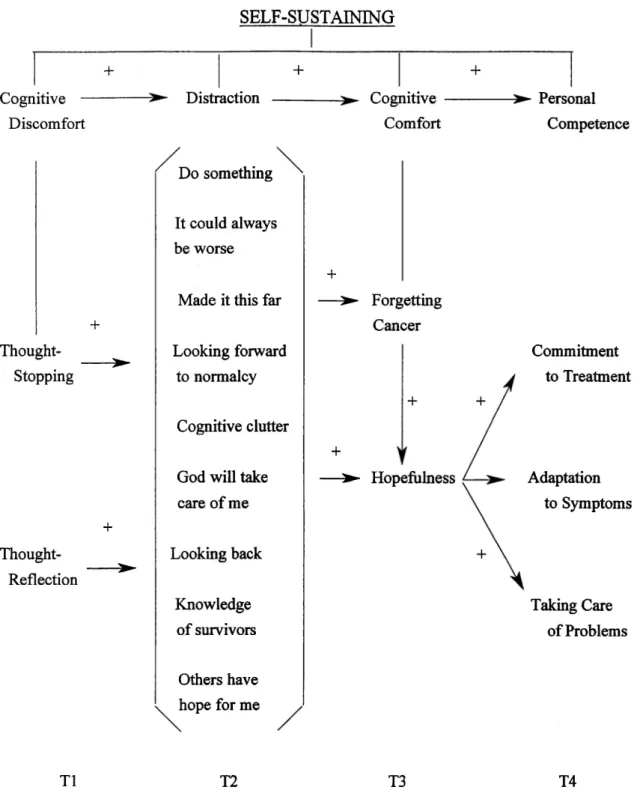
Hinds and Martin (1988) have conceptualized the self-sustaining process that helps adolescents with cancer develop hopefulness during their cancer experience (Figure
1). The self-sustaining processes include four phases in which each phase has specific strategies. The first phase, cognitive discomfort, occurs immediately after the adolescents became aware of negative or disrupting thoughts about their illness. It includes two strategies: thought stopping and thought reflection.
The second phase is distraction in which is a purposeful effort to do away with
threatening conditions. The adolescents learn cognitive and behavioral activities to
promote positive thoughts and conditions. Nine strategies are constructed in this phase:
do something; I could always be worse; looking forward to normalcy; cognitive clutter;
God will take care of me; looking back; knowledge of survivors; and others have hope for
me.
The third phase is cognitive comfort in which refers to periods of comfort and
lifting of spirits during the course of their illness. This phase includes two strategies:
forgetting cancer and hopefulness.
The fourth phase is personal competence in which changes the adolescents' view
to resilient, resourceful, and adaptable in the face of serious health problems. Personal
competence includes three strategies: commitment to treatment, adaptation to symptoms,
and taking care of problems. Hinds and Martin have concluded that the self-sustaining
process is changeable and can occur in minutes or weeks. Also, some phases take longer
than others or may be skipped. Moreover, the improvement of the adolescent through the
process can be influenced by the behavior and attitudes of others. Positive relationships
also exist among the four core concepts.
3. Summary
The self-sustaining process is useful for understanding how adolescents with
cancer develop resilience. The reason for this is that the self-sustaining process has implications for studying the meaning of the protective processes that Rutter has mentioned. Rutter's protective process mechanisms include turning points such as (1) involving in a risk factor, (2) stopping a negative chain of thoughts of risk, (3) increasing self-esteem or self-efficacy, and (4) opening up to new opportunities. Similarly, the self-sustaining processes have four phases: (1) cognitive discomfort, in which adolescents are aware of stopping negative thoughts; (2) distraction, which focuses on positive
thoughts or activities; (3) cognitive comfort, in which adolescents forget cancer and concentrate on hopefulness; (4) personal competence, in which adolescents face serious problems.
There are some important concepts in the model. First, an expanded framework
of resilience might include protective processes that are present within the individual, within the family and peer network, and within the school environment and the community (Olsson et al., 2003). Therefore, research needs to focus on people who support the
adolescents in order to promote resilience. Second, this model should also be aimed at adolescents who are in different developmental stages and phases of cancer therapy. According to Weekes and Kagan (1994), adolescents who have experienced cancer have also used different coping strategies in different developmental stages before and after cancer therapy. In addition, as Rutter pointed out, building a knowledge base for
expanding on cultural differences should be investigated. One is whether or not to reveal the diagnosis of cancer. Research reviewed in this study may have been conducted on adolescents who were told their diagnosis. However, this is not always the norm in other cultures. Another concern is that the length of hospitalization also appears to be different in different countries (US Bureau of the Census, 1991; Statistics and Information
Department Minister's Secretarial, 1999). This approach will improve the understanding of resilience in certain patients in certain cultures and help adolescents to promote
resilience.
Promoting factors of resilience in childhood has been discussed within three
broad areas: individual youth, their families, and societies (Gramezy, 1991; Olson et al., 2003). Self-esteem promotes protective processes through secure and supportive persona] relationships or success in task achievement (Rutter, 1987. 1990). For this reason,
self-esteem was measured with the simplified Japanese self-perception scales for
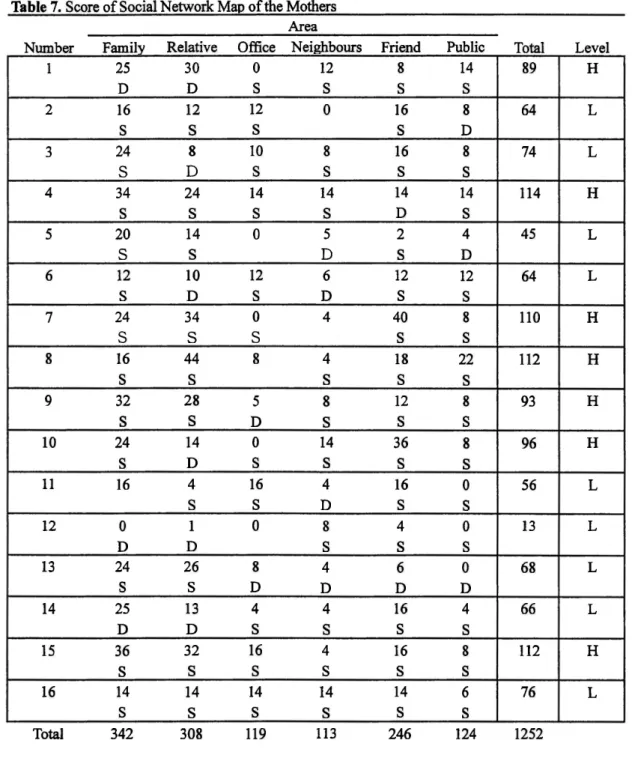
adolescents (Ueda, 1992) and for adults (Ueda & Takahashi, 1992). The social support of adolescents and their parents was also measured with the Social Network Map (Kamatani et al, 1988).
Methods
Qualitative research seeks to gain insight through discovering the meanings of a
phenomenon (Seale et al., 2004). A case study research method was used for this study to understand about resilience of Japanese adolescents with cancer. Quantitative study was also conducted to exam related to resilience such as self-esteem and social support.
Case studies typically focus on "how" or "why" questions are being posed, when the investigator has little control over events, and when the focus is on a concurrent phenomenon within some real-life circumstance (Yin, 1994). One approach to link data for case studies is a pattern-matching described relating several pieces of information from the same case to the
same theoretical proposition (Yin, 1994). Using a pattern-matching logic is one of the most desirable strategies for case study analysis to support internal validity. Such an analysis compares an empirically based pattern with a predicted one. Each case study and unit of analysis should be similar to those previously studied by others or should differ in clearly defined ways (Yin, 1994). In a case study internal validity is supported if all the patterns fit with the proposition (internal replication). However, if the patterns do not fit, even if one variable does not fit, the propositions would not be accepted. A theory must be tested through replications of the findings by second or third cases (theoretical replication) (Yin, 1994). Once such replication has been made, the results might be accepted for a much larger number of similar cases. The empirical results may be more effective if two or more cases support the same theory, but do not support a rival theory (Yin, 1994). The goal of
reliability is to minimize the errors and biases in a study such as using case study protocol and developing a case study database (Yin, 1994).
1. Procedure
The proposal was approved by a university based ethical review committee. Permission to work with the adolescents and their parents was obtained from the
administrators and chief oncologists of four agencies. Physicians from each of agencies selected the families. After the child and parent(s) expressed interest, the first author and the physician arranged date, time, and the place for data collection. Because of the physical condition of the adolescents, the author called the physician to confirm the interview a couple of days before meeting the participants. The author contacted the adolescents and parents and explained about the study to them and obtained their informed consent before
participating in this study.
2. Participants
Participants were recruited from four agencies in the west of Japan (Table 1).
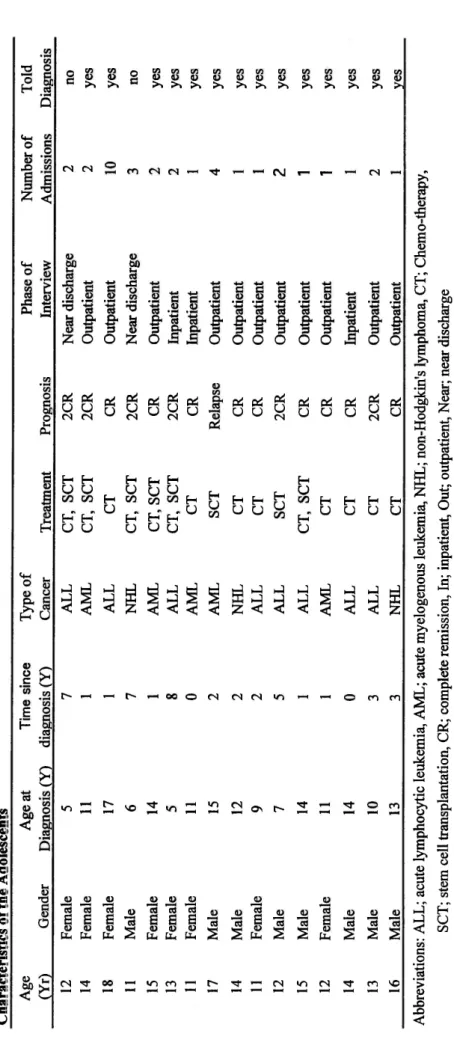
Adolescents with cancer aged 11 to 18 years and from inpatients who had just completed therapy and to outpatients who were within two years of being discharged were invited in this study. Their mothers were also asked for interviewed. Sixteen adolescents and their mothers participated. Demographic data and medical information from the patient's medical record were collected. The seven participants (8 females and 8 male) ranged in age from
11-18 at the time of the interviews (Table 2). They had been diagnosed with 8 acute
lymphocytic leukemia and 5 acute myelogenous leukemia, and 3 non-Hodgkin's lymphoma. The time since diagnosis ranged from 0 to 8 years. Eight respondents had experienced relapse and eight respondents were newly diagnosed. Of the 16 adolescents, 14 were told their diagnosis and 2 were not. Moreover, the adolescents were able to speak and read Japanese and those who could participate physically and mentally. Three participants were lost during this study because of death.
3. Data Collection
Data was collected through semi-structured individual interviews, medical and
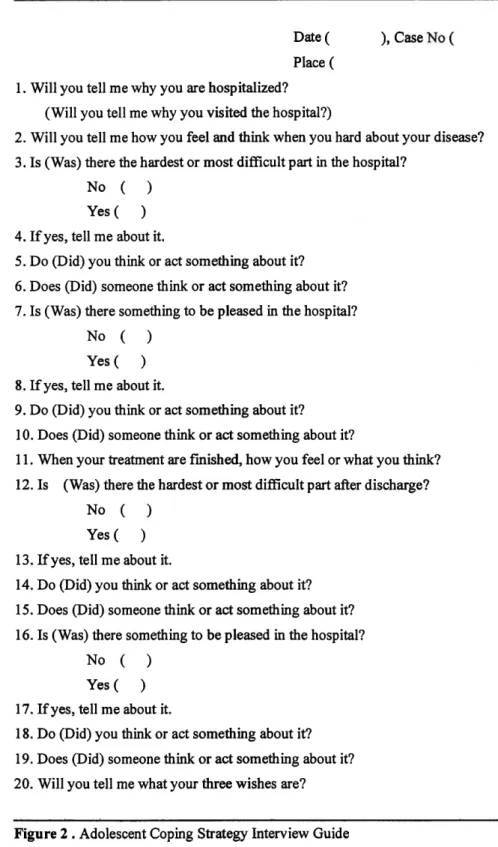
demographic information with the adolescents, and surveys with them and their mothers. The interviews were managed face-to-face and audiotape. Based on the Weekes and Kagan's (1994) semi-structured interview guide, the interview's questions were developed and studied for a pilot study (Ueda & Ishibashi, 2002) (Figure 2). The adolescent interviews included coping strategies in three specific phases such as inpatient, near discharge, and outpatient phases. Coping strategies related to dealing with cancer treatments and a normal life including relationships with family, friends, or others, study, life purpose, hope, and social support were identified. The interview was started by asking, "Will you tell me why you are hospitalized?" It was also very important to know which participants were told their diagnosis and which ones were not told. Therefore, the author had to be careful when asking questions not only during interviews, but also before and after interview. The
words ,"cancer" and "death", were not used by the author during interviews, but these terms were used when the adolescents who were told their diagnosis started to use the terms by themselves. Also, the guidelines for collecting data were used during the interviews (Figure 3, 4)
The first author conducted interviews. Five interviews were conducted in the hospital, 9 was at an outpatient, and 2 were done in the adolescents' homes, in which cases they lived in other cities. The interviews ranged in length from 30 to 50 minutes. Once the interviews were completed, the author wrote field notes containing the adolescents' behavior, attitude, and perception. The tapes were then transcribed verbatim.
A Simplified form of Japanese Version of Self-Perception Scale for Adolescents (SJS-PSA I) and for adults (SJS-PSAII) and a Social Network Map translated into Japanese (SNM) were used. The SJS-PSA I, II are a 13-item instrument and are rated on a 4-point
scare from 1 to 4 that assesses self-esteem. The scale has been shown to have adequate internal consistency (Cronbach's alpha = .809 for mother having child at risk (Ueda. 1993).
The one of the SJS-PSA II is .794 (Takahashi & Ueda, 1992). The SNM is an investigator that how children perceive their social world. The scale has 4 circles and 6 pieces of them. The center represents the child itself. The most important persons should be placed in the inner circle, and the least important in the third circle. The outer ring should be located negative contacts' person. Satisfaction and dissatisfaction are marked in a box at each sector. A measure was obtained by in the nearest circle segment by 8, the next circle segment by 4, 2, and 1. The essential aspects of the map showed good stability over time.
4. Data Analysis
In the analysis, a pattern-matching logic that compares a pattern with a proposition was used. For this reason, the self-sustaining process (Hinds & Martin, 1988) was applied as a guide to define the case and unit of analysis that include four sequential core concepts: cognitive discomfort, distraction, cognitive comfort, and personal competence (see Figure 1 for the self-sustaining process). Rigorous application of the coding techniques by two analysts helped to maintain the reliability and validity of the analysis (Pope & Mays, 2000; Burns & Grove, 1987). The first author and a cooperator conducted content analysis. The author independently identified coding categories through a careful and restrictive review of the data. We then compared major code categories strictly and found that the categories most closely matched the self-sustaining process. First, data were divided into phases including the inpatient, the near discharge, and the outpatient phases. Second, the data identified four concepts such as distraction, cognitive discomfort, cognitive comfort, and personal competence. Third, the data in each concept identified five areas related to social support: friends, family, health care professionals, teachers, and others. The coding categories were checked strictly using the same coding process by the cooperator. The
author then compared the coding categories between an interview and the self-sustaining process to discover differences or similarities to one another.
These coding processes were replicated in all cases. The replication approach is illustrated in Figure 5. (This figure is derived from research on the case study method; see Yin, 1994). We have made a literal replication in 4 cases (cases 1, 2, 3, and 4). Then we made a theoretical replication among 3 cases (cases 5, 6, and 7).
The SJS-PSA I, II and the SMN were analyzed by statistically using the SPSS. 3. The relation between the mothers' of the SJS-PSA and the SMN and those of their children was evaluated. Also, the correlations between the SJS-PSA and the SNM of the adolescents were analyzed.
-13-Findings
We begin with a description of the adolescents' reports of positive changes and later discuss the factors of promoting their resilience. Sixteen cases were replicated from the self-sustaining process such as cognitive discomfort, distraction, cognitive comfort, and personal competence. This case study report is divided into three parts. First part
concerns adolescents who were told and those who were not told that they had cancer. Second part shows the relationship concerning hope of newly diagnosed and
relapse-experienced adolescents who were told that they had cancer. Last one discuses about self-esteem and social support.
1. Adolescents Who were Told and Those Who were Not Told That They Had Cancer
We will describe the relationship between the adolescents who were not told and
those who were told that they had cancer, and then analyze the cases crossly. We analyzed the description of each adolescents report by a variety of positive changes
including awareness, positive thinking, interaction with others, future possibilities, thought of regulation, and adaptation. These six categories are related to the self-sustaining processes (Hind & Martin, 1988). According to the processes, in the cognitive
discomfort phase adolescents with cancer become aware of negative or disruptive thoughts about their disease. These experiences move on to the distraction phase which promotes their positive thoughts and interaction with healthy others. In the cognitive comfort phase they experience lifted spirits and consider future possibilities. The adolescents become to think about regular staff. In the final phase, personal competence, the adolescents
perceive themselves to be resilient and adaptable in the face of cancer.
1) Adolescents Who were Not Told They Had Cancer
Two participants were not told the name of their disease. Figure 5 shows the replication of cases 1 and 4.
(1) Individual Case Studies
Case I
The adolescent was a 12-year-old female who experienced relapse and was not told the name of her disease. She was first diagnosed as having cancer at 5 years old. When she was 5 years old, she had a bitter experience of being teased about her loss of hair
by her classmates. At the time of the interview she was expected to go home within one week. She wore a bandana and a mask. She lost her right arm due to an accident at 5 years old. She had neat hand writing as she was ambidextrous. She had practiced writing. She looked a little anxious at the beginning, but could express her feelings little by little. She worried about dying (Table 2 & Figure 6).
There was no information about the cognitive discomfort phase. She was told that her blood was affected with a virus at the time of her diagnosis. In the distraction phase, despite difficult therapy, she sometimes could have good times and participates events in the hospital with support. She wrote letters to her friends. Her teacher sometimes visited. In the cognitive comfort phase her hope was recovery, the health of her family, and a school event. Near the time of discharge she was worried about reentering school. She said that her classmates might ask her why she could not drink cold milk. She did not want to participate in sport events in school because she run too slow too. She was also worried about being an outpatient because she had to get painful punctual. In the personal competence phase, however, she wanted to participate in school activities in the coming summer. She positively said, "I may be able to swim. I cannot crawl, but I can swim 5 meters." Figure 7 represents this description.
Case 4
The adolescent was an 11-year-old male who had experienced a relapse, but not told the name of his disease. His mother told the author that her son had not been told the name of his disease. He was expected to go home in the afternoon. At 7 years old he had an experience of being teased about his loss of hair by his classmates. He wore a hat and a mask and looked shy. During the interview he talked in a very quiet voice and sometimes the interviewer could not hear him. He kept his face down and did not talk very much about his disease or his time in the hospital. When asked about being
discharged, he held his face up and began to answer questions about going home (Table 2 & Figure 6).
Despite no information concerning the cognitive discomfort phase he tried to cope with painful procedures in the second phase. He explained that while he was receiving difficult therapy, he thought of quickly recovering from his disease. He had hope in the next phase. His hope was a complete recovery from his disease and that his family was healthy because he was lonely. In the personal competence phase he was excited about being discharged and wanted to attend a school study trip in the summer. Although studying was his weak point, he liked to study homemaking class very much.
Also, he was very glad to be in complete remission because his transplant was success. He would also try to be optimistic if he needed to be hospitalized again. He forgot about
his disease while took walks and thought "it is ok whichever way it goes" (Figure 7).
(2) Cross-Case Analysis
In a comparison between case 1 and case 4 in the six categories there were some similarities between them (Figure 8). (1) The adolescents were not told the name of their disease. It was not clear to them how to respond to or understand their diagnosis or how to develop positive thinking after diagnosis. However, they seemed to practice positive thinking and interact with others during hospitalization. (2) Being discharged and school life seemed to be important for them to look forward to normalcy. Near discharge they could think of future possibilities such as hope related to recovery and the health of their family. They could think of regular staff. (3) Having favorite things to do helped them fain confidence. Despite having some problems at school they wanted to be there, because they could discover things they love to do.
There was no information as to their reaction to their illness. However, they may have known about their diagnosis due to experiences of relapse and development of media. One study points out that the childhood cancer patients who are not told their diagnosis recognize its seriousness by gathering information from adult's conversation and behavior and from their peers who have cancer. Then, the adolescents realized the taboos of speaking about their disease at first relapse (Bluebond-Langer, 1978) and significantly interfered with their coping (Bearison, 1991).
It is not clear whether the adolescents believed that they could cope. They might learn cognitive and behavioral activities to promote positive thoughts. Follow up studies are needed. Hind and Martin (1988) noted that younger adolescents did not have a projection themselves in the future.
Adolescents expressed directly that they wanted to completely recover from their disease. Adolescents may be influenced by developmental differences. Based on Piaget (1969)' theory (cited in Pillitteri, 1999, p. 191), school-aged children seem to solve
everyday problems in a concrete manner such as cause-and-effect relationships. Also, the adolescents had hope that their family members would live a long life, so they would not be alone. Perhaps, adolescents feel lonely and anxious during hospitalization.
Moreover, even though their classmates had teased them about their baldness, adolescents may want to have a relationship with their schoolmates and maintain their adolescent life.
-16-Erikson (1968) stated that school-age children learn the rules in their social relationships with others and develop a sense of industry for establishing a stable identity (cited in Wong
et al., 1999, p. 133).
Adolescents might use some strategies to overcome problems and develop psychologically. 4These adolescents had bitter experiences at school before. However, they tried to take care of their problems by finding things they enjoyed. Also, they attempted to focus on what they could do. Based on Erikson' theory, school age children will experience success if they set more realistic goals (cited in Wong et al., 1999, p. 133).
2) Adolescents Who were Told Cancer That They Had Cancer
Three adolescents, cases 2, 3, and 5 were replicated (Figure 5). They were told the name of their disease and were newly diagnosed and relapse-experienced.
(1) Individual Case Studies
Case 2
An adolescent, a 13-year-old female, was told the name of her disease and
experienced a relapse. She had been discharged with a good prognosis through the use of a new medicine. The interview was done at her home. She wore a pretty hat and a mask. She and her mother welcomed me with a smile to the interview (Table 2 & Figure 6).
The adolescent showed signs of the processes (Figure 7). In the cognitive
discomfort phase she immediately responded when she heard about her cancer at the time of diagnosis. She did not use the word "shock", but wanted to go home soon. However, in the distraction phase she could be positive about her cancer. During hospitalization she had a purpose and dreams of becoming a musician. Therefore, she willingly studied in the hospital. She also made a lot of friends and had a fun time talking with them,
listening to music, and watching videos. She said that losing her hair would grow in again and that very short hair was the latest fashion. In the cognitive comfort phase her hope was to become a musician and to go to school. After discharge she negotiated with physicians to go to school as soon as possible. She wanted to go to school and did not miss any classes in order to visit her outpatient clinic. However, she did not express her feelings related to recovering from cancer. In the personal competent phase the
adolescent had support from her friends. She told her friends the name of her disease so
her friends understood about her disease and the side effects and supported her
emotionally. However, she would not talk with her friends about her disease or her
experience in the hospital. The mother took her child to school by car. Finally, the
adolescent thought that she could cope with any hard risk and become strong
psychologically because of her experience of having cancer.
Case 3
The patient was an 18-year-old female, newly diagnosed and was told the name of her disease. She was an outpatient. She was discharged 10 months ago and had the interview at home. She wore a wig because she had lost her hair when having a
permanent. She regretted what she had done. There was no possibility of reentry to the previous school because of her side effects so she attended a school for the disabled (Table 2 & Figure 6).
The third case showed sign of similar the processes (Figure 7). In the first phase she immediately responded when she heard she had cancer at the time of diagnosis. She was in shock and thought that the disease was very serious and fatal. However, her parents supported her and relieved her fears by describing positive outcomes. Therefore, she could think of recovery through parental support. When she was told she would lose her hair, she accepted it with parental support. In the second phase she could cope with the stress of hospitalization because of hope for a full recovery. She tried not to study, but to relax reading books and writing letters to focus on therapy. Near to being discharged she thought of regular staff in the third phase. She hoped to fully recover from her illness and side effects after being discharged. She hoped not to have a relapse or have side effects such as not being able to have babies. In the fourth phase, she dealt with her problems through social support. At the time she was discharged, her parents
advised her to transfer to a school for handicapped children because of the side effects of therapy. After being discharged she accepted her side effects and transferred to a school
for handicapped children. The adolescent had emotional support from her friends and a teacher because she told them she had cancer and her physical condition. When she
explained her side effects, the teacher said that she did not need to study hard now. Her friends never made her go outside, but instead came to her house. Also, she was aware that some people had harder lives than hers and developed a philosophy based on her experiences of having had cancer:
I know students who know how many years they will be able to live. I could not play (with my peers) before attending this school. But, I changed my mind and that living life was the most important thing. I am not afraid (of death) because I will recover from my illness.
Case 5
The adolescent, a 15-year-old female, was newly diagnosed and had been an
outpatient for four months. She guessed the name of her disease, cancer, because she had over heard conversation between her mother and her doctor. Her teacher knew about her disease and reported her condition to his class. Her hair had grown back. She attended all of her class and had a plan to go to university with her friend. She had to protect her skin from sunlight (Table 2 & Figure 6).
The adolescent showed signs of the processes (Figure 7). She was not shocked at the time of diagnosis, but was when she was told that her blood type had changed to that of her sister's through stem cell transplantation (SCT) in the first phase. During therapy she was relieved when the doctor told her that most SCT patients recovered. She could cope with cancer by thinking of her favorite things and had a good time with games in the second phase. During her therapy she accepted losing her hair and the stressful treatment through parental support. In the cognitive comfort phase she had hope such as a full recovery from the disease, her family' health, and future plans at the time of her discharge approached. In the personal competence phase she was aware of and began to prepare for reentry to school near the time of being discharged. She only thought about cancer and it s side effects during therapy. She asked the teacher about study guidebooks and studied as hard as possible. She did not want to get behind in her classes. After being
discharged she negotiated with the teacher to write a report to get a grade instead of participating in sports. She also had support from friends and got some notes taken in class by her friends. She told her close friends the name of her the disease. Some classmates were envious of her hair because her hair was beautiful. She was very pleased to hear that. However, she expressed that she did not talk with friends about her disease and experiences in the hospital. In addition, she learned how to live with cancer. When she went to school with a bandanna, people looked at her as if she were strange. But, she was getting used to it. She also developed psychologically based on her cancer
experiences:
After having cancer just existing is the most important thing for me. I don't care if I do something slower than others do. It is ok. I can do it in my own way.
(2) Cross-Case Analysis
Adolescents who are newly diagnosed and those who have experienced relapse may feel resilient. In comparing the seven categories case 2 who was relapse-experienced and cases 3 and 5 who were newly diagnosed showed similarities in the self-sustaining processes (Figure 8). (1) The adolescents immediately responded when they heard they had cancer at the time of diagnosis such as going home and feeling shock. This
experience led them to think positively along with their parents or led to thoughts of purpose. They could try to think about normal things such as going to school, growing hair, and having friendships. The adolescents who were newly diagnosed wanted to recover from cancer with parental support, but those who were relapse-experienced did not. (2) Hope seemed to be very important for the adolescents. They seemed to commit to their therapy with hope concerning such things as adolescent life, future plans, and
school. The adolescents who were relapse-experienced already had hope related to school and studied hard during early hospitalization. However, the other adolescents did only as discharge approached. Also, near discharge they were ready for normalization. They negotiated with physicians to reentry school as soon as possible. (3) The
adolescents lived with cancer and developed psychologically through having had cancer. After discharge the adolescents took care of their problems using support from their family, friends, and teachers.
The adolescents who were newly diagnosed felt very shocked by hearing the diagnosis. However, they were relieved of their distress by their parents explanation that they would recover from the disease. Parental belief that cancer is not a fatal disease seemed to be very important for newly diagnosed adolescents to deal with their disease. Mothers are the most significant source of spiritual support for adolescents with cancer (Haluska, Jessee, & Nagy, 2002; Enskar et al., 1997; Hockenberry-Eaton & Minick, 1994).
Also, the adolescents who had experienced relapse did not say that they wanted to recover, but they were eager to go to school. They seemed to avoid focusing on their disease and its treatment and used the hope of going to school as a way of leaving
treatment. Adolescents with cancer practice protective denial that focuses less on the seriousness of the illness and more on gaining health and life goals (Hinds et al., 1999).
-20-On the other hand, Foley, Fochtman, and Mooney (1993) explained that a relapse of the disease caused great anxiety concerning aggressive treatments because of negative memories.
The adolescents in this study express the feeling that "I have hope." The newly diagnosed adolescents had hope related to leisure and day-to-day activities while they were the inpatients. These findings suggest that since treatment outcomes remain uncertain, adolescents with cancer did not allow themselves to think far beyond the present (Weekes & Kagan, 1994). Hinds, et al. (1999) also suggested that the presence of hopefulness was not necessary for newly diagnosed adolescents after diagnosis. The reason for this is that protective denial helped them to have normal hope to balance the negative illness with positive hope. At the time of approaching discharge they began to study and had hope of returning to school. One report explains that levels of hopefulness were lowest at the time of admission and highest near the time of discharge. The highest hope was to recover from their illness and to be completely normal (Hinds et al., 1999).
On the contrary, the adolescents who had experienced relapse had great hope of going to school from an early phase of hospitalization and attempted to study by
themselves. They may know how to spend time in the hospital because of their past experience. That may partly explain it, but further studies are still needed. Also, these adolescents did not say anything about their recovery at the time of the discharge.
Perhaps, the adolescents feel uncertainty concerning their health. One study takes a similar view that pediatric cancer patients were aware of the serious possibility of recurrence and the number of stressors about their future increase (Hockenberry-Eaton, Dilorio, & Kemp, 1994). Hopefulness was important for maintaining health and
achieving goals, but it was not enough to strengthen the adolescents with cancer (Hinds & Martin, 1988).
Adolescents with cancer believed that they were unchanged by cancer (Hinds & Martin, 1988; Rechner, 1990; Weekes & Kagan, 1994). The adolescents in this study attempted to maintain a normal appearance. According to Erikson, the development of identity in adolescence is characterized by rapid and marked physical changes (cited in Wong et al., 1999, p. 133). Similarly, hair loss affects friendships among the adolescents with cancer because of visible differences from their peers. One study may partly
explained this. Adolescents with cancer expressed a personal philosophy, "Cancer is not fatal." This positive attitude helped them to deal with hair loss and other people's
reactions to cancer (Rechner, 1990). Adolescents who have experienced relapse seem to be optimistic and cope with losing hair. Their optimistic attitude may come from past
-21-experience that hair grows back and their goal of going back to school. As Rutter (1993) pointed out, the adolescents who have relapsed have coped with cancer successfully and have steeling experiences that build strength. In short, with support from parents, friends, and others, and with a positive attitude toward cancer, the adolescents coped with cancer and are able to have hope. They were strong in concern to their hair loss.
Also, the adolescents wanted to go to school and caught up on their studies.
Especially the newly diagnosed adolescents studied hard when approaching discharge. As Foley, Fochtman, and Mooney (1993) propose, the adolescents might be concerned
about their grades and ability to compete with peers in school. At the time of reentry to school the newly diagnosed and relapsed adolescents negotiated with a doctor to attend class as much as possible. Weekes and Kagan (1994) pointed out that the negotiation might occur from having a normal adolescence life such as keeping their independence.
The adolescents, moreover, attempted to establish relationships with friends. The adolescents who told their friends the name of their disease got spiritual support from the friends. However, some of the adolescents did not talk with the their friends about their experiences with cancer treatment because they did not want to be troublesome. Perhaps, these adolescents keep acceptance and friendships by reducing attention from classmates. According to Erikson's theory, adolescents struggle to fit the roles adopted by their peers and to integrate their concepts and values with those of the adolescent society (cited in Wong et al., 1999, p. 133). Some studies also indicated that adolescents with cancer felt themselves isolated and powerless (Enskar et al., 1997; Kameny & Bearison, 2002).
3) Analysis of Adolescents Who were Not Told and were Told They Had Cancer
Japanese adolescents with cancer seem to gain e their resilience with similar to the self-sustaining through the four processes such as cognitive discomfort, distraction, cognitive comfort, and personal competence. I found the factors and processes present which promote their resilience. The factors, honesty and hope, seem to be variable concepts for the adolescents with cancer. (1) The adolescents feel shock from being told the name of their disease. This experience may be very hard for them and their parents. (2) However, the parents become positive and give their children hope. The parents give emotional support by honest information about cancer. The adolescents' hope seems to be powerful in coping with cancer. Their hope is recovery from cancer and future purpose. (3) This hope led to normalization. The adolescents face some problems in
-22-leading a normal adolescents life. However, their cancer experience helps them to develop psychologically. (4) They learn to deal with their problems with confidence. They also can face their problems through support from their parents, health care
professionals, friends, and teachers. (5) The adolescents seem to gain resilience and have a new normal life (Figure 10).
Some issues exist in the adolescents who were not told. These adolescents may have the potential for resilience. However, their strategies may not be enough to resolve problems concerning their studies and friendships after being discharged. Their worries concerning teasing or criticism from classmates are still problems. If the adolescents receive information about their disease, they will inform friends the name of their disease and get understanding. Then, the adolescents may have more social support and promote resilience efficiently. The two cases in this study are not enough to make a theoretical replication. Further studies are needed to clarify how the adolescents develop their friendships and adolescent life after being discharge.
The adolescents who were told the name of their disease experienced similarities
to the processes and showed a literal replication. However, there are some differences
between the adolescents who were newly diagnosed and those who experienced relapse.
The latter adolescents did not talk about recovery from their cancer. Also, these
adolescents seemed to have hope earlier than the others. These issues need to study in
more cases. Figure 9 summarizes an analysis of adolescents who were not told and those
who were told cancer.
2. Hope of Newly Diagnosed and Relapse-Experienced Adolescents Who were Told
Cancer
We showed differences related to hope between the newly diagnosed and the relapse-experienced adolescents in part I. These issues lead to be replicated by more cases. To find differences related to hope among the adolescents who are newly diagnosed and relapse-experienced we replicated 14 cases. The replication method is showed in Figure 5. I represent five cases and showed nine cases in tables and figures.
-23-1) Newly Diagnosed Adolescents
The adolescents, cases 3, 5, and 7, were newly diagnosed. Cases 3 and 5 have
already been discussed in earlier parts of this paper. I show a summary related to cases 3
and 5. I replicate case 7 to the self-sustaining processes to look closely for positive
attitude.
(1) Individual Case Study
Cases 3 and 5
The adolescents in cases 3 and 5 were aware they had cancer in the cognitive discomfort phase. They were shocked at their diagnosis, but could think of recovery from cancer with parental support. In the distraction phase these experiences helped the
adolescents to have a positive attitude about therapy and interact with others in the hospital. In the cognitive comfort phase they had hope of future possibilities such as recovery during hospitalization. They continued to hope for recovery after discharge. Then, regulation for studies came to hope near the time of discharge. After being discharge their hope became more realistic than when in the hospital such as studying, having purpose for the near future, and making friendships. Then, in the fourth phase adaptation was occur. They tried to cope and live with cancer. They could make efforts and be assertive to return to school and normal adolescent life (Figure 11).
Case 7
The adolescent was an 11-year-old female. She was newly diagnosed 8 months
ago and expected to go home about one month later and seemed to be fine. She was in a clean room with a mask. There were some pictures, one thousand paper cranes, and a video tape sent by classmates (Figure 6 , Table 2). In the first phase the adolescent was in shock at the time of diagnosis because she would be hospitalized. She was able to release her fear with her parents comfort and support. This awareness led to positive thinking. In the next phase she wanted to be a healthy girl during hospitalization. She also interacted with others. It was a shock to lose her hair, but other patients encouraged her spiritually. She received support from her classmates because her younger brother accidentally used the word cancer with them. 1 She had hope related to future possibilities and thoughts of regulation in the third phase. Her hopes were a full recovery from cancer, leisure activities, and interaction with her friends outside. In the last phase she
adapted to living with cancer and committed to continue receiving the treatment as being discharged approached in the last phase. She began to think about purpose such as reentry to school and her studies more while being in the hospital (Figure 7, 8, 11).
(2) Cross-Case Analysis Among Cases 3, 5, and 7
The adolescents who were newly diagnosed hoped to recover from their disease after being diagnosed and felt shock. The adolescents who were newly diagnosed felt shock, but hoped to recover from their disease from parental support after being diagnosed Therefore they seemed to cope well with stressful therapy. They began to study hard for reentry to school that was their strong hope nearing discharge. After being discharged all of the adolescents became realistic and concerned about school life and future purpose . They sometimes faced some difficulties related to their studies due to adaptation to their cancer. However, they negotiated with their physicians or teachers to study or got support from others to resolve them. Their hope of recovery continued after discharge .
2) Relapse-Experienced Adolescents
The adolescents in cases 2 and 6 had experienced relapse. I show a summary of
case 2 (based on Figure 11). C6 was replicated for positive attitude.
(1) Individual Case Studies
Case 2
Without expressing shock she was aware of that she had cancer at diagnosis and seemed to look forward to normalcy. In the distraction phase her purpose Made her to be a very positive attitude about therapy and hospitalization. She made a lot of friends in the hospital. Also, she tried to study for the purpose.) In the cognitive discomfort phase she thought of her purpose in life and interacted with friends. In the distraction phase her goal of becoming a musician helped her to have a very positive attitude concerning therapy and hospitalization. She made a lot of friends in the hospital. She also tried to study for her goals. In the cognitive comfort phase this hope or purpose became more realistic after being discharged. She thought of future possibilities and thoughts of regulation. She made efforts and was assertive concerning returning to school and leading a normal adolescent life. In the personal competence phase adaptation occurred. She negotiated
with her physician as to going to school as soon as possible. She also wished to go to school every day without to visiting the outpatient clinic. The patients may develop psychologically through their experience of having had cancer (Figure 11).
Case 6
The female adolescent was a13 year old in relapse and had spent 8 months in the hospital. She first diagnosed cancer at the age of 5. She had a small amount of fine hair
and wore a mask. She was still losing hair. She was interested in my sunglasses.
During interview she was fine and laughed a lot. When I left her room she said, "See you again" (Figure 6, Table 2).
In the first phase she did not report any experience of "shock". She heard everything when she was told diagnosed from a doctor. At that time she was aware of the seriousness of her disease. In the second phase she thought positively about friendships and school. She exchanged information with her friends about her daily life in the hospital and school. She was positive and had an optimistic attitude concerning her hair
loss. In the third phase she thought of future possibilities and regulation. She hoped to study at a higher level than she had in the hospital classes. There was a high school that she wanted to go. Her hope was related to school and school activities after being discharged, but not associated with recovery from cancer. In the fourth phase she transferred to a regular school from the hospital class. Then, she studied hard by herself in the hospital. She did not want to get behind in her classes.( , so she studied hard by herself in the hospital. )She adapted to having cancer. Also, she spent her timer in the hospital alone because of her willingness to be independent of her parents through the influenced of other patients (Figure 7, 8, 11).
(2) Cross-Case Analysis
The adolescents who experienced relapse did not talk about recovery from cancer at the time of diagnosis. They also seemed to cope with stressful hospitalization using positive strategies. They also seemed to cope with stressful hospitalization using positive strategies because they had already had cancer. Therefore, they knew how to cope with the stressful situation. They studied and thought of school at an earlier stage than the others did. They thought about going back to school and participating in school activities while being in the hospital. Therefore, they studied very hard to reach their goals. They negotiated with people to catch up with their studies. Because they told