and Supply Chain Partners for Supply Chain
Integration in a Developing Country: A
Multiple Case Study of Vietnam's Motorcycle
Industry
著者
NGUYEN KIM NGAN
学位授与機関
Tohoku University
学位授与番号
11301
Collaboration between Multinational
Companies and Supply Chain Partners for
Supply Chain Integration in a Developing
Country: A Multiple Case Study of Vietnam’s
Motorcycle Industry
Tohoku University
Graduate School of Economics and Management
Thesis Advisor Nozomu Kawabata
Thesis submitted for the degree of Doctor of Philosophy
by
Nguyen Kim Ngan
Date of submission August 2020
Keywords: Multinational companies, local partners, supply chain integration
01
n
2
01
4
A
CKNOWLEDGEMENTS
Along the way to conduct this research, I have received invaluable help from a great many people. I want to show my gratitude to the local traders, multinational companies, and suppliers in Vietnam’s motorcycle industry, who gave me generous supports for factory visits and precious data during four research fields. This thesis could not have been completed without their cooperation.
Further, I am indebted to my academic advisor, Prof. Nozomu Kawabata, for his
guidance, constant support, and encouragement throughout this study. Prof. Kawabata is instrumental in developing my academic knowledge and critical thinking ability to analyze the subject matter. I would also like to thank A. Prof. Kohei Mishima, Director of Southeast Asian Studies Group II, Mai Fujita, A. Prof. Ayumu Sugawara, and other experts for sharing their priceless experience and comments to conduct and improve this thesis.
I would also like to show my gratefulness to the scholarship funds, including Japan Student Services Organization, Kobayashi International Scholarship Foundation, JT Asia Scholarship, MEXT scholarship, and Tohoku University’s research grant. Without their financial assistance, I could not have conducted the research fields to collect data. Personally, I am obligated to my mother, brother, and best friends for encouraging me to stay focused and try to complete the Ph.D. thesis. I would like to thank them for their love and mental support during my Ph.D. journey as well as the Coronavirus pandemic. I owe this accomplishment to all of them.
01 4
C
ONTENTS
1 INTRODUCTION ... 1 1.1RESEARCH BACKGROUND ... 1 1.2LITERATURE REVIEW ... 21.2.1 International process of market-seeking MNCs ... 2
1.2.2 Industrial organization and local context literatures ... 3
1.2.3 Network embeddedness and supply chain integration ... 4
1.2.4 MNCs’ contributions to developing economies, the supply chain approach ... 10
1.2.5 Research gaps, research questions of the thesis... 11
1.3METHODOLOGY ... 13
1.3.1 Research design ... 13
1.3.2 Case selection ... 14
1.3.3 Data collection ... 15
1.3.4 Coding and analysis ... 16
1.3.5 Analytical framework and structure of this thesis ... 17
2 MARKET ENVIRONMENTS, LOCAL TRADERS’ BEHAVIORS AND MNCS’ DISTRIBUTION SYSTEM ... 19
2.1INTRODUCTION ... 20
2.2LITERATURE REVIEW AND ANALYTICAL PERSPECTIVE ... 21
2.2.1 MNCs’ distribution channels ... 21
2.2.2 How MNCs affect host countries from distribution perspective... 21
2.2.3 How local contexts affect MNCs’ distribution channels ... 22
2.2.4 Impact of second-hand market and aftersales market on main market ... 22
2.2.5 Analytical framework ... 22
2.3HISTORICAL BACKGROUND ... 23
2.4DISTRIBUTION OF NEW MOTORCYCLE... 24
2.4.1 MNCs’ distribution system building ... 25
2.4.2 Local dealers’ behaviors ... 27
2.5THE DISTRIBUTION OF USED MOTORCYCLES, SPARE PARTS, AND REPAIR SERVICE ... 29
2.5.1 Second-hand motorcycle market ... 29
2.5.2 Spare parts and repair market ... 31
2.6DISCUSSION AND IMPLICATIONS ... 32
2.6.1 MNCs’ distribution channel building ... 32
2.6.2 The impact of market environments and local traders’ behaviors ... 33
2.6.3 Implications ... 34
3 MNCS’ SCI TO RESPOND TO THE LOCAL MARKET ... 36
3.1INTRODUCTION ... 36
3.2LITERATURE REVIEW ... 37
3.2.1 Supply chain integration ... 37
3.2.2 Customer order decoupling point... 38
3.2.3 LLS and LSP indexes ... 40 3.2.4 Analytical Framework ... 42 3.3SCI PROCESS ... 42 3.3.1 MNC A’s SCI ... 43 3.3.2 MNC B’s SCI ... 45 3.3.3 MNC C’s SCI ... 48
3.4DISCUSSION AND IMPLICATION ... 49
n
2
01
4
3.4.2 Why do MNCs select a specific SCI strategy?... 50
3.4.3 Implications and conclusion ... 53
4 TRANSACTION GOVERNANCE IN DISTRIBUTION NETWORKS ... 55
4.1INTRODUCTION ... 56
4.2LITERATURE REVIEW ... 56
4.2.1 Channel governance with achieving collaborations ... 56
4.2.2 Analytical framework ... 58
4.3TRANSACTION GOVERNANCE:ISSUES,GOVERNANCE METHODS, TRADE-OFFS 58 4.3.1 Major issues affecting transaction governance ... 58
4.3.2 Contract designs and coercion in MNC-dealer transaction governance ... 60
4.3.3 Mitigating methods to induce dealers’ collaborations ... 62
4.3.4 Transaction governance between dealers and sub-dealers ... 63
4.3.5 The trade-offs in transaction governance ... 64
4.4DISCUSSION AND IMPLICATIONS ... 65
5 TRANSACTION GOVERNANCE IN SUPPLIER NETWORKS ... 67
5.1INTRODUCTION ... 68
5.2LITERATURE REVIEW ... 68
5.2.1 Transaction governance with achieving collaborations... 68
5.2.2 Supplier relations in Japanese automotive industries ... 69
5.2.3 Supplier systems of Vietnam’s motorcycle industry ... 72
5.2.4 Research gaps and analytical framework ... 74
5.3TRANSACTION GOVERNANCE IN SUPPLIER NETWORKS ... 74
5.3.1 Contract design and monitoring ... 74
5.3.2 Mitigating methods to induce collaboration ... 79
5.3.3 Outcomes: commitments and supplier development ... 81
5.4DISCUSSION AND IMPLICATIONS ... 86
6 CONCLUSION ... 88
6.1HOW DO MARKET ENVIRONMENTS, LOCAL TRADERS’ BEHAVIORS AFFECT MNCS’ BUSINESS? ... 89
6.2HOW DO MNCS CONDUCT SCI TO RESPOND TO LOCAL MARKET? ... 90
6.3HOW IS THE TRANSACTION GOVERNANCE WITH ACHIEVING SC PARTNERS’ COLLABORATION FOR SCI? ... 91
6.4HOW CAN WE REVISE THE WAY TO ASSESS MNCS’ EMBEDDEDNESS AND THEIR CONTRIBUTIONS TO A DEVELOPING COUNTRY? ... 94
6.4.1 MNCs’ embeddedness ... 94
6.4.2 MNCs’ contributions to the host country ... 96
7 REFERENCES ... 98
01
4
List of Tables
TABLE 1.1NUMBER OF INTERVIEWS ... 14
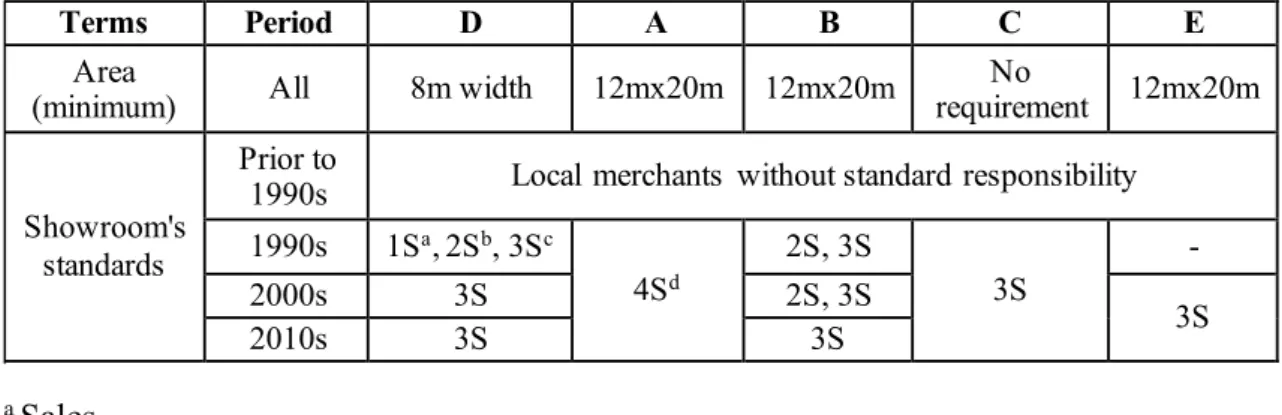
TABLE 2.1MNCS’ DEALERSHIP STANDARDS ... 25
TABLE 2.2THE AVERAGE NUMBER OF STAFFS IN ONE SHOWROOM (UNIT: PERSON) ... 27
TABLE 2.3NUMBER OF DEALERSHIPS AND STORES OF EACH MNC ... 29
TABLE 2.4THE BUYING PRICE AT A SHOP IN CU CHI DISTRICT OF HO CHI MINH CITY ... 29
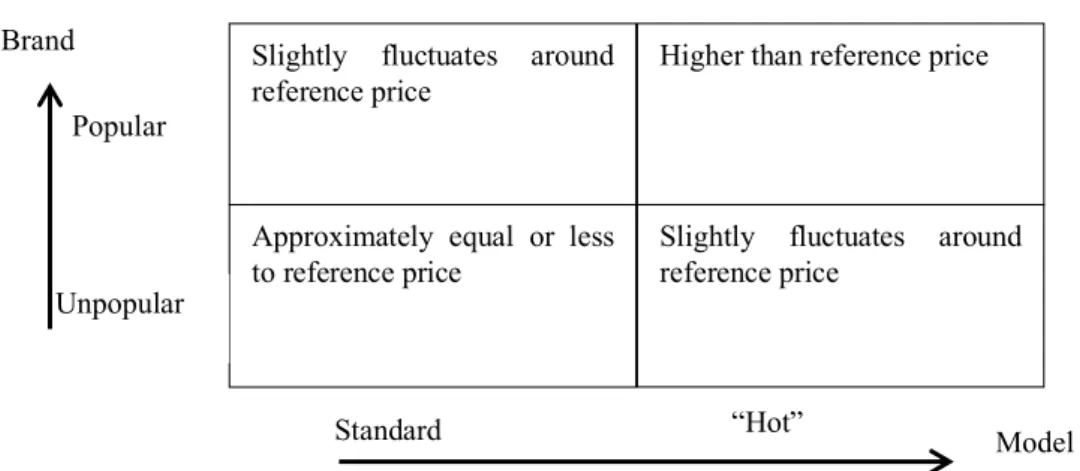
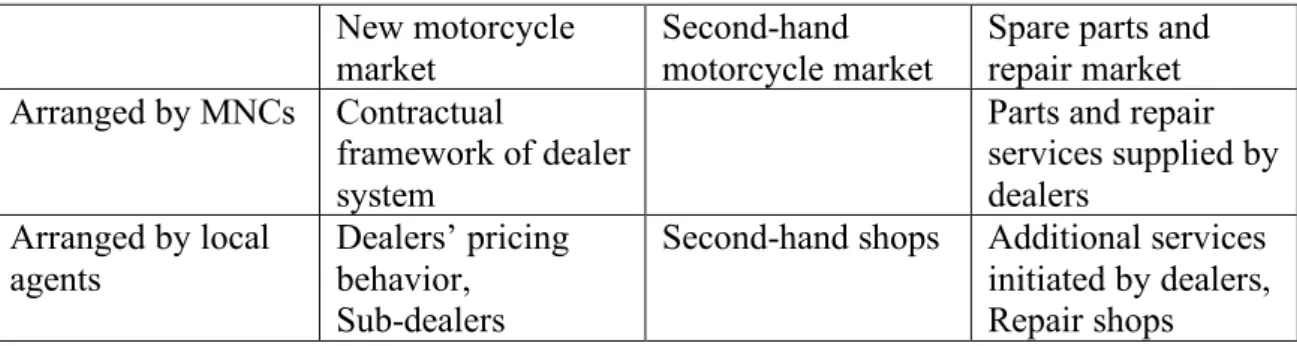
TABLE 2.5MATRIX OF MARKET SEGMENTATION AND LEADERSHIP IN DISTRIBUTION 33 TABLE 3.1COMPARISON BETWEEN SCI PATTERNS (UNIT: DAY) ... 49
TABLE 3.2A MODEL FOR CHOOSING THE RIGHT SCI STRATEGIES ... 51
TABLE 4.1AVERAGE SALES OF DEALERS AND SUB-DEALERS INTERVIEWED ... 59
TABLE 4.2NEGOTIATIONS AND DEALER’S PERCEPTION OF POWER ASYMMETRY ... 65
TABLE 5.1LOCAL OUTSOURCING AT MNCA... 73
TABLE 5.2MNCA’S PARTS PROCUREMENT PATTERN FOR SCOOTER AND MOPED IN 2002 AND 2018(%) ... 84
TABLE 5.3MNCB’S PARTS PROCUREMENT PATTERN FOR SCOOTER AND MOPED IN 2002 AND 2018(%) ... 85
TABLE 5.4MNCB’S DOMESTIC PURCHASING VALUE BY SUPPLIER’S NATIONALITY .. 85
TABLE 6.1THE TRANSACTION GOVERNANCE BETWEEN CORE FIRMS AND SC PARTNERS ... 93
n
2
01
4
List of Figures
FIGURE 1.1:SUMMARY OF LITERATURE REVIEWS... 11
FIGURE 1.2:MNCS’SCI IN DEVELOPING COUNTRIES ... 17
FIGURE 1.3:SUPPLY CHAIN INTEGRATION UNDER UNCERTAINTY ... 17
FIGURE 1.4:THESIS’ STRUCTURE ... 18
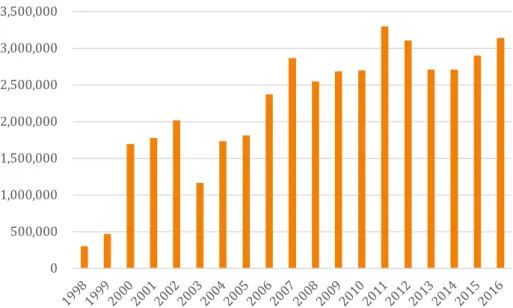
FIGURE 2.1:MOTORCYCLE STATISTICS IN VIETNAM ... 24
FIGURE 2.2:THE DISTRIBUTION OF MOTORCYCLES IN VIETNAM ... 25
FIGURE 2.3:ORGANIZATION STRUCTURE OF 3S STANDARD ... 27
FIGURE 2.4:PRICING AT MNCA AND B ... 28
FIGURE 2.5:COMPARISON OF PRICES IN THE SECOND-HAND MARKET ... 30
FIGURE 3.1:DIFFERENT CUSTOMER ORDER DECOUPLING POINTS ... 39
FIGURE 3.2:A MODEL FOR CHOOSING THE RIGHT MANUFACTURING STRATEGY ... 39
FIGURE 3.3:LLS AND LSP INDEXES ... 41
FIGURE 3.4:FLOWS OF INFORMATION AND GOODS IN PRODUCTION PLANNING... 42
FIGURE 3.5:MNCA’S SCI ... 43
FIGURE 3.6:MNCB’S SCI... 46
FIGURE 3.7:MNCC’S SCI ... 48
FIGURE 4.1:CHANNEL ORGANIZATIONS IN MOTORCYCLE MNCS IN VIETNAM ... 59
FIGURE 4.2:INCOME STRUCTURE OF DEALERS ... 61
FIGURE 6.1:MNCS’SCI IN VIETNAMESE MOTORCYCLE INDUSTRY ... 89
FIGURE 6.2:SUPPLY CHAIN INTEGRATION UNDER UNCERTAINTY ... 92
01
4
L
IST OF
A
BBREVIATIONS AND
A
CRONYMS
ATO: Assemble-to-order
CODP: Customer Order Decoupling Point DCS: Dealers Communication System ETO: Engineer-to-order
FDI: Foreign Direct Investments GDP: Gross Domestic Product HQ: Head Quarter
IB: International Business IM: International Marketing
JETRO: Japan External Trade Organization JIT: Just in Time
LLS: Length of Lead Time for Scheduling prior to Production LSP: Lot Size of Planning
MNCs: Multinational Companies MTO: Make-to-order
MTS: Make-to-stock
P/D: Production Lead Time/ Delivery Lead Time POs: Purchase Orders
QCD: Quality, Cost, Delivery R&D: Research and Development RDV: Relative Demand Volatility RDT: Resource Dependence Theory SC: Supply Chain
SCI: Supply Chain Integration TCE: Transaction Cost Economics
n
2
01
4
L
IST OF
A
PPENDICES
APPENDIX 1LISTS OF INTERVIEWS ... 109
APPENDIX 2QUESTIONNAIRES WITH DEALERS (SUMMARY OF TWO INVESTIGATIONS IN 2015,2016) ... 112
APPENDIX 3QUESTIONNAIRES WITH SUB-DEALERS ... 116
APPENDIX 4QUESTIONNAIRES WITH SECOND-HAND SHOPS ... 118
APPENDIX 5QUESTIONNAIRES WITH REPAIR AND SPARE PART SHOPS ... 119
APPENDIX 6QUESTIONNAIRES WITH MNCS IN 2017 ... 122
APPENDIX 7QUESTIONNAIRES WITH MNCS IN 2018 ... 126
1 Introduction
1.1 R
ESEARCH BACKGROUNDResearch on Multinational Companies’ (MNC) international operations is one of the main pillars in International Business (IB) field. MNCs are the primary drivers of World economic growth and global integration, the creators and transferors of new knowledge and technology across borders. MNCs contribute to developing countries by creating more jobs, upgrading workforce quality, enhancing industrialization, upgrading living standards with various product lines and services, and affecting the balance of payment and trade structure. Their global value chain is considered as an instrument for efficient allocation of economic activity across borders by exploiting location-specific
advantages of each country (Dunning and Lundan, 2008; Jones, 2005; Kotler and Kotler, 2014). Considering MNC’s importance, many scholars have devoted their studies to developing the literatures in IB field. However, while the technology and economic world do not stop changing, and the local environments are diverse, there are continuous calls for more studies to enhance our knowledge.
One rising topic is the MNCs’ operation in developing countries. Xu and Meyer (2013) explicitly state that the contexts of developing countries are different from those of developed countries. Accordingly, the higher searching, monitoring, and enforcement costs due to less transparency and more information asymmetries led to less efficient markets. Due to the less efficient markets and the social traditions, network-based behaviors and how firm interact with each other are different from developed countries. In developing countries, the governments’ intervention by changing the rules and policies, by State-owned business operations, is prevalent. Furthermore, the high volatility of key economic and political variables leads to higher risk and uncertainty, which hampers MNC’s strategic decisions. Therefore, “some of the assumptions of existing theories are less appropriate for emerging economies” (Xu and Meyer, 2013, pp. 1323), and the research on MNCs’ operations in those markets is increasingly important.
In this sense, this thesis contributes to IB research by investigating MNCs’ operations in the Vietnamese motorcycle industry.
In the next section, the relevant IB literature is reviewed to see what they have discussed so far about MNCs’ operations in developing countries. Based on that, research gaps are pointed out. Then, research questions and analytical framework to fulfill the gaps are set up. Finally, the method to conduct the research is demonstrated.
1.2 L
ITERATURE REVIEW1.2.1 I
NTERNATIONAL PROCESS OF MARKET-
SEEKINGMNC
SDunning and Lundan (2008) categorized four types of foreign direct investments (FDI), including market seekers, natural resource seekers, the efficiency seekers, and the strategic asset seekers. Among them, market-seeking MNCs get the most involvement in host countries because they produce to serve the local market rather than as part of an integrated supply chain for a global market (Dunning and Lundan, 2008; Lou and Park, 2001). Market seekers frequently need to adapt their products and marketing strategies to local tastes. To do that, they try to grasp the knowledge of indigenous resources and local environment, familiarize themselves with the local institutions, business customs, and cultures. Thus, research on market-seeking MNCs may provide fruitful insights into the interactions between MNCs and local factors as well as their contributions to host countries. Accordingly, this thesis focused on market-seeking MNCs when investigating MNCs’ operations in developing countries.
“Why, where, and how” market-seeking MNCs expand their operation in a specific country is explicated by the OLI paradigm (Dunning and Lundan, 2008). For the “why,” MNCs can maximize their profits by expanding markets overseas because they have the ownership advantages (O) of “capital, technology, information,
management and organizational skills; surplus R&D and other capacity; economies of scale; ability to generate brand loyalty”. For the “where”, MNCs often choose the country with location advantages (L) of “material and labor costs; market size and characteristics; government policy (e.g., regulations, import controls, investment incentives, etc.).” For the “how,” to bundle their firm-specific and country-specific advantages, market-seeking MNCs often consider Internalization advantages (I) rather than license the right to do so. Internalizing production itself has some advantages to “reduce transaction or information costs, buyer ignorance or uncertainty; to protect property rights.” The strategic goals of market-seeking MNCs are to “protect existing markets, counteract behavior of competitors; to preclude rivals or potential rivals from entering new markets” (Dunning and Lundan, 2008, p. 104-105).
The process for market-seeking MNCs to expand their operations in a specific country is explained in prior studies. Teece (1985) described the dynamics of changing from exporting products from home countries via agency contracts, to opening branch sales office, finally establishing manufacturing sites in host countries. Dunning and Lundan (2008) specified the process in five phases: Phase 1, exports to that country; Phase 2, investment in marketing and distribution in that country; Phase 3, production of intermediate goods and services in that country; Phase 4, deepening and widening the value-added network in that country; Phase 5, integrating that country with
multinational networks. From phase 4, MNCs’ subsidiaries are autonomous to build and control their local supply chain (SC) and perform all tasks from sourcing, producing final goods, to engaging in distribution. Meanwhile, MNCs’ subsidiaries in phase 5 have the capabilities of research and development (R&D), and conduct large-scale
exports to other countries. This thesis focuses on MNCs’ operations from phase 4 to understand how MNCs’ subsidiaries interact with local SC partners to develop in developing countries. At this phase, we can also evaluate how deeply MNCs have involved in local supply chains and contribute to developing countries.
1.2.2 I
NDUSTRIAL ORGANIZATION AND LOCAL CONTEXT LITERATURESThe traditional industrial organization paradigm argued that industry environment critically affects firms’ strategies and their performances. In other words, firms’ strategies such as price and advertising merely reflect the environment in which they compete. In this theory, the industry environment refers to the context in which competition occurs including “barriers to entry, the number and size distribution of firms, product differentiation, and the overall elasticity of demand” (Porter, 1981, pp. 611). The performance was used in terms of profit, cost minimization, and
innovativeness. Oligopoly theory, one branch of industrial organization, supplements that a firm’s behaviors affect its rivals (Scherer, 1970). Meanwhile, recent studies complemented the industrial organization theories by demonstrating that a firm’s innovations can enhance or diminish entry and mobility barriers. Hence, firms can use their strategies to affect entry barriers or industry environment.
While industrial organization theories focus only on the competition
environment of an industry, recent IB literature expands to research on the environment-strategies-performance framework in a wider scope (Andersson et al., 2014; Luo and Park, 2001). IB literature argues that local environments provide valuable knowledge and resources for subsidiaries’ competency creation, which is then transferred to other sister units, parents and finally become the MNCs’ firm-specific advantage (Andersson et al., 2014). Thus, they emphasized the significance of understanding local market characteristics and opportunities to set up proper strategies to succeed in emerging markets. Specifically, they suggested that in transition environment, markets often need an existing range of products in mature industries with some modifications, and rarely need for product innovations. Therefore, rather than pursuing the costly and risky strategy of frequently changing product line, MNCs should try to balance cost and risk-taking innovations.
In developing economies, local context affects MNCs’ business, especially by driving up transaction costs (Meyer et al., 2011; Xu and Meyer, 2013). Local contexts vary particularly in institutional frameworks and resource endowments (Meyer et al., 2011). Resource endowments affect MNCs’ operating performance but have little to do with MNCs’ adaptations. Meanwhile, institutional factors are indigenous in the local market environment, and MNCs must adapt their organization and governance.
Institutional factors include formal institutions (i.e., legal, political, and administrative systems) and informal institutions (i.e., relationships and social norms). These
institutional factors affect MNCs’ strategic decisions and transaction governance between MNCs and SC partners in unpredictable ways. MNCs also may face the integrity problem or counterfeit problems notorious for developing countries, which may hamper the trust among transaction partners. These uncertainties and lack of trust may increase the searching, monitoring and, enforcement costs.
Learned from these studies, this thesis should investigate the market
business, and transaction governance between MNCs and SC partners in developing countries.
1.2.3 N
ETWORK EMBEDDEDNESS AND SUPPLY CHAIN INTEGRATIONLocal embeddedness is “the extent to which a subsidiary has relationships with local institutions” such as suppliers and marketing channel partners (Mu et al., 2007, p. 89). To overcome market uncertainty and constraints in the local environments, relationship building and organization learning are critical for MNCs’ development in emerging economies (Xu and Meyer, 2013, p.1337). Specifically, MNCs should exploit their firm-specific advantages they bring to the market, and simultaneouslyestablish relationships with local SC partners (Luo and Park, 2001). This helps MNCs to access to external resources, and learn how to do business in local markets (Andersson et al., 2014; Drogendijk & Andersson, 2013). The interactions and cooperation from local SC partners gradually help MNCs become insiders to make adaptations and adjustments to be competitive and responsive to the host market (Dunning and Lundan, 2008).
However, networks are specific to particular communities, and the way firms behave is different across cultures and norms between developed and developing countries (Xu and Meyer, 2013, p.1337). This challenges MNCs in building both distribution and supplier networks in developing countries.
a. Distribution networks
One of the main disadvantages of MNCs is the lack of local market knowledge and access to distribution (Hennart, 2009, pp.1448). Distribution channels or networks are “any series of firms or individuals who participate in the flow of products from
producer to final user or consumer” (Perreault and McCarthy, 2002, p.305). Certainly, MNCs can distribute their goods directly to customers by themselves. However, direct distribution alone is rare in reality (Perreault and McCarthy, 2002, p.308; Watanabe et al., 2008). Core firms normally depend on channel partners’ marketing expertise, and inventory investments to retain flexibility (Perreault and McCarthy, 2002, p.309). Especially when doing business overseas, MNCs rely on local channel partners to bring their products to the market and add values through services (Hada et al., 2013). Thus, local channel partners are important to MNCs in developing countries.
MNCs have to learn from local channel partners about the market
characteristics, consumer tastes, and demand volume. To do that, MNCs have to “invest in building knowledge-sharing routines with its channel partners” such as
communication systems for information sharing and collecting feedbacks (Hada et al., 2013, p. 793). Thanks to this, MNCs gradually become familiar with the local culture, understand local tastes, and how to satisfy local customers. In contrast, MNCs transfer their professional management and business models to local distributors through channel management. This helps to upgrade the services and professions of local channel partners, which are important for business development in the long run
(Dunning and Lundan, 2008). Thus, the mutual learning and collaboration from channel partners help MNCs to overcome the market uncertainty constraints, as well as to build the competitiveness for their supply chain.
However, due to different cultural background and objectives, to manage local distributors’ behaviors and gain their collaboration is not an easy task (Anderson and
Coughlan, 2002; Hada et al., 2013; Grewal et al., 2018; Xu and Meyer, 2013; Weitz and Wang, 2004). Collaboration is defined bySoosay & Hyland (2015, pp. 613) as follows.
“Collaboration involves multiple firms or autonomous business entities, engaging in a relationship that aims to share improved outcomes and benefits. To achieve these improvements in performance, the business entities need to establish an appropriate level of trust; share critical information; make joint decisions; and, when necessary, integrate supply chain processes.
Coordination is higher than cooperation and collaboration is higher than coordination, and, at this stage, a high level of commitment, trust and information sharing is required.”
Hada et al. (2013) found out MNCs’ global strategies directly affect
subsidiaries’ channel relationship, and that host country’s environments play contingent role on the effect. Specifically, the strategy of global efficiency (i.e., high enforcement) is detrimental to channel commitment, whereas worldwide learning strategy (i.e., investing in building knowledge-sharing routines with its channel partners) has a positive effect on channel commitment in countries with high environmental
uncertainty. They saw the link but could not explain the reasons due to the limitation of survey design (Hada et al., 2013, p. 805).
Grewal et al. (2018) has systematically reviewed literature on MNCs’ market channels and figured out remaining gaps so far. A notable limitation is that marketing scholars mainly study international channels such as exporting and franchising, “whereby the core firm does not directly invest in foreign markets but relies purely on independent intermediaries for market access” (Grewal et al., 2018, p.49). However, they ignored the subsidiary’s management of local channel partners, meanwhile, such marketing channels are common (Grewal et al., 2018, p.49). Even in a few existing studies doing so, they “(1) offer only sporadic insights into MNC distribution strategies, (2) are often limited to cross-country replications of particular channel facets (e.g., channel monitoring), and (3) examine channel management mainly as ex ante market entry decisions” (Grewal et al., 2018, p.49). As a consequence, “we know little about how subsidiaries manage foreign channel partners after foreign market entry, or how country-level institutions might impinge on channel management processes” (Grewal et al., 2018, p.52). Thus, the research on how market environments and distribution networks influence MNCs channel management in host countries is recommended (Grewal et al., 2018, p.50).
Surprisingly, even Grewal et al. (2018) has no intention to view the MNC marketing channels from the perspective of local traders. Here, local traders are all the entities involved in selling motorcycles and parts in the main market, second-hand, and repair markets. The MNC-centric viewpoint may become myopia in marketing channel research. In fact, local channel partners interact with not only MNCs, but also other local traders in unofficial channels, second-hand markets, spare parts, and repair
markets that MNCs cannot control. These interactions reflect market characteristics, and affect the relations between MNCs and channel partners. Therefore, failure to see through the lens of local traders prevents us from understanding deeply and correctly how MNCs’ distribution system works in developing countries. Although collecting data from local traders is challenging, and needs a lot of efforts such as field trips, this thesis will try to overcome this limitation by local interviews.
In sum, learning from prior studies and research gaps, this thesis will pay attention to MNCs’ distribution system from the lens of local traders. Specifically, this thesis will examine how MNCs and local channel partners collaborate to make an effective distribution system to build competitiveness; and how local traders in unofficial channels, second-hand, and repair markets affect MNCs’ channel management in developing countries.
b. Supplier networks
Regarding the relations with suppliers, the first traditional question is about the “make-or-buy” decision. Firms normally do not make everything by themselves but rely on suppliers’ expertise and cost reduction due to economies of scales for raw materials, components and inputs, and even product development (Henke and Zhang 2010). Suppliers are also critical to reduce time-to-market, costs as well as improve quality, which buffers the flexible production system or SCI (Tomino et al., 2012; Lockstrom et al., 2011). Thus, supplier networks contribute to makers’ competitiveness (Dyer, 1996; Uzzi, 1997).
When investigating MNCs’ international operations, another question is whether MNCs should build local supplier networks or depend on imports. Building supplier networks with high capabilities in host countries helps to protect quality standard, reduce transportation cost of import, and procurement lead-time, which constitute to firms’ competitiveness in terms of costs, quality and delivery (QCD) (Pagano, 2009, pp. 903), responsiveness to market demand (Kobayashi et al., 2017), and avoid risks
inherent in local institutions (Liu, 2011). However, building supplier networks in host countries requires a lot of time, effort, and investments of core firms (MacDuffie & Helper, 1997). Thus, the decision in supplier network building needs careful
consideration.
There are several factors affecting the formation of local linkages in host countries, including the strategic importance of the subsidiary in question, FDI ownership, the extent of autonomy (Liu, 2011). Specifically, local linkages tend to increase when the subsidiary in question is “strategically more important in sales and R&D” in global networks, joint venture mode, greater autonomy (Liu, 2011, p. 634). Country-specific factors such as culture and ethnic similarity, political risks (Liu, 2011), and local content stipulations (MacDuffie & Helper, 1997, p.119; Fujita, 2013) are also important forces leading to large local linkages. Conversely, “local linkages are
relatively weak when industries are high-tech (e.g., ICT, electronics and electrical equipment)”, and when the parent firms are dependent on home-country suppliers in product development stage (Liu, 2011, p.644).
In supplier networks, not only local suppliers but also foreign suppliers are important to MNCs’ business. Chang et al. (2012) stated that local suppliers know the local environment more than MNCs, and that good relationship with local suppliers has positive impacts on innovation. However, in developing countries, there is a lack of suppliers with high capabilities meeting MNCs’ quality requirements (Giroud, 2007, p.172). Even in China, the biggest developing country in terms of GDP, the critical capabilities such as “project and process management capabilities”, “know-how and engineering capabilities” are evaluated as limited by MNCs (Lockstrom et al., 2011, p.53). In early stage after entering developing countries, MNCs normally had to build suppliers networks by inviting their longstanding suppliers from home countries
(Mishima, 2005, 2010; Fujita, 2013). The main impetus for foreign suppliers to invest is market scale and MNCs’ order volume (Fujita, 2013). These foreign suppliers have higher capabilities than local suppliers in developing countries both in terms of QCD and R&D. Thus, foreign suppliers are also important to MNCs’ business in developing countries. In fact, in Southeast Asian countries, the presence of foreign suppliers with high capabilities also contributes to the high ratio of local content (Liu, 2011, p.634). Another issue that attracts scholars is the selection of transaction governance structure (i.e., market, hybrid, hierarchy) for efficiency. While market and hierarchy governance focus on the arms’ length and vertical integration respectively to facilitate exchange, hybrid governance emphasizes strategic alliances (Dyer, 1996, p.650). By comparing the automobile industry of Japan and the U.S, Dyer (1996) demonstrated that hybrid governance or dominating transactions with longstanding suppliers induce more competitive advantages in terms of QCD, and lower transaction costs than markets and hierarchy governance. Furthermore, “hybrid governance may be more efficient than hierarchical governance under conditions of uncertainty” (Dyer, 1996, p.649). This is because the longstanding suppliers become the buffer for business risk of core firms by sharing inventory, swinging up and down with demand fluctuation along with makers, as well as contribute to cost-down and innovation (Dyer, 1996; Asanuma, 1989; Uzzi, 1997). Hybrid governance is considered as more efficient in the industries where products and production processes are complex, and customized parts are transacted, which require high interdependence between suppliers and makers (Asanuma, 1989; Dyer, 1996). Conversely, in the industries with simple production technologies, where standard parts are transacted and collaboration is less important, heavy reliance on long-term suppliers may be less efficient compared to market governance (Dyer, 1996, p. 663).
In addition, Uzzi (1997, p.60) suggested that the supply chain structure is optimal for efficiency when “the core firm's first-order network comprises embedded ties, and its second-order network is an integration of embedded and arm's-length ties”. Because the long-term relationships with tier 1 suppliers are comprised of “trust, fine-grained information, joint problem-solving arrangement”, embedded ties (i.e.,
longstanding suppliers) induce “economies of time, allocative efficiency, investment, complex adaptation, pareto improvements” (Uzzi, 1997, p.62). Meanwhile, the arm’s-length transactions in tier 2 help to add “new and novel information from other
networks”, as well as reduce the vulnerability of the supply chain in case of institutional changes or technological changes (Uzzi, 1997, p.62).
In ongoing transactions for main and customized parts, MacDuffie and Helper (1997) revealed that the willingness to transfer QCD kaizen (improvement) from Japanese automobile makers and the eagerness of local suppliers are important to transfer relationship-specific skills. Besides the willingness for organizational learning, performance management capability is significant (MacDuffie and Helper, 1997; Lockstrom et al., 2011; Saka-Helmhout, 2010). Specifically, target setting such as performance indicators and action plans are necessary (MacDuffie and Helper, 1997; Lockstrom et al., 2011). Then, the learning routines should be strictly managed to avoid deviating from pre-defined targets (MacDuffie and Helper, 1997; Lockstrom et al., 2011; Saka-Helmhout, 2010), because the enactment of practices in routines is important in determining the level at which an organization learns (Saka-Helmhout, 2010). Conversely, makers can also learn from suppliers for production processes such as die design and maintenance practices in developed countries (MacDuffie and Helper,
1997, p.130, 133, 137), and for innovation (Chang et al., 2012). Thus, through inter-organizational learning, information sharing, MNCs and suppliers learn from each other and collaborate to upgrade their supply chains’ competitiveness.
So far, there are some limitations in extant literature. Chang et al. (2012) saw the link between relationship quality with local suppliers and MNCs’ innovation, but they could not explain the processes including what kind of knowledge MNCs learn from local suppliers for innovation. Their explanation as “the local suppliers can provide much information embedded in the Taiwan context, including sources of local
technicians, new trends and related information in industries, or the information of local competitors… understand the Chinese culture and environment in order to develop new products...” (p.1049) is too vague and not convincing, because local demand and market trends are normally learned from marketing channel partners rather than local suppliers. On the other hand, the studies providing rich insights of “how” and “why” (Dyer, 1996; Lockstrom et al., 2011; MacDuffie and Helper, 1997; Asanuma, 1989, 1994; Kobayashi et al., 2017; Tomino et al., 2012) are conducted in contexts of China, Japan, and
America. These contexts hardly provide useful implications for other smaller developing countries. Besides, the governance methods and mechanisms between MNCs and suppliers in developing countries is significant to figure out how MNCs overcome cultural and organizational distance to gain collaboration. However, it is only mentioned elsewhere (Fujita, 2013), and lacks of focused studies.
In sum, from prior studies and research gaps, this thesis needs to pay attention to both local and foreign suppliers when investigating MNCs’ operations in developing countries. It also needs to provide the insights into governance methods and
mechanisms that help to reduce moral hazards and induce collaborations between MNCs and suppliers in developing countries.
c. Supply chain integration
As today’s competition is not among individual firms but among supply chains (Dyer, 1996, p. 663; Asanuma, 1994), both scholars and managers pay increasing attention to supply chain integration (SCI). Supply chain integration (SCI) is the degree to which a core firm integrates its internal strategies and processes with external SC partners into collaborative and synchronized processes to achieve mutual goals and maximize the value for end users (Flynn et al., 2010, p.59).
A supply chain includes suppliers, makers, distributors, end-users, and the entire transactions between them. The purpose of SCI is to facilitate the flow of information and transactions from the procurement of raw materials to the delivery to end-users. In the market economy, since the end-users have the freedom to choose, the SC cannot be fully integrated until end-users. Also, makers can only work directly with suppliers and distributors. Meanwhile, the marketing function performed by distributors is linked to end-users. Therefore, the research on SCI normally considers the transactions between suppliers, makers, and distributors based on the behaviors of end-users. In other words, there are three dimensions of SCI: distributors, suppliers, and internal integration (Flynn et al., 2010).
SCI is proved to reduce bullwhip effects, increase the responsiveness to demand volatility, and avoid big inventory throughout SC (Kobayashi et al., 2017). Flynn et al. (2010, p.66, 67) and Frohlich & Westbrook (2001) illustrated that the more the degree
the core firm integrates with both distributors and suppliers, the better operational and business performance it has. In this sense, it is essential to investigate MNCs’ SCI to respond to demand volatility and market uncertainty when examining MNCs’ operations in developing countries.
SCI research is often investigated in terms of production planning and joint product development (Alfalla-Luque et al., 2013; Lockstrom et al., 2011; van Donk and van Doorne, 2016).In Japanese studies, the research on SCI in terms of production planning is often termed as “the flexible manufacturing system” (Tomino, 2009), or “the coordination mechanisms between production, sales and procurement” (Okamoto, 2003). In this way, they look at the integration between production and marketing functions in a SC (Asanuma, 1994; Okamoto, 2003; Tomino et al., 2009).
Organizational borders are blurred, and it is difficult to expand the research to transaction governance with SC partners. In recent Western studies, considering
organizational borders, they use SCI term to investigate how core firms collaborate with outside SC partners including distributors and suppliers. Accordingly, in this thesis, SCI term is used because this term reminds us that organizational borders do exist.
Each core firm has their own strategies and resources to select specific SCI patterns. When comparing the automobile industry with the electronic industry, Kobayashi et al. (2017) revealed that the difficulty in integrating information with channel partners in the electronic industry is the main reason for bullwhip effects and hinders the production flexibility. On the other hand, by investigating domestic supplier integration in the Chinese automotive industry, Lockstrom et al. (2011, pp. 44) explored that “domestic supplier integration in terms of joint product development and advanced production planning activities between buyers and suppliers currently takes place to a relatively low extent”. The main inhibiting factors are local suppliers’ lack of critical capabilities, and MNCs’ high product and process requirements. Considering their results, this thesis will pay attention to both distribution system and supplier system of each MNC when investigating MNCs’ SCI in a developing country.
So far, there are limitations in the research on SCI. By comparing various industries in Japan, Okamoto (2003) stated that SCI strategies is different among industries due to different production technologies and industrial market environment. By comparing many firms in the Japanese automotive industry, Tomino et al. (2009) illustrated that there are different SCI strategies among firms in the same industry. Investigating the cases of Toyota and Omron’s operations in China, Kobayashi et al. (2017) implied that integrating information with external marketing channels is important to improve forecast accuracy. They, however, overlooked the market
environment, and failed to explain how SCI contributes to competitiveness among firms in the same industry in a developing country. Therefore, the first limitation is that failure to consider the impact of market environment at firm-level limits the thorough understanding of MNCs’ SCI strategies in developing countries.
Second, data are collected from one side to build the construct for triadic relationship in a SC may lead to inappropriate results (Flynn et al., 2010). Thus, the studies, which can “broaden their scope by collecting data from all supply chain partners, including suppliers, manufacturers and customers” is strongly encouraged. Third, most of previous studies are conducted in the contexts of China, Japan, and America. Their findings may not be applicable to smaller developing countries. Finally, there are remaining gaps for future studies including “the factors that influence the
degree of customer, supplier and internal integration in the SCI patterns”, “the relationship between SCI and competitive performance” (Flynn et al., 2010, p.67).
Notably, Flynn et al. (2010) could not find out the direct effects of supplier integration on operational performance, but only its indirect effect in the SCI consisting of channel partners. This may be because they mixed data from various industries. In their database, only 30.4% are metal, mechanical, engineering and building materials, which require high collaboration with SC partners (Dyer, 1996; Uzzi, 1997).
Meanwhile, in other industries (59.6%), arm’s-length transactions are prevalent, and supplier integration is limited. In this study, it is intentional to select the automotive industry, which has high collaboration for the complex product and production processes (Lockstrom et al., 2011). This is to see the SCI process clearly in three dimensions between MNCs and SC partners in developing countries.
Learned from prior studies, this thesis will focus on MNCs’ SCI or how MNCs adjust intra- and inter-organization processes in order to frequently revise the
production planning to promptly respond to the local market. In addition, it investigates the transaction governance between SC partners with achieving collaborations for SCI in developing countries.
1.2.4 MNC
S’
CONTRIBUTIONS TO DEVELOPING ECONOMIES,
THE SUPPLY CHAIN APPROACHAlthough this research is categorized as IB strategies, it also contributes the literature of MNC-driven economic development. When developing a responsive SC to local needs, MNCs not only help themselves to build competitiveness, but also contribute to host economies. By building distribution system, they transfer management knowledge to local distributors. By building supplier base including both local and foreign suppliers, they contribute to industrial development. Suppliers normally serve various industries. For example, precision machining suppliers serve automotive industries, electronics and electrical industries, etc. Good supplier system not only supports the domestic industrial development, but also attracts foreign direct investments.
With a supply chain approach, this thesis can examine how host countries benefit from MNCs’ presence in micro-economic viewpoint or taking micro-oriented and behavioral perspectives. The strength of micro-economic viewpoint is to explicate the process and mechanism, which macro perspectives cannot explain. This is
appropriate with the shift from focusing on macro-economic or institutional factors to the influence of micro-issues(Cui et al, 2006). This thesis argues that MNCs cannot do everything by themselves when doing business in developing economies. Instead, they have to work with a network of local firms to understand local markets. The interactions between firms and adaptation to local environments unavoidably change MNCs’
systems which they brought from home countries. MNCs with more efforts to build local supply chains to respond to local needs might contribute more to a developing country.
1.2.5 R
ESEARCH GAPS,
RESEARCH QUESTIONS OF THE THESISAfter reviewing the literatures of internationalization process of MNCs, local contexts and network embeddedness in developing countries (Figure 1.1), the research gaps are clarified.
While reviewing the extant literatures, evolution of theories and research trends are found out. Traditionally, IB literatures examined “why, where and how”
international operations of MNCs occur. “Why” questions were well answered by IB scholars (Dunning and Lundan, 2008), and become the robust foundation theories for the subsequent studies. To answer “Where and How”, traditional research has focused on location selection and entry modes, i.e., wholly-owned subsidiaries, equity joint ventures or mergers and acquisitions (M&A). However, they were criticized for their MNC-centric viewpoint, neglecting the local factors’ impact on MNCs’ strategic decisions (Hennart, 2009). Then, OLI paradigm filled this void by stating that the strategic decisions are made not only based on MNCs’ firm-specific advantages (FSAs) but also on country-specific advantages (CSAs, e.g. land, natural resources, distribution) and the internalization costs (Dunning and Lundan, 2008).
Figure 1.1: Summary of literature reviews
However, Dunning and Lundan (2008) overlooked the conditions under which MNCs can assess such CSAs. In fact, CSAs have owners and are not freely accessible. According to Hennart (2009), transaction costs and the easiness to transact CSAs between equity partners determine the entry modes, establishments modes (i.e.
greenfield, brownfield or acquisitions), and the change of equity ownership during their operations in host countries. For example, in some countries, there are no private property rights. This makes MNCs difficult to buy land needed for their business. Thus, MNCs have to locate their business in other countries, or find the alternatives such as to acquire, or venture with the firms that occupy the desired land (Hennart, 2009, p.1438-1439). Besides, “permits, licenses, and quotas may also not be tradable, and the only way to acquire them may be to acquire, or joint-venture with, the firm that holds them” (Hennart, 2009, p.1442). Hennart (2009) also explicates that the institutional contexts affect transaction costs and the easiness to transact, thus, affect entry and establishment
1.1 Research field: MNCs’ operations in developing countries
1.2.1 Scope: market-seeking MNCs’ operations from phase 4 (expanding SC network)
Source: the author
1.2.2 Market environment
MNCs’
business Transaction governance
1.2.3 Network embeddedness
a. Distribution: market environment and local traders’ behaviors b. Supplier network: capability, governance structure c. SCI process, transaction governance guidelines affect attention
modes. Accordingly, he emphasized the need to go beyond macro country factors and focus more on the actual barriers that MNCs face.
The main limitation of this research stream is to overlook MNCs’ operations after deciding entry modes and establishment mode. Meanwhile, the research on MNCs’ operation and interaction with the local markets are of significance to understand how MNCs exploit their firm-specific advantages to survive and develop in developing countries. Thus, IB theories evolve and expand its cope to embeddedness theories.
Embeddedness theories have two streams. First is the embeddedness in local contexts, i.e. institutions and resource endowments (Meyer et al., 2011). In this stream, they found that local contexts are immobile, thus, even in globalization era, to be successful, MNCs need to adapt to local contexts. Failure to do so even leads to a market exit. Second, the embeddedness in local networks and interfirm organizational learning influence adaptation and innovation and thus are important to MNCs’ survival and development in host countries (Chang et al., 2012; Drogendijk & Andersson, 2013; Uzzi, 1997; Uzzi and Gillespie, 2002). Especially, there are increasing interests in studying the embeddedness of MNCs in emerging economies. So far, there are some limitations in the research on MNCs’ operations in developing countries.
Firstly, prior studiesshowed the importance and the link between MNCs and the embeddedness in local contexts and interfirm network, but they fail to give the
insightful process (Andersson et al., 2014, pp.97). Besides, their scope is limited to either marketing channel or supply network alone, and lack of a comprehensive
approach, i.e. supply chain. Through interacting with external SC partners, all business activities and the embeddedness of MNCs in developing countries are reflected. Thus, the lack of SC approach limits the ability to examine how local factors affect MNCs’ business in a holistic way. In this thesis, local factors include market characteristics, local traders’ behaviors, local suppliers’ capability. On the other hand, investigating MNCs’ embeddedness in SC approach also helps to understand how deeply MNCs get involved in the host countries, and their impacts on the local economies. Hence, the research on MNCs’ operations with SC approach can also help to explain MNCs’ contributions to the host country.
Secondly, there are still remaining gaps in each dimension. In distribution networks, the study on how market environments and distribution networks influence MNCs channel management in host countries is called for (Grewal et al., 2018, p.50). Importantly, there is a need to go beyond the MNC-centric viewpoint by investigating MNCs’ distribution networks from local traders’ perspective to understand deeply and correctly how MNCs’ distribution system works in developing countries as well as transaction governance between them. In supplier networks, most of insightful studies are conducted in contexts of China, Japan, and America, which limits to provide implications for other smaller developing countries. Thus, there is the need to study the transaction governance with achieving high collaboration between MNCs and suppliers (i.e. both local and foreign suppliers) in other developing countries. This kind of
research will provide fruitful lessons for both IB scholars and MNCs’ managers.
Thirdly, it needs more studies on MNCs’ SCI in developing countries since most of previous studies are conducted in the contexts of China, Japan and America. The research on SCI is important to see how MNCs can utilize the local networks to respond to demand volatility and market uncertainty in developing countries. Besides, previous
studies often collect data from one SC member to conclude the triadic relationship and collaborative processes of SCI, which may lead to inappropriate results. Moreover, research on “the factors that influence the degree of customer, supplier and internal integration in the SCI patterns”, “the relationship between SCI and competitive performance” are called for (Flynn et al., 2010, p.67).
To fulfill the research gaps, this thesis is to answer the main questions:
How do local factors affect MNCs’ operations in a developing country?
How does SC partners’ collaboration for SCI help MNCs to respond to the local market, overcome uncertainties and build competitiveness in a developing country? In other words, how do MNCs strategically collaborate with SC partners to make SCI and develop markets in developing countries?
1.3 M
ETHODOLOGY1.3.1 R
ESEARCH DESIGNTo find the answers to the research questions, this thesis adopts an embedded multiple case study with an inductive theorizing logic (Eisenhardt, 1989). The strength of the field research or case study method is that it provides rich and insightful data, which other methods cannot (Uzzi, 1997). With this strength, the case study method is prevalent and encouraged in the exploratory research, especially which needs to investigate the contextual knowledge and environment characteristics (Fletcher et al., 2018; Ghauri, 2004; Sinkovics, 2018). It is also suitable for studies with questions of “how” and “why” (Ghauri, 2004; Yin, 2003). Thus, the case study method particularly fits the research purposes of this thesis. In fact, case study method is widely used to explore the complex processes and mechanisms in SC literature (Bevilacqua et al., 2012; Cuevas et al., 2015; Denolf et al., 2015; Kahkonen, 2014; Lockstrom et al., 2011; Silvestre, 2015).
An embedded case study is suitable for the research on supply chain including dealers, makers, and suppliers. This thesis is further complex since it wants to compare different supply chains. Thus, an embedded multiple case study is the most appropriate. Within one supply chain, by replicating the same questions for numerous organizations in a systematic way, we can compare the results and conclude the characteristics of a specific supply chain. Then, by comparing different supply chains, we can find out the commonalities and differences. This helps to generalize the explanations for the
research questions. Based on that, valuable lessons and implications can be withdrawn. Semi-structured interviews, allowing new ideas and questions to be widened during the interview, is used since it helps to extract useful information while conducting the field research (Cohen and Crabtree, 2006). This method allows the researcher to regularly revise the questionnaires to acquire comprehensive data for the study. After deciding the method and research designs, cases were selected.
1.3.2 C
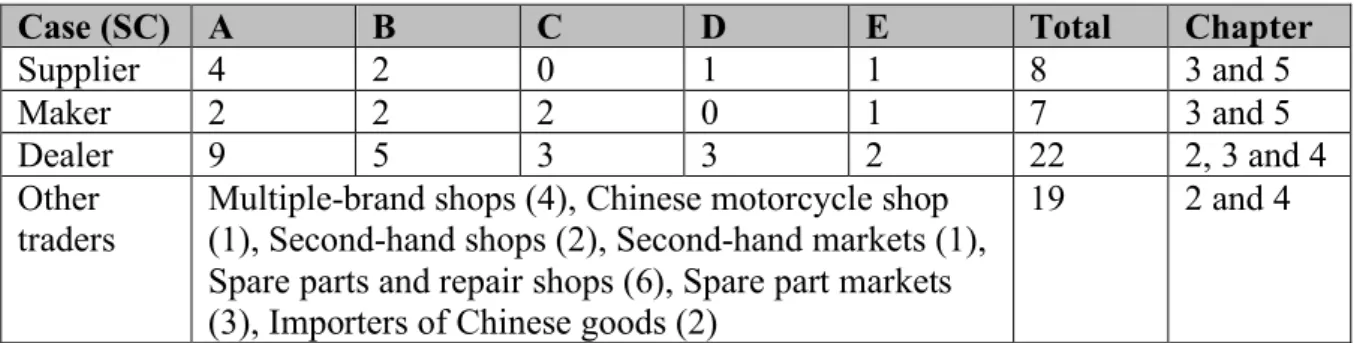
ASE SELECTIONSupply chains of the five MNCs in Vietnam’s motorcycle industry (Table 1.1) were selected as analysis units for three reasons.
First, the automotive industry tends to establish a local supply chain to meet market demands rather than producing for exports to global markets (Dunning and Lundan, 2008). Thus, the automotive industry is often selected in the research on supply chains in developing countries (Lockstrom et al., 2011). In this sense, Vietnam’s
motorcycle industry, i.e., the fourth largest market in the World for motorcycles
following China, India, and Indonesia, is appropriate for this study. With market sales of 3.38 million units in 2018, there are only five largest MNCs, accounting for more than 97% of the market: Company A (75.9%), B, and C from Japan, company D from Taiwan, and company E from Italy (Table 1.1). The small number of dominant players representing the whole industry provides the perfect investigation environment for the in-depth study.
Second, there are well-developed studies with rich insights of MNCs’ supplier systems in the Vietnamese motorcycle industry (Mishima, 2005, 2010; Fujita, 2013). Thanks to this, the tasks were reduced to focus on distributions systems, SCI process, and transaction governance between SC partners. Thus, an embedded multiple case study of Vietnam’s motorcycle industry offers the best chance to make this exhaustive research feasible.
Table 1.1 Number of interviews
Case (SC) A B C D E Total Chapter
Supplier 4 2 0 1 1 8 3 and 5
Maker 2 2 2 0 1 7 3 and 5
Dealer 9 5 3 3 2 22 2, 3 and 4
Other traders
Multiple-brand shops (4), Chinese motorcycle shop (1), Second-hand shops (2), Second-hand markets (1), Spare parts and repair shops (6), Spare part markets (3), Importers of Chinese goods (2)
19 2 and 4
Source: The author’s investigations in 2015-2018.
Third, Vietnam has become a potential emerging market and increasingly attracts attention of both MNCs and scholars. The findings from Vietnam may apply to other developing countries, which have similar characteristics.
In each supply chain, sub-units of analysis include a core firm, their dealers, and suppliers. In distribution systems, we selected from the list of authorized dealers
published by each core firm. The priority was for dealers with long-standing business in motorcycle industry so that they can provide tremendous information about market characteristics. For transport efficiency, groups of dealers with geographic proximity were also a priority. Besides, other local traders, such as retail shops, are also selected to investigate the market environment and distribution thoroughly (Table 1.1). In supplier systems, suppliers were scrutinized from “Annual Report on Supporting Industry for Manufacturing in Vietnam 2017-2018” on the website run by the Vietnamese
customers” category in these lists helped us to sort out the supplier list of each MNC. Then, in each supply chain, we continue to sort out tier 1 suppliers with various nationalities, long-standing businesses, and groups of suppliers with geographic proximity. The geographic proximity at each region is important for the efficiency and feasibility of the exhaustive research, investigating markets in eight provinces across three regions of Vietnam. Next, the process of collecting data is described.
1.3.3 D
ATA COLLECTIONData collection is separated into two projects. The first project is to investigate the market environment and transaction governance in the distribution system. The other is to examine the SCI process and transaction governance in the supplier system.
In the first project, semi-structured interviews and direct observations were conducted through two research investigations in Vietnam. The first one was from August 12th to 25th, 2015, and the second from March 16th to 30th, 2016. They were conducted in eight provinces across the nation in order to investigate and compare the market characteristics in three regions, in rural areas and urban areas (Appendix 1). Investigations were in three markets including new motorcycles, used motorcycles, and spare parts. Based on the scrutiny of previous studies and published materials on the motorcycle industry (Alexander, 2008; Fujita, 2007, 2011, 2013; Mishima, 2005, 2010), the distribution system of vehicles (Shioji, 2002), and informal interviews prior to the investigations, we developed the interview questionnaires (Appendix 2, 3, 4, 5).
Our targeted interviewees included the dealer network of five MNCs, sub-dealers, repair shops, second-hand motorcycle shops, and traders at motorcycle markets (Appendix 1). We directly visited these shops and asked for research cooperation. The rate of cooperation was 20%, which resulted in 41 successful interviews (Table 1.1). Among them, there are nine dealers of MNC A, five dealers of MNC B, three dealers of MNC C, three dealers of MNC D, two dealers of MNC E (Table 1.1). Each interview lasted between 30 minutes to 2 hours, and more than 50% of the interviews lasted around 45 minutes. Informants were dealers’ managers or mechanic heads. Most of them have been managing daily businesses and working for their respective firms since establishment days. Thus, they provided enormous information in detail. In the interviews, observation, note-taking, as well as taking pictures of the business premises were allowed. However, voice recording was not permitted. Data in this project were used for the analysis in Chapter 2, 3, and 4 to explore the market characteristics, SCI process, and transaction governance in the distribution system (Table 1.1).
In the second project, semi-structured interviews and visits to manufacturing sites of MNCs and their suppliers were conducted through two research investigations in Vietnam. The first one was from August 21st to 31st, 2017, and the second from
August 27th to September 05th, 2018. Before each investigation, we prepared the request
letter for research cooperation. In 2017, letters were sent to five MNCs. Four of them agreed for interview arrangements. The acceptance rate is 80%. They are three Japanese and one Italian MNCs (A, B, C, E). In 2018, letters were sent to five MNCs and 14 suppliers. Three Japanese MNCs (A, B, C) and eight suppliers agreed for interviews (Appendix 1). The acceptance rate is 60% for MNCs and 57% for suppliers. Luckily, among eight suppliers, there are one supplier of MNC D and one of MNC E. Thus, the comparison between the five MNCs’ supply chains to generalize for the whole industry is viable. All data of MNCs and foreign suppliers mentioned in this thesis refers to their subsidiaries in Vietnam, not the whole group.
Interviews were conducted in Vietnamese, English and Japanese around 90 minutes on average and 120-150 minutes if including site visits. Informants, who were intentionally chosen, were MNCs’ and suppliers’ relevant managers in production and sales division. Most of them are managing daily operations and have been working for the respective firms from the establishment days up to the dates of interviews. Thus, they provided enormous information in detail regarding each integration dimension. We have received consent for all of the data used for analysis in this thesis. In the
interviews, observation and note-taking were allowed. However, voice recording (except MNC A in 2017) and taking pictures of factories were not permitted. Data in this project were used for the analysis in Chapters 3 and 5 (Table 1.1) to explore the SCI process and transaction governance in the supplier system.
Collecting rich data from all supply chain members helped this thesis to make the holistic approach and rigorous data analysis on SCI, which can overcome the limitation of previous studies (Flynn et al., 2010).
In addition to in-person interviews, this study also used additional data sources of published and unpublished statistics, online newspapers, reports and research papers on the industry in Vietnamese, English and Japanese. These sources help to triangulate and verify our findings in the analysis section. All the fieldwork materials were coded and analyzed as follows.
1.3.4 C
ODING AND ANALYSISWe followed the methods of data analysis for exploratory case studies (Eisenhardt, 1989). First, we overlapped data analysis with data collection every day during field trips (ibid.). For each interview, we made pure descriptions in the text, then coded and categorized the text into worksheets. Next, to identify the pattern within the MNC case, we crosschecked testimonies among different interviews in those worksheets. To validate the results during field trips, interviews and observations were replicated as frequently as possible until inconsistent data no longer existed. We continued within-case analysis by developing tabular displays and graphing of distribution flows and SCI process of each supply chain. This helped to generate insights and visualize the unique pattern of each MNC. Second, we generalized cross-case patterns by listing the similarities and differences between cases and by comparing pattern graphs (Eisenhardt, 1989). We also crosschecked fact findings with other sources available (e.g. published data, internet resources) from various angles (Ghauri, 2004).
Third, analysis reports were presented and findings were discussed to receive feedback and criticism from peers at several small academic seminars. This helped to verify the adequacy of the findings. The comparison and replication within and among cases during a series of procedures (i.e. data collection, analysis) helped to achieve a high level of validity and reliability.
Regarding respondents’ names used for analysis, for simplicity, dealers’ names were codified using the name of the respective MNC to which it belongs, and were numbered as in Appendix 1. Meanwhile, suppliers’ names were codified using their nationality and were numbered as in Appendix 1.
1.3.5 A
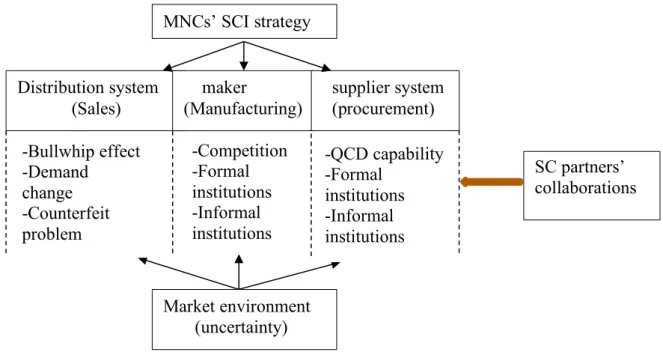
NALYTICAL FRAMEWORK AND STRUCTURE OF THIS THESISBy combining the extant IB, SCI literature and the author’s attention to SC partners’ role, the author’s view of SCI in developing countries is as Figure 1.2 and Figure 1.3.
Figure 1.2: MNCs’ SCI in developing countries
Source: The author
Figure 1.3: Supply chain integration under uncertainty
Source: Adapted from Frohlich & Westbrook (2001); Mason-Jones & Towill (1998) MNCs’ SCI strategy Distribution system (Sales) maker (Manufacturing) supplier system (procurement) Market environment (uncertainty) -Bullwhip effect -Demand change -Counterfeit problem -QCD capability -Formal institutions -Informal institutions -Competition -Formal institutions -Informal institutions Manufacturing process Demand
side Supply side
Transaction governance Information integration Delivery integration SC partners’ collaborations Control systems Delivery flow Information flow
When coming to developing countries, MNCs have their own SCI strategies. If they want to integrate with either external distributors or suppliers, or with both, they have to build the network of each dimension first. The building process in each dimension is inevitably affected by the market environments in developing countries (Figure 1.2). In the distribution system, the bullwhip effects caused by distributors, demand volatility (frequent change in demand), and counterfeit problems are the main uncertainties for MNCs. In maker dimension, MNCs’ business may be affected by competition, formal and informal institutions in developing countries. Similarly, in supplier dimension, local suppliers’ QCD capability, formal and informal institutions are main uncertainties. In this situation, MNCs can actively change their initial strategies to adapt to market environments or can be passively intervened by business networks.
To become successful in local markets, MNCs need to make SCI and control to reduce uncertainties, such as bullwhip effects in distribution system and problems of cost and quality in supplier system (Figure 1.3). This is because shrinking the SC uncertainty circle is the key to enhance performance (Mason-Jones & Towill, 1998). In the integration process, high collaboration for information and delivery integration is required (Figure 1.3). However, this is not easy to achieve because each organization has their own interests, which may contradict each other. Therefore, it is necessary to research the transaction governance between MNCs and business partners in SCI.
With this logic, the main questions are divided into four sub-questions in order to make an in-depth study.
1) How do market environments, local traders, and suppliers affect MNCs’ business?
2) How do MNCs conduct SCI to respond to the local market? 3) How is the transaction governance with achieving SC partners’ collaboration for SCI?
4) Based on these findings, how can we revise the way to assess MNCs’ embeddedness and their contributions to a developing country?
Since prior studies did very well on MNCs’ supplier system in Vietnam’s motorcycle industry (Mishima, 2010; Fujita, 2013), it will only be reviewed in Chapter 5. Thus, the thesis will focus on exploring the untouched segments, and the first sub-question is adjusted into: How do market environments and local traders’ behaviors affect MNCs’ business? Based on the analytical framework, the thesis is structured as Figure 1.4 so that each chapter is going to answer each sub-question.
Figure 1.4: Thesis’ structure
Source: The author Chapter 2 • How do market environments, local traders’ behaviors affect MNCs’ business? Chapter 3 • How do MNCs conduct SCI to respond to the local market? Chapter 4 & 5 • How is the transaction governance with achieving SC partners’ collaboration for SCI? Chapter 6
• Summary of findings and discuss the new way to assess MNCs’ embeddedness and their contributions to a developing country?
2 Market environments, local
traders’ behaviors and
MNCs’ distribution system
This chapter examined MNCs’ distribution channels from local traders’ perspective. Specifically, it investigated how MNCs’ distribution system building contributes to the local, and how market environments and local traders’ behaviors affect MNCs’ distribution channels building in Vietnam’s motorcycle industry. The findings manifested that MNCs created distribution channels and made contributions to Vietnam’s motorcycle industry. Whereas, local traders expanded and complemented MNCs’ systems to meet market demands. Besides, market characteristics and co-building of brand value between MNCs and local dealers affect the market position of each core firm. Importantly, this study discovered the complementarity among main market, second-hand and repair markets in Vietnam’s motorcycle industry. Thus, local traders’ behaviors outside MNCs’ distribution systems also affect their market position.
Chapter 2 • How do market environments, local traders’ behaviors affect MNCs’ business? Chapter 3 • How do MNCs conduct SCI to respond to the local market? Chapter 4 & 5 • How is the transaction governance with achieving SC partners’ collaboration for SCI? Chapter 6
• Summary of findings and discuss the new way to assess MNCs’ embeddedness and their contributions to a developing country?