Message from the President
The National Institute of Agrobiological Sciences (NIAS) conducts life science research on plants, animals and insects to facilitate the development of Japan’s domestic agricultural industry. The institute further seeks to resolve 21 st Century global issues, including sustainable food production and supply and environmental issues, in order to play a leading role in social and economic transformation and to help create the new bioindustries that are expected to foster major economic growth. NIAS actively cooperates in biotechnology research and genome analysis with universities, private corporations and other independent administrative institutions for extensive and efficient promotion of advanced studies.
Examples of major achievements accomplished by NIAS this year include: (A) complete sequencing of the rice genome and isolation and functional analysis of plant genes essential to the symbiotic nitrogen fixation system, representing the area of life science research based on genome biology, etc., (B) development of a novel method for producing coenzyme Q10, representing the field of innovative technology development for dynamic development of agriculture, forestry and fisheries, (C) a novel porous three-dimensional structure using silk fibroin, representing research aimed at creation of novel industries, (D) creation of a cloned pig that expresses the green fluorescent protein (GFP) through effective selection of transformed cells (development of model pig for organ transplantation), representing basic technology supporting the biotechnology field, and (E) establishment of cultivated rice core collection, representing the field of collection, evaluation, storage, propagation, distribution and information management of biological resources.
We shall continue to strive to satisfy society’s expectations by designing and conducting advanced research in the life sciences field involving plants, animals and insects. We look forward to your continued support and understanding and welcome your frank comments on the NIAS research activities introduced in this annual report.
Teruo Ishige President
National Institute of Agrobiological Sciences
- 1 -
Annual Report 2005
Contents
Message from the President ...1
Organization ...4
Topics of Research in This Year Genome and Biodiversity Research Division ・Construction of EST database covering 80% of silkworm genes and its EST microarray...5
Insect and Animal Sciences Division ・ Novel method for production of transgenic cloned pigs: Results of electroporation-mediated gene transfer to non-cultured cells and subsequent selection with puromycin...7
・ Developmental characteristics of transgenic silkworm with over-expression of juvenile hormone esterase...9
・ Different physiological properties in a pool of mandibular closer motor neurons in insects...10
・ Visual and chemical phytomimesis in giant geometer...12
・ Recombinant production of modified termite cellulases in E. coli...14
・ Mode of action by which entomopoxvirus spindles enhance nucleopolyhedrovirus infection...16
・ Development of useable material from Hornet silk...18
・ A new process to form a porous 3D structure from silk fibroin...20
・ Development of the middle silk gland specific gene expression system for the production of recombinant proteins in the transgenic silkworm...22
・ Preparation of elastic silk sericin hydrogel from the cocoons of SERICIN HOPE silkworm...24
・ Breeding of the silkworm race “SERICIN FLAVO” which simultaneously secretes sericin with flavonol...26
Plant Science Division ・The completion of a high-quality rice genome sequence - a major milestone in cereal genomics...28
・Production of coenzyme Q10 enriched rice seeds by engineering of isoprenoid side chain...29
・A rice core collection selected based on DNA polymorphism...30
・A new floral switch gene revealed a novel photoperiodic flowering pathway for short-day promotion in rice...32
・Calcium-signal transduction cascade for cold tolerance and elongation in rice leaf sheath...35
・X-ray crystallographic analysis of Irpex lacteus aspartic proteinase...37
・Structure Genomics Studies of Rice Proteins...39
・Cloning and characterization of a plastid localized ion channel gene crutial for nodule formation in Lotus japonicus...41
・Improvement in yield characteristics of transgenic potato with a maize SPS gene...43
・Development of transgenic rice seeds accumulating mGLP-1 that stimulates insulin secretion....45
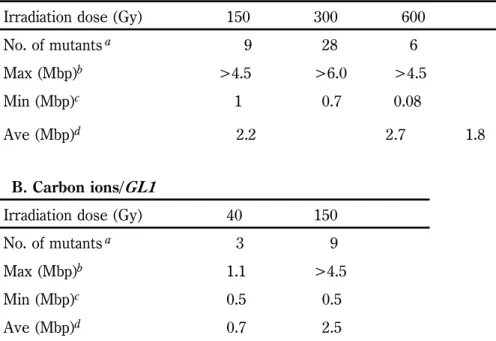
・Analysis of Mutations from Pollen Irradiation...47
Research Activities
Genome and Biodiversity Research Division
・Genome Research Department ...54
・Genetic Diversity Department ... 63
・Genebank ...72
Insect and Animal Sciences Division ・Developmental Biology Department ... 81
・Molecular Biology and Immunology Department ...88
・Physiology and Genetic Regulation Department ...92
・Insect Genetics and Evolution Department ...99
・Insect Biomaterial and Technology Department ...106
・Insect Biotechnology and Sericology Department ...112
Plant Science Division ・Molecular Genetics Department ...121
・Biochemistry Department ...130
・Plant Physiology Department ...135
・Plant Biotechnology Department ... 143
・Institute of Radiation Breeding ...152
List of Publication ・Original papers ...158
(Author Index) ...180
・Review ...185
International Meetings and Foreign Visitors ...188
Executive Members and Research Staff Members ...192
Members of NIAS Evaluation Comittee ...200
Financial overview ...201
Location and How to access ...202
- 3 -
Organization
President
Vice President ( Insect and Animal Sciences) Vice President(Plant Sciences)
Auditor
Department of Research Planning and Coordination Research Planning Division
Research Evaluation Division Research Coordination Section
Office for GMO Research and Development Technology Transfer Section
Administration Section
Information and Public Relation Section Field Management Section
Genome Resource Center QTL Genomics Research Center
Center for GMO Research and Information Insect Gene Function Research Center Department of Administration
General Affairs Section Accounting Section
Facility Management Section
Genome and Biodiversity Research Division
Director of Genome and Biodiversity Research Division Genome Research Department
Plant Genome Laboratory Animal Genome Laboratory Insect Genome Laboratory Bioinformatics Laboratry DNA Bank
Genetic Diversity Department Molecular Biodiversity Laboratory Biosystematics Laboratory Evolutionary Dynamics Laboratory Germ Cell Conservation Laboratory Applied Microbiology Laboratory Adaptation Systems Laboratory Biometrics Laboratory Genebank
Plant Genetic Resources Labolatory
Microorganism Genetic Resources Laboratory Animal Genetic Resources Laboratory Genetic Resources Management Section Insect and Animal Sciences Division
Developmental Biology Department Developmental Mechanisms Laboratory Developmental and Differentiation Laboratory Animal Genetic Engineering Laboratory Embryonic Technology Laboratory Insect Growth Regulation Laboratory
Reproductive Biology and Technology Laboratory Molecular Biology and Immunolory Laboratory Molecular Immunolory Laboratory
Innate Immunity Laboratory Experimental Animals Laboratory
Insect Nutrition and Matabolism Laboratory Insect Neurobiology Laboratory
Insect Behavior Laboratory Animal Gene Function Laboratory Animal Cell Biology Laboratory Animal Neurophysiolory Laboratory Animal Neuroendocrinnolory Laboratory Insect Genetics and Evolution Department
Insect-Plant Interactions Laboratory Natural Enemies Laboratory Symbiosis Laboratory Insect Patholory Laboratory Insect Genetics Laboratory
Insect Molecular Evolution Laboratory Insect Biomaterial and Technology Department
Biopolymer Characterization Laboratory Biomaterial Development Laboratory Biomimetic Laboratory
Insect Products Utilization Laboratory
Insect Biotechnology and Sericology Department Insect Cell Engineering Laboratory
Insect Gene Engineering Laboratory Mass Production System Laboratory New Silk Materials Laboratory Sericultural Science Laboratory Plant Science Division
Molecular Genetics Department Functional Genomics Laboratory Applied Genomics Laboratory Epigenetics Laboratory Gene Expression Laboratory Gene Regulation Laboratory Biochemistry Department
Crystallography Laboratory Biophysics Laboratory Glycobiology Laboratory Membrane Biology Laboratory Plant Physiology Department
Photosynthesis Laboratory Carbon Metabolism Laboratory Development Biology Laboratory Environmental Physiology Laboratory Disease Physiology Laboratory Nitrogen Fixation Laboratory Plant Biotechnology Department
Gene Design Laboratory
Plant Gene Engineering Laboratory Plant Cell Engineering Laboratory Molecular Breeding Laboratory Biosystems Laboratory Institute of Radiation Breeding
Mutation Genetics Laboratory
Radiation Technology Laboratory
Mutation Breeding Laboratory
Topics of Research in This Year
おおおおおおおお
Construction of EST database covering 80% of silkworm genes and its EST microarray
K a z u e i M i t a , K i m i k o Y a m a m o t o , K e i k o Kadono-Okuda
Genome Research Department
To build a foundation for the complete genome analysis of Bombyx mori, we have constructed an EST database. Because gene expression patterns deeply depend on tissues as well as developmental stages, we analyzed many cDNA libraries prepared from various tissues and different developmental stages to cover the entire set of Bombyx genes. So far, the Bombyx EST database contains more than 85,000 ESTs from 53 cDNA libraries derived from 19 different tissues, which are grouped into 17,615 nonredundant ESTs. Since the total number of Bombyx genes is estimated to be roughly 20,000, the present EST database will cover more than 80% of Bombyx genes. The comparison with FlyBase (Drosophila genes) shown in Table indicates the similar estimation. All sequenced ESTs are compiled into the
Table Silkworm ESTs categorized by gene ontology terms.
Bombyx EST database, named KAIKObase, which can be accessed at http://sgp.dna.affrc.go.jp.
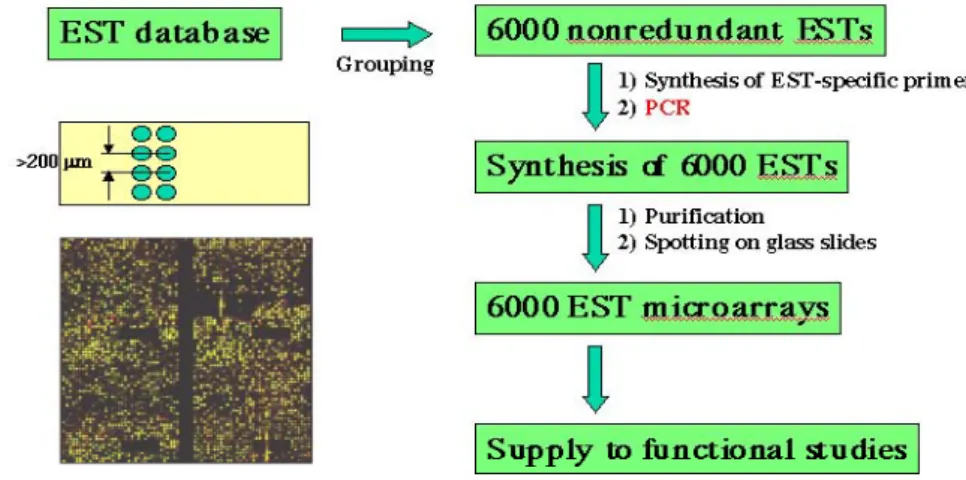
We have constructed EST microarrays containing 6,000 nonredundant ESTs for many functional studies as well as for genome analysis as a major application of EST database. We designed and synthesized 6,000 specific primers located approximately 500 base pairs
- 5 -
downstream from the 5’ end of each cDNA to remove repetitive sequences from DNAs to be used for the microarray. 6,000 DNAs were amplified by PCR using specific primers, followed by spotting on glass slides (Fig. 2). EST microarray technology was successfully used to
Fig.2 Outline of 6000 EST microarray construction
identify and isolate ecdysone-responsive genes, and to detect the changes of gene expression in wing discs during metamorphosis as a model to describe the gene cascade triggered by ecdysteroid hormone.
Fig. 1 Bombyx EST database, KAIKObase <http://sgp.dna.affrc.go.jp/>
Topics of Research in This Year
いいいいいいい
Novel method for production of transgenic cloned pigs:
Results of electroporation-mediated gene transfer to non-cultured cells and subsequent selection with puromycin
Satoshi Watanabe, Shun-ichi Suzuki, Daiichiro Fuchimoto, Takashi Nagai and Akira Onishi
Developmental Biology Department
It was widely known that the viability and the normality of donor cells were most important for the efficiency of the producing somatic cloned animals. Therefore, it was also known that we should avoid culturing donor cells for a long period to keep cellular condition.
Because, the long term culture cause cellular aging and chromosomal abnormality and greatly reduce the efficiency of production of somatic cloned animals. However, for the production of transgenic cloned animal, we have to culture the donor cells for long period for the gene transfer and the subsequent selection of the recombinant cells. In general, it takes more than 14 days for the recombinant selection with protein synthesis inhibiting antibiotics G418, and the efficiency of the production of cloned animals is quite low. From these phenomena, we hypothesized that shortening of the donor cells for selection of recombinants might improve the efficiency of production of transgenic cloned animals. To confirm this, we decided to introduce transgene into the somatic cells freshly obtained from fetuses and to use puromycin as a selection drug to obtain the recombinant cells for shortening the culture period of the donor cells. Puromycin is an effective inhibitor of protein synthesis and puromycin N-acetyl transferase gene (pac), whose gene product catalyzes antibiotic puromycin has been widely used as a dominant selection marker in ES cell-mediated transgenesis.
Somatic cells isolated from porcine fetuses at 73 days of gestation were immediately electroporated with a transgene, pCAG-EGFPac (Fig. 1), carrying both EGFP cDNA and pac.
Fig.1 Schematic representation of the EGFPac transgene used to express the puromycin resistant gene (pac) and enhanced green fluorescent protein (EGFP) cDNA. pEGFPac was constructed by inserting the CAG-EGFP fragment into the pPGK-pac-p(A) cassette vector.
Arrows indicate 5’ to 3’ orientation of the cDNA or gene. Two expression units [CAG-EGFP and PGK-pac-p(A)] were aligned in a tail-to-tail manner.
E G F P a c
C Ain t r o n
p A
C M V
- I E p (A )
p a c
P G KS a lI S a lI
E G F P
E G F P c D N A
E G F P f 2
E G F P r2 4 2 1 b p
P G K -p a c -p(A ) C A G - EG F P
- 7 -
This procedure aims to avoid aging effects thought to be generated during cell culture. The recombinant cells were selected with puromycin at a low concentration (2 μg/ml), cultured for 7 days, and then screened for EGFP expression prior to somatic cell cloning (Fig. 2B). These cells were used for nuclear transfer as donor and the EGFP fluorescence was observed in the manipulated embryos (Fig. 2D). These embryos (1680) were transplanted into the oviducts of 14 foster mother sows. Four of them became pregnant and 9 piglets were delivered. Of the nine piglets, only one grew healthily after weaning (Fig. 2E). The surviving pig clearly
Fig.2
EGFP expression in porcine fetal somatic cells (A, B) surviving in the presence of 2 μg/ml of puromycin for 7 days after transfection with EGFPac and in blastocysts (C, D) derived from embryos transferred with nuclei of the EGFP-expressing cells. Cells and blastocysts were microscopically inspected for EGFP fluorescence under UV illumination. A and C, bright field; B and D, dark field. The L15-112 piglet derived from enucleated oocytes t r a n s f e r r e d w i t h n u c l e i o f EGFP-expressing somatic cells (E).
expressed EGFP fluorescence in a variety of tissues. The intense fluorescence was observed in the skin (including hair) and epithelial tissues. Our results indicate that puromycin is useful for the rapid selection of recombinant cells from non-cultured cells, and moreover, may confer the efficient production of genetically engineered domestic animals via nuclear transfer techniques. Especially, our method curtailed the period from the gene transfer to obtaining recombinant cells up to 9 days. The present study is the first to report on the usefulness of puromycin for production of EGFP transgenic piglets after somatic cell cloning and embryo transfer. However the reason of the postnatal lethality which observed also in non-transgenic clones is still remained. We must dissolve this problem to produce the transgenic cloned animal much more efficiently.
A B
C D
A B
Topics of Research in This Year
いいいいいいい
Developmental characteristics of transgenic silkworm with over-expression of juvenile hormone esterase
Takahiro Shiotsuki, Anjang Tan, and Toshiki Tamura Developmental Biology Department
Insect juvenile hormones (JHs) have important roles in insect physiology, especially development and metamorphosis, but studies of the molecular mechanisms of the JH have not been progressed yet. Hydrolysis of the methyl ester of JH by a JH-specific esterase is a key pathway for the degradation of JH. We generate transgenic silkworm strains that overexpress JH esterase using the GAL4/UAS system. The JH esterase activity in the hemolymph of 2nd and 3rd instar of the transgenic line is 8 to 10 times higher than that of middle stage of the 5th instar as the highest activity through the whole stage of wild-type. The overexpression of JH esterase from the embryonic stage resulted in larval-pupal metamorphosis after the third stadium, two stadia earlier than that observed in wild-type insects. This precocious metamorphosis indicates that JHs are not critical for normal development of embryo or larva before the second molt in Lepidoptera. The transgenic approach developed in this study allowed us to dissect the function of key physiological events that occur from embryogenesis. These types of studies were only possible in later larval stadia using physical techniques such as allatectomy or the application of JH analogs. We believe that our experimental system will allow further pioneering studies in insect endocrinology and physiology.
Fig.
Effect of over-expression of JHE in silkworm. Left: larval-pupal intermediate; ceneter:
precocious metamorphosis after 3rd insta; right: control pupae metamorphosed after 5th instar.
Bar: 1 cm.
- 9 -
Topics of Research in This Year
いいいいいいい
Different physiological properties in a pool of mandibular closer motor neurons in insects
Ken Sasaki, Kiyoshi Asaoka
Physiology and Genetic Regulation Department
In most insect muscles, no more than 1-2 excitatory motor neurons control the force, but a mandibular closer muscle is controlled by 6-12 motor neurons and the subdivision of function among these neurons has been controversial. In this study, morphological and physiological properties of the mandibular closer muscle and its motor neurons were investigated in the silkworm, Bombyx mori, in order to determine whether a large pool of mandibular closer motor neurons in an insect consists of different functional groups.
The musculature of the mandible consists of an opener and a closer muscle; the latter is immense, occupying almost all of the head. The mandibular closer muscle is innervated by the branches of the mandibular nerve from the mandibular neuromere of the suboesophageal ganglion. Backfilling with cobalt-lysine complex solution from closer nerve branches showed that the mandibular closer muscle of B. mori was innervated by 11 motor neurons with large somata and 2-3 unknown neurons with small somata (Fig.1A,B).
Fig. 1
(A) Ventral view of the suboesophageal ganglion (SOG) of the caterpillar, Bombyx mori, showing somata of closing motor neurons backfilled from mandibular nerve branches in the closer muscle. (B) Dorsal view of SOG showing backfilled dendrites. (D) and unknown small somata (S) positioned anterodorsally.
Intracellular recordings were made from the somata of the closer motor neurons, while
muscle potentials were recorded extracellularly from the mandibular closer muscle at the
same time (Fig.2). All 14 motor neurons that we identified could be physiologically divided
Fig. 2
Typical recordings showing two types of mandibular closer motor neurons. Injection of depolarizing current into soma of each motor neuron evoked a sequence of spikes and matching muscle potentials.
into two groups, the “fast” and the “slow” types. The fast type neurons (5 neurons) showed higher threshold for initiating soma spikes by intracellular current injections (4- or 5-nA). The slow type neurons (9 neurons) evoked spikes by lower current injections (1- or 2-nA). The motor neurons showed 1:1 relationships with the closer muscle activities during current injections and the slow type spiked relatively more frequently than the fast type. The fast motor neurons usually evoked relatively larger muscle potentials and produced fast phasic mandibular movements, whereas the slow neurons evoked smaller potentials and produced slow tonic mandibullar movements. The slow neurons spiked while the mandible was held in a fully closed position, whereas the fast neurons did not. The slow neurons did not spike while the mandible was free to move.
We demonstrated here for the first time in insects the different cellular properties among members of a mandibular motor neuron pool in the caterpillar, B. mori. The fast motor neurons may contribute the chewing movements to grind a piece of the leaf by a strong force, whereas the slow motor neurons may be activated maintain the position of the mandible at a certain angle.
- 11 -
Topics of Research in This Year
いいいいいいい
Visual and chemical phytomimesis in giant geometer
Toshiharu AKINO
Physiology and Genetic Regulation Department
Avoiding ant attack
Some insects evolve deceptive strategies in response to predation. They are camouflaged by a combination of visual signals including colour, shape, and movement to mimic other animals and plants. This mimetic camouflage may help insects to avoid predation by visually hunting predators such as birds. By contrast, chemical camouflage is effective in avoiding predation by animals (e.g. ants) that use chemical cues when searching for prey. We found that twig-like catepillars of the giant geometer Biston robustum (Geomteridae) used a combination of visual and chemical mimesis, which were associated with their food plant species. We have observed that predatory ants, incluiding Formica japonica, Lasius niger and Crematogaster tsushimae, are ignore the caterpillars even after walking on them (Fig. 1).
Fig. 1
Caterpillars of the giant geometer.
Formica japonica worker ant walking on the caterpillar (top) Caterpillars fed on cherry (middle) and chinquapin (bottom)
Chemical phytomimesis
The polyphagous caterpillars fed on the cherry, Prunus yedoensis, the chinquapin Castanopsis cuspidata, and the camellia Camellia japonica. In laboratory we confirmed that neither hatchlings nor the 2nd instar grew up on chinquapin and camellia. Presumably, the caterpillars will grow up on cherry and then move to other food plants if necessary.
Gas chromatography-mass spectrometry revealed chemical resemblance of the cuticular
surface waxes between the cherry twigs and the caterpillars fed on them (Fig. 2). It was
also confirmed between the caterpillars and the respective host plant twigs. Through host exchange experiments, we confirmed that the caterpillars were able to adjust their mimicry to suit their host plants.
Fig. 2
Gas chromatograms of the surface chemicals of cherry twig (top) and the caterpillar fed on cherry (bottom).
Chemical components and their relative ratio were almost identical between the caterpillar and the twig.
Behavioral concealment
Analyses of the behavioral patterns suggest that the late instars would be nocturnal feeders. This habit is presumably adaptive because few birds have nocturnal vision. The caterpillars fed on a leaf intermittently during the nighttime, and occasionally chewed the leafstalk to get off the remained leaf after having consumed it, and then proceeded to feed on the reminder of the leafstalk left on the branch. This resulted in having to discard the leaf remnant with the feeding mark on it. Such leaf clipping behaviour is presumably a countermeasure to avian predators and thwart the host plant’s defenses.
Technical terms
★ Mimetic camouflage is the method which allows animals to harmonize with their surroundings. Camouflaged animals are usually unrecognized from the environment for the predator.
★ Twig-like catepillar is characterized by a combination of colour, the presence of horns and marking on the body that look like buds and scars on the twigs, the absence of abdominal legs except for a hind pair to grasp the twig, and the habit of resting in an unusual position with the body stretching out at an angle from the branch.
★ Cuticular surface waxes of insects mainly consist of hydrocarbons. They prevent body dehydration and are known to play semiochemical functions in several contexts of insect biology, involving species- and mate-recognition.
- 13 -
Topics of Research in This Year
いいいいいいい
Recombinant production of modified termite cellulases in E.
coli
Hirofumi Watanabe, Ni Jinfeng, Motomi Takehara Insect Genetics and Evolution Department
Recombinant production of termite endogenous cellulases (termite EGs, predicted consisting of 432 amino acids in all known sequences to date) in microbes such as E. coli and baker’s yeast has been difficult, and this problem is not solved by changing eukaryotic codon usages in the termite EG cDNAs into prokaryotic ones. We predicted that the cause of the problem would be found in the amino-acid sequence of termite EG.s available for us. It would be possible to exploring diverse termite species (around 2,600 species) to seek an accidentally-adaptable termite EG gene to the over-expression systems, but instead, we performed family shufflings (random homologous recombination) of available termite EG cDNA to obtain varieties of possible termite EG-like sequences.
Four termite EG cDNAs from Reticulitermes speratus, Nasutitermes takasagoensis, Coptotermes formosanus and C. acinaciformis were randomly digested into short fragment by DNAse I and they were recombined by PCR cycles (heat denaturing to produce single strand DNA, cooling to recombine the fragments randomly with their homologues, and DNA polymerase reaction to fill gaps in the recombinants) to produce chimeratic cDNA libraries.
The chimeratic cDNAs were cloned into a normal (week) expression plasmid vector and their E. coli transformants were screened by halo assays to recover correctly reconstructed clones, which produce functional chimeratic EGs. Following second and third selections using screened clones as parents of the next generations, 134 clones (2.51%) were obtained from 5,330 screened clones. The screened clones were subcloned into an over-expression plasmid vector (pQE30), and the efficiency of the over-expression and the enzymatic activity of soluble extract of transformants (E. coli) were investigated one by one. As a result, we obtained a clone A18, which shows enhanced expression in E. coli (Fig 1).
Fig 1
A halo assay of termite EG transformed E. coli. The size of the halo indicates cellulase activity. 1.The transformant of native cDNA of R. speratus. , 2. A18 modified cDNA transformant , 3.
Another modified cDNA transformant.
The transformant of A18 produced recombinant termite EG into the soluble fraction of the host (E. coli) cells. The produced enzyme has a 6xHis tag at its N-terminus, by which it was purified using a His-tag affinity purification system (Fig 2). It was predicted that the recombinant termite EG kept basic higher structure of native termite EGs by the comparison of amino-acid sequences.
Fig 2
SDS-PAGE analysis of modified termite EG (A18) produced by the E. coli A18 transformant. M. molecular weight markaers.,1.
Crude extract of A18 modified cDNA transformant, 2.
Affinity-purified A18 modified termite EG.
The specific activity of the modified termite EG (A18) was 80-500 units (mmole of reducing sugar/min)/mg of protein, which was equal to and above that of the native purified-eyzme from R. speratus (80 units/mg), while A18 kept other basic eyzymatic properties of the native enzyme.
kDa 200
116 66 45
31 22 14 7
M 1 2
- 15 -
Topics of Research in This Year
いいいいいいい
Mode of action by which entomopoxvirus spindles enhance nucleopolyhedrovirus infection
Wataru Mitsuhashi, Kazuhisa Miyamoto Insect Genetics and Evolution Department
Insect viruses such as nucleopolyhedroviruses (NPVs) and granuloviruses , which are pathogenic to pest insects, are potential agents for insecticides, because they are safe to men and livestocks, and show less environmental stress. They have drawbacks, however, such as high production costs and generally inferior field performance compared to chemical insecticides. To overcome these defects, materials enhancing strongly the virus-infections have long been screened and studied for the use of them as co-agents of the insecticide.
Many entomopoxviruses (EPVs) form proteinaceous structures called spindles in the infected insect cells. The spindles do not contain virus particles. Those of some EPVs are known to enhance drastically some NPVs-infection. Thus, these proteinaceous bodies seem to be potential synergists of bio-control agents such as NPVs. However, mode of action by which EPV spindles enhance NPV infection has remained unclear.
Spindles of Anomala cuprea EPV (AcEPV), a coleoptran EPV, were orally administered to silkworm (Bombyx mori) larvae, and the peritrophic membranes (PMs) were observed using a binocular microscope. Soon after the larvae's access to spindles had been terminated, some PMs disappeared wholly and some were observed in partial form. Some of the partial PMs observed were very fragile. The disintegration of the PM due to spindles was also observed by the histological sectioning of the midgut (Fig.1). However, a day after the larvae had terminated their access to the spindles, the PM regenerated partially or wholly (Fig.2). On the other hand, the pores on the PM, through which BmNPV virions can easily pass from the endoperitrophic side of the PM to the ectoperitrophic one like those on the PMs of some Noctuide caterpillars, were not observed by scanning electron microscopy.
A B
Fig. 1
Histological sections of the PM of B. mori 3rd instar larvae. Bar indicates 100 μ m.
A. Cross-section of a midgut after larva was fed 2.5 x 10
6spindles. The PM is not detected. B.
Cross-section of a midgut after larva was fed sterile distilled water as a substitute for spindles. The PM
can be detected. Arrows indicate the PM.
These findings strongly suggest that the enhancement of NPV infection occurs due to that a greater number of NPV virions reach the microvilli of midgut susceptible to NPV, since spindles lead to the disintegration of the PM as a barrier against NPV virions.
Fig. 2
Dissected peritrophic membrane (PM) of B. mori 3rd instar larvae A. The PM is short because of partial disappearance, after larva was fed 3 x 10
6spindles. B. The PM of larva not fed spindles.
That in full length is obseved.
- 17 -
Topics of Research in This Year
いいいいいいい
Development of useable material from Hornet silk
Tsunenori Kameda
Insect Biomaterials and Technology Department
Some kinds of hornet build large nests. Vespa simillima xanthoptera Cameron is one of most common hornets in Japan. This hornet is a social insect that builds a new nest each summer (see above facial portrait). The largest nests are over 1 m in diameter. The hornet’s mature larva (5th instar) transforms into the pupa after enwrapping itself in a silk weave (hornet silk, [Fig.1(A)]) comprised of protein fibers. Inside each large nest, it can be seen a very large volume of hornet silk caps (cocoon). This gives the silk of V. simillima xanthoptera Cameron a quantitative edge in terms of its potential availability as a material. However, no studies have ever tried to produce useable materials from the hornet silk. In this study, we tried to establish a suitable method for purification and the processing conditions of the silk of the hornet V. simillima xanthoptera Cameron as a new natural material.
Inside the nest of the hornet, the cocoons adhere to the plant fibers, because the paper-like cell walls in the nest are made of chewed wood fibers. We found that the hornet silk in the native state could be dissolved at room temperature in aqueous 7.2 M and more concentrated lithium bromide within 15 min. In contrast, the wood fiber was insoluble in this solution. We used this difference in solubility to extract the hornet silk from the nest.
Cocoons were dissolved in LiBr solution and removed the insoluble residue. Then, the LiBr solution of hornet silk was dialyzed in distilled water. After dialysis, the gelled hornet silk was obtained [Fig.1(B)]. The gelled hornet silk was freeze-dried, and a purified powder of hornet silk was obtained [Fig.1(C)]. Moreover, the gelled hornet silk was freeze-thawed, and a sponge-like material of hornet silk with porous 3D structure was obtained [Fig.1(D)].
Furthermore, we found that the hornet silk could be dissolved at room temperature in some halogenated organic solvents, such as trifluoroacetic acid (TFA) within a few minutes, dichloroacetic acid (DCA) within a few hours, and hexafluoroisopropyl alcohol (HFIP) within a few days. We were the first to discover that evaporation of the HFIP or TFA solutions yielded a flexible transparent film from the hornet silk. The transparency of the film prepared varied with the type of halogenated organic solvent used, probably because of differences in volatility.
The transparency of the film prepared in HFIP solution was best. A film prepared from HFIP
solution is shown in Fig.1(E). Furthermore, artificial fiber of hornet silk was successfully
obtained from HFIP solvent system [Fig.(F)].
Fig.
Photographs of cocoon (A), gel (B), purified powder (C), sponge (D), film (E) and artificial fiber (F) of silk of the hornet Vespa simillima xanthoptera Cameron. The upper white cap in (A) is hornet silk, which covered the top of the burrow of the pupating larva, whereas, the downside brownish materials are plant fibers.
- 19 -
Topics of Research in This Year
いいいいいいい
A new process to form a porous 3D structure from silk fibroin
Yasusshi Tamada
Insect Biomaterial and Technology Department
Silk have been used as an excellent fabric material in clothing area. Recently new application technology of silk in wide variety area such as food, cosmetic, and medical fields, have been studied. The shape of silk material to be used in those fields is fiber, film, powder, gel, and solution. A porous 3D structure (spongy structure) is important shape to be suitable in various applications, however the utilization of silk spongy material is still unexplored.
Because the technology to form a spongy structure having good mechanical properties with good reproducibility was not developed. A new process was found to form the fibroin spongy structure with both good porous structure and mechanical properties (Fig. 1). The process
Fig1 Fibroin spongy material formed by the new process.
(left: the external appearance, right: pore structure by SEM)
very simply conducts freeze-thaw treatment of a fibroin aqueous solution in the presence of
small amount of water-miscible organic solvents. This process requires no freeze-drying or
repeated freeze-thaw treatment, no crosslinking chemicals, nor other materials. Indispensable
conditions of this process are the addition of small amounts of solvents, freezing treatment,
and freezing duration. The process will have advantages in the industrial production with good
reproducibility. Almost all water miscible solvents were effective to form the sponge structure
from the fibroin aqueous solution in the process. Compressive modulus and tensile strength of
the fibroin sponge can be controlled by selecting the conditions of the process, such as fibroin
concentration (Fig. 2), and solvent kind and concentration. Any significant decrease of the
mechanical properties and any deformation of the fibroin sponge by autoclaving treatment
were not observed. The fibroin sponge can be sterilized by autoclaving. MC3T3 cells
proliferated well in the fibroin sponge for about 3 weeks. This result indicates that the fibroin
sponge has cell compatibility and is applicable to cell support for tissue engineering scaffold.
Fig.2 Influence of fibroin concentration on compressive modulus of fibroin sponge.
Coll: collagen sponge
- 21 -
Topics of Research in This Year
いいいいいいい
Development of the middle silk gland specific gene expression system for the production of recombinant proteins in the transgenic silkworm
Keiro Uchino, Isao Kobayashi, Hideki Sezutsu, Toshio Kanda, Toshiki Tamura
Insect Biotechnology and Sericology Department
Development of the production system of recombinant protein in the transgenic silkworm is very important and urgent problem. The system was recently constructed in the posterior region of the gland. However, the system possessed disadvantage of difficulty to extract proteins. The middle part of the silk gland has been also recognized as one of the suitable organs for the production of the recombinant proteins because the part possessed the ability to produce more than 100 mg proteins. However, the production in the part has been unsuccessful because the promoter used to construct the system does not possess enough activity. In addition, the recombinant proteins produced in the middle part possess an advantage in the solubility for water. That is, the proteins in the middle part are predicted to dissolve easily in water.
To develop the system, we performed the amplification of promoter activity of the introduced gene in the middle part of silk gland using yeast GAL4/UAS gene regulation system. The strain inserted GAL gene under the control of sericin 1 gene promoter region was first obtained using newly constructed vector (Fig1, A) and then mated with the strain with UAS/GFP gene (Fig.1 B). The resultant larvae with both gene showed the production of When the strain was crossed with Nd-s mutant strain, the production the recombinant protein was more prominent (Fig.2 A) and easily extracted compared with that in the normal strain (Fig.2B). A large amount of the protein is accumulated in the middle part of silk gland without fibrous proteins. Importantly, the protein accumulated in the gland can be extracted much easily in water. The results suggest that production and extraction of recombinant proteins become much easy and reliable compared to the previous system using the posterior part of silk gland. We expect that the system will apply for the production of useful proteins, including for the medicines.
the large amounts of recombinant protein, GFP, in the middle part of silk gland.
Fig.1
Structure of the vector with the GAL4 gene under the control of sericin 1 gene promoter ( A ) and construction of strain with Ser1GAL4 and UASGFP with the mating of SerGAL4 and UASGFP strains(B).
Fig.2
Expression of GFP gene in the silk gland of the larva at the 5
thinstar (A) and GFP protein extracted the middle part of silk gland of the larvae crossed with Nd-s mutant strain (B).
- 23 -
Topics of Research in This Year
いいいいいいい
Preparation of elastic silk sericin hydrogel from the cocoons of SERICIN HOPE silkworm
Hidetoshi Teramoto, Ken-ichi Nakajima, Chiyuki Takabayashi
Insect Biotechnology and Sericology Department
Sericin is adhesive silk proteins synthesized exclusively in the middle silk glands of silkworms, Bombyx mori. Sericin contains many hydrophilic amino acids, which lends it high hydrophilicity and sensitivity to chemical modification. Moreover, recent studies have revealed unique characteristics of sericin, such as induction of heterogeneous nucleation of apatite and enhanced attachment of primary cultured human skin fibroblasts. Sericin is therefore anticipated as a novel naturally-occurring biomaterial.
In this study we developed a preparation method for elastic sericin hydrogel. Although the gelling properties of sericin have been a matter of interest, elastic hydrogel made exclusively of sericin has never been reported. We attribute the weakness of hitherto known sericin hydrogels to the denaturation of sericin during extraction. Hence we used the cocoons of SERICIN HOPE silkworm as the sericin source. SERICIN HOPE cocoons consist almost exclusively of sericin (>98%), which facilitates obtaining intact sericin close to the native state.
Sericin solution prepared from SERICIN HOPE cocoons exhibited distinct bands of three main sericin components by SDS-PAGE analysis ( Fig. 1, lane 1 ), showing that the solution
Fig. 1
The SDS-PAGE patterns of sericin solution.
Lane 1, without heat treatment; lane 2, boiled for 20 min; lane 3, autoclaved at 121°C for 20 min.
contained intact sericin. Gelation was induced by the addition of alcohol. We added several kinds
of alcohols and found that ethanol excels in the gelation of sericin. Sericin solution was mixed
with ethanol and placed in a refrigerator overnight. An elastic sericin hydrogel was then obtained (Fig. 2A). When sericin solution was boiled for 20 min before the addition of ethanol, only a fragile hydrogel was obtained (Fig. 2B). Although the SDS-PAGE pattern of the boiled sericin solution still exhibited clear protein bands, each band became slightly fuzzy (Fig. 1, lane 2), which suggested slight decomposition of sericin molecules. When sericin solution was autoclaved at 121°C for 20 min, the protein bands of the main sericin components disappeared (Fig. 1, lane 3), showing significant decomposition of sericin molecules. Such a denatured sericin solution no longer formed hydrogel. These results indicate that the properties of sericin hydrogel are sensitive to the denaturation of sericin and that the formation of elastic hydrogel requires intact sericin.
Fig. 2
Sericin hydrogels prepared by the addition of ethanol into sericin solution (A) without heat treatment and (B) boiled for 20 min.
The reported sericin hydrogel can be prepared without crosslinking by chemicals or irradiation and might be of use as a drug carrier or as a scaffold for tissue engineering.
- 25 -
Topics of Research in This Year
いいいいいいい
Breeding of the silkworm race “S ERICIN F LAVO ” which simultaneously secretes sericin with flavonol
Toshio Yamamoto, Keisuke Mase, Tetsuya Iizuka, Takako Miyazima, Kenichi Nakajima, Hidetoshi Teramoto, Yasumori Tamura
Insect Biotechnology and Sericology Department
Sericin is attracting attention as a natural material because of its high hydrophilicity or affinity to human skin. It is generally extracted from cocoons and raw silk using an alkaline agent. However, native sericin may now be directly used due to the development of the silkworm race, “S ERICIN H OPE ”. Its sericin cocoon, which we named “V IRGIN S ERICIN ”, is easily gelled and emulsified and can be used without decomposing.
Green cocoons had already been known to contain flavonol, a type of polyphenol substance which has clear anti-oxidation and anti-bacterial activities. To add the flavonol functions to V IRGIN S ERICIN , we crossed S ERICIN H OPE with the green-cocoon strain “Daizo”.
The offspring were genetically fixed on the character of the green sericin cocoon, and were selected based on the following economic traits: amount of cocoon shell, degree of cocooning and survival rates. This led to the development of a new silkworm strain that simultaneously secretes sericin and flavonol without fibroin fiber (Fig. 1).
Fig.1 Cocoons of S ERICIN H OPE (left) and S ERICIN
F LAVO (right).
This new race spins a high ratio of green sericin cocoons, each of which contains about 4.1mg of flavonol. We named this race “S ERICIN F LAVO ”. As these two characters, secreting sericin and flavonole, are controlled by the respective dominant genes, it is possible to release them as an F1 hybrid race which can be reared easily by ordinary sericultural farmers.
Additionally, as with case of S ERICIN H OPE , the amount of sericin and flavonol per larva of S ERICIN F LAVO was increased by about 15% by crossing with a common race (Table 1).
Furthermore the green sericin cocoon shows higher anti-oxidation (Fig.2) and anti-bacterial
activity (Table 2). A shielding effect against ultraviolet rays was found not only in UV-B but also in the UV-A region. These flavonol functions are also active in the gel state. As the gel is easily emulsified with oil like S ERICIN H OPE , it shows promise as an advanced cosmetic material.
Table 1 Productivity of sericin and flavonol of S ERICIN F LAVO .
Table 2 Anti-Bacterial activity of S ERICIN F LAVO cocoon.
Fig.2 DPPH radical scavenging activity in cocoons from S ERICIN
H OPE and S ERICIN F LAVO .
- 27 -
Topics of Research in This Year
いいいいいい
The completion of a high-quality rice genome sequence - a major milestone in cereal genomics
Takashi Matsumoto, Jianzhong Wu, Yuichi Katayose, and Hiroshi Mizuno
Genome Research Department
In December 2004, the International Rice Genome Sequencing Project (IRGSP) has completed the high-quality genome sequencing of the japonica rice variety, Nipponbare. The NIAS through the Rice Genome Research Program (RGP) has been playing a crucial role since this project was initiated in 1998, generating more than half of the sequence data, contributing a great deal in subsequent analysis and facilitating immediate release of relevant information in the public domain. The entire genome sequence was obtained using the map-based clone-by-clone genome sequencing strategy which means that every clone sequenced can be associated with a specific position in the genetic map. The completed sequence of the 12 rice chromosomes consists of 370 mega (million) nucleotide bases, which correspond to more than 95% of the entire rice genome. We have predicted a total of 37,544 protein genes in the genome, of which 29% exist in tandem arrays. A variety of known functional domains were detected within 60% of these gene products. The accurate genome sequence also elucidates the position and the nature of several important components of the genome, such as transposable elements, centromere, telomere, organellar DNA insertions, non-coding RNAs and ribosomal RNA genes.
Rice is the first monocot plant to be completely sequenced and the second plant genome since the sequence of Arabidopsis thaliana was elucidated in 2000. The complete rice genome sequence will serve as the fundamental tool in understanding rice biology including the function of a wide array of genes that comprise the rice plant. Moreover, this breakthrough will have a vast implication in agriculture because rice is a staple for about half of the world population. The sequence information can be greatly beneficial in identifying DNA markers for tagging agronomic traits, isolating genes of biological importance and dissecting the regulatory sequences which control gene expression. This will aid breeders to develop better rice varieties with increased productivity, disease resistance and tolerance to environmental stress.
Recent studies on comparative genomics revealed the highly conserved gene order and
content in the grass family. Because rice has the smallest genome size, rice is considered a
model cereal plant and the rice genome sequence would be indispensable in understanding the
genomes of other crops such as maize, barley, sorghum and wheat. Therefore the availability
of a high-quality map-based rice genome sequence will open a new era of cereal genomics by
promoting extensive studies in functional genomics, maximum utilization of crop diversity, and
molecular biology-based breeding.
Topics of Research in This Year
いいいいいい
Production of coenzyme Q10 enriched rice seeds by engineering of isoprenoid side chain
Sakiko Takahashi and Koh-ichi Kadowaki Genetic Diversity Department
Coenzyme Q (CoQ) is ubiquitous in a wide variety of organisms and plays an indispensable role as a component of the respiratory chain. CoQ is consisted from benzoquinone moiety and isoprenoid side chain, and the length of side chain varies naturally depending on the organisms. For example, human and rice have CoQ10 and CoQ9, respectively. CoQ10 is used for medication of congestive heart failure in several countries and has recently attracted attention regarding its function as an antioxidant for human, and is sold as food supplements as well as cosmetics in commercial. To modify the length of side chain of CoQ, we introduced a decaprenyl diphosphate synthase gene (ddsA) from Gluconobacter suboxydans into rice cells using Agrobacterium-mediated transformation. In leaves and seeds of transgenic rice plants, CoQ10 was predominantly accumulated, while indigenous CoQ9 was trace level (Fig.). Thus, by expression of DdsA protein, we first enabled to modify the length of the side chain of CoQ in plants, and succeeded in production of CoQ10 in rice seeds. Since many major crops such as wheat, maize and sugarcane produce CoQ9 like rice, our method would be applicable to those crops. CoQ10 is stable against heat below 240°C, therefore, there is less concern about degradation of CoQ10 by cooking such as boiling. Daily uptake of CoQ10 would be easier by eating CoQ10-enriched staple foods than taking CoQ10 tablets. This is a novel method to produce edible CoQ10 in staple food in which CoQ10 is naturally not produced.
F i g .
HPLC analysis of the length of side chain of CoQ. CoQs were extracted from leaves (A, B) and seeds (C, D). Wild type plant, A and C; transgenic plant, B and D. CoQ6 (internal control), CoQ9 and CoQ10 are indicated by arrows
- 29 -
Topics of Research in This Year
いいいいいい
A rice core collection selected based on DNA polymorphism
Kaworu Ebana, Yoichiro Kojima *, Shuichi Fukuoka, Makoto Kawase and Kazutoshi Okuno
Genebank
* Toyama Agricultural Research Cente
Rice, Oryza sativa L., is growing under diverse environmental conditions worldwide. Rice germplasm collections from a wide range of geographical origins have sustained their genetic diversity and adaptability to various biotic and abiotic constraints. The NIAS Genebank has conserved more than 32,000 long-term accessions of rice involving local landraces and exotic germplasm from all over the world. To encourage a use of genetic resources and to avoid duplicates for screening, we have focused on generating a core collection which consists of a limited set of accessions and represents the genetic variation derived from an entire rice germplasm collection.
Recently, we generated two core collections of rice based on molecular diversity analysis derived from world and local rice germplasm collections conserved at the NIAS Genebank. Two different kinds of rice core collections are summarized as follows.
A total of 332 accessions were chosen based on their geographical distribution from whole accessions and analyzed for their genotypes at 184 RFLP marker loci over 12 rice chromosomes. The accessions were divided into clusters in the dendrogram and one accession with the most variable allele combinations from each cluster was selected as a represent accession of core collection. This world rice core collection, which consists of a total of 66 varieties, maintains 90% of alleles detected at RFLP loci.
We chose 236 Japanese local varieties from 2000 germplasm collections for molecular diversity analysis using SSR markers. Finally, we selected 35 accessions involved in a Japanese rice core collection. The Japanese rice core collection maintains 94% of genetic variation identified by SSR markers detected in the original population. Both of WRC and JRC cover phenotypic variations of several morphological and physiological traits comparable to its original population. These core collections are useful and convenient bio-resource for identification of genetic variation and for mining alleles. The core collections will be distributed to users according to the regulation of MTA and guidelines.
URL and e -mail address of NIAS Genebank are as below,
http://www.gene.affrc.go.jp/plant/Distrib/DistIdexJ.html, and [email protected]
.go.jp)
Fig.
Variation detected in the core collection and the original population.
Dark color shows the core collection and light color shows the original population.
World Rice Collection(WRC)
I n i t i a l p o p u l a t i o n : 3 3 2 a c c e s s i o n s s e l e c t e d geographically from 32,000 G e n e b a n k a c c e s s i o n s
Japanese Rice Landrace collection (JRC)
Initial population:236 accessions selected based on passport data from
2,000 Genebank accessions
↓
32 SSR marker loci , 247alleles
↓ 35 accessions
- 31 -
Topics of Research in This Year
いいいいいい
A new floral switch gene revealed a novel photoperiodic flowering pathway for short-day promotion in rice
Takeshi Izawa, Masahiro Yano Molecular Genetics Department
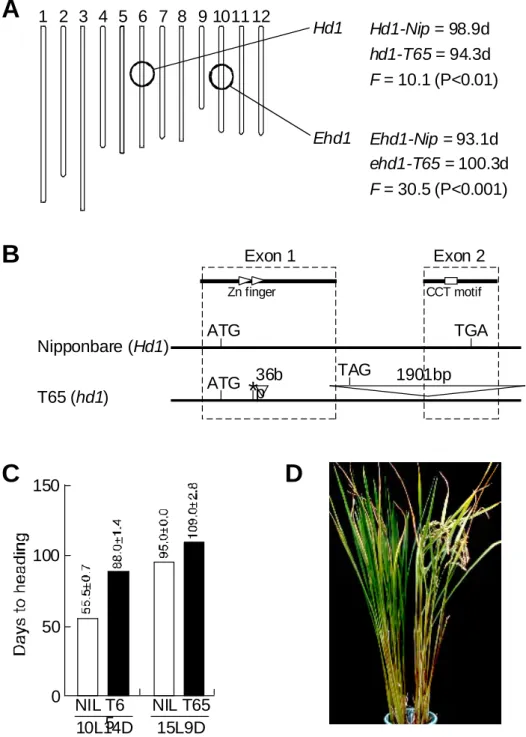
Flowering plants are largely categorized into short-day and long-day plants. In some species, no floral response to photoperiods is observed, which makes another group, day-neutral plants. In 1920, Garner and Allard reported that many flowering plants recognize the day-length to determine flowering-time and set seeds at appropriate seasons. Recent studies in a short-day plant, rice and a long-day plant, Arabidopsis thaliana revealed that plants utilize an evolutionarily conserved flowering pathway to establish opposite photoperiodic responses. The CONSTANS (CO) gene in the long-day plant, Arabidopsis, and its ortholog Heading date1 (Hd1), in the short-day plant, rice, control mRNA expression of FT-group floral inducer genes and play a central role in the photoperiodic control of flowering (Izawa et al., 2002, 2003). CO induces FT mRNA in long-days, whereas Hd1 inhibits and induces mRNA expression of rice FT orthologs (Hd3a etc.) in long-days and short-days, respectively.
Therefore, the transcriptional control of FT-group genes by CO/Hd1 is one of key steps that
determine the photoperiodic response of flowering in these plants. Here, we have cloned a
novel gene, termed Early heading date 1 (Ehd1), which is a major QTL between O. glaberrima
and a japonica cultivar, Taichung 65 (T65), and plays a key role in photoperiodic flowering of
rice (Fig.1, 2; Doi, Izawa et al., 2004). Ehd1 encodes a B-type response regulator (Fig.3)
whose ortholog may not exist in Arabidopsis. In addition, in the steps of QTL cloning of Ehd1,
we happened to demonstrate that Ehd1 can function without the functional Hd1 gene since
T65, one of the parents, was identified to be deficient in both Hd1 and Ehd1(Fig.1). This
suggests that the Ehd1 pathway can be independent from the conserved Hd1/CO
photoperiodic flowering pathway. Furthermore, we have shown that Ehd1 controls some
FT-like and MADS-box gene expression, indicating that the Ehd1 pathway is also integrated
into the conserved FT (or its orthologs) gene expression. There results show that rice flowers
as a short-day plant, in which several day-length signals are integrated into gene expression
into floral integrator genes such as Hd3a through both the evolutionarily conserved floral
pathway mediated by Hd1 and the unique floral pathway mediated by Ehd1.
Fig. 1 Genetic analysis of Ehd1 and Hd1. (A) Major quantitative trait loci (QTLs) identified in 89 recombinant inbred lines derived from a cross between T65 and Nipponbare. A summary of single-point QTL analyses at the Hd1 and Ehd1 loci is shown to the right of the rice linkage map. (B) Allelic variation in Hd1. The genomic sequences of the functional Nipponbare and defective T65 alleles are shown schematically. The triangles and asterisk indicate insertions and a nucleotide substitution, respectively. T65 has a 1901-bp insertion in the exon 2 that results in a premature stop codon (TAG) ahead of the CCT motif. (C) Days to heading of NIL (Ehd1-gla) and T65 under short-day (10L:14D) and long-day (15L:9D) conditions. (D) Photograph of 80-day-old plants of NIL (Ehd1-gla) (left) and T65 (right) grown under SD (9L:15D).
A
B
C D
0 50 100 150
NIL T6 5
NIL T65 10L14D 15L9D
Hd1
Ehd1
Hd1-Nip = 98.9d hd1-T65 = 94.3d F = 10.1 (P<0.01)
Ehd1-Nip = 93.1d ehd1-T65 = 100.3d F = 30.5 (P<0.001) 1 2 3 4 5 6 7 8 9 1011 12
Nipponbare (Hd1)
T65 (hd1)
36b p
1901bp ATG
ATG *
TGA TAG
Exon 1 Exon 2
Zn finger CCT motif
- 33 -
Fig. 2
Complementation test of Ehd1. ( A ) Days to heading of T
0transformants under SD (10L:14D) conditions. Open bar, empty vector; solid bar, vector with the genome fragment. Only plants transformed with the 11.5-kb BamHI fragment showed promotion of flowering. (B) Days to heading of two T
2lines homozygous for the Ehd1-Kas transgene (1-16, 5-6), NIL (Ehd1-gla) and T65 under conditions of SD (9L:15D) and LD (14.5L:9.5D).
Fig. 3
Structure of Ehd1. (A) Alignment of GARP domains of Ehd1-Kas, Golden2 (AAG32325), ARR1 (T51246), and Psr1 (AAD55941). The position of amino-acid variation in T65 (G to R) is indicated by an asterisk.
KpnI 7.6kb 6
4 2 0 6 4 2 0
Day to heading after transplanting BamHI 11.5kb
6 4 2 0
A
B
5
0 100 (d)
55.5 1.7
0
94.2 3.1 T65
53.4 2.6 5-6
1-16
Days to heading after sowing
A ATG TAG
1kb
5' 3'
B
C (ehd1-T65)
Ehd1-Kas 197 G K S RL TWT T QLH RQ FIA AVNH LG .EDKAVPKKIL G IM K VKHLTR E QVASHLQKYRM QL KK Golden2 183 R K VKVDWT PE LH RR FVQ AV EQ LG .IDKAVPSR IL E IM GTDCLTR HNI ASHLQKYR SHR K H ARR1 236 K K P R VVW SVE LH QQ FVA AVNQ LG .VE KAVPKKIL EL M N VPGLTR ENVASHLQK Y R IYLRR Psr1 21 P K P R LRWT T E LH ER FV D AV TH LG GPE KAT PK T I MRV M G VKGLT LYHLK SHLQKF R LGKQP
G A K
1 34
Receiver 1
11 123 197 255
GAR
P
Topics of Research in This Year
いいいいいい
Calcium-signal transduction cascade for cold tolerance and elongation in rice leaf sheath
Setsuko Komatsu, Arun Sharma, Abbasi Fida Molecular Genetics Department
Calcium is a ubiquitous signaling molecule and changes in cytosolic Ca
2+concentration are involved in plant responses to various stimuli, including environmental stresses and plant hormones. Increasing evidence shows that Ca
2+-dependent protein kinases (CDPKs) are also involved in environmental stress response and plant hormone signaling. To identify the crosstalk between environmental stress response and plant hormone signaling, Ca
2+-signal transduction cascade in rice seedling was analyzed using rice seedling.
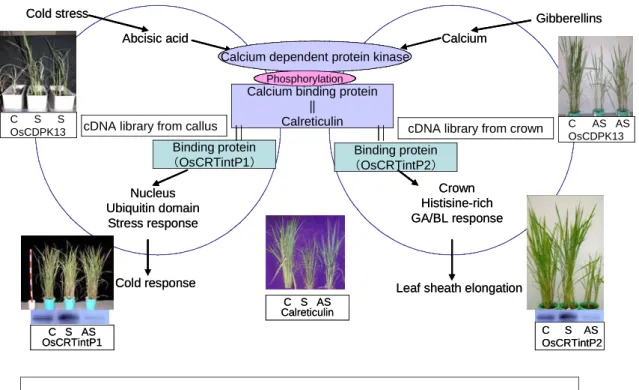
Rice CDPK13 was cloned from rice seedlings and its transcript shown to accumulate in response to cold stress and gibberellin (GA) treatment. The height of antisense CDPK13 transgenic rice lines was shorter than that of vector control, and the expression of CDPK13 was lower in dwarf mutants of rice than in their wild type. On the other hand, sense CDPK13 transgenic rice lines had higher recovery rates after cold stress than vector control, and the expression of CDPK13 was stronger in cold-tolerant rice varieties than in cold-sensitive ones. Using immuno-precipitation system, calreticulin was detected as interacting protein to CDPK13. To identify proteins that are regulated by the GA
3response in leaf sheath elongation in rice, proteins extracted from leaf sheath treated with GA
3were analyzed by the differential display proteome approach. Calreticulin was also identified as a responsive protein catalyzed by phosphorylation in GA signaling. In addition, calreticulin was phosphorylated by cold stress. These results indicate that CDPK13 and calreticulin might be important signaling components in response to GA and cold in rice.
Furthermore, using the screening of calreticulin-interacting proteins through yeast two-hybrid system, two novel proteins were identified in rice. cDNAs that showed interaction with calreticulin from a rice suspension culture cell cDNA library and leaf sheath cDNA library were identified as calreticulin-interacting proteins and named CRTintP1 and CRTintP2, respectively. CRTintP1 contains a nuclear localization signal site and studies on cellular localization using CRTintP1::GFP validated its nuclear localization. The expression of CRTintP1 increased in response to cold stress, indicating that it is a stress-responsive gene.
On the other hand, using in situ hybridization system, CRTintP2 was expressed particularly in the shoot apical and nodal apical meristem, which are important in leaf sheath elongation.
The average height of the various antisense CRTintP2 transgenic rice lines was 50% of that of
- 35 -
the vector control.
These results suggest that the possible element involved in controlling stress-responsiveness and leaf sheath elongation, and cold tolerance and GA-dependent elongation may be regulated through distinct signaling pathways that crosstalk at the level of CDPK13, calreticulin and CRTintP1/CRTinrtP2.
Fig.
Analysis of the proteins interacting to calreticulin. The immuno-precipitation system was used to identify calcium dependent protein kinase. The yeast two-hybrid interaction-cloning system was used to identify novel calreticulin interacting proteins (CRTintPs).
Figure 1. Analysis of the proteins interacting to calreticulin. The immuno-precipitation system was used to identify calcium dependent protein kinase. The yeast two-hybrid interaction-cloning system was used to identify novel calreticulin interacting proteins (CRTintPs).
Calcium binding protein
∥ Calreticulin
Cold stress Gibberellins
Abcisic acid Calcium
Binding protein
(OsCRTintP1)
Cold response Leaf sheath elongation
Binding protein
(OsCRTintP2)
Nucleus Ubiquitin domain
Stress response
Crown Histisine-rich GA/BL response
C S AS Calreticulin C S AS
OsCRTintP1
C S AS OsCRTintP2
cDNA library from callus cDNA library from crown
C S S
OsCDPK13 C AS AS
OsCDPK13 Calcium dependent protein kinase
Phosphorylation Calcium binding protein
∥ Calreticulin
Cold stress Gibberellins
Abcisic acid Calcium
Binding protein
(OsCRTintP1)
Cold response Leaf sheath elongation
Binding protein
(OsCRTintP2)
Nucleus Ubiquitin domain
Stress response
Crown Histisine-rich GA/BL response
C S AS Calreticulin C S AS
OsCRTintP1
C S AS OsCRTintP2
cDNA library from callus cDNA library from crown
C S S
OsCDPK13 C AS AS
OsCDPK13 Calcium dependent protein kinase
Phosphorylation
Topics of Research in This Year
いいいいいい