Original
Relationship between Job and Home Life Satisfaction and Demographic
Characteristics among Occupational Health Nurses in Japan
Yoshiko Kubo1)
, Yoko Hatono2)
, Tomohide Kubo3)
, Satoko Shimamoto4)
and Junko Nakatani5) 1)School of Nursing, The Jikei University
2)Graduate School of Medical Science, Kyushu University 3)National Institute of Occupational Safety and Health
4)School of Health Science, Tokai University
5)School of Occupational Health Science, University of Occupational and Environmental Health
(Received: November 28, 2017)
Abstract
Objectives: This study examined the relationship between job and home satisfaction and demographic characteristics among occupational health nurses (OHNs) in Japan.
Methods: Seven-hundred forty-five OHNs participated in the questionnaire survey. Measurements in-cluded demographic data and the job and home satisfaction.
Results: We found the following job and home satisfaction scores: job satisfaction = 62.7 (SD = 20.9), satis-faction with the evaluation of the immediate supervisor = 40.9 (SD = 25.2), and satissatis-faction with the education system in the workplace = 40.9 (SD = 25.2), home satisfaction = 70.1 (SD = 22.7). The selected independent vari-ables explaining job satisfaction as a dependent variable were years of experience as an OHN and education level (graduate school) (Adjusted R2= 0.107). The selected independent variables explaining satisfaction with
the evaluation of the immediate supervisor as a dependent variable were years of experience as an OHN, na-tional qualification, and supervisor (others) (Adjusted R2= 0.082). The selected independent variables
explain-ing satisfaction with the education system in the workplace as a dependent variable were years of experience as an OHN, supervisor (others), educational level (graduate school), qualification, and family-care experience (Adjusted R2= 0.154). The selected independent variables explaining satisfaction with home life as a dependent
variable were marital status, educational level (university), years of experience as an OHN, and qualification (Adjusted R2= 0.111).
Conclusions: 1. OHNs years of experience affects job and home life satisfaction.
2. OHNs with higher educational levels displayed lower satisfaction with their work life. 3. Married OHNs displayed higher satisfaction with home life than did unmarried OHNs. 4. When OHNs supervisor was an OHN, their evaluation and satisfaction with the education system in the workplace increased.
(JJOMT, 66: 289―297, 2018)
―Key words―
job satisfaction, home satisfaction, occupational health nurse
Introduction
Dramatic changes in technology and the globalization of economics have affected workers health and safety in Japan. Because of these changes, Japanese occupational health nurses (OHNs) must deal with risks as-sociated with work environments, such as emerging infectious diseases and work-related physical and mental stress. In addition, the Occupational Health and Safety Law was recently revised in Japan1)
. This revision obliges employers to evaluate their employees using psychological testing to reduce mental illness among
workers and promote a comfortable workplace. Therefore, the roles and services of OHNs are increasingly ex-panding.
The Occupational Health Nursing Research Center indicated that while about 70% of OHNs have both registered nurse (RN) and public health nurse (PHN) qualifications, the other 30% have only an RN qualifica-tion2)
. OHNs with only RN qualifications were intermingled; some OHNs had an RN qualification and were edu-cated by the Japan Society for Occupational Health, whereas other OHNs had not received an RN qualification. OHNs with a PHN qualification are educated in not only personal support (e.g., health consultations, health checks, and reinstatement support), but also public health (e.g., group education, precautionary practices, and population health approaches). The undergraduate education of occupational health nursing in Japan differs significantly among nursing universities. Consequently, significant differences exist in the qualifications and undergraduate education of OHNs in Japan3)
. Furthermore, about 30% of OHNs work alone without occupa-tional health physicians (OHPs) and colleague OHNs, thereby limiting opportunities for on-the-job training and role expansion. Most OHNs work full-time, whereas most OHPs work part-time. About 50% of OHNs are super-vised by non-healthcare staff, who may not fully understand the OHN role and not value continuing profes-sional development and the importance of being promoted and hired as full-time staff2)
. Consequently, OHNs in Japan may find it difficult to plan and develop their careers4)5)
. To provide high-quality nursing for patients, it is necessary to raise nurses job satisfaction6)
. A positive correlation between patient satisfaction and nurses sat-isfaction has been previously shown7)
.
There are many studies about job satisfaction among general workers and hospital nurses in Japan; how-ever, there are only two previous studies8)9)
about job satisfaction of OHNs in Japan. To raise job satisfaction of general workers, it is important to raise job satisfaction of OHNs who support general workers and it is impor-tant to improve work environment to demonstrate professional ability and improve work ethic.
Nishida et al.8)
did a research on job stress and job satisfaction of OHNs. They found a connection between low job satisfaction and low understanding of occupational health services in their organization, and bad physi-cal condition. Ichimaru9)
researched work engagement and OHN s supervisor (medical professionals vs. non-medical professionals), finding a connection between job satisfaction and work engagement regardless of the supervisor. However, in these studies, the dependent variable was not job satisfaction, and additional factors related to job satisfaction were not considered. Moreover, recently, since the importance of work-life balance has emerged in Japan, we think that not only job satisfaction, but also home life satisfaction will be critical for career development10)
. Consequently, this study examined the relationship between job and home satisfaction and demographic characteristics among OHNs in Japan.
Materials and Methods Participants
This study recruited OHNs affiliated with the Japan Society for Occupational Health. First, half the sam-ple of OHNs were selected through random sampling by the secretariat of the Japan Society for Occupational Health. Those not currently working as OHNs were excluded. Finally, 745 anonymous questionnaires were dis-tributed by mail in May 2015 with a letter describing the aims and procedure of the study, and assuring that participation was completely anonymous. Three-hundred thirty-seven questionnaires were returned (response rate: 45.2%). After excluding OHNs with at least one missing data point on the questionnaires, 325 question-naires were included in the analyses.
Demographic information
Demographic data included sex, age, years of career as an OHN, education level, qualification, position, af-filiation, employment, supervisor, marital status, child-care experience, and family-care experience.
Job and home life satisfaction
We investigated job satisfaction via the evaluation of the immediate supervisor and satisfaction of the edu-cation system present in the workplace as in previous studies3)
. Job and home life satisfaction were measured using the Visual Analog Scale (VAS). The VAS is a 100-mm horizontal line, that divides satisfaction into grades from 0 (0% satisfaction) to 100 (100% satisfaction); participants were asked to indicate their satisfaction level by
indicating a spot on the line. The VAS score was determined by measuring, in millimeters, from the left-hand end of the line to the participant s point.
Statistical analyses
The degree of job and home life satisfaction were measured using the value on the VAS. For two groups such as position and employment, non-paired t-tests were conducted. For more than three groups such as edu-cation level and affiliation, a one-way analysis of variance and a hypostasis Tukey test were conducted.
Multiple regression analyses were used to assess the relationship between job and home life satisfaction; however, first, each independent variable was calculated as a candidate correlation coefficient via the Spear-man method. The correlation coefficient of age (real number) and years of career as an OHN (real number) was 0.5 or more (r = 0.719). Therefore,“years of career as an OHN”was left as an independent variable because correlation coefficients of years of career as an OHN were higher with each satisfaction level. Moreover, the nominal scale was converted into dummy variables of 0 and 1, and a scale with three or more categories was created as a reference category, such as national qualification (1: public health nurse, 0: registered nurse) and qualification (1: yes, 0: no). Stepwise method multiple regression analyses were used to assess the relationship between job and home life satisfaction as the dependent variables, as well as the independent variables of each career anchor score, years of career as an OHN, dummy variables of nominal scale national qualification and qualification and so on. Because we calculated the Variance Inflation Factor (VIF) value at the time of analysis, the VIF value was always around 1 to 2 levels, as there were no variables that were more than 10; there were no problems regarding multiple collinearity. All statistical analyses were conducted using SPSS Version 23.0 for Windows (IBM Corp., NY, USA).
Ethical considerations
This study was approved by the ethical review board at the author s institution (ID number 7823). This study was approved by the Japan Society for Occupational Health. Participants were informed of the purpose, procedures, potential publication of this study, and their rights of refusal and confidentiality. Written informed consent was obtained from participants.
Results Characteristics of respondents
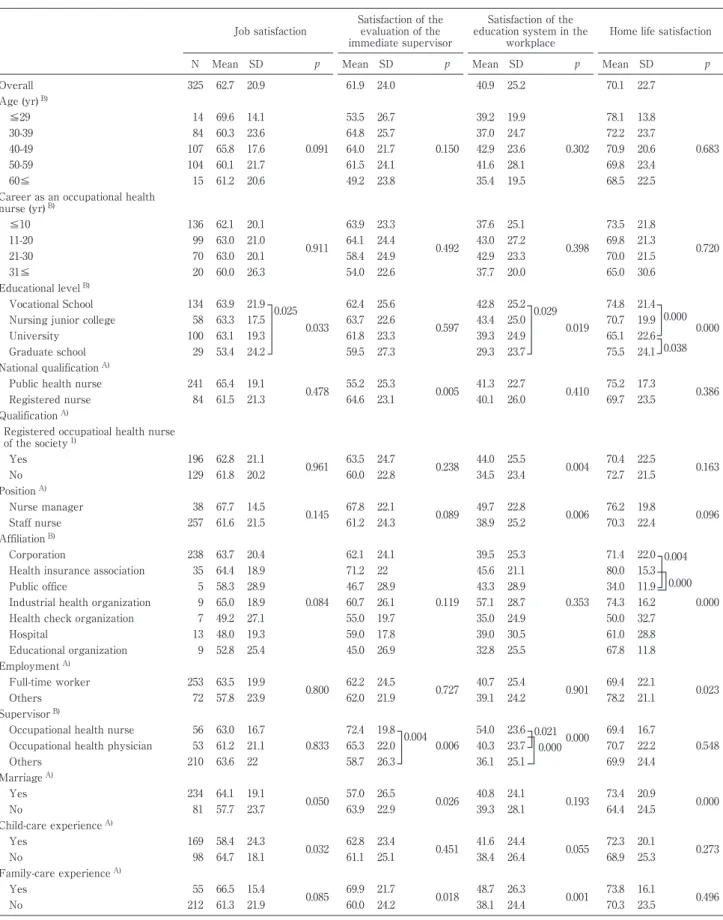
Table 1 shows the characteristics of respondents. The mean age of participants was 45.3 years (SD = 9.3). The mean length of career as an OHN was 15.3 years (SD = 9.1).
Relationship between job and home life satisfaction and characteristics
Table 1 shows the relationship between job and home life satisfaction and characteristics.
We found the following job and home satisfaction scores: job satisfaction = 62.7 (SD = 20.9), satisfaction with the evaluation of the immediate supervisor = 40.9 (SD = 25.2), satisfaction with the education system in the workplace = 40.9 (SD = 25.2), and home satisfaction = 70.1 (SD = 22.7).
There were significant differences in educational level, marital status, and child- and family-care experi-ence regarding job satisfaction. Regarding educational level, job satisfaction decreased as educational level in-creased. Furthermore, the score of married OHNs was higher than unmarried OHNs, and the score of those with no-child-care experience was higher than those with experience. There were significant differences in na-tional qualification, supervisor, marital status, and family-care experience and satisfaction of the immediate su-pervisor. There were significant differences in educational level, qualification, position, supervisor, and family-care experience regarding the satisfaction of the education system in the workplace. The score of graduate school OHNs was the lowest and the scores of OHNs with an OHN supervisor were the highest. There were significant differences in educational level, affiliation, employment, and marital status regarding home life satis-faction.
Multiple regression analyses of job and home life satisfaction
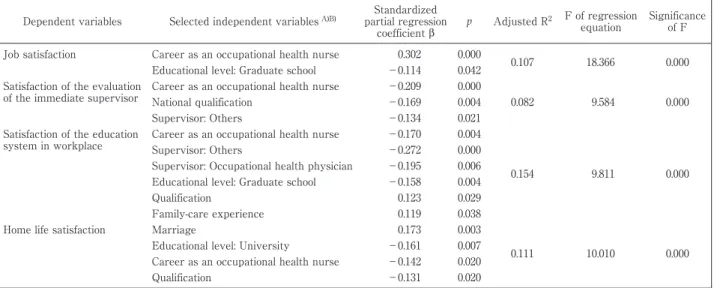
Table 2 shows the multiple regression analyses of job and home life satisfaction.
The selected independent variables explaining job satisfaction of dependent variables were years of expe-rience as an OHN and education level: graduate school (Adjusted R2= 0.107). The selected independent
vari-Table 1 Relationship between job and home life satisfaction and characteristics (N=325) Job satisfaction Satisfaction of the evaluation of the immediate supervisor Satisfaction of the education system in the
workplace Home life satisfaction
N Mean SD p Mean SD p Mean SD p Mean SD p
Overall 325 62.7 20.9 61.9 24.0 40.9 25.2 70.1 22.7 Age (yr) B) ≦29 14 69.6 14.1 0.091 53.5 26.7 0.150 39.2 19.9 0.302 78.1 13.8 0.683 30-39 84 60.3 23.6 64.8 25.7 37.0 24.7 72.2 23.7 40-49 107 65.8 17.6 64.0 21.7 42.9 23.6 70.9 20.6 50-59 104 60.1 21.7 61.5 24.1 41.6 28.1 69.8 23.4 60≦ 15 61.2 20.6 49.2 23.8 35.4 19.5 68.5 22.5
Career as an occupational health nurse (yr) B) ≦10 136 62.1 20.1 0.911 63.9 23.3 0.492 37.6 25.1 0.398 73.5 21.8 0.720 11-20 99 63.0 21.0 64.1 24.4 43.0 27.2 69.8 21.3 21-30 70 63.0 20.1 58.4 24.9 42.9 23.3 70.0 21.5 31≦ 20 60.0 26.3 54.0 22.6 37.7 20.0 65.0 30.6 Educational level B) Vocational School 134 63.9 21.9 0.033 62.4 25.6 0.597 42.8 25.2 0.019 74.8 21.4 0.000
Nursing junior college 58 63.3 17.5 63.7 22.6 43.4 25.0 70.7 19.9
University 100 63.1 19.3 61.8 23.3 39.3 24.9 65.1 22.6
Graduate school 29 53.4 24.2 59.5 27.3 29.3 23.7 75.5 24.1
National qualification A)
Public health nurse 241 65.4 19.1
0.478 55.2 25.3 0.005 41.3 22.7 0.410 75.2 17.3 0.386
Registered nurse 84 61.5 21.3 64.6 23.1 40.1 26.0 69.7 23.5
Qualification A)
Registered occupatioal health nurse of the society 1) Yes 196 62.8 21.1 0.961 63.5 24.7 0.238 44.0 25.5 0.004 70.4 22.5 0.163 No 129 61.8 20.2 60.0 22.8 34.5 23.4 72.7 21.5 Position A) Nurse manager 38 67.7 14.5 0.145 67.8 22.1 0.089 49.7 22.8 0.006 76.2 19.8 0.096 Staff nurse 257 61.6 21.5 61.2 24.3 38.9 25.2 70.3 22.4 Affiliation B) Corporation 238 63.7 20.4 0.084 62.1 24.1 0.119 39.5 25.3 0.353 71.4 22.0 0.000
Health insurance association 35 64.4 18.9 71.2 22 45.6 21.1 80.0 15.3
Public office 5 58.3 28.9 46.7 28.9 43.3 28.9 34.0 11.9
Industrial health organization 9 65.0 18.9 60.7 26.1 57.1 28.7 74.3 16.2
Health check organization 7 49.2 27.1 55.0 19.7 35.0 24.9 50.0 32.7
Hospital 13 48.0 19.3 59.0 17.8 39.0 30.5 61.0 28.8 Educational organization 9 52.8 25.4 45.0 26.9 32.8 25.5 67.8 11.8 Employment A) Full-time worker 253 63.5 19.9 0.800 62.2 24.5 0.727 40.7 25.4 0.901 69.4 22.1 0.023 Others 72 57.8 23.9 62.0 21.9 39.1 24.2 78.2 21.1 Supervisor B)
Occupational health nurse 56 63.0 16.7
0.833 72.4 19.8 0.006 54.0 23.6 0.000 69.4 16.7 0.548
Occupational health physician 53 61.2 21.1 65.3 22.0 40.3 23.7 70.7 22.2
Others 210 63.6 22 58.7 26.3 36.1 25.1 69.9 24.4 Marriage A) Yes 234 64.1 19.1 0.050 57.0 26.5 0.026 40.8 24.1 0.193 73.4 20.9 0.000 No 81 57.7 23.7 63.9 22.9 39.3 28.1 64.4 24.5 Child-care experience A) Yes 169 58.4 24.3 0.032 62.8 23.4 0.451 41.6 24.4 0.055 72.3 20.1 0.273 No 98 64.7 18.1 61.1 25.1 38.4 26.4 68.9 25.3 Family-care experience A) Yes 55 66.5 15.4 0.085 69.9 21.7 0.018 48.7 26.3 0.001 73.8 16.1 0.496 No 212 61.3 21.9 60.0 24.2 38.1 24.4 70.3 23.5 SD: Standard Deviation 1) Previous education system A) Non-paired t test
B) Oneway ANOVA, hypostasis Tukey test
0.025 0.004 0.029 0.021 0.000 0.000 0.038 0.000 0.004
Table 2 Multiple regression analyses of job and home life satisfaction (N=325)
Dependent variables Selected independent variables A)B) partial regression Standardized
coefficient β p Adjusted R
2 F of regression equation
Significance of F
Job satisfaction Career as an occupational health nurse 0.302 0.000
0.107 18.366 0.000
Educational level: Graduate school −0.114 0.042
Satisfaction of the evaluation
of the immediate supervisor Career as an occupational health nurseNational qualification −0.209−0.169 0.0000.004 0.082 9.584 0.000
Supervisor: Others −0.134 0.021
Satisfaction of the education system in workplace
Career as an occupational health nurse −0.170 0.004
0.154 9.811 0.000
Supervisor: Others −0.272 0.000
Supervisor: Occupational health physician −0.195 0.006
Educational level: Graduate school −0.158 0.004
Qualification 0.123 0.029
Family-care experience 0.119 0.038
Home life satisfaction Marriage 0.173 0.003
0.111 10.010 0.000
Educational level: University −0.161 0.007
Career as an occupational health nurse −0.142 0.020
Qualification −0.131 0.020
Stepwise method multiple regression analyses
A)Quantitative variable; Career as an occupational health nurse
B)Qualitative variable (Nominal scale); National qualification (1: Public health nurse, 0: Registered nurse), Qualification (1: Yes, 0: No), Position (1: Nurse manager, 0: Staff nurse), Employment (1: Full-time worker, 0: Others), Marriage (1: Yes, 0: No), Child-care experience (1: Yes, 0: No), Fami-ly-care experience (1: Yes, 0: No), Educational level: Nursing junior college (1: Nursing junior college, 0: Vocational School), Educational level: University (1: University, 0: Vocational School), Educational level: Graduate school (1: Graduate school, 0: Vocational School), Supervisor: Occupa-tional health physician (1: OccupaOccupa-tional health physician, 0: OccupaOccupa-tional health nurse), and Supervisor: Others (1: Others, 0: OccupaOccupa-tional health nurse). Nominal scale was introduced a dummy variable.
Education level was classified using vocational level as a reference category, and supervisor was classified using OHN as a reference category.
ables explaining the satisfaction of the evaluation of the immediate supervisor of dependent variables were years of experience as an OHN, national qualification, supervisor; others (Adjusted R2= 0.082). The selected
in-dependent variables explaining satisfaction of the education system in the workplace of in-dependent variables were years of experience as an OHN, supervisor; others, educational level; graduate school, qualification, and family-care experience (Adjusted R2 = 0.154). The selected independent variables explaining satisfaction of
home life dependent variables were marital status, educational level; university, years of experience as an OHN and qualification (Adjusted R2= 0.111).
Discussion Relationship with job life satisfaction
In this study, there were significant differences in educational level, satisfaction of work life, and satisfac-tion of the educasatisfac-tion system in the workplace in the univariate analysis. There were differences in educasatisfac-tional level, satisfaction of the education system in the workplace, and satisfaction of home life in the multivariate analysis. There are many studies regarding job satisfaction among nurses; however, only a few have examined the relationship between satisfaction and educational level because nurses typically do not have diverse educa-tional backgrounds. No previous study has compared four educaeduca-tional levels (vocaeduca-tional school, nursing junior college, university, and graduate school) among nurses.
In a previous study, HNs of non-university level had higher scores than university level nurses regarding job satisfaction11)
. This previous research obtained the same result as the current research: higher educational level means lower scores compared to low educational levels regarding job satisfaction. In general women s re-search, previous studies found both that there is no relation between educational level and work satisfaction12)
, and that there is a relation13)
. Clark stated that female workers were more satisfied with their job than male workers; the results were different depending on the occupational environment; many studies are conducted with young, highly educated, professional workers and in male dominant workplaces14)
. Therefore, we specu-lated that workers with higher educational levels had lower job satisfaction and lower satisfaction regarding the education system in the workplace. The reason was that these workers have high goal setting
expecta-tions; they also expect promoexpecta-tions; however, this is often difficult to attain.
There were significant differences regarding the supervisor when comparing a supervisor who was an OHN with others, with respect to the satisfaction of the immediate supervisor, and the satisfaction of the edu-cation system in the workplace in both the univariate and multivariate analyses. As mentioned in the introduc-tion, about 50% of OHNs are supervised by non-healthcare staff, who may not fully understand the OHN role and may not value continuing professional development and the importance of being promoted and hired as full-time staff3)
. In this survey, only 56 OHNs (17.2%) had a supervisor who was not an OHN. this result is differ-ent from the ratio in previous research. However, this result also showed that even when the OHNs supervi-sors are OHNs themselves, their job satisfaction increased, probably because OHNs were recognized for their work by their supervisors, and they could receive appropriate education for their field of nursing; their super-visor became a role model for them. Consequently, we suggest that it is important for OHNs to be appointed in managerial positions for career development.
There were significant differences in the number of years as an OHN, job satisfaction, the satisfaction of the evaluation of the immediate supervisor, and the satisfaction of the education system in the workplace in the multivariate analysis; there was no significant differences in the univariate analysis. In a previous study about hospital nurses and administrative public health nurses, nurses with more years of experience had higher job satisfaction15)
. Likewise, in this study, OHNs with more career experience had higher job satisfaction. On the other hand, the level of satisfaction of the evaluation of the immediate supervisor and satisfaction of the education system in the workplace decreases as the number of years as am OHN increases.
Umesaki16)
, who examined general workers in Japan, stated that supervisors evaluations of their subordi-nates tend to be more negative the longer the subordinate has worked in the same department. In this survey, about 60% of the OHN s supervisors were non-healthcare staff and general staff. Many general staff members have experience in various departments; however, typically, OHNs have not changed departments. Therefore, we consider that it is difficult to obtain a very positive evaluation as an OHN obtains more years of experience.
Regarding the satisfaction level of the education system, the satisfaction of over thirty experience years was low. There was a continuing education system of department occupational health nursing in Japan Society for Occupational Health as a conventional representative education system after graduation. However, this system was constructed in 1995 and OHNs who completed the basic course could register as an OHN of Japan Society for Occupational Health since 1998. Perhaps this was because there was no continuing education sys-tem when OHNs were novices or advanced beginners.
Relationship with home life satisfaction
Home satisfaction was higher than job satisfaction in this study. OHNs can work independently and at their own pace, except when there is an emergency, therefore OHNs can tailor their work and private life. Consequently, we considered that home satisfaction of OHNs was higher. In addition, home satisfaction has re-lated to marriage, education level: university, years of experience as an industrial nurse, qualification.
According to a survey of general people conducted by Diener and Seligman17)
, married people have a higher sense of well-being than unmarried, and the most important personal relationship was marriage and family members, and they related to well-being. In the survey of general Japanese people by Iwai18)
, married people have a higher happy feeling than unmarried. Therefore, married OHNs have a higher satisfaction than unmarried OHNs.
Moreover, concerning educational background, in a survey conducted by Hartog and Oosterbeek19)
, higher educated people did not feel the highest happiness level. In contrast, Urakawa20)
stated that while it is assumed that more educated people will be happier than their less educated counterparts, what was not considered was that with higher education come greater ambitions and loftier goals. Therefore, we considered that OHNs with a bachelor s degree might show decreased home satisfaction.
In this study, the correlation coefficient of age (real number) and years as an OHN (real number) was 0.5 or more (r = 0.719). Therefore, we adopted“years of career as an OHN.”In the survey of general Japanese people by Shishido21)
, female happiness declines at the age of 20 years and, following a U-shaped curve, rises at the age 60 years. Therefore, we considered that OHNs show a decrease in home satisfaction as years of experience and
age increase.
Limitations and future issues
Admittedly, we studied OHNs with a certain level of professional awareness as we targeted members of the Japan Society for Occupational Health. According to a survey by the Japanese Nursing Association, there are 12,300 nurses working in other offices. Therefore, our study only covered a small fraction of OHNs. Previ-ous studies have had response rates of about 15%, with approximately 400 participants. When planning sur-veys with OHNs, it can be difficult to determine where they work; therefore, sursur-veys are often conducted among those who are members of the Japan Society for Occupational Health. In this survey, the response rate was below 60%, therefore subject-related bias is a potential limitation of this study.
Many studies about satisfaction have used the VAS method22)23)
, and one study has addressed its validity23)
; however, the VAS method is often used to evaluate abstract concepts, and details of satisfaction were not able to be evaluated. Moreover, in the multiple regression analyses, adjusted R2values were low. Future studies
should address additional factors related to job and home life satisfaction and examining the scale s validity and reliability. Furthermore, it is not possible to derive any causal relationships, because this study was a cross-sectional survey. In the future, we hope to research the various effects of job satisfaction longitudinally, which will contribute to the career development of OHNs.
The following 4 conclusions were obtained from this study: 1. OHNs years of experience affects job and home life satisfaction.
2. OHNs with higher educational levels displayed lower satisfaction with their work life. 3. Married OHNs displayed higher satisfaction with home life than did unmarried OHNs.
4. When OHNs supervisor was an OHN, their evaluation of their immediate supervisor and satisfaction with the education system in the workplace increased.
Acknowledgments
We gratefully acknowledge the very helpful participation of the OHNs. This work was supported by a Grant-in-id from The Jikei University and Japan Society of Private College and Universities of Nursing.
Authors Contributions
YK, YH, TK, SS, and JN contributed to the conception and design of the study, statistical analyses, and drafting of the manuscript. All authors read and approved the final manuscript.
References
1) Ministry of Health, Labor and Welfare: Stress Check System for Workers: Revised Occupational Health and Safety Law, 2014. http://www.mhlw.go.jp/stf/houdou/0000069013.html. Japanese. (accessed 2015-5-11)
2) Occupational Health Nursing Research Center: Occupational health nurse practice. Yokkaichi, Yokkaichi Nursing and Medi-cal Care University Press, 2011,
3) Occupational Health Nursing Research Center: Occupational health nursing education survey among nursing universities. Yokkaichi, Yokkaichi Nursing and Medical Care University Press, 2014,
4) Hara Y, Yamada K, Shiraishi A, et al: Evaluation of programs of continuing education regarding occupational health nursing for university graduates, Proceedings of the 1st Asia Conference on Occupational Health Nursing. 2008, pp 89―90.
5) Ueda S: Career development of occupational health nurses, Working paper, Master of business administration. Kobe Univer-sity, 2008, pp 1―38.
6) Tamura M, Takeuchi Y, Fujigaki S, et al: The study on the factors affection nurses perception of their work and job satisfac-tion. Bull Nagano Coll Nurs 9: 65―74, 2007.
7) Fujimura K: Why is job satisfaction of nurse important? Nurs Today 24 (3): 12―15, 1999.
8) Nishida K, Kato T, Gotoh Y, et al: Job stress, job satisfaction and stress-coping mechanisms among occupational health nurses in Japan. Job Stress Res 12: 197―204, 2005.
9) Ichimaru M: How does supervisor difference affect work engagement for occupational health nurses? Occ Health Nurs 6 (3): 204―211, 2014.
10) Sturges J, Guest D: Working to live or living to work? Work/life balance early in the career. Hum Resour Manage J 14 (4): 5― 20, 2004.
Rev 2 (2): 237―253, 2015.
12) Akashi K, Kawaguchi T: Education, Job selection, Income and job satisfaction―Effects of vocational school and graduate school. Eco-Forum 30 (4): 35―43, 2015.
13) Tanaka N: Factor analysis of job satisfaction between males and females―Does job satisfaction control leave jobs? Joint re-search center for panel studies discussion paper series Keio University, 2012, pp 1―22.
14) Clark AE: Job satisfaction and gender; Why are women so happy at work? Labour Econ 4 (4): 341―372, 1997.
15) Ago M, Mishima M, Ishibashi T, et al: Relationships between job satisfaction, thinking style, and quality of occupational expe-rience for public health nurses, midwives, and nurses. JMNE 23 (2): 13―20, 2014.
16) Umezaki O, Nakashima T: Impact of evaluator s responsibility on evaluation behavior. Jpn J Lab Stud 545: 40―50, 2005. 17) Diener E: Seligman MEP: Beyond money: toward and economy of well-being. Psycholog Sci Pub Interest 5 (1): 1―31, 2004. 18) Iwai N: Are you happy? Japanese happiness feeling. Iwai N, Sato H, editors. Tokyo, Yuhikaku Publishing, 2002, pp 2―8. 19) Hartog J, Oosterbeek H: Health wealth and happiness: why pursue a higher education? Econ Educ Rev 17 (3): 245―256, 1998. 20) Urakawa K: Review of happiness research. Jpn J Lab Stud 612: 4―15, 2011.
21) Shishido K, Sasaki T: Happiness in Japan: a hierarchical age-period analysis based on JGSS cumulative data 2000-2010. Jpn Soc Rev 62 (3): 336―355, 2011.
22) Kumagai Y, Morioka I, Yoshimatsu K, et al: Relationship of self-reported physical health, sociability, and spiritual life with mental health: an investigation according to gender and life stage. Jpn J Hyg 63: 636―641, 2008.
23) Soutomo I: Life satisfaction and help needs in post-stroke patients. Jpn J Geriatr 36: 199―205, 2005. Reprint request:
Yoshiko Kubo
Department of Nursing, The Jikei University School of Medi-cine, 8-3-1, Kokuryo, Chofu, Tokyo, 182-8570, Japan.
別刷請求先 〒182―8570 東京都調布市国領町 8―3―1 東京慈恵会医科大学医学部看護学科 久保 善子