それを CLIL で行うとどうなるかを実践した後で研修してもらいたいという要望を受けま した。そこで私は多くの生徒が英検 2 級を持っている高校の1年生に対して、英語で授業 を行い、その後、先生たちに今話したことも含めて講演をしました。
最終的に教えるのは熱の伝導についてですが、CLIL なので、最初にそもそも家電を英語 で何というかという話をします。エアコンは Air conditioner、ストーブは Gas heater、
ホットカーペットは electric carpet と普通の英語の授業のようなことを行い、それを分 類して考えることで CLIL 的になります。この段階では LOTS を使います。
この授業の目 的は三つの 伝導なの で、エアコンと ホットカーペ ットな どを熱伝導
(conduction)、対流(convection)、ふく射(radiation)と分類し、それが Transfer of heat energy だと教えるのです。それを行った上で、テキストを生徒に読ませて、理解で きたか確認するために、時には文法訳読もさせました。CLIL の Language of learning で は、conduction と convection と radiation の三つだけはこの授業で絶対に身につけさせ ないといけないので、語源的な説明をしたり、発音させたりして覚えさせます。
その理解が定着したか確認するために、別の暖房器具を見せると、生徒はみんな答えら れます。electric heater は radiation、gas fan heater は convection、wood-burning stove
(まきストーブ)は radiation、カイロ(pocket warmer)は伝導(conduction)です。
それから、床暖房は理想的ですが、なぜみんな入れないのかという話や、エアコンは他 の電化製品に比べて何で安いのかということを考えていきます。このあたりはデータに基 づいて長所と短所を評価(evaluation)し、頭を使うものになるので、HOTS の段階になっ てきます。
最後に宿題として、自分の将来の家では何を使うかということで、私だったらこれを使 う、それはこういう理由で、熱の伝わり方としてはこうですというライティングに持って いきます。CLIL では、ライティング・フレーム、スピーキング・フレームという言い方を しますが、フレームを与えて、それを使ってやっていきます。単なる入れ替え練習になっ てしまうといけないので、それプラス自分のことを書かせたりもします。このように熱の 伝導を扱い、かつ、英語教育をしっかりやっていくことが具体的な CLIL の授業です。
小学校から大学まで、いろいろな形があると思いますが、今までのものと全部入れ替え るということではなく、別のチョイス、あるいは付加するものとして、こういうやり方も できるということです。これを日本語、英語、あるいは他の言語でやることが具体的なグ ローバル教育なのです。
Development of Online English Listening Videos and E-Learning System at Kanazawa University
金沢大学における英語リスニング教材と
E
−ラーニングシステムの開発Gary Ross
ロス・ギャリーJohn Ertl
アートル・ジョンAbstract
This article is a report on the development of online e-learning English language instructional videos at Kanazawa University during the 2013 academic year. In the introduction, we provide an overview of the grant program that supported the creation of these educational materials as well as the basic needs and objectives by which this project has commenced. Next, this article provides a short review of the educational needs and pedagogical issues that guided the development of these educational videos. This is followed by an overview of the processes of creation, the content of the videos, and an explanation of how they may be utilized by English language learners. The last section is a walk-through of an independently created (that is, not funded by the current research project) online learning system in which these videos may be utilized for self-study or guided instruction.
1. Overview of Project
This is a report on the development of online e-learning English language instructional videos at Kanazawa University during the 2013 academic year. In the introduction, we provide an overview of the grant program that supported the creation of these educational materials as well as the basic needs and objectives by which this project has commenced.
Next, this article provides a short review of the educational needs and pedagogical issues that guided the development of these educational videos. This is followed by an overview of the processes of creation, the content of the videos, and an explanation of how they may be utilized by English language learners. The last section is a walk-through of an independently created (that is, not funded by the current research project) online learning system in which these videos may be utilized for self-study or guided instruction.
This project is funded by a grant titled Class Use ICT Educational Material Creation Support (jugyo-yo ITC kyozai sakusei shien) and the specific title of the project is Creation of General Education E-Learning English Materials for the Development of Global Human Resources (gurobaru-jinzai ikusei wo mezasu kyotsukyoiku-yo e-Learning eigo kyozai).
Funding was provided through a university-wide grant application by the Office for Faculty Development, Information Communication and Development (FD, ITC suishin shitsu). The larger aim of this support grant is to produce e-learning course materials developed by Kanazawa University faculty to be used in classes or for self-study by students. Amongst the relevant conditions for receiving this grant are that the materials be accessible on the university online learning system (Acanthus Portal), the materials are to be used in classes or self-study for classes, the materials may be used by all faculty, and copyright is held by Kanazawa University. The term of this project was from August 2013 to March 2014.
Under the direction and guidance of the project leader Professor Sawada Shigeyasu, the authors have engaged in the development of five English language videos to be used in courses and for student self-study. The basic aims of this project, outlined in the grant application, are twofold. First, is the creation of content-based animated videos that cover topics raised in the authors general education English classes (including English Communication I and advanced English II and III classes). Second, the creation of a general template for the production of future videos and development of an online learning system into which these learning materials may be utilized by students and faculty.1
2. Educational and Pedagogical Issues
The reasons for the creation of these English language-learning videos stem from a set of needs and deficiencies in available materials. The limitations of existing materials are noted in List 1. To summarize, one of the challenges for instructors and students is in identifying appropriate and engaging materials. While certainly not true for all available materials, the basic conflict is that listening materials are either produced for skill-based learning (leveled for second-language learner s abilities) or they are content-focused for native speakers. As such, the language and the length for many videos are set for native-level language users and therefore largely inaccessible to many students at Kanazawa University. Further issues that limit the use of existing videos and listening materials stems from their lack of integration into an online language-learning environment (e.g. they may exist in the form of DVDs or online video hosting sites) and copyright restrictions prevent their incorporation into such a system.
1 As noted above, the creation of the online learning system is not supported by the current grant.
While introduced below, the system is being developed by the author (Gary Ross) and, while still under development at the time of writing, is currently being utilized in his classes at Kanazawa University.
This project is funded by a grant titled Class Use ICT Educational Material Creation Support (jugyo-yo ITC kyozai sakusei shien) and the specific title of the project is Creation of General Education E-Learning English Materials for the Development of Global Human Resources (gurobaru-jinzai ikusei wo mezasu kyotsukyoiku-yo e-Learning eigo kyozai).
Funding was provided through a university-wide grant application by the Office for Faculty Development, Information Communication and Development (FD, ITC suishin shitsu). The larger aim of this support grant is to produce e-learning course materials developed by Kanazawa University faculty to be used in classes or for self-study by students. Amongst the relevant conditions for receiving this grant are that the materials be accessible on the university online learning system (Acanthus Portal), the materials are to be used in classes or self-study for classes, the materials may be used by all faculty, and copyright is held by Kanazawa University. The term of this project was from August 2013 to March 2014.
Under the direction and guidance of the project leader Professor Sawada Shigeyasu, the authors have engaged in the development of five English language videos to be used in courses and for student self-study. The basic aims of this project, outlined in the grant application, are twofold. First, is the creation of content-based animated videos that cover topics raised in the authors general education English classes (including English Communication I and advanced English II and III classes). Second, the creation of a general template for the production of future videos and development of an online learning system into which these learning materials may be utilized by students and faculty.1
2. Educational and Pedagogical Issues
The reasons for the creation of these English language-learning videos stem from a set of needs and deficiencies in available materials. The limitations of existing materials are noted in List 1. To summarize, one of the challenges for instructors and students is in identifying appropriate and engaging materials. While certainly not true for all available materials, the basic conflict is that listening materials are either produced for skill-based learning (leveled for second-language learner s abilities) or they are content-focused for native speakers. As such, the language and the length for many videos are set for native-level language users and therefore largely inaccessible to many students at Kanazawa University. Further issues that limit the use of existing videos and listening materials stems from their lack of integration into an online language-learning environment (e.g. they may exist in the form of DVDs or online video hosting sites) and copyright restrictions prevent their incorporation into such a system.
1 As noted above, the creation of the online learning system is not supported by the current grant.
While introduced below, the system is being developed by the author (Gary Ross) and, while still under development at the time of writing, is currently being utilized in his classes at Kanazawa University.
List 1: Limitations of Existing Listening Materials
· Lack of appropriate content-based listening materials.
· Existing videos are not leveled to students abilities.
· Length of videos is problematic.
· Native-level speed of speech and use of idioms.
· No integration into language learning system.
· Copyright restrictions.
Content Based Instruction
Content-based instruction (CBI) refers, in general, to the teaching of foreign language courses based within a disciplinary or thematic context, and which make use of authentic materials from a country where the language is used natively. CBI refocuses foreign language education towards the teaching of academic content, thereby aiding in the acquisition of linguistic, cognitive, and cultural skills used in a foreign national-linguistic discursive community. In this way, CBI differs substantially from traditional skills-based courses, which can be applied in specific social situations (self-introductions, giving directions, ordering a meal at a restaurant). The three primary benefits of CBI are that: students are thought to develop more favorable attitudes towards foreign languages that may encourage further study; it teaches content that may have applicability in related (non-foreign language) courses or future careers; and exposes students to the culture in which the target language is used natively (Marani 1998).
Despite the potential benefits of CBI, the most significant limiting factors for its implementation are financial and time restraints it requires the hiring or training of content specialists who are able to teach in the target language and demands additional time to create a content-based course. Thus, the central concerns are weighing these costs with the needs of the academic institution, and investing the time and resources to incorporate CBI as a cornerstone of a foreign-language curriculum. In this respect, the creation of online videos to teach content remedies such limitations, as the content can be shared by every instructor and student while classroom instruction may focus on discussion of the various themes introduced (see discussion of flip learning below).
There are two current and overlapping areas in which the incorporation of CBI can be seen as necessary in university-level education: the first is the training of students who will go on to academic or professional careers that require English proficiency; and the second are students who intend to study abroad. Students in area-studies disciplines, English-language education or linguistics, and international studies, have a direct need for such classes, as their studies utilize English-language materials and involve research projects on topics that require familiarity with English language and culture. Students training to enter into scientific research communities or academic careers need to be able to work with English-language
materials and interact with non-Japanese in their research labs and international conferences or symposia. For students who desire to study abroad, CBI allows students to experience, in a sheltered environment, what it is like to take classes in English-language academic institutions, and to develop the skills and confidence to participate in educational settings that are, in some respects, substantially different from Japanese universities.
Flip Learning
Traditionally language teaching involves classroom work followed by homework assigned by the teacher. There are a number of problems with this approach: (1) students of vastly varying levels are exposed to new concepts, (2) the length of this exposure is necessarily brief, (3) the opportunity to practice in the presence of the teacher is limited, (4) the student only gets one (or limited number of) opportunity to understand this new concept, (5) the language that new ideas are explained in is precisely the language that the student is struggling with, (6) classroom time in a university setting is often very limited.
Flip learning attempts to address these issues by reversing this traditional approach. Rather than exposing students to new concepts and patterns in the classroom, students are presented with materials for self-study prior to the class. The students are exposed to the concepts online either through the use of video, audio, and writing combined with quizzes to self- assess understanding. The important point here is that the role of the quizzes is not to test the student, but rather to help the student help themselves. Students can practice the videos and tests as many times as they need until they have a clear understanding of the target language and lesson content.
Before the advent of online learning systems such an approach was not practical, but the web gives access to such materials almost anywhere. Furthermore, the students can get instant feedback from quiz scores to assess whether they need to spend more time on a particular topic. If desired, teachers can track scores and time spent ensuring that students have done the required work in advance. As a result, the class itself can be more focused on actual practice of these new concepts or more advanced discussions.
Sharing Information
Learning a language is a learner-centered activity dependent on self-motivation, but language itself is a cooperative endeavor affecting motivation. Learning in a cooperative environment allows students to share and learn from their own peers. Research by Murphey and Arao (2001) indicates that students learned more when sharing the experiences of their peers. Online work is a highly efficient way to facilitate such sharing, and therefore the ability to share ideas is built into the online system. The online video is combined with transcripts,
materials and interact with non-Japanese in their research labs and international conferences or symposia. For students who desire to study abroad, CBI allows students to experience, in a sheltered environment, what it is like to take classes in English-language academic institutions, and to develop the skills and confidence to participate in educational settings that are, in some respects, substantially different from Japanese universities.
Flip Learning
Traditionally language teaching involves classroom work followed by homework assigned by the teacher. There are a number of problems with this approach: (1) students of vastly varying levels are exposed to new concepts, (2) the length of this exposure is necessarily brief, (3) the opportunity to practice in the presence of the teacher is limited, (4) the student only gets one (or limited number of) opportunity to understand this new concept, (5) the language that new ideas are explained in is precisely the language that the student is struggling with, (6) classroom time in a university setting is often very limited.
Flip learning attempts to address these issues by reversing this traditional approach. Rather than exposing students to new concepts and patterns in the classroom, students are presented with materials for self-study prior to the class. The students are exposed to the concepts online either through the use of video, audio, and writing combined with quizzes to self- assess understanding. The important point here is that the role of the quizzes is not to test the student, but rather to help the student help themselves. Students can practice the videos and tests as many times as they need until they have a clear understanding of the target language and lesson content.
Before the advent of online learning systems such an approach was not practical, but the web gives access to such materials almost anywhere. Furthermore, the students can get instant feedback from quiz scores to assess whether they need to spend more time on a particular topic. If desired, teachers can track scores and time spent ensuring that students have done the required work in advance. As a result, the class itself can be more focused on actual practice of these new concepts or more advanced discussions.
Sharing Information
Learning a language is a learner-centered activity dependent on self-motivation, but language itself is a cooperative endeavor affecting motivation. Learning in a cooperative environment allows students to share and learn from their own peers. Research by Murphey and Arao (2001) indicates that students learned more when sharing the experiences of their peers. Online work is a highly efficient way to facilitate such sharing, and therefore the ability to share ideas is built into the online system. The online video is combined with transcripts,
and so allows students and teachers to annotate words, and add comments, and make example sentences. These examples and annotations can then be shared, fostering collaboration and improving learning.
Leveling and Scaffolding
Although YouTube and other similar sources provide a practically unlimited resource of learning materials for the native speaker, there is unfortunately a limited amount of content for the language learner. Native level videos can be too long, have obscure cultural references, and a high frequency of difficult vocabulary items. The challenge therefore is to produce videos that are of an appropriate level for university learners while at the same time being of sufficient interest. While it is not necessary for the topic of videos to be directly connected to students study in other areas, subject matter needs to be cognitively engaging to students, by making the content related to other classes. The goal is not to replicate the content of classes taught in the first-language but to become comfortable using English to expand on ideas and concepts related to the student s study and interests, and by doing so relating the topics to the world at large.
Due to the academic nature of the content the students benefit from scaffolding (i.e. aids to comprehension) in the form of subtitles. Subtitles can also give an additional benefit of allowing interaction whereby students can click, record, and share words and phrases that create difficulties (implemented in the online system).
In order for videos to be usable on a wide range of devices including phones and tablets, the format of the data is in non-proprietary open format, such that it can be embedded into a web page using web-standards.
3. Content and Usage of Videos
This section explains the process of video creation and the content of the video lessons created. From the beginning of the planning, we decided to make video lessons that relate directly to existing classes taught by the authors. At the same time, however, we also chose materials that could stand-alone without reference to readings, lectures, or classroom discussion. Furthermore, as one of the guidelines from the outset was to provide a template for future video creation by other faculty, we intentionally chose topics that are rooted in, and may relate to, a variety of academic disciplines. For an overview of the conditions that guided the development of the videos, see List 2.
List 2: Guidelines for Video Lesson Creation
· Length of videos between 3-4 minutes.
· Videos may be used for class instruction or self-learning.
· Content relates to already existing class lessons.
· Content covers more than one field of study or academic discipline.
· Language level is appropriate for Kanazawa University students.
· Audio is accompanied by interchangeable English or Japanese subtitles.
· Videos formatted to be accessible on modern browsers and handheld devices.
· Videos embedded using standards based code.
To expand upon the above list, one of the first issues we wished to address with the creation of these videos was their length. We set an ideal length of videos at 3-4 minutes, which was thought to make the videos long enough to introduce relevant content but short enough to make it possible for students to easily engage with them. In making them relatively short, it also encourages repeated viewing, which should allow for improved comprehension.
In terms of content, we chose topics that were already taught in classes (explained below) but also themes that cover more than one field of study so as to encourage their use by a broad number of instructors and students. As explained above, the level of language was a primary concern, as we wished the videos to be at an appropriate level for students at Kanazawa University. The selection of language was not guided by any objective data on student levels, but was made subjectively based on our experiences with students. Also, the leveling of these videos was important, as they serve not only to teach content, but to introduce new vocabulary and review grammar patterns. One way to address the potential difficulties with the language was the incorporation of subtitles (both English and Japanese) and scripts (see discussion on subtitles below). Finally, as we wish these videos to be used as widely as possible, we have made efforts to format them to be accessible not only on computers but also handheld devices such as tablet computers and smartphones.
Content and Usage of Videos
As explained above, the content of the videos for this project were selected from units taught in courses by the authors. The courses and videos (see list and explanation below) correspond to lessons taught in English Communication I (Video 2), English II topics on medical anthropology and English for Pharmacy and Pharmaceutical Science II courses (Video 3), English II issues in cultural anthropology (Videos 2, 4, and 5), as well as English III joint class Japan in Anthropology (Video 1). These courses and lessons are in most cases discussion based classes that have corresponding academic readings ranging in length between 10-25 pages. The titles, a brief description of content, and applicable courses for which classes these videos may be used in are as follows:
List 2: Guidelines for Video Lesson Creation
· Length of videos between 3-4 minutes.
· Videos may be used for class instruction or self-learning.
· Content relates to already existing class lessons.
· Content covers more than one field of study or academic discipline.
· Language level is appropriate for Kanazawa University students.
· Audio is accompanied by interchangeable English or Japanese subtitles.
· Videos formatted to be accessible on modern browsers and handheld devices.
· Videos embedded using standards based code.
To expand upon the above list, one of the first issues we wished to address with the creation of these videos was their length. We set an ideal length of videos at 3-4 minutes, which was thought to make the videos long enough to introduce relevant content but short enough to make it possible for students to easily engage with them. In making them relatively short, it also encourages repeated viewing, which should allow for improved comprehension.
In terms of content, we chose topics that were already taught in classes (explained below) but also themes that cover more than one field of study so as to encourage their use by a broad number of instructors and students. As explained above, the level of language was a primary concern, as we wished the videos to be at an appropriate level for students at Kanazawa University. The selection of language was not guided by any objective data on student levels, but was made subjectively based on our experiences with students. Also, the leveling of these videos was important, as they serve not only to teach content, but to introduce new vocabulary and review grammar patterns. One way to address the potential difficulties with the language was the incorporation of subtitles (both English and Japanese) and scripts (see discussion on subtitles below). Finally, as we wish these videos to be used as widely as possible, we have made efforts to format them to be accessible not only on computers but also handheld devices such as tablet computers and smartphones.
Content and Usage of Videos
As explained above, the content of the videos for this project were selected from units taught in courses by the authors. The courses and videos (see list and explanation below) correspond to lessons taught in English Communication I (Video 2), English II topics on medical anthropology and English for Pharmacy and Pharmaceutical Science II courses (Video 3), English II issues in cultural anthropology (Videos 2, 4, and 5), as well as English III joint class Japan in Anthropology (Video 1). These courses and lessons are in most cases discussion based classes that have corresponding academic readings ranging in length between 10-25 pages. The titles, a brief description of content, and applicable courses for which classes these videos may be used in are as follows:
Video 1 Nihonjinron and the Legacy of Chrysanthemum and the Sword
This unit explains the creation and influence of Ruth Benedict's Chrysanthemum and the Sword.
Chrysanthemum and the Sword, published in 1946, and written in the midst of World War 2, is an example of the national character study, which was anthropology's first attempt to look at the culture of modern nations. After publication it was translated into Japanese and continues to be a well read text around the world. More importantly it is influential in providing the rhetorical background for Nihonjinron. The English language level is aimed at first year students of Kanazawa University and is to be used in English 1 Communication classes and Upper Division Courses.
Video 2 Monomyth: The Hero's Journey
This unit explains the importance of The Hero's Journey in literature and media studies. Joseph Campbell introduced the idea of a basic pattern, based on James Joyce's term monomyth, which is found in almost all narratives around the world. This so-called hero's journey helps to understand and compare fundamental structures of stories from different ages and cultural backgrounds. The English language level is aimed at first year students of Kanazawa University and is to be used in Communication 1 classes.
Video 3 The Medical Trial
This unit explains the development of the Medical Trial. Starting with the work of James Lind, this unit will trace its history and how social constraints affected its adoption within society.
Finally the unit will look at present challenges facing scientists and medical researchers within a more skeptical society. The English language level is aimed at first year students of Kanazawa University and is to be used in Communication 1 classes and Upper Division Courses
Video 4 Invention of Tradition
This unit explains the idea of Invention of Tradition initially outlined by historians Eric Hobsbawm and Terrence Ranger in 1983. The basic idea is that many customs and myths, which are considered to be ancient and enduring, are actually quite recent fabrications. This video will specifically look at the article The Making of the Maori by Allan Hanson and explain the negative reactions to the article by the Maori after its publication. The English language level is aimed at first year students of Kanazawa University and is to be used in Communication 1 classes and Upper Division Courses.
Video 5 Purity and Danger: An Introduction to Taboos
This unit explains the universality of taboos within all human societies. It will specifically look at Mary Douglas and her book Purity and Danger, which focuses on the example of taboos found within the book of Leviticus. She explains that what seems like an arbitrary set of dietary taboos,
were actually important symbolical boundaries for maintaining rules and social regulations. The English language level is aimed at first year students of Kanazawa University and is to be used in Communication 1 classes and Upper Division Courses.
As may be discerned from the above descriptions, the content of these videos stem from issues raised in fields of anthropology, history, literature, philosophy, and medicine. In each case, the videos introduce a key concept developed in the writing of one (or several) authors.
In respect to how these videos may be used in courses, as the videos are still in production at the time this article was written, they have not yet been used for classes. There are certainly a number of options for how these may be utilized, but in terms of their creation and the development of the online learning system (described below), it is conceived that they will generally be used in discussion-based classes in conjunction with assigned readings. As such, the videos are ideally suitable as overviews of readings to provide an accessible introduction to topics that are covered in-depth in the readings from which they stem.
While primarily developed to be used in conjunction with existing classes, the videos will also be available for self-study. In this regard, the videos will be paired with an online system that will encourage usage. This system will include a vocabulary (flip card) study system, comprehension questions for each lesson, grammar exercises and study guides, and a set of discussion questions that may utilized by anyone outside of class instruction. To facilitate use by Kanazawa University students and instructors, these videos and learning exercises will be accessible through the university e-learning system Acanthus Portal.
4. Outline of Online System
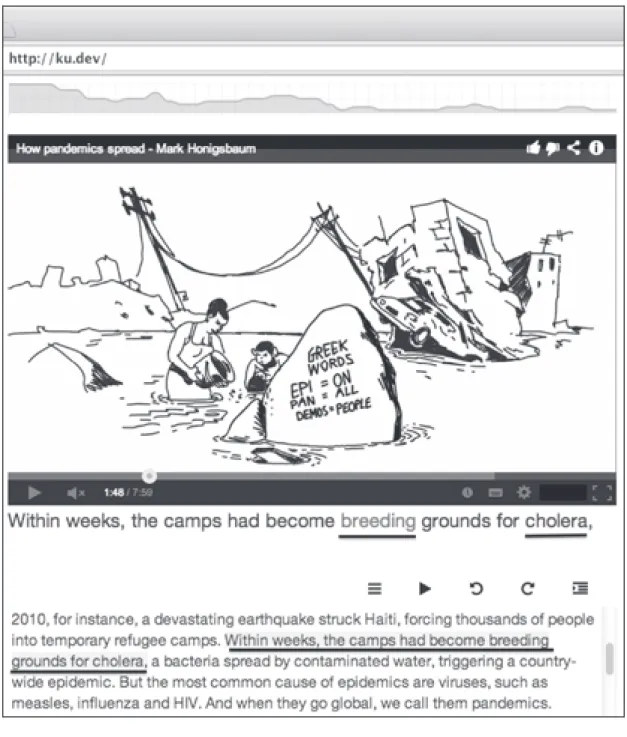
The basic design of the system is that students don t merely watch videos in isolation. The vocabulary and phrases are connected to other videos and readings that the student encountered. Words that the student doesn t understand are not simply noted and possibly forgotten but reinforced through the flash card system, the sharing of examples with other students, and being saved to wordlists. Figure 1 and the explanations below give a broad overview of some of the major features.
were actually important symbolical boundaries for maintaining rules and social regulations. The English language level is aimed at first year students of Kanazawa University and is to be used in Communication 1 classes and Upper Division Courses.
As may be discerned from the above descriptions, the content of these videos stem from issues raised in fields of anthropology, history, literature, philosophy, and medicine. In each case, the videos introduce a key concept developed in the writing of one (or several) authors.
In respect to how these videos may be used in courses, as the videos are still in production at the time this article was written, they have not yet been used for classes. There are certainly a number of options for how these may be utilized, but in terms of their creation and the development of the online learning system (described below), it is conceived that they will generally be used in discussion-based classes in conjunction with assigned readings. As such, the videos are ideally suitable as overviews of readings to provide an accessible introduction to topics that are covered in-depth in the readings from which they stem.
While primarily developed to be used in conjunction with existing classes, the videos will also be available for self-study. In this regard, the videos will be paired with an online system that will encourage usage. This system will include a vocabulary (flip card) study system, comprehension questions for each lesson, grammar exercises and study guides, and a set of discussion questions that may utilized by anyone outside of class instruction. To facilitate use by Kanazawa University students and instructors, these videos and learning exercises will be accessible through the university e-learning system Acanthus Portal.
4. Outline of Online System
The basic design of the system is that students don t merely watch videos in isolation. The vocabulary and phrases are connected to other videos and readings that the student encountered. Words that the student doesn t understand are not simply noted and possibly forgotten but reinforced through the flash card system, the sharing of examples with other students, and being saved to wordlists. Figure 1 and the explanations below give a broad overview of some of the major features.
Figure 1: Features of video system
The system has a number of features to help both teachers and students. For example, in the image above (moving from top to bottom):
1. Time Tracking: a graph that tracks how many times the student has watched the video tracking precisely which areas have been viewed the most often. The teacher can use this to find which areas students are finding difficult, and also to confirm that the student has indeed watched the video the required number of times.
2. Color-coded subtitles: (colors shown here underlined). Words are color-coded to indicate difficulty showing which words students should already recognize and which words are perhaps more specialized.
3. Interactive text: This allows the student to easily repeat difficult sections by clicking on phrases.
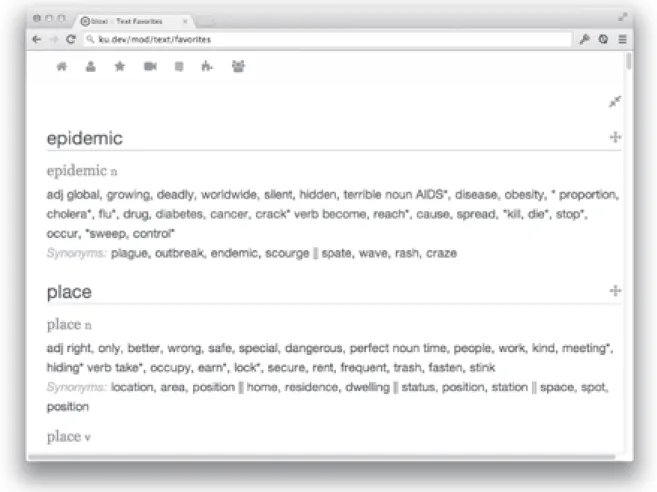
All of these scaffolding elements can be toggled on and off. Furthermore, words can be clicked to add them to a saved student word list complete with synonyms, and collocations.
The image below (Figure 2) shows a typical output for the words epidemic and place showing the student that the word epidemic is collocated with the words global, occur, and the word place is both a verb and a noun, collating with the words take and earn.
Figure 2: Saved word list showing collocations and synonyms
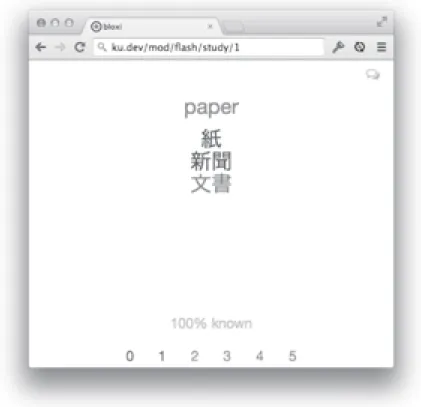
Students can also add words to an automated flash card (Figure 3) system that automatically tracks and tests words based on how well the student knows the word using a modified Leitner system (i.e. spaced repetitive learning based on student feedback). Finally, students can add their own annotations and example sentences, sharing them with other students.
3. Interactive text: This allows the student to easily repeat difficult sections by clicking on phrases.
All of these scaffolding elements can be toggled on and off. Furthermore, words can be clicked to add them to a saved student word list complete with synonyms, and collocations.
The image below (Figure 2) shows a typical output for the words epidemic and place showing the student that the word epidemic is collocated with the words global, occur, and the word place is both a verb and a noun, collating with the words take and earn.
Figure 2: Saved word list showing collocations and synonyms
Students can also add words to an automated flash card (Figure 3) system that automatically tracks and tests words based on how well the student knows the word using a modified Leitner system (i.e. spaced repetitive learning based on student feedback). Finally, students can add their own annotations and example sentences, sharing them with other students.
Figure 3: Flashcard System
Future Features
A future feature is to enable teachers to mark words and phrases with their own annotations. For example, the idiom take place could be marked as meaning to occur . Part of the difficulty here is that text is traditional marked by using metadata systems such as XML which are rather cumbersome and furthermore complicated by the fact that there is no agreed-upon standard for the syntax of such metadata.
References
Marani, John. 1998. An Overview of Content-Based Language Instruction. ERIC Document Reproduction Service No. ED424 762.
Murphey, T. & Arao, H. (2001). Changing Reported Beliefs through Near Peer Role Modeling. TESL-EJ. 5(3)1-15. Accessed at http://tesl-ej.org/ej19/a1.html