秋 田 大 学 高 等 教 育 グローバルセンター紀要 41 − 47 (2021)
How understanding the developmental history of the English language can benefit students of English as a foreign language
Adrian PATERSON Akita University
Introduction
A popular saying is that we need to understand history in order to understand the present. This is equally true for language. Any language is the product of, and is closely intertwined with, the culture and history of the people who produce the language. Therefore, if we want to have a complete understanding of the language we need to learn about the culture that produced it and the history that shaped them both.
It is very important for anybody wanting to become a language teacher to develop this kind of deeper understanding of the language they are teaching. Without a deep understanding of the language, it is very difficult to teach the subtleties and nuances of the language. English is full of examples of throwbacks to much earlier times in its history, we just need to look at the pronoun or the spelling systems to see this. Take for example the following sentence,
“they know us” and we can see examples of both systems. “They” is a borrowing from old Norse, “know”, which is pronounced /nəʊ/ in modern English, comes from the old English verb cnāwan which was pronounced /kna:wan/, and “us” is derived from an old English pronoun which was pronounced /ʊs/.
In this paper, I will discuss the benefits of teaching students of English and trainee English teachers about the history of the English language. I will start by giving a brief summary of the developmental history of English and some of the key changes that occurred throughout that history. Then I will discuss how this knowledge could benefit students and trainee teachers.
A brief history of the English language
The language we now know has English dates back about 1500 years when West Germanic tribes began to arrive in Britain. With such a long history, I cannot possibly cover all aspects of the changes that influenced English during that time, so I have assumed that the reader has a basic knowledge of English history, and will only give a brief summary of the major events that affected the English language without going into too much detail of the linguistic changes that occurred. For a more comprehensive history of the English language I would recommend books like;
Viney (2008) for a short easy read, McCrum et al. (1993) for a more detailed but still accessible read, or Baugh &
Cable (1993) for a more academic history.
English as a creole
The languages that became English originated in northern Europe. The West Germanic tribes began arriving in the early 5th Century A.D., sometime after the withdrawal of the Roman legions in 410 A.D. The most prominent of these tribes were the Angles, Saxons, Jutes, and Frisians, who all spoke related languages. This was for many centuries
considered to have been a violent invasion, however, more recent evidence suggests that it was a migration with the Romano-Britons assimilating the language and culture of the Anglo-Saxons (Montgomery et al., 2005; Schiffels et al., 2016; Weale et al., 2002). This assimilation of language and culture resulted in a people which we generally refer to as Anglo-Saxons and who spoke a Creole language (Todd, 2003) that we now refer to as Old English. A large part of Old English has not survived into the modern era, however, it does form the core of modern English. When we look at the 1,000 most frequent words of modern English, they are predominantly of Old English origin. Old English was an inflicted language with nouns belonging to one of three genders similar to modern German, but this system was lost in modern English. The system of verb inflections was also more complicated than modern English, however remnants of this system survive in the irregular verbs.
The next major influence on the English language occurred during the Viking era. Raids, and then later settlement by Scandinavian speakers of Old Norse led to interaction between English and Norse speakers resulting in a series of simplifications in Old English. In this case, there was conflict between both groups, but this later settled into a peace treaty which divided the country along the Danelaw. Because Old Norse is also a West Germanic language, communication between the two groups was possible. However, difficulties in communication lay in the inflections of both languages, which were eventually dropped through a process of pidginization and later creolisation. We can see this in the pronouns, while most modern English pronouns are of Old English origin, the third person plural pronouns are of Norse origin.
Borrowings from other languages
With the spread of Christianity to Anglo-Saxon England, we see the introduction of Latin words into the English language (Baugh & Cable, 1993). However, the source of the largest introduction of Latinate words into English was the Norman invasion of 1066. The Normans were French-speaking Vikings who took control of England under William the Conqueror, who replaced the Anglo-Saxon elites with his own French speaking followers. French is a Romance Language meaning that it derives from Latin. It is estimated that over 10,000 words of French origin, and by extension Latin, were introduced into English after this time. The sheer number of French vocabulary that was assimilated into English has lead some people to mistakenly believe that English is also a romance language, but at its core English is still a West Germanic language. The abandonment of French by the English elite occurred about the time of the Hundred Years War, when it became problematic for them to speak the language of their enemy, and because many of them outside of the court in London tended to speak French as a second language because English was more prominent in their day-to-day lives.
The next big influx of vocabulary came during the Renaissance period when scientists and scholars began to adopt words of classical Latin and Greek origin to describe the physical world, or abstract principles that they were researching. At this time, the langua franca of scientific publication was Latin, so when explaining these things in English, it was natural for them to use those same classical words to describe the technical aspects of the topic.
During the great age of exploration, and later colonization of the lands discovered, many words from local native languages were also integrated into English.
Finally, it was international trade and the industrial revolution that brought about huge changes in Britain’s economic power, along with expansion of the Empire. Britain maintained this economic power until the end of the Second World War, after which its position was taken over by the United States. This economic power helped to secure English as a lingua franca and has maintained that position until the present day. So, as one English-speaking empire waned, it was replaced by an English-speaking superpower, thereby ensuring that English will remain the most commonly taught foreign language in the world for the foreseeable future.
The benefits for EFL learners
Many students of English as a foreign language complain about its complexity. However, English has actually gone through several simplifications, the greatest of these was through the interaction of old English and old Norse. At this time the Old English nouns went from having three grammatical genders and four different cases in both the singular and plural forms (see Table 1) to being something more similar to modern English nouns which only have natural gender and only have one singular and one plural form (e.g. stone/stones, ship/ships, and gift/gifts).
Table 1. examples of Old English nouns and their inflections (from Quirk & Wren, 1957)
Gender Masculine Neuter Feminine
Modern English stone ship gift
singular
Nominative stān scip ġiefu
Accusative stān scip ġiefe
Genitive stānes scipes ġiefe
Dative stāne scipe ġiefe
plural
Nominative stānas scipu ġiefa, -e
Accusative stānas scipu ġiefa, -e
Genitive stāna scipa ġiefa
Dative stānum scipum ġiefum
In addition to the nouns, old English adjectives had to be inflected in order to agree with the noun that they were describing. Likewise, the definite article and demonstrative pronoun had to be inflected as well (see Table 2).
Table 2. The Old English definite articles/demonstrative pronouns (the/that) (from Quirk & Wren, 1957, p. 39)
Case Masculine Neuter Feminine Plural
Nominative se þæt sēo þā
Accusative þone þæt þā þā
Genitive þæs þæs þǣre þāra
Dative þǣm þǣm þǣre þǣm
When I teach students about this in class, they often assume that this meant that old English was more difficult than modern English. However, while it may seem complicated to us from our modern perspective, to native speakers of old English this was perfectly normal. In a similar way that French or German seem difficult to English speakers learning them as a second language due to their systems of grammatically gendered nouns, but to French and German native speakers it doesn’t seem to be a problem. It is simply human nature to view any skill that we have not yet mastered as being difficult. That being said, I have found that teaching this in class does seem to give my Japanese EFL learners an appreciation of how much more difficult modern English nouns could have been.
The pronoun system
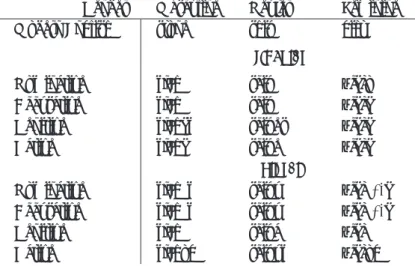
In contrast to nouns and adjectives, pronouns have largely remained similar to their Old English forms. If we compare Table 3 and Table 4, we can see that for most of them, the only change is in their pronunciation and spellings. For example, the modern English first person nominative “I” would have been pronounced in a similar manner to the modern English “each” (Pope, 1981). The reason that these have changed so little from Old English
is because in spoken English the pronouns are of such a high frequency that they are well learned by native speakers and have thus defied simplification. This is exactly the same reason why modern English irregular verbs have also persisted so long (Pinker, 1999).
Table 3. The Old English pronouns (from Quirk & Wren, 1957, p. 38)
Case First
Person Second
Person Third Person
Masculine Neuter Feminine
singular
Nominative īc þū hē hit hēo
Accusative mē þē hine hit hī
Genitive mīn þīn his his hire
Dative mē þē him him hire
plural
Nominative wē gē hī
Accusative ūs ēow hī
Genitive ūre ēower hire
Dative ūs ēow hire
Table 4. The modern English pronouns
Case First
Person Second
Person Third Person
Masculine Neuter Feminine
singular
Nominative I you he it she
Accusative me you him it her
Genitive my/mine your/yours his its her/hers
Dative me you him it her
plural
Nominative we you they
Accusative us you them
Genitive our/ours your/yours their/theirs
Dative us you them
The most significant changes between Old English and modern English pronouns are in the second person singular and the third person plural. The second person singular pronouns were simply the second person plural ones transposed to the singular. The singular pronouns that they replaced will be recognizable (the Old English letter
“þ”, a former rune, having been superseded by “th” in modern English) to most English native speakers as being the now old-fashioned sounding thou, thee, and thine, which survived for some time due to their use in books like the Bible that sought to portray a sense of ancientness. The third person plural pronouns came from old Norse, and were probably adopted to distinguish them from the third person masculine singular pronouns (OED). A similar situation occurred with the nominative third person feminine, which by the 12th century had evolved into a similar pronunciation to the masculine, and so the modern English “she” is actually thought to have been derived from the nominative feminine form of the demonstrative pronoun.
From the point of view of an EFL learner, this may not be so helpful when it comes to actually learning the English pronoun system, but it can help teachers to explain why it is that way. With this understanding, they can start to see how it fits into the bigger picture of workings of the English language. The resulting flexibility should also allow
greater ability to read older English texts.
Spelling and pronunciation
The letters used in the old English alphabet are mostly familiar to modern English speakers. However. there are several that are no longer used in modern English, these are shown in Table 5 (note that some of them are still used in the phonetic alphabet). These letters were all derived from the runic alphabet.
Table 5. Old English letters and their modern English equivalents OE Letter(s) Name Modern equivalent Pronunciation
Þ þ thorn th as in thing unvoiced dental fricative
θ ð eth th as in this voiced dental fricative
Ƿ ƿ wynn w as in we voiced labial–velar approximant
Æ æ ash a as in hat open front vowel
When we look at the spelling of Old English there are a few quite noticeable differences compared to modern English. Take the Old English word “scip” meaning ship and we can see that the /ʃ/ was represented by the letters “sc”.
Interestingly, it had the same pronunciation as the modern English word, which is not always the case, as we saw with the pronunciation of the first person pronoun. The Old English word “cniht” (knight) is interesting for several reasons; the letter c is pronounced and its modern equivalent is /k/, and the letter h is a velar fricative pronounced /x/
like the ch in the Scottish word loch, so in old English it was pronounced /knixt/ as opposed to the modern English / nai:t/. Modern English words starting with a silent k follow similar patterns of being pronounced in old English but becoming silent. Likewise, modern English words that are spelt with gh were once spelt with an h and pronounced as /x/, so cough was originally an onomatopoeia. Modern English wh-question words, including how, we are all spelt hw- in old English and pronounced as an aspirated w.
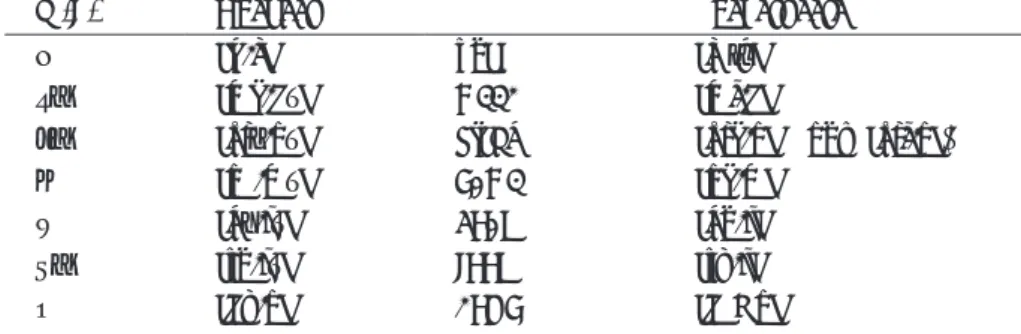
A common complaint from learners of English is the discrepancy between the spelling and pronunciation of English words. This is largely due to the fact that modern English spellings were fixed in the 15th and 16th centuries, however, this occurred at a time when a series of major changes in the pronunciation of the English language were taking place. This is known as the Great Vowel Shift. The causes of the Great Vowel Shift are not known, and are still hotly debated among linguists. The name implies that it was a sudden change, but it is important to remember that while this shift is fairly rapid in evolutionary terms, it actually took place over several centuries and in several stages, so it was not a sudden change that people would have been so aware of at the time that it was occurring. Table 6 shows a comparison of the pronunciations of Geoffrey Chaucer and William Shakespeare’s English and illustrates the pronunciation of vowels before and after the Great Vowel Shift.
Table 6. Comparison of the pronunciation of Chaucer and Shakespeare's English (Baugh & Cable, 1993, p. 233)
M.E. Chaucer Shakespeare
ī [fi:f] five [faɪv]
ẹ̄ [me:də] meed [mi:d]
ę̄ [klɛ:nə] clean [kle:n] (now [kli:n])
ā [na:mə] name [ne:m]
ǭ [gɔ:tə] goat [go:t]
ọ̄ [ro:tə] root [ru:t]
ū [du:n] down [daUn]
During the Middle English period, people had mostly spelled words the way that they pronounced them so there was quite a lot of variation in spellings. The shift from French to English by the crown meant that the Chancery (the medieval civil service) had to begin using English, this along with the advent of printing meant that there was a strong impetus to standardize the spelling of English in the late Middle English period. In some cases, the most common spelling was used, but in other cases earlier spellings were chosen. Unfortunately, there was no single body responsible for the decisions made, so many of the standardizations were quite haphazard. This combined with the Great Vowel Shift means that we have very wide variations in the relationship between a word’s spelling and its pronunciation.
Again, this doesn’t help our learners trying to learn English spelling and pronunciation, but what it does do his help to explain the discrepancy. It also goes to illustrate why teaching techniques like phonics have fallen out of favor with teachers. A technique like phonics looks good on the surface because there are many words that do follow common patterns of spelling and pronunciation. However, there are also a very large number of words that do not fit these patterns and can lead learners astray if they are unaware of these exceptions. This is particularly true in the EFL classroom, in contrast to native speaker classes where native speaker children join the class already knowing how to pronounce the English words, and even then phonics has proven difficult in practice. In this way, understanding the developmental history of the English language helps us as teachers to make informed decisions about how we teach the language.
Idioms
Idioms are often problematic for learners because the meaning of the phrase as a whole is not transparent from the meanings of the individual words. This can be just as problematic for native speakers of English. The Oxford Idioms Dictionary for Learners of English is a very interesting read for anybody who wants to know about idiomatic phrases.
Take for example “long time no see”, which is a word-for-word translation of a native American phrase that has come to be the de facto greeting for somebody that the speaker has not seen for a long time. The phrase “kick the bucket”
meaning to die is usually thought of as referring to a person kicking an upside-down pail out from underneath in order to hang themselves, however, it actually refers to a beam called a bucket that was used to hang up an animal when it was being butchered and they would kick the beam in their death throws. Likewise, the phrase “it’s cold enough to freeze the balls off a brass monkey” is often thought to be a rather crude phrase referring to a primate made of brass, but it actually refers to a brass plate with holes in it that was used to secure cannonballs on the deck of a ship and when the temperature dropped below a certain point the plate would contract sufficiently for the cannonballs to roll off it onto the deck.
The above examples illustrate that languages are constantly evolving and words are coming into use, going out of use, or changing their meanings on a regular basis. When we understand the historical context in which a word or phrase appeared, it can make it a bit easier to understand its meaning in the modern context. An idiom with a colorful story behind it could become much more memorable to a learner than a phrase which that does not have such an interesting story behind it. Therefore, the more a teacher can learn about these things the better they can motivate their students to learn them.
Conclusion
Language change occurs over many generations, and this slow evolutionary process can make it quite difficult for people to notice that it is occurring. This, in tandem with the rigidity of many textbooks and grammar books, can lead us to think of language is fixed and following rigid sets of rules, however, it is actually highly flexible, allowing
it to adapt to changes in culture, society, technology, etc. In some cases, this change can actually be quite rapid; if we think back 10 years or so, there was no such word as “smartphone” to name but one of the hundreds of words that have been coined in recent times. The rapid pace at which new technology is released means that we are constantly updating the language we use on almost a day-to-day basis. We only need to look at the language of teenagers to see the way that they are able to bend language to suit their needs, even if it does not always sit well with older generations, who in turn were scolded by older generations for doing similar things with the language when they were teenagers. If we can give our students a sense of this flexibility, then they can start to see that it is something that they can get some control over if they can master some of the basic principles. Unfortunately, this sense of flexibility and playfulness is often lacking in the EFL classroom.
I have been teaching English in Japan for over 20 years, and during that time I have taught the history of the English language to many students. Many of them have said that it has helped them to see English in a whole new light, and given them a deeper understanding of how it works. For many of them, the events that have shaped the history of the English language are very interesting in themselves, and have proven to be useful for engaging students in their English classes. In the case of trainee English teachers, it can help them to have a deeper understanding of the language, and that in turn can help them to evaluate which teaching techniques may or may not help them in their future careers.
In the beginning, I started teaching the history of the English language because it was a particular interest of mine, however, I have come to see that it is also of benefit to my students. In some cases, it has helped them to see parallels with their own language and develop an interest in trying to understand how it has evolved over time. Seeing how languages can evolve and seeing how, in some cases, this can lead to a decline in use of minority languages or dialects in favor of more dominant ones, has also helped some students develop an interest in preserving their own regional dialects. This is of vital importance because of the strong link between language and culture; when a language becomes extinct, so does the culture, and that loss of identity is a terrible loss to all humanity.
Bibliography
Baugh, A. C., & Cable, T. (1993). A history of the English language (4th ed.). Routledge.
McCrum, R., Cran, W., & MacNeil, R. (1993). The story of English. Penguin Books.
Montgomery, J., Evans, J. A., Powlesland, D., & Roberts, C. A. (2005). Continuity or colonization in Anglo-Saxon England? Isotope evidence for mobility, subsistence practice, and status at West Heslerton. American Journal of Physical Anthropology, 126(2), 123–138.
Pinker, S. (1999). Words and rules: The ingredients of language. Basic Books.
Pope, J. C. (1981). Seven Old English poems (2nd ed.). W W Norton & Co.
Quirk, R., & Wren, C. L. (1957). An Old English grammar (2nd ed.). Routledge.
Schiffels, S., Haak, W., Paajanen, P., Llamas, B., Popescu, E., Loe, L., Clarke, R., Lyons, A., Mortimer, R., Sayer, D., Tyler- Smith, C., Cooper, A., & Durbin, R. (2016). Iron Age and Anglo-Saxon genomes from East England reveal British migration history. Nature Communications, 7(1), 1–9.
Todd, L. (2003). Pidgins and creoles. Routledge.
Viney, B. (2008). The History of the English Language. Oxford University Press.
Weale, M. E., Weiss, D. A., Jager, R. F., Bradman, N., & Thomas, M. G. (2002). Y Chromosome Evidence for Anglo-Saxon Mass Migration. Molecular Biology and Evolution, 19(7), 1008–1021.