• 検索結果がありません。

Outpatient Application of Repetitive Transcranial Magnetic Stimulation and Occupational Therapy for Upper Limb Hemiparesis after Stroke :

N/A
N/A
Protected

Academic year: 2021

シェア "Outpatient Application of Repetitive Transcranial Magnetic Stimulation and Occupational Therapy for Upper Limb Hemiparesis after Stroke : "

Copied!
6
0
0

読み込み中.... (全文を見る)

全文

(1)

Jikeikai Med J 2011 ; 58 : 103

-

8

Outpatient Application of Repetitive Transcranial Magnetic Stimulation and Occupational Therapy for Upper Limb Hemiparesis after Stroke :

A Pilot Study

Wataru K aKuda , Masahiro a bo , Ryo M oMosaKi , aki Y oKoi , Hiroshi i to , atsushi i sHiKaWa , and Kensuke t agucHi

Department of Rehabilitation Medicine, The Jikei University School of Medicine

ABSTRACT

Purpose : The purpose of this pilot study was to provide an initial evaluation of the clinical ef- fects of combination therapy with low

-

frequency repetitive transcranial magnetic stimulation (rTMS) and intensive occupational therapy (OT) as a daily treatment at an outpatient clinic for patients with upper

-

limb hemiparesis after stroke. Subjects and Methods : The subjects were 4 patients with mild upper limb hemiparesis after stroke. All patients were able to visit our clinic daily without un- due efforts. For 5 to 11 consecutive days at our clinic, these patients received 30 minutes of low

-

frequency (1 Hz) rTMS followed by 60 minutes of one

-

to

-

one occupational therapy. Patients were instructed to perform home self

-

exercise daily and to give us feedback the following day. For motor functional evaluation of the affected upper limb, the Fugl

-

Meyer Assessment, the Wolf Motor Func- tion Test, and the Ten

-

Second Test were used. Results : The protocol of daily outpatient treatment was completed without adverse effects and did not interfere with the patients’ work schedule. All patients showed improvements in the motor function of the affected upper limbs. Conclusion : Daily application of rTMS and intensive OT at an outpatient clinic is a novel treatment for patients with mild upper

-

limb hemiparesis after stroke. (Jikeikai Med J 2011 ; 58 : 103

-

8) Key words : repetitive transcranial magnetic stimulation, occupational therapy, stroke, upper

-

limb

hemiparesis

I ntroduction

Local application of repetitive transcranial magnetic stimulation (rTMS) influences neural excitability in select- ed brain areas. Low

-

frequency (≤ 1 Hz) rTMS suppress- es local neural activities whereas high

-

frequency (≥ 5 Hz) rTMS activates them 1

-

4 . Recently, low

-

frequency rTMS applied to the nonlesional hemisphere has proven beneficial in randomized controlled studies for treating upper

-

limb hemiparesis after stroke, especially when applied for sever-

Received for publication, August 31, 2011

角田  亘,安保 雅博,百崎  良,横井 安芸,伊東 寛史,石川  篤,田口 健介

Mailing address : Masahiro A bo , Department of Rehabilitation Medicine, The Jikei University School of Medicine, 3

-

25

-

8 Nishi

-

Shimbashi, Mina- to

-

ku, Tokyo 105

-

8461, Japan.

E

-

mail : [email protected]

103

al consecutive days 5

-

7 . On the other hand, intensive occu-

pational therapy (OT), such as constraint

-

induced move-

ment therapy, has been also shown to significantly improve

the motor function of the hemiparetic upper limb 8,9 . As an

underlying mechanism of the improvement, both interven-

tions have been reported to activate perilesional areas in

the lesional hemisphere, leading to motor recovery of the

affected upper limb 10

-

12 . Because simultaneous application

of these 2 interventions might facilitate the development of

plastic changes in the lesional brain, we developed the com-

(2)

bination therapy of low

-

frequency rTMS and intensive OT as a 15

-

day inpatient protocol for treating upper

-

limb hemi- paresis after stroke 13 . During 15 days of hospitalization, we provided 22 sessions of combination treatment, except for the days of admission and discharge and Sundays. All patients completed the 15

-

day in

-

hospital protocol without adverse effects and showed improvements in motor func- tion at discharge. The combination therapy should be pro- vided at a clinic as an outpatient intervention, because hos- pitalization is inconvenient for many patients. On the basis of the acceptable results of the combination therapy for hospitalized patients, we modified our protocol so that the combination therapy can be provided as a daily outpa- tient treatment and introduced the modified protocol for pa- tients with mild upper

-

limb hemiparesis after stroke who, for various reasons, could not be hospitalized. We here describe our modified protocol of combination therapy for outpatients and report the clinical courses of 4 post

-

stroke patients who were treated with the protocol.

S ubjectS and M ethodS Subjects

The subjects were 4 patients with mild upper

-

limb hemiparesis after stroke (Table 1). At the beginning, the patients were referred to our department as potential candi- dates for combination therapy with rTMS and intensive OT for upper

-

limb hemiparesis. All patients preferred not to

be hospitalized for treatment, because they held important positions at work and could not take time off. Because all patients were independent in activities of daily living and had no cognitive impairment, they were able to visit our clinic frequently without undue effort. Most patients could travel from their homes to our clinic by car or subways by themselves in less than 1 hour. The interval between the onset of stroke and the start of the present treatment was more than 12 months, and the severity of motor functional impairment in the affected upper limb was categorized as Brunnstrom stage of 4 to 5 for hands

-

fingers in all patients.

Although all patients had regularly received conventional OT for more than 5 months after the onset, the Fugl

-

Meyer Assessment (FMA) score, which was determined monthly, had shown no increases in the 3 months before study en- try. Thus, we believed that before treatment the motor functional recovery of the affected upper limb had likely reached a plateau state. The patients had had no seizures after the onset of stroke, and electroencephalograms ob- tained 1 month before admission showed no abnormal epi- leptiform discharges. In addition, no pathological condi- tions identified as contraindications for repetitive rTMS in the guidelines of Wasserman were found in any patient 14 . Therefore, we believed that all patients met the clinical cri- teria for our proposed combination treatment with low

-

fre- quency rTMS, which was described in our previous report 13 . However, providing 2 sessions of combination treatment per day at the clinic, as is provided for hospitalized patients,

Table 1. Clinical characteristics of subjects

Patient 1 Patient 2 Patient 3 Patient 4

Age at treatment 52 years 58 years 61 years 56 years

Sex Male Female Male Male

Time between onset of

stroke and treatment 13 months 14 months 41 months 45 months

Type of stroke

(lesion location) Intracerebral hemorrhage

(right putamen) Cerebral infarction

(left corona radiata) Intracerebral hemorrhage

(left thalamus) Cerebral infarction (right corona radiata) Neurological findings Left hemiparesis Right hemiparesis Right hemiparesis Left hemiparesis Brunnstrom stage at entry

(hand

-

finger/upper limb) 5/5 4/5 5/5 5/5

Handedness Right Right Right Right

Scheduled duration of

treatment 5 days 6 days 11 days 5 days

Occupation Dentist College professor Shopkeeper (pharmacy) Veterinary surgeon

(3)

seemed impossible. Therefore, we modified the protocol of combination treatment, and all patients were scheduled to receive a single session of 30 minutes of low

-

frequency rTMS to the nonlesional hemisphere followed by 60 min- utes of one

-

on

-

one OT at the clinic of our department daily from January 1 to August 31, 2010. In addition, at the end of each OT session patients were instructed to undertake self

-

exercise at home according to their functional sta- tus. The durations of treatment were determined on the basis of the patients’ work schedules. During the rTMS application and OT sessions, we monitored the patient for the possible development of adverse effects and new neuro- logical symptoms. Motor function in the affected upper limb was evaluated at the beginning and end of treat- ment. At the end of treatment, patients were asked whether they had completed their home self

-

exercises and whether the treatment had interfered with their work.

Our therapeutic protocol of low

-

frequency rTMS plus OT for outpatients was approved by the local ethics review committee, and informed consent was obtained from all pa- tients before treatment.

Therapeutic application of low

-

frequency rTMS

Low

-

frequency (1 Hz) rTMS was applied to the prima- ry motor areas of the nonlesional hemisphere for 30 min- utes daily with a 70

-

mm figure

-

8 coil and a MagPro R30 stimulator (MagVenture Company, Farum, Denmark).

Stimulus pulses were delivered to the site on the skull

where the stimulation evoked the largest motor

-

evoked po- tentials (MEPs) in the first dorsal interosseous (FDI) mus- cle of the unaffected upper limb. The motor threshold (MT) of the FDI muscle of the unaffected upper limb was defined as the lowest intensity of stimulation that could ac- tivate MEPs of the muscle. According to the measured MT levels, the intensity of stimulation was set at 90% of the MT of the FDI muscle. The stimulation site was marked with black ink after the first session so that the se- lected site was consistent across sessions. For safety monitoring, a physician of our department briefly examined each patient before and after each rTMS session, paying at- tention to the possible development of known adverse ef- fects of rTMS (e.g., headache, nausea, and convulsion), the development of new neurological symptoms (e.g., motor disturbance of the unaffected upper limb), and worsening of the upper

-

limb hemiparesis. All patients were required to immediately inform us by telephone if adverse effects de- veloped outside of the clinic, e.g., at home.

Rehabilitative program of OT

The 60

-

minute one

-

to

-

one training consisting of shap- ing and repetitive task practice techniques was individually provided by the occupational therapist daily in a separate room of the clinic, following daily application of rTMS. As with the one

-

to

-

one training in our previously reported in- patient protocol 13 , the shaping technique concentrated on the use of the affected upper limb in functional tasks chosen

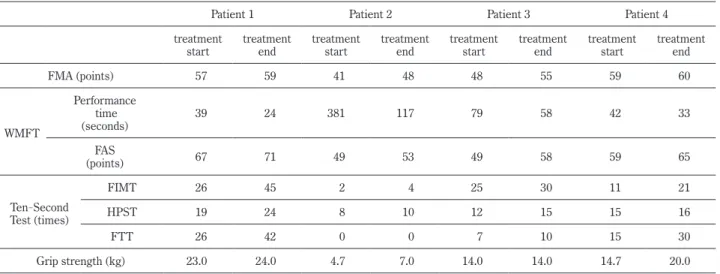
Table 2. Clinical evaluation of motor function in the affected upper limb

Patient 1 Patient 2 Patient 3 Patient 4

treatment

start treatment

end treatment

start treatment

end treatment

start treatment

end treatment

start treatment end

FMA (points) 57 59 41 48 48 55 59 60

WMFT

Performance time

(seconds) 39 24 381 117 79 58 42 33

(points) FAS 67 71 49 53 49 58 59 65

Ten

-

Second Test (times)

FIMT 26 45 2 4 25 30 11 21

HPST 19 24 8 10 12 15 15 16

FTT 26 42 0 0 7 10 15 30

Grip strength (kg) 23.0 24.0 4.7 7.0 14.0 14.0 14.7 20.0

FMA, Fugl

-

Meyer Assessment ; WMFT, Wolf Motor Function Test ; FIMT, Finger Individual Movement Test ; HPST, Hand Pronation

and Supination Test ; FTT, Finger Tapping Test

(4)

by the patient and the occupational therapist according to the patient’s lifestyle and the severity of paresis. The tasks included reaching forward to move a cup from one place to another, wiping the surface of a table with a towel, writing letters with a pen, and using chopsticks to pick up small objects. Repetitive task practice typically included making a fist, squeezing clay, griping a small ball, and pinch- ing small coins. Although training time during the one

-

to

-

one training program was basically divided equally between shaping techniques and repetitive task practice techniques, the program was tailored by the occupational therapist to suit individual patients. After each OT session, patients were given written instructions to undertake self

-

exercise at home for more than 1 hour. The content of home self

-

exercise was basically the same as that provided in one

-

to

-

one training at the clinic, and the problems associated with the tasks in the self

-

training were aggressively addressed on the following day.

Evaluation of motor function in the affected upper limb The primary measures used to evaluate motor function in the affected upper limb were the FMA, the Wolf Motor Function Test (WMFT), and the Ten

-

Second Test. The FMA is a performance

-

based quantitative measure that as- sesses various impairments in patients after stroke 15 . The section on motor function of the upper limbs in FMA con- sists of 33 items. Because each item is rated on a 3

-

point ordinal scale, the maximum possible motor performance score for the upper limbs was 66 points. In the WMFT, the performance time of 15 timed tasks was recorded, and the sum of all performance times was calculated as the total time 16 . When a task was not completed within 120 sec- onds, the performance time of the task was recorded as 120 seconds. In addition, the functional ability scale (FAS) of WMFT, which is a 6

-

point ordinal scale, was evaluated for 15 tasks. The Ten

-

Second Test was also used to evaluate upper

-

limb dexterity 17 . During the evaluation, patients were asked to perform 3 types of movements as quickly as possible for 10 seconds, and the number of movements was recorded. The 3 tests of movement performed were the finger individual movement test (flexing the fingers from the thumb towards the little finger and extending in reverse order ; the flexion or extension of each finger is counted as a single movement), the hand pronation and supination test (tapping the palm of the unaffected hand alternately with

the dorsum and palm of the affected hand ; each pronation or supination is counted as a single movement), and the fin- ger tapping test (tapping the palm of the unaffected hand with the fingers with the dorsum upward on the affected side using the wrist as a fulcrum ; each tap is counted as a single movement). In addition, grip strength was mea- sured with a standard jamar dynamometer and recorded.

R eSultS

Before treatment, the period of treatment was selected to be 5 to 11 days for study subjects. All patients complet- ed the scheduled outpatient treatment. Neither adverse effects nor deterioration of neurological symptoms devel- oped with treatment in any patient. At the end of treat- ment, all patients reported that the outpatient treatment had not interfered with their work schedules, that they had performed home self

-

exercise according to the instructions daily, and that the training was not particularly stress- ful. All patients expressed higher satisfaction with this outpatient protocol than with any previous treatment. In all patients, the score increases were seen in both the FMA (1

-

7 points) and the FAS of WMFT (4

-

9 points), and the performance times of the WMFT decreased (Table 2). The results of 3 tests of Ten

-

Second Test showed an improve- ment in upper

-

limb dexterity with treatment. Increases in grip strength were also found in all patients. At the end of treatment, patient 2 was able to hold a pen and wash her face with both hands, and patient 3 reacquired the ability to use the affected upper limb to put on a necktie, trim the fin- gernails of the unaffected hand, and hold an umbrella.

D iScuSSion

To our knowledge, this is a first report describing the

daily application of low

-

frequency rTMS combined with OT

as an intensive outpatient treatment for patients with mild

hemiparesis after stroke. The beneficial effects of low

-

frequency rTMS to the nonlesional hemisphere in patients

with hemiparesis after stroke are thought to be due to in-

creased neural activation in the lesional hemisphere caused

by reduced interhemispheric inhibition towards it 5,6 . On

the other hand, intensive OT, such as constraint

-

induced

movement therapy for upper

-

limb hemiparesis after stroke,

has also been reported to activate perilesional areas in the

(5)

lesional hemisphere 11,12 . On the basis of these reports, we developed a combined protocol of low

-

frequency rTMS and intensive OT as an inpatient treatment for patients with up- per

-

limb hemiparesis. In the previously reported 15

-

day inpatient protocol, combination therapy consisting of 20 minutes of low

-

frequency rTMS, 60 minutes of one

-

to

-

one training, and 60 minutes of self

-

training was applied twice a day during hospitalization. As a result, 15

-

day inpatient combination therapy was shown to be feasible and produced some functional improvement in the affected upper limbs of the studied subjects 13 . However, many patients with hemi paresis after stroke prefer not to be hospitalized be- cause of work schedules and other reasons but are able to frequently visit a clinic without undue effort. Therefore, we modified our inpatient protocol of combination therapy so that it can be provided at our clinic as a daily, less time

-

consuming outpatient therapy. The design of this pilot study did not allow dissection of the separate effects of each treatment—low

-

frequency rTMS and intensive OT—on the motor function of the affected upper limb. Clarifying the difference in clinical effects between patients treated with this combined protocol (low

-

frequency rTMS and intensive OT) and those treated with only intensive OT would be de- sirable. However, we view our proposed protocol of com- bination therapy as a single treatment rather than 2 sepa- rate treatments.

The main difference between the protocols for inpa- tients and for outpatients included the frequency per day and duration of rTMS session (1 session of 30 minutes of rTMS per day for outpatients), the frequency per day and the duration of OT (1 session of 60 minutes of one

-

to

-

one training per day for outpatients), and the daily home self

-

exercise (for outpatients). In all study patients, our pro- posed protocol of outpatient combination therapy was com- pleted without adverse effects and did not interfere with work schedules. In addition, all patients receiving the out- patient treatment showed objective improvement in upper

-

limb function. All subjects, who were without cognitive impairment before treatment, reported that they had per- formed home self

-

exercise daily as instructed. Several studies have demonstrated the importance of home self

-

ex- ercise in patients with chronic upper

-

limb hemiparesis after stroke. Alon et al. have found that daily home

-

based reha- bilitative treatment consisting of a task

-

specific stimulation program improves hand and upper

-

limb functions in chronic

stroke patients with hemiparesis 18 . Azab et al. have shown that the addition of home

-

based constraint

-

induced move- ment therapy program to traditional therapy helps improve impaired upper

-

limb motor function in patients with chronic upper

-

limb hemiparesis after stroke 19 . When the combi- nation therapy is introduced as an outpatient treatment, the duration of OT must be decreased to achieving acceptable feasibility. The results of the present study indicate that home self

-

exercise in cognitively intact patients can substi- tute for one

-

to

-

one training with a therapist at a hospital.

In addition, we emphasize the importance of a daily feed- back system for home self

-

exercise which allows therapists to check how the patient performed self

-

exercise the previ- ous day. However, the optimal duration of a single treat- ment session at the clinic needs to be determined, because the duration of sessions in our protocol was arbitrary.

Longer treatment sessions might produce greater improve- ments in motor function, although attempts should be made to minimize the effects of treatment on work schedules.

Our study had several limitations. First, this was a pilot study with a small number of patients and did not in- clude a control group. Further study with a randomized controlled design and a control group should be performed to clarify the efficacy of treatment. Second, the study pa- tients represented a heterogeneous group with regard to the subtype of stroke and the time after onset of stroke.

Multivariate analysis, including these baseline characteris- tics, should be performed with a large number of patients to determine which factors influence the effects of treat- ment. Third, follow

-

up evaluation of the subjects was not performed after the completion of the daily outpatient pro- tocol. Regular rTMS or OT after intensive daily applica- tion (e.g., application of TMS followed by OT once a week) might be needed to maintain or to further improve motor function. Fourth, it is expected that there are some hemi- paretic stroke patients who are eligible for both of inpatient and outpatient protocol of combination treatment. For such patients, which intervention should be recommended still remains unknown. Taking account for cost

-

effective- ness with the treatment, this issue should be investigated.

C oncluSionS

Our proposed outpatient protocol featuring low

-

fre-

quency rTMS and intensive OT was performed at a clinic

(6)

for 4 patients with upper

-

limb hemiparesis after stroke.

All patients completed the protocol without adverse effects and showed some improvement in motor function in the af- fected upper limb. Our proposed protocol of combination therapy is a novel treatment that has the potential to im- prove the motor function of affected upper limbs in patients after stroke, although the efficacy of the protocol should be confirmed in a larger number of patients.

R eferenceS

1. Chen R, Classen J, Gerloff C, Celnik P, Wassermann EM, Hal- lett M, et al. Depression of motor cortex excitability by low

-

frequency transcranial magnetic stimulation. Neurology 1997 ; 48 : 1398

-

403.

2. Maeda F, Keenan JP, Tormos JM, Topka H, Pascual

-

Leone A. Modulation of corticospinal excitability by repetitive tran- scranial magnetic stimulation. Clin Neurophysiol 2000 ; 111 : 800

-

5.

3. Pascual

-

Leone A, Valls

-

Sole J, Wassermann EM, Hallett M. Responses to rapid

-

rate transcranial magnetic stimula- tion of the human motor cortex. Brain 1994 ; 117 : 847

-

58.

4. Wu T, Sommer M, Tergau F, Paulus W. Lasting influence of repetitive transcranial magnetic stimulation on intracortical excitability in human subjetcs. Neurosci Lett 2000 ; 287 : 37

-

40.

5. Mansur CG, Fregni F, Boggio PS, Riberto M, Gallacci

-

Neto J, Santos CM, et al. A sham stimulation

-

controlled trial of rTMS of the unaffected hemisphere in stroke patients. Neu- rology 2005 ; 64 : 1802

-

4.

6. Takeuchi N, Chuma T, Matsuo Y, Watanabe I, Ikoma K. Re- petitive transcranial magnetic stimulation of contralesional primary motor cortex improves hand function after stroke.

Stroke 2005 ; 36 : 2681

-

6.

7. Fregni F, Boggio PS, Valle AC, Rocha RR, Duarte J, Ferreira MJ, et al. A sham

-

controlled trial of a 5

-

day course of repeti- tive transcranial magnetic stimulation of the unaffected hemi- sphere in stroke patients. Stroke 2006 ; 37 : 2115

-

22.

8. van der Lee JH, Wagenaar RC, Lankhorst GJ, Vogelaar TW, Deville WL, Bouter LM. Forced use of the upper extremity in chronic stroke patients : results from a single

-

blind ran- domized clinical trial. Stroke 1999 ; 30 : 2369

-

75.

9. Wolf SL, Einstein CJ, Miller JP, Taub E, Uswatte G, Morris D,

et al. Effect of constraint

-

induced movement therapy on up- per extremity function 3 to 9 months after stroke : the EX- CITE randomized clinical trial. JAMA 2006 ; 296 : 2095

-

104.

10. Liepert J, Bauder H, Miltner WHR, Taub E, Weiller C.

Treatment

-

induced cortical reorganization after stroke in hu- mans. Stroke 2000 ; 31 : 1210

-

6.

11. Lewy CE, Nichols DS, Schmalbrock PM, Keller P, Chakeres DW. Functional MRI evidence of cortical reorganization in upper

-

limb stroke hemiplegia treated with constraint

-

induced movement therapy. Am J Phys Med Rehabil 2001 ; 80 : 4

-

12.

12. Wittenberg GF, Chen R, Ishii K, Bushara KO, Eckloff S, Croarkin E, et al. Constraint

-

induced therapy in stroke : magnetic stimulation motor maps and cerebral activa- tion. Neurorehabil Neural Repair 2003 ; 17 : 48

-

57.

13. Kakuda W, Abo M, Kobayashi K, Momosaki R, Yokoi R, Fukuda A, et al. Low

-

frequency rTMS and intensive occu- pational therapy for post

-

stroke patients with upper limb hemiparesis : A preliminary study of 15

-

day protocol. Int J Rehabil Res 2010 ; 33 : 339

-

45.

14. Wassermann EM. Risk and safety of repetitive transcranial magnetic stimulation : Report and suggested guidelines from the international workshop on the safety of repetitive tran- scranial magnetic stimulation, June 5

-

7, 1996. Electroen- cephalogr Clin Neurophysiol 1998 ; 108 : 1

-

16.

15. Gladstone DJ, Danells CJ, Black SE. The fugl

-

meyer assess- ment of motor recovery after stroke : a critical review of its measurement properties. Neurorehabil Neural Repair 2002 ; 16 : 232

-

40.

16. Wolf SL, Catlin PA, Ellis M, Archer AL, Morgan B, Piacentino A. Assessing wolf motor function test as outcome measure for research in patients after stroke. Stroke 2001 ; 32 : 1635

-

9.

17. Hatanaka T, Koyama T, Kanematsu M, Takahashi N, Matsu- moto K, Domen K. A new evaluation method for upper ex- tremity dexterity of patients with hemiparesis after stroke : the 10

-

second tests. Int J Rehabil Res 2007 ; 30 : 243

-

7.

18. Alon G, Sunnerhagen KS, Geurts AC, Ohry A. A home

-

based, self

-

administered stimulation program to improve se- lected hand functions of chronic stroke. Neuro Rehabilita- tion 2003 ; 18 : 215

-

25.

19. Azab M, Al

-

Jarrah M, Nazzal M, Sammour MA, Jamous

M. Effectiveness of constraint

-

induced movement therapy

(CIMT) as home

-

based therapy on Barthel Index in patients

with chronic stroke. Top Stroke Rehabil 2009 ; 16 : 207

-

11.

Table 1. Clinical characteristics of subjects
Table 2. Clinical evaluation of motor function in the affected upper limb

参照

関連したドキュメント

We prove the coincidence of the two definitions of the integrated density of states (IDS) for Schr¨ odinger operators with strongly singular magnetic fields and scalar potentials:

Keywords: continuous time random walk, Brownian motion, collision time, skew Young tableaux, tandem queue.. AMS 2000 Subject Classification: Primary:

Applications of msets in Logic Programming languages is found to over- come “computational inefficiency” inherent in otherwise situation, especially in solving a sweep of

Shi, “The essential norm of a composition operator on the Bloch space in polydiscs,” Chinese Journal of Contemporary Mathematics, vol. Chen, “Weighted composition operators from Fp,

[2])) and will not be repeated here. As had been mentioned there, the only feasible way in which the problem of a system of charged particles and, in particular, of ionic solutions

This paper presents an investigation into the mechanics of this specific problem and develops an analytical approach that accounts for the effects of geometrical and material data on

Beyond proving existence, we can show that the solution given in Theorem 2.2 is of Laplace transform type, modulo an appropriate error, as shown in the next theorem..

While conducting an experiment regarding fetal move- ments as a result of Pulsed Wave Doppler (PWD) ultrasound, [8] we encountered the severe artifacts in the acquired image2.