F o r e w o r d
T his is the latest issue of “ Science and Technology Trends Quarterly Review ” .
N ational Institute of Science and Technology Policy (NISTEP) established Science and Technology Foresight Center (STFC) in January 2001 to deepen analysis with inputting state-of-the-art science and technology trends. The mission of the center is to support national science and technology policy by providing policy makers with timely and comprehensive knowledge of important science and technology in Japan and in the world.
S TFC has conducted regular surveys with support of around 2000 experts in the industrial, academic and public sectors who provide us with their information and opinions through STFC ’ s expert network system. STFC has been publishing
“ Science and Technology Trends ” (Japanese version) every month since April 2001.
The first part of this monthly report introduces the latest topics in life science, ICT, environment, nanotechnology, materials science etc. that are collected through the expert network. The second part carries insight analysis by STFC researchers, which covers not only technological trends in specific areas but also other issues including government R&D budget and foreign countries ’ S&T policy. STFC also conducts foresight surveys periodically.
T his quarterly review is the English version of insight analysis derived from recent three issues of “ Science and Technology Trends ” written in Japanese, and will be published every three month in principle. You can also see them on the NISTEP website.
W e hope this could be useful to you and appreciate your comments and advices.
Dr. Kumi OKUWADA
Director, Science and Technology Foresight Center National Institute of Science and Technology Policy
NISTEP has moved to a new office
Contact
information Science and Technology Foresight Center
National Institute of Science and Technology Policy
Ministry of Education, Culture Sports, Science and Technology (MEXT) 3-2-2, Kasumigaseki, Chiyoda-ku, Tokyo 100-0013, Japan
Telephone +81-3-3581-0605 Facsimile +81-3-3503-3996 URL http://www.nistep.go.jp/index-e.html
E-mail [email protected]
E x e c u t i v e S u m m a r y
Life Sciences
1 Microalgae Pioneering the Future p. 9
— Application and Utilization —
Microalgae were one of the first organisms to come into existence on earth (in the ocean) more than 3 billion years ago, when the Earth’s environment formed.
Microalgae are unicellular organisms that have chlorophyll and produce oxygen (O
2) by immobilizing carbon dioxide (CO
2) in the atmosphere through photosynthesis.
They are also called phytoplankton. There are about 100,000 different types of microalgae in seawater and fresh water.
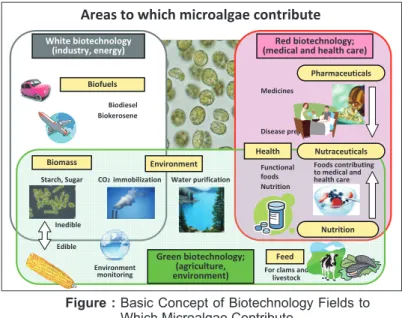
Microalgae’s functions and applicability are now drawing attention. Already, they are being applied in three biotechnology fields. First, they are being applied in the area of functional ingredients and other medical and health biotechnology (red biotechnology), second, in the area of agriculture, water and environment biotechnology for feed and environmental purification (green biotechnology), and third, in the area of industrial biotechnology, including biomass resources and biofuels (white biotechnology).
In anticipation of the depletion of oil, the U.S. Department of Energy started an
“Algal Biofuels Workshop” in December 2008. Australia and the Netherlands are also fostering an environment to develop new microalgae-related industries.
On the other hand, microalgae research in Japan has been segmentalized within individual fields and there is no environment to develop common technology and knowhow. It is necessary to consolidate and reorganize researchers and academic associations engaged in microalgae research and immediately form an industry- academia-government consortium specializing in the development and support of new industries in the three fields. In particular, it is necessary to accelerate the application of basic technology, such as culturing methods, with production cost in mind. To these ends, it is necessary to 1) create scientific and academic associations focused on microalgae biotechnology, 2) promote cooperation among industry, academia and the government for the eventual industrialization of microalgae biotechnology, and 3) make a road map for each application area.
Prepared by the STFC
(Original Japanese version: published in September 2009)
Figure : Basic Concept of Biotechnology Fields to
Which Microalgae Contribute
4
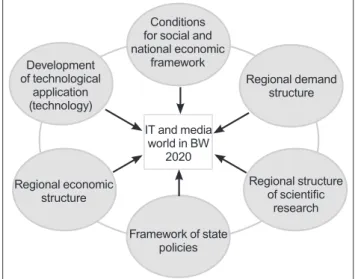
This article introduces some of the results published by FAZIT, a research project sponsored by the state government of Baden-Württemberg in Germany. In August 2008, a research report, “The IT and Media-World in Baden-Württemberg in 2020—Four Kinds of Basic Scenarios,” was released by FAZIT (Forschungsprojekt für aktuelle und zukunftsorientierte Informations- und Medientechnologien und deren Nutzung in Baden-Württemberg —Research Project for Current and Future Information and Media Technologies and Their Use in Baden-Württemberg). This scenario report is the second part of a trilogy that begins with a Delphi-study report and ends with a recent roadmap report. The reports are very intriguing because they show regional foresight together with regional analysis.
The four basic scenarios, which are conclusions of the scenario report, have two distinct features: they present social feasibilities in an extensive and neutral manner by combining multiple methods, and they depict them as specific stories of everyday life. The everyday lives of four main characters in 2020 are described in the first part of the report, and then explanations of how these stories were drawn up are provided. Each of the four stories describes four topics: new ICT, change in the working environment, the future of the ICT industry, and the industry-academia cooperation together with the contribution to education. Each story, however, focuses chiefly on one of the topics.
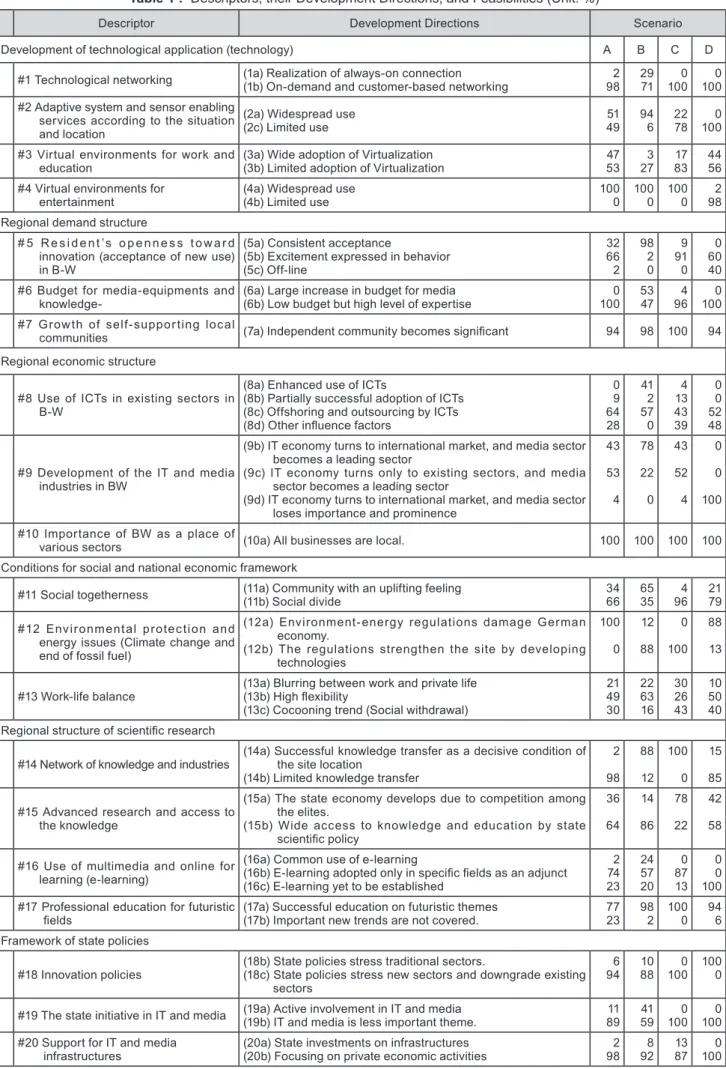
These four scenarios give clear pictures of future Baden-Württemberg as a site location for the IT and media. In the scenario-making process, influence fields fitted with the characteristics of the region were determined, and then the descriptions belonging to the fields and the possible appearances of descriptions were discussed.
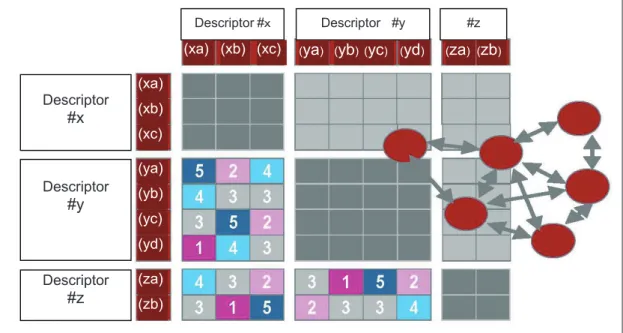
The consistency and the relevancy of the appearances were assessed quantitatively and reflected back into the scenarios.
The four scenarios have two common features: regional cooperation is becoming more vital, and inevitable offshore outsourcing will cause a change in the industrial structure in Baden-Württemberg. In contrast, there are two differences in terms of public acceptance of new technology, and society is either split or united.
These differences reveal the problems to be solved for the sake of the future competitiveness of Baden-Württemberg. To avoid negative developments, the report concludes that it is crucial to increase public acceptance of the use of new ICT and to prevent society from splitting.
2 Regional Foresight Scenarios in Germany
- IT and the Media in Baden-Württemberg in 2020 -
Information and Communication Technologies
Source : Reference
[2](Original Japanese version: published in August 2009)
Figure : Images of the Four Scenarios
p. 22
䇸䊄䉟䉿䈱ၞ䉲䊅䊥䉥੍᷹䈱⚫䇹㩷 䋨╙䋳Ⓜ䋩2009.07.24
Figure 1 Images of four scenarios 㩷
㩷 㩷 5 㩷
㩷 㩷 㩷 㩷 10 㩷
㩷 㩷 㩷
Source: Reference2]
15 㩷
(A) (B)
(C) (D)
3 Left — Handed Metamaterial Technologies p. 36 Significant for Information and
Communication Devices
In recent years, many attempts have been made to realize electromagnetic characteristics by means of artificial structures called “metamaterials” instead of managing the physical properties of materials. In particular, left-handed metamaterials can develop new phenomena heretofore unimaginable by characteristics of such properties as the simultaneously negative-permittivity and permeability along with a negative refractive index, and the resulting new functions such as producing a backward wave.
Research and development of left-handed metamaterials has been advancing, particularly in the utilization of planar structures. Devices that use a backward wave and ones that utilize the band stop characteristics in transition areas between the right-handed (conventional) and the left-handed region have already been put to use.
Since commercially-available software tools for electromagnetic field simulation can be used for the design of planar cercuit structures, it allows us to design prototype metamaterials in plactice. The applicable electromagnetic wave frequency range may be expected to be increased up to the optical domain in the future, and it may even be possible to realize an “invisible cloak.” Research activities concerning metamaterials have rapidly evolved since 2000, with lively discussions appearing in academic societies and journals worldwide. The number of patent applications is also on the increase year by year.
New types of applications of the technologies surrounding left-handed metamaterials are now being opened up, making use of their novel characteristics from different technical approaches.
If practical applications to exploit the advantageous properties of left-handed metamaterials for market requirements are proposed by industry without being blinded by the linear model of research and development, and if academic societies work cooperatively with the proposals, there will be then technical advances promoting their practical use and even another step forward.
With the globalization of research activities and worldwide competition, the speed of development has grown intense. Japan also needs to establish efficient research scheme that make the best use of the abilities of key persons and the surrounding researchers, and a collaborative framework that is free from the bounds of organizations.
Figure : Principle behind Invisible Cloak
Prepared by the STFC
(Original Japanese version: published in September 2009)
Left-handed metamaterial (invisible cloak) Surrounded by a left-handed metamaterial, the "bird" is
no longer visible. The tree behind the bird can be seen.
A bird is seen in front of the tree.
Reflected light
The progress in moves toward putting research papers on e-journals, which has been brought about by the advent of the Internet, has made it possible for researchers to use various routes to access information quickly. Moreover, Web- based communications offer various means of distributing research information.
However, as of 2009, researchers still publish their results in well-established journals, as their promotion and research funds are often decided based on their achievements listed in such journals.
Since e-journals for research papers have made it easy to instantly distribute research information throughout the world and compare it with other information, inappropriate actions, such as plagiarism and double contribution, can be easily detected; and in fact, measures to deal with such inappropriate actions are being studied. The e-journal has also made it possible to understand the distribution of research information not only in the unit of a research paper but also in the unit of researcher and research institute. However, since identifiers for research papers had not been well organized, attempts to identify authors and research institutes began with quotation databases, and this has led to assigning IDs to individual researchers.
Meanwhile, various attempts are being made and active discussions are being held with regard to open access activities to realize barrier-free access to e-journals. Since the transparency of research information has drastically increased thanks to the Internet and the social accountability for information generated from public-funded research has come to be increasingly called for, the importance of researchers’
morality has increased. It is important to establish a comprehensive system, under which researchers can report their research results through e-journals, etc. even at the stage of their application for research funds and understand how their research papers are evaluated. In particular, it is necessary to tie research grants with research results based on researcher identifiers. At present, however, it is difficult to do so due to the coexistence of various databases. It is desirable to establish a unified protocol for metadata ranging from funding to results-reporting in order to allow cross-sectional examination of who received what research funds, where research results were reported and what impact the research had.
Nanotechnology Materials and
4 Recent Developments Concerning Moves
Toward Research Papers on E-Journals p. 51
(Original Japanese version: published in July 2009)
Figure : Environment Surrounding Research Funding Prepared by the STFC
Science &
Technology Policy
5 p. 61
The 34
thAAAS (American Association for the Advancement of Science) Forum was held in Washington D.C. on April 30 and May 1, 2009. The forum is held annually for people in the science, engineering, and higher education communities so that they can learn about and discuss the latest public policy issues and the federal science and technology budget. This year, the number of participants exceeded 600 for the first time in the forum’s history, showing the Obama administration’s strong interest in science and technology policy.
Discussion topics included global economic issues and the role of science and technology, a huge increase in funding (more than 3% of the U.S. GDP) for science and technology and its proper use, as well as the present condition and future of science and the existing media. On the first day, analysis was conducted on budgetary and policy context for R&D in fiscal 2010. On the second day, there was a discussion on the role of science and technology during the current global economic condition.
The keynote address was made by John P. Holdren, Assistant to the President for Science and Technology and Director of the White House Office of Science and Technology Policy. Holdren previously served as chairman of the board of directors of the AAAS. Special attention was given to his address since it was the first forum under the Obama administration, and Holdren plays a major role in the President’s science and technology policy. In his address, Holdren emphasized that President Obama considers the development of science and technology to be an important priority for overcoming the current economic crisis and is taking the initiative in such efforts. In his science plan, the President pledged to invest more than 3% of the nation’s GDP in research and development, an increase from the current level at 2.66%. This will surpass the level achieved at the height of the space race in 1964, when it was about 2.9% of the country’s GDP. The Obama administration also increased the budget for science and technology- related agencies. In particular, the science plan focuses on investment for efforts to strengthen both basic and applied research, to promote innovation for the realization of a clean energy-based economy, to improve the health care system, and to improve mathematics and science education.
In addition, the panel discussion topics in this forum included “Global Economic Issues and the Role of Science and Technology” and “The Future of Science Journalism.” There was also a session on the worsening effects of fossil fuel and global climate change on human health. Even outside this session, many speakers discussed issues surrounding climate change, pointing out that the United States has completely changed its environmental policy and is actively tackling environmental issues.
Report on the Annual AAAS Forum on Science
and Technology Policy (2009)
(Original Japanese version: published in July 2009)
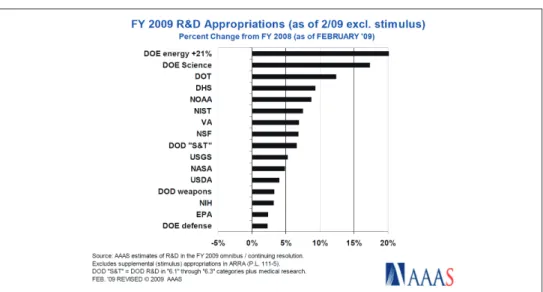
Figure : U.S. FY2009 R&D Appropriations (excl. stimulus)
DOE: Department of Energy, DOT: Department of Transportation, DHS: Department of Homeland Security, NOAA: National Oceanic and Atmospheric Administration, NIST: National Institute of Standards and Technology, VA: Department of Veterans Affairs, NSF: National Science Foundation, DOD: Department of Defense, USGS: United States Geological Survey, NASA:
National Aeronautics and Space Administration, USDA: United States Department of Agriculture, NIH: National Institutes of Health, EPA: Environmental Protection Agency
Source : Slide used by Albert H. Teich
1
Microalgae Pioneering the Future
— Application and Utilization —
Y oshihiko s umi
Life Science Research Unit
Microalgae
1-1 What are microalgae?
Microalgae were one of the first organisms to come into existence in the Earth’s ocean more than 3 billion years ago, when the Earth’s environment formed.
They are also called phytoplankton. These unicellular organisms have chlorophyll and produce oxygen (O
2) by immobilizing carbon dioxide (CO
2) in the atmosphere through photosynthesis. There are about 100,000 different types of microalgae living not only in the oceans but also in fresh water (lakes, ponds, and rivers).
[1]Microalgae began growing proliferously in oceans about 3 billion years ago and ever since have displaced carbon dioxide, which had been the main component of the atmosphere, with oxygen through their photosynthetic capability, resulting in creating the current atmospheric composition.
The oxygen produced by photosynthesis not only
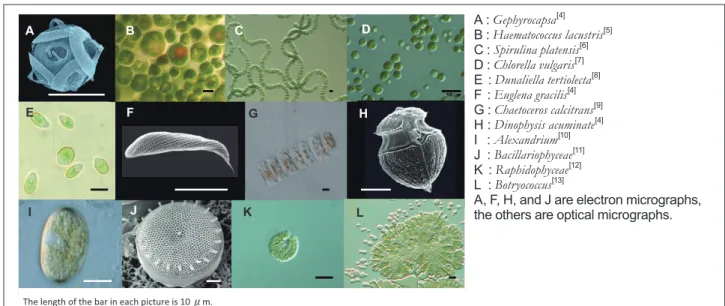
constituted the atmosphere but also raised the level of dissolved oxygen in seawater. As a result, iron in seawater was oxidized and deposited on the seabed, eventually forming the current iron ore layer. Large quantities of dead microalgae were also deposited on the seabed and, billions years later, they became oilfields. The Gephyrocapsa,(Figure 1, A) which is a kind of microalgae, produces calcium carbonate by causing carbon dioxide to react with calcium in water and thus forms the circular outer shell of a cell. This process formed limestone layers. A typical example is Chalk Cliff on the British side of the English Channel.
[1]Microalgae form the bottom of the food chain — they are eaten by zooplankton, which in turn is eaten by small fish, then by big fish, and then by humans. In this way, microalgae form the current global environment and are feeding living organisms on the earth even now. Human beings are utilizing and enjoying the benefits from resources produced by microalgae.
[1,2]At the same time, however, pollution and disruption
B C D
A
F E
J K I
G H
L
A : Gephyrocapsa
[4]B : Haematococcus lacustris
[5]C : Spirulina platensis
[6]D : Chlorella vulgaris
[7]E : Dunaliella tertiolecta
[8]F : Euglena gracilis
[4]G : Chaetoceros calcitrans
[9]H : Dinophysis acuminate
[4]I : Alexandrium
[10]J : Bacillariophyceae
[11]K : Raphidophyceae
[12]L : Botryococcus
[13]A, F, H, and J are electron micrographs, the others are optical micrographs.
Prepared by the STFC based on References
[4-13]Figure 1 : Microalgae mentioned in this report (electron micrographs)
1
of the water environment has caused excessive growth of microalgae, which is known as red tide. Red tide is believed to be caused by multiple factors, such as water being polluted with phosphorus contained in detergents and the breakdown in the balance of the food chain caused by a sharp decrease in clams, etc. due to the disruption of tideland ecosystems.
Red tide depletes marine resources by lowering the concentration of oxygen in water. Moreover, some of the microalgae that grow excessively, such as Alexandrium,(Figure 1, I) produce toxic substances.
Too much growth causes contamination of marine resources.
[3]1-2 Expectations for microalgae
Although human beings have been aware that the current global environment was formed by microalgae, they had not focused their attention on microalgae from the perspective of actively utilizing them. However, after problems connected to the existence of human beings came to the fore, such as the depletion of oil, higher crude oil prices, a rise in food prices, a food-supply crisis, and global warming caused by an increase in carbon dioxide, human beings have begun to pay attention to microalgae.
Due to the rapid population increase and industrialization, oil that was created by microalgae is expected to be exhausted by the middle of this century. This has prompted the idea that, since oil can be created by microalgae, we should make microalgae produce oil again. Since the production of bio- ethanol depends on cornstarch, demand for corn has increased, leading to a rise in food prices. Therefore, the idea has emerged that microalgae, which form the basis of the food chain, should be actively utilized and that, if the use of oil and other fossil fuels increases carbon dioxide in the atmosphere, microalgae should be used to immobilize carbon dioxide. Such an idea may have sounded far-fetched until recently. However, thanks to progress in biotechnology, it has become more possible for us to draw on the capability of microalgae to address the various problems we are facing.
One of the most feasible biotechnology fields is red biotechnology, an area concerning medicines and health, including drugs, bioactive substances and nutraceuticals. It focuses on functional substances produced by microalgae and aims at making use of them. The second field is green biotechnology, an area
concerning agricultural, water and environmental biotechnology. It aims at producing feed for herbivorous livestock and bivalves and cleaning up the environment by making use of functional substances produced by microalgae. The third field is white biotechnology, an area concerning industrial biotechnology, such as biomass resources and biofuels. It is designed to use microalgae as a means of industrial production.(Figure 2)
This report focuses on the microalgae that may contribute to the enhancement of the quality of life of people in the future and that may lead to the solution of some of the problems we are currently facing. The report also looks at the value of utilizing microalgae in three biotechnology fields: red, green and white biotechnology.
Microalgae changing science fields
2-1 Red biotechnology: application to nutraceuticals
One of the challenges facing advanced countries in the 21st century is that various medical and health- related problems have increased. And many of them are diseases caused by people’s poor eating habits. To cope with this situation, people have come to pay more attention to preventing diseases and maintaining good health, rather than taking medicine after suffering from diseases. It has been scientifically demonstrated that some foods contain bioactive substances that fall between pharmaceuticals and nutrition. Such
Prepared by the STFC Figure 2 : Basic Concept of Biotechnology Fields to
Which Microalgae Contribute
2
substances are called nutraceuticals, and as they are effective for disease prevention they have come to draw attention.
[14]In recent years, it has been found that various substances produced by microalgae also have bioactive and other useful functions. This can be understood from the fact that microalgae have been the basis of the food chain. For instance, it is well known that blue fish, such as Pacific saury and sardines, contain docosahexaenoic acid(DHA), an unsaturated fatty acid also called omega fatty acid, which is said to be effective in preventing arteriosclerosis. However, these fish do not produce DHA in their bodies;
rather they take in DHA from the food they eat. It is pointed out that the root of DHA in such fish can be traced to microalgae. In other words, DHA in fish is a substance ingested and concentrated along the steps of the food chain. Since DHA is essential for the cerebral development of infants, DHA obtained from refined fish oil has been used as a functional food ingredient. In recent years, concerns have been raised about higher prices of fish oil caused by a decrease in fish catches and oceanic pollution. This has prompted a study to develop a method to industrially cultivate DHA-producing microalgae and extract DHA from them.
Martek Biosciences Corp. of the United States (in Columbia, Maryland) has been cultivating microalgae in 80–260 m
2tanks and extracting DHA oil from the microalgae. Unlike DHA derived from fish oil, microalgal DHA is said to have no fishy odor. Since DHA is necessary for the growth of the brain and eyes of infants, it has been used as an additive in infant
foods.
[15]Microalgae come in various colors. Chlorophyll makes some microalgae green. There are also many kinds of red, orange, and yellow microalgae. These colors are all derived from carotenoid or natural pigment. It has been proven that carotenoids have antioxidant and other bioactive effects. Studies are now under way to use them as functional food ingredients and cosmetics.
For instance, it has been reported that the astaxanthin produced by the orange-colored Haematococcus lacustris (Figure 1, B) has a high antioxidant effect that protects human bodies from ultraviolet light and excessive oxidation of fat in the blood. Therefore, astaxanthin has been drawing attention lately in such fields as the prevention of aging, easing of eye strain, relaxation of tired muscles, and prevention of arterial sclerosis.
Already, several Japanese corporations have started operating microalgae cultivation facilities to produce astaxanthin.
[16, 17]Since microalgae are widely distributed in saline and fresh water and there are about 100,000 different kinds, it is believed there are many compounds with yet-to-be-discovered biological activities.
Therefore, microalgae are promising treasure troves for researchers looking for candidate substances for medicines and functional ingredients.
2-2 Green biotechnology: application to food, feeds and environment
2-2-1 Application to food
People in the 21
stcentury are facing challenges in terms of securing good-quality food and conserving the environment.
Living creatures on earth are enjoying the benefits of the sun. This is because the source of ecosystem evolution is sunlight. In other words, microalgae immobilize carbon dioxide and produce organic matters by making use of energy from sunlight. Microalgae are the primary producers of organic matter on the earth. They serve as prey for zooplanktons, shells and small fishes, which in turn serve as prey for bigger fish and animals on earth.
Human beings stand at the top of this food chain.
Viewed from this perspective, it is no exaggeration to say that microalgae are supporting all living creatures on earth. There is a big social need to provide safe food and food materials on a stable basis.
For instance, Spirulina platensis, a kind of microalgae
Prepared by the STFC Figure 3 : Chemical Constitution of DHA
Prepared by the STFC
Figure 4 : Chemical Constitution of Astaxanthin
(Figure 1, C), has long been taken as a medicine in South America and Africa and studies are now under way on its nutrition and bioactive substances. Chlorella vulgaris (Figure 1, D), Dunaliella tertiolecta (Figure 1, E) and Euglena graclis (Figure 1, F) are being sold as health foods in Japan. Since substances produced by these microalgae are believed to be effective for health maintenance and disease prevention, studies are now under way to use them as new food materials and resources.
Meanwhile, toxic microalgae sometimes grow proliferously in the South Pacific. Since microalgae form the basis of the food chain, toxins concentrate in the bodies of fish that eat such microalgae. People eating such fish sometimes develop paralysis or other symptoms of food poisoning. A typical example of such toxins is ciguatera toxin. Until recently, poisoning cases related to ciguatera toxin were reported only in south Pacific regions. However, due to the recent global warming, microalgae containing ciguatera toxin have begun to move northward, raising the possibility of fish contaminated by the toxin being caught in seas near the coast of Japan.
[18]Professor Shoichiro Suda of the University of the Ryukyus has begun collecting toxic microalgae. From the standpoint of ensuring that it is safe to eat fish, it is necessary to promote research and collect information on microalgae in fishery waters.
2-2-2 Application to feed
Microalgae are good feed for clams. Gulf areas, where microalgae grow abundantly, are known as being good locations for the raising of oysters.
However, oyster catches fluctuate wildly in line with climate changes. Therefore, a method of using cultivated microalgae as feed for the larvae of oysters, clams, mussels and sea urchins has been drawing attention as a stable cultivation method not affected by climate changes and environmental contamination.
For instance, Akkeshi Town in Hokkaido has been engaged in nurturing young shells at an oyster nursery center. The center incubates oysters and feeds them with Chaetoceros calcitruns (Figure 1, G) and some other microalgae cultured in a sealed tank. This has made safe and stable cultivation of oysters possible without worrying about the risk of fluctuation in production volume caused by such factors as abnormal weather and the spread of oyster viruses.
[19]Moreover, the idea of using microalgae as feed
can also be applied to raising cattle. At present, corn and other grains are used as feed for breeding cattle for meat, and about 11 kilograms of grain is used to get one kilogram of beef.
[20]Amid concerns about food shortages caused by increasing population, it is questionable how long we can keep on feeding livestock with grains which can otherwise be used as food for people. Since microalgae contain a good balance of sugar, protein, fat and minerals and are suitable as feed for cattle and other livestock for meat, they warrant further study.
2-2-3 Application to environment
Microalgae have contributed to the formation of the earth’s current atmosphere and are still parts of the mechanism whereby oceans absorb carbon dioxide from the atmosphere. Some of the carbon dioxide emitted into the atmosphere through animals’
breathing and human industrial activity is absorbed into the oceans through ocean surfaces. Microalgae inhabiting ocean surfaces take in carbon dioxide dissolved by photosynthesis, resulting in lowering the level of carbon dioxide in the ocean surface and promoting the immobilization of carbon dioxide in the atmosphere. Furthermore, carbon dioxide is taken in by microalgae that are prey for zooplanktons and fish and then will be transported from the surface to the ocean’s interior by dead fish and their feces. This is called a biological pump. In this way, microalgae are deeply involved in transporting dissolved carbon dioxide from the ocean’s surface to the interior.
Over the last several decades, the technology to measure sea color with sensors mounted on artificial satellites has advanced, allowing global observation of microalgae in the ocean. For instance, the purpose of Sea WiFS (Sea-viewing Wide Field-of-view Sensor) on board the Orbview-2 satellite, which was launched by NASA in 1997, was to observe microalgae in the ocean on a global scale and study their distribution.
[21]Chlorophyll-a in microalgae in the ocean absorbs blue light with wavelengths of around 443 nm and reflects green light with wavelengths of around 550 nm. For this reason, the sea becomes blue when there are few microalgae in it and green when there are many microalgae. If we analyze the light from the ocean by taking advantage of this nature of microalgae, we can understand the real-time conditions of microalgae development.
[22]The reproductive distribution of microalgae is
mainly determined by environmental factors, such as light, water temperature and nutrient minerals.
Therefore, many microalgae grow in such places as littoral areas, where nutrient minerals flow in from rivers; the subarctic area, where abundant nutrient minerals are already available; and the eastern equatorial area, where nutrient salts are provided due to upwelling caused by trade winds. However, few microalgae grow in the northern Pacific, the equatorial area and the Antarctic, despite the fact that these ocean areas are blessed with abundant nutrient minerals. Some people say this is because these ocean areas do not contain enough iron, which is essential for the growth of microalgae. Iron is provided to oceans either directly from rivers or through sands carried by wind currents, such as yellow sands carried by subtropical westerlies.
[23, 24]A study project, called
“Subarctic Pacific Iron Experiment for Ecosystem Dynamics Study (SEEDS),” was conducted in order to examine the hypothesis that when there is a lack of iron, few microalgae will grow. In the experiment, iron was dispersed in iron-deficient ocean waters to study its effect on carbon dioxide absorption and on marine organisms (Figure 5).
[25]The results of the experiment confirmed that the iron distribution propagated microalgae.
[26]The experiment was intended to investigate the relationship between microalgae and nutrient minerals
with regard to immobilizing carbon dioxide on a global scale. It was not intended to immobilize carbon dioxide in the atmosphere by actually dispersing iron.
While such experiment may lead to immobilizing carbon dioxide, we have to be cautious about actually carrying out such an experiment, since it has a major impact on the marine ecosystem and environment.
[27]A study is also under way to purify water by utilizing microalgae’s strong power to absorb nitrogen and phosphorus in water. Specifically, the study is aimed at absorbing and removing excess nutrients from shrimp-breeding water by using microalgae.
It suggests that microalgae have a water-quality- purification function and that such function can be utilized.
[28]There is also an example of immobilizing carbon dioxide by using microalgae. For instance, euglena Co. Ltd., a company originating from the University of Tokyo and engaged in businesses related to Euglena gracilis (Figure 1, F), has been trying to immobilize carbon dioxide in exhaust gas emitted from thermal plants by directly connecting the gas to a Euglena culture tank for aeration in cooperation with Okinawa Electric Power Co.
[29]Normally, if exhaust gas is directly aerated, the culture solution is oxidized by various oxides, making the solution unsuitable for culturing microalgae. However, the company was able to effectively culture euglena, even under acidic conditions, and immobilize carbon dioxide. At the
Thewhitishareas(whitishblueinacolorimage)arebelievedtobetheareaswheremany microalgae grow.
Source: Reference
[25]Figure 5 : Ocean Areas Where the Iron Dispersion Experiment was Conducted
same time, since culture solutions can be oxidized by aerating heavily-concentrated carbon dioxide, it can curb the growth of living organisms other than Euglena. In other words, it has been experimentally demonstrated that euglena is suitable for immobilizing carbon dioxide.
2-3 White biotechnology: application to biofuel and biomass
2-3-1 Application to biofuel
The depletion of fossil fuel is another major problem facing human beings as it appears imminent. As an alternative energy to oil, the development of bioethanol from starch, which is derived from corn and other grains, is now under way. However, this development has raised the problem of conflict between food and biofuel. It has resulted in increased prices of not only corn but also other grains, leading to the so-called international political issue of “eat or burn”. Moreover, in addition to grains, the price of starch has also increased, raising doubts about the stable supply of starch. A study is also under way to produce bioethanol from the celluloses of unedible plants, such as switchgrass. Some say this may not compete with food. However, things are not that simple. This is because farmers decide which plant they grow — corn or switchgrass — depending on which one they can sell at a higher price. Therefore, it raises the problem of competition in terms of cropping acreage.
It is for this reason that the development of biomass has come to draw attention, as it does not pose competition with food and it is economically feasible.
Microalgae basically require carbon dioxide, minerals and light for their growth. They do not require starch. Therefore, as long as water and sunlight are abundantly available, it is possible to cultivate microalgae, even on infertile land. Biomass has been drawing attention in the U.S. Sunbelt, a vast stretch of land where an abundance of sunlight is available.
[30]Oil consists of microalgal lipids that were deposited on the seabed several hundred billions of years ago. In particular, microalgae, such as Gephyrocapsa (Figure 1, A), Dinophysis acuminata (Figure 1, H), and Bacillariophyceae (Figure 1, J), are said to be the source of oil. Therefore, research is being conducted on culturing these microalgae in order to produce biofuels. At present, Raphidophyceae (Figure 1, K), Botryococus (Figure 1, L) and some other microalgae are drawing attention, as they
produce a large volume of carbon hydride of carbon numbers 30 to 40. The volume of carbon hydride in some of these microalgae accounts for 75% of their dry weight.
[31]A problem common to biofuel production is that biofuel has to be produced in large quantities and that biofuel prices must be low. Since biofuel requires larger production facilities than other industrial area for microalgae and the cost needs to be kept low, it is necessary to always think of enhancing productivity.
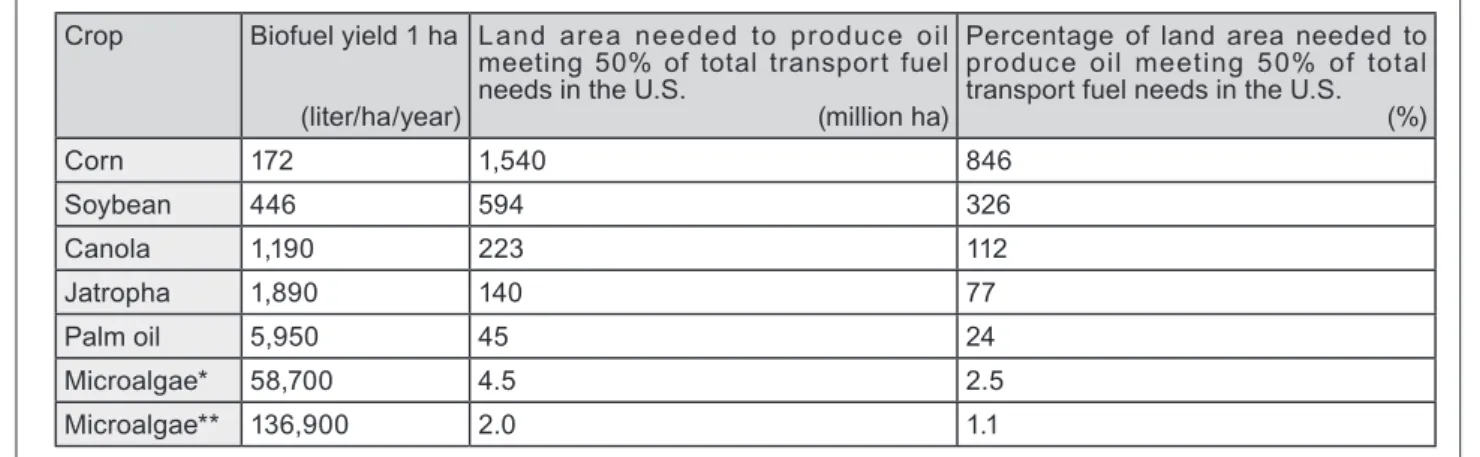
Biofuels produced from microalgae are mainly used as alternatives to diesel oil. Palm, sunflower and rapeseed oil can also be used as biodiesel. However, microalgae can be cultivated throughout the year as long as light is available and, compared with such conventional plant oils, microalgae are less affected by seasonal changes. According to an estimate made by Professor Yusuf Chisti at Massey University (New Zealand), the production efficiency of microalgae is about ten times as high as palm oil, which is the most efficient producer of biofuel among plant oils (Table 1). Moreover, microalgae do not require fertile land and arable fields to cultivate and can be cultivated regardless of seasonal changes. It can be said that microalgae are far more productive than other biomass used to produce biofuels.
[31]Since the chemical structures of biodiesel produced from microalgae are similar to those of diesel oil, the existing infrastructure for diesel oil, such as existing refining and storage facilities, can be used for biodiesel, making it possible for diesel vehicles to run without their engines being modified. Therefore, it will be relatively easy to substitute biodiesel rather than to convert to bioethanol, while making use of the existing industrial infrastructure. In this way, it is highly possible to realize the application of microalgae to fuels.
[32]In order to distinguish biofuels produced from microalgae from those produced from plant oils or cellulose, microalgae-derived fuels have recently come to be called photosynthetic biofuels or algal biofuels.
[33]In December 2008, the U.S. Department of Energy
(DOE) sponsored Algal Biofuels Technology
Roadmap Workshop to comprehend the actual state
of the basic technology concerning the development
of biofuels from microalgae and discuss their future
prospects and target setting.
[34]Later, the DOE
invested $50 million to start and operate an algal
biofuels workshop and prepare a specific roadmap to
promote R&D concerning microalgae-based biofuels, out of the $786.5 million allotted for the research and commercialization of biofuels last fiscal year.
[35]The DOE plans to provide $85 million to venture companies and universities to help them develop biofuels and examine the commercial viability of such fuels.
[36]Australia, which is also blessed with a vast expanse of land, has positioned algal biofuels as second- generation biofuels.
[37]In August 2009, the country decided to form Algal Fuels Consortium, centering on Australia’s Scientific Industrial Research Organization (CSIRO), with the aim of promoting algal biodiesel.
The country said the consortium is expected to start developing a low-priced microalgae culture method.
[37]Meanwhile, Professor Rene Wijffels
[38]of Holland’s Wageningen University announced that he will establish a consortium-type microalgae research center (Algae PARC) in 2010 with funds to be provided by the farm ministry and related corporations. He said he plans to study a highly-efficient cultivation system by using a small-scale cultured layer.
[39]These efforts by various governments started only in 2008, led by the United States.
The research and development of microalgal biofuels is now being undertaken by many venture companies, mainly in the United States (Table 2). For instance, Sapphire Energy, a bio-venture company, announced in May 2008 that it has produced renewable 91 octane gasoline. Among Sapphire Energy’s investors is Cascade Investment LLC, an investment firm owned by Bill Gates. The company said it has recently established a test and research site in New Mexico in order to expand its biofuel production capacity to
10,000 barrels per day. It aims to start commercial production within a few years.
[40]In addition to venture companies, oil majors have also begun efforts to produce next-generation biofuels from microalgae. In July 2009, Exxon Mobile Corp.
formed a business tie-up with Synthetic Genomics Inc. with the aim of promoting the research and development of next-generation biofuels using photosynthetic microorganisms as the means of production. Exxon Mobile announced that it will spend more than $600 million on the project, aiming to develop a biofuel compatible with both gasoline and diesel fuels.
[43]As these announcements indicate, investment in the research and development of microalgal biofuels has picked up momentum since last year.
The United States is one step ahead of other countries in terms of experimental studies on the feasibility of using microalgae to produce an alternative to oil, but this does not mean that biofuels deriving from microalgae will be commercialized any time soon. Still, it indicates that the United States has put top priority on the development of alternate energies as a national strategy ahead of the expected depletion of oil. In particular, U.S. President Barak Obama’s “green deal” policy has accelerated the move to develop alternatives to oil.
2-3-2 Application to biomass
New technologies for the future have also begun to emerge, such as one to produce necessary polysaccharide and other biomasses more efficiently by optimizing the metabolic system of microalgae with gene-recombination technology and one to make
Crop Biofuel yield 1 ha
(liter/ha/year)
Land area needed to produce oil meeting 50% of total transport fuel needs in the U.S.
(million ha)
Percentage of land area needed to produce oil meeting 50% of total transport fuel needs in the U.S.
(%)
Corn 172 1,540 846
Soybean 446 594 326
Canola 1,190 223 112
Jatropha 1,890 140 77
Palm oil 5,950 45 24
Microalgae* 58,700 4.5 2.5
Microalgae** 136,900 2.0 1.1
Prepared by the STFC based on Reference
[31]Table 1 : Fuel Production Efficiency of Microalgae in Comparison to Plant Oils
* 30% oil (by weight) in biomass
**70% oil (by weight) in biomass
microalgae produce biomasses that are not otherwise produced.
A group of researchers, including Professor Akihiko Kondo of Kobe University, has established technology to modify the metabolic pathways of microorganisms by using what is called arming technology, which is a genetic recombination technology. This technology gives a new metabolic capability to cells, such as yeast and grass bacilli, by making them produce enzymes that they do not inherently produce. The microorganisms produced in this way are called arming yeasts or arming grass bacilli. The research group has succeeded in experimentally producing ethanol, amid acid and lactic acid from celluloses, which are not inherently a resource. The technology has opened the way to utilize plants’ unedible celluloses and simplify multiple enzyme reactions.
[44]If arming microalgae can be produced by employing this technology, it may be possible to cause fermentation by using sugar produced by microalgae.
It is hoped that this method will lead to biomass production that does not compete with foods.
Toward industrialization
3-1 Industrial culture technique
Along with rising expectations for microalgae, it has become necessary to develop technology to industrially and efficiently produce the required amounts of microalgae. In particular, it is essential to establish culture techniques ranging from small to large-scale culturing. It is also necessary to enhance productivity based on individual culture methods and accumulate knowhow with regard to ensuring quality.
In the case of producing relatively small amounts
of medicine, food and feed, which require purity and safety, an enclosed culture system (Enclosed System) (Figure 6 (a)) is used. In the case of biofuel and biomass, large-scale yet low-cost production methods are required. Currently, as a large-scale culture method, culturing in open spaces such as ponds (Open Pond System) has been employed (Figure 6 (b), (c)).
At present, such methods are a long way from being efficient. In particular, the development of a culture method to industrially produce low-priced products in large quantities is still at the study stage. A study is now under way to develop an enclosed culture system that utilizes light more effectively than open culture methods and is suitable for low-priced, mass culture.
[46]3-2 Value of products and production cost According to Professor Rene Wijffels of Holland’s Wageningen University, the cost of mass culturing microalgae with currently-available technology comes to €4.02/kg (about \ 520/kg) in the case of cultivation size of 100ha. He said the cost can be reduced to €0.4/
kg (about \ 52/kg), if production technology advances in the future.
[47]As to the value to be obtained from 1kilogram of microalgae, Wijffels also assumed diversified products, such as those we mentioned earlier. He estimates the overall profits from various products, such as proteins, lipids, and sugars, come to €1.65/kg (about \ 210/kg). He said, with the current production cost of €4.04/kg, it is difficult to commercialize such products but that if the production cost is reduced to around €0.4/kg in the future commercialization will become possible.
[47]In order to reduce production costs, it is very important to sort out strains that produce specific substances in large quantities, and develop a low-
U.S.
・ A2BE Carbon Capture ・ Algae Floating systems ・ AlgaeFuel ・ Algae Fuel System ・ AlgaeWheel
・ Algenol Biofuels ・ Algoil Industries ・ AlgroSolutions ・ Aquatic Energy ・ Aurora Biofuels ・ Bionavitas
・ Blue Marble Energy ・ Bodega Algae ・ Cellana ・ Chevron Corporation
・ Circle Biodiesel & Ethanol Corporation ・ Community Fuels ・ Diversified Energy ・ Energy Farms
・ Global Green Solutions ・ Greenshift ・ Green Star Products ・ HR BioPetroleum ・ Imperium Renewables
・ Infinifuel Biodiesel ・ International Energy ・ Inventure Chemical ・ Kai BioEnergy ・ LiveFuels
・ Organic Fuels ・ OriginOil ・ PetroAlgae ・ PetroSun ・ Phycal ・ Sapphire Energy ・ Seambiotic ・ Solazyme
・ Solena Group ・ Solix Biofuels ・ Sunrise Ridge Algae ・ Sunx Energy ・ Texas Clean Fuels
・ Valcent Products ・ Vertical Algae Biofuel Growing ・ W2 Energy
Europe ・ AlgaeLink (Netherlands) ・ Bio Fuel Systems (Spain) ・ Enhanced Biofuels & Technologies (UK)
・ Kwikpower International (UK)
Others ・ Algae Fuel Systems (Canada) ・ Algodyne Ltd (Israel) ・ Aquaflow Bionomics Corporation (New Zealand)
・ Enhanced Biofuels & Technologies India Ltd (India) ・ Oil Fox (Argentina) ・ Seambiotic Ltd (Israel) Table 2 : Venture Companies Established to Produce Microalgal Biofuels
Prepared by the STFC based on Reference
[41,42]3
cost cultivation technique and methods to extract and purify multiple products efficiently.
Challenges facing Japan in promoting study on microalgae
As we examined in Chapter 2, microalgae can be applied in a broad manner in the red biotechnology field (medicine and health), green biotechnology field (agriculture and fisheries, environment), and white biotechnology field (industry and energy). However,
research on microalgae and moves to industrialize them in Japan are not yet active. Here we would like to discuss the reasons for the slow progress and the future challenges facing Japan.
4-1 Establishment of scientific and academic societies focused on microalgae biotechnology
First of all, microalgae research in Japan is being conducted only within segmentalized fields while basic or applied science fields centering on microalgae have yet to be established. Therefore, no academic association has been well organized.
Existing academic associations are like hobby clubs dealing with only one microalga, raising no hopes of developing diversified technologies and knowhow common to microalgae. For instance, their activities are separated depending on fresh-water microalgae and marine microalgae. This seems to have narrowed researchers’ vision.
The technology to assess, sort out and make use of microalgae that are useful for specific products from among the various microalgae possessing biodiversity can be called a common fundamental technology.
Japan is blessed with diverse microalgae, both fresh- water and marine microalgae. Meanwhile, in each field, studies have been accumulated concerning individual microalgae. However, academic associations and researchers have no opportunities to make use of such studies in a comprehensive manner.
There are many microalgae-related biotechnologies that can be commonly used in various industries.
Information fed back from other industrial fields should be greatly helpful. In order to share and make wide use of biotechnological information on research, development and technology in the fields of red bio, green bio, and white bio, it is necessary to treat the three biotechnology fields as a new comprehensive science discipline, for example, as microalgae utilization biotechnology, and reorganize researchers and academic associations.
Specifically, it is important to promote research activities that will form common bases for microalgae contributing in the various fields of medicine, health, environment, energy, agriculture and fisheries. For example, it is necessary to develop a technology to sort out microalgae for respective objectives, a highly- efficient culture technology for mass production, and recombinant technology using microalgae as hosts.

![Figure 6 : Various Culture Methods for Typical Microalgae(a) Medium-sized enclosed culture system (Akkeshi Town Oyster Breeding Center[19]; Akkeshi Town, Hokkaido; Photo provided by Sumi)](https://thumb-ap.123doks.com/thumbv2/123deta/6927438.2266007/18.892.83.433.86.350/various-culture-methods-typical-microalgae-enclosed-breeding-hokkaido.webp)
![Figure 1: Images of the Four Scenarios 5 10 Source: Reference 2] 15 Source : Reference [2]](https://thumb-ap.123doks.com/thumbv2/123deta/6927438.2266007/26.892.204.713.795.1139/figure-images-scenarios-source-reference-source-reference.webp)