Geographical Studies Vol. 88, No. 2 (2013)
Transhumance in the Kyrgyz Pamir, Central Asia
Shigeru SHIRASAKA1, Teiji WATANABE2, Feng SONG3, Jie LIU3 and Ikuko MIYAHARA4
Abstract
Transhumance is a typical form of subsistence in the livestock industry that involves the climatic dif- ference between lowlands and highlands. There are several types of transhumance but its most import- ant factor is the natural difference in climate and vegetation between lowlands and mountain regions.
In this paper, we will discuss the connection between mountains and human activities through trans- humance (küch in Kyrgyz), the use of natural resources, and age-based livestock naming differences in the Alai Valley, located in the northern part of the Pamir in Central Asia. In 1920, the region called Kyrgyz was integrated into the Soviet Union. Before the Soviet era, Kyrgyz people had maintained a purely nomadic lifestyle, travelling from one pasture to another in groups. The integration into the Soviet regime caused a rapid transformation in this region from nomadic pastoralism to livestock farm- ing. The transition period that Central Asia went through after the 1991 collapse of the Soviet Union diverged greatly from the initial optimism that surrounded it. Livestock farming became a matter of in- dividual enterprise, or fermer. Today, the eastern part of the Alai valley is characterized by two types of transhumance: horizontal and ascending. In contrast with the conditions of the Soviet era, the region is now independent, so pastoralists will unavoidable need to gain autonomy in the new market economy.
Key words:The Kyrgyz Republic, Pamir-Alai Mountains, Alai Range, Alai Valley, transhumance, subsistence, adaptation
Ⅰ.Introduction
In many regions of the world, the livestock industry is the only possible kind of land use that can be sustained in severe climatic conditions.
Its economic forms vary according to those conditions: in some regions have sedentary live- stock industries, while others have migratory or stall-feeding livestock industries, which include keeping livestock in feedlots (Rinschede, 1988).
On the other hand, people in certain regions make use of the differences in altitudes,
specifically the climatic difference between highlands and lowlands, as observed in locations worldwide, including the Alps (Rinschede, 1988) and the Andes (Onuki, 1978, 1980; Yamamoto, 1993, 2004). It is also known that hill stations were developed by the Caucasians in South and South-eastern Asia during the colonial period (Shirasaka, 1989; Saito, 1990; Crossette, 1999).
In general, transhumance is a typical form of subsistence in the livestock industry that makes use of the climatic difference between lowlands
1) Department of Economics, Teikyo University, Japan
2) Faculty of Environmental Earth Science, Hokkaido University, Japan
3) Graduate School of Environmental Science, Hokkaido University, Japan
4) School of Project Design, Miyagi University, Japan
and highlands.
Pastoralism has played a major role in Central Asia since time immemorial. Nomads had functioned as transporters and communicators between oasis settlements, and as powerful actors controlling passages and providing security to trade caravans. The Silk Road exchange over vast tracts of deserts, steppes and mountain environments made it feasible for pastoralists to cover huge distances with transport animals and valuable loads. Mountain passes functioned as thoroughfares for Inner Asia traverses, especially for the connection between the Tibetan Plateau and South Asian rim lands across the Himalaya, as well as between the Central Asian oases along the Silk Road and the trans-mountain areas beyond the Hindukush, Karakoram, Kun Lun Shan, and Pamir mountain ranges. Vital passages were controlled by herding communities that, in addition to animal husbandry and livestock breed- ing, engaged in transport services across difficult passages and functioned as guides and guards for trade caravans (Kreutzmann, 2011, p39–40).
In this paper, we will discuss the connection between mountains and human activities through transhumance (küch in Kyrgyz and Tajikistan), the use of natural resources, and age-based livestock naming differences in the Alai Valley, located in the northern part of the Pamir in Central Asia. Before these discussions, we will briefly examine transhumance in other parts of the world.
Ⅱ.What is transhumance?
There is some agreement among etymologists about the origin of the term ‘transhumance’, a word used in both English and French that is known as Almwirtschaft or Alpwirtschaft in German. It is derived from the Latin words ‘trans’
(across, over) and ‘humus’ (ground, soil, land).
The term ‘transhumance’ has been used in the colloquial languages of the Mediterranean regions (France, Spain, and Italy) and was adopted into
scientific literature (Vidal de la Blache, 1892) at the end of the 19th century. In today’s Romance languages, it refers to migration and is rarely applied to the transport of livestock. Geography has broadened the term so that it currently characterizes an economic form of the migratory livestock industry that differs from nomadism, semi-nomadism, and migratory livestock based in alpine pastures (Yasuda, 1958; Beckinsale and Beckinsale, 1975; Rinschede, 1988). It is called transhumanţă by Romanian Carpathians.
Transhumance is le genre de vie, in which some of the members in a group of people stay in their permanent settlements, while others move with their animals to different grazing areas. It is the seasonal and periodical migration of livestock:
in other words, the seasonal migration of herds, typically cattle and sheep, between two regions with different climatic conditions.
Transhumance is also a type of migratory live- stock industry, in which the livestock is generally accompanied not only by hired hands but also by owners and their relatives – although rarely a whole family – on a long migration or transit be- tween at least two seasonal ranges (summer and winter). The term ‘range’ in this paper means the area encompassing settlements, meadows, and pastureland. This seasonal movement is inspired by the different characteristics of ranges in their altitudinal, thermic, hydric, or agro-economic conditions.
Traditional transhumance, like nomadism, is combined with year-round grazing. Stabling or supplemental feeding is practised only if absolutely necessary during the cold season. At the location of the base ranch the settlements are permanent and cultivation can be practised, while at the alternate location the herdsmen live in tents, mobile huts, wagons, or in permanent settlements that are only seasonally used. Rarely are both settlements occupied during the same season (Beckinsale and Beckinsale, 1975, p73;
Rinschede, 1988).
The kind of livestock involved in transhumance varies by area. Milk cows and a small number of sheep are common in the Alps (Shirasaka, 2004), sheep are most common in the Pyrenees and Spain, and a mixture of cows, sheep, and goats are found in the French Alps (Peattie, 1955).
The transhumance of sheep is found in Italy’s Apennines (Tani, 1976; Takeuchi, 1998), in Nepal (Watanabe, K., 2009), and in Turkey and Romania (Miya, 2000; Urushibara-Yoshino, 2009;
Shirasaka, 2007, 2010; Shirasaka and Urushiba- ra-Yoshino, 2013). Transhumance of sheep and cows is practised in the Balkan Peninsula (Cevc, 1972), but in Slovenia, it is called ‘the Museum of Transhumance’ (Matley, 1968; Kobayashi, 1974; Mihevc, 2013). There, the transhumance of sheep has almost entirely disappeared, although according to Shirasaka’s fieldwork in 2004, the transhumance of cows continues. Iwata (2009) states that large-scale transhumance of sheep is practised in the Tian-Shan Mountains. In and around the Tibetan Plateau and the Great Himalayan mountains, transhumance of yak (Bos grunniens) is practised (Tsukihara, 1992; Matsub- ara, 1993; Shirasaka, 1994; Watanabe, K., 2000;
Inamura, 2004). Ikeya (1993) also reported a very interesting practise of transhumance in Nigeria.
Thus, there are a great many types of transhu- mance pracrised around the world (Rinschede, 1988, p98–99).
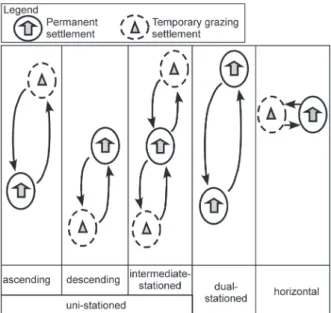
First, we can distinguish between uni-stationed and dual-stationed transhumance according to the number of permanent operation stations (Fig. 1).
Second, from the viewpoint of the location of the base ranch, we can categorize uni-stationed transhumance into three types by observing whether the permanent settlement is located in the plains, foothills, or in the mountains.
Ascending transhumance (transhumance of the lowland settlement) has its base ranches and winter ranges in the plains or foothills and its summer ranges in the mountains. Ascending transhumance is probably the most well-known
form in the world due to the popular novel Heidi written by Johanna Spyri (1827–1901). This type is very common, constituting 88 per cent of transhumance in the French Alps (Rinschede, 1988).
Descending transhumance (transhumance of the mountain settlement) sends livestock from the high-elevated private summer ranges close to the base ranch to the temperate lowlands, where animals graze during the winter. The transhu- mance in the Pyrenees used to be entirely of this type, but descending transhumance tends to be changed to ascending transhumance. Nonethe- less, the practise of descending transhumance is still maintained in the Alps-Maritimes.
Intermediate-stationed transhumance involves a base ranch in the region of transitional ranges in the foothills: livestock is transferred over equally long distances to the ranges in the mountains in the summer and to the ranges in the lowlands in the winter. Intermediate-stationed transhumance is sometimes called double transhumance or oscillating transhumance, particularly in the Southern Carpathians of Romania (Shirasaka, 2007, 2010; Balteanu et al., 2013; Shirasaka and Urushibara-Yoshino, 2013).
Fig. 1. Forms of transhumance (Shirasaka, modified from Rinschede, 1988 with ‘horizontal type’
appended)
In contrast to the so-called uni-stationed form, which has only one permanent operation station (fixed station), dual-stationed transhumance has two equivalent permanent stations (base ranches): one in the mountains and another in the lowlands. This form combines ascending and descending transhumance by obtaining a second, mostly abandoned, ranch close to the seasonal ranges (Rinschede, 1988). This form is found in the Alps and the Pyrenees and also in the west- ern United States (Rinschede, 1988).
Generally speaking, after passing the winter in stables in the valleys, livestock in the Alps are transferred from their base ranch, the principal settlement situated in the mountain valley, to the lower pastures (known as Voralp) early in the spring. Farmers keep cows there and make hay for winter-feed. In mid-summer, they send their cows higher up to their mountain pastures, the so-called Alp or Alm, which are located over the forest limit (about 2,000 m in the Alps). Their summer villages are located in these areas. While grazing their cows there, the people collect milk and make cheese. Their cows are driven from the highest mountain pastures to their principal settlement at the end of summer.
Meanwhile, the village people carry on various activities: climbing to harvest a crop of hay in the alpine meadows, descending to take care of the grain and vegetables planted in the valleys, and ascending again to make cheese at the settlements on the Alp. Mid-summer is a busy season in their principal settlement, as it involves farming and making hay for the winter.
The ‘migratory livestock industry based on alpine pastures’ (Almwirtschaft) is a special form of mountain pasture farming in which farmers drive their livestock from a base ranch, situated in a mountain valley or foreland, partly over the mayen (intermediate pastures) and still farther up to the highest mountain pastures. The livestock industry based in alpine pastures is generally characterized by feeding hay to the animals in
stables during the winter and grazing them in the mountain pastures (Alps) during the summer (Penz, 1988; Rinschede, 1988).
Transhumance is a widespread phenomenon and is found on all of the continents situated between the equator and latitudes 50°north and south. It is found in nearly all of the lower mid-latitude mountain regions of the world.
The existence of transhumance is connected with special natural, economic, and environmental conditions. The most important factor is the nat- ural difference in climate and vegetation between lowlands and highlands.
Tropical transhumance is found in Colombia, southern Ethiopia, Kenya, and Rwanda, and in the Andes below 27°S (Rinschede, 1988). In tropical transhumance, the most important factor of seasonal transference is the wet season. The dry and rainy seasons stimulate the movement of livestock because the temperature is much the same throughout the year in the tropics. In savannah climatic zones, cattle stay in savannahs in the wet season and move up to the humid mountain regions during the winter. They leave the lowlands at the time of heavy rainfall and flooding in favour of the drier, more elevated regions and descend again during the next dry season (Yamamoto, 2005).
In extra-tropical transhumance (i.e., transhu- mance in the subtropical and temperate zones) seasonal movements occur primarily according to the thermal rhythm of the year. Rinschede (1988) describes this phenomenon as follows: ‘this extra-tropic transhumance is to be found in nearly all regions of the young fold mountain belt of Eur- asia and North Africa, the Atlas, the Pyrenees, all the mountains of Spain and Portugal (Cordillera Cantabrica, Sierra Nevada, etc.), Cevennes in south-eastern France, the French, Italian and Swiss Alps, Dinara Planina (the Dinaric Alps), the Carpathians, Balkan Mountains, Pindhos Oros in Greece, Pontic and Tauros, Zagros in Persia, Hindukush, Baluchistan, Kashmir, Himalaya, and
Tien-Shan. In the Asian mountains the transhu- mant types are closely associated with, or have developed, from semi-nomadism’.
On the North American continent, transhu- mance is found in nearly all of the mountains of the West, especially in the Rocky Mountains, in the Sierra Nevada, on the Colorado Plateau, in the Cascade Range, and in the Great Basin Ranges (Rinschede, 1988). In the Andes, it is widespread in the Argentinian province of Neuquen and in the Chilean province of Cautin. Transhumance-re- lated forms of migratory livestock industry are also to be found in South Africa (Drakensberg), Australia (Great Dividing Mountains), and New Zealand (Alps).
About Japan, James (1959) states that there was little or no pastoral utilization of the mountain slopes to supplement the intensive agricultural use of the valleys and coastal lowlands. However, we do not agree with James’ observations. We have found evidence of the use of Japanese moun- tain slopes for cattle and cow breeding here and there (except for Hokkaido, the northernmost island of Japan). For example, farmers keep cattle and cows – and have in the past kept horses – in the cottages of their principal settlements, and they used to send cattle to pastures on the mountain slopes near those settlements. Based on this information, we can state that a form of transhumance does exist in Japan.
Intermediate-stationed transhumance does not appear in the Alps and the Pyrenees because, in contrast to the western United States, there are no foothill ranges that serve as transitional ranges. In contrast to the European mountains, the mountains of the western United States are only sparsely populated; therefore, the ascending and intermediate-stationed types of transhumance predominate there. Both are traditional forms that developed in the first decades of settlement.
Descending and dual-stationed transhumance developed later, when rural exodus and changes in land use began in the high mountain valleys
(Rinschede, 1988).
Although Rinschede (1988) classified transhu- mance into four types (Fig. 1), we encountered another type in the Kyrgyz Pamir: the ‘horizontal type,’ which will be discussed later. Kerven et al. (2006) described ‘south-north-south transhu- mance’ with a travelling distance of 200 to 2,000 km in Kazakhstan. However, ‘south-north-south transhumance’ makes use of differences in air temperature (namely, vegetation growth). In this context, the ‘horizontal transhumance’ observed in the Alai Valley of the Kyrgyz Pamir is different because it involves movement across short distance.
Some scholars believe that transhumance will decline with the development of agricultural pro- duction and urban economy in the ‘lowlands and plains’, although it seems to embody excellent ecological balance in such areas (Takeuchi, 1988).
Nevertheless, by adapting to both natural and socio-political changes, transhumance continues to exist in many regions of the world.
Ⅲ.Geographical areas and natural environments
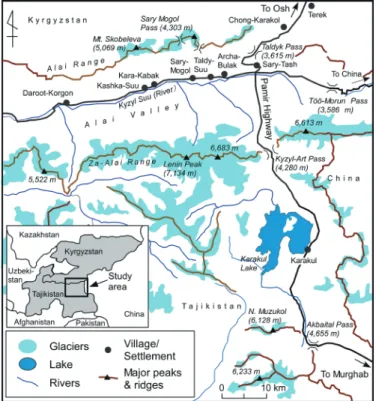
There are various ways of defining the area known as the Pamir. In general, the Pamir comprises the eastern half of the Republic of Ta- jikistan. This paper follows the research of Iwata (2008) in defining the Pamir as the Alai valley and the Za-Alai Range in the southern area of the Kyrgyz Republic. Accordingly, the geograph- ical focus of the research detailed here is the southern part of the Kyrgyz Republic (hereafter referred to as the Alai Valley), which is within the limits of the Pamir from a historical perspective (Fig. 2).
The Pamir is usually referred to in Japan as the
‘Pamir Plateau’; however, as the features of this region include valleys and steep mountains in addition to plateaus, English descriptions of the region use the phrase ‘basins and mountains’.
The Alai Range in the north and the Za-
Alai Range in the south are collectively called the Pamir-Alai Mountains. The Alai Range is a western extension of the Tian Shan Mountains in China.
The wide swath of land running east and west sandwiched between the Za-Alai and Alai ranges is the Alai Valley (Fig. 2). This valley has been used since BC as an east-west route for nomadic tribes and other travellers, while also functioning as one end of the Silk Road.
The eastern half of the Pamir is cut off from
most precipitation by the western and eastern mountains, making it a remarkably dry region.
The annual rainfall is around 100–400 mm (Watanabe, 2007). The Pamir chiefly experiences precipitation in the winter due to low-pressure turbulence moving in from the west, resulting in heavier rainfall in western areas. Consequently, the snowline altitude hovers around 4,400 m in the western Pamir and can reach upwards of 5,200 m in the eastern mountains (Iwata, 2008).
The geography of the eastern half of the Pamir
Fig. 2. Study area
Fig. 3. Landscape of Sary-Tash in the Alai Valley The green area on this side are the fields of arpa or rye (Photo: S. Shirasaka, August 2011).
Fig. 4. Pasture in the Alai Valley, 3,200 m a.s.l.
(Photo: S. Shirasaka, August 2011)
consists of high plateaus around 4,000 m a.s.l., while the southern part of the Kyrgyz Republic has peaks that rise over 7,000 m with the highest summit being Lenin Peak at 7,134 m.
The Pamir region is essentially comprised of high arid plains containing plateau vegetation (Watanabe, 2007). However, the Alai Valley, bordered to the north and south by the Pamir- Alai Mountains, is relatively verdant grassland in comparison to elsewhere in the Pamirs (Fig. 3) as Iwata (2008) claims. In particular, the south-facing slopes of the Alai Range have abundant rainfall that transforms vegetation in the summer (Fig. 4).
Even for farmland in the proximity of large riv- ers, agriculture is impossible without extensive irrigation. As a result, the procurement of water is a constant concern for the people of this area.
It should be noted, however, that significant ag- ricultural output, such as that seen in Am Darya and Syr Darya during the Soviet era, is attainable with sufficient distribution of water by rivers and irrigation engineering. Flatlands like these, which are blessed with ample water resources, are particularly few in number. Within any significant distance from rivers and waterways, there is virtually no surface water at all.
In the eastern area of the Alai Valley surface water is still used as a source of drinking water.
Wells are not found anywhere in that area.
The difficulties surrounding water procurement within the valley substantially limit agricultural production. Furthermore, the longstanding winter snow and the low summer temperature prevent crop cultivation even in level areas, such as among the 3,500 m mountains of the eastern Pamir. Our fieldwork suggests that any altitudes above 3,200 m in the Alai Valley are beyond the cultivation limit, which itself only exists thanks to significant irrigation infrastructure from rivers and streams.
In this natural environment inconducive to agriculture — recent forays into ecotourism not- withstanding (Watanabe, 2008; Watanabe et al.,
2009) — the fundamental industry that supports the population remains animal husbandry.
VI.Transhumance in the Kyrgyz Pamir 1. From nomadic pastoralism to trans- humance
‘The history and culture of Central Asia are thought to have arisen from the interactions of two utterly divergent populations: those who tended crops in the vicinity of oases and those who nomadically roamed grasslands.
Consequently, in order to understand Central Asia, it is necessary to know the nature of an oasis and at the same time the lifestyles of the nomadic peoples of the plains. Inciden- tally, there is room for comparison between the society of farmers around a Central Asian oasis and the society of small Japanese farming villages. Although oases are certainly marked by particular characteristics, crop cultivation, on a basic level, is a uniform activity where generalizations can be made.
This is, however, not the case for nomadism.
There may be those who would argue that nomadism is a variety of livestock farming.
However, nomadism cannot be conceptu- alized from the understanding of livestock farming as it exists in Japan, Europe, and the Americas’ (Iwamura, 1967, p45–47).
There is virtually no doubt that the origins of animal husbandry lie in Central Asia, perhaps in West Turkistan. The roots of agriculture in Central Asia stretch deep into antiquity. Its exact origins stretch perhaps as far back as several thousand years BC. In comparison, nomadism is not nearly as ancient. Its origins are likely to be more recent than 1,000 BC (Iwamura, 1967, p50–51).
Animal husbandry is the prerequisite for nomadism whereas domesticated plants are the prerequisite for agriculture. A substantial amount of time is required to breed and domesticate wild animals. One may conjecture that the growth of
a system for domesticating wild animals would never have occurred without the measure of leisure time afforded by oasis farming practises.
Iwamura (1967) states that the domestication of wild animals first occurred in the fixed societies grouped around these oases. As the number of animals grew, sections of these communities dis- tanced themselves from the oasis and dedicated their time solely to livestock farming.
In other words, nomadism resulted from the division of labour. Consequently, a mutually dependent relationship can be argued to have ex- isted from the very beginning between nomadic people and the fixed farming communities near oases.
It is certainly the case that although some groups were nomads, they could not survive on meat and milk alone. Livestock for them were, as the name implies, material assets. Assets are not to be devoured as food. Indeed, the staple foods for these nomadic populations were wheat and dairy products. Consumption of meat was extremely limited and typically only occurred during celebrations or when an animal was injured. In areas where conditions were suitable for agriculture, which included the Alai Valley up to an elevation of about 3,000 m, some wheat cultivation took place — and we conjecture that potatoes were added after the 18th century — but this was nowhere near sufficient for total consumption needs, so livestock were sold to the oasis farming communities in exchange for wheat. Similarly, other daily necessities, such as cloth, thread, needles, blades, bowls, utensils and saddles, were traded in oasis bazaars. Thus, the economy of the nomadic populations was not self-sufficient and relied at least to some degree on the fixed oasis societies.
Likewise, the oasis societies relied on the products of the nomadic populations as well.
The wool and fur of the nomads were important items for the lifestyles of those living near the oases. It is likely that there were domesticated
animals to some extent in the oasis communities as well. However, their number was probably not sufficient to meet the group’s needs. This is the nature of the mutually dependent relationship between nomadic people and the fixed farming communities near oases (Kreutzmann, 2011).
‘The history of Central Asia has been described in terms of conflict and opposition between the fixed oasis communities and the nomadic tribes of the steppe lands. However, this is a serious error. Ancient history re- corded only abnormal events, so a summary of only such sources left the impression that the oasis-states and nomadic tribes were constantly at odds or at battle. The facts are different and suggest that, for the majority of history, the oasis residents and nomadic pop- ulations complemented each other’s needs in a relationship of symbiosis’ (Iwamura, 1967, p50).
Livestock breeding has been a major form of sub- sistence for the Kyrgyz people throughout many centuries. The Tien-Shan Mountains have pro-
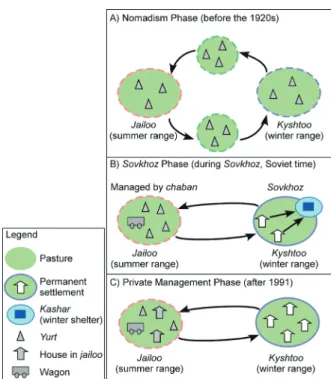
Fig. 5. Phases of the transformation of pastoralism (prepared from the fieldwork in 2011, 2012, and 2013)
vided natural, favourable conditions for nomadic pastoralism, particularly the breeding of sheep, goats, cows, and yaks in pastures the whole year round.
In 1920, the region called Kyrgyz was inte- grated into the Soviet Union. Before the Soviet era, Kyrgyz people had maintained a purely nomadic lifestyle and had travelled from one pasture to another in a group. In summer, they stayed in mountain ‘summer pastures’ (jailoo or djailoo) and moved to the lower pastures (kyshtoo) in autumn. Kish means ‘winter’ and too means ‘to live’ in Kyrgyz. Kyshtoo means ‘a destination of winter migration’ and the concept includes the surrounding pasturelands. We call this period of immigration the Nomadism Phase (Fig. 5).
According to one of our interviewees — a woman born in 1933 and currently living in Sary- Tash — a rapid transformation from the nomadic pastoralism to livestock farming occurred under the Soviet regime. This woman came to Sary- Tash as a bride from Gulcho, 100 km away, and in the process crossed over the Tasshtyn-Bashy Mountains, a spur of the Alai Range. She was 16 at the time of her marriage in 1949.
According to her stories, her family had spent their winters in Sary-Tash during those times:
30–40 families had migrated to Sary-Tash during the winters.
Their summers, on the other hand, were spent to the east in Kok-Suu Jailoo, near the present day border with China, approximately 100 km from Sary-Tash. During the migration, her father set out ahead of the family with their livestock.
The family followed the father, carrying their yurt. It took three days to reach Kok-Suu Jailoo and several families banded together for the migration.
After her marriage, the woman’s lifestyle shifted from nomadic to fixed residence. No- madism was what her parents’ generation had encompassed. The name for that entire process of migrating with livestock was called küch.
So-called nomadic pastoralism continued in this area until about 1940, according to this woman’s recollections. She continued to live in Sary-Tash during World War II and reported that the same trend occurred for most residents in the villages around that area. Her information suggests that the residents’ lifestyles were completely nomadic in Sary-Tash until around 1930, at which time habits of fixed residence began. The types of livestock tended at that time included sheep, goats, dairy cows, horses, and camels, although camels are almost entirely absent from that list at present.
As previously mentioned, the Central Asian region was integrated into the Soviet Union in 1920. In 1924, ethnic and national delimitation was carried out. This was the first time that the fiction of a homogeneous nation-state had been imposed on Central Asia. However, the drawing of national boundaries through highly ethnically diverse areas was problematic, as exemplified by the Fergana region. It was inevitable, to differing degrees, that each new republic became a multi-ethnic nation-state (Nakami et al., 2010).
For example, Kyrgyzstan included Kyrgyz, Uzbeks, and Tajiks, while Tajikistan similarly included Tajiks and Uzbeks.
The delimitations of 1924 led to Kyrgyzstan becoming Soviet’s Kara-Kyrgyz Autonomous Province, whose name was changed to the Kyrgyz Autonomous Province in 1925. In 1936, the province was promoted to full status as the Kirghiz Soviet Socialist Republic.
During the process of Soviet republic creation in the latter half of the 1920s, land and water infrastructure reformation took place, and the fixed settlement of the nomadic tribes ensued.
This fixed settlement brought about the large- scale downsizing of livestock herds, which meant a 41 per cent reduction in the number of cows and a 23 per cent reduction in sheep and goats in Kyrgyzstan from 1923 to 1934. During the Soviet era, the industries and societies of the Central
Asian republics were intricately incorporated into a centrally planned economic system, from which all traces of market economic factors were summarily eliminated.
From our interviews in August 2011, it is clear that all of the pastoralists in the Alai Valley were incorporated into sovkhoz during the Soviet Union’s hegemony.
Many informants reported that one sovkhoz had raised approximately 50,000 to 75,000 sheep.
Five sovkhoz (Alai, Sary-Mogol, Lenin, Pravda, and Socialism) functioned in the eastern Alai Valley. In each sovkhoz, chaban (herdsmen) were designated as the people in charge of work related to grazing animals. Further, two sovkhoz took 100,000 sheep from Fergana and Andizhan in Uzbekistan during that time.
A chaban was assigned to each type of livestock maintained by each sovkhoz. Sheep were carefully separated into male and female groups for shep- herding, while goats, which had essentially been private property before, were managed largely without any such practise.
In the case of sheep and goats, one chaban typ- ically tended 300–500 head. Our local informants said that there were about 100 chaban in each sovkhoz. Hence, there were about 30,000–50,000 head of sheep in each sovkhoz in the eastern Alai Valley if the number of chaban is considered accurate.
The number of yaks (topos in Kyrgyz) was generally small. Yaks were not herded in gender-differentiated groups and were moved to jailoo in summer for tending, milking, and pro- ducing butter and cheese. Cows were separated based on gender, tended year-round in stalls, and grazed in the land around the sovkhoz.
Livestock sheds were called kashar, and were located a slight distance away from each village.
One kashar was able to hold about 400 head of livestock.
Our interviewees in Sary-Tash and other areas said that during the Soviet regime, the number
of livestock was predetermined and restricted to that fixed amount. One local source reported that this was a policy to restrict the number of livestock. All of the residents were integrated into the sovkhoz and drew salaries from it.
The nearly 70-year Soviet reign crushed the pastoral culture of Central Asia and there was no way for the local residents to avoid livestock farming in fixed settlements. Figure 5-B presents a schematic illustration of sovkhoz animal hus- bandry.
2. Livestock farming after 1991
The period of transformation that Central Asia went through after the 1991 collapse of the Soviet Union diverged greatly from the initial op- timism that surrounded it. GDP shrank in many countries, unemployment increased, and inflation ensued. Production from agricultural industries, including livestock farming, in the Kyrgyz Repub- lic and the Republic of Tajikistan shrank during the 1990s.
From a historical perspective, the economies of Central Asian nations had been fully integrated into the Soviet system after the 1920s, and their populations had significantly increased.
The Soviet economic system had supported the population increase. Consequently, after political independence in 1991, it was easy to foresee that Central Asian nations would be beset with extreme problems surrounding economic inde- pendence and development.
The following three pillars underpin the efforts to transition to a market-based economy of agriculture and livestock farming in the newly independent Central Asian nations: privatization of collective farms, privatization of farmland, and introduction of a market-based economy. When the independence was achieved in 1991, livestock farming became a matter of individual enterprise, or fermer.
Only livestock farming on a subsistence level can now be found in the Alai Valley. The extent
to which the privatization of farms and farmland mentioned above has progressed in our study area is not yet clearly understood, so we will not discuss it here.
It is known that the livestock held by the sovkhoz were distributed to each family in these regions from 1991 to 1993, and some privatization of land ownership has occurred since then. The result has been subsistence livestock farming for individual families that have each been forced to devise their own survival strategies. Some fam- ilies sent members to Russia to work, through which they saved money and financed their livestock breeding efforts.
Figure 5-C shows a schematic illustration of this current market-economy adaptation of live- stock farming (Private Management Phase). This leads to the natural question of how the livestock number has changed since the achievement of political independence.
The total number of domestic animals de- creased in the Kyrgyz Republic after 1991 (Table 1). The number of swine and domestic fowl particularly decreased and has not yet recovered.
The number of sheep and goats, which are the most important source of cash income, has not returned to its pre-1991 number. The number of horses, cows, and yaks decreased after 1991, but had returned to its former number by 2010.
Many interviewees reported that the number of livestock has decreased in comparison to the sovkhoz period of the Soviet era. Some claimed that the pre-1991 numbers of livestock tended
by the sovkhoz were 5–10 times larger than the numbers in 2011, although other interviewees were more conservative, saying that they were only 2–3 times larger. In either case, it is clear that there have been great reductions since the sovkhoz era, as stated earlier.
Many local residents claim that the reason for the reduction in livestock is the impoverishment that occurred after the breakup of the sovkhoz.
Some residents even had to sell a portion of their allotted livestock to cover their daily expenses.
3. Livestock and their care
The livestock raised in the Alai Valley are milk cows, yaks, sheep, goats, horses, and some donkeys. Our research has found that there are places of less severe dryness, such as locations near rivers and waterways, where cows are raised, although the majority of the area is generally arid. As vegetation decreases, cows are replaced with sheep and goats. Our fieldwork also shows that areas subject to the most extreme arid conditions are only used for goat herding.
In addition, as the condition of the pasturelands becomes more extreme, the proportion of animals shifts markedly toward goats.
Our research in the Alai Valley, however, pro- duced no reports of stock farmers who raise only goats. Our surveys show that sheep and goats are the most essential livestock in the northern Pamir.
The residents of the eastern portion of the Alai Valley practise transhumance with all of their
(in thousand)
Livestock 1991 1995 2000 2005 2010
Cows 518.6 470.8 523.8 565.1 666.5
Yaks 671.4 398.2 423.2 509.7 632.3
Sheep and goats 9524.9 4274.9 3799.2 3876.0 5037.7
Swine 357.8 113.9 101.1 77.8 59.8
Horses 320.2 308.2 353.9 345.2 378.4
Domestic fowls 13571.2 2031.8 3063.7 4279.0 4747.9
(Compiled from the data obtained at the Department of Statistics, The Kyrgyz Republic) Table 1. The number of livestock and domestic fowl in the Kyrgyz Republic
livestock. A basic schematic representation of this is provided in Fig. 6.
Spanish merino sheep were brought into the study area during the sovkhoz era in order for people to take advantage of their wool. However, since 1991, they seem to have been largely re- placed by the native Central Asian jaidar breed of sheep. Jaidar sheep generally have black wool and have a characteristic fatty area on their hindquar- ters. Their meat is regarded to be of high quality.
Our interview sources noted that sheep and goats are generally tended in mixed herds at present. Mixed herds of sheep and goats are common all across the area spanning Central Asia to Turkey (Matsui, 2001; Matsubara, 2004).
Goats take the lead in the mixed herds in the Alai Valley. Pastoralists in the area reported that goats are included because they lead the herds. One of our group members (Shirasaka) has researched transhumance among shepherds in Romania. Their practise involves the shepherd teaching a lead female called a fruntaşa to assume the lead position in the flock. The shepherd is then able to call out the lead female’s name (all of the leaders are female in this case) and give signals as to which direction to head (Tani, 1987, p190; Shirasaka, 2010).
Our interviews around Sary-Mogol in the
eastern Alai Valley showed that female sheep were used for breeding over a period of six to seven years. Male sheep are sometimes sold as lamb meat, but are generally raised for four to five years before being sold.
Interview sources in Sary-Tash said that families returning from jailoo to Sary-Tash in late September often borrow other families’ male sheep to mate with their female sheep. It appears to be common in the Alai Valley to mutually exchange male sheep in this way.
Both sheep and goats are kept in stables during the winter months, but are left in the mountains until snow depth reaches about 10 cm.
Dairy cows in Sary-Tash are raised at family homes year-round, but the males are taken to jailoo during summer. Females are also taken to jailoo if they have not borne offspring.
Dairy cows that are producing milk are allowed outside the barns, but remain on the premises, even at night. Nursing calves, however, are kept inside. Dairy cows are not let outside when winter snow has accumulated.
Crossbred yaks and dairy cows – both males and females – are called argin. In general, the offspring (argin) of male yaks and female dairy cows appear to yield thick and high quality milk.
Consequently, there are few crossbred offspring
Fig. 6. Transhumance in the Kyrgyz Pamir (prepared from the fieldwork in 2011, 2012, and 2013)
of female yaks and male cows.
Interviewees in Sary-Tash reported that dairy cows produce 10 litres of milk per day, except in the winter when they are pregnant and milking is avoided. Dairy cows generally produce more milk than the yaks.
At present, all of the livestock in the Alai Val- ley are kept indoors in the winter. Yaks and cows graze outdoors in the winter, but are brought indoors at night.
There is little poultry in the Alai Valley. Local residents claim that the winters are too cold for poultry to survive.
Ⅴ.Transhumance in the Alai Valley 1. Relationship between natural environ- ment and the livestock farming
(1) Seasonal pattern of transhumance
Residents in Sary-Mogol and Sary-Tash in the eastern Alai Valley divide the year into four seasons: spring, summer, autumn, and winter.
Generally speaking, green grass returns to this area every year in April. Livestock are allowed to graze in the spring pasturelands near the villages until the end of May. When June comes, the animals are led to the summer ranges where they stay until around the end of September. They are then taken to the autumn pasturelands to prepare for winter. Some families remain in the summer ranges with their livestock until snow starts to fall (Fig. 6).
Snow cover begins in November or December with snow packs of 50–100 cm, which then disappear in April. Local residents say that the summer grasses grow in proportion to the amount of winter snow.
(2) Transhumance without difference of altitude
The people of the Alai Valley were originally nomadic as stated earlier. As seen with the ma- jority of nomadic populations, they are thought to have used relatively fixed stations for winter and summer ranges and to have spent the intervening
seasons migrating long distances.
We believe that the eastern part of the Alai Valley was one of those summer ranges during the period of nomadic pastoralism about 100 years ago. Their winter ranges were located mainly in Kashgar (1,300 m) to the east and Samarkand (670 m) to the north in the lower altitudes, as well as in the northern slopes of the Alai Range.
As mentioned earlier, the people in this area were forced into fixed settlements without exception during the Soviet era. Even in the case of subsistence livestock farming in an area over 3,000 m a.s.l., livestock were likely transferred to higher areas around their villages during the summertime (the ascending or intermediate-sta- tioned transhumance shown in Fig. 1).
We believe that horizontal transhumance was established by two conditions in this area: (1) the people had settled in the valley along the Kyzyl-Suu River and there were huge pasture- lands around their villages; and (2) there are no pasturelands in the surrounding high mountains, the Alai and Za-Alai ranges, which are occupied by rocks and glaciers.
When Soviet hegemony dominated in the 1920s, the fixed settlements that residents were forced into were located in the foothills of the Alai Range. Our local interviewees show that the present locations of the fixed settlements are within the summer ranges (jailoo) of the Nomadic Phase.
It is clear that livestock farmers in the Alai Val- ley still move their animals in summer and winter in the present day. However, there is almost no altitudinal difference between the summer and winter ranges. The residents have simply taken a large, expansive space that was given to them.
It can therefore be concluded that the current form of transhumance practised by the local resi- dents in the eastern part of the Alai Valley can be categorized as horizontal transhumance (Fig. 1).
The people of Chong-Karakol and Terek (2,600 and 2,230 m a.s.l., respectively), who live on the
north side of the Alai Range, also use the Alai Valley as their summer grazing land (jailoo). The people of Nura, which is located near the Chinese border, use the eastern part of the Alai Valley equally, and practise ascending transhumance.
Thus, the eastern part of the Alai Valley is shared by two types of transhumance: horizontal and ascending.
2. Winter mountains (kyshtoo) and summer mountains (jailoo)
Residents of the Alai Valley still refer to a place of winter residence as kyshtoo. The present concept of kyshtoo includes the family’s main res- idence, the stables for their animals (those that are on the same property as the house are called sarai, a Turkish word), and the small plots of land (agarod) that were allotted during the Soviet regime.
Crop fields for rye, which is used as win- ter-feed, are scattered around the areas where the pastures touch the borders of the village (Fig.
7). In general, these fields are irrigated by springs from the foot of a mountain. Rye is locally called arpa, meaning animal feed in Kyrgyz. Residents refer to meadows as chabyk.
Crop fields are called ülüsh jer. Ülüsh means
‘something that can be received’ and jer means
‘land’. Villages that are low enough in elevation use their ülüsh jer for the cultivation of potatoes, garlic, and other foods, while villages that are above the agriculture elevation limit, such as Sary-Tash, cultivate rye and use it for animal feed in the winter.
The areas outside the ülüsh jer are wide-open pasturelands. Pasturelands in the proximity of the villages include the spring and autumn range used before leaving for and after coming back from the jailoo. Figure 8 shows how these are conceptualized.
Some hay is produced in jailoo in the Alai Valley. Some areas of the jailoo have particularly abundant grass (Fig. 9). Residents of the valley
Fig. 7. Rye (arpa) cultivation in Sary-Mogol, Alai Valley (Photo: S. Shirasaka, August 2011)
Fig. 8. Concept of livestock farming in the Alai Valley (prepared from the fieldwork in 2011, 2012, and 2013)
Fig. 9. Landscape of tabigyi
(Photo: S. Shirasaka, August 2011)
harvest the best natural grasses (called chöp) and use them as hay. During summer, areas of deep green natural meadow dot the otherwise red-
dish-brown expanses of the pasturelands. Hence, natural grass of healthy growth is harvested in the area. Tabigyi is the word for these natural grasslands used for haymaking. Harvested grass itself is called tabigyi chöp and is only harvested once during the summer.
In our modern urban society, the words
‘meadow’ and ‘pasture’ have become somewhat synonymous. The fundamental difference is that livestock are allowed to graze in pastures, but not in meadows, from which hay is cut. ‘As the fa- mous nursery rhyme admonishes, “sheep’s in the meadow” was a state of affairs to be corrected’
(Jordan, 1973). In traditional livestock breeding societies, livestock are never allowed to graze in meadows before hay is made.
The local residents whom we interviewed asserted that the amount of hay needed for one winter is three tons per head, or about the load of a small commercial truck. Above-average stock farmers face clear difficulties in supplying this amount of hay themselves, so they must purchase hay from families that have extra. The one to two tons of hay that can be carried in a car cost Kyrgyz Som 5,000–6,000 (USD 103–123 as of August 2011), and three tons cost Kyrgyz Som 10,000 (USD 205). This type of purchase even happens in the area across the Alai Range to- wards Osh (184 km from Sary-Tash) in the north.
Indian corn can also be fed to livestock during the winter.
Since the latter half of the 1980s, families have been allowed to build fixed houses in the jailoo of the Alai Valley, as opposed to portable yurts.
These houses are called uei, which means ‘house’
in Kyrgyz. A place with several yurts is called a jurt, which means ‘people’. Jurts are generally enclosed with fences for the purpose of corralling the animals at night. These fences are called koroo and some are made of stones.
3. Village of Sary-Tash and daily grazing (kezuu) of sheep and goats
The villagers in the Alai Valley had no choice but to live in fixed settlements during the Soviet regime. Among those settlements, the village of Sary-Tash has a particularly unusual origin.
Sary-Tash was not a village during nomadic times because it lies at an altitude above the agriculture limit: instead, it was a place of summer residence for pasturing. The village of Sary-Tash was constructed in 1950 in order to build up the area’s infrastructure. Sary-Tash was used as a centre for engineers directing transportation and electrical infrastructure projects, and at that time had an asphalt factory and a weather station. There were a few Russians among the residents, but the majority were Kyrgyz. Sary-Tash was the only village in the area that had a regional communist party committee. At present, the village even has a passport agency and immigration officers.
This all serves to illustrate that the people of Sary-Tash were engaged in a variety of occupations that had nothing to do with livestock farming during the Soviet era. In 1970, the settlement came under the direct jurisdiction of Moscow and received its present name of Sary- Tash.
Nearly all of the interviewees in Sary-Tash claimed that they had been livestock farmers since the Soviet era, which means that they kept dairy cows, sheep, and goats as a side occupation during that time. Individual families kept dairy cows at home, but the care of sheep and goats was entrusted to the chaban of the sovkhoz, who surreptitiously tended the sheep and goats of Sary-Tash alongside the sovkhoz sheep. After the fall of the Soviet Union, the number of livestock in Sary-Tash dramatically shrank and then gradu- ally grew.
In recent years, the population of Sary-Tash has been growing: in 2011, it reached 2,150 people, or 450 families. In the same year, the number of families surviving on livestock farming
alone was 120–130, or about 30 per cent of the population. Nearly 70 per cent of families (about 300) have members who are employed as civil servants, including electricians, road construction workers, telephone company workers, school employees, kindergarten employees, police officers, and hospital employees, as well as 14 city officials. Some workers in Sary-Tash leave for Russia, Kazakhstan, Bishkek, or elsewhere, for seasonal employment during the spring.
Local people report that families in Sary-Tash with an above-average number of dairy cows cur- rently have eight head (up to 10 in some cases), while other families have as few as two head.
Similarly, some families have up to 300 head of sheep and goats, while others have as few as 50 head.
Residents of Sary-Tash tend sheep and goats within the village and tend their dairy cows independently year-round. Sheep and goats are tended in the form of a daily cooperative grazing system, except in the winter, when each family keeps its livestock in tits hut. Families with only a few domestic animals, families who have lost fa- thers, and families with side businesses gathered into groups for their daily pasturing – a kind of joint pasturing called kezuu (kezu, kezüü).
There are four kezuu groups in Sary-Tash (Table 2). From March to November, the sheep and goats are gathered on the village outskirts every morning and are grazed collectively. Ex- clusive jailoo are set for each kezuu. The use rate
is Kyrgyz Som 12 (USD 0.5) per head per year.
Kezuu is carried out from December to February in these settlements. The largest number of sheep and goats per family is 100 and the smallest num- ber is eight. Each family takes turns in the job of chaban: one adult or two children work as chaban for a day. Children are given priority as chaban even on school days. Usually families who live along the same road form one collective group, each of which contains 13–21 families.
We also found kezuu in each of the other villages in the eastern Alai Valley. For example, Taldy-Suu has more than 10 kezuu (a maximum of 15 kezuu depending on the season), which have no names because they are seasonally flexible.
The total number of families and sheep/goats participating in the kezuu varies. Each kezuu is composed of five to 20 families, which vary in their timing because they go to the jailoo and return to the village separately, on different days.
Archa-Bulak has two kezuu: Jashtar Kezuu and Yntymak Kezuu. Jashtar Kezuu is composed of about 10 families and 300–400 sheep/goats.
Yntymak Kezuu is composed of about 20 families and 500 sheep/goats. Yntymak uses the western half of the valley and Jashtar uses the eastern half of the valley. One family belonging to Jashtar Kezuu uses Güdür Jailoo and has 30 sheep/goats.
Another family belonging to Yntymak Kezuu uses Tal Bulung Jailoo and has 50 sheep/goats. They all move to the jailoo in early June (on 3–8 June in 2013).
Name of
Kezuu Number of families
Number of sheep/
goats (smallest–largest)
Departure time in the
morning
Number of
chaban per day Agreement for Kezuu
Kamchatka 16 347 6:50 1 Two boys below 18 years old can act as an
substitute of one adult chaban.
(10–45)
Ortonku 21 609 6:45 1 The family of the turn decides the number of
chaban.
(10–60)
Ödönku 13 (8–35)300 7:00 1 One adult or two boys can act as chaban.
Erkeshtam 14 710 7:30 2 Two adults or two children (over primary school)
act as chaban.
(15–100)
(Source: the fieldwork conducted in 2012) Table 2. Group pasturing (Kezuu) in Sary-Tash (2012)
The kezuu in Sary-Tash were organized in the 1960s, during the sovkhoz era. At that time, each family was allowed to have up to 30 sheep/goats and two horses. They, therefore, developed the kezuu system for efficiency purposes.
4. Age-based livestock naming differences
In the Pamir, those engaged in livestock farming have an intricate knowledge of animals and use different names for animals of different ages. This creates advantages in the process of livestock management and trade as well. An examination of the entry for ‘lamb’ in an English dictionary shows that the word refers to both young sheep and the meat of sheep. Technically, however, a lamb is a male sheep less than one year of age: these are called toktu in the northern Pamir (Table 3). Age-differentiated nomenclature also exists for goats (Table 4), yaks (Table 5), and horses (Table 6). In general, the local people use horses for around 20 years after their birth, i.e., until 17-asyi.
Ⅵ.Case studies of livestock farmers We interviewed tens of farmers in August of
2012 and 2013. The following sections summarize two of the cases that we uncovered in our inter- views.
1. Case study of Mr JI
Mr JI’s jailoo (Tura-Bulak Jailoo) is located only 5 km east of Taldy-Suu, where he was born.
From 2001 to 2004, the family’s jailoo was located in Kashka-Suu village. Tura-Bulak Jailoo has been used since 2005.
The composition of Mr JI’s family is as follows:
Mr. JI (56 years old), his wife (52 years old), and four children: their elder daughter (31 years old, moved to a different village after marriage); their elder son (29 years old), his wife (27 years old), and their daughter (2 years old); their younger son (27 years old; unmarried, lives with parents);
and their younger daughter (24 years old; unmar- ried, lives with parents).
Mr JI worked as an engineer in Taldy-Suu AÖ (Ayil-Ökmötü) until 2000. During his career, the country achieved independence in 1991, and after the breakdown of the sovkhoz system, Mr JI received an allotment of livestock that allowed him to begin livestock farming.
The 1991 allotment included just one cow and
Age Name
nota bene Female Male castrated Male not castrated
under one year toktu toktu Male and female are the same names.
one year jusak shishek shishek kochkor
two years jusak shishek shishek
more than three years sooluk chaary chaary kochkor
Note: If it is past six months after the birth, toktu (♂) is castrated. (Source: the fieldwork conducted in August 2010) Table 3. Names for sheep by age in the southern part of the Kyrgyz Republic
Table 4. names for goats by age in the southern part of the Kyrgyz Republic
Age Name
Female Male castrated Male not castrated
under six months urgachy-ulak - erkek-ulak
under one year chebich bychmal teke
over one year echki serke (sarka) teke
(Source: the fieldwork conducted in August 2012)
one horse. Later, Mr JI gradually increased his animals through breeding and entrusted them to a chaban from 1991 to 2000.
As of 2011, Mr JI possessed 20 head of yaks, 30 head of cows, 200 head of sheep and goats (including 80–90 males), 30 head of horses, and 1 donkey.
Tura-Bulak Jailoo was part of the sovkhoz property until 1991. Consequently, there had been kashar for housing the animals during the winter, but these no longer exist. The grazing lands extend all the way up to 3,300 m near the summits of the mountains behind the jailoo.
In a typical year, the families arrive at this jailoo in early May and stay until late August or early September. Of the five families that use this valley as their jailoo, Mr JI’s family is the first to arrive.
The family produces hay from the natural grasslands (4–5 ha) conducive to haymaking
within the jailoo. A haymaking plot in a pasture is called a tabigyi. There are also occasions when they buy hay, but they reported that they only did so about four times in the past 10 years. The families also grow rye (3–5 ha), which is used for winter animal feed in their native village of Taldy- Suu.
During the winter, the animals are tended in Taldy-Suu, but the daily tasks are left to the chaban. As already stated, the chaban takes responsibility for the sheep and goats of several families and oversees their grazing. Each day, one member of the family is appointed as a support person to help the chaban with the daily work.
A total of five families graze their animals in Tura-Bulak Jailoo. The number of animals tended by these five families is as follows: 50 sheep and goats, 40 cows, 20 yaks (owned only by Mr JI’s family), and 55 horses.
One of these five families comes to the jailoo
Age Female Male
Name Another name Name Another name
under one year kulun baital kulun bychmal (castrated)
1 tai (kalta) baital tai (kalta) do.
2 kunan baital kunan do.
3 byshty baital byshty do.
4 1-asyi bee 1-asyi do.
5 2-asyi do. 2-asyi do.
6 3-asyi do. 3-asyi do.
7 4-asyi do. 4-asyi do.
8 5-asyi do. 5-asyi do.
9 6-asyi do. 6-asyi do.
10 7-asyi do. 7-asyi do.
Note: The local people use a horse for around 20 years after birth, that is to say, until 17-asyi.
(Source: the fieldwork conducted in August 2011 and 2012) Table 6. Names for horses by age in the southern part of the Kyrgyz Republic
Table 5. Names for yaks (topos) by age in the southern part of the Kyrgyz Republic
Age Name
nota bene
Female Male
under one year mamalak mamalak
The local owners do not castrate yaks.
two years tai-torpok tai-torpok
more than three years
kunajyn (bwfore delivered)
ögüz inek (delivered)
(Soure: the fieldwork conducted in August 2011)
after crossing the Taldyk Pass (3,615 m a.s.l.) from the northern village of Madanyat (currently Chong-Karakol). In other words, this particular family is not native to the Alai Valley. This jailoo is also used by people from the Chong-Karakol region to the north.
2. Case study of Mr MT
Mr MT’s grazing land is also contained within the Tura-Bulak Jailoo. His native village is Üch- Töbö, a part of Kichi-Karakol village, located to the north of Sary-Tash over the Taldyk Pass (Fig.
6).
The composition of Mr MT’s family is as follows: Mr MT, the head of the household (45 years old), his wife (44 years old), his mother (82 years old), and his five children. His two daughters (25 and 22 years old) moved to other villages after they married. And his three sons (19, 17, and 8 years old) live at home. Mr and Mrs MT engage in livestock farming with their two oldest sons.
The MTs started using their current jailoo in 2003. Prior to that, they used the Bor-Döbö Jailoo near a border checkpoint away from Sary-Tash on the border with Tajikistan.
Mr MT owns a kashar that he purchased in 2003 from a sovkhoz. It cost him Kyrgyz Som 80,000 (approx. USD 1,400). The kashar was cheap because it was partially dilapidated.
Because Tura-Bulak Jailoo, which is used by Mr MT’s family, is included in the Taldy-Suu AÖ for administrative purposes, so use fees for the jailoo are paid to the Taldy-Suu AÖ and taxes on livestock are paid to Uch-Töbö, the family’s native village.
Mr MT’s family specializes in raising yaks. In total, they possess 100 yaks, 5 cows, 60 sheep and goats (about 40 females and 20 males), and 10 horses and calves.
The 100 head of yaks are not raised in Tura- Bulak Jailoo, but in Güdür Jailoo, situated south of the Kyzyl-Suu River. Mr MT’s two older sons
take care of the yaks, so no chaban needs to be hired.
The family has been raising yaks since 1970.
When the sovkhoz was discontinued, the family bought many of the yaks allotted to the residents in order to increase their lot, but the bulk of their livestock, 70 head, were purchased in 1994–1995.
In a typical year, the family is able to produce 4–5 truckloads of tabigyi (hay). Fifty per cent of this hay is produced in this jailoo and the other 50 per cent in their native village of Üch-Töbö.
The family also owns a half hectare in Üch- Töbö for rye production, and another half hectare of cropland in the jailoo.
They reported that the grass in the jailoo is
‘green in some years, brown in others’. The height of the grass in a typical year is 10 cm, although it may rise as high as 50 cm during some summers.
The family said that the price of a yak sold for meat is Kyrgyz Som 25,000–50,000 (USD 425–850) as of August 2011 and that the fatter yaks are more valuable. In this area, the yaks are not gelded.
Ⅶ.Concluding remarks: Transhumance in the Kyrgyz Pamir
Many regions of the world have severe natural environments that prohibit anything other than subsistence livestock farming. The northern part of the Pamir is one such region.
Early in the 20th century, this region was wholly subsumed by the economic system of the Soviet Union. During the Soviet era, nomadic people settled in fixed locations, at which point livestock farming sovkhoz were established and the residents were integrated into a new economic system. The main food staples and fuel for the livestock farming sovkhoz were supplied by the state, which led to a much higher level of prosperity than the region has at present.
However, livestock farming became a matter of individual enterprise, or fermer, when the country
gained independence in 1991. The daily lifestyle needs of each family became subject to separate, individual responsibility. The system changed to one in which each disparate family had to see to its own procurement of food and fuel. As a result, compared to more abundant agricultural areas, poverty became exacerbated in this less produc- tive livestock farming region.
The final goal of our research is to understand the processes whereby the livestock farming populations of areas such as the Pamir can escape from their poverty. The first step towards that discovery was to examine the structure and condition of the fermer livestock farming that has been taking place since 1991. The following findings have been clarified as a result of that examination.
It is accurate to consider the residents as erstwhile nomads. Before their forced settlement in the 1930s, they had roamed broadly over long ranges, at an even altitude, in all different directions, in search of pastures. This historical habit was altered by the restrictions placed on them, but is now become expressed in their use of indoor winter facilities and outdoor summer jailoo for their livestock.
The structure of livestock farming in the Alai Valley of the Kyrgyz Republic does not conform to standard models of transhumance. In other words, the fixed settlements that function as their winter ranges sit at altitudes that are basically no different from those of their jailoo or summer ranges. The types of transhumance practised by the people of the Alai Valley does not utilize differences in altitude, but rather takes place horizontally, thus fitting the model of a ‘horizontal transhumance’.
While some people practise horizontal transhu- mance in the eastern Alai Valley, others who live on the north side of the Alai Range and near the Chinese border also use the eastern part of the Alai Valley as their summer grazing land (jailoo), thereby practising ascending transhumance.
In brief, the eastern part of the Alai Valley is involved in two types of transhumance: horizontal and ascending.
The Kyrgyz people who occupy the northern Pamir live in an extreme natural environment, so subsistence livestock farming is the only option available to them. In contrast to the Soviet era, the region is now independent, so pastoralists will unavoidably need to gain autonomy within the new market economy. Policies that assist the self-sufficiency of pastoralists in this area are therefore urgently needed.
Acknowledgement
We thank local people and interpreters who contrib- uted to this study. This study was funded by the Grant- in-Aid for Scientific Research, Japan Society for the Promotion of Science (Grant No. 23251001).
References (J: in Japanese, S: in Slovenian)
Balteanu, D., Grigorescu, I., Micu, M., Popovici, E. and Călin, D. (2013): Sheep transhumance in the Romanian Carpathians from tradition. In: Urushibara-Yoshino, K.
editor. Change of Sheep Transhumance in South of East Europe, Hosei University, pp43–57.
Beckinsale, M. and Beckinsale, R. (1975): Southern Europe. University of London Press, pp68–75.
Cevc, A. (1972): Velika Planina−Življenje, Delo in Izročilo Pastirjev−. Vlasto Kopač, Ljubjana, 10–29. (S) Crossette, B. (1999): The Great Hill Stations of Asia. A
Member of the Perseus Books Group, New York.
Ikeya, K. (1993): Pastoral economy of the Fulbe Nomads in Nigeria. Geographical Review of Japan, 66 A, 365–382. (J)
Inamura, T. (2004): Mountain culture from viewpoint of pastorals. Umesao, T. and Yamamoto, N. editors.
Mountain World: Nature, culture and life, Iwanami-sho- ten, Tokyo, pp227–236. (J)
Iwamura, S.(1967): Fate of Nomadism: History and Now.
Jinbutsu-Oraish, Tokyo. (J)
Iwata, S. (2008): What kind of place is the Pamirs?:
Mountains, topography and environment. Chiri (Geog-