ANALYSIS OF INFORMATION COMMUNICATION TECHNOLOGY ADOPTION CAPACITY IN DEVELOPING
COUNTRIES
February, 2015
Ayesha SALEEM
ANALYSIS OF INFORMATION COMMUNICATION TECHNOLOGY ADOPTION CAPACITY IN DEVELOPING
COUNTRIES
February, 2015
Graduate School of Global Information and Telecommunication Studies Waseda University
Studies on the Strategic Development of the Economies and Firms in the coming Ubiquitous Society II
Ayesha SALEEM
Table of Contents:
List of Figures ... 5
List of Tables ... 6
Chapter 1: Introduction... 7
1. Research Background... 7
2. Research Problem... 10
3. Research Significance... 11
4. Research Process and Methodological structure... 12
Research Process for Dissertation:... 12
Research Method ... 12
5. Research Conceptual Framework ... 15
6. Outline of the Dissertation and Chapter Summaries... 17
Chapter 2: Literature Review ... 21
1. Relevance of the Literature: ... 21
2. Theories of ICT Adoption ... 22
3. Background Theory ... 25
4. Factors of ICT Adoption ... 26
5. Country level ICT Adoption Analyses ... 27
6. ICT Policy for technology adoption ... 32
7. Total Factor Productivity Analysis... 34
8. Globalization and ICT Absorption Capacity in Developing Countries ... 35
9. Government Strategic Decisions for ICT Adoption... 37
10. Remaining Problem in the area of ICT adoption Literature... 39
11. Research Purpose... 40
12. Conclusion: ... 40
Chapter : 3 ... 42
ict adoption trend and policy landascape of asian countries ... 42
1. Problem statement ... 42
2. Introduction ... 42
3. Information Communication Technology Policy Landscape in Asian countries ... 44
4. Discussion ... 59
5. ICT Adoption and Mobile Phone Diffusion ... 62
6. Literature Review... 62
7. Bass Model Analysis... 64
8. ICT adoption in Japan and Korea ... 67
9. ICT adoption in India and Pakistan ... 70
10. Conclusion and recommendations... 72
Chapter : 4 ... 76
Information Communication Technology Adoption in Industries ... 76
1. Problem statement ... 76
2. Introduction ... 76
3. Industry Landscape... 78
4. ICT Adoption Trend... 80
5. Trademark as Technology Adoption Indicator... 87
6. Analysis ... 87
7. Investment in Industrial Sector ... 89
8. Technology Adoption and Government Strategic Decisions ... 91
9. r ... 93
10. Statement of the problem... 95
11. Game Theoretical Method... 97
11.1 General Cases ... 98
11.2 Specific Case based on Firm size... 107
12. Conclusions ... 113
Chapter: 5 ... 116
globalization and ict innovation policy: absorption capacity in developing countries... 116
1. Introduction ... 116
2. Universities Role ... 118
Globalized Trend of Internationalization of Education... 119
Model Universities ... 121
Innovation Universities Example ... 122
3. Initiative in Pakistan ... 123
4. Analysis ... 124
5. Conclusion... 130
Chapter : 6 ... 132
Conclusions... 132
1. Overview of the research problem, methodology and its significance... 132
2. Literature review conclusion ... 134
3. ICT Adoption Trend in chapter 3... 134
4. Result of analysis presented in chapter 4... 137
5. Chapter 5 problems and solution ... 138
6. Conclusion and limitations ... 139
7. Proposal for National IT policy of Pakistan ... 141
References:... 143
List of Academic achievements ... 162
L IST OF F IGURES
Figure 1: ICT Adoption... 7
Figure 2: Research Process... 12
Figure 3: Research Method... 13
Figure 4: Conceptual Framework of Research... 15
Figure 5: Outline of the Dissertation... 17
Figure 6: Overview of the literature... 21
Figure 7: Framework of NIS... 25
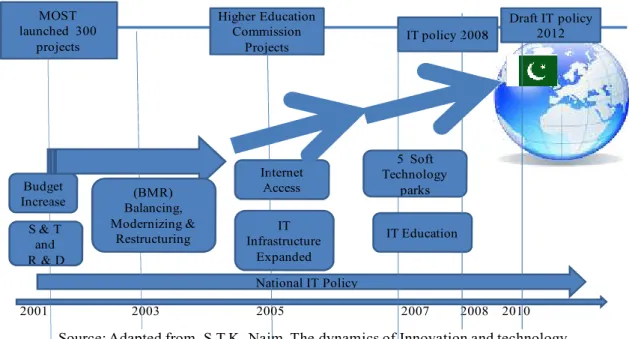
Figure 8 : Framework of Pakistan ICT Policy... 47
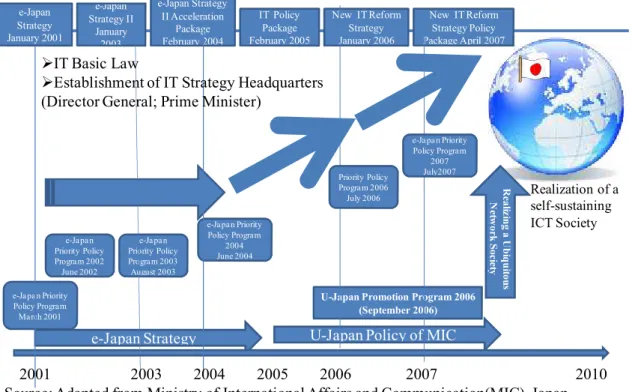
Figure 9: Framework of Japan ICT Policy... 49
Figure 10 : Research and Development Expenditure... 51
Figure 11: Correlation Coefficient of R&D... 51
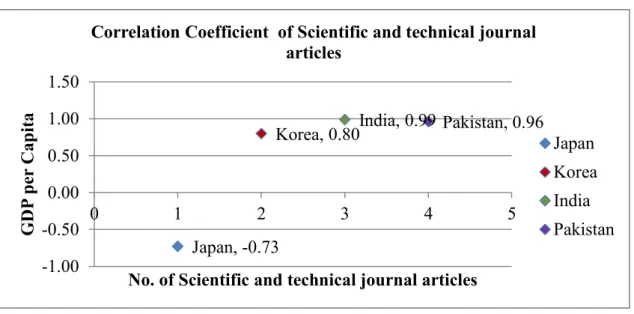
Figure 12: Scientific and Technical Journal... 51
Figure 13: Correlation Coefficient of S& T journal... 52
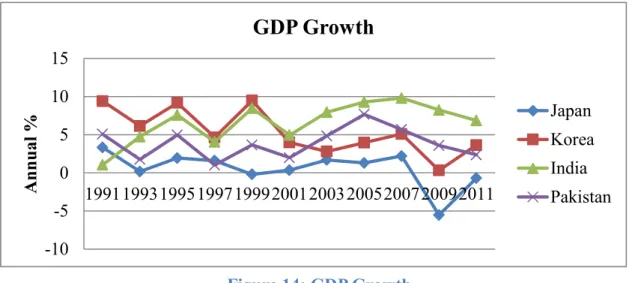
Figure 14: GDP Growth... 53
Figure 15: Public Spending on Education... 54
Figure 16: Correlation Coefficient of Education... 54
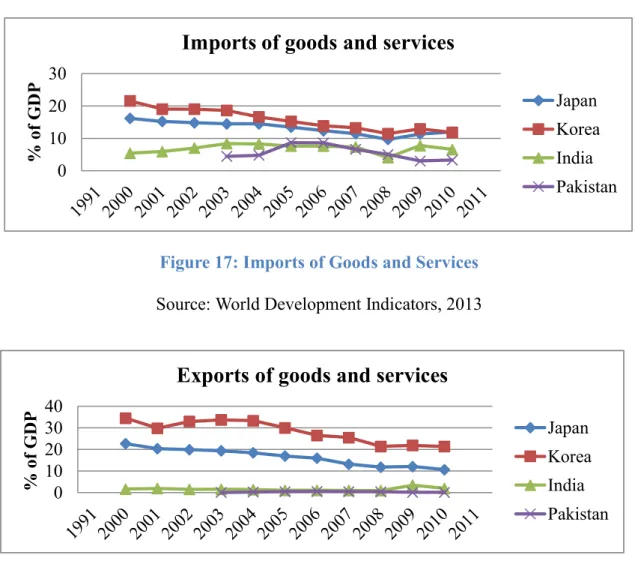
Figure 17: Imports of Goods and Services... 56
Figure 18: Exports of Goods and Services... 56
Figure 19: Agriculture value added % GDP... 57
Figure 20: Correlation Coefficient of Agriculture value added... 57
Figure 21: High Technology Exports... 57
Figure 22: Correlation Coefficient of High Technology exports... 58
Figure 23: Average of Last 20 years... 60
Figure 24: Distribution of ICT connectivity... 62
Figure 25: Japan Time series Analysis... 68
Figure 26: Korea Time series Analysis... 69
Figure 27 : Japan & Korea 1980-2012Time series Analysis... 69
Figure 28: India Time series Analysis... 70
Figure 29: Pakistan Time series Analysis... 71
Figure 30: India & Pakistan 2000s Time series Analysis... 72
Figure 31: All Countries Bass Model Cross Country Analysis 1980-2012... 74
Figure 32: GDP by industrial origin... 79
Figure 33: Structure of Output % of GDP at current factor... 79
Figure 34: Value added % of GDP... 79
Figure 35:Labour Productivity growth in Pakistan... 79
Figure 36: Patent Applications by Top Fields of Technology... 85
Figure 37: Legal Entity Type of the countries in USPTO... 86
Figure 38: Top 20 Keywords... 88
Figure 39: Top 10 classes... 88
Figure 40: Foreign Investment inflows in Pakistan ($Million)... 90
Figure 41: Economic Growth (%) of Pakistan... 93
Figure 42: General Case... 98
Figure 43: Global Game... 99
Figure 44: Game Tree... 102
Figure 45: Government Strategy 1... 103
Figure 46: Government Strategy 2... 105
Figure 47: Government Strategy 3... 106
Figure 48: Firm Sizes... 107
Figure 49: Public Expenditure on education (as %) of GDP... 117
Figure 50: Universities/Degree Awarding Institutions in Pakistan... 118
Figure 51: Proposed Model... 119
Figure 52: Government University Game... 125
Figure 53: Government University Non Cooperative Game... 127
Figure 54: Government University Cooperative Game... 128
Figure 55: Government University Game with policy... 130
L IST OF T ABLES
Table 1: Countries Development Rank/Stage... 43Table 2: Countries Development Rank/Stage ... 45
Table 3 : Correlation of CGI rank and NR rank ... 45
Table 4: Mobile Cellular Data from the World Bank Development Indicator... 66
Table 5: Size of the Industry in different economy... 80
Table 6 : Intellectual property protections... 81
Table 7: Economy... 90
Table 8: Pakistan Mobile Cellular Imports 2011... 94
Table 9: GDP, Labor and Telecommunication Investment Data... 95
Table 10: Regression Analysis... 96
Table 11: Firms technology adoption Trend... 108
Table 12: Technology Indicator... 108
Table 13: Govt. Provides full subsidy and small firms adopt... 110
... 110
Table 15: Govt. Provides subsidy based on Firm Size and small firms adopt...111
... 112
Table 17: Govt. does not Provides subsidy and small firms adopt... 112
t adopt... 113
Table 19: Research Findings... 139
CHAPTER 1: Introduction
C HAPTER 1: I NTRODUCTION 1. Research Background
Information and Communication Technology (ICT) refers to technologies that provide access to information through telecommunications. This includes television, internet, broadband, wireless networks, mobile phones, and other communication mediums (Techterms, 2014). According to Blurton, ICT is Diverse set of technological tools and resources used to communicate, and to create, disseminate, store an
(Blurton, 2002). Actually, ICT is about the technologies, specifically for information and communication management.
In the globalized world, ICT is significant to improve industry position and meet the current requirement of people and economy. ICT has major impacts on the following three key areas:
1. Productivity and innovation= facilitate creativity and management 2. Modernization of public services =education, health and transport.
3. Advances in science and technology =support cooperation and access to information (CORDIS, 2014).
Figure 1:ICT Adoption Source: Author
Information and communication technology is an important enabler for wellbeing of countries. ICT provides leapfrogging possibilities and new opportunities for economic
ICT
Adoption
Impacts
CHAPTER 1: Introduction
and social growth of developing countries. For example, 10% increase in internet connection speed outcomes in 1.3% economic growth (World Bank, 2013). ICT importance was also recognized in the United Nations Millennium Development Goals (UNMDG). UNMDG upholds the principle of human dignity, equality and equity at global level. The goal emphasizes on the importance of ICTs in improving the country`s social infrastructure. ICT provides access too much needed for basic services to population (MDG Gap Task force Report, 2009). The ultimate purpose of ICT is to improve and spread technology in order to improve the living conditions of society.
ICT adoption refers to the process of using latest ICT by individuals, organizations and countries as a whole. Information and Communication Technology (ICT) has been developed extensively over the past decades and there has been a massive increase in its usage. Transmission of information and communication technologies is a global phenomenon. In spite of rapid globalization, there are substantial differences among nations in terms of adoption and handling of new technologies. During the last decade, we have witnessed a quick rate of change of ICT. Although this change has happened on a global scale, there are significant differences between countries in terms of how far they are and how fast they have adopted new information and communication technologies. ICT impacts can arise only if ICTs are widely used by all key actors individuals, businesses, and governments Global Information Technology Report, 2014). The Berkeley group identifies three pillars of ICT adoption; user, businesses and government of the economy (Berkeley Research Group, 2011). According to economic terminology, the difference in the adoption rate depends on different factors, namely demand, supply and regulatory or institutional. Demand factors are like net benefits accrued to a potential adopter. Supply factors are, for example, how big and how fast technical improvements are in new technology. Regulatory and Institutional factors are related to government actions that foster or hinder the adoption of a particular technology. Therefore, the government role is important in effective adoption of information and communication technology in the country. Government can support and improve the national adoption capacity for ICT. This
CHAPTER 1: Introduction
requires government to do actions to gear towards the promotion of ICT adoption.
Some countries can take advantage of the latest ICTs while some other countries cannot adopt those same technologies. The adoption of new ICTs requires established methods in organizations and countries at large. When ICT is adopted, it leads to an increasing divergence among people, country and economy after 20 or 30 years. Therefore, timely and currently needed actions are very important for adoption of ICTs. There are enormous problems in the relationship between the digitization and the strategy to adopt. A strategy to enhance the ICT in any sector is effective when it is tied to the capabilities associated with that sector. It has been observed that the most consistently successful countries are those who overcome these problems. The benefits of the latest ICTs are capitalized upon adoption.
This shows that ICT is important but adoption matters much more. ICTs propelled the Western world and Japan to new heights of progress in virtually all fields of endeavor.
Some countries such as Korea were able to catch up by adopting ICTs from the West, so too many developing countries today can improve their institutions by learning lessons from developed states. ICT adoption increases the power of people, institutions, and government.
A knowledge of the factors which makes a significant contribution to adopt ICT in the growth and support the government for; decision making, identifying the strengths and weaknesses of the current problem of the country, and to concentrate on the core areas for improvement of ICT adoption. Therefore, it is challenging to construct a
composite measure of to adopt ICT. The solution of this
problem is to find the contributing factor for ICT adoption capacity to adopt, use and benefit from using ICT is very important.
However, it is very important to consider the benefits, risk and challenges of digitization.
ICT is also distracting; it attracts a different type of potential opportunities which all seems useful. But adoption of all latest ICTs is financially not possible and strategically confusing.
Therefore, the adoption of ICT in developing countries is more challenging and expensive
CHAPTER 1: Introduction
than in developed economies. The current challenge is the quest to ensure the adoption of information communication technologies in developing countries.
2. Research Problem
Asia is very dynamic region in developing its ICT strategies. According to the World Economic Forum Reports 2014, Japan and Korea have moved up from position 21 and 11 to 16 and 10 respectively in network readiness rank. This is showing the improvement in the network readiness index by five and one rank respectively in these developed countries.
However, the developing countries like India and Pakistan have moved down from rank 68 and 105 to 83 and 111 respectively. India has moved down to 15 ranks and Pakistan to 6 ranks (Global Competitiveness Report 2013-14, 2014; The Global Information Technology Report 2014, 2014).
The research purpose is to find the reason:
1. Why do the developing countries continue to suffer from slow ICT adoption?
2. The purpose is to investigate where lays the difference in the ICT adoption by developing countries and developed countries?
3. Objective of this research study is to find the solution for fast adoption of ICT in Pakistan.
CHAPTER 1: Introduction
3. Research Significance
There have been many attempts to study the Information and Communication Technology (ICT) adoption. Most of the studies are based on the developed countries.
Accordingly, in the OECD (Organization for Economic Co-operation and Development) countries, there is tremendous progress in ICT adoption. However, the research for adopting ICT in developed countries may not be sufficient for the developing countries. The World Bank and the Asian Development Bank studied the developing countries by traditional ways of assessing economic growth (World Bank Enterprise Surveys, 2007; APO, 2013; World Economic forum 2013; Asian Development Review, 2013). Another aspect of ICT policy is to use as a tool for ICT`s adoption. Hence, the ICT adoption with the perspective of policy is considered for the developing countries. It is relatively simple to grasp specific impacts arising from ICT adoption on the economy. For example, we can find the impact factor of education,
through tax collections. In contrast, it is not easy to measure the general trend of ICT adoption.
This dissertation intends to offer a new policy perspective in ICT adoption in the developing countries. This dissertation analyzes the ICT adoption trend of the selected countries to find the factors which ultimately contribute for ICT adoption. This research then provides the solution of information communication technology adoption in the developing countries.
CHAPTER 1: Introduction
4. Research Process and Methodological structure
In assessing the ICT adoption capacity, this dissertation uses a combination of approaches. None of these approaches are a new way of analysis by itself, but using them in this combination is novel. This research uses qualitative and quantitative analysis of ICT adoption capacity of countries.
Research Process for Dissertation:
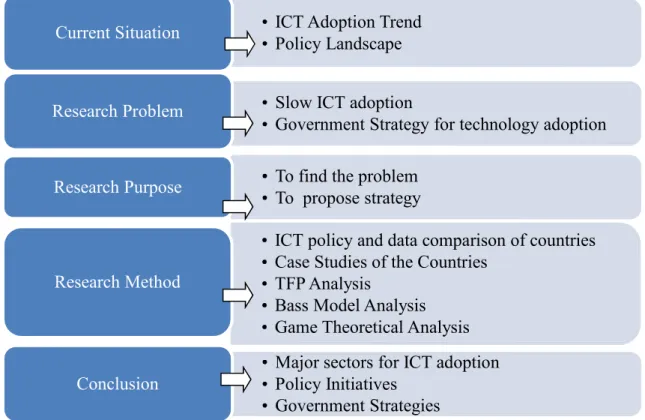
Figure 2: Research Process
Source: Author
Research Method
The research process is described in the figure 1. The methodology is explained as:
Study the ICT adoption of the developed and developing countries Analyze the ICT adoption trend and policy Landscape
ICT Adoption Trend Policy Landscape Current Situation
Slow ICT adoption
Government Strategy for technology adoption Research Problem
To find the problem To propose strategy Research Purpose
ICT policy and data comparison of countries Case Studies of the Countries
TFP Analysis
Bass Model Analysis Game Theoretical Analysis Research Method
Major sectors for ICT adoption Policy Initiatives
Government Strategies Conclusion
CHAPTER 1: Introduction
Use the secondary data to connect and correlate the findings to the theory.
Identify the contributing sector for the ICT technology adoption.
Evaluate the sector for the ICT technology adoption.
Identify the major contributing sectors problem for ICT adoption.
Provide the strategic approach to solve the problem.
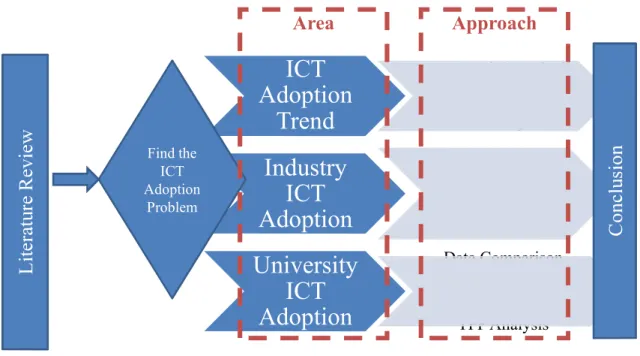
Figure 3: Research Method
Source: Author
This research work analyzes the problem and then provides the strategic solution of the problem. The research analysis relies on Bass Model and Game theory analysis.
Game theory has become a cross disciplinary study of great importance for the mathematical social sciences. It offers the toolkit applicable to decision problems in which the consequence of one decision may depend on the other decisions, previous decisions creating the conditions for current decisions, simultaneous and subsequent decision. Game theory is used to analyze the phenomena where the interest conflict lie.
The game theory is to find out the combination of strategies. It solves problems which
Adoption ICT Trend
Bass Model Analysis Content Analysis
TFP Analysis
Industry Adoption ICT
Data Comparison Game theoretical
Strategies
University Adoption ICT
Data Comparison Game theoretical
Strategies TFP Analysis
Find the ICT Adoption
Problem
Area Approach
CHAPTER 1: Introduction
cannot be solved by applying other rules. It is an aspect for the policy maker to evaluate their predictions. It has been argued that
operational characteristics of economic models, and in particular, stability considerations, point strongly toward an equilibrium concept for dynamic dominant player model which implies that the players determine their best decisions depending on the current state of the system and the decisions of the other players, and rationally expecting that equilibrium will be chosen in the future. This solution is called the feedback solution. It has the characteristics that the original plan is consistent under re-planning. Because of this property, the feedback solution is the only one that seems likely to be stable in the sense that decision makers examining for equilibrium decision rules will converge on these decision rules (Kydland, 1977).
The Gang Game is the government game. A single state is cooperative coalition if the government finds it mutual benefit of its firms to adopt the normative role which is to adopt latest technology in our analysis and assure the efficient production of public he
required. We consider all firms as a single player, so keep it simple for understanding.
As Aumann has observed that for the purpose of the public policy the two aspects of game theory; cooperative and non-cooperative analysis are really not two separate disciplines, they are part of the same whole (Aumann & Myerson, 2003). The different roles of cooperative and non- cooperative models reflect in the pragmatic project of the public policy, in that the non-cooperative models commonly identify the problems, while cooperative analysis of the same example is necessary to propose solutions
CHAPTER 1: Introduction
(Rogers, 2003). Therefore, this study is based on cooperative and non-cooperative analysis for the solution of problems of technology adoption in the developing countries.
5. Research Conceptual Framework
This research uses a combination of approaches to solve the research problem of ICT adoption. The approaches are not new by themselves, but using these approaches in this combination is new. It targets on two sector Industries and University for information and communication technology adoption with the perspective of policy and government strategies. The combined influence of information and communication technology adoption in developing countries has not been previously explored in any study according to best of our knowledge.
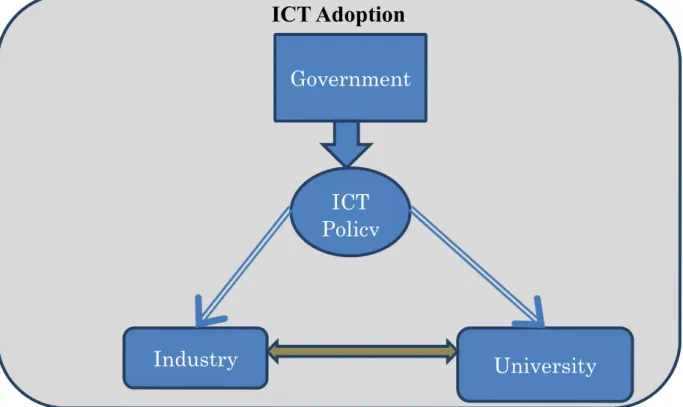
Figure 4: Conceptual Framework of Research Source: Author
ICT Adoption
Industry
Government
University ICT
Policy
CHAPTER 1: Introduction
The concept of the research is explained in figure 3. The framework shows that information communication technology and policy are the elements and Government, Industry and University are the players. Government leads the Industry and University which are major contributing sectors towards the ICT adoption. Government can play a vital role for ICT adoption in these sectors with the help of ICT policy. The framework shows the flow of ICT adoption by integrating Industries, Universities, ICT policy and government.
CHAPTER 1: Introduction
6. Outline of the Dissertation and Chapter Summaries
Chapter 1 Introduction
Research Background Research Problem Research Process Dissertation Outline
Chapter 2 Literature Review
Information Communication Technology Diffusion/Adoption
Industries technologies Industry University Link Government
Policy
Chapter 3 Data Analysis
ICT adoption trend in developed and developing countries: The case of Mobile Cellular and ICT policy Landscape
Bass Model Analysis
Content Analysis of ICT Policies
Chapter 4 Data Analysis
Technology Adoption in Industries Analysis of Industry data Game theoretical Analysis for
Government Strategies
Chapter 6 Conclusion
summarizes the key findings of the dissertation Some proposals and recommendations for policy formulation
Chapter 5 Data Analysis
Globalization and ICT innovation policy
Content analysis Game theoretical Analysis for Government Strategies in University
Figure 5: Outline of the Dissertation Source: Author
CHAPTER 1: Introduction
Chapter1
Introduction provides the research background, research problem, research significance, research process and outline of the dissertation.
Chapter 2
This chapter aims to provide the highly eclectic literature on the adoption of Information and Communication Technology (ICT) in order to know what has been done, and highlights the generic issues relevant to ICT adoption, ICT policy, government role, industry and university.
Chapter 3
This chapter explores the ICT adoption trend in countries like Japan, Korea, India and Pakistan. We introduce the Bass Model with different coefficient between different time periods of these countries. Later in this chapter, we explain the ICT policy changes and economic dynamics of developed and developing countries. We find the more familiar cases of information & communication technology and policy, quantify the government activities and actions, and evaluate the impact of the policies on the
development by using the World Bank/UN/OECD development indicators. The key points extracted from the content analysis of ICT policies are compared with the development indicators to confirm the impact of policies on the economic growth.
Chapter 4
This chapter explores the barriers against ICT adoption for firms and identifies opportunities for ICT adoption in industries of developing countries. Hence, trend of technology adoption in firms of developing countries is studied. Pakistan, a developing country of Asia, is selected as a case study. This chapter uses the content analysis method and OECD Imlinker software for analysis. This chapter highlights the ICT adoption problem in firms and proposes analysis by concordance of technical data and
CHAPTER 1: Introduction
economic data. The concordance finds the gray area of the ICT adoption in firms. Then chapter provides the strategies of governments to solve the adoption of ICT problem among firms. ICT advances offer new paradigms for development. However, developing countries are still behind to take full advantages of these improvements due to problems faced by them in adopting the technology. A game model is constructed subject to specific condition for technology adoption. The game consists of two players, government and firms. The game finds the Nash Equilibrium of the game in three specific conditions. The game solves the conflict of ICT adoption decision between governments and firms.
taken to explain the government game.
Chapter 5
This chapter is about the new role of academic institutions in the economic development of developing countries. Educational institutes are significant in propelling economic development as they are the powerful drivers, technology centers, developers and investors. Universities can affect the economic growth of developing countries. The study identifies the current ICT innovation in the field of education and analyzes the case of developing and developed countries. To demonstrate, we do an in-depth study of The chapter constructs a game model subject to preferential policy between Government and Universities. It offers game strategies that give the overview of the role of the government to promote the quality of education.
Then, analysis finds the equilibrium of the game by using specific conditions. The result shows that better ICT policies lead to quality education that foster the development of the country.
CHAPTER 1: Introduction
Chapter 6
This chapter reviews the key conclusion of the dissertation as well as organizes the main findings of the dissertation. Some proposals and recommendations for ICT policy formulation are put forward.
CHAPTER 2: Literature Review
C HAPTER 2: L ITERATURE R EVIEW
This chapter presents the literature of Information and Communication Technology (ICT), its adoption, economic growth, government role and ICT policy. It intends to give a comparative global perspective on the information and communication technology adoption studies. The remaining problem in literature and appropriate methodology for this study is concluded.
1. Relevance of the Literature:
This study has drawn on literature from other fields, such as development studies, economics, sociology and Information Communication Technology, which cover the scope of this research. The research problem of ICT adoption is relevant to other issues that have received significance in development studies for example information communication technology, ICT policy, economic growth, globalization and role of government and growth contributing to Industries. Therefore, the literature is not only in one direction since every development area is affected with ICT and ICT is not effective without its adoption. Moreover, the research is about ICT adoption, interchangeable terms such as ICT diffusion, catch-up technology, and technology transfer are sometimes used for explanation. However, we consider these terms to mean the same as ICT adoption.
Figure 6: Overview of the literature
Government ICT Policy Industry University ICT adoption
CHAPTER 2: Literature Review
2. Theories of ICT Adoption
Everett M. Rogers developed a framework for the adoption of technology. Rogers is an influential author known for his framework in the area of technology adoption.
Rogers explains S-shaped diffusion curve in his book "Diffusion of Innovations",
"Diffusion is the process by which an innovation is communicated through certain channels over time among the members of a social system." (Rogers, 2003). He describes innovation, time, communication channels, and social systems as core rudiments of diffusion. Accord
opinion leaders holds the key to product diffusion as a whole.
-shaped curve receives strong empirical support. The explanation as to why the curve is observed varies by research paradigm. Communications researchers have focused on information transfer. Economists focus on ICT substitutability, uncertainty reduction, and economic advantage. Social (Bayer
& Melone, 1989).
However, theory loosely defines the characteristics for diffusion which are not enough to give a sound footing for a complete theory. Tornatzky and Fleischer in 1990 developed a frameworkThe Technology, organization, and environment context
(TOE). The framework finds three features affect the process to adopt and implement a technology. The three firm contexts are; technological, organizational, and environmental context (Tornatzky & Fleischer, 1990). The model is consistent with the Rogers diffusion theory; however this includes the environmental context as well.
Institutional theory mainly focused on institutional environment. Institutional set up considered very vital in determining the organizational structure and procedures. The
CHAPTER 2: Literature Review
theory considered that organizational decisions are based on rational objective of efficiency, social & cultural factors, and authority concerns (Scott and Christensen 1995; Scott 2001).
Some authors consider Technology Acceptance Model (TAM) to be more relevant for adoption problems. The Technology Acceptance Model (TAM) is different from model because it elucidates the specific type of adoption circumstances like Roger s theory as well concentrates on a particular kind of innovation (Dillion, 2001). The TAM explains perceived ease of use (PEOU) and Perceived usefulness (PU) of the innovation and is considered by the targeted user to decide these two variables the probability adoption of the innovation. In spite of this, the innovation should be easy to use as it is mentioned in theory characteristic complexity it should be easy to learn but not so complex that it deny its existence.
Some researchers have confirmed that the TAM model is useful to analyze the variance in adoption level (Davis, Bagozzi, & Warshaw, 1989). Many researches support the TAM as an efficient model to explain the ICT adoption. However, the authenticity of the model to analyze one example of ICT adoption is questionable. Some empirical studies recommended to incorporate TAM with diffusion theory etc. to understand and explore the ICT adoption influence (Legris, Ingham, & Colerette, 2003; Carter & Belanger, 2005). TAM and diffusion theory are alike in some aspects to analyze the ICT adoption.
Many studies indicate that the concept of TAM basically a part of perceived innovation characteristics. Therefore, when integrate TAM and perceived innovation theories could provide a better model (Wu & Wang, 2005; Chen, Gillenson, & Sherrell, 2002). It is suggested that the combination of diffusion theory and TAM could get better analysis (Lee, Hsieh & Hsu, 2011). In the past few studies showed that combination of these two
CHAPTER 2: Literature Review
theories provide better results (Sigala, Airey, Jones, & Lockwood, 2000; Chen et al, 2002).
Cognitive Model (COG) was suggested by Oliver in 1980. This model was based on the satisfaction decision. Satisfaction is considered the function of expectations and disconfirmation. (Oliver, 1980) According to this model, the success of a technology can not only be achieved by initial adoption but also depends on later stages of its use.
The model emphasizes the stages and time factor for use of product and service.
Expectation Confirmation Model (ECM) is a general model that is based on expectation and perceived performance. The model considers the expectation and perceived performance towards the achievement of the disconfirmation or/and satisfaction of user as internal variables that depend on the person emotion and personal judgment. The perceived performance is assumed as outer factor that can persuade the inner factors. However, Technology Acceptance Model, the Expectation Confirmation Model (ECM), and Cognitive Model (COG) have quite different assumptions. Only one model is not sufficient for evaluating the adoption of technology trend. It is concluded that for latest technology adoption it is vital to integrate two or more theoretical framework to get better comprehension of the ICT adoption trend (Liao, Palvia, & Chen, 2009; Oliveira & Martins , 2011). Bass in 1969 introducedBass diffusion model. This model is very famous and useful to forecast the adoption of technology. The Bass model classified two groups of technology adopters; innovators and imitators. Innovators in the context of ICT adoption are organizations or countries. Innovators decide to adopt the technology without considering the decision of others. Innovators are early adopters.
Imitators are in contrast to innovators and their decisions are base on others (organization or countries) in their adoption decisions. The bass model has a concept of
CHAPTER 2: Literature Review
imitators that combine the Rogers defined categories of the early adopters, early majority, late majority, and laggards. The model is usually illustrated graphically in a normal distributed bell shape curve. The graph shows that early majority and late majority is main portions of adopters. The main concept of Bass diffusion model bases on the timing of early decision of adoption of a technology and is correlated to the total number of people that have adopted the technology before.
3. Background Theory
In this section, we discuss some theories and models that are relevant to our research topic, ICT adoption. Kayal proposed a framework from various studies and research on different countries. According to him, it is very important for the developing countries to consider the inward transfer and exploitation of technologies from external sources through building absorptive capacities and integration of the components of the system (Kayal, 2008).
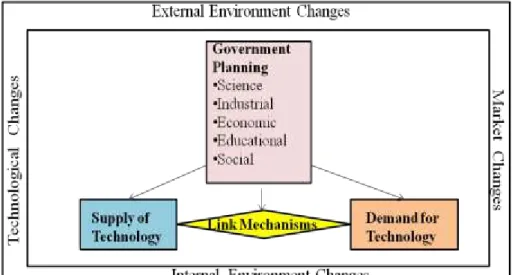
Figure 7: Framework of NIS Source: Kayal, 2008
CHAPTER 2: Literature Review
The framework shows the adoption of technology environment. Government provides the link mechanism in the country by keeping the external environment, internal environment, change of technology and market change. Government mechanisms are the strategic planning; in science, industry, economics, education and social sectors.
Kayal s conceptual framework considered the supply of technology, demand for technology and link mechanism as the driver of the system. The government ICT policies support the major components of the system. For example, in planning component:
innovation strategies are considered as the supply of the technology, technologies transfer policies are the link mechanisms, and technology roadmaps are the demand for technology.
Ashraf & Malik proposed a conceptual framework on the bases of ITU -
considered as
transparency that were considered as helpful to resolve policy issues (Ashraf & Malik, 2010). Another study proposes a comprehensive model for making ICT policies, to monitor & measure socio-economic, cultural effects and development in the use of ICTs.
The model consists of system approach, national strategies about ICT and ICT adoption models. The model determine five indicators to evaluate and monitor ICT effects (Mohamadian, Elahi, & Ghasemzadeh, 2006).
4. Factors of ICT Adoption
Some studies have explored technology adoption factors. Hargittai analyzed OECD countries and concluded that telecommunication, policy, and GDP are major technology adoption factors (Hargittai, 1999). ICT adoption has analyzed in 74 countries during the
CHAPTER 2: Literature Review
period of 1995-1999 by Robison and Crenshaw. The results recommended that education, development rank, and political freedom are the important factors (Robison
& Crenshaw, 2002). They also analyzed globalization and structural conduciveness as key elements for adoption of technology (Crenshaw and Robison 2006). Another study analyzed 60 countries in the period of five years from 1995 to 2000 and found that cost of internet access and GDP are the most important factors for evaluation of technology adoption trend (Kiiski & Pohjola, 2002). Dewan categorized ICT adoption into economic, environmental, and demographic factors (Dewan et al., 2005). Other researchers evaluated the timing of adoption factor. Helsen and Schmittlein determined that time duration to adopt ICT are based on market variables including competing technologies, age of firm, environment, and rate of interest.
Many other studies also found the ICT adoption factor. They found R & D activities are significant determinant for adoption of Information and Communication Technology in Industries The impact of information communication technologies diffusion has positive relation with education while negative relation with the market rigidities (Cette & Lopez, 2012).
5. Country level ICT Adoption Analyses
Some studies argue that ICT matters, although to a different extent and according to the measure used for its adoption. Moreover, their finding suggests that this pattern is relevant to country capacity and time specific basis. Few studies determined the factors of ICT adoption in the cross countries. Here we discuss these studies in detail.
An Analysis of the determinants and effects of ICT diffusion in developing countries -Lutz. The paper used secondary data from
CHAPTER 2: Literature Review
ITU and studied ICT indicators; cellular mobile subscribers, internet host, internet users, and personal computers for the periods 1998-2000. The study used Gompertz model for evaluation of ICT diffusion. The correlation is tested with four different equations. In the first equation, income, economic and education and political indicators are used. In the second equation, instead of political indicator the civil liberties are used. In the third equation, financial liberalization and FDI are added. In the fourth equation of analysis, economic freedom is used as a replacement of income. The result of the first equation model failed to analyze the process of adoption because lagged value coefficient was not considerable. However, it was found that FDI, financial liberalization and education are not significant for ICT diffusion. It is proved that income and trade policies of government effect for the ICT diffusion. The result also indicates that ICT dissemination phase has an important role for economic development, enhancement of political rights and civil liberties (Baliamoune-Lutz, 2003).
The study ICT Diffusion and Growth correlation
between TFP (Total Factor Productivity) and ICT diffusion of European. This study used the World Bank and OECD main indictors and economic outlook data of 15 countries including the USA, Austria, Belgium, France, Sweden, Greece, UK, Portugal, Italy, Finland, Spain, Germany, Netherland, Ireland, and Denmark on real GDP value.
They considered per capital GDP, ICT capital share, per capital GDP growth rate, of the selected countries in the year 1981, 1991 and 2001. The analysis calculates the standard deviation and mean of the data. Then they estimates the cross section estimation of GDP per capita growth rate considering the log of GDP, human capital, investment rate, (g+n+d), R & D share, ICT capital share, and calculate their robust t- statistics. The panel data was calculated with five year time interval. The paper concluded that ICT
CHAPTER 2: Literature Review
diffusion is higher in USA than selected 14 European countries. It is estimated that ICT adoption rate has positive relation with growth rates of GDP (Biagi, Parisi, & Vergano, 2008).
The ICT diffusion: A spatial Econometric Approach
Bonaccorsi, Lucia Piscitello and cristina Rossi. The paper analyzed the Italian regional level. For the analysis, they used the registration of domain name of firms in the year 2001 for analyzing the ICT diffusion. The study used the secondary data from the Institute of Informatics and Telematics (IIT) of the National Research Council (CNR),
the University of Pisa and . The data was
collected from the Italian regional authority. The statistics mean, skewness standard deviation, and kurtosis highlighted the level of ICT diffusion and found that in Italy it was relatively low only 4% penetration rate. There many regional disparities were explored. South region result showed the best performance while the North regions rank was below that position. It is concluded that the ICT adoption rate is positive related with added value per employee and income per capita. Three different ICT diffusion
tests were executed; , tests. These tests
confirmed the existence of the spatial dependence. Finally, it was concluded that ICT diffusion has strong relationship with house R & D (Bonaccorsi, Piscitello, & Rossi, 2007).
by Lieven De Marez, Tom Evens, Jeroen Stragier, focused on diffusion theory. The study tested three hypotheses; First the bell shaped normal distribution pattern, second the socio demographic adopters profiles, and third evaluated that adoption determinants is still valid in current ICT situation. To
CHAPTER 2: Literature Review
investigate these hypotheses, Meta-analysis on adoption sector profiles for digital television and mobile Internet 3G and then with the analysis on the adoption trend for Digital Television (DTV) and mobile 3 G were studied. The result of Meta analysis and empirical research (with the chi2 test) concluded that socio-economic and socio-demographic factors are not significant now. This research investigated the hypothesis with an extended Meta model of 14 determinants to analyze the process of diffusion for DTV and 3G. The regression analysis result found important factors for a tiveness for these technologies. This analysis by using Pearson correlation concluded that diffusion theory till now is valuable for analysis of telecommunications while there are needs for the diffusion pattern structure explanation, profile section and adoption factors (De Marez, Evens, & Stragier, 2011).
Sustainability and Technology Diffusion in Small Isolated Communities in the Developing World: an Applied Ethnographic Study this paper is about the research in progress. The objective of the analysis is to find the relationship between diffusion of technology and the wellbeing of developing countries by considering the culture. The study answered the challenges and opportunities of diffusion and their relationships between culture and technology diffusion. The study used anthropologic process. The primary data was gathered by observation, interview and site artifacts. The research used theoretical framework of Brazilai- to analyze the digital divide. The a powerful research tool for researchers to use comprehend cultural phenomena in terms of everyday lives of people.
But the drawback of this research was too much longer to conduct. Therefore, this study consists of three years. They selected four English speaking developing countries. The study conducted in eight small isolated communities over Oceania and Africa. The
CHAPTER 2: Literature Review
study identified one remote village of similar sized in both countries. One of village will be given one laptop to each child support. It used purposive sampling and collected in depth interview, observations and study of related resources. The future objective of this study is to analyze the ICT impact in specific area such as teaching can impact project in other area such as telemedia (Frank & Salmona, 2011).
Diffusion of Information Communication Technology across Indian States and its Determinants: An Empirical Analysis The study conducted in two steps. The first stage focused on the sixteen states of India to analysis the ICT diffusion within the country. The second stage examined the determinants of ICT diffusion. The study used secondary data and chosed telephone, mobile and internet subscribers per 100 populations as ICT adoption indicators. Income considered as the supply side factor for each indicator. The density of population and education is considered as the social factor.
Gompertz model and Orbicom Methodology is used for analysis. Two different time
periods 2001-02 and 2005-06 are situation with the
regard of ICT indicators. The result showed that the ICT diffusion is not same in all the states and states are different in their ICT adoption. The study defined the top performer states and their states downward trend and upward trend in the selected years. In the analysis, per capital income was the most important factor, the density of the population and education also had some impact on ICT diffusion (Bibhunandini Das, 2010). One study analyzed the industrial sector of the Pakistan firms; the study used the survey data. They used the rank model of technology adoption for evaluating the firm characteristics; size, age, sales, type of ownership certification. The results showed that firm size, certifications and sales are positively related to technology adoption. They concluded that the new firms and domestic firm have high technology adoption
CHAPTER 2: Literature Review
likelihood, so government should give proper fiscal incentive for ICT adoption. Rather than that certification to technical standard can be effective for the technology adoption (Mahmood, ud Din, Ghani, & Iqbal, 2009).
6. ICT Policy for technology adoption
There are many studies about ICT policy analysis of the country. It is difficult to evaluate the ICT policy quantitatively. Therefore, qualitative analysis like interview and theoretical sources were used for ICT policy studies.
However, some studies found that the formation of science and technology policy is supporting to functional ICT development which is essential in knowledge based economic development. Hence, infrastructure, and institutions and updated system of science and technology are vital to enhance the knowledge (Wong & Goh, 2012).
economic growth are two sides of the same coin. Development planners consider technology to be one of the most important factors determining economic development. Therefore, S&T indicators can contribute towards economic growth by encouraging evidence-based policies which rely on
(Bhutto, Rashdi, & Abro, 2012).
Lee and Su concluded that policy research on science and technology significantly impact on government policies and benefits to business and society on large (Lee, P.C,
& Su, H.N, 2011). There are some studies that emphasize the importance of industrial
policy. World Bank has been actively analyzing ing
(Rodrik, 2008
Asia (Noland & Pack, 2003, 2008). RIETI an Institute in Tokyo launched a program of
CHAPTER 2: Literature Review
basic research for a new industrial policy (RIETI, 2011). Ciuriak conducted current survey of industrial policy (Ciuriak, 2011). Warwick analyzed that industrial policies have some relations with the development of the countries such as Japan, Korea, Netherlands, France, Turkey, Brazil, China, India have Industrial policy while USA and UK have some relevant policies about industries. However, some countries; Argentina, Colombia, Vietnam and Chile are working on only the strategy of industry to improve their economies (Warwick, 2013).
Many studies analyzed the success of the developed countries based on their ICT policies. The growing importance is associated to the ICT change and its policy. It is very important to understand the connection between science and technology on the one side and economic performance on the other side (Lundvall and Borras, 2005). ICT policy is the tool towards country prosperity. Japan is the most developed country in Asia. It has the second largest Science and Technology structure in the world after the USA according to R& D expenditure and number of researchers. Japan leads in ICT Innovation; on the other hand it also has strong policies. Its science and technology policy has modified emphasis over the past 60 years. The government changes S&T policies time to time according to technology innovation and current situation (Kitagawa & Schuman, 2007; The New Strategy in ICT Roadmaps, 2012). Japan and the United States are countries where policies and programs are administered centrally, yet, with some differences (Hazelkorn, 2009).
Japan had sharply contrasting growth rate by developing, transferring, improving, and adopting new technologies in the 1980s (Chris Freeman, 1995). Pakistan is a developing country, and facing many issues and challenges. Government
CHAPTER 2: Literature Review
policies lacks to resolve these issues. Policies should be conducive towards providing quality technological infrastructure as a backbone to run e-government portals in the country (Kazmi, 2010). However, successful policies should not be only well designed and formulated, but their implementation process is crucial (Sukhbaatar & Odgerel, 2005).
7. Total Factor Productivity Analysis
Total factor productivity analysis is used in many empirical studies to find the driver of economic growth. Solow (1956) expanded the neoclassical growth model by using the exogenous factor of technology change. Solow`s measurement showed that 80 percentage of the increase in labor productivity is because of the technical change.
Chaudhry used the Cobb-Douglas production function to see the trend in Agriculture and Manufacturing sectors in Pakistan. The study found that the GDP growth is caused by increases in labor and capital stock comparative. However, comparative to agriculture sector, manufacturing sector has high TFP. While conducting Cross country analysis, it is found that sectoral and aggregate level TFP growth is lower in Pakistan and the reason is unstable growth because of some factors including technology (Chaudhry, A. A., 2009).
Samimi & Arab used Total factor productivity and panel Data Method and analyzed the investment in ICT and human capital during the period 2003 to 2008 for 45 countries. The analysis concluded that ICT investment has positive impact on all 45 countries productivity growth (Samimi, A. J., & Arab, M., 2011).
JRC European Commission`s scientific & Technical Report presented the rich literature review of ICT impact on productivity and economic growth. The report in depth analysis concluded that ICT has positive impact. These days, ICT investment
CHAPTER 2: Literature Review
promotion policies to adopt the ICT and for productivity growth is required (Dunnewijk, Theo, Huub Meijers, and Adriaan van Zon, 2007).
Saliola & Seker measured the average and aggregate total factor productivity of 80 manufacturing firm. They used the World Bank enterprise survey data. The analysis found that Pakistan has almost the same average and aggregate productivity during 2006-2007. Indonesia has highest aggregate productivity and Brazil has the highest average productivity (Saliola, F., & Seker, M., 2011).
8. Globalization and ICT Absorption Capacity in Developing Countries
Globalization implicates addressing of local issues within an international context; or learning of addressing global issues within a local context. Globalization is constantly changing the prospects of economic development. The world has changed it has become flat more facilities are available and new techniques have developed.
Friedman in his book discussed with the help of examples; how and why globalization has now shifted into warp drive (Friedman, 2007).
There are some studies that highlighted the ICT adoption in global perspective. One study explained the entry condition in the world market to catch up. It analysed that the entry condition to adopt the ICT has changed and is entirely different from 50 or 100 years ago. The study grouped the countries on the basis of economic growth patterns; innovators, 19th century followers, 19th century cases of stumbling back, underdeveloped and staying behind, learners or 20th century followers, 20th century cases of stumbling back (Baumol, 1994; Brundenius, Göransson, & Ågren, 2011).
CHAPTER 2: Literature Review
In the era of global competition it is recognized that changes in technology and competition have diminished distance associated with the traditional roles of location. However clusters, or interconnected organization within the same area, are a striking step of virtually every nation, region, and country economy. In the globalized world, the old purposes for clustering have changed. Now it is knowledge-based and dynamic economy (Porter, 1998). Silicon Valley, California in the USA is considered one of high technology hotbeds which demonstrate a large private demonstration to ICT development. One of the Silicon Valley study determined ten factors that are responsible for the high technology development of Silicon Valley Edge; favourable strategies, high knowledge, quality of mobile workforce, result oriented plan, condition to take risk and bear failure, open business condition, universities & research institution and industry collaboration, organization, government and life standard and business setup (C.-M. Lee et al., 2000). In India M. S. Swaminathan Research Foundation (MSSRF) a Centre for Research on sustainable agriculture and rural Development has been established to use the power of ICT in economic development and social empowerment of rural areas based on the principle of reaching the unreached and voicing the voiceless. The MSSRF has collaboration with the D-Lab. D-Lab is a program for International Development at the Massachusetts Institute of Technology (MIT). Its purpose is to create appropriate technologies for development and provide sustainable solutions for country development (D-Lab, MSSRF). Actually, university play an important role for development of country. Therefore, institutional policy regarding University can build institutional direction as well give clear and explicit regulations for understanding relationships (Debackere & Veugelers, 2005). We consider the example of Japan. Japanese industries achieved world class status in the
CHAPTER 2: Literature Review
A legal framework was established in Japan to promote university-industry technology transfer (Fukuda, Watanabe, Korenaga, & Seimaru, 2008; Yamamoto, 2004) .
9. Government Strategic Decisions for ICT Adoption
Some studies investigated the role of Government for ICT adoption. It has been identified that a role of government is salient in information communication technology adoption. Government tax, subsidies, rules & regulations, restrictions, and support policies related to new ICT, play an important role in adoption and rejection of latest ICT. Bowonder, Miyqake, & Singh also pointed out that stability of the countries for organization operation and the behavior of government to adopt ICT plays a vital role in adoption of technology decisions (Bowonder, Miyqake, & Singh, 1993). New enterprises exhibit a higher likelihood of ICT adoption. Therefore, they should provide proper fiscal incentives for ICT adoption (Mahmood, ud Din, Ghani, & Iqbal, 2009).
For ICT transfer or ICT adoption, market is primary actor but government is also major actor of market.
In the era of globalization, information communication technology has reached critical mass while, risks are associated with the wide and latest ICT adoption. The revolution of ICT is considered as a bright new set of opportunities. On the other side it is going to be recognized as a threat because it requires established way of doing things in organizations and country at large (Perez, 2002). Government role is very crucial in mitigating these risks. Government should be aware and promote useful technologies.
The policies could minimize the risk for disbelief against ICT usage and upgrade its maturity level (Kyriakidou, Michalakelis, & Sphicopoulos, 2013). Therefore, the government should take necessary administrative measure for the adoption of
CHAPTER 2: Literature Review
technology.
growth, resources and socio- economic problems for the sustainable development of the country. The government should take measures in policies and procedure to promote adoption of ICTs. Government intervention is important for sustaining technological development in SMEs. (Rothwell, 1994).
Recently, governments of the countries and international organizations are taking initiatives to foster the adoption of ICT. A study analyzed ICT adoption at the firm level in two developing countries. It was concluded that the ineffective institutions and infrastructure outcome is less adoption and lower profit. The Indian firms situated in states with advance institutions and infrastructure has high output of ICT, compared to other region. Therefore, study concluded that large number of the policy quest in India is based on state level low inefficiencies and institutional weakness (Basant, Commander, Harrison, & Menezes Filho, 2006).
investors to new, riskier vehicles which result in
Government policies, rules and stability of the country have an important role in technology adoption. There is a dire need to overcome ICT adoption problem among all the stake holders to make them receptive to new ICT. The countries that are lagging behind in ICT adoption require indirect measures. Actually, the developing countries face market failures regarding the support to firms
is not only to select the competing technologies. Rather to provide appropriate condition for ICT adoption. Undoubtedly, there is necessity for awareness of adoption of new ICT by both sectors; public and private (Carey & Moss, 1985). Yet, the flow of investments in ICT is determined by the benefit of adoption, interest rate, market trends and its
CHAPTER 2: Literature Review
expectation, capital and financial resources (Antonelli, 1989, 1990, 1998;
Fernández-Menéndez, López-Sánchez, Rodríguez-Duarte, & Sandulli, 2009). Kobayashi Yohei analyzed
doing R&D (Yohei, 2011). Developed nations, such as Japan and Korea, have achieved success in ICT development by effective government strategy. Government has an important role for integration of technology incubation (Kelly, Gray, & Minges, 2003).
Therefore, government can update its current Information technology policies while keeping its current and future development goals. Government can select the appropriate strategy for ICT adoption reform efforts. And it can plan a trajectory for connecting ICT to the development and economic growth of the country.
10.Remaining Problem in the area of ICT adoption Literature
The literature review presented in this chapter relatively evenly covers the ICT adoption in different levels of countries, government, industry and university. The research usually has been more focused on analysis of organization and country ICT adoption. We categorize the literature as ICT adoption factor, ICT policy and government strategies. The study identifies gaps in the literature on ICT adoption trend in this globalized world. Such as, we have seen relatively few researches that have considered combined factors of ICT adoption. ICT is progressively used as for welfare of the country. However, studies are lacking on the ICT adoption impact in the global context. ICT adoption process studies can answer questions about ICT adoption impacts and analyze the problem.
Thus, we focus on ICT adoption related to organizational and national level factors, access to ICT, and government role in its adoption. The literature regarding ICT adoption from all fields is rare. Most studies just utilize two or three fields. We identify
CHAPTER 2: Literature Review
a gap in ICT adoption study after reviewing the literature. We found that certain adoption factors in specific areas should be considered to provide a full clarification of the subject matter.
From the overview of the countries and comparing the ICT indicator, it is found that
and Pakistan are the developing countries that are facing problems. The developing countries are slow in ICT adoption. Therefore, these four countries are selected for further research.
11.Research Purpose
A qualitative and quantitative comparison of developed and developing
and their ICT policies is introduced to confirm the positive influence of the ICT policies.
The comparison allows relating growth patterns of cross countries. The results support the idea that government strategies ICT adoption capacity. The analysis suggests focusing on two major contributors industries and universities for the adoption of ICT.
This dissertation applies game theory to solve the conflict between government &
firms and government & university. In this conflict game, both players try to reach equilibrium point. Game theory identifies the motivation of each player in specific case and finds the Nash equilibrium.
12. Conclusion:
ICT adoption impact on organization has vividly been seen in the literature.
However, the relationship between ICT adoption, ICT policy and government role for ICT adoption cannot be readily explained especially for the developing countries.
Research gaps necessitate a comprehensive study that examines the ICT adoption
CHAPTER 2: Literature Review
capacity by relating the ICT policy and government role. Explanations of how ICT adoption can be achieved will not only help in developing the foundations of a theory but also allow for strategic planning of these activities.
This chapter explains the literature review and theory that will be used for analysis.
This research is related to three major points of the study. Later in the chapter bass model analysis and policy analysis will be used for comparison. The policy documents, websites, published articles and secondary data analyzed the ICT adoption problem in detail. Conceptual framework is to build the relationship between ICT adoption and government role. Game theory will be used to find the strategic solution for the ICT adoption.
CHAPTER 3: ICT adoption trend and ICT policy Landscape
C HAPTER : 3
ICT ADOPTION TREND AND POLICY LANDASCAPE OF ASIAN COUNTRIES
1. Problem statement
Analyze the ICT adoption trend of the developing countries by using the case of mobile cellular as subset of ICT and compare it with the developed countries development stages. Then, based on the result investigates the role of ICT Policy in developing and developed countries
2. Introduction
This chapter analyzes the ICT adoption trend of the developing countries by using the
stages. Asia is a very dynamic region in developing its ICT strategies. According to the World Economic Forum Reports 2014 Japan and Korea have moved up from position 21 and 11 to 16 and 10 in network readiness rank respectively. These developed countries improved the network readiness index by five and one rank respectively.
However, the developing countries, India and Pakistan have moved downward from rank 68 and 105 to 83 and 111 respectively. India has moved down by 15 ranks and Pakistan by 6 ranks (Global Competitiveness Report, 2014; The Global Information Technology Report, 2014).
CHAPTER 3: ICT adoption trend and ICT policy Landscape
Table 1: Countries Development Rank/Stage
Japan Korea India Pakistan
Technology Readiness rank 19 22 98 118
Mobile telephone subscription 109.4 110.4 68.4 66.4
Mobile network coverage, % population 99.9 99.9 83 92
Internet and telephony competition 0-2(best) 2.00 1.75 2.00 2.00
Source: (GlobalCompetitivenessReport 2013-14, 2014;The Global Information Technology Report 2014, 2014)
ICT played an important role in building Japan as one of the leading economies in the world. Information communication technology has become important. However, ICT adoption in the developed and developing countries largely remains unknown. The developing countries seem to be information ignorant. They are not using ICT in their lives and work while developed countries are taking full advantage of ICT. There is disparity between developed and developing countries in ICT adoption. ICT has the capability to use the technology in the economic growth of the country. Most of the developing countries are laggard or late comers to adopt ICT. It is pointed in a research of Economist Intelligence Unit that ICT and economic development has a strong relationship for developed countries while in developing countries this correlation is not
developing countries achieve the minimum level of ICT adoption (EIU, 2004).
In this chapter, we consider the mobile cellular data to uncover the trend of ICT adoption. From Table 1, it is interesting to note that Pakistan, being a developing country, has mobile network coverage 92 percent of the population that is near the
economic and market condition due to taxes, power failure, and political instability. In spite of all these factors, the telecommunication sector managed to grow rapidly and mobile market became st