REFEREED ARTICLE
Citizens Use Demand for Allotment Gardens:
A Case Study of Beijing, China
Meng YE, Tomohiko YOSHIDA
Abstract
This paper is based on a questionnaire survey of 319 Beijing citizens without experience of using allotment gardens (AGs), adopting fisher s exact test and binary logistic regression in order to analyze the degree of demand for AGs in Beijing, China, and to further explore the impact factors of use demand for AGs. This research has great reference value for the construction of new AGs in China and in other cities and countries undergoing rapid urbanization. The result shows that as high as 68.4% of the respondents have an explicit use demand for AGs in Beijing, among which 16.3% even have a strong use demand. The socio-demographic factor has no obvious impact on the use demand for AGs. One of the housing-related factors, namely the floor area (FA), has a significant negative impact on citizens use demand for AGs. Living in a residence with a smaller floor area will increase the use demand for AGs. The agricultural activity-related factor has the strongest impact on citizen s use demand for AGs. Current planting activity (CPA), interest in urban agriculture (IUA), and understanding of allotment garden (UAG) have a significant positive influence on use demand. The agricultural enthusiasts who are defined in this paper as people engaged in CPA and having IUA and UAG have the strongest use demand for AGs, and non-agricultural enthusiasts with less concern about UA and AGs and with less farming experience have a weak demand for AGs. This research provides policy implications for building future AGs that Beijing Municipal Government needs to attract particular groups to use AGs, which are agricultural enthusiasts and small-sized households.
Keywords: allotment garden, use demand, impact factor
1. Introduction
Allotment gardens (AGs) are closely related to urban agriculture (UA) and urban green space. UA defined in simple terms is the growing, processing, and distribution of food and other products through intensive plant
cultivation and animal husbandry in and around cities (Bailkey and Nasr, 2000).UA includes many forms, such as
home gardens, community gardens, allotments, school gardens, balcony and rooftop gardens, working at various scales, from balconies to large farms at the urban/rural interface (Dinis Ferreira et al., 2018). Therefore, it can be seen from the above viewpoints that AGs are a kind of UA whilst having their own characteristics. They are defined as a parcel of land being allotted to someone for their own use (Bell, 2016), or defined as an open space̶widely accepted in Europe (Scott et al., 2018)̶ planted with either vegetables or flowers by local members, typically urban-dwellers with limited access to their own land (He and Zhu, 2018; Holland, 2004; Kingsley et al., 2009; Guitart et al., 2012). Urban gardening and urban agriculture is experiencing a renaissance due to growing environmental
awareness, urban food issues, and counter-culture movements against consumerism, inflation, and unemployment, which are motivating people to cultivate their own food (Lindemann-Matthies and Brieger, 2016; Hynes and Howe, 2004; Hou, 2014; Mok et al., 2014). More than half of the world s population lives in metropolitan areas and these numbers are greatly increasing (Miller, 2008); thus, more biophilic cities (Beatley, 2011) are needed to promote the well-being of people. In this context, AGs have become an increasingly welcome feature of urban landscapes (Hou and Grohmannb, 2018). Distinct from top-down efforts by government organizations to create green spaces such as botanical gardens, community gardens are bottom-up, community-based, and collaborative efforts to grow food, which present a promising method of parsimoniously enhancing the well-being̶and furthering the resilience capacity̶of individuals, communities, and the natural environment (Okvat and Zautra, 2011). Studies have shown that urban gardening and green space in cities can contribute to the production of healthy food (Wakefield et al., 2007; Alaimo et al., 2008; Ober Allen et al., 2008; Litt et al., 2011), the provision of ecosystem services in urban areas (Cabral et al., 2017; Middle et al., 2014; Speak et al., 2015), the promotion of community feelings and social cohesion (Filkobski, 2016; Milligan, 2004; Bowker and Tearle, 2007), the meaningful use of vacant lots (Armstrong, 2000; Morckel, 2015), and the psychological and physiological health̶as well as life satisfaction̶of local residents (Brown and Jameton, 2000; Hynes and Howe, 2004; Guitart et al., 2012).
Similarly, in China, problems such as population density, air pollution, food safety, and heavy workload are exposed in the process of accelerating urbanization. Urban residents are increasingly eager to be released into and relieved by the natural environment. Since the early 1990s, with the boom of urban agriculture in Beijing, Shanghai, Shenzhen, and other megacities, AGs in China have also grown in prominence and are quickly recognized by the people, which promotes them to becoming an experience and a project that many citizens admire, and thus can be highly valued by developers and governments (Li et al, 2006; Wang and Zhang, 2008). The Ministry of Agriculture and Rural Affairs of the People s Republic of China rolled out a host of policy measures aimed at leisure agriculture and urban
agriculture, such as the Study on the Functional Positioning System of Urban Agriculture Development in 20121
and Guiding Opinions on Vigorously Developing Leisure Agriculture in 2017,2
through which we can see that the creation of healthy, environmentally friendly leisure space and green space has become the primary goal of urban agriculture development, and leisure agriculture has a strong demand and will still be present in the golden period of development. From this point of view, AGs have a bright future in China. The development of AGs in the suburbs of Beijing has been in good shape in the last few years. According to the incomplete statistics of the Beijing Rural
Economic Research Center,3
by the end of 2014, there were 253 AGs of a certain scale in the suburbs of Beijing, with
a cultivated area of about 867 hm2
and an average of 3.46 hm2
for each AG. It is estimated that the number of participants in the Beijing AGs is about 2 million annually. Beijing s vigorous development of AGs is not only a response to the need to adjust the agricultural industrial structure and increase the land output rate, but also the need to build a livable city and meet the diverse needs of the citizens (Gen, 2016).
With regards to the study of the demand for AGs, most of the studies hold that there will be a high demand for them in China. AGs have already become an indispensable part of the citizens daily lives in terms of enriching free time and rights in developed countries. China has been advocating for farming since the ancient times, while urban citizens lack private gardens of their own compared with citizens of developed countries such as European countries (Kellett, 1982; Cervinka et al., 2016; Jakobsson and Dewaelheyns, 2018), the United States (Herrmann, 2015), and Japan. In addition, currently in China, consuming organic vegetables as well as reclaiming private farms in the form of lease land to grow vegetables has become a fashion, and the 5 + 2 lifestyle (namely creating an ecological suburban living in the city, in which 5 refers to five days of busy and stressful working hours, representing urban life, and 2 refers to a relaxed and comfortable weekend, representing rural life) has gradually become the
mainstream of urban residents, both of which will result in a greater demand for China s AGs (Wang and Wei, 2015). A case study of Hangzhou finds that most people are willing to participate in community gardening, and those who do not want to contribute are not substantially against the activity (He and Zhu, 2018). In terms of the study of the influencing factors of use demand for AGs, some studies believe that socio-demographic factors have a significant impact, and that the impacts are different between developing and developed countries. AGs have been favored by low-income communities in developing countries as a way of increasing levels of food security (Chaminuka and Makaye, 2015; Hungwe, 2007). Factors such as the sex of the head of household, household labor, on-plot area, and off-plot area significantly affect the decision to practice community gardening in Gweru Zimbabwe (Mwakiwa et al., 2018). Community gardens in Vienna are interpreted as class-based socio-natures that express social distinction and are primarily shaped by and attractive to members of the cultural elite̶the creative class (Exner and Schützenberger, 2018). The factors that can significantly affect citizens willingness to participate in AGs in China are mainly the public s recognition of AGs, marital status, education, age, income, and occupation (Cai et al., 2013). The development of eco-agriculture and community-supported AGs are pushed forward by the highly educated urban middle class dominated by business managers and college teachers, who have an academic qualification above a bachelor s degree and a favorable income situation (Shi, et al., 2011; Shao et al., 2012). Numerous emerging communities in China are undergoing informal community gardening by a large proportion of residents who have farming experience but not a high income, which urgently calls for city council and local government to construct community gardens for their citizens (He and Zhu, 2018). As for the relationship between UA/AG and housing, Nadal et al. (2018) indicates that urban agriculture of Mexico is linked to social housing, and the main perceived barriers for UA are the prevalent model of housing, with a very limited floor area, and the current approach to urban planning, which lacks non-built-up areas.
However, most of the contemporary academic literature regarding the demand for AGs focuses predominantly on users, rather than general citizens who have not used AGs, and exclusively considers the impact of socio-demographic factors on the willingness to participate in AGs but involves less on other factors impacts on the demand for AGs. Therefore, there is a lack of research on the degree of demand of general citizens for AGs and its influencing factors based on a broader perspective. Based on the facts in abovementioned literature that demographic characteristics and the awareness of AGs can affect the citizens participation willingness of AGs, and housing has certain relationship with the construction of UA, the authors believe that housing conditions will also influence citizens use demand for AGs because of AG s being a category of UA, and citizens perceptions on other aspects of agriculture except the awareness of AGs can also affect their use demand for AGs. Hence, the objective of this study is to explore citizen s degree of demand for AGs in Beijing, China, and to further examine the impact factors on use demand for AGs in three aspects of socio-demographics, housing, and agricultural activity, therefore identifying the strongest influencer among socio-demographic factors, housing-related factors, and agricultural activity-related factors. This study is of great importance in terms of promoting the development of AGs in China according to the wishes of the citizens, and will provide targeted policy recommendations for the relevant government departments management and rational planning of AGs. At the same time, this study also enriches global insight about AGs̶a growing phenomenon̶and compensates for the shortcomings of existing research on AGs by relying on a cyclopedic survey of citizen without experience using AGs, and simultaneously incorporates the impact of citizens housing-related indicators and agricultural activity-related indicators on the use demand for AGs, which have not appeared in other studies, thereby making the analysis of this study more comprehensive and accurate. In addition, this study can also provide references for the construction of AGs in other cities and countries undergoing rapid urbanization process.
2. Relevant Description of Questionnaire Survey
2.1. Sampling Method
All self-administered means of collecting data from respondents, including web-based instrument, have the advantage that responses are unaffected by the presence of an interviewer (Aiken and Stephen, 1991). Web-based surveys offer further benefits (Allison, 1984), dominated by reducing response burden and perhaps increasing response rates which can affect the validity of sample (Hughes, 2012). Based on the abovementioned benefits of web-based surveys, this study entrusted an authoritative and professional third-party online survey agency to distribute and collect questionnaires on WeChat because of its wide population coverage. All the respondents registered WeChat, a Chinese SNS (social networking site). This study adopted Internet-based surveys using a list-based sampling frame̶a probability-based sampling method̶which requires nothing more than contact information (e.g. WeChat accounts in this study) on each unit in the sampling frame (Hughes, 2012). This online survey agency has a list of WeChat accounts of all units in the sampling frame, and it distributes questionnaires to all of them at the same time online directly to their WeChat. Each respondent will get 2 yuan (about 0.3 dollars) after answering the questionnaire as incentives, and the response rate can be enhanced in this way (Göritz, 2006), leading to lower nonresponse bias (Hughes, 2012).
This study uses proportionate stratified sampling, which is often done to insure representation of groups that have importance to the research or for the policy decisions (Gray, 1990). It is considered important to represent each age group of the population in this study. The formula test verifies that the sample sizes calculated by different sample size calculation formulas are very similar under the condition that the margin of error and confidence interval are fixed (Gray, 1990). Therefore, the formula of calculating the sample size determined by simple random sampling can be used to approximate the sample size determined by other sampling methods. Based on the calculation formula of
efficient sample size, the efficient sample size of this study is calculated to be 318.4
Hence, this study distributed 340 questionnaires. Between the ages of 20 and 60 years old, 10 years was taken as an interval, and this study sampled from all age groups by using a uniform sampling fraction of 25%. The reason is that the proportion of population of each age group to the total population in the sampling frame is approximately equal according to the data obtained from the online survey agency. Therefore, 85 samples were drawn from each age group accordingly. When the number of responses in each interval reached 85, the online system automatically closed the questionnaire. Considering that this study selects a number of cases from each sublist proportional to the numbers for that characteristic in the population, and the sample size by using probability sampling is bigger than the efficient sample size, the sample is representative of the population.
2.2. Sample Selection
The data used in this study comes from the authors online questionnaire surveys from May through July 2018. A pre-survey was conducted online on May 8, 2018. Based on the problems that occurred in the pre-survey process, the questionnaire was revised after discussions with relevant experts from the fields of social science and policy science. In the pre-survey, the variables of age, monthly income, and floor area were categorical variables, and there were two options for marital status and also for public space around one s house. After modification, variables of age, monthly income, and floor area are converted to numerical variables because numerical variable generally contains more information than categorical variable. Besides, the authors add option of other to marital status and add
option of unknown to public space around one s house, considering that some respondents did not choose married or unmarried previously, and some respondents had no idea whether there was a public space or not around their houses. The completed questionnaire was formally released online on May 20, 2018. The survey objects were Beijing citizens who had not used any AGs until the survey date. In this study, the authors defined Beijing citizens as resident population at the ages
of 20-59 living in the main city (six city districts) of Beijing, given that this region is the most densely populated area of Beijing, and also the region where the majority of AGs are located currently. The reason why this study takes residents aged 20 to 59 as the respondents is that only those with the ability to work will generate the need to use AGs, namely labor force̶the part of the population within the working age range. In China, the working age range
of man is 16-59 years old, and of woman is 16-54 years old.5
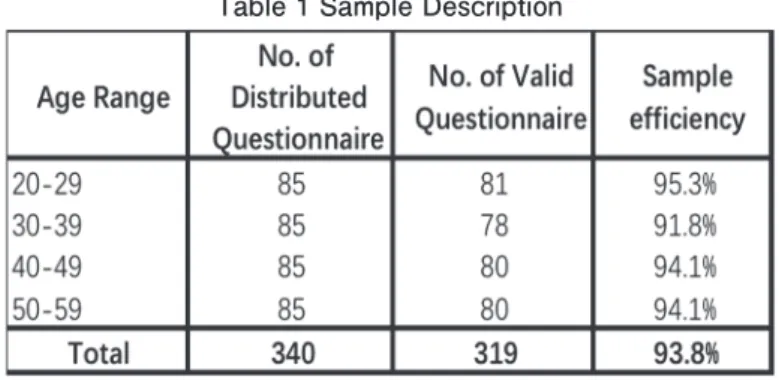
Given that part of Chinese youth usually focuses on study before entering university, having no income, having scarce spare time to engage in other activities, this study finally determines the minimum age of respondents to be 20, at which Chinse youth generally enters university and becomes economically independent. In addition, AGs charge a fee for use, people without income have less possibility to use them logically. In order to ensure the accurate identification of survey objects, the authors strictly defined the survey objects at the beginning of the questionnaire and allowed only Beijing citizens who had had no experience of using AGs to answer the questionnaire. Second, since the questionnaire was distributed online, the authors could filter out non-Beijing citizens by looking at the respondents IP address and the personal address filled in by the individuals. In addition, in the front part of the questionnaire, the authors explained the AGs to the respondents as follows Allotment gardens: refer to small vegetable gardens that are divided into small plots of land for urban residents to rent inside the city or in the peri-urban areas. The renters can plant vegetables, fruits and flowers on the plots to experience agricultural farming as well as the joy of agricultural recreation. A total of 340 copies were distributed online, and 319 valid questionnaires were recovered. Table 1 shows the specific age distribution, the number of valid questionnaires, and the sample efficiency. The total sample efficiency reached 93.8%.
2.3. Questionnaire Design
The questionnaire is composed of four sections. The first section gathers respondents demographic characteristics, including gender, marital status, highest level of education, and occupation. The second section gathers respondents housing-related information, which consists of living floor, floor area, housing ownership, housing type, whether or not there is a courtyard attached to the house, whether or not there is public space around the house, and the housing type based on height. The third section gathers respondents concerns about agricultural experience activities, comprising current planting activity, past farming experience, understanding of UA, interest in UA, and understanding of AGs. The fourth section is the use demand for AGs, divided into five levels, namely have strong demand, have demand, general, no demand, and no demand at all. This research is mainly based on the analysis of the above four sections of the survey data.
3. Descriptive Statistical Analysis of Respondents
3.1. Respondents Demographic Characteristics
According to the valid questionnaires, the demographic characteristics of the sample are grasped, as shown in Table 2. Regarding the gender of the respondents, 43.6% of the respondents are male and 56.4% are female. Regarding the marital status of respondents, 72.4% of the respondents are married, while 24.8% are unmarried. In terms of respondents highest level of education, 50.8% of the respondents have a bachelor s degree, and 23.2% have a master s degree or above, indicating that the sample s academic qualification is generally higher than average. In terms of occupation distribution, 52.6% of the respondents are engaged in main mental labor, 14.4% of the respondents are engaged in main manual work. The respondents who are engaged in partial mental work and partial manual work accounts for 22.3%. The occupational classification is based on The International Standard Occupational
Classification6
and The National Occupational Classification Code of P.R.C.7
The average monthly income of respondents is calculated to be 10936.9 yuan, which means that the sample of respondents has a better income status than average. As for the average income of Beijing citizens, the per capita disposable income of Beijing residents is
52,530 y u a n i n 2016.8
B a s e d o n t h i s standard, monthly per capita disposable income of Beijing residents is calculated t o b e 4,377.5 y u a n . I n a d d i t i o n , t h e average wage of employed persons in legal entities reached to 105,161 yuan,
namely 8,763.4 yuan monthly.9
In terms of the average academic qualification of Beijing citizens, the average number of years of education for the employed population reached 12.7 years in 2015̶ which means that at least the senior high school has been completed̶and the employment population with a college education or above reached 47.1% in the
same year.10
Based on the distributions of education, occupation, and monthly income of respondents, this sample can be seen to represent the middle class of Beijing.
3.2. Respondents Housing-related Information
The details related to the respondents current housing are shown in Table 3. According to the calculations, the
average residential area of respondents is 96.61m2
. In respect of housing ownership, 63.0% of the respondents or their spouses own their current housing, and 20.7% of the respondents live in rental housing without ownership. Regarding the type of housing, 79.9% of the respondents live in ordinary unit housing, which is also in line with the living status
of most Chinese people. Ordinary unit housing is the most common form of residential occupancy in China. At present, more than 90.0% of the residential forms in China s residential market (including developed and to-be-developed) are unit
housing.11
Unit housing is usually a multi-story residential building, sub-high-rise residential building, or high-rise residential building. However, an apartment house in China is generally in the form of dual-use housing for commercial and residential use, which is not the preferred residential pattern for ordinary people. A Chinese townhouse or villa is equivalent to a Japanese d e t a c h e d h o u s e , w h i c h i s n o t t h e C h i n e s e mainstream model of residence either. Only 2.2% of respondents currently live in townhouses or villas. In terms of the type of housing defined by the height of the building, the Chinese standard of division is as follows according to Article 3.1.2 of
12
: a residence with 1-3 floors is defined as a
low-rise residence; a 4-6-floor residence is a multi-story residence; a 7-10-floor residence is a sub-high-rise residence; an 11-30-floor residence is a high-rise residence; and a residence more than 30 floors tall is a super high-rise residence. Among the respondents, 35.7% live in multi-story residences and 29.8% live in high-rise residences.
3.3. Respondents Concern about Agricultural Activities
Respondents concern about agricultural activities can be partially represented by current planting activities and past farming experience. In this study, past farming experience is defined as having farming experience in the past, but no longer conducting any farming activity at present; current planting activity is defined as engaging in some kind of planting activity at the
moment regardless of whether having farming behavior or not in the past. In terms of whether residents perform any form of planting activities currently, 44.5% of the respondents said that they do not, and 55.5% of the respondents said that they do, as shown in Figure 1. Among them, the proportions of respondents who are engaged in planting activities on home balconies and in the public spaces of
Table 3 Respondents Housing-related Information
their residential communities are the highest, reaching 37.0% and 16.6%, respectively. It can be concluded that more than half of the respondents currently more or less have some kind of planting activities. Planting on the balcony is the mainstream way of having a daily agricultural experience. However, a considerable number of respondents will plant in the public spaces of their residential community if this behavior is permissible by the residential community.
Similarly, when asked whether residents had farming experience in the past, 40.6% of the respondents said that they had not, and 59.4% of respondents said that they had, as shown in Figure 2. In spite of this, compared with the fact that 55.5% of respondents currently have planting practices, the proportion of people involved in planting activities nowadays has decreased, which also highlights the necessity of the existence of AGs, promoting more people to participate in urban agriculture and integrating simple agricultural farming into daily life. Among the respondents who have had farming experience in the past, planting on the balcony accounts for the largest proportion, with a proportion of 26.3%,
followed by farming experience that organized by schools or units, with a proportion of 14.1%. The proportions of respondents who spontaneously used experience farms and cultivated in the public green spaces of their residential communities are the lowest, at 1.3% and 6.6% respectively. Consequently, we can conclude that whether in the past or in the present, planting on the balcony is the dominant method of agricultural activity.
Regarding the degree of familiarity and interest in UA and AGs, the details are shown in Table 4. As many as 48.8% of respondents stated that they either did not understand or did not understand UA at all. In comparison, only 13.9% of people clearly stated that they a t l e a s t u n d e r s t o o d U A o r t h a t t h e y
Table 4 Respondents Familiarity and Interest in UA and AGs Figure 2 The Situation of Engaging in Past Farming Experience
understood it very much. However, there are more respondents who either do not understand AGs or do not understand them at all, and this proportion is as high as 60.2%. Also, only 10.4% of respondents understand AGs or understand them very much. From the above data, it can be determined that even in Beijing̶the capital of China, and the most economically and culturally developed area̶there are still nearly half of the citizens who have no relevant knowledge of UA, and more than half of the citizens lack understanding of AGs. However, even though they do not understand UA and AGs, their interests in them are relatively strong. 40.1% and 10.7% of the respondents respectively indicated that they were either interested and very interested in UA. In addition, this study also obtained the respondents interest in AGs, and in total, 52.6% of the respondents expressed interest in AGs, from which can be inferred that although more than half of Beijing citizens do not understand AGs, still more than half of the Beijing citizens are at least interested in them.
4. Use Demand for Allotment gardens and Impact Factors
4.1. Use Demand
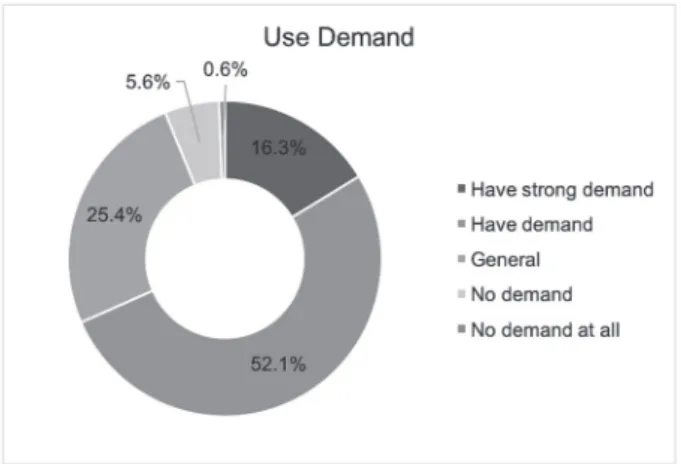
As mentioned earlier, this paper classifies Beijing citizens use demand for AGs into five levels according to the degree of demand, namely have strong demand, have demand, general, no demand, and no demand at all. Figure 3 shows the Beijing citizens use demand for AGs. 52.1% and 16.3% of respondents, respectively, stated that they had demand and had strong demand for using AGs. 25.4% of respondents expressed their general demand for AGs. In total, the proportion of respondents who expressed an explicit use demand for AGs is as high as 68.4%. In contrast, only 6.2% of the respondents expressed clearly that they had no use demand for AGs. Therefore, the use demand for AGs in Beijing is relatively high.
4.2. Classification of Impact Factors
This paper divides the impact factors of use demand into three dimensions, as shown in Table 5. The first dimension is the demographic factor, the second dimension is the housing-related factor, and the third dimension is the agricultural activity-related factor. The demographic factors include gender, marital status, highest level of education, occupation, monthly income, and age. Housing-related factors comprise floor area, living floor, housing ownership, housing type, housing type based on height, the presence or absence of a courtyard attached to the house, and the presence or absence of the public space around house. Agricultural activity-related factors include an individual s engagement in current planting activity, an individual s engagement in past farming experience, understanding of UA, interest in UA, and understanding of AGs.
4.3. Fisher s Exact Test and Analysis
Prior to data processing, the distribution of a survey sample was first tested using a One-Sample Kolmogorov-Smirnov Test (abbreviated K-S Normality Test). The result shows that the -value of the normality test is less than
0.05, rejecting H0 (the sample data obeys a normal distribution), namely the sample data does not conform to the
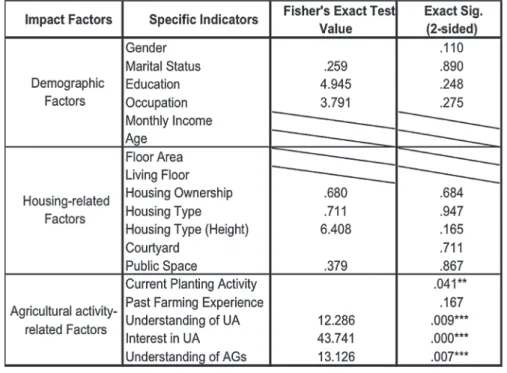
normal distribution. Since most of the variables are categorical variables (multinomial and ordinal), the fisher s exact test of the non-parametric test method is used for correlation analysis of the sample data, as is also shown in Table 5. Fisher s exact test is a statistical significance test used in the analysis of contingency tables, which is valid for all sample sizes, especially small sample sizes (Fisher, 1922; Fisher, 1954). It can be used regardless of the sample characteristics as long as the experimental procedure keeps the row and column totals fixed (Agresti, 1992). Since the fisher s exact test cannot analyze the influence of continuous independent variables, variables of monthly income, age, floor area, and living floor are removed from the fisher s exact test. In addition, in the test, the classification of the dependent variable was processed in order to facilitate the test and satisfy the conditions for subsequently performing logistic regression. The dependent variable of use demand, a five-category variable originally, was divided into a binary variable, with one being have demand, including the original have strong demand, have demand, and general, and the other being no demand, including the original no demand and no demand at all.
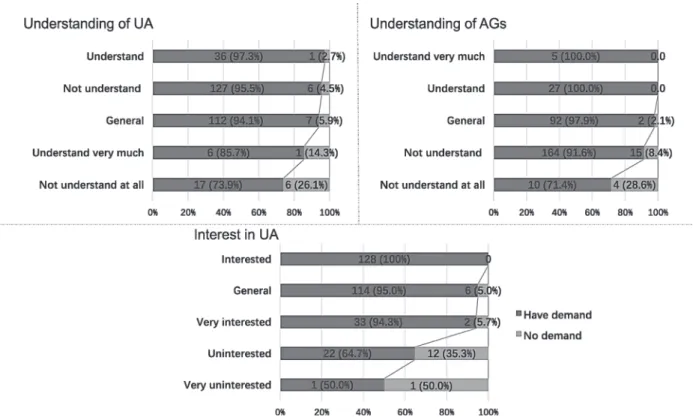
The results of the fisher s exact test show that a total of four indicators have statistically significant impact on the use demand for AGs, namely that the -value is less than 0.05. Among the demographic factors, there is no factor that has a significant influence on the use demand for AGs. In other words, there is no associations between use demand for AGs and demographic factors. Among the housing-related factors, no indicator has a significant impact on use demand. Among the agricultural activity-related factors, current planting activity has a significant impact on use demand at the 0.05 level, while understanding of UA, interest in UA, and understanding of AGs have significant impacts on use demand at the 0.01 level. In other words, respondents use demand for AGs have significant
differences in terms of presence or absence of current planting activity, and different levels of understanding and interest in UA and AGs. Figure 4 and Figure 5 show the specific impacts and differences.
As for the impact of current planting activities on the use demand for AGs, it can be obviously seen in Figure 4 that the respondents who have current planting activity have higher use demand for AGs. Specifically, 96.0% of the respondents engaged in current planting activity have
use demand for AGs, whereas the proportion is 90.1% in the respondents without current planting activity. Regardless of the types of UA, however, it was found that the time of the participants involvement positively affected their satisfaction level and attachment to UA (Oh and Kim, 2017). This study could infer from this viewpoint that the respondents having current planting activity devote more time to UA than their counterparts, which will increase their attachment to UA. Because AGs are a kind of UA, this will also promote the attachment to AGs. For those who have not used AGs at present, this attachment will motivate the use demand for AGs.
Figure 5 shows how the understanding of AGs, and the understanding and interest in UA affect the use demand for AGs. Regarding the changes of use demand with the degree of understanding of AGs, it is presented that understand very much = understand > general > not understand > not understand at all. A trend can be found that the more you learn about AGs, the more you desire to use them. However, in terms of the changes of use demand
Figure 4 Relationship between Current Planting Activity and Use Demand for AGs
with the degree of understanding of UA, it is presented that understand > not understand > general > understand very much > not understand at all. And in terms of the changes of use demand with the degree of interest in UA, it is shown that interested > general > very interested > uninterested > very uninterested. From this data, we can infer that respondents use demand for AGs does not successively descend with the degree of understanding and interest in UA from high to low. In general, respondents who are interested in UA and have a good understanding of AGs have higher demand for AGs compared to respondents who are not.
4.4. Logistic Regression and Variable Setting
Through the simple single-factor non-parametric statistical analysis method described above, it is impossible to describe the magnitude and direction of the impact factors, inefficient to analyze the influence of continuous variables (Zhang and Dong, 2004), and difficult to find the real relationship between the impact factors and the use demand. Therefore, a multiple regression model needs to be established in order to analyze the intrinsic connections between use demand for AGs and its impact factors.
In this research, the dependent variable is use demand for AGs, originally divided into five categories, as described above. Therefore, the dependent variable is an ordinal variable. The range of dependent variables in a linear probability model is between positive infinity and negative infinity, and the results will be limited when the dependent variable is a categorical variable or an ordinal variable. Logit or Probit nonlinear models can overcome this deficiency. Among them, the shape of the logistic regression curve is very similar to that of the standard normal distribution, the sample of the logit model is unnecessary in terms of following the normal distribution, and the maximum likelihood method is used for regression. In addition, the use of the logit model is more extensive, which is a common method for empirical analysis in sociology, clinical science, and econometrics. Moreover, since the dependent variable in this study is an ordinal variable in which the category is greater than three, this study first selected ordinal regression in order to process the data. However, the model did not meet the parallel line test even after replacing the link function, implying that ordinal regression cannot be used. Parallel lines assumption is an important assumption in ordinal logistic regression. According to this assumption, parameters should not change for different categories (Kleinbaum and Klein, 2010), namely the dependent variable s categories are parallel to each other (Fullerton and Xu, 2012). Test of parallel lines is used to examine the equality of the different categories and decides whether the assumption holds or not (Ari and Yildiz, 1991). In this case, there are two ways. First, it is possible to perform multinomial logistic regression, but the dependent variable will lose its ordered attributes; second, different separation points can be used to change the dependent variable into a binary variable, so as to perform binary logistic regression, respectively (Zhang and Dong, 2004). This study adopts the second method in order to perform binary logistic regression. Herein, the original five-category dependent variable is changed into binary dependent variable. One is no demand, including no demand at all and no demand ; the other is have demand, including have strong demand, have demand, and general. The definitions of the dependent variable and independent variables in this study are elaborated upon in Table 6.
Table 6 Definition and Assignment of Dependent Variable and Independent Variables
Additionally, the model established in this study is as follows:
Logit [ ( = 1)] = ln(
( =1) 1െ ( =1)) =
0+
1x
1+… +
px
pP=
exp ( 0+ 1 1+ڮ+ ) 1+exp ( 0+ 1 1+ڮ+ ), 1-P=
1 1+exp ( 0+ 1 1+ڮ+ )Among them, the use demand for AGs is set to dependent variable Y, and is the impact factor of use demand, namely the independent variable. β is a constant term, and β is the regression coefficient corresponding to .
The overall significance test of the binary logistic regression model is shown in Table 7. The -value is 0.000, less than 0.001, which indicates that using this model is reasonable. Additionally, the model summary is presented in Table 8, from which we can see that the Nagelkerke R Square is 0.513; in the Hosmer and Lemeshow test, the value
of Chi-square (χ2
) is 9.107, df is 8, and the -value is 0.333,
greater than 0.05, which together indicate that the overall model fitting condition is good.
Table 8 Model Summary
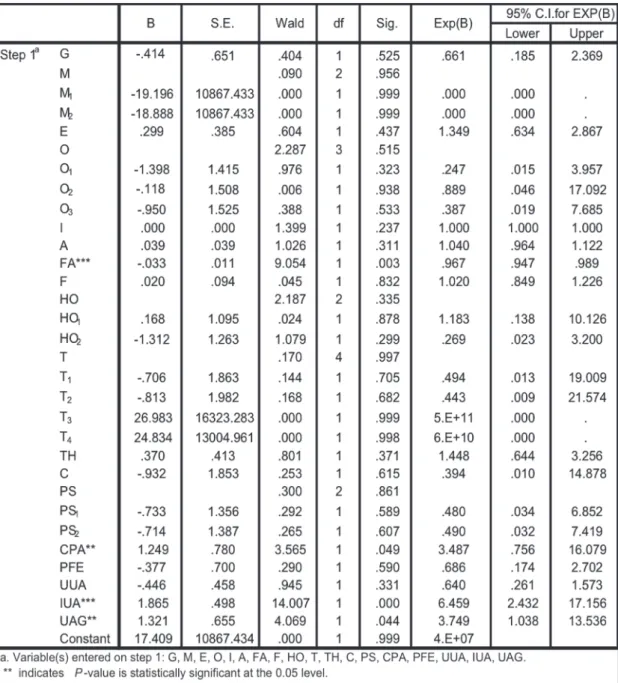
The logistic regression result of the above model is shown in Table 9. In general, the factors that have a statistically significant impact on the Beijing citizens use demand for AGs are floor area (FA), current planting activity (CPA), interest in urban agriculture (IUA), and understanding of allotment gardens (UAG). The corresponding model formula is:
Logit [ ( =have demand)]= -0.033FA + 1.249CPACPA=1 + 1.865IUA + 1.321UAG
(1) The influence of demographic factor on use demand
Different from previous studies (Cai et al 2013; Shi, et al., 2011; Shao et al., 2012), there is no statistically significant impact factor of use demand for AGs among all of the demographic factors in the logistic regression.
(2) The influence of housing-related factor on use demand
In housing-related factors, floor area (FA) has a statistically significant influence on use demand at the 0.01 level. Because the Beta value is negative, and Exp(B)=0.967, we can conclude that floor area has a significantly negative influence on use demand for AG. The Exp(B) represents a change in the independent variable per unit, the odds ratio
(OR), which equals to 1− (( 1)1), is the multiple of the corresponding OR before the change. Herein, we can infer
that for every one-square-meter increase in the floor area, the OR [ (( ))] is 0.967 the original OR. In
other words, people living in houses with a smaller floor area have more possibility to have use demand for AGs compared to people living in houses with a larger floor area. This is understandable for the following reasons.
First, respondents with smaller floor areas are younger and have less family wealth than their counterparts with larger floor areas. This can be confirmed by the research of Hu and Coulter (2017), which indicates that the average
living area of urban households in China is 110 m2
, the per capita living area is 45.5 m2
, and the per capita housing area is proportional to the age̶in line with the housing career theory (Clark et al., 2003). In addition, per capita housing is positively correlated with years of education and family wealth, and solitary individuals enjoy greater personal living space (Hu and Coulter, 2017). Based on above findings, small-area housing is associated with groups who have younger ages, shorter years of education, lower incomes, and more family members. Some studies have discovered that AGs are mostly used by lower income groups in some developing countries as a means of food security (Chaminuka and Makaye, 2015; Hungwe, 2007). Households with 2-4 members are more inclined to use AGs (da Silva, 2016). Although the age, educational level and monthly income in this study do not have statistically significant influences on use demand for AGs, these three factors will jointly affect the citizen s use demand for AGs,
and their influence is intensively reflected on the factor of floor area. In other words, housing area (floor area) is a comprehensive reflection of socio-economic factors. With the increasing demand for a healthy lifestyle and organic vegetables (Zhang et al., 2014), both small-sized and large-sized households hope to consume healthy organic vegetables. However, the price of organic food sold in the market is much higher than that of ordinary commodities. Based on this point, for small-sized households whose incomes range from general to poor, it is more realistic and feasible to cultivate healthy vegetables and fruits free of pesticides and fertilizers by themselves. As a result, small-sized households are more likely to have use demand for AGs in order to grow their own produce.
It is now well established that the dwelling directly and indirectly affects the health of the residents (Ormandy, 2014), physically and psychologically (Evans et al., 2003; Campagna, 2016). Size of space can restrict flexibility, disallowing multiple uses of space, particularly important when amount of space is limited (Evans et al., 2003). Ranson (1991) asserts that housing crowding has a number of adverse effects on physical health, and even worse effects on psychological distress (Evans et al., 2000). An American housing survey specifies that a household is considered
crowded if more than one person per room, and is severely crowded if more than 1.5 persons share a room.13
Based on these studies, the smaller size of the residence means that the space for performing activities is relatively limited, and the occupants of small-sized housing have larger likelihood of suffering the issue of housing crowding, which is harmful to their physical and mental health. However, there is a positive association between green living environment and residents health (Maas et al., 2006, van Dillen et al., 2012, de Vries et al., 2003, Carter and Horwitz, 2014)). Those living in a neighborhood with more green space are suggested to experience better health than those living in a neighborhood with less green space (Hartig et al., 2014, Bowler et al., 2010, Frumkin, 2003). Because AGs are a kind of green space, and also a place to escape pressures of everyday life due to their restorative nature (Buckingham and Theobald, 2003), they can provide natural environment and generate better physical, mental and social health for individuals and communities (Abraham, 2010; Wakefield et al., 2007), and can be accessible around or not far away from residential neighborhoods. Therefore, compared with occupants of large-sized housing, occupants of small-sized housing are more necessary to approach green space in their daily life for the sake of their health, and thereby more likely to generate use demand for AGs.
(3) The influence of agricultural activity-related factors on use demand
In agricultural activity-related factors, CPA and UAG have statistically significant influences on use demand at the 0.05 level, and IUA has a significant influence on use demand at the 0.01 level. Because all of the Bate values are positive, it is indicated that CPA, IUA, and UAG have positive influences on use demand. For the groups who are currently engaged in planting activities, regardless of whether they are cultivating on their own balconies or in the public spaces of their residential communities, they are receiving nutrition education by means of learning about food production and processing, which comes more naturally when growing food (Grebitus et al., 2017), leading to these groups stronger interest in urban farming than those who have no current planting activities. The process of seeding, sprouting, irrigating, and harvesting is to cultivate sentiment, relax, enjoy happiness, share the harvest, and satisfy one s own farming desire (Jin and Zhang, 2018), which will inspire a love for daily farming activities (Qiu and Xu, 2015), prompting them to carry out farming activities continuously, further boosting a need for an exclusive vegetable garden such as an AG. Moreover, whether or not they realize that they are already practicing urban agriculture by performing these small farming practices, these practices will increase the degree of interest in UA as well as AGs. Consequently, people who engaged in current planting activities have a stronger use demand for AGs, which represent one of the forms of UA.
Secondly, for those groups who are more interested in UA, they are also more aware of the significance and irreplaceable roles of UA for urban development and the harmonious coexistence of the environment and humankind
(Ding and Zhang, 2015), and thus they work hard to practice UA in their daily lives. Besides, subjective knowledge regarding UA and a generally favorable attitude towards UA increases the likelihood to grow produce at urban farms (Grebitus et al., 2017). Because AGs are an important form of UA, people who are more interested in UA have a greater possibility to integrate AGs into urban life and their daily lives, which leads to a higher use demand for AGs. Last but not least, this study supports one of the research findings of Cai et al (2013) which has proven that people with a better understanding of AGs are more willing to use them, namely a higher use demand.
5. Conclusion and Policy Implications
Conclusion:
According to a questionnaire survey of 319 citizens without any experience of using AGs in Beijing, as well as a comprehensive analysis of fisher s exact test and logistic regression, we discovered the degree of demand for AGs and the impact factors, and we also identified the strongest impact factor among socio-demographic factors, housing-related factors, and agriculture activity-housing-related factors. The main findings are as follows:
(1) As for the degree of demand for AGs among general citizens, more than half of the respondents have a use demand for AGs in Beijing, among which a part of them even have a strong use demand. Demographic factors have no great and obvious impact on the use demand for AGs, which is a different result from previous studies (Cai et al 2013; Shi, et al., 2011; Shao et al., 2012).
(2) Housing-related factors have a significant impact on use demand for AGs, in which floor area (FA) has a statistically significant negative impact on citizens use demand for AGs. The group who lives in a residence with a smaller floor area has a higher use demand for AGs.
(3) Agricultural activity-related factors have the strongest and most significant impact on citizens use demand for AGs. A higher level of interest in UA will lead to a higher use demand for AGs. No current planting behavior will reduce the use demand for AGs. Overall, people engaged in a current planting activity (CPA), having an interest in urban agriculture (IUA), and an understanding of allotment gardens (UAG) are so-called agricultural enthusiasts, and they have the strongest use demand for AGs, while non-agricultural enthusiasts with less concern about UA and AGs and less farming experience are unfavorable to the development of AGs.
Policy Implications:
The Beijing Municipal Government must actively respond to the high demand for AGs. It is understood that so far only one district government in Beijing̶Haidian District Government̶has participated in the establishment and operation of AGs, while other AGs are established and operated by individuals, enterprises, or village collectives. Beijing s governments at all levels should expand the participation in the construction and management of AGs based on the following aspects:
(1) The government should attract small-sized households to become the real users of AGs by giving them certain preferential policies and establishing AGs close to their residences. First, the government should conduct propaganda regarding AGs in small-size residential communities, which are full of small-scale housing dwellers with limited floor areas. It is necessary to emphasize the AG s role of relieving stress, getting close to nature, and exercising, for these small-size households. Since the income situation of this group is generally not very optimistic, a rent discount should
be offered to people with a floor area below 31.69 m2
area.14
Another alternative method is that the government stipulates each AG to collect the user s floor area and calculate the average value, after which the rent discount should be given to users who are living in houses with a floor area below the average value. The government should also encourage the AG operators to provide users with seeds, farming tools, and farming guidance. In addition, the site selection of AGs is also important, and close to home and convenient to use should be the basic principle. In the vicinity of residential communities with small-sized houses, it is necessary for the government to look for urban vacant land, plan it properly, and utilize it effectively, with one suggestion of turning the vacant land into small-scale AGs, facilitating the use of AGs by small-sized households.
(2) The government should make full use of the powerful propaganda ability of social media in order to attract agricultural enthusiasts to use AGs. The survey finds that 60.6% of the respondents do not understand AGs, while having a knowledge about AGs has positive influence on the use demand for AGs. Therefore, the government must expand the influence of AGs in Beijing first of all. Second, the government should expand publicity about using AGs on websites related to UA, because agricultural enthusiasts who are interested in UA are more likely to visit such websites. Third, the government should encourage current operators of AGs to start or improve their own websites, WeChat public number, and Sina Weibo regarding AGs, and to provide a bulletin of farm experience activities on these social media, attracting agricultural enthusiasts to come and experience AGs, making them willing to use AGs due to having a good experience. Fourth, the government should take advantage of search engines to promote and update the AG project, facilitating agricultural enthusiasts to inquire online and obtain accurate information about AGs in time, such as building an AG column on the urban leisure agriculture channel of some large-flow portals. Fifth, the government should establish a joint association of agricultural enthusiasts, hold regular events, and strengthen exchanges through experience sharing, promoting more agricultural enthusiasts to join the team of using AGs by means of word-of-mouth. Lastly, the government should establish a database of agricultural enthusiasts and inform this group of the current situation and function of AGs in Beijing by email or by posting a brochure, so as to let this group know about the existence of AGs, and thus increase their probability of using AGs.
6.Acknowledgement
Notes
1
Ministry of Agriculture and Rural Affairs of the People s Republic of China. Study on the Functional Positioning System of Urban Agriculture Development. http://www.moa.gov.cn/ztzl/jlh/zlzb/201204/t20120424_2610449.htm, November 8th
, 2018. 2
Ministry of Agriculture and Rural Affairs of the People s Republic of China. Guiding Opinions on Vigorously Developing Leisure Agriculture. http://www.moa.gov.cn/nybgb/2016/dijiuqi/201711/t20171128_5921921.htm, November 8th
, 2018. 3
Beijing Rural Economic Research Center. Overview of the Development of Allotment Gardens in Beijing. http://nyzx.beijing.gov. cn, November 8th
, 2018. 4
The minimum sample size:
n: sample size
E: margin of error (tolerable error)
: confidence level, when 95%-confidence level, =1.96.
π: a proportion of the sample. The maximum variance occurs when π = 0.5. The product of π (1‒π) is 0.25, the largest possible product of a population or a worst-case scenario (Gray, 1990), which can guarantee that the sample size is large enough.
Based on the above formula, the authors adopted 95%-confidence level, 5.5%-margin of error, and π s value of 0.5. 5
Wu Zhongguan. Dictionary of Population Science: Southwestern University of Finance and Economics Press, 1997. 6
UK Department of International Development (DFID) and the World Bank (WBG) Study. China s Vocational Qualifications and Certification System. http://siteresources.worldbank.org/EDUCATION/Resources/278200-1126210664195/1636971-1126210694253/Vocation_Qualification.pdf, November 8th
, 2018. 7
XING Shi. (2016). Chengdu: Southwestern University of Finance and Economics Press. 8
Beijing Municipal Bureau of Statistics • Survey Office of the National Bureau of Statistics in Beijing. Per capita disposable income of Beijing residents in 2016. http://www.bjstats.gov.cn/tjsj/kshcp/201702/t20170210_368396.html, November 8th
, 2018. 9
Beijing Municipal Bureau of Statistics • Survey Office of the National Bureau of Statistics in Beijing. Beijing Statistical Yearbook 2017.
http://tjj.beijing.gov.cn/nj/main/2017-tjnj/zk/indexch.htm, November 8th , 2018. 10
Beijing Municipal Bureau of Statistics • Survey Office of the National Bureau of Statistics in Beijing. The quality of the labor force is steadily improving, and the employment structure is increasingly optimized̶The third analysis of the sample survey of 1% of the population in Beijing in 2015. http://www.bjstats.gov.cn/rkjd/sdjd/201602/t20160224_337285.htm, November 8th
, 2018. 11
Baike. Unit Housing. https://baike.baidu.com/item/单元住宅, November 8th , 2018. 12
Ministry of Construction of the People s Republic of China, General Administration of Quality Supervision, Inspection and Quarantine. Code for Design of Civil Buildings GB 50352-2005. China Building Industry Press, 2005, 34.
13
Mortgage and Housing Corporation. International Housing Indicators Research Report. ftp://ftp.cmhc-schl.gc.ca/chic-ccdh/ Research_Reports Rapports_de_recherche/eng_bilingual/Research_Report_International_Housing_Indicators_w.pdf, November 8th
, 2018. 14
Xinhua Net. Statistics: Beijing urban residents per capita housing area of 31.69 m2
. http://www.xinhuanet.com/local/2016-02/16/ c_128722096.htm, November 8th
References
1. Bailkey, M., Nasr, J. (2000). From Brown Fields to Green Fields: Producing Food in North American Cities. .
2. Antó nio José Dinis Ferreira, J. A., Rosa Isabel Marques Mendes Guilherme, Carla Sofia Santos Ferreira, Maria de Fá tima Martins Lorena de Oliveira. (2018). Urban Agriculture, A Tool towards More Resilient Urban Communities?
93-97.
3. Bell, S., Fox-Kamper, R., Keshavarz, N., Benson, M., Caputo, S., Noori, S., et al. (2016). New York: Routledge.
4. Scotta, A., Deanb, A., Barryc, V., Kottera, R. (2018). Places of Urban Disorder? Exposing the Hidden Nature and Values of An
English Private Urban Allotment Landscape. 185-198.
5. He Baojie, Zhu Jin. (2018). Constructing Community Gardens? Residents Attitude and Behavior towards Edible Landscapes in
Emerging Urban Communities of China. 154‒165.
6. Holland, L. (2004). Diversity and Connections in Community Gardens: A Contribution to Local Sustainability. 285‒305.
7. Kingsley, J. Y., Townsend, M., Henderson-Wilson, C. (2009). Cultivating Health and Wellbeing: Members Perceptions of the Health Benefits of a Port Melbourne Community Garden. 207‒219.
8. Guitart, D. A., Byrne, J. A., Pickering, C. M. (2015). Greener Growing: Assessing the Influence of Gardening Practices on the Ecological Viability of Community Gardens in South East Queensland, 189‒212. 9. Lindemann-Matthies, P., Brieger, H. (2016). Does Urban Gardening Increase Aesthetic Quality of Urban areas? A case Study from
Germany. 33‒41.
10. Hynes, H.P., Howe, G. (2004). Urban Horticulture in the Contemporary United States: Personal and Community Benefits. 171‒181.
11. Hou, J. (2014). Making and Supporting Community Gardens as Informal Urban Landscapes.
79‒118.
12. Mok, H.F., Williamson, V.G., Grove, J.R., Burry, K., Barker, S.F., Hamilton, A.J. (2014). Strawberry Fields Forever?: Urban Agriculture in Developed Countries: A Review. 21‒32.
13. Miller, J.R. (2008). Conserving Biodiversity in Metropolitan Landscapes. A Matter of Scale (but Which Scale? 1‒8. 14. Beatley, T. Biophilic Cities. Integrating Nature into Urban Design and Planning. Island Press, Washington DC, 2011.
15. Hou, J., Grohmann, D. (2018). Integrating Community Gardens into Urban Parks: Lessons in Planning, Design and Partnership
from Seattle. 46‒55.
16. Okvat, A. H., Zautra, J. A. (2011). Community Gardening: A Parsimonious Path to Individual, Community, and Environmental
Resilience. 374‒387.
17. Wakefield, S., Yeudall, F., Taron, C., Reynolds, J., Skinner, A. (2007). Growing Urban Health: Community Gardening in South-east
Toronto. 92‒101.
18. Alaimo, K., Packnett, E., Miles, R.A., Kruger, D.J. (2008). Fruit and Vegetable Intake among Urban Community Gardeners. 94‒101.
19. Ober Allen, J., Alaimo, K., Elam, D., Perry, E. (2008). Growing Vegetables and Values: Benefits of Neighborhood-based Community Gardens for Youth Development and Nutrition. 418‒439.
20. Litt, J.S., Soobader, M.J., Turbin, M.S., Hale, J.W., Buchenau, M., Marshall, J.A. (2011). The Influence of Social Involvement, Neighborhood Aesthetics: and Community Garden Participation on Fruit and Vegetable Consumption.
1466‒1473.
21. Cabral, I., Keim, J., Engelmann, R., Kraemer, R., Siebert, J., Bonn, A. (2017). Ecosystem Services of Allotment and Community
Gardens: A Leipzig, Germany Case Study. 44‒53.
22. Middle, I., Dzidic, P., Buckley, A., Bennett, D., Tye, M., Jones, R. (2014). Integrating Community Gardens into Public Parks: An Innovative Approach for Providing Ecosystem Services in Urban Areas. 638‒645.
23. Speak, A.F., Mizgajski, A., Borysiak, J. (2015). Allotment Gardens and Parks: Provision of Ecosystem Services with An Emphasis
24. Filkobski, I., Rofè, Y., Tal, A. (2016). Community Gardens in Israel: Characteristics and Perceived Functions. 148‒157.
25. Milligan, C., Gatrell, A., Bingley, A. (2004). Cultivating Health : Therapeutic Landscapes and Older People in Northern England. 1781-1793.
26. Bowker, R., Tearle, P. (2007). Gardening as A Learning Environment: A Study of Children s Perceptions and Understanding of School Gardens as Part of An International Project. 83-100.
27. Armstrong, D. (2000). A Survey of Community Gardens in Upstate New York. Implications for Health promotion and Community Development. 319‒327.
28. Morckel, V. (2015). Community Gardens or Vacant Lots? Rethinking the Attractiveness and Seasonality of Green Land Uses in
Distressed Neighborhoods. 714‒721.
29. Brown, K.H., Jameton, A.L. (2000). Public Health Implications of Urban Agriculture. 20‒39. 30.Hynes, H.P., Howe, G. (2004). Urban Horticulture in the Contemporary United States: Personal and Community Benefits.
171‒181.
31. Guitart, D., Pickering, C., Byrne, J. (2012). Past Results and Future Directions in Urban Community Gardens Research. 364‒373.
32. Li Na, Xu Mengjie, Wang Lijuan. (2006). Comparative Study of Urban Agriculture and the Development of Urban Agriculture in
China. 1‒3. (Chinese)
33. Wang Zhongjun, Zhang Guobing. (2008). On the Feasibility of the Development of Allotment Garden in China. 290‒291. (Chinese)
34. Gen Hongli. (2016). The Development of the Allotment Gardens in Germany and the Enlightenment for Beijing. 9‒13. (Chinese)
35. Kellett, J. E. (1982). The Private Garden in England and Wales. 105-123.
36. Cervinka, R., Schwab, M., Schönbauera, R., Hämmerlec, I., Pirgie, L., Sudkamp, J. (2016). My Greden ̶ My Mate? Perceived Restorativeness of Private Gardens and Its Predictors. 182-187.
37. Jakobsson, A., Dewaelheyns, V. (2018). Contemporary Interpretation of the Meaning and Heritage of Early 20th Century Private Gardens: From A Historical Reflection to A Future Outlook in Planning. 210-219.
38. Hermann, M. M. (2015). The Modern Day Victory Garden . 647-653.
39. Wang Zhao-Xia, Wei Weng-Ting. (2015). Exploration on the Design of the Kleingarten Developing towards A Society of Leisure. 67‒71. (Chinses)
40. Chaminuka, N., Makaye, P. (2015). The Resilience of Urban Agriculture in the Face of Adversity from the City Authorities: the
Case of mkoba. .
41. Hungwe, C. (2007). The Effectiveness of Urban Agriculture as A Survival Strategy among Gweru Urban Farmers in Zimbabwe. .
42. Mwakiwa, E., Maparara, T., Tatsvarei, S., Muzamhindo, N. (2018). Is Community Management of Resources by Urban Households, Feasible? Lessons from Community Gardens in Gweru, Zimbabwe. 19‒104.
43. Exner, A., Schützenberger, I. (2018). Creative Natures. Community Gardening, Social Class and City Development in Vienna. 181‒195.
44. Cai Xinyu, Tian Minghua, Sun Yinwa, Wu Xiaomeng, Du Xuexian, Guan Yue. (2013). Impact Factors of Residents Participation
Willingness on Allot Gardens in Beijing. 56‒63. (Chinese)
45. Shi Yan, Cheng Cunwang, Lei Peng, Zhu Yi, Jia Yang, Wen Tiejun. (2011). An Analysis of the Correlation between the Development of Ecotype Urban Agriculture and the Rise of Urban Middle-income Group ‒ Participatory Research Based on the Community Supported Agriculture (CSA) Operation of Little Donkey Farm . 55‒60. (Chinese) 46. Shao Jun; Zhang Yujun, Li Xiong. (2012). Study on Leisure Model of Community Supported Agricultural Allotment Garden.
74‒79. (Chinese)
47. Nadal, A., Cerón-Palma, I., García-Gómez, C., Pérez-Sánchez, M., Rodríguez-Labajos, B., Cuerva, E., Josa, A., Rieradevall, J. (2018). Social Perception of Urban Agriculture in Latin-America. A Case Study in Mexican Social Housing. 719-734.
49. Allison, P. D. (1984). London: SAGE Publications Inc 50. Hughes, J. (2012).
London: SAGE Publications Ltd
51. Göritz, A. S. (2006). Incentives in Web Studies: Methodological Issues and A Review. ), 58-70.
52. Gray, T. H. (1990). . California: SAGE Publications.
53. Fisher, R. A. (1922). On the Interpretation of χ2 from Contingency Tables, and the Calculation of P. 87‒94.
54. Fisher, R.A. (1954). Oliver and Boyd.
55. Agresti, Alan. (1992). A Survey of Exact Inference for Contingency Tables. 131‒153. 56. Oh, J., Kim, S. (2017). Enhancing Urban Agriculture through Participants Satisfaction: The case of Seoul, Korea.
123-133.
57. Zhang Wentong, Dong Wei. (2004). Beijing: Higher Education Press. 58. Kleinbaum, D.G. and Klein M. (2010). Third Edition, Springer, 590.
59. Fullerton, Andrew, S., Xu, J. (2012). The Proportional Odds with Partial Proportionality Constraints Model for Ordinal Response
Variables. 182-198.
60. Ari, E., Yildiz, Z. (2014). Parallel Lines Assumption in Ordinal Logistic Regression and Analysis Approaches. 8-23.
61. HU Yang and Coulter, R. (2017). Living space and psychological well-being in urban China: Differentiated relationships across
socio-economic gradients. 911‒929.
62. Clark W. A. V., Deurloo, M. C., Dieleman, F. M. (2003). Housing Careers in the United States, 1968-93: Modelling the Sequencing
of Housing States. 143‒160.
63. da Silva, M. I., Fernandes, O. C., Castiglione, B., Costa, L. (2016). Characteristics and Motivations of Potential Users of Urban Allotment Gardens: The Case of Vila Nova de Gaia Municipal Network of Urban Allotment Gardens.
56-64.
64. ZHANG Bei, HUANG Zhiping, WEN Xiaowei. (2014). Marketing Incentives, Psychological Reactions and Organic Vegetable Consumers Willingness to Purchase and Behavior ̶ Empirical Analysis Based on Ordinal Logistic Regression Model.
47-56.
65. Ormandy, D. (2014). Housing and Child Health. 115-117.
66. Evans, W. G., Wells, M. N., Moch, A. (2003). Housing and Mental Health: A Review of the Evidence and a Methodological and
Conceptual Critique. 475-500.
67. Campagna, G. (2016). Linking Crowding, Housing Inadequacy, and Perceived Housing Stress. 252-266.
68. Ranson, R. (1991). London: E. & F. N. Spon and WHO.
69. Evans, W. G., Rhee, E., Forbes, C., Allen, M. K., Lepore, S. (2000). The Meaning and Efficacy of Social Withdrawal as a Strategy
for Coping with Chronic Residential Crowding. 335-342.
70. Maas, J., Verheij, A. R., Groenewegen, P. P., et al. (2006). Green Space, Urbanity, and Health: How Strong is the Relation? 587-592.
71. van Dillen, M. S., de Vries, S., Groenewegen, P. P., Spreeuwenberg, P. (2012). Greenspace in Urban Neighbourhoods and Residents
Health: Adding Quality to Quantity. Article e8.
72. de Vries, S., Verheij, A. R., Groenewegen, P. P., Spreeuwenberg, P. (2003). Natural Environments ̶ Healthy Environments? An Exploratory Analysis of the Relationship between Greenspace and Health. 1717-1731.
73. Carter, M., Horwitz, P. (2014). Beyond Proximity. The Importance of Green Space Useability to Self-reported Health. 322-332.
74. Hartig, T., Mitchell, R., de Vries, S., Frumkin, H. (2014). Nature and Health. 207-228.
75. Bowler, E. D., Buyung-Ali, M. L., Knight, M. T., Pullin, S. A. (2010). A Systematic Review of Evidence for the Added Benefits to Health of Exposure to Natural Environments. 456.
77. Buckingham, S., Theobald, K. (2003). Building Alliances for Local Environmental Sustainability. 1-17.
78. Abraham, A., Sommerhalder, K., Abel, T. (2010). Landscape and Well-being: A Scoping Study on the Health-promoting Impact of
Outdoor Environments. 59-69.
79. Grebitus, C., Printezis, I., Printezis, A. (2017). Relationship between Consumer Behavior and Success of Urban Agriculture. 189-200.
80. JIN Shaorong, ZHANG Yingliang. (2018). Excellent Agricultural Culture Embedded in Rural Social Governance: Picture, Predicament and Path. 150-156.
81. QIU Mingming, XU Guangcai. (2015). Farming Culture and Its Industrial Development. 115-120. 82. DING Jing, ZHANG Zhe. (2015). Analysis and Countermeasure of Urban Residents Consumption Demand for Urban Agriculture.


![Table 6 Definition and Assignment of Dependent Variable and Independent Variables Additionally, the model established in this study is as follows: Logit [ ( = 1)] = ln( ( =1) 1െ ( =1) ) = 0 + 1 x 1 +… + p x p P= exp ( 0+ 1 1+ڮ+ ) 1+exp ( 0+ 1 1+ڮ+](https://thumb-ap.123doks.com/thumbv2/123deta/6640179.1141334/13.892.134.761.159.948/definition-assignment-dependent-variable-independent-variables-additionally-established.webp)