Changing Church-state Relations in Colonial and Post-colonial Hong Kong
Coaching Fellow, Nagasaki University
Ng Ka Shing
Abstract: The transfer of sovereignty over Hong Kong to China in 1997 marked the end of Britain colonial rule and the establishment of Hong Kong Special Ad- ministrative Region (HKSAR). While the handover is widely considered a water- shed in the political and social development of Hong Kong, there has been little re- search on its effects on religious lives. From the perspective of churchstate rela- tions, I argue how the British Hong Kong government and Hong Kong SAR gov- ernment have adopted different approaches towards religions and how they can be understood in the larger contexts of colonization and decolonization experi- enced by Hong Kong before and after its handover. I argue that churchstate re- lations in Hong Kong have changed over the past decade, presenting some chal- lenges to Christianity on the one hand and opportunities for the growth of Bud- dhism, Taoism, and other folk religions on the other.
Introduction
On 1 July 1997, the British colonial era flag was brought down, and the HKSAR flag hoisted all over Hong Kong, symbolizing the transition of Hong Kong from a colony under British rule for over 150 years to a Special Administrative Region under Chinese sovereignty. Chinese leaders are highly concerned about the resumption of sovereignty, but they have also shown willingness to maintain the stability of social and political lives and a capitalistic economic system in Hong Kong. Under the “one country, two systems” policy advocated by Deng Xiaoping, Hong Kong maintains a high degree of autonomy and enjoys its executive, legisla- tive, and independent judicial power. Hong Kong ʻʻwould be allowed to keep their very different social systems in place for half a century or even longer” (Vogel, 2011: 478) and ʻʻwould remain a free port and a global financial center” (495).
The handover of Hong Kong has attracted a lot of scholarly attention, espe- cially in the areas of politics (e.g., Li, 2001) and law and governance (e.g., Scott,
研 究 資 料
ChangingChurch-stateRelationsinColonialandPost-colonialHongKong
1998). Most of these studies suggested the increasing interplay between Hong Kong and Mainland China in economic exchanges and political interactions and the growing Mainland Chinese influence on Hong Kong.
In fact, the effects of handover are not just political, economic, or cultural. Re- ligion is also one of the areas on which the transfer of sovereignty exerts its influ- ence. To explore this topic, this preliminary study focuses on two questions: first, what religious policies were upheld by the colonial government and how have they changed since the handover in 1997? Second, how have such religious poli- cies affected the development of religion and church state relations in Hong Kong?
In this paper, I first introduce the long lasting secularization debate and the recent religious economy theory. Through discussing the relationships between religious vitality and political liberalization experienced by most East Asian socie- ties in the past decades, such as Japan, Mainland China, and Taiwan, I argue how Hong Kong, whose sovereignty has transformed from a liberal to communist state, may serve as an interesting counter example to most East Asian countries. From the perspective of church state relations, I argue how the British Hong Kong gov- ernment and Hong Kong SAR government have adopted different approaches to- wards different religions and how they can be understood in the larger contexts of colonization and decolonization experienced by Hong Kong before and after its handover. The main idea of this paper is that the transfer of sovereignty and a de- colonization agenda upheld by the HKSAR government have changed the church state relations in Hong Kong, gradually posing challenges to the status of Christi- anity and favored the development of Buddhism, Taoism, and other folk religions.
Methodology
The first issue concerned in this study is the changes in religious policies in Hong Kong before and after the handover. In this regard, government documents,
such as the (the constitutional instruments of Hong
Kong under British rule), (the current constitution
enacted after 1 st July 1997), and , are relevant materials for analysis. Also, since the effects of educational and cultural policies on the develop- ment of religion are significant, policy changes in these two areas are also con-
cerned in this study. Through examining the policies and “attitudes” towards vari- ous religions adopted differently by the two governments, I look at how the colo- nization and decolonization processes may serve as significant forces in trans- forming church state relations in Hong Kong.
The (De) secularization Debate and the Revival of Religion in East Asia
In the nineteenth century, the ʻdeath of religionʼ was the conventional wis- dom in the social sciences. The secularization theroy argues that the world relig- ion would gradually fade with the advent of industrial society:
Once the world was filled with the sacred ― in thought, practice, and institu- tional form. After the Reformation and the Renaissance, the forces of mod- ernization swept across the globe and secularization, a corollary historical process, loosened the dominance of the sacred. In due course, the sacred shall disappear altogether except, possibly, in the private realm (Mills 1959: 32 33).
Dobbelaere (2002) further argued that religion is losing its influences in soci- ety at three different levels. (1) Individual secularization ( ) is manifested in the decline of church commitment and privatization of beliefs and practices. (2) Organizational secularization ( ) refers to any attempt to secularize or mod- ernize the teachings of the Church in order to adapt to the secular values of soci- ety. (3) Societal secularization ( ) refers to religious authorities of institution- alized religion losing control over other sub systems, like polity, economy, family, education, law, and the like.
In recent decades, however, secularization theory experiences a reinterpre- tation in social sciences. Many scholars criticize that the theory fails to explain, for example, ʻthe continued popularity of churchgoing in the United States, the emer- gence of New Age spirituality in Western Europe, the growth in fundamentalist movements and religious parties in the Muslim world, the evangelical revival sweeping through Latin America, and the upsurge of ethno religious conflict in in- ternational affairsʼ (Inglehart & Norris 2004). Berger (1999), an advocate of the secularization thesis in the 1970 s, also admitted to his own miscalculations and concluded that the resurgence of religiosity can be widely observed in the mod-
研 究 資 料
ChangingChurch-stateRelationsinColonialandPost-colonialHongKong
Fig. 1 Map of East Asia (Google map)
ernized world. Similarly, Stark (1999) argued that no recent religious changes in Christianity are consistent with the secularization thesis. He even argued that ʻit is time to consign secularization doctrine to the graveyard of failed theoriesʼ (1999:
270). Moving beyond the secularization debate, many scholars are increasingly paying attention to how deregulation of religious markets may increase religious activity through increasing the supply of religious goods (Stark, 1999; Iannaccone, 1997). Some even turn their eyes to East Asia to look for interesting insights.
Japan, for example, experienced a revival of religion after the World War Two along with democratization, demilitarization, and the breakdown of State Shintoism. This period is known as , the “rush hour of the gods” (McFarland, 1967). According to Nakano (1987: 131), 403 new religious groups were being founded by 1949, and 1,546 other groups established independ- ence when compared to 13 Shinto sects, 28 Buddhist denominations, and two Christian groups. Membership in non traditional religions rose from about 2 mil- lion in the early 20thcentury to over 21 million in 1975 (Barrett, 1982: 419 420).
Political transitions provide opportunities for Japanese religions to restructure themselves under the new systems in the new settings.
Taiwan has also experienced similar transition. Following its defeat in the Civic War and retreat to Taiwan, the authoritarian Kuomintang (Chinese Nation-
alist Party) strengthened its rule in all aspects of Taiwanese society including re- ligion. Buddhist and Taoist groups were required to register with the state. Relig- ious groups that used to have strong ties with Mainland China, such as Yiguan Dao, were strictly prohibited. The government struggled to eradicate all commu- nist influences and prevent communist spies intervening in Taiwan in the disguise of religion. In the 60s 80s, Taiwan experienced rapid economic development and peaceful democratization. Political liberalization has also led to liberalization of the religious environment in Taiwan. After the end of martial law in 1987, the number of religious groups and believers has increased exponentially (see Chiu, 1996; Katz, 2003). The rapid revival and flourishing of religion in Taiwan is a result of the lib- eralization of religious policy (Lu, Johnson, and Stark, 2008).
The Peopleʼs Republic of China is also a case worth discussing. In the early Communist rule of China, religions were against the atheist ideology of the Chi- nese Communist Party (CCP) and therefore strictly prohibited. Believers were forced to renounce their beliefs; people who refused to do so were sent to jail or even executed. Practicing foreign religions was regarded as colluding with foreign forces and espousing capitalistic ideology. The Communist attack on popular re- ligion was especially high during the periods of land reform (1950 1954) and col- lectivization (1954 1979) for it “reinforced traditional social alignments by em- phasizing community solidarity and autonomy” (Cohen, 1992: 29), values the Com- munists wished to replace with class consciousness and the integration of collec- tivized communities into a socialist economy and polity. Since the 1980s, the loos- ening of control over religion after the economic reform has opened up more space for both religious demand and supply to grow. For example, official statis- tics show that from 1956 to 2009, the numbers of Catholics and Protestant have in- creased from 2.7 to 5.3 million and 0.7 to 16 million respectively. The numbers of clergies and religious facilities have also increased steadily (Yang 2012: 93 5).
Along with the deregulation of state control, the religious market has also become more pluralistic, and supply of “religious goods” continues to grow. The long suppressed religious sentiment is looking for a vent to release. Such religious re- vival is also catalyzed by the rapid economic reforms in China, where many Chi- nese people have struggled in ʻʻthe wild market with existential anxietiesʼʼ and be- gun to seek ʻʻpeace, security, and meaning in religionʼʼ (Yang, 2005: 432).
From the above, we see that Japan, Taiwan, and the Mainland China have ex-
研 究 資 料
ChangingChurch-stateRelationsinColonialandPost-colonialHongKong
perienced an increased level of freedom and vitality in their religious markets which is partly brought by liberalization of their political systems and economic policies in the past decades. However, Hong Kong appears to be an exception in this “trend” of political and religious liberalization witnessed in most East Asian societies. Hong Kong has experienced its sovereignty transferred from a liberal state to a communist state since 1997. Instead of moving from authoritative rule to democratization or liberalization in regime, Hong Kong is actually experiencing
“de colonization” in a way different from former colonies, such as India and most African countries, which gained independence after the end of World War Two.
Instead, it is transforming itself from a British Colony to a Special Administrative Region of China. Such political transition is rare in contemporary history (Macau is another interesting example). By considering religion in Hong Kong during the colonization and decolonization period, this paper may offer a counter example to existing studies that primarily focus on the positive effects brought by political lib- eralization on religion.
In short, there are at least two important reasons for using Hong Kong as a case study. Firstly, the sovereignty of Hong Kong is transferred from a liberal state to a communist state. In this sense, Hong Kong represents an interesting counter example in the existing studies of religion in East Asia which tend to em- phasize the positive influence of political liberalization on religious vitality. Sec- ondly, considering the historical background of Hong Kong, the idea of political lib- eralization is not very useful in explaining changes in the dynamics of religion in Hong Kong. Instead, it is the colonization and decolonization process that have played a significant role in shaping church state religion and religious life in Hong Kong. Therefore, religion in Hong Kong has to be understood in the larger con- texts of colonization and decolonization experienced by Hong Kong before and af- ter its handover.
Changing Religious Demographics of Hong Kong
Religion has a strong presence in Hong Kong society. As a hub of Chinese and Western cultures, a large variety of religion has flourished in this multicultural so- ciety. Both local Chinese religions and Christianity have a strong influence in the life of Hong Kong people. One can easily find Buddhist temples, Taoist shrines,
San jiao temples (mixture of Buddhism, Taoism, and Confucianism), and Christian churches, as well as social and welfare facilities operated by religious groups in every part of Hong Kong. Among the most popular religions are Buddhism and Taoism, followed by Christianity, including Catholic and Protestant churches.
研 究 資 料
ChangingChurch-stateRelationsinColonialandPost-colonialHongKong
Table1.MajorReligionsinHongKong(19972016) Religion SizeFacilitiesSizeFacilitiesSizeFacilitiesSizeFacilitiesSizeFacilities BuddhistAlarge local Alarge local
>one million>400templesaroundone million over400 temples
>one million
hundredsof organizations >600temples>600temples TaoistAlarge local
Alarge local Aboutone million>300temples>one million>300temples
>one million followers
>300temples Protestant300,000 (4.62%)
1,300 congregations 300,000 (4.45%) 1,300 congregations 320,000 (4.63%) 1,400 congregations 480,000 (6.71%) 1,450 congregations 480,000 (6.51%)
1,450 congregations Catholic242,500 (3.74%)60parishes230,000 (3.41%)54parishes246,000 (3.57%)53parishes363,000 (5.07%)51parishes379,000 (5.14%)52parishes HKTotal Population6,489,3006,744,1006,916,3007,154,6007,377,100 Source:
According to the data published by the Hong Kong government (Table 1), there has been no drastic changes in the religious demographics of Hong Kong since its handover in 1997. Buddhism and Taoism continue to be the majority (around 1 million each) and Christianity remains around 10% of the total popula- tion of Hong Kong. The number of religious facilities has not changed significantly either. The slow but gradual growth in religious population also suggests that there has been no negative influence of handover on the general religious partici- pation in Hong Kong, despite the regime has changed from a liberal state to a communist state, which, ideologically speaking, is atheist. Therefore, this trend seems to contradict to the religious market theory, which argues that political lib- eratizaton leads to religious vitality and vice versa. In Hong Kong, political “de liberatization” has not (yet) caused any decline in religious vitiality in terms of
.
If religious popoulation could not tell us much about the religious changes in Hong Kong, another perspective to make sense of such changes is desperately needed. This preliminary study represents an attempt to examine the religious
changes in Hong Kong through the lens of during the
colonial era and after the handover.
Changing Church-state relations in Hong Kong
Yang (2012) suggests that four forms of church state relations can be identi- fied in the world: (1) (e.g., Albania and China under the radical Communists). (2) (e.g., medieval Europe). (3)
(in which several religions are sanctioned whereas others are sup- pressed). (4) (in which no religion is singled out for subsidies or sup- pression, the operation of religions is regulated at a minimal administrative level.) Borrowing Yangʼs typology, religion in Hong Kong appears to be a
both before and after the handover. The policies or philosophies upheld by the two governments, , protect religious freedom and ensure fair com- petition among religious groups. Nevertheless, we should note that, , some policies might have actually favored the development of particular religions.
This part discusses the tenets of religious policies under the Colonial and HKSAR government and argues how they have shaped church state relationships in the
研 究 資 料
ChangingChurch-stateRelationsinColonialandPost-colonialHongKong
two periods differently.
Hong Kong first became a British colony in 1842 when the Qing Dynasty was defeated in the First Opium War. The Kowloon Peninsula and New Territories were added later after the Second Opium War in 1860 and the signing of the
in 1898 respectively (Fig. 2). In the early colonial era, the Britain showed respect to local traditions and religious customs. As long ago as 1841, Charles Elliot, the key founder in the establishment of Hong Kong as a British colony, issued a proclamation:
They [Hong Kong people] are hereby promised protection, in her majestyʼs gracious name, against all enemies whatever; and they are further secured in the free exercise of their religious rites, ceremonies, and social customs; and in the enjoyment of their lawful private property and interests (Bridgman and Williams [18321851] 1941: 63 4).
In the , the principal constitutional
documents of British Hong Kong, there were no mention of religion or regulations of religious affairs. The British Colonial Government made no attempt to impose any control on religion in the colony or intervene in the religious life of its “inhabi- tants”. Following this principle, there was no policy at all and no department in the colonial government to regulate religious affairs. The idea of “laissez faire”
was not only applied to economic policies but also to religion, as government con- trol over religion was kept at a minimum. Religious groups were only required to register as legal associations, societies, or limited companies. As long as religious groups complied with the laws, the government would not interfere in their af- fairs. Since there was literally no law to regulate religion at that time, Kwong (2000: 49) vividly argues that religious freedom was “administratively secured, but not constitutionally protected” in the colonial era.
It was not until the (1991) was enacted in 1991 that the freedom of thought, conscience, and religion was first officially protected by law in Hong Kong. Article 15 of the Bill states that:
1. Everyone shall have the right to freedom of thought, conscience, and re- ligion. This right shall include freedom to have or to adopt a religion or belief of his choice, and freedom, either individually or in community with others and in public or private, to manifest his religion or belief in worship, observance, practice, and teaching.
2. No one shall be subject to coercion which would impair his freedom to have or to adopt a religion or belief of his choice.
3. Freedom to manifest oneʼs religion or beliefs may be subject only to such limitations as are prescribed by law and are necessary to protect public safety, order, health, or morals or the fundamental rights and freedoms of others.
4. The liberty of parents and, when applicable, legal guardians to ensure the religious and moral education of their children in conformity with their own convictions shall be respected.
During the colonial era, religious freedom is protected through administra- Fig. 2 Map of Hong Kong (Google map)
研 究 資 料
ChangingChurch-stateRelationsinColonialandPost-colonialHongKong
tively means (and finally constitutionally since the enactment of the Bill of right in 1991). Every religion was treated equally . Nevertheless, some religions was treated “more equal” that others . Christianity, in particular, was to a large extent privileged by the government. It could be attributed to that fact that the colonial government and Christian churches share a lot of commonalities in their ideologies, cultures, as well as language. Britain was a Christian country, and the Church of England had a significant role to play in social and political af- fairs in the United Kingdom. Therefore, the Anglican Church in Hong Kong did share similar rights in the colony. For example, in public ceremonial protocol, the Bishop of Anglican Church was just ranked below the Governor, the Chief Justice, the Chief Secretary, and the Commander in Chief (Kwong, 2000).
During the colonization period, Christianity was treated more “friendly” than other religious groups in order to strength British cultural influence on Hong Kong society. Even though Christianity has never been enjoying a full monopoly on the religious market of Hong Kong, Christian churches including Roman Catho- lics and Protestant churches were given privileges and greater shares of social re- sources than other religions. Kwong (2000: 57) summarizes some of the rights re- ceived by Christianity in Colonial Hong Kong, which include education and social services, marriage ceremonies, the leadership of ceremonies in particular national functions, and with seats in the legislative council. It is hard to say it was just a ʻco- incidenceʼ that Christian churches enjoyed more privileges than other religions in Hong Kong considering the socio political contexts at that time.
In the 50s to 60s, Hong Kong was still in the early stage of economic develop- ment. Churches played a dominant role in relieving poverty through engaging in charity works and social services. These activities included providing food and liv- ing necessities to people in need and establishing hospitals, nurseries, and commu- nity centers to serve the general public. Many people who received help from Churches became believers, and Christianity successfully built up an image of charitable organizations (Carl, 1999: 340). In 1981, the colonial government reached a compromise with the leaders of the Anglican Church, the Catholic Church, and the Hong Kong Christian Council. This agreement meant that the government would offer special consideration to these groups when they apply for the establishment of new churches, provided that they would operate one of the social services. Since then, Christian churches have developed a “partnership”
with the government in providing public services and social welfare.
Many Christian groups in Hong Kong were supported by churches based in Britain and other Western countries which had enormous financial and human re- sources. Comparing to other religions, they were more resourceful and ready to promote education in Hong Kong. In Carlʼs study (1985) on the early development of Christianity in Hong Kong, he found that as soon as 1845 the British colonial government had appointed priests and missionaries to be counselors of educa- tional affairs and education inspectors working out policies to promote and man- age education development in Hong Kong. In the late 19th century, William Lob- scheid from Chinese Evangelization Society, E. J. Eitel, a former missionary, and Sir John Bowring from Unitarian Church, were appointed School Inspectors (Carl, 1985), further consolidating the influence of Christianity on education. School facili- ties, such as school halls, classrooms, or even playgrounds could become fully util- ized as religious facilities for masses and worships on weekends for the promotion of Christianity. Such practices are still permitted nowadays. Besides, in most Christian schools, Bible Studies were mandatory, and students were required to attend worship and taught to pray and follow the teachings of Christ. Clergies usually enjoyed more power than school principals. And these schools in turn pre- ferred hiring teachers and staff who were also Christians to strengthen the “sa- cred canopy” (see Berger, 1967) for socializing students into faithful believers.
In the 1950s and 60s, the government supported Christian churches to estab- lish new schools in respond to the growing population after the World War II. Ac- cording to Kwong (2002: 151), around 70% of secondary schools in the 60 s were operated by the Christian Churches, including the Catholic, Protestant, and Angli- can. Primary and secondary schools recognized as “traditional famous schools”
are mostly established by Christian groups. Many of their graduates are social elites or government officials with high English proficiency (Carl, 1985: 349). Their existence inside the ʻinstitutionsʼʼ ʻfurther consolidated the influence of Christian- ity on HK society.
Until today, Christianity still enjoys the largest share of the education market.
According to , among the 454 secondary
schools in Hong Kong, there are 234 (51.5 %) sponsored by Christian organizations (Catholic 88 and Protestant 146). Buddhism (21, i.e., 4.6%) and Taoism (6, i.e., 1%) are remarkably the minor sponsors of secondary education. Similarly,
研 究 資 料
ChangingChurch-stateRelationsinColonialandPost-colonialHongKong
reveals that among the 516 primary schools, 284 (55%) are of Christian background. Buddhist and Taoist schools account for 3% and 1.5%
respectively. This structure is not likely to change shortly.
Apart from social services, Christianity also has a significant role in the cul- tural life of Hong Kong people. A look at the legal holiday of Hong Kong reflects the privileges enjoyed by Christianity before 1997. During Colonial rule, religious festivals originated from Christianity including Easter (3 days) and Christmas (2 days) were included in the legal holiday. Easter and Christmas are widely pro- moted and celebrated as an important occasion for family and friends. No other holidays were associated with any other religion. Some religious leaders see this as a form of unfair treatment. For instance, Venerable Kwok Kok, the Chairman of the Hong Kong Buddhist Association writes:
While the foreign beliefs were entitled to a lot of festive activities, the birth- day of the Buddha did not even get enough respect to be marked as a public holiday. It is a clear indicator of the unfair treatment under colonialism (Kok 1997; quoted in Kwong 2000: 140).
Furthermore, there were only two ways to get married in Hong Kong before 1997: visit a Marriage Registration and Records Office operated by the govern- ment or visit a church. It was because under the colonial rule, the rights to con- duct and administer legal wedding were hold by Christian churches and the mar- riage registration office. Ceremonies held in Taoist or Buddhist facilities were not legally recognized. In most cases, non Christians had to visit the Marriage Regis- try of the Hong Kong Government to finish their wedding swear that would be the only way to grant their wedding legal status.
In short, the colonial government imposed a minimum level of regulation on religion. All religions were allowed to operate freely as long as they did not break the law. However, due to the close proximity between the colonial government and Christian churches, church state relationships at that time were character- ized by a kind of “favoritism” towards Christianity. Compared to traditional relig- ious groups, Christianity had been privileged in terms of public resources and given more opportunities in welfare development. These favoritisms have had a
long lasting effect on Hong Kongʼs welfare structure even until today, as shown in the large amount of Christian welfare facilities and the government subvention they receive.
Hong Kong is returned to China on 1 July 1997. The policy of ʻʻOne Country, Two Systemsʼʼ guaranteed Hong Kong to carry on its capitalistic economic sys- tems and maintain its own legislative, administrative, and judicial independence.
The Article 32 and Article 141 of 基本法 (the mini constitution of Hong Kong) are the cornerstones for the safeguard of religious freedom in Hong Kong.
Article 32:
1. Hong Kong residents shall have freedom of conscience.
2. Hong Kong residents shall have freedom of religious belief and freedom to preach and to conduct and participate in religious activities in public.
Article 141:
1. The Government of the Hong Kong Special Administrative Region shall not restrict the freedom of religious belief, interfere in the internal affairs of religious organizations or restrict religious activities which do not con- travene the laws of the Region.
2. Religious organizations shall, in accordance with law, enjoy the rights to acquire, use, dispose of and inherit property and the right to receive fi- nancial assistance. Their previous property rights and interests shall be maintained and protected.
3. Religious organizations may, according to their previous practice, con- tinue to run seminaries and other schools, hospitals, and welfare institu- tions and to provide other social services.
4. Religious organizations and believers in the Hong Kong Special Adminis- trative Region may maintain and develop their relations with religious organizations and believers elsewhere.
The two articles guarantee freedom of religious belief and freedom to preach
研 究 資 料
ChangingChurch-stateRelationsinColonialandPost-colonialHongKong
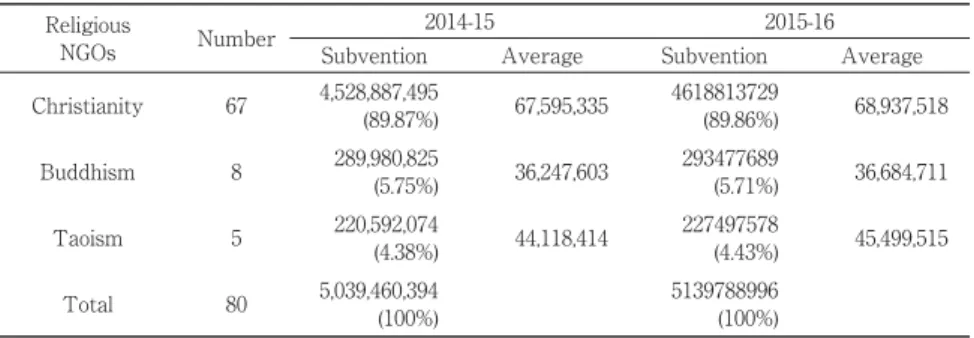
Table 2 Subvention Allocation by Religious Background Religious
NGOs Number 2014-15 2015-16
Subvention Average Subvention Average
Christianity 67 4,528,887,495
(89.87%) 67,595,335 4618813729
(89.86%) 68,937,518
Buddhism 8 289,980,825
(5.75%) 36,247,603 293477689
(5.71%) 36,684,711
Taoism 5 220,592,074
(4.38%) 44,118,414 227497578
(4.43%) 45,499,515
Total 80 5,039,460,394
(100%)
5139788996 (100%) Source: Constructed by author based on Social Welfare Department (2015)
and to conduct and participate in religious activities in public and, protect prop- erty rights of faith based organizations. However, as the transition of sovereignty has brought about changes to the social, political, and cultural lives of Hong Kong people, religion has no exception in this regard.
One of the most obvious changes is that the government has adopted a more lenient policy towards other non Christian religions since the handover. It has in- vited organizations of various religious traditions to join partnerships as govern- mentʼs re distributors in the provision of education and social services in Hong Kong. Table 2 is a summary of the amount of government subvention allocated to NGOs by religious backgrounds in the fiscal year 2014 to 2015 and 2015 to 2016. In both fiscal years, nearly 90% of government subvention that are allocated to relig- ious welfare organizations goes to Christian affiliated groups, and only around 10% goes to Buddhist and Taoist groups. Each Christian welfare organization re- ceived an average of nearly 70 million in each fiscal year, whereas each Buddhist and Taoist group received only about 36 million and 45 million, respectively. How- ever, comparing to the 1960s when Buddhist and Taoist organizations were al- most absent from and uninterested in Hong Kongʼs social welfare (Ng, 2016), they are actually catching up gradually in recent years. Therefore, while Christian NGOs remain the largest provider in social welfare services after the handover, Buddhist and Taoist charitable organizations have started to challenge the “mo- nopoly” enjoyed by Christianity in Hong Kongʼs social welfare.
Regarding education policy, the government has also tried to reform the power structure in school management by proposing the School Based Manage-
ment Policy. The main purpose of the reform is to enhance transparency and ac- countability of school governance. The Education Bureau (2014) states that:
1. School based management seeks to provide schools with enhanced flexi- bility and autonomy in their daily operations and resources management according to the needs of their students.
2. School based management seeks to enhance transparency and account- ability in the use of public funds and school operations by providing a participatory decision making 2 mechanism where all key stakeholders are involved.
Under this policy, all primary and secondary schools in Hong Kong are re- quired to set up incorporated management committees by the year 2010. Also, the proportion of board members representing the school sponsoring body will be reduced to 60%, allowing teachers, parents, alumni and community members to make up the rest of the 40%. It is even said that the government can intervene in the management of schools if disputes between committee members are unre- solved. This move has stirred up a large debate in the society. Many Christian groups voiced out their concerns over the effects of this policy change and criti- cized the government for violating the rights enjoyed by sponsoring organizations.
The Methodist Church of Hong Kong (2004), for example, showed their concerns and dissatisfaction over the policy, as they worried the new policy would “violate the spirit of school based management, disregards the contribution of sponsoring bodies, and disrespect the concerns of sponsoring agencies”. Zen Ze Kiun, the Sixth Bishop of Roman Catholic Diocese of Hong Kong, who is outspoken on social issues and has been named “the new conscience of Hong Kong”, urged the govern- ment to rethink this policy. He criticized the government:
The government requires the sponsoring bodies to pass their power to indi- vidual school committees, but (the government) itself grasps all the power to control every school directly (Zen, 2004).
Despite intense opposition from Christian groups, the policy was finally passed in 2004. The power of decision making no longer lies solely in the hands of
研 究 資 料
ChangingChurch-stateRelationsinColonialandPost-colonialHongKong
the sponsors. This policy could weaken the control of church over school because other different parties, which may not be Christians, can have a say in school af- fairs. It is believed that Christianity is the most affected because of its large amount of educational establishments.
Another area of change is related to the cultural life of Hong Kong people. Be- fore 1997, festivals associated with Christianity were included in the legal holidays of Hong Kong but not for other religions. Starting from 1999, under pressure from Buddhist organizations and groups that advocate Chinese cultures, the govern- ment finally legalized the Buddhaʼs birthday as a public holiday. In an activity held by the Hong Kong Taoist Association on 11 August 2012, the Secretary for Home Affairs Tsang Tak sing openly supported the idea to designate a Sunday as Tao- ist Day to organize celebrations and promote Taoism (Hong Kong Government Press Release, 11 August 2012).
Here are another two examples showing the growing influence of Buddhism and Taoism in the cultural life of Hong Kong people. (1) In 1999 and 2004, at the in- vitation of Buddhist groups and with the help from the Hong Kong government, the Shakyamuni tooth sarira and Shakyamuni finger sarira arrived in Hong Kong and were worshiped by the general public. (2) Since 2001, the Cheung Chao Bun Festival, a local folk tradition of Cheng Chao (an island located South of Hong Kong), has become a representative festival of Hong Kong, attracting hundreds of thousands of local and foreign visitors. With government efforts in promoting the Bun Festival, it was recognized as Grade 3 China Intangible Cultural Heritage in 2009 and World Intangible Cultural Heritage in 2011. These changes show that the government has become more responsive to voices from Chinese religious groups and more active in promoting local traditions.
Government officials also began to show up as distinguished guests in many religious activities held by Buddhist, Taoist, or Confucian groups. Government of- ficial frequently raises the idea of “harmonic society” during these events. In the first Taoist Day held on 11 March 2013, Leung Chung Ying, the Chief Executive of Hong Kong at that time, highly recognized the contributions of Taoism in promot- ing a harmonious society. He said:
Taoism finds its roots in Chinese cultures and has a very long history. Taoism promotes harmony between human and nature, peace, and contentment,
ideas that agree with Chinese traditional moralities and cultures Taoism emphasizes tolerance that is very important for social harmony ( , 11 March 2013).
Leungʼs remarks show that the Hong Kong government is increasingly aware of the social functions played by Chinese religious in promoting social har- mony, especially when political debates over democratization have destabilized the society in recent years.
Policies regarding wedding also became more open and fair. Since 2004, the government has gradually allowed religious facilities to be used as legal wedding venue other than marriage registries and churches. Such facilities include Hong Kong Kun Chung Buddhist Temple and Taoist Sik Sik Yuen Wong Tai Sin Tem- ple etc. In 2006, the government further liberalized the “legal wedding system” by allowing people to conduct their wedding anytime anywhere in the presence of approved lawyers. The church lost its monopoly over the wedding ceremony, and rental income from wedding halls may decline, affecting the finance of church in the long term.
Government statistics offer another interesting perspective to this subject matter. is the official publication of the Hong Kong govern- ment. The colonial government and early HKSAR government seemed to have little understanding about the size of Buddhist and Taoist believers and usually used “a large local” or “many followers” to describe their existence, as in the case of 1997 and 2002. However, since 2007, the SAR government estimated that the numbers of Buddhist and Taoist are over 1,000,000 each. The fact that the govern- ment attempted to provide an official estimation of the size of Buddhist and Tao- ist population implies that the government has began to recognize the signifi- cance and prevalence of traditional religions. This approach also agrees with the pro Chinese cultural policies adopted by the HKSAR government after 1997: to promote the of Chinese traditional religions.
The decolonization principle to reduce British Colonial influences in Hong Kong was further made explicit by Chen Zuoer in 2015, the former vice director of Hong Kong and Macau Affairs Office of the State Council (Chinese Communist Partyʼs body governing Hong Kongʼs and Macauʼs issues). Referring to the rising anti Mainland Chinese movement in Hong Kong, he said:
研 究 資 料
ChangingChurch-stateRelationsinColonialandPost-colonialHongKong
Because de colonization wasnʼt implemented in accordance with the law, things that should be put in the history museum ran into the streets. (
, 2015)
Although Chen did not clarify which aspects of Hong Kong should be “de colonized”, his statement was seen as a reminder to the public that the Chinese Communist Party has set an agenda of decolonization in Hong Kong society. Ac- cording to this logic, Christianity may be considered a form of “British colonial leg- acy” that “should be put in the museum” in the eyes of the Mainland Chinese gov- ernment.
In spite of the governmentʼs increasing affinity towards Chinese religions, Christianity still maintains some social and political influence in Hong Kong. It still prevails in the area of politics as seen from a large amount of self proclaiming Christians inside the cabinet and government bureaucracy. In the last cabinet, there were ten Christians out of fifteen members. Mr. Donald Tsang, the Chief Executive of Hong Kong from 2005 to 2012, is also a Catholic himself. Around 60%
of Legislative Councilors (similar to members of parliament) are Christians. The newly elected Chief Executive in 2017 Carrie Lam Cheng Yuet ngor is also a Catholic. The strong presence of Christians within the government system may have some effects on policy design.
Nowadays, Christianity continues to show a strong presence in social and po- litical movements. Christian leaders (e.g. Cardinal Joseph Zen Ze kiun and general secretary of Hong Kong Church Renewal Movement Wu Chi wai) have been vo- cal about social and political issues. For instance, in the Umbrella Movement, a democratic protest unfolded in September 2014, Christianity has been a visible element of the demonstrations “with prayer groups, crosses and protesters read- ing Bibles in the street” (Levin, 2014). As a result, Christianity has become a target for attack by the pro Beijing camp, who alleged some local churches that have ties with foreign countries had provided resources such as shelter and food to the protesters (Kung, 2014). As Chinese Communist Party (CCP) and the Hong Kong Government are increasingly concerned about foreign forces intervening in the politics of Hong Kong, Christianity may face growing pressure enforced by the authority.
Under the decolonization driven by the Communist state and the Hong Kong SAR government, there are significant changes in church state relations wit- nessed in the past ten years. Realizing its over reliance on Christianity in the past, the Hong Kong SAR government has adopted a more open policy towards non Christian groups in social services and cultural activities. There is a shift from Christian favoritism during the colonial period to pro Chinese religions after the handover. Such shift in church state relationships are consistent with the stateʼs de colonizing agenda to get rid of Western influences in Hong Kong and to pro- mote Chinese traditions and cultures in this former colony.
Conclusion
This paper compares the religious policies in Hong Kong before and after the handover in 1997. It shows that the colonial government had built strong relation- ships with Christian groups by providing opportunities for them to engage in so- cial affairs through education and charitable services. The SAR government, on the other hand, appears to be more responsive to the voices of Chinese traditional religions and folk cultures to promote the status of Chinese cultures and facilitate the decolonization process (i.e. to eradicate the legacy of British colonialism in Hong Kong). The strong influence of Christianity on social and political activity is seen as a colonial legacy by the Chinese government. The active participation of Christian organizations and members in the recent democratic movements is es- pecially considered as a threat to the rule of the Chinese government. Therefore, it is likely that the Hong Kong government (receiving the order from the Chinese government) may try to reduce the influence of Christianity by weakening its role in social welfare services and promoting the pro government Chinese religious groups to play a more active role in Hong Kong society.
Religions in Hong Kong will remain an important topic in the sociology of re- ligion because they are going to face both opportunities and challenges that come along with political transition. The question of how to deal with these challenges and turn them into opportunities would continue to intrigue various religious groups. Due to the increasing influence from China, religious freedom in Hong Kong will continue to attract a lot of attention from the academia. The (or- ganizational) and (individual) level of religious life in post 1997 Hong Kong
研 究 資 料
ChangingChurch-stateRelationsinColonialandPost-colonialHongKong
are also important topics in future studies.
In short, Mainland China, Japan, and Taiwan have experienced liberalization of their political systems in recent decades. Many studies have reported how re- ligions have revived and flourished in these societies. On the contrary, the transi- tion of sovereignty of Hong Kong, from a liberal state to a communist state, is rare in contemporary history. Changes in sovereignty brought about changes in church state relations. During the decolonizing process advocated by the Chinese government, Chinese religions face opportunities to grow, while Christianity is no longer privileged by the authority. In this sense, Hong Kong serves as a very in- teresting case (and counter example) in the study of the relationships among re- ligion, state, and society in East Asia societies, which have seen liberalization tak- ing place in the past decades.
References Barrett, D. B. 1982.
. New York: Oxford University Press.
. 1997. Available at: http://www.basiclaw.gov.hk/en/basiclawtext/ [accessed 17 August 2017]
Berger, Peter L. 1967. The Sacred Canopy Elements of a Sociological Theory of Religion.. New York: Anchor Books.
Bridgman, E. C., and Williams, S W. [1832-1851] 1941. . To-
kyo: Maruzen Kabushiki Kaisha.
Carl, S. 1985. . Hong Kong:
Oxford University Press.
Carl, S. 1999. “The Hong Kong Situation as it Influenced the Protestant Church.ʼʼ In Chan S. H.,
ed., . Hong Kong: Oxford. 338-50.
Cheng, M. M. and Wong, S. L. 2002. ʻʻReligious and Sentiments.ʼʼ In Chan Shun Hing ed., . Hong Kong: Oxford. 33-55.
Chiu, H. Y. 1996. ʻʻChajin yu jiejinyiguandao de zheng zhi guo chengʼʼ ( the Political process of suppressing and legalizing Yiguan Dao). In Hsu, C. K. and Hsiao H. H eds.,
(Taiwanese State and Society). Taipei: Dong Da. 175-197.
Cohen, M. L. 1992. “Religion in a State Society: China”. In Cohen, M. L. ed.
. M. E. Sharpe. 17-30.
Education Bureau. 2014. School-based Management and School-based Management Governance Framework, available at http://www.edb.gov.hk/en/sch-admin/sbm/gov-framework/
index.html [accessed 25 December 2017]
. 1997, 2002, 2007, 2012, 2016. Hong Kong SAR Government.
Hong Kong Government Press Release. 2012. “Home Affairs Bureau supports proposal on Tao- ist Day,” 11 August 2012, available at http://www.info.gov.hk/gia/general/201208/11/P 201208100358.htm [accessed 17 August 2017]
available at Legislative Council Library, http://www.
legco.gov.hk/general/english/library/infopacks/yr11-12/1112infopacks-lc-04-e.pdf [ac- cessed 10 October 2017]
, available at http://www.chsc.hk/psp2012/main.
php?lang̲id=1 [accessed 17 August 2017]
, available at http://www.chsc.hk/ssp2012/
main.php?lang̲id=1 [accessed 17 August 2017]
Inland Revenue Department, Hong Kong Government. 2017. “List of Charitable Institution and Trusts of a Public Character, Which Are Exempt from Tax Under Section 88 of the Inland Revenue Ordiance as at 30 September 2017,” available at http://www.ird.gov.hk/eng/pdf/
e̲s 88 list̲emb.pdf [accessed 31 October 2017]
Katz, P. R. 2003. ʻʻReligion and the state in Post-war Taiwan.ʼʼ In Daniel L. Overmyer ed., . New York: Cambridge University Press. 89-106.
Kung, L.Y. 2014. “Occupy central, umbrella movement, and democracy a theological articula-
tion”, , Vol. 1 No. 2, pp. 80-86.
Kwong, C. W. 2000.
. Waco, Tex.: Tao Founda- tions.
Levin, N. 2014. “Hong Kong democracy protests carry a Christian mission for some”, , available at: www.wsj.com/articles/hong-kong-democracy-protests-carry-a- christianmission-for-some-1412255663 [accessed 25 October 2016]
Li, K. W. 2001. “The Political Economy of Pre- and Post-1997 Hong Kong.” Vol. 28, No. 2. 67-79.
Lu, Y. F., Byron, J., and Stark R. 2008. Deregulation and the Religious Market in Taiwan: A Re-
search Note. . 139-153.
McFarland, H. N. 1967.
. New York: Macmillan.
Nakano, T. 1987. “The American Occupation and Reform of Japanʼs Religious System: A Few Notes on the Secularization Process in Postwar Japan,” , 26.
124-138.
Ng, Ka Shing. 2016.
. Unpublished Ph.D. Dissertation. Hokkaido Uni- versity.
研 究 資 料
ChangingChurch-stateRelationsinColonialandPost-colonialHongKong
. 2015. “Hong Kongʼs failure to ʻimplement de-colonialisationʼ has caused serious problems, says former Beijing handover official”, 20 September 2015, avail- able at http://www.scmp.com/news/hong-kong/politics/article/1859841/hong-kong- suffering-internal-strife-and-failure-implement-de [accessed 25 December 2017]
Scott, I., editor. 1998. . Basing-
stoke : Macmillan ; New York : St. Martinʼs Press.
Social Welfare Department. 2015. Subvention Allocation for NGOs, available at http://www.
swd.gov.hk/doc/ngo/LSGSC/2015-16%20Subventions%20Allocation%201.pdf [accessed 25 December 2017]
, 2013. “teshou: daojiao zhiyuan shehui hexie fazhan” (Chief Executive: Taoism pro- motes harmonious development of society), 11 March 2013, available at http://news.
takungpao.com/hkol/topnews/2013-03/1483711.html [accessed 17 August 2017]
1991. Available at http://www.cmab.gov.hk/doc/en/
documents / policy ̲ responsibilities / the ̲ rights ̲ of ̲ the ̲ individuals / human / BORO- InductoryChapterandBooklet-Eng.pdf [accessed 17 August 2017]
The Methodist Church of Hong Kong, 2004.
, available at http://www.legco.gov.hk/yr02-03/chinese/bc/bc54/
papers/bc54cb2-2542-2c.pdf [accessed 17 August 2017]
Vogel, E. F. 2011. . Cambridge, Mass. : Belknap
Press of Harvard University Press.
Yang, F G. 2005. “Lost in the Market, Saved at McDonaldʼs: Conversion to Christianity in Urban
China.” 44(4). 423-441.
Yang, F. G. 2012. . New York: Ox-
ford University.
Zen, Z. K. 2004. “Li forced us to talk about the school-based management policy again”, May 24, 2004, Official Homepage of the Catholic Diocese of Hong Kong, available at http://www.
catholic.org.hk/zen̲edu/c040524.html [accessed 17 August 2017]
To be submitted to Journal of SGHSS. Please do not cite for work in progress.