九州大学学術情報リポジトリ
Kyushu University Institutional Repository
Artocarpus incisus樹木からのチロシナーゼ及び 5α-リダクターゼ阻害成分
清水, 邦義
九州大学農学研究科林産学専攻
https://doi.org/10.11501/3166810
出版情報:Kyushu University, 1999, 博士(農学), 課程博士 バージョン:
権利関係:
Tyrosinase and Sa-Reductase Inhibitory Components from Artocarpus incisus Tree
Kuniyoshi Shimizu 2000
PREFACE 1
Chapter I Tyrosinase Inhibitors 9
1-1 Introduction 9
1-2 The Inhibitory Components from Artocarpus incisus
on Melanin Biosynthesis 10
I-2-1 Experimental 10
I-2-2 Results and Discussion 16
I-2-3 Summary 28
1-3 Inhibition of Tyrosinase by Flavonoids, Stilbenes and Related 4-Substituted Resorcinols:
Structure-activity investigations 30
1-3-1 Experimental 30
1-3-2 Results and Discussion 32
I-3-3 Summary 47
Chapter II Sa-Reductase Inhibitors 50
11-1 Introduction 50
11-2 The Sa-Reductase Inhibitory Components from
Papua New Guinean Woods 51
11-2-1 Experimental 51
II-2-2 Results and Discussion 56
11-2-3 Summary 61
11-3
11-3-1 11-3-2 11-3-3
11-4 11-4-1 11-4-2 11-4-3
CONCLUSION REFERENCES ACKNOWLEDGMENT
The Sa-Reductase Inhibitory Components from Thailand Plants
Experimental
Results and Discussion Summary
Structure-Activity Investigations Experimental
Results and Discussion Summary
62 62 66 73
75 75 75 82
83 88 103
PREFACE
Woods as found 1n tree and bushes was of pnmary importance to ancient humans in their struggle to control their environment. Subsequent evolution through Bronze and Iron Ages up to our present technologically advanced society has hardly diminished the importance of wood. Today, its role as a source of paper products, furniture, building materials, and fuel is still of maJOr significance.
Wood consists of a mixture of polymers, often referred to as lignocellulose. The cellulose microfibrils consist of an immensely strong, linear polymer of glucose. They are associated with smaller, more complex polymers composed of various sugars called hemicelluloses. These polysaccharides are embedded in an amorphous phenylpropane polymer, lignin, creating a remarkably strong composite structure, the lignocellulosic cell wall.
Wood also contains materials that are largely extraneous to this lignocellulosic cell wall. These extracellular substances can range from less than 1 °/o to about 35% of the dry weight of the wood, but the usual range IS 2- 1 Oo/o. Among these components are the mineral constituents, salts of calcium, potassium, sodium, and other metals, particularly those present in the soil where the tree is growing. Some of the extraneous components of wood are too insoluble to be extracted by inert solvents and remain to give
extractive-free wood its color; very often these are high- molecular-weight polyphenolics. Most of the extraneous components, however, can be removed with neutral, inert organic solvents or water to yield the extractives, a mixture of naturally occurring organic compounds.
Woody tissue ts capable of synthesizing a wide range of natural products, some of great complexity, sometimes In considerable quantity, and at times, in relatively pure form. Some of them, such as simple carbohydrates, phytosterols, nonalkaloidal nitrogenous compounds, and simple aliphatic, alicyclic, and aromatic compounds, are lignocellulosic precursors or are otherwise involved in the intermediary metabolism of the living cell. Among the more interesting materials, however, are the wide array of compounds that woody tissue has developed to protect itself from higher animals, insects, fungi, bacteria, and other decay-causing microorganisms.
The products and chemical intermediates derived from these natural products are from renewable resources, for example woody plants etc., with consequent advantages over competitive materials derived from petrochemicals. The significance of these compounds, however, does not stop here, for they also have a consider a b I e effect on the uti I i z at ion of wood. The odor, co I or, and decay resistance of wood are a function of the extractives.
- 2-
It is worth noting that almost half of all prescription drugs contain substances of natural ongtn. Even asptrtn was first derived tn part from willow bark. Current ethnobotanical studies, especially tn the tropics, are of considerable importance for the identification of pharmaceutically effective, native remedies before the tropical forests are decimated, and native herbal practices are replaced by "modern" medicinal practice.
The investigation of bioactive natural products has, tn recent years, assumed a greater sense of urgency in response to the expanding human population and its subsequent demands for food, good health, and increasing areas of land on which to live.
Pigmentation IS one of most obvious phenotypical characteristics in the natural world. Of the pigments, melanin is one of the most widely distributed pigments found in bacteria, fungi, plants and animals. Melanins are heterogeneous polyphenol-like biopolymers with a complex structure and color varying from yellow to black (Prota,
1988).
Their biosynthesis can be observed by someone who leaves the surface of a cut apple, potato or banana exposed to air (Pawelek eta!.,1982).
The initial reaction tn the pathway of melanin formation from tyrosine through the enzymatic oxidation of a monophenol (L-tyrosine) and/or o-diphenol [L-�-(3,4-dihydroxyphenyl)alanine: L-DOPA]to its corresponding o-qutnone ts catalyzed by a copper-
containing enzyme called tyrosinase
(EC
1.14.18.1) (SanchezFerrer eta!., 1995), as shown in Fig. 1. Tyrosinase, also known as polyphenol oxidase, IS a copper-containing enzyme widely distributed in the phylogenetic scale. It is responsible for not only melanization in animals but also browning in plants. The latter case is considered to be deleterious to the color quality of plant-derived foods and beverages. Tyrosinase catalyzes the oxidation of phenolic substrates to o-quinones, which are then polymerized to brown, red, or black pigments. This unfavorable darkening from enzymatic oxidation generally results in a loss of nutritional value and has been of great concern. (Friedman eta!.,
1996) In addition, tyrosinase inhibitors have become increasingly important in cosmetic (Maeda eta!., 1991) and medicinal products in relation to hyperpigmentation. Hence, tyrosinase inhibitors should have broad applications.
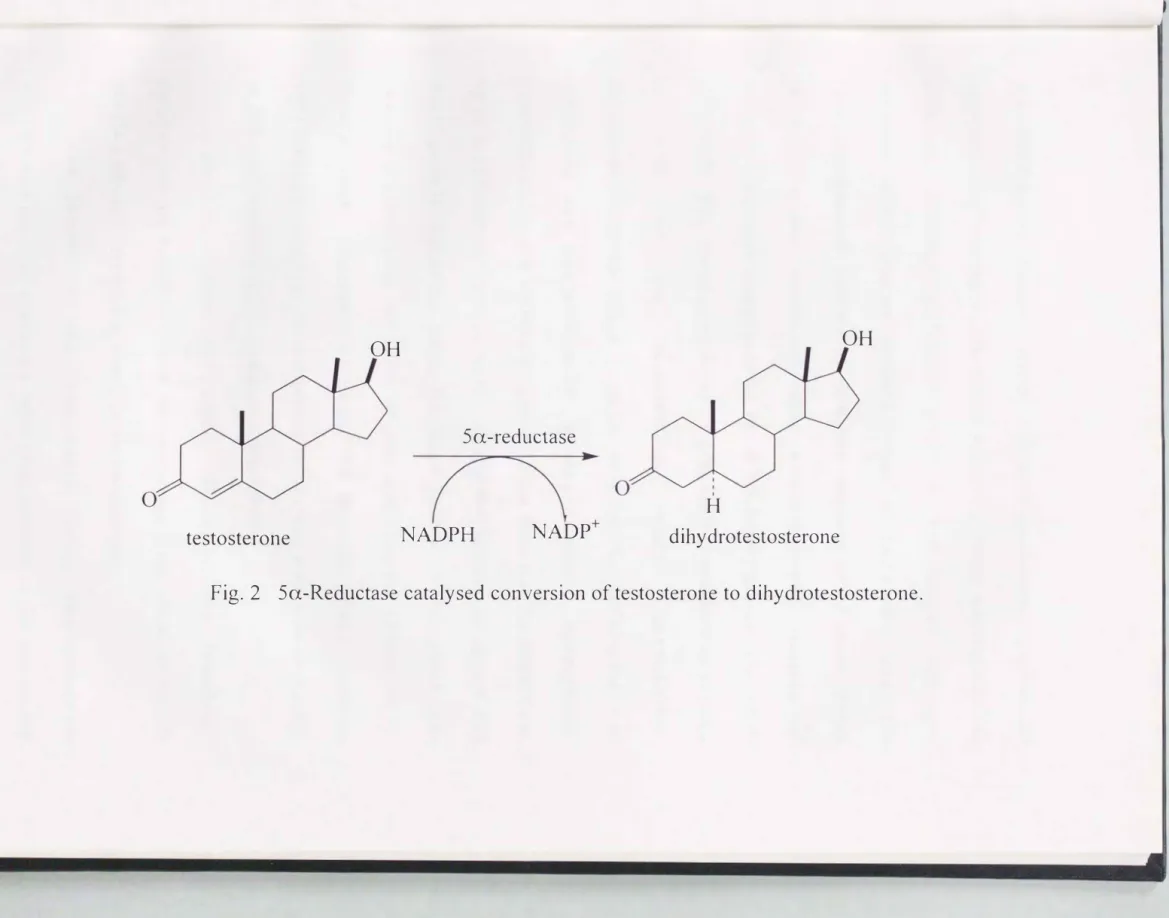
Virilization In mammals IS mediated by two steroid hormones, testosterone and dihydrotestosterone. Sa-Reductase catalyzes the NADPH-dependent reduction of a variety of steroids containing 3-keto, double bond, testosterone to dihydrotestosterone (Fig.2). Both hormones bind to a typical steroid hormone receptor, the androgen receptor, and activate genes containing androgen-responsive DNA sequences. However, the conversion of testosterone to dihydrotestosterone amplifies
- -l -
Vl
HO
Tyrosine
coo- 112 02 H o
0
0
�--
Tyrosinase HO
N H DOPAchrome
coo-
DOPA
coo-
1/2 02 0 L
HO
HO
coo-
o-DOPAquinone-W H+
� �
Hcoo-
o-DOPAquinone
�
coo-
LeukoDOPAchrome
Fig. 1 The reaction sequence of the melanin biosynt11esis patlnvay from tyrosine to dopachrome (Garcia-Canovas eta/.. 1982).
I
C\
I
o·
OH
testosterone
Sa-reductase
-
NADPH NADP+
0 H
dihydrotestosterone OH
Fig. 2 Sa-Reductase catalysed conversion of testosterone to dihydrotestosterone.
the androgenic signal: since dihydrotestosterone cannot be aromatized to estrogen, its effect remains purely androgenic. In addition, dihydrotestosterone binds to the human androgen receptor with greater affinity than testosterone, and the receptor-dihydrotestosterone complex appears to be more stable in vitro under conditions that promote transformation of receptor-androgen complexes to the DNA-binding state (Grino et a!., 1990). The circulating level of dihydrotestosterone in plasma
IS 1 I l 0 of the testosterone I eve Is; nevertheless,
dihydrotestosterone plays a major role In the development of secondary sex characteristics. Benign prostatic hyperplasia, prostate cancer and certain diseases of the skin may be dependent upon dihydrotestosterone. Acne, idiopathic female hirsutism and male pattern baldness have all been linked to increased Sa
reductase activity in the areas of the skin effected (Price, l97S;
Darley, 1984; Shweikert et a!., 1974; Brooks, 1986; Tenover, 1991), suggesting that Sa-reductase inhibitors may also be useful in the treatment of these common afflictions.
In this thesis, the author discussed the inhibitory components on tyrosinase and Sa-reductase from tropical woody plants and their structure-activity relationships.
In chapter I, the components having anti-tyrosinase activity and melanin synthesis inhibitory effects in the heartwood
extracts of Papua New Guinean (PNG) wood species were examined by both in vivo and in vitro experiments. Additionally, structure-activity relationships were discussed from the viewpoints of the 4-substituted resorcinol skeleton.
In chapter II, the components having Sa-reductase inhibitory activity in the extracts of PNG and Thai plants were examined and their structure-activity relationships were
discussed.
- 8 -
Chapter I
Tyrosinase Inhibitors 1-1 Introduction
Tropical forest area occupies
40
-50 o/o
of the all forest area in the world. The Papua New Guinea (PNG) mainland and surrounding islands possess an extraordinarily rich flora and great diversity of vegetation types that parallel the diverse physiography of lands. A high proportion of the land area has a forest cover, most of it evergreen rain forest. The great diversity of tropical woods appears in qualitative and quantitative diversity of extractives of the woods from a chemical point of view of the wood components. Recently, we have reported an anti-fungal component, angolensin in PNG rosewood (Pilotti et a!.,199 5).
Thus, the tropical woods will give us a great chance to find bioactive components.
As discussed in Preface, melanin biosynthesis inhibitory compounds are useful not only for the material used In cosmetics as skin-whitening agents but also as the remedy for disturbances In pigmentation. The color of mammalian skin and hair Is determined by a number of factors. The most important factor Is the degree and distribution of melanin pigmentation. Tyrosinase (phenol oxidase) IS known to be a key enzyme for melanin biosynthesis (Sanchez-Ferrer et a I. ,
199 5)
I n plants,microorganism and mammalian cells. Therefore, many tyrosinase inhibitors have been reported (Koiso, 1990) and tested as cosmetics and pharmaceuticals to prevent overproduction of melanin in epidermal layers. For example, kojic acid (Cabanes et a!., 1994) and arbutin (Maeda eta!., 1996) have been utilized as cosmetic agents. Also, tyrosinase is one of the most important key enzymes In the insect molting process (Brunet, 1980) and investigating its inhibitors may be important In finding alternative insect control agents. Furthermore, melanin formation is considered to be deleterious to the color quality of plant
derived food. This broadens the possible use of tyrosinase inhibitors as food additives, in addition to insect control agents and whitening agents. In this chapter, the author has focused on the possibility of using tyrosinase inhibitors as whitening agents for cosmetic products. The author reports here the inhibitory components of Art o carpus inc is 11 s, which showed the strongest inhibitory activity In 23 PNG wood species and discusses structure-activity relationships and inhibitory mechanism.
1-2 The Inhibitory Components from Artocarpus incisus on Melanin Biosynthesis
1-2-1 Experimental
- 1 () -
Sample woods
The meals of 23 PNG wood species (Aibizia fa/cataria, Alstonia scholaris, Amoora s p.' A nthocephalus chinensis, Artocarpus incisus, Buchanania sp., Calophyllum sp., Cananga adorata, Canarium indicum, Canarium oleoseum, Dracontomelon dao, Dysosylum pettigrewianum, Eucalyptus deglupta, Garcinia latissima, Hibiscus e/lipticifolius, lntsia bijuga, Neonuaclea acuminate, Octomeles sumatrana, Palaquium galactoxy!um, Pterocarpus indicus, Termina/ia s p.' Toona surenii and Xanthophyllum papuanum) were obtained from PNG Forest Research Institute. A large amount of wood blocks of A. incisus was obtained from Okinawa prefecture. All voucher specimens are preserved at the herbarium of Department of Forest Products,
Kyushu University in Japan.
Extraction of heartwood meals of 23 PNG species
The heartwood portion was chipped and milled to pass a#
40 screen. The milled heartwood was Soxhlet-extracted with methanol for 10 h.
Extraction and separation of extractives of A. incisus Air-dried milled heartwood of A. incisus (37 kg) was extracted for 10 days with Et.,O at room temperature and the
extract concentrated to dryness. The dry Et20 extract (330 g) was crystallized successively from Et20 I hexane and MeOH. The yellow solid deposited (240 g) was collected and recrystallized from MeOH I H20 yielding compound I. The mother liquor (89 g) was separated repeatedly by column chromatography (CC) and medium pressure liquid chromatography (MPLC) on silica gel using ethyl acetate hexane gradient as eluent. Tyrosinase inhibitory fraction (200mg, TLC, silica gel, ethyl acetate/hexane, 1:1, Rf 0.05-0.4) was obtained. Compound 2 (22 mg), 3 (10 mg), 4 (22 mg), 5 (12 mg), 6 (12 mg), 7 (6 mg), 8 (30 mg) and 9 (13 mg) were isolated from the inhibitory fraction by preparative HPLC (Inertsil PREP - ODS: 20 mm i.d. X 250 mm) using H20 - CH3CN.
Isolated compounds from A. incisus
All nuclear magnetic resonance (NMR) experiments were performed at 400 MHz. Sample was dissolved in acetone-d6, CD30D or DMSO-d6 and chemical shifts were referred to internal TMS for 1H NMR and to deuterated solvents for 13C NMR.
Compound I (Sato et a/., 1996), 3 (Krohn el a!., 1986), 5 (Takasugi eta!., 1978), 7 (Mabry e/ a!., 1970a) and 8 (Sato eta!., 1996): MS and NMR muched well with published data.
Compound 2, (+)-di hydromori n, yell ow powder;
- 12 -
[ar1D+63.5 ° (c 0.10, MeOH).
CD[8]20
(MeOH, nm): +4905 (260), -9437 (294), +4822 (326). FAB-HR-MS m/z: 305.0727 ([M+H]+, calcd. for C15H1307: 305.0662). NMR muched well with published data (Schultz eta!., 1995).Compound 4, (+)-norartocarpanone, pale yell ow;
[ar1D+14.5 ° (c 0.12, MeOH).
CD[8]20
(MeOH, nm): +1015 (256), -4355 (292), +592 (330). MS and NMR were identical to published data (Deshpande eta/., 1975).Compound 6, Artocarbene yellow powder. 1H NMR (acetone-d6 ): o 1.39 (6H, s, H-6"), 5.60 (1H, d, 1 = 9.76 Hz, H-5"), 6.38 (1H, dd, 15._6. = 8.54 Hz, 13._5. = 2.44 Hz, H-5'), 6.44 (IH, d, 1 2.44 Hz, H-3'), 6.47 (lH, d, 1 = 1.46 Hz, H-6), 6.60 (IH, d, 1 1.46 Hz, H-2), 6.66 (1H, d, 1 = 9.76 Hz, H-4"), 6.89 (1H, d, 1 = 16.36 Hz, H-8'), 7.33 (1H, d, 1 = 16.36 Hz, H-7'), 7.39 (1H, d, 1 = 8.55 Hz, H-6'). 13C NMR (400MHz, acetone-d6 ): o 28 (C-6"(-Me)), 77 (C-6"), 104 (C-3'), 106 (C-6), 107 (C-2), 108 (C-5'), 109 (C-4), 117 (C-1'), 118 (C-4"), 125 (C-7'), 126 (C-8'), 128 (C-6'), 129 (C-5"), 141 (C-1), 154 (C-3), 155 (C-5), 157 (C- 2'), 160 (C-4'). Positive ion FAB-MS: m/z 311.
Compound 9, isoartocarpesin, yellow powder; FAB-MS: 355 ([M+H]+). 1H NMR (acetone- d6 ): o 1.04 (6H, d, J = 6.83 Hz, 4",5"-H), 2.39 (1H, m, 3" -H), 6.51 (lH, dd, J = 8.55, 2.45 Hz, 5'-H),6.54 (1H, s, 8-H), 6.56 (1H, d, J = 2.44 Hz, 3'-H), 6.58 (1H,
dd, J = 0.78, 16.12 Hz, 1"-H), 6.72 (1H, dd, J = 7.08, 16.12 Hz, 2"-H), 7.03 (1H, s, 3-H), 7.77 (1H, d, J = 8.55 Hz, 6'-H), 14.01
(1H, s, 5-0H). 13C NMR (acetone- d6 ): o 23.61 (4", 5"-C), 34.38 (3"-C), 94.63 (8-C), 104.78 (3'-C), 105.48 (10-C), 108.91 (3-C), 109.60 (5'-C), 109.88 (6-C), 111.17 (1'-C), 117.75 (1"-C), 131.36 (6'-C), 142.40 (2"-C), 157.00 (9-C), 159.72 (2'-C), 161.19 (5-C), 162.65 (7-C), 162.99 (4'-C), 163.09 (2-C), 184.14 (4-C).
Biological activities
Determination of tyrosinase inhibitory activity
Tyrosinase inhibitory activity was assayed by the dopa chrome method (Hearing, 1 9 8 7) with modification. Zero point one ml of mushroom tyrosinase solution (1250 U/ml, Wako pure chemical industries, Ltd.), 2.0 ml of L-tyrosine (0.1
o/o),
0. 7 ml ofMcilvain buffer (pH 6.8) and 0.2 ml of DMSO with or without s a m p l e , w e r e m i x e d , i n c u b a t e d a t 3 7 oC f o r 2 0 m i n u t e s , a n d t h e absorbance at 4 7 5 n m was me as u red before and after incubation.
The relative tyrosinase activity
(0/o)
added with each sample was calculated as follows : Tyrosinase activity(%)
=(B-A) I
(D-C) X 100. A andB
represent the absorbance in the presence of sam pIe before and after incubation, respectively. C and D represent the absorbance without sample before and after- 1�-
incubation, respectively. Kojic acid (Tokyo Kasei Kogyo Co., Ltd.) was used as a positive standard.
Inhibitory effect on melanogenesis using cultured Bl6 melanoma cells
Inhibitory effect on me 1 an ogene sis us 1 n g c u 1 t u red
B 1 6
melanoma cells was examined by the method previously reported (Tomita e/ a!.,
1990)
with modification. MouseB16
melanomacells (
2.0
X10
4 cells/ml) were subcultured in Eagle's mtntmum e s s e n t i a I m e d i u m . A f t e r2
d a y s i n c u b a t i o n ( 3 7 oC ,5
% C 0::J
, t h e sample dissolved tn DMSO(0.5o/o, 25
�1) was added to the cultured medium to result in the sample concentration of100
ppm.The control was added with DMSO without sample. Kojic acid was used as a positive standard. After the incubation was continued for 4 days, the cell suspension was centrifuged at
2000
rpm for5
minutes. Then the color and volume of resulting cells were compared with control. The whitening degree of the cells was observed with naked eyes.
Inhibitory effect on melanogenesis using brown guinea pig Inhibitory effect on melanogenesis 1n v1vo using brown gutnea ptg was examined by the method previously reported (Imokawa et a!.,
1986)
with modification. Three animals pergroup were used. The back of brown guinea pig was shaved clean by hair clipper. The back was irradiated with J/cm2 (2 mW/cm2
X 500 sec) from UV-B lamp (Toshiba FL40S · BLB) at six times
for two weeks, resulting in pigment formation. Then after a week, the back (1 X 1.5 em) was applied 12.5 111 of sample dissolved in DMSO ( 2o/o ), once a day for 3 weeks. These experiments have been performed twice. The color of resulting back skin was compared with control (DMSO). The blanching effects were evaluated by colorimeter as brightness, estimated as follow: �L
(0/o,
brightness)= L (21 days) - L (1 day). The brightness datawere analyzed with student's t-test. Differences of P < 0.05 were regarded as significant.
1-2-2 Results and Discussion
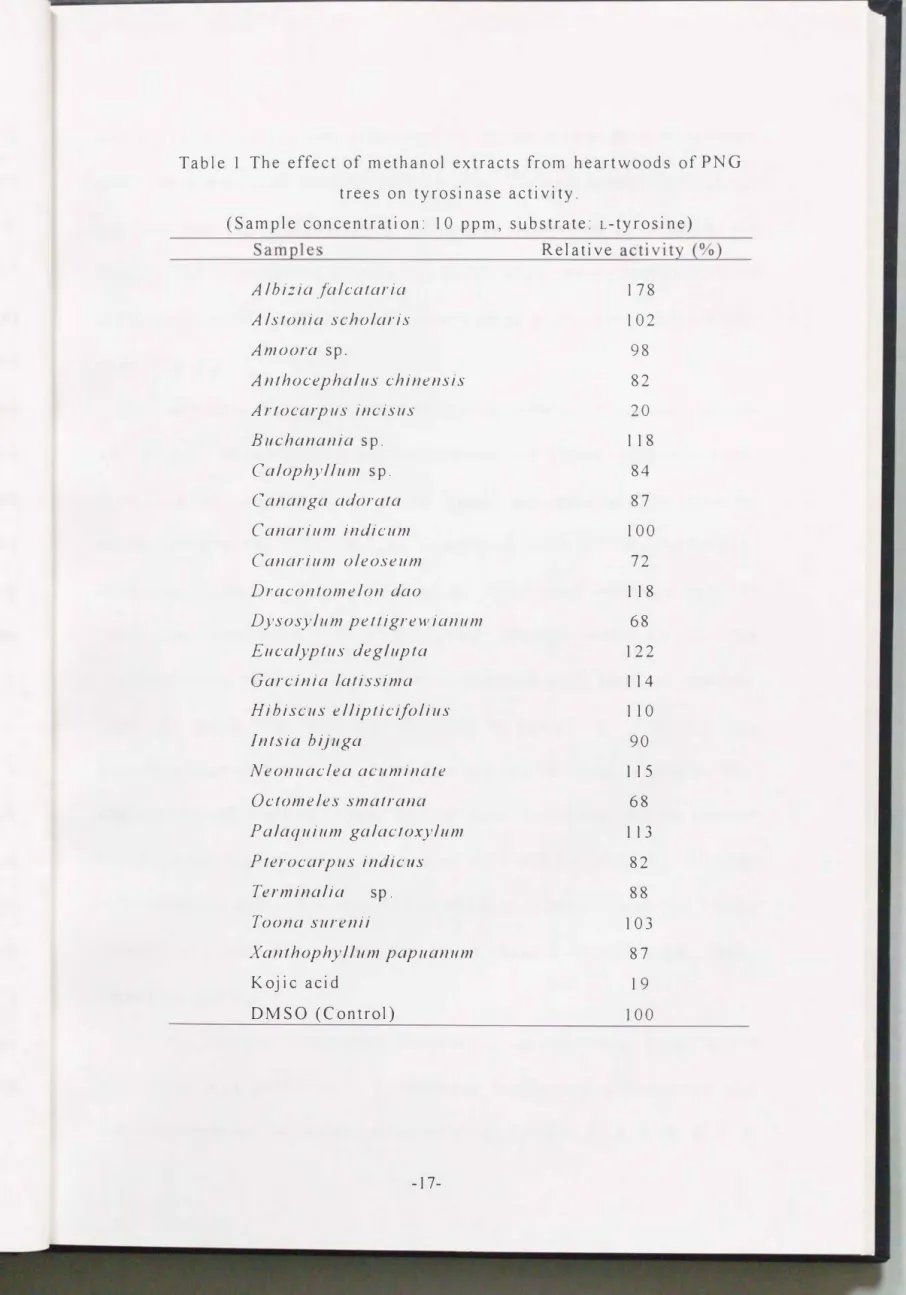
The meals of heartwood of 23 PNG wood species were Soxhlet-extracted with methanol for about 10 h. Each of methanol extracts was examined by tyrosinase inhibitory activity test at the concentration of 10 ppm. The methanol extract of A.incisus showed the strongest tyrosinase inhibitory activity in 23 species (Table
1).
In spite of the crudeness, its activity was almost equivalent to kojic acid known as a potent tyrosinase inhibitor.Therefore, A.incisus was selected for the further investigation.
Melanin biosynthesis inhibitory effect of the methanol
- 16-
Table
1The effect of methanol extracts from heartwoods of
PNGtrees on tyrosinase activity.
(Sample concentration:
10ppm, substrate: L-tyrosine)
Samples Relative activity (o/o)
Albizia fa/cataria 1 78
Alstonia scholaris 102
A moor a
sp.
98Anthocephalus chinensis 8 2
Art o carp 11 s inc is 11 s 20
Buchanania
sp.
11 8Calophyllum
sp.
8 4Cananga adorata 8 7
Canarium indicum 100
Canarium oleoseum 72
Dracontomelon dao 11 8
Dysosyl1tm pettigrewian11m 68
Eucalyptus deglupta 122
Garcinia latissima 114
Hibiscus ellipticifo/ius 11 0
Intsia bZ}uga 90
Neonuac/ea acuminate 11 5
Octomeles smatrana 68
Palaqltiltm galactoxy!Jtm 11 3
P t e roc a rp 11 s in d i c 11 s 8 2
Terminalia
sp .
88Toona surenii 103
XaJ7thophyllltm pap1tan1tm 8 7
Kojic acid
1 9DMSO (Control)
100extract of A. incisus was examined by using mouse B16 melanoma cells. The methanol extract of A.incisus showed potent inhibitory activity and significant color whitening compared to control. Its activity was almost equivalent to kojic acid. The cytotoxicity of the extract to the cells was not observed at a concentration of 100 ppm (Fig.
3).
Melanin biosynthesis inhibitory effect of mother liquor which was obtained by crystallization of ether extracts from A.incisus was examined by using brown guinea pig. The back of brown guinea pig was shaved, irradiated with UV- B, leading to form the pigment. Then a change of skin color with passage of time was observed while applying sample solution at the concentration of 2% to the back, compared with that of control.
After 21 days, �L was
4
.5 + 1.0 o/o (mean +SD)
for thecontrol group and 6.9 + 1.1 o/o for the mother liquor group. The application of mother liquor to the skin for three weeks caused higher color lightening than control
(P <
0.05) (Fig.4).
Neither inflammation nor red spots on the back skin was observed. These results suggest that extracts of A.incisus have high color lightning ability.To isolate tyrosinase inhibitory components, large scale extraction was performed. Tyrosinase inhibitory activity-guided fractionation led to the isolation of compound 1, 2, 3, 4, 5, 6, 7, 8
- 18-
-
'-0
Control Kojic acid
A.incisus
... --...," -
Fig. 3 Inhibitory effect of methanol extracts of A. incisus and kojic acid on melanin synthesis of B 16 melanoma cells at the sample concentration of 100 ppm.
The color of resulting cells was compared with control by naked eyes.
The volume of resulting cells with sample (kojic acid or A. incisus
)
was equivalent to control.I'V 0
f-'
Control
DBft
!'i· ':-.:_= � ---:"i---
. ... ... ..� -_ . ..::.., ....... -.
- c:-_:; -.�:-:-·
_
·.;���q� .
. ... --·.-:·.:.fp.L �- .. ·�:� � ----.._-.• �·_ .. .,.. �:�-:..: - . :-:��.c...----��
• :...;rr;. . • -. -�---
__ .· _;..;.-· . < ..:� =·�
A. incisus
extracts
Fig.4 Effect of mother liquor from
A. inc is uson pigmentation induced on the back of brown guinea pigs at the sample concentration of2% (after 3 weeks).
The application of mother liquor (�L: 6.9+ 1.1 %) caused lighter color than control (�L: 4.5+ 1 .0 o/o) (n
=3,
P <0.05).
and 9 (Fig. 5), although compound 1 and 7 showed no tyrosinase inhibitory activity at the concentration of 10 ppm. Compound 1, 3,
5, 7 and 8 were characterized by their FAB-MS, 1H and 13CNMR
spectra by comparison with data in literature, and identified as artocarpin (Sato eta!., 1996), chlorophorin (Krohn et. a!., l 986), 4-prenyloxyresveratrol (Takasugi et a/., 1978), apigenin (Mabry
et. a!., 1970a) and artocarpesin (Sato eta!., 1996), respectively.
Compound 2 was characterized as (+)-dihydromorin by comparison with data in literature (Schultz eta!., 1995). The CD spectrum { [8]�0 (MeOH, nm): +4905 (260), -9437 (294), +4822 (326)} was characteristic of 2R, 3R - dihydroflavonol (Kasai et.
a I., 1 9 8 8). Therefore, compound 2 was identified as ( 2 R, 3 R ) -5,
7, 2', 4'-tetrahydroxydihydroflavonol.
Compound 4 was characterized as (+)-norartocarpanone by comparison with published data (Deshpande et. a!., 1975). The CD spectrum {[8]�0 (MeOH, nm): +1015 (256), -4355 (292), +592 (330)} suggested the configuration at C-2 to be S (Gaeffield, 1970). Therefore, compound 4 was identified as (25) - 5, 7, 2', 4' -tetrahydroxyfl avanone.
Compound 6 was identified as follows. Compound 6 was obtained as a yellow powder. The 13C NMR spectrum of 6 revealed 19 carbon atoms (DEPT: 8 XC, 9 X CH and 2 X Me). The F AB mass spectral data ([M+H] += 311) together with the 13C NMR data
11 14
20 15
OH OH '
�
8 '2
HO
'
'
HO � 3
I 2
6'HO
W
''�6 # 3 OH
OH 0
2
" "
10
9" "
1 5
#' " " #' ' "
6 8
2
4OH
3
HO
D
OH OHHO
W
'''''�15.
I 2
3 6,
6 #
HO
OH '
� ' 2
8
HO
5"
OH 0
4
5
()&
OH 6 HO
�
'' 2
08
OH 0
6 7
OH HO
1" 5"
d 2" OH 0
3" 4"
4" 8 9
Fig. 5 The chemical structures of compound 1-9.
- 22-
OH
I , 5
"
4
"
#' "
"
2 5
OH
OH
OH
suggested the molecular formula to be C19H1804. The 1H NMR spectrum of 6 suggested the presence of a trans disubstituted double bond flanked by quaternary carbons based on the presence of two doublet olefinic proton resonances at
o
7.33(J
= 16.36Hz) and
o
6.89(J
= 16.36 Hz). Two one-proton doublets ato
6.60
(J
= 1.46 Hz) and 6.47(J
= 1.46 Hz) in the 1H N MR spectrum suggested that the A ring had a trisubstitution pattern. Three aromatic protons on the B ring revealed a clear ABX system[ o
6.38
(dd,
J = 8.54, 2.44 Hz),o
6.44(d, J
= 2.44 Hz) ando
7.39(d,
J = 8.55 Hz)] typical of substitutions at the 2'- and 4'positions on the Bring. The presence of a dimethylchromene ring
[ o
5. 6 0, 6. 6 6( d,
J = 9. 7 6 Hz) assigned to the cis-o I e fin i c protonsand 1.29 (2X Me)] was indicated from the 1H NMR spectrum. 1H- 1H COSY relationships permitted the assignment of aromatic proton chemical shifts and also supported the substitution pattern.
HMQC data were used to asstgn carbon resonances to their attached protons. In the H M B C spectrum, the o 1 e fin i c carbon at
o
126 (C-8') was correlated with the aromatic protons ato
6.60(H-2) and
o
6.47 (H-6). Moreover, the aromatic proton ato
7.39(H-6') caused a cross-peak with the olefinic carbon at
o
125,identified as C-7'. In the NOESY spectrum, NOE enhancement between 6"(-Me) protons at
o
1.39 and the olefinic proton ato
5.60 identified the latter as H-5". Full proof of the skeleton of 6
was obtained by a combination of HMBC, DEPT, 1H-1H COSY, NOESY and HMQC experiments. Therefore, 6 was elucidated as a novel 3 , 2 ' , 4 ' -t r i hydroxy-6", 6"-d i m e thy I -p y ran o ( 3 ", 2" : 4, 5)- trans-stilbene, which the author gives the trivial name
"artocarbene".
Stilbene with dimethylchromene ring Is rare structure tn plant. To the best of our knowledge, this is the first report of the occurrence of a stilbene with dimethylchromene ring In the
Moraceae. Similar structural type had been found tn the Leguminosae (Garcia et a/., 1986). Stilbenes are found In many plant genera, and some are considered to be phytoalexins (Brinker et a!., 1991). They exhibit a variety of biological and pharmacological activities including protein tyrosine kinase (PTK) and protein kinase C (PKC) inhibitory effects (Jayatilake et a!., 1994).
Compound 9 was identified as follow. The J:>c NMR spectrum revealed 20 carbon atoms (DEPT: lOX C, 8X CH and 2
X Me). The FAB mass spectral data ([M+H] += 355) together with the I, �c NMR data suggested the molecular formula to be C20H1806.
The 1H NMR spectrum showed one set of 3-methyl-1-butenyl signals at o 1.04(6H, d, J = 6.83 Hz, Me X 2), 2.39(1 H, m, H>C<), 6.58(1H, Jd, .J = 0.78, 16.12 Hz, =CH-Ph), and 6.72(IH, dd, J =
7.08, 16.12 Hz, CH=) together with one chelated phenolic signal
- 2-+ -
at o 14.01 (1H, s, C -5 OH). The ABC type coupled aromatic proton signals appeared at o 6.51(1H, dd, J = 2.45, 8.55 Hz), 6.56(1H, d, J = 2.44 Hz) and 7.77 (1H, d, J = 8.55) were reasonably assigned to the H-5', H-3', and H-6' of a 2', 4' - dioxygenated flavone, respectively. The other two aromatic singlets at o 7.03 and 6.54 were assigned as the H-3 and H-6 or H-8 signals of a flavone as in artcarpetin B (Chung eta!., 1995).
The 13C NMR spectrum provided signals due to a 3-methyl-1- butenyl moiety: o 23.61 (CH3- X 2), 34.38 (H>C< ), 117.75, 142.40 (-CH =CH-) (Hano et a!., 1990). COLOC data were
analyzed in order to clarify the location of the 3-methyl-1-butenyl group and to assign all NMR signals. H-1" showed correlation with C-5 (o 161.19) and C-7(6 162.65). In addition, o 6.54(H-8) was correlated to the carbons of C-7(6 162.65), C-9(6 157.00) and C-1 O(o 1 05.48). These spectral data indicated that the 3-methyl- 1-butenyl group should be substituted at C-6. 1H-1H COSY relationships permitted the assignment of aromatic proton chemical shifts and also supported the substitution pattern. 13C-1H COSY data were used to asstgn carbon resonances to their attached protons. Full proof of the skeleton of 9 was obtained by a combination of COLOC ' DEPT 1H-1H COSY and 13C-1H COSY
' .
experiments. Therefore, 9 was elucidated as a novel 6-(3"- met h y I-1 "-but en y I)-5, 7, 2 ' , 4' -tetra hydroxy fl avon e, which the
author gtves the trivial name isoartocarpesin
The genus Art o carp 11 s consists of 50 or more spec 1 e s of evergreen and deciduous trees belonging to the Moraceae. The heartwood of Artocarpus species is a rich source of flavones with isoprenoid substituents. In particular, artocarpin was most readily available because it crystallized out of the hexane extract of some timber samples (Harborne eta!., 1975). Also, A. incisus is grown for breadfruit. Studies of flavonoids in Artocarpus species have shown the presence of 3-m e thy 1-1 -but en y 1 substituted flavone s, for example compound 1 (artocarpin), 4 ((+)-norartocarpin), 8 (artocarpesi n) and cycloartocarpin (Venkataraman, 1972).
Compared to the prenylated flavones, fewer 3-methyl-1- but en y I ate d flavone s such as a nove I compound 9 have been reported in the Moraceae.
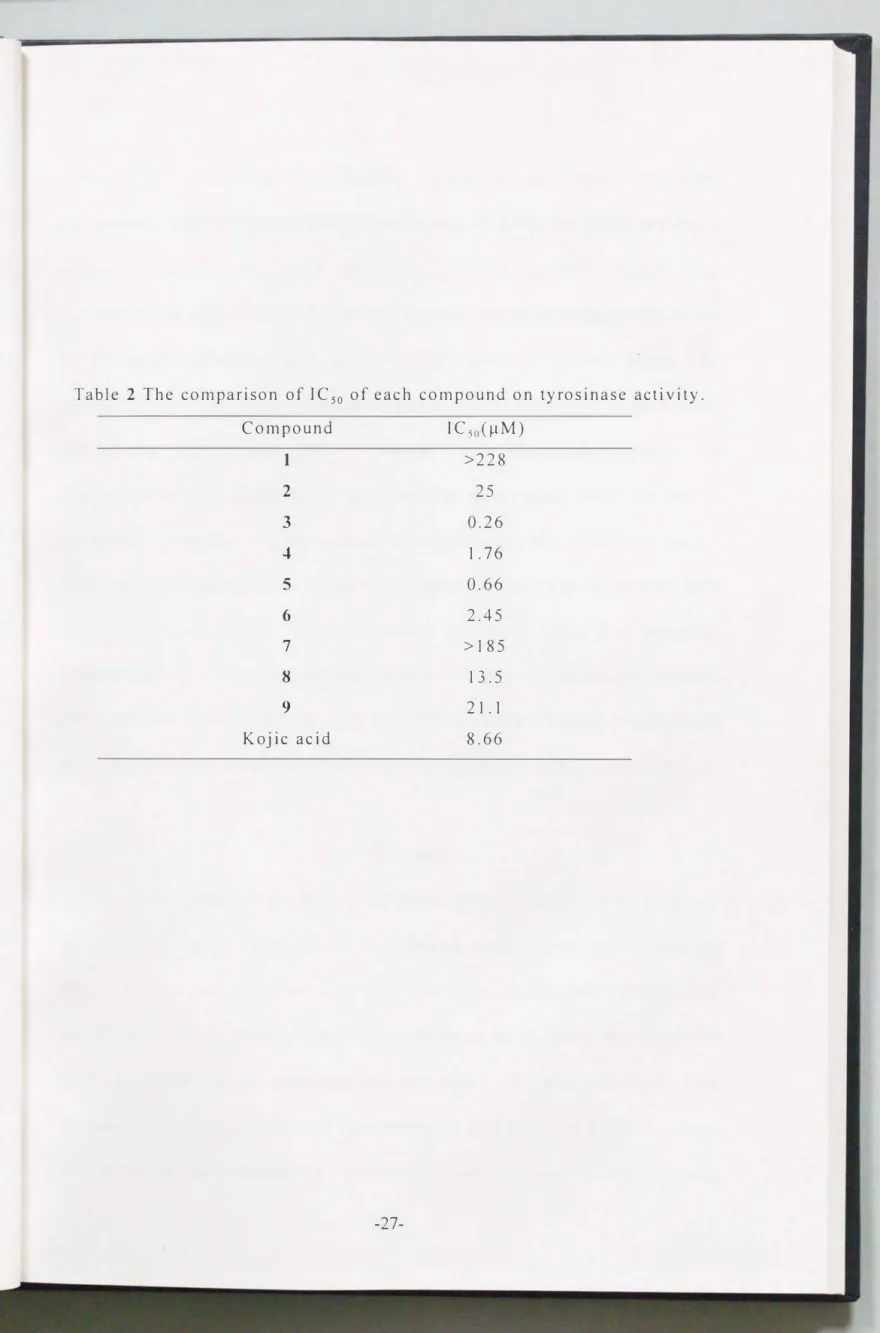
The concentration of 50% inhibition (IC50) of each sample on tyrosinase activity was compared with kojic acid (Table
2).
Compound 1 (artocarpin) and 7 (apigenin) did not show potent tyrosinase inhibitory
tyrosinase inhibitory (chlorophorin), 4
activity. The others showed potent activity. Especially
((+)-norartocarpanone),
compound 5
3 (4-
prenyloxyresveratrol) and 6 (artocarbene) showed much higher tyrosinase inhibitory activity than kojic acid.
This is the first report of melanin synthesis inhibitory
-26-
Table 2 The comparison of IC50 of each compound on tyrosinase activity.
Compound IC50(J1M)
1 >228
2 25
3 0.26
4 1. 76
5 0.66
6 2.45
7 > 185
8 13.5
9 21.1
Kojic acid 8.66
effects of A.incisus heartwood extracts. A.incisus extracts apparently inhibited not only tyrosinase activity but also melanin biosynthesis of cultured B-16 melanoma cells without any cytotoxicity. Furthermore, the extracts showed distinct whitening of back of brown guinea pig without skin irritation. Thus, the potentiality of A.incis11s extracts both as material of a useful skin
whitening agent and as a remedy for the disturbances In pigmentation IS evident. The use In cosmetics and drugs Is possible, if safety Is guaranteed. In this study, the author isolated seven potent tyrosinase inhibitory components including two new compounds.
chlorophorin,
These compounds (+)-norartocarpanone,
were (+)-di hydromori n, 4-prenyloxyresveratrol, artocarbene, artocarpesin and isoartocarpesin. These compounds were likely the cause for melanin biosynthesis inhibitory effects.
1-2-3 Summary
The inhibitory effects of methanol extracts of heartwood of 23 PNG wood species on tyrosinase activity were examined.
The extract of A. incisus showed the strongest tyrosinase inhibitory activity which was equivalent to kojic acid. The extract apparently inhibited melanin biosynthesis of both cultured B 16 melanoma cells without any cytotoxicity and back of brown guinea pig without skin irritation. Thus, the potentiality of the extracts
- 28-
of heartwood of A. incisus both as material of a useful skin whitening agent and as a remedy for the disturbances tn pigmentation ts evident. Tyrosinase inhibitory activity-guided fractionation led to the isolation of seven active compounds including two new compounds which have been characterized as 3, 2 ' , 4 ' -t r i h y d r ox y-6", 6"-d i met h y I -p y ran o ( 3 " , 2" : 4, 5 ) - trans- stilbene, named artocarbene and 6-(3"-methyl-1 "-butenyl)- 5, 7,2' ,4'-tetrahydroxyflavone, named isoartocarpesin. Other
active compounds were (+)-dihydromorin, chlorophorin,
(+)-
nor art o carp anon e, 4-prenyloxyresveratrol, artocarbene and artocarpesi n. These compounds I i kel y caused melanin biosynthesis inhibitory effects.
I-3 Inhibition of Tyrosinase by Flavonoids, Stilbenes and Related 4-Substituted Resorcinols: Structure-activity
investigations
1-3-1 Experimental
Materials
The compounds [(-)-pinocembrin
(2)
(Bick et a!., 1972),(+)-aromadendrin
(4)
(Janes et a!., 1960),( +
)-fustin(5)
(Imamura et a!.; 1967),
(+
)-taxifolin(6)
(Kondo, 1951),(+)
dihydromyricetin
(2)
(Miller eta!., 1979), chrysin(11)
(Harborneet a!., 1982), kaempferol
(13)
(Schultz et a!., 1995), quercetin(14)
(Imamura eta!., 1967), myricetin(15)
(Mabry eta!., 1970b), pinosylvin(21)
(Schultz eta!., 1992), oxyresveratrol(22)
(Malanet a!., 1988) and bis(2,4-dihydroxyphenyl)methane (34) (Kim et
a!., 1993) were provided by the Laboratory of Wood Chemistry, Department of Forest Products, Faculty of Agriculture, Kyushu University in Japan, and their purities and identification had been confirmed by comparison with references. The following reagents were purchased: [(
+
)-flavanone(1) ,
flavone(10) ,
2,4- dihydroxybenzaldehyde(26),
2,4-dihydroxy-N-(2- hydroxyethyl)benzamide(29),
2,4-dihydroxybenzophenone(30) ,
4-hexylresorcinol
(38)
and 4-dodecylresorcinol(39)
from Aldrich Chern. Co.],[(± )-naringenin(3)
and morin(17)
from Sigma Chern.- 30-
Co.], [2, 4-dihydroxyacetophenone (27), 2, 4-dihydroxybenzoic acid ( 2 8)' resorcinol ( 3 2)' L-tyrosine and DL-�- (3, 4- dihydroxyphenyl) alanine (DL-DOPA) from Wako Pure Chemical
Industries, Ltd.)], [4- (2-pyridylazo) resorcinol (31), 4-(2- thiazolylazo) resorcinol (33) from Dojindo Laboratories] and [4- chlororesorcinol (35), 4-ethylresorcinol (40) from Tokyo Kasei Kogyo Co. , Ltd.]. The reagents (+)-dihydromorin (8), (+)
norartocarpanone (9), apigenin (12), artocarpin (16), artocarpesin
( 18)' isoartocarpesin ( 1 9)'
chlorophorin (24), artocarbene
4-prenyloxyresveratrol (23), (25) (Chapter 1-1) and (-)- angolensin (20) (Pilotti eta!., 1995) were isolated previously.
4-Methylresorcinol (36), 4-(phenylmethyl) resorcinol (37) and 4-propylresorcinol (41) were prepared by reduction of 26, 30 and 2', 4'-dihydroxypropiophenone (Aldrich Chern. Co.) with NaBCH3CN (Aldrich Chern. Co.), respectively. ElMS, m/z: 36 (M
+ :124), 37 (M+: 200), 41(M+: 152).
Enzyme assays
Mushroom tyrosinase [EC 1.
14. 18.1] activity was determined by using L-tyrosine or DL-DOPA as the substrate. L
Tyrosine oxidation assay was done as described in chapter I-1.
DL-DOPA oxidation assay of 0.1 ml of mushroom tyrosinase
solution (625 U/ml, Wako Pure Chemical Industries, Ltd.), 0.7 ml
0 f D L-
D
0 P A buffer so 1 uti on ( 2. 0 mM),
0. 1 m 1 ofM
c I 1 vain buffer(pH
6.8)
and 0.1 ml ofDMSO
with or without sample were mixed a n d i n c u b a t e d a t 2 5 oC . A c o n t r o 1 r e a c t i o n w a s c o n d u c t e d w i t h o u t the test sample. The absorbance was measured at 475 nm before and after incubation. The percentage of inhibition of tyrosinase was calculated as follows: tyrosinase inhibition (0/o)=(A - B) /A
X 100, where
A
represents the difference in the absorbance of thecontrol sample between the incubation time of 0.35 and 0.45 min, and
B
represents the difference in the absorbance of the test sample between the incubation time of 0.35 and 0.45 mtn. The results were from the three concurrent readings and eachS.D.
wasusually within 2o/o of the mean. Kojic acid (Tokyo Kasei Kogyo Co., Ltd.) was used as a positive standard.
1-3-2
Results and DiscussionTo study structure-activity relationships, several flavonoids and stilbenes were tested for their inhibitory activity on tyrosinase (substrate: L-tyrosine) by measuring the concentration required to 50o/o inhibition of this enzyme activity (IC5())· The nine compounds
(8, 9, 12, 16, 18, 19, 23, 24
and25)
isolated from
A. inc!SIIS
were examined for their inhibitory activity to mushroom tyrosinase 1n chapter I-1. Among these compounds, seven compounds, without 12 and16,
exhibited potent- 32-
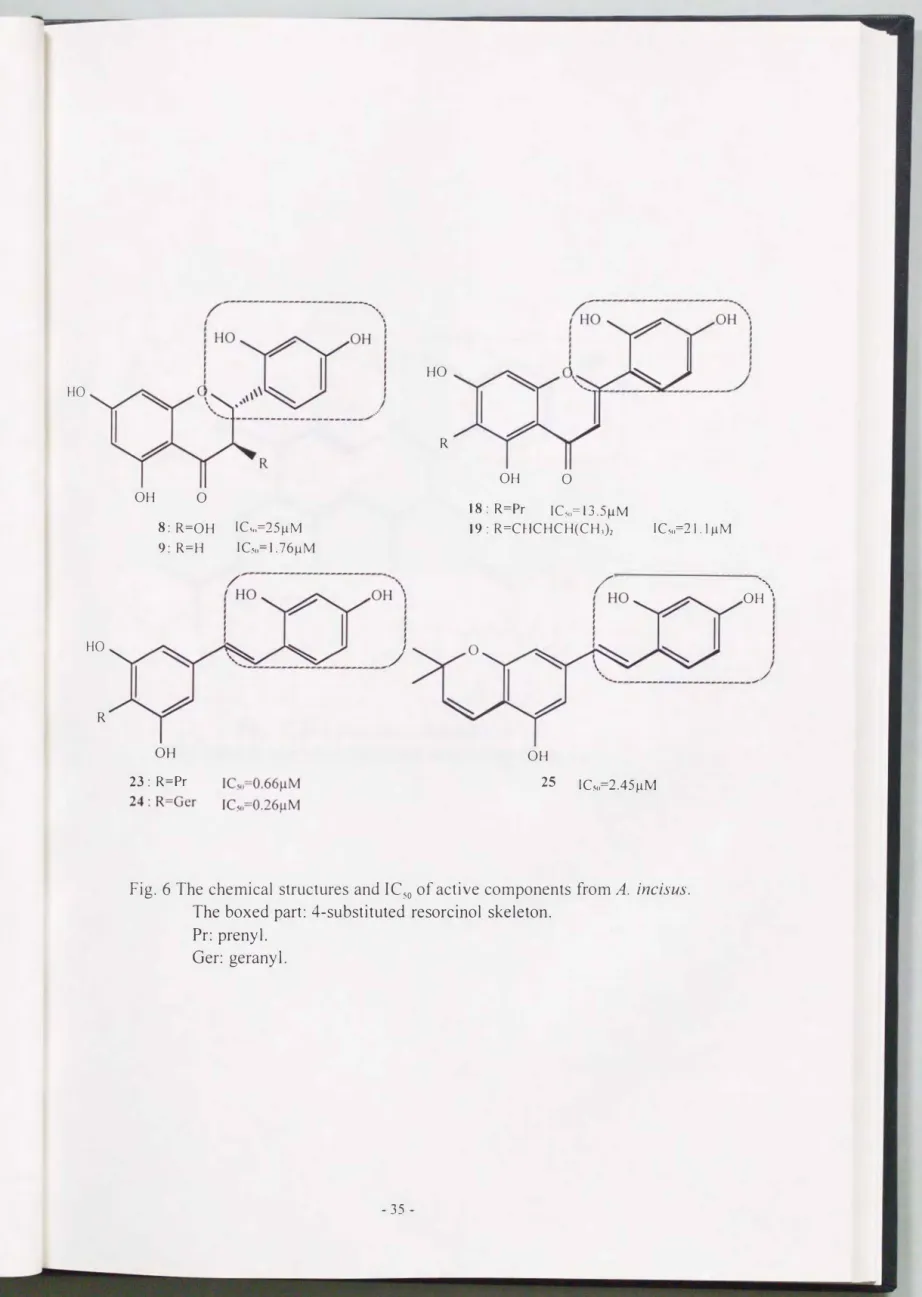
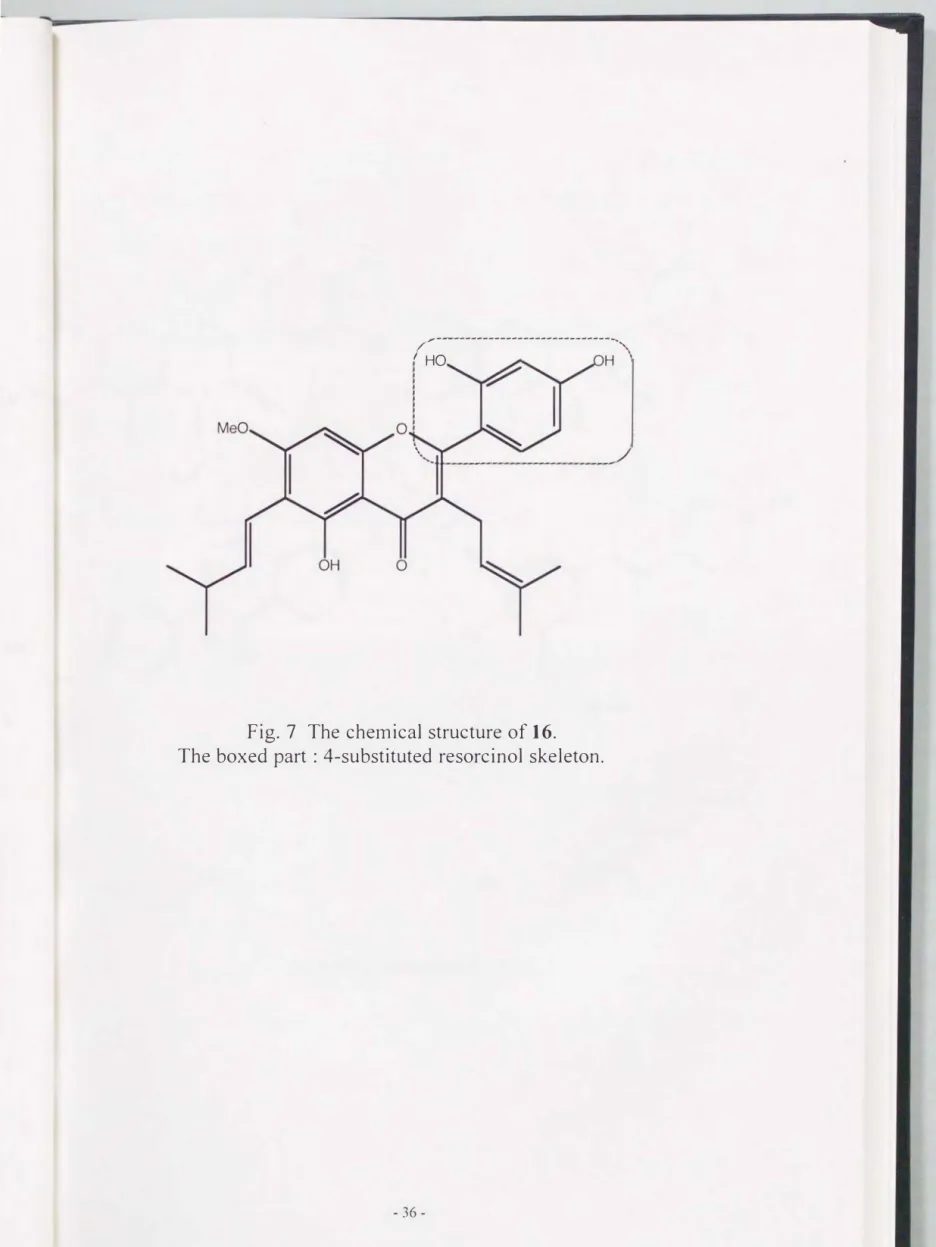
tyrosinase inhibitory activity [Table 3, Kojic acid (positive standard, substrate: L-tyrosine): IC50=8.66 �M]. Interestingly, the tyrosinase inhibitory compounds from A. incisus had 4-substituted resorcinol as a common skeleton (Fig. 6). This brief structure
activity relationship could mean that the 4-substituted resorcinol skeleton Is important for revealing the tyrosinase inhibitory activity. In addition, it should be noted that artocarpin
(16)
didnot show inhibitory activity, tn spite of having 4-substituted resorcinol skeleton at ring B (Fig.
7).
Therefore, to clarify which substructure is important to reveal the tyrosinase inhibitory effect, further structure-activity relationships were examined in detail.The test compounds were flavonoids and stilbenes isolated from various plants, synthesized or commercially available. The results were summarized in Table 3 and Fig. 8.
Among five stilbenes
(21 - 25) ,
four(22 - 25)
having 4-substituted resorcinol skeleton showed potent tyrosinase inhibitory activity, but one
(21)
did not. These results can be explained by the fact that hydroxylation of 21, resulting in22,
Increases its inhibitory activity dramatically. Also, the addition of isoprenyl chain (prenyl or geranyl) to the stilbenes having 4- substituted resorcinol skeleton slightly increased their inhibitory activities (22: IC5n = 0.98 �M �
23:
IC50 = 0.66 �M �24:
ICso = 0.26 11M). Resveratrol (3,4',5-trihydroxystilbene), 3,5-
Table 3 lnhibito� activi� offlavonoids and stilbenes on �rosinase �substrate: L-t�rosine}.
No. name R3 R5 R6 R7 R2' R3' R4' R5' (C2, C3) IC50(�M)
1 (±)-flavanone H H H H H H H H 2S, 2R >200
2 (-)-pinocembrin H OH H OH H H H H 2S >200
3 ( ± )-naringenin H OH H OH H H OH H 2S, 2R >200
4 ( + )-aromadendrin OH OH H OH H H OH H (2R, 3R) lag time decreasea
5 ( ± )-fustin OH H H OH H OH OH H (2R, 3R),(2S, 3S) lag time decreasea
6 ( ± )-taxifolin OH OH H OH H OH OH H (2R, 3R),(2S, 3S) lag time decreasea
7 ( + )-d ihydromyricetin OH OH H OH H OH OH OH (2R, 3R) lag time decreasea
8 ( + )-dihydromorin OH OH H OH OH H OH H (2R, 3R) 25b
9 ( + )-norartocarpanone H OH H OH OH H OH H 2S 1.76b
10 flavone H H H H H H H H >200
11 chrysin OH OH H H H H H H >200
12 apigenin H OH H OH H H OH H > 185b
\.;.J
-+- 13 kaempferol OH OH H OH H H OH H 103
14 quercetin OH OH H OH H OH OH H lag time decreasea
15 myricetin OH OH H OH H OH OH OH lag time decreasea
16 artocarpin Prd OH CHCHCH(CH3)2 OCH3 OH H OH H >228b
17 monn OH OH H OH OH H OH H >330
18 artocarpesin H OH Prd OH OH H OH H 13.5b
19 isoartocarpes in H OH CHCHCH(CH3)2 OH OH H OH H 21.1 b
20 (-)-an go lens in >200
R3 R4 R5 R2' R4'
21 pinosylvin OH H OH H H >46
22 oxyresveratrol OH H OH OH OH 0.98
23 4-preny loxyresveratro I OH Prd OH OH OH 0.66b
24 ch lorophorin OH Gere OH OH OH 0.26b
25 artocarbenec 2.45b
a Means promotion effect which could act as cofactor like diphenol (Sanchez-Ferrer eta/., 1995).
b Obtained from Table 2. c See Fig. 8. d Pr: prenyl. e Ger: geranyl.
HO
HO
R
OH 0
8: R=OH IC5o=25)lM 9: R=H IC5o= 1.76)lM
OH 23: R=Pr
HO
R
OH 0
18: R=Pr IC5o=l3.5)lM
19: R=CHCHCH(CH,)1 IC,o=21.1 )lM
OH
25 IC,o=2.45)lM
Fig. 6 The chemical structures and IC50 of active components from A. incisus.
The boxed part: 4-substituted resorcinol skeleton.
Pr: prenyl.
Ger: gerany 1.
\ OH '�
/.,--------..
I HO H
I
Fig. 7 The chemical structure of 16.
The boxed part : 4-substituted resorcinol skeleton.
- 36-
R' 2 R' 4
R' 2 R' 4
R-' ) R-' )
R6 R6
Rs 0 Rs 0
I - 9 IO- I9
R' 4
HO OH
H
D
,,,,,, ,,,,
MeMeO
0
R4
Rs
2I- 24 20
Pr
__r
Ger:F. tg. 8 The chemi I ca structure of I -24.
d i hydroxy-4'-met h ox y s t i 1 bene, 3, 4'-d i rn e tho x y- 5-hydroxy stilbene, trimethylresveratrol and piceid (4-0-�-D-glucosyl resveratrol) showed much less inhibitory effect than oxyresveratrol
(22)
on dopa oxidase activity of mushroom tyrosinase (Shin eta/., 1998).Therefore, in the case of stilbenes, the 4-substituted resorcinol skeleton must be the most important feature for revealing potent tyrosinase inhibition.
Among 20 flavonoids, only four flavonoids
(8, 9, 18
and19),
which have 4-substituted resorcinol skeleton at nng B, showed potent tyrosinase inhibitory activity. Glabridin (one of the isoflavans) (Yokota et a/., 1998), kurarinone (flavanone),kushenol N (dihydroflavonol), kosamol A (dihydroflavonol) (Lee
et a!., 1997) and 5-(3-(2, 4-dihydroxyphenyl)propyl)-3, 4-bis(3-
met h y 1-2-but en y 1) - 1, 2-benzene d i o l ( 1, 3-diphenylpropane derivative) (Jang eta/., 1997) were reported as potent tyrosinase inhibitors that have a common 4-substituted resorcinol skeleton.
In contrast,
16, 17
and20
did not show tyrosinase inhibitory activity, in spite of having 4-substituted resorcinol skeleton at ring B. These results indicate that for flavonoids not only a 4- substituted resorcinol skeleton but also additional structural factors are necessary to reveal tyrosinase inhibitory activity.In the case of flavonoids having a 4-substituted resorcinol skeleton, except for
20
(which belongs to a-- 38 -
methyldeoxybenzoins), the flavanone type compounds (flavanones and their C-3 substituted derivatives) were more potent inhibitors than were the flavone type compounds (flavones and their C-3 substituted derivatives), e.g.
8
showed a stronger inhibitory effect than did the corresponding flavone17.
Introduction of a C-3 substituent to the flavanone(9
�8)
and flavone type(18
and
19 � 16
and17)
dramatically decreased their activity. Thus, even 1n flavonoids having 4-substituted resorcinol skeleton, introduction of a C-3 substituent decreased inhibitory activity, probably because of its steric hindrance (Fig.9).
Compound
20
did not show tyrosinase inhibitory activity, 1n spite of having a 4-substituted resorcinol skeleton. To clarify which substructure causes inactivity of20,
the author examined the effects of different C-4 substituents on the tyrosinase inhibitory activity of 4-substituted resorcinols (Table 4). Table 4 demonstrates the powerful influence of the C-4 substituent on the potency of these compounds. Surprisingly, introduction of a carbonyl substituent(26 30)
decreased inhibitory activity dramatically. Also, compounds having an azo substituent(31, 33)
showed much less inhibitory activity than did
22- 25,
in spite of having similar shape to stilbenes concerning the double bond.Both the carbonyl groups at benzyl position and azo substituents are possible to form an intramolecular hydrogen bond with their
HO
HO
HO
yy
oH..••
)·��)
HO HR
OH 0 OH 0
18: R=Pr, IC50=13.5 1-1M
9: IC
� o
= 1.76 1-1M 19: R=CHCHCH(CHJ2, IC50=21.1 1-1MHO
XJ
I
OH
,,, �
,-'' �
OH 0 OH
Steric hindrance
�
OH16: R1=Pr, R2=CHCHCH(CHJ2,R3=0CH3, IC50>2281J.M
17: RI=OH, R2=H, R,=OH, IC50>3301J.M
Fig. 9 The effect of the introduction of C3 substituent of flavonoids which have 4-substituted resorcinol skeleton on tyrosinase (substrate: L-tyrosine ).
Pr: prenyl.
- �()-
Table 4 Inhibitory activit� of 4-substituted resorcinols on t�rosinase {substrate: L-tyrosine).
No. substituent (R) IC50(!-!M)
26 CHO >200
27 COCH3 >200
28 COOH >200
29 CONHCH2CH20H >200
30 COC6H5 >200
31
~
436 R1
32 H 227 .DH
I
._
=�)
...
33 185
s
H OH
34 H 58.0
35 Cl 13.0
36 CH3 12.0
37 CH2C6H5 2.80
38 CHiCH2)4CH3 1.98
39 CHiCH2)10CH3 1.63
40 CH2CH3 1.10
41 CH2CH2CH3 0.91
ortho-hydroxyl group. This intramolecular hydrogen bonding may inhibit the hydroxyl group to bind the enzyme, and therefore, appears to cause inactivation of compounds having 4-substituted resorcinol skeleton. Introductions of chlorine
(35),
alkyl(36 - 41)
or phenyl methyl
(34)
substituents at C-4 showed potent inhibitory activities. The non substituted resorcinol32
did notshow potent inhibitory activity.
Kinetic studies were carried out with the five active compounds
(8, 9, 23 -25)
from A. incis11s, as well as the related compounds(22, 32
and40).
The Lineweaver-Burk plot of23
forDL-DOPA as a substrate IS shown In Fig. 10. The mode of inhibition of tyrosinase by
23
was competitive. In addition, similar results were given by9, 22, 24, 25
and 40 (Table5).
Compounds
8
and32
did not show typical inhibitory patterns.Interestingly, these compounds
(8
and32)
exhibited some stimulatory activity to the enzyme at low concentration, similar to a previous report (Kubo eta/., 1994). The results obtained so far suggest that (a)8
and corresponding fl a van one9
not possess 1 n g aC-3 hydroxyl group affect mushroom tyrosinase In different ways, and that (b)
32
and corresponding 4-substituted resorcinols(9, 22
25
and40)
affect mushroom tyrosinase In different ways.However, further work IS needed to clarify the inhibitory mechanism of
8
and32.
60
,--.... 50
.s E
--E c 40 1.11 r---.:::t 0 0 0
'-"
--
20
-1 0 2
1/[DL-DOPA(mM)]
Fig. 10 Lineweaver-Burk plots of mushroom tyrosinase and DL-DOPA in the absence or presence of 4-prenyloxyresveratrol
(23).
D Control
0 4.8�M 4-prenyloxyresveratrol 0 16�M 4-prenyloxyresveratrol
I
+
+-
T able 5 The tyrosinase inhibitory effects of representative 4-substituted resorcinols tested in reaction using DL-DOPA as a substrate.
Compound 9
22 23 24 25 40
Kojic acid
IC50 (�M) Ki (�M) Type of inhibition
90.4 4 7.8 Competitive
20.8 9.24 Competitive
1 7.6 8. 70 Competitive
19.2 13.4 Competitive
6.35 8.49 Competitive
3.80 5.39 Competitive
17.2 11.8 Mix
Thus, C-4-substituent of resorcinol derivatives and C-3- substituent of flavonoids that have 2',4'-dihydroxyphenyl skeleton seem to significantly affect tyrosinase activity.
The tyrosinase inhibitory effects (IC�0, Ki and inhibition type) of representative 4-substituted resorcinols using DL-DOPA as a substrate are shown in Table 5. Compound
40
showed stronger inhibitory activity than that of kojic acid, using both L-tyrosine and DL-DOPA as a substrate but the inhibitory effect of 9 and22 - 24
were weaker than that of kojic acid using DL-DOPA as a substrate, in spite of showing much stronger inhibitory activity using L-tyrosine as a substrate. Thus, the order of inhibitory effects of these compounds having 4-substituted resorcinol skeleton were different depending on whether L-tyrosine or DLDOPA was used as a substrate, in comparison with kojic acid.
However, it should be noted that these results had been obtained by a simple colorimetric assay method, not by a polarographic assay.
Oxyresveratrol
(22)
showed competitive inhibitory type In this study, although it(22)
was recently reported as a noncompetitive inhibitor on mushroom tyrosinase with L-DOPA as a substrate (Shineta/., 1998).
The difference may be explained as follows. It was reported recently that 4-substituted resorcinols such as 4-ethylresorcinol, 4-hexyl resorcinol and 4-dodecylresorcinol could be classified as slow-binding competitive inhibitors of mushroom tyrosinase (Jimenez et a/., 1997).
Therefore, the difference in the inhibitory type of oxyresveratrol against tyrosinase between us and Shin et. a/., seems to be due to estimated tyrosinase inhibitory activity by different limited reaction times. To characterize the behavior of these inhibitors completely, a further kinetic study must be needed in order to determine the kinetic parameters (K1, K '1 and k6) according to Jimenez eta/. However, in this study, the results of IC50 by using assays with limited reaction time are worthy and valid parameter for understanding the structure-activity relationships.
Some compounds from the moraceous plants have exhibited interesting biological activity (Nomura e/ a/., 1998). It has been reported that some flavonoids isolated from Arlocarpus species possess inhibitory effects on K+-dependent amino acid transport (Parenti eta/., 1998), arachidonate 5-lipoxygenase and mouse TNF-a release, cytotoxicity, antiplatelet activity and antibacterial activity against cariogenic bacteria (Nomura et a!.,
I 9 9 8). Thus the Art o carp 11 s pI ants are important medici n a I resources. In this study, the author found a new facet of the bioI o g i c a I activity of the A rIo carp 11 s pI ant, tyrosinase inhibitory
activity.
Some 4-position substituted
- .+6 -
resorcinols have been
reported as inhibitors of enzymatic (polyphenol oxidase) browning in food and beverages (McEvily eta!., 1992). However, their structure-activity relationships have been poorly understood.
Therefore, our identification of specific compounds having 4- position substituted resorcinol skeleton as potent inhibitors, as outlined above, and the notion that hydrophobic and less bulky substituents were important for controlling the tyrosinase inhibitory effect, may lead to the design and discovery of new tyrosinase inhibitors (Fig. 11). The natural products and synthesized chemicals having 4-substituted resorcinol skeleton should be reinvestigated with regard to their roles as tyrosinase inhibitors. Furthermore, from the chemotaxonomic point of view, specific extracts of plants known as having flavonoids, stilbenes or other types with 4-substituted resorcinol skeleton, for example
Moraceae (Jang eta!., 1997) or Leguminosae (Yokota eta!., 1998;
Lee et a!., 1997), are candidates for tyrosinase inhibitory materials. Finally it should be noted that these compounds not only inhibit the tyrosinase but also have other properties, such as antioxidant, antimutagen and cancer chemopreventive activities exhibited by resveratrol derivatives (Jang eta!., 1997).
1-3-3 Summary
Several flavonoids, stilbenes and related 4-substituted resorcinols, obtained from A. incis11s and other plants or
+- 00
�0�,��
1 I
.-<? /-oI
HO
� �
H-�
N�
�
'RI
\ ·..._ R ... / /
The formation of intramolecular hydrogen bond decrease activity.
OH
R II(�
Hydrophobic and less bulky substituents are preferred.
t
Replacement of substituent with hydrogen atom dramatically decrease activity.
H-
OH
/' ...
---\, R
�7
___ /0
An introduction of bulky substituent causes weaker activity.
Fig. 11 Summarized structure- activity relationships of compounds having 4-substituted resorcinol skelton.
synthesized, were tested for their inhibitory activity against tyrosinase. The structure-activity relationships suggested that specific natural or synthesized compounds having 4-substituted resorcinol skeleton have potent tyrosinase inhibitory ability.
Kinetic studies have indicated that such specific compounds exhibit competitive inhibition of the oxidation of DL-DOPA by mushroom tyrosinase. These findings could lead to the design and discovery of new tyrosinase inhibitors.
Chapter II
Sa-Reductase Inhibitors
Il-l Introduction
�� -3-0xo-steroid Sa-oxidoreductase
(EC
1.3.99.S; Sa-reductase) is present in many androgen-sensitive tissues such as the prostate and seminal vesicles; it converts testosterone to a more potent androgen, Sa-dihydrotestosterone (Anderson et a!., 1968; Bruchovsky et a/., 1968), which then binds to androgen receptor to exert its biological function (Liao et a!., 1989).
Inhibition of Sa-reductase would limit the availability of Sa
dihydrotestosterone, therefore, Sa-reductase inhibitors would be useful in selective treatment of androgen-dependent abnormalities, such as benign prostate hyperplasia, prostate cancer, hirsutism, male pattern alopecia and acne, without affecting testosterone
dependant testicular function, sexual behavior, and muscle growth (Russell et a!., 1994). Most Sa-reductase inhibitors are steroid derivatives or compounds with steroid-like structures. Of these, the 4-azasteroids such as 17�-(N,N-diethyl)carbamoyl-4-methyl- 4-aza-Sa-androstan-3-one (4-MA) and finasteride have been the most extensively studied (Brooks eta!., 1981, Liang eta!., 198S).
The steroidal inhibitors have the possibility of an affinity for the androgen receptor and are expected to produce undesirable anti-
-50-