• 検索結果がありません。

SUBSURFACE CHANGES DURING SCUFFING IN SLIDING CONTACT

N/A
N/A
Protected

Academic year: 2021

シェア "SUBSURFACE CHANGES DURING SCUFFING IN SLIDING CONTACT "

Copied!
165
0
0

読み込み中.... (全文を見る)

全文

(1)

九州大学学術情報リポジトリ

Kyushu University Institutional Repository

滑り接触面のスカッフィング過程における表面と表 面層の変化の観察

李, 海江

https://doi.org/10.15017/1441234

出版情報:Kyushu University, 2013, 博士(工学), 課程博士 バージョン:

権利関係:Fulltext available.

(2)

OBSERVATION OF SURFACE AND

SUBSURFACE CHANGES DURING SCUFFING IN SLIDING CONTACT

Haijiang Li

(3)
(4)

I

Abstract

Scuffing is a catastrophic and often unpredictable failure of frictional surfaces during sliding or rolling contact. It is often characterized by abrupt increases in temperature, friction, wear rate, noise and vibration, and also by sudden changes in electrical resistance of the contact. Scuffing is a fundamental tribological issue which governs the ultimate performance of machine components such as gear teeth, piston rings and cylinder pairs, cams and follower systems, splines and sleeve bearings. As an important tribological phenomenon, scuffing has attracted extensive research interests during the past several decades. However, the underlying mechanism of scuffing is still insufficiently understood.

This study aims to gain a deeper understanding of scuffing mechanism. To study the process of scuffing experimentally, a concentrated sliding contact was made between a stationary steel ball of SUJ2 steel and a rotational sapphire disc under lubricated or dry conditions. Scuffing of the steel was made to occur at increased normal load and sliding speed. In-situ visual observations were conducted to observe directly the surface changes along the scuffing process. After the sliding tests with in-situ observation, the worn surface, wear particles and subsurface of the contact were further observed using various analytical instruments.

Major findings of this study are as follows: In the initial stage of scuffing, fine wear

particles tend to agglomerate at local contact area. The agglomeration causes load

concentration and thermal softening of the local steel, which serves as the initial trigger

for scuffing. The final stage of scuffing occurs as severe plastic flow of the steel surface,

which is initiated at the area of agglomerated particles. The severe plastic flow occurs

within a thin layer of a few tens of micrometers beneath the scuffed surface. As scuffing

further continues, the severe plastic flow layer turned into a light layer. The changes in

crystal structure and hardness along the subsurface indicate that concentrated heating

occurs within the severe plastic flow layer and the light layer. Adiabatic shear instability

is an important mechanism for the severe plastic flow at the final stage of scuffing.

(5)

II The thesis is organized into six chapters:

Chapter 1 is the introduction of this study, which includes an introduction of the scuffing phenomenon, a review of the existing models of scuffing, and the objective and contents of this study.

Chapter 2 describes observation and analysis of surface changes in scuffing, including in-situ and ex-situ observation. The instantaneous changes at the contact interfaces were revealed by in-situ visual observation. In-situ contact images were integrated with friction monitoring and wear volume monitoring, thus providing a real-time evaluation of the scuffing process. After the in-situ observation, the worn surfaces were further examined with an optical microscope, SEM, EDX and a surface profilometer. It was found that severe plastic flow, accompanied by rapid increase in friction and drastic expansion of contact area, occurred at the final stage of scuffing. The severe plastic flow areas moved rapidly over the contact area during scuffing. At the area of severe plastic flow, the rate of heat generation seemed to be far larger than the rate of heat dissipation.

Chapter 3 describes observation and analysis on the role of wear particles in the scuffing phenomenon. In-situ observation of frictional areas was conducted to understand the behavior of wear particles in the scuffing process. The shape and composition of the wear particles both prior to and after scuffing initiation were obtained. The profile, composition, and micro-hardness of the steel surface prior to scuffing initiation were also obtained with special interests on properties of the particle agglomerates formed on the steel surface. It was found that scuffing was initiated at the area of agglomerated wear particles. Prior to the scuffing initiation, three types of wear particles were found. The type of wear particles that was characteristic of scuffing was also found. Wear particles influenced the initiation of scuffing via agglomeration, scratch and lubricant starvation.

The agglomeration of fine particles, which caused load concentration and thermal softening of the local steel, served as the major effect in the scuffing initiation.

Chapter 4 describes metallographic observation of the subsurface deformation and

structural changes of the steel induced by scuffing. Sliding tests were conducted under

different sliding speeds and loads, producing different wear states of scuffing, mild wear

(6)

III

and steady state dry sliding. Crystallographic changes due to heat and deformation in the subsurface were observed for the three wear states. The change in shear resistance of the subsurface was characterized by variation in micro-hardness along the depth normal to the worn surfaces. The compositional changes induced by scuffing were revealed by EDX and XRD. It was found that the severe plastic flow during scuffing occurred within a thin layer of a few tens of micrometers in the subsurface. The severe plastic flow layer turned into a light layer as scuffing further continued. The crystal grains of the severe plastic flow layer and the light layer became greatly refined or even featureless. Retained austenite could be detected within the light layer after scuffing tests, which indicated the level of temperature rise during scuffing. Below the light layer was a dark zone, which did not experience large plastic deformation but seemed to experience tempering process during scuffing. The severe plastic flow layer and the light layer showed concentrated heating during scuffing. Formation of such a thin layer of concentrated strain and heating was ascribed to adiabatic shear instability.

Chapter 5 suggests a model of the scuffing process, which incorporates major findings of this study. Some suggestions for future work are also presented.

Chapter 6 concludes this study.

(7)

IV

Table of Contents

Chapter 1 Introduction ... 1

1.1 Scuffing: Phenomenon and Terminology ... 1

1.2 Review of scuffing mechanisms ... 4

1.2.1 Temperature and scuffing ... 4

1.2.2 Scuffing mechanisms based on failure of lubricant and surface films ... 7

1.2.3 Role of wear particles in scuffing initiation ... 13

1.2.4 Subsurface changes and the related scuffing mechanisms ... 16

1.3 The complexity of scuffing ... 19

1.4 Objective, method and content of this research ... 21

 Objective ... 21

 Method and Content ... 21

References ... 23

Chapter 2 Surface changes of steel in scuffing ... 31

2.1 Introduction ... 31

2.2 Experiment ... 32

2.2.1 Test rig and specimens ... 32

2.2.2 Experimental procedure ... 33

2.3 In-situ observation results ... 36

2.3.1 Scuffing process in dry conditions ... 36

2.3.2 Scuffing process under lubricated conditions ... 43

2.3.3 A method of in-situ measurement of wear volume ... 48

2.4 Ex-situ observation of the worn surfaces ... 50

2.4.1 Worn surface under dry conditions ... 50

2.4.2 Steel surface in scuffing ... 55

2.4.3 Mutual material transfer in the sapphire/steel sliding system ... 60

2.5 Discussion ... 62

(8)

V

 Rapid increase of friction in scuffing ... 62

 Possible processes that lead to scuffing ... 63

2.6 Conclusions ... 64

References ... 65

Chapter 3 Role of wear particles in scuffing initiation ... 69

3.1 Introduction ... 69

3.2 Experimental procedures ... 69

3.3 In-situ observation ... 70

3.4 Ex-situ observation ... 77

3.4.1 Observation of wear particles in the lubricated condition ... 77

3.4.2 Observation of wear particles generated during steady state dry sliding ... 83

3.4.3 Observations of contact surfaces in the lubricated sliding ... 87

3.5 Discussion ... 97

3.6 Conclusions ... 100

References ... 101

Chapter 4 Subsurface changes of steel in scuffing ... 103

4.1 Introduction ... 103

4.2 Experimental procedures ... 103

4.3 Subsurface structural changes of steel in scuffing ... 106

4.3.1 Full scuffing ... 106

4.3.2 Earlier stage and later stage of scuffing ... 121

4.4 Subsurface observation for mild wear and steady state dry sliding ... 131

4.4.1 Mild wear under lubricated sliding ... 131

4.4.2 Steady state dry sliding ... 135

4.5 Discussion ... 137

 The light layer in scuffing and its properties... 137

 Temperature rise in scuffing ... 139

(9)

VI

 Subsurface changes before scuffing ... 141

 Scuffing mechanisms ... 141

4.6 Conclusions ... 143

Acknowledgement ... 144

References ... 145

Chapter 5 A model of scuffing process ... 147

5.1 A model of scuffing process ... 147

5.2 Suggestions for further research ... 151

Chapter 6 Conclusions ... 153

Acknowledgements ... 155

(10)

1

Chapter 1 Introduction

1.1 Scuffing: Phenomenon and Terminology

In tribology, the term scuffing is used to describe a catastrophic and often unpredictable failure of frictional surfaces during sliding or rolling contact. Scuffing is often featured by abrupt increases in temperature, friction, wear rate, noise and vibration, and also by sudden changes in electrical resistance of the contact. Scuffing can occur to sliding machine components such as gear teeth[1-3], piston rings and cylinder pairs [4-6], cams and follower systems[7,8], sleeve bearings[9], diesel fuel injectors[10] and swashplate compressor [11]. Figure 1.1 shows the appearance of scuffed mechanical components as examples. For machine components subjecting to sliding contact, scuffing is a fundamental tribological issue which governs their ultimate performance.

(a) (b)

Fig. 1.1 Appearance of scuffed mechanical components. (a): Scuffed gear (Courteous to ANSI/AGMA [1]). (b): One pair of scuffed piston and cylinder bore (Courteous to Wang, et al. [5]). The scuffed region is marked by red squares.

In the earlier studies, scuffing is recognized as severe metallic wear due to complete

failure of lubrication. In this sense, the occurrence of scuffing is confined to otherwise

(11)

2

well lubricated contacts. Salomon, who worked for the International Research Group on Wear of Engineering Materials (IRG-OECD), proposed a transition diagram for the failure of thin-film-lubricated sliding concentrated contacts [12]. In this diagram, illustrated in Fig. 1.2, the three regimes of different tribological behaviors during running-in of lubricated sliding are illustrated. Sliding contacts within region I will theoretically suffer no wear, while those operating in region III will experience severe metallic wear, namely, scuffing. Region Ⅱ are“mild”wear region, where Archard’s law [13], i.e. the wear rate is proportional to normal load, will generally hold.

Fig. 1.2 The IRG transition diagram showing the critical load–velocity curves for the failure of thin-film-lubricated sliding concentrated contacts [12].

At the later studies, the term scuffing is also extended to starved lubrication condition

and dry sliding contacts. For example, Yoon et al. [11,14] investigated the scuffing

behavior of 390 aluminum against steel under starved lubrication conditions. Sheiretov et

al. [15-17] studied the scuffing behavior of aluminum-steel contacts under dry sliding

conditions.

(12)

3

The term 'mid-life scuffing' is also proposed by researchers [7]. It describes scuffing that occurs well within the expected serviceable lifetime of machine components. The term 'mid-life scuffing' is in accord with the fact that in reality, scuffing can occur to machine components after an extended period of steady wear, without any increase in work severity. Whereas, in most of scuffing experiments in literature, scuffing is made to occur at incrementally increasing load or speed.

Despite of its wide use in practice and in literature, the term scuffing still lacks of a standard definition of scuffing in the research society of tribology. Three most frequently cited definitions for scuffing are listed as the following:

Definition by the Institution of Mechanical Engineers: Scuffing is the gross damage characterized by the formation of local welds between the sliding surfaces [18].

Definition by the Organisation for Economic Co-operation and Development: Scuffing is the localized damage caused by the occurrence of solid-phase welding between sliding surfaces, without local surface melting [19].

Definition by K. C. Ludema: Scuffing is the roughening of surfaces by plastic flow whether or not there is material loss or transfer [20].

The above definitions of scuffing are quite ambiguous and lack mechanism description.

The definitions in [18,19] are based on some well established empirical observation on scuffed surfaces, which include macroscopic plastic flow traces, weld spots and areas of exposed surface unprotected by surface films. These two definitions indicate that the initiation of scuffing requires the growing of metallurgical bonds, which bridge the interface in early stage of scuffing.

Ludema’s definition [20] is based on a micro-scale point of view. Ludema proposed

that scuffing begins on the plastic fatigue of a single asperity and extends to gross plastic

flow, which means that scuffing is not limited to high severity of damage or severe wear

loss. Ludema’s definition excludes adhesion as the mechanism of scuffing initiation since

plastic fatigue can occur without atomic contact between the sliding surfaces.

(13)

4

There are several other terms used in literature to describe the phenomenon resembling scuffing, such as seizure [19, 21-25], scoring[19,26], galling [27-29]. There is a lack of conformity of standard definitions for all of these terms (scuffing, seizure, scoring, galling). Thus, use of these terms has not been well unified within the literature.

1.2 Review of scuffing mechanisms

As an important and intriguing tribological phenomenon, scuffing has attracted extensive research interests from various perspectives over the past several decades.

Many scuffing models have been proposed. Several in-depth reviews on scuffing have been published [2,20,30,31]. The mechanism of scuffing proposed in literature is reviewed as follows. The existing scuffing models are classified according to the fundamentals they are based on.

1.2.1 Temperature and scuffing

It is a consensus that scuffing involves a substantial temperature rise. The possibility that scuffing occurs at a critical temperature for scuffing initiation has long been explored by many researchers [32,33]. Studies on the role of heat in scuffing initiation can be traced back to Blok's work conducted in 1937 [34,35] and later [36]. Blok proposed that scuffing occurs when the maximum contact temperature, which is the sum of the bulk temperature and the flash temperature generated by frictional heat as illustrated in Fig.

1.3, reaches a critical value. This critical value was proposed to be independent of sliding speed, load and bulk lubricant temperature for a given lubricant/surface combination.

Blok further provided a simple analytical solution to calculate the critical temperature using parameters of friction coefficient, thermal properties of contact materials and operation conditions [36].

Blok's model was probably the first milestone in the study of scuffing. Blok's model

has attracted many follow-up researches. Some evidences showed good agreement

between the occurrence of scuffing and critical temperature [37,38], but the majority of

evidence suggested that the critical temperature varied with experimental conditions [31,

39-41]. As an update of Blok's model, Dyson [42] proposed that scuffing occurs when a

critical temperature was reached in the contact inlet, where the lubricant viscosity fell to

(14)

5

such an extent that an effective hydrodynamic film could no longer be generated. Dyson's model is based on the theory of Elasto-Hydrodynamic Lubrication.

Fig. 1.3 Illustration of the conception of flash temperature:A contact area AB is generated between a moving solid and fixed solid. The frictional heat at the contact area can be represented by a heat source with some distribution of heat flux (the upper red curve). The contact temperature,which is the temperature at the contact interface, is the sum of the bulk temperature and the flash temperature (the lower red curve).

Theoretical estimation of the flash temperatures of the contact is an important effort in

scuffing study. Flash temperature calculation usually deals with the temperature rise at a

single contact event of asperity based on a range of experimental conditions such as

speed, load, lubricant and material properties, contact geometry, surface roughness and

friction data. Several highly cited flash temperature calculation models have been

published [43-46]. However, the current models for flash temperature calculation are

difficult to be validated. Two reasons contribute to this: Firstly, the calculations are

usually based on this simplification: a stationary or moving heat sources in contact with a

semi-infinite half-space. However, this is oversimplified since scuffing occurs under a

highly transient thermal condition with a rapid heat generation and a drastic change in

thermal boundary condition. Secondly, the flash temperature is difficult to be measured in

(15)

6

experiments. This is because: the flash temperature is of very short duration, it decreases rapidly with the time after the contact is separated and also with the depth below the contact surface.

The idea of a critical temperature for scuffing initiation has been developed to the idea of a critical amount of energy for scuffing initiation. The latter includes the following scuffing models: the critical friction power intensity model [47-49], the critical interfacial energy model [40], the thermal boundary model [50], and the thermo-elastic instability model [51-55]. These models are explained shortly as the following:

The notion of friction power intensity was introduced as a measure of the degree of frictional heating taking place in the contact zone of rubbing surfaces. The friction power intensity gives the heat influx generated at the contact area, which is calculated as the product of friction coefficient, normal contact pressure and sliding speed [47]. Jackson et al. [48] investigated the influence of lubricant traction characteristics on the load at which scuffing occurs, their study shows that scuffing load decreases with increasing traction coefficient, which agrees with the quantitative relation predicted by the frictional power intensity concept. According to the critical interfacial energy model [40], scuffing is initiated at a certain critical amount of interfacial energy input, which is composed of thermal energy, i.e. bulk temperature and viscous heating, plus mechanical energy or mechanical stress. Thermal boundary model [50] defines the level of heat a system can withstand before scuffing, which is given in the form of a boundary in the rolling speed/sliding speed domain above which localized temperatures close to melting is expected and thus scuffing will occur. In the thermo-elastic instability model [51-55], it is suggested that when an asperity encounters the counterface it heats up and expands, which leads to surface roughening and large local stress concentration. Further heating and expansion occurs under local stress concentration. If this process becomes unstable, frictional heating will increase excessively at local contact, leading to scuffing.

In the author's opinion, scuffing contains several temperature-dependent sub- phenomena such as breakdown of lubrication, desorption of molecule from contact surface, breakdown of oxidation layer, and maybe even melting of contact pair material.

The occurrence of these sub-phenomena depends on some critical activation temperature.

(16)

7

The scuffing models based on a critical temperature or energy can only predict the occurrence of one or a few of such sub-phenomena of scuffing, thus, can not be used as precise scuffing models.

1.2.2 Scuffing mechanisms based on failure of lubricant and surface films

Many researchers have considered that failure of lubricant and surface films is a necessary or even sufficient condition for scuffing occurrence. Tallian [56] proposed a famous criterion, known as the lambda ratio Λ criterion, to predict scuffing occurrence:

2 2

1 2

= h

+

 (1.1)

Where h is the fluid film thickness based on ideally smooth surfaces, and is the RMS surface roughness of the two contact surfaces, is the composite RMS surface roughness of the contact. The lambda ratio Λ criterion uses a simple analytical solution that makes it convenient for engineering application. According to this criterion, scuffing is expected to occur if the fluid film thickness becomes lower than that of the asperity heights. However, in practical machinery the collapse of lubricant films does not always lead to scuffing. For example, Lee et al. [57] showed that surfaces can operate successfully with low values of Λ down to 0.3 and that surfaces can survive a minimum Λ value of 0.005 on the condition that chemical additives are presented in the lubricant and the initial sliding/rolling contact is made at higher Λ values. Thus it appears that the critical value of Λ for scuffing occurrence depends on the effectiveness of not only fluid film but also other surface films presented in the contacts such as boundary film and oxide film.

As a further development of the Λ criterion, Cheng et al. [58] and Baglin [59]

formulated a scuffing model which is called micro-EHL model. The micro-EHL model

was illustrated in Fig. 1.4. As shown in Fig. 1.4, this model incorporates both the effect of

main EHL lubrication and micro EHL lubrication. As shown in Fig. 1.4 (a), the micro-

EHL model considers the influence of asperities on the lubricity at micro-contact. Micro

EHL lubrication is developed between two approaching asperities under the condition

(17)

8

that the lubricant viscosity is enhanced by EHL films. As shown in Fig. 1.4 (b), the

failure of micro EHL leads to direct contact between asperities. The macro EHL is also

reduced by the failure of micro EHL. Micro scuffing occurs at the contacting asperities.

(18)

9 (a)

(b)

Fig. 1.4 Schematic illustration of the scuffing model based on the failure of micro-EHL proposed by Cheng et al. [58] and Baglin [59]. The sketch is modified from an original one published in [31].

(a): development of micro-EHL with the lubricant viscosity enhanced by EHL films. (b):

Failure of micro-EHL, leading to asperity contact and micro-scuffing.

(19)

10

Elastic deformations of asperities are also thought to be linked to scuffing. Jacobson [60] proposed that scuffing can be initiated by 'asperity pop-up'. The asperity pop-up model is illustrated in Fig. 1.5. This model considers the behavior of the lubricant entrained between approaching asperities. The viscosity of the lubricant between the asperities increases as the local pressure builds up. Thereby the asperities are squeezed elastically into the surface. At high shear stress, the lubricant between the asperities behaves in a non-Newtonian manner and a pressure gradient is formed perpendicular to the sliding direction. This gradient will force the lubricant to flow perpendicular to the sliding direction, decreasing the pressure of the lubricant between the asperities. Thereby the asperities are popped up due to elastic recovery, causing adhesion and micro-scuffing.

Fig. 1.5 Schematic illustration of the asperity pop-up model proposed by Jacobson [60].

The possibility that scuffing is caused by the decomposition of the lubricant has been

investigated by researchers. Batchelor and Stachowiak et al. [31,61] proposed a scuffing

model called 'lubricant catalytic decomposition model'. This model considers

fundamental aspects of oil-metal chemical interaction. Figure 1.6 shows a schematic

(20)

11

illustration of the lubricant catalytic decomposition model. Figure 1.6 (a) shows a

microscopic view of the contact, which contains main EHL and micro EHL. Figure 1.6

(b) shows the process of the failure at asperity scale. The decomposition of mineral and

synthetic oils, which is catalyzed by the contacting surfaces, is supposed to be

responsible for scuffing initiation.

(21)

12 (a)

(b)

Fig. 1.6 Schematic illustration of the lubricant catalytic decomposition model proposed by Batchelor and Stachowiak et al. [31,61]. The sketch is modified from an original one published in [31].

The lubricant catalytic model is supported somehow by Enthoven et al.'s experiments

[62]. Enthoven et al. showed that high flash temperature, above 300°C, is measured just

prior to scuffing in a n-hexadecane lubricated system. Enthoven et al. suggest that under

(22)

13

such high temperature the lubricant hexadecane is very likely to undergo thermal degradation and rapid oxidation.

Molecular desorption as a prelude to scuffing has also been investigated. Spikes et al.

[63] proposed that scuffing is caused by desorption of active chemical species. In their work, calculated scuffing temperature was correlated with adsorption coverage of lubricant molecular. The adsorption coverage was estimated according to Langumuir's molecule adsorption theory. They found that scuffing occurs at a critical absorption coverage of about 0.5. Based on this finding, Spikes et al. formulated a scuffing model called Critical Temperature-Pressure (CTP) Model. The CTP model was further developed by Lee and Cheng [64,65].

Oxide will inevitably form on ferrous surfaces operated in air. The thickness and properties of oxides influence the contact condition, thus a complete modeling of scuffing should include the role of oxide. Batchelor et al. [66] proposed that asperities without protective oxide films are the origin of scuffing. Cutiongco et al. [67] further developed a scuffing prediction model considering the kinetics of oxide formation and removal. This model predicts that scuffing occurs when the oxide removal rate exceeds the oxide formation at some critical temperature.

1.2.3 Role of wear particles in scuffing initiation

Scuffing models taking wear particles as either a direct or an indirect scuffing trigger make up an import category. A widely cited scuffing model based on the role of wear particles was proposed by Ludema [20]. Schematic illustration of Ludema's scenario of scuffing process is shown in Fig. 1.7. Ludema's scenario of scuffing process goes as:

plastically fatigued asperities break away and form into small wear particles, the small wear particles agglomerates into larger particles, which are repeatedly deformed and work hardened, eventually, a larger particles carries most of the load of the contact region, resulting in the failure of fluid film lubrication and subsequently scuffing occurrence.

According to Ludema's scenario, scuffing begins with the generation of wear particles by

repeated plastic flow of asperities. Although in many other scuffing models scuffing is

regarded as an adhesion-initiated process [33], Ludema’s model excludes adhesion as a

(23)

14

necessary condition for the initiating of scuffing since for a well lubricated contact, plastic fatigue of contact asperities can occur without atomic contact between the sliding surfaces.

The presence of wear particles in the lubricated contact or in the contact inlet can pose the danger of scuffing through influencing lubricity. Enthoven et al. [39,68] showed that the onset of scuffing was preceded by the build-up of fine particles of wear particles in the contact inlet, which resulted in starvation and consequently scuffing. Enthoven et al.

further proposed that scuffing was caused by a critical rate of production of wear particles and its accumulation in the inlet of the lubricated contact. The previous study on in-situ observation of scuffing process of steel [69] also indicated that wear particles produced in the contact area plays an important role in the scuffing process. Nikas's numerical simulation [70,71] showed that the presence of soft and ductile particles in lubricated contacts can cause surface softening/melting and local scuffing. Nikas's simulation agreed well with a previous study [72] on the effect of abrasive contaminant particles contained in the lubricant on scuffing. In that study [72], scuffing was shown to be triggered if the heat generated by the contaminant particles cannot be dissipated from the contact zone.

In a broad sense, previous researches on the interaction between wear particles and the sliding interfaces also cast some light on the understanding of scuffing mechanism.

Hwang et al. [73] concluded that the frictional behavior under dry sliding could be altered at will by inserting appropriate particles into the sliding interfaces. Hiratsuka et al. [74]

observed that the initial-steady wear transition in a pin-on-disk tester was induced by the

attachment of oxide particles of mild wear to the worn surface, which acts as a protective

oxide film. Hiratsuka et al. [75] also investigated the mechanism of the initial-steady

wear transition based on the hardness changes of the wear particles and the subsurfaces of

sliding materials.

(24)

15 (a)

(b)

Fig. 1.7 Schematic illustration of the scenario of scuffing process proposed by Ludema

[20].

(25)

16

Wear particles itself also contain some useful information for understanding scuffing.

Roylance et al. [76] proposed a Weibull distribution function to describe wear particle size distributions obtained by ferrography and they found the Weibull distribution a good quantitative means for identifying different wear modes including scuffing. Observation of the micro-structure in seized portion by Sasada and Mishina [22,77] showed that seizure occurred by the holding of sliding elements through the adhesive linkage of the accumulated transfer particles. This model is illustrated in Fig. 1.8.

Fig. 1.8 Schematic illustration of the seizure for a journal bearing proposed by Sasada et al. [22,77].

1.2.4 Subsurface changes and the related scuffing mechanisms

The above scuffing models do not take into account the response of subsurface

materials during scuffing. Here, the term of subsurface is regarded as the material

beneath surface protective films including lubricant films, physical adsorption films and

chemical adsorption films. Subsurface material is the last defending line of scuffing. This

group of scuffing models focuses on the changes in subsurface material induced by

(26)

17

scuffing and their implication for scuffing mechanism while detailed consideration of lubricant state or wear particles influence is neglected.

Subsurface deformation during scuffing has different features between brittle materials and plastic materials. In Han et al.’s study [78] it is observed that the scuffing of gray iron is featured by crack propagation while the scuffing of 1080 steel is featured by plastic deformation. The present study investigates the scuffing behaviors of steel, which will be shown later, thus the scuffing behaviors of plastic materials reported in literature is of interest.

Subsurface plastic deformation and damage accumulation is an important issue in wear study [79,80]. The scuffing of plastic material has long been known to be a plasticity-dominated process. The concept of plasticity index was developed by Greenwood et al. [81] and later Whitehouse et al. [82] to predict the initiation of plastic flow in contacting asperities. Plasticity index as a scuffing criterion was under active research in the early 1970s. The plasticity index Ψ proposed by Whitehouse et al. [82]

was expressed as follows:

0.6 ( * ) E '

H

   (1.2)

Where E ' = E/(1-ν), and E is Young’s modulus and ν is the Poisson ratio. H is hardness. σ is the standard deviation of some statistical height distribution of contacting asperities. β * characterizes the randomness of a surface height profile. β * =0 indicates that surface heights are totally random whereas β * =1 indicates a flat surface where the surface heights are all interdependent and the same.

Hirst et al. [83] investigated on the influence of various type of surface topography on

surface damage in sliding, using the ball-on-disc configuration. They used the plasticity

index of Whitehouse et al. to represent surface topography and found that it provided

good criteria for assessing anti-scuffing property. A 2% plastic strain in contact asperities

was thought to be a critical value for scuffing initiation, as it would lead to adhesion

between asperities [84]. However, the plasticity index as a scuffing indicator disagrees

with many experimental facts. Park and Ludema concluded that scuffing of practical

surfaces is associated with a great amount of plastic flow in asperities rather than the very

(27)

18

small amount implied in the plasticity index, and that the plasticity index is not a useful indicator of the tendency for lubricated metal surface to scuffing [84]. Rosenfield [85]

evaluated the conditions under which a small region of the wear piece at a critical depth beneath the contact area undergoes plastic instability and forms flat pieces of wear debris.

Scuffing is shown to be essentially shear yielding of bulk material under contact [86,87]. Somi Reddy et al. [86] proposed that scuffing of aluminum-silicon alloy could be modeled by shear yielding of the bulk material at a critical depth under the surface, which is controlled by shear stress and temperature-dependent shear strength of the material at this depth. Zhang et al. [87] further incorporated thermal softening and work hardening effect of the bulk material under frictional heating into scuffing modeling, and they proposed that scuffing of aluminum-silicon alloy occurs when the maximum surface tangential traction exceeded the shear strength modified by asperity temperature and work hardening.

Some authors [11,16] think that macroscopic adhesion occurs before shear yielding of bulk material. Yoon et al. [11] proposed that the formation of macroscopic adhesion within the interface is the cause for plastic shearing of the bulk material during scuffing.

Sheiretov et al. [16] proposed that macroscopic adhesions and subsequently shear yielding of bulk material during scuffing occurs after the removal of protective surface layers. The protective surface layers are removed by the propagation of cracks within the near surface.

Ajayi and Hershberger et al. proposed that the physical nature of subsurface plastic deformation during scuffing is adiabatic shear instability [88-92]. Adiabatic shear instability has been intensively studied by the materials plasticity community [93-95].

The model of Ajayi and Hershberger et al. goes as: For a contact point undergoing plastic deformation, its real-time hardness is controlled by two competing effects of plastic deformation: work hardening and thermal softening. The work hardening effect prevents further plastic deformation and the thermal softening effect promotes further plastic strain.

Shear instability occurs to some local contact points when the rate of thermal softening

exceeds the rate of work hardening. A simple criterion for the initiation of shear

instability is that shear instability occurs when the rate of change of shear strength τ with

(28)

19 respect to strain γ is zero ( d 0

d

) [92]. If the large amount of heat generated by shear instability is not quickly dissipated, adiabatic shear instability will propagate from local contact points to the entire contact area, resulting in scuffing.

Many of previously published scuffing models assume that the increase of contact temperature is the cause of scuffing. Whereas, based on the adiabatic shear instability mechanism, Ajayi et al. [90,92] proposed that the initiation of scuffing by shear instability is the cause of the increase of contact temperature. This is because the material that has undergone plastic instability will release a significant amount of heat, most of which cannot be dissipated away. The resultant temperature rise ∆T can be approximated

as: 0

T 1 d

C

  

  , where C is the heat capacity, ρ is the density.

The possibility that scuffing is initiated by contact fatigue has been also explored. Kim et al. [96] related scuffing properties to low cycle fatigue properties. Their study showed a strong correlation between the low cycle fatigue properties of the 4340 steel and number of cycles of repeated sliding before scuffing occurs. This correlation was later confirmed by Sheiretov et al. [15,16] as they found that cracks propagating deep into the subsurface were found only in the specimens which were in the process of scuffing.

Subsurface plastic deformation during scuffing is sometimes accompanied with phase changes. Torrance et al. [97] studied the nature of phase changes of near surface steel induced by scuffing. Hershberger et al. [91] observed that a significant amount of the original tempered martensite in low-alloy 4340 steel was replaced by austenite phase after scuffing. White layers are also found in the scuffed surface of piston rings and cylinder liners in internal combustion engines [98,99].

1.3 The complexity of scuffing

Scuffing is a multi-scale process. The variation in scuffing mechanisms shown above

reflects the different scale researchers are looking at. From a micro-scale point of view,

scuffing is shown to be traced back to the deformation and fatigue of asperities in well

lubricated contact [20] or thermo-elastic instability of asperities [51] or some critical

(29)

20

plasticity index of asperities [81]. Scuffing is also shown to start as adhesion between asperities as a result of such as: 1. the failure of micro EHL film [58]; 2. the pop-up of asperities [60]; 3. the decomposition of lubricant molecular [61]; 4. the desorption of lubricant molecular [63]. From a macro-scale point of view, scuffing is shown to be due to one of such reasons: 1. macro adhesion between contact areas because of subsurface fatigue [16]; 2. shear yielding of subsurface material [86]; 3. adiabatic shear instability of the subsurface material [88].

Scuffing is a complex phenomenon. As show in [78], the scuffing process is strongly affected by the material of a contact pair. For a given pair of material in contact, the scuffing process is determined by many factors. These factors include: contact stress, sliding velocity, environmental temperature, geometry of contact, morphology of contacting surfaces, properties of the lubricant and the chemical composition of the environment. Among these determining factors, some factors can even change during the progression toward scuffing such as surface morphology, surface films and properties of contact material. For example, the experiments by Cho et al. [100] showed that there is a synergy effect among scuffing initiation, frictional heating and surface roughening, these three aspects could enhance each other during scuffing.

Because of the complexity of scuffing, it is very hard to precisely control the determining factors in scuffing experiments and repeatability of experimental results is poor. This impedes the progress of scuffing research. Facing this difficulty, Ludema [101]

suggested an interdisciplinary approach for developing a scuffing model under boundary lubricated situation. He proposed that this scuffing model should incorporate the contributions from several disciplines including Hydrodynamics, Solid Mechanics, Lubricant Chemistry and Materials Science and System Dynamics Science.

The past studies cited above provide important findings for better understanding of

scuffing. Most of previous scuffing researches are focused on the influence of a single

factor of scuffing or a few factors with other factors idealized or neglected. By doing so,

each factor influencing scuffing process can be studied in depth. However, a widely

applicable scuffing model should take into account more influencing factors, rather than a

very limited number of influencing factors. Owing to this limitation, the current scuffing

(30)

21

models are still rough models in the form of word description or oversimplified mathematic description.

Generally speaking, a tribological system comprises four basic sub-systems of lubricant, wear particles, interface material and subsurface material. During sliding or rolling, the four sub-systems go through profound mechanical, physical and chemical changes and mutual interactions. The behavior of each sub-system and their interaction should be clearly understood before being able to model friction and wear process in a tribological system. Therefore, in order to develop a reliable scuffing model for engineering application, more new experimental evidences are needed to understand the basic mechanism of scuffing process.

1.4 Objective, method and content of this research

Objective

In our previous work [69,102,103], scuffing process occurring to steel in sliding concentrated contacts was studied by in-situ visual observation. Interface and surface changes were directly observed in these studies. It was found that scuffing occurs by severe plastic flow of the steel surface and that load concentration plays a central role in scuffing occurrence.

The objective of the current study is: As stated above, scuffing is a complex phenomenon with many influencing factors. This study aims to understand scuffing mechanism via comprehensive information about a sliding system undergoing scuffing.

Results in this study will cover changes both prior to and during scuffing at the contact interface, surface, wear particle and subsurface.

Method and Content

The contact configuration employed in this study was a sliding concentrated contact

between a stationary ball and a rotating disc. Surface changes prior to and during scuffing

under both dry and lubricated sliding were monitored by an in-situ visual observation

system, which was developed by our previous work [69,102]. Change in the friction

traces and the progression of scuffing was instantaneous correlated by the in-situ

(31)

22

observation. The onset of localized scuffing and the propagation of scuffing could be observed directly. Tests in this study were conducted under various combinations of speed and load, resulting in scuffing and other wear states.

After the in-situ observation, further ex-situ analytical examinations were performed using various analytical instruments including light/laser microscope, SEM(scanning electron microscope), EDX(energy dispersive X-ray spectrometry), XRD(X-Ray Diffractometer), profilometer and micro-hardness tester. The morphological, compositional plus micro-hardness characterization was performed for worn surfaces, wear particles and cross-sectioned subsurface. Thanks to the in-situ visual observation system, the sliding tests could be terminated at desirable moments, thus providing specimens of wear particles and subsurface at different stages of scuffing. This enabled precise investigation of the evolution process of scuffing. The integration of in-situ observation and ex-situ analysis provides comprehensive information to understand the mechanism of scuffing.

The content of this study is organized in the coming chapters of this thesis:

Chapter 2 contains observation and analysis on surface changes in scuffing, including in-situ and ex-situ observation. The instantaneous changes at the contact interfaces were revealed by in-situ visual observation. In-situ contact images were integrated with friction monitoring and wear volume monitoring, thus providing a real-time evaluation of the scuffing process. After the in-situ observation, the worn surfaces were further examined by optical microscope, SEM, EDX and surface profilometer.

Chapter 3 contains observation and analysis on the role of wear particles in the

scuffing phenomenon. In-situ observation of frictional areas was conducted to understand

the behavior of wear particles in the scuffing process. The shape and composition of the

wear particles both prior to and after scuffing initiation were obtained. The profile,

composition, and micro-hardness of the steel surface prior to scuffing initiation were also

obtained with special interests on properties of the particle agglomerates formed on the

steel surface.

(32)

23

Chapter 4 contains metallographical observation of the subsurface deformation and structural changes of the steel induced by scuffing. Sliding tests were conducted under different sliding speeds and loads, producing different wear states of scuffing, mild wear and steady state dry sliding. Crystallographic changes due to heat and deformation in the subsurface were observed for the three wear states. The change in shear resistance of the subsurface was characterized by variation in micro-hardness along the depth normal to the worn surfaces. The compositional changes induced by scuffing were revealed by EDX and XRD.

Chapter 5 suggests a scuffing model, which incorporates major findings of this study.

Some suggestions for future work are also presented.

Chapter 6 is the conclusion of this study.

References

[1] AGMA 1010-E95-1995, Appearance of Gear Teeth – Terminology of Wear and Failure, 1995.

[2] A. Dyson, Scuffing - a Review, Tribology International, 8(1975) 77-87.

[3] R.W. Snidle, H.P. Evans, M.P. Alanou, M.J. Holmes, Understanding Scuffing and Micropitting of Gears, DTIC Document, 2004.

[4] Z. Ye, C. Zhang, Y. Wang, H.S. Cheng, S. Tung, Q.J. Wang, X. He, An Experimental Investigation of Piston Skirt Scuffing: A Piston Scuffing Apparatus, Experiments, and Scuffing Mechanism Analyses, Wear, 257(2004) 8-31.

[5] Y. Wang, C. Yao, G.C. Barber, B. Zhou, Q. Zou, Scuffing Resistance of Coated Piston Skirts Run Against Cylinder Bores, 259(1041-1047.

[6] D. Scott, A.I. Smith, J. Tait, G.R. Tremain, Materials and Metallurgical Aspects of Piston Ring Scuffing -- A Literature Survey, Wear, 33(1975) 293-315.

[7] J. Bell, P. Willemse, Mid-Life Scuffing Failure in Automotive Cam-Follower Contacts, Proceedings of the Institution of Mechanical Engineers, Part J: Journal of Engineering Tribology, 212(1998) 259-269.

[8] J. Liu, Z. Lu, Y. Cheng, The Study of Scuffing and Pitting Failure of Cam-Tappet

Rubbing Pair, Wear, 140(1990) 135-147.

(33)

24

[9] M.M. Khonsari, M.D. Pascovici, B.V. Kucinschi, On the Scuffing Failure of Hydrodynamic Bearings in the Presence of an Abrasive Contaminant, Journal of Tribology, 121(1999) 90-96.

[10] J. Qu, J.J. Truhan, P.J. Blau, Detecting the Onset of Localized Scuffing in a Pin-On- Twin Fuel-Lubricated Test for Heavy-Duty Diesel Fuel Injectors, International Journal of Engine Research, 6 (2005) 1-9.

[11] H. Yoon, T. Sheiretov, C. Cusano, Scuffing Behavior of 390 Aluminum Against Steel Under Starved Lubrication Conditions, Wear, 237(2000) 163-175.

[12] G. Salomon, Failure Criteria in Thin Film Lubrication—the Irg Program, Wear, 36(1976) 1-6.

[13] J.F. Archard, Contact and Rubbing of Flat Surfaces, Journal Of Applied Physics, 24(1953) 981-988.

[14] H.K. Yoon, Scuffing Under Starved Lubrication Conditions, Ph.D. Thesis, University of Illinois at Urbana, Champaign, 1999.

[15] T. Sheiretov, H. Yoon, C. Cusano, Yoon, C. Cusano, Scuffing Under Dry Sliding Conditions-Part ⅱ :Theoretical Studies, STLE Tribol. Trans., 41(1998)

[16] T. Sheiretov, H. Yoon, C. Cusano, Scuffing Under Dry Sliding Conditions — Part I:

Experimental Studies, Tribology Transactions, 41(1998) 435-446.

[17] T.K. Sheiretov, Scuffing of Aluminum – Steel Contact Under Dry Sliding Conditions, Ph.D. Thesis, University of Illinois at Urbana, Champaign, 1997.

[18] Memorandum On De fi nitions, Symbols and Units, Conference On Lubrication And Wear, Proc Inst Mech Eng., 1957.

[19] Glossary of Terms and Definitions in the Field of Friction, Wear and Lubrication:

Tribology, Research Group On Wear of Engineering Materials, Organisation for Economic Co-Operation and Development, Paris, 53(1969)

[20] K.C. Ludema, A Review of Scuffing and Running-in of Lubricated Surfaces, with Asperities and Oxides in Perspective, Wear, 100(1984) 315-331.

[21] F.P. Bowden, D. Tabor, The Seizure of Metals, Proceedings of the Institution of

Mechanical Engineers, 160 (1949) 380-383.

(34)

25

[22] H. Mishina, T. Sasada, Observation of Micro-Structure in Seized Portion and Mechanism of Seizure, Journal of Tribology, 108(1986) 128-133.

[23] A.P. Semenov, The Phenomenon of Seizure and its Investigation, Wear, 4(1961) 1- 9.

[24] A.S. Reddy, B.N. Bai, K. Murthy, S.K. Biswas, Wear and Seizure of Binary Al-Si Alloys, Wear, 171(1994) 115-127.

[25] D. Markov, Laboratory Tests for Seizure of Rail and Wheel Steels, Wear, 208(1997) 91-104.

[26] Y. Wang, T. Tian, Exploring Operation Mechanisms of the Flexible Metal-to-Metal Face Seal: Part Ii—Scoring and Leakage Analysis, Tribology Transactions, 53(2010) 649-657.

[27] E. Rabinowicz, Friction Seizure and Galling Seizure, Wear, 25(1973) 357-363.

[28] T. Ohmori, K. Kitamura, A. Danno, M. Kawamura, Evaluation of Galling Prevention Properties of Cold-Forging Oils by Ball Penetration Test, Wear, 155(1992) 183-192.

[29] F.F. Ling, E. Saibel, Thermal Aspects of Galling of Dry Metallic Surfaces in Sliding Contact, Wear, 1(1957) 80-91.

[30] A. Dyson, Scuffing -- A Review: Part 2: The Mechanism of Scuffing, Tribology International, 8(1975) 117-122.

[31] W.F. Bowman, G.W. Stachowiak, A Review of Scuffing Models, Tribology Letters, 2(1996) 113-131.

[32] Y. Yamamoto, M. Kaneta, Tribology Second Edition (in Japanese), Rikogakusha Publishing, 1998. pp.194-196.

[33] D. Markov, D. Kelly, Mechanisms of Adhesion-Initiated Catastrophic Wear: Pure Sliding, 239(2000) 189-210.

[34] H. Blok, Measurement of Temperature Flashes On Gear Teeth Under Extreme Pressure Conditions, Proc. Inst. Mech. Eng., 2(1937) 14-20.

[35] H. Blok, Theoretical Study of Temperature Rise at Surfaces of Actual Contact Under Oiliness Lubricating Conditions, Proc. Inst. Mech. Eng., 2(1937) 222-235.

[36] H. Blok, The Flash Temperature Concept, Wear, 6(1963) 483-494.

(35)

26

[37] E.F. Leach, B.W. Kelley, Temperature—the Key to Lubricant Capacity, ASLE transactions, 8(1965) 271-285.

[38] B.W. Kelley, A New Look at the Scoring Phenomena of Gears, SAE Trans, 61(1953) 175-188.

[39] J. Enthoven, H.A. Spikes, Infrared and Visual Study of the Mechanisms of Scuffing, Tribology Transactions, 39(1996) 441-447.

[40] H. Czichos, K. Kirschke, Investigations Into Film Failure (Transition Point) of Lubricated Concentrated Contacts, Wear, 22(1972) 321-336.

[41] J.C. Bell, A. Dyson, J.W. Hadley, The Effects of Rolling and Sliding Speeds On the Scuffing of Lubricated Steel Discs, A S L E Transactions, 18(1975) 62-73.

[42] A. Dyson, The Failure of Elastohydrodynamic Lubrication of Circumferentially Ground Discs, Proc. IN;. Mech. Engrs, 190(1976) 52-76.

[43] X. Tian, F.E. Kennedy, Maximum and Average Flash Temperatures in Sliding Contacts, Journal of Tribology, 116(1994) 167-174.

[44] R. Komanduri, Z.B. Hou, Analysis of Heat Partition and Temperature Distribution in Sliding Systems, Wear, 251(2001) 925-938.

[45] N. Laraqi, N. Alilat, J.M.G. de Maria, A. Baïri, Temperature and Division of Heat in a Pin-On-Disc Frictional Device — Exact Analytical Solution, Wear, 266(2009) 765- 770.

[46] J. JAEGER, Moving Sources of Heat and the Temperature of Sliding Contacts, J.

and Proc. Roy. Soc. New South Wales, 76(1942) 203-224.

[47] R.M. Matveevsky, Friction Power as a Criterion of Seizure with Sliding Lubricated Contact, Wear, 155(1992) 1-5.

[48] A. Jackson, M. N, Webster, J. C, Enthoven, The Effect of Lubricant Traction On Scuffing, STLE Tribol. Trans., 37(1994) 387.

[49] J.H. Horng, True Friction Power Intensity and Scuffing in Sliding Contacts, Journal of tribology, 120(1998) 829-834.

[50] D.A. Kelly, C.G. Barnes, Effects of Speed On Scuffing in Mixed Lubrication,

ARCHIVE: Proceedings of the Institution of Mechanical Engineers, Part J: Journal of

Engineering Tribology 1994-1996 (vols 208-210), 208(1994) 269-279.

(36)

27

[51] R.R. Johnson, T.A. Dow, Y.Y. Zhang, Thermoelastic Instability in Elliptic Contact Between Two Sliding Surfaces, Journal of Tribology, 110(1988) 80-86.

[52] J.R. Barber, The Influence of Thermal Expansion On the Friction and Wear Process, Wear, 10(1967) 155-159.

[53] T.A. Dow, R.A. Burton, The Role of Wear in the Initiation of Thermoelastic Instabilities of Rubbing Contact, Journal of Lubrication Technology, 95(1973) 71.

[54] F.T. Barwell, A.A. Milne, Criteria Governing Scuffing Failure, J. Inst. Petroleum, 38(1952) 624.

[55] R.A. Burton, Thermal Deformation in Frictionally Heated Contact, Wear, 59(1980) 1-20.

[56] T.E. Tallian, On Competing Failure Modes in Rolling Contact, ASME Transactions, 10(1967) 418-439.

[57] Y. Lee, K.C. Ludema, The Effects of Surface Roughening and Protective Film Formation On Scuff Initiation in Boundary Lubrication, Journal of tribology, 113(1991) 295-302.

[58] K. Nivatvongs, H.S. Cheng, T.C. Ovaert, W.R.D. Wilson, Influence of Surface Topography On Low-Speed Asperity Lubrication Breakdown and Scuffing, Wear, 143(1991) 137-148.

[59] K.P. Baglin, Micro-Elastohydrodynamic Lubrication and its Relationship with Running-in, Proceedings of the Institution of Mechanical Engineers, Part C: Journal of Mechanical Engineering Science, 200(1986) 415-424.

[60] B. Jacobson, Mixed Lubrication, Wear, 136(1990) 99-116.

[61] A.W. Batchelor, G.W. Stachowiak, Model of Scuffing Based On the Vulnerability of an Elastohydrodynamic Oil Film to Chemical Degradation Catalyzed by the Contacting Surfaces, Tribology Letters, 1(1995) 349-365.

[62] J.C. Enthoven, P.M. Cann, H.A. Spikes, Temperature and Scuffing, Tribology Transactions, 36(1993) 258-266.

[63] H.A. Spikes, A. Cameron, Scuffing as a Desorption Process—an Explanation of the Borsoff Effect, A S L E Transactions, 17(1974) 92-96.

[64] S.C. Lee, H.S. Cheng, Scuffing Theory Modeling and Experimental Correlations,

Journal of Tribology, 113(1991) 327-334.

(37)

28

[65] S.C. Lee, H.L. Chen, Experimental Validation of Critical Temperature-Pressure Theory of Scuffing, Tribology Transactions, 38(1995) 738-742.

[66] A.W. Batchelor, G.W. Stachowiak, A. Cameron, The Relationship Between Oxide Films and the Wear of Steels, Wear, 113(1986) 203-223.

[67] E.C. Cutiongco, Y. Chung, Prediction of Scuffing Failure Based On Competitive Kinetics of Oxide Formation and Removal: Application to Lubricated Sliding of Aisi 52100 Steel On Steel, Tribology Transactions, 37(1994) 622-628.

[68] J.C. Enthoven, H.A. Spikes, Visual Observation of the Process of Scuffing, Tribology Series, 30(1995) 487-494.

[69] K. Yagi, Y. Ebisu, J. Sugimura, S. Kajita, T. Ohmori, A. Suzuki, In-situ Observation of Wear Process Before and During Scuffing in Sliding Contact, Tribology Letters, 43(2011) 361-368.

[70] G.K. Nikas, Particle Entrainment in Elastohydrodynamic Point Contacts and Related Risks of Oil Starvation and Surface Indentation, TRANSACTIONS- AMERICAN SOCIETY OF MECHANICAL ENGINEERS JOURNAL OF TRIBOLOGY, 124(2002) 461-467.

[71] G.K. Nikas, E. loannides, R.S. Sayles, Thermal Modeling and Effects From Debris Particles in Sliding/Rolling Ehd Line Contacts: A Possible Local Scuffing Mode, Journal of Tribology, 121(1999) 272-281.

[72] S. Chandrasekaran, M.V. Khemchandani, J.P. Sharma, Effect of Abrasive Contaminants On Scuffing, Tribology International, 18(1985) 219-222.

[73] D.H. Hwang, D.E. Kim, S.J. Lee, Influence of Wear Particle Interaction in the Sliding Interface On Friction of Metals, Wear, 225-229(1999) 427-439.

[74] K. Hiratsuka, K. Muramoto, Role of Wear Particles in Severe-Mild Wear Transition, Wear, 259(467-476.

[75] K. Hiratsuka, M. Goto, The Role of Changes in Hardness of Subsurfaces, Transfer Particles and Wear Particles in Initial-Steady Wear Transition, Wear, 238(2000) 70-77.

[76] B.J. Roylance, G. Pocock, Wear Studies through Particle Size Distribution I:

Application of the Weibull Distribution to Ferrography, Wear, 90(1983) 113-136.

[77] T. Sasada, Wear Research in Japan: Trends and Future Directions, Wear, 100(1984)

561-577.

(38)

29

[78] J.M. Han, R. Zhang, O.O. Ajayi, G.C. Barber, Q. Zou, L. Guessous, D. Schall, S.

Alnabulsi, Scuffing Behavior of Gray Iron and 1080 Steel in Reciprocating and Rotational Sliding, Wear, 271(2011) 1854-1861.

[79] A.T. Alpas, H. Hu, J. Zhang, Plastic Deformation and Damage Accumulation Below the Worn Surfaces, Wear, 162-164(1993) 188-195.

[80] S.S. Akarca, W.J. Altenhof, A.T. Alpas, Subsurface Deformation and Damage Accumulation in Aluminum-Silicon Alloys Subjected to Sliding Contact, Tribololgy International, 40(2007) 735-747.

[81] J.A. Greenwood, J.B.P. Williamson, Contact of Nominally Flat Surfaces, Proceedings of the Royal Society of London. Series A. Mathematical and Physical Sciences, 295(1966) 300-319.

[82] D.J. Whitehouse, J.F. Archard, The Properties of Random Surfaces of Significance in their Contact, Proc. R. Soc. Lond. A, 316(1970) 97-121.

[83] W. Hirst, A.E. Hollander, Surface Finish and Damage in Sliding, Proceedings of the Royal Society of London. A. Mathematical and Physical Sciences, 337(1974) 379-394.

[84] K.B. Park, K.C. Ludema, Evaluation of the Plasticity Index as a Scuffing Criterion, Wear, 175(1994) 123-131.

[85] A.R. Rosenfield, A Shear Instability Model of Sliding Wear, Wear, 116(1987) 319- 328.

[86] A. Somi Reddy, B.N. Pramila Bai, K.S.S. Murthy, S.K. Biswas, Mechanism of Seizure of Aluminium-Silicon Alloys Dry Sliding Against Steel, Wear, 181-183(1995) 658-667.

[87] C. Zhang, H.S. Cheng, Q.J. Wang, Scuffing Behavior of Piston-Pin/Bore Bearing in Mixed Lubrication — Part Ii: Scuffing Mechanism and Failure Criterion, Tribology Transactions, 47(2004) 149-156.

[88] J. Hershberger, O.O. Ajayi, J. Zhang, H. Yoon, G.R. Fenske, Evidence of Scuffing Initiation by Adiabatic Shear Instability, Wear, 258(2005) 1471-1478.

[89] O.O. Ajayi, J.G. Hersberger, J. Zhang, H. Yoon, G.R. Fenske, Microstructural

Evolution During Scuffing of Hardened 4340 Steel — Implication for Scuffing

Mechanism, Tribology International, 38(2005) 277-282.

(39)

30

[90] O.O. Ajayi, C. Lorenzo-Martin, R.A. Erck, G.R. Fenske, Scuffing Mechanism of Near-Surface Material During Lubricated Severe Sliding Contact, Wear, 271(2011) 1750-1753.

[91] J. Hershberger, O.O. Ajayi, J. Zhang, H. Yoon, G.R. Fenske, Formation of Austenite During Scuffing Failure of Sae 4340 Steel, Wear, 256(2004) 159-167.

[92] O.O. Ajayi, C. Lorenzo-Martin, R.A. Erck, G.R. Fenske, Analytical Predictive Modeling of Scuffing Initiation in Metallic Materials in Sliding Contact, Wear, 301(2013) 57-61.

[93] A. Marchand, J. Duffy, An Experimental Study of the Formation Process of Adiabatic Shear Bands in a Structural Steel, J. Mech. Phys. Solid, 36(1988) 251-283.

[94] H.C. Rogers, Adiabatic Plastic Deformation, Annual Review of Materials Science, 9(1979) 283-311.

[95] C. Zener, J.H. Hollomon, Effect of Strain Rate upon Plastic Flow of Steel, Journal Of Applied Physics, 15(1944) 22-32.

[96] K. Kim, K.C. Ludema, A Correlation Between Low Cycle Fatigue Properties and Scuffing Properties of 4340 Steel, Journal of tribology, 117(1995) 617-621.

[97] A.A. Torrance, A. Cameron, Surface Transformations in Scuffing, Wear, 28(1974) 299-311.

[98] T.S. Eyre, A. Baxter, The Formation of White Layers at Rubbing Surfaces, Tribology, 5(1972) 256-261.

[99] M.D. Rogers, Metallographic Characterisation of Transformation Phases On Scuffed Cast-Iron Diesel Engine Components, Tribology, 2(1969) 123-127.

[100] D. Cho, J. Kim, J. Jia, Y. Lee, Comparative Analysis Based On Adiabatic Shear Instability for Scuffing Failure Between Unidirectional and Reciprocating Sliding Motion, Wear, 297(2013) 774-780.

[101] K.C. Ludema, Mechanism-Based Modeling of Friction and Wear, Wear, 200(1996) 1-7.

[102] Y. Ebisu, Direct Observation of Scuffing Process in Point Sliding Contacts (in Japanese), Master's thesis, Kyushu University, 2011.

[103] N. Ikeda, Direct Observation of Scuffing Process in Frictional Surfaces (in

Japanese), Master's thesis, Kyushu University, 2012.

(40)

31

Chapter 2 Surface changes of steel in scuffing

2.1 Introduction

Directly seeing into a sliding contact is a powerful approach to understanding how the interface changes before and during scuffing. There have been some in-situ visual observations of sliding process in literature: Enthoven et al. [1,2] built up an in-situ system to monitor the scuffing process using an infrared microscope and a TV camera.

Based on the infrared and visual observations, they proposed that scuffing was caused by the formation and accumulation of wear particles which prevented from the entrance of the lubricant into the contact area. Using a CCD camera based vision system, Hwang et al.

[3] observed the influence of wear particles on the frictional behavior of metals. Eriksson et al. [4] studied the wear and contact conditions of brake pads by in-situ visual method.

Wang et al. [5] observed the un-lubricated wear process in metals using an optical microscope. In addition to the in-situ observation using visible light, Chandrasekaran et al.

[6] used an X-ray microscope for in-situ observation of seizure process. A recent literature review on the progress of in-situ observing interfacial sliding processes in solid- solid contacts is made in [7]. More recently, Yagi [8-10] and Li [11] reported their findings about the mechanisms of surface damage including scuffing based on in-situ visual observation.

The previous in-situ visual observations have revealed useful information to understand scuffing mechanism. However, the instantaneous changes at the contact interfaces are still not fully understood. This study aims to reveal the instantaneous changes at the contact interfaces by in-situ visual observation. In this study, in-situ contact images are captured and precisely synchronized with the record of friction data.

To further understand the surface changes of steel in scuffing, the worn surfaces are

further observed by SEM, EDX, laser/optical microscope, and surface profilometer after

the sliding tests.

Fig. 1.1 Appearance of scuffed mechanical components. (a): Scuffed gear (Courteous to  ANSI/AGMA [1])
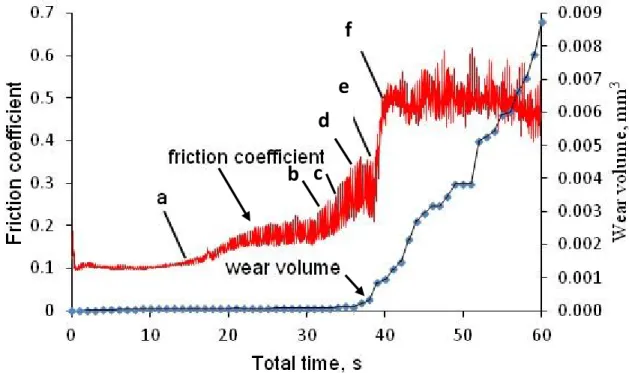
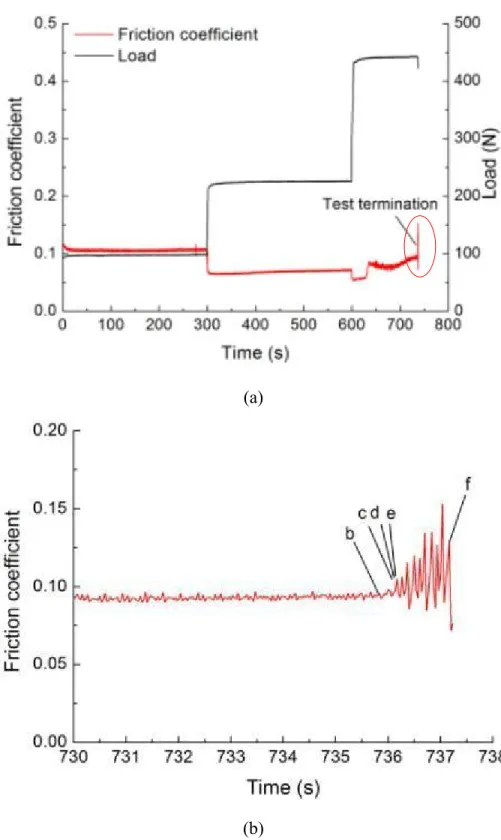
Fig. 2.2 Variations in friction coefficient and wear volume of the steel ball for Test  D2.2 (Test D2.2: 0.51m/s, 110 N) b f e d c
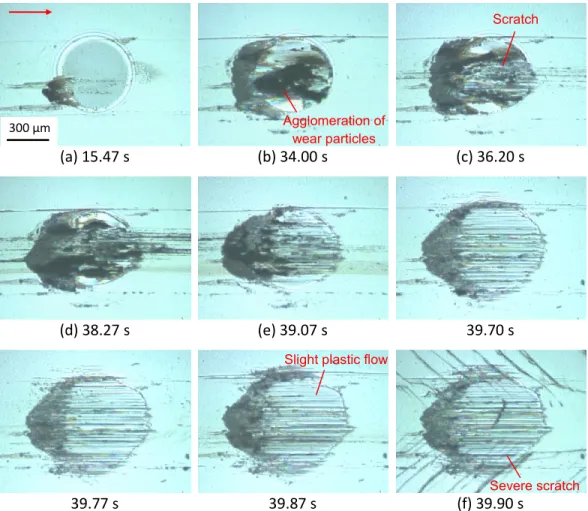
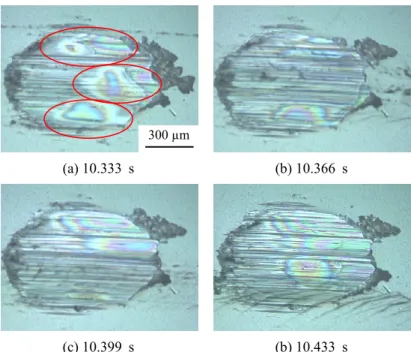
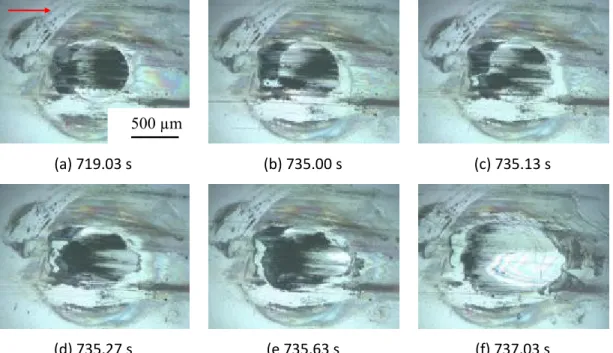
Fig. 2.3 In-situ observation of the scuffing process in Test D2.2.
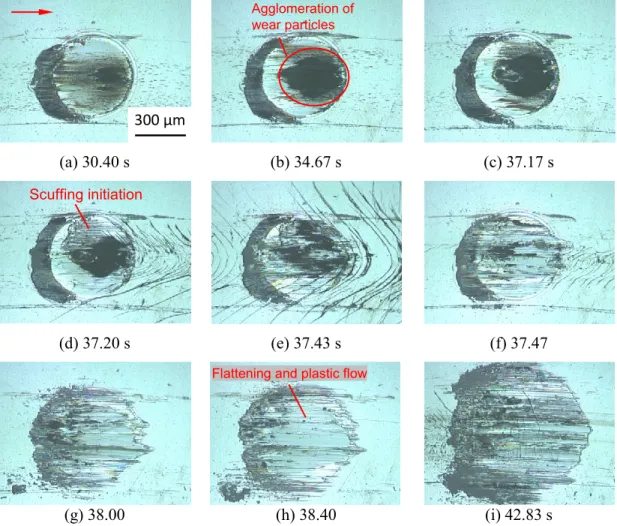
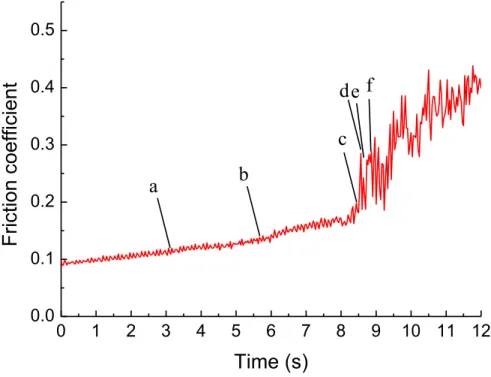
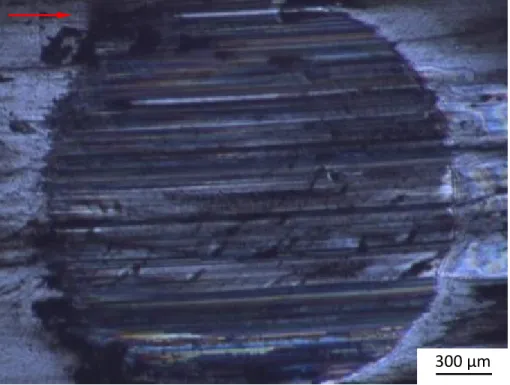
Fig. 2.4 In-situ observation of the scuffing process in Test D2.1.
+7

参照

関連したドキュメント