LCGA : Local Cultivation Genetic Algorithm for Multi-Objective Optimization Problems
Shinya Watanabe Graduate School of Engineering,
Doshisha University
1-3 Tatara Miyakodani,Kyo-tanabe, Kyoto, 610-0321, JAPAN
Tomoyuki Hiroyasu Faculty of Engineering,
Doshisha University
Mitsunori Miki Faculty of Engineering,
Doshisha University
Abstract
In this paper, a new genetic algorithm for multi-objective optimization problems is in- troduced. That is called “Local Cultiva- tion GA (LCGA)”. LCGA has a neighbor- hood crossover mechanism in addition to the mechanism of GAs that had proposed in the past researches. As compared with SPEA2, NSGA-II, and MOGA, LCGA is the robust algorithm which should find the Pareto opti- mum solution. Since LCGA is easy to imple- ment to parallel computer as a master-slave model, the reduction of calculation cost can be expected.
1 Local Cultivation GA
We develop a new algorithm that is called Local Cul- tivation Genetic Algorithm (LCGA). LCGA has a neighborhood crossover mechanism in addition to the mechanisms of GAs that had proposed in the past re- searches. The following mechanisms are included in LCGA.
1) Preservation mechanism of the excellent solutions 2) Reflection mechanism of the preserved excellent
solutions
3) Cut down (sharing) method of the preserved ex- cellent solutions
4) Assignment method of fitness function
5) Normalization mechanism of values of each object In LCGA, the exploitation factor of the crossover is re- inforced. In the crossover operation of LCGA, a pair of Shinya Watanabe, Tomoyuki Hiroyasu and Mit- sunori Miki, ”LCGA : Local Cultivation Genetic Algorithm for Multi-Objective Optimization Prob- lems”,Proceedings of the Genetic and Evolutionary Computation Conference (GECCO’2002) , pages = 702, 2002.
the individuals for crossover is not chosen randomly, but individuals who are close each other are chosen.
Because of this operation, child individuals that are generated after the crossover may be close to the par- ent individuals. Therefore, the precise exploitation is expected.
2 Numerical Examples
To discuss the effectiveness of the proposed method, LCGA was applied to test functions and results were compared to the other methods; those are SPEA2, NSGA-II and MOGA.
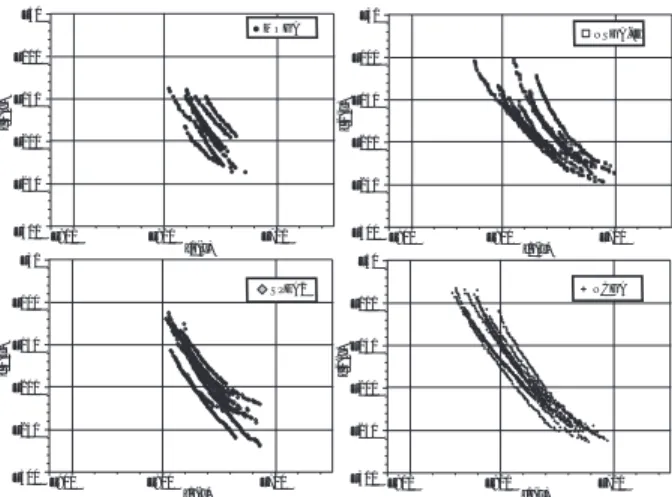
Figure 1 shows the derived Pareto solutions of KUR.
These are the results of 10 trials. In this figure, LCGA derived better solutions than the other methods. Sev- eral other experimental results also show the similar tendencies. Through the numerical examples, the fol- lowing points became clear.
・In all the test functions, LCGA derived better so- lutions than the other methods. From this result, it can be noted that the neighborhood crossover acts to derive the good solutions.
–300 –250 –200 –150 –100 –50
–900 –800 –700
f1(x)
f 2(x)
–300 –250 –200 –150 –100 –50
–900 –800 –700
f1(x)
f 2(x)
–300 –250 –200 –150 –100 –50
–900 –800 –700
f1(x)
f 2(x)
–300 –250 –200 –150 –100 –50
–900 –800 –700
f1(x)
f 2(x)
SPEA2
MOGA NSGA-II
NCGA
Figure 1: Derived Pareto individuals(KUR)
・On the other hand, the other methods can get good solutions in particular test function. There- fore, it can be concluded that LCGA is a robust method to find Pareto optimum solutions.