Introduction
Dizziness and balance dysfunction occur in vari- ous diseases and are one of the common chief com-
plaints. The prevalence of dizziness ranges from ap- proximately 20% to 30%1). Postural stability deterio- rates with age, and postural balance disorders in older people lead to falls2). Patients with vestibular dysfunction who are clinically symptomatic exhibit a 12―fold increase in the odds of falling3). Moreover, falls are the leading cause of hospital admission and
Abstract
Background: Dizziness and balance dysfunction are common complaints associated with falls. The mechanisms of postural instability are complex and multifactorial and have not yet been fully elucidated.
Objective: The purpose of this study was to examine the relationships between postural stability and vascular risk factors.
Methods: The subjects of this study were 1037 volunteers (401 men, 636 women) who had participated in the Iwaki Health Promotion Project. We evaluated the postural stability of the subjects by static posturography and assessed the effects of vascular risk factors on the sway length.
Results: In both men and women, the age and blood hemoglobin A 1 c level were found to be significantly related to the sway length. In postmenopausal women, the brachial-ankle pulse wave velocity (baPWV) was also significantly associated with the sway length.
Conclusion: The results of this study suggested that arteriosclerosis and diabetes affected pos- tural stability. In addition, rapid deterioration of arteriosclerosis due to menopause could also be associated with deterioration of postural stability.
原 著
Influence of vascular risk factors on postural stability in a community-dwelling population:
Results from the Iwaki Health Promotion Project
三橋 友里
1)・佐々木 亮
1)・後藤 真一
1)・沢田かほり
2)・徳田 糸代
3)井原 一成
2)・中路 重之
2)・松原 篤
1)Yuri Mitsuhashi
1), Akira Sasaki
1), Shinichi Goto
1), Kaori Sawada
2), Itoyo Tokuda
3), Kazushige Ihara
2), Shigeyuki Nakaji
2), Atsushi Matsubara
1)1)
Department of Otorhinolaryngology, Hirosaki University Graduate School of Medicine
2)
Department of Social Medicine, Hirosaki University Graduate School of Medicine
3)
Department of Oral Health Care, Hirosaki University Graduate School of Medicine
Key words:
static posturography, postural stability, arteriosclerosis, diabetes, menopause
1)弘前大学大学院医学研究科耳鼻咽喉科学講座
2)弘前大学大学院医学研究科社会医学講座
3)弘前大学大学院医学研究科オーラルヘルスケア学講 座
accidental death1)and can lead to decline in activi- ties of daily living (ADL) and quality of life (QOL) in older people. With increased longevity in older people, their QOL and general health have become important and controversial issues4); therefore, pos- tural stability is important in maintenance of the ADL in older people.
Postural stability is maintained by the integration of vestibular, visual and somatosensory inputs to the central nervous system, followed by outputs to the musculoskeletal system1)5)6). The underlying mecha- nisms of postural instability are complex and multi- factorial and have thus far not been fully eluci- dated1)7). There have been some reports that in- creased vascular risk factors are associated with diz- ziness7)〜10)and falls11)12).
We believed that it is important to identify risk factors for postural stability could aid in preventing its progression, thereby preserving ADL and QOL.
Therefore, we evaluated postural stability by con- ducting static posturography and performed an epi- demiological investigation of the effects of vascular risk factors on postural stability. Most previous pa- pers have targeted patients with specific symptoms of dizziness or a history of falls. In comparison, we
targeted a community-dwelling population.
Material and methods 1. Study subjects
The Iwaki Health Promotion Project is a large- scale epidemiological survey in the Iwaki district of Hirosaki city. We invited all residents over 20 years of age living in this district to this project. There were approximately 9,500 residents over 20 years of age, of which 1,113 and 1,148 participated in this project in 2015 and 2016, respectively. For residents who provided data in both 2015 and 2016, we used data from 2016. This study included 1,449 subjects (559 men, 890 women) for the entire study period;
84 subjects were excluded due to missing data. Ad- ditionally, 328 subjects were excluded because they met one or more of the following exclusion criteria:
(1) presence of vestibular disease (e.g. Meniere’s disease, vestibular neuritis or benign paroxysmal positional vertigo), (2) presence of intracranial dis- ease (e.g. cerebral infarction, cerebral hemorrhage or brain tumors), (3) presence of cardiovascular dis- ease (e.g. myocardial infarction, angina or heart fail- ure), (4) presence of neurologic disease (e.g. myas- thenia gravis or spinocerebellar degeneration), (5) presence of malignant tumor, (6) history of surgery Table 1 Characteristics of subjects in men and women
Characteristics men
(N=401) women
(N=636) p value
age (years) BMI (kg/m2) baPWV (cm/s) SBP (mmHg) HbA 1 c (%) TG (mg/dl) HDL-C (mg/dl) alcohol (g/day) pack years
sway length with EO (cm) sway length with EC (cm)
49.1±15.3 23.7±3.1 1480.0±367.0
128.1±15.3 5.8±0.6 121.9±89.7
58.6±16.3 23.8±28.0 12.9±16.7 99.6±31.4 144.9±60.0
52.2±15.2 22.2±3.6 1415.0±370.7
125.5±20.7 5.8±0.6 80.6±45.5 69.3±16.1 4.5±10.1 2.7±6.9 87.5±28.5 116.3±46.1
0.002 0.000 0.006 0.032 0.168 0.000 0.000 0.000 0.000 0.000 0.000 Values represent mean±standard deviation.
BMI=body mass index; baPWV=brachial-ankle pulse wave velocity; SBP=systolic blood pressure;
TG=triglycerides; HDL-C=high-density lipoprotein cholesterol; pack years=number of cigarettes packs per day×years of smoking; EO=eyes open; EC=eyes closed.
of the spine or legs, (7) use of anxiolytic drugs or sleeping pills. Finally, a total of 1,037 subjects (401 men, 636 women) were included in the analysis.
Data collection for the present study and the overall Iwaki Health Promotion Project were ap- proved by the Ethics Committee of Hirosaki Univer- sity School of Medicine ( Authorisation number : 2015―075, 2016―085), and written consent to partici- pate in the project was obtained from all subjects.
2. Data collection
(1) Lifestyles and physical measurements
We obtained lifestyle information by a self - administered questionnaire and face-to-face inter- views regarding age, sex, medical history, drug in- formation, smoking habits and drinking habits. For smoking habits, we calculated pack years (number of cigarettes packs per day × years of smoking);
for drinking habits, we calculated the daily alcohol intake (g/day). Menopause was determined by in- terviews in which subjects confirmed that they had no menstrual periods in the past year. Height and weight were measured and body mass index (BMI, kg/m2) was calculated.
(2) Blood test
Venous blood samples were obtained in the early
morning on an empty stomach. Hemoglobin A 1 c (HbA 1 c), triglycerides (TG) and high-density lipo- protein cholesterol (HDL-C) levels were examined.
HbA 1 c (%) was expressed as a National Glycohe- moglobin Standardization Program equivalent value (%) and used as an index of diabetes. TG and HDL- C were used as lipid parameters for metabolic syn- drome criteria.
(3) Blood pressure and brachial-ankle pulse wave velocity (baPWV)
We measured blood pressure and baPWV using a volume-plethysmographic apparatus (Form PWV/
ABI, Colin Co., Komaki, Japan). Subjects rested in a supine position on the bed in a partitioned space;
cuffs for blood pressure measurement were at- tached to both upper arms and distal parts of both tibias and electrocardiogram clips were attached to both wrists. The left and right PWV between the brachial and ankle arteries were measured and the mean values of both sides were used in the analy- sis. Systolic blood pressure (SBP) was measured at the time of PWV measurement.
(4) Static posturography
We evaluated postural stability by using a Gravi- corder GP 31 platform (Anima Co., Tokyo, Japan).
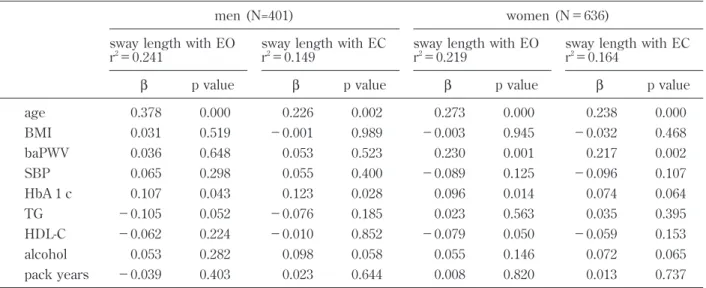
Table 2 Multiple linear regression analysis of sway length with vascular risk factors in men and women
men (N=401) women (N=636)
sway length with EO
r2=0.241 sway length with EC
r2=0.149 sway length with EO
r2=0.219 sway length with EC r2=0.164
β p value β p value β p value β p value
age BMI baPWV SBP HbA 1 c TG HDL-C alcohol pack years
0.378 0.031 0.036 0.065 0.107
−0.105
−0.062 0.053
−0.039
0.000 0.519 0.648 0.298 0.043 0.052 0.224 0.282 0.403
0.226
−0.001 0.053 0.055 0.123
−0.076
−0.010 0.098 0.023
0.002 0.989 0.523 0.400 0.028 0.185 0.852 0.058 0.644
0.273
−0.003 0.230
−0.089 0.096 0.023
−0.079 0.055 0.008
0.000 0.945 0.001 0.125 0.014 0.563 0.050 0.146 0.820
0.238
−0.032 0.217
−0.096 0.074 0.035
−0.059 0.072 0.013
0.000 0.468 0.002 0.107 0.064 0.395 0.153 0.065 0.737 BMI=body mass index; baPWV=brachial-ankle pulse wave velocity; SBP=systolic blood pressure; TG=triglyc- erides; HDL-C=high-density lipoprotein cholesterol; pack years=number of cigarettes packs per day×years of smoking; EO=eyes open; EC=eyes closed.
The sampling frequency was 20 Hz. During the ex- amination, subjects maintained static upright pos- ture on the foot plate with their feet together and their arms at the sides of the body. We instructed subjects not to speak or move during the examina- tion. We conducted the examination twice, first with the subjects’ eyes open and then with their eyes closed, for 1 minute each. When we examined the subjects with their eyes open, we instructed them to gaze at a target placed 150 cm ahead of their eyes.
We used sway length (the total length determined from the center of pressure movement for 60 sec- onds, cm) and enveloped area (the envelopment area tracing by the movement of center of pressure, cm2) for analysis of the magnitude of postural sway.
In addition, we also analyzed Romberg’s ratio (the ratio of a measured value with eyes closed to that with eyes open) of sway length and enveloped area.
3. Statistical analysis
Subjects were divided into two groups for statisti- cal analysis, based on their sex. The characteristics of subjects were compared between men and women by unpaired t-tests. Data were expressed as mean ± standard deviation. Multiple linear regres- sion analysis was used to examine the effects of vas-
cular risk factors on the sway length with eyes open (EO) and with eyes closed (EC); β refers to the slope of the linear regression. Furthermore, to dem- onstrate changes in sway length due to menopause, women were divided into two groups, premeno- pausal and postmenopausal, and multiple linear re- gression analysis was performed in a similar man- ner. SPSS Statistics, version 25.0 (IBM Corp., Ar- monk, NY, USA) was used for data analysis. P val- ues less than 0.05 were considered statistically sig- nificant.
Results
1. Subjects’ characteristics
Characteristics of men and women in this study are shown in Table 1. The mean ages were 49.1 years for men and 52.2 for women; men were sig- nificantly younger than women. Compared to women in the study, men had significantly higher values of BMI, baPWV, SBP, TG, daily alcohol in- take, pack years and sway length; in addition, men had significantly lower values of HDL-C. Only HbA 1 c values did not significantly differ between sexes.
2. Risk factors for postural stability
Table 2 shows the results of multiple linear re- gression analysis of risk factors for postural stabil- Table 3 Characteristics of subjects in premenopausal and postmenopausal women
Characteristics premenopausal women
(N=287) postmenopausal women
(N=349) p value
age (years) BMI (kg/m2) baPWV (cm/s) SBP (mmHg) HbA 1 c (%) TG (mg/dl) HDL−C (mg/dl) alcohol (g/day) pack years
sway length with EO (cm) sway length with EC (cm)
38.4±8.3 21.7±3.9 1153.8±192.5
114.3±16.1 5.6±0.5 69.7±37.7 70.0±15.6 6.2±12.0 2.9±5.8 76.9±18.7 101.5±32.0
63.5±9.0 22.6±3.2 1629.7±343.2
134.7±19.6 6.0±0.6 89.4±49.4 68.8±16.5 3.1±7.9 2.5±7.8 96.3±32.0 128.4±52.1
0.000 0.001 0.000 0.000 0.000 0.000 0.346 0.000 0.380 0.000 0.000 Values represent mean±standard deviation.
BMI=body mass index; baPWV=brachial-ankle pulse wave velocity; SBP=systolic blood pressure; TG=triglycerides;
HDL-C=high-density lipoprotein cholesterol; pack years=number of cigarettes packs per day×years of smoking; EO
=eyes open; EC=eyes closed.
ity. In men, sway length (both EO and EC) in- creased with age and HbA 1 c. In women, sway length during the EO trial increased with increasing age, baPWV and HbA 1 c; sway length during the EC trial increased with increasing age and baPWV.
We also analyzed the enveloped area and Rom- berg’s ratio in the same way as the sway length.
However, we thought that the results were not ef- fective because their coefficient of determination was extremely low (data not shown).
3. Menopause-related characteristics
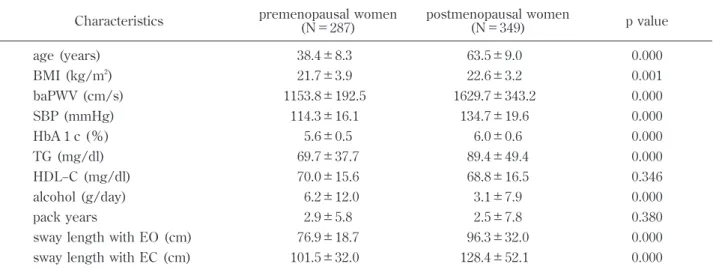
Characteristics of premenopausal and postmeno- pausal women in this study are shown in Table 3.
There were no significant differences in HDL-C and pack years. Compared to premenopausal women, postmenopausal women were significantly older and had significantly higher values of BMI, baPWV, SBP, HbA 1 c, TG and sway length; postmenopausal women also had significantly lower values of daily alcohol intake.
4. Risk factors for postural stability (menopausal effect)
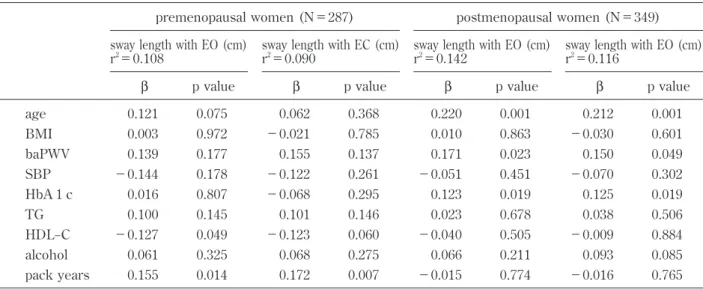
Table 4 shows the results of multiple linear re- gression analysis of risk factors for postural stability in premenopausal and postmenopausal women. In
premenopausal women, sway length during the EO trial increased with increasing HDL-C and pack years; sway length during the EC trial increased with increasing pack years. In postmenopausal women, sway length (both EO and EC) increased with increasing age, baPWV and HbA 1 c. We also analyzed the enveloped area and Romberg’s ratio in the same way as the sway length. However, we thought that the results were not effective because their coefficient of determination was extremely low (data not shown).
Discussion
Postural stability is maintained by the integration of vestibular, visual and somatosensory inputs to the central nervous system, followed by outputs to the musculoskeletal system1)5)6). The functions of these components deteriorate with age6). There have been many reports that vestibular function declines with age13)14); age-related changes in postural stability have also been reported, using static posturography assessment5)15). In the present study, age was signifi- cantly related to the sway length in static pos- turography, both in men and women. Thus, this study suggested that postural stability deteriorated with age, as in previous reports.
Table 4 Multiple linear regression analysis of sway length with vascular risk factors in premenopausal and postmenopausal women
premenopausal women (N=287) postmenopausal women (N=349) sway length with EO (cm)
r2=0.108
sway length with EC (cm) r2=0.090
sway length with EO (cm) r2=0.142
sway length with EO (cm) r2=0.116
β p value β p value β p value β p value
age BMI baPWV SBP HbA 1 c TG HDL−C alcohol pack years
0.121 0.003 0.139
−0.144 0.016 0.100
−0.127 0.061 0.155
0.075 0.972 0.177 0.178 0.807 0.145 0.049 0.325 0.014
0.062
−0.021 0.155
−0.122
−0.068 0.101
−0.123 0.068 0.172
0.368 0.785 0.137 0.261 0.295 0.146 0.060 0.275 0.007
0.220 0.010 0.171
−0.051 0.123 0.023
−0.040 0.066
−0.015
0.001 0.863 0.023 0.451 0.019 0.678 0.505 0.211 0.774
0.212
−0.030 0.150
−0.070 0.125 0.038
−0.009 0.093
−0.016
0.001 0.601 0.049 0.302 0.019 0.506 0.884 0.085 0.765 BMI=body mass index; baPWV=brachial-ankle pulse wave velocity; SBP=systolic blood pressure; TG=triglyc- erides; HDL-C=high-density lipoprotein cholesterol; pack years=number of cigarettes packs per day×years of smoking; EO=eyes open; EC=eyes closed.
In the present study, increasing HbA 1 c was re- lated to sway length in both men and women; this suggests that diabetes might affect postural stability.
Diabetes is presumed to affect postural stability be- cause it causes peripheral neuropathy15)〜17), retinopa- thy16)and vestibular dysfunction3)18). Especially, there have been many reports that diabetic peripheral neuropathy is a major cause of alterations in pos- tural stability. Somatosensory information, together with visual and vestibular information, plays an im- portant role in postural control. Postural instability in patients with diabetic peripheral neuropathy is often attributed to the absence of accurate periph- eral sensory information from the feet. In pos- turography assessment, patients who had symptoms of bilateral numbness and/or paresthesia in the feet had higher postural sway length and enveloped area levels, compared to patients without symptoms16). Al- though we did not investigate the presence of pe- ripheral neuropathy and retinopathy, we suspect that diabetes might affect postural stability in both men and women.
Furthermore, women exhibited a significant posi- tive association between sway length and baPWV in both EO and EC, regardless of adjustment for the influence of ageing. This finding suggests that the progression of arteriosclerosis causes deterioration of postural stability. An association has been re- ported between falls and arteriosclerosis; for exam- ple, fallers had significantly higher PWV12). It has been suggested that peripheral vestibular diseases are associated with arteriosclerosis; the frequency of abnormal intima-media-thickness was significantly higher in subjects in the benign paroxysmal posi- tional vertigo group7)and the metabolic syndrome score and baPWV of subjects in the vestibular neuri- tis group were significantly higher than control sub- jects8). In the central nervous system, an abnormal middle cerebral artery in intracranial magnetic reso- nance angiography has been reported to be closely related to dizziness9). Risk factors for arteriosclero- sis include diabetes, dyslipidemia and smoking,
which are expected to cause impaired blood flow not only in the central nervous system but also in peripheral blood vessels, such as the vestibule. In fact, there have been many reports that arterioscle- rosis and circulatory disorders related to balance disorders; however, to the best of our knowledge, there have been few studies in which the relation- ship between arteriosclerosis and postural stability was evaluated in subjects who were not patients with specific symptoms of dizziness or a history of falls. In the present study, we demonstrated an as- sociation between arteriosclerosis and postural sta- bility in an examination of community-dwelling sub- jects. However, it is not clear whether stenosis of blood vessels or blood flow disorder actually exists in the central nervous system and peripheral vesti- bule, because we did not measure the diameter and blood flow of the vertebral and carotid arteries. In addition, there are other factors that affect arterio- sclerosis; for example, it is relatively cold in the Iwaki district, and the cold temperature may in- crease the prevalence of arteriosclerosis. But we do not consider that the prevalence of arteriosclerosis has a significant impact, because we indicated that sway length increased with increasing baPWV value not but prevalence of arteriosclerosis.
Regarding sex differences, it has been reported that falls are more common in women2). Koo M et al. reported a significant association between vertigo and peripheral artery occlusive disease in female pa- tients but not in male patients10). However, the un- derlying causes of sex differences in the relation- ship between balance disorders and arteriosclerosis have not been clarified. Therefore, we presumed that the involvement of female hormones may con- tribute to these sex differences and examined the effect of menopause on postural stability. Before menopause, there were significant positive associa- tions between sway length and pack years and HDL- C. Presumably, risk factors of arteriosclerosis, such as smoking and dyslipidemia, are related to postural stability; baPWV has not been reflected in postural
stability at this stage in premenopausal women.
While, after menopause, estrogens with vasodilator and anti-atherosclerotic effects are rapidly depleted and arteriosclerosis rapidly progresses. In addition, changes in lipid metabolism and insulin resistance due to menopause can cause increased onset and deterioration of diabetes19). These prior findings sug- gested that arteriosclerosis and diabetes are rapidly worsened after menopause and might accelerate postural instability. Naessen T et al. reported that, in postmenopausal women, the sway velocity signifi- cantly decreased in the balance test and dizziness also improved after hormonal therapy20). Taken to- gether, our findings and those of prior studies sug- gest that rapid deterioration of arteriosclerosis might be a source of postural instability due to a re- duction in female hormones. In the present study, men had worse lifestyle habits (drinking and smok- ing) than women and had higher baPWV, blood pressure and lipid levels. However, the relationship between arteriosclerosis and postural stability was observed only in women, which is potentially be- cause women exhibit vulnerability to impaired blood flow with regard to postural stability.
Ageing and menopause cannot be prevented. In the present study, diabetes and arteriosclerosis were found to be related to postural stability; there- fore, care for these diseases should be regarded as important for prevention of future balance disorders and falls. Specifically, improving lifestyle habits such as exercise might reduce future balance impair- ment. It has been reported that 6 months of partici- pation in a twice-per-week exercise program, with an emphasis on swimming, improved baPWV and balance4); moreover, older patients with diabetes who exercised by walking and balance exercises for 12 weeks exhibited a reduction in the postural sway index17). It is well-known that arteriosclerosis is a risk factor for cerebrovascular and cardiovascular diseases; the results of the present study suggest that arteriosclerosis may also affect postural stabil- ity. Therefore, because of the super-aged nature of
society in Japan, it is important to improve lifestyles in order to prevent balance disorders and associated falls.
The strengths of this study were its large sample size, detailed medical examination and comprehen- sive data sampling. Furthermore, it targeted the general population rather than patients with dizzi- ness symptoms and a history of falls, and analyzed not categorical outcome measures but continuous outcome measures. In addition, this research as- sessed sex differences, include the influence of menopause, on postural stability.
Nevertheless, there were limitations in this study.
First, we assessed the effects of female hormones but did not directly measure hormone levels. Sec- ond, although posturography is a test that objec- tively evaluates postural stability, it is difficult to identify specific lesions involved in balance dysfunc- tion and additional tests may be necessary for such detailed diagnosis. Because this study was per- formed on the basis of routine health checkups, we used posturography, which is an easy-to-use and non-invasive test for the evaluation of postural stabil- ity5). To determine the specific sites at which impair- ments are located that directly affect deteriorated balance function, more comprehensive investiga- tions are needed. Third, we used baPWV in this study. However, baPWV is an index of arterial stiff- ness and it is not clear if there are stenosis of blood vessels or blood flow disorder. In order to clarify them, it is necessary to use other useful tests such as carotid ultrasound, but it was difficult in such a large-scale health checkups. Finally, about envel- oped area, we could not get high coefficient of de- termination. We consider that the low sampling fre- quency in the static posturography is one of the rea- sons of this results. It has been suggested that lower sampling frequency may result in smaller en- veloped area21). Therefore, there is a possibility that the individual difference became smaller in envel- oped area compared with the sway length, resulting in the extremely low coefficient of determination. In
addition, it has been reported that the results of sway length and enveloped area are dissociated, and these values may represent different aspects of the balance function22). However, future researches are required since the difference between the sway length and enveloped area is unclear.
In this study, we evaluated postural stability in a large cohort study of community-dwelling popula- tion. We found that age and HbA 1 c level affected postural stability in both men and women. More- over, baPWV affected the sway length in static pos- turography in women. In addition, our findings sug- gested that the rapid deterioration of arteriosclero- sis due to menopause might contribute to deterio- rated postural stability.
Acknowledgements
This work was supported by JST COI Grant Num- ber JPMJCE 1302. The authors would like to thank all of their coworkers on this study for their skillful contributions to the collection and management of the data.
References
1)Iwasaki S, Yamasoba T: Dizziness and imbal- ance in the elderly: Age-related decline in the vestibular system. Aging Dis 6: 38―47, 2015 2)Johansson J, Nordstrom A, Gustafson Y, et al.:
Increased postural sway during quiet stance as a risk factor for prospective falls in community- dwelling elderly individuals. Age Ageing 46:
964―970, 2017
3)Agrawal Y, Carey JP, Della Santina CC, et al.:
Disorders of balance and vestibular function in US adults data from the national health and nu- trition examination survey, 2001―2004. Arch In- tern Med 169: 938―944, 2009
4)Kawasaki T, Sullivan CV, Ozoe N, et al.: A long- term, comprehensive exercise program that in- corporates a variety of physical activities im- proved the blood pressure, lipid and glucose metabolism, arterial stiffness, and balance of middle-aged and elderly Japanese. Hypertens
Res 34: 1059―1066, 2011
5)Fujimoto C, Murofushi T, Chihara Y, et al.: As- sessment of diagnostic accuracy of foam pos- turography for peripheral vestibular disorders:
analysis of parameters related to visual and so- matosensory dependence. Clin Neurophysiol 120: 1408―1414, 2009
6)Abate M, Di Iorio A, Pini B, et al.: Effects of hypertension on balance assessed by computer- ized posturography in the elderly. Arch Geron- tol Geriatr 49: 113―117, 2009
7)Wada M, Naganuma H, Tokumasu K, et al.: Ar- teriosclerotic changes as background factors in patients with peripheral vestibular disorders. Int Tinnitus J 14: 131―134, 2008
8)Chung JH, Lee SH, Park CW, et al.: Clinical significance of arterial stiffness and metabolic syndrome scores in vestibular neuritis. Otol Neurotol 38: 737―741, 2017
9)Chang CC, Chang WN, Huang CR, et al.: The relationship between isolated dizziness/vertigo and the risk factors of ischemic stroke: a case control study. Acta Neurol Taiwan 20: 101―106, 2011
10)Koo M, Chen JC, Hwang JH: Risk of peripheral artery occlusive disease in patients with vertigo, tinnitus, or sudden deafness: A secondary case- control analysis of a nationwide, population- based health claims database. PLoS One 11: e 0162629, 2016
11)Davies AJ, Kenny RA: Falls presenting to the accident and emergency department: types of presentation and risk factor profile. Age Ageing 25: 362―366, 1996
12)Wong AK, Lord SR, Trollor JN, et al.: High ar- terial pulse wave velocity is a risk factor for falls in community-dwelling older people. J Am Geriatr Soc 62: 1534―1539, 2014
13)Gluth MB, Nelson EG: Age-related change in vestibular ganglion cell populations in individu- als with presbycusis and normal hearing. Otol Neurotol 38: 540―546, 2017
14)Li C, Layman AJ, Carey JP, et al.: Epidemiology of vestibular evoked myogenic potentials: Data from the baltimore longitudinal study of aging.
Clin Neurophysiol 126: 2207―2215, 2015
15)Herrera-Rangel A, Aranda-Moreno C, Mantilla- Ochoa T, et al.: The influence of peripheral neuropathy, gender, and obesity on the pos- tural stability of patients with type 2 diabetes mellitus. J Diabetes Res 2014: 787202, 2014 16)Morimoto A, Sonoda N, Ugi S, et al.: Associa-
tion between symptoms of bilateral numbness and/or paresthesia in the feet and postural in- stability in Japanese patients with diabetes. Dia- betol Int 7: 69―76, 2016
17)Allet L, Armand S, de Bie RA, et al.: The gait and balance of patients with diabetes can be im- proved: a randomised controlled trial. Diabe- tologia 53: 458―466, 2010
18)Abdul Razzak R, Hussein W: Postural visual de- pendence in asymptomatic type 2 diabetic pa- tients without peripheral neuropathy during a
postural challenging task. J Diabetes Complica- tions 30: 501―506, 2016
19)Xu Y, Lin J, Wang S, et al.: Combined estrogen replacement therapy on metabolic control in postmenopausal women with diabetes mellitus.
Kaohsiung J Med Sci 30: 350―361, 2014
20)Naessen T, Lindmark B, Lagerstrom C, et al.:
Early postmenopausal hormone therapy im- proves postural balance. Menopause 14: 14―19, 2007
21)Asai M: International standardization in clinical stabilometry and problems in Japan [in Japa- nese]. Equilibrium Res 75: 135―141, 2016 22)Nagayama I, Katoh H, Okabe Y, et al.: Number
of turning points in stabilometry [in Japanese].
Equilibrium Res 53: 252―256, 1994
Disclosure of interest: No potential conflict of interest was reported by the authors.
Corresponding author:Akira Sasaki