• 検索結果がありません。

Reduced tongue pressure and platelet count in relation to hypertension among community dwelling elderly Japanese subjects

N/A
N/A
Protected

Academic year: 2021

シェア "Reduced tongue pressure and platelet count in relation to hypertension among community dwelling elderly Japanese subjects"

Copied!
8
0
0

読み込み中.... (全文を見る)

全文

(1)

Background

 Reduced maximum voluntary tongue pressure against the palate (MTP) is reported to be a sensitive indicator for predicting pneumonia occurrence in acute stroke patients

[1], and is also related to sarcopenia or sarcopenic dysphagia [2]. Since dysphagia is a fundamental cause of aspiration pneumonia, measurement of MTP should be an efficient tool for estimating the risk of pneumonia in elderly subjects.

 On the other hand, sarcopenia is associated with impairment

MS#AMN 07225

Reduced tongue pressure and platelet count in relation to hypertension among community dwelling elderly Japanese subjects

Kazuhiro T orii

1

, Yuji S himizu

2, 3

, Shimpei S aTo

1, 2

, Yuko N oguchi

2

, Jun K oyamaTSu

4

, Hirotomo y amaNaShi

1

, Miho h igaShi

5

, Shin-Ya K awaShiri

2

, Seiko N aKamichi

1

, Noboru T aKamura

5

, Takahiro m aeda

1, 2, 4

, Katsunori y aNagihara

6

, Yoshiyuki o zoNo

1

1

Department of General Medicine, Nagasaki University Hospital, Nagasaki, Japan

2

Department of Community Medicine, Nagasaki University Graduate School of Biomedical Sciences, Nagasaki, Japan

3

Department of Cardiovascular Disease Prevention, Osaka Center for Cancer and Cardiovascular Disease Prevention, Osaka, Japan

4

Department of Island and Community Medicine, Nagasaki University Graduate School of Biomedical Sciences, Nagasaki, Japan

5

Department of Global Health, Medicine and Welfare, Nagasaki University Graduate School of Biomedical Sciences, Nagasaki, Japan

6

Department of Laboratory Medicine, Nagasaki University Graduate School of Biomedical Sciences, Nagasaki Japan

Background: Age-related disruption of the microvascular endothelium exacerbates hypertension and sarcopenia. Reduced maximum voluntary tongue pressure against the palate (MTP) is known to be associated with sarcopenia. On the other hand, elevated platelet count acts as an indicator of active endothelial repair. However, no studies have reported the association between reduced MTP and platelet count in the context of hypertension status. To evaluate the association between reduced MTP and platelet count, we conducted a cross-sectional study of 1,607 elderly Japanese who had undergone an annual health check from 2015 to 2016.

Methods: Since hypertension should mask the beneficial effects of endothelial repair, subjects were stratified by hypertension status. Among the present study population, 876 subjects had hypertension. Reduced tongue pressure was defined as an MTP at or under the 20th percentile of the study population (<23.9kPa for men and <21.8kPa for women).

Results: Independent of known cardiovascular risk factors, a significant inverse association between platelets and reduced tongue pressure was seen among non-hypertensive, but not hypertensive, subjects. The fully adjusted odds ratios (OR) and 95%

confidence intervals (CI) of 1 standard deviation (SD) increment of platelet count (5.4×10

4

/μL for men and 5.2×10

4

/μL for women) were 0.73 (0.60, 0.90) and 1.13 (0.94, 1.35) for non-hypertensive subjects and hypertensive subjects, respectively.

Conclusions: Independent of known cardiovascular risk factors, platelet count is significantly inversely associated with reduced tongue pressure among elderly non-hypertensive Japanese subjects. This finding could be an efficient tool to clarify a part of mechanism underlying reduced tongue pressure.

ACTA MEDICA NAGASAKIENSIA 62: 27− 34, 2018 Key words: endothelium, hypertension, platelet, sarcopenia, tongue pressure.


Address correspondence: Yuji Shimizu, MD, PhD

Department of Community Medicine, Nagasaki University Graduate School of Biomedical Sciences, Nagasaki-shi, Sakamoto 1-12-4, Nagasaki 852-8523, Japan

Tel.: +81-95-819-2523, Fax: +81-95-819-8509, E-mail: [email protected]

Received May 14, 2018; Accepted August 1, 2018

(2)

of capillary function [3]. Moreover, platelet-derived angiogenesis regulators promote angiogenesis during wound healing, tumor growth, and response to ischemia [4]; and platelet rich plasma also promotes angiogenesis [5]. Therefore, platelet count might be inversely associated with reduced MTP by indicating capillary repair activity. Previously we reported a significant inverse association between atherosclerosis and MTP among hypertensive subjects with low platelet levels but not among those with high platelet levels [6]. The present study indicates to some extent that vascular maintenance activity, as evaluated in terms of platelet levels, could influence the maintenance of MTP.

 However, no studies have clarified the association between platelet count and reduced MTP in the context of hypertension status. In addition, although elevated platelet count acts as an indicator of active endothelial repair, this beneficial effect is limited to non-hypertensive subjects [7].

 Therefore, the association between platelet count and reduced MTP should account for hypertension status. To test this, we conducted a cross-sectional study of 1,607 elderly Japanese subjects aged ≥60 years who had undergone an annual health check-up from 2015 to 2016.

Methods

Subjects and methods

 The study population comprised 1,712 elderly Japanese residents aged ≥60 years from the western rural communities of the Goto Islands, who underwent an annual health check- up from 2015 to 2016 as recommended by the Japanese government. Among all subjects, those without MTP data (n=14) or without platelet data (n=8) were excluded.

 To avoid the influence of stroke aftereffects, subjects with a history of stroke (n=83) were also excluded. The remaining patients, comprising 1,607 subjects (mean age of 72.8 years (standard deviation (SD): 7.4; range: 60-95) were enrolled in the study.

 This study was approved by the Ethics Committee for Use of Humans of Nagasaki University (project registration number 0501120073).

Data collection and laboratory measurements

 Trained interviewers obtained information on clinical characteristics. Body weight and height were measured with an automatic body composition analyzer (BF-220;

Tanita, Tokyo, Japan), and body mass index (BMI;kg/m

2

) was calculated. Systolic and diastolic blood pressure were recorded at rest. Blood samples were collected in an EDTA-

2K tube and a siliconized tube. The number of platelets and white blood cells in samples from the EDTA-2K tube were measured at SRL, Inc. (Tokyo, Japan) using an automated procedure.

 Triglycerides (TG) and serum creatinine were measured enzymatically. HDL-cholesterol (HDL) was measured using a direct method, and hemoglobin A1c (HbA1c) was measured using the latex coagulation method. Glomerular filtration rate (GFR) was estimated by using an established method recently proposed by a working group of the Japanese Chronic Kidney Disease Initiative [8]. According to this adaptation, GFR (ml/min/1.73m

2

) = 194 ×(serum creatinine (enzyme method))

-

1.094

×(age)

-0.287

×(0.739 for women). MTP was evaluated by

the method proposed by Tsuga et al. using the JMS tongue pressure measurement device, Orarize (JMS Co., Ltd.

Hiroshima, Japan) [9]. Reduced MTP was defined as a tongue pressure at or under the 20th percentile of the study population (<23.9kPa for men and <21.8kPa for women) as like our previous study [10]. Diabetes was diagnosed as an HbA1c≥6.5% and/or taking glucose-lowering medication.

Statistical analysis

 Characteristics of the study population stratified by platelet levels were expressed as mean ± standard deviation. A trend test was performed with a regression model for mean values, and a logistic regression model was used for proportion.

 Logistic regression models were used to calculate odds ratios (ORs) and 95% confidence intervals (CIs) to determine the influence of platelet levels on reduced MTP.

 Adjustments for confounding factors were made using three models. In the first model (Model 1), adjustment was made only for age and sex. The second model (Model 2) included other possible confounding factors, namely, BMI (kg/m

2

), smoking status (never-smoker, former smoker, current smoker), alcohol consumption [never-drinker, former drinker, current drinker (23-45g/week, 46-68g/week, ≥69g/week, respectively)], systolic blood pressure (mmHg), anti-hyper- tensive medication use (yes, no), serum HDL-cholesterol (mg/dL), serum triglycerides (mg/dL), HbA1C (%) and GFR (ml/min/1.73 m

2

). Since white blood cells may be associated with platelet levels and indicate inflammation, which might act as a confounding factor for the association between platelet levels and MTP, a further analysis additionally adjusted for white blood cells (Model 3) was carried out, as the simple correlation coefficient (r) for platelets and white blood cells was r = 0.29 (p<0.001).

 We also calculated the association stratified by hypertension

status, since platelet levels are positively associated with

(3)

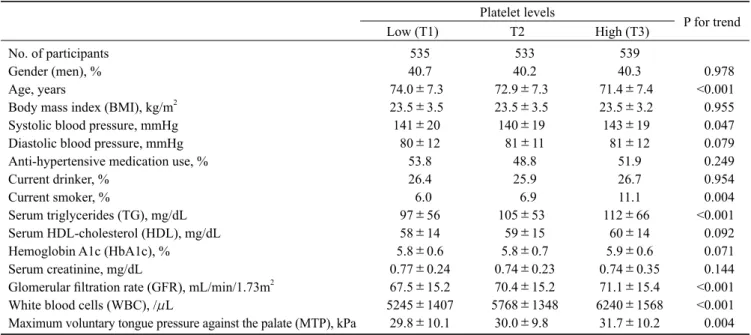
Table 1. Characteristics of the study population in relation to platelet levels.

Platelet levels P for trend

Low (T1) T2 High (T3)

No. of participants Gender (men), % Age, years

Body mass index (BMI), kg/m

2

Systolic blood pressure, mmHg Diastolic blood pressure, mmHg Anti-hypertensive medication use, % Current drinker, %

Current smoker, %

Serum triglycerides (TG), mg/dL Serum HDL-cholesterol (HDL), mg/dL Hemoglobin A1c (HbA1c), %

Serum creatinine, mg/dL

Glomerular filtration rate (GFR), mL/min/1.73m

2

White blood cells (WBC), /µL

Maximum voluntary tongue pressure against the palate (MTP), kPa

535 74.0±7.3  40.7 23.5±3.5  141±20 

80±12 53.8 26.4 6.0 97±56 58±14 5.8±0.6 0.77±0.24 67.5±15.2 5245±1407

29.8±10.1

533 72.9±7.3  40.2 23.5±3.5  140±19 

81±11 48.8 25.9 6.9 105±53 

59±15 5.8±0.7 0.74±0.23 70.4±15.2 5768±1348

30.0±9.8 

539 71.4±7.4  40.3 23.5±3.2  143±19 

81±12 51.9 26.7 112±66  11.1

60±14 5.9±0.6 0.74±0.35 71.1±15.4 6240±1568

31.7±10.2

  0.978

<0.001 0.955 0.047 0.079 0.249 0.954 0.004

<0.001 0.092 0.071 0.144

<0.001

<0.001 0.004 Values: mean±standard deviation. Platelet counts among men are < 18.9×10

4

/µL for T1, 18.9-22.9×10

4

/µL for T2, and ≥ 23.0×10

4

/µL for T3, and among women are < 20.5×10

4

/µL for T1, 20.5-25.0×10

4

/µL for T2, and ≥ 25.1×10

4

/µL for T3

endothelial repair in non-hypertensive subjects and positively associated with atherosclerosis in hypertensive subjects [7].

 To confirm the validity of using a sex-combined model for the present analysis, we also performed a sex-specific analysis.

 Since insulin resistance may contribute to the development of sarcopenia [11], and platelets from subjects with diabetes exhibit increased reactivity [12], diabetes might act as a confounding factor on the association between platelet levels and reduced MTP. We therefore conducted a further analysis limited to subjects without diabetes.

 All statistical analyses were performed with the SAS system for Windows (version 9.4; SAS Inc., Cary, NC), with values of <0.05 regarded as being statistically significant.

Results

 Characteristics of the present study population are shown in Table 1. Platelet levels were positively associated with systolic blood pressure, current smoker status, TG, GFR, WBC, and MTP; and inversely associated with age. Figure 1 shows sex-specific distribution of MTP by age class. For the younger age class (age<90), even the median values of MTP for men are slightly higher than those for women. For the elderly class (age≥90), however, those for men are slightly lower.

 Although no significant association between platelet count and reduced MTP was found for total subjects (Table 2),

Table 2. Odds ratios (OR) and 95% confidence intervals (CI) for reduced maximum voluntary tongue pressure against the palate (MTP) in relation to platelet count.

Platelet count

P for trend 1 SD increment of platelet count

Low (T1) T2 High (T3)

Total subjects  No. at risk  No. of cases  (percentage)  Model.1  Model.2  Model.3

535 124 (23.2)

1.00 1.00 1.00

533 112 (21.0) 0.96 (0.71, 1.30) 0.99 (0.73, 1.35) 0.99 (0.73, 1.35)

539 85 (15.8) 0.75 (0.54, 1.03) 0.78 (0.57, 1.08) 0.78 (0.56, 1.09)

0.079 0.148 0.156

0.91 (0.80, 1.04) 0.93 (0.82, 1.06) 0.93 (0.81, 1.06) Model.1: adjusted only for sex and age. Model.2: further adjusted for body mass index, systolic blood pressure, anti-hypertensive medication use (yes, no), alcohol consumption (never-drinker, former-drinker, current-drinker [23-45g/week, 46-68g/week, ≥ 69g/week, respectively]), smoking status (never- smoker, former-smoker, current-smoker), HDL-cholesterol, triglycerides, HbA1C, and GFR. Model.3: Model.2 + further adjusted for white blood cell count. Reduced maximum voluntary tongue pressure against the palate (MTP) is defined as a tongue pressure that is at or under the 20%th percentile of tongue pressure among the study population (<23.9kPa for men and < 21.8kPa for women). SD: standard deviation. Platelet counts among men are <

18.9×10

4

/µL for T1, 18.9-22.9×10

4

/µL for T2, and ≥ 23.0×10

4

/µL for T3, and among women are < 20.5×10

4

/µL for T1, 20.5-24.9×10

4

/µL for T2,

and ≥ 25.0×10

4

/µL for T3. A 1 SD increment in platelet count is 5.4×10

4

/µL for men and 5.2×10

4

/µL for women.

(4)

Figure 1. Sex-specific distribution of MTP by age classes

Table 3. Odds ratios (OR) and 95% confidence intervals (CI) for reduced maximum voluntary tongue pressure against the palate (MTP) in relation to platelet count by hypertension status.

Platelet count

P for trend 1 SD increment of platelet count

(Low) T1 T2 T3

(High) Non-hypertension

 No. at risk  No. of cases  (percentage)  Model.1  Model.2  Model.3 Hypertension  No. at risk  No. of cases  (percentage)  Model.1  Model.2  Model.3

251 73 (29.1)

1.00 1.00 1.00 284 51 (18.0)

1.00 1.00 1.00

246 52 (21.1) 0.77 (0.50, 1.18) 0.78 (0.51, 1.21) 0.76 (0.49, 1.18)

287 60 (20.9) 1.25 (0.81, 1.91) 1.29 (0.84, 2.01) 1.34 (0.86, 2.09)

234 28 (12.0) 0.41 (0.25, 0.68) 0.44 (0.26, 0.72) 0.41 (0.24, 0.69)

305 57 (18.7) 1.23 (0.80, 1.89) 1.25 (0.80, 1.94) 1.31 (0.83, 2.08)

<0.001 0.001

<0.001

0.353 0.333 0.253

0.74 (0.61, 0.91) 0.75 (0.62, 0.92) 0.73 (0.60, 0.90)

1.09 (0.92, 1.29) 1.10 (0.92, 1.31) 1.13 (0.94, 1.35) Model.1: adjusted only for sex and age. Model.2: further adjusted for body mass index, systolic blood pressure, anti-hypertensive medication use (yes, no), alcohol consumption (never-drinker, former-drinker, current-drinker [23-45g/week, 46-68g/week, ≥ 69g/week, respectively]), smoking status (never- smoker, former-smoker, current-smoker), HDL-cholesterol, triglycerides, HbA1C, and GFR. Model.3: Model.2 + further adjusted for white blood cell count. Reduced maximum voluntary tongue pressure against the palate (MTP) is defined as a tongue pressure that is at and under the 20%th percentile of tongue pressure among the study population (<23.9kPa for men and <21.8kPa for women). SD: standard deviation. Platelet counts among men are <

18.9×10

4

/µL for T1, 18.9-22.9×10

4

/µL for T2, and ≥ 23.0×10

4

/µL for T3, and among women are < 20.5×10

4

/µL for T1, 20.5-24.9×10

4

/µL for T2, and ≥ 25.0×10

4

/µL for T3. A 1 SD increment in platelet count is 5.4×10

4

/µL for men and 5.2×10

4

/µL for women.

when the analysis was limited to non-hypertensive subjects, a significant inverse association was observed (Table 3).

 Since the study population was comprised of both non-

hypertensive subjects (n=731) and hypertensive subjects (n=876),

to avoid the influence of sample size bias on the correlation

between platelet count and reduced MTP, we evaluated the

(5)

Table 4. Sex specific odds ratios (OR) and 95% confidence intervals (CI) for reduced maximum isometric tongue pressure in relation to platelet count by hypertension status. 

Platelet count

P for trend 1 SD increment of platelet count

Low (T1) T2 High

(T3) Men

Non-hypertension  No. at risk  No. of cases  (percentage)  Model.1  Model.2  Model.3 Hypertension  No. at risk  No. of cases  (percentage)  Model.1  Model.2  Model.3 Women

Non-hypertension  No. at risk  No. of cases  (percentage)  Model.1  Model.2  Model.3 Hypertension  No. at risk  No. of cases  (percentage)  Model.1  Model.2  Model.3

104 25 (24.0)

1.00 1.00 1.00 114

20 (17.5)

1.00 1.00 1.00

147 48 (32.7)

1.00 1.00 1.00 170

31 (18.2)

1.00 1.00 1.00

102 22 (21.6) 1.28 (0.63, 2.61) 1.34 (0.63, 2.85) 1.30 (0.61, 2.77)

112 26 (23.2) 1.49 (0.76, 2.93) 1.38 (0.69, 2.77) 1.48 (0.73, 3.00)

144 30 (20.8) 0.59 (0.34, 1.01) 0.60 (0.34, 1.09) 0.58 (0.33, 1.02)

175 34 (19.4) 1.10 (0.64, 1.91) 1.27 (0.71, 2.27) 1.26 (0.70, 2.27)

88 10 (11.4) 0.59 (0.25, 1.37) 0.63 (0.26, 1.51) 0.58 (0.24, 1.44)

129 27 (20.9) 1.81 (0.91, 3.59) 1.57 (0.77, 3.20) 1.76 (0.84, 3.70)

146 18 (12.3) 0.34 (0.19, 0.64) 0.36 (0.19, 0.67) 0.34 (0.18, 0.65)

176 30 (17.0) 0.95 (0.54, 1.67) 1.09 (0.61, 1.97) 1.08 (0.58, 1.99)

0.291 0.385 0.311

0.091 0.215 0.133

<0.001 0.001 0.008

0.856 0.763 0.743

0.83 (0.60, 1.15) 0.80 (0.57, 1.14) 0.77 (0.53, 1.10)

1.24 (0.96, 1.59) 1.17 (0.90, 1.52) 1.23 (0.93, 1.62)

0.70 (0.55, 0.90) 0.72 (0.56, 0.92) 0.70 (0.54, 0.91)

0.98 (0.77, 1.23) 1.05 (0.83, 1.34) 1.04 (0.81, 1.34) Model.1: adjusted only for age. Model.2: further adjusted for body mass index, systolic blood pressure, anti-hypertensive medication use (yes, no), alcohol consumption (never-drinker, former-drinker, current-drinker [23-45g/week, 46-68g/week, ≥ 69g/week, respectively]), smoking status (never-smoker, former- smoker, current-smoker), HDL-cholesterol, triglycerides, HbA1C, and GFR. Model.3: Model.2 + further adjusted for white blood cell count. Reduced maximum isometric tongue pressure is defined as a tongue pressure that is at and under the 20%th percentile of tongue pressure among the study population (< 23.9kPa for men and < 21.8kPa for women). SD:standard deviation. Platelet counts among men are < 18.9×10

4

/µL for T1, 18.9-22.9×10

4

/µL for T2, and ≥ 23.0×10

4

/µL for T3, and among women are < 20.5×10

4

/µL for T1, 20.5-24.9×10

4

/µL for T2, and ≥25.0×10

4

/µL for T3. A 1 SD increment in platelet count is 5.4×10

4

/µL for men and 5.2×10

4

/µL for women.

interaction between platelet count and hypertension state (non-hypertension and hypertension) on reduced tongue pressure. Significant interaction between platelet count and hypertension status was observed, with a p value for the effect of this fully adjusted interaction on reduced tongue pressure of p=0.002.

 Sex-specific associations between platelets and reduced

MTP by hypertension status (Table 4) show essentially the same associations for men and women.

 Since diabetes might act as a confounding factor for the

association between platelets and reduced MTP, we conducted

a further analysis limited to subjects without diabetes, and

found essentially the same associations (Table 5).

(6)

Discussion

 The major finding of the present study of community dwelling elderly Japanese subjects demonstrates that independent of known cardiovascular risk factors, platelets are significantly inversely associated with reduced MTP among non-hypertensive, but not hypertensive, subjects.

 Sarcopenia is associated with impairment of capillary function [3]. Low skeletal muscle capillarization may contribute to sarcopenia and reduced exercise capacity in older adults by limiting the diffusion of substrates, oxygen, hormones, and nutrients [13]. And aging has a deleterious impact on the endothelium via peripheral microcirculation [14,15].

 On the other hand, platelets have been functionally implicated in a range of angiogenesis-dependent processes, including physiological roles in wound healing, vascular development and blood/lymphatic vessel separation, while facilitating aberrant angiogenesis in a range of diseases such as cancer and atherosclerosis [16]. In recent years, platelets have been revealed to play an important role in vascular endothelial repair in conjunction with circulating CD34-positive cells [16-21]. And from our previous study,

platelet count acts as an indicator of vascular repair, with hypertension seen to mask the beneficial effects of increased platelet and CD34-positive cell count [7].

 Age-related increases in inflammatory agents such as cytokines, advanced glycation products (AGEs) and matrix metalloproteinases (MMPs) can disrupt the microvascular endothelium, resulting in blood flow impairment [22].

Therefore, platelet count may indicate endothelial repair activity that is stimulated by aging-related endothelial injury, with hypertension acting as a strong confounding factor.

Furthermore, even though platelet is significantly positively associated with arterial stiffness [7] and hypertension [23], in our previous study a significant inverse association between MTP and atherosclerosis was observed for hypertensive subjects with lower platelet (< 21.4× 10

4

/ μ L), but not for hypertensive subjects with higher platelet counts (≥ 21.4× 10

4

/ μL) [6].

Therefore, even hypertensive subjects with high platelet levels could receive a beneficial influence on the maintenance of muscle mass, although the degree of endothelial injury, which can be assessed in terms of atherosclerosis, might act as a confounding factor on the analysis in the present study for hypertensive subjects.

 Since sarcopenic obesity is reported to be associated Table 5. Odds ratios (OR) and 95% confidence intervals (CI) for reduced maximum voluntary tongue pressure against the palate (MTP) in relation to platelet count by hypertension status among subjects without diabetes.

Platelet count

P for trend 1 SD increment of platelet count

(Low) T1 T2 T3

(High) Non-hypertension

 No. at risk  No. of cases  (percentage)  Model.1  Model.2  Model.3 Hypertension  No. at risk  No. of cases  (percentage)  Model.1  Model.2  Model.3

218 63 (28.9)

1.00 1.00 1.00 241

46 (19.1)

1.00 1.00 1.00

220 48 (21.8) 0.80 (0.51, 1.26) 0.85 (0.54, 1.35) 0.81 (0.51, 1.29)

248 55 (22.2) 1.32 (0.84, 2.08) 1.35 (0.85, 2.16) 1.42 (0.88, 2.28)

210 24 (11.4) 0.38 (0.22, 0.65) 0.42 (0.25, 0.73) 0.38 (0.22, 0.67)

259 49 (18.9) 1.21 (0.76, 1.92) 1.25 (0.77, 2.03) 1.33 (0.81, 2.20)

<0.001 0.003 0.011

0.431 0.362 0.272

0.73 (0.59, 0.91) 0.76 (0.61, 0.95) 0.73 (0.58, 0.92)

1.09 (0.91, 1.30) 1.11 (0.92, 1.34) 1.14 (0.94, 1.39) Model.1: adjusted only for sex and age. Model.2: further adjusted for body mass index, systolic blood pressure, anti-hypertensive medication use (yes, no), alcohol consumption (never-drinker, former-drinker, current-drinker [23-45g/week, 46-68g/week, ≥ 69g/week, respectively]), smoking status (never- smoker, former-smoker, current-smoker), HDL-cholesterol, triglycerides, HbA1C, and GFR. Model.3: Model.2 + further adjusted for white blood cell count.

Reduced maximum voluntary tongue pressure against the palate (MTP) is defined as a tongue pressure that is at and under the 20%th percentile of tongue

pressure among the study population (< 23.9kPa for men and < 21.8kPa for women). SD: standard deviation. Platelet counts among men are < 18.9/µL

for T1, 18.9-22.9 /µL for T2, and ≥ 23.0 /µL for T3, and among women are < 20.5/µL for T1, 20.5-24.9 /µL for T2, and ≥ 25.0 /µL for T3. A 1 SD increment

in platelet count is 5.4 /µL for men and 5.2 /µL for women.

(7)

with an independent risk of hypertension [24], our present findings not only represent an efficient tool to clarify the background mechanism behind reduced MTP, but also to clarify the background mechanism underlying the association between sarcopenia and hypertension.

 Potential limitations of this study warrant consideration.

Although, age-related increases in inflammatory agents may influence the association between platelet count and reduced MTP, no data regarding inflammatory agents was available for this study. Further analyses that include age related inflammatory agents such as cytokines, advanced glycation products (AGEs) and matrix metalloproteinases (MMPs) will be necessary. Finally, because this was a cross- sectional study, causal relationships were not able to be established.

Conclusions

 In conclusion, independent of known cardiovascular risk factors, platelets are significantly inversely associated with reduced MTP among non-hypertensive, but not hypertensive, subjects. This finding represents an efficient tool to clarify a part of background mechanism governing reduced tongue pressure.

Acknowledgements

 We are grateful to staff from Goto City Hall for their outstanding support.

Disclosure statement

 The authors declare no conflict of interest

Sources of Funding

 This study was supported by Grants-in-Aids for Scientific Research from the Japan Society for the Promotion of Sciences (No.18K06448, No.17H03740)

References

1. Nakamori M, Hosomi N, Ishikawa K, Imamura E, Shishido T, Ohshita T, Yoshikawa M, Tsuga K, Wakabayashi S, Maruyama H, Matsumoto M.

Prediction of pneumonia in acute stroke patients using tongue pressure measurements. PLoS One. 2016;11:e0165837.

2. Maeda K, Akagi J. Decreased tongue pressure is associated with sarcopenia and sarcopenic dysphagia in the elderly. Dysphagia. 2015;30:80-87.

3. Wang H, Listrat A, Meunier B, Gueugneau M, Coudy-Gandilhon C, Combaret L, Taillandier D, Polge C, Attaix D, Lethias C, Lee K, Goh KL, Béchet D. Apoptosis in capillary endothelial cells in ageing skeletal muscle. Aging Cell. 2014;13:254-262.

4. Radziwon-Balicka A, Moncada de la Rosa C, Jurasz P. Platelet-associated angiogenesis regulating factors: a pharmacological perspective. Can J Physiol Pharmacol. 2012;90:679-688.

5. Mammoto T, Jiang A, Jiang E, Mammoto A. Platelet rich plasma extract promotes angiogenesis through the angiopoietin1-Tie2 pathway. Microvasc Res. 2013;89:15-24.

6. Shimizu Y, Sato S, Noguchi Y, Koyamatsu J, Yamanashi H, Higashi M, Nagayoshi M, Kawashiri SY, Nagata Y, Takamura N, Maeda T.

Association between tongue pressure and subclinical carotid atherosclerosis in relation to platelet levels in hypertensive elderly men: a cross- sectional study. Environ Health Prev Med. 2018;23:31.

7. Shimizu Y, Sato S, Koyamatsu J, Yamanashi H, Nagayoshi M, Kadota K, Maeda T. Platelets as an indicator of vascular repair in elderly Japanese men. Oncotarget. 2016;7:44919-44926.

8. Imai E, Horio M, Watanabe T, Iseki K, Yamagata K, Hara S, Ura N, Kiyohara Y, Moriyama T, Ando Y, Fujimoto S, Konta T, Yokoyama H, Makino H, Hishida A, Matsuo S. Prevalence of chronic kidney disease in the Japanese general population. Clin Exp Nephrol. 2009;13:621-630.

9. Tsuga K, Maruyama M, Yoshikawa M, Yoshida M, Akagawa Y. Manometric evaluation of oral function with a hand-held balloon probe. J Oral rehabil. 2011;38:680-685.

10. Shimizu Y, Sato S, Koyamatsu J, Yamanashi H, Higashi M, Nagayoshi M, Kadota K, Kawashiri SY, Takamura N, Maeda T. Serum sodium level within the normal range is associated with maximum voluntary tongue pressure against the palate among community-dwelling older Japanese men. Geriatr Gerontol Int. 2018;18:183-186.

11. Timmerman KL, Volpi E. Endothelial function and the regulation of muscle protein anabolism in older adults. Nutr Metab Cardiovasc Dis.

2013;Suppl 1:S44-50.

12. Angiolillo DJ, Fernandez-Ortiz A, Bernardo E, Ramírez C, Sabaté M, Jimenez-Quevedo P, Hernández R, Moreno R, Escaned J, Alfonso F, Bañuelos C, Costa MA, Bass TA, Macaya C. Platelet function profiles in patients with type 2 diabetes and coronary artery disease on combined aspirin and clopidogrel treatment. Diabetes. 2005;54: 2430– 2435.

13. Prior SJ, Ryan AS, Blumenthal JB, Watson JM, Katzel LI, Goldberg AP.

Sarcopenia is associated with lower skeletal muscle capillarization and exercise capacity in older adults. J Gerontol A Biol Sci Med Sci.

2016;71:1096-1101.

14. Herrera MD, Mingorance C, Rodríguez-Rodríguez R, Alvarez de Sotomayor M. Endothelial dysfunction and aging: an update. Ageing Res Rev.

2010;9:142-152.

15. Virdis A, Ghiadoni L, Giannarelli C, Taddei S. Endothelial dysfunction and vascular disease in later life. Maturitas. 2010;67:20-24.

16. Walsh TG, Metharom P, Berndt MC. The functional role of platelets in the regulation of angiogenesis. Platelets. 2015;26:199-211.

17. Stellos K, Langer H, Daub K, Schoenberger T, Gauss A, Geisler T, Bigalke B, Mueller I, Schumm M, Schaefer I, Seizer P, Kraemer BF, Siegel-Axel D, May AE, Lindemann S, Gawaz M. Platelet-derived stromal cell-derived factor-1 regulates adhesion and promotes differentiation of human CD34+ cells to endothelial progenitor cells. Circulation.

2008;117:206-215.

18. Stellos K, Bigalke B, Langer H, Geisler T, Schad A, Kögel A, Pfaff F,

Stakos D, Seizer P, Müller I, Htun P, Lindemann S, Gawaz M. Expression

of stromal-cell-derived factor-1 on circulating platelets is increased in

(8)

patients with acute coronary syndrome and correlates with the number of CD34+ progenitor cells. Eur Heart J. 2009;30:584-593.

19. Seitz G, Boehmler AM, Kanz L, Möhle R. The role of sphingosine 1-phosphate receptors in the trafficking of hematopoietic progenitor cells. Ann N Y Acad Sci. 2005;1044:84-89.

20. Matsubara Y, Ono Y, Suzuki H, Arai F, Suda T, Murata M, Ikeda Y. OP9 bone marrow stroma cells differentiate into megakaryocytes and platelets.

PLoS One. 2013;8:e58123.

21. Gunn N, Damon L, Varosy P, Navarro W, Martin T, Ries C, Linker C.

High CD34+ cell dose promotes faster platelet recovery after autologous stem cell transplantation for acute myeloid leukemia. Biol Blood Marrow Transplant. 2003;9:643-648.

22. Payne GW. Effect of inflammation on the aging microcirculation: impact on skeletal muscle blood flow control. Microcirculation. 2006;13:343- 23. Shimizu Y, Sato S, Koyamatsu J, Yamanashi H, Nagayoshi M, Kadota 352.

K, Kawashiri SY, Inoue K, Nagata Y, Maeda T. Platelets and circulating CD34-positive cell as an indicator of the activity of the vicious cycle between hypertension and endothelial dysfunction in elderly Japanese men. Atherosclerosis. 2017;259:26-31.

24. Park SH, Park JH, Song PS, Kim DK, Kim KH, Seol SH, Kim HK, Jang HJ, Lee JG, Park HY, Park J, Shin KJ, Kim Di, Moon YS. Sarcopenic obesity as an independent risk factor of hypertension. J Am Soc Hypertens.

2013;7:420-425.

Table 1. Characteristics of the study population in relation to platelet levels.
Table 3. Odds ratios (OR) and 95% confidence intervals (CI) for reduced maximum voluntary tongue pressure against the palate (MTP) in  relation to platelet count by hypertension status.
Table 4. Sex specific odds ratios (OR) and 95% confidence intervals (CI) for reduced maximum isometric tongue pressure in relation to  platelet count by hypertension status. 

参照

関連したドキュメント

Prognostic study of risk stratification among Japanese patients with ischemic hear t disease using gated myocardial per fusion SPECT:.

According to multi- variate analysis, expression of CD42b, a platelet marker, in our biopsy specimens from advanced gastric cancer with preoperative DCS therapy was

Background The aim of the present study was to clarify the risk factors of several types of arteriosclerosis lesions in Japanese individuals with heterozygous

This study examined a criterion for screening high fall risk elderly based on 13. the

As a research tool for the ATE, various scales have been used in the past; they are, for example, the 96-item version of the Tuckman-Lorge Scale 2) , the semantic differential

Sociocultural norms, along with the tenets of Confucianism, place an expectation on Japanese women to take on major caregiving responsibilities for their frail, elderly parents

To confirm the relationship between the fall risk assess- ment items and risk factors assumed in this study (to sta- tistically confirm component items of each risk factor),

Conclusions: The present study demonstrated high HPV prevalence in the anus and urine, and showed a high incidence of anal cytological atypia associated with HR-HPV infections