Abstract
This paper sets out to present research from an experimental arts-based approach to Content-based Instruction (CBI) in the Japanese tertiary sector. As a postmodern paradigm, Applied Visual Enquiry (AVE) represents an alternative arts-based learning methodology which draws from both the conflicts and perceived inadequacies of Arts-based Educational Research (ABER) and Arts-based Research (ABR), together with Atkinson and Shiffrin’s ‘Multiple store model of memory’ (1968). The action research discussed herein derives from a primary record of teaching practice which was undertaken with English 1, a twice-weekly class held in the faculty of Social Sciences at a private university in Kyoto, Japan.
Keywords:
Applied Visual Enquiry (AVE), Content-based Instruction (CBI); Environmental Issues; Andragogy; Postmodernism.
Content-based instruction (CBI) and visual arts:
Exploring Applied Visual Enquiry (AVE) as conduit through
which to teach environmental issues in the Japanese tertiary classroom.
WOOLLOCK, A. R.
Introduction
Despite some consistencies with other geographical locale, engaging in CBI with non-English language majors in the Japanese tertiary sector is always a uniquely challenging endeavour. Perhaps more of a challenge, however, is to find new, relevant and dynamic approaches to andragogy 1 that both meet the needs of the educand-learner, the aims and objectives of the curriculum, and the function and purpose of tertiary education. As Bloom (1956), Knowles (1973, 2015), Anderson and Krathwohl (2001), and Krathwohl (2002) hypothesise, the early cognitive steps of remembering and comprehending equate and assimilate with the focus of primary and secondary education. However, as the skills increase in cognitive complexity (applying, analysing, synthesising, and evaluating) they begin to correspond with the aims of higher education as established by the British Higher Education Academy [HEA] (2011) and its UK Professional Standards Framework (UKPSF). In keeping with this, when conceiving and devising any teaching methodology, it is wise to bear in mind and assimilate to the target group in terms of latent propensities, learning disposition, and culture. That is, however, not to infer all approaches should, without question, merely replicate methods en vogue in the first language, rather, in Japanese Teaching English as a Foreign Language (JTEFL), it is important for the facilitator to not only understand the approaches which have been employed previously in the educands’ primary and secondary education, but also be aware of educands’ learning proclivities. As a body of learners, the author has argued elsewhere (Woollock, 2008) that the average Japanese learner has an innate predisposition to receive knowledge and information via either visual mediums or a combination of visual/lingual, and it is this which is the root of the approaches described in this paper.
The UNESCO Institute for Statistics notes that Japan is one of the most literate societies in the world2—often said to be 99%. Literacy, however, in the Japanese sense does not merely mean remembering the twenty-six letters of the Greco-Roman Alphabet, rather, at the basic level it means mastering the two-thousand one-hundred and thirty-six Sino-Japanese characters which form the Ministry of Education, Culture, Sports, Science and Technology’s (MEXT) jyou-you kan-ji (characters for everyday use3). The author postulates that because the Japanese learner is a kan-ji reader and not an alphabet reader per se, that they are blessed with an inherent propensity for visual literacy. A kan-ji is after all a visual symbol and depending upon one’s viewpoint can be classified as either a pictogram, a pictograph, a hieroglyph, a grapheme or an ideogram. Whichever descriptor is adopted, the fact remains that kan-ji represent an advanced form of visual coding and a kan-ji reader is therefore one who potentially possesses an intrinsic gift for visual literacy. If one acknowledges the authenticity of Chompsky’s theory of Universal Grammar (U.G.), part of which infers that learners have an intrinsic or genetic predisposition for language (grammar), then it is plausible that because of their historic use of kan-ji, the Japanese reader/writer also has a highly developed visual literacy which is 1. In keeping with the third-tier where this research took place, the author aligns himself with Malcolm
Knowles’ (1913 - 1997) theory of andragogy – the teaching of adults, not pedagogy, the teaching of children. 2. http://stats.uis.unesco.org/unesco/TableViewer/document.aspx?ReportId=125&IF_Language=eng&BR_
Fact=NEFST&BR_Region=40510
3. Despite this relatively low figure, The Great English-Japanese Dictionary, Japanese: Dai Kan-Wa Ji-ten (大漢 和辞典) lists over 50,000 characters, although these are comprised of repeated elemental parts.
hard-wired into their brain. This is, however, at present merely a hypothesis, but were it proven true, then by default, it makes sense that when teaching in Japan, the facilitator could consciously exploit visual methods as a conduit through which secondary learning can be facilitated, and it is this idea which is the point of departure for developing this theory of AVE. Certainly the tertiary level, which is historically charged with fostering higher-order skills and challenging pedagogical methodologies, should reflect a desire to engage the widest number of learners in an intrinsic and personalised learning manner which engages the educand 's proclivities and strengths rather than a‘one size fits all’ policy (Ohanian, 1999; Pratt, 2002; Barnes and Slate, 2013).
Section One: Background/context
Arts Based Research (ABR) versus Arts-based Educational Research: An overview
Riding the wave of civil rights, social reform and the ‘counter-culture,’ an amalgam of American researchers/ practitioners from a wide range of artistic fields (e.g. Eisner, 1976; Grumet, 1978; Vallance, 1997, 1991; McNiff, 1981, 1998) began to coalesce around the idea of incorporating arts into the field of education. Although the terms may appear interchangeable, typical discourse tends to revolve not around ABER (the chiefly British variant), but ABR (its North American cousin), which has become the dominant ‘catch all’ phrase. Although there has been some interest in the UK, where the British Educational Research Association (BERA) also has an Arts-based Educational Research SIG, much of the recent development has come from North America, specifically, Canada. Canada has arguably the most concentrated ABR communities, where arts-based practice tends to consist of small pockets of practitioners situated in or around universities, such as: the Centre for Arts-Informed Research (CAIR) at the University of Toronto; The Pedagogical Impulse (http://thepedagogicalimpulse.com/about-2/), another arts-based collective in Toronto led by artists Febbraro, Jickling, and Reed et al, which describes itself as ‘research-creation project at the inter sec tions between social prac tice, knowl edge pro duc tion, ped a gogy.’ In addition to these the two largest centres are Diane Conrad’s Arts-based Research Studio based at the University of Alberta, and Rita Irwin’s A/r/tography which Sinner et al (2006) describe as ‘a localized methodology, which continues to evolve from artful processes being developed by a small but growing group of educational researchers and their graduate students at the University of British Columbia’ (2006, p. 1224). In the active Canadian arena there has been a much closer allegiance to social justice/activism and socially engaged paradigms which have tended to align with ABR (e.g. Conrad, Irwin, Irwin and de Cosson, Delos Reyes, O'Donoghue et al); the key distinction between the two being the inclusion or primary inclusion/exclusion of education. In addition to education and/or research, there are instances where ABR/ABER has been used for other purposes such as: organisational change (Grisoni and Collins, 2012; Meyer et al, 2013); management (Watson, 1994; Warren, 2005; Waddock and Lozano, 2013; Bell and Davison, 2013); science and technology (Henderson, 1991; Eisner and Powell, 2002); health (Catalani and Minkler, 2010; Castleden and Garvin, 2008; Carlson et al, 2006; Mitchell et al, 2005; Wang, 1999; Wang et al, 1996); social work (Jurkowski and Paul-Ward, 2007; Wang et al, 2000); social policy (Walton et al, 2012; Feitosa, 1991; Wilson et al, 2007); and medicine (Lazarus and Rosslyn, 2003).
Section Two: Theory
Applied Visual Enquiry (AVE), a competing paradigm: Initial inspiration
As outlined in the abstract, having worked with arts-based methodologies (both ABER and ABR), in the Japanese tertiary sector for a number of years, the author perceived several troubling inadequacies with these methods which led to the formulation of the original theory and method presented here; AVE. To begin with, and as mentioned earlier, within the field of arts-based methods there exist a number of problems; aside from the lexicographic or semantic problem between ABER and ABR - for example, exactly what is meant by either collective, how they both define themselves, and perhaps more importantly, how they are defined by others; what is excluded and what is included from their remit, remains largely unclear. Furthermore, both paradigms suffer from a lack of clarity as to what is meant by ‘arts’ which quite conceivably could run the gamut from theatre, through performance art and music to sculpture; a decidedly over-inclusive remit which unwisely amalgamates very distinctly heterogeneous disciplines under a single homogenous umbrella. Furthermore, taking the chiefly UK variant, ABER has at its core the contentious word ‘research.’ Not only is this (like art) a contested concept (Gallie, 1956; Lakoff 2004, 2007), but it is also a divisive concept too. The author’s experience within the Academy substantiates the viewpoint that artists often either do not trust or misunderstand what is meant by research, something which they often see as beyond them or the scope of their expertise, somehow situated in the realm of academia. In contrast to this position, researchers/educators tend not to ‘do’ art – rightly so, seeing it as a specialism for the artistic, but also practice which puts them outside of their comfort zone. From an ‘academic’ standpoint, visual methods can be incorrectly perceived as being neither robust nor quantifiable, or at worst, something for infants. Finally, even forgoing the above, there is still the conflict and tension between the relative proportions of artistic and research output (see Bishop, 2004, 2006, 2012 and Kester, 1995, 2005, 2013 for a sustained discussion on this). Is what the arts-practitioner is doing ARTS-based research? or arts-based RESEARCH? And where does the ‘education’ fit in to this? Finally, when we talk of education, which of the vast array of educational paradigms or learning theories is being explored or practised through this artistic endeavour? In the ABR/ABER literature, none of this is made clear and this failure to define terms not only causes confusion for potential users, but also creates somewhat of a disunity and fragmentation in the potential community of practitioners which exists.
Defining parameters and terms
The theory of AVE was initially developed with 5 pedagogical aspects in focus; culture, memory, texture, learner types, and disruption—these elements can be seen in the chart below:
Pedagogical aspect Brief descriptor
i Culture Aligns to the innate learning propensities of the Japanese learner which, it is hypothesised, are highly visually literate
ii
Memory Inspired by Atkinson and Sciffrin’s Modal Model of memory (1968), AVE hopes to store information in the LTM iii Texture By incorporating various creative approaches it is hoped to improve the quality and texture of learning iv Learner types AVE approaches attempt to incorporate the widest possible number of learner types
v Disruption As a tertiary-level paradigm, AVE attempts to bring disruptive pedagogies to the Japanese tertiary environment
Figure 1: The five pedagogical underpinnings to AVE i) Cultural
As stated in the introduction and elsewhere, it is both hypothesised and recorded from longitudinal primary observations in the field, that Japanese students have a heightened proclivity for the visual. Whether by being immersed in the Japanese aesthetic4, or by receiving visual information through paper-based media; comics, product advertising, packaging etc, electronic media; TV advertising, signage, neons etc, or any of the number of methods prevalent in this heavily visually saturated culture. Couple this with the aforementioned discussion pertaining to the visual nature of kan-ji, and there is ample evidence to provide robust grounds for closer inspection as to why there is not a greater use of visual methods within not just the Japanese tertiary sector, but also the primary and secondary too. This inclusion does not mean ‘art,’ rather it means exploiting visual methods as a conduit through which to approach secondary or tertiary leaning objectives which are ‘mainstream’ in nature.
ii) Memory
There is much data which points to the complexity of memory. Scholars such as James McGaugh, Karim Nadar, Eric Kandell, and Elizabeth Loftus have all offered theories on memory making and memory retention. In this field, however, notable amongst the literature is Atkinson and Sciffrin’s seminal hypothesis, the Modal Model of memory (1968) which postulates that memory consists of three repositories: a sensory register, short-term memory (STM), and long-term memory (LTM). Thus far in the average Japanese student’s educational career it has been the STM which has been exploited largely for test taking, with most students I have encountered being unable to recall much of the study or the test which brought them to university. Aside from trying to facilitate learning which is retained in the LTM, the way and type of information also needs to be understood to maximse learning potential. According to Atkinson and Sciffrin, information is 4. It is arguable that Japan is one of the few remaining countries which still has an immediately recognize visual
code or aesthetic, something which is instantly recognisible as ‘Japanese’ or wa-fuu (和風). Whether this be architecture; wa-ken-chiku (和建築)、tattoo; wa-bori (和彫り)、clothing; wa-fuku(和服)、food; wa-shoku (和食)、 or Japanese painting; ni-hon-ga(日本画).
encoded in three main ways; visually, aurally, and semantically—through images, sound or meaning. With this knowledge to hand it makes logical sense to approach the educational transaction with this in mind and to employ methods which exploits this.
iii) Textural
Here, textural refers to the quality of the learning experience as a group-orientated, co-constructed activity based upon kinship, peer development, and experiential learning. As McNiff (2007, p.29) states ‘[a]rt-based research can be defined as the systematic use of the artistic process, the actual making of artistic expressions [...] as a primary way of understanding and examining experience.’ And it is this individual experience of mark-making or model making which takes places within the creative collective which helps to explore the potential for ‘shared spaces’ and ‘shared experiences’ (Rogers, 2005, p.9), Furthermore, drawing from the work of American art historian Grant Kester’s ‘dialogical art’ (Kester, 1999, 2004) AVE was conceived to allow visual media and stimuli to becoming a leaping off point for facilitating dialogue and conversation especially amongst those learners with either low English ability or low levels of confidence.
iv) Learner Types
Sinner et al note ‘the specific contribution arts-based research can make to education’ (2006: 1227), however, despite such opinion and seminal research by Felder and Silverman (1998) showing the existence of eight basic modalities or learner types; Sensing or intuitive, visual or verbal, active or reflective, and sequential or global learners (Atkinson and Sciffrin’s model also acknowledges the existence of sensory memory), the vast majority of learning which takes place in the Japanese tertiary classroom fails to acknowledge any learner type besides the variety who; learn from a textbook, learn sitting down; learn primarily through lectures, learn primarily by themselves (although in a group environment), learn in silence, and learn by ‘reading and repeating’ - Japanese; maru-an-ki (丸暗記). In short, the vast majority of tertiary Japanese education (regardless of subject disciplinary) which has been observed by the author at numerous colleges and universities over a fifteen-year period appears to make little or no effort to accommodate the myriad of learners who arrive in our classrooms with their complex heterogeneous mélange of learning styles, characters, predispositions, and quirks.
v) Distruption
Many progressive educators such as Henri Giroux, Peter McLaren, John Dewey, Paulo Freire et al have discussed the positive aspects of disruptive pedagogies. By disruptive it is meant that such approaches to teaching and learning cause both the facilitator and the learner to re-think preconceptions and to explore new and often radical ways to engage with learning, in what Petrescu (2007. p. 56) calls ‘spaces of uncertainty.’ The author maintains that this theory is especially relevant to young post-millennial learners from the
iGeneration, (Kelson, 2009; Rosen, 2012; Philip and Garcia, 2013) that is, those who have been heavily
exposed to learning technology such as tablets and smart phones. It is clear that this generation have a huge disconnect between how they receive and process information on a personal level, and how they are made to in university. This aside, as stated earlier, pedagogues need to be understand the strata of primary, secondary, and tertiary education and what the function and purpose of each tier is. Likewise an understanding of
the difference between pedagogy (the teaching of children) and andragogy (the teaching of adults) needs to be fully understood. In actuality, therefore, that which is described as disruptive is really no more than appropriate for the target demographic and only appears to fracture because it is (rightfully) out of line with most mainstream classroom practice for CBI, which in itself is actually inappropriate and behind the times.
Section Three: methods
Context of the researchIn the UK, there is an increasing recognition of the personalised learning experience within the collective. Both the Higher Education Funding Council for England (HEFCE) (2008) and the Quality Assurance Agency [for higher education] (QAA) (2008) frameworks call for not only personalised learning approaches and e.portfolios, but also an emphasis on the types of higher-order skills noted earlier in respect of Bloom’s (1956) taxonomy or Anderson and Krathwohl’s revised Taxonomy (2001). Increasingly, tertiary education is focusing on skills such as deconstruction, analysis, synthesis, and criticality—core tenets of postmodernism. Clearly these approaches stand diametrically opposed to what Freire (1970) called the ‘banking model’ of education or what Marcy (1922, p. 295) described as ‘empty vessels into which we pour our preconceived ideas,’ where the educand is considered an inert entity (Aristotle, or Loche’s (1689) tabulae rasae) in the learning process, waiting to be filled by the knowledge bestowed upon them by the facilitator acting in a quasi-religious manner as a conduit between the corpus of knowledge (above) and the learner (below). In stark contrast to this there is increasing interest in less prescriptive methods and an acknowledgement of the shift from learning styles appropriate in the primary and secondary phases of education to those appropriate in the tertiary level where there is an increasing emphasis on creative and critical problem-solving, and the role of the individual and their accumulated experience (see Knowles 1973 and 2015) for a detailed summary of this). Notable amongst this is the use of visualisation (Hickman, 2007), or the use of images and design to help solve problems and contextualise ideas (www.TED). This research is supported by practitioners such as Wujec (2010), who postulates the three principles of visual interrogation; firstly using images to clarify ideas; secondly, interacting with them (asking questions to create a mental model through selective logic); and finally, augmenting memory through making them persistent and involving views.
Textbook Format
In order to facilitate this learning, the author developed an original textbook ‘Learning through eco-art’ (forthcoming Kyoto Press). The format of the textbook draws parallels with the use of sketchbooks in higher education (Polanyi, 1956; Holtham et al. 2008) insofar as it becomes a reflective framework for the synthesis and articulation of ideas in what Freire (1970) described as ‘problem posing education’ i.e. education which promotes dialogue, reflection and ultimately the raising of critical consciousness (conscientização) through learning (Vince, 1996). As a largely ‘empty’ book the text consists of three integral elements. Firstly given that the Japanese tertiary semester is based on a cycle of fifteen weeks, the book contained 30 projects, sufficient for one academic year. Projects under the umbrella theme of environmental studies were separated
into four design disciplines to aid educand response, these were: graphic-design, fashion-design,
product-design, and environmental-design (or a combination thereof). Secondly there were a set of specific ‘project
notes’ on each of the 30 projects, which gave the educand some initial dialogue on the possible questions they might ask and the approaches to solutions they might take. Finally there were four extensive worksheets which the educand should complete prior to starting the textbook. These worksheets were focused on giving the educand a body of descriptive vocabulary with which they could become familiar over the course of the programme and through repetition it was hoped they will be retained in the Long-term Memory (LTM). These topics were: colours, shapes, materials and verbs associated with art and design and their field of study (in this case, environmental issues). Within the textbook, each of the 30 projects consists of two sides of A4, on the front side there is a blank template for designing a visual response to the particular theme under investigation, and on the reverse is another blank template for composing a written response; the textbook essentially consists of empty pages with individual thematic titles; these empty pages were then filled by the educand. As noted above in respect of sketchbooks in academia, completing a blank text also reinforces the sense of ownership and control over the learning process, that completed textbooks are unique to the educand who completes them also helps shift away from extrinsic learning and nurtures more intrinsic qualities derived from ownership, empowerment and agency. From the facilitator’s perspective, simply the fact that as the pages are blank to start with, it is self-evident what has (and has not) been completed by the learner and this allowed progress to be monitored in large classes where keeping track of student progress can be challenging and time consuming.
As this was most probably the first opportunity educands had been offered the opportunity to engage with AVE in the tertiary sector, the author, realising the potentiality of finding the approach challenging decided that the actual class format should remain relatively constant throughout the semester so as to allow for maximum focus on the content. Furthermore, this ‘openness’ in the materials was consciously designed to allow for ownership and agentic participation based upon a myriad of responses, viewes and resolutions. By allowing for a diverse and heterogenic range of responses, it was hoped to not only acknowledged the plurality of identity and existence, but also to counter the dominant ‘one nation’ narrative, Japanese: tan-itsu
min-zoku (単一民族) Mouer and Sugimoto (1986, p. 406), Burgess (2010, p. 1), or concepts like ni-hon-jin-ron (日本人論) and ka-tei kan-nen (家庭観念) which can pervade Japanese students’ thinking.
Class format: Approach to using the Text
Just as hypermedia and web-based learning have become integrated into the traditional classroom where these offer a high degree of learner control (Dillon and Gabbard, 1998) so it is arguable that more traditional modes of learning e.g. textbook-based can also accommodate some of this flexibility and autonomy if approached in the right spirit. Furthermore because access to technology segregates learners along income lines, alternative methods employing progressive textbooks (which are relatively inexpensive) arguably still have a crucial role to play in our tertiary classrooms.
The classroom approach taken in this research were as follows. Firstly, educands pre-read the aforementioned course notes. At the rear of the author’s text are a set of course notes which are designed to act as a general road map for educands. However, rather than simply state the requirements these notes were intentionally written in an informal discursive style to act as a conversation with an invisible interlocutor (the author). Rather than being a ‘how to,’ as a postmodern, pluralist approach which values multiplicitous responses to any given project, this section, employing a type of ‘problem-posing’ education (Freire, 1970), asked an equal number of questions as it answered. In addition, whilst the questions attempted to give the learner some valuable authentic context in terms of possible resolutions to the project in hand, they also simultaneously allowed the learner the opportunity to retain their voice in the process of engagement, insofar as no specific, predetermined or desired outcome was ever required to a given project. These notes were pre-read and highlighted as part of the weekly homework assignments and class preparation, and formed the first point-of-contact with the forthcoming project.
Secondly, before the learners could fully engage with the project at hand, they needed to conduct preliminary research, mostly of a secondary nature. Once the notes had been read, and the project understood, the educands then completed further preparatory homework in the form of further research. Typically this involved searching for images of existing solutions to the question/problem at hand for interrogation and deconstruction. A common starting resource for this was using the ‘image’ search function on a non-Japanese web search-engine. This approach allowed an A4 page to be generated which consisted of numerous thumbnails of existing solutions. By viewing these multitude of possible responses to a singular brief, e.g. Project #23, ‘Design a self-sustaining village.’ it was hoped to not only counter the homogeneity of standardized education, but also allow them the opportunity to produce their own personal and meaningful response, and develop higher-order academic skills as they synthesised, criticised, and built upon that which had gone before.
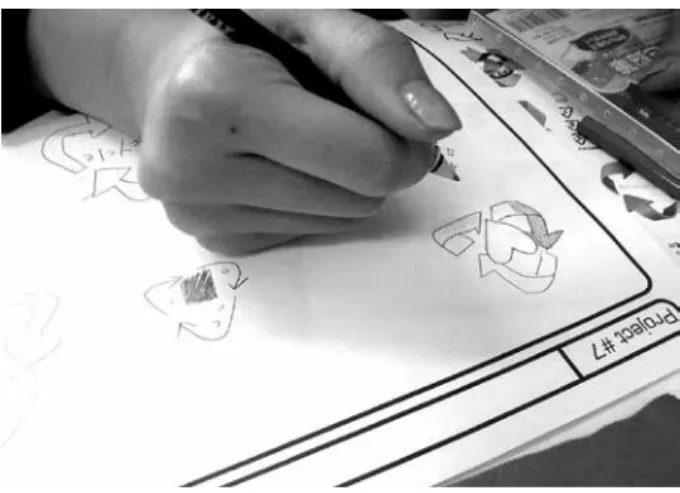
After this research stage educands then began to conceive or draw5 their ideas. Despite having
researched for homework, the detailed conceiving of ideas and sketching relevant solutions were performed 5. It is important to reiterate that this methodology employs the idea of ‘mark making’ not ‘art’ per se, and
in class. Educands were entirely free to render their concepts as they saw fit and no restrictions were placed on them whatsoever. Furthermore (as mentioned prior) it was made expressly clear that this was an English class foremost and so educands should not worry about the ‘level’ or ‘quality’ of their artwork as this was not the main focus of the class, and again the emphasis as placed not on art, but on mark-making.
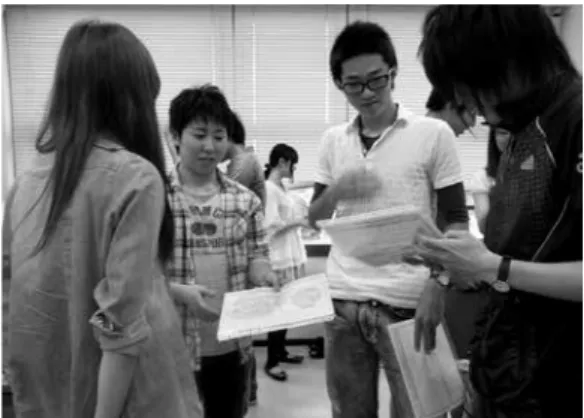
Finally, given that this was at heart, a four-skills course, educands were given speaking time to discuss their responses and research. After having a relatively short period of time (relative to the complexity of the project) in which to sketch an initial visual response to the brief, they were then asked to form mixed gender pairs and to discuss their initial thoughts, research, and designs. The rationale behind giving them only a relatively short time to design was due to the three factors, firstly, to give educands maximum speaking time (the focus of the class was heavily directed to oral communication); secondly to encourage educands to justify and rationalise their choices before they became too fixed; and finally to receive extra stimuli and external input both from the act of explaining their design and having peers explain their design to them. The rationale behind the male/female pairing was largely based upon the fact that in Japan, partly because of the single-sex high schools many educands attend prior to entering university, generally speaking, if educands are left to their own devices, they will invariably pair with the same sex. In terms of meeting the objectives of acquiring input and gaining insight from the widest possible audience, the author deemed it especially important that cross-gender solutions to the design problem at hand be shared and observed.
Figure 3: Exchanging dialogue having completed the written
component
Figure 2: Completing group discussion and planning
Once the educands had engaged with several interlocutors, and had explained their design, received questions, and questioned others, they returned to their desk where they once again set about further drawing and transposing their ideas into visual form. This second phase of drawing was invariably more fruitful than the first opportunity because they were now equipped with not only the perspective of their peers, but also having voiced their own ideas, they were now in a position to adjust, modify or enhance their initial ideas which may have been challenged somewhat and consolidated through their dialogue with others.
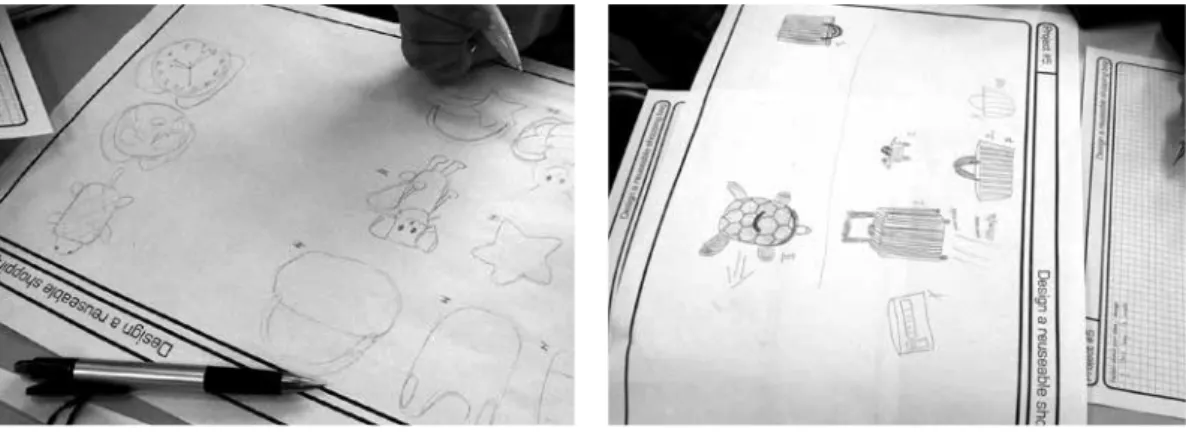
Working in a non-linear, cyclical manner, having visualised their ideas and then discussed them, educands could also start to write – to in effect use the reverse of the page to put into words what they had drawn on the font. Depending upon the complexity of the task and the group dynamics on any given day, the class was gradually encouraged to shift their focus away from the drawing and labeling of their design to the written explanation of their concept. Whilst the front page of the print contained a blank space for the visual rendering of the educand’s individual design solution(s), the back page of the print was given over to the written explanation, and was further divided into both upper and lower sections (as can be seen in fig 5 above). The upper portion being the space in which the design solution was explained e.g. describing in sentence format the task, the problem or observations of pre-existing solutions, how these could be addressed, the motivation and rationale behind the creation of their design, and the philosophical or emotional aspects of
Figure 4: Developing their design responses Figure 5: Transitioning from visual work to their
written response
Figure 6: Exchanging dialogue having completed the
written component
their design conception etc. In contrast, in the lower portion of the page was left for listing purely descriptive factors such as shapes, sizes, colours and materials; vocabulary which they had already collected on worksheets from an initial homework assignment. The duality of this approach was chosen for a number of reasons, firstly it ensured that both bases (descriptive and non-descriptive language) were covered, secondly it introduced the educands to different forms of writing (i.e. sentences versus listing) and finally it allowed them to work with different approaches to both the explanation of their design and the questioning of others.
The final stage of this process was to finish for project for homework. Given the breadth of the aforementioned tasks and the confines of a 90-minute class, educands were invariably unable to complete a given task by the end of class. That stated, however, as this was largely self-directed, there were no pre-set requirements with regard to volume of output, and this allowed for a self-directed and flexible response to learning which attempted to empower the educands by means of flexibility and free choice. Any outstanding or unfinished parts of the project were therefore completed as part of the weekly homework assignment. This also provided educands with some very valuable ‘quiet-time’ of their own which allowed learners who wished, the opportunity to work at their own pace and perform any additional design, research or writing independently outside the gaze (perceived or actual) of others. By not considering a project ‘finished’ and by allowing it to be revisited if desired, the author introduced the opportunity for flexible learning into the class structure and also provided valuable space for reflecting on the class and their solutions. Furthermore, to adapt and change their response if necessary helped to embody the postmodern concept of transience. It should be noted that the opportunity to re-think and re-work completed projects and also complete projects which were not chosen for class6 provided further opportunities for personalised and self-directed learning.
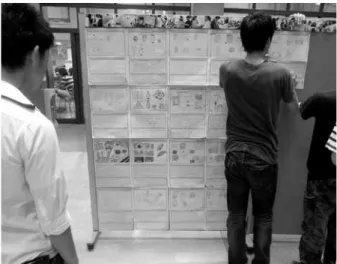
Figure 8: Class members assembling their exhibition
6. Because a semester ran for only 15 weeks and 2 weeks would be allocated to induction and portfolio submission and feedback there were many projects in the textbook which were not able to be completed. This excess also allowed for a flexible approach to learning which could be adapted to better suit the dynamics of a given class.
Dénouement
To contribute to the collegiality of the University’s academic community, and to showcase the achievements of educands, their work was always displayed on campus. At the end of each semester, a display was organised in the entrance hall of the faculty and this consisted of examples of educands’ work and still photographs taken during class which the educands co-curated and assembled. After each 15-week cycle when the work was exhibited it was invariably very well-received by both the educands who took part, their peers, and staff in the Faculty and the wider university.
Section Four: Findings and Observations
ProsAs alluded to prior, it is arguable that the educands currently enrolled in Japanese higher education possess an innate gift for the visual, that is for receiving cognitive stimuli and processing cognitive data through a visual conduit or a visual/lingual conduit. That proposed, however, how does this conjecture assimilate to reality? Can what appears to be a thoughtful and logical argument on paper translate into the real-world and offer student learners (and educational professionals) real tools with which to perform real tasks? From the author’s observations of teaching a twice-weekly class of around thirty-five first-year, lower-intermediate non English-language majors, it can be stated with a high degree of conviction, that this approach to both
Figure 9: Exhibition of class work
andragogy in general and more specifically, the teaching of environmental issues as the central focus of CBI was both effective and appropriate in meeting the aims of the curriculum and the needs of learners. Furthermore, from both informal soft data and data gathered from the university’s student questionnaires and the author’s questionnaires coupled with one-to-one feedback given by students directly to a student leader, it was largely welcomed and because of this was embraced by the majority of the student body. That learners undertook these design projects and research with fervour and a deep-seated enthusiasm is clear to anyone would was able to witness the classes firsthand. Anyone who has seen still photographs from the class such as those presented here or those which can be seen at the following website: https://www.flickr. com/photos/artsbasedresearch/albums can clearly see the work produced and the convivial atmosphere the class generated. This anectodal evidence is also supported by those who moderated the course at the end of term when the educand’s learning portfolios (including the text) were examined. On a personal note, the author was always sincerely impressed by not only the extensive amount of work and effort the educands had clearly put into these classes and their portfolio submission, but also, and perhaps more importantly, by the quality and complexity of their cognitive, analytical, and imaginative approaches embedded in their written solutions. The author’s experiences of running this class over a period of five years indicate the potential for these approaches and methodologies to be employed as a legitimate way to encourage engagement with a secondary topic which SLLs may otherwise find daunting.
Cons
Just as the author argued that visual learners were not sufficiently catered for in pre-existing dominant pedagogical paradigms, the reverse is true and the fact remains that some Japanese tertiary educands certainly
do prefer a more didactic and prescriptive model of teaching and will not enjoy the freedoms and ambiguity
arising from this approach – despite its noble intentions. Of course, one could argue that didactic, ‘read and repeat’ approaches such what Laudrillard (2002, p. 20) called the ‘transmission model’ and what Knowles (2011, p. 62) likewise called ‘transmission techniques,’ require virtually no effort on the part of the learner and allow them to be passive bystanders in the learning transaction, whereas this approach actually requires them to be intrinsically motivated and active participants. It is therefore difficult to ascertain the division between genuine and spurious reticence. However, the potential for learner dissonance was noted and allowances were made accordingly insofar as the ‘quality’ of the drawings and sketches were not evaluated per se. i.e. their artistic ‘merit’ was not an element of the rubric. Rather, their depth of understanding and cognition was evaluated along with their research skills and use of higher-order skills evident in both their written work, also expressed through their oral communication. Furthermore, moving forward, many facilitators may mistakenly assume they have to be ‘artists’ or visually creative in order to adopt an approach such as this in their tertiary classroom. Needless to say the role of the facilitator is one of ‘coach’ or ‘conductor’ who guides the activities but does not directly participate; with this particular methodology, being visually cognizant or literate was not a requirement for effective facilitation.
few educands were initially prone to embarrassment at the perceived inadequacies of their visual rendering. However, this was tackled through positive reinforcement, praise, and holding up as exemplary, examples which might not traditionally be considered artistically competent or beautiful e.g. photo-realistic—yet designs which very clearly conveyed the educand’s concept and depth of cognition. Educands soon became to realise that as a postmodern pluralist learning paradigm which rejects value judgement of good and bad; the parameters of what was acceptable or desired in this class was perhaps less well defined, and not what they had initially imagined insofar as they were not required to be adept at rendering, and that this depth and quality of engagement was of paramount importance. In continuum, a few educands found it difficult to accept the mental freedom associated with this approach to learning and to accept that what appeared as less-than-perfect (in the artistic sense) was perfectly acceptable for this class. Again it is important to stress that this was a CBI TEFL class which employed AVE methods as a way to approach the learning of a secondary subject, in this instance, environmental issues, which the educands had not studied before and which they may have felt was far above their linguistic and cognitive level.
Limitations of the Research
Although there was no opportunity to conduct any needs analysis of the educands prior to devising the course and its implementation, it was assumed by the author (correctly or otherwise) that the aims outlined in the Faculty Handbook could act as an initial target and that for future iterations prior needs analysis could be built in, especially for Semester two, although this would require knowing the current facilitator/classroom for the incoming group and negotiating with them to conduct analysis prior to the end of Semester one. Furthermore, just as this approach was devised to counter what the author saw as a lack of visual methods in the Japanese tertiary classroom, so it should be recognised that some Japanese learners do actually prefer a more prescriptive approach – an approach they feel comfortable with having experienced it in their primary and secondary education, and still in much of their tertiary education. That established, however, it should be clear that learning in the tertiary sector, particularly under the tutelage of native speakers of English
Figure 11: Engaging enthusiastically in discussion of
their ideas
Figure 12: Educands appeared to be highly responsive
to the textbook and this approach and produced a high quality of written and oral work.
should push against and disrupt methods used in the primary and tertiary sector and not merely continue these. Students should be encouraged to understand this fracture in learning strata and understand too that the dominant methods used in their eight years of English language education has not produced significant results and warrants rethinking, especially as they move to becoming a young adult.
Some educands spent an undue time completing the visual rendering of their idea which left insufficient time to complete the rear portion (written explanation) — although the projects were finished up for homework which allowed for this imbalance to be redressed. To address this required the facilitator to be a proficient time-keeper, to constantly monitor the flow and pace of the class, and be vigilant about spending too much time on the drawing. Despite extreme vigilance and monitoring by the author in each class, some educands did feedback that they felt too much time was spent on drawing – this despite the fact that they would have been given about two-thirds of the 90-minute class for speaking and sharing. The facilitator should, therefore, manage not only the actuality of time spent, but also the perception of time spent. Furthermore, as discussed in Boud and Walker (1998) the tension between reflection-based teaching activities on the one hand and teaching for the purpose of educands gaining an understanding of the subject matter (a non-reflective element) needs to be considered.
Conclusion
The initial hypothesis proffered by the author was that the Japanese learner has an innate disposition for visual literacy and thus should respond well to the use of visual methods which could be used to teach tertiary CBI, in this instance, environmental issues. That an AVE methodology could be used to not only circumvent prescriptive pedagogies and counter the dominant paradigms encountered by Japanese university students thus far in their academic journeys, but could also be used to envelop the widest number of learners in the learning exchange, but also to act as a kind of Trojan Horse to allow apparently difficult topics and content to be engaged with in a second language by students who have low confidence and low perceptions of their English competence. Reflection on the open-endedness of these projects entailed examining strategies, assumptions, and actions which contribute towards complex thinking or experiences by exploring contradictions, doubts, dilemmas, and possibilities (Cunliffe, 2002). This lack of prescription is not only highly postmodern in nature, but also wholly appropriate for young adults and especially those enrolled in the tertiary sector, which, it is arguable should be focus less on prescriptives and more on possibilities. King (1995) further notes that in teaching strategies, the lecturer is taking and asking for a critical approach to learning strategy, one which involves the acts of questioning, challenging, and (in keeping with the pluralist postmodern stance) considering various points of view. at the lessons were well-received by the educands, that attendance problems did not transpire, that homework was invariably completed to a very high standard; that educands were able to converse about their work for at least fifty minutes per class and that real communication on real-world issues was able to occur leads the author to the conclusion that the classes were a genuine success. The primary data derived from this research consisted of physical artefacts, such as educands’ written and visual responses to class materials and soft data derived from personal observations together with class questionnaires. However, no data (either hard or soft)
were exploited to examine any shift in linguistic or cognitive faculties as a result of approaches used in the class, as this was not within the scope of the research objectives. This research does, however, aim to provide robust evidence to substantiate further exploration of AVE within the Japanese tertiary classroom, especially for CBI.
References
Anderson, Lorin W.; Krathwohl, David R., (Eds.) (2001). A taxonomy for learning, teaching, and assessing:
A revision of Bloom's taxonomy of educational objectives. Allyn and Bacon.
Barnes, W.B. & Slate, J.R., (2013). College-readiness is not one-size-fits-all. Current Issues in Education, 16(1).
Bishop, C. (2004). Antagonism and relational aesthetics. October, 110(Fall 2004), 51-79. Bishop, C. (2005). The social turn: collaboration and its discontents. Artforum, 44(6), 178-183.
Bishop, C. (2012). Artificial hells: participatory art and the politics of spectatorship. London: Verso Books. Bloom, B. S.; Engelhart, M. D.; Furst, E. J.; Hill, W. H.; Krathwohl, D. R. (1956). Taxonomy of educational
objectives: The classification of educational goals. Handbook I: Cognitive domain. New York: David McKay Company.
Boud, D. & Walker, D. (1998). Promoting reflection in professional courses: The challenge of context.Studies
in Higher Education, 23(2), 191-206.
Burgess, C. (2010). The‘illusion’of homogeneous Japan and national character: discourse as a tool to transcend the‘myth’vs.‘reality’ binary. The Asia-Pacific Journal, 8(9), 1-23.
Christianson, S. (2012). 100 Diagrams that Changed the World, Plume, New York.
Cunliffe, A. L. (2002). Reflexive dialogical practice in management learning. Management Learning, 33(1), 35-61.
Dillon, A., & Gabbard, R. (1998). Hypermedia as an educational technology: A review of the quantitative research literature on learner comprehension, control, and style. Review of Educational Research, 68, 322-349.
Felder, R.M. & Silverman, L.K. (1988). Learning styles and teaching styles in engineering education.
Engineering Education, 78, 674–681
Freire, P. (1970). Pedagogy of the oppressed. New York: Herder and Herder.
HEA, (2011). The UK Professional Standards Framework for teaching and supporting learning in higher
education. Retreived from https://www.heacademy.ac.uk/system/files/downloads/uk_professional_
standards_framework.pdf
HEFCE, (2008). Effective Practice with e-Portfolios: Supporting 21st century learning. Retreived from http://webarchive.nationalarchives.gov.uk/20140702233839/http://www.jisc.ac.uk/media/documents/ publications/effectivepracticeeportfolios.pdf
Hickman, R. (2007). Visual art as a vehicle for educational research. The International Journal of Art and
Design Education. 26, (3), 314-323.
reflective sketchbooks. British Educational Research Association Annual Conference proceedings. Retreived from http://www.leeds.ac.uk/educol/documents/174420.pdf
Kelsen, B. (2009). Teaching EFL to the iGeneration: A survey of using YouTube as supplementary material with college EFL students in Taiwan. Call-EJ Online, 10(2), pp.1-18.
Kester, G.H. (1995). Aesthetic evangelists: conversion and empowerment in contemporary community art.
Afterimage, 22 (January 1995).
Kester, G. (2005). Conversation Pieces: The role of dialogue in socially-engaged art. In: Z. Kucor & S. Leung (Eds.) Theory in contemporary art since 1985. Oxford: Blackwell.
Kester, G., May 14th 2013, Collaborative Art and the Limits of Criticism [Homepage of Create]. Retreived from http://www.create-ireland.ie/create-news-2013/create-news-14-grant-kester-on-collaborative-art-and-the-limits-of-criticism.
Knowles, M. S. (1973). The adult learner: a neglected species (3rd ed.). Houston, USA: Gulf Publishing. Knowles, M. S. Holton, E.F. & Swanson, R.A. (2015). The adult Learner: The definitive classic in adult
education and human resource development (7th Ed.). Amsterdam, Netherlands:
Butterworth-Heinemann.
Krathwohl, D. H. (2002). A revision of Bloom's Taxonomy: An overview, theory into practice, 41(4), 212-218.
Laurillard, D. (2002). Rethinking teaching for the knowledge society. EDUCASE, 16-25.
Lakoff, G. (2004). Don’t Think of an Elephant! How Democrats and Progressives Can Win: Know Your
Values and Frame the Debate: The Essential Guide for Progressives. Chelsea Green.
Lakoff, G., 2007. Whose freedom?: the battle over Americas most important idea. New York: Picador. Lyotard, J. (1984) The postmodern condition: a report on knowledge. Manchester: Manchester University
Press.
Marcy, M. (1922). Our teaching methods. Plebs 14(9).
Mouer, R. & Sugimoto, Y. (1986). Images of Japanese society: a study on the structure of social reality. New York, USA: Kegan Paul International.
Ohanian, S. (1999). One size fits few: The folly of educational standards. Portsmouth, NH: Heinemann. Philip, T. & Garcia, A., (2013). The importance of still teaching the iGeneration: New technologies and the
centrality of pedagogy. Harvard Educational Review, 83(2), pp.300-319.
Polanyi, M. (1958). Personal Knowledge: Towards a Post-Critical Philosophy. University of Chicago Press: Chicago.
Pratt, D. D. (2002). Good teaching: One size fits all? New directions for adult and continuing education, 2002 (93), 5-16.
QAA. (2008). The framework for higher education qualifications in England, Wales and Northern Ireland. Retreived from http://www.qaa.ac.uk/en/Publications/Documents/Framework-Higher- Education-Qualifications-08.pdf.
Vince, R. (1996). Experiential management education as the practice of change. In R. French, R. & C. Grey (Eds.) Rethinking Management Education. 111-132.
Woollock, A. (2008). The Use of Art-Based Projects in the Teaching of English as a Foreign Language (EFL),
With Specific Reference to Japanese Learners Studying at Art Institutions.神戸芸術工科大学紀要 芸術
工学2008 Retreived from http://kiyou.kobe-du.ac.jp/07/study/19-01.html
Woollock, A. (2017). Arts Based Research. Retreived from https://www.flickr.com/photos/artsbasedresearch/ albums
Wujec, T. (2010). Build a tower, build a team TED [Video podcast]. Retrieved from http://www.ted.com/talks/ tom_wujec_build_a_tower