CONSERVATION
An Assessment of Ecotourism Development and Practices at Arusha
National Park Tanzania
BY
KOBELO Stephen Elias
09/2012
A Thesis presented to the Higher Degree Committee of Ritsumeikan Asia
Pacific University in Partial Fulfillment for the Requirements for the Degree
of Master of Science in International Cooperation Policy, Tourism Policy
and Administration
ACKNOWLEDGEMENTS
The production of this thesis has been made possible from the contribution of many people. I would like therefore to take this opportunity to recognize people for their intellectual capability, moral and material support at various stages of thesis writing and production.
My sincerely thanks go to my supervisor, Prof. COOPER MJM, and Prof. Emer Dr. Sanga Ngoie Kazadi for their guidance and constructive challenges that made this thesis possible. Your time-to-time consultation and guidance has shown genuine concern to make this thesis relevant to the topic being researched.
My sincere recognition also goes to the former Permanent Secretary of Ministry of Natural Resources and Tourism (Mr. Ladislaus Komba) and the Director of Studies of NCT (Ms. Eunice Ulomi) for granting me permission to pursue my study.
The recognition is also extended to Mr. Johnson M. Manase (Manager, Tourism Services), Mbugi A. J. M (Manager, Outreach Programme), Diocless R. Emmanuel (Principal Tourism Promotion Officer), Gerald H. Mono (Park Warden), M.s Mary Mtenga (outreach Park Warden), Samwel Sakinoi (Tourism Assistant), and P. J. Shafuri all from TANAPA and Mr. Elirehema N. Maturo (Cultural Tourism Officer) of TTB
Special thanks goes to the Government of Japan and the World Bank for sponsoring whole of my postgraduate studies “MSc International Cooperation Policy, Tourism
Policy and Administration”. This support made it possible to successfully achieve this programme.
Also let me thanks and appreciate the contribution made by all classmates of Masters of Science in International Cooperation Policy and colleagues of special program “Environmental Leaders of Asia and the Pacific-ENVOL”, lecturers and the Ritsumeikan Asia Pacific University (APU) administration to their varied contribution for academic material and moral supports are of great value to me.
I appreciate the tolerance and moral support from my family members throughout the long duration of my studies. I pay special gratitude to my beloved wife Nakirembe Julian Madenge and my lovely daughter Regina Stephen Madenge and my son Henry Stephen Madenge for their patience and endurance all over the time of my absence, I sincere love them.
Lastly, my sincerely thanks should go to the almighty God for keeping me and the supervisors, healthy all over the long duration of preparing and production of this thesis.
TABLE OF CONTENTS
Acknowledgement……… . i
Table of Contents………. iii
List of Tables……….……… x
List of Figures………...……… xi
List of Pictures………. xii
List of Maps……… xiii
List of Abbreviations……… xiv
Abstract………. xvi
CHAPTER I 1.0 Introduction ……….……… 1
1.1 Background to the study……….……….……….……… 1
1.1.1 Tourism In Tanzania………..……… 1
1.1.2 Ecotourism Practices and development in Tanzania… . 6
1.2 Statement of the Problem……….…… 8
1.4 Research Questions……….………… 10
1.5 Significance of the Research Study……….……… 11
1.6 Organization of the study…...……… 11
CHAPTER II Literature Review………..…..………... 13
2.0 Introduction………..………. 13
2.1 Contextual Framework………...…… 13
2.1.1 Nature and concept of Ecotourism…………...……….………… 13
2.1.2 Ecotourism as a Modal for Sustainable Development……… 16
2.1.3 Conservationists and Ecotourism………...…… 17
2.1.4 Local Stakeholders and Ecotourism……..…………..……...….. 18
2.1.5 Ecotourism and its related terms……….……. 19
2.1.5.1 Nature Tourism……….………. 19
2.1.5.2 Sustainable Nature Tourism……….…. 20
2.1.5.3 Cultural, Ethno or Cultural Heritage Tourism………. … 21
2.1.1 Nature Conservation in Tanzania……….……….………… 23
2.1.2 Local Community Development…………..……….. 24
2.1.3 The Local Community Action in shaping Development.. 25
2.2 Theoretical Framework………. 28
2.2.1 Theory and Practice of Ecotourism……… ………….… … 28
2.2.2 Theories of Tourism and Economic Development…… 31
2.2.3 Dependency and Life-Cycle Theory……… 31
2.2.4 Community Approach Theory……… 32
CHAPTER III Study Area and Research Methodology……… 33
3.0 Introduction……… 33
3.1 Study Area……… 33
3.1.1 History Behind ANAPA……… . 34
3.1.2 ANAPA Climate……….. 35
3.1.3 Vegetation at ANAPA……… 36
3.2.1 Sample Population/frame………. 39
3.2.2 Sampling technique………. 39
3.2.3 Sample size………... 40
3.3 Data Collection Methods……… 41
3.3.1 Primary Data Collection……….. 41
3.3.1.1 Interview Guide……….. ……….. 42
3.3.1.2 Questionnaires……… 42
3.3.1.3 Observation……….. 42
3.3.2 Secondary Data……….……….. 43
3.3.2.1 Secondary or Documentary data………. 43
3.4 Data Processes and Analysis……….…………. 44
3.4.1 Editing and Data Cleaning……….… 45
3.4.1.1 Data Editing……….………… 45
3.4.1.2 Data Cleaning……….. 45
3.4.2 Coding……….… 46
3.5 Ethical Consideration……….…… 46
CHAPTER IV Findings and Analysis ……… 48
4.1 Introduction………...……… 48
4.2 Respondents Profile……….…...……… 48
4.2.1 Demographic Variable profile……… 48
4.2.1.1 Sex of respondents………...………. 48
4.2.1.2 Age of respondents………...……… 49
4.2.1.3 Education level of respondents………. 50
4.2.1.4 Working Experiences of respondents………... 52
4.3 Study Analysis, Findings and Unterpretation……….. 54
4.3.1 Ecotourism Practices and Development at ANAPA………….. 54
4.3.1.1 Terms Related to Ecotourism……… 54
4.3.1.2 Ecotourism Stakeholders at ANAPA……….. 54
4.3.1.3 Local people participation in Ecotourism practices and development…. 57
at ANAPA………. 66
4.3.2.1 Why Ecotourism at ANAPA………….……… …… 66
4.3.2.2 Ecotourism Resources at ANAPA………... 68
4.3.2.2.1 Mount Meru……….. 69
4.3.2.2.2 Ngurdoto Crater……… 69
4.3.2.2.3 Momella Lakes………. 69
4.3.2.2.4 Water falls………. 70
4.3.2.2.5 Small Serengeti………. 71
4.3.2.2.6 Fig Tree arch……….……… 71
4.3.2.2.7 Habitat diversity and Rare/endemic species……….. 71
4.3.2.3 Ecotourism Tourism Activities at ANAPA………. 72
4.3.2.3.1 Mountain climbing………...……… 72
4.3.2.3.2 Walking Safaris………...………… 72
4.3.2.3.3 Canoeing Safaris………..………… 73
4.3.2.3.4 Game drive……… 73
4.3.3.1 Accommodation facilities……….………. 73
4.3.3.2 Picnic sites and viewpoints………..…….. 74
4.3.3.3 Entrance gate……….. 75
4.3.4. Ecotourism and Socio-economic and Environment benefits …… 75
4.3.4.1 Promoting Culture of local communities……….……… 77
4.3.4.2 Local Culture and Tourism……… 78
4.3.4.3 Building Environmental Awareness……….. 79
4.3.4.4 Assistance to Communities……… ……… 81
4.3.4.5 Strategizing Conflict Resolution……… 82
4.3.4.6 Providing direct benefits to the local communities……… 83
4.3.5 Diversifying Socio-economic activities………... 85
4.3.6 Policies for environmental and tourism management…………. 85
4.3.6.1 Wildlife Policy (1998) and Conservation Act of 1974……….. 86
4.3.6.2 The Tourism Policy of 1999……… 89
4.3.6.3 Other important Policies and Acts……….. 91
4.3.7 Challenges at ANAPA………..… 95
CHAPTER V Summary of the Findings……….. 98
5.0 Introduction………. 98
5.1 Summary of the Findings and Conclusion……….. 98
CHAPTER VI Conclusion and Recommendations………..….. 108
6.0 Introduction……… 108
6.1 Conclusion……… 108
6.2 Recommendations……… ……… … 110
6.2.1 Recommendations to TANAPA/ANAPA…… ………….. 110
6.2.2 Recommendations to Local Community……….. 113
6.3 Area for Further Studies……… 113
Bibliography……… 114
LIST OF TABLES
Table 1: International Visitor Arrivals and Receipts, 2000 to 2009………... 5
Table 2: International Visitors Arrivals by regions, 2009……… 6
Table 3: Composition of Sample……… 41
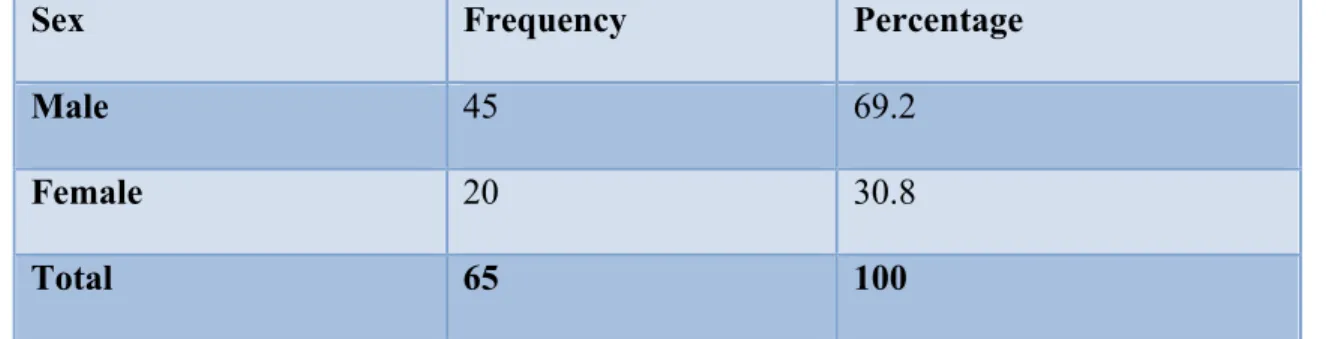
Table 4: Showing gender frequency and percentage of respondents… 49
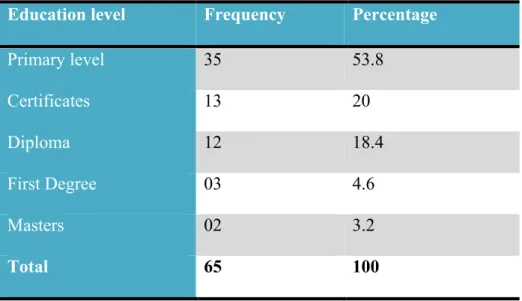
Table 5: Showing the education level of respondents………. 55
Table 6: Showing working experiences of respondents……… 53
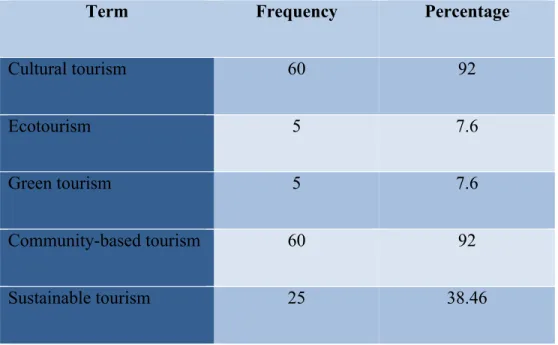
Table 7: Showing awareness of ecotourism related terms……….. 55
Table 8: Showing percentage of ecotourism stakeholders at ANAPA……… 58
LIST OF FIGURES
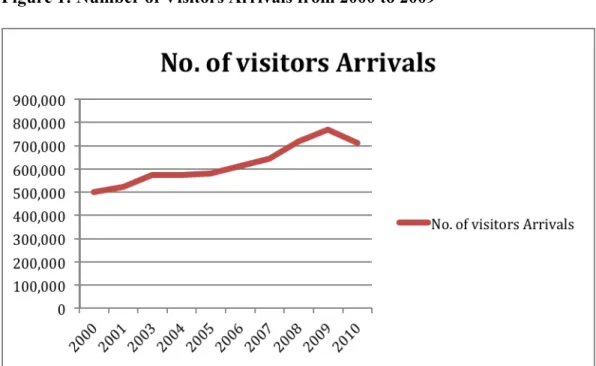
Figure 1: Number of visitor arrivals from 2000 to 2009……… 3
Figure 2: Number of Receipts received from 2000 to 2009……….. 3
Figure 3: Showing age of respondents……… 50
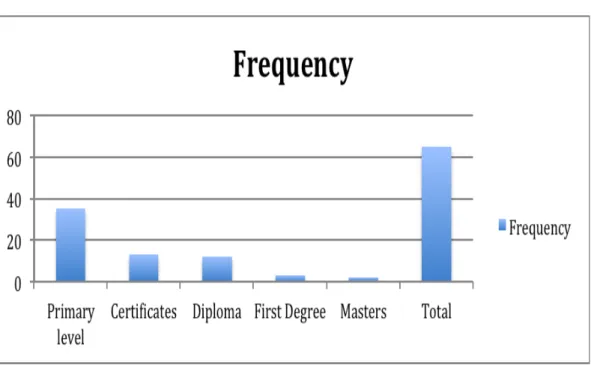
Figure 4: Showing the frequency of education level of respondents………. 52
Figure 5: Percentage of available respondents over targeted respondent……….. 54
Figure 6: Showing percentage of stakeholders at ANAPA………. 57
Figure 7: Visits to the National Park……….. 67
LIST OF PICTURES
LIST OF MAPS
Map 1: Showing Arusha Region……….... 34 Map 2: Location and Vicinity of ANAPA………. 40 Map 3: Showing ecotourism attractions and facilities at ANAPA……….. 70
ABBREVIATION
• ANAPA Arusha National Park
• APU Ritsumeikan Asia Pacific University
• CCS Community Conservation Service
• CD Community Development
• CNPPA Commission on National Parks and Protected Areas
• CTEs Cultural Tourism Enterprises
• CTP Tanzania Cultural Tourism Programme
• DS Director of Studies
• ENVOL Environmental Leaders of Asia and the Pacific
• IIED International Institute for Environment and Development
• IUCN International Union for Conservation and Nature
• MNRT Ministry of Natural Resources and Tourism
• MSc Master of Science
• NCT National College of Tourism
• NGOs Non-Governmental Organizations
• NLP National Land Policy
• PFM Participatory Forest Management
• SCIP Support for Community Initiated Projects
• SNV The Netherlands Development Organization
• ST-EP Sustainable Tourism Eliminating Poverty
• TACTO Tanzania Association of Cultural Tourism Operators
• TANAPA Tanzania National Parks
• TTB Tanzania Tourist Board
• UNDP United Nations Development Programme
• UNEP United Nations Environmental Programs
• UNWTO United Nations World Tourism Organisation
ABSTRACT
Ecotourism has been termed as one of the alternative forms of sustainable tourism that is used as tool towards local community development and also helping in boosting environment conservation. Over the last two decades ecotourism has been taking much attention from World tourism businesses in both developed and developing countries. Ecotourism is currently one of the fastest growing sectors of the tourism industry in terms of social-cultural and economic impact as well as environmentally.
Being taken and recommended by some of the world’s environmentalists and economists as a powerful socio-economic development force, particularly in developing countries with little other industry, ecotourism has been able to overcome notable environmental impacts and ensures conservation and, when correctly managed, promote community development and empowerment.
In Tanzania, ecotourism is said to be started in the last two decades with much attention being paid to the natural resources which from the long history were disturbed through the practices of mass tourism and some other illegal businesses related to wildlife. In order to have a clear picture and understanding of the importance of ecotourism practices and development in a real ground; an assessment of ecotourism development and practices towards local community development and environment conservation with a case study of Arusha National Park (ANAPA) was undertaken.
The research questions were developed from the objectives of the study. The study therefore attempted to answer the following research questions; what local people say on their understanding of the term ecotourism?, what ecotourism resources, facilities and activities are available at ANAPA?, what were the socio-cultural and economic benefits gained by the local communities prior to the ecotourism development and practices at ANAPA?, what policies were developed to guide tourism sustainability at the park?, what are the environmental benefits of ecotourism practiced at the park?, what are challenges that are associated with ecotourism practices and development at the park?
In order to acquire the qualitative data that could be used to answer the problems in question; several data collection methods and instruments such as interview guides, questionnaires, observation and secondary information review were employed to assist in getting both primary and secondary information.
The data collected was both manually and electronically analyzed to give out the results, which were presented in form of form of tables, figures and analytical explanation.
The results of the study reveal that ANAPA in some extent has been practicing some of the ecotourism aspects and principles as explained by other ecotourism and environmental scholars. Ecotourism resources, activities, facilities and the general practices at the site, supported this.
The socio-economic and environmental benefits to the local communities around and environment surroundings have been also seen as good practice of ecotourism though much of the way the park and the communities faced many challenges as stated in this report. In addition, several recommendations to both Park authorities and communities a pointed out to allow proper management, planning and utilization of resources for the future generations and communities’ development. Lastly, the researcher suggested to the scholars the area for the future studies relating to this study.
CHAPTER ONE
1.0 INTRODUCTION
This chapter introduces among other things the background of the study, problem of the study, objectives of the study, research questions, the significance of the research and the organization of the thesis.
1.1.BACKGROUND TO THE STUDY
1.1.1 Tourism in Tanzania
Tanzania is among the blessed countries in the world with many famous natural resources, which provide a wide range of possible tourist activities. Until 2011 almost 29% of Tanzanian land was dedicated to wildlife (flora and fauna) and wildlife tourism in a particular.
The country’s historical background, which is traced far back away from before colonialism, during and after independence has brought significance tourist attractions to tourism industry and the nation as a whole by shaping its entire culture and traditions that are associated with more than 126 ethnic groups.
Today, tourism plays a critical component of the Tanzanian economy and act as a shaped tool in jobs sources and creation in both rural and urban areas (Tourism Master Plan, 2002). Tourism industry in Tanzania has shown a very strong and prosperous development during the last decade (figure 1, 2) as the majority of sectors involved
accounted for successful socio-economic growth. The industry plays a significant role in socio-economic development as it acts as a major source of foreign exchange, and the industry is credited for being one that offers employment opportunities either directly or indirectly through its multiplier effect (Min. of Natural Resources and Tourism, 2012).
The tourism sector of Tanzania generates hard currency foreign exchange and tax revenues for government, creates jobs, has an important impact on regional economic activity, it is also attractive for small and medium sized enterprises and consequently can foster an enterprise economy, has strong linkages to other sectors of the economy, can bring economic benefits to local communities; and has considerable potential for expansion and increased value added (Tourism Master Plan, 2002). Among the tourists, international tourists in Tanzania have been contributing to the greatest proportion to the aforementioned benefits.
Tourism has been cordially growing and according to statistics compiled by the National Bureau of Statistics (NBS) and the Tourism Division, Tanzania in 2009 earned US$ 1.159.82 million in foreign exchange from 714,367 International tourists compared to 2000 where the sector received US$ 739.06 million from 501,669 international visitors as shown in table 1; and figure 1 & 2. Traditionally, tourism in Tanzania has been depending on the natural tourist attractions and the environment (National Tourism Policy, 1999).
Figure 1: Number of Visitors Arrivals from 2000 to 2009
These attractions include among others, areas of great biodiversity e.g. the Ngorongoro Conservation Area, National Parks such as the Serengeti National Park and Game Reserves like Selous Game Reserves; and other sites of great natural beauty such as Mount Kilimanjaro, the vast beaches and marine resources. The areas of water bodies such as lakes, rivers and water falls have recently paid much attention to tourists in Tanzania. There is continued existence of these attractions and, therefore, the tourist industry needs to have a proper commitment of the tourist industry to see that the environment is conserved for the current and future generation use (National Tourism Policy, 1999).
Over the past decade, the Tanzanian government has been promoting Community Based Tourism, which is said to ensure the benefit to the local people from the tourism industry and that policies that designed to protect animals and other natural resources also help to alleviate rural poverty (Tourism Master plan, 2002). The approach used here in has had a profound effect on the development of ecotourism in and around National Parks and has resulted in a number of successful partnerships between tourism companies and local communities. The approach effects further give local communities a strong incentive to support conservation efforts that sustain the wildlife that tourists come to see (Tourism Master plan, 2002).
Globally, the tourism industry has shown noted growth; as between 2006 and 2010 the world experienced an increase in tourist traffic of almost 3 to 4 per cent. UNTWO World Tourism barometer (2007) predicts a long-term annual growth rate of 4.1%
through 2020. With just an average of approximately 0.1% of the current global tourism market (compared to the current World population of 6.7 Billion), there is considerable room to grow in Tanzania. We should therefore take such advantage by conserving our tourism resources for future tourism and future generations.
Table 1: International Visitor Arrivals and Receipts in Tanzania, 2000-2009 Year No. of visitors Arrivals Receipts (US$ million)
2000 501,669 739.06 2001 525,000 725 2002 575,000 730 2003 576,000 731 2004 582,807 746.02 2005 612,754 823.05 2006 644,124 950 2007 719,031 1,198.76 2008 770,376 1,288.69 2009 714,367 1,159.82
Table 2: International Visitors Arrivals for Tanzania by Regions, 2009 South
Asia
Africa Americas Europe Middle East
East Asia & the Pacific
3 % 48 % 10 % 33 % 2 % 4 %
Source: The 2009 Tourism Statistical Bulletin
1.1.2 Ecotourism Practices and Development in Tanzania
Homewood & Rodgers (2004), in the book Maasailand Ecology: Pastoralist Development and Wildlife Conservation in Ngorongoro, Tanzania asserts, “There has been a growing trend to promote ecotourism as an alternative low impact form of tourism to natural areas thereby incorporating both conservation and development aspects while also gaining economic benefits”. They further pointed out that “by distributing some of the benefits of tourism to local people, they will have incentive to protect those natural areas that draw tourists, be more likely to support the presence of protected areas in their midst that otherwise restrict their access to land and resources, and embrace behaviours and attitudes that support conservation” (Homewood and Rodgers, 2004).
The growth of tourism activities, business and tourist arrivals in Tanzania National Parks have brought about many challenges and problems. The growth trend of tourist arrivals had cause mass tourism hence the park resources were seemed to have
exceeded their carrying capacity. Moreover, in Tanzania the indigenous have the right to have legal access to wildlife use (as stated in the wildlife policy of Tanzania of 1998) hence supports wildlife utilization. The indigenous have been taking advantage of this to over utilize and do illegal wildlife businesses. Escalating illegal wildlife off-take and trade were some of the challenges faced most of the Tanzania National Parks. The wildlife resources were also facing some of the problems and challenges due to the fact that the country had limited human resources to carry out wildlife conservation activities and poor remuneration, which results in low staff morale performance and erosion of professional ethics (IEED, 2006). Failure of wildlife conservation as a form of land use to compete adequately with other forms of land use, especially to the rural communities was among the problems that facing most of the National Parks in the country (IEED, 2006). Lack of wildlife conservation awareness by planners and decision makers and loss of wildlife habitat to settlement, agriculture, grazing and logging due to human population increase were also among the problems which were and are still facing wildlife sector in Tanzania, and additionally inadequate wildlife use rights especially to the rural communities, and inadequate capacity to central problems arrivals and low budgetary allocation for conservation and development of the wildlife sector were also said to be among the problems facing wildlife sector in Tanzania (IEED, 2006). Having realized the consequences that caused by the said problems and challenges above, the Government and TANAPA in a particular sought necessary to involve local community and other tourism and environment stakeholders in order to diversify tourism activities in helping reducing
the pressure on the environment surround the park and being able to have increasing human resources for park operations and management hence adhering to ecological tourism (ecotourism) sustainability.
1.2 STATEMENT OF THE PROBLEM
Since the last two decades ecotourism has been taking much attention to the world tourism businesses in both developed and developing countries. It is currently one of the fastest growing sectors of tourism industry in terms of social-cultural, economics as well as environmentally. Being taken and recommended by some of the world’s environmentalists and economists as a powerful socio-economic development force, particularly in developing countries with little other industry, ecotourism has been able to overcome notable environmental impacts and ensures conservation and, when correctly managed, promote community development and empowerment. IIED Wildlife and Development (2003) asserts that ecotourism enterprise is always complex and complicated and involves many distinct parties, all of whom aspire to gain from the process. “All parties involved must collaborate to ensure that not only are the wildlife and habitat protected, but that the venture is beneficial to the local communities who traditionally manage the wild-land” (IIED Wildlife and Development, 2003)
United Nations Development Programme (UNDP 2012) points out that if any development initiatives are to be regarded as sustainable then they ought to be focused
on people in practical ways. (Corporate Plan, 2008/9-2012/13). Such an understanding of sustainable development also applies to tourism. In fact the UNWTO (Corporate Plan, 2008/9-2012/13) also highlights that responsible tourism covers both environmental conservation and poverty alleviation.
Reports and literature that promote ecotourism have however created considerable confusion between ecotourism as an ideal and its reality on the ground. Ecotourism is said to make good conservation sense since it encourages communities to preserve the wildlife that attracts the tourists in the first place. The focus of this research is therefore concentrating on ecotourism development and practices to see if they truly align with the ecotourism theories and principles that are mentioned and argued by different scholars and later to be seen as an effective tool for development in local communities and environment located near the National Parks, Arusha National Park (ANAPA) in a particular.
1.3 RESEARCH OBJECTIVES
The main objective of the research thesis is to make an assessment of ecotourism development and practices towards community development and environment conservation inside and around Arusha National Park (ANAPA). Being the major proposed tool towards sustainable development and development as a whole, one would like to know more about its impact on both local communities and the surrounding environment. The specific objectives of the study include attempting to:
(i) Understand local community awareness on sustainable tourism/ecotourism (ii) Identify ecotourism resources, facilities and activities, which are available at
ANAPA.
(iii) Analyse the socio-cultural and economic impacts of ecotourism to the local communities around the park
(iv) Analyse environmental conservation development that geared by ecotourism developed and practiced at the park.
(v) Describe the challenges that the park faces in its sustainability development
1.4 RESEARCH QUESTIONS
The specific research questions that must be answered include the following:
i. What local people say on their understanding of the term ecotourism?
ii. What ecotourism resources, facilities and activities are available at ANAPA? iii. What were the socio-cultural and economic benefits gained by the local
communities prior to the ecotourism development and practices at ANAPA? iv. What sustainable policies have been developed to guide tourism sustainability
at the park?
v. What are the environmental benefits of ecotourism practiced at the park? vi. What are challenges that are associated with ecotourism practices and
1.5 SIGNIFICANCE OF THE RESEARCH STUDY
The main outcome of this research thesis is to make a publication on the research titled “Local Communities Development and Environmental Conservation: An assessment of Ecotourism practices and development at ANAPA.”
Later the findings will help;
i. To understand ecotourism practices and development that are to be practiced for the proper management of Protected areas and for communities development so as to adhere the fully concept of Sustainable Tourism ii. The findings will also come up with the solution that answers whether
‘ecotourism a foe or development’ for both local communities and environment and whether to be continued or abandoned.
iii. The findings will also help the Government and other tourism stakeholders on planning and managing the ecotourism sites, or managing potential ecotourism areas and activities for the positive results as the concept of ecotourism defines its roles and responsibilities to both local communities and environment.
1.6 ORGANIZATION OF THE STUDY
The study organized into six main chapters whereby each chapter deals with the specific aspects of the research. Chapter one is the introduction of the study in which
the problem of the study, objectives, research questions and significance of the study are stated. Chapter two is where the review of relevant literatures is explored. The contextual and theoretical frameworks were detailed discussed here under. Chapter three explains about the area of the study and research methodology. It further explains the research design and the methods used to gather data that included primary and secondary sources of data as well as the main instruments of data collection. The population and sample size are also explained. Chapter four deals with the analysis of data, interpretations and presentation of the findings. Chapter five gives a summary of the findings. Chapter six provides the conclusions and recommendations of the study based on the overall research findings. Area of the future study/research is also suggested here under.
CHAPTER TWO LITERATURE REVIEW 2.0 INTRODUCTION
The literature review mainly focuses on the previous reviews on different publications, reports, researches done by different authors and other materials that are relating to this research study.
2.1 CONTEXTUAL FRAMEWORK
2.1.1 Nature and Concept of Ecotourism
Ecotourism is a concept that evolved over the last 25 years as the conservation community; people living in and around protected areas, and the travel industry witnessed a boom in nature tourism and realized their mutual interests in directing its growth (Drumm and Moore, 2005). Leksakundilok (2006) has argued that the emergence of ecotourism in the 1990s was an effort to reduce the negative effects of mass tourism. Since its emergence, ecotourism has been adopted in many countries around the world and is being implemented by many departments and fields including in those in natural areas, rural development focusing on ecological resources, sustainable management, environmental education, and community participation (Leksakundilok (2006); Drumm and Moore, 2005).
Though ecotourism is differentiated from simply tourism to natural areas, there is still a varied consensus about its definition (Cater and Lowman, 1994). In-fact this lack of
consensus about the use of the term ecotourism is noted to have impeded its adoption and implementation in some specific areas and regions (Reid, 1995; Lindberg, 1990). Ross and Wall (1999) point out that widespread environmental interest, particularly in the 80’s and 90’s resulted in a trend of environmental business opportunism associated with loose usage of the prefix “eco” to give a better competitive edge. Despite such adoption of the term, Kandari and Chandra (2004) highlight that there is also an ever increasing acknowledgement that natural resources are limited and as tourism demand increases strategies should also be developed to maintaining and protecting nature. In this light, the Ecotourism Society defines ecotourism as “purposeful travel to natural areas to understand the culture and the natural history of the environment; taking care not to alter the integrity of the ecosystem; producing economic opportunities that make the conservation of the natural resources beneficial to the local people” (Lück, 2008).
The definition of eco-tourism by the World Conservation Unions (IUCN) Commission on National Parks and Protected Areas (CNPPA) says ecotourism is an environmentally responsible travel and visitation to relatively undisturbed natural areas, in order to enjoy and appreciate nature (and any accompanying cultural features both past and present) that promotes conservation, has low visitor impact, and provides for beneficially active socio-economic involvement of local populations (Ceballos-Lascurain, 1996). This definition includes the point by Ross and Wall (1999) that ecotourism involves many actors; tourists, resident peoples, suppliers, and
managers and multiple functions. Ross and Wall (1999) further explain that ecotourism is a means of protecting natural areas through the generation of revenues, environmental education and the involvement of local people, thereby having both conservation and development aspects. While in definition, the distinction between eco-tourism and other forms of tourism can be cleary made, at the site-level the distinctions are often blurred as a result of a varying perspectives and criteria used to distinguish ecotourism (Sharpley, 2006). Some sources of variation include the motivations for initiating ecotourism, the motivations of users, the presence and scale of environmental, social and economic impacts, and the presence and quality of services offered, and attempts to overcome these differences are made from by employing value-laden ethical principles (Ross and Wall, 1999). Ecotourism is therefore seen as seen as achieving a three-fold promise; achieving conservation goals, improving the well being of local communities and generating new business, promising a rare win-win-win situation (Drum & Moore, 2005). It is also important to point out that the integration of conservationists, communities and tourism practitioners has not always been smooth and collaborative. Nevertheless the concept and practice of ecotourism brings these different actors together, and ecotourism has emerged as a platform to establish partnerships and to jointly guide the path of tourists seeking to experience and learn about natural areas and diverse cultures (Drumm and Moore, 2005)
2.1.2 Ecotourism as a Model for Sustainable Development
According to the World Bank’s 2003 World Development Report (World Bank 2003), there are three pillars of sustainability namely: economic, environmental, and social. Ecotourism also encompasses these three pillars by generating economic returns on a continual basis while at the same time contributing and sharing these to the local communities and ensuring environmental responsibility. Ecotourism can therefore be practiced on a wide range of attractions ranging from beaches and other natural attraction to culturally and/or historically significant sites (e.g. monuments, churches, ruins). However the main attractions for ecotourism are typically found in nature (e.g. wildlife), or are the natural places themselves—often ones vulnerable to ecologically destructive human activity. Thus, because the income-generating resource bases of ecotourism ventures are also the principle attractions, the continued conservation and responsible management of these natural assets will ensure continued economic returns. “Sound” ecotourism also demonstrates sustainable development theory’s prioritization of social sustainability by improving the welfare of local people as an income-generating activity, and as a means of conserving and sustainably managing the surrounding natural resources on which the locals’ livelihoods are dependent (Honey, 1999).
It is unfortunate however that in some cases as reported by Scheyvens (1999), ecotourism has been inappropriately implemented resulting and instead of empowering has alienated indigenous local communities. For example in South Africa
some ecotourism operators were discovered to have involved local communities exclusively for their public relations value while doing little and in even nothing to ensure that the communities and the surrounding environment benefitted from the ecotourism ventures (Scheyvens, 1999). Thus ecotourism if inappropriately implemented can result in social and economic decline of a local community, and in some cases limited sporadic benefits linked to seasonal or unpredictable variability ecotourism. Honey (1999) further points out that social decay rather than the enhancement of community cohesion, may result from uneven distribution of the wealth generated from the ecotourism initiative and the subsequent competition between community members for the acquisition of that wealth (Honey, 1999). Furthermore the allocation of large tracts of communal lands for ecotourism activities may limit or completely take away the time and space needed for the practice of traditional activities such as hunting and forest product extraction, thereby decreasing the community’s cultural integrity and possibly its overall wellbeing (nutritionally, economically, etc.) (Honey, 1999). If the social and economic well being of the local community is negatively impacted in such a manner, this may jeopardize the local community’s interest to sustainably maintain the environment as has been witnessed in the case of the Asiatic lion population (Honey, 1999)
2.1.3 Conservationists and Ecotourism
Drumm and Moore (2005) note that specific circumstances on all sides have motivated the interest in ecotourism including conservation managers who have been in the
midst of redefining conservation strategies. For practical reasons, they were learning to combine conservation activities with economic development as it became obvious that traditional conservation approaches of strict protectionism were no longer adequate and new ways of accomplishing goals were needed (Redford et. al., 1998). For years, conservationists established and managed protected areas through minimal collaboration with the people living in or near these areas. Circumstances in many countries, particularly in developing regions, have changed dramatically in recent years and have affected approaches to conservation (Drumm and Moore, 2005).
2.1.4 Local Stakeholders and Ecotourism
Drumm and Moore (2005) highlight that in recent decades, many developing countries experience significant population growths without a respective increase in economic growth, resulting in a tendency for these countries to exploit their natural resource base in an unsustainable fashion. This situation has lead to increased competition for limited natural resources. Outside protected areas, the natural resources that many people have depended upon for sustenance and many businesses have relied upon for profit making have disappeared leaving mainly the protected areas were important reserves of plant and animal diversity, water, clean air and other ecological services (Drumm and Moore, 2005). In Brazil for example, farmers and loggers have encroached and consumed significant amounts of protected area resources. It is in these situations that ecotourism is increasingly important, in order to conserve and increase economic considerations. Local people need financial incentives to use and
manage natural resources sustainably, but unfortunately existing economic and political conditions often limit their options and increase their reliance on natural areas (Drumm and Moore, 2005).
Drumm and Moore (2005) note that in looking for alternative economic activities, conservationists have become more creative and are exploring many options including ecotourism. The rationale behind ecotourism is that local tourism businesses would not destroy natural resources but would instead support their protection, in other words ecotourism offers the solution to simultaneously make money and conserve resources. Ecotourism could be considered as a sustainable activity, one that does not diminish natural resources being used while at the same time generating income (Drumm and Moore, 2005).
2.1.5 Ecotourism and its related terms
2.1.5.1 Nature Tourism
Drumm and Moore (2005) define nature tourism as simply tourism based on visitation to natural areas, therefore nature tourism is closely related to ecotourism but does not necessarily involve conservation or sustainability. Hence it is usually the case existing in most natural areas before strategies for conservation are implemented. However as aspects of ecotourism are integrated into a nature tourism program, its effect on the environment may change (Drumm and Moore, 2005).
2.1.5.2 Sustainable Nature Tourism
There is a close relationship between sustainable nature tourism and ecotourism. However it should be noted that sustainable tourism does not meet all the criteria of true ecotourism. Drumm and Moore (2005) also cite the example of a cable car carrying visitors through the rainforest canopy generating benefits for conservation and educating visitors, yet creating a barrier between the visitor and the natural environment. Such case would be inappropriate to refer to as an ecotourism initiative. On the other hand, in altered and heavily visited areas, sustainable nature tourism may be an appropriate activity for example, large eco resort development would not be considered low impact if it required significant clearing of native vegetation but may contribute to conservation financially and provide conservation education (Drumm and Moore, 2005).
It is important to point out that even though sustainable nature tourism and ecotourism have some similar aspects, they also have some very important differences. Drumm and Moore (2005) also highlight that a project must meet all of the necessary criteria listed above before it can accurately be defined as ecotourism, and projects that fall short on any of the criteria do not truly benefit conservation or the people involved over the long term. It is interesting to note that scientific or research tourism might qualify as ecotourism if the objectives are for providing information about the ecology of the area while meeting all the other criteria of ecotourism (Drumm and Moore, 2005).
2.1.5.3 Cultural, Ethno or Cultural Heritage Tourism
Cultural, ethno or cultural heritage tourism can be divided into two categories the first and conventional type being where tourists experience culture through museums and formalized presentations of music and dance in theatres, hotels or occasionally in communities themselves, and the second type which is more anthropological and contains a strong visitor motivation for learning from indigenous culture rather than simply viewing an isolated manifestation of it (Drumm and Moore, 2005). Recently there has been a developing interest in learning how indigenous local communities use natural resources for example how the Cofan of Ecuador has specialized in teaching visitors about their traditional uses of medicinal plants. Hence cultural tourism is can be related to ecotourism if the management involves the host communities and prevents eroding of the cultural resource (Drumm and Moore, 2005).
2.1.5.4 Green/Sustainable Tourism
Green/Sustainable tourism refers to travel operations that use natural resources judiciously (Drumm and Moore, 2005), and some examples include the airline industry becoming more energy efficient, the cruise line industry recycling its waste or large hotel chains adopting environmental regulations. Large hotels have discovered that by advising guests to reduce water consumption or recommending that they not expect their towels to be washed every day, the hotels not only gain a greener image (which is increasingly important to consumers), but they also reduce operating costs
(Drumm and Moore, 2005). Thus, green tourism is clearly is advantageous for the conventional tourism industry.
It is important to note that developing a sustainable or green tourism industry in all its dimensions is as worthy a cause as working to maintain protected areas through tourism (Drumm and Moore, 2005). However, for the present purposes the focus will be on ecotourism development, and others will address in future publications and the greening of conventional tourism. It may be easiest to think of ecotourism (which works to protect natural areas through tourism) and sustainable tourism (which works to make the whole tourism industry more environmentally friendly) as two valuable, but distinct, missions.
Drumm and Moore (2005) emphasize that working with ecotourism, a comprehensive view of conservation is implicit in the definition of ecotourism. It incorporates elements of community participation and economic development including the many activities and participants that fulfill this mission. Ecotourism can contribute to conservation by generating funds for protected areas, creating employment for surrounding communities, advancing environmental education for visitors, and providing justification for declaring areas as protected or increasing support for these areas (Drumm and Moore, 2005).
While ecotourism may be easily explained theoretically, practical implementation is often complex. Specific areas may decision for ecotourism need to be made for each specific site in line with conservation objectives, and managers have to investigate
actual and potential tourism impacts, both positive and negative (Drumm and Moore, 2005). It is often the case that trade-offs have to be made for example, tourism may result in trampled vegetation along trails but also allows for more protected area guards to be hired from the local community.
Drumm and Moore (2005) point out that protected areas, private reserves and international biosphere reserves are already slated as conservation units and offer the best arenas for pursuing ecotourism. While in many cases especially in developing countires, the legal and management structures of these areas are weak, they facilitate their ability to capture the benefits and minimize the costs of ecotourism (Drumm and Moore, 2005). It should be noted however that ecotourism can also take place in areas with less formal conservation status as well, such as where ecotourism helps establish the protective status of areas currently not formally protected (Drumm and Moore, 2005)
2.1.6 Nature Conservation in Tanzania
In the context of the environment in Tanzania, Environmental Conservation refers to the conservation of natural features, including geographical and geomorphological features, flora and fauna (United Nations Environment Programme (UNEP), 2012). The UNEP (2012) further notes that the rationale for conservation of the environment by the Tanzanian people derives from the importance of their products and services, and the conservation of these environmental resources naturally has a direct
relationship to natural disaster management. It is also important to note that by conserving the natural environment, local communities can also mitigate the negative impacts of climate extremes and natural disasters. Additionally natural resources may provide early warning signals for impending natural disasters. It is an established fact that as diversity increases so does the stability and resilience (UNEP, 2012).
The UNEP (2012) also points out that in developing countries such as Tanzania, the limited socio-economic development opportunities put pressure on natural resources and thus on biological diversity. It is unfortunate that a there is a decline in the use of indigenous knowledge and this has in-turn contributed to the degradation of natural resources in Tanzania (UNEP, 2012), for example the eradication of the traditional silvopastoral system which resulted in significant vegetation loss and desertification in some parts of the country. However in other parts of the country were indigenous conservation knowledge has been incorporated, some positive gains to natural resource conservation have been noted (UNEP, 2012).
2.1.7 Local Community Development
The Community Development Challenge report (2006) points out that community development includes a set of values and practices which play a special role in overcoming poverty and disadvantage, knitting society together at the grass roots and deepening democracy. Community development may be achieved through a number of different approaches. In the recent years there seems to be an emerging digital divide
which could sideline some local communities with limited access to modern information technology systems. Therefore community development also includes aspects of computer and online infrastructure and accessibility.
2.1.8 The Local Community Action in Shaping Development
Ashley (2006) notes that the need for local participation and the organization of local residents to meet the challenges facing their communities is of increasing importance and extension professionals and policy-makers are more frequently faced with the task of establishing programs in settings characterized by conflict among different groups of stakeholders with very different needs, values, and policy preferences. Hence conflicts can exist among different organisations or groups seeking to protect community quality and those that seek to exploit local resources as a means of achieving economic development (Ashley, 2006; Brennan, 2010). Equally common is the consistent transfer of responsibilities for services from government agencies to the private community sector. Such conditions have resulted in local residents taking on a greater role in providing services and planning for future needs. In response to the pressures and changes in our communities, activists, grassroots social change organizations, non-governmental organizations (NGOs), and coalitions of concerned community groups have emerged to shape and guide the development process. Similarly organized local residents have played instrumental roles in identifying new development options in localities that historically were presented with few such options. Community-based action in these and other settings is seen as essential to
community development and to the social and economic well being of the locale (Ashley, 2006). The emergence of community involves both interaction among residents and community action and this is seen as the foundation of the community development process because it encompasses deliberate and positive efforts designed to meet the general needs of all local residents. As Ashley (2006) notes, this process represents multiple and diverse interests in the locality, and consequently provides a more comprehensive approach to community development (Wilkinson, 1991). The main purpose of this local level action is to improve the well-being of local people, and to engage them in pursuing their interests while working towards a common goal (Ashley, 2006). In fact Ashley (2006) also points out that the existence of community action directs attention to the fact that local people acting together often have the power to transform and change their community.
Brennan (2010) lists five stages of accomplishment that can be identified within this process. These are initiation, organization of sponsorship, goal setting, recruitment, and implementation.
Initiation - focuses on promoting awareness of the issue related to the action.
Initiation and spread of interest occurs when community members recognize and
define an issue as being a problem or need, and begin to discuss it as a potential focus for group action Brennan (2010).
Organization of sponsorship - addresses the structures, organizations, and resources available within and outside of the community Brennan (2010).
Goal setting and strategy development- this stage develops targets for action and identifies strategies for achieving community decided goals Brennan (2010).
Recruitment and mobilization resources - including people, money, and materials. Community members possess a variety of experience, skills, funding, materials, networks, and other resources vital to achieving desired community goals. Organizing and maximizing these resources significantly impacts the success of community action efforts Brennan (2010).
The final stage involves the application of these resources in the implementation of plans to achieve the desired goals. At this stage, specific actions are taken, assessed, adjusted, and implemented again Brennan (2010).
Organizing local residents in order to direct them towards local development is paramount for efficient and successful programs. As Ashley (2006) spells out, the input and guidance from local residents allows development to build on the unique conditions and character of the community and allow local decision making to remain in the locale. All of these create an environment where active local residents directly shape the community and its well-being (Brennan, 2010)
2.2 THEORETICAL FRAMEWORK 2.2.1 Theory and Practice of Ecotourism
According to Chiutsi et. al. (2011), ecotourism theory suggest that economic development and natural resources conservation are compatible goals encompassing the following terms: conservation, education, ethics, sustainability, impacts and local benefits as the main variables. This point was also supported by Weaver (2008) who emphasized that ecotourism fosters learning experiences and appreciation of the natural environment, or some components thereof, within its associated cultural context Chiutsi et. al. (2011).
Weaver (2008) also notes the significance of an operation’s financial sustainability vis-à-vis its contribution to environmental sustainability. A aspect of eco-tourism which is not often highlighted is that in addition to the aforementioned benefits, ecotourism also gives local communities the opportunity to enjoy their natural attractions. Hence as Chiutsi et. al. (2011) note, ecotourism is largely associated with small-scale community controlled and long term social well being (Reichel and Uriely, 2008; Chiutsi et. al. (2011).
The following four platforms were outlineb by Jafari (1990) in order to explain the field of tourism:
Advocacy platform - was widely regarded as an ideal activity that resulted in many
benefits envisaged in the advocacy platform include direct revenues and employment, indirect revenues and employment through the multiplier effect, stimulation of development in peripheral areas, promotion of cross cultural understanding and incentives to preserve a destination’s culture and history (Chiutsi et. al., 2011).
Precautionary platform - is premised on Butler’s 1980 life cycle model. The critical
underlying assumption of Butler’s model is that tourism carries the seeds of its own destruction unless carefully planned and managed (Weaver, 2008). The concepts in this model which tend to influence a broader understanding of ecotourism is that the tourism industry is largely environment dependent and resource based, rendering it capable of ecosystems and having significant impacts on the tourist destinations (Chiutsi et. al., 2011).
A daptancy platform – is regarded it as a form of alternative tourism (Weaver, 2008). Under the adaptancy, platform ecotourism is contrasted with a mass tourism model perceived to be inherently unsustainable (Chiutsi et. al., 2011).
Chiutsi et. al., (2011) point out that an integral part of ecotourism that fosters and embraces the sustainable development paradigm is interpretation and community involvement (Chiutsi et. al., 2011), whereby interpretation is seen as educational activity aimed at revealing meanings and relationships to people about the places they visit and the things they see and do there (Chiutsi et. al., 2011). They also point out
that meaningful interpretation of the ecotourism resource base to the visitors can be authentically attained through the involvement of local residents who can explain their intimate knowledge and sense of place of the local environment (Weaver, 2008). In-fact this also has an impact on the viability of the attraction as an authentic ecotourism experience. The case study of Canada shows that the Quebec Declaration on Ecotourism cited in Weaver (2008), spells out that ecotourism is tourism that includes local and indigenous communities in its planning, development and operation and contributes to their well-being.
A challenge noted by (Weaver, 2008) with regards to community involvement is defining the individuals who comprise the community, those that have privileged access to participation, funding and the dissemination of any benefits that are generated. Weaver (2008) argues that in almost every situation identifying and defining the community can be extremely complicated and contentious thereby increasing the likelihood of conflict and ultimate failure of the ecotourism project. In the famous case of the Zimbabwe CAMPFIRE project, it was shown that some communities who suffered losses related to crop destruction by wildlife did not receive adequate compensation for their losses (Weaver, 2008). An alternative viewpoint offered by Fennel (2001) is to have a more inclusive and socially neutral term ‘local residents’.
2.2.2 Theories of Tourism and Economic Development
It has now become a common phrase to say, “Think global but act local”, this phrase however captures the significant interaction that exists between various actors to generate the cultural, environmental and economic interactions in ecotourism. There are few examples of literature that highlight theories of the economic development in relation to tourism, this is due to the lack of theoretical analysis in tourism resulting from underestimation of the tourism contribution in certain perspective. Some theories were developed during 1970s and 1980s such as dependency, life cycle and community approach and the last ones being regulation theory and new tourism (Milne and Ateljevic, 2001).
2.2.3 Dependency and Life-Cycle Theory
Dependency theory is regarded as having come from Neo-Marxism and on the other hand Life-cycle model is regarded as having come out of Modernization theory (Butler, 1980). Dependency and life-cycle theory are both based on the shared principle in this industry whereby organizations cut costs’ through creation of economies of scale, destination increased visitor numbers and tourists fulfilling their desire to travel cheaply and efficiently. However as visitor numbers increase and the global tourism rises this results in a change of the local industry structure that becomes characterized by few elite ownership or foreigners (Milne and Ateljevic, 2001). He argued that the high costs associated with the rise of mass tourism leaves the
communities that depend on it with little or no prospects for local control, and with only limited power to attain their local development. In this case therefore, local people end up with little or no benefit from mass tourism.
2.2.4 Community Approach Theory
This theory emerged in 1989, which emphasized the importance of communities taking an active role in determining tourism outcome (Milne and Ateljevic, 2001). Milne and Ateljevic (2001) also assert that this theory takes the community into consideration and gives them the chance to participate in tourism development planning. Therefore local people have the chance to air their views when necessary and they are capable of controlling the outcome of the tourism industry to some extent. However the involvement of the community in the tourism development process has left behind the local elite and it is forgotten that aspect like race and gender relations will have an impact on power structure within communities as these communities are rooted in broader political, socioeconomic and environmental structures (Milne and Ateljevic, 2001).
Urry (1990) and Belsky (1999) argued that the desire of each individual within the community varies considerably and it cannot be assumed that local attachment come first so that people’s curiosity can be represented territorially. Essentially, the community approach tends to overlook the local implications of the evolving nature of capitalist accumulation at broader scales (Milne and Ateljevic, 2001).
CHAPTER THREE
STUDY AREA AND RESEARCH METHODOLOGY
3.0 INTRODUCTION
This chapter presents the area of the study and research methodology. It also explains the research design and provides sample frame and sampling techniques. It also describes the tools for data collection methods and later winds up by giving out the data analysis of the study.
3.1 STUDY AREA
In this research Arusha was selected as the main region for the study and Arusha National Park (ANAPA) as a case study.
The reason for the selection of the region is due to its popularity as the main tourist business region in the country, which is located at the well-known circuit (Northern circuit).
The region is also a headquarters for the Tanzania Cultural Tourism Programme (CTP), that aims at engaging local communities around the park in income generating tourism activities that will help in poverty alleviation and diversifying tourism products in Tanzania and ANAPA was chosen for being one of the Parks (others Tarangire and Manyara) that are said to practice sustainable tourism/ecotourism in Tanzania.
Map 1. Showing Arusha Region
3.1.1 History Behind ANAPA
Arusha National Park (ANAPA) covers an area of 328.4 Kilometres. The park lies between longitudes 36° 45 and 36° 56 East and latitudes 03012 and 03018 South (Map. 1) The park has its own history that goes back to 1876 during which a famous Hungarian person named Count Teleki visited the Momella area at ANAPA.
During the visit he managed to see many hippos and rhinos but later the rhinos were disappeared and became scarce to the to the park. In 1907 the Trappe family said to have been moved to Momella to farm, using large areas of the current and present park as a cattle ranch. The first woman to become a professional hunter in East Africa, Mrs Trappe voluntarily set aside a large part of the Momella estate for a game sanctuary and when the park was gazetted in 1960 the farm was incorporated into it.
In 1960 the then Ngurdoto Crater National Park was established and in 1967 Mount Meru area also became part of the park. Later the name of the park was changed to Arusha National Park. The name of the park “Arusha” was derived from the waarusha people who traditionally used to live in the park.
ANAPA is the home of Mount Meru, which is the 2nd highest mountain in Tanzania and 5th in Africa that dominates the parks horizon and offers unparalleled views of its famous neighbour, while also forming a rewarding hiking destination in its own right. The majority of local groups i.e. cultural groups and other local and cultural enterprises surround the park. The researcher therefore decided to take this park and focus on the local community development and environment conservation as case studies in ecotourism.
3.1.2 ANAPA Climate
Arusha National Park’ climate varies with the altitude variations that make the area to have a regime of two notable rainy seasons: the short rains of November and
December, and the long rains of mid March to late May. A cloud that supports a green cover through out the year always covers the area. There is a high correlation between altitude and rainfall, and as a result the higher altitude areas, which are also quite extensive, tend to have high annual precipitation receipts.
The two important mountains, Mnt. Meru and Mnt. Kilimanjaro have the highest precipitation receipts. Beesley (1972) describes that the higher south-western slopes receive up to 2000 mm of rainfall per year, the northern slopes 500-600 mm/year and the entire Meru-Kilimajaro area is enclosed in the 500-750 mm isohyets. Rainfall on the Lake District is approximately 1000 mm per annum and to the north and to the south of the mountains there are vast areas of semi-arid grassland and savannah receiving only 250-500 mm per annum. It should be noted that the Great African Rift Valley, which is nearby the study area, also influences the rainfall: “the areas closer to it receive more regular and intense rains” (Beesley, 1972).
“The hottest season is in January and February with temperatures rarely exceeding 27°C, while the cold season is from June to August with temperatures at midday do not drop much below 15°C. On the highest parts of Mount Meru temperatures are lower and frost occurs at night during the cold season” (Beesley, 1972).
3.1.3 Vegetation at ANAPA
Geographically, ANAPA lies on the eastern edge of the East African Rift Valley (formed about 20 million years ago) which is part of a fault that has 8,000 Km long,
from Turkey to the mouths of Zambesi River, in Mozambique. The present physiological structure is said to be as the result of the tectonic actions/movements that changed the Rift Valley level and consequently shaped the entire region.
Vesey-Fitzgerald (1972) describes the eastern area of Mount Meru, before being established as National Park, to have been under forest exploitation and subsistence cultivation for many years, which was then resulted in a degraded ecosystem characterized by fragmentation or complete destruction of the forest canopy, followed by a massive invasion of secondary shrubs. He further argued that “regeneration of trees has been poor throughout the area, and wild fires have been uncontrolled for many years, causing the establishment of several types of derived vegetation” (Vesey-Fitzgerald, 1972).
Vesey (1972) further argued that before the establishment of the Park, two species of trees were exploited in the eastern area: Olea welwitschii, namely loliondo, and Diospyros abyssinica, namely msambu. After saw-millers had worked out the forest, fire-wood merchants were allowed in to cut down over mature brown olive, Olea africana. He also asserts that much of the forest remnant was abandoned to squatter agriculturalists. “Where the break in the canopy was not too extensive, the forest structure was restored, but where disturbance was excessive, a permanent open canopy and a dense under-storey growth were formed”. The shrub Vernonia subuligera and the liane Clerodendron johnstonii are the characteristic secondary species occurring in forest clearings: regeneration of canopy trees do not occur where these shrubs are