Low replicative fitness of neuraminidase
inhibitor-resistant H7N9 avian influenza a
virus with R292K substitution in neuraminidase
in cynomolgus macaques compared with I222T
substitution.
著者
SUZUKI Saori, SHICHINOHE Shintaro, ITOH
Yasushi, NAKAYAMA Misako, ISHIGAKI Hirohito,
MORI Yuya, Ogata-Nakahara Ayako, NGUYEN Cong
Thanh, OKAMATSU Masatoshi, SAKODA Yoshihiro,
KIDA Hiroshi, OGASAWARA Kazumasa
journal or
publication title
Antiviral research
volume
178
page range
104790
year
2020-04-06
URL
http://hdl.handle.net/10422/00012674
doi: 10.1016/j.antiviral.2020.104790(https://doi.org/10.1016/j.antiviral.2020.104790)Low replicative fitness of neuraminidase inhibitor-resistant H7N9 avian influenza A virus with R292K substitution in neuraminidase in cynomolgus macaques compared with I222T substitution
Running title: Low replication of drug-resistant H7N9 influenza virus
Saori Suzuki1, Shintaro Shichinohe1,2,3, Yasushi Itoh1, Misako Nakayama1, Hirohito Ishigaki1, Yuya Mori1, Ayako Ogata-Nakahara1, Cong Thanh Nguyen1, Masatoshi Okamatsu5, Yoshihiro Sakoda5, 7, Hiroshi Kida2, 6, 7, Kazumasa Ogasawara1, 4
Affiliations
1Division of Pathogenesis and Disease Regulation, Department of Pathology, Shiga University of
Medical Science, Otsu, Shiga, 520-2192, Japan
2National Research Center for the Control and Prevention of Infectious Diseases, Nagasaki
3Department of Emerging Infectious Diseases, Institute of Tropical Medicine (NEKKEN),
Nagasaki University, Nagasaki, 852-8523, Japan
4Research Center for Animal Life Science, Shiga University of Medical Science, Otsu, Shiga,
520-2192, Japan
5Laboratory of Microbiology, Department of Disease Control, Faculty of Veterinary Medicine,
Hokkaido University, Sapporo, Hokkaido, 060-0818, Japan
6Research Center for Zoonosis Control, Hokkaido University, Sapporo, Hokkaido, 001-0020,
Japan
7Global Institution for Collaborative Research and Education (GI-CoRE), Hokkaido University,
Sapporo, Hokkaido, 060-0808, Japan
Corresponding author: Yasushi Itoh, e-mail: [email protected]
Abstract
Human cases of H7N9 influenza A virus infection have been increasing since 2013. The first choice of treatment for influenza is neuraminidase (NA) inhibitors (NAIs), but there is a concern that NAI-resistant viruses are selected in the presence of NAIs. In our previous study, an H7N9 virus carrying AA substitution of threonine (T) for isoleucine (I) at residue 222 in NA (NA222T, N2 numbering) and an H7N9 virus carrying AA substitution of lysine (K) for arginine (R) at residue 292 in NA (NA292K, N2 numbering) were found in different macaques that had been infected with A/Anhui/1/2013 (H7N9) and treated with NAIs. In the present study, the variant with NA292K showed not only resistance to NAIs but also lower replication activity in MDCK cells than did the virus with wild-type NA, whereas the variant with NA222T, which was less resistant to NAIs, showed replication activity similar to that of the wild-type virus. Next, we examined the pathogenicity of these H7N9 NAI-resistant viruses in macaques. The variants caused clinical signs similar to those caused by the wild-type virus with similar replication potency. However, the virus with NA292K was replaced within 7 days by that with NA292R (same as the wild-type) in nasal samples from macaques infected with the virus with NA292K, i.e. the so-called revertant (wild-type virus) became dominant in the population in the absence of an NAI. These
results suggest that the clinical signs observed in macaques infected with the NA292K virus are caused by the NA292K virus and the NA292R virus and that the virus with NA292K may not replicate continuously in the upper respiratory tract of patients without treatment as effectively as the wild-type virus.
Keywords: H7N9 avian influenza virus; nonhuman primates; neuraminidase inhibitor; resistance; reverse genetics; revertant
Abbreviations AA: amino acid
Anhui/1: A/Anhui/1/2013 (H7N9) BSA: bovine serum albumin CPE: cytopathic effect
DMEM: Dulbecco’s modified Eagle’s medium EC50: half maximal effective concentration EMEM: Eagle’s minimal essential medium IC50: half maximal inhibitory concentration HA: hemagglutinin
HBSS: Hanks buffered saline solution H&E: hematoxylin and eosin
MDCK: Madin-Darby canine kidney m.o.i.: multiplicity of infection NA: neuraminidase
PFU: plaque-forming unit rg: reverse genetics
1. Introduction
H7N9 avian influenza A virus infection in humans has been reported since 2013 in China. After the occurrence of the greatest epidemic wave in the season of 2016-2017, 1568 cases including 615 deaths were reported up to November 2019 (WHO, 2019). Some patients infected with the H7N9 virus showed severe clinical symptoms with pneumonia and acute respiratory distress syndrome (Gao et al., 2013; Hu et al., 2013). In our previous study, the efficacy of neuraminidase inhibitors (NAIs) against the H7N9 influenza virus A/Anhui/1/2013 (H7N9) (Anhui/1) was examined in cynomolgus macaques (Itoh et al., 2015). Although oseltamivir and peramivir reduced the virus titers in macaques, variants with I222T and R292K in neuraminidase (NA) [N2 numbering, amino acid (AA) positions 219 and 289 in the N9 numbering of A/Anhui/1/2013 (H7N9)] were detected in different macaques treated with NAIs. R292K in NA has been identified in human virus samples (Hu et al., 2013; Lin et al., 2014; Sleeman et al., 2013; Marjuki et al., 2015) , whereas I222T among the N9 subtype was identified for the first time in our previous study (Itoh et al., 2015). Other non-I222T substitutions at NA222 in the N9 subtype were found in human samples (Marjuki et al., 2015), and I222T was found in H5N1 and influenza B viruses (McKimm-Breschkin et al., 2013; Monto et al., 2006). According to the results of molecular
dynamics simulations, the substitution of R292K directly reduced NAI binding, whereas the substitution of I222T indirectly changed the conformation of the catalytic site of NA (Itoh et al., 2015).
NAIs are used for treatment of patients infected with influenza A and B viruses. In H1N1 and H3N2 seasonal influenza viruses, NA variants resistant to NAIs (H274Y, R292K) showed lower replication potency (replicative fitness) in ferret models and in vitro (Herlocher et al., 2004; Ives et al., 2002) than did NAI-sensitive viruses, whereas an H1N1 resistant virus (H275Y) dominated the viruses sensitive to NAIs a few seasons later in Japan (Ujike et al., 2010). The H3N2 virus with reduced-susceptibility (I222T/S331R or R292K), which is sporadically detected, has been a minor population in circulating viruses in humans (Hurt et al., 2016). In addition, it has been speculated that mutations in not only NA genes but also HA genes are responsible for fitness for replication of viruses with NAI resistance (Govorkova, 2013). Although the characteristics of H7N9 variants have been evaluated in mice, guinea pigs, and ferrets (Zhang et al., 2014; Hai et al., 2013; Baranovich et al., 2014; Yen et al., 2014), the pathogenicity and replication efficiency of NAI-resistant variants in non-human primates, which are physiologically and genetically similar to humans, have not been revealed.
In the present study, we examined the replicative fitness and pathogenicity of variant H7N9 viruses with NA222T or NA292K in cell culture and in macaques without NAI treatment. Low replication ability of the virus carrying NA292K was confirmed in vitro. The macaques infected with the H7N9 viruses with NA222T or NA292K showed significant symptoms as did macaques infected with the wild-type virus Anhui/1 (Itoh et al., 2015). After infection, the percentage of the variant virus carrying NA222T did not change in the virus population, whereas the variant carrying NA292K decreased in the population and the virus with NA292K was replaced by the virus with NA292R (wild-type). Therefore, the virus carrying NA292K, which showed high resistance to NAIs, may not replicate efficiently in the upper respiratory tract of untreated patients in the absence of selective pressure of NAIs, but the virus carrying NA292K may replicate in the lower respiratory tract.
2. Materials and Methods 2.1. Ethics statement
This study was carried out in strict accordance with the Guidelines for the Husbandry and Management of Laboratory Animals of the Research Center for Animal Life Science at Shiga
University of Medical Science and Standards Relating to the Care and Management, etc. of Experimental Animals (Notification No. 6, March 27, 1980 of the Prime Minister’s Office, Japan). The protocol was approved by the Shiga University of Medical Science Animal Experiment Committee (permission 2016-6-2). Regular veterinary care and monitoring, balanced nutrition and environmental enrichment were provided by the Research Center for Animal Life Science at Shiga University of Medical Science. The macaques were euthanized at the endpoint 7 days after virus inoculation using ketamine/xylazine followed by intravenous injection of pentobarbital (200 mg/kg). The animals were monitored every day during the study to be clinically scored as shown in Table S1 and to undergo veterinary examinations to help alleviate suffering. Animals would be euthanized if their clinical scores reached 15 (a humane endpoint), although no animals showed symptoms scored as 15 in the present study (Pham et al., 2013; Itoh et al., 2015).
2.2. Animals
The macaques used in this study were free from herpes B virus, hepatitis E virus, Mycobacterium tuberculosis, Shigella spp., Salmonella spp., and Entamoeba histolytica. Female cynomolgus macaques (5 – 9 years of age) in the Research Center for Animal Life Science, Shiga
University of Medical Science that had been bred from macaques originating in Indonesia were healthy adults. Sample collection and virus inoculation were performed under conditions of ketamine (5 mg/kg) and xylazine (1 mg/kg) anesthesia, and all efforts were made to minimize suffering. Food pellets of CMK-2 (CLEA Japan, Inc., Tokyo, Japan) were given once a day after recovery from anesthesia, and drinking water was available ad libitum. The animals were singly housed under conditions of controlled humidity (47% to 54%), temperature (23 to 24 °C), and light (12-h light/12-h dark cycle; lights on at 8:00 a.m.). In the text and figures, individual macaques are distinguished by the following identification numbers: T1, T2, and T3 as macaques infected with A/Anhui/1/2013 with NA variants I222T (NA222T) and K1, K2, and K3 as macaques infected with A/Anhui/1/2013 with NA variants R292K (NA292K). Two weeks before virus inoculation, a telemetry probe (TA10CTA-D70; Data Sciences International, St. Paul, MN) was implanted in the peritoneal cavity of each macaque under the condition of ketamine/xylazine anesthesia followed by isoflurane inhalation to monitor body temperature. Under the condition of ketamine/xylazine anesthesia, two cotton sticks (TE8201, Eiken Chemical, Ltd., Tokyo, Japan) were used to collect fluid samples in nasal cavities, oral cavities, and tracheas every day from day 0 to day 7, and the sticks were subsequently immersed in 1 mL of Eagle’s minimal essential medium (EMEM)
containing 0.1% bovine serum albumin (BSA) and antibiotics. A bronchoscope (MEV-2560; Machida Endoscope Co. Ltd., Tokyo, Japan) and cytology brushes (BC-203D-2006; Olympus Co., Tokyo, Japan) were used to obtain bronchial samples.
2.3. Viruses and cells
Influenza virus A/Anhui/1/2013 (H7N9) (Anhui/1, kindly provided by Eri Nobusawa, Kazuya Nakamura and Masato Tashiro, National Institute of Infectious Disease, Japan) was isolated from a human patient (Gao et al., 2013; Kageyama et al., 2013) and propagated in chicken embryonated eggs once at 35°C for 48 h at the Shiga University of Medical Science (Itoh et al., 2015; Shichinohe et al., 2016). Virus isolates with NA222T or NA292K were detected in nasal samples from separate Anhui/1-inoculated and NAI-treated macaques in the previous study (Itoh et al., 2015). Since the viruses were a mixture of wild-type and NA variants, we isolated these viruses in plaque purification using Madin-Darby canine kidney (MDCK) cells (American Type Culture Collection, Manassas, VA) after staining the plaques with neutral red. After collecting the plaques, we propagated the viruses by using MDCK cells and stored them at -80 °C until use. The changes at NA222T and NA292K were detected in genes from the nasal swab samples before
culture of MDCK cells as described in the previous study (Itoh et al., 2015). Three macaques were challenged with NA222T virus and three other macaques were challenged with NA292K virus (3 × 10⁶ plaque-forming units [PFU] in 7 mL Hanks buffered saline solution [HBSS]). The virus was inoculated into the conjunctivas (0.05 mL for each conjunctiva), nostrils (0.5 mL for each nostril), oral cavity (0.9 mL), and trachea (5 mL) using pipettes and catheters. For virus titration, serial dilutions of nasal swabs, oral swabs, tracheal swabs, and bronchial swabs were inoculated onto confluent MDCK cells. The MDCK cells were then cultured in MEM including 0.1% BSA and trypsin (5 µg/mL). The presence of cytopathic effects (CPE) was determined under a microscope 72 h later, and the virus concentration (TCID50/mL) was calculated (Itoh et al., 2008).
To compare the replicative fitness between in vivo and in vitro, we passaged viral stock (NA222T and NA292K) in MDCK twice (Table S5). The virus with NA222T and that with NA292K were cultured in MDCK cells at a multiplicity of infection (m.o.i.) of 0.01 for 48 h until showing CPE, and supernatants were collected and stored at -80 oC. Then virus titers in the collected supernatants were sequenced and the viruses were passaged twice in the same condition.
Plasmid-based reverse genetics for influenza virus generation was performed (Hoffmann et al., 2000; Soda et al., 2011). pHW2000 plasmids encoding the complementary DNAs for eight segments of Anhui/1 RNA were constructed. Plasmids encoding Anhui/1, HA with substitution of leucine to glutamine at 226 (HA226Q, H3 numbering), NA with substitution of isoleucine to threonine at 222 (NA222T) and NA with substitution of arginine to lysine at 292 (NA292K) under control of the CMV promoter were transfected. For transfection, 293T cells and MDCK cells were co-cultured in OPTI-MEM (Thermo Fisher SCIENTIFIC, MA, USA) in a six-well plate for one day at 37 °C. Six combinations of plasmids coding NA and HA (wild-type NA + wild-type HA226L, NA222T + HA226L, NA292K + HA226L, wild-type NA + HA226Q, NA222T + HA226Q, NA292K + HA226Q) together with other segments (PB2, PB1, PA, NP, M, and NS) were mixed with OPTI-MEM and TransIT-293 (Mirus Bio LCC., WI, USA) for 30 min at room temperature and then added into the plates. After incubating for 6 h at 37 °C, the medium was changed to new MEM and incubated at 37 °C again. After incubation for 30 h, new OPTI-MEM containing trypsin (5 µg/mL) was added and cultured at 35 °C for four to 6 days, and then culture supernatants were collected and inoculated into MDCK cells for virus propagation. All six viruses made by reverse genetics including rgAnhui/1 (virus with a gene constellation of the
wild-type Anhui/1) had identical nucleotide changes in the HA gene, which coded the AA sequence FVSGSK at residues 309 to 314 instead of PFQNID as detected in wild-type Anhui/1.
2.5. Growth kinetics of virus in cell culture and drug resistance assay
To examine the propagation of mutant viruses generated by reverse genetics, MDCK cells and A549 cells (human lung carcinoma cells obtained from RIKEN RBC through the National Bio-Resource Project of MEXT, Japan) were cultured in 12-well plates for two days until becoming confluent. The six variant viruses were inoculated into the cells at an m.o.i. of 0.01. After incubation at 35 °C for 1 h, the cells were washed with HBSS once, and then EMEM containing 0.1% BSA with trypsin (5 µg/mL) and Dulbecco’s modified Eagle’s medium (DMEM) containing 0.3% BSA and trypsin (5 µg/mL) for MDCK cells and A549 cells, respectively, were added and the cells were cultured at 35 °C. Culture supernatants were collected at 6, 12, 24, 48, and 72 h after infection to measure virus titers.
To examine antiviral drug susceptibility of NAI-resistant variants, MDCK cells and A549 cells were cultured with viruses for 1 h at an m.o.i. of 0.01. MDCK cells and A549 cells were washed with HBSS and cultured in EMEM containing 0.1% BSA and trypsin (5 µg/mL) and
DMEM containing 0.3% BSA and trypsin (5 µg/mL), respectively, with or without oseltamivir acid (Chemscene Ltd., NJ) or peramivir hydrate (Shionogi & Co., Ltd., Osaka, Japan) (0 – 10 µg/mL) for 24 or 48 h at 35 °C. Culture supernatants were collected to measure virus titers.
2.6. NA inhibition assay
Half maximal inhibitory concentrations (IC50) of oseltamivir and peramivir against enzymatic activity of NA of the viruses generated by reverse genetics were determined as previously described (Leang et al., 2017). Briefly, diluted viruses were mixed with the indicated concentrations of oseltamivir or peramivir and incubated at 37 °C for 30 min. 2’-(4-Methylumbelliferyl)-α-D-N-acetylneuraminic acid (MUNANA) substrate (Nacalai Tesque, Kyoto, Japan) was then added as a fluorescent substrate, and the mixture was incubated at 37 °C for 1 h. The reaction was stopped by adding 0.14 M NaOH in ethanol. The fluorescence of the solution was measured at an excitation wavelength of 365 nm and an emission wavelength of 415 – 445 nm, and the IC50 values were calculated.
Viral RNA was extracted from supernatants or suspensions of swab samples using a Qiagen viral RNA minikit (Qiagen, Hilden, Germany) and reverse-transcribed with Uni12 primers and Moloney murine leukemia virus (MMLV) reverse transcriptase (Invitrogen Corporation, Carlsbad, CA) (Desselberger et al., 1980; Itoh, et al. 2015). The partial NA and HA regions of the influenza virus were amplified using the primer sets of forward primer 5’-TGCACTTCAGCCACTGCTAT-3’ and reverse primer 5’-ATATCGTCTCGTATTAGTAGAAACAAGGGTCTT-3’ and forward primer
5’-CCTGGTATTCGCTCTGATTGC-3’ and reverse primer
5’-TGCTACCAAGAGTTCAGCATTG-3’, respectively. For amplification by KOD plus-neo DNA polymerase (Toyobo Co. Ltd., Osaka, Japan), after denaturation at 94 °C for 2 min, the reaction was performed with 30 cycles of denaturation at 98 °C for 10 s, annealing at 58 °C for 30 s, and extension at 68 °C for 45 s. For amplification by PrimeSTAR Max DNA polymerase (Takara Bio Inc.), after denaturation at 98 °C for 2 min, the reaction was performed with 35 cycles of denaturation at 98 °C for 10 s, annealing at 55 °C for 5 s, and extension at 72 °C for 1 min.
PCR amplicons were sheared to make the length about 300 bp using Covaris S220 (Covaris Inc., MA) and libraries were prepared by using a KAPA Hyper Prep Kit (KAPA Biosystems) according to the manufacturer's protocol. The 251 bp paired-end sequencing was
performed using a MiSeq v2 500 cycle kit (Illumina Inc., CA), and about 90,000 - 130,000 reads were obtained for each sample. Raw reads for each sample were mapped onto the reference sequence using bowtie2, and count files were generated using igvtools.
3. Results
3.1. Low replication rate of the H7N9 virus with NA292K/HA226Q in cells
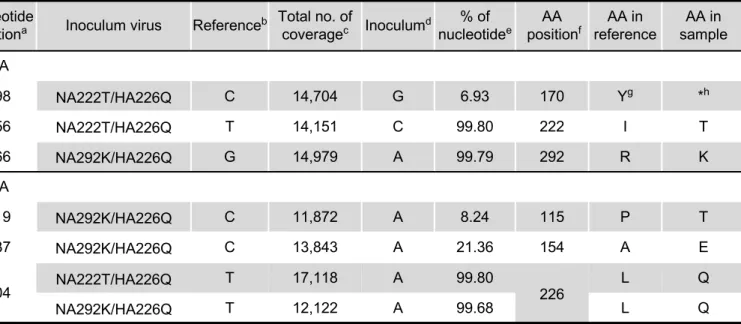
In our previous study (Itoh et al., 2015), two variant viruses were isolated from nasal swab samples of different cynomolgus macaques that had been infected with wild-type virus Anhui/1 and treated with NAIs: one was a virus with a substitution at AA position 222 in NA (NA222T), and the other was a virus with a substitution at AA position 292 in NA (NA292K). In our previous study, the both viruses showed higher IC50 values against NAIs than did Anhui/1. To examine the effect of each substitution in the NA on virus replication, we generated viruses carrying substitutions in NA using reverse genetics (rg). At cloning and confirming of viral genes, we detected several substitutions in HA (Table S2). Among them, the virus with NA222T and the virus with NA292K had a substitution of glutamine at 226 in HA (L226Q) (residue 226 in H3 numbering corresponding to 235 in H7 numbering), which is located in the sialic acid-binding
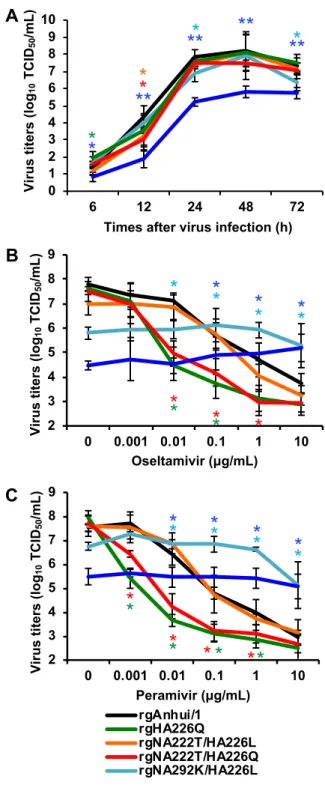
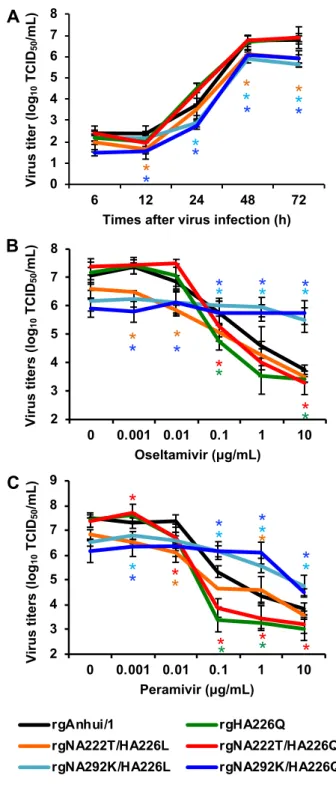
pocket (Rogers et al., 1983), although the wild-type Anhui/1 possessed leucine at residue 226 in HA (HA226L). Finally, six variants were constructed by combinations of three mutations coding NA222T, NA292K, and HA226Q. Virus titers of all variants reached plateau levels after 24 h in culture of MDCK cells (Fig. 1A) and after 48 h in culture of A549 cells (Fig. S1A). The virus carrying NA292K together with HA226Q (rgNA292K/HA226Q) showed lower virus titers than did the other variants in MDCK cells (Fig. 1A). On the other hand, in human lung carcinoma A549 cells, NA292K/HA226Q showed a slightly lower growth rate than did rgAnhui/1 with HA226L (wild-type) (Fig. S1A). Three AAs at NA222, NA292, and HA226 did not change after 72 h in culture, as confirmed by nucleotide sequence analysis (data not shown). The results suggest that rgNA292K/HA226Q has lower replication potency than do other viruses in vitro although they have a similar replication potency in human cells.
3.2. High resistance of H7N9 viruses with NA292K to oseltamivir and peramivir
We examined the efficacy of anti-influenza drugs against the variant viruses. MDCK and A549 cells were infected and treated with NAIs (oseltamivir and peramivir, 0.001 – 10 µg/mL), and then viral titers were measured at 24 h and 48 h (Fig. 1B, C and Fig. S1B, C). The virus titers
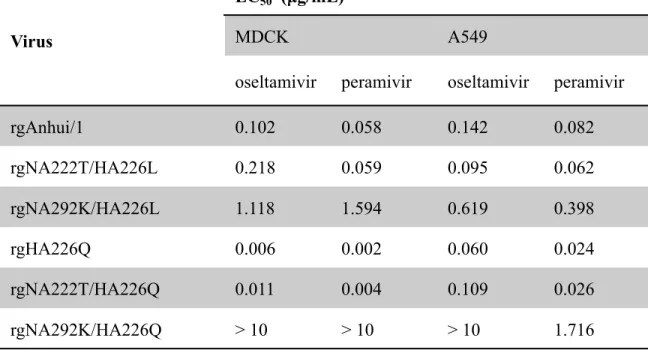
of rgAnhui/1 (wild-type NA/HA226L) and rgNA222T/HA226L were decreased in the presence of oseltamivir and peramivir, and rgHA226Q and rgNA222T/HA226Q were more sensitive to the NAIs than rgAnhui/1 and rgNA222T/HA226L (Fig. 1B, C). The half maximal effective concentrations (EC50 values) for oseltamivir and peramivir against all strains were calculated in MDCK and A549 cells. The rgHA226Q and rgNA222T/HA226Q strains had lower EC50 values for oseltamivir and peramivir than did rgAnhui/1 and rgNA222T/HA226L strains (Table S3). We also examined the half maximal inhibitory concentrations (IC50 values) against NA enzymatic activity for all the viral strains (Table 1). rgAnhui/1 and rgHA226Q exhibited similar IC50 values to each other, as did rgNA222T/HA226L and rgNA222T/HA226Q (Table 1). There was virtually no decrease in viral titers for rgNA292K/HA226L and rgNA292K/HA226Q in the presence of the NAIs (Fig. 1B, C, Fig. S1B, C). However, rgNA292K/HA226Q had slightly higher EC50 and IC50 values relative to rgNA292K/HA226L. These results suggest that the NA292K substitution is responsible for resistance to NAIs. It is also suggested that the HA226Q substitution has a positive effect on the replicative fitness of viruses with wild type NA and NA222T and a negative effect on that of the virus with NA292K. Collectively, these results suggest that the substitution of NA292K is critical for escape from NAIs in macaques.
3.3. Disease signs and viral pneumonia in macaques infected with two NAI-resistant H7N9 variants
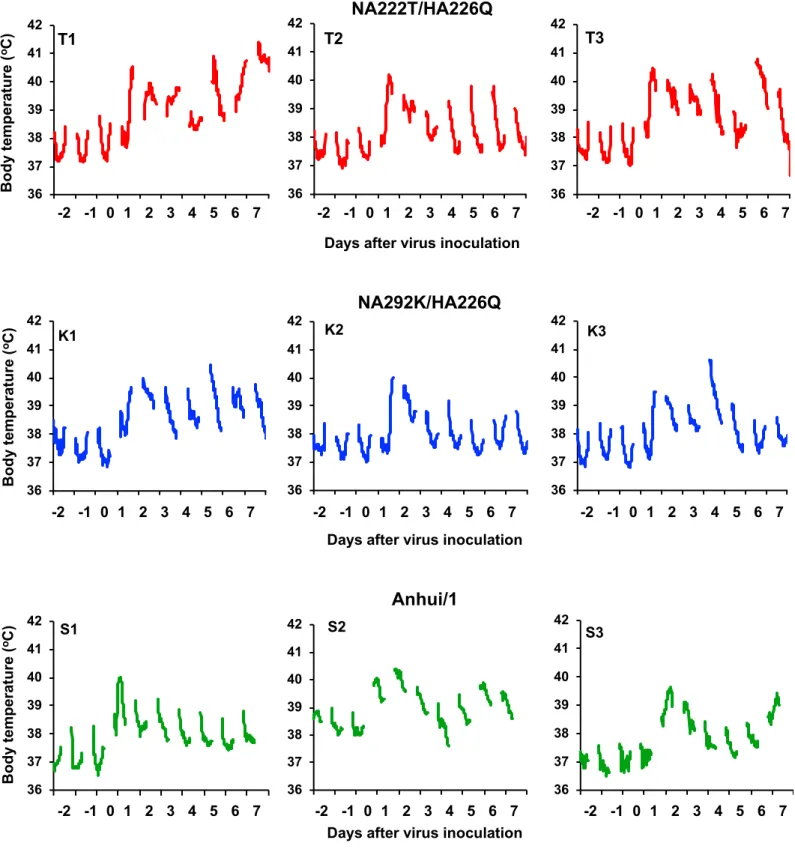
To compare the pathogenicity of NA222T/HA226Q and NA292K/HA226Q viruses to that of Anhui/1, macaques were infected with plaque-purified NA222T/HA226Q or NA292K/HA226Q viruses. The body temperatures of the macaques rose within 24 h after virus inoculation and did not return to the basal level during the study period as was previously observed in macaques inoculated with Anhui/1 (Fig. 2A, Fig. S2) (Itoh et al., 2015). Body weights decreased, but the changes were not statistically significant (Fig. 2B). Clinical scores in macaques infected with NA222T/HA226Q or NA292K/HA226Q viruses increased after virus inoculation due to the increase in body temperature and loss of appetite (Fig. 2C, Table S1). No other signs of disease were observed.
We examined inflammation caused by infection and viral cell tropism histologically in lung tissues of the macaques that had been infected with each of the two variants. Alveolar spaces were filled with exudate, neutrophils, and lymphocytes in the macaques infected with either variant viruses (Fig. 3A, B) as well as in a macaque infected with Anhui/1 (Fig. 3C) that we reported
previously (Itoh et al., 2015) but not in an uninfected control macaque (Fig. 3D). The influenza A virus nucleoprotein was detected in type-I alveolar epithelial cells and type-II alveolar epithelial cells (Fig. 3E-G). Thus, the two variants caused viral pneumonia as did the wild-type virus.
3.4. Virus propagation in macaques infected with the two NAI-resistant H7N9 variants We examined virus titers in swab and tissue samples to verify virus propagation. The virus was detected in nasal, oral, tracheal, and bronchial samples of the macaques in both groups from day 1 to day 6 or 7 after virus infection (Fig. 4A-D, Table S4). Virus titers in the samples from macaques in the NA222T/HA226Q and NA292K/HA226Q groups were comparable to those in the samples from macaques in the Anhui/1 group except for in bronchial samples (Table S4, Itoh et al., 2015). In bronchial samples, the virus titers in macaques infected with NA222T/HA226Q on day 4 and day 7 and that in infected with NA292K/HA226Q on day 7 were significantly higher than those in macaques infected with the wild-type virus. The virus titers in the samples from macaques in the NA222T/HA226Q group were higher than those in the samples from macaques in the NA292K/HA226Q group, especially oral samples at day 1 and day 7 of NA222T/HA226Q group were significantly higher than that of NA292K/HA226Q group (Fig. 4B). The virus was
detected in respiratory tissues 7 days after infection (Fig. 4E). The virus titers of NA222T/HA226Q in tissue samples were higher than those of NA292K/HA226Q especially in tracheas, conjunctivas, and a part of the lung.
3.5. Increases of the virus with wild-type NA292R in nasal samples from macaques infected with H7N9 virus with NA292K/HA226Q
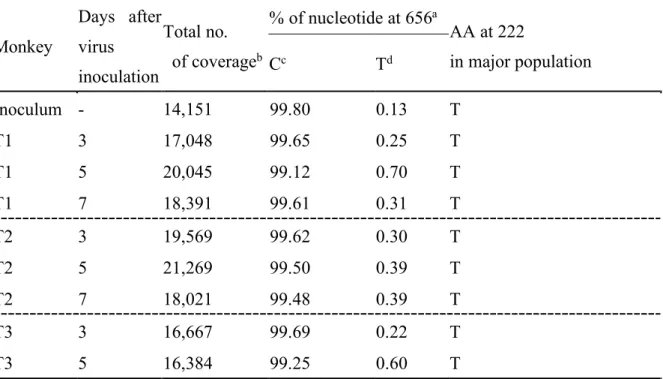
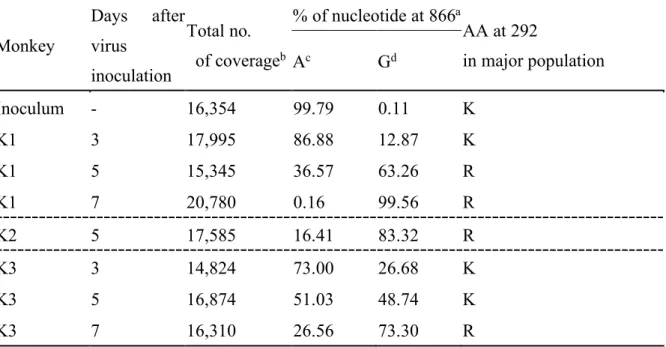
The NA genes of viruses in nasal swab samples from the macaques infected with the two variant viruses were examined by deep sequencing. After infection with NA222T/HA226Q, threonine at AA position 222 was maintained predominantly on days 5 and 7 in the nasal samples from macaques infected with NA222T/HA226Q (Table 2). In contrast, the virus carrying arginine (R) at position 292 increased in nasal swab samples instead of the virus carrying lysine (K), so revertant (wild-type) became dominant (Table 3). The percentages of other mutations in the NA gene were up to 12% in one macaque (T2) (data not shown). On the other hand, in lung samples collected on day 7, NA222T and NA292K were major populations in macaques inoculated with NA222T/HA226Q and NA292K/HA226Q, respectively (Fig. S3). Therefore, population change was dependent on the organ or tissue. After three in vitro passages in MDCK cells, no increase in
the percentage of wild-type sequences in NA genes was detected in culture with NA222T/HA226Q or NA292K/HA226Q (Table S5). The results suggest that NA222T substitution does not affect the replicative fitness of the virus since the percentage of the virus with NA222I (wild-type) was less than 1% after one passage in macaques, whereas the virus carrying NA292K substitution has a disadvantage in replication in macaques without NAI treatment compared with that carrying NA292R (wild-type). This result indicates that the clinical signs seen in the macaques infected with NA292K/HA226Q were caused by NA292K/HA226Q and NA292R/HA226Q viruses in the later time point of infection.
3.6. Sensitivity of the mixed population of NA292K and NA292R viruses to oseltamivir To confirm the susceptibility of the virus population propagated in the macaques to NAIs, we examined the replication potency of viruses that were recovered from macaques K1 and K3 as representative viruses (The remaining samples of K2 were insufficient for analysis.) after one passage in MDCK cell culture. After the passage, the percentages of NA292K in the passaged samples from K1 on day 1 and day 7 were 99.68% and 0.11%, respectively, and those of NA292K in the passaged samples from K3 on day 1 and day 7 were 99.47% and 13.58%, respectively (Table
S6). Replication of the virus recovered from K1 on day 1 was not inhibited by oseltamivir (0.001 – 10 µg/mL) in the culture fluid of MDCK cells for 24 h, whereas replication of the virus recovered on day 7 was inhibited by oseltamivir as was seen for Anhui/1 (wild-type) (Fig. 5). Although the percentage of NA292K in virus samples from K3 on day 7 after a passage in vitro was lower than that of the original viral population (26.56% as shown in Table 1), the replication of viruses recovered from K3 on days 1 and 7 was not inhibited by oseltamivir as was the case for NA292K virus (inoculum). Since the difference in viruses recovered on day 7 from K1 and K3 was the percentages of virus with NA292K in the population (0.11% in K1 and 13.58% in K3), it was thought that an increase of the virus with NAI-sensitive NA292R directly restored susceptibility of the virus population to NAIs.
4. Discussion
Using cell culture and cynomolgus macaques, we revealed the replication and pathogenicity of two H7N9 avian influenza viruses with AA substitutions in the NA protein were less sensitive to NAIs than was the wild-type strain Anhui/1 (Itoh et al., 2015). To examine the effects of AA substitutions of NA222T, NA292K and HA226Q on viral replication, we constructed
viruses with combinations of mutations in the NA and HA genes using reverse genetics. rgNA292K/HA226Q showed lower virus titers than those of the other variants in culture of MDCK cells, whereas rg viruses with NA222T showed virus titers similar to those of rg viruses with wild-type NA. In the macaque model, NA222T/HA226Q and NA292K/HA226Q viruses caused raised body temperature and loss of appetite, and virus propagation was observed in swab samples and respiratory tissue samples from macaques infected with either virus. Unlike the results obtained in an in vitro study, deep sequencing revealed that the virus carrying NA292K was replaced by that carrying NA292R (wild-type) during infection in nasal samples form macaques without NAI treatment, whereas the virus carrying NA222T was detected predominantly throughout the infection. These results showed that the two NAI-resistant H7N9 avian influenza viruses with NA222T and NA292K substitutions have different replication rates that result in population stability and population change, respectively.
The clinical signs seen in the macaques infected with NA292K/HA226Q virus were similar to those seen in the macaques infected with wild-type Anhui/1. However, deep sequence analysis revealed that the percentage of NA292R/HA226Q virus increased in nasal samples during the infection, although NA292R/HA226Q virus did not increase in in vitro passages and in the lung
tissues. The reasons for population stability are thought to be a death of MDCK cells in culture before a change of virus population and an environment of the lung tissue, i.e. lack of mucus produced by submucosal glands, which are located from the nasal mucosa to the bronchus (Yen et al., 2014), and higher temperature in the lung than the nasal cavity, in which the NA folding efficacy and viral replication decreased (da Silva et al., 2015). Therefore, the replication rate of the virus with NA292K in the nasal cavity was lower than that of the virus with NA292R, and the symptoms seen in macaques infected with NA292K/HA226Q virus might be caused by both NA292K/HA226Q virus and NA292R/HA226Q virus. On the other hand, low virus titers of rgNA292K/HA226Q in the culture of MDCK cells are consistent with the population change with increase in the percentage of NA292R/HA226Q virus in swab samples in the absence of NAIs (Yen et al., 2014). Furthermore, the results suggest expansion of NA292R/HA226Q virus in the inoculum (0.11%) during replication and/or shedding in nasal cavity of macaques without treatment, although no reversion was found in the lung tissue and a ferret model (Marjuki et al., 2015). Therefore, a virus that is highly resistant to NAIs such as NA292K/HA226Q virus may not be a major virus population in an upper respiratory tract of patients without NAI treatment (Treurnicht et al., 2019).
The pathogenicity of NA222T/HA226Q virus in macaques was similar to that of wild-type Anhui/1 (Itoh et al., 2015). In addition, substitution of the AA at position 222 of NA did not change the viral replication, as was confirmed in the in vitro study. Since the percentage of virus carrying NA222I (wild-type) slightly increased in macaques for 7 days, the results indicate the possibility that the virus with NA222I (wild-type) replaces that with NA222T after further passages. However, since rgNA222T/HA226Q and rgHA226Q viruses were more sensitive to NAIs than was the virus with HA226L, there might not be a threat of expansion of
NA222T/HA226Q virus during treatment with NAIs. In patients without NAI treatment,
NA222T/HA226Q virus might propagate as much as the wild-type virus, suggesting a possibility that NA222T/HA226Q virus coexists in patients.
The substitution HA226Q was shown to affect virus propagation and NAI sensitivity in the cell culture study. In the absence of NAIs, rgNA292K/HA226Q virus showed lower replication potency than did rgNA292K/HA226L, whereas rgNA292K/HA226Q virus showed the greatest replication rate in the presence of NAIs among the rg viruses examined. In addition, rgNA292K/HA226Q virus showed a tendency to be more resistant than rgNA292K/HA226L virus to NAIs at a high concentration. Thus, HA226Q reduced the replication rate of the virus with
NA292K. On the other hand, in rgAnhui/1 and rgNA222T viruses, the virus with HA226Q substitution was more sensitive than the virus with HA226L substitution to NAIs, although propagation of the viruses was not affected in the absence of NAIs. Therefore, AA substitution of HA226Q works as an NAI-resistant factor when a virus has an NA that is highly resistant to NAIs, whereas HA226Q works as an NAI-sensitive factor when a virus has an NA that is sensitive or less resistant to NAIs. Therefore, we consider that the replicative fitness and drug resistance are affected by the balance of function between HA and NA proteins (Gaymard et al., 2016; Lai et al., 2019).
In summary, we examined the pathogenicity of NA222T/HA226Q and NA292K/HA226Q viruses in untreated macaques. We also examined replication kinetics of viruses with various combinations of AA substitutions and sensitivities of the viruses to antivirus drugs in vitro. The virus carrying NA292K was gradually replaced by the virus carrying NA292R (same as the wild-type) in nasal samples from the macaques without treatment. Therefore, the virus carrying NA292K might not become a major population in the upper respiratory tract of patients without treatment, although the virus carrying NA292K might propagate in the lower respiratory tract. In addition, the virus carrying NA222T might show potential to replicate at the same rate as that of the wild-type virus.
Acknowledgements
This work was supported by the Joint Usage/Research Center, “Research Center for Zoonosis Control, Hokkaido University”, the Japan Initiative for Global Research Network on Infectious Diseases (J-GRID) of the Japan Agency for Medical Research and Development (AMED) under Grant Number JP19fm0108008, Grants-in-Aid for Scientific Research (B) JSPS KAKENHI Grant Number 15H04720, and by a grant from President’s research grant in Shiga University of Medical Science. The funders had no role in study design, data collection and interpretation, or no decision to submit the work for publication. We thank Daisuke Motooka in the NGS core facility of the Genome Information Research Center at the Research Institute for Microbial Diseases of Osaka University for the support in deep sequencing and analysis, Hideaki Tsuchiya, Takahiro Nakagawa, Ikuo Kawamoto, and Iori Itagaki for animal care, and Naoko Kitagawa, Hideaki Ishida, and Takako Sasamura for help in animal experiments.
References
Baranovich, T., Burnham, A.J., Marathe, B.M., Armstrong, J., Guan, Y., Shu, Y., Peiris, J.M., Webby, R.J., Webster, R.G., Govorkova, E.A., 2014. The neuraminidase inhibitor oseltamivir is effective against A/Anhui/1/2013 (H7N9) influenza virus in a mouse model of acute respiratory distress syndrome. J Infect Dis. 209:1343-1353. doi: 10.1093/infdis/jit554. da Silva, D.V., Nordholm, J., Dou, D., Wang, H., Rossman, J.S., Daniels, R., 2015.
The influenza virus neuraminidase protein transmembrane and head domains have coevolved. J Virol. 89: 1094-1104. doi: 10.1128/JVI.02005-14.
de Vries, R.P., Peng, W., Grant, O.C., Thompson, A.J., Zhu, X., Bouwman, K.M., de la Pena, A.T.T., van Breemen, M.J., Ambepitiya Wickramasinghe, I.N., de Haan, C.A.M., Yu, W., McBride, R., Sanders, R.W., Woods, R.J., Verheije, M.H., Wilson, I.A., Paulson, J.C., 2017. Three mutations switch H7N9 influenza to human-type receptor specificity. PLoS Pathog. 13:e1006390. doi: 10.1371/journal.ppat.1006390.
Desselberger, U., Racaniello, V.R., Zazra, J.J., Palese, P., 1980. The 3' and 5'-terminal sequences of influenza A, B and C virus RNA segments are highly conserved and show partial
Gao, R., Cao, B., Hu, Y., Feng, Z., Wang, D., Hu, W., Chen, J., Jie, Z., Qiu, H., Xu, K., Xu, X., Lu, H., Zhu, W., Gao, Z., Xiang, N., Shen, Y., He, Z., Gu, Y., Zhang, Z., Yang, Y., Zhao, X., Zhou, L., Li, X., Zou, S., Zhang, Y., Li, X., Yang, L., Guo, J., Dong, J., Li, Q., Dong, L., Zhu, Y., Bai, T., Wang, S., Hao, P., Yang, W., Zhang, Y., Han, J., Yu, H., Li, D., Gao, G.F., Wu, G., Wang, Y., Yuan, Z., Shu, Y., 2013. Human infection with a novel avian-origin influenza A (H7N9) virus. N Engl J Med. 368:1888-1897. doi: 10.1056/NEJMoa1304459.
Gaymard, A., Le Briand, N., Frobert, E., Lina, B., Escuret, V., 2016. Functional balance between neuraminidase and haemagglutinin in influenza viruses. Clin Microbiol Infect. 22:975-983. doi: 10.1016/j.cmi.2016.07.007.
Govorkova, E.A., 2013. Consequences of resistance: in vitro fitness, in vivo infectivity, and transmissibility of oseltamivir-resistant influenza A viruses. Influenza Other Respir Viruses. 7 Suppl 1:50-57. doi: 10.1111/irv.12044.
Hai, R., Schmolke, M., Leyva-Grado, V.H., Thangavel, R.R., Margine, I., Jaffe, E.L., Krammer, F., Solórzano, A., García-Sastre, A., Palese, P., Bouvier, N.M., 2013. Influenza A(H7N9) virus gains neuraminidase inhibitor resistance without loss of in vivo virulence or transmissibility. Nat Commun. 4:2854. doi: 10.1038/ncomms3854.
Herlocher, M.L., Truscon, R., Elias, S., Yen, H.L., Roberts, N.A., Ohmit, S.E., Monto, A.S., 2004. Influenza viruses resistant to the antiviral drug oseltamivir: transmission studies in ferrets. J Infect Dis. 190:1627-1630. PMID: 15478068.
Hoffmann, E., Neumann, G., Kawaoka, Y., Hobom, G., Webster, R.G., 2000. A DNA
transfection system for generation of influenza A virus from eight plasmids. Proc Natl Acad Sci USA. 97:6108-6113. doi: 10.1073/pnas.100133697.
Hu, Y., Lu, S., Song, Z., Wang, W., Hao, P., Li, J., Zhang, X., Yen, H.L., Shi, B., Li, T., Guan, W., Xu, L., Liu, Y., Wang, S., Zhang, X., Tian, D., Zhu, Z., He, J., Huang, K., Chen, H., Zheng, L., Li, X., Ping, J., Kang, B., Xi, X., Zha, L., Li, Y., Zhang, Z., Peiris, M., Yuan, Z., 2013. Association between adverse clinical outcome in human disease caused by novel influenza A H7N9 virus and sustained viral shedding and emergence of antiviral resistance. Lancet. 381:2273-2279. doi: 10.1016/S0140-6736(13)61125-3.
Hurt, A.C., Besselaar, T.G., Daniels, R.S., Ermetal, B., Fry, A., Gubareva, L., Huang, W., Lackenby, A., Lee, R.T., Lo, J., Maurer-Stroh, S., Nguyen, H.T., Pereyaslov, D., Rebelo-de-Andrade, H., Siqueira, M.M., Takashita, E., Tashiro, M., Tilmanis, D., Wang, D., Zhang, W., Meijer, A., 2016. Global update on the susceptibility of human influenza viruses to neuraminidase
inhibitors, 2014-2015. Antiviral Res. 132:178-185. doi: 10.1016/j.antiviral.2016.06.001. Itoh, Y., Ozaki, H., Tsuchiya, H., Okamoto, K., Torii, R., Sakoda, Y., Kawaoka, Y., Ogasawara, K.,
Kida, H., 2008. A vaccine prepared from a non-pathogenic H5N1 avian influenza virus strain confers protective immunity against highly pathogenic avian influenza virus infection in cynomolgus macaques. Vaccine. 26:562-572. doi: 10.1016/j.vaccine.2007.11.031.
Itoh, Y., Shichinohe, S., Nakayama, M., Igarashi, M., Ishii, A., Ishigaki, H., Ishida, H., Kitagawa, N., Sasamura, T., Shiohara, M., Doi, M., Tsuchiya, H., Nakamura, S., Okamatsu, M., Sakoda, Y., Kida, H., Ogasawara, K., 2015. Emergence of H7N9 influenza A virus resistant to neuraminidase inhibitors in nonhuman primates. Antimicrob Agents Chemother. 59:4962-4973. doi: 10.1128/AAC.00793-15.
Ives, J.A., Carr, J.A., Mendel, D.B., Tai, C.Y., Lambkin, R., Kelly, L., Oxford, J.S., Hayden, F.G., Roberts, N.A., 2002. The H274Y mutation in the influenza A/H1N1 neuraminidase active site following oseltamivir phosphate treatment leave virus severely compromised both in vitro and in vivo. Antiviral Res. 55:307-317. PMID: 12103431.
Kageyama, T., Fujisaki, S., Takashita, E., Xu, H., Yamada, S., Uchida, Y., Neumann, G., Saito, T., Kawaoka, Y., Tashiro, M., 2013. Genetic analysis of novel avian A(H7N9) influenza viruses
isolated from patients in China, February to April 2013. Euro Surveill. 18:20453. PMID: 23594575
Lai, J.C.C., Karunarathna, H.M.T.K., Wong, H.H., Peiris, J.S.M., Nicholls, J.M., 2019. Neuraminidase activity and specificity of influenza A virus are influenced by haemagglutinin-receptor binding. Emerg Microbes Infect. 8:327-338. doi: 10.1080/22221751.2019.1581034.
Leang, S.K., Hurt, A.C., 2017. Fluorescence-based neuraminidase inhibition assay to assess the susceptibility of influenza viruses to the neuraminidase inhibitor class of antivirals. J Vis Exp. 122:e55570, doi:10.3791/55570.
Lin, P.H., Chao, T.L., Kuo, S.W., Wang, J.T., Hung, C.C., Lin, H.C., Yang, Z.Y., Ho, S.Y., Chang, C.K., Huang, M.S., Chen, H.H., Chen, Y.C., Lai, H.S., Chang, S.Y., Chang, S.C., Yang, P.C., 2014. Virological, serological, and antiviral studies in an imported human case of avian influenza A(H7N9) virus in Taiwan. Clin Infect Dis. 58:242-246. doi: 10.1093/cid/cit638. Marjuki, H., Mishin, V.P., Chesnokov, A.P., Jones, J., De La Cruz, J.A., Sleeman, K., Tamura, D.,
Nguyen, H.T., Wu, H.S., Chang, F.Y., Liu, M.T., Fry, A.M., Cox, N.J., Villanueva, J.M., Davis, C.T., Gubareva, L.V., 2015. Characterization of drug-resistant influenza A(H7N9)
variants isolated from an oseltamivir-treated patient in Taiwan. J Infect Dis. 211:249-257. doi: 10.1093/infdis/jiu447.
McKimm-Breschkin, J.L., Barrett, S., Pudjiatmoko, Azhar, M., Wong, F.Y., Selleck, P., Mohr, P.G., McGrane, J., Kim, M., 2013. I222 Neuraminidase mutations further reduce oseltamivir susceptibility of Indonesian clade 2.1 highly pathogenic avian influenza A(H5N1) viruses. PLoS One. 2013 Jun 11;8(6):e66105. doi: 10.1371/journal.pone.0066105.
Monto, A.S., McKimm-Breschkin, J.L., Macken, C., Hampson, A.W., Hay, A., Klimov, A., Tashiro, M., Webster, R.G., Aymard, M., Hayden, F.G., Zambon, M., 2006. Detection of influenza viruses resistant to neuraminidase inhibitors in global surveillance during the first 3 years of their use. Antimicrob Agents Chemother. 50:2395-402. doi:
10.1128/AAC.01339-05.
Nakayama, M., Shichinohe, S., Itoh, Y., Ishigaki, H., Kitano, M., Arikata, M., Pham, V.L., Ishida, H., Kitagawa, N., Okamatsu, M., Sakoda ,Y., Ichikawa, T., Tsuchiya, H., Nakamura, S., Le, Q.M., Ito, M., Kawaoka, Y., Kida, H., Ogasawara, K., 2013. Protection against H5N1 highly pathogenic avian and pandemic (H1N1) 2009 influenza virus infection in cynomolgus monkeys by an inactivated H5N1 whole particle vaccine. PLoS One. 8:e82740. doi:
10.1371/journal.pone.0082740.
Oh, D.Y., Panozzo, J., Vitesnik, S., Farrukee, R., Piedrafita, D., Mosse, J., Hurt, A.C., 2018. Selection of multi-drug resistant influenza A and B viruses under zanamivir pressure and their replication fitness in ferrets. Antivir Ther. 23:295-306. doi: 10.3851/IMP3135.
Pham, V.L., Nakayama, M., Itoh, Y., Ishigaki, H., Kitano, M., Arikata, M., Ishida, H., Kitagawa, N., Shichinohe, S., Okamatsu, M., Sakoda, Y., Tsuchiya, H., Nakamura, S., Kida, H., Ogasawara, K., 2013. Pathogenicity of pandemic H1N1 influenza A virus in
immunocompromised cynomolgus macaques. PLoS One. 8:e75910. doi:
10.1371/journal.pone.0075910.
Rogers, G.N., Paulson, J.C., Daniels, R.S., Skehel, J.J., Wilson, I.A., Wiley, D.C., 1983. Single amino acid substitutions in influenza haemagglutinin change receptor binding specificity. Nature. 304:76-78. doi:10.1038/304076a0.
Shi, Y., Zhang, W., Wang, F., Qi, J., Wu, Y., Song, H., Shi, Y., Zhang, W., Wang, F., Qi, J., Wu, Y., Song, H., Gao, F., Bi, Y., Zhang, Y., Fan, Z., Qin, C., Sun, H., Liu, J., Haywood, J., Liu, W., Gong, W., Wang, D., Shu, Y., Wang, Y., Yan, J., Gao, G.F.. 2013. Structures and receptor binding of hemagglutinins from human-infecting H7N9 influenza viruses. Science.
342:243-247. doi: 10.1126/science.1242917.
Shichinohe, S., Okamatsu, M., Sakoda, Y., Kida, H., 2013. Selection of H3 avian influenza viruses with SAα2,6Gal receptor specificity in pigs. Virology. 444:404-408.
Shichinohe, S., Itoh, Y., Nakayama, M., Ozaki, H., Soda, K., Ishigaki, H., Okamatsu, M., Sakoda, Y., Kida, H., Ogasawara, K., 2016. Comparison of pathogenicities of H7 avian influenza viruses via intranasal and conjunctival inoculation in cynomolgus macaques. Virology. 493:31-38. doi: 10.1016/j.virol.2016.03.007.
Sleeman, K., Guo, Z., Barnes, J., Shaw, M., Stevens, J., Gubareva, L.V., 2013. R292K substitution and drug susceptibility of influenza A(H7N9) viruses. Emerg Infect Dis. 19:1521-1524. doi: 10.3201/eid1909.130724.
Soda, K., Asakura, S., Okamatsu, M., Sakoda, Y., Kida, H., 2011. H9N2 influenza virus acqiures intravenous pathogenocoty on the introduction of a pair of di-basic amion acid residues at the cleavage site of the hemagglutinin and consecutive passages in chickens. Virol J. 8:64. Treurnicht, F.K., Buys, A., Tempia, S., Seleka, M., Cohen, A.L., Walaza, S., Glass, A.J., Rossouw
I., McAnerney, J., Blumberg, L., Cohen, C., Venter, M., 2019. Replacement of neuraminidase inhibitor-susceptible influenza A(H1N1) with resistant phenotype in 2008 and
circulation of susceptible influenza A and B viruses during 2009-2013, South Africa. Influenza Other Respir Viruses. 13:54-63. doi: 10.1111/irv.12611.
Ujike, M., Shimabukuro, K., Mochizuki, K., Obuchi, M., Kageyama, T., Shirakura, M., Kishida, N., Yamashita, K., Horikawa, H., Kato, Y., Fujita, N., Tashiro, M., Odagiri, T.; Working Group for Influenza Virus Surveillance in Japan. 2010. Oseltamivir-resistant influenza viruses A (H1N1) during 2007-2009 influenza seasons, Japan. Emerg Infect Dis. 16:926-935. doi: 10.3201/eid1606.091623.
Watanabe, T., Kiso, M., Fukuyama, S., Nakajima, N., Imai, M., Yamada, S., Murakami, S.,Yamayoshi, S., Iwatsuki-Horimoto, K., Sakoda, Y., Takashita, E., McBride, R., Noda, T., Hatta, M., Imai, H., Zhao, D., Kishida, N., Shirakura, M., de Vries, R.P., Shichinohe, S., Okamatsu, M., Tamura, T., Tomita, Y., Fujimoto, N., Goto, K., Katsura, H., Kawakami, E., Ishikawa, I., Watanabe, S., Ito, M., Sakai-Tagawa, Y., Sugita, Y., Uraki, R., Yamaji, R., Eisfeld, A.J., Zhong, G., Fan, S., Ping, J., Maher, E.A., Hanson, A., Uchida, Y., Saito, T., Ozawa, M., Neumann, G., Kida, H., Odagiri, T., Paulson, J.C., Hasegawa, H., Tashiro, M., Kawaoka, Y.. 2013. Characterization of H7N9 influenza A viruses isolated from humans. Nature. 501:551-555. doi: 10.1038/nature12392.
World Health Organization (WHO). Influenza at the human-animal interface. Summary and assessment. 28 September to 25 November 2019.
Xiong, X., Martin, S.R., Haire, L.F., Wharton, S.A., Daniels, R.S., Bennett, M.S., McCauley, J.W., Collins, P.J., Walker, P.A., Skehel, J.J., Gamblin, S.J., 2013. Receptor binding by an H7N9 influenza virus from humans. Nature. 499:496-499. doi: 10.1038/nature12372.
Xu, R., de Vries, R.P., Zhu, X., Nycholat, C.M., McBride, R., Yu, W., Paulson, J.C., Wilson, I.A., 2013. Preferential recognition of avian-like receptors in human influenza A H7N9 viruses. Science. 342:1230-1235. doi: 10.1126/science.1243761.
Yen, H.L., Zhou, J., Choy, K.T., Sia, S.F., Teng, O., Ng, I.H., Fang, V.J., Hu, Y., Wang, W., Cowling, B.J., Nicholls, J.M., Guan, Y., Peiris, J.S., 2014. The R292K mutation that confers resistance to neuraminidase inhibitors leads to competitive fitness loss of A/Shanghai/1/2013 (H7N9) influenza virus in ferrets. J Infect Dis. 210:1900-1908. doi: 10.1093/infdis/jiu353.
Zhang, X., Song, Z., He, J., Yen, H.L., Li, J., Zhu, Z., Tian, D., Wang, W., Xu, L., Guan, W., Liu, Y., Wang, S., Shi, B., Zhang, W., Qin, B., Cai, J., Wan, Y., Xu, C., Ren, X., Chen, H., Liu, L., Yang, Y., Zhou, X., Zhou, W., Xu, J., Zhang, X., Peiris, M., Hu, Y., Yuan, Z., 2014. Drug susceptibility profile and pathogenicity of H7N9 influenza virus (Anhui1 lineage) with
Figure legends
Fig 1. Replication and sensitivity to antiviral drugs of variant viruses carrying NA222T, NA292K, and HA226Q in MDCK cells.
(A) Variant viruses carrying HA226L, HA226Q, wild-type NA, NA222T, or NA292K were inoculated into culture of MDCK cells at an m.o.i. of 0.01 to determine propagation rates. (B, C) MDCK cells were cultured with viruses for 1 h at an m.o.i. of 0.01, and then the viral inoculum was replaced by a medium containing oseltamivir acid (B) or peramivir hydrate (C), at a concentration between 0 – 10 µg/mL. Culture supernatants were collected after 24 h for virus titration. Averages and standard deviations of hexaplicates are shown. Asterisks indicate significant differences compared with rgAnhui/1 (HA226L, wild-type) (*P < 0.05, **P < 0.01, Mann-Whitney U test).
Fig 2. Clinical symptoms of macaques infected with NA222T/ HA226Q and NA292K/ HA226Q viruses.
Cynomolgus macaques (n = 3 in each group) were inoculated with the influenza viruses NA222T/HA226Q and NA292K/HA226Q viruses, which are NAI-resistant variants originating
from A/Anhui/1/2013 (H7N9). (A) Average body temperatures from 8 p.m. to 8 a.m. on the next day were calculated for individual macaques (Fig. S2). Average body temperatures on each day were compared with those from 8 p.m. on the day before virus inoculation (day -1) to 8 a.m. on the day of virus inoculation (day 0). (B) Body weights on each day were compared with that on day 0 before virus inoculation. (C) Clinical scores were determined by daily observation and body temperature according to Table S1. Average and standard deviations of the results of three monkeys are shown. Red: macaques inoculated with NA222T/HA226Q, blue: macaques inoculated with NA292K/HA226Q. An asterisk indicates a significant difference between the two groups on day 5 (P < 0.05, Mann-Whitney U test).
Fig 3. Viral pneumonia in macaques infected with NA222T/HA226Q and NA292K/HA226Q viruses.
All macaques infected with virus were autopsied 7 days after virus inoculation. Representative photos for each group are shown. (A, E) Lung tissues of macaques infected with NA222T/HA226Q (T1). (B, F) Lung tissues of macaques infected with NA292K/HA226Q (K2). (C, G) Lung tissues of macaques infected with Anhui/1 in our previous study (Itoh et al., 2015). (D, H) Lung tissues of
a normal uninfected macaque. New sections were prepared from the paraffin blocks made in the previous study (Itoh et al., 2015) and stained (C, G, D, H). (A-D) H & E staining. (E-H) and immunohistochemical staining for influenza virus NP (brown). White arrowheads: type-I alveolar epithelial cells, black arrowheads: type-II alveolar epithelial cells, bars: 50 µm.
Fig 4. Virus titers in swab and tissue samples from macaques infected with NA222T/HA226Q and NA292K/HA226Q.
Cynomolgus macaques were inoculated with NA222T/HA226Q and NA292K/HA226Q viruses on day 0. (A-D) Nasal, oral, tracheal, and bronchial samples were collected on the indicated days. Averages and standard deviations of virus titers in the nasal (A), oral (B), tracheal (C), and bronchial (D) samples were calculated on the basis of individual titers listed in Table S4. (E) Averages of virus titers in tissue samples. The samples were collected at autopsy 7 days after virus inoculation. R: right, L: left, RU: right upper lobe, RM: right middle lobe, RL: right lower lobe, LU: left upper lobe, LM: left middle lobe, LL: left lower lobe. The detection limit of virus titer is 0.67 log10TCID50/mL in swab samples and 1.67 log10TCID50/g in tissue samples. Virus titers under the detection limit were calculated as 0. Averages and standard deviations of the results for three
macaques are shown. Red: macaques inoculated with NA222T/HA226Q, blue: macaques inoculated with NA292K/HA226Q. Asterisks indicate significant differences between the two groups (P < 0.05, Mann-Whitney U test).
Fig 5. Viral sensitivity to oseltamivir of viruses isolated from nasal samples in MDCK cells. Anhui/1 (wild-type), NA292K/HA226Q (inoculum) and viruses isolated from nasal samples of macaques infected with NA292K/HA226Q were inoculated into the MDCK cells. Averages and standard deviations of triplicates are shown. MDCK cells were cultured with viruses for 1 h at an m.o.i. of 0.01, then the viral inoculum was replaced by medium containing oseltamivir acid at a concentration between 0 – 10 µg/mL. Culture supernatants were collected after 24 h for virus titration. Averages and standard deviations of quadruplicates are shown. Asterisks indicate significant differences compared with the virus titers without oseltamivir (*P < 0.05, Mann-Whitney U test).
Table 1. Neuraminidase inhibition of viruses with NA substitutions Virus IC50 (nM) (Average +/- SD) a oseltamivir peramivir rgAnhui/1 (HA226L) 0.150 +/- 0.088 0.043 +/- 0.021 rgNA222T/HA226L 0.956 +/- 0.544 0.163 +/- 0.098 rgNA292K/HA226L 1350.522 +/- 400.051 109.259 +/- 50.292 rgHA226Q 0.242 +/- 0.137 0.084 +/- 0.077 rgNA222T/HA226Q 0.718 +/- 0.631 0.157 +/- 0.085 rgNA292K/ HA226Q 2331.677 +/- 409.293 154.701 +/- 31.965
Table 2. Nucleotide and amino acid changes in NA222 of viruses isolated from nasal samples. Monkey Days after virus inoculation Total no. of coverageb % of nucleotide at 656a AA at 222 in major population Cc Td Inoculum - 14,151 99.80 0.13 T T1 3 17,048 99.65 0.25 T T1 5 20,045 99.12 0.70 T T1 7 18,391 99.61 0.31 T T2 3 19,569 99.62 0.30 T T2 5 21,269 99.50 0.39 T T2 7 18,021 99.48 0.39 T T3 3 16,667 99.69 0.22 T T3 5 16,384 99.25 0.60 T
a Nucleotides at position 656 in the NA gene corresponding to amino acid position 222 in the NA protein (N2 numbering) were examined. Percentages of the nucleotide alleles were calculated as % alleles = 100 × (number of alleles counted/total coverage number).
b Total number of sequences counted at each nucleotide position.
c A nucleotide at 656 of inoculum virus is C corresponding to threonine (T).
Table 3. Nucleotide and amino acid changes in NA292 of viruses isolated from nasal samples. Monkey Days after virus inoculation Total no. of coverageb % of nucleotide at 866a AA at 292 in major population Ac Gd Inoculum - 16,354 99.79 0.11 K K1 3 17,995 86.88 12.87 K K1 5 15,345 36.57 63.26 R K1 7 20,780 0.16 99.56 R K2 5 17,585 16.41 83.32 R K3 3 14,824 73.00 26.68 K K3 5 16,874 51.03 48.74 K K3 7 16,310 26.56 73.30 R
a Nucleotides at position 866 in the NA gene corresponding to amino acid (AA) position 292 in the NA protein (N2 numbering) were examined. Percentages of the nucleotide alleles were calculated as 100 × (number of alleles counted/total coverage number).
b Total number of sequences counted at each nucleotide position.
c A nucleotide at 866 of inoculum virus is A corresponding to lysine (K).
0 1 2 3 4 5 6 7 8 9 10 6 12 24 48 72
Virus titers (log
10
TCID
50
/mL)
Times after virus infection (h)
2 3 4 5 6 7 8 9 0 0.001 0.01 0.1 1 10
Virus titers (log
10 TCID 50 /mL) Peramivir (μg/mL) rgAnhui/1 rgHA226Q rgNA222T/HA226L rgNA222T/HA226Q rgNA292K/HA226L
*
*
**
*
*
*
**
**
**
*
A 2 3 4 5 6 7 8 9 0 0.001 0.01 0.1 1 10Virus titers (log
10 TCID 50 /mL) Oseltamivir (μg/mL)
*
*
*
*
*
*
*
*
*
*
*
*
B*
*
*
*
*
*
*
*
*
*
*
*
*
*
*
*
CFig. 1
Fig 1. Replication and sensitivity to anti-viral drugs of variant viruses carrying NA222T, NA292K, and HA226Q in MDCK cells.
(A) Variant viruses carrying HA226L, HA226Q, wild-type NA, NA222T, or NA292K were inoculated into culture of MDCK cells at an m.o.i. of 0.01 to determine propagation rates. (B, C) MDCK cells were cultured with viruses for 1 h at an m.o.i. of 0.01, and then the viral inoculum was replaced by a medium containing oseltamivir acid (B) or peramivir hydrate (C), at a concentration between 0 – 10 µg/mL. Culture
supernatants were collected after 24 h for virus titration. Averages and standard deviations of hexaplicates are shown. Asterisks indicate significant differences compared with rgAnhui/1 (HA226L, wild-type) (*P < 0.05, **P < 0.01, Mann-Whitney U test).
Parameter Degree of parameter Possible score Fever Normal (< 39 ℃) 0 Elevated temperature (39-40 ℃) 3 High temperature (> 40 ℃) 5 Posture
Piloerection of body hair 1
Decreased activity, decreasing normal behavior /Occasionally lying down, huddled, active
when people in room
2
Huddled on camera, active when people in room/Lying down,
getting up when approached, using cage for support 3
Huddled when people in room, shaking, toes and hands clenched/Lying down, not getting up
when approached or prompted
5
Respiration
Increased or decreased; mild cough and clear nasal
discharge 3
Labored breathing through mouth; severe cough and severe
nasal discharge 5 Appetite Slightly decreased 1 Decreased 2 Severely decreased 5 Skin Flushed appearance 2 Visible rash 2 Bleeding 5
Animals were monitored every day during the study to be clinically scored. Animals would be scheduled to be euthanized if their clinical scores reached 15 (humane endpoint).
Nucleotide
positiona Inoculum virus Referenceb Total no. of coveragec Inoculumd nucleotide% of e positionAA f referenceAA in sampleAA in NA 498 NA222T/HA226Q C 14,704 G 6.93 170 Yg *h 656 NA222T/HA226Q T 14,151 C 99.80 222 I T 866 NA292K/HA226Q G 14,979 A 99.79 292 R K HA 319 NA292K/HA226Q C 11,872 A 8.24 115 P T 437 NA292K/HA226Q C 13,843 A 21.36 154 A E 704 NA222T/HA226Q T 17,118 A 99.80 226 L Q NA292K/HA226Q T 12,122 A 99.68 L Q
aNucleotide position 1 is the first nucleotide A of the ATG-translation start point for methionine. bA reference sequence of A/Anhui/1/2013 (H7N9) obtained from the GISIAD database.
cTotal number of sequences counted at each nucleotide position.
d Nucleotides of inoculum viruses for which allele frequencies are higher than 5.0 % and different from those in the reference sequence are shown.
ePercentages of alleles different from the reference sequence was calculated as % alleles = 100 (number of alleles counted/total coverage number).
fAmino acid (AA) positions were determined on the basis of the N2 neuraminidase and H3 hemagglutinin sequences.
g Amino acid abbreviations. A: alanine, D: aspartic acid, E: glutamic acid, L: leucine, N: asparagine, P: proline, S: serine, T: threonine, Y: tyrosine.
h* stop codon
Table S2. Nucleotide variations in the NA and HA gene of inoculum virus of NA222T/HA226Q and NA292K/HA226Q used in the present study.
2 3 4 5 6 7 8 0 0.001 0.01 0.1 1 10
Virus titers (log
10 TCID 50 /mL) Oseltamivir (μg/mL)
*
*
*
*
*
*
*
*
*
*
*
*
*
2 3 4 5 6 7 8 9 0 0.001 0.01 0.1 1 10Virus titers (log
10 TCID 50 /mL) Peramivir (μg/mL) rgAnhui/1 rgHA226Q rgNA222T/HA226L rgNA222T/HA226Q rgNA292K/HA226L rgNA292K/HA226Q
*
*
*
*
*
*
*
*
*
*
*
*
*
*
*
*
*
0 1 2 3 4 5 6 7 8 6 12 24 48 72Virus titer (log
10
TCID
50
/mL)
Times after virus infection (h)
*
*
*
*
*
*
*
*
*
*
A B C Fig. S1Fig. S1. Replication and sensitivity to anti-viral drugs of variant viruses A549 cells.
(A) Variant viruses carrying wild type HA226L, HA226Q, wild type NA, NA222T, or NA292K were inoculated into culture of A549 cells at an m.o.i. of 0.01 to determine propagation rates. (B, C) A549 cells were cultured with viruses for 1 h at an m.o.i. of 0.01, and then the viral inoculum was replaced by a medium containing oseltamivir acid (B) or peramivir hydrate (C) at a concentration between 0 – 10 µg/mL. Culture supernatants were collected after 48 h for virus titration. Averages and standard deviations of triplicates are shown. Asterisks indicate significant differences compared with rgAnhui/1 (HA226L, wild type) (*P < 0.05, **P < 0.01, Mann-Whitney U test).
Table S3. EC50values of NAIs
Virus
EC50 (µg/mL)a
MDCK A549
oseltamivir peramivir oseltamivir peramivir
rgAnhui/1 0.102 0.058 0.142 0.082 rgNA222T/HA226L 0.218 0.059 0.095 0.062 rgNA292K/HA226L 1.118 1.594 0.619 0.398 rgHA226Q 0.006 0.002 0.060 0.024 rgNA222T/HA226Q 0.011 0.004 0.109 0.026 rgNA292K/HA226Q > 10 > 10 > 10 1.716 aEC
0 1 2 3 4 5 6 7 8 9 10 -2 -1 0 1 2 3 4 5 6 7 Clinical score
Days after virus inoculation AH/1-NA219T, HA235Q AH/1-NA289K, HA235Q
*
-0.5 0 0.5 1 1.5 2 2.5 3 -2 -1 0 1 2 3 4 5 6 7Body temperature change (
oC
)
Days after virus inoculation
A
90 95 100 105 0 1 2 3 4 5 6 7Body weight change (%)
Days after virus inoculation
B
C
NA222T/HA226Q NA292K/HA226Q
Fig 2. Clinical symptoms of macaques infected with NA222T/HA226Q and NA292K/HA226Q viruses. Cynomolgus macaques (n = 3 in each group) were inoculated with influenza viruses NA222T/HA226Q or NA292K/HA226Q that were NAI-resistant variants originated from A/Anhui/1/2013 (H7N9). (A) Average temperature from 8 p.m. to 8 a.m. on the next day were calculated on the basis of data for individual macaques (Fig. S1). Average temperatures on each day were compared with those from 8 p.m. on the day before virus inoculation (day -1) to 8 a.m. on the day of virus inoculation (day 0). (B) Body weights on each day were compared with that on day 0 before virus inoculation. (C) Clinical scores were determined by daily observation and body temperature according to Table S1. Average and standard deviations of the results of three monkeys are shown. Red: macaques inoculated NA222T/HA226Q, blue: macaques inoculated NA292K/HA226Q. An asterisk indicates significant differences between two groups on day 5 (P < 0.05, Mann-Whitney U test).
-0.5 0 0.5 1 1.5 2 2.5 3 -2 -1 0 1 2 3 4 5 6 7
Body temperature change (
oC
)
Days after virus inoculation
A
90 95 100 105 0 1 2 3 4 5 6 7Body weight change (%)
Days after virus inoculation
B
0 1 2 3 4 5 6 7 8 9 10 -2 -1 0 1 2 3 4 5 6 7 Clinical scoreDays after virus inoculation
AH/1-NA219T, HA235Q AH/1-NA289K, HA235Q
*
C
NA222T/HA226Q NA292K/HA226Q
Fig 2. Clinical symptoms of macaques infected with NA222T/HA226Q and NA292K/HA226Q viruses. Cynomolgus macaques (n = 3 in each group) were inoculated with influenza viruses NA222T/HA226Q or NA292K/HA226Q that were NAI-resistant variants originated from A/Anhui/1/2013 (H7N9). (A) Average temperature from 8 p.m. to 8 a.m. on the next day were calculated on the basis of data for individual macaques (Fig. S1). Average temperatures on each day were compared with those from 8 p.m. on the day before virus inoculation (day -1) to 8 a.m. on the day of virus inoculation (day 0). (B) Body weights on each day were compared with that on day 0 before virus inoculation. (C) Clinical scores were determined by daily observation and body temperature according to Table S1. Average and standard deviations of the results of three monkeys are shown. Red: macaques inoculated NA222T/HA226Q, blue: macaques inoculated NA292K/HA226Q. An asterisk indicates significant differences between two groups on day 5 (P < 0.05, Mann-Whitney U test).
36 37 38 39 40 41 42 T1 36 37 38 39 40 41 42 T2 36 37 38 39 40 41 42 T3 NA222T/HA226Q
Days after virus inoculation
Bo d y te m p er at u re ( oC ) -2 -1 0 1 2 3 4 5 6 7 -2 -1 0 1 2 3 4 5 6 7 -2 -1 0 1 2 3 4 5 6 7
Fig. S2. Body temperatures of macaques infected with NA222T/HA226Q and NA292K/HA226Q viruses. Cynomolgus macaques (n = 3 in each group) were inoculated NAIs resistant influenza viruses, NA222T/HA226Q (red), NA292K/HA226Q (blue), or Anhui/1 (green). Body temperatures of the macaques were recorded using telemetry transmitters and a computer. Temperatures from 8 P.M. to 8 A.M. are shown in the graphs since temperatures between 8 A.M. to 8 P.M. were affected by anesthesia. Results of macaques infected with Anhui/1 were cited from our previous study (Itoh, et al., 2015) and the graphs were remade.
36 37 38 39 40 41 42 K1 36 37 38 39 40 41 42 K2 36 37 38 39 40 41 42 K3 NA292K/HA226Q
Days after virus inoculation
Bo d y te m p er at u re ( oC ) -2 -1 0 1 2 3 4 5 6 7 -2 -1 0 1 2 3 4 5 6 7 -2 -1 0 1 2 3 4 5 6 7 -2 -1 0 1 2 3 4 5 6 7 -2 -1 0 1 2 3 4 5 6 7 -2 -1 0 1 2 3 4 5 6 7 36 37 38 39 40 41 42 S1 36 37 38 39 40 41 42 S2 Bo d y te m p er at u re ( oC )
Days after virus inoculation
Anhui/1 36 37 38 39 40 41 42 S3 Fig. S2