DESIGNING BALANCED SCORECARD FRAMEWORK BASED
ON CULTURAL VALUES
著者
MUHSYAF SAIPUL ARNI
学位授与機関
Tohoku University
学位授与番号
11301甲第18830号
TOHOKU UNIVERSITY
Graduate School of Economics and Management
DESIGNING BALANCED SCORECARD FRAMEWORK
BASED ON CULTURAL VALUES
A thesis submitted to The Tohoku University in partial fulfilment of the requirements for the degree of Doctor of Philosophy in the Graduate School of Economics and Management
by
SAIPUL ARNI MUHSYAF
ABSTRACT
Healthcare organizations have adopted a comprehensive performance measurement system (PMS) more than 20 years in which non-financial measures play important roles. The adoption was driven mainly by increasing demands of better health quality services from communities, and also by growing demands on the hospitals’ accountability, effectiveness, and efficiency from stakeholders. As institutions play major roles within a national healthcare system, public hospitals are inseparable from those demands. Hospitals have been acknowledged for utilizing major portion of national health resources and therefore, are encouraged to implement a comprehensive PMS such as balanced scorecard (BSC). Many studies have reported that adoption of BSC by hospital in high-income countries (HICs) setting have promoted a balanced performance between financial and non-financial outcomes such as higher employee motivation and patient satisfaction. However, there are still limited empirical investigations on the successful of the adoption in non-high-income countries (non HICs), including in Indonesia. This main objective of this research is to investigate the PMS adoption from cultural perspectives in the context of Indonesian public hospitals., by (1) reviewing the existing experiences of BSC implementation in High-Income Countries and then assess applicability of BSC adoption to Indonesian public hospitals, (2) conducting a case study on organizational culture to understand contextual culture of Indonesian public hospitals, and (3) investigating the influence of organizational culture on the acceptance, importance and use of PMS in Indonesian public hospitals.
The first objective was conducted by reviewing literatures from major world’s academic research database. Literatures suggested that the implementation of BSC requires harmonization of hospitals’ BSC best practices and the government regulations. Furthermore, the implementation strategy should be in gradual and combined with the readiness and cultural assessment. The second objective was conducted by diagnosing organizational culture using Competing Values Framework (CVF) developed by Cameron and Quinn. The survey was conducted in a local public hospital owned by local government with 266 respondents. Results showed that the hospital is characterized by a mixture of a friendly workplace and hierarchical control through rules and regulations. The hospital’s business is run by focusing on the development of employees and managed like an extended family with participation, openness, high commitment, and loyalty as organization’s glue. Flexibility, employee autonomy, and teamwork are valued rather higher than competition or innovation efforts.
The third study was conducted by employing Partial Least Squared-Structural Equation Model (PLS-SEM). The findings revealed that the use and the acceptance of a multiple-based dimensions of PMS such as BSC is clearly determined by perception and cognition of the employees. Culture can be enabler or barrier to the PMS use, acceptance and perceived importance. Clan culture that characterized by collaborative working environment is found has a positive and significant influences to the acceptance and the perceived importance of PMS. Consequently, the hospital is suggested to be more decentralized in decision-making process and encourages hospital’s directors and managers to act as employees’ mentors rather than as coordinator and organizer.
This study has contributed to the literature on organizational theories in general and to the management accounting in particular by investigating organization performance measurement system. The findings reinforced the relevancy of contingency approach and the PMS acceptance models (theories) in Indonesian public hospital setting. The study is perhaps the first to study the relationship between hospital cultures and the acceptance, the importance, and
the use of BSC. The results were expected to be useful in designing a BSC framework for Indonesian public hospitals. However, further research by involving hospitals across cities, islands, and regions within the country is suggested since this study is conducted in one city public hospital. It is also desirable for future research to compare the PMS contextual factors as there are some types of Indonesian hospitals including private and public, local and national, and so on.
Dedicated to MUHSYAF Family
ACKNOWLEDGEMENTS
I would like to express my thanks and appreciation to everyone who supported me and contributed to the completion of this thesis. First and foremost, I would like to offer my deepest gratitude to my supervisor, Professor Masaaki Aoki, for his immeasurable amount of support, guidance, encouragement, and commitment throughout my study. I will always be indebted to him for his patience and expertise in teaching me how to become a researcher. I am also greatly thankful to all administrative staff of Graduate School of Economics and Management for their kind assistance. I also would like to express my appreciation to the members of Mataram City General Hospital for sparing their precious time to answer my questionnaires and also for the interviews.
I would like to thank to my sponsor, the Indonesia Endowment Fund for Education (Lembaga Pengelola Dana Pendidikan, LPDP) for giving me this opportunity of turning my dream of undertaking a PhD into a reality. My personal gratitude goes to my colleagues in The University of Mataram, babe Sapto, pak Ali, mbak Elin and mbak Nina, om Him, and bro Furkan and Diswandi, for their supports.
My love and deepest thanks go to my parent, my wife and my sons, and members of Muhsyaf and Rumbuk Bongkot family for their unstinting encouragement. Thank you so much for your love, patience and endless support.
To all who assisted me whose names are not mentioned here, there are just too many of you to list, but thanks to all of you. You helped me so much.
TABLE OF CONTENTS ABSTRACT ... i LIST OF TABLES ... ix LIST OF FIGURES ... x Chapter 1 ... 1 INTRODUCTION ... 1 1.1 Research Background ... 1 1.2 Significance of Research ... 2 1.3 Research objectives ... 5 1.4 Research Methods ... 5
1.5 Contribution of the research ... 6
1.6 Structure of Research ... 7
Chapter 2 ... 8
LITERATURE REVIEW ON THE ADOPTION OF BALANCED SCORECARD AS HOSPITAL PERFORMANCE SYSTEM ... 8
2.1 Performance Measurement ... 8
2.2 Role of non-financial measures in performance measurement ... 9
2.3 Performance measurement in Public Sector Organizations ... 11
2.4 Balanced Scorecard ... 13
2.5 BSC adoption by hospitals around the worlds: benefits, functions, and challenges ... 19
2.6 Summary ... 26
Chapter 3 ... 27
LITERATURE REVIEW ON ORGANIZATIONAL CULTURE ... 27
3.1. Organizational culture ... 27
3.1.1. Definition of organizational culture ... 27
3.1.2. Perspectives on organizational culture ... 29
3.1.3. Organizational Culture as organizational contingency factor ... 32
3.2. The Competing Values Framework ... 33
3.3. Culture and performance ... 38
3.4. Summary ... 40
Chapter 4 ... 41
INDONESIAN PUBLIC HOSPITALS ... 41
4.2. Indonesian healthcare system ... 42
4.3. Indonesian hospitals: present situations ... 46
4.4. Reform of Indonesian public hospital management ... 50
4.5. Hospitals’ Performance measurement within Indonesian public hospitals ... 54
4.6. Summary ... 61
Chapter 5 ... 62
DIAGNOSIS OF HOSPITAL VALUE FROM CULTURAL PERSPECTIVES AND EXAMINATION OF THE PERFORMANCE MEASUREMENT SYSTEM ... 62
A case study of Mataram City General Hospital, Indonesia ... 62
5.1 Introduction ... 62
5.2 Hospital Profile ... 63
5.3 Research framework and hypotheses development ... 65
5.4 Research Design ... 69
5.4.1 Development of research instrument ... 70
5.4.2 Pilot Test ... 75
5.4.3 Validity and Reliability ... 75
5.5 Respondents ... 76
5.6 Procedures of data analysis ... 77
5.7 Structural Equation Modelling ... 77
5.7.1 Evaluation of measurement model (outer model) ... 84
5.7.2 Evaluation of structural model (inner model) ... 85
5.8 Descriptive analysis and results ... 86
5.8.1 Descriptive analysis of hospital cultures ... 86
5.8.2 Descriptive analysis of acceptance of performance management system ... 90
5.8.3 Descriptive analysis of the perceived importance and the use of performance measurement system ... 92
5.9 PLS-SEM analysis and results ... 99
5.9.1 Outer model evaluation analysis and results ... 99
5.9.2 Inner model evaluation (evaluation of structural model) ... 105
5.9.3 Test of mediation relationship ... 111
5.10 Summary ... 112
Chapter 6 ... 114
CONCLUSION AND DISCUSSION ... 114
6.1 Introduction ... 114
6.2 Discussion ... 114
6.2.2 Results of hospital cultures diagnosis ... 118
6.2.3 Relationship of organizational culture to the acceptance, the perceived importance, and the use of BSC as the hospital’s PMS ... 120
6.2.4 Relationship of the acceptance, the perceived importance, and the use of BSC as the hospital’s PMS ... 121
6.2.5 Other important findings: the perceived importance versus the use of hospital’s PMS ... 124
6.3 Conclusion ... 124
6.4 Contribution of research ... 125
6.4.1 Theoretical contributions ... 125
6.4.2 Practical Contributions ... 126
6.5 Limitations and future research ... 126
6.5.1 Limitations ... 126
LIST OF TABLES
Table 2.1 Lagging and leading indicators ... 13
Table 2.2 Variations of perspectives used ... 20
Table 2.3. Perceived benefits on BSC adoption ... 23
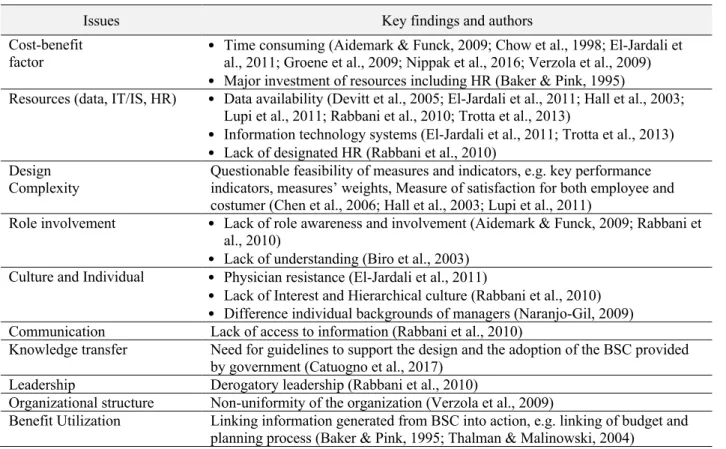
Table 2.4 Challenges in BSC adoption ... 25
Table 3.1 CVF cultures’ assumptions, belief, values, artefact and effectiveness criteria ... 37
Table 3.2 Empirical research on the relationship between CVF’s cultures and healthcare performance ... 38
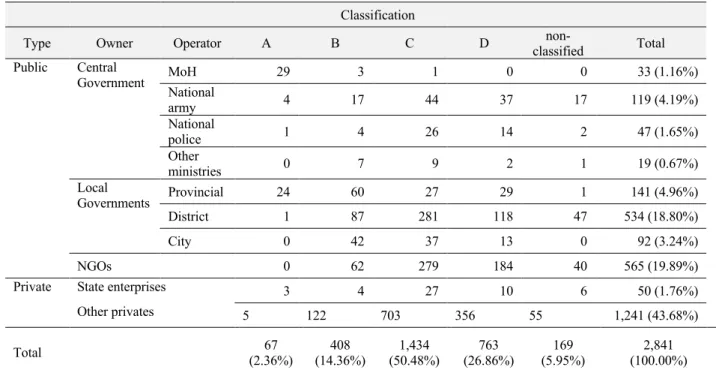
Table 4.1 Indonesian Hospitals, 2017 ... 47
Table 4.2 Indonesian Hospitals based on their class, 2017 ... 50
Table 4.3 Corporatized vs non-corporatized government-owned hospitals in Indonesia ... 53
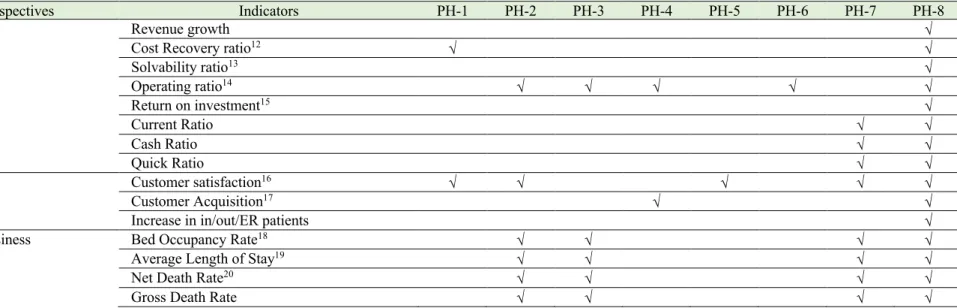
Table 4.4 Indonesian public hospitals’ list of performance indicators ... 56
Table 4.5 Examples of BSC perspectives and indicators used by Indonesian public hospitals ... 59
Table 5.1 MCGH characteristic and performance ... 64
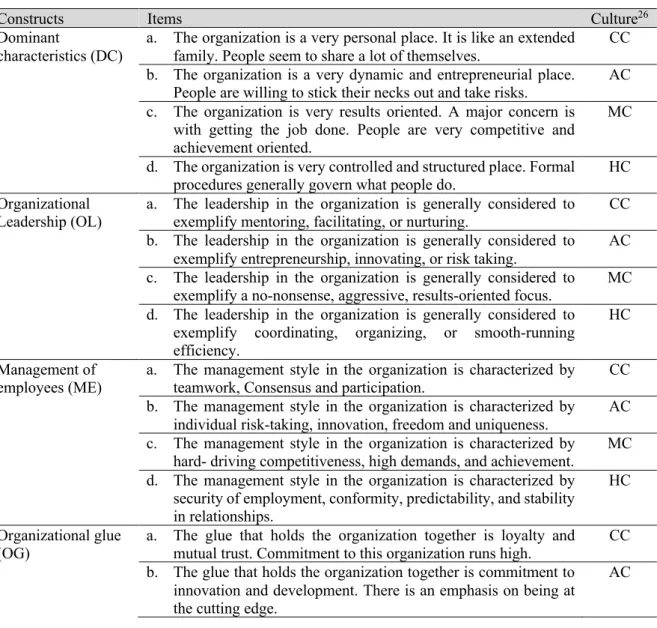
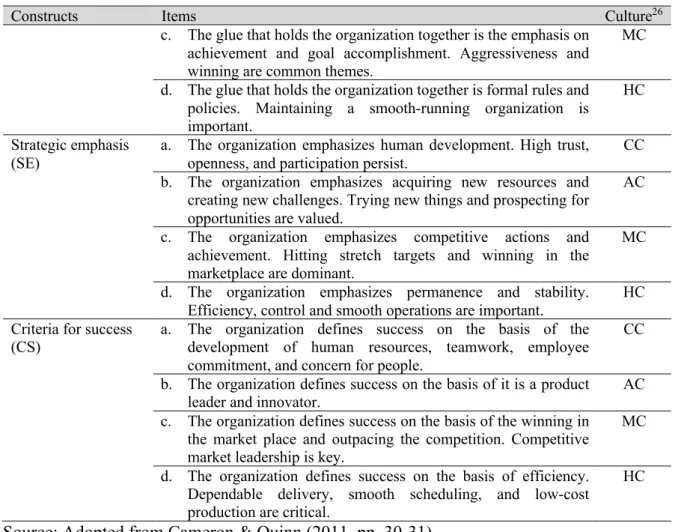
Table 5.2 Construct of organizational cultures ... 72
Table 5.3 Constructs of perceived acceptance, and perceived importance and use of PMS ... 73
Table 5.4 Demographic of Respondents ... 76
Table 5.5 Comparison of reflective and formative measurement models ... 80
Table 5.6 Summary of measurements, criterion, description, and rule of thumbs for evaluation outer model ... 84
Table 5.7 Summary of measurements, criterion, description, and rule of thumbs for evaluation structural model (inner model) ... 86
Table 5.8 Descriptive analysis of hospital cultures ... 87
Table 5.9 Mean difference test of culture types ... 87
Table 5.10 Dominant culture type per each dimension ... 89
Table 5.11 Descriptive statistics on the acceptance of PMS ... 91
Table 5.12 Descriptive statistics on the perceived importance of PMS ... 94
Table 5.13 Descriptive statistics on the use of PMS ... 97
Table 5.14 Comparison of mean values of perceived importance and use constructs ... 98
Table 5.15 Process of items’ loadings evaluation ... 100
Table 5.16 Final result of items’ validation for reflective models ... 100
Table 5.17 Correlations and measures of validity among variables (Discriminant Validity) ... 101
Table 5.18 Summary results of formative assessment ... 102
Table 5.19 Formative repeated indicators validation ... 105
Table 5.20 Correlation between constructs, TOL and VIFs ... 106
Table 5.21 Remediation of multilinearity issues ... 107
Table 5.22 Summary of second stage of repeated indicator model results ... 108
Table 5.23 Evaluation of effect size (ƒ2) and predictive relevance (q2) ... 110
Table 5.24 Test of mediation effect ... 112
Table 6.1 Results of hypotheses examination on the relationship between cultures and the acceptance, importance, and the use of PMS ... 121
Table 6.2 Results of hypotheses examination on the relationship between the acceptance, the perceived importance and the use of PMS ... 122
LIST OF FIGURES
Figure 2.1 BSC 4-box model: first generation of BSC ... 14
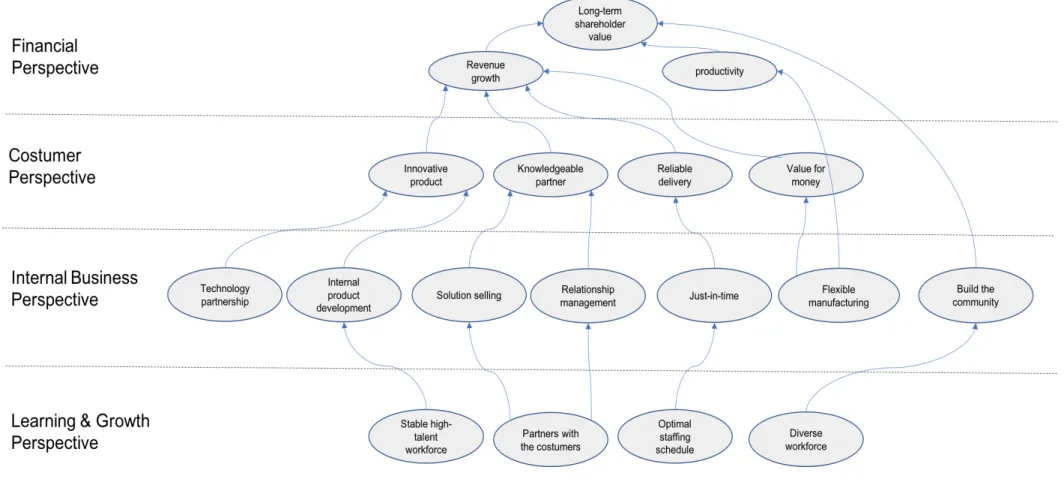
Figure 2.2 Example of strategy map (The Hi-Tek Manufacturing Company) ... 16
Figure 2.3 Example of the third generation of BSC (The Hi-Tek Manufacturing Company) ... 17
Figure 2.4 Six-stage of Closed-Loop Management System ... 18
Figure 3.1 Schein’s three levels of culture ... 28
Figure 3.2 The Competing Values Framework ... 34
Figure 4.1 Organization of health system in Indonesia ... 45
Figure 4.2 Number of Indonesian hospitals 2012 – 2017 ... 48
Figure 4.3 Growth of Indonesian hospitals based on their providers ... 49
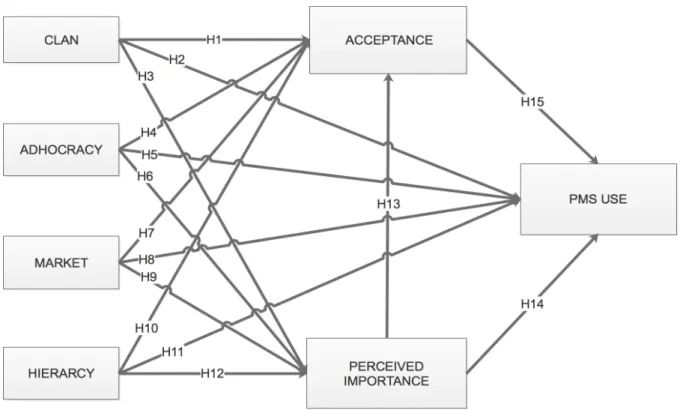
Figure 5.1. Initial Research Framework ... 69
Figure 5.2 Example of Structural equation model ... 78
Figure 5.3 Structural model based on initial research framework (with PLS-SEM notations) ... 82
Figure 5.4 Structural model based on initial research framework ... 83
Figure 5.5 Hospital culture ... 88
Figure 5.6 Two-Stage Approach for HCM Analysis ... 103
Figure 5.7 First stage of repeated indicator model ... 104
Figure 5.8. Modified research framework ... 107
Figure 5.9 Second stage of repeated indicator model (final structural model) ... 108
Figure 5.10 Mediation relationship ... 111
Figure 6.1 Proposed framework of BSC adoption phases for Indonesian public hospitals ... 117
Figure 6.2 Example of readiness assessments ... 117
Figure 6.3 Hospital Culture profiles ... 119
Chapter 1 INTRODUCTION 1.1 Research Background
Hospitals are an important part of the health system because they provide complex curative care that depends on their capacity, acting as the first, secondary, or final reference level curative care facility. Hospitals are the center for the transfer of knowledge and skills and constitute an essential source of information. Hospitals play a direct role in the education and training of health workers, provide data needed by national health planners, and generally consume a major part of national health resources (Saltman et al., 2011), and therefore, their performance is very important to be managed by emphasizing accountability, effectiveness, and efficiency (Radnor & Lovell, 2003). In addition, there are growing demands to ensure transparency, control and reduce variation in clinical practice (Groene et al., 2009). If the hospital does not attempt to provide a standard level of care, the reputation of the organization can be jeopardized (Groene et al., 2009). By measuring performance, hospital managers and stakeholders can make the necessary improvements (Griffith et al., 2002).
One of the most recommended business performance measurement tools that have the potential to support hospital performance management goals is a balanced scorecard (BSC) (Aidemark, 2001; Bilkhu-Thompson, 2003; Modell, 2004). The BSC is considered to present a multi-dimensional view of performance across different objectives and stakeholders, as required for many public sector organizations. Previously, performance measurement systems (PMS) focused on financial performance and paid little attention to non-financial measures. This traditional approach is criticized because it causes management to pay less attention to the long-term interests of the organization, and is unable to measure value in today's business environment where intangible assets and strategy implementation are everything (Niven, 2008).
BSC developed by Kaplan and Norton in 1992 (Kaplan & Norton, 1996) offers how to describe, implement, and manage strategies at all levels of a company. It is built on the concept of critical success factors (CSF) from a series of performance measures and indicator indicators in four different perspectives, i.e. learning and growth, internal processes, customer satisfaction, and finance the performance. Performance indicators in each perspective are developed from existing data systems and are presented as an integrated report for decision making (Castaneda-Mendez et al., 1998). Matrices are usually measured at monthly or quarterly frequencies to evaluate the effectiveness of interventions, improve quality, motivate change and move towards organizational excellence (Kaplan & Norton, 2001).
Currently, BSC has been widely adopted by hospitals in high-income countries (HICs) 1 and more recently has been extended to the non-HICs (Rabbani et al., 2007). In HICs, BSC has been adopted to all fields relating to health care including hospitals, health care systems, university medical / health departments, mental health centers, pharmaceutical companies, and health insurance companies (Zelman et al., 2003). BSC is believed to overcome limitations in traditional management control systems and assist in communicating strategies within an organization (Rabbani et al., 2007). However, acknowledgment of BSC adoption within non-HICs is less known by existing literature (Healy et al., 2002; McPake, 2016; Rabbani et al., 2007).
1.2 Significance of Research
Research focusing on performance management within the healthcare setting is still relevant for several reasons. Gurd & Gao (2007) argued that increase of demand from aging populations, better treatments wanted by many people, shortage of professional workers, and reducing governments financial subsidiaries were still relevant to the theme. Considerable strategic challenges and strong pressure to be more responsive to costumers' demands by improving quality and efficiency were also being reported (Chow et al., 1998; Kocakulah & Austill, 2007; Lorden et al., 2008). Healy et al. (2002, pp. 36-54) classified hospitals’ pressures into three groups; (1) demand-side changes (changes in demography, fertility, ageing, migration, changing patterns of disease, changing risk factors, and hospital-acquired infections), (2) supply-side changes (changes in technology, clinical knowledge, and workforce), and (3) political and societal changes (financial pressures, internationalization of health system, and global changes in the market for medical research and development). While traditional performance measurement and management control systems lack abilities to meet strategic objectives of healthcare organization (Gurd & Gao, 2007; Lorden et al., 2008), BSC adoption was considered as a solution (Baker & Pink, 1995; Gumbus & Wilson, 2004; Naranjo-Gil et al., 2016; Zelman et al., 2003).
As the most important management innovation of the 20th century, the Balance Scorecard (BSC) has been adopted in a broad range of industries from manufacturing to healthcare and has received considerable attention from both academic and industry press
1 According to the World Bank 2018’s classification, low-income economies are defined as those with a GNI
per capita, calculated using the World Bank Atlas method, of $1,005 or less in 2016; lower middle-income economies are those with a GNI per capita between $1,006 and $3,955; upper middle-income economies are those with a GNI per capita between $3,956 and $12,235; high-income economies are those with a GNI per capita of $12,236 or more (https://datahelpdesk.worldbank.org/knowledgebase/articles/906519).
(Zelman et al., 2003). BSC adoption in the healthcare industry is considered to have similar issues to the other kind of industries such as the manufacturing industry. However, Zelman et al. (2003) reported that healthcare industries faced some unique challenges such as the complexity of measuring, interpreting, and comparing the medical staff relations and quality of care.
Since Indonesia entered the Reformation Order in 1998, the decentralization policy initiated in 1991 has been strengthened by The Government of Indonesia (GOI). Decentralization drives significant changes in the roles and responsibilities of various levels of government. Responsibility for the implementation of health services was transferred to local governments at the district level, together with almost a quarter of a million health workers. This decentralization policy also applies to hospitals managed by the central and regional governments. One of the Indonesian decentralization actions is institutionalizing public agency service institutions called Badan Layanan Umum (BLU). The BLU institution, which began to be implemented in 2003, refers to a scheme for the GOI institutions that directly related to public services such as hospitals and universities, which allows them to apply flexible financial management by emphasizing productivity, efficiency, and effectiveness (GOI, 2003b). According to Preker & Harding (2003), the scheme is an attempt to improve the performance of public hospitals through corporatization.
The BLU scheme provides more spaces for hospitals in controlling their budget, utilizing their income, making the investment, initiating partnerships with private sector services and investors, and managing debt and receivables, as well as personnel management more independently and flexible. Through BLU scheme, Indonesian public hospitals are expected to reduce dependence on central government subsidies, improve competitiveness, and serve communities in better quality (Maharani & Tampubolon, 2017).
Maharani & Tampubolon (2017) reported that the BLU scheme had indeed succeeded in increasing the income and expenditure of Indonesian public hospitals but not efficiency and equity. However, they highlighted that BLUD hospitals were not effective in the design of their implementation because they were not through a pilot model. They also strongly recommend increasing the capacity and capabilities of hospital managers and maintaining regular monitoring (Maharani & Tampubolon, 2017).
While there is a continued focus that exists towards improved quality in healthcare in most HICs, unsatisfactory quality of health services (particularly hospitals) continues to be reported from Low-Income Countries (LICs) including lack of resources such as beds, drugs, and staff (Jonsson et al., 2007; Ovretveit & Al Serouri, 2006). Healthcare workers are limited
in number for the vast population, and there is an imbalance in the skill levels of these workers (Ovretveit & Al Serouri, 2006). Although some countries have defined explicit norms and standards of hospital care as part of long-term health sector strategies, many countries lack any specific hospital strategy (Rabbani et al., 2011).
The GOI, through The Ministry of Health (MoH), has been promoting BSC concept since 2005 to measure Indonesian public hospitals (MoH, 2005). As shown in many governmental strategic plan documents provided for the government-owned hospitals, The MoH also encouraged the public hospitals to apply BSC as their strategic management tool. Unfortunately, reports regarding the progress of BSC implementation in Indonesia are not available.
It is still difficult to find analytical studies on performance management tools such as the BSC in healthcare management research. Learning from experiences across countries is required for review lessons learnt and determine feasibility in no-HICs such as Indonesia by translating positive experiences across borders (Rabbani et al., 2007). Therefore, in this research, literature review regarding BSC adoption across country setting and investigating its applicability to Indonesian public hospital setting will be an important part.
PMS adoption in healthcare organizations is acknowledged to be more complicated than in other industries since their goals are challenging to operationalize because of the complexity of treatments, settings and patient groups (Adair et al., 2006, p. 59). Furthermore, the combination of professional and administrative management models and the interrelationship among multiple stakeholders create greater complexity in measuring, interpreting and comparing the medical staff relations and quality of care (Adair et al., 2006, p. 59; Zelman et al., 2003, p. 1). Healthcare organizations as public organizations also have a more complex pattern of financial accountability than private companies have (Peter Smith, 1993, p. 137).
Within high-income countries (HICs), balanced perspectives of BSC have promoted integration and facilitation of clinical, operational, and financial indicators with higher employee motivation and patient satisfaction as outcomes. But different stories of their implementation came from non-HICs. Politic and leadership priorities, resource constraints, local culture, levels of education, and quality of information systems were considered as challenges as well as lack of involvement from medical professionals and lack of access to information (Rabbani et al., 2010).
Rabbani et al. (2010) and El-Jardali et al. (2011) also reported that culture was one of the constraints when BSC is implemented in Pakistan and Lebanon hospitals. Hence, assessing contextual factors such as hospital culture types and values should be a pre-requisite (El-Jardali
et al., 2011; Rabbani et al., 2010). Similarly, Shortell et al. (1995) mentioned that the successful implementation of quality care initiatives requires a significant commitment to a culture emphasizing empowerment, autonomy, and risk taking. Cameron & Quinn (2011) argue that organizational culture is associated with an organization’s sense of uniqueness, its aim, goals, mission, values, and main ways of working and establishing shared beliefs. Therefore, organizational culture assessment has been recommended as a key prerequisite for improving the quality of care and organizational effectiveness (Forsythe, 2005). Hence, this research will investigate the relationship between culture and the acceptance of PMS, and its importance and utilization.
1.3 Research objectives
The main objective of this research is to review the applicability of BSC as public hospitals’ PMS in the context of Indonesia setting and investigating the relationship of organizational culture to the acceptance, importance and the use of comprehensive PMS such BSC. Specifically, the objectives are as follows:
a) To review the existing experiences of BSC implementation in High-Income Countries and to assess BSC’s applicability in the Indonesian public hospital setting;
b) To understand existing organizational culture of Indonesian public hospitals;
c) To investigate the relationship of organizational culture to the acceptance, the perceived importance, and the use of BSC as the PMS of Indonesian public hospitals.
1.4 Research Methods
The study is situated within the positivist research paradigm since its underlying idea is to explain important social phenomena by examining the relationships between and between them (Thomas, 2004). Positivism requires a process that must be free of value, cause, and effect, and can be tested in different environments (Creswell, 2013). Experiments and surveys are the most typical types of positivist research strategies used in social science research (Thomas, 2004). The case study approach was chosen to obtain an understanding of the context and a deeper understanding of the research. In this research, a case study was chosen to understand the role of contextual culture on the performance measurement system. Yin (2018) explained that the case study is good when researching a complex object and trying to explain, understand or describe social systems that are normally too complex for other strategic approaches.
The case study was conducted at The General Hospital of Mataram City (GHMC) located in Mataram, West Nusa Tenggara Province, Indonesia. GHMC is owned by The Mataram City
Government. The hospital started to operate in March 2010. The hospital offers care to outpatients and inpatients of all socio-economic classes. GHMC was selected as the study site because the hospital has been implementing BSC as its PMS since 2010, and the hospital managers in all levels were willing to participate.
This study employs paper-based questionnaires which were separated into two main parts. The first part was provided for diagnosing current hospital culture perceived by employees using The OCAI (Organizational Culture Assessment Instrument) developed by Cameron & Quinn (2011, p. 27). The second part of the questionnaire is designed for gathering information on the perceived acceptance, and the perceived importance and the use of current PMS by the hospital. Measures of acceptance, PMS perceived importance, and PMS Use constructs were adopted from Aboajela (2015).
Since the questionnaire was originated in English, the questionnaire then was translated into Indonesian language. A number of changes were made to the survey after piloting the questionnaire to 11 lower-middle managers of the hospital. After considering the comments and suggestions of these managers, the questionnaires were then distributed to 305 hospital’s employees.
The analytical procedure in this study is split into three subsections. Descriptive analysis is the first one and then followed by analyzing hospital culture from the OCAI instrument. The Partial Least Square – Structural Equation Model (PLS-SEM) was chosen to analyze the relationship between organizational culture, the acceptance, and the importance and use of PMS. The PLS-SEM’s involves three main procedures: (1) validating measurement model, 2) testing the structural model, and (3) test of hypotheses (Hair et al., 2017). Details on the research framework and methodology will be described in Chapter 5.
1.5 Contribution of the research
Research regarding cultural influences on performance measurement systems to date has been found in the context of Indonesian public hospitals setting. This study is expected contributed in general to the literature on performance management and particularly to bridging the gap in the knowledge about performance measurement systems in public sector organizations. Current PMS, i.e. BSC, adopted by Indonesian public hospital is originated from the western country that grouped in HICs. Studies relating to the successful and the failure of BSC adoption were mostly conducted in HICs and commercial companies setting. Due to the scarcity of the literature on influence the cultural context on the adoption of BSC, the findings
in this research would be important in designing PMS framework to be implemented in Indonesian public sector and public hospitals in particular.
1.6 Structure of Research
This thesis consists of five chapters. Chapter 1 provides the background, significance, objectives, brief review of methods and contribution of the research. Chapter 2 contains a literature review on the adoption of BSC as hospital performance system. At the beginning of the chapter, the performance measurement concept is discussed, including performance measurement within e public sector organization, followed by BSC development and its application across countries in the context of healthcare organization setting.
Chapter 3 contains a literature review on the organizational culture. This chapter definition, perspectives, and typologies of organizational culture. In addition, Chapter 3 literature review on the relationship between culture and organizational performance were also discussed. Chapter 4 contains the Indonesian context of the national health system and public hospitals. This chapter describes historical development and recent conditions of the Indonesian health system and public hospitals in particular.
Chapter 5 presents the case study of organizational culture influence on the acceptance, importance, and use PMS. Descriptive characteristics and results of hospital culture diagnosis were also discussed. The final chapter, chapter 6, summarizes the findings, denotes the limitations of this research, and states possibilities for future research.
Chapter 2
LITERATURE REVIEW ON THE ADOPTION OF BALANCED SCORECARD AS HOSPITAL PERFORMANCE SYSTEM
This chapter describes literature review on the adoption of BSC as hospital performance system across countries. Its applicability to Indonesian public hospital is also discussed. Since BSC is a tool for performance measurement, the chapter will be started with a brief review on performance measurement concept, then followed by the role of non-financial measures, and the application of performance measurement within public sector organization.
2.1 Performance Measurement
Performance means something that has been done, or is a result of a number of efficient actions in the past (Lebas et al., 2002). To the context of public sector organization, Talbot (2010, p. 33) highlighted that there are specific characteristics of performance which generally will always be related to input, output, and outcomes. Input is a source used to produce services including humans, facilities, or materials such as the number of tons of material or money used to produce. Outputs refer to immediate results of organization’s activity, while outcomes generally refer to the results or benefits obtained by the user/customer.
In public sectors, 'performance' can have various meanings. The definition of 'successful' performance also has a variety of meanings, depending on the interests of the stakeholders. In particular, in the public health service context, there are many stakeholders who need different information about organizational performance. Stakeholders of the healthcare system, for example, are not only the patients but also communities, donor agencies, taxpayers, and doctors. For many stakeholders, the definition of 'successful' performance may be a 'successful' clinical outcome, namely capable of providing appropriate surgical and medical services. For other stakeholders, efficiency may be the crucial one. Health care organizations recognize these various needs, which are reflected in their strategic plan. Thus, most of their main strategic objectives are non-financial measures which are relevant to the latest comprehensive performance model.
Miller (2005, p. 72) defined performance measurement as “all about measuring the right things at the right time for the right people.” While U.S. General Accounting Office (GAO) defined performance measurement as “the ongoing monitoring and reporting of program accomplishments, particularly progress towards pre-established goals which typically conducted by program or agency management (GAO, 2012, p. 3).” These two definitions
indicate performance measurement as a managerial tool (Collier, 2007, p. 379) produce performance indicators generally expressed by a number and a unit of measurement (Franceschini et al., 2019). Franceschini et al. (2019) also explained that most of performance indicators concern on effectiveness (doing the right things), efficiency (doing things right), and customer satisfaction.
Given above explanation, it can be summarized that performance measurement is about measuring outcomes and efficiency of services or programs which lead to a consensus that managers' accountability would be more objective when they are assessed with performance measurement.
2.2 Role of non-financial measures in performance measurement
Organizations have transformed from entirely relying on conventional financial performance measurements to a combined financial measures and non-financial measures in order to accurately reflect changing environments and improve decision (Ittner & Larcker, 1998). Newer performance measurement models provide a comprehensive way to measure organizational performance.
Johnson & Kaplan (1987, p. 1) stated that "traditional performance measurements systems produce information that is too late, too aggregate, and too distorted to be relevant for managers planning and control decisions." They explain that the current organization no longer relies on financial aspects because it tends to produce information that is too slow, less focused, and too distorted for managers to carry out the planning and decision-making process.
Conventional performance measurement, which is mostly focused on financial measures, does not reflect organizational goals and strategies. The focus on increasing productivity in the 1980s immediately identified the impact of quality and customer satisfaction on corporate earnings (Hoque & Alam, 1999). Newer practices, which emphasize quality control and just-in-time inventory systems and integrated computer manufacturing systems, require a shift of focus in performance measurement. An increasingly higher focus is then given to non-financial performance indicators, and companies are beginning to include quality and customer satisfaction.
The inclusion of non-financial measures in the performance measurement system is aimed to provide more relevant information with decision makers. Stakeholders assume that reporting financial measures alone cannot give them true insight into the company's strategic performance capabilities (Maines et al., 2002). As quality and customer satisfaction are positively related to investor decision making, company revenues, and market value (Banker
et al., 2004; Behn & Riley, 2016; Ittner & Larcker, 1998; Nagar & Rajan, 2001), shareholders demanded for more disclosure of 'non-financial' measures in the company's annual report.
Research on the effectiveness of using non-financial measures for performance measurement shows various results (Abernethy & Lillis, 1995; Chenhall, 1997; Eccles, 1991; Ittner & Larcker, 1998; Perera et al., 1997). Previous studies showed that non-financial performance measures in performance management failed when organizations overemphasize non-financial measures that harm financial indicators. In particular, Chenhall & Langfield-Smith (1998) show that high emphasis on customer satisfaction encourages actions that are inconsistent with overall company strategy to maintain cost efficiency while meeting customer needs.
Many organizations still report non-financial measures at the operational level but have not been followed by a comprehensive performance measurement system to match (Eccles, 1991; Ittner & Larcker, 1998). Other research shows that despite the increased use of non-financial performance measures for targets and operational indicators, at the strategic or decision-making level, financial indicators remain the dominant measure (Lipe & Salterio, 2000). Managers’ concern about the accuracy of measurement of non-financial indicators raise questions about actual reliability (Ittner & Larcker, 1998). Ittner & Larcker (1998) found that the need to measure qualitative results was a major implementation problem. Other empirical research shows that senior management tend to ignore unique or non-financial measures in performance evaluations (Libby et al., 2004; Lipe & Salterio, 2000).
Likewise, non-financial measures and quality programs have been received increasing attention in the public sector for many years. The government has encouraged the use of quality measures to ensure the health care sector continues to provide world-class services to the public, even though their resources are limited and reduced. In the mid to late 1990s quality performance reviews and programs, such as 'sustainable quality improvement' were regarded as promising paradigms that would enable organizations, especially public health organizations, to achieve these goals (LeBrasseur et al., 2016). Currently, the majority of measurements taken in public hospitals are non-financial, and some of them are mandatory. Many of hospital activities, which are related to funding arrangements and others, are subjects of ISO (International Standards Organization) compliance, accreditation standards, and clinical effectiveness performance measurements. These activities will match the 'customer' quadrant or 'internal business process' in common BSC frameworks (Abernethy & Vagnoni, 2004; Otley, 2001b).
Non-financial measures are not new to healthcare organizations. They have been used for years to determine the best clinical practices. In 1993-4, the Australian government introduced measures of performance-based funding, which required measurement of efficiency, productivity, quality, and access. Therefore, most indicators needed to be reported by public health providers are non-financial such as waiting time for surgery, emergency and outpatient waiting time, average length of stay (ALOS), and hospital-acquired infection rates. A patient satisfaction survey is also needed to help determine the overall quality of public service provision.
2.3 Performance measurement in Public Sector Organizations
Public sector reform requires public sector managers to adopt comprehensive performance measurement tools to assist them in managing 'over proliferation' or various actions in public sector organizations. The difficulty faced by organizations is to be able to provide a comprehensive, understandable, and applicable performance measure for public sector applications (Kaplan, 2001). The strategic management literatures suggest that there is a strong relationship between performance measurements and strategy. However, in practice, this is not always proven to be so. Empirical research on Victorian regional governments shows that the board does not pay enough attention to the development of 'lead' steps, or steps for long-term sustainability in internal business processes and areas of innovation and learning (Kloot, 1997). Recent research by Modell (2004) on public organizations shows that the inability of public sector organizations to link their various performance indicators with organizational goals (loose easing) is not a sign of weakness but a natural response to the need to provide information to various stakeholders.
However, for board reporting, simple management reports must be prepared by complex and often heterogeneous cost centers in one organization. The report must also summarize many key indicators. Recent empirical research shows that systems implemented to meet government requirements tend to influence internal behavior rather than systems developed in organizations to meet their own needs (Cavalluzzo & Ittner, 2003). Cavalluzzo & Ittner (2003) also found that public sector organizations implementing strategic performance measurement systems, which capture less traditional performance information, experience difficulties in developing subsequent performance measures and accountability.
Factors that cause difficulties for the successful implementation of public sector performance measurement initiatives include (1) technical issues, i.e. information systems cannot provide appropriate data and organizational difficulties in defining appropriate actions,
and (2) organizational issues, i.e. management commitment, decision-making authority, training; and legislative mandate (Cavalluzzo & Ittner, 2003; Kwon & Zmud, 1987; Shields & Young, 1989).
Regarding the technical issues, Ittner & Larcker (1998) reported that lack of highly developed information systems is a major problem in implementing BSC. They also highlighted that 45% of their research respondents found difficulty in quantifying qualitative results. Holmstrom & Milgrom (1991) also found that performance measurement systems are likely to be unsuccessful when performance measures used by companies are difficult to evaluate. Other empirical research by Atkinson et al. (1997), Shields (1995), and Anderson & Young (1999) also confirmed the relationship between implementation issues and technical capabilities.
In accordance with organizational issues, Shields (1995) stated that the support from top management is essentially needed for the successful of performance measurement system implementation. Anderson (1995) found that there is a positive relationship between successful accounting system implementation and decision-making authority. Other empirical research by Kwon & Zmud (1987), Shields (1995), and Shields & Young (1989) concluded that successful performance measurement system is related to employee empowerment, training, or resources offered by organizations. In public sector organizations, legislative pressure and budget cutting can undermine successful performance measurement systems development (Flynn & Talbot, 1996). Research by Chua & Degeling (1993), Abernethy & Vagnoni (2004), Covaleski & Dirsmith (1988), and Lowe & Doolin (1999) concluded that the legislative role in regulating medical practice influence performance measurement in hospitals.
Today's performance measurement of public organizations has also led to the use of multiple dimensions of performance measurement systems. Some of them are the ISO 9001: 2000, Total Quality Management (TQM), Balance Scorecard (BSC), and Malcolm Baldrige. Among them, BSC is recognized as the most important management innovation of the 20th century since it has been adopted in a broad range of industries from manufacturing to healthcare industries and has received considerable attention from both academic and industry press (Zelman et al., 2003). BSC is a framework that helps organizations translates strategy into operational objectives that drive both behavior and performance (Kaplan & Norton, 1996, p. 25). It was originally developed to solve a measurement problem, where financial measures were unable to capture many of the value-creating activities generated by an organization's 'intangible' assets.
2.4 Balanced Scorecard
The problem with organizational performance management systems has traditionally focused on financial performance. Despite the fact that financial indicators are essential, focusing only on a single financial dimension will cause managers to pay less attention to operational processes that contribute indirectly to financial results. Therefore, a better method is needed, which is found in BSC. Kaplan & Norton (1996, p. 25) defined BSC as a framework that helps organizations translates strategy into operational objectives driving both behavior and performance. The measures and objectives are viewed across four dimensions of performance: financial, customer, internal business process, and learning and growth. The word “balanced” in the term 'Balanced Scorecard' is an indication of the balanced consideration given to long and short-term objectives, financial and non-financial measures, leading and lagging indicators, and external and internal performance perspectives (Hendricks et al., 2004; Kaplan & Norton, 1996, p. 222).
Through BSC, Kaplan & Norton (1992) distinguished lagging and leading indicators Lagging indicators represent the consequences of actions taken, whilst leading indicators are the measures that drive or lead to the lag indicators (Error! Reference source not found.). Traditional performance measurement system focused on the lagging indicators which are historical in nature and lack predictive power (Niven 2002). Kaplan & Norton (2001, p.247) proposed the mix of lagging and leading indicators that allow employees to distinguish between the measures they could not control and the measures they could influence through their actions (the performance drivers). The 'lead' measures are considered to be more predictive than the lag measures. If organizations satisfy their customers, they can improve their financial performance.
Table 2.1 Lagging and leading indicators
Lagging Leading Definition Measures that focus on results at the
end of a time period (usually historical)
Measures that drive, or lead, to the lag measures (usually measures of intermediate processes and activities)
Examples • Market share • Sales; Profit; • Revenue growth • Costs; ROI; • Cash flows
• Employee satisfaction
• Hours spent with customers • Depth of relationship
• Number of satisfied customers • Revenue mix
• Number new development projects • Personal goals attained
• Absenteeism
Advantages Normally easy to identify and capture Predictive in nature, and allow the organization to adjust results
Lagging Leading Issues Historical in nature and do not reflect
current activities; lack predictive power
May prove difficult to identify and capture; often new measures with no history at the organization
Source: adopted from Niven (2008, p. 215)
The evolution of BSC since its first appearance can be divided into at least three generations (Lawrie & Cobbold, 2004). In the 1990s, the main concern of the first generation of BSC was to solve the measurement problem of balancing the accuracy and integrity of financial metrics with the drivers for future financial success (Niven, 2005, p. 6) (Figure 2.1).
Figure 2.1 BSC 4-box model: first generation of BSC
Source: Kaplan & Norton (1996, p. 9)
The first generation of BSC was criticized since Kaplan & Norton have little to say about how (1) to filter organizational performance measures, which often excessively used in order to generate the balanced scorecard, and (2) to cluster measures that should appear in every perspective (Lawrie & Cobbold, 2004). (Kaplan & Norton, 1993) answered these critics by introducing the concept of “strategic objectives” The innovation suggested that there should be a direct mapping between each of the several “strategic objectives” attached to each perspective and one or more performance measures. They also suggested to focus on the causality between measures on perspectives, and by doing this, a "strategic linkage models" diagram, or a "strategy map" would be a result (Figure 2.2). This second generation of BSC was intended to support the management of strategy implementation. This generation empower BSC to evolve from “an improved measurement system to a core management system (Kaplan & Norton, 1996, p. ix).”
The third generation introduced cascading strategies as a response to the second generation. By cascading strategy, the third generation was aimed to reach all organization levels, thus encouraged involvement of all employees within the four perspectives in order to execute the organization's strategy through a strategy map (Figure 2.3). The third generation of BSC helps organization in developing strategic control systems by incorporating objective statements. This third generation of BSC also optionally link ‘activity’ with ‘outcome.’ ‘Activity’ replaces the financial and customer perspectives, while ‘outcome’ replaces the learning and growth perspective as well as internal business process perspectives (Lawrie & Cobbold, 2004). The third generation focus more on strategic linkage model, and less on specific measures (Perkins et al., 2014).
Kaplan & Norton (2008, p. viii) stated that companies mostly adopted BSC-based management system by implementing sequentially five principles. They began with mobilizing the executive team as the first principle, and then followed rapidly by translating the strategy into operational terms as the second principle, and then doing alignment - how to use strategy maps and scorecards to align organizational units, both line business units and corporate staff ones, to a comprehensive corporate strategy - of the organization into the strategies as the third principle. The fourth principle is redesigning some key human resource systems (goal-setting and incentives) and then followed by final principle by redesigning various planning, budgeting, and control systems. Based on this five sequence principles, Kaplan & Norton (2008, pp. 8 - 17) introduced a new development of BSC strategy execution called “Closed-Loop Management System” in six stages introduced a new development of BSC strategy execution called “Closed-Loop Management System” in six stages. This system is designed to help companies to (1) develop the strategy, (2) plan the strategy, (3) align organizational units and employees with the strategy, (4) plan operations by setting priorities for process management and allocating resources that will deliver the strategy, (5) monitor and learn from operations and strategy, and (6) test and adapt the strategy (Kaplan & Norton, 2008, pp. 8 - 17) (Figure 2.4).
Figure 2.2 Example of strategy map (The Hi-Tek Manufacturing Company)
Figure 2.3 Example of the third generation of BSC (The Hi-Tek Manufacturing Company)
Figure 2.4 Six-stage of Closed-Loop Management System
2.5 BSC adoption by hospitals around the worlds: benefits, functions, and challenges
Baker & Pink (1995) were the first authors discussing the adoption of BSC concept by hospitals that began in the 1990s. Their article then followed by Chow et al. (1998), Castaneda-Mendez et al. (1998), D Gordon et al. (1998), Wachtel et al. (1999), and Curtright et al. (2000). While Baker & Pink (1995), Chow et al. (1998) and Curtright et al. (2000) used the same perspectives as original BSC perspectives, i.e. financial, customer, internal business (process), and innovation and learning perspectives, Castaneda-Mendez et al. (1998), D Gordon et al. (1998) and Wachtel et al. (1999) modified the perspectives.
Castaneda-Mendez et al. (1998) modified the perspectives by proposing patient-value added to customer perspective, employee-value added to learning and growth perspective, business-value added to internal business perspective. D Gordon et al. (1998) used five perspectives in his framework by using customer satisfaction, internal excellence, innovation and learning, financial viability, and population types. Curtright et al. (2000) developed eight performance categories for Mayo Clinic consisting of 1) customer satisfaction, 2) clinical productivity and efficiency, 3) financial, 4) internal operations, 5) mutual respect and diversity, 6) social commitment, 7) external environmental assessment, and 78) patient characteristics.
Other examples of BSC modification presented in Table 2.2 showing that dissimilarity characteristics between private and public sector entities should be considered when adopting the concept of Balance Scorecard. However, an example of Duke Hospital's BSC framework from Kaplan and Norton's (2001) can be the first guidance, namely after the mission and vision, both financial and customer perspectives in the same level and then followed by the internal process perspective, and the learning and growth perspective (Kaplan & Norton, 2001, p. 155). Kaplan & Norton (1996, p. 2) initially developed BSC for for-profit (private) sector and as an instrument for managers to navigate their company’s competitiveness by emphasizing not only on achieving financial objectives but also on the performance drivers of these financial objectives. For nonprofit organizations, Kaplan (2001) found that BSC, when adopted by a nonprofit sector, enabled all organizational resources—the senior leadership team, technology resources, initiatives, change programs, financial resources, and human resources—become aligned to accomplishing organizational objectives. BSC has been increasingly applied to hospitals and healthcare organizations in high-income countries, and recently extended to low- and middle-income countries (McPake, 2016).
Table 2.2 Variations of perspectives used
Research site(s) Country BSC Level Perspectives Authors Lawrence Hospital USA Corporate Patient-value added; Business-value added for
financial; Employee-value added; Business-value added for learning.
Castaneda-Mendez et al. (1998) Sunnybrook Health
Science Centre Canada Unit/Department Customer satisfaction; Financial viability; internal excellence; Innovation and learning; Population types. Gordon et al. (1998) Mayo Clinic –
Rochester USA Corporate Customer satisfaction; Financial; Clinical productivity and efficiency; internal operations; Mutual respect and diversity; social commitment; Patient characteristics.; External environmental assessment
Curtright et al. (2000)
Ontario Acute Care
Hospitals Canada Corporate Patient Satisfaction; Financial Performance and Condition; Clinical Utilization and Outcomes; System Integration and Management Innovation.
Pink et al. (2001) The University Hospital
of Bern Switzerland Unit/Department Customer; Profit.; Process; Knowledge and innovation Zbinden (2002) Veteran Affair
Healthcare USA Corporate Customer Satisfaction; Efficiency; Access and Quality; Performance Biro et al. (2003) Duke University
Hospital Respiratory Care
USA Corporate Service improvements; Finance; Clinical quality and
internal business; Work culture Thalman & Malinowski (2004) Ontario Acute Care
Hospitals, Canada Canada Corporate Patient Satisfaction; Financial Performance and Condition; Clinical Utilization and Outcomes; System Integration and Management Innovation.
Yap et al. (2005) Toronto East General
Hospital Canada Corporate Patient Focus; Ensure Value; Encourage People; Collaborative Spirit and Inspire Innovation Devitt et al. (2005) Theagenion Hospital of
Thessaloniki Greece Corporate Stakeholder; Financial Management; Internal Process; Learning and Growth. Karra & Papadopoulos (2005) Singapore Hospital Singapore Corporate Customer; Process; Learning and Growth.; Supplier;
IT System Kumar et al. (2005) Public hospital Australia Unit/Department Patient; Quality and transparency; Clinical business
processes; Information system van de Wetering et al. (2006) Changi General
Hospital
Singapore Unit/Department ‘cheaper’ indicators.; financial indicators; ‘faster’ indicators; ‘better’ indicators
Research site(s) Country BSC Level Perspectives Authors The Capital Care Group Canada Corporate Clients; Internal processes; learning and research.;
People; Community partnerships Schalm (2008) Hoogland Medical
Hospital (MHH) Germany Unit/Department Customer/Patient; Finances; Process/productivity; Learning/Employee development Aidemark & Funck (2009) Lombardy region
hospitals Italy Corporate Patient satisfaction; Economy.; Clinical process; Human capital Lovaglio (2010) Private university
hospital Pakistan Corporate Patient satisfaction.; Financial; Internal business; Human resource Rabbani et al. (2010) St. Anna University
Hospital of Ferrara Italy Unit/Department Community; Financial Resources; Internal Processes; Growth and Learning. Lupi et al. (2011) Lebanon hospitals Lebanon Corporate Clinical utilization and outcomes; financial
performance and condition; system integration and human resources; patient satisfaction
El-Jardali et al. (2011) Italian Teaching
Hospitals Italy Corporate Stakeholder; Financial and economic; Care; Innovation and growth.; Teaching; Research Trotta et al. (2013) Urban non-teaching
hospital Canada Corporate Patient satisfaction; Effective resource use; Staff wellbeing and productivity.; Process improvement and management
Samaranayake et al. (2016) Italian research hospital Italy Unit/Department Stakeholder satisfaction; Economic and financial.;
Following perceived benefits proposed by Madsen & Stenheim (2014) (Table 2.3), the implementation of BSC within hospitals helps managers focus on what is important in the long run and prioritizing initiatives and decisions making. Karra & Papadopoulos (2005) reported that BSC framework provides a roadmap of actions, policies, priorities and resources to achieve mission and strategic goals. BSC also being reported to be useful for decision making in highly complex and uncertain environment, as well as effectively underlying existing problems and identifying opportunities for timely improvements (Inamdar et al., 2002; Koumpouros, 2013; Pink et al., 2003).
BSC can be used to balance the demands of internal and external stakeholders. Radnor & Lovell (2003) pointed out that BSC was not necessarily used only to focus on external stakeholders. It also targeted for enhanced transparency, clarity, accountability for public/patients, and involvement/support for staff. BSC provides a balanced view of the organization’s performance, and broadens a manager’s focus to take into account other issues than just financial aspects. Several authors pointed that the more balanced view has helped in reducing the over-emphasis on financial measures and assisted in shifting the focus towards a more ‘holistic’ and balanced view of the organization’s performance (Tian Gao & Gurd, 2015; Jones et al., 2002; Rabbani et al., 2010).
The concept of BSC can be useful in communicating and visualizing the strategy in the organization. Grigoroudis et al. (2012), as well as Thalman & Malinowski (2004), argued that the concept of BSC often makes it easier to communicate the strategy to the members of organization. Other authors also argued that BSC provides a ‘common language’ and frame of reference, and can be a facilitator of useful discussions in the organization (Nippak et al., 2016; Rabbani et al., 2010; Samaranayake et al., 2016; A. Smith et al., 2011). In addition, Thalman & Malinowski (2004) also highlighted that the concept of BSC can facilitate useful discussions about strategies.
For the goal alignment, BSC framework enable all the members in the organization to work toward the same goal, i.e. which is referred to as goal congruence (Embree et al., 2015; D Gordon et al., 1998). This is similar to the findings of Groene et al. (2009) and Jones et al. (2002) who pointed out that BSC gives organizational members greater awareness of long-term goals, for example, balances economic considerations and social responsibility against ecological concerns, and improves understanding of how their activities affect the organization’s long-term goals.
BSC can be a ‘cultural tools’ that changes how the organization operates and focus on the things that lead to better performance in the long run (Wachtel et al., 1999). BSC also can
be a ‘motivational tool’ that captures the attention of organizational members, which can be useful in goal-setting and for motivating employees (Tian Gao & Gurd, 2015; Thalman & Malinowski, 2004). For example, the BSC can be used to set more explicit targets than before and as an incentive to encourage appropriate behavior. Finally, BSC was highlighted that it can be used as a catalyst in organizational change processes by increasing the organizational strength (Embree et al., 2015) and useful in mobilizing staff for organizational transformation (Aidemark, 2010; Tsasis & Harber, 2008). The popularity of BSC framework as one of ‘scientific’ and sophisticated business strategic management, also helps in anticipating resistance from organization members, make it easier when monitoring the hospitals’ operations to achieve certain changes needed by hospital (Tian Gao & Gurd, 2015).
Table 2.3. Perceived benefits on BSC adoption
Theme/
Issues Perceived Benefits Key Findings Managerial
focus • Helps hospital managers focus on what is important in the long run
• Helps hospital managers focus on prioritizing and making decisions
Ø provides a roadmap of actions, policies, priorities and resources to achieve mission and strategic goals (Karra & Papadopoulos, 2005).
Ø helps in managing organization in a highly complex and uncertain environment (Inamdar et al., 2002).
Ø Helps in performance improvement and decision making (Pink et al., 2003).
Ø effectively underlying existing problems and identifying opportunities for improvements on time (Koumpouros, 2013).
Balancing view stakeholder demands
• Balanced and holistic view of the organization’s performance
• Broadens the
organization’s focus to consider stakeholders • Makes the organization
more forward-looking
Ø helps in fulfilling government expectations, and targets for enhanced transparency, clarity, and accountability for public/ patients, and involvement/ support for staff (Radnor & Lovell, 2003)
Ø provides information for evaluating performance and influencing appropriate changes to achieve the
organizational goal of quality, efficient care, a nurturing work environment, and financial viability and stability (Jones et al., 2002)
Ø provides a mechanism to evaluate success in achieving operational and quality targets while ensuring that key stakeholders are engaged in the process (Jeffs et al., 2011). Ø enhances social accountability for patient-centered care
(Edward et al., 2015)
Ø provides an opportunity to capture indicators in four aspects of hospital performance (Rabbani et al., 2010).
Ø helps in achieving a better balance between economic and public benefits (Tian Gao & Gurd, 2015).
Communicatio n and visualization • Common language • Common frame of reference • Facilitates discussions
Ø assists management in clarifying and gaining consensus about strategy, performing periodic and systematic strategic review, and providing feedback to evaluate and improve strategy (Grigoroudis et al., 2012).
Ø provides a different way of framing the evaluation, ensuring measurable outcomes were connected to inputs and outputs (Samaranayake et al., 2016).
Theme/
Issues Perceived Benefits Key Findings
Ø useful tool for performance reporting and management tool (Nippak et al., 2016).
Ø can improve staff understanding. Smith, A., et al. (2011)
Ø helps in measuring the impact of department services and provides additional feedback of the performance of strategic initiatives important (Thalman & Malinowski, 2004).
Ø facilitates rational organization and management of data collection systems and serve as an evaluation framework for monitoring improvement of clinical outcomes and quality (Rabbani et al., 2010).
Alignment of
goals • Helps improve goal congruence • Increased awareness of
how the organization’s long-term goals
Ø connects the mission and the outcomes of organizations program (Embree et al., 2015).
Ø helps in defining objectives and associated performance indicators (D Gordon et al., 1998).
Ø improves quality of healthcare quality (Lupi et al., 2011). Ø balances economic considerations and social responsibility,
and ecological concerns (Groene et al., 2009)
Ø support organization to survive and thrive while serving the healthcare needs of community (Jones et al., 2002). Cultural and
motivational tool
• Better leadership • Captures the attentions of
organizational members • Motivational effects as a
result of more explicit targets and incentives
Ø BSC provides a different mindset for key leadership to look at the organization in a global sense (Wachtel et al., 1999). Ø affects the behavior of the employees (Thalman &
Malinowski, 2004).
Ø helpful in development and implementation of a national standardized performance indicators (El-Jardali et al., 2011).
Ø helps in achieving a balance between patient needs, hospital development and staff motivation (Tian Gao & Gurd, 2015).
Organizational change catalyst
• Can be used to justify organizational changes • Well-known concept
Ø can be a strategy that increases organizational strength (Embree et al., 2015).
Ø mobilizes staff for organizational transformation (Tsasis & Harber, 2008).
Ø a more ‘scientific’ and sophisticated system for monitoring the hospitals’ operations (Tian Gao & Gurd, 2015).
Time-consuming was the biggest issue found by authors in adopting and implementation of BSC within hospitals as shown in Table 2.4 (Aidemark & Funck, 2009; Chow et al., 1998; Groene et al., 2009; Nippak et al., 2016; Verzola et al., 2009). In addition, Baker & Pink (1995) stated that implementation of BSC needs a continuous investment in human resources. Availability of data for developing baseline data performance indicators and for benchmarking purposes were the next challenges (Devitt et al., 2005; Hall et al., 2003; Lupi et al., 2011; Thalman & Malinowski, 2004; Trotta et al., 2013).
Several authors such as Chen et al. (2006), Hall et al. (2003), Lorden et al. (2008), and Lupi et al. (2011) emphasized that difficulties and complexities in designing BSC were also challenges in adopting BSC . Amongst difficulties and complexities indicated are failure in