Japan Advanced Institute of Science and Technology
Title Critical Factors for Constructing an Effective
Supply Chain Network
Author(s) Tansakul, Nitipon; Suanmali, Suthathip; Charoensiriwath, Chayakrit; Shirahada, Kunio
Citation International Journal of Supply Chain Management, 7(5): 96-109
Issue Date 2018
Type Journal Article
Text version publisher
URL http://hdl.handle.net/10119/16101
Rights
Copyright (C) 2018 Exceling Tech Pub. Nitipon Tansakul, Suthathip Suanmali, Chayakrit
Charoensiriwath, Kunio Shirahada, International Journal of Supply Chain Management, 7(5), 2018, 96-109. This work is licensed under a Creative Commons Attribution-NonCommercial 4.0
International License.
https://creativecommons.org/licenses/by-nc/4.0/ Description
Critical Factors for Constructing an Effective
Supply Chain Network
Nitipon Tansakulab1, Suthathip Suanmalia2, Chayakrit Charoensiriwathc3, and Kunio Shirahadab4 aSirindhorn International Institute of Technology, Thammasat University,
131 M. 5 Tiwanont Rd., Bangkadi Muang Pathumthani Thailand 12000
1[email protected] 2[email protected]
bSchool of Knowledge Science, Japan Advanced Institute of Science and Technology 1-1 Asahidai, Nomi, Ishikawa, JAPAN 〒923-121
National Electronics and Computer Technology Center,
c112 Phahonyothin Road, Khlong Nueng, Khlong Luang, Pathumthani 12120, Thailand
Abstract- Supply Chain Management (SCM) is a
source of value creation for stakeholders. There are many influential factors for constructing a partnership in supply chain network. The factors demonstrate different contributions in each phase of supply chain. The purpose of this study is to establish a theoretical framework for constructing an effective supply chain network. A literature review of supply chain studies was employed to identify the influential factors in the process of supply chain development and establish the critical phases for creating effective supply chain network. The framework can be served as a guideline for both academic research and practical applications of SCM.
Keywords - Supply Chain Management, Supply Chain
Network, Partnerships, Supply Chain Terminologies
1 Introduction
The partnership becomes a key concern for supply chain development [1]. In order to construct an effective supply chain partnership, the influential factors are required to be identified. Moreover, the development phases of supply chain partnership are influenced by different factors in supply chain management (SCM). In the current business situation, the successful supply chain seems to be those that have a tight bond among internal processes, suppliers, and customers in supply chains [2]. Thus, the study of supply chain development and partnership has become increasingly interesting in academic and business research for constructing an effective supply chain network .
The SCM is considered to be systems of three or more entities that pass materials, products, services, finances, and information upstream and downstream among the members, and deliver to their end customers [3]. It is
International Journal of Supply Chain Management IJSCM, ISSN: 2050-7399 (Online), 2051-3771 (Print)
Copyright © ExcelingTech Pub, UK (http://excelingtech.co.uk/)
complex systems within dynamic environments [4]. In order to create an effective partnership among supply chain members, the review of influential factors of Supply Chain Performance (SCP) is mandatory. SCP is considered as a critical issue that contributes to the long-term success of an organization; it involves many actors in a supply chain, including suppliers, manufacturers, and related retailers [5], [6]. However, SCP is influenced by many factors and considered by different research areas. Supply chain terminologies mentioned in supply chain research are overlapped due to different purposes and areas of study .This leads to unclear definitions and overlapped meanings in supply chain research. This study aims to identify the critical factors that contribute to each phase of supply chain partnership development by a substantial literature review of supply chain terminologies in SCM. Then framework for constructing an effective supply chain network is purposed to support the development and maintain the partnership.
The purpose of this paper is to (i) review the literature related with SCP in order to identify the important factors for constructing supply chain network, (ii) categorize and simplify the important concepts within the field of SCM and classify into critical phases including antecedent and descendent of supply chain development, (iii) establish a framework for constructing supply chain partnership as critical phases, to identify concrete improvements in supply chain research.
In the next section, the literature review of SCP is presented. In Section 3, two phases of research methodology are outlined. The research findings and results from the systematic literature review are provided in Section 4. In this section, the definition of each supply chain terminology is provided and classified into each development phase of supply chain partnership. Section 5 is the description and classification of critical phases for constructing supply chain partnership .Section 6 is the implication of research finding. The conclusion of the results and future research directions are described in Section 7.
2 Literature review
In the globalization era, business entities are mainly concerned with performance improvement rather than focusing on the isolated organization [2]. Therefore, a supply chain is an important source of competitive advantage [6]. SCM facilitates the efficiency and effectiveness of whole processes, from sourcing to the end-consumers. It is the flow of goods, services, finance, and information [7]. SCM is concerned with improving both efficiency cost reduction and efficient customer service [3]. It helps increase quality, and reduce overall costs by managing issues in a supply chain, such as supplier relations, supplier selection, purchasing negotiations, operations, transportation, inventory, and warehousing [3] [8].
A major goal of SCM is to create seamless coordination across a supply chain [2]. A higher level of SCM results in higher levels of SCP [9]. SCP is the ability to react to any changes, with the dynamic collaboration of a supply chain. Likewise, it is directly related to any activities within a supply chain, including manufacturing, logistics, materials handling, distributing, and transporting functions [10]. The higher performance in an effective supply chain can be measured by many factors, including customer and supplier relationships, redundant process reduction, an increase of information flow and material, [2] and flexibility [11].
According to Ibrahim and Hamid [10], SCP is cost-containment and performance reliability. Cost-containment refers to cost related activities, such as holding, transporting, and operating costs .Reliability is related to satisfaction and serviceability, including order fulfillment rate, inventory turns, and product warranties . These measurements have been recognized as the direct and observable factors of SCM. In order to enhance the performance and competitive advantages of a supply chain, lowering costs, reducing inventory, promoting flexibility, ensuring on-time deliveries, and minimizing stock-outs are applied among members [7].
A number of studies propose a framework to describe the relationship and evaluate the SCP, for example: relationships of supply chain linkages on supply chain performance [12]; relationships of supply chain strategy, flexibility, and performance [13] [14]; supply chain leadership and followership on supply chain efficiency and effectiveness [4]; relationships between supply chain linkages and supply chain performance [15]; the role of partnerships in supply chain performance [16]; relationships between Supply Chain Integration (SCI) and performance [17]; and supply chain collaboration enhancing efficiency, effectiveness, and marketing position [18]. Thus, an effective supply chain network requires flexibility, responsiveness, reliability, and integration among supply chain partners.
SCP allows an organization to measure the source of problems in different procedures and create a better understanding of a supply chain as a whole .Therefore, many industries, including the automotive industry[11], [19] ,[20], [21], [22], [23], manufacturer [24], [25], [26], [27], [28], construction industry [29], [30], and foods industry [31], [32], [33], [34], are interested in SCP measurement. In order to measure an SCP, researchers employ different measuring tools, for instance, the supply
chain operations reference model [24], [35], [36], [37], [38], [39], [40], [41], balanced scorecard [34], [42], [43], [44], [45], [46] [47], structural equation modelling [27], [37], [48], [49], [50], [51], and analytic hierarchy process [38], [39], [52], [53].
Since supply chain development has a time frame and each factor influences in each phase of the supply chain with an unequal weight, it is significant to identify the factors influencing a supply chain network in each phase. This research synthesizes and organizes those complex relationships into antecedent and descendent of a supply chain network to develop a framework for supply chain development.
3 Methodology
This paper conducts a systematic literature review to analyze and extract the relevant literature on SCP from credible published journals .The literature review aims to classify the definition of related terminologies of SCP. The research methodology is divided into two phases as follows: (i) planning and searching and (ii) analysis.
3.1 Section one: Planning and Searching
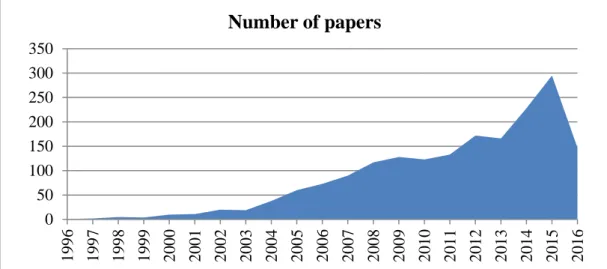
Initially, discussions among authors are done to obtain effective search terms. Two levels of searching keywords were employed to specify the research papers that contribute to supply chain development. The results from the discussion among authors are summarized in Table 1. The first level focuses on SCP, and the second level emphasizes on specific components of SCP. In order to study the effective supply chain development, the term “supply chain performance” is a concerned key to extract the critical factors that contribute to supply chain network. In the second level, the key concerned is the factors that contribute to supply chain management. Thus, the literature reviews for “Evaluation”, “Measurement”, “Framework”, “Model”, and “Technique” are a major search term for finding related literature. A systematic literature review is conducted, based on the ScienceDirect database .According to the searching results, 1,842 journals were found that are related to SCP from 1996 to the middle of 2016, as shown in Figure 1. In addition, other journal databases, for instance, Emerald, SCIRUS, and SCOPUS are utilized, to cover complete research outcomes, in terms of definitions and terminologies.
Table 1. Searching keywords
Searching Level Keywords
First level Supply Chain Performance Second level Evaluation OR Measurement OR Framework OR Model OR
Technique
3.2 Section two: Analysis
According to searching results of 1,842 journals, as shown in Figure 1, the relevant research papers in the supply chain, performance measurement, and relevant topics are selected from the quality sources. The reviewed of titles and keywords are considered as the first screening process. Then, abstract, introduction, and conclusion were reviewed for selecting the paper for further discussion.
Finally classified to papers based on terminology that they mentioned for creating SCP. The review and selecting methods are shown in Figure 2. Most of the selected articles are discussed critical factors for developing SCP.
A systematic literature review is employed to synthesize the contents of the existing journals. In the
analysis phase, the terminologies in supply chain research are listed. Then, a definition is provided for each term, and terminologies are classified, based on the similarity of their definitions to purpose relationships among them are determined, based on the literature review.
Figure 1. Distribution of number of journals related to SCP, published in ScienceDirect, from 1996 to the middle of 2016
Journal database
(Sciencedirect, Emerald, SCIRUS, and SCOPUS)
Keywords
First Level: Supply Chain Performance Second level: Evaluation OR Measurement OR
Framework OR Model OR Technique
Reviewed titles and keywords
Reviewed abstract, introduction, and conclusion
Summarize supply chain terminology
Classified supply chain terminology into influential factors
Figure 2. Selecting process 4 Discussion
According to the literature, each study differently summarizes the influence factors based on the industry and research methodology. However, the time period of supply chain development is disappeared. In order to develop a framework for supply chain development, the study of factors influencing SCP in each phase of supply chain development is inevitable.
4.1 Phase of supply chain development
Since a supply chain is a network that delivers materials, products, services, finances, and information upstream and downstream among the members of a supply chain, with delivery to the end customer [54], the partnership among supply chain members is considered as the essence of SCM [1], [55]. Before the establishment of supply chain partnership, each firm is individually operated, and suppliers act as providers. The critical phases of supply chain partnership can be divided into three main phases.
4.1.1 Pre-partnership
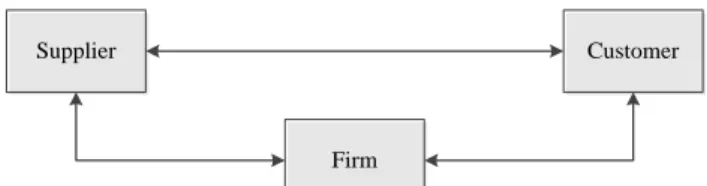
In the initial phase, a firm mainly focuses on internal operation; suppliers are seen as raw material sellers. The relationship of supply chain members in this phase is shown in Figure 3. They are aiming at the individual profit rather than sharing higher profits. In the literature, the internal operational processes are always defined as a part of supply chain performance. Internal integration, collaboration, communication, information sharing, and flexibility are mentioned as the influential factors in SCM [56], [57], [58]. Therefore, the individual operation of a firm in the supply chain is imperative to create competitive advantage and is referred to as antecedent factors of SCP. When the firm achieves higher business performance, it is likely to concern more on buyer-customer relationships to create better responsiveness within supply chain members [59].
0 50 100 150 200 250 300 350 19 96 19 97 19 98 19 99 20 00 20 01 20 02 20 03 20 04 20 05 20 06 20 07 20 08 20 09 20 10 20 11 20 12 20 13 20 14 20 15 20 16
Number of papers
Supplier Firm Customer
Figure 3. Relationship of pre-partnership phase
4.1.2 Partnership
The partnership is a stage that members of the supply chain are working together to achieve higher responsiveness and customer satisfaction [2], [55] (Figure 4). The members are working together, sharing information, risk, and strategies. A closer relationship with supply chain members is essential for creating higher SCP [60]. Thus, the critical factors for creating performance are dramatically different from the pre-partnership phase. According to Ryu, So [16], Abdullah and Musa [61], components of the partnership are a commitment, trust, and collaboration among supply chain members. The firm is mostly concerned more about suppliers to achieve higher SCP. However, the firm with a higher level of internal integration likely to employ integrative methods to handle relationships with members of the supply chain [62].
Supplier Firm Customer
Figure 4. Relationship of partnership phase
4.1.3 Post-partnership (Fully integrated)
In this phase, buyer-supplier relationships are shifting from transaction-oriented to relationship oriented [59]. The customers become an important part of SCM. They can co-create value by providing information about the requirements, operations, and environmental contexts to the firms [63] as shown in Figure 5. When firms become a partnership, they need to maintain and create long-term benefits for the suppliers [59]. According to Ramanathan and Gunasekaran [64], the success of collaboration among partners influences on future collaboration and long-term partnership. In this phase, trust and commitment are create through the engagement in strategic alliances [16]. Moreover, knowledge and integration among suppliers, firm, and customer are needed for constructing supply chain flexibility [59], [63] and SCP.
Supplier
Firm
Customer
Figure 5. Relationship of post-partnership phase 4.2 Classification of supply chain terminology
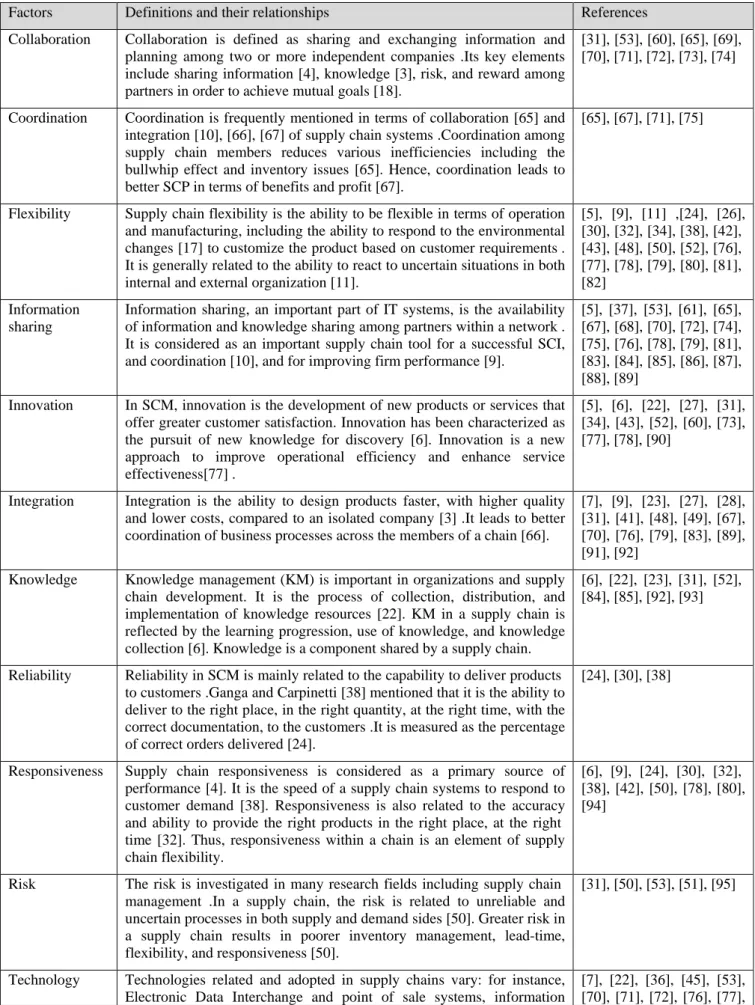
A supply chain is a large system that is influenced by many factors. Thus, its performance is driven by various factors .In the past decade, the most frequently mentioned factors are summarized in Table 2.
According to the definition provided by the previous research in Table 2, there are some factors that are closely related to each other; for instance, collaboration and coordination, and responsiveness and reliability. Since coordination is frequently mentioned in terms of collaboration [65] and integration [10], [66], [67] coordination is concerned as a sub-topic under collaboration and integration. Responsiveness and reliability are related to the capability of the firm to deliver the product with speed and accuracy [32], [38]. Thus, this can be considered as a part of supply chain flexibility.
The first is a pre-partnership phase; in which a critical factor is created by a willingness of the firm to create a higher performance to serve the customer and assist in business management without any contribution from inter-organization. The critical factors in this phase are internal integration and flexibility with supporting factors of technology and innovation.
The second phase occurs when the firm interacts to inter-organization and creates a buyer-customer relationship to achieve higher performance through the supply chain. This phase called partnership phase; it is a beginning phase of the partnership. The firms start working together to achieve a higher profitability. However, the focus of the firm in this phase is a benefit for itself.
The third phase is a post-partnership phase, which a group of firms is working together for a period of time for sharing the profit and risk together. The firms are most likely sharing the same objectives and helping each other to achieve the same goal. The knowledge and information freely flow among the partnership and strategies are developed together. The keys factors in this phase are trust and integration among the partnership to create supply chain flexibility. Trust occurs only when members of the supply chain are confident and willing to share the information together [60], [68]. Technology is concerned with an infrastructure to support the overall supply chain processes. In this phase, the firms maintain and tighten a good relationship among partners in order to achieve flexibility, responsiveness, and reliability of supply chain.
Table 2. Summarize of critical factors in supply chain management
Factors Definitions and their relationships References
Collaboration Collaboration is defined as sharing and exchanging information and planning among two or more independent companies .Its key elements include sharing information [4], knowledge [3], risk, and reward among partners in order to achieve mutual goals [18].
[31], [53], [60], [65], [69], [70], [71], [72], [73], [74]
Coordination Coordination is frequently mentioned in terms of collaboration [65] and integration [10], [66], [67] of supply chain systems .Coordination among supply chain members reduces various inefficiencies including the bullwhip effect and inventory issues [65]. Hence, coordination leads to better SCP in terms of benefits and profit [67].
[65], [67], [71], [75]
Flexibility Supply chain flexibility is the ability to be flexible in terms of operation and manufacturing, including the ability to respond to the environmental changes [17] to customize the product based on customer requirements . It is generally related to the ability to react to uncertain situations in both internal and external organization [11].
[5], [9], [11] ,[24], [26], [30], [32], [34], [38], [42], [43], [48], [50], [52], [76], [77], [78], [79], [80], [81], [82] Information sharing
Information sharing, an important part of IT systems, is the availability of information and knowledge sharing among partners within a network . It is considered as an important supply chain tool for a successful SCI, and coordination [10], and for improving firm performance [9].
[5], [37], [53], [61], [65], [67], [68], [70], [72], [74], [75], [76], [78], [79], [81], [83], [84], [85], [86], [87], [88], [89]
Innovation In SCM, innovation is the development of new products or services that offer greater customer satisfaction. Innovation has been characterized as the pursuit of new knowledge for discovery [6]. Innovation is a new approach to improve operational efficiency and enhance service effectiveness[77] .
[5], [6], [22], [27], [31], [34], [43], [52], [60], [73], [77], [78], [90]
Integration Integration is the ability to design products faster, with higher quality and lower costs, compared to an isolated company [3] .It leads to better coordination of business processes across the members of a chain [66].
[7], [9], [23], [27], [28], [31], [41], [48], [49], [67], [70], [76], [79], [83], [89], [91], [92]
Knowledge Knowledge management (KM) is important in organizations and supply chain development. It is the process of collection, distribution, and implementation of knowledge resources [22]. KM in a supply chain is reflected by the learning progression, use of knowledge, and knowledge collection [6]. Knowledge is a component shared by a supply chain.
[6], [22], [23], [31], [52], [84], [85], [92], [93]
Reliability Reliability in SCM is mainly related to the capability to deliver products to customers .Ganga and Carpinetti [38] mentioned that it is the ability to deliver to the right place, in the right quantity, at the right time, with the correct documentation, to the customers .It is measured as the percentage of correct orders delivered [24].
[24], [30], [38]
Responsiveness Supply chain responsiveness is considered as a primary source of performance [4]. It is the speed of a supply chain systems to respond to customer demand [38]. Responsiveness is also related to the accuracy and ability to provide the right products in the right place, at the right time [32]. Thus, responsiveness within a chain is an element of supply chain flexibility.
[6], [9], [24], [30], [32], [38], [42], [50], [78], [80], [94]
Risk The risk is investigated in many research fields including supply chain management .In a supply chain, the risk is related to unreliable and uncertain processes in both supply and demand sides [50]. Greater risk in a supply chain results in poorer inventory management, lead-time, flexibility, and responsiveness [50].
[31], [50], [53], [51], [95]
Technology Technologies related and adopted in supply chains vary: for instance, Electronic Data Interchange and point of sale systems, information
[7], [22], [36], [45], [53], [70], [71], [72], [76], [77],
Factors Definitions and their relationships References processing capability, information sharing [7], Enterprise Resource
Planning [72], e-procurement and e-commerce, internet and extranets [96], [97], and Radio Frequency Identification [71].
[79], [81], [83]
Trust Trust is defined as confidence and willingness among members in exchanging information with each other [60], [68]. This results in an improvement of responsiveness [60]. Trust is an essential element for sustainable development and collaboration of partners [73].
[60], [61], [68], [70], [73], [84], [92], [98]
Strategies Strategies are often considered as the primary method for operating and managing an organization. Supply chain strategies are usually dichotomized into two groups: lean/efficient supply chain strategy versus agile/responsive supply chain strategy [99]. The organizational performance is influenced by the relative strategy and developed elements to encourage the strategy [4].
[6], [9], [27], [39], [52], [49], [81], [100]
4.3 Critical phases of Supply Chain Performance
According to the research findings, SCP is influenced by many factors in supply chain systems .The factors influencing SCP are divided into three different time frames namely pre-partnership (antecedent factors), partnership, and post-partnership (descendent factors) as shown in three critical phases in Figure 6. This purposed framework is classified four aspects; supporting factors, resources, interaction, and capability of SCM. Supporting factors is an infrastructure of the supply chain while information and knowledge are referred to as the resource of the supply chain for interacting and integrating among members. Interaction plays an important role in the resource integration process and leads to the higher supply
chain capability which is considered as the ability of the firm and supply chain to respond to the demand and the environmental changes.
In the pre-partnership phase, each member of the supply chain focuses on the individual business process to respond to customer demand. The suppliers or customers are components of higher achievement at the firm level. However, when the individual firm perceives the value of partnership collaboration among members, they aim at a higher level of responsiveness, thus, creating a partnership. A partnership is a key concern for improving SCP. After members become partners, members will work together to achieve the goals of the supply chain. Then, they have the ability to create a flexible supply chain to respond to uncertain demand.
Pre-partnership phase Partnership phase Post-partnership phase
Collaboration Coordination Information sharing External integration Knowledge sharing
Technology and innovation
Risk sharing, Supply chain strategies, Trust Internal integration Flexibility Responsiveness Reliability Internal flexibility Time frame Capability Interaction Resources Effective supply chain network Supporting factors
4.3.1 Pre-partnership phase (Antecedent factors)
In the pre-partnership phase, antecedent factors are considered as sources of supply chain partnership or primary factors in SCM .The purpose of antecedent factors is to maximize organization profit with less support by inter-organization. The key factors in this phase consist of internally business approach including flexibility and integration within the organization. The main purpose of this phase is to generate profit for the organization.
4.3.1.1 Internal flexibility
Internal flexibility or agility of the firm is considered as a key factor in performance improvement, resulting in competitive advantage [14], [38], [94]. It is the ability of supply chains to adjust sourcing and production planning for optimizing operations [101]. The need for flexibility initiates from customers since they require variety, specific quality, competitive prices, and faster delivery [9]. The performance of supplier also influences on internal flexibility [102]. Thus, the firm should consider the supplier selection process since the pre-partnership phase.
Increasing the flexibility provides a better ability to respond to unpredictable events, including a variation of demand, poor manufacturing, late delivery, and supplier performance. Flexibility leads to a reduction in back orders, lost sales, and late orders [11]. Internal flexibility is all internal operations that support external flexibility [11]. Therefore, flexibility and performance of a supply chain have a positive relationship with each other because they allow firms to better respond to customer demand with less cost and time. However, flexibility requires many supporting factors such as information sharing and integration within the organization.
4.3.1.2 Internal integration
Integration supports participating firms to better identify problems and reduce the complexity of projects [3]. Internal integration is a dimension of SCI [15], [57], [58], [63], [103], [104], [105]. In this phase, the firm needs to focus on the internal integration. It is the degree of collaborative work among the business functions in a firm. It also includes linkages and relationships within a single organization. At the operational level, a goal of the collaborative work is to create better management for operating and controlling inventory [18], such as minimizing safety stock requirements and increasing information availability [4]. Internal integration supports product design, procurement, production, marketing, and distribution, in order to meet customer requirements with cost minimization and the effectiveness of the value chain [106].
4.3.2 Partnership phase
The core competency of a supply chain relies on the flow of goods, services, information, and finances among members .Thus, the essence of supply chain systems is the
relationships, interaction, and cooperation among members to achieve a mutual goal .Relationships between the members or inter-relationships have become a core consideration by many organizations that aim to create a higher responsive level in systems. A supply chain partnership allows each entity to focus on core competencies and outsource noncore activities to other entities in the supply chain [64]. Communication and interactions between members are primary activities in every supply chain system, but collaboration, integration, risk and award sharing, and trust among the members are not generally found in every supply chain system . Therefore, a closer relationship among members is a core consideration, in order to achieve higher performance [60], and faster responses for customers [1]. A close supply chain partnership results in goal sharing among firms and seamless activities. Consequently, it helps unite cooperation in supply chain systems and, hence, it increases flexibility in the management system [107]. 4.3.2.1 Collaboration and coordination
Collaboration is defined as sharing information and planning among two or more independent companies [108]. It is an expectation of a supply chain leader and followers [4]. It directly influences the formation of a supply chain partnership [67]. The key purpose of supply chain collaboration is to create competitive advantage and improve performance [3], [70], [109]. Collaboration among supply chain members allows firms to deal with uncertain demand and requirements from customers [4]. Hence, collaboration plays an important role in the success of SCM [18].
External collaboration is the relationship between suppliers and customers that generate a positive impact on process and product innovation [10]. Collaboration is achieved if the firms are able to develop themselves in terms of standard business operation and information sharing .Effective information sharing improves decision-making and supply chain efficiency [18]. IT influences successful collaboration among organizations [3]. However, the collaboration factor cannot solely improve SCP [109], [110].
4.3.2.2 Information sharing
Information sharing is concerned as a part of inter-organization collaboration and coordination [74]. Real-time information sharing among upstream and downstream in supply chain leads to optimization operation of the supply chain including minimizing lead time and bullwhip effect [15]. Generally, information sharing is frequently mentioned in inter-organization approach and considered as an issue in SCM. This is related to trust and integration among partners [10], [74]. However, when firms are willing to share information, they require an appropriate technological support for transmitting the information among partners [87]
4.3.3 Post-partnership phase (Descendent factors)
When antecedent factors are implemented among partners and a partnership was created, partners possess the ability to respond to unpredictable situations. The related factors (descendent factors) consist of flexibility and integration along with a supply chain. Descendent factors help members of a supply chain to maintain good relationships with each other. A better relationship with supply chain members means members integrate together in supply chain processes and support each other to achieve the same goals. Thus, risk sharing, supply chain strategies, and trust among members are needed to maintain and extend from partnership phase. A better relationship with supply chain partners creates more flexibility in any aspect of the supply chain and leads to SCP.
4.3.3.1 Supply chain flexibility
The definition of supply chain flexibility is “the ability of supply chain partners to restructure their operations, align their strategies, and share the responsibility, to respond rapidly to customers’ demand at each link of the chain, to produce a variety of products in the quantities, costs, and qualities that customers expect, while still maintaining high performance” [111]. Another definition of flexibility is responsiveness [10], which is defined as the availability of responsive and flexible partners in both upstream and downstream supply chains. In order to create supply chain flexibility, effective partnership and collaboration are required in both upstream and downstream supply chains [11], [14].
Flexibility results in an improvement of service performance for unpredictable customer requirements, better demand planning, inventory visibility [14], increasing customer satisfaction [112], shorter cycle time, and lower overall levels of inventory [113], eliminating bottlenecks, and creating a higher level of performance [11]. Flexibility includes the management of supply chain members, and the coordination of resources, information, and technology [14]. Due to an uncertain environment with unpredictable changes, an organization with the ability to respond and adapt itself tends to be a successful organization [111]. More flexibility and responsive systems allow an organization has the advantages in a competitive environment. However, it is a fact that cost, uncertainty, and controllability are the trade-off for creating SCF [112]. Therefore, supply chain needs to balance the flexibility among supply chain partner to create a sustainable partnership.
4.3.3.2 External integration
In supply chain studies, integration is considered as an important factor for surviving in the current economy and improving the competitiveness of supply chains [48, 67]. Supply Chain Integration (SCI) is the ability of the supply chain members to better prepare for environmental uncertainties, improve responsiveness, and create more flexibility [114]. External integration is classified into customer and supplier integrations [15], [57], [58], [63] [103], [104], [105]. Customer integration is the ability of a firm to collaborate with its key customers in terms of demand and customer requirements. The main idea of
customer integration is a close customer relationship that enables firms to respond faster to customers [9]. This leads to improved customer service, lower costs, and higher profits by closely integrating internal functions and external functions from other members [48]. Supplier integration is the ability of a firm to collaborate with the suppliers in a supply chain. Integration of a supply chain occurs when two or more independent supply chain members work together for planning and executing production [108]. SCI is a seamless operation among members within a supply chain. Integration among companies within supply chains usually leads to the highest levels of performance improvement [2], [3]. Some literature distinguishes the integration into (1) physical flows among suppliers, manufacturers, and customers, and (2) information flows within a supply chain [2], [3]. Thus, information sharing is considered as components of SCI.
Integration is also a source of partnership that is needed for companies to gain a competitive advantage [67]. This results in overall cost reduction, better quality, and dependability [109]. A high degree of integration with suppliers and customers through a supply chain contributes measurable benefits for an organization’s performance and the overall chain [2], [110]. The goal of SCI is to integrate all supply chain partners into a single network to share common goals in developing a supply chain network. Thus, a supply chain partnership directly participates in SCI [63]. SCI is also related to the efficiency and effectiveness of technology, diffusion, and adaptation through information sharing, and interdependence in a supply chain [17], [22].
4.3.3.3 Knowledge exchange
Knowledge is one of key contribution of SCP [6] [115]. It is considered as the critical resource of a firm [92]. Sharing knowledge with other members in the supply chain requires communication, information sharing, supply chain strategies, and trust among the partner [6], [31], [85], [92]. In order to build and maintain a relationship with partners, members required not only information sharing but knowledge transferring [93]. On the other hand, knowledge transfer among organization and supply chain is required trust and strong relationship with each other [116]. Explicit and tacit knowledge often lead to value creation and competitive advantage [117]. According to Borjeson, Gilek [93], the effects of both intra-organization and inter-organization depend on knowledge sharing to achieve higher SCP. Moreover, knowledge sharing often leads to better production in a supply chain [6], [31] and supports the construction of buyer-customer relationship and results in SCP improvement [85].
4.3.4 Supporting factors
Other than influential factors in three phases of supply chain development, there are other supporting factors that contribute to the success of each phase. Technology, trust, risk sharing, supply chain strategies, and innovation are critical factors for supporting the supply chain development.
4.3.4.1 Information Technology (IT)
Due to the globalization era, IT has become increasingly important [3] in all phases of supply chain development. The seamless flow of information among members results in an improvement of information visibility, communication, commitments, and cooperation. IT is related to many parts of SCM, including information/knowledge sharing, systems integration, and communication among upstream and downstream suppliers [106]. Implementation of IT creates capabilities to achieve better management in supply chain systems, creates new business model [118], supporting SCI and enabling the integration of both internal and external business functions [7], [96], [97], [106] [54].
IT is a tool to create real-time information networks among organizations and their partners to create supply chain visibility and improve productivity and customer satisfaction [96]. Moreover, IT helps suppliers and buyers to better respond to customer demand [96]. This leads to lead-time reduction and overall performance improvement with costs and inventory reductions [2], [15]. In addition, IT in a supply chain assists in transferring product ideas, product support, training aids, and technical knowledge [2]. IT plays an important role in KM as a tool for collecting, distributing and transferring knowledge. IT supports all business activities in supply chain systems in terms of speed and agility, improvement of decision-making, responsiveness, and productivity [96], [109]. Significantly, IT allows a supply chain to improve overall performance, increase responsiveness, and reduce uncertainties among members within a supply chain [110].
4.3.4.2 Innovation
Due to the improvement of the competitiveness of global supply chains, the differentiation of products, services, and/or processes in SCM is increasingly important. Innovation is the improvement or fundamental development of products, services, and processes, including a change in value activities of the organization [60]. Innovation is supported increasing organizational competitive advantage [6]. It is defined as the development and adaptation of a new idea or behavior. Supply chain innovation covers many aspects, such as novel products, services, processes, policies, and programs implemented in a supply chain system [60]. The essence of innovation is strongly influenced by the knowledge which supports the development of information and technology [6]. Coordination and collaboration among members of a supply chain are also necessary for developing innovative supply chain processes [24]. Since new processes in supply chain systems are considered as innovations that lead to an increase in mutual profits and decrease of cost [6], they are critical influential factors of SCP [27]. Companies place much attention on innovativeness since it is considered as an important linkage to organization performance improvement and sustainable development [60], [119].
4.3.4.3 Risk sharing
The study of Giannakis and Papadopoulos [95] classified risks in a supply chain into two main categories: risks that are caused by the organizations among a supply chain, and risks that are caused by the surrounding environment . Uncertainty is defined as a risk among members in supply chain processes [50]. The uncertainty influences global supply chains in managing the risk that affects SCP [69]. A goal of SCM is to manage uncertainty within a system. Hence, risk management is a major part of SCM [95]. The risk is generally interpreted as unreliability and uncertainty of a supply chain process, including the instability of the business environment. Moreover, risk causes a negative impact on inventory, lead-time, flexibility, and responsiveness [50]. Risks are also considered as a cause of supply chain disruption . Therefore, sharing risk along a supply chain significantly influences long-term commitment and supply chain partnership [18].
4.3.4.4 Supply chain strategies
The strategy is a primary concept in an organization and SCM. The study of Lin, Wang [27] defined supply chain strategy as market and resource orientations .Market orientation is related to an organization’s culture, including coordination and information sharing, systematic information collection among customers and competitors, and responsiveness to market change and competitor action .Resource orientation strategy is mainly related to the resources in supply chain systems including knowledge, organization, and physical resources. Due to the changing business environment, the strategy needs to be developed and adjusted regularly in order to maintain competitiveness and achieve a high level of customer requirements [14]. On the other hand, strategy plays an important role in a business management. Supply chain strategy is an important source of a successful alliance [14]. Strategy orientations and innovations influence the enhancement of SCP [13].By this reason, companies should focus on the relationships among members to create better processes, coordination systems, and strategic partners [27]. Hence, the collaboration, information sharing, and integration of strategies among the members are key influences for establishing value in a supply chain partnership [14].
4.3.4.5 Trust
Trust is an essential element to establish and support a partnership in SCM [16]. It is defined as the confidence of other members for collaborating and achieving a specific purpose .Trust plays an important role in collaboration, innovation capability, strategic development among partners [68], [73], and sustainability and innovation development [120]. When trust is created among members, firms are willing to exchange information and collaborate among themselves .
In order to create a high level of trust in an alliance, companies need to “do as they promise” [73]. In addition, collaboration and innovation generate a positive effect on trust in a supply chain network, which results in
performance improvement in a supply chain [60]. According to Panayides and Venus Lun [60], trust among organizations can be accomplished by the willingness to achieve the requirements of a relationship to increase mutual benefits. Moreover, an improvement in responsiveness critically affects the trust in an alliance [60] and is considered as a critical part of sustainability and collaborative partnership [73].
The core function of SCM is to response uncertain demand by managing and communicating among partnership [14], [103], [104], [105]. Supporting factors act as an important function to support core function in SCM. Those influential factors are considered as infrastructure in supply chain development. These influential factors support the development of other factors in the critical phases as shown in Figure 6. For example, technology strongly supports information sharing and communication among members in partnership phase. Moreover, technology also supports knowledge sharing among partners [96], [97].
In order to construct an effective supply chain, supporting factors should be considered as an important infrastructure besides the core function of SCM. So, they are considered as important factors for establishing a supply chain partnership.
5 Conclusion
According to the research finding, the SCP indicators are newly classified into three phases as pre-partnership, partnership, and post-partnership phases. The benefit of these three classifications is to help firms, indicating the indicators that firms should individually focus on in order to create an effective partnership. The SCP indicators involved in the pre-partnership phase are “antecedent factors”, including internal flexibility, internal integration, risk management, and strategies. These indicators are considered as sources of supply chain partnership. Once a partnership among firms is established, a tight relationship supports an improvement of the antecedent factors. In the partnership phase, the members in supply chain focus on collaboration, sharing of information, risk, and supply chain strategies. These factors should be implemented in each firm’s practices to primarily prepare it for the establishment of a partnership.
The post-partnership consists of flexibility, integration, and knowledge which are “descendent factors.” In this phase, risk, reward, and information are shared among members of a supply chain to achieve the same goals, and they will have the ability to handle any uncertainty that eventually leads them to sustainable development among themselves. They need to maintain a long-term relationship with partners to retain the competitive advantage and the ability to adjust their supply chain processes in an uncertain environment.
This study describes the supply chain terminologies for constructing a framework for developing supply chain network as three critical phases. We presented a systematic collection of key influential factors based on the knowledge accumulated during 20 years on supply chain management studies. Based on the findings, we proposed three key phases for developing supply chain partnership; (1) pre-partnership phase, (2) partnership phase, and (3) post-partnership phase. Each phase has the
different critical factors contributing to supply chain performance and partnership development. In order to create an effective supply chain network, the firms need to have internal integration and flexibility to serve other members in a supply chain. Then, collaboration and information sharing among member occur in partnership phase with the sharing of risk, strategies, and trust among members. The last phase aims to maintain the partnership of the members, the integration in term of collaboration, coordination, and information sharing are raised to achieve a higher level of external integration and knowledge sharing for achieving supply chain flexibility. Technology and innovation are significant for supply chain development in every phase.
Research findings confirm that a partnership is a core consideration in order to achieve higher performance and competitive advantage. The results can better provide the clear understanding of the influential factors and relationship for supporting strategic planning. Likewise, serving as a guideline to an individual firm to measure and manage the influential factors in supply chain network development. To create a partnership among members, every firm in the supply chain should have the same standard for managing the influential factors. Thus, the influence level of each factor and the relationship between the factors of SCP should be further identified. An empirical study on SCP shall be further conducted by applying certain measuring tools, for instance, structural equation modelling, and analytic hierarchy process.
Acknowledgement
This research was partially supported by Japan Advanced Institute of Science and Technology (JAIST), Japan, Sirindhorn International Institute of Technology (SIIT), Thammasat University, and National Electronics and Computer Technology Center (NECTEC), Thailand.
References
[1] Hea, Q., A. Ghobadian, and D. Gallear, "Knowledge acquisition in supply chain partnerships: The role of power." International Journal of Production Economics, vol. 141, pp. 605–618, 2013
[2] Zailani, S. and P. Rajagopal, "Supply chain integration and performance: US versus East Asian companies."
Supply Chain Management: An International Journal,
vol. 10, 5, pp. 379 - 393, 2005
[3] Naslund, D. and S. Williamson, "What is Management in Supply Chain Management? - A Critical Review of Definitions, Frameworks and Terminology." Journal
of Management Policy and Practice, vol. 11, 4, pp. 11
- 28, 2010
[4] Defee, C.C., T.P.T. Stank, and T. Esper, "Performance implications of transformational supply chain leadership and followership." International Journal of
Physical Distribution and Logistics Management, vol.
40, 10, pp. 763 - 791, 2010
[5] Cai, J., et al., "Improving supply chain performance management: A systematic approach to analyzing iterative KPI accomplishment." Decision Support
Systems, vol. 46, pp. 512-521, 2009
[6] Craighead, C.W., G.T.M. Hult, and D.J. Ketchen, "The effects of innovation-cost strategy, knowledge,
and action in the supply chain on firm performance."
Journal of Operations Management, vol. 27, pp.
405-421, 2009
[7] Vijayasarathy, L.R., "An investigation of moderators of the link between technology use in the supply chain and supply chain performance." Information &
Management, vol. 47, pp. 364-371, 2010
[8] Power, D., "Supply chain management integration and implementation : a literature review." Supply Chain
Management: An International Journal, vol. 10, 4, pp.
252 - 263, 2005
[9] Sukati, I., et al., "The Study of Supply Chain Management Strategy and Practices on Supply Chain Performance." Procedia - Social and Behavioral
Sciences, vol. 40, pp. 225 – 233, 2012
[10] Ibrahim, S.B. and A.A. Hamid, "Supply Chain Management Practices and Supply Chain Performance Effectiveness." International Journal of Science and
Research, vol. 3, 8, pp. 187 - 195, 2014
[11] Thoméa, A.M.T., et al., "A multi-tier study on supply chain flexibility in the automotive industry."
International Journal of Production Economics, vol.
158, pp. 91-105, 2014
[12] Zelbst, P.J., K.W.J. Green, and V.E. Sower, "Impact of supply chain linkages on supply chain performance." Industrial Management & Data
Systems, vol. 109, 5, pp. 665 - 682, 2009
[13] Yusoff, Y.B.M., H.B. Ashari, and M.N.B. Salleh, "The Impact of Supply Chain Management as Mediator between Strategic Orientations and Supply Chain Performance." International Journal of Supply
Chain Management, vol. 5, 2, pp. 2016
[14] Awais, S., A. Tipu, and K.A. Fantazy, "Supply chain strategy, flexibility, and performance: A comparative study of SMEs in Pakistan and Canada."
The International Journal of Logistics Management,
vol. 25, 2, pp. 399-416, 2014
[15] Lee, C.W., I.-W.G. Kwon, and D. Severance, "Relationship between supply chain performance and degree of linkage among supplier, internal integration, and customer." Supply Chain Management: An
International Journal, vol. 12, 6, pp. 444 - 452, 2007
[16] Ryu, I., S. So, and C. Koo, "The role of partnership in supply chain performance." Industrial
Management and Data Systems, vol. 109, 4, pp. 496 -
514, 2009
[17] Huang, M.-C., G.-F. Yen, and T.-C. Liu, "Reexamining supply chain integration and the supplier's performance relationships under uncertainty." Supply Chain Management: An International Journal, vol. 19, 1, pp. 67 - 78, 2014
[18] Min, S., et al., "Supply chain collaboration: what's happening?" The International Journal of
Logistics Management, vol. 16, 2, pp. 237 - 256, 2005
[19] Azevedo, S.G., H. Carvalho, and V. Cruz Machado, "The influence of green practices on supply chain performance: A case study approach."
Transportation Research Part E: Logistics and Transportation Review, vol. 47, pp. 850-871, 2011
[20] Olugu, E.U., K.Y. Wong, and A.M. Shaharoun, "Development of key performance measures for the automobile green supply chain." Resources,
Conservation and Recycling, vol. 55, pp. 567-579,
2011
[21] Brandenburg, M., "Supply chain efficiency, value creation and the economic crisis - An empirical assessment of the European automotive industry 2002-2010." International Journal of Production Economics, vol. 171, pp. 321-335, 2013
[22] Woolliscroft, P., et al., "Implications for optimisation of the automotive supply chain through knowledge management." Procedia CIRP, vol. 7, pp. 211-216, 2013
[23] Hasan, S.M., et al., "An integrated decision making framework for automotive product development with the supply chain." Procedia CIRP, vol. 25, pp. 10-18, 2014
[24] Hwang, Y.D., Y.C. Lin, and J. Lyu, "The performance evaluation of SCOR sourcing process - The case study of Taiwan's TFT-LCD industry."
International Journal of Production Economics, vol.
115, pp. 411-423, 2008
[25] Zhu, Q., J. Sarkis, and K. Lai, "Green supply chain management implications for "closing the loop"." Transportation Research. Part E, Logistics &
Transportation Review, vol. 44, pp. 1, 2008
[26] Xu, J., B. Li, and D. Wu, "Rough data envelopment analysis and its application to supply chain performance evaluation." International Journal
of Production Economics, vol. 122, pp. 628-638, 2009
[27] Lin, Y., Y. Wang, and C. Yu, "Investigating the drivers of the innovation in channel integration and supply chain performance: A strategy orientated perspective." International Journal of Production
Economics, vol. 127, pp. 320-332, 2010
[28] He, Y. and K.K. Lai, "Supply chain integration and service oriented transformation: Evidence from Chinese equipment manufacturers." International
Journal of Production Economics, vol. 135, pp.
791-799, 2012
[29] Dadhich, P., et al., "Developing sustainable supply chains in the UK construction industry: A case study." International Journal of Production Economics, vol. 164, pp. 271-284, 2015
[30] Wibowo, M.A. and M.N. Sholeh, "The analysis of supply chain performance measurement at construction project." Procedia Engineering, vol. 125, pp. 25-31, 2015
[31] Beske, P., A. Land, and S. Seuring, "Sustainable supply chain management practices and dynamic capabilities in the food industry: A critical analysis of the literature." International Journal of Production
Economics, vol. 152, pp. 131-143, 2014
[32] Bourlakis, M., et al., "Firm size and sustainable performance in food supply chains: Insights from Greek SMEs." International Journal of Production
Economics, vol. 152, pp. 112-130, 2014
[33] Grimm, J.H., J.S. Hofstetter, and J. Sarkis, "Critical factors for sub-supplier management: A sustainable food supply chains perspective."
International Journal of Production Economics, vol.
152, pp. 159-173, 2014
[34] Afonso, H. and M.d.R. Cabrita, "Developing a Lean Supply Chain Performance Framework in a SME: A Perspective Based on the Balanced Scorecard." Procedia Engineering, vol. 131, pp. 270-279, 2015
[35] Clivillé, V. and L. Berrah, "Overall Performance Measurement in a Supply Chain." IFAC Proceedings
Volumes, vol. 39, pp. 577-582, 2006
[36] Ducq, Y. and L. Berrah, "Supply chain performance measurement: Management models, performance indicators and interoperability." IFAC
Proceedings Volumes (IFAC-PapersOnline), vol. 13,
pp. 2053-2058, 2009
[37] Trkman, P., et al., "The impact of business analytics on supply chain performance." Decision
Support Systems, vol. 49, pp. 318-327, 2010
[38] Ganga, G.M.D. and L.C.R. Carpinetti, "A fuzzy logic approach to supply chain performance management." International Journal of Production
Economics, vol. 134, pp. 177-187, 2011
[39] Alomar, M. and Z.J. Pasek, "Linking supply chain strategy and processes to performance improvement." Procedia CIRP, vol. 17, pp. 628-634, 2014
[40] Ntabe, E.N., et al., "A systematic literature review of the supply chain operations reference ( SCOR ) model application with special attention to environmental issues." International Journal of
Production Economics, vol. 169, pp. 310-332, 2015
[41] Okongwu, U., et al., "Impact of the integration of tactical supply chain planning determinants on performance." Journal of Manufacturing Systems, vol. 38, pp. 181-194, 2016
[42] Hon, K.K.B., "Performance and Evaluation of Manufacturing Systems." CIRP Annals -
Manufacturing Technology, vol. 54, pp. 139-154,
2005
[43] Bhagwat, R. and M.K. Sharma, "Performance measurement of supply chain management: A balanced scorecard approach." Computers and
Industrial Engineering, vol. 53, pp. 43-62, 2007
[44] Ukko, J., J. Tenhunen, and H. Rantanen, "Performance measurement impacts on management and leadership: Perspectives of management and employees." International Journal of Production
Economics, vol. 110, pp. 39-51, 2007
[45] Zin, N.M., et al., "Performance Measurement and Balanced Scorecard Implementation: Case evidence of a Government-linked Company."
Procedia Economics and Finance, vol. 7, pp. 197-204,
2013
[46] Shafiee, M., F. Hosseinzadeh Lotfi, and H. Saleh, "Supply chain performance evaluation with data envelopment analysis and balanced scorecard approach." Applied Mathematical Modelling, vol. 38, pp. 5092-5112, 2014
[47] Marimin, W. Adhi, and M.A. Darmawan, "Decision Support System for Natural Rubber Supply Chain Management Performance Measurement: A Sustainable Balanced Scorecard Approach."
International Journal of Supply Chain Management,
vol. 6, 2, pp. 2017
[48] Kim, S.W., "An investigation on the direct and indirect effect of supply chain integration on firm performance." International Journal of Production
Economics, vol. 119, pp. 328-346, 2009
[49] Green, K.W., D. Whitten, and R.A. Inman, "Aligning marketing strategies throughout the supply
chain to enhance performance." Industrial Marketing
Management, vol. 41, pp. 1008-1018, 2012
[50] Avelar-Sosa, L., J.L. García-Alcaraz, and J.P. Castrellón-Torres, "The Effects of Some Risk Factors in the Supply Chains Performance: A Case of Study."
Journal of Applied Research and Technology, vol. 12,
pp. 958-968, 2014
[51] Hussain, M., M. Khan, and R. Al-Aomar, "A framework for supply chain sustainability in service industry with Confirmatory Factor Analysis."
Renewable and Sustainable Energy Reviews, vol. 55,
pp. 1-12, 2015
[52] Adel El-Baz, M., "Fuzzy performance measurement of a supply chain in manufacturing companies." Expert Systems with Applications, vol. 38, pp. 6681-6688, 2011
[53] Badea, A., et al., "Assessing Risk Factors in Collaborative Supply Chain with the Analytic Hierarchy Process (AHP)." Procedia - Social and
Behavioral Sciences, vol. 124, pp. 114-123, 2014
[54] Hamed, A.A.A., A.M. Bohar, and M. Siam, "The Impact of Supply Chain Management and Information Systems on Operational Performance: Empirical Evidence from SMEs in Saudi Arabia." International
Journal of Supply Chain Management, vol. 6, 3, pp.
2017
[55] Gallear, D., A. Ghobadian, and W. Chen, "Corporate responsibility, supply chain partnership and performance: An empirical examination."
International Journal of Production Economics, vol.
140, pp. 83–91, 2012
[56] Chang, S.-C., et al., "Achieving manufacturing flexibility through entrepreneurial orientation."
Industrial Management & Data Systems, vol. 107, 7,
pp. 997-1017, 2007
[57] Huo, B., "The impact of supply chain integration on company performance: an organizational capability perspective." Supply Chain Management: An International Journal, vol. 17, 6, pp. 596 - 610, 2012
[58] Hooshang M. Beheshti, et al., "Supply chain integration and firm performance : an empirical study of Swedish manufacturing firms." Competitiveness
Review: An International Business Journal, vol. 24, 1,
pp. 20 - 31, 2014
[59] Ku, E.C.S., W.-c. Wu, and Y.J. Chen, "The relationships among supply chain partnerships, customer orientation, and operational performance: the effect of flexibilit." Information Systems and
e-Business Management, vol. 14, pp. 415-441, 2016
[60] Panayides, P.M. and Y.H. Venus Lun, "The impact of trust on innovativeness and supply chain performance." International Journal of Production
Economics, vol. 122, pp. 35-46, 2009
[61] Abdullah, Z. and R. Musa, "The Effect of Trust and Information Sharing on Relationship Commitment in Supply Chain Management." Procedia - Social and
Behavioral Sciences, vol. 130, pp. 266-272, 2014
[62] Willis, G., S.E. Genchev, and H. Chen, "Supply chain learning , integration , and flexibility performance : an empirical study in India." The
International Journal of Logistics Management, vol.
27, 3, pp. 755 - 769, 2016
[63] Zhang, M., et al., "Innovating through services, co-creation and supplier integration: Cases from
China." International Journal of Production Economics, vol. 171, pp. 289-300, 2016
[64] Ramanathan, U. and A. Gunasekaran, "Supply chain collaboration : Impact of success in long-term partnerships." International Journal of Production
Economics, vol. 147, pp. 252-259, 2014
[65] Costantino, F., et al., "The impact of information sharing and inventory control coordination on supply chain performances." Computers & Industrial
Engineering, vol. 76, pp. 292-306, 2014
[66] Aryee, G., M.M. Naim, and C. Lalwani, "Supply chain integration using a maturity scale." Journal of
Manufacturing Technology Management, vol. 19, 5,
pp. 559 - 575, 2008
[67] Lotfi, Z., et al., "Information Sharing in Supply Chain Management." Procedia Technology, vol. 11, pp. 298 - 304, 2013
[68] Yeung, J.H.Y., et al., "The effects of trust and coercive power on supplier integration." International
Journal of Production Economics, vol. 120, pp. 66-78,
2009
[69] Meixell, M.J. and V.B. Gargeya, "Global supply chain design: A literature review and critique."
Transportation Research Part E: Logistics and Transportation Review, vol. 41, pp. 531-550, 2005
[70] Chen, M.C., T. Yang, and H.C. Li, "Evaluating the supply chain performance of IT-based inter-enterprise collaboration." Information and
Management, vol. 44, pp. 524-534, 2007
[71] Lee, J., U.S. Palekar, and W. Qualls, "Supply chain efficiency and security: Coordination for collaborative investment in technology." European
Journal of Operational Research, vol. 210, pp.
568-578, 2011
[72] Naciri, S., et al., "ERP data sharing framework using the Generic Product Model (GPM)." Expert
Systems with Applications, vol. 38, pp. 1203-1212,
2011
[73] Fawcett, S.E., S.L. Jones, and A.M. Fawcett, "Supply chain trust: The catalyst for collaborative innovation." Business Horizons, vol. 55, pp. 163-178, 2012
[74] Wu, I.L., C.H. Chuang, and C.H. Hsu, "Information sharing and collaborative behaviors in enabling supply chain performance: A social exchange perspective." International Journal of Production
Economics, vol. 148, pp. 122-132, 2014
[75] Zhang, J. and J. Chen, "Coordination of information sharing in a supply chain." International
Journal of Production Economics, vol. 143, pp.
178-187, 2013
[76] Yu, M.-M., S.-C. Ting, and M.-C. Chen, "Evaluating the cross-efficiency of information sharing in supply chains." Expert Systems with
Applications, vol. 37, pp. 2891-2897, 2010
[77] Cho, D.W., et al., "A framework for measuring the performance of service supply chain management." Computers & Industrial Engineering, vol. 62, pp. 801-818, 2012
[78] Fan, X., et al., "An evaluation model of supply Chain performances using 5DBSC and LMBP neural network algorithm." Journal of Bionic Engineering, vol. 10, pp. 383-395, 2013
[79] Acar, a.Z. and M.B. Uzunlar, "The Effects of Process Development and Information Technology on Time-based Supply Chain Performance." Procedia -
Social and Behavioral Sciences, vol. 150, pp. 744-753,
2014
[80] Bourlakis, M., et al., "Examining sustainability performance in the supply chain: The case of the Greek dairy sector." Industrial Marketing
Management, vol. 43, pp. 56-66, 2014
[81] Qrunfleh, S. and M. Tarafdar, "Supply chain information systems strategy: Impacts on supply chain performance and firm performance." International
Journal of Production Economics, vol. 147, pp.
340-350, 2014
[82] Arnold, V., et al., "Leveraging integrated information systems to enhance strategic flexibility and performance: The enabling role of enterprise risk management." International Journal of Accounting
Information Systems, vol. 19, pp. 1-16, 2015
[83] Prajogo, D. and J. Olhager, "Supply chain integration and performance: The effects of long-term relationships, information technology and sharing, and logistics integration." International Journal of
Production Economics, vol. 135, pp. 514-522, 2012
[84] Chen, D.Q., D.S. Preston, and W. Xia, "Enhancing hospital supply chain performance: A relational view and empirical test." Journal of
Operations Management, vol. 31, pp. 391-408, 2013
[85] Luo, H., S. Sha, and G.Q. Huang, "The Impact of Information and Knowledge sharing on the Buyer-supplier Relationship and Performance in Electronics Industry." IFAC Proceedings Volumes, vol. 46, pp. 1979-1984, 2013
[86] Costantino, F., et al., "The impact of information sharing on ordering policies to improve supply chain performances." Computers and Industrial Engineering, vol. 82, pp. 127-142, 2015
[87] Li, T. and H. Zhang, "Information sharing in a supply chain with a make-to-stock manufacturer."
Omega, vol. 50, pp. 115-125, 2015
[88] Marinagi, C., P. Trivellas, and P. Reklitis, "Information Quality and Supply Chain Performance: The Mediating Role of Information Sharing."
Procedia - Social and Behavioral Sciences, vol. 175,
pp. 473-479, 2015
[89] Wong, C.W.Y., K.H. Lai, and E.W.N. Bernroider, "The performance of contingencies of supply chain information integration: The roles of product and market complexity." International
Journal of Production Economics, vol. 165, pp. 1-11,
2015
[90] Chan, F.T.S., et al., "An innovative supply chain performance measurement system incorporating Research and Development (R&D) and marketing policy." Computers and Industrial Engineering, vol. 69, pp. 64-70, 2014
[91] Koçoğlu, İ., et al., "The effect of supply chain integration on information sharing:Enhancing the supply chain performance." The Proceedings of 7th
International Strategic Management Conference, vol.
24, pp. 1630-1649, 2011
[92] Ryoo, S.Y. and K.K. Kim, "The impact of knowledge complementarities on supply chain performance through knowledge exchange." Expert