博士学位論文(東京外国語大学)
Doctoral Thesis (Tokyo University of Foreign Studies)
氏 名
カテウリ アチチゲ サンドウニカ ハサンガニ
学位の種類 博士(学術)
学位記番号 博甲第 279 号 学位授与の日付 2019 年 9 月 25 日
学位授与大学 東京外国語大学
博士学位論文題目 Virtual construction of the ethnic self: An analysis of the visual framing of in-/out-group perceptions (of Sinhalese) on social media in Sri Lanka (2009-2018)
Name Kathri Achchge, Sandunika Hasangani Name of Degree Doctor of Philosophy (Humanities) Degree Number Ko-no. 279
Date September 25, 2019
Grantor Tokyo University of Foreign Studies, JAPAN Title of Doctoral
Thesis
Virtual construction of the ethnic self: An analysis of the visual framing of in-/out-group perceptions (of Sinhalese) on social media in Sri Lanka (2009-2018)
Virtual construction of the ethnic self:
An analysis of the visual framing of in-/out-group perceptions (of Sinhalese) on social media in Sri Lanka (2009-2018)
K. A. Sandunika Hasangani June 2019
Tokyo University of Foreign Studies
Dedication
To the humble people of Japan who helped me grow up academically for the past five years
Abstract
This study examines the determinants of Sinhalese ethnic self-image in the post-2009 Sri Lanka utilizing the conceptual framework of ethnocentrism-scaling both in- and out-group/s based on in-group folkways/culture/beliefs. Psychological theories of ethnocentrism assume that between-person variability (individual personality traits) determines one’s level of ethnocentrism, while sociological theories advocate various social, structural, and situational factors (i.e., resource-based competition, perceived threat, education, income). Variables like religiosity have been vaguely treated in many studies, while a few predict spurious relationship between religiosity and ethnocentrism. Given that, the present study explores the question, ‘to what extent religiosity characterizes ethnic self-image, and predicts out-group antipathy’ using publicly available images (N=2033, coded and quantified using visual-content analysis tools) on social media produced mainly by Sinhalese communities online. The present study operationalizes ethnocentrism in a three-choice multinomial logit model-ethnic pride, intolerance or neither - and employs perceived threat (material/symbolic), religiosity (own/perceived out-group) and conspiracy theories as explanatory variables. The results show, first, that Sinhalese are ethnically proud, but none of the three independent variables significantly correlate with ethnic pride. Secondly, while perceived threat accounts for the largest variance of intolerance, the other two variables show a relatively weaker (but statistically significant) effect. Thirdly, although religiosity weakly predicts intolerance, when the interaction between any two independent variables is tested, religiosity increases the salience of the other variables. However, the above findings are drawn from the images produced by communities online, and the present study acknowledges the possible gap between the ontology of online and the offline world. The study concludes that the self-image constructed by Sinhalese is not merely a ‘religious Sinhalaness,’ and religiosity is not the primary predictor of their out-group intolerance. Instead, material and symbolic threat perceptions strongly affect Sinhalese ethnic self-image, particularly their out-group intolerance.
1
Table of Contents
Acknowledgments 7
Abbreviations 8
List of tables 9
List of figures and images 10
Introduction 11
The empirical focus of the study The puzzle Overview of methodology Objectives behind the study Organization of the thesis Chapter 1 - Conceptualizing ethnic self-image: The literature review of the dichotomy of ethnic nationalism and ethnocentrism 21 1.1 Ethnocentrism and nationalism 1.1.1 Why ethnocentrism and why not ethno-nationalism
2
1.1.2 Nationalism vs ethnocentrism 1.1. 3 Ethnocentrism: Its meaning in the present study 1.2 Determinants of ethnocentrism 1.2.1 Individual level theories (personality variables) 1.2.2 Situational/socio-structural theories 1.2.3 Realistic Group Conflict Theory 1.2.4 Group-Threat Theory 1.2.5 Social Identity Theory 1.2.6 Modern Racism Theories and ‘new’ Symbolic Racism Theory
1.2.7 Material (real) and symbolic (cultural) threat 1.2.8 Religion/religiosity 1.3 Conclusion
Chapter 2 - Accounting for ethnocentrism in Sri Lanka: From the post-colonial to the post-war literature 53 2.1 A historical overview of Sri Lanka and its demography
2.1.1 Sri Lanka from pre-colonial to 2009: A chronological overview 2.1.2 Demography and ethnoreligious taxonomy of the country
2.2 Post-colonial literature and discourses of ethnic identities in Sri Lanka 2.2.1 Primordialist reading of ethnic relations in Sri Lanka
3
2.2.2 Post-Orientalist reading of ethnic relations in Sri Lanka 2.2.3 The post-colonial Sinhalaness and the civil war (1989-2009) 2.3 Ethnic relations after the war: Discourses in the post-war literature 2.3.1 The religious rationale
2.3.2 The nature of religious consciousnesses and contentions among Sinhalese and non-Sinhalese in the post-war period
2.3.3 From Aluthgama (2014) to Kandy (2018) 2.3.4 The religious rational and its gaps
2.3.5 The material rationale behind conflicts: The political economy oriented discourse
2.4 Limitations in the current literature and the hypotheses to be tested 2.5 Conclusion
Chapter 3 - Data and Methodology: The manipulation of social media data and the operationalization of variables 94
3.1 Traditional vs new media
3.2 Data used in the present study: An overview
3.2.1 The logic behind the selection of primary sources of data
3.2.2 Nature of the sample of images
3.2.3 Natural limitations of the data
4
3.2.4 Ethics behind data collection and analysis 3.3 Social media data and its social scientific validity
3.3.1 Social media: A self-image building platform
3.3.2 Social media: Its impact on humans (users) and their social life
3.3.3 Social media: Its validity in the Sri Lankan conflict
3.4 Approaches to analyzing visuals
3.4.1 Content analysis
3.5 Operationalization of variables
3.5.1 Measuring ethnocentrism: The dependent
3.5.2 Measuring independent variables
3.6 Other control variables
3.7 Multinomial Logit Model
3.8 Conclusion
Chapter 4 - Visual construction of Sinhalese ethnic self-image on social media:
A quantitative analysis of the determinants of Sinhalese ethnocentrism 147 4.1 Descriptive statistics: Everyday ethnocentrism among post-war Sinhalese 4.1.1 Depiction of armed forces and the war: Post-war militarism and memories of
war
4.1.2 Descent and caste
4.1.3 Naming the post-war Sinhalaness: Sinhalese or Sinhala-Buddhist?
5
4.2 Inferential statistics: Results based on a Multinomial Logit Model 4.2.1 Ethnocentrism and its dyadic function
4.2.2 The type of religiosity on out-group intolerance
4.2.3 Threat perceptions: Individual effect of material and symbolic threat
4.2.4 Relative importance of material threat over religiosity in the Sri Lankan context
4.3 Conclusion
Chapter 5 - A supplementary (small data) analysis of audience generated contents on social media 183
5.1 A conceptual overview of everyday ethnocentrism and social media
5.2 Big data vs small data in the social sciences and in social media-based research
5.3 Methodology of data collection and analysis
5.3.1 Narrative and discourse analysis in social media research
5.3.2 Netnography
5.3.3 An integrated approach
5.4 Vignetting the stories: Discourses of the audience
5.5 Audience-generated data and human behaviour online: An analysis
5.6 Conclusion: Implications for the future of new media
Conclusions 212
Major findings and the contribution to the current literature
6
Prospects for future research
Postscript 223 Appendices 227 Bibliography 236
7
Acknowledgments
A PhD journey is not an easy task, especially given the dedication and patience it requires while managing all the other practical issues in life. I have been lucky enough during the last five years to have some great people around me who assisted in many ways to manage many of such practical issues. In that sense, this study is a collaborative product for which I am thankful to many kindhearted people.
First of all, I must thank Professor Hideaki Shinoda, who accepted me as a graduate student in TUFS-PCS back in 2014 and continued to be my main supervisor until today and also Professor Yasushi Hazama who specifically guided me during last three years. I owe a big debt of gratitude to both of them for believing in me and making my PhD journey easier. They spent a lot of time reading many of my long drafts, discussing and giving feedback. I must note gratefully Professor Hazama’s excellent, methodical training of data analysis, which familiarized me with many of the much needed technical skills. Working with them gave me confidence, and they were a great support when I was in confusion. I am thankful to Professor Kenji Isezaki, who was always encouraging my approach to research. I am also grateful to Professor Phillip Seaton, and Ms. Etsuyo Arai from South Asia Division-IDE-JETRO, for being a part of my PhD Committee.
I must not forget Ms. Rie Ishida from the PCS office. In addition to her great help for all the academic and non-academic issues, she was a tremendous emotional help, especially during my long stay in Japan. Dileesha, Nuwanthi, Savindhi, Chathumi, Panduka, Shanya, Hinata, Emmanuel, Kimmy, Cathy, Esma, Maisha, Meryam were great friends who helped me survive my PhD and overcome not only academic issues but also personal and emotional issues. I am also very much grateful to the University of Colombo, Department of International Relations. Especially, I am thankful to Professor Nayani Melegoda, Dr. Ajith Balasooriya, and Dr. Maneesha Wanasinghe for encouraging me. I am always grateful to my family back home, the ultimate place of peace. Last but not least, I am greatly indebted to the financial assistance provided by the Government of Japan (MEXT full scholarship) over the previous five years for my graduate studies in Japan.
June 2019, Tokyo
8
Abbreviations
AME - Average Marginal Effect
AoIR - Association of Internet Researchers APT - Authoritarian Personality Theory CMC - Computer Mediate Communication GoSL - Government of Sri Lanka
LTTE - Liberation Tigers of Tamil Eelam MNLM - Multinomial Logit Model NGOs - Non-Governmental Organizations SNSs - Social Networking Sites
TRC - Telecommunication Regulatory Commission
9
List of Tables
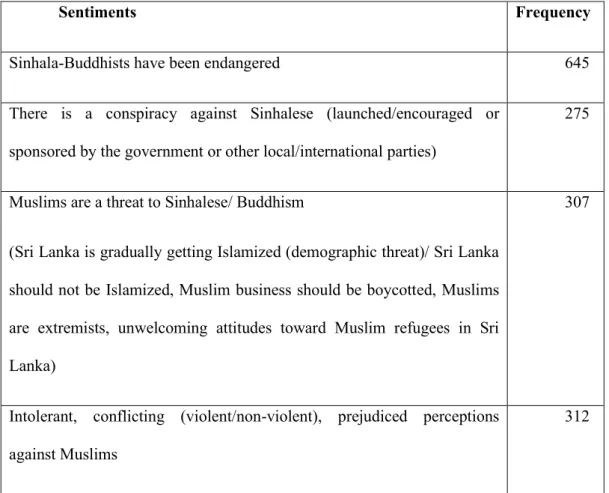
Table 1. Preliminary content analysis of in-/out-group sentiments expressed in the sample /128
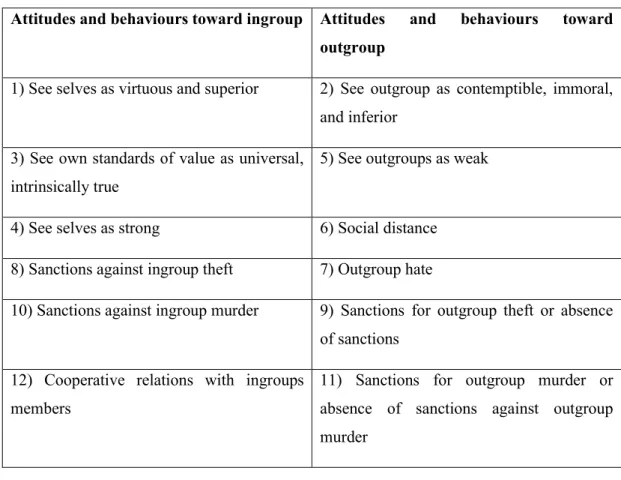
Table 2. Facets of ethnocentrism /130
Table 3. Operationalization of ethnocentrism /134
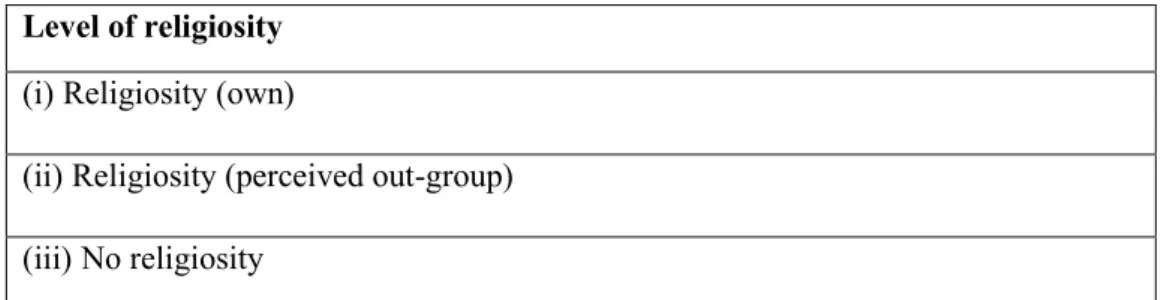
Table 4. Operationalizing the level of religiosity /138
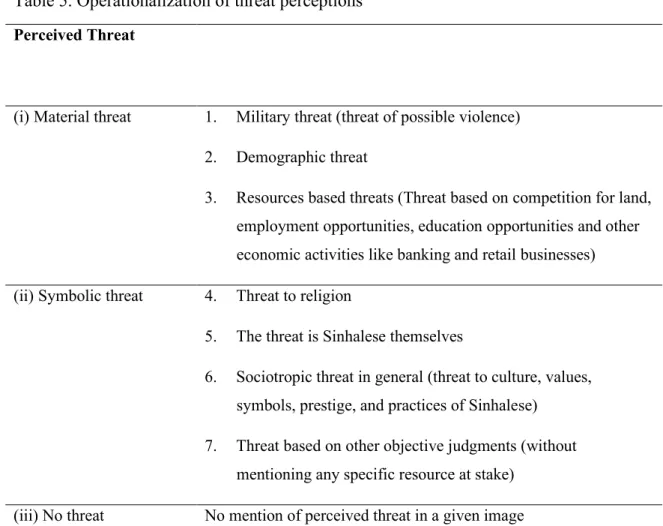
Table 5. Operationalization of threat perceptions /141
Table 6. Operationalization of conspiracy theories /143
Table 7. Multinomial Logit Estimation of Ethnocentrism: Religiosity, Threat perceptions, and Conspiracy theories /167
Table 8. Comparison of ‘small’ and ‘big’ data /187
10
List of Figures and Images
Figures
Figure 1. Taxonomy of ethnicity, religion and language in Sri Lanka /58
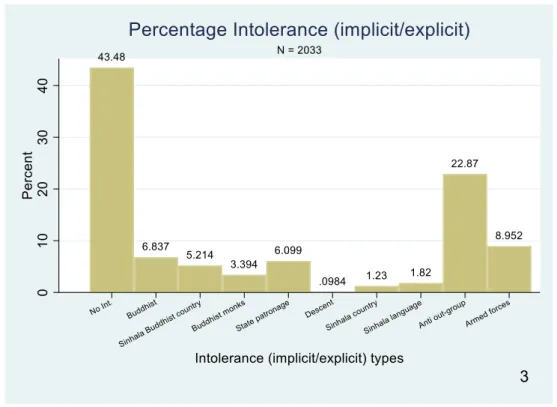
Figure 2. The popularity of major social media sites in Sri Lanka /118 Figure 3. Percentage ethnocentrism and its types /149
Figure 4. Sub-types of intolerance /151
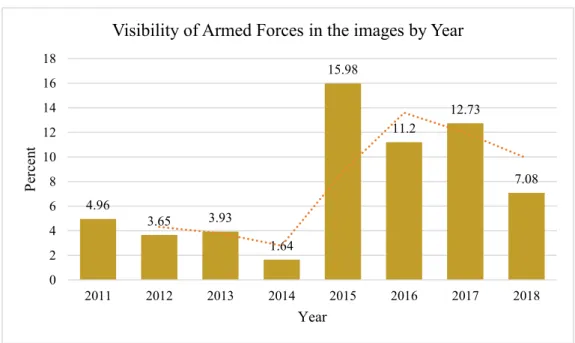
Figure 5. Distribution of the visibility of armed forces in the sample of images by year /155
Figure 6. Adjusted predictions of the interaction effect /171
Images
Image 1. Visuals on social media /101
11
Introduction
The question that is explored in this study was gradually embedded in the author’s mind due to two types of observations. First, post-war Sri Lanka can not be considered as an atmosphere with complete harmony between ethnic groups.
Instead, we observed a gradual growth of less palatable, occasionally dangerous (and violent) ethnic contentions, including the riots between some sections of Muslims and Sinhala-Buddhists, from Aluthgama riot in 2014 to the Kandy riot in 2018.1 Many of these ethnic contentions were given a ‘religious’ label that there is a recent resurgence of religiosity in Sri Lanka, and people have been easily mobilized under different religious flags and communal lines. Secondly, we witnessed a dramatic rise of the political importance of digital tools, especially social media, and the parallels between digital/virtual waves of out-group antipathy and actual/real-life waves of out-group antipathy, in the post-war context.
The focus of the present study is the second-the virtual wave of inter-communal contentions. To be more specific, the self-image/identity building efforts by ethnic groups on social media and the way it underpins in- and out-group perceptions will be academically analyzed in detail in the forthcoming chapters.
While the author accepts that all the ethnic groups in Sri Lanka (Sinhalese, Tamils
1 These two incidents and several other incidents before 2014 and after, have been discussed in the forthcoming chapters. However, it must be noted that the Easter Sunday Bombings occurred (21st of April 2019) at the very last stage of the present study. As a result, there is no reference to those in the following chapters, except for the Postscript.
12
and Muslims) are profoundly employing virtual tools like social media for various socio-political purposes, due to several practical restrictions (such as the author’s language, time and overwhelming amounts of data), the focus of the present study is limited to the way Sinhalese communities online engage in constructing their ethnic self-image on virtual spaces in the post-2009 period up until mid-2018.
However, by explicitly focusing on the virtual wave of inter-communal antipathies and group identity construction, the author does not ignore the real-life waves of ethnic relations in the post-war period. Instead, both real and virtual waves are understood as reciprocal or mutually reinforcing.
The most conventional and cumbersome interpretation of these unfolding digital and real-life waves of ethnic contentions is that increased religiosity causes out-group intolerance. How accurate is this ordinary generalization? To what extent does religion determine post-war ethnic self-image of Sinhalese and their out-group perceptions? More precisely, how can we understand the construction of in- and out-group perceptions of an ethnic group on social media? What factors determine in- and out-group perceptions online? Is it the feeling that their religion is threatened, or are there any other possible, and more critical determinants of identity construction? In the following chapters, the present study answers these questions qualitatively and quantitatively.
The empirical focus of the study
The empirical focus of this study is to examine the graphics/photos posted on social media by Sinhalese communities online who claim that, as a community
13
Sinhala-Buddhists are always under pressure from the religious fundamentalism of out-groups, various types of threats from out-groups, political misleadings, and conspiracies created by defeated terrorists/local and international actors.
Why does this study have an empirical base on social media?2 Because, during the post-2009 period, social media (mainly Facebook) became not only a simple method of private interaction, but also a social network of civic action, an informal sub-national institute beyond formal state control, in which many of the social problems have been discussed by ordinary people, and many of the small and even large scale social movements have been organized. By 2017, there were 6 million internet users and 5,500,000 Facebook accounts in Sri Lanka (Internet World Stats 2018; see also LIRNEasia 2019) and Facebook was the most popular social media platform in Sri Lanka (Colombo Digitalmarketers 2017). Also, according to the data provided by the Telecommunication Regulatory Commission (TRC) of Sri Lanka, there was a dramatic increase in mobile broadband subscriptions from 2009 onwards. In 2009, TRC recorded 91,359 mobile broadband subscriptions, and by December 2018 it had grown to 5,733,062. In addition to the mobile subscriptions, fixed broadband and narrowband subscriptions in the country, numbered 249,756 in 2009, increased up to 1,530,099 subscriptions by December 2018 (Telecommunication Regulatory Commission 2018). Appendix 1 provides detailed statistics on the growth of mobile and fixed broadband subscriptions, and also cellular mobile telephone subscriptions from 1992 to December 2018 in Sri Lanka.
2 Chapter 3 discusses the choice of primary data used in the present study in detail.
14
Given the abundance of mobile telephones, fixed and mobile broadband services in Sri Lanka, which was recorded as one of the cheapest in Asia (DailyFT 2018), that facilitated increased access to the internet, various nationalistic and religious fronts (of all ethnic groups) took the advantage of social media and made it their platform of ideology dissemination. These communities online3 not only disseminate their ideologies but also contribute to construct and re-construct ethnic identities, and also, arguably, to foster ethnic hostilities. Ontologically, the author assumes that social media reflects a near cross-section of the reality unfolding in the real (offline) world. Many of the real-life communal riots and social media waves of out-group hostilities have been parallel phenomena (i.e. blockade of social media in March 2018, by the president of Sri Lanka after a communal riot erupted in Kandy, between Sinhala-Buddhists and Muslims), and people tend to believe in and act upon what has been displayed on their Facebook ‘news feed’ on a daily basis.
The Research Questions
To what extent does ‘religion’ underpin Sinhalese ethnic self-image in post-war Sri Lanka? In other words, what defines Sinhalese self-image in the post-war context up until late 2018? Is it merely a religious self-image or is there more to it? Can we conclude that Sinhalese construct a ‘religious Sinhalaness’ in the post-war period and ‘Sinhala-Buddhism’ is the principal character or identifier of
3 Chapter 3 addresses the conceptual difference between ‘communities online’ and ‘online communities.’
15
Sinhalaness in the post-war context? Alternatively, is it just a general conclusion that needs qualifiers or specifications?
In order to answer the above questions, the present study addresses the following subordinate questions in the following chapters:
I. What are the most widely used terms to denote or conceptualize ethnic self-image in previous scholarly studies? Out of possible terms such as nationalism, ethno-nationalism, and religious-nationalism, the selection of
‘ethnocentrism’ as the central analytical framework will be justified by contrasting ethnocentrism with nationalism. The current state of knowledge on the determinants of ethnocentrism, and how religion/religiosity has been understood as a determinant of out-group perceptions or even nationalism in the previous research will be extensively discussed. The controversy, whether religion is the only determinant or are there other possible explanations of ethnocentrism and how to measure ethnocentrism and its determinants quantitatively, will also be addressed.
II. In what ways has Sinhalaness (Sinhalese ethnic self-image) been constructed over history? Previous literature on Sri Lanka, the relationship between religion and Sinhalese nationalism/ethnocentrism, and explanations about Sinhalese ethnocentrism beyond religion will be extensively addressed, specifically by paying attention to pre-war and post-war literature on Sri Lanka.
III. What are the representations of ethnocentrism in the real world and what are the possible sources of primary data, and to what extent are those sources valid and reliable? The widely used primary data sources in the previous literature will be identified in order to position the importance of the present analysis of
16
social media data to make inferences on ethnic identity. In line with that, the following questions will also be addressed - to what extent does social media become a valid, reliable and justifiable source of primary data for social scientific inquiry into ethnic identity and to what extent is such data produced by social media valid in the context of Sri Lanka?
IV. Does the religiosity of Sinhalese increase their intolerance toward non-Sinhalese? More precisely, does religiosity cause ethnocentrism and out-group intolerance? In addition to religion, are there other possible determinants of Sinhalese ethnocentrism in Sri Lanka? If so, what defines post-war Sinhalaness clearly?
Overview of methodology
The present study, as mentioned above, collects its primary data from social media platforms, and for analytical purposes, employs the tools of content analysis of visual data. In straightforward terms, images/graphics/photos circulated on Facebook (N=2033) and some audience-generated textual contents, are the primary source of data of the present study. Content analysis of images is a two-step process in the present study: First, a preliminary content analysis of the sample of images is conducted based on the ‘Grounded Theory Method’-that is, the author first seeks the natural categories emerging from the sample, instead of labeling those on a pre-developed set of categories. Secondly, with that general knowledge of the contents of the images, the author reviews the current literature that can be applied to understand the patterns of narrations, discourses and expressions,
17
exhibited in the images circulated on social media. Thirdly, based on both the preliminary content analysis and also the review of seminal literature, the author then develops a sound set of categories, sub-categories and coding rules to analyze the contents of the images. Fourthly, using a multinomial logit model, the author designs several statistical tests to draw conclusions.
In addition to the content analysis of the images, the author also conducts a supplementary qualitative discourse/narrative analysis of audience-generated textual contents. This supplementary textual analysis is designed to understand the way ordinary people interacts with the online contents produced by Sinhala-Buddhist activist/nationalist groups.
Objectives of the present study
This study aims to accomplish several objectives; some are empirical and others are theoretical. First, on an empirical basis, this study intends to contribute to the existing literature by analyzing a novel source of data-visuals produced and circulated on social media-which arguably, have not been adequately analyzed or addressed in the political science literature. In the Sri Lankan context, social media largely plays a political role in everyday life of the ordinary people and produces an enormous amount of data with high social scientific validity. Many of the current studies on Sri Lanka4 and its ethnic contentions are based on traditional sources of data such as diverse forms of traditional archives, interviews of the
4 These studies will be discussed in detail in the following chapter.
18
public and the elite, and also several anthropological studies based on ethnographic methods. Data produced on social media, especially visual data and how those depict ethnic relations, and disputes are mostly an overlooked field of study in Sri Lanka, in comparison to other conflict-driven contexts in the world. Thus, this study is an attempt to fill that empirical gap.
Beyond this empirical contribution lies a larger theoretical goal. That is to explore the causal factors behind ethnic identity formation and ethnic contentions.
The current literature theorizes the causality between religion and ethnocentrism and also between threat perceptions and ethnocentrism based on several prominent theories, such as Realistic Group Conflict Theory, and Social Identity Theory. This study tests the validity of these theories in the Sri Lankan context. Also by testing the above mentioned causal relations, the present study asks, ‘whether the post-war
‘Sinhalaness’ is fundamentally driven by ‘religion,’ and if so, to what extent, or if not, is there something beyond religion?
Organization of the thesis
Chapter 1 is an overview of the current literature on the construction of ethnic self-image (which we call ethnocentrism) and its determinants. The author reviews the main concepts and theoretical developments related to ethnocentrism and also examines the previous examples of plausible operationalization of the concept in various social contexts/ethnic communities in general.
19
In chapter 2, the author turns into the literature on Sri Lanka in particular and explores in what ways ethnocentrism and nationalism of Sinhalese and also non-Sinhalese have been historically constructed, theorized and operationalized by Sri Lankan specialists.
Chapter 3 is a comprehensive explanation of the data and the methodology used in the present study. This chapter justifies the primary sources (the logic behind inclusion/exclusion of individual Facebook pages as the primary sources of data), and the sampling method. It also reviews the social scientific validity of the data produced by social media and contextual validity of those data in the Sri Lankan context. This chapter also elaborates on the procedures of content analysis practiced in the present study, such as generating codes/categories, sub-codes and coding rules, which is technically the operationalization of concepts/theories identified by reviewing the current literature.
Chapter 4 discusses the findings of the statistical analysis of visual data.
Except for presenting some of the conclusions drawn upon descriptive statistics, the author’s main intention here is to test the collected data on a multinomial logit model (this model fits for categorical dependent variables with more than one outcome), to test the five hypotheses specified in Chapter 2.
While Chapter 4 was paying attention to the visually produced information, Chapter 5, in contrast, pays attention to the textual information, or more precisely some of the textual comments of users (the ordinary people). Thus, in Chapter 5, several randomly selected narratives/discourses unfolding on social networks will be qualitatively analyzed. However, the analysis in this chapter is merely supplementary. It does not provide any causal explanations. Instead, it recognizes
20
the strong human agency on social media and roughly sketches the way ordinary people interact as a ‘community online.’
The final chapter provides several concluding remarks, including a summary of the ontology, epistemology, and the methodology behind the present study. This concluding chapter also summarizes the research inferences and also the limitations of the present study, along with the avenues for future research.
21
1
Conceptualizing the ethnic self-image:
The literature review of the dichotomy of ethnic nationalism and ethnocentrism
Ethnic groups construct different perceptions or rather images about themselves (in-group) as well as others (out-group), and in social sciences, such constructions are given different labels. This process of self-image5 construction does not take place in isolation, but it is essentially a societal and relational process, and as a result, a group not only develops certain consensual beliefs of themselves, but also about out-groups. Thus, a self-image of an ethnic group is not only about what they think of themselves but also of what they think about others. Also, a self-image of a group of people could be multidimensional, may manifest in different forms and most importantly it is time and context specific. An ethnic group might possess multiple self-images, depending on the out-group/s they interact with and also depending on the circumstances they face. In other words, Sinhalese self-image fifty years ago must be drastically different from its current manifestation. Even at
5 ‘Ethnic self-image’ or simply ‘self-image’ has been interchangeably used with the term ‘ethnic identity’ in this study. The author prefers the term ‘self-image’ over ‘identity’ due to its relatively less abstract nature.
22
present, arguably, Sinhalese may maintain different self-images in different domains simultaneously.
Nationalism, ethno-nationalism, and ethnocentrism are popular concepts widely utilized in the literature to label certain ethnic groups (including ethnicities in Sri Lanka). Due to some of the inbuilt complexities (discussed below), this study avoids employing concepts such as nationalism and ethno-nationalism, instead utilizes ethnocentrism as the central conceptual frame to operationalize the range of consensual beliefs constructed by post-war Sinhalese (about themselves and others) in Sri Lanka. Subsections below define ethnocentrism, the dependent variable of this study, justify its suitability and contrast it with the concepts of nationalism and ethno-nationalism. Moreover, the chapter also focuses on the determinants of ethnocentrism, its psychological and socio-structural basis.
1.1 Ethnocentrism and nationalism
The fulcrum of this study is the concept of ethnocentrism, the dependent variable, which will be used to label the self-image of post-war Sinhalese people. Sumner first introduced the concept of ethnocentrism (1906/1959), and in his own words ethnocentrism is:
The technical name for this view of things in which one’s own group is the center of everything, and all others are scaled and rated with reference to it. Folkways correspond to it to cover both the inner and the outer relation. Each group nourishes its own pride and vanity,
23
boasts itself superior, exalts its own divinities, and looks with contempt on outsiders. Each group thinks its own folkways the only right ones, and if it observes that other groups have other folkways, these excite its scorn. Opprobrious epithets are derived from these differences. […] For our present purpose the most important fact is that ethnocentrism leads people to exaggerate and intensify everything in their own folkways which is peculiar and which differentiates them from others. It therefore strengthens the folkways (Sumner 1906/1959:13).
Later, LeVine and Campbell (1972) conducted an experimental study on ethnocentrism, and they provided further clarifications to what Sumner defined as ethnocentrism. In LeVine and Campbell’s usage of ethnocentrism, the term refers to “both the ingroup-outgroup polarization of hostility and the self-centered scaling of all values in terms of the ingroup folkways” (1972:8). As LeVine and Campbell identified, Sumner’s theory of ethnocentrism has three main facets. First, Sumner identified a number of attributes of social life and hypothesizes that these go together as a syndrome. Secondly, he also posited that this syndrome of ethnocentrism is functionally related to group formation and intergroup competition (which LeVine and Campbell later developed as Realistic Group Conflict Theory, and discussed below), and thirdly Sumner generalized that all groups show this syndrome (LeVine and Campbell 1972:8). Later, based on Sumner’s categories as well as on other discussions, LeVine and Campbell produced 23 distinct facets of ethnocentrism. They divided the 23 facets into two main sections as ‘attitudes and behaviors toward ingroup’ and ‘attitudes and behaviors toward outgroup’ (see LeVine and Campbell 1972:12-20). The author
24
further elaborates the 23 facets in Chapter 3 under the operationalization of variables.
Another vital contribution to the concept of ethnocentrism made by LeVine and Campbell (1972) was their elaboration on the types of correlational analysis that can be conducted based on ethnocentrism. “Ethnocentrism can be studied comparatively at several levels of variation: (1) across the cultural groups of the world (2) among the groups of a given region (3) among the diverse outgroup attitudes and relations of a given ingroup (4) across dyadic units of intergroup relationship, that is, two groups considered in relation to each other” by LeVine and Campbell (1972:23-24). The present study associates more with the third and fourth category mentioned above.
Given that, it is necessary to justify the reasons why ethnocentrism is utilized as the central analytical framework rather than other possible concepts such as nationalism or ethno-nationalism? The following section first justifies the choice of ethnocentrism over nationalism and secondly moves on to define the concept in more detail.
1.1.1 Why ethnocentrism and why not nationalism or ethno-nationalism?
The two concepts, ethnocentrism and nationalism, are not identical but partially overlapping. As Sumner (1906/1959) defines, ethnocentrism is “the technical name for this view of things in which one’s own group is the center of everything, and all others are scaled and rated with reference to it.” Definitions of
25
nationalism, on the other hand, are quite commonplace, and below the author defines nationalism and its explicit meanings to illustrate why ethnocentrism is preferred in the present study over nationalism.
Acknowledging the fact that nationalism is a state of mind of human beings and firmly rooted in the human behaviors (Shafer 1972), it is also strongly considered as a political doctrine of self-determination (Spencer et al.
1990:283-300; Ahmed 1998:4-7). Ernest Gellner, one of the prominent scholars of nationalism, in Nations and Nationalism states that nationalism is primarily a political principle, which holds that the political and national unit should be congruent (Gellner 1983:1).
Nationalism as a sentiment, or as a movement, can best be defined in terms of this principle. Nationalist sentiment is the feeling of anger aroused by the violation of the principle, or the feeling of satisfaction aroused by its fulfillment. A nationalist movement is one actuated by a sentiment of this kind (Gellner 1983:1).
Gellner’s use of nationalism is synonymous with an ethnic group. As he further explains, “[I]n brief, nationalism is a theory of political legitimacy, which requires that ethnic boundaries should not cut across political ones” (Gellner 1983:1). What Benedict Anderson (1983) argues in Imagined Communities is also compatible with Gellner’s above articulation.
Anderson’s perspective is largely compatible with Gellner’s. Both stress that nations and ideological constructions seeking to forge a link between the (self-defined) cultural group and state, and that they create abstract
26
communities of a different order from those dynastic states or kinship-based communities which pre-dated them (Eriksen 1993:100).
Gellner’s above understanding/definition of nationalism has been adapted as their working definition by some of the later prominent scholars of nationalism such as Hobsbawm (1990:9) and Breuilly (1993). Brass also associates nationalism with ethnicity and believes that both are connected in modern state formation (Brass 1991). However, Eriksen (1993:99), referring to Gellner’s above understanding of nationalism, states that the link between ethnicity and state constructed by Gellner is peculiar. “In other words, nationalism, the way the term is used by Gellner and other contemporary social scientists, refers to a peculiar link between ethnicity and the state. Nationalisms are, in this view, ethnic ideologies which hold that their group should dominate a state. A nation-state, therefore, is a state dominated by an ethnic group, whose markers of identity (such as language or religion) are frequently embedded in its official symbolism and legislation”
(Eriksen 1993:99).
Based on the above definitions, nationalism itself is a political instrument, in which the fundamental aspiration is self-determination for a particular community. Referring to the South Asian context and particularly to Sri Lanka, Spencer et al. state that, nationalism is understood with the assumption that people are naturally divisible into different kinds-also known as nations- and ideally each kind should have the responsibility for its own governance (Spencer et al.
1990:283-300). In this study, nationalism is understood as:
[A] sense of belonging to a particular ‘nation’ with a common origin, wanting to keep that origin, wanting to keep that ‘nation’ as pure as
27
possible, and desiring to establish and/or maintain a separate and independent state for that particular nation (Dekker et al. 2003:347).
In other words, nationalism is employed in the present study with its simplest political meaning of self-determination.
However, the most critical question to be asked about “nationalism” is whether the term distinguishes loyalty to a nation-state from loyalty to a group?
(Dyrstad 2012:818). Much of the literature remains fuzzy about this and one possible solution is to use the term ethno-nationalism rather than nationalism alone.
Ethno-nationalism refers to the “desire to keep the (ethnic) nation homogeneous and separated from other groups, where loyalty to the group is stronger than loyalty to the state” (Dyrstad 2012:818). According to Dyrstad, ethno-nationalism is a concept based on out-group evaluations such as negative stereotyping, in-group favoritism, out-group discrimination, and social distance (Dyrstad 2012:818).
Eriksen, in Ethnicity and Nationalism, uses the term ethno-nationalism to refer to the groups who are short of having a state but have more substantial characteristics in common with nations who claim that its members should have the right to their own nation-state or self-determination and should not be ruled by others (Eriksen 1993:13-14). According to his own words,
Proto-nations [or] so-called ethnonationalist movements…includes Kurds, Sikhs, Palestinians and Sri Lankan Tamils. These groups have political leaders who claim that they are entitled to their own nation-state and should not be ruled by others. These groups, short of having a nation-state, may be said to have more substantial characteristics in
28
common with nations than with urban minorities or indigenous groups.
According to the common terminology, they are ‘nations without a state’
(Eriksen 1993:13-14).
Given the meanings of nationalism and ethno-nationalism, it is also necessary to compare nationalism with ethnocentrism, in order to justify the author’s preference for ethnocentrism over nationalism in the present study. The following section brings out the conceptual contrast between nationalism and ethnocentrism. In the following chapters (Chapter 2, 4 and 5), based on empirical evidence particularly from Sri Lanka, the author further argues why ethnocentrism fits better as the central conceptual framework than nationalism, especially given the social media focus of the present study.
1.1.2 Nationalism vs. Ethnocentrism
When it comes to the difference between ethnocentrism and nationalism, Rosenblatt’s following explanation is quite comprehensive:
Nationalism and ethnocentrism are similar in the sense that they both usually involve positive attitudes towards an in-group and negative attitude towards some or all out-groups. They do not overlap completely.
Nationalism, more often than ethnocentrism, involves loyalty to a politically distinct entity, membership in an elaborately organized and relatively popular social grouping, adherence to a formalized ideology,
29
and performance of relatively stereotyped allegiance-expressing behaviour (Rosenblatt 131:1964).
In that sense, ethnocentrism and nationalism/ethno-nationalism are two different phenomena that have different characteristics. The main difference between nationalism/ethno-nationalism and ethnocentrism is the high emphasis on
‘self-determination’ in the former and relatively less or no emphasis of it in the latter. In other words, mere ethnic consciousness cannot always be conceptualized as ‘nationalism’ if there is no explicit quest for ‘self-determination,’ yet ethnic consciousness can be termed as ethnocentrism quite conveniently. This is what Rosenblatt (1964) empathized above as “loyalty to a politically distinct entity,”
referring to nationalism, which is arguably not central in ethnocentrism.
Thus, the central argument put forward by the author here is that nationalism alone is not appropriate as the central conceptual framework for the analysis of ideas expressed in a platform like social media/Facebook, which constitutes of a variety of expressions of ordinary people that go beyond mere references to political self-determination. Ordinary people could possess the idea of self-determination (which is synonymously identified as ethnic nationalism in the present study), based on what they have experienced or what they have heard, read or learned about the history of their state, or their ethnic group. At the same time, the same people could express ethnic-consciousness with no reference to ethnic-nationalism (self-determination). Thus, ethnic nationalism and ethnic consciousness are not the same, and in order to avoid the narrower focus of the concept of nationalism, the present study prefers ethnocentrism. Nationalism, on the other hand is one of the many constituting factors of ethnocentrism, but not the only one. Preferring ethnonationalism is due to the author’s empirical
30
understanding of complex ideas expressed by people on their ethnic self-image on social media, specifically in the Sri Lankan context. How Sinhalese people classify their own identity in multiple terms and how nationalism is one of many constructs of Sinhalese ethnic self-image will be discussed in detail in the following chapters, based on the primary data collected for the present study.
1.1.3 Ethnocentrism: Its meaning in the present study
Ethnocentrism6 is thus a more general term, unlike nationalism or ethno-nationalism which are strictly functioning around self-determination. In this study, ethnocentrism is understood as a combination of favorable attitude toward the ethnic in-group and an unfavorable attitude toward the ethnic out-groups (Coenders & Scheepers 313:2003; Adorno et al. 102:1950).7 Also it is understood as a method of scaling/judging out-group members based on in-group ‘folkways’
as Sumner articulated. In other words, humans are ethnocentric in their everyday life when they use their cultural background, values, beliefs, or religious affiliation to judge or to make comparisons between the ‘self’ and the ‘other.’ This sort of thinking could be harmless on certain occasions, but it could be harmful too. Thus
6 At this point, it is also necessary to distinguish ethnocentrism from closely associated terms such as prejudice and stereotyping. Prejudice is “an antipathy based on faulty and inflexible generalization” (Allport 9:1954) directed at out-groups, and stereotypes are “the typical picture that comes to mind when thinking about a particular social group” (Lippman 1922). The traditional concept of ethnocentrism differs from prejudice because “[p]rejudice is commonly regarded as a feeling of dislike against a specific group;
ethnocentrism, on the other hand, refers to a relatively consistent frame of mind concerning ‘aliens’
generally. … Ethnocentrism refers to group relations generally; it has to do not only with numerous groups toward which the individual has hostile opinions and attitudes, but equally important, with groups towards which he is positively disposed” (Adorno et al. 102:1950, emphasis added).
7 Some other scholars use the term ‘ethnocentrism’ to mean in-group favoritism only, and for out-group hostility, they use ‘xenophobia’ (Hammond & Axelrod 2006:927). Forbes (1997) defines ethnocentrism as a balance between dislike of out-groups and identification with in-group, yet, strongly states that ethnocentrism avoids strong connotations of xenophobia (Forbes 1997:159).
31
ethnocentrism does not connote a completely positive or a negative picture of a certain group of people. For instance, possessing positive attitudes about one’s own identity/group does not necessarily yield a negative impact on other groups.
Some of the claims of post-war Sinhalese contain nationalistic imprint without controversy, but their claims are not limited to that. It is not only about their ownership/stake of the country, but also about various other socio-structural and psychological evaluations of both in- and out-group/s which we refer to as Sinhalese ethnocentrism. In other words, this study argues that the post-war ethnic self-image of Sinhalese is ‘ethnocentric’ rather than simply labeling it as Sinhala nationalism or Sinhala-Buddhist nationalism. Such nationalistic sentiments are merely one component of Sinhalese ethnocentrism.
In addition to that, there is an established literature on ethnocentrism explaining how it varies upon psychological motivations of individuals or personality differences between individuals, such as personality traits like authoritarianism (Allport 1954; Adorno et al. 1950), frustration and aggression, negative stereotyping, and in-group favoritism. On the other hand, ethnocentrism also refers to the importance of social or structural currents such as group competition for resources or group-based social hierarchy and oppression (Sidanius
& Pratto 1999; Sidanius et al. 2004) that are essentially beyond individual personality differences.
Adorno et al. in The Authoritarian Personality emphasize the fact that ethnocentrism is “a tendency in the individual to be ‘ethnically centered,’ to be rigid in his acceptance of the culturally ‘alike’ and in his rejection of the ‘unlike’”
(102:1950), and it “refers to group relations generally” (Adorno et al. 102:1950).
32
What Adorno et al. argue is that ethnocentrism is principally an individual characteristic, yet shaped by socialization and distally by culture (Leyens &
Demoulin 194:2010). Thus, in the present study, ethnocentrism is not merely considered as a concept that refers to psychological motivations of individuals or a
‘personality syndrome’ (Sumner 1906; LeVine & Campbell 1972), but it is also about inter-group relations, and other social structural elicits (Hammond &
Axelrod 2006:927). This elasticity of the concept allows not only psychologists but also political scientists and sociologists to adapt the concepts in their research agendas.
Furthermore, Rosenblatt (1964) compiles some of the recurrent hypotheses on ethnocentrism (inspired by Sumner’s early work). Some of such are mentioned below, assuming that such tested propositions are a better way to understand the concept itself, though these will not be tested in this study. 1). The greater the group nationalism and ethnocentrism, the greater is the group homogeneity of attitude, beliefs, language spoken, and ways of behaving, the greater is the group cohesiveness, and the greater are the pressures for homogeneity and cohesiveness.
2). Nationalism and ethnocentrism tend to produce reductions in intragroup social disorganization. 3). Intragroup hostilities, crime rates, and suicide rates drop following an increase in ethnocentrism or nationalism (LeVine & Campbell 1972:21).
At this point, it should be noted that in the following sections and chapters, the author interchangeably uses the terms Sinhalese ethnic self-image, Sinhalaness, Sinhalese ethnocentrism, or everyday ethnocentrism referring to the multiple, overarching constituents of Sinhalese identity which is not limited to nationalistic/self-determination ideology. The idea of ‘everyday’ ethnocentrism is
33
specifically utilized to indicate the strong human agency in identity construction on social media platforms. On social media, what we see are the expressions of ordinary people, and their definition of their own ethnic image, which can be best referred to as ‘everyday’ ethnocentrism. Unless otherwise specified, when the author uses terms such as Sinhalese nationalism, Sinhala-Buddhist nationalism or Buddhist nationalism, that necessarily indicates the intention of self-determination of Sinhalese or Sinhala-Buddhists.
1.2 Determinants of ethnocentrism
What determines ethnocentrism? Is it merely pathological and does it solely depend on individual-level personality differences (between-person variability) or could it be explained by group-level structural and situational factors? Sub-sections below revolves around this central question. Personality vs.
social-structural/situational hypotheses argue in two different directions.
Proponents of personality variables hypothesize that a group of people under consideration are ethnocentric since that group has more people with individual characteristics that associate with ethnocentrism, such as authoritarian personality, specific individual values, anxieties, less education or affiliations with religious fundamentalism. In contrast, proponents of socio-structural/situational variables hypothesize that other characteristics, specific to the given situation or the contexts, such as patterns of intergroup contact, culture, competition, and network diversity overwhelm the above mentioned individual-level variables and affect ethnocentrism. In other words, even if two given situations were to have identical
34
populations, they could have different average levels of ethnocentrism, as a result of their different situational bases (Moor and Ovadia 2006:2206; Labovitz &
Hagedorn 1975:445).
Is the variance of out-group perceptions largely a function of socio-structural/situational factors or does it depend upon the individual’s personality? While some scholars recognize that personality-based factors have been largely downplayed by the scholars who study situational variables, such as intergroup contact (Hodson et al. 2017), others acknowledge that the effect of situational factors in shaping out-group perceptions and political behavior may be contingent on individual-level predispositions (Mondak et al. 2010). The present study posits that ethnocentrism (scaling out-groups based on in-group folkways), has both an individual-psychological basis as well as a socio-structural basis.
Following subsections provide a conceptual overview of both genres in detail.
1.2.1 Individual-level theories (personality variables)
The most fundamental assumption behind personality variables or individual level theories is that between-person variability is imperative when understanding social phenomena like ethnocentrism, racism, discrimination or violence. In other words, some people are naturally more racist, some have more violent personality than others who are naturally or biologically peaceful irrespective of their group affiliations. Personality refers to “a multifaceted, enduring, internal psychological structure” (Mondak et al. 2010:86). Several psychological theories focus on the internal processes of individuals as the critical
35
underpinnings of ethnocentrism, racism, and stereotyping. These psychological approaches focus on personality dynamics, basic values of individuals, anxieties, and beliefs, and the level of information processing (Sidanius and Pratto 1999:5).
Freudian Psychodynamic Theory, Frustration-Aggression Hypothesis (Dollard et al.1939), and most importantly Authoritarian Personality Theory (APT) (Adorno et al. 1950) are highly influential psychological theories that have dominated scholarly work until today. According to the Frustration-Aggression Hypothesis, aggression, that is, the intention to deliberately harm others, results from the individual’s frustration at not achieving highly desired goals. What Dollard and others find is that if the source of frustration is an influential person or institution (i.e., one’s boss) it is dangerous to express aggression toward such powerful entity, so people often turn their anger against less powerful others (Sidanius & Pratto 1999:5).
In The Authoritarian Personality, Adorno et al. (1950) introduce APT.
They say that there is a personality syndrome labeled authoritarianism, unifying individuals’ social, economic, and political convictions.
As a psychodynamic theory, APT theorized that authoritarianism resulted from child-rearing practices that humiliated and deprecated the child and predicted parental affection on the child’s immediate and unquestioning obedience to the parent. This kind of subjugating environment was thought to predispose children toward thinking of human relations in terms of dominance and submission and to teach a particular orientation toward hierarchy: the verification of those thought of as weak, humane, or deviate (e.g., ethnic minorities) and the
36
glorification of those perceived to be strong and powerful. As such authoritarians were hypothesized to hold conservative economic and political views, and also be generally xenophobic, racist, and ethnocentric (Sidanius & Pratto 1999:6).
Despite the dominance of APT, it has also been criticized for various reasons such as the attitude scales it utilizes are subjected to measurement and ideological bias (Sidanius & Pratto 1999:6). More recently, Altemeyer (1998; 2008) develops twenty-two criteria to measure between-person variability of Right-Wing Authoritarianism (RWA), which is commonly known as the RWA scale. RWA constitutes of conventionality, traditionalism, and willingness to aggress against norm violators (Hodson et al. 2017:9). Some of the statements in the RWA scale to which respondents have to react are:
1. The established authorities generally turn out to be right about things while the radicals and protesters are usually just “loudmouths” showing of their ignorance; 2. Women should have to promise to obey their husbands when they get married; 3. Our country desperately needs a mighty leader who will do what has to be done to destroy the radical new ways and sinfulness that are ruining us (Altemeyer 2008:11).
In summary, all these theories emphasize the fact that human personality traits matters in politics or out-group perception. While human personality is not entirely redundant, believing solely in the between-person variability of political outcomes such as out-group tolerance/intolerance connotes a primordialist or essentialist assumption that ethnocentrism, racism or violence are necessarily biological givens. In other words, the reason why some groups are more
37
ethnocentric or more violent than others who are more peaceful is due to what they inherit from biology.
Many scholars have contested this solely psychological orientation.
Scholars such as Abel (1941), White (1949), and Faris (1962) note the inadequacy and irrelevancy of psychological-level explanations (LeVine and Campbell 1972:25). As White points out, “warfare is a struggle between social organisms, not individuals. Its explanation is therefore social or cultural, not psychological”
(White 1949:132). Mondak et al. articulate, “personality is to a substantial extent rooted in biology, but the expression of personality effects will typically be situational, such as via personality × environment interactions” (Mondak et al.
2010:87). According to Faris,
[…]many prominent and influential investigators of intergroup interaction made an early choice of the wrong path in seeking the explanations in the processes of individual psychology and psychoanalysis…Part of the difficulty appears to lie in defects of knowledge and theory in the above fields, but the more important part stems from failure to recognize the nature of collective processes (Faris 1962:43).
The present study, due to natural limitations emerging from its data, does not test/include personality variables in the statistical analysis. Natural limitations of the data refer to the nature of observations. That is, the present study observes data generated on social media that appear in visual and textual format, and those data are not directly collected from human subjects/ respondents. Personality tests can be only conducted if human subjects are involved in the research.
38
1.2.2 Situational/socio-structural theories
In addition to the individual-level, psychological theories, exists the group-level, structural theories of ethnocentrism. Structural theories highlight that structural conditions, such as levels of direct competition and threat, in particular, influence people’s attitudes towards out-groups (Kunovich & Hodson 187:2002).
Allport is one of earliest to mention the structural base of out-group perceptions, and the following statement provides a clear idea of what he (Allport) means by the terms ‘situational’ or ‘structural.’
Prejudiced personalities will be more numerous in times and in places where the following conditions prevail: where the social structure is marked by heterogeneity, where vertical mobility is permitted, where rapid social change is in progress, where there are ignorance and barriers to communication, where the size of a minority group is large or increasing, where direct competition and realistic threat exists, where exploitation sustains important interests in the community, where customs regulating aggression are favourable to bigotry, where traditional justifications for ethnocentrism are available, where neither assimilation nor cultural pluralism is favoured (Allport 221:1954).
Allport provides a clear picture of several situational or structural conditions that can affect the variance of ethnocentrism, out-group antipathy and also overall peace between groups, such as the level of homogeneity or
39
heterogeneity of the society, size of the minority group/s, realistic threats, and competition. Forthcoming sections provide a more detailed explanation of some of the major theories that address above structural/situational factors.
1.2.3 Realistic Group Conflict Theory
Scholars such as Morton Deutsch (1949) and Muzafer Sherif (1966) pioneered the experimental research on intergroup relations emphasizing group rather than individual and psychological variables. However, Realistic Group Conflict Theory was first introduced by Campbell (1965:287,291; cf. LeVine and Campbell 1972:29-42). As stated by LeVine and Campbell, the theory “assumes that group conflicts are rational in the sense that groups do have incompatible goals and are in competition for scarce resources. Such ‘realistic’ sources of group conflict are contrasted with the psychological theories…” (LeVine and Campbell 1972:29). Some of the major assumptions of Realistic Group Conflict Theory put forward by LeVine and Campbell are as follows:
Real conflict of group-interests causes intergroup conflict;
Real conflict of interest, overt, active or past intergroup conflict, and/or presence of hostile, threatening, and competitive outgroup neighbors, which collectively may be called real threat, cause perception of threat;
Real threat causes hostility to the source of threat;
Real threat cause ingroup solidarity;
Real threat cause increased awareness of own ingroup identity;
40
Real threat increases the tightness of group boundaries;
Real threat reduces the defection from the group;
Real threat increases ethnocentrism;
The weakest group in a local cluster should be the most ethnocentric;
Those groups with the most movable wealth will be most ethnocentric;
Those groups most isolated from their outgroups will be least ethnocentric;
The strongest and most threatening outgroup should be the target of the most ethnocentric hostility from the ingroup;
False perceptions of threat from outgroups cause increased ingroup solidarity and outgroup hostility (See LeVine and Campbell 1972:29-42).
Above are a sample of assumptions introduced by LeVine and Campbell 1972).
However, by looking at the above assumptions, several fundamental elements of Realistic Group Conflict Theory can be seen. That is, the theory emphasizes that real groups exist, with a shared identity and shared fate, and real threat also exist based on zero-sum competition over resources. They identify ‘false perceptions of threat’ as an opportunistic exploitation of the major principle of Realistic Group Conflict Theory and retain it as one of the assumptions.
As summarized by Campbell (1965):
The perception that one group’s gain is another’s loss translates into to perceptions of group threat, which in turn cause prejudice against the outgroup, negative stereotyping of the outgroup, ingroup solidarity,
41
awareness of ingroup identity, and internal cohesion, including intolerance of ingroup deviants, ethnocentrism, use of group boundary markers, and discriminatory behaviour (Sidanius & Pratto 1999:17).
‘Threat perceptions’ and ‘resources stress/competition for scarce resources’
are two repeatedly used terms in Realistic Group Conflict Theory. Groups are more greedy and exploitative than are individuals (Insko et al. 2001), and group competition for resources leads to efforts to reduce the access of other groups to resources (Campbell 1965; Sherif 1966; Sherif et al. 1961). The origin of out-group threat perception and competition for resources are thus related. The same argument has been put forward by Gibson who notes that “one of the strongest predictors of inter-group intolerance is that a group is threatening”
(Gibson 2007/ 2011:418).
Realistic Group Conflict Theory has also been considered insufficient to explain inter-group relations on several grounds. First, as Sidanius & Pratto (1999) suggest, while the two conditions of Realistic Group Conflict Theory (first that real groups actually exists and have a shared identity and shared fate. Second, it is assumed that the groups believe themselves to be in zero-sum competition over valued resources), are “certainly sufficient to produce discrimination and prejudice, [but] they are by no means necessary” (Sidanius & Pratto 1999:17). In other words, there could be other reasons beyond threat perceptions or ‘realistic threats’ which might cause inter-group hostilities. Such concerns have been addressed by some of the parallel theories such as Social Identity Theory and Modern Racism Theory,8 as introduced below.
8 See Sidanius & Pratto (1999:16)
42
1.2.4 Group-Threat Theory
‘Group-Threat Theory,’ another structural theory of inter-group relations introduced by Blumer (1958) and Blalock (1967), suggests that a sizable minority population living near the dominant group leads to economic and/or political threat (Blumer 1958; Blalock 1967). Group-Threat theory is very similar to Realistic Group Conflict Theory (Kunovich and Hodson 2002:189). Based on Group-Threat Theory, Quillian argues that “collective threat is a function of two factors: the numerical size of the subordinate group relative to the dominant group, and economic circumstances. This group-threat theory conceptualizes prejudice as a largely collective phenomenon in which individual attitudes are crucially affected by intergroup relations” (Quillian 1995:586). Ethnic Competition Theories9 as well as Ethnic Segregation Theories10 are also quite related to or complementary to the Realistic Group Conflict Theory and Group-Threat Theory in their focus on
‘competition’ and ‘structural base’ of intergroup relations.
1.2.5 Social Identity Theory
9 Ethnic Competition Theory is a reaction to the failure of modernization theory, which predicted that ethnic distinctions would disappear with industrialization. Ethnic competition theories argue that modernization promotes competition along ethnic lines and increased competition leads to ethnic political mobilization and conflict (Kunivich & Hodson 190:2002).
10 Ethnic Segregation Theory is also a reaction to the failure of modernization theory, that argues that modernization promotes ethnic segregation and inequality that, in turn, lead to ethnic solidarity, ethnic political mobilization, and ethnic conflict (Kunivich & Hodson 190:2002). See Kunivich & Hodson (2002:190) and Hodson et al. (1994:1535-1538) for a review of Modernization Theory, Ethnic Competition Theories and Ethnic Segregation Theories of inter-group relations.