NTUT Education of Disabilities Vol.13 2015
Survey of Patients Receiving the Home medical care massage on Health Insurance System: a pilot study
KONDO Hiroshi1), OGAWA Shingo2)
1)Course of Acupuncture and Moxibustion, Department of Health, Faculty of Health Sciences, Tsukuba University of Technology
4-12-7 Kasuga, Tsukuba City, Ibaraki 305-8521, Japan
E-mail: [email protected], Tel. & FAX: +81-29-858-9599
2)Mdcare Acupuncture Massage Center
Abstract: OBJECTIVE: The aim of the present study was to investigate patients receiving Home medical care massages on the Health Insurance System and the state of massage therapy and to examine the roles of masseurs.
METHODS: The subject sample comprised 165 patients (women: 97, men: 68, mean age: 80.9 years) receiving Home medical care massages provided by clinics in Kanagawa prefecture. The survey involved extracting data on survey items from patient medical records.
RESULTS: The majority of patients were in their 80s (35.2%). The most common patient symptoms were muscle weakness in the extremities (75.8%). The most common diagnosis was cerebrovascular disease (38.2%). The most common combination therapy was stretching (96.4%), followed by range of motion (ROM) exercises (85.5%).
CONCLUSIONS: We found that Home medical care massage therapy is performed in addition with stretching, ROM exercises and Activities of daily living (ADL) training. This therapy is expected for improving symptoms and maintaining and improving physical functioning in patients suffering from the sequelae of cerebrovascular disease.
Keywords: Health Insurance System, Home medical care, Massage
1. Introduction
In Japan, the rate of aging is continuing to rise while the total population decreases. In 2013, the rate of aging was 25.2% and one in four individuals was 65 years of age or older [1]; Japan is thus approaching an aging society that no other country in the world has experienced before. In the 1950s approximately 80% of individuals died at home, whereas in 2008, about 80% died in a hospital. The number of long-term hospitalization is therefore increasing in Japan and medical costs are continuing to rise [2]. This is leading to higher social and political demands for home care.
Massage in Japan is the most promising means for the visually impaired to participate socially and to gain independence. Home medical care massage clinics that employ the visually impaired masseurs have been increasing in recent years and the majority of these clinics provide massages where the cost can be reimbursed.
The indications for medical expense reimbursement for massage therapy do not depend on diagnoses, but rather on patients who have a medical need for massage. When the need for therapy is recognized with a doctor’s approval, patients with dislocation, fracture, hemiplegia due to cerebral hemorrhage, neuroplegia, and neuralgia are eligible for
─ 1 ─
筑波技術大学 紀要
National University Corporation Tsukuba University of Technology
reimbursement of their medical expenses. Medical expenses for massage therapy total ¥51.7billion annually (figure for 2010) and the rate of increase in expenses greatly exceeds the rate of increase of national health expenditure.
The public demand for Home medical care massages that fall under medical expenses is increasing, but the state of patients receiving therapy and the state of massage therapy itself has not been elucidated.
The aim of the present study was to investigate patients receiving Home medical care massages on the health insurance system and the state of massage therapy and to examine the roles of masseurs.
2. Methods
The subject sample comprised 165 patients (women: 97, men: 68, mean age: 80.9 years) receiving Home medical care massages provided by clinics in Kanagawa prefecture. The survey involved extracting data on survey items from patient medical records. Microsoft Excel software (Microsoft Corp., NM, US) was used for the aggregate analysis. Survey items included (1) sex, (2) age, (3) symptoms, (4) diagnosis, (5) length of the treatment period to date, (6) additional content during Home medical care massage therapy, (7) treatment duration, (8) treatment frequency, and (9) combination therapies. Single or multiple answers were possible according to the selection formula.
3. Results
3.1 The state of patients
The majority of patients were in their 80s (35.2%) followed by patients in their 70s (30.3%) (Fig.1). The most common patient symptoms were muscle weakness in the extremities (75.8%) followed by joint contracture (72.7%) (Fig,2). The most common diagnosis was cerebrovascular disease (38.2%) followed by Parkinson’s disease (7.3%).
Fig. 1 Patient age Fig. 2 Patient Symptoms
3.2 The state of massage therapy
The mean duration of therapy was 64.7 ± 40.3 months. The most common additional content during Home medical care massage therapy was stretching (96.4%), followed by range of motion (ROM) exercises (85.5%) (Fig.3).
The treatment duration was most commonly < 20–30 min (82.4%), followed by < 30–40 min (17.0%), and ≥ 40 min (0.6%) (Fig.4). The most common treatment frequency was twice per week (58.2%), followed by once per week (23.0%) (Fig.5).
─ 2 ─
筑波技術大学 紀要
National University Corporation Tsukuba University of Technology
Fig. 3 Additional content during Home medical care massage therapy
Fig. 4 Duration of one therapy session Fig. 5 Treatment frequency
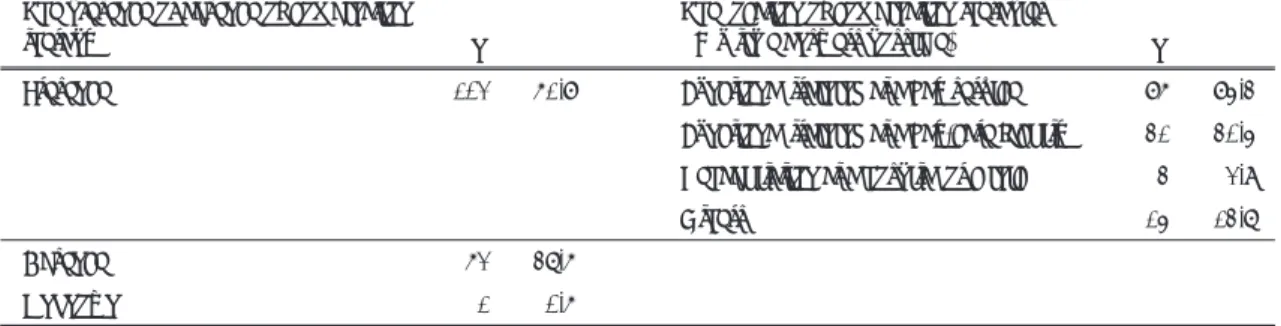
In regard to the presence of combination therapies, 61.8% of patients responded that they received a combination therapy, while 37.6% did not and 0.6% responded “unknown.” The most common combination therapies (multiple answers possible) were functional training at a day service (84.3%), followed by functional training at a day-care facility (30.4%), rehabilitation at a hospital or clinic (2.9%), and “other” (13.7%) (Table1).
Table 1. The location of combination therapies The presence or absence of combination
therapy n
Presence 102 61.8%
Absence 62 37.6%
Unknown 1 0.6%
The location of combination therapies
(Multiple answers possible) n
Functional training at a day service 86 84.3%
Functional training at a day-care facility 31 30.4%
Rehabilitation at a hospital or clinic 3 2.9%
Others 14 13.7%
─ 3 ─
筑波技術大学 紀要
National University Corporation Tsukuba University of Technology
4. Discussion
4.1 The state of patients
We found that muscle weakness in the extremities and joint contracture accounted for 70% of the symptoms.
Moreover, approximately 40% of the diagnoses were related to cerebrovascular disease. According to a report by the Cabinet Office, “cerebrovascular disease” was the most common reason for requiring care, and joint contracture due to hemiplegia and muscle weakness were cited as sequelae of the disease. This suggests that the patients receiving home care massage often have developed joint contractures and muscle weakness as sequelae of cerebrovascular disease.
4.2 The state of massage therapy
In addition to Home medical care massages, 80% of patients also underwent stretching, ROM exercises, and muscle strengthening, while slightly less than 70% of patients underwent activities of daily living (ADL) training.
Our findings revealed that Home medical care massage therapy comprised not only massages, but also ROM exercises and ADL training. This suggests that Home medical care massage therapy combining ROM exercises is expected for improving symptoms and maintaining and improving physical functioning in patients with cerebrovascular disease and related sequelae.
Massages are typically used to maintain and promote health and for relaxation and recovery from fatigue.
However, this survey revealed that the most important role of massages in Home medical care massage therapy is the improvement of symptoms caused by the sequelae of cerebrovascular disease and the enhancement of ADL and quality of life. It is therefore essential that masseurs acquire knowledge on cerebrovascular disease and related sequelae and improve their skills in stretching, ROM exercises, and muscle strengthening. Furthermore, a massage consent form is required from a doctor when receiving Home medical care massage therapy that falls under medical expenses. Patients must be able to explain their condition to a doctor in order to obtain a consent form.
The present study elucidated the state of patients receiving Home medical care massage therapy and the state of the therapy itself, which should serve as meaningful basic data for future surveys regarding Home medical care massage therapy. We plan to conduct a future large-scale survey based on the results of the present study in order to further investigate massage therapy.
5. Conclusion
We found that Home medical care massage therapy is performed in addition with ROM exercises and ADL training. This therapy is expected for improving symptoms and maintaining and improving physical functioning in patients suffering from the sequelae of cerebrovascular disease. The importance of Home medical care massage therapy as a home care service is growing and masseurs should aim to improve the physical functioning of home care patients in order to contribute to society.
References
[1] Cabinet Office ed, White paper on aging society (Kourei Shakai hakusho) 2013 .Tokyo: Insatu Tsuhan, 2013. (in Japanese)
[2] Ministry of Health, Labour and Welfare ed, White paper on health, labour, and welfare (Kousei Roudou Hakusho) 2013 .Tokyo:Nikkei Insatsu, 2013. (in Japanese)
─ 4 ─
筑波技術大学 紀要
National University Corporation Tsukuba University of Technology