Adaptive Detrending for Accelerating the Training of Convolutional Recurrent Neural Networks
著者(英) Minju Jung, Jun Tani journal or
publication title
The Proceedings of the 28th Annual Conference of the Japanese Neural Network Society
page range 48‑49
year 2018‑10‑24
出版者 Japanese Neural Network Society
権利 (C) 2018 Japanese Neural Network Society URL http://id.nii.ac.jp/1394/00001270/
The 28th Annual Conference of the Japanese Neural Network Society (October, 2018)
Adaptive Detrending for Accelerating the Training of Convolutional Recurrent Neural Networks
Minju Jung (P)1,2, and Jun Tani2
1 School of Electrical Engineering, Korea Advanced Institute of Science and Technology, Korea
2 Cognitive Neurorobotics Research Unit, Okinawa Institute of Science and Technology, Japan E-mail: [email protected]
Abstract— Convolutional recurrent neural net- works (ConvRNNs) provide robust spatio-temporal in- formation processing capabilities for contextual video recognition, but require extensive computation that slows down training. Inspired by detrending meth- ods, we propose “adaptive detrending” (AD) for tem- poral normalization in order to accelerate the training of ConvRNNs, especially of convolutional gated recur- rent unit (ConvGRU).
Keywords—Detrending, normalization, internal covari- ate shift, convolutional recurrent neural networks (Con- vRNNs)
1 Introduction
The current paper focuses on the time domain in order to accelerate training of convolutional recurrent neural networks (ConvRNNs). Much of time series analysis and many forecasting methods can be ap- plied only to stationary time series. Detrending trans- forms non-stationary time series to stationary series by identifying the change as a trend and removing it.
The current research applies this method to normal- ize sequences of neurons in recurrent neural networks (RNNs). Our key insight here is that the hidden state of a gated recurrent unit (GRU) [1] can be considered as a trend that can be approximated by the form of an exponential moving average with an adaptively chang- ing decay factor. Based on this insight, we propose a novel temporal normalization method, “adaptive de- trending” (AD), for use with GRU and convolutional gated recurrent unit (ConvGRU). The implications of AD are fourfold:
• AD is easy to implement, reducing computational cost and consuming less memory than competing methods.
• AD eliminates temporal internal covariate shift.
• AD controls the degree of detrending (or normal- ization) through decay factor adaptability.
• AD is fully compatible with existing normalization methods.
2 Model
2.1 Gated Recurrent Unit
The gated recurrent unit (GRU) was proposed by Cho et al. [1] to overcome the vanishing gradient prob- lem by using a gating mechanism. Specifically, GRU has two gating units, called a reset gaterand an up- date gatez, and is defined as follows:
ht=zth˜t+ (1−zt)ht−1 (1)
zt=σ(Wzxt+Uzht−1+bz) (2) h˜t= tanh(Whxt+rtUhht−1+bh) (3) rt=σ(Wrxt+Urht−1+bh) (4) whereσ(·) is a sigmoid function andis an element- wise multiplication.
The convolutional gated recurrent unit (ConvGRU) is a natural extension of GRU by replacing the weight multiplication of GRU with convolution.
2.2 Gated Recurrent Unit Normalization in the Spatial Domain
Following Ba et al. [2], in this paper we apply recur- rent batch normalization (recurrent BN) [3] and layer normalization (LN) [2] to GRU. We refer to recurrent BN and LN as “spatial” normalization methods to dif- ferentiate the present approach from normalization in the time domain reviewed above. The following equa- tions represent GRU normalization in the spatial do- main:
rt=σ(Nγ,β(Wrxt) + Nγ(Urht−1)) (5) zt=σ(Nγ,β(Wzxt) + Nγ(Uzht−1)) (6) h˜t= tanh(Nγ,β(Whxt) +rtNγ(Uhht−1)) (7) ht=zth˜t+ (1−zt)ht−1 (8) where Nγ,β(·) represents the normalization followed by an affine transformation with two learnable param- eters (gain γ and bias β) for recurrent BN and LN, and Nγ(·) is the same as Nγ,β(·) except for an affine transformation with only the gainγto remove the bias redundancy within an equation.
2.3 Adaptive Detrending
In statistics, a MA is widely used to extract long- term trends from noisy time series by filtering out fluc- tuations. Among these variants, an exponential mov- ing average (EMA) is preferred when the MA needs to quickly respond to recent data because past data decay exponentially over time. The value of the EMA µtat time stept is calculated by
µt=α·xt+ (1−α)·µt−1 (9) wherextis the current input value andαis a constant decay factor or smoothing factor between 0 and 1.
Detrending is a method that removes a slowly chang- ing component, called a “trend”, in order to render time series stationary. We think that detrending can be applied to RNNs to eliminate temporal internal co- variate shift. Notice that the definition of EMA in (9)
Figure 1: Graph of test recognition error averaged over three splits versus training epochs on the object- related with modifier (OA-M) recognition dataset.
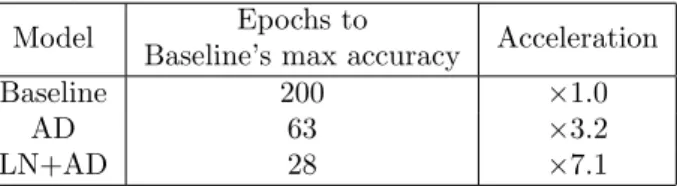
Table 1: Comparison of convergence speed on the OA- M recognition dataset.
Model Epochs to
Baseline’s max accuracy Acceleration
Baseline 200 ×1.0
AD 63 ×3.2
LN+AD 28 ×7.1
is the same as that for the hidden statehof GRU in (1) when, rather than being fixed, the decay factorα is continuously changing at each time step as shown in (2). By considering the hidden state has a trend of the candidate hidden state ˜h, we can apply detrending to GRU for temporal normalization, as follows:
yt= ˜ht−ht (10) where yt is the detrended output at time stept, and is input into the next layer.
As mentioned above, the proposed detrending method uses the update gate z in (2) as the decay factorαin (9), but it is adaptively changed over time rather than fixed. Hence, we call this method “adap- tive detrending” (AD) to differentiate it from conven- tional detrending methods that employ a pre-defined or fixed setting to estimate a trend.
3 Object-Related Action with Modifier Recognition Experiment
We tested AD on the object-related action with modifier (OA-M) recognition dataset. The dataset for OA-M recognition consisted of 840 videos in 42 object-action-modifier combination classes created by non-exhaustively and non-redundantly combining four objects, four actions, and six modifiers. Each object- action-modifier combination class was performed by 10 subjects two times each with a randomly selected distractor present in each video.
Surprisingly, LN performs worse than the baseline in terms of training speed and recognition accuracy (Fig. 1). We hypothesize that the statistics estima- tion error plaguing LN when implemented in CNNs is
accumulated through time in ConvRNNs, leading to significant decrease in convergence speed.
AD improves convergence speed significantly as well as increasing recognition accuracy over those of the baseline and LN (Fig. 1) and needs 3.2 times fewer epochs than the baseline (Table 1). These results im- ply that the time domain is more critical than the spa- tial domain when normalizing RNNs. Furthermore, by solving the limitation of LN with neuron-wise normal- ization of AD, LN+AD shows the most significant im- provements in both training speed and generalization over the baseline, as well as over LN or AD, alone.
Specifically, LN+AD requires 7.1 and 2.2 times fewer epochs, and improves recognition accuracy by 4.3%
and 1.8% compared with those of the baseline and AD.
These results show that utilizing the time domain as well as the spatial domain for normalization generates beneficial synergy.
4 Conclusion
This paper proposes a novel temporal normaliza- tion method, “adaptive detrending” (AD), to accel- erate training of recurrent neural networks (RNNs) by removing the temporal internal covariate shift.
Although several normalization methods employing batch normalization (BN) [4] have been proposed to accelerate training of RNNs, these methods utilize only the spatial domain and neglect the time domain for statistical estimation. The key insight of this pa- per is to view the hidden state of the gated recurrent unit (GRU) as a trend with an exponential moving average. With this in mind, and with simple modifi- cations, we were able to implement AD in GRU. AD has several advantages over other normalization meth- ods: It is highly efficient in terms of computational and memory requirements. Unlike conventional detrending methods that require manual parameter setting, AD learns and estimates trends automatically. AD is gen- erally applicable to both GRU and ConvGRU, which is not the case for either BN or for layer normalization (LN).
References
[1] K. Cho, B. van Merrienboer, C. Gulcehre, D. Bahdanau, F. Bougares, H. Schwenk, Y. Ben- gio, Learning phrase representations using rnn encoder–decoder for statistical machine transla- tion, in: Proceedings of the 2014 Conference on Empirical Methods in Natural Language Process- ing (EMNLP), 2014.
[2] L. J. Ba, R. Kiros, G. E. Hinton, Layer normaliza- tion, CoRR abs/1607.06450.
[3] T. Cooijmans, N. Ballas, C. Laurent, A. Courville, Recurrent batch normalization, in: International Conference on Learning Representations (ICLR), 2017.
[4] S. Ioffe, C. Szegedy, Batch normalization: Accel- erating deep network training by reducing internal covariate shift, in: Proceedings of the 32nd Inter- national Conference on Machine Learning, 2015.