
近畿大学学術情報リポジトリ
65
0
0
全文
(2) Table of Contents Content Page 1. Preface 1 2. Bacterial and Fungal Analysis of foods collected from Dhaka, Bangladesh……………………………………………………………...... 7 2.1. Introduction ……………………………………………………………………………….. 7 2.2. Materials and Method ……………………………………………………………….. 9 2.3. Results ……………………………………………………………………………………….. 12 2.4. Discussion…………………………………………………………………………………… 15 2.5. Summary ……………………………………………………………………………………. 20 3. Effectiveness of Heat and Low Pressure Plasma Treatments ……………….. 21 3.1. Introduction……………………………………………………………………………….. 21 3.2. Materials and Methods………………………………………………………………. 24 3.3. Results………………………………………………………………………………………… 28 3.4. Discussion…………………………………………………………………………………… 41 3.5. Summary…………………………………………………………………………………….. 45 4. Summary and Perspectives …………………………………………………………………. 47 5. Acknowledgments ……………………………………………………………………………. 51 6. References………………………………………………………………………………....... 52.
(3) 1.. PREFACE. 1. Preface Food and beverages are an integral part of human health, providing the nutrients and energy required to carry out day to day activities (Tsado et al., 2013). Although an important aspect of human health, foods have always been noticed as being a viable source of bacterial and fungal infection (Yoon and Kim, 2012). Different categories of foods are commonly consumed, which unfortunately often remain microbiologically unsafe mostly due to the insufficient knowledge on food safety among the mass population. Indeed, so far there is no shortage of studies linking food-borne pathogens to various illnesses, with the reports increasing due to the increased popularity of foods such as raw fruits and vegetables (Abadias et al., 2008). Study of microbial prevalence within foods bring about vital information on food safety as well as may envisage on the further intoxication caused by the prevailing microorganisms. Listeria monocytogenes, Bacillus spp., Salmonella spp., and Escherichia coli have been linked as causative agents in various food- borne disease (Abadias et al., 2008; Ajayeoba et al., 2015; Buck et al., 2003; Banarjee et al. 2003; Cardamone et al., 2015; Malek et al., 2013). Contamination may occur from soils, water and fertilizer used during agriculture or from mishandling during processing, storage and distribution; contributing to the role of foods as an important carrier of bacteria and fungus (Hashem and Alamri, 2010; Alam et al., 2015; Nipa et al., 2011). Additionally, the role of environmental contaminants such as waste water, dirt and dust cannot be ignored (Banarjee and Sarkar, 2003). There has been a significant rise in food-borne diseases in the recent times, which can be attributed partially to the rise in consumption of fresh, minimally prepared foods and partially due to increase in import of exotic spices, herbs and out of season foods (Heaton and Jones, 2007; Abadias et al., 2008). A number of investigation showed that foods are usually contaminated with various bacterial species and fungal population during the stages of harvesting, processing, storage, shipping, food preparation, kitchen utensils including the. 1.
(4) 1.. PREFACE. cutting boards or other surfaces, cross-contamination, etc. (Frazier and Westhoff, 2007; Todd, 2014; Toyofuku, 2014). Complications that may arise from foods include enteric disease, abdominal pain, fever, hemorrhagic colitis, meningitis, blood infections, kidney failure, joint infections, miscarriage and paralysis (Scannell 2011; Todd, 2014; Toyofuku, 2014; Noor, 2016). Approximately 1.8 million deaths were reported by The World Health Organization (WHO) in 2005 alone, as a result of food-borne illnesses (Ajayeoba et al., 2015). Recently report of the Center for Disease Control and Prevention (CDC) has reported that more than 13,000 cases of food-illnesses were announced (Jeddi et al. 2014). In Bangladesh, a yearly approximate of 30 million people develop food-borne illnesses, many of which ultimately prove to be fatal (Khairuzzaman et al., 2013). There are still many cases which go unreported as a result of inadequate surveillance of food-borne diseases as happens in underdeveloped and developing countries (Nipa et al., 2011). An array of contaminated foods has been linked to the onset of diseases such as typhoid fever and liver carcinoma (Dimic et al., 2008; Tsado et al., 2011). Every year food-borne disease cause the death of 300,000 people due to cancer and around 200,000 suffer from kidney disease (Islam et al., 2015). Even with new government regulations in Bangladesh, the quality of foods in Bangladesh has not been improved, partially due to its failure to address the regulation of soils and waters used, which act as sources of contamination in addition to the lack attention of quality assurance (Alam et al., 2015; Hasibur et al. 2016; Noor and Feroz, 2015). Raw, dried, and semi-dried foods all have the potential to spread food-borne pathogens among the consumers. The rate of contamination and its effect on health of the society is alarming, prticularly in developing and underdeveloped countries where there is limited access to safe drinking water and adequate medical care (Noor and Feroz, 2015). A significant evidence of such scenario is understood by the fact that the International Center for Diarrheal Disease. 2.
(5) 1.. PREFACE. Research, Bangladesh (ICDDRB) treats approximately 300,000 diarrhea patients annually (Islam et al., 2015). Consequently, as has been noticed since long ago, such rise in diseases has negatively impacted the medical sector, food industry, consumer health and economy in general (Farkas et al., 1998). A report released by FAO/WHO in 2004 stated that the cost of dealing with diarrheal diseases was 5.7 million dollars (Islam et al., 2015). Even many citizens fear consuming fruits and vegetables resulting in an economic loss to the growers and trader (Siddiqui 2014). With the rise in the increase of diseases, methods of reducing its presence at an early stage is of significance from the public health stance. Research on decontamination methods is of vital importance to combat the negative effects of food-borne illness and reduce the incidence of disease and death. For this reason, the current study identified the bacterial and fungal counts of dried, semi-dried and raw foods collected from Dhaka, Bangladesh, and tested the effectiveness of heat and low-pressure plasma treatment on those foods. This study aimed to establish the use of safe and effective decontamination methods, heat and low-pressure plasma treatment, to combat the effects food-borne diseases in Bangladesh and on it’s society. Several methods have been used previously, and some are currently in use, for controlling food quality. Yet, various studies have pointed out many adverse effects, which further support the need for alternative methods. According to Kim et al. (2000) fumigation with gaseous ethylene oxide has several environmental and occupational hazards, including carcinogens, which is why many European countries have prohibited its use. Aqueous sanitizers, such as chlorine, hydrogen peroxide and trisodium phosphate, can also be potentially hazardous against health due to the formation of trihalomethanes (Birmpa et al., 2014). Chemicals often leave behind many harmful residues, which affect human health (Farkas et al., 1998; Fallick et al., 2000). Chemicals and their phyto-products used during crops, fruit and vegetable farming may also be able to lead to the long term health problems. 3.
(6) 1.. PREFACE. (Islam and Hoque, 2013). The technique of - irradiation use has met with negative consumer acceptability due to the use of radiation and sensory changes, in addition to the cost and logistics involved (Farkas et al., 1998; Elliasson, et al., 2015). Another important facet is that heat has long been used in homes, research laboratories and food industries to reduce microorganisms and spoilage in foods (Paul and Chen et al., 2000). It’s use in decontaminating liquid foods is well established, with many research suggesting its possibility in having minimal to no affect on food (Farkas, 1998; Birmpa et al., 2004). Fruits have been subjected to post-harvest heat treatments in order to remove insects, disease control, and maintain shelf-life (Lurie, 1998). Heat treatments are often preferred as it avoids chemicals and exerts no physical damage on the food (Lurie, 1998). Still, exposure time to heat are often associated with protein denaturation and loss of nutrients (Paul and Chen et al., 2000). Because the harmful side effects of the methods mentioned above are just as important as the negative effects of microbial spoilage, alternative methods are required, which should not leave any harmful residue. Underdeveloped and developing countries have several lacking when it comes to such measures, often compromising quality to maintain quantity and profit margins. Therefore, simple and easily replicable methods of decontamination are now more important than ever for the resource poor settings of Bangladesh. The ability of plasma in sterilization was established in the 1960’s when it was patented for use on surfaces (Menashi, 1968). Studies into the effect of plasma have successfully been able to inactivate microorganisms and eliminate spores by affecting the membrane integrity and proteins of the organisms (Matser et al., 2004). Low-pressure plasma treatments have been gaining momentum in the field of agriculture as an alternative nonthermal technique, and are free of the side-effects of elevated temperatures (Misra et al.,. 4.
(7) 1.. PREFACE. 2011; Nishioka et al., 2014). Previous studies on the effect of plasma on Deinococcus radiodurans and biomolecules has shown its efficiency in degrading lipids, proteins and DNA of cells (Mogul et al., 2003). Although it’s effects on pathogens have been studied, it’s application on foods have only been theorized. Studies on it’s application in inactivating Rhizoctonia solani, Aspergillus spp. and Penicillum spp. on seeds have shown positive results (Selcuka et al., 2008; Nishioka et al., 2014) and therefore its application on foods, specially spices and herbs, need to be examined to certify its use in food decontamination. Based on such rationale, the current thesis assessed the application of heat and lowpressure plasma treatment as safe, effective and economic methods of decontaminating foods. The main objective of this series of studies presented in the current thesis was firstly to assess the microbiological quality of foods in Bangladesh and then determine the effect of heat and low-pressure plasma treatment in its’ growth. Generating complete bacterial and fungal report, of the different categories of foods, will assist in providing important knowledge to the related sectors. Knowledge of the degree of contamination will enhance the the ability of the food sectors (Ministry of Family Health and Welfare, Bangladesh Standards and Testing Institute, Ministry of Food and Natural Disaster Management, Ministry of Commerce and Ministry of Agriculture) and the medical sectors to combat any outcomes illness will have on the society and economy. At the same time, it will provide the zero treatment values for our studies on decontamination. The second objective included analyzing and determining the effect of heat and low-pressure plasma treatment on food decontamination, and assessing the ability of the latter to maintain and ensure food safety in comparison to heat. This study determined that heat and low-pressure plasma treatment were both effective in reducing bacterial and fungal counts in raw, dried and semi-dried foods. Heat treatments proved to be more effective and applicable to raw food, whereas low-pressure plasma treatment would be a better choice for dried and semi- dried foods. The finding of this study. 5.
(8) 1.. PREFACE. has increased our interest in studying the implementation of decontamination methods in Bangladesh and how to work with the authority to improve food quality. The implementation of these methods can help ease the burdens food-borne diseases are having on the economy and on the medical sector. It can be applied to the food industries of any country, regardless of location or general quality of foods. This thesis is structured in the following manner. The second chapter will discuss the bacterial and fungal analysis of 97 dried, semi-dried and raw foods. The third chapter will asses and compare the effects of heat treatments and low-pressure plasma treatments on foods.. 6.
(9) 2. Bacterial and Fungal Counts On Dried, Semi-Dried and Raw Foods 2. BACTERIAL AND FUNGAL COUNTS ON DRIED, SEMI-DRIED AND RAW FOODS. 2.1 Introduction Foods such as spices and herbs, posses the ability to transmit pathogens, particularly as they are commonly used for flavoring and aroma in every dish in local cuisine (Elshafie et al., 2002; Witkowska et al., 2011; Jeswal and Kumar, 2015). The presence of bacteria and fungi on spices are not unlikely, as they mostly originate from dried plant material (KovicTanackov et al., 2007). Often, in countries such as Bangladesh and India, spices are produced by sun drying the original materials, and released in the markets with no additional treatments, therefore there is a risk of contaminants being present (Banarjee and Sarkar, 2003; Sagoo et al., 2009). Furthermore, spices and herbs are grown in warm and humid conditions, which favor the growth of microorganisms (Banarjee and Sarkar, 2003). Moreover, spices come in contact with various amounts of environmental contaminants during processing; including wastewater, dirt and dust, human and animal excreta (Banarjee and Sarkar, 2003). The increase in spice trading, had given rise to additional complications, resulting in wide geographic occurrence of disease (Zweifel and Stephan, 2012). Increased presence of microorganisms in processed foods also contributes to an increased rate of putrefaction, negatively affecting quality and leading to the production of mycotoxins (Juri et al., 1986). Additionally, spices serve as one of the principal sources of spore-forming bacteria in foods which are prepared in large quantities such as soups, casserole, stews and gravy items (Banarjee and Sarkar, 2003). Although present in small amounts spices and herbs can still affect consumers (Dimíc et al., 2008). Similarly, the commercial production of nuts around the world is approximately 4,000,000, therefore, if they were contaminated, they would pose serious threats to human and animal health (Basaran et al., 2008). Nuts also serve as an. 7.
(10) 2. Bacterial and Fungal Counts On Dried, Semi-Dried and Raw Foods excellent source of vegetable protein, unsaturated fatty acids, vitamin E, phenolic compounds and selenium, vegetable fibre, folic acid and phytoserols (González and Salvadó, 2006). Fruits and vegetables, contains various nutrients, micronutrients, fibers and vitamins, all of which are required for the survival and maintenance of human health but despite all these benefits they still serve as a risk factor for infection from pathogens and viruses (Tsado et al., 2013). In recent times, the consumption of fruits and vegetables have been increasing world wide (Jeddi et al., 2014). This is mainly as a result of an increasing interest in maintaining a healthy life style and government campaigns such as the ‘Five a Day’ and ‘Nine a Day’ (Heaton and Jones, 2007). Same campaigns have contributed to a rise in the consumption of minimally processed foods in developed, underdeveloped and developing nations (Amoah et al., 2006, Abadias et al., 2008). As the consumption increases so does the incidence of disease (Jeddi et al., 2014). Disease may occur due to the pathogen or due to the release of toxins from the pathogen (Rahman and Noor, 2012). Outbreaks can also be a result of an increase in import of out of season fruits and vegetables (Buck et al., 2003). Various outbreaks have occurred as a result of E. coli from raw vegetables in USA, Japan and EU (Abadias et al., 2008). Recent advances have seen the development of surveillance techniques that have greatly eased the ability to detect any outbreaks (Heaton and Jones, 2007). Even so, there are several lacking of the information available on the outbreaks and the methods of contamination during food-borne illnesses (Abadias et al., 2008). Further complications in identifying an exact source of diseases comes from the various uncontrollable factors that contribute in its spread; such as resident microorganisms of soil, irrigation water and wild life (Nipa et al., 2011). Additionally, methods used in detection are still not advanced; made more difficult by the sporadic nature of the contamination, lack of knowledge on the ecosystems on the surface of the fruits and vegetables and limited information on the interaction between. 8.
(11) 2. Bacterial and Fungal Counts On Dried, Semi-Dried and Raw Foods plant bacteria or fungi and the growth of pathogenic bacteria on vegetable surfaces, with the ability to affect human (Buck et al., 2003). Contamination of these foods will impart a negative influence on the health and safety of the society. Further complications may arise due to the consumption of foods that undergo no processing, following the addition of spices and herbs (Banarjee and Sarkar, 2003). For this reason, the current study has attempted to develop a detailed profile of the bacterial and fungal counts present in the foods of Dhaka, Bangladesh. Knowledge of this will inform consumers, heath and agriculture sectors of the status and condition of foods which are being consumed. It will also assist in the development of mechanisms, methods and actions to solve the problems arising from the increasing rate of food-borne illnesses.. 2.2 Materials and Methods 2.2.1. Sample collection As seen in Table 1, 46 dried and semi-dried samples and 51 raw samples were collected from supermarkets and open markets of Dhaka, Bangladesh, and transported by air to Kindai University, Nara, Japan. A total of 23 spices, 3 herbs, 5 nuts, 10 semi-dried fruits and 5 other foods were collected. They were tested as soon as possible to avoid spoilage. A total of 16 fruits, 16 vegetables and 19 fish samples were collected from open vegetable, fruit and fish markets in Dhaka, Bangladesh. They were transported to the laboratory at Stamford University, Bangladesh, Siddeshwari, Dhaka, immediately after purchase.. 9.
(12) 2. Bacterial and Fungal Counts On Dried, Semi-Dried and Raw Foods Table 1. Sample List Sample Type. Number of Samples. Dried Foods Spices 23. Herbs Nuts Semi-Dried Fruits Other Foods. 3 5 10 5. Foods Chili Powder, Turmeric Powder, Cumin Powder, Cloves, Saffron Powder, Nutmeg Powder, Garam Masala Powder, Garlic Powder, Ginger Powder, Coriander Powder, Paprika Powder, Poppy Seeds, Cut Red Pepper, White Pepper, Bay Leaves, Fenugreek Powder, Celery Powder, Nigella Seeds, Sesame Seeds, Mustard Seeds, Cardamom, Cinnamon, Mace Thyme, Parsley, Basil Cashew, Pine nuts, Pistachio, Peanuts, Almonds Raisons, Dates, Plum, Honey Melon, Cherry Tomatoes, Pineapple, Rock Melon, Sweet Mango, Tamarind, Kiwi Chick Peas, Lentils, Rice, Dabli Boot, Kidney Beans. Raw foods Fruits 16. Vegetables. 16. Sea Food. 19. Apple, Tangerine, Orange, Banana, Guava, Mango, Pears, Green Apple, Grapes, Dragon Fruit, Papaya, Sapodilla, Berry, Wax Apple, Wood Apple, Sugar Cane, Okra, Eggplant, Carrot, Tomato, Potato, Cauliflower, Lettuce, Onion, Spinach, Peas, Red Amaranth, Cabbage, Coriander, Bitter Gourd, Radish, Bottle Gourd, Swamp Barb, Stinging Catfish, Tengra, Indian Mottle Eel, Scribbled Gobi, Yellow Tail, Mozambique Tilapia, Bata, Freshwater Garfish, Dwarf Gourami, Walking Catfish, Olive Barb, Annandale Loach, Ganger River Spiral, Square Head Catfish, Rohu, Pabo Catfish, Prawn, Golden Mahseer. Total: 97 Samples. 2.2.2. Measurement of air-borne and falling microorganisms Microbial Air Sampler (RSC) Bacteria present in the air was measured using a RSC air sampler. The machine was held in the air, with the respective agar strip Nutrient Agar (NA) and Sabouraud Dextrose Agar (SDA), at 3 different points of each sampling area for 2 minutes. Air (80 L) was collected in the collection area and incubated (37 C for 2 days and 25 C for 5 days, respectively). The resulting colonies were counted and cfu/L was identified by the following formula:. 10.
(13) 2. Bacterial and Fungal Counts On Dried, Semi-Dried and Raw Foods Colony Count (40 x time in minutes).. Falling Airborne Organisms The amount of microorganisms presents in the air, with the ability to fall and land on the samples were also measured. NA and SDA plates containing chloramphenicol were placed in 3 different points of each sampling area for 30 minutes each. Bacteria falling from the area was allowed to collect in the agar plates after which they were incubated at 37 C for 2 days and 25 C for 5 days respectively, and resulting colonies were measured.. 2.2.3. Measurement of bacrtial and fungal counts in dried and semi-dried foods Ten grams of sample were measured and placed in a stomacher bag. Subsequently 90 mL of sterilized physiological saline was added, and the samples were allowed some time for mixing. The filtered saline was then subjected to 10-fold dilution and plated onto NA and SDA. The plates were then incubated at 37 C for 2 days and 25 C for 5 days, respectively, and resulting colonies were measured.. 2.2.4. Detection of pathogenic bacteria in dried and semi-dried foods Samples were also plated on Mannitol Salt Agar (MSA) and MacConkey Agar (MAC) for the detection of Staphylococcus spp. and Escherichia coli, respectively. Samples exhibiting growth characteristics of Staphylococcus aureus on MSA were further tested for pathogenicity using the coagulase test and possible Oxacillin resistance.. 11.
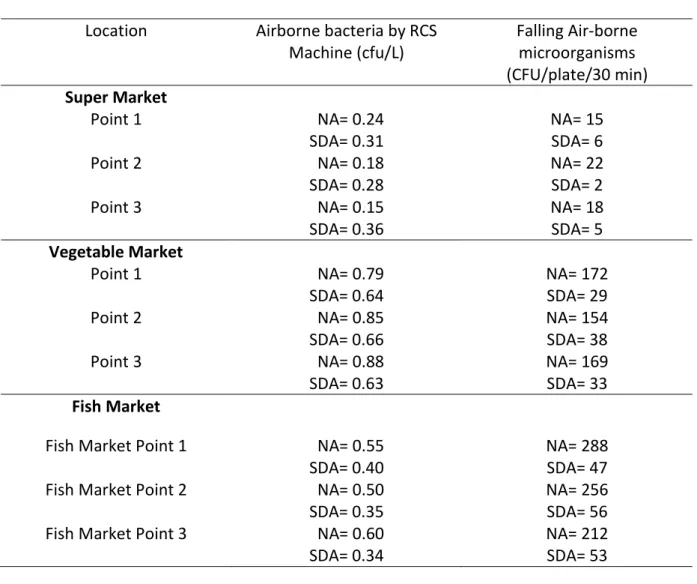
(14) 2. Bacterial and Fungal Counts On Dried, Semi-Dried and Raw Foods. 2.3 Results Table 2. Measurement of Air Quality in Sampling Areas Location. Airborne bacteria by RCS Machine (cfu/L). Falling Air-borne microorganisms (CFU/plate/30 min). NA= 0.24 SDA= 0.31 NA= 0.18 SDA= 0.28 NA= 0.15 SDA= 0.36. NA= 15 SDA= 6 NA= 22 SDA= 2 NA= 18 SDA= 5. NA= 0.79 SDA= 0.64 NA= 0.85 SDA= 0.66 NA= 0.88 SDA= 0.63. NA= 172 SDA= 29 NA= 154 SDA= 38 NA= 169 SDA= 33. NA= 0.55 SDA= 0.40 NA= 0.50 SDA= 0.35 NA= 0.60 SDA= 0.34. NA= 288 SDA= 47 NA= 256 SDA= 56 NA= 212 SDA= 53. Super Market Point 1 Point 2 Point 3 Vegetable Market Point 1 Point 2 Point 3 Fish Market Fish Market Point 1 Fish Market Point 2 Fish Market Point 3. 2.3.1 Air Quality of Sampling Area The results of measuring air-borne and falling microorganisms are shown in Table 2. The counts of microorganisms of three measuring points in Vegetable market was larger than that in Super market. In most cases the bacterial and fungal counts of the open vegetable market (Average 0.84 cfu/L) were more than double that of the supermarkets (Average 0.19 cfu/L). The fish market demonstrated growths lower than that of Ryer Bazar, but still remained within an increased range. Average air-borne bacterial growth and fungal growth was 0.55 cfu/L and 0.36 cfu/L, respectively. Growths of falling microorganisms in the fish. 12.
(15) 2. Bacterial and Fungal Counts On Dried, Semi-Dried and Raw Foods markets were significantly higher. Average falling microorganisms for fish market was 252 cfu/pate/30 min (bacteria) and 52 cfu/plate/30 min (fungus); for vegetable market it was 165 cfu/plate/30 minute (Bacteria) and 30 cfu/plate/30 minute (fungi); and for supermarket 18.33 cfu/plate/30 minute (bacteria) and 4.33 cfu/plate/30 minute (fungi) , respectively. .. 2.3.2. Bacterial and fungal counts observed in dried and semi-dried foods tested. Table 3. Incidence and contamination level of viable bacterial counts and fungal counts in dried, semi-dried and raw foods Level of Contamination, Number of Samples. Sample Type. Number Viable Bacterial Counts (cfu/g) of Samples 2 3 4 5 10. Spices. 23. Herbs Nuts Semi-Dried Foods Other Foods Fruits Vegetables Sea Food Total. 3 5. 1. 10. 10. 10. 106. 102. 103. 104. 105. 106. >107. 5. 10. 4. 4. 1. 2. 13. 3. 3. 1. 1. 3 1. 1. 2 1. 10 5 16 16 19 97. 1 4. 1. Fungal Counts (cfu/g). 11. 1. 1. 1. 8. 2. 1. 1 8 5 3 39. 3. 1. 4 10 9 28. 1 7 18. 4. 1 2. 9 1 6 1 11. 3 10 9 15 59. 7 2 12. 1 10. 1. Bacterial and fungal counts observed in dried, semi-dried and raw foods tested were shown in Table 3. Of the 23 samples of spices, 43% of the samples showed an initial bacterial load of 104 cfu/g. Similarly, all three herbs tested also revealed the same initial load. The microbial and fungal loads of nuts and whole foods were scattered between 102 to 106 cfu/g. Semi-dried foods had initial loads of 104 to 106 cfu/g for both bacteria and fungus. Among the total of 46 samples of dried and semi-dried foods, 50 % of the samples’ bacterial counts and. 13.
(16) 2. Bacterial and Fungal Counts On Dried, Semi-Dried and Raw Foods 54% of the sample’s fungal counts remained mainly within the range of 104 cfu/g. Study determined, powdered spices exhibited higher microbial and fungal counts, when compared to other samples. Among the 51 samples of raw foods tested, in majority (92%) of the results, bacterial counts were above 104 cfu/g to 105 cfu/g, while the fungal counts were mainly (66%) around 104 cfu/g. Bacterial and fungal loads were significantly high, with growths as high as 6.0 log. Leafy vegetables such as lettuce, spinach and red amaranth exhibited the highest growths. Apples, grapes and berries exhibited the lowest counts.. 2.3.3. Identification of specific bacteria Table 4. Inhibition zones for Oxacillin in Dried and Semi-dried Foods. Sample Name and Number Chili Turmeric Cumin Cashew Pine nuts Raisons Dates Saffron Nutmeg Garam Masala Garlic Powder Ginger Powder Coriander Paprika Powder Poppy Seeds Thyme Cut Red Peppers White Peppers Parsley Bay Leaves Fenugreek Celery. Resistant/ Sensitive Resistant Resistant Resistant Resistant Resistant Resistant Resistant Resistant Resistant Resistant Resistant Resistant Resistant Resistant Resistant Resistant Resistant Resistant Resistant Resistant Resistant Resistant. Sample Name and Number Pistachio Cloves Peanuts Chick peas Rice Mace Dabli Boot Basil Nigella Seeds Sesame Seeds Mustard Seeds Almonds Cardamom Kidney Beans Plum Cherry Tomatoes Pineapple Rock Melon Cinnamon Tamarind Kiwi. Resistant/ Sensitive Resistant Resistant Resistant Resistant Resistant Resistant Resistant Resistant Resistant Resistant Resistant Resistant Resistant Resistant Resistant Resistant Resistant Resistant Resistant Resistant Resistant. E. coli isolated from twenty-six samples of dried and semi-dried foods were tested in this experiment. By using poa-media® Vi EHEC agar O111 was detected in Poppy seeds,. 14.
(17) 2. Bacterial and Fungal Counts On Dried, Semi-Dried and Raw Foods and O157 was also detected in Celery and Cardamom. EHEC was detected in 3 samples (11.5%) in 26 samples. Twenty samples of raw foods, which exhibited growth characteristics of Staphylococcus spp. on Mannitol Salt Agar were further tested for oxacillin resistance. Dried and semi-dried samples were resistant to oxacillin. All samples demonstrated sensitivity to the drug except for Pabo Catfish (Table 5). Interestingly oxacillin resistance was observed only in dried and semi-dried food samples.. Table 5. Oxacillin Resistance in Raw Foods Sample Eggplant Carrot Tomato Potato Cauliflower Lettuce Spinach Red Amaranth Cabbage Coriander. Resistant/ Sensitive Sensitive Sensitive Sensitive Sensitive Sensitive Sensitive Sensitive Sensitive Sensitive Sensitive. Sample Bitter Gourd Radish Swamp Barb Indian Mottle eel Scribbled Gobi Yellow Tail Bata Walking Catfish Olive barb Pabo catfish. Resistant/ Sensitive Sensitive Sensitive Sensitive Sensitive Sensitive Sensitive Sensitive Sensitive Sensitive Resistant. 2.4 Discussion The quantitative estimation of microorganisms in common foods and the microbiological risk assessment aligned to the recommended specifications are the prime factors for the study of food microbiology. Regulatory bodies such as the Center for Science in the Public Interest (CSPI), Centers for Disease Control and Prevention (CDC), FoodNet, etc., working with the food safety are actively engaged to control and monitor the food associated problems in the developed countries; on the contrary, in the developing countries like in Bangladesh, such regulation is not that prominent to ensure local health safety (Ali 2013). An important measure to reduce the disease complications is to identify and diagnose. 15.
(18) 2. Bacterial and Fungal Counts On Dried, Semi-Dried and Raw Foods the etiological agent(s); i.e., food contaminating microorganisms. The current study identified the bacterial and fungal counts of dried, semi-dried and raw food samples, in an attempt to asses the quality of the foods in Dhaka, Bangladesh. The knowledge of the pathogen content of foods will assist consumers and food, health management authorities in predicting and preventing illnesses. Commonly consumed spices and herbs, whole foods, nuts and semi-dried fruits were used in the study. The International Commission on Microbiological Specifications for Foods (ICMSF, 1974), states, spices are classified as unfit for consumption if the total bacterial count exceeds that of 6 log cfu/g, yeast and molds exceed 4 log cfu/g, and if fecal coliform exceeds 103. European Spice Associations and the Codex Code of Hygiene Practice (Codex Alimentarius Commission, 2004) deems spices unsafe if E. coli counts exceed 2 log –3 log cfu/g, fungal counts less than 5 and 6 log cfu/g and no presence of Salmonella spp. (European Spice Associations, 2004). Spices and herbs (15%) of this study exceeded the limit amounts stated, while most samples showed microbial growths between 3 to 6 log cfu/g. In the case of fungal, 81% of samples displayed growths higher than 4 log cfu/g, surpassing the limits of safety set by International Commission on Microbiological Specification for Foods, expressing a serious threat to the health of the consumers. Similar studies have reported the presence of microorganisms, similar to what was observed in this study (Banarjee and Sarker, 2003; Donia et al., 2008; Friere et al., 2002). Fungus, in particular, is a common contaminant of spices (Jeswal and Kumar, 2015; Hashem and Alamari, 2010). Other studies in Serbia, by Dimíc et al. (2008) have reported bacterial and fungal counts of approximately103 and 107, respectively. Witkowska et al. (2011) found bacterial counts of spices to range between 102 and 107 in Dublin, Ireland. She stated 20 % of her samples did not comply with the standards, whereas 26% was unacceptable. Banarjee and Sarkar (2003) have reported bacterial number between 104 and 106. Other studies, conducted. 16.
(19) 2. Bacterial and Fungal Counts On Dried, Semi-Dried and Raw Foods in the past, on bacterial, fungal and fecal coliform presence in spices have also reported counts of 107, 103, and 104, respectively (Juri et al., 1986). Samples also included a range of raw fruits, vegetables and fishes, all of which are commonly consumed in Bangladesh. Other studies, conducted by Akhter et al. (2013), Heaton and Jones (2007) and Tsado et al. (2013), have established the presence of high bacterial and fungal counts in raw foods of Dhaka, Bangladesh and all around the world. In general, raw foods exhibited large bacterial and fungal counts, which is alarming for the Bangladeshi food sector. Current study found bacterial counts of fruits and vegetables to be similar to those observed in Ghana by Amoah et al. (2006), whose counts ranged from 9.3 x 10⁵ to 1.5 to 1011. Similarly, studies in Spain (Abadias et al., 2008) have also observed bacterial counts to range from 107 and 108. Alternatively, their fungal counts varied from the current, expressing counts, which were on a higher scale. Like the current study, higher counts were observed in leafy vegetables. Studies in Italy, have also revealed 5 to 7 log counts in leafy vegetables, whereas their counts for other fruits and vegetables were lower than that of the current study (Cardamone et al., 2015). Fruits generally expressed lower bacterial and fungal counts. This can be attributed to the acidic nature of the fruits in combination with the temperature generally used for storing fruits, usually refrigerated, aided by the occasion presence of peel (Abadias et al., 2008). Fifteen percent of the samples exceeded the international limit for microbial growth and would generally be unsuitable for consumption, whereas forty-five percent of the foods were marginal. Studies by Jeddi et al. (2014) have also found microbial counts to range between 106 and 107. Previous studies conducted in Bangladesh by Nipa et al. (2011) have also presented similar results. Studies by Rahman and Noor (2012) have revealed significant bacterial and fungal loads among common salad vegetables.. 17.
(20) 2. Bacterial and Fungal Counts On Dried, Semi-Dried and Raw Foods Additionally, the deteriorating air quality of Dhaka, Bangladesh has negatively affected the quality of the foods available to the consumers. Present study has been able to identify a large concentration of bacteria in open markets, which acts as the major hub of purchase for the mass population of Bangladesh. Supermarkets expressed drastically lower concentrations of bacteria and fungus, often half, hence having a minimal contribution to the spread of organisms via food purchased in those locations. But consideration must be given to the target consumers of Bangladeshi supermarkets, comprising of the minority upper middle and higher class, since their products are more expensive. Therefore, the majority of the population depend on open markets for the purchase of produce and meats at an affordable price. In addition to being covered by a roof, supermarkets take various precautionary steps which include frequent cleaning of floors and surface, along with the use of protective films on foods. Current study would like to suggest implementation of control mechanisms to reduce the effect of air-borne pathogens on foods. These mechanisms should include restructuring of the open markets to incorporate ceilings, or protective covers of the produce being sold and careful planning of the spacing of each stall. Other methods should include education of the vendors on the basics of food safety, relevant standards of food safety and hygienic practices such as hand washing, use of sterilized water for washing purposes, and proper storage methods (Adams and Moss, Food Microbiology). Cleaning and use of designated trash cans should also be regulated. In addition to degrading air quality, are the influence of bad water and soil. Like food, water also serves as one of the major necessities for a healthy life, and like food, it is also vulnerable to various pathogens (Fawell and Nieuwenhuijsen, 2003). Pathogens such as Salmonella spp., has been linked to food-borne illnesses, while it’s presence in soil and water is heavily reported (Simental and Martinez- Urtaza, 2008). Water from rivers are not only used for hygiene purposes, but they are often employed as drinking water or in cooking,. 18.
(21) 2. Bacterial and Fungal Counts On Dried, Semi-Dried and Raw Foods which is a cause for alarm as it can easily be contaminated with animal manure and urban runoff (Chigor et al., 2013). Raw foods can be contaminated during the farming process due to the presence of pathogens in soil, irrigation water and fertilizers (Hasibur et al., 2016). Studies conducted in Bangladesh has linked irrigation water as the source with most impact on contamination (Alam et al., 2015). Furthermore, other contaminants are also in play, including, discharge from industries and sewage treatment facilities (Fawell and Nieuwenhuijsen, 2003). Even with various measures being taken by WATERAID, International Centre for Diarrheal Disease, Bangladesh (ICCDDR.B) and Canadian International Development Agency (CIDA), to improve rural and urban drinking water quality, Bangladeshi water quality is still not at an internationally acceptable standard (Hoque et al., 1996; Hanchett et al., 2003). Till date, there is no criterion given by the government for the microbiological limit in different food items. Large scale analysis of the levels of contamination, if shared with authorities such as Bangladesh Standards and Testing Institute (BSTI), Bangladesh Food Safety Authority (BFSA) and the Ministry of Health and Family Welfare, could prove to be beneficial to the country. Recent increase in diseases have sparked government interest in evaluating the status of food safety and taking action (Islam and Hoque, 2013; Islam et al., 2015). At present, Bangladesh Food Safety Authority promotes individually produced reports of the levels of contamination. Analysis obtained in the current study encompasses a large array of foods, which will allow BFSA to understand the level of contamination among the different types of food. They will be able to evaluate the problem and think of solutions. In conclusion, the heightened presence of pathogens will heavily impact the incidences of food-borne illnesses. The increase in food-borne disease, linked with dried, semi-dried and raw foods, continues to be alarming, particularly when foods are consumed raw (Rose et al., 2001). As the source of these disease may vary, proper precautions must be. 19.
(22) 2. Bacterial and Fungal Counts On Dried, Semi-Dried and Raw Foods employed in order to ease the burden. Thought must also be given to control the spread and growth of the pathogens causing the disease.. 2.5 Summary Purpose: Bacterial and fungal disease continue to plague the society, with food-borne diseases originating from dried, semi-dried and raw foods escalating everyday, in this regard, knowledge of its existence in foods will assist in managing and eliminating the source of the infections, therefore enhance the health and economic standards of the citizens and the country. Method: In this study 10 grams of samples, all of which were collected from supermarkets and open markets of Dhaka, Bangladesh, were mixed with 90 mL of sterilized physiological saline and 10-fold dilution was carried out. The resulting colonies were counted as cfu/g. Subsequently the presence of Staphylococcus spp. and E. coli, were assessed. Air quality of the sampling area was also assessed. Results: Current study has identified large quantities of bacteria and fungus in all samples. In most cases the bacterial and fungal counts of the open vegetable market were more than double that of the supermarkets. Among the total of 97 samples, 87.6 % of the samples bacterial counts was between 104 to 106 cfu/g, while 83.5% of samples fungal counts were within that range. By using poa-media® Vi EHEC agar O111 was detected in Poppy seeds, and O157 was also detected in Celery and Cardamom. EHEC was detected in 3 samples (11.5%) of 26 samples. Forty-three dried and semi-dried samples (43/46: 93.5%) also demonstrated resistance to oxacillin. Large quantities of air-borne and falling organisms were found in open markets. Conclusion: Current study has identified large quantities of bacteria and fungus in foods collected from Dhaka, Bangladesh. These pathogens are negatively impacting the health off. 20.
(23) 2. Bacterial and Fungal Counts On Dried, Semi-Dried and Raw Foods the consumers and giving rise to food-borne illnesses. Identifying and quantifying the pathogens will assist in maintaining, managing, treating and eliminating food-borne illnesses.. 21.
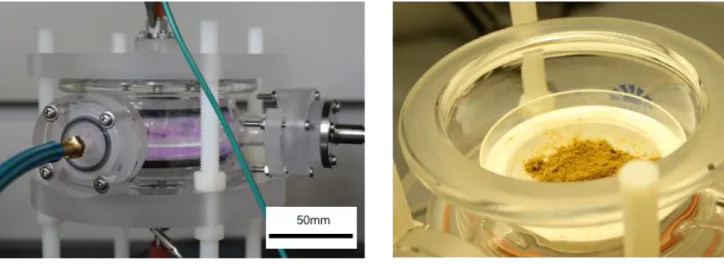
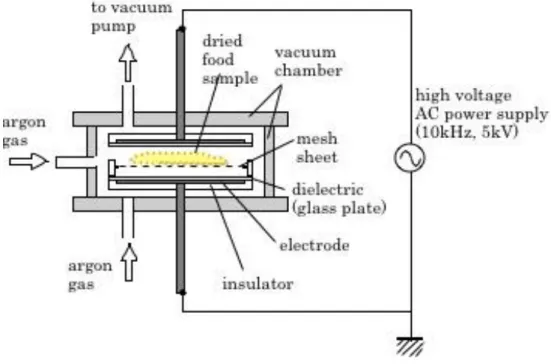
(24) 3. Effectiveness of Heat and Low-Pressure Plasma Treatment. 3. Effectiveness of Heat and Low-Pressure Plasma Treatments. 3.1. Introduction Food safety should be guaranteed for the consumers and programs that initiate preventive measures must be highlighted (Farkas, 1998). Additionally, elimination of pathogens is important for the health sector, specially considering the effect food-borne diseases can have on the immunocompromised (Farkas, 1998). Methods with less damaging effects and those which generate the least non-toxic residues, with short processing time are the best choice for decontamination (Selucka et al., 2008). With the growing rise in bacterial and fungal contamination of foods, and the adverse effects of various decontamination methods, research on alternative methods of decontamination has become of utmost importance. Decontamination and other processes, like freezing, drying, pasteurization, or sterilization, are employed to extend shelf-life (Master et al., 2004). As mentioned in the preface, various methods are currently being used in the decontamination of food such as gamma-irradiation, pulsed electromagnetic field, fumigation with ethylene oxide, steam treatment and through the use of chemicals (Juri et al., 1986; Chemat et al., 2011; Eliasson et al., 2015). These methods, although highly effective, has presented itself with several disadvantages, therefore the journey for alternative methods still continues. Heat is one of the most accepted decontamination methods in current field (Eliasson et al., 2015). Although studied vastly, its application on a wide variety of samples to asses the response of organisms’ survival on foods is limited. Most studies focus on it’s use on the pasteurization of liquids, its effects on food after converting it to liquid form, insect removal or the effects of heat damage (Lurie et al., 1998). The current study assessed its role in the pasteurization of raw, dried and semi-dried foods. Treatments in which the temperature is. 21.
(25) 3. Effectiveness of Heat and Low-Pressure Plasma Treatment. between 60 to 80 C is considered pasteurization (Adams and Moss, Food Microbiology). Even so its use has been associated with the loss of nutritional value and taste. There has been a rising interest in using non-thermal technologies for food decontamination, particularly to avoid a loss of product quality, including nutrient loss and the alterations of sensory attributes (Birmpa et al., 2014). New “green and innovative” methods of decontamination have become even more desirable, which generally involves less water, time and energy (Chemat et al., 2011). These methods include ultrasound-assisted processing,. extrusion,. microwave. processing,. superficial. fluid. extraction,. pulse. electromagnetic field, subcritical water extraction and high pressure (Chemat et al., 2011). Studies on the use of high-pressure plasma in the food industry have proven effective in the the complete inactivation of microorganisms (Matser et al., 2004). Moreover, these methods are still new to the industry, hence their development continues, but they have proven to be beneficial for the environment as they do not generate fossil fuels or harmful residues (Chemat et al., 2011). Unfortunately, some of these methods are costly, which may become a hurdle in the food industry of Bangladesh. Another method, examined in this study, is low-pressure plasma treatment for the inactivation of microorganisms, previously applied in the medical field as an alternative to medical instrument sterilization, and recent times has seen the spread of its application to agriculture (Nishioka et al., 2014). Plasma is composed of ionized gases, radicals, excited atoms and molecules, and free electrons and it is a highly generalized fourth state matter (Basaran et al., 2008). The following method involves the discharge of plasma, distributing gas in combination with ions, electrons and radicals, which inactivate the organisms upon interaction (von Keudell et al., 2010). It relies on the gas to spread antimicrobial active species during the treatment (Basaran et al., 2008). The treatments can be carried out with low temperature and no chemical use is required, therefore the possibility of damage to the. 22.
(26) 3. Effectiveness of Heat and Low-Pressure Plasma Treatment. food and the presence of harmful residue is unlikely (Selcuka et al., 2008). Its effect on microorganism growth on artificial surfaces has been widely studied, but its application on the food industry has not been explored (Basaran et al., 2008). One of the benefits of low-pressure plasma treatment includes its low cost since it doesn't use vacuum equipment to produce the plasma (Nishioka et al., 2014). Studies using low-pressure plasma. treatment have also showed the possibility of increasing seed. germination rate (Dhayal et al., 2006). Additionally, the plasma discharge can reach all samples in a uniform manner, no matter the complexity, while maintaining low temperatures hence samples remain unchanged (Selcuka et al., 2008). For this reason, the current study assessed the effects of bacterial and fungal growths on dried foods after treatment with heat and low-pressure plasma in comparison with that of heat. This study hopes to asses the effectiveness of low-pressure plasma treatment, in an attempt to build the scope of application of the treatment in the food industry.. 3.2. Material and Methods 3.2.1. Sample All samples were collected from super markets and open markets of Dhaka, Bangladesh. Dried and Semi-dried foods were transported by airplane to Kindai University. Raw foods were examined in Stamford University Bangladesh in Dhaka. 3.2.2. Heat treatment Samples were placed in a sterile petri dish and subjected to dry heat in a sterilizer set to 60 C. The samples were treated for 30 minutes, 1 hour and 2 hours. 3.2.3. Low-Pressure Plasma Treatment Seven samples including chili powder, cumin powder, ginger powder, coriander powder, poppy seeds, turmeric powder and pine nuts were subjected to low-pressure plasma treatment.. 23.
(27) 3. Effectiveness of Heat and Low-Pressure Plasma Treatment. About two grams of each samples were placed in the center of the plasma discharge chamber, on top of the mesh sheet, between electrodes (Fig.1). An argon gas inflow system and a pump was connected to the chamber. The flow rate of argon gas was 0.5 L/min and the running pressure was sustained at 10.7 kPa. The plasma was generated by AC high voltage and the frequency and amplitude of voltage of power supply were 10 kHz and 5 kV, respectively. Samples underwent plasma treatment at 4 intervals from 5 min to 40 min, coupled with a 5 min pre-treatment prior to every time interval. The schematic diagram of low-pressure plasma machine outlining the structure, voltage, gas flow and sample positioning is presented in Fig. 2.. Fig 1: Low-pressure plasma treatment machine. 24.
(28) 3. Effectiveness of Heat and Low-Pressure Plasma Treatment. Fig 2: Schematic diagram of low-pressure plasma machine. 3.2.4. Bacterial and Fungal Analysis Ten grams of sample, after heat treatment, were placed in stomacher bag and 90 mL of sterilized physiological saline was added. 18 mL saline was added to the 2 grams of samples, after low-pressure plasma treatment. This was followed by 10-fold serial dilution and plated on Nutrient Agar and Sabouraud dextrose agar and incubated at 37C for 2 days and 25C for 5 days, respectively. Resulting colonies were counted and cfu/g was determined.. 3.2.5. Morphological change of test bacteria treated with low-pressure plasma sterilization machine by scanning electron microscopy Scanning electron microscopy was used to the test bacteria to validate the effects of lowpressure plasma treatment on the bioburden bacteria isolated from the test samples. Samples were inoculated on Mannitol Salt Agar and Sabouraud Dextrose Agar, upon identifying the bacteria through characteristic appearance and growth colonies along with the detection kits. 25.
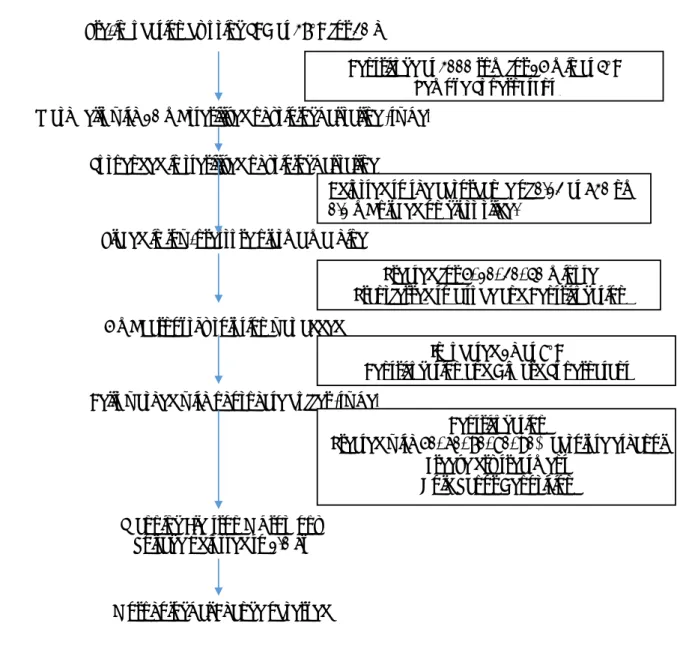
(29) 3. Effectiveness of Heat and Low-Pressure Plasma Treatment. (api staph and api 50 CHB/E, Biomerieux). The full method is described below and summarized in the flowchart below (Fig. 3).. Pre-incubation by using SCD at 37°C for 20 h Centrifuge at 3000 rpm for 15 min at 4°C Remove Supernatant Wash cells with 10 mL sterilized physiological saline (twice) Suspended in sterilized physiological saline Adjusted to the absorbance of 0.12 at 630 nm 0.1 mL placed on glass slide. ).20 Placed in low-pressure plasma machine. 5 mL Karnovsky solution was added. Treated for 5, 10, 20, 40 minute Transferred to a tube and Centrifugation Centrifuged. Incubated 1h at 8°C Centrifugation and Discard Supernatant Transferred to a tube and Centrifugation Cells washed with phosphate buffer (twice) Centrifuged Centrifugation Treated with 50, 60, 70, 80, 90% absolute ethanol Freeze dry treatment Gold Vapor Deposition Scanning Electron Microscopy Voltage Adjusted to 1.0 kv. Morphological Change observed. Fig 3. Flowchart of scanning electron microscopic methods. 26.
(30) 3. Effectiveness of Heat and Low-Pressure Plasma Treatment. Each test bacteria were pre-incubated by using SCD (Nihon Pharm. Co., Ltd.) broth at 37℃ for 20 hour. Bacterial suspension was placed into the sterilized plastic tubes, and centrifuged at 3000 rpm for 15 min at 4℃. After discarding the supernatant solution, the cells were washed with 10 mL of the sterilized physiological saline twice. Bacterial cells were re-suspended with sterilized physiological saline, and adjusted to the absorbance of 0.12 at 630 nm. The cell suspension (0.1 mL) was placed onto each slide glass. The slide glass was placed in the center position of low-pressure plasma machine, and the plasma was irradiated for 5, 10, 20 and 40 min, respectively. After irradiation of plasma, the sterilized physiological saline (10 mL) was added into each petri dish containing the test bacteria treated by plasma, and the test bacteria treated were recovered. This treatment was repeated again, and total bacterial suspension were transferred into the plastic tube. After centrifugation at 3000 rpm for 15 min at 4 ℃ , 5 mL of modified karnovsky solution (karnovsky, 1965) (a mixture of 1% glutaraldehyde and 1% paraformaldehyde) was added into each tubes, and incubated for 1 hour at about 8℃. After centrifugation at 3000 rpm for 15 min at 4℃, the supernatant solution was discarded. Karnovsky solution (5 mL) was added, and incubated for 1 h at about 8℃. The supernatant solution was discarded, and rest of the cells was washed by the sterilized phosphate buffer (pH 7.2) twice. After centrifugation at 3000 rpm for 15 min at 4℃, the cells were treated by 50%, 60%, 70%, 80%, 90% ethanol and absolute ethanol, respectively. After freeze dry treatment, treated samples were transferred to each tape for measuring scanning electron microscopy, and vapor deposition of gold was performed. Accelerating voltage was adjusted to 5.0 kV and scanning electron microscopic study was performed by Hitachi High Technology Series SU 3500 with each treated samples under high vacuum condition. The morphological change of the test bacteria by low-pressure plasma treatment was observed.. 27.
(31) 3. Effectiveness of Heat and Low-Pressure Plasma Treatment. 3.2.6. Measuring the effects of heat and low-pressure plasma on bacterial and fungal growth The data collected, in the previous section (Chapter 2), on the bacterial and fungal growths in different types of food were converted to log cfu/g. This number was subsequently, used as an initial count of growth prior to treatment (0 min). Colonies counted after heat treatment 30 minutes, 1 hour and 2 hours and after treatment with low-pressure plasma for 5, 10, 20 and 40 minutes were also converted to log cfu/g. Log reduction between 0 minutes to 2 hours (heat) and 0 to 40 minutes (plasma) was determined by subtracting log values at 0 minute from log values at final treatment time.. 3.3. Results 3.3.1. Effects of Heat Treatment on the bacterial and fungal counts The decrease of bacterial growth in semi-dried and dried foods, as a result of heat treatments, can be observed in Table 6. For most samples tested minor reductions in growth was observed after 30 minutes, remaining below 1 log reduction, 22 % of the samples, demonstrated higher log reductions. Average bacterial counts in log cfu/g for 0 minutes, 30 minutes, 1 hour and 2-hour treatment was 4.73, 3.96, 3.49, and 2.96, respectively. As the time of treatment increased, more significant results were observed. After 2 hours of heat treatment absolute growth reduction was observed in 3 samples (Tamarind, chick peas and dates).. Table 6. Effects of heat on bacterial in dried and semi-dried foods (log cfu/g) Samples Chili. 0 min 5.04. 30 min 5.20 28. 1 hour 5.11. 2 hour 3.46.
(32) 3. Effectiveness of Heat and Low-Pressure Plasma Treatment. Turmeric Cumin Cashew Pine Nuts Raison Dates Saffron Nutmeg Garam Masala Garlic Powder Ginger Powder Coriander Powder Paprika Powder Poppy Seeds Thyme Cut Red Peppers White Pepper Parsley Bay Leaves Fenugreek Celery Pistachio Cloves Peanuts Chick Peas Lentil Rice Mace Dabli Basil Nigella Seeds Sesame Seeds Mustard Seeds Almond Cardamom Kidney Plum Honey Melon Cherry Tomato Pineapple Rock Melon Sweet Mango Cinnamon Kiwi Tamarind. 5.23 4.42 3.78 4.04 4.08 4.47 4.38 6.36 4.65 4.57 4.23 4.18 6.08 3.92 4.83 3.60 3.23 4.49 4.04 4.32 5.85 6.08 3.00 2.60 3.00 4.79 6.28 6.00 6.11 4.85 4.93 3.97 5.40 5.23 6.18 6.28 6.18 4.28 6.11 4.23 4.70 4.53 4.65 4.25 4.00. 5.14 4.18 3.30 3.40 2.95 2.30 4.32 5.32 4.29 4.04 3.72 4.08 5.29 3.76 3.00 3.70 4.26 5.34 4.00 4.20 6.41 5.20 2.59 3.00 2.62 4.23 2.70 4.18 2.00 6.32 4.11 5.41 3.93 2.70 4.48 3.60 3.00 3.00 5.18 3.30 4.00 2.70 4.04 3.78 3.70 *ND: Not detected.. 29. 4.30 3.98 2.00 3.08 2.00 2.00 4.08 3.30 4.18 4.18 3.59 4.00 4.97 3.32 3.70 3.36 4.11 5.32 3.72 3.88 5.32 4.40 2.39 2.48 2.00 4.20 2.00 3.75 2.00 5.32 4.30 2.39 4.14 2.00 3.86 3.00 3.00 3.73 4.99 2.30 3.79 2.00 3.70 3.30 2.00. 3.88 4.30 2.70 2.00 3.00 ND 4.00 4.11 2.00 3.48 4.08 3.65 4.36 3.30 3.85 2.30 2.95 2.00 3.08 3.08 5.70 3.70 2.00 2.70 ND 3.93 2.00 3.93 2.00 3.00 3.95 3.85 3.32 3.00 2.00 2.00 2.00 3.00 4.11 2.00 2.90 2.00 4.30 3.00 ND.
(33) 3. Effectiveness of Heat and Low-Pressure Plasma Treatment. Table 7. Effects of heat on the fungal growth in dried and semi-dried foods (log cfu/g) Samples Chili Turmeric Cumin Cashew Pine Nuts Raison Dates Saffron Nutmeg Garam Masala Garlic Powder Ginger Powder Coriander Powder Paprika Powder Poppy Seeds Thyme Cut Red Peppers White Pepper Parsley Bay Leaves Fenugreek Celery Pistachio Cloves Peanuts Chick Peas Lentil Rice Mace Dabli Boot Basil Nigella Seeds Sesame Seeds Mustard Seeds Almond Cardamom Kidney Beans Plum Honey Melon Cherry Tomato Pineapple Rock Melon Sweet Mango Cinnamon. 0 min 4.46 4.59 3.08 4.58 2.60 4.00 2.00 2.30 7.20 5.11 6.08 3.04 4.04 6.46 4.60 4.52 4.66 4.62 4.57 4.75 4.47 4.48 6.04 4.47 3.78 3.00 2.79 6.32 5.32 6.28 6.18 6.34 4.57 4.89 6.40 5.20 6.32 4.54 4.26 4.34 4.20 4.32 4.48 4.51. 30 min 4.20 4.40 2.60 3.30 2.30 3.30 1.50 3.30 6.36 4.08 5.00 4.08 4.26 6.18 4.30 2.70 3.81 2.69 4.30 3.30 4.12 5.00 5.32 4.00 3.76 2.75 2.00 2.00 3.11 3.51 6.36 4.40 4.08 4.11 3.99 3.60 2.70 3.18 3.48 3.68 2.00 3.70 3.30 2.30. 30. 1 hour 4.34 4.30 2.40 2.60 2.00 2.00 ND 3.30 5.34 4.15 4.15 3.99 4.11 6.00 4.30 2.30 2.00 4.11 4.15 2.00 3.86 4.30 5.04 3.40 2.30 2.25 2.00 2.00 2.90 3.00 6.18 4.30 3.99 4.14 3.00 3.30 2.30 2.00 3.86 4.36 3.60 2.00 3.70 2.70. 2 hour 4.11 1.04 2.04 2.00 2.00 2.00 ND 2.00 5.11 3.89 3.72 2.48 3.77 5.89 3.65 2.00 2.30 3.80 3.48 2.69 3.62 4.00 4.70 3.27 2.00 ND 2.00 2.00 2.00 2.00 4.04 3.88 3.30 3.83 2.00 3.00 2.00 2.00 2.47 3.70 2.00 3.00 2.30 2.48.
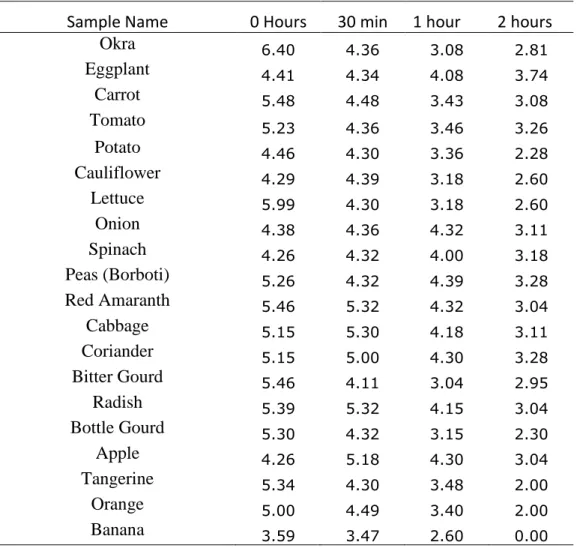
(34) 3. Effectiveness of Heat and Low-Pressure Plasma Treatment. 4.15 4.61. Kiwi Tamarind. 3.00 3.00 *ND: Not detected.. 3.70 2.00. 2.60 ND. The decrease of fungal growth in dried foods and semi-dried, as a result of heat treatments can be observed in Table 7. Similar to the results of bacterial counts, significant reductions were observed after 1 and 2 hours of treatment. Average fungal counts in log cfu/g for 0 minutes, 30 minutes, 1 hour and 2 hours treatment was 4.64, 3.66, 3.34 and 2.83, respectively. Additionally, a decrease in fungal growth was observed with increase in treatment time. 2 samples expressed results different from the pattern, while 3 samples showed absolute reduction of growth after 1 and 2 hours of treatment.. Table 8. Effect of heat on the bacterial counts in raw foods (log cfu/g) Sample Name Okra Eggplant Carrot Tomato. 0 Hours. 30 min. 1 hour. 2 hours. 6.40. 4.36. 3.08. 2.81. 4.41. 4.34. 4.08. 3.74. 5.48. 4.48. 3.43. 3.08. Potato Cauliflower Lettuce Onion Spinach Peas (Borboti) Red Amaranth Cabbage Coriander Bitter Gourd Radish Bottle Gourd Apple Tangerine Orange Banana. 5.23. 4.36. 3.46. 3.26. 4.46. 4.30. 3.36. 2.28. 4.29. 4.39. 3.18. 2.60. 5.99. 4.30. 3.18. 2.60. 4.38. 4.36. 4.32. 3.11. 4.26. 4.32. 4.00. 3.18. 5.26. 4.32. 4.39. 3.28. 5.46. 5.32. 4.32. 3.04. 5.15. 5.30. 4.18. 3.11. 5.15. 5.00. 4.30. 3.28. 5.46. 4.11. 3.04. 2.95. 5.39. 5.32. 4.15. 3.04. 5.30. 4.32. 3.15. 2.30. 4.26. 5.18. 4.30. 3.04. 5.34. 4.30. 3.48. 2.00. 5.00. 4.49. 3.40. 2.00. 3.59. 3.47. 2.60. 0.00. 31.
(35) 3. Effectiveness of Heat and Low-Pressure Plasma Treatment. Guava 4.15 4.36 Mango 4.20 4.07 Pears 4.29 4.30 Green Apple 3.94 3.41 Green Grape 3.54 3.48 Dragon fruit 4.04 3.18 Papaya 4.11 4.00 Sapodilla 5.43 4.18 Berry 3.90 5.48 Wax apple 4.40 4.32 Wood Apple 5.56 4.40 Sugar cane 4.46 4.36 Swamp Barb (Puti) 6.32 6.30 Stinging Catfish (Shingi) 5.48 4.30 Tengra 5.48 5.30 Indian Mottle eel (Bair) 5.48 5.30 Scribbled Gobi (Bele) 6.48 5.40 Yellow Tail (kechki) 5.48 4.57 Mozambique Tilapia 6.48 5.58 Bata 6.48 5.48 Fresh Water garfish (Kaika) 6.49 5.43 Dwarf Gourami (Khoilsha) 5.32 5.28 Walking Catfish (Koi) 6.51 5.26 Olive barb (Sharpoti) 5.49 5.39 Annandale Loach (Gutum) 5.41 4.15 Ganjer river spiral (Kechi) 5.43 5.45 Square head Catfish (Cheka) 4.48 4.55 Rohu 5.48 4.15 Pabo catfish (Pabda) 4.48 4.32 Prawn 5.36 5.54 Golden Mahseer (Mohosho) 4.38 4.20 *ND: Not Detected.. 3.47. 2.00. 3.15. 2.95. 3.34. 2.70. 2.30. 0.00. 2.00. 0.00. 2.48. 0.00. 3.48. 2.70. 3.54. 2.30. 4.57. 3.14. 3.08. 2.00. 4.00. 3.32. 3.85. 2.30. 5.08. 3.20. 3.14. 2.28. 4.14. 3.11. 4.18. 3.30. 4.46. 3.11. 3.28. 2.30. 4.08. 3.48. 4.18. 3.39. 4.96. 3.38. 4.28. 3.38. 4.18. 3.30. 4.39. 3.40. 3.56. 2.30. 4.95. 3.26. 3.23. 2.36. 3.34. 2.48. 4.04. 3.78. 4.32. 3.04. 3.15. 2.90. The decrease of bacterial growth in raw foods, as a result of heat treatments can be observed in Table 8. Average bacterial counts in log cfu/g for 0 minutes, 30 minutes, 1 hour and 2 hours treatment was 5.07, 4.62, 3.72 and 2.66, respectively. Treatment (1 and 2 hours) yielded high levels of microbial growth reductions.. 32.
(36) 3. Effectiveness of Heat and Low-Pressure Plasma Treatment. Table 9. Effects of heat on the fungal growth in raw foods (log cfu/g) Sample Name. 0 hours. 30 min. 1 hour. 2 hour. Okra Eggplant Carrot Tomato Potato Cauliflower Lettuce Onion Spinach Peas (Borboti) Red Amaranth Cabbage Coriander Bitter Gourd Radish Bottle Gourd Apple Tangerine Orange Banana Guava Mango Pears Green Apple Green Grape Dragon fruit Papaya Sapodilla Berry Wax apple Wood Apple Sugar cane Swamp Barb (Puti) Stinging Catfish (Shingi) Tengra Indian Mottle eel (Bair) Scribbled Gobi (Bele) Yellow Tail (kechki) Mozambique Tilapia Bata Fresh Water garfish (Kaika) Dwarf Gourami (Khoilsha) Walking Catfish (Koi) Olive barb (Sharpoti) Annandale Loach (Gutum) Ganjer river spiral (Kechi). 5.34 4.41 4.46 4.45 4.20 4.26 5.46 4.38 4.23 5.46 5.38 4.08 4.15 5.45 5.11 5.04 4.18 4.08 4.11 3.97 3.57 4.15 4.15 3.46 3.15 3.86 4.00 4.18 3.81 4.36 4.28 4.32 4.04 4.48 6.46 4.46 5.49 4.23 5.45 4.46 4.48 4.98 4.11 4.26 3.99 4.18. 3.60 3.74 3.77 3.88 4.04 4.04 3.99 4.36 4.34 3.93 4.32 3.98 4.18 3.90 4.51 3.04 3.32 3.26 3.40 3.40. 2.78 2.85 2.30 2.48 3.36 3.85 2.70 3.85 3.08 2.95 3.18 3.00 3.32 2.85 3.04 2.90 2.48 2.30 2.00 2.00 2.85 0.00 2.30 2.90 2.95 2.00 3.70 2.30 2.23 0.00 3.30 3.70 2.40 3.38 3.30 4.43 3.30 4.26 3.40 3.08 3.18 3.78 3.32 2.30 3.26 3.18. ND ND ND ND. 33. 3.95 3.18 3.48 3.26 3.60 3.04 3.26 4.18 3.54 3.32 2.00 4.36 4.08 3.60 4.40 4.26 5.36 4.46 5.58 4.69 4.28 4.11 4.30 4.32 3.40 4.28. 2.28 2.00 ND 2.00 2.90 ND 2.95 2.00 2.90 ND 2.00 ND ND ND ND ND ND ND ND ND ND ND ND ND ND ND 2.60 2.30 0.00 2.85 2.90 2.85 2.11 3.45 2.08 2.15 2.26 2.30 2.60 ND 2.18 2.00.
(37) 3. Effectiveness of Heat and Low-Pressure Plasma Treatment. Square head Catfish (Cheka) 4.08 4.36 Rohu 4.04 3.53 Pabo catfish (Pabda) 4.28 4.28 Prawn 4.32 3.18 Golden Mahseen (Mohosho) 4.30 4.23 *ND: Not Detected.. 2.00 3.20 2.95 3.91 2.78. ND 2.48 ND 2.00 ND. The decrease of fungal growth in raw foods, as a result of heat treatments can be observed in Table 9. Average fungal counts in log cfu/g for 0 minutes, 30 minutes, 1 hour and 2 hours’ treatment was 4.43, 3.91, 2.88, and 1.16, respectively.. 3.3.2. Total log reductions from 0 to 2 hours Average log reductions of bacterial growth (Table 10) was 2.11 log cfu/g, and average log reductions of fungal growth (Table 11) was 2.55 log cfu/g. Reductions in dried and semi-dried foods were slightly below that of raw foods.. Table 10. Total log reductions (log cfu/g) of bacterial growth after heat treatments from 0 to 2 hours. Sample Name Okra Eggplant Carrot Tomato Potato Cauliflower Lettuce Onion Spinach Peas (Borboti) Red Amaranth Cabbage Coriander. Log Reduction 3.59 0.67 2.40 1.97 2.18 1.69 3.39 1.27 1.08 1.98 2.42 2.04 1.87. Sample Name Papaya Sapodilla Berry Wax apple Wood Apple Sugar cane Swamp Barb (Puti) Stinging Catfish (Shingi) Tengra Indian Mottle eel (Bair) Scribbled Gobi (Bele) Yellow Tail (kechki) Mozambique Tilapia. 34. Log Reduction 1.41 3.13 0.76 2.40 2.24 2.16 3.12 3.20 2.37 2.18 3.37 3.18 3.00.
(38) 3. Effectiveness of Heat and Low-Pressure Plasma Treatment. Bitter Gourd Radish Bottle Gourd Apple Tangerine Orange Banana Guava Mango Pears Green Apple Green Grape Dragon fruit. 2.51 2.35 3.00 1.22 3.34 3.00 3.59 2.15 1.25 1.59 3.94 3.54 4.04. Bata Fresh Water garfish (Kaika) Dwarf Gourami (Khoilsha) Walking Catfish (Koi) Olive barb (Sharpoti) Annandale Loach (Gutum) Ganjer river spiral (Kechi) Square head Catfish (Cheka) Rohu Pabo catfish (Pabda) Prawn Golden Mahseer (Mohosho). 3.09. Cloves Peanuts Chick Peas Lentil Rice Mace Dabli Basil Nigella Seeds Sesame Seeds Mustard Seeds Almond Cardamom Kidney Plum Honey Melon Cherry Tomato Pineapple Rock Melon Sweet Mango Cinnamon Kiwi Tamarind. 1.00 0.10 3.00 0.86 4.28 2.07 4.11 1.85 0.98 0.08 2.08 3.23 4.18 4.28 4.18 1.28 2.00 2.23 1.80 2.53 0.35 1.25. Sample Name. Log. 3.11 1.94 3.21 2.09 3.11 2.17 2.12 3.00 0.70 2.32 1.48. Chili 1.58 Turmeric 1.35 Cumin 0.12 Cashew 1.08 Pine Nuts 2.04 Raison 1.08 Dates 4.47 Saffron 0.38 Nutmeg 2.25 Garam Masala 2.65 Garlic Powder 1.09 Ginger Powder 0.15 Coriander Powder 0.53 Paprika Powder 1.72 Poppy Seeds 0.62 Thyme 0.98 Cut Red Peppers 1.33 White Pepper 0.28 Parsley 2.49 Bay Leaves 0.96 Fenugreek 1.24 Celery 0.15 4.00 Pistachio 2.38 Table 11. Total log reductions (log cfu/g) of fungal growth after heat treatment from 0 to 2 hours. Sample Name. Log. 35.
(39) 3. Effectiveness of Heat and Low-Pressure Plasma Treatment. Reduction Okra Eggplant Carrot Tomato. 5.34 4.41 4.46 4.45. Potato Cauliflower Lettuce Onion Spinach Peas (Borboti) Red Amaranth Cabbage Coriander Bitter Gourd Radish Bottle Gourd Apple Tangerine Orange Banana Guava Mango Pears Green Apple Green Grape Dragon fruit. 1.92. Chili Turmeric Cumin Cashew Pine Nuts Raison Dates Saffron Nutmeg Garam Masala Garlic Powder Ginger Powder Coriander Powder. 0.35 3.55 1.04 2.58 0.60 2.00 2.00 0.30 2.09 1.22 2.36 0.56 0.27. 2.26 5.46 2.38 1.33 5.46 2.43 2.08 1.25 5.45 3.11 5.04 4.18 4.08 4.11 3.97 3.57 4.15 3.46 3.15 3.86 4.00. Reduction Papaya Sapodilla Berry Wax apple. 4.00. Wood Apple Sugar cane Swamp Barb (Puti) Stinging Catfish (Shingi) Tengra Indian Mottle eel (Bair) Scribbled Gobi (Bele) Yellow Tail (kechki) Mozambique Tilapia Bata Fresh Water garfish (Kaika) Dwarf Gourami (Khoilsha) Walking Catfish (Koi) Olive barb (Sharpoti) Annandale Loach (Gutum) Ganjer river spiral (Kechi) Square head Catfish (Cheka) Rohu Pabo catfish (Pabda) Prawn Golden Mahseer (Mohosho). 4.28. Cloves Peanuts Chick Peas Lentil Rice Mace Dabli Basil Nigella Seeds Sesame Seeds Mustard Seeds Almond Cardamom Kidney. 1.20 1.78 1.00 0.79 4.32 3.32 4.28 2.14 2.46 1.27 1.06 4.40 2.20 4.32. 36. 4.18 3.81 4.36 4.32 4.04 4.48 6.46 4.46 5.49 4.23 5.45 4.46 4.48 4.98 4.11 4.26 3.99 4.18 4.08 4.04 4.28 4.32 4.30.
(40) 3. Effectiveness of Heat and Low-Pressure Plasma Treatment. Paprika Powder Poppy Seeds Thyme Cut Red Peppers White Pepper Parsley Bay Leaves Fenugreek Celery Pistachio. 0.57 0.95 2.52 2.66 0.80 1.09 2.06 0.85 0.48 1.34. Plum Honey Melon Cherry Tomato Pineapple Rock Melon Sweet Mango Cinnamon Kiwi Tamarind. 2.54 1.79 0.64 2.20 1.32 2.18 2.03 1.55 2.61. 3.3.3. Bacterial and Fungal counts after low pressure plasma treatment. Table 12. Effects of plasma treatment on bacterial and fungal growth (log cfu/g). Bacterial Growth Sample. 5 min. 10 min. 20 min. 40 min. Coriander Powder Chili Powder Poppy Seeds Ginger Powder Cumin Powder Turmeric Powder Pine Nuts Fungal Growth Sample. 1.30 2.40 0.70 2.30 2.10 3.30 1.18. 1.30 2.30 0.30 2.20 2.40 2.40 1.00. 1.30 1.30 ND 1.30 1.30 2.30 0.18. 0.96 0.30 ND 1.14 1.11 1.30 ND. 5 min. 10 min. 20 min. 40 min. Coriander Powder Chili Powder Poppy Seeds Ginger Powder Cumin Powder Turmeric Powder Pine Nuts. 1.20 2.30 1.50 1.50 2.00 2.00 1.00. 2.10 1.30 0.30 2.00 1.40 1.00 0.40. 1.00 1.20 0.30 0.90 0.70 1.00 ND. 0.93 0.11 0.74 0.63 0.93 0.28 ND. 37.
(41) 3. Effectiveness of Heat and Low-Pressure Plasma Treatment. Average bacterial counts after plasma treatment (Table 12) were 1.9, 1.7, 1.28, 0.962 log cfu/g for 5, 10, 20 and 40 minutes, respectively. The average fungal counts were 1.64, 1.21, 0,85 and 0.60 log cfu/g for 5, 10, 20 and 40 minutes, respectively. The treatment eliminated microorganism’s growth in pine nuts as treatment time increased.. 3.3.4. Total Log Reductions after low-pressure plasma treatment. Sample. Bacterial Growth Log 0 min. Fungal Growth Log 0 min. reduction. Coriander Powder Chili Powder Poppy Seeds Ginger Powder Cumin Powder Turmeric Powder Pine Nuts. 6.36 6.05 4.11 4.70 3.48 6.48 3.34. 5.40 5.75 4.11 3.56 2.37 5.18 3.34. treatment (log cfu/g). 38. reduction. 4.56 4.08 4.30 6.54 3.08 5.04 2.60. 3.63 3.97 3.56 5.91 2.15 4.76 2.60. Table 13. Total log reductions after lowpressure plasma.
(42) 3. Effectiveness of Heat and Low-Pressure Plasma Treatment. The initial count with no treatment had an average of 4.90 log cfu/g for bacterial count and 4.31 log cfu/g for fungal counts. Average log reductions were 4.34 log cfu/g and 3.80 log cfu/g for bacterial and fungal counts, respectively.. Table 14. Comparison of the effects of both treatments Sample. Coriander Powder Chili Powder Poppy Seeds Ginger Powder Cumin Powder Turmeric Powder Pine Nuts. Heat Treatment Bacterial 0.53 1.58 0.62 0.15 0.12 1.35 2.04. Total Log Reduction Low-Pressure Plasma Treatment Funga1 Bacterial Fungal 0.27 5.40 3.63 0.35 5.75 3.97 0.95 4.11 3.56 0.56 3.56 5.91 1.04 2.37 2.15 3.55 5.18 4.76 0.60 3.34 2.60. A comparison of the results of both treatments can be seen in Table 14. Bacterial and Fungal log reduction of low-pressure plasma treatments were greater than that of heat. On average, low-pressure plasma had log reductions which were 3.43 log cfu/g and 2.75 log cfu/g more than that of heat treatment for bacteria and fungus, respectively.. 3.3.5. Morphological change of test bacteria treated with low-pressure plasma by scanning electron microscopy. Fig. 4 and Fig 5 show the result of morphological changes in bacteria after treatment with a low-pressure plasma machine. An increase in time of treatment has resulted in the. 39.
(43) 3. Effectiveness of Heat and Low-Pressure Plasma Treatment. breakdown of Bacillus spp. (Fig. 4). Similarly, low-pressure plasma treatments have also resulted in the breakdown of Staphylococcus spp. (Fig 5). In these test results low-pressure plasma treatment would be good and suitable tool for the killing of bacteria contaminating foods.. Fig. 4. Fig.2. Scanning Electron Microscopy Image of Bacillus spp. after low-pressure plasma treatment. Scale bar: 20 μm. Fig. 5. Scanning Electron Microscopy Image of Staphylococcus spp. after low-pressure plasma treatment. Scale bar: 20 μm. 3.4. Discussion. 40.
(44) 3. Effectiveness of Heat and Low-Pressure Plasma Treatment. Food-borne illnesses continues to have an adverse affect on the health of the society as a whole, therefore, studying safe, cheap and effective methods of decontamination of foods have become imperative. Current study assessed the effectiveness of heat and lowpressure plasma treatment for the decontamination of dried, semi-dried and raw foods. These methods will help to produce foods that are free of microorganisms and free of any harmful residues. Heat, currently being assessed, is a conventional method that is easily reproducible, in the resource poor settings of a Bangladesh whereas low-pressure plasma is an eco friendly method whose application in the food industry has not yet been explored. Growth reductions were observed in all samples subjected to heat treatments, with raw foods exhibiting elevated log reduction numbers. This can be attributed to the low water activity of spices and herbs, these conditions do not favor the growth of vegetative bacteria but do support the growth of spore forming bacteria, which may not be affected by heat treatments (Eliasson et al., 2015). Among semi-dried and dried foods, powdered spices demonstrated lower log reductions. All raw foods demonstrated similar log reductions. Previous studies, by Lurie et al. (1998), have suggested that heat is more effective in eliminating the growth of fungus, which is supported by the current study, where average fungal reduction were significantly higher for raw foods and slightly higher in dried and semi dried foods, when compared to that of bacterial reduction. Heat was successful in completely halting the growth of microorganisms in 3 dried and semi-dried food samples and 4 raw samples demonstrated a halt in bacterial growth. Interestingly, in the case of log reduction of fungal counts in raw foods demonstrated many samples with absolute growth reductions. Previous studies by Border and Rice-Spearman (1999) were able to observe complete halt in growth after 30 seconds when directly heating bacterial cultures. Benefits of heat include increased storage life, yet there are factors to consider, such as heat tolerance limit and the temperature and time required to to decontaminate while. 41.
(45) 3. Effectiveness of Heat and Low-Pressure Plasma Treatment. avoiding damage (Paul and Chen, 2000; Piyasena et al., 2003). Although studies have suggested the possible loss of quality as a result of heat treatments, it still follows the ideal treatment guidelines, as it leaves no residue (Matser et al., 2004; Selcuka et al., 2008). Heat has long been used to decontaminate milk, with sufficient historic data proving its role reducing the incidence of food-borne and water-borne illnesses associated with raw milk from a previous 25% to 1% currently (Claeys et al., 2013). Aside from loss of nutrients some other reported disadvantages may include decrease in seed germination (Selcuka et al., 2008). Plasma treatments act by breaking down the whole cell, inactivating them or making them unculturable (Cappellas et al., 2000; Selcuka et al., 2011). This can be seen in the images produced by the scanning electron microscopy from the validation study (Fig. 4 and Fig. 5) demonstrating the breakdown of Staphylococcus spp. and Bacillus spp. after treatment. The treatments have expressed a log reduction of bacterial growth between 2.37 and 5.75 and a fungal log reduction of 2.15 to 5.91. The log reductions were almost 6.00, hence plasma was able to nearly eliminate the growth of microorganisms. It has even shown complete elimination of microbes and fungus after treatments of 20 to 40 minutes in some samples. Previous studies by Nishioka et al. (2014) showed a 97% decrease in fungal growth in seeds, while Selcuka et al. (2011) saw a 3 log reduction in fungal growth. These results were similar to our findings. It is to be noticed that most previous studies have not focused on the growth reductions of bacteria, after treatment. The current study will provide vital information on the effects of low-pressure plasma on bacterial and fungal growth in foods. The purpose of examining the effects of low-pressure plasma treatment on foods was to begin studies into its implementation in the food industry. Various reviews have contemplated its effectiveness but none have quantified them, which was an objective of the current study. This study has observed higher log reductions in low-pressure plasma in comparison to heat. Plasma treatments are applied in a gas form which spreads uniformly and. 42.
図



+7


関連したドキュメント
H ernández , Positive and free boundary solutions to singular nonlinear elliptic problems with absorption; An overview and open problems, in: Proceedings of the Variational
Keywords: Convex order ; Fréchet distribution ; Median ; Mittag-Leffler distribution ; Mittag- Leffler function ; Stable distribution ; Stochastic order.. AMS MSC 2010: Primary 60E05
Therefore, with the weak form of the positive mass theorem, the strict inequality of Theorem 2 is satisfied by locally conformally flat manifolds and by manifolds of dimensions 3, 4
It is suggested by our method that most of the quadratic algebras for all St¨ ackel equivalence classes of 3D second order quantum superintegrable systems on conformally flat
In Section 3, we show that the clique- width is unbounded in any superfactorial class of graphs, and in Section 4, we prove that the clique-width is bounded in any hereditary
Inside this class, we identify a new subclass of Liouvillian integrable systems, under suitable conditions such Liouvillian integrable systems can have at most one limit cycle, and
Greenberg and G.Stevens, p-adic L-functions and p-adic periods of modular forms, Invent.. Greenberg and G.Stevens, On the conjecture of Mazur, Tate and
The proof uses a set up of Seiberg Witten theory that replaces generic metrics by the construction of a localised Euler class of an infinite dimensional bundle with a Fredholm
