510
日 本 化 学 療 法 学 会 雑 誌N O V. 2 0 1 3
【短 報】
呼吸器感染症に対する
biapenem
による24
時間持続点滴における血中濃度の推移と有用性増渕 健1)・石塚 隆雄1)・徳江 豊2)・土橋 邦生3)
1)公立富岡総合病院内科*
2)群馬大学医学部附属病院感染制御部
3)群馬大学大学院保健学研究科
(平成
25
年3
月21
日受付・平成25
年9
月9
日受理)呼吸器感染症における
biapenem
(BIPM)の24
時間持続点滴による血中濃度測定をすることにより,十分な血中濃度が得られているかどうかを検討したので報告する。
20
歳以上90
歳以下で,中等症以上と 判定された呼吸器感染症を対象とし,低用量群は,BIPMを初回に0.3 g
を1
時間で点滴した後,0.6 g を23
時間持続点滴し,2
日目以降は,0.6 g
を24
時間持続点滴した。高用量群は,初回に0.6 g
を1
時間 で点滴した後,1.2 gを23
時間持続点滴し,2日目以降は,1.2 gを24
時間持続点滴した。症例は,男性7
例,女性5
例で,中等症2
例,重症10
例であった。基礎疾患として,脳梗塞後遺症,肺癌,心不全,慢性呼吸不全が
1
例ずつ,糖尿病が2
例,COPD,気管支拡張症が,それぞれ 3
例,1
例は基礎疾患を認 めなかった。点滴開始後12
時間以降の血漿中BIPM
濃度は,低用量群で0.8〜2.5 μ g! mL,高用量群で 2.2〜6.9 μ g! mL
であった。Key words: biapenem,pneumonia,efficacy,safety,continuous infusion
カルバペネム系薬は,
PK-PD
の理論からいくと,BIPM
の
T>MIC
は少なくとも17% 以上,50% は確保するこ
とが重要だといわれている1)。
BIPM
の血中濃度を維持す る方法として24
時間持続点滴法があるが,現在,臨床で のBIPM
の24
時間持続点滴による血中濃度測定をして いる文献は少なく,十分な血中濃度が得られているかは わかっていない。そこで,用法・用量は逸脱しているが,十分な
T>MIC
を得られることができるか,24
時間持続点滴を臨床の場で検証した。
群馬大学を中心とした多施設共同研究でのプロトコー ルに基づき,公立富岡総合病院内科に入院加療を必要と し,ラインを確保している
20
歳以上90
歳以下の中等症 以上の呼吸器感染症患者を対象とした。実施にあたって は,群馬大学医学部附属病院のGCP
(Good Clinical Prac-tice)に基づき組織された臨床試験審査委員会の承認を
受け,インフォームドコンセントによる承諾を得た患者 を対象とした。症例の詳細は,男性7
例,女性5
例で,中等症
2
例,重症10
例であった。基礎疾患として,脳梗 塞後遺症,肺癌,心不全,慢性呼吸不全が1
例ずつ,糖尿病が
2
例,COPD,気管支拡張症が,それぞれ 3
例,1
例は基礎疾患を認めなかった(Table 1)。
投与量および投与間隔は,健常成人における薬物動態 パラメーターを用いて,解析ソフト
WinNonlin Ver.4.1A
によるシミュレーションに基づき,主要菌種のMIC
90を十分超える血中濃度を検討し,低用量群および高用量群 の
2
つの投与方法を選択した。低用量群は,BIPM
を初回 に0.3 g
を1
時間で点滴した後,0.6 g
を23
時間持続点滴 し,2
日目以降は,0.6 g
を24
時間持続点滴した。高用量 群は,初回に0.6 g
を1
時間で点滴した 後,1.2 gを23
時間持続点滴し,2
日目以降は,1.2 g
を24
時間持続点滴 した。BIPM
の血中濃度測定については,血中濃度が主要 菌種のMIC
90を十分超えているかを検討するために,患 者背景を考慮せずに,全12
例についてHPLC
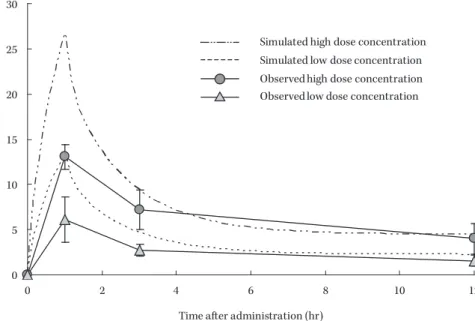
法により 測定した(Fig. 1)。各症例の点滴開始後12
時間以降の血 漿中BIPM
濃度は,低用量群で0.8〜2.5 μ g! mL,高用量
群で2.2〜6.9 μ g! mL
であった(Table 1)。検討にあたって,シミュレーションと実測の血中濃度 に差が出たことについては,カルバペネム系薬の特性(血 清の保存・輸送状態)により,大きく左右されるため,
ピークに誤差が生じたと推測されるが,
12
時間後の血中 濃度を見てみると,シミュレーションと類似しており,T>MIC
をキープするために十分な血中濃度が維持されたと考えられる。
さらに本試験では,
Loading Dose
として,0.6 g
を初回 時に1
時間かけて投与しているが,12
時間後の血中濃度 を見てみると,Loading Dose
を実施しなくても血中濃度 が維持できる可能性が示唆された。今後のさらなる検証 が必要である。*群馬県富岡市富岡
2073―1
VOL. 61 NO. 6 Biapenem
の持続点滴における血中濃度の推移511
Table 1. Patient profiles, clinical summary and penetration of biapenem Case No. Sex Age (y) Pneumonia Severity Diagnosis eGFR BUN Baseline pathogen MIC ( μ g/mL) Clinical outcome Bacteriological efficacy Dose group
Plasma concentration (μ g/mL) Pleural effusion concentration ( μ g/mL) 1 hr 3 hrs 12 hrs 1 M 80 Severe Sequelae of brain infarction 53.3 19 MRSA Failure Persisted Low dose 5.1 3.4 1.7 2 M 68 Severe Diabetes Mellitus 60 > 28 Staphylococcus aureus (MSSA) Cure Eradication Low dose 3.3 2 1.2 3 M 73 Severe Lung cancer 60 > 46.3 Unknown Cure Indeterminate Low dose 9.3 2.4 1.4 4 M 79 Severe COPD 60 > 17.3 Unknown Cure Indeterminate High dose 12.3 5.9 2.9 5 M 73 Severe COPD 60 > 20.1 Unknown Cure Indeterminate Low dose 2.5 6 M 66 Severe Bronchiectasis, cardiac failure, Mitral stenosis 60 > 17.8 Unknown Cure Indeterminate Low dose 6.7 3.2 1.8 7 F 55 Severe Serious pneumonia, ARDS, DIC, MOF 38.2 53.2 Streptococcus pneumoniae < 0.03 Failure Decreased High dose 2.2 6.2 8 F 83 Severe COPD, Hypertension 59.2 30.3 Unknown Cure Indeterminate High dose 11.8 5.9 3.9 9 F 50 Moderate Bronchiectasis 60 > 9.8 Unknown Cure Indeterminate High dose 15.4 11 6.9 10 F 3 8 Moderate Bronchiectasis 60 > 9.3 Unknown Cure Indeterminate Low dose 0.8 11 F 8 6 Severe Bronchiectasis, Chronic respiratory insufficiency 60 > 14.9 Unknown Cure Indeterminate High dose 13.1 6.8 3 12 M 8 5 Severe Diabetes Mellitus 60 > 15 Unknown Cure Indeterminate High dose 12.7 6.2 5
起炎菌は,MSSA,MRSA,Streptococcus pneumoniae が,それぞれ
1
例で,9例は起炎菌を同定できなかった。細菌学的効果については,
MSSA, S.pneumoniae
について は,除菌された。MRSA症例に関しては,菌培養前にBIPM
が投与され,MRSAが検出されたため,投与を中 止し,無効とした。また,
BIPM
のin vitro
の抗菌力を見てみると,MSSA,
MRSA, S. pneumoniae, Moraxella catarrhalis, Pseudomonas aeruginosa
およびHaemophilus influenzae
に対して,それ ぞれ,0.12,32, 0.25, 0.06, 4, 8 μ g! mL
である2)。BIPM
の血中濃度が菌のMIC
を上回ったのは,主要6
菌種中,低用量群の
0.8〜2.5 μ g! mL
に対して,3菌種(カバー 率:50.0%),高 用 量 群 の2.2〜6.9 μ g ! mL
に 対 し て,4 菌種(カバー率:66.7%)であった。副作用は,0.6 g!
day
使用した低用量群1
例に,AST,ALT, ALP
の上昇がみられたが,軽度であり,12
時間後 の血中濃度は,1.8μ g ! mL
と高いものではなかった。血 中濃度との相関は低いものと考えられ,治療の中断は必 要とせず,投与終了に伴い,速やかに改善した。さらに試験終了後,医療従事者に今回の投与法につい て,その有用性を聴取した。その結果,投与回数が減る こと,薬剤の溶けやすさ,
Na
が含まれていないなど,看 護効率の簡素化や感染リスクの軽減,医療過誤の防止が 実感でき,非常に有用性の高い投与法であるとの評価を 得た。今回,
BIPM
の24
時間持続点滴による血中濃度を測定 することによって,主要菌種のMIC
以上の濃度が,ほぼ 確保できていることが確認でき,PK-PD
の理論より,今 回の血中濃度が維持できれば,十分な殺菌効果が期待で きると考えられる。また,血中濃度を持続して維持する ことによってBIPM
の効果が高まると い う 報 告 も あ る3)。今までに
24
時間持続点滴による血中濃度を測定して いるデータはほとんどなく,臨床上,十分な血中濃度が 得られているのかを検討することは,有用性を図るうえ で非常に重要であると考える。最後に,本稿を終えるにあたり,
BIPM
による24
時間 点滴の臨床研究を取り纏めいただいた,公立富岡総合病 院内科副院長 飯塚邦彦先生ならびに,ご協力いただいた 諸先生方に深謝いたします。512
日 本 化 学 療 法 学 会 雑 誌N O V. 2 0 1 3
Fig. 1. Plasma concentration profiles after administration of biapenem. Open circle and square represent the observed data, high dose (n=6) and low dose (n=6), respectively. Broken line and dotted line rep- resent the simulation of plasma concentration profiles, high dosage and low dosage, respectively.
30
25
20
15
10
5
0
0 2 4 6 8 10 12
Time after administration (hr)
P la sm a co ncentr a tio n ( μ g/ m L )
Simulated high dose concentration Simulated low dose concentration Observed high dose concentration Observed low dose concentration
文 献
1)
Takata T, Aizawa K, Shimizu A, Sakakibara S, Watabe H, Totsuka K: Optimization of dose and dose regimen of biapenem based on pharmacokinetic and pharmacodynamic analysis. J Infect Chemother 2004; 10: 76-85
2) 渡辺 彰,徳江 豊,高橋 洋,菊池 暢,小林隆夫,
五味和紀,他:1996年〜1998年に分離された呼吸器
由来の各種病原細菌に対する
biapenem
(BIPM)のin vitro
抗菌力。Jpn J Antibiot 1999; 52: 690-43)
Kikuchi E, Kikuchi J, Nasuhara Y, Oizumi S, Ishizaka
A, Nishimura M : Comparison of the pharmacody-
namics of biapenem in bronchial epithelial lining
fluid in healthy volunteers given half-hour and three-
hour intravenous infusions. Antimicrob Agents Che-
mother 2009; 53: 2799-803
VOL. 61 NO. 6 Biapenem
の持続点滴における血中濃度の推移513
Changes in blood concentration and usefulness of 24-hour continuous infusion of biapenem for treating respiratory tract infection
Ken Masubuchi
1), Takao Ishizuka
1), Yutaka Tokue
2)and Kunio Dobashi
3)1)
Internal Medicine, Tomioka Public General Hospital, 2073―1 Tomioka, Tomioka, Gunma, Japan
2)
Infection Control and Prevention Center, Gunma University Hospital
3)