LAND TENURE SYSTEM AND SOIL FERTILITY STATUS FOR ADOPTION OF SAWAH
TECHNOLOGY IN NIGERIA AND GHANA
(
ナイジェリアとガーナにおけるSawah
技術採用のための、土地保有制と土壌肥沃度状態に関する研究
)
ALARIMA CORNELIUS IDOWU 2014
THE UNITED GRADUATE SCHOOL OF AGRICULTURAL
SCIENCES, TOTTORI UNIVERSITY
THE UNITED GRADUATE SCHOOL OF AGRICULTURAL SCIENCES, TOTTORI UNIVERSITY
LAND TENURE SYSTEM AND SOIL FERTILITY STATUS FOR ADOPTION OF SAWAH TECHNOLOGY
IN NIGERIA AND GHANA
THESIS BY
ALARIMA CORNELIUS IDOWU
(D11A4006B)
In Partial Fulfilment of the Requirement for the Award of Degree of
DOCTOR OF PHILOSOPHY
At
COURSE OF GLOBAL ARID LAND SCIENCE
THE UNITED GRADUATE SCHOOL OF AGRICULTURAL SCIENCES, TOTTORI UNIVERSITY
2014
THE UNITED GRADUATE SCHOOL OF AGRICULTURAL SCIENCES, TOTTORI
UNIVERSITY
LAND TENURE SYSTEM AND SOIL FERTILITY STATUS FOR ADOPTION OF SAWAH TECHNOLOGY
IN NIGERIA AND GHANA
ALARIMA CORNELIUS IDOWU
MARCH
2014
Approval Sheet
This thesis enclosed herewith, “Land Tenure System and Soil Fertility Status for Adoption of Sawah technology in Nigeria and Ghana”, prepared and submitted by ALARIMA Cornelius Idowu in partial fulfilment of the requirement for the award of the degree of Doctor of Philosophy , is hereby approved as to style and contents.
By
……….
Professor Tsugiyuki MASUNAGA
(Academic Supervisor and Chairman of Examination Committee)
FACULTY OF LIFE AND ENVIRONMENTAL SCIENCE, SHIMANE UNIVERSITY,
JAPAN
Dedication
This work is dedicated to:
My Late Parents; High Chief Raphael Adefemi ALARIMA and Mrs Phebean Moyosola ALARIMA for the sound up-bringing given to me.
My Children; Moyinoluwa Oluwatobiloba ALARIMA and Oluwafikunayomi Moyosoreoluwa ALARIMA for their patience during my sojourn in Japan.
All sawah farmers in Nigeria who have been working hard to achieve the much anticipated Green Revolution (GR) in Nigeria.
i
Acknowledgements
I give all the Glory, honour and adoration to God for his love and protection throughout the period of my study. I thank God for his mercies over me during the course of this programme.
I give special thanks to my supervisor, Prof Tsugiyuki MASUNAGA for his unalloyed support and his guidance while the programme lasted. I appreciate your contributions towards the success of this work. God in his infinite Mercies will continue to bless you.
My special thanks to my father and mentor in Japan; Prof (Emeritus) Toshiyuki Wakatsuki for his love and interest in the success of this work. I am very grateful to you sir, and I pray that God will continue to bless you.
I am highly indebted to Japanese Government through the Ministry of Education, Culture, Sports, Science and Technology (MEXT) who granted me scholarship for my Ph.D and provided a conducive atmosphere for my study.
I appreciate the support from my late parents High Chief Raphael Adefemi ALARIMA and Mrs Phebean Moyosola ALARIMA for laying a solid foundation for me. My gratitude goes to my brothers; Adefemi Bamidele, Alarima Kayode and Alarima Muyiwa and my sister Gabriel Kehinde for their support.
I wish to express my appreciations to Dr Tola Sunday, Olanrewaju Theo Bello, Hassan Rasaq, Abiodun Adebayo, Bodunwa Isaiah Adegoriola, Mr and Mrs Mathew Ogunseye, Agoye Kayode. Mr Kayode Adekoya, Mr Dayo Adekoya, Mr Tosin Adekoya, Ms Bosede Adekoya, Ms Seun Adekoya and Mr John Durosimi.
I wish to express my appreciation to my teachers and colleagues at the University of Agriculture Abeokuta. They include Prof Olugbenga Ladebo, Dr Mubo Awotunde, Prof.
Steven Afolami, Dr (Mrs) Adamu, Prof Apantaku, Prof Omotayo, Prof Fakoya, Dr (Mrs) Sodiya, Dr Eniola Fabusoro, Dr Banmeke, Dr (Mrs) Oluwakemi Fapojuwo, Dr lawal- Adebowale, Dr (Mrs) Ashimolowo, Dr Adebayo, Mr Aromolaran, Mrs Tosin Adeyeye, Prof and Prof (Mrs) Dipeolu, Dr Sunday Adigbo, Dr Mutiu Busari and Dr Idris Ayinde.
ii
To all members of Soil and Ecological Engineering Laboratory, Shimane University; Dr Kuniaki Sato, Dr Noriko Iwashima, Dr Takuya Matsumoto, Dr Aflizar, Mr Juan Damian marques Fong, Adha Sirega, Ito Yumi, Ashan Mohamad Rasipoor, Yuko Hazegawa, Masami Kuroiwa, I say thank you for your support.
My sincere appreciation goes to the Pastor and all the members of Matsue Gospel Church for their Love, understanding and most importantly prayers. May the Good Lord continue to uphold you.
I want to express my gratitude to all the sawah team in Nigeria, Prof Idowu Oladele, Dr Segun Ademiluyi, Dr Kolawole Ayo, Mr Niyi Agboola, Mr Joshua Aliyu (Baba Sawah), Mr John Nwite, Dr Sunday Obalum, Mr Baba Titus, Mr Ashaolu John, Mr Dada-Joel Temitope, Mr Sabo, Mr Adekunle and Mr Arokoyun. I appreciate the support and cooperation of all the sawah farmers in Nigeria during the period of data collection.
My sincere appreciation goes to Prof Hiroaki Ishiga of Geoscience Department of Shimane University for his assistance during my analyses. My thanks to the Dr Adebayo Badejo, Mr Austine Okeke, Mr Bah Malick, Mr Tolno Emmanuel, Mr Eltayeb, Mr Yashir, Mr Sunday O.
A., Mr Mhya for their support and encouragement.
To all that have contributed in one way or the other to the success of this study that have not been mentioned, I appreciate you all. May God bless you all.
Finally, I want to express my profound gratitude to my immediate family; My Wife Iyabode Modupeola Alarima for her support and understand while the programme lasted; my son Moyinoluwa Oluwatobi ALARIMA for his patience during the course of this programme and my daughter, Oluwafikunayomi Moyosoreoluwa ALARIMA for her support. May God continue to bless you all and keep the family united.
Thank you all.
iii
TABLE OF CONTENTS
Contents Page
Acknowledgements i
Table of Contents iii
List of Tables vii
List of Figures x
CHAPTER 1
GENERAL INTRODUCTION 1
1.1. Rice Production and Consumption in Nigeria 1.2. Sawah Technology
1.3. Sawah Hypotheses
1.4. Adoption of Agricultural Technology 1.5. Adopter Categories
1.6. Sawah Road Map and Justification for this study 1.7. Objectives of the study
1.8. Experience from Ghana sawah development 1.9. References
CHAPTER 2
Factors Affecting the Adoption of Sawah Technology System of Rice
Production in Nigeria 14
2.1. Introduction
2.2. Adoption of Agricultural Technology 2.3. Method
2.4. Result and Discussion 2.5. Conclusion
2.6. References CHAPTER 3
Effect of Land Tenure on Adoption of Sawah Rice Production
iv
System in Nigeria 36
3.1. Introduction
3.2. Sawah Technology in Nigeria 3.3. Methodology
3.4. Result and Discussion
3.5. Conclusion and Recommendations 3.6. References
CHAPTER 4
Land Rights and Rental Systems: Implications for Management of Conflicts Related to Land in Sawah-Based Rice Production
Systems in Nigeria 49
4.1. Introduction
4.2. Land Rights Regime in Nigeria 4.3. Study Area
4.4. Methodology
4.5. Results and Discussion
4.6. Conclusions and Recommendations 4.7. References
CHAPTER 5
Constraints to Sawah Rice Production System in Nigeria 83 1.1. Introduction
1.2. Factors Affecting Adoption of Agricultural Technology 1.3. Methodology
1.4. Results and Discussion 1.5. Conclusion
1.6. Recommendations 1.7. References
CHAPTER 6
Training and Sawah Development 104
6.1. Knowledge and Training Needs of Farmers Adopting Sawah
v Rice Production Technology in Nigeria
6.1.1. Introduction 6.6.2. Method
6.1.3. Result and Discussion
6.1.4. Conclusions and recommendations 6.1.5. References
6.2. Assessment of Professional Competencies and Training Need of Extension Agents for Sustainable Sawah Development in Nigeria 6.2.1. Introduction
6.2.2. Research Methodology 6.2.3. Results and Discussion
6.2.4. Conclusion and Recommendations 6.2.5. References
CHAPTER 7
Physico-chemical and geochemical properties of sawah soils
of inland valleys in Nigeria 139
7.1. Introduction
7.2. Materials and Methods 7.3. Results
7.4. Discussion 7.5. Conclusion 7.6. References
CHAPTER 8
Micronutrient availability in sawah soils of inland valleys
in Nigeria 165
8.1. Introduction
8.2. Materials and Methods 8.3. Results
8.4. Discussion 8.5. Conclusion
vi 8.6. References
CHAPTER 9
Determinants of Adoption of Sawah Rice Technology among
Farmers in Ashanti Region of Ghana 177
9.1. Introduction 9.2. Literature Review 9.3. Methodology
9.4. Result and Discussion 9.5. Conclusion
9.6. References CHAPTER 10
Soil property change during the period of 2000 - 2011 across land use types along the topo-sequences in inland
valley watershed of Ashanti region, Ghana 197
10.1. Introduction
10.2. Material and Methods 10.3. Results and Discussion 10.4. References
CHAPTER 11
Summary 216
APPENDICES
APPENDIX 1 222
Survey Instrument
APPENDIX 2 250
Analytical result of soil properties
LIST OF PUBLICATIONS 264
vii List of Tables
CHAPTER 2
Table 1: Socio-economic and farming characteristics of the respondents Table 2: Awareness and Level of adoption of sawah ecotechnology package Table 3: Reasons for the adoption of sawah ecotechnology rice production Table 4: Factors affecting the adoption of sawah technology
Table 5: Regression analysis between adoption level and other study variables CHAPTER 3
Table 1: Result of Regression Analysis between Adoption and Land tenure systems CHAPTER 4
Table 1. Socioeconomic characteristics of respondents Table 2. Land rental in sawah-based rice production Table 3. Sources of land in the study area
Table 4. Land rights of landlords and tenants
Table 5. Land-related constraints and severity of constraints Table 6. Land-related conflict management at the research sites
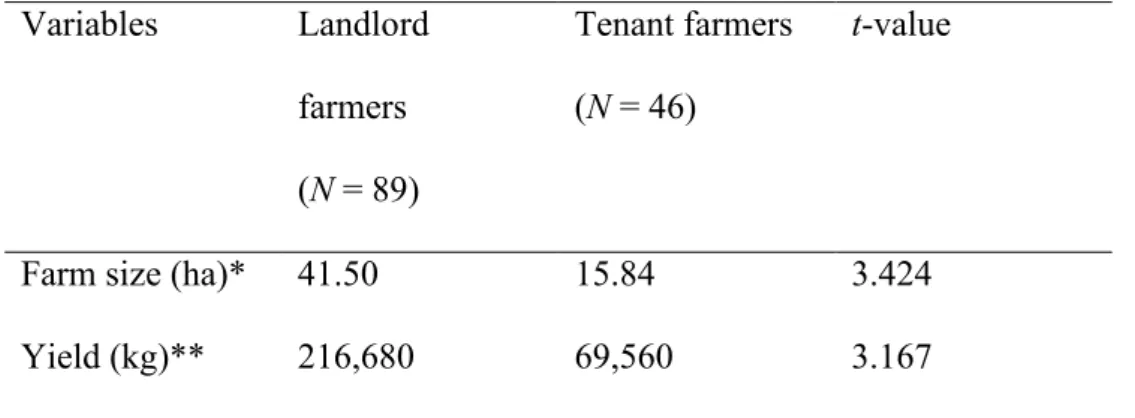
Table 7. Difference in the yields and farm sizes of landlord and tenant farmers
CHAPTER 5
Table 1: Constraints faced by Sawah farmers
Table 2: Farmers’ attitude and perception of sawah technology Table 3: Correlation matrix of the study variables
viii
Table 4: Regression analysis showing the relationship between Yield and constraints CHAPTER 6
Table 1: Cropping pattern and use of sawah technology among respondents Table 2: Knowledge of sawah technology among the respondents
Table 3: Information source about sawah among respondents
Table 4: Areas of training needs among the respondents in order of priority Table 5: Types training respondents are willing to attend
Table 6: Correlation matrix showing correlation between study variables
Table 7: Result of regression analysis showing relationship between study variables Table 8. Distribution of the respondents by their personal characteristics
Table 9: Respondents’ sources of information about sawah technology Table 10: Distribution of respondents by their training on sawah technology
Table 11: Distribution of Professional competencies required by the extension agents Table 12: Preferred training methods used by the extension agents
Table 13. Regression analysis showing the relationship between some variables CHAPTER 7
Table 1: Sampling locations
Table 2: Top Soil Physico-chemical properties of sawah soils in Nigeria
Table 3: Topsoil total elements of sawah soils in Nigeria
Table 4: Correlation matrix between topsoil fertility parameters of sawah soils in Nigeria
CHAPTER 9
Table 1. Topsoil Micronutrients of Sawah soils in Nigeria
Table 2. Correlation Coefficient between Micronutrients and other Fertility Parameters
CHAPTER 8
Table 1. Description of the variables of the study
Table 2. Regression between Adoption and Predictor variable
ix CHAPTER 10
Table 1. Validation of analytical errors for comparing two different periods of analysis using the same sample sets.
Table 2a: Changes in Soil fertility parameters between 2000 and 2011 in Fallow Table 2b: Changes in Soil fertility parameters between 2000 and 2011 in Sawah
Table 2c: Changes in Soil fertility parameters between 2000 and 2011 in Traditional Rice Table 2d:Changes in Soil fertility parameters between 2000 and 2011 in Traditional Cocoa plot
x List of Figures
CHAPTER 4
Fig. 1. Map of Nigeria showing the study area Fig. 2. Size of farms at sawah sites
CHAPTER 7
Fig 1: Map of Nigeria showing the study locations
CHAPTER 10
Fig 1: showing sampling locations
Fig 2: changes in soil fertility properties between 2000 and 2011
xi
1 CHAPTER 1 General Introduction 1.10. Rice Production and Consumption in Nigeria
Nigeria was traditionally an agricultural country providing the bulk of its own food needs and exporting a variety of agricultural goods such as cocoa, rubber and many other cash crops.
Up till the early 1960’s, Nigeria was self-sufficient in food production (Ojo, 1991). The Nigerian agriculture, with a near total dependence on rain produced food and raw materials to the industrial sector of the economy. With varying agricultural ecologies, Nigeria produces different crops ranging from cash crops like cocoa, coffee, cola nut; tuber crops like yam, cassava, sweet potato; legumes like cowpea, ground nut and cereals like maize, rice, millet and guinea corn. As from 1970, with the oil boom, the decline in farming activities became more pronounced (Oludimu and Imoudu, 1998). There were widening food supply-demand gaps and rising food import bills (Falusi, 1990). The food self-sufficiency index- ratio of aggregate local food supply to the aggregate food demand fell (Rahji, 1999).
Mostly affected among these crops, with high import bill is rice. Rice is one of the most important crops consumed by all Nigerians irrespective of tribe and geographical location.
Nigeria was virtually self-sufficient in rice in the 1960’s and early 1970’s, with imported rice playing an insignificant role in total rice supply and consumption in the country. The quantity imported was on average 1100 Mt for the 1960s and 5800 tonnes for the period 1970-1974.
Import of rice however picked a pace from the year 1976 with an import quantity of 446,000 Mt. In 1990, Nigeria imported 224,000 metric tons of rice valued at US 60 million dollars.
This increased to 345,000 metric tons in 1996 with a value of US130 million dollars. By 2001, rice import increased to 1.51 million metric tons valued at US288.1 million dollars (FAO,
2
1994). These figures indicate a 500 percent rise in foreign exchange expenditure on rice imports within eleven years.
Rice is an internationally consumed staple food cutting across all the continents in the world with Nigeria having great share of world’s rice consumption. Rice is consumed by over 4.8 billion people in 176 countries and is the most important food crop for over 2.89 billion people in Asia, over 40 million people in Africa and over 150.3 million people in America with estimates based on FAO report of 1996 (Daramola, 2005). More than 90% of global production occurs in tropical and semi-tropical Asia (Daramola, 2005). Rice is a major staple food for millions of people in West Africa and the fastest growing commodity in Nigeria’s food basket (Akande, 2003).
Nigeria is the largest producers and leading consumer of rice in Africa and simultaneously one of the largest rice importers in the world. Rice is a very important staple food in the diet of the estimated 120 million Nigerians. It is consumed in various forms but the most popular is as grains. However in recent times, domestic supply has not kept pace with demand as imports have steadily increased faster than domestic supply by accounting for close to 60% of total supply. Despite the high level of consumption of rice in Nigeria, production still remains low with high demand for imported rice. Nigeria consumes more than 5 million metric tons of rice annually. Annual domestic output of rice still hovers around 3.0 million metric tons, leaving the huge gap of about 2 million metric tons annually, a situation, which has continued to encourage dependence on importation (Daramola, 2005). Self-sufficiency in rice production is now an important political-economic goal of the Nigerian government (Bello, 2004)
3
Rice cultivation is widespread within the country extending from the northern to southern zones. Rice is produced in at least 35 of Nigeria’s 37 States, covering three major ecological zones: rain-fed upland, rain-fed lowland and irrigated. Estimates by WARDA (1996), Singh et.al. (1997) and Imolehin and Wada (2000) put potential areas for rice production at 4.6-4.9 million hectares while actual areas under cultivation is 1.77 million hectares leaving a hug area of 3 million hectares uncultivated. A number of factors have been identified as responsible for this gap. Some of the reasons for the gap are connected with the improper production methods, scarcity and high cost of inputs like credit, imported equipment and agrochemicals due to taxes, high transportation costs, absence of extension advice, land tenure system, high cost of fertilizer, rudimentary post - harvest and processing methods, inefficient milling techniques and poor marketing standards particularly in terms of polishing and packaging. Also poor or low mechanization on rice farms means heavy reliance on manual labour to carry out all farm operations (Daramola, 2005). There is therefore a need to improve rice production in Nigeria.
1.11. Sawah Technology
In an effort to improve rice production and reduce over dependence on rice importation to meet the rice demand in Nigeria, sawah technology was introduced to the lowland inland valleys of Nigeria. Sawah refers to man-made improved rice fields with demarcated, levelled, bunded and puddled rice fields with water inlets and outlets which can be connected to various irrigation facilities such as irrigation canals, pond, springs or pumps. The term sawah originated from malayo – Indonesia. The English and French terms, paddy or paddi also originated from Malayo Indonesian term padi which means rice plant. Therefore in order to avoid confusion between upland paddy fields, and man-made levelled , bunded and puddled rice field that is, typically irrigated rice growing environment the authors propose to use the
4
term “sawah” in SSA (Wakatsuki and Buri, 2008). Sawah concept composed of two hypotheses, i.e., Sawah hypothesis 1 (as a scientific platform) and Sawah hypothesis 2 (multi- functionality for intensive sustainability through micro-scale mechanisms in a sawah plot and macro scale mechanisms in watershed scale). Lowland sawah systems can sustainably produce paddies at approximately 2 t/ha without any chemical fertilizer application (Hirose and Wakatsuki 2002, Wakatsuki et al. 2009). Furthermore, lowland sawah systems can support rice cultivation continuously for decades, centuries, or more without any fallow period. According to Wakatsuki et al (2013), sawah ecotechnology involves four important skills and technologies:
(1) Site selection and site-specific sawah system design,
(2) Skills for efficient and cost-effective sawah system development using power tiller, (3) Rice farmers’ socio-economic empowerment for the successful development and management of sawah systems, and
(4) Sawah-based rice agronomy, including variety selection and soil and water management to realize at least the sustainable paddy yield of more than 4t/ha.
As against Sawah systems in Asia and Japan - developed using hundreds and thousands of years with manual labour of farmers using classic and traditional technology - sawah technology developed in Nigeria has unique characters of using power tiller (and may be wetland tractor soon in future). This is an INNOVATION to accelerate irrigated sawah development by farmers’ power themselves in Africa. The sawah technology innovation is unique in terms of development cost (less than 10% compared to contractor based heavy machine used development), speed (1million ha can be developed within decades with proper dissemination systems), and endogenous sustainable development (on-the-job capacity building of million farmers).
5
Sawah system was introduced through on-farm adaptive research in the two research sites of Gara and Gadza inland valleys, located in Bida, Nigeria in 1986 (Hirose and Wakatsuki 2002). On-farm adaptive research and participatory trials on Sawah system research were conducted on the research sites for four years (1986–1990) by Japanese researchers. In partnership with Watershed Initiative in Nigeria, a Non Governmental Organization (NGO), Agricultural Development Project (ADP), Ministry of Agriculture, Niger state and National Cereals Research Institute (NCRI), the dissemination of the sawah technology took off in 2001 from villages previously identified in a diagnostic survey (Oladele and Wakatsuki 2010).
Since then, the dissemination and adoption have continued in other parts of Nigeria.
1.12. Sawah Hypotheses
Sawah Hypothesis (I) for a Green Revolution in Sub-Saharan Africa
The sawah ecotechnology is the prerequisite platform condition for applying the three Green Revolution technologies (Sawah hypothesis 1). The rice GR includes three core technologies – (1) irrigation and drainage, (2) fertilizers and agrochemicals, and (3) the use of HYVs.
Although these three technologies have been available for the past 40 years, they have not been effective in farmers' fields in SSA. In order to apply these scientific technologies, farmers' fields must develop sawah or other similar alternatives, typically in the lowlands that can conserve soil and control water, Sawah hypothesis 1. Irrigation without sawah farming technology has proved inefficient or even damaging because of accelerated erosion and waste of water resources. In the absence of water control, fertilizers cannot be efficiently used.
Therefore, the high yielding varieties perform poorly and soil fertility cannot be sustained, hence GR cannot take place. Essential components with regard to land development are (1) demarcation by bunding based on topography, hydrology, and soils, (2) levelling and
6
puddling to control water and weeds and conserve soil, and (3) water inlets to get water (using various irrigation facilities) and water outlets to drain excess water. These are the characteristics of sawah fields.
Sawah Hypothesis (II) for Intensive Long-term Sustainability and to Combat Global Warming
Sawah technology ensures an intensive long –term sustainability of rice production. Lowland sawah systems can sustainably produce paddies at approximately 2 t/ha without any chemical fertilizer application (Hirose and Wakatsuki 2002, Wakatsuki et al. 2009). Furthermore, lowland sawah systems can support rice cultivation continuously for decades, centuries, or more without any fallow period as against upland slash-and-burn rice fields which hardly sustain paddy yields in excess of 1 t/ha without fertilizer. Upland paddy fields require a fallow period to restore soil fertility, typically 2 years of cultivation and 8 or sometimes more than 15 years of fallow. This means that 1 ha of sustainable upland rice cultivation requires at least additional 5 ha of land. Therefore, the sustainable upland paddy yield is actually not 1 t/ha but less than 0.2 t/ha. In all, the sustainable productivity of sawah-based rice farming is more than 10 times higher than that of the upland slash-and-burn rice method (Sawah Hypothesis 2). It is known to be true based on the long history and experience (not experiments) of sawah-based rice farming in Asia, although no scientific or quantitative confirmation exists yet. We therefore must quantitatively determine the sustainable yields under SSA conditions (Wakatsuki, 2013). It is known that the development of 1ha of lowland sawah field enables the conservation or regeneration of more than 10 ha of forest area. Sawah fields can, therefore, contribute to not only increase food production but also to forest conservation, which in turn enhances the sustainability of intensive lowland sawah systems through nutrient cycling and geological fertilization processes (Wakatsuki, et al., 2013).
7
Traditional non sawah rice Sawah rice
Sawah and traditional rice side by side in Zaria Nigeria. Traditional rice is characterised by poor tillering and weeds. (Photo from Prof Wakatsuki)
8 1.13. Adoption of Agricultural Technology
The use of improved technologies in form of innovations has remained the major strategy used to increase agricultural productivity and promote food and livelihood security among people. Innovation is an idea, practice, or object that is perceived as new by an individual or other unit of adoption (Rogers, 2003). Adoption process is the mental process an individual passes through from first hearing about an innovation to final adoption (Rogers, 2003). For an innovation to be adopted, it must pass through a process of diffusion. Diffusion is the process in which an innovation is communicated through certain channels over time among the members of a social system (Rogers, 2003). Rogers (2003) identifies five attributes upon which determine the adoption of an innovation. These are relative advantage, compatibility, complexity, triability and observability. Relative advantage refers to the degree to which an innovation is perceived as better than the practice it replaces. Relative advantage is often expressed in terms of economic, social or other benefits. Compatibility refers to the degree to which an innovation is perceived by potential adopters to be consistent with their existing values or practices. Compatibility with what is already in place makes the new practice seem less uncertain, more familiar and easier to adopt. Complexity refers to the degree to which an innovation is considered as difficult to understand and use. If potential adopters perceive an innovation as complex, its adoption rate is low. Triability refers to the extent to which an innovation may be subjected to limited experimentation. Finally, observability refers to the degree to which the results of an innovation are visible to others.
Adoption of an innovation involves five stages according to Rogers (2003). These are Knowledge, Persuasion, Decision, Implementation and Confirmation. Knowledge occurs when an individual is exposed to an innovation’s existence and gain an understanding of how
9
it functions. Persuasion occurs when an individual forms a favourable or unfavourable attitude towards the innovation. Decision takes place when an individual engages in activities that lead to a choice to adopt or reject the innovation. Implementation occurs an individual puts a new idea into use. Confirmation takes place when an individual seeks reinforcement of an innovation-decision already made, but he or she may reverse this previous decision if exposed to conflicting messages about the innovation.
1.14. Adopter Categories
Individuals in a social system do not all adopt an innovation at the same time but rather in an over-time sequence (Rogers, 2003). Individual adopter can therefore be categorised on the basis of when they begin using a new idea. Based on the time an individual adopts an innovation, Rogers (2003) categorised adopters into innovators, early adopters, early majority, late majority and laggards. Innovators are the first individuals to adopt an innovation.
Innovators are willing to take risks, youngest in age, have the highest social class, have great financial lucidity, very social and have closest contact to scientific sources and interaction with other innovators. Risk tolerance has them adopting technologies which may ultimately fail. Financial resources help absorb these failures. Early adopters are the second fastest category of individuals who adopt an innovation. These individuals have the highest degree of opinion leadership among the other adopter categories. Early adopters are typically younger in age, have a higher social status, have more financial lucidity, advanced education, and are more socially forward than late adopters. They are more discrete in adoption choices than innovators. Realize judicious choice of adoption will help them maintain central communication position Early Majority adopt an innovation after a varying degree of time.
This time of adoption is significantly longer than the innovators and early adopters. Early Majority tend to be slower in the adoption process, have above average social status, contact
10
with early adopters, and seldom hold positions of opinion leadership in a system. Late Majority will adopt an innovation after the average member of the society. These individuals approach an innovation with a high degree of skepticism and after the majority of society has adopted the innovation. Late Majority are typically skeptical about an innovation, have below average social status, very little financial lucidity, in contact with others in late majority and early majority, very little opinion leadership. Laggards are the last to adopt an innovation.
Unlike some of the previous categories, individuals in this category show little to no opinion leadership. These individuals typically have an aversion to change-agents and tend to be advanced in age. Laggards typically tend to be focused on “traditions”, likely to have lowest social status, lowest financial fluidity, be oldest of all other adopters, in contact with only family and close friends, very little to no opinion leadership.
1.15. Sawah Road Map and Justification for this study
For sawah to achieve the much anticipated Green Revolution (GR) in Nigeria, a road map was drawn by Prof (Emeritus) Toshiyuki Wakatsuki-the leader of sawah team in Africa. This road map outlines the stages sawah will take to achieve self-sufficiency in rice production not only in Nigeria but other countries in Sub Saharan Africa (SSA). The road map is in six stages. Stage 1 spanned between 1986 and 2002. It covered 10 sites, 6ha of sawah and 17 years of trials and errors. It involved basic research to investigate the possibility of sawah development. Stage 2 spanned between 2003 and 2007. It covered 20 sites, 30ha benchmark sites. It involved action research to investigate the expansion of applicability. Stage 3 spanned between 2007 and 2011 and covered 100 sites, with more than 200ha with establishment of 4 sawah technology components. It also involved large-scale action research and On-the-Job training for full scale dissemination. Stage 4 will be between 2012 and 2016 and will cover more than 500 sites, more than 2500ha of sawah in Nigeria and Ghana. It has
11
immediate target to reform the traditional official development assistance (ODA) approach.
Stage 5 will be between 2017 and 2022 and will cover more than 2500 sites, more than 25,000ha of sawah. This will be Africa wide adaptation and dissemination and endogenous sawah technology development. Stage 6 will be between 2022 and 2026 with more than 20000 sites, more than 200,000ha of sawah. This will be African wide spontaneous and rapid sawah expansion for the achievement of GR.
With the completion of stages 1, 2 and 3, there is therefore a need to evaluate the development of sawah technology in Nigeria to chart a way forward for the attainment of stages 4 to 6. In doing this, there is therefore a need to carry out both socio-economic and soil analytical survey. This study will identify the successes achieved and the areas for improvement. It will help in dissemination of sawah technology to other areas where sawah is yet to be adopted. This study therefore aimed at evaluating the socio-economic factors affecting the adoption and dissemination of sawah technology in Nigeria. This study will also investigate the fertility status of sawah soils in Nigeria.
1.16. Objectives of the study The objectives of this study are to:
2. Identify the factors affecting the adoption of sawah technology in Nigeria 3. Determine the effect of land tenure on the adoption of sawah technology 4. Identify the major constraints to adoption of sawah technology
5. Identify the roles of training in adoption of sawah technology
6. Investigate the physico-chemical and geochemical status of the sawah soils in Nigeria.
1.17. Experience from Ghana sawah development
12
Sawah technology was introduced to farmers in Ahafo Ano South district of Ashanti region of Ghana in 1998 through a collaboration of the Council for Scientific and Industrial Research (CSIR) and Japan International Co-operation Agency (JICA) joint study project.
Yield of rice increased from 1.0 t ha-1 under traditional system to over 5.0 t ha-1 using sawah under farmers’ condition within four years. Sawah in Ghana proved to be a better option or alternative to traditional system of rice production.
This study evaluated the factors responsible for the adoption of sawah technology in Ghana with a view of applying same in Nigeria to increase rice production. This study further investigated the degree of soil degradation in Ghana with a decade of adoption of sawah technology with a view of adopting measures aimed at preventing soil degradation in Nigeria as a result of sawah adoption.
The study therefore
1. Identified the determinants of adoption of sawah technology among farmers in Ashanti region of Ghana.
2. It also examined the changes that have occurred in soil chemical parameters along topo-sequence in the watershed of Ashanti region between 2000 and 2011.
1.18. References
Akande, T. (2003): The rice sector in Nigeria. United Nation Crop Project (UNCP) Country Agricultural Project on trade liberalization in Agricultural sector and the environment, Geneva. Pp 10.
Bello, A. (2004): Nigeria Imported $US700 million rice in 2003: Federal Minister of Agriculture and Rural Development –Mallam Adamu Bello in Nigerian Tribune Newspaper.
Monday 7th July, 2004.
13
Daramola, B. (2005): Government policies and competitiveness of Nigerian rice economy, Paper presented at the `Workshop on Rice Policy and Food Security in Sub- Saharan Africa’
organized by WARDA, Cotonou, Republic of Benin.
Falusi, A. O. (1990): Promoting small-holder agricultural development in Nigeria: The ADP experience” Lecture delivered at the Faculty of Agriculture and Forestry Auditorium, University of Ibadan, Nigeria on 29th April,1990.
FAO (1994): Improved Upland Rice Farming Systems. (ed) H.K. Parden, Rome, [1994].
Hirose, S. and Wakatsuki, T. (2002): Restoration of inland valley ecosystems in West Africa.
Norin Tokei Kyokai (Association of Agriculture & Forestry Statistics), Tokyo, pp.572.
Imolehin, E. D. and Wada, A. C. (2000): Meeting the rice production and consumption demands of Nigeria with improved technologies. National Cereals Research Institute Badeggi Niger State, Nigeria. 12p.
Ojo, M. O. (1991): Food Policy and Economic Development in Nigeria. Central Bank of Nigeria: pp: 78.
Oludimu, O. L. and Imoudu, P. B. (1998): Institutional Reforms and Agricultural Development. Triumph Book Publishers. Ijebu-Ode.
Rahji, M. A. Y. (1999): Dimensions of rural poverty and the food self-sufficiency gap in Nigeria. In Poverty Alleviation and Food Security in Nigeria eds Y.L. Fabiyi and E.O. Idowu, Pp 33-37
Rogers, E. M. (2003): Diffusion of innovations (5th Ed.). New York: Free Press
Singh, B. N., Fagade, S., Ukwungwu, M. N., William, C., Jagtap, S. S., Oladimeji, O., Effisue, A. and Okhidievbie, O. (1997): Rice growing environments and biophysical constraints in different agroecological zones of Nigeria. Meteorology Journal 2 (1): 35-44 pp.
Wakatsuki, T. and Buri, M. M. (2008): General concept of “Sawah” system. In Buri, M. M.;
Issaka, R. N. and Wakatsuki, T. (eds). The Sawah System of Rice Production. CSIR-Soil Research institute, Kumasi, Ghana. Pp 6-27.
Wakatsuki, T. Buri, M.M. Oladele, O.I. (2009): West African green revolution by sawah eco-technology and the creation of African SATOYAMA systems, Kyoto Working Papers on Area Studies No. 63 (G-COE Series 61) [Online], Center for Southeast Asian Studies, Kyoto, Japan, p. 30, ISBN: 978 4 901668 63 7, http://www.humanosphere.cseas.kyoto- u.ac.jp/article.php /workingpaper61.
14
Wakatsuki, T., Buri, M. M., Bam, R, Oladele, O.I., Ademiluyi, S.Y., Azogu, I. I. Obalum S.
E. and Igwe, C. A. (2013): Multi-functionality of sawah eco-technology: Why sawah-based rice farming is critical for Africa's Green Revolution http://www.kinkiecotech.jp/
WARDA (1996). West Africa Rice Development Association Annual Report 1996, 59 pp.
CHAPTER 2
Factors Affecting the Adoption of Sawah Technology System of Rice Production in Nigeria.
2.1. Introduction
The food sub-sector of Nigerian agriculture parades a large array of staple crops, due to the variations in the climatic conditions in the country. The food crops include rice, sorghum, maize, millet, rice, wheat, yam, cassava, groundnut, cowpeas and vegetables. Among these food crops, rice is most consumed by many households in Nigeria. Thus, rice has, become a strategic commodity in the Nigerian economy. Rice is an important source of nutrition and one of the major staples which can provide Nigerian population with the nationally required food security (Food and Agriculture Organization (FAO), 2000). An average Nigerian consumes 24.8 kg of rice per year, representing 9 per cent of annual calorie intake (International Rice Research Institute (IRRI), 2001). Nigeria has experienced rapid growth in per capita rice consumption during the last three decades, from 5 kg in the 1960s to 25 kg in the late 1990s (Africa Rice Centre (WARDA), 2003). With this increasing contribution of rice to the per capita calorie consumption of Nigerians, the demand for rice has been increasing at a much faster rate than domestic production and even more than in any other African country since mid 1970s (FAO, 2001).The demand for rice in Nigeria has been soaring. Rising demand was partly the result of increasing population growth, increased
15
income levels, rapid urbanization and associated changes in family occupational structures (Akande, 2003).
Consequently, the Nigerian government has interfered in the rice sector over the past few decades making effort to increase rice production for local consumption. Although rice production in Nigeria has increased during this period but the production increase was insufficient to match the consumption increase with rice imports making up the gap (Erenstein et al., 2003). The need to increase local production necessitated the introduction of sawah technology to enhance domestic production. Sawah refers to man-made improved rice fields with demarcated, levelled, bunded and puddled rice fields with water inlets and outlets which can be connected to various irrigation facilities such as irrigation canals, pond, springs or pumps. The term sawah originated from malayo – Indonesia. The English and French terms, paddy or paddi also originated from Malayo Indonesian term padi which means rice plant. Therefore in order to avoid confusion between upland paddy fields, and man-made levelled , bunded and puddled rice field that is, typically irrigated rice growing environment the authors propose to use the term “sawah” in SSA (Wakatsuki and Buri, 2008). Sawah- based system of rice production was reported to have contributed to the achievement of green revolution in Asia. The speed and scale with which it solved the food problem was remarkable and unprecedented, and it contributed to a substantial reduction in poverty and the launching of broader economic growth in Asia. With green revolution, per capita production of rice has increased from 200kg to more than 250kg in the last 40 years in Asia (Wakatsuki and Buri, 2008). It can overcome soil fertility problems through enhancing geological fertilization process, conserves water resources, and high performance multi-functionality are characteristics of the sawah type wetlands (Oladele and Wakatsuki, 2008). Therefore, with its
16
inherent potential, there is the need to develop a better understanding of the conditions that encourage its sustained adoption.
2.2. Adoption of Agricultural Technology
Adoption process is the mental process an individual passes through from first hearing about an innovation to final adoption (Rogers, 2003). Technology transfer (or extension in a rural context) involves the movement of technical knowledge, ideas, services, inventions and products from the origin of their development (or other location), to where they can be put into use. Technology adoption is the implementation of this transferred knowledge about an innovation, and is the end product of extension (Rogers, 2003).
Farmers may reject or abandon many technologies that have been proved useful, and adopt others in their place since they consider a variety of factors in deciding whether or not to adopt particular innovation (McDonald and Brown, 2000). Various factors have been considered in adoption studies. For instance, Clearfield & Osgood (1986) considered individual characteristics of farmers (e.g. age, off-farm employment, and social participation) and attitude variables, such as risk orientation, and non-economic orientation towards farming. Others studies focused on farm characteristics (e.g. farm size), wealth indicators (e.g.
livestock numbers) and on the availability and profitability of the technology (Doss, 2006).
Sall et al. (2000) and Wortman and Kirungu (1999) reported that not only farm and farmers' characteristics, but also farmers' perceptions of technology-specific characteristics significantly influence adoption decisions relating to improved rice varieties.
17
Focusing primarily on the initial stages of green revolution technology adoption and diffusion, Feder et al. (1985) concluded that farm size, risk and uncertainty, human capital, labour availability, credit constraints, and tenure security were the most important factors determining adoption decisions. Kolawole et al. (2003) reported on Nigerian farmers who abandoned a technology due to natural hazards and emerging economic constraints. Lapar and Ehui (2004) found out that farmers who are more educated, have higher income, and have access to credit are more likely to adopt the innovation. Moreover, location of the farm in respect to the availability of innovation also plays a critical role in adoption. Chi (2008) in a study to determine the factors affecting technology adoption among rice farmers in the Mekong Delta reported that farmers’ perception and education, extension workers’
knowledge, ways of organization and management of extension programs, and physical conditions of the area influenced adoption among the farmers. Tiamiyu et al. (2009) also reported that technology adoption and productivity difference among growers of New Rice for Africa in savanna zone of Nigeria was affected significantly by farmers’ level of education, extension visits, rice farming experience, tenure status, credit use and level of rice commercialization. Farm size, type of ecosystem, tillage type, education, population pressure on land farmers’ age and non-farm income were found to be positively and significantly related to adoption and use intensity of chemical fertilizer, while field distance to the village, gender, access to credit and labour availability had an indirect relationship with adoption and use intensity of chemical fertilizer were found to affect Fertilizer adoption by rice farmers in Bende local government area of Abia State, Nigeria (Onyenweaku et al.,2007).
Adesina (1996) found that the major factors that affect farmers’ use of fertilizers in rice fields, are cultivation of lowlands, use of mechanization, farm size, type of rice ecosystem, tillage methods, cultivated area, land pressure faced by households, availability of non-farm
18
income, the distance of the field to the village, distance of the village to the major market, and gender of the field owner. Family size, membership in social institutions, rate of participation in extension activities and number of extension contacts were also identified as the socio-personal characteristics affecting the adoption of rice-fish culture system in North of Iran (Niyaki and Allahyari, 2010). Malian et al. (2004) in a study to determine the factors affecting production, consumption and price of rice, and inflation in food sector found that previous paddy harvest, area cultivated , rice import, price of urea-based fertilizer, real exchange value, and domestic rice price influence rice production.
Since sawah technology aims at achieving green revolution in Nigeria through the improvement in rice production, a study of the factors affecting the adoption and continued use of the sawah technology is pertinent. The need to examine the factors affecting the adoption and continued use of the sawah technology is no other time but now. This study therefore aimed at identifying the factors affecting adoption and continuous use of sawah eco-technology system of rice production in Nigeria. Specifically, the study will determine the awareness, level of adoption of sawah eco-technology in Nigeria, reasons for the adoption of sawah system of rice production and the factors affecting the adoption of sawah technology.
2.3. Method
This study was carried out in Nigeria, covering five states and the FCT where sawah is being practiced. The states are Niger, Kaduna, Ondo, Kwara, Ebonyi and Abuja. A list of rice farmers in the villages where sawah technology was disseminated was compiled. One hundred and twenty four farmers in the study locations were interviewed. A structured interview guide was used to elicit information from the farmers. Descriptive statistics were
19
used to analyse the socio-economic and farming characteristics of the farmers and regression analysis was used to determine the relationships between the variables of the study.
The interview guide was divided into five sections. The first section captures the socioeconomic characteristics of the responds. The second section captures the level of awareness and adoption of sawah eco-technology package among the farmers. A 3-point likert scale of Full adoption, partial adoption and discontinued was used. The third section of the data collection captures farmers’ reasons for the adoption of sawah technology rice production system. The forth section addresses the factors affecting the adoption of sawah eco-technology rice production. The last section identifies the constraint faced by the farmers.
20
Farmers being interviewed during the data collection process.
2.4. Result and Discussion
Socio-economic and farming characteristics of the respondents: Table 1 shows the socio- economic and farm characteristics of the respondents. The majority of the respondents are male (98.9%). This shows that male farmers dominated sawah farming in Nigeria. The mean age of the respondents is 42.30 years and 65.40% fell within the productive age of 15-45 years. Most of the respondents are married (98.80%) and 62.70% of the farmers had Quranic education and are Nupes. These findings agree with the findings of Fu et al. (2009) and Oladele and Wakatsuki (2009). Household size of the farmers ranged between 1 and 40 persons (X = 14). Fifty-five percent of the farmers had between 11 and 20 household size.
The advantage of the relatively large household size of the farmers is that the family members could serve as a viable source of farm labour. The mean size of farm devoted to sawah is 0.5ha. However, the majority of the farmers have farm sizes less than 0.5 ha. The
21
mean farmers’ income is ₦151,000 ($1041). Mean farmers’ years of experience in rice production and sawah production are 32 and 6 years respectively. This implies that the respondents have considerable experience in rice production and hence are capable of using sawah technology. Also, farmers' experience in rice production will be of great importance in developing the skills required for sawah rice production. The mean yield of rice from the sawah field is 2.5 tonnes with majority of the farmers (77.30%) having yield of less than 2 tonnes. The yield corresponds with the size of the field. In all, yield of sawah field among the sawah farmers is 4.65 tonnes per hectare. The average distance covered from the farmers’
house to the farm is 0.7km. Also, 33.80% of the farmers have access to extension services but 85.00% have access to a trained contact farmer in sawah technology. Majority of the farmers (97.50%) are members of farmers’ organization and used members of their family as their labour source (53.80%).
Table 1: Socio-economic and farming characteristics of the respondents (N=124)
Characteristics Percentage Mean
Sex Male
Female 98.9
1.10 Age 15-30
31-45 46-60
Greater than 60
22.00 43.40 20.10 14.50
42.30
Marital status Married
Single 98.8
1.20 Educational level
Quranic
No formal education Primary
Secondary Tertiary
62.70 3.60 12.00 18.10 3.60
22 Household size
1-10 11-20 21-30 31-40
31.10 55.60 9.70 3.60
14
Farm size(ha) Less than 0.50 0.50-1.00
Greater than1.00
73.90 17.00
9.10 0.53
Income(₦)
<100,000
100,000-200,000
>200,000
18.10 57.80
24.10 151,110
Yield of sawah rice 0-2 tonnes
2.1-4.0 tonnes 4.1-6.0 tonnes
Greater than 6.0 tonnes
77.30 14.70 2.30 8.00
2.5 tonnes
Access to extension services 33.80 Access to contact farmer 85.00 Membership of farmers
organization 97.50
Labour use Family
Hired 53.80
46.20
Awareness and Adoption among the Respondents: Table 2 shows the level of awareness and adoption of sawah technology among the farmers. There was a high awareness of puddling (98.80%), bunding of field (100.00%), power tiller use (95.00%), the use of sand bags (92.50%), flooding and flood control (88.80%) and nursery preparation (87.50%). The high level of awareness has influence on the level of adoption among the farmers. Sawah technology package has 56.25% full adoption, 30.55% partial adoption and 13.20%
discontinued use of sawah technology. This implies that there is high adoption of sawah technology among the farmer. This may be due to high yield from sawah field, the improvement in the rate of tillering of the rice, efficiency of fertilizer usage and effective weeds control (Fashola et al., 2006). The high level of adoption among the farmers is a direction toward achieving green revolution in Nigeria. There is a high adoption of bunding
23
(100%), canal construction (100%), use of nursery (95%), power tiller use (95%), and puddling (91.20%), use of sand bag (80%), flooding/irrigation (76.2%), levelling (72.5%) and smoothening (67.5%) respectively. It could be deduced from the results that awareness of innovation has a great influence on the adoption. Adoption process is the mental process an individual passes from first hearing (awareness) about an innovation to final adoption (Rogers, 2003). However, the level of the discontinuity among the farmers based on findings was due to the non availability of the required inputs such as power tiller for puddling. As reported by Ademiluyi et al. (2008), power tiller is the only power-driven tool that is effectively being used for sawah activities in Nigeria and a set of power tiller cost 5000-7000 USD which an average farmer cannot afford to buy. Difficulty of transplanting of rice seedlings and the required labour for the transplanting, difficulty faced in water management and distribution which sometimes result in flooding of fields, and inability to expand the size of their farm due to land tenure constraint are other factors responsible for the discontinuity.
Discussion with the farmers revealed that they are willing to continue the adoption if these problems are solved.
Table 2: Awareness and Level of adoption of sawah ecotechnology package (N=124)
Innovation package Awareness (%)
Full Adoption (%)
Partial
Adoption (%)
Discontinued
Puddling 123(98.80) 71(57.50) 42(33.80) 11(8.80)
flooding/irrigation 110(88.80) 71(45.00) 39(31.20) 30(23.80)
Levelling 109(87.50) 30(23.80) 61(48.80) 34(27.50)
Smoothening 104(83.80) 25(20.00) 59(47.50) 40(32.50)
24
Nursery 109(87.50) 96(77.50) 22(17.50) 6(5.00)
Power tiller use 118(95.00) 40(32.50) 78(62.50) 6(5.00) Dyke construction 25(20.00) 0(0.00) 19(15.00) 105(85.00) Bund construction 124(100.00) 105(85.00) 19(15.00) 0(0.00) Agro forestry and
sawah production
0(0.00) 0(0.00) 0(0.00) 124(100.00)
Canal construction 92(73.80) 84(68.00) 40(32.00) 0(0.00) Use of sand bags 115(92.50) 34(27.50) 65(52.50) 25(20.00)
Total score - 1625 882 381
Percentage - 56.25 30.55 13.20
Reason for Adoption of Sawah Technology: Table 3 shows the reasons and motivating characteristics of sawah technology that facilitated adoption among the farmers. All the farmers adopted sawah technology because of the high yield from sawah field (100.00%).
25
High yield is a factor that motivated farmers to adopt sawah technology.
26
Majority of the farmers adopted sawah technology because of the improvement in the rate of tillering of the rice (90.00%) and efficiency of fertilizer usage (75.00%). Adoption of sawah technology among the farmers was also facilitated by the rate at which the weeds are been controlled (87.50%). In a well laid out field, with proper water control, throughout the growing season, weeding may not be necessary. Other factors motivating the farmers to adopt sawah were ease of diseases and pest management, water management and land preparation.
This result agrees with the finding of Fu et al. (2009), who reported that higher yield, better water and weed control are the major reasons why Nupe farmers adopted sawah technology.
Table 3: Reasons for the adoption of sawah ecotechnology rice production (N=124)
Reasons Percentage
High yield 100.00
Ease of disease management 72.50
Ease of pest management 70.00
Fertilizer management 75.00
Weed control 76.20
Water management 87.50
Land preparation 68.80
Good tillering 90.00
Factors affecting Adoption of Sawah Technology: Table 4 shows the factors affecting the adoption of sawah technology among the farmers. These factors are attributes of the sawah technology, attitude of farmers toward sawah technology, the availability of necessary inputs and communication factor. Majority of the farmers’ perceived usefulness (86.20%) and the
27
ease of use of sawah (85.00%) affected their adoption sawah technology. The fear and anxiety such as crop failure, and risk and uncertainty of the technology did not affect the rate of adoption of the technology. The degree of risk associated with a new technology is another factor that affects farmers’ adoption of an innovation. Technologies which are perceived as relatively risky will be less likely to be adopted by farmers. FAO (2001) reported that perceived risk of adopting the technologies may serve as a barrier. Farmers were convinced that sawah technology can help achieve their goal of increase productivity.
The increase in yield (83.80%) of sawah rice made them to adopt the technology.
Agricultural innovations that are believed to be profitable to the farmers have an increased likelihood of adoption. On the other hand, if a farmer does not feel that an innovation will be of benefit, there may not adoption in such instance (Vanslembrouck et al., 2002). The ease of diseases and pest control (63.00%) associated with sawah technology as reported by this study made farmers to adopt the technology. Effectiveness of weed control (68.80%) of sawah technology and effective water management (70.50%) of sawah technology as reflected in this study made the farmers to adopt the innovation. In a well laid out and levelled sawah field, with proper water distribution, the farmer may not need to weed throughout the growing season and there will be effective fertilizer distribution and usage.
Fertilizer management (70.50%) in sawah technology made the farmers to adopt the sawah technology. Sawah system encouraged the growth of various aquatic algae and other aerobic and anaerobic microbes in addition to rice growth, which increase nitrogen fixation in the sawah system through increase of photosynthesis as functional wetlands. The amounts of nitrogen fixation under the submerged sawah systems are not well evaluated, the amounts could be 20-100kg/ha/year in Japan and 20-200kg/ha/y in tropics depending on the level of soil fertility and water management (Kyuma 2004; Greenland 1997). Fu et al. (2009) also
28
reported that higher yield, better water and weed control, have been recognized by participating farmers as the factors affecting the adoption of sawah technology among the Nupe farmers.
However, access to credit, extension, market and input availability do not influence the adoption of sawah technology among the farmers. Most of these resources farmers do not have access to and hinder the rate at which farmers increase their level of production.
Communication factor identified to be affecting the adoption of sawah technology among the farmers are access to extension (33.00%), access to contact farmers (70.00%) and feedback problem (2.00%). Access to contact farmers at the door step of the farmers has a greater influence on the rate of their adoption.
29
Table 4: Factors affecting the adoption of sawah technology (N=124)
Factors Percentages
Attitude of respondents perceived usefulness, perceived ease of use
Fear and anxiety of crop failure Perceived risk and uncertainty
86.20 85.00 6.50 2.50 Attributes of Sawah Technology
Increased yield Weed control Ability
Disease and pest management Attribute Effective Water management
Fertilizer management efficiency
83.80 68.80 63.50 70.50 70.50 Facilities and resources
Access to credit Access to market Availability of input
12.50 38.80 8.80 Communication and Extension
Access to Extension Agent Access to Contact farmer Feedback problem
18.20 70.00 2.00
30
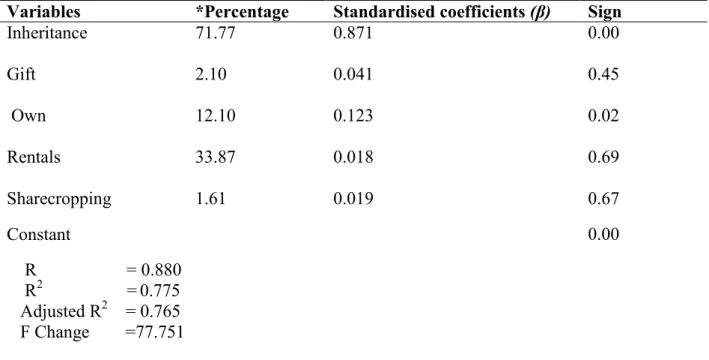
Regression Analysis between adoption level and other study variables: Table 6 shows the result of regression analysis to determine the relationship between adoption of sawah technology and factors affecting adoption. The result shows that adoption of sawah technology is related to awareness (β=0.80; p<0.01). This implies that the higher the level of awareness, the higher the level of adoption. Also attitude of farmers is significantly related to their level of adoption (β=0.48; p<0.01). Due to the benefit derive from sawah, farmers have positive attitude towards sawah technology. The yield of sawah farmers has increased from 1.4 tonnes per hectare (WARDA, 1999) to 4.6 tonnes per hectare as a result of the adoption of sawah technology. Also the attributes of sawah technology (β=0.33; p<0.01) which include high yield from sawah field, improvement in the rate of tillering of the rice, efficiency of fertilizer usage, weeds control, ease of pest management and water management and the relative ease of adoption. Access to contact farmers (β=-0.51; p<0.01) was also significantly related to adoption. Contact farmers were trained in all the sawah locations in Nigeria to serve as link between the source of technology and the farmers. The result shows that household size of the farmers (β=0.25; p<0.05) was related to the adoption of sawah technology. This implies that the larger the size of the family, the higher the level of adoption.
This may be true because when the size of the family increases, farmers may tend to increase the size of his farm. In addition, large size of the family could serve as a source of labour hence affects the level of adoption. This also agrees with the findings of Adesoji, et al. (2006) which reported that large household size increased farmers’ participation in farm activities.
Also, a significant relationship exists between adoption and constraint faced by farmers (β=- 0.32; p<0.02). This implies that the higher the constraints faced by farmers the lower the rate of adoption. Adoption of sawah technology depends on the availability of power tillers, fertilizers, improved rice seeds and other farm inputs. Availability of this input will influence the level of adoption of sawah technology among the farmers. The more available farm inputs
31
are the greater the level of adoption and expansion of sawah technology. The age of the farmers (β=-0.44; p<0.01) negatively related to level of adoption. This could be because of resistance to change by aged farmers (Adesoji, et al (2006); Ajayi, (1995). Older farmers find it difficult to change from their former way of doing thing for a new method. The younger farmers may be inquisitive, wanting to learn more, hence increase their level of adoption. The results of the regression analysis were also supported by the findings of Feder et al. (1985) who reported that farm size, risk and uncertainty, human capital, labour availability, credit constraints, and tenure security were the most important factors determining adoption decisions.
32
Table 5: Regression analysis between adoption level and other study variables (N=124)
Variables B SE Std β t-ratio sig
Constant 3.16 3.20 - 0.99 0.33
Awareness 2.71 0.44 0.80 6.10 0.00
Age -0.13 0.04 -0.44 -3.22 0.00
Experience in sawah 2.69 1.48 0.13 1.82 0.07
Access to contact
farmer 3.84 0.55
0.51 6.98 0.00
Attitude of farmer 7.06 1.42 0.48 4.95 0.00
Attributes of the
Sawah technology 2.89 0.78 0.33 3.70 0.00
Access to extension
services 1.07
0.62 -0.13 -1.73 0.09
Constraints faced by
farmers -3.70 1.52
-0.32 -2.44 0.02
Household size 0.14 0.05 0.25 2.86 0.01
Experience in rice
production 0.04
0.03 0.16 1.23 0.23
Communication -1.34 1.35 -0.10 -1.00 0.32
R=0.89, R2=0.79, Adjusted R2= 0.76, F= 21.36, Standard Error of Estimate= 2.01.
2.5. Conclusion
33
Based on the findings of this study, it was concluded that awareness of sawah technology was high among the farmers and influenced their adoption of sawah technology. High yield from sawah, good tillering, water management, fertilizer management and weed control and other characteristics of sawah technology were the major reasons why farmers adopted sawah technology. Adoption of sawah technology was influenced positively by awareness, attitude of farmers, attributes of sawah technology, access to contact farmers and household size and negatively influenced by age of farmers and the constraints faced by farmers. The adoption is however faced with some constraints. The study recommends that constraints faced by farmers should be addressed urgently to enhance the achievement of green revolution in Nigeria through sawah technology.
References
Ademiluyi, Y. S., Oladele, I. O. and Wakatsuki, T. 2008. Socio-economic factors affecting power tiller use among sawah farmers in Bida, Nigeria. Journal of Food, Agriculture and Environment, 6(3 &4): 387-390.
Adesina, A. A. 1996. Factors affecting the adoption of fertilizers by rice farmers in Cote d’Ivoire. Nutrient Cycling in Agroecosystems, 46: 29-39.
Adesoji, S.A., Farinde, A. J. and Ajayi, A. O. 2006. Determinants of training needs of fadama farmers in Osun State, Nigeria and Implication for Extension Work. Journal of Applied Sciences, 6(15): 3082-3088.
Ajayi, A.O. 1995. Identification of training needs of women farmers in Oyo State.
Unpublished M.Sc. Thesis: Agricultural Extension and Rural Sociology, O.A.U, Ile- Ife.
Akande, S.O. (2003). An Overview of the Nigerian Rice Economy. The Nigerian Institute of
Social and Economic Research (NISER) Ibadan Nigeria.
http://www.unep.ch/etu/etp/events/Agriculture/nigeria.pdf