2015
年度 聖路加国際大学大学院 博士論文12DN002
遠藤 亜貴子助産師への乳児期予防接種に関する教育介入の効果
Effectiveness of an Educational Intervention for Midwives
about Early-Childhood Immunization
Table of contents
Background ...1
Purpose ...4
Significance of study ...4
Definition of term ...5
Literature Review ...6
Immunization programs around the world including Japan ...6
Strategies for increasing immunization coverage ...8
Parental decision support for immunization ... 11
Role of midwives in promoting immunization ... 12
Midwives’ perceptions and attitudes toward immunization ... 15
Preliminary Study ... 17
Methods ... 19
Study design ... 19
Study hypothesis and outcomes ... 19
Participants. ... 22
Sample size. ... 23
Intervention ... 25
Educational program ... 25
Purpose of educational program. ... 25
Goal of educational program ... 25
Method of educational program... 25
Content of educational program. ... 26
Flyer for promoting activities. ... 28
Materials for self-learning. ... 28
Program implementation. ... 28
Additional support for midwives ... 29
Procedure for study implementation... 30
Preparation. ... 30
Data collection. ... 30
Data collection period ... 31
Evaluation tools ... 32
For midwives. ... 32
For mothers. ... 36
Validity of evaluation tool. ... 38
Data analysis ... 38
Ethical consideration ... 38
Findings ... 40
Midwife ... 40
Participating facilities. ... 40
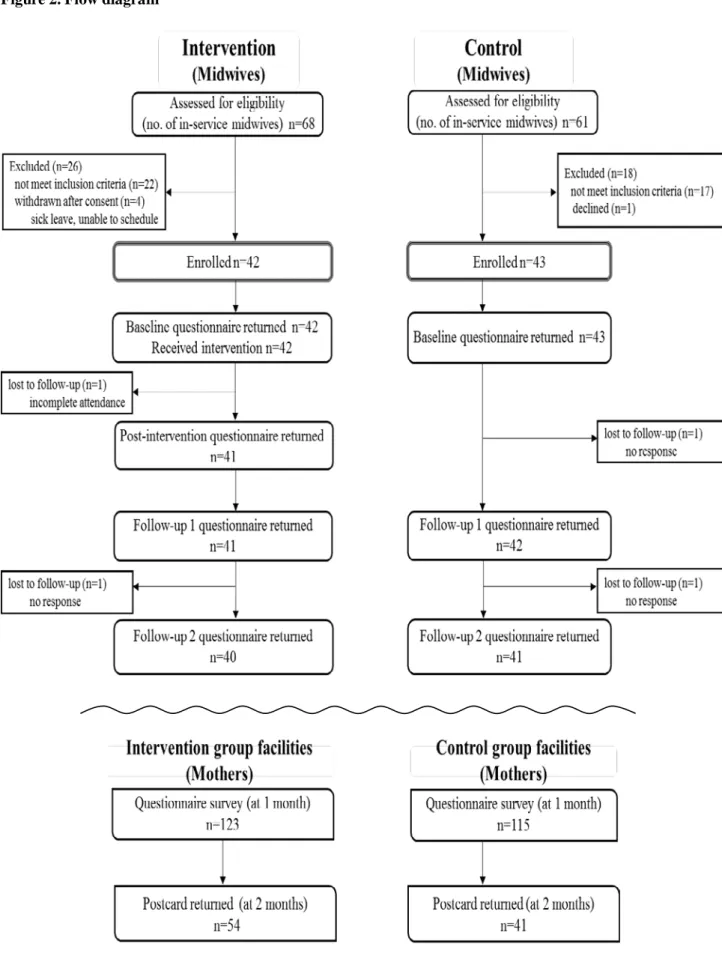
Participant flow. ... 40
Demographic characteristics. ... 42
Primary outcome. ... 43
Secondary outcome. ... 43
Mothers ... 49
Demographic characteristics. ...50
Primary outcome. ...51
Secondary outcome. ...52
Program evaluation ... 54
Discussion ... 56
Midwives’ outcome ... 56
Maternal outcome ... 59
Implications for information provision in perinatal period ... 61
Limitations ... 62
Suggestions for future research ... 62
Conclusion ... 64
Reference ... 65
Tables
Table 1. Death toll of VPDs before and after introduction of vaccines into Japan ...1
Table 2. Routine vaccines by age six with comparison of the United States vs. Japan ...7
Table 3. The role of the midwives in increasing immunization uptake ... 13
Table 4. Areas of knowledge for immunization practitioners ... 14
Table 5. Intervention detail ... 20
Table 6. Five aspects of fidelity ... 29
Table 7. Outcome measurement at each level of Kirkpatrick’s evaluation model ... 34
Table 8. Measurement items for midwives at baseline, end-line, and follow-up ... 34
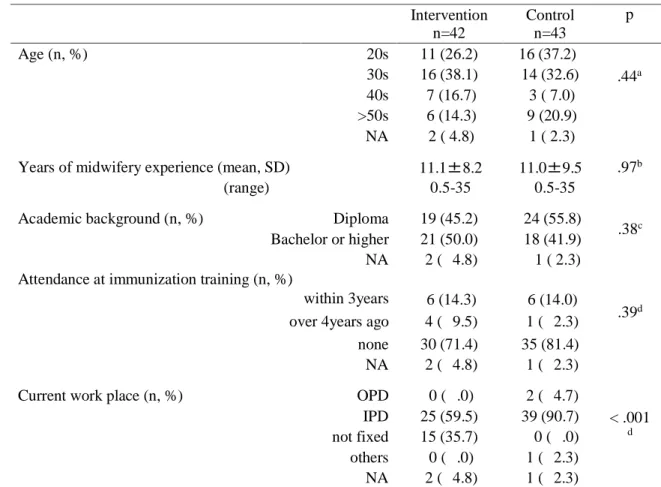
Table 9. Demographic characteristics of midwives ... 42
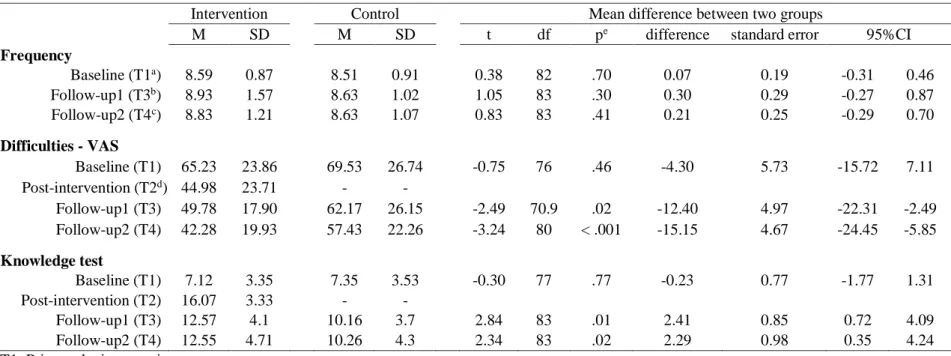
Table 10. Comparison of midwives’ frequency, difficulties and knowledge test scores T1 through T4 ... 45
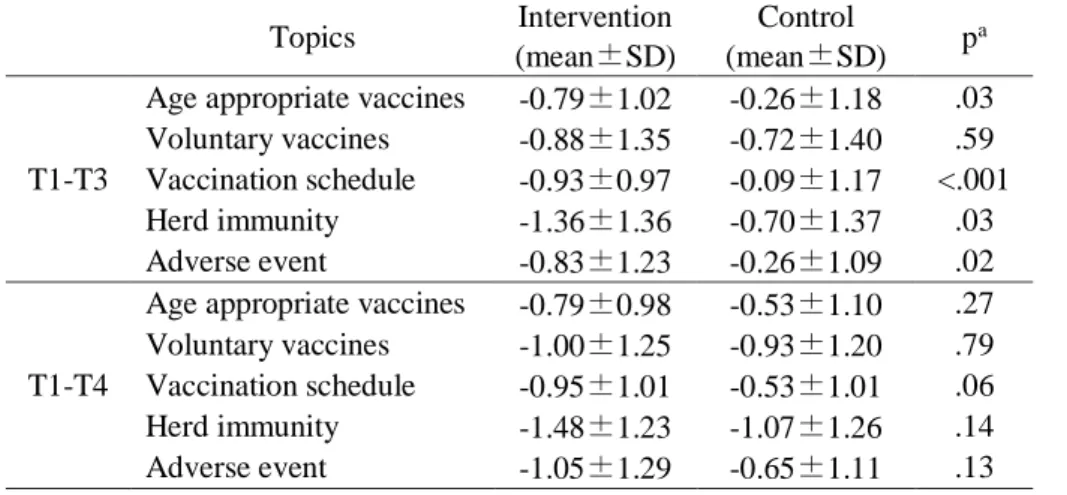
Table 11. Midwives’ score difference in difficulties for five main topics between T1 and T3/T4 ... 46
Table 12. Midwives’ score difference of perception and willingness between T1 and T3/T4 ... 48
Table 13. Demographic characteristics of mothers ... 50
Table 14. Maternal intention for six target vaccines ... 51
Table 15. Timing of initial vaccination for intervention and control group ... 52
Table 16. Maternal recognition of immunization-promoting activities by midwives ... 54
Table17. Reaction of participants ... 55
Figures
Figure 1. Time line of intervention and outline measurement ... 20Figure 2. Flow diagram ... 41
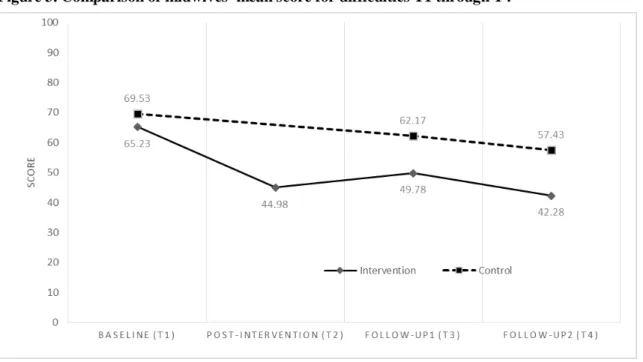
Figure 3. Comparison of midwives’ mean score for difficulties T1 through T4 ... 44
Figure 4. Midwives’ mean scores of knowledge test T1 through T4 ... 49
Appendix
Appendix 1. Request letter for facility director Appendix 2. Request letter for midwives Appendix 3. Consent form for midwives Appendix 4. Withdrawal form for midwives Appendix 5. Request letter for mothers
Appendix 6. Questionnaire for midwives (Baseline) Appendix 7. Questionnaire for midwives (End-line) Appendix 8. Questionnaire for midwives (Follow-up) Appendix 9. Questionnaire for mothers
Appendix 10. Postcard for two months survey Appendix 11. Educational program timetable Appendix 12. Educational program module Appendix 13. Flyer
Appendix 14. Information resource list Appendix 15. Fidelity checklist
Background
As one of the most cost-effective measures for infectious disease control, immunizations have played a prominent role across the world (WHO/EURO, 2014). Compared to the 1950s, the era of ‘not introducing vaccines to Japan’, the number of deaths due to vaccine preventable diseases (VPDs) dropped dramatically over the past sixty years (see Table 1). The World Health Organization (WHO) advocates that, “every child has the right to live free from VPDs in the 21st century” (WHO/EURO, 2014).
Table 1. Death toll of VPDs before and after introduction of vaccines into Japan
VPDs 1950s
number of patients
1950s number of deaths
2010 number of deaths
Pertussis 50,000~150,000 10,000~17,000 10
Diphtheria 10,000 ~50,000 2,000 ~ 3,800 0
Tetanus 2,000 2,000 10~15
Poliomyelitis 2,000 ~5,600 100s ~1,000 0
Measles 200,000 1,000s~20,000 <10
Japanese encephalitis 1,000 ~5,000 2,000 0~2
From: Nakayama T (2011) Clinic All-Round.Vol.60, No.11, 2173-5, modified by researcher
Immunization has an aspect of social defence (what is termed “herd immunity”), which protects not only the vaccinated individual from the target disease but also brings the immune effect to the social group he or she belongs. As a rule, 85~95% of vaccination coverage is required to prevent an epidemic of VPDs in a social group (Plotkin, Orenstein, & Offit, 2012). Therefore, various efforts to increase immunization uptake have been deployed worldwide.
The United States, along with other developed countries, have introduced a large number of vaccines and the childhood immunization coverage is kept high (Australian Government, Department of Health, 2013; CDC, 2014; Health & Social Care Information Centre, 2013). Sufficient coverage can be accounted for by the system that recommended vaccines are basically provided as routine vaccination without personal expense. The completion of these vaccines is often a type of prerequisite to enrol in group education. While exemptions can be granted based on state statute, immunization is implemented on an opt-out basis in these countries.
On the other hand, Japan’s immunization system does not count all recommended vaccines as routine vaccine. The recommended vaccines are categorized into two groups: routine vaccines and
1
voluntary vaccines. The routine vaccines are regulated by Japanese immunization law and administrated without out-of-pocket outlay, but the voluntary vaccines are not under the law and paid for by private resources. Since both groups of vaccines are not duty to immunize but “effort duty”
without mandatory power, the decision of childhood vaccination is dependent on parental choice (Saitoh & Okabe, 2012). Compared to routine vaccines, the un-routinized vaccines are considered less important (Saitoh & Okabe, 2012) and this leads to the low coverage for the voluntary vaccines (Sadzot-Delvaux et al., 2008).
The term “vaccine gap” has been used for past twenty years, which indicates that Japan’s immunization program has fallen behind other developed nations (Saitoh & Okabe, 2012). However, the gap has been filled up in recent years by introducing a number of newly approved vaccines. Along with that progress, the immunization law was also revised in 2013. As a result, infants are expected to follow a busy schedule of vaccination, particularly in the first six months of life. Accordingly, new parents are required to collect information and make decisions about their child’s immunization during the early postnatal period. The rapid and frequent changes in the national program also has posed a challenge to service providers. Health facilities and local administration offices where the immunization program is implemented are too preoccupied to response to the changes, consequently the provision of parental support is left to individual efforts. The lack of support systems with particular reference to the delivery of unified information to parents at appropriate times creates an increased risk of missed opportunity for childhood vaccination.
Few studies are available on the factors influencing parental decision-making for early childhood immunization and on immunization uptake during the recent transition period. In order to determine an effective intervention for the present study, the researcher conducted a questionnaire survey as a preliminary study targeted at mothers who had infants aged 6 months to less than one year (Endo, 2014). The results showed that the lack of information and knowledge was the main obstacle for parents to immunize all recommended vaccines for their children. The majority of respondents answered the reason to omit some vaccines (mostly voluntary vaccines of hepatitis B [HB] and rotavirus infections) was simply that they did not perceive the need for these vaccines. A concern about the adverse events of vaccines or a belief in anti-immunization was not the main reason for avoiding immunization for the most of the respondents. Moreover, the mothers who started information correction early, had multiple information sources, and possessed the knowledge about vaccines, were
2
more likely to allow immunization from large variety of vaccines for their children. The majority of respondents indicated health facilities were their leading information source and health care providers (mostly paediatrician or physician) were their main advisor. Therefore, the quality of support and the attitude of health personnel were thought to be the key factors for the immunization uptake. On the other hand, a small number of respondents recognized nursing personnel (nurse, midwife and public health nurse) as their main advisor, thus efforts need to be made for these health care providers to have a more active role as an information provider.
Effective information provision to parents from the earliest stage possible requires all health care providers involved with the couples during pre and post-natal period to bear a part in promoting immunizations. Responding to the recent 2012-2013 rubella epidemic in Japan (Ujiie, Nabae, &
Shobayashi, 2014), the importance of raising awareness of immunization for the reproductive age group has been increasing. Among various health care providers involved in maternal and child health, the present study focuses on the role of midwives in promoting immunization. Midwives are the profession who have regular contact with expecting couples from the earliest stage. As the Health Protection Agency in the U.K (2011) notes, “midwives are well placed to make a significant impact on public health by promoting vaccine uptake during the course of their work” (p.10).
Nevertheless, the interview with in-service midwives conducted by the researcher found that the midwives feel challenged to provide immunization related information to their clients. The interviewees expressed their feelings as, “I hesitate to inform them about vaccinations because I do not think I have enough knowledge about it”, “I am not confident of providing the up-dated information as the program has changed a lot”, and “only limited time can be spent for immunization guidance as we have to cover various other topics”. While the midwives mentioned some organizational barriers, their main concerns for promoting immunization were about the lack of information and knowledge of immunization.
Since a standardized training system in immunization for nursing personal remains to be established in Japan, midwives have limited opportunities for in-service training on immunization unless engaged directly in pediatric service. As a result, catching-up on the latest information as well as developing the skills for effectively communicating with parents relies on midwives’ individual efforts. In fact, the promotional activities of immunization are not included in the competencies for midwifery practice stipulated by the Japanese Midwives Aassociation (2010). On the contrary,
3
midwives are considered as the front line care providers in public health service including immunization in other developed nations (American College of Nurse Midwives, 2014; Australian Nursing & Midwifery Federation, 2014; Public Health England and Department of Health, 2013). The midwives’ work covers not just perinatal period but now has extended to the long period of life cycle such as childhood, adolescence, and menopause (ICM, 2011). Japanese midwives are able to make a further contribution to long-term health of the society by providing information and advice on immunization for the clients and their families.
In order to improve the capacity of midwives for promoting immunization, the present study developed an immunization educational program specifically for midwives and examined the effectiveness of the program by a comparison between intervention and control groups.
Purpose The purpose of this study was to develop an educational program aimed at improving midwives’
knowledge for promoting immunization and to examine its effectiveness by a controlled before and after trial.
Significance of study
Through improving midwives’ capacity for promoting immunization, women and their families can be provided the necessary information and advice at an early stage in the perinatal period.
Providing the support for parents ahead of time should promote the uptake of scheduled initial vaccination.
Additionally, the developed and examined educational program in the present study will provide a basis for the future development of an immunization in-service training for midwives.
4
Definition of term
Immunization-promoting activities by midwives: these activities include providing information and advice on the vaccines targeted for women, infants and their family members. The assessment of immunization status to determine the need for vaccination, the scheduling and rescheduling of vaccination based on individual needs is also included in the associated task. The administration, storage and handling of vaccines are not included since the present study assumes only the activities implemented by midwives engaged in obstetric service.
5
Literature Review
Immunization programs around the world including Japan
In order to enhance vaccine availability throughout the world, in 1974 WHO launched an Expanded Program on Immunization (EPI). Initially, EPI had provided basic original vaccines for six targeted VPDs (DPT [diphtheria, pertussis, tetanus], poliomyelitis, measles, and BCG [tuberculosis]) for developing countries. In the 2000s WHO (2014a) extended the number of basic vaccines to eight by adding HB and hemophilus influenza type B (Hib) vaccines. As a part of EPI, the vaccination of monovalent tetanus toxoid for pregnant women has also been widely implemented in developing nations. Along with EPI, a notable global effort to promote the provision of vaccines for developing countries is the Global Alliance for Vaccines and Immunization (GAVI alliance) established in 2000. The alliance was jointly organized by public and private sectors in both developed and developing nations and has created a unique funding mechanism as well as its own vaccine procurement and supply system. More than 70 developing countries have received assistance from GAVI alliance since its inauguration (GAVI, 2014).
While WHO defines the recommended vaccines on a regional or population basis, ten selected vaccines (BCG, HB, poliomyelitis, DPT, Hib, PCV [Pneumococcal Conjugate Vaccine], rotavirus infections, measles, rubella, HPV [Human Papilloma Virus]) are recommended for all in every nation as routine vaccination (WHO, 2014b). A country-specific immunization program in developed countries is usually determined by reference to the EPI basic vaccines and the WHO recommendation with consideration for the situation in each country such as the prevalence of VPDs, the capacity of vaccine production, and the budgetary allocation. Therefore, each developed county has a different immunization program in terms of the variety of routine vaccines, the timing of vaccination, and the number of booster vaccination.
Currently, twenty-one VPDs exist in the world, of which the vaccines against the 17 diseases (13 vaccines) are available as childhood immunization by age six in Japan (six vaccines are administrated for infants under the age of one). As of May 2015, the eight out of 13 vaccines are administrated as routine vaccination in Japan, but the rest of vaccines are voluntary vaccines are an out-of-pocket expense. The coverage of the voluntary vaccines is generally lower than the routine vaccines, due to the cost burden and the lack of awareness of their needs (Endo, 2014; Ono & Numazaki, 2010;
6
Tsuda, Kosaka, Takayanagi, Kono, &Watanabe, 2012). In other words, although Japan has introduced newly available vaccines, not all children at the target age are benefited from these vaccines.
On the other hand, in the United States, the country known as effectively running the national immunization program (Kamiya, 2011), all children are recommended to be given the vaccines against 15 VPDs by age six without out-of- pocket expense (Table 2). As a part of efforts to increase the immunization coverage, the number of visits and injections are minimized by practicing simultaneous administration and introducing various combined-vaccines (Kamiya, 2011).
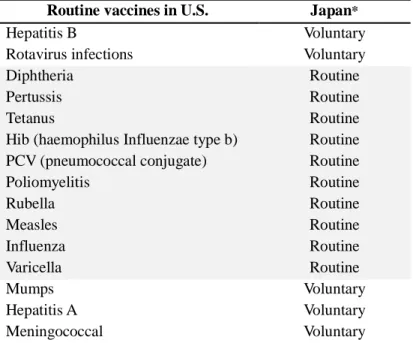
Table 2. Routine vaccines by age six with comparison of the United States vs. Japan Routine vaccines in U.S. Japan*
Hepatitis B Voluntary
Rotavirus infections Voluntary
Diphtheria Routine
Pertussis Routine
Tetanus Routine
Hib (haemophilus Influenzae type b) Routine PCV (pneumococcal conjugate) Routine
Poliomyelitis Routine
Rubella Routine
Measles Routine
Influenza Routine
Varicella Routine
Mumps Voluntary
Hepatitis A Voluntary
Meningococcal Voluntary
* BCG and Japanese encephalitis vaccines are included as routine immunization in Japan
The Advisory Committee on Immunization Practice (ACIP) in the United States developed the national immunization policy of recommendations for the use of vaccines (Smith, 2010). ACIP is an independent body from the government consisting of medical and public health experts and its transparent decision-making process is able to build the public trust on immunization policy. Prior to the regular committee meeting of three times a year, each workgroup formed by the individual agenda prepares a recommendation draft by collecting and analysing all related information. The recommended practice is brought up at the committee meeting for public discussion and for final voting. Anyone can attend and speaks at the meeting, but only the fifteen committee members including one consumer representative have a vote. The voting is orally carried and the discussion in
7
the meeting is publicized on the Internet (Iwata, 2009). Since the various practical efforts and open administration system lead to the high vaccination coverage in general public, the United States has achieved almost 100% of reduction of nine VPDs (American Academy of Paediatrics, 2012).
The establishment of the Japan’s equivalent of an ACIP is anticipated among Japanese experts (Iwata, 2009). In 2010, fourteen academic associations including the Japan Paediatric Society organized a promotion council and made several recommendations to the Ministry of Health, Labour and Welfare. In 2013 in response to these requests, the Ministry upgraded the Vaccine Subcommittee of the Health Sciences Council to the committee (the Immunization and Vaccination Committee of the Health Science Council) along with the revision of the immunization law (Saitoh & Okabe, 2014).
Nevertheless, the Ministry of Health, Labour and Welfare established the committee as a consultative but not a policymaking body. The extent to which the committee can ensure its influence, independence, and transparency might be debatable (Nakayama, 2012; Takahata, 2012).
Strategies for increasing immunization coverage
As WHO/EURO (2014) claims, immunization can be one of the most cost-effective measures against infectious diseases provided that high vaccination coverage is ensured. Immunization rate, in other words, the timeliness of vaccination on recommended vaccines is the key indicator of immunization programs. Thus, numerous research articles to assess the effectiveness of the promotional activities are published. Among developed nations, the United States has conducted the largest number of intervention studies including Randomized Controlled Trials (RCTs). Several studies originated from other countries, such as U.K., Ireland and Australia. Since childhood immunization is implemented based on the premise of a mandate, the target population for promoting vaccinations in these nations focuses on the children considered at risk for missed opportunities such as children in poverty, ethnic minorities, or those born prematurely (Abbott, Menzies, Davison, Moore, & Wang, 2013; Johnson, Howell, & Molloy, 1993; Vora, Verber, Pottes, Dozier, & Daum, 2009)
The interventions implemented in those studies are broadly categorized as client (or family)- based or provider-based. The client-based interventions include reminder/recall with telephone and/or mail, home visiting, educational programs and incentive schemes for parents (Briss et al., 2000;
Williams, Woodward, Majeed, & Saxena, 2011). The provider-based interventions have provider
8
reminder/recall by manual searching of client charts or by computerized notifications, provider education, and feedback including incentive scheme (Briss et al., 2000; Williams et al., 2011). Most of the studies consisted of any one of those approaches or multiple combinations. The largest number of studies examined the intervention of client reminder/recall (Briss et al., 2000; Williams et al., 2011).
The aim of client reminder/recall in the majority of studies was for promoting booster shots to up date immunization status rather than for initial vaccinations (Jacobson, & Szilagyi, 2005). While Japanese parents are facing the decision on the initial vaccination of their infants, the intervention of reminder/recall in other developed nations intends to encourage the completion of vaccination.
According to a systematic review that included 46 intervention studies (Williams et al., 2011), the parental reminder approach showed a median point change of 11% increase in the immunization uptake among 34% of included intervention groups. For provider-based interventions, provider reminder and provider education reported a median change in the rates of 7% and 8% increase, respectively. The most effective approach to promote immunization rates in this review was feedback programs including provider incentive, which rose a median point in the coverage of 19%.
Provider education intervention, the strategy examined in the present study, is still inconclusive with the mixture of both effective and ineffective results. While a considerable number of studies have been conducted, the positive effect of provider education for immunization uptake is suggested mostly by cross-sectional or before-after studies (Petousis-Harris, Goodyear-Smith, Turner, & Soe, 2005:
Uskun E, Uskun S.B, Uysalgenc, &Yagiz, 2008). A few controlled studies aimed at increasing occupational vaccinations of influenza or HB vaccines showed the effectiveness of educational intervention for health care workers (Abramson, Avni, Levi, & Miskin, 2010; Clancy, Cebul, &
Williams, 1988). However, no intergroup trial has demonstrated the information delivery effect of provider education in childhood immunization. As a systematic review by Briss, et al (2000) indicates, provider education is part of effective multicomponent interventions, yet provider education-only intervention shows insufficient evidence due to “(1) the small numbers of available studies, (2) limitations in their study design and conduct, and (3) small effect sizes” (p117).
On the other hand, the effect of health care providers’ attitudes toward vaccines on immunization uptake is emphasized in several studies. A systematic review with 15 studies (14 cross-sectional studies and one case-control study) (Herzog, et al., 2013) identifies that health care providers’
knowledge, beliefs and attitudes about vaccines were positively associated with their intentions to
9
vaccinate their clients. The review indicated that the provider-based interventions aimed at “increasing knowledge on immunization”, “building beliefs based on scientific evidence” and “developing positive attitudes towards immunization” are likely to lead to increased immunization rates (p.15). As the Summit of Independent European Vaccination Experts (SIEVE) points out, health care providers are the primary information source for the most of parents and their attitudes and views on vaccine safety are the determining factors for the parental acceptance of vaccination (Schmitt et al., 2007).
As for Japanese research articles, most of them were cross-sectional study assessing local immunization coverage or exploring parents’ perceptions about immunization. A few before-after studies conducted by hospitals or local health administration offices were available. The interventions implemented in these before-after studies were face-to-face consultation with a personalized vaccination calendar, parental reminder with mobile phone, and the expansion of opportunity to vaccinate (Akahoshi, Kai, Sakurai, & Kusama, 2005; Inoue, Tamaoki, Sato, Noboru, & Takahashi, 2002; Nerome et al., 2006). Only one RCT of parental education intervention was found originating from Japan (Saitoh et al., 2013). The study examined the effectiveness of a ten-minute session during perinatal period. It compared three-arms (a. received the session during third trimester or b. early postnatal period, and c. control group with no session). The results indicate that the educational intervention for women during pre and postnatal period was effective in increasing early childhood vaccination coverage and maternal knowledge at immunization at three months after delivery (Saitoh, et al. 2013).
10
Parental decision support for immunization
The major strategies for increasing immunization uptake in developed nations were illustrated by the aforementioned preceding studies. Nevertheless, the reason for children being unvaccinated is not limited to inadvertent missed opportunity but could be a parental decision based on their personal belief. Particularly, the newly introduced vaccines or the vaccines with extensive media coverage of adverse events are thought to increase parents’ difficulty in making a personal choice. Considering that immunization-promoting activities may contain an aspect of decision-making support, this researcher reviewed the studies focused on decision support intervention for immunization (Endo &
Horiuchi, 2013).
Recently, providing clinical support for patients facing difficult health decisions using Patient Decision Aids (hereafter PtDA) is widely implemented in Western countries (Stacey, et al., 2014). The term ‘decision support intervention’ in the majority of the searched studies was used in referring to PtDAs. International Patient Decision Aid Standards (IPDAS) collaboration (2012) defined PtDAs as,
“evidence-based tools designed to help patients to participate in making specific and deliberated choices among healthcare options” (What are patient decision aids?, para.1). The tools can be various forms as leaflet, DVD, or web-site. PtDAs are usually consisted of several segments including information provision part and personal value clarification part in order to support patient’s decision- making process in a stepwise manner. Currently, a couple of PtDAs specialized in HPV vaccine and MMR (measles-mumps-rubella) combined vaccine are available on a web-site (Ottawa Hospital Research Institute, 2014).
In addition to that, several intervention studies have attempted to examine the effectiveness of specialized PtDAs for immunization. Wroe, Turner, and Owens (2005) evaluated a booklet on six early-childhood vaccines targeted at pregnant women, Jackson, et al. (2011) conducted a combined intervention of leaflet and parent meeting on MMR vaccine, and Shourie, et al. (2013) introduced a web-based PtDA on MMR vaccine. A few studies focused on other than childhood immunization, such as a clinical trial of an individual consultation on HB vaccine for physicians (Clancy, et al., 1988) and of a web-based PtDA on seasonal influenza vaccine for health care workers (Chambers, et al., 2012).
The study outcomes of these interventions included immunization uptake (or intention to immunize) and one or more indicators for decision support process such as client’s knowledge, conflict, anxiety, satisfaction, and confidence. PtDAs aim at improving the quality of decision but do not lead users to
11
choose one option over another (Ottawa Hospital Research Institute, 2012). Therefore, immunization uptake was not the primary outcome but was placed as the secondary outcome in the most of the studies. Three out of five above mentioned intervention studies showed that the PtDAs were effective for increasing the coverage (Clancy, et al., 1988; Shourie et al., 2013; Wroe, et al., 2005).
Role of midwives in promoting immunization
The role of midwives in promoting immunization varies between Japan and other developed nations. Midwives are inevitably one of the main immunizers in developing countries with a shortage of health personnel, but many developed countries also require midwives to take an active role in immunization practice.
American College of Nurse-Midwives (ACNM) (2013) clearly states in the position paper that the midwives should encourage vaccinations for the clients and their families in order to enhance the people’s health of the U.S and of the world. ACNM (2014) outlines the tasks of the midwives in promoting immunization as 1) assessing immunization status of all pre and postpartum women and recommend necessary immunizations, 2) providing latest information about VPDs, the risks and benefits of immunization, and the current immunization guidelines, 3) offering immunization in the clinical setting or referral to the available place to immunize, 4) updating evidence-based knowledge of immunization. TheRoyal College of Midwives in the U.K (RCM) (2001) also includes information and advice on immunization in one of the roles of the midwives in public health. RCM (2001) emphasises the importance of midwives’ contribution to public health for long-term wellbeing of women, children and their families by fulfilling the role. As table three shows, the Health Protection Agency in the U.K (2011) clarifies the role midwives should play in promoting immunization uptake.
The national minimum standards for immunization training in the U.K (the Health Protection Agency, 2005) define the essential requirements of the immunization practitioners who immunize or advice on immunization. According to the standards, the immunization practitioners should be a registered health professional such as nurse, midwife, or medical doctor. The practitioners are required to receive at least a two-day basic training for obtaining the 12 core areas of knowledge on immunization and subsequent annual training for updating the information (Table 4). Other developed countries such as Australia, New Zealand, and the U.S also provide specialized training courses for the health care providers involved in immunization services. Some of the programs are webcasted and
12
various topic-by-topic learning materials can be obtained through the Internet to support in-service training in these countries.
Table 3. The role of the midwives in increasing immunization uptake Assessment of immunization status
・Make an assessment of the vaccination status of the woman or child
・Determine which vaccines can be offered
Immunization or referral to immunization services
・Offer opportunistic or scheduled immunizations in the clinical setting when feasible
・Refer the woman and child to the place for immunization when indicated
・Assist the family to access immunization services
Effective communication for overcoming any concerns about vaccines
・Promote and advise patients and parents at every available opportunities to overcome any concerns or attitudinal barriers to immunize
Information collection to assess the woman’s susceptibility to VPDs (particularly during antenatal contacts)
・Past medical history (particularly varicella, measles, rubella, tuberculosis, HB )
・Any infectious diseases the woman may have been exposed and her general health
・Immunization history and identify the required vaccines Protection of patients by:
・Ensuring that the woman is up to date with immunization herself
・Providing advice on prevention of infectious diseases
・Offering immunization or information on the available place to immunize, and assist to reach immunization services
・Providing treatment (e.g. post-exposure immunoglobulin) Prevention of infection by:
・Before, during and after pregnancy
Take all necessary measures to prevent infection in the woman
・Encourage breastfeeding
Confer additional immune protection with IgA to the infant
・Determine the need for vaccination of both mother and child based on the maternal immunization status, provide vaccination if indicated
Mother: when it is safe to be administrated
Child: where the child may have exposure risk during or after pregnancy
UK Health Protection Agency: The role of the midwife in increasing immunisation uptake, 2011
13
Table 4. Areas of knowledge for immunization practitioners 12 core areas covered by basic training
1. The aim of immunization: national policy and schedules 2. The immune system and how vaccines work
3. Vaccine preventable diseases
4. The different types of vaccines used and their composition 5. Current issues and controversies regarding immunization 6. Communicating with patients and parents
7. Legal aspects of vaccination 8. Storage and handling of vaccines 9. Correct administration of vaccines 10. Anaphylaxis and other adverse events 11. Documentation, record keeping and reporting 12. Strategies for improving immunization rates Areas included in update training
・ Current issues in vaccination
・ Recent epidemiology of VPDs
・ Any changes to the National Immunization Schedule
・ Any changes to legislation relevant to vaccination
・ Anaphylaxis recognition and management
・ Review of current practice and identification of areas for improvement
・ Q&A session for commonly encountered problems in practice
UK National Minimum Standards for Immunisation Training, 2005
By contrast, the role of midwives in promoting immunization is not well defined in Japan. The standards of midwifery practice listed in the core competencies of midwives stated by the Japanese Midwives Aassociation (2010) do not include immunization-promoting activities. Since the standards of the national examination for midwifery license by Ministry of Health, Labour and Welfare (2013a) contains childhood immunization as a subordinate category, immunization related topics are sure to be covered in the curriculum of pre-service education. However, the learning opportunities become limited after graduation unless the midwives are involved in pediatric service. Responding to the recent increasing need of promoting immunization in the perinatal period, the Japanese Midwives Association lunched an in-service midwives’ training program for in 2012. Nevertheless, obtaining and updating the knowledge and skills for promoting immunization still depend on individual efforts of midwives or the policy of health facilities they work for.
14
Midwives’ perceptions and attitudes toward immunization
Several studies pointed out that midwives have particular perceptions and attitudes toward childhood vaccination compared to other health care providers. According to an interview study with physicians and midwives by Dube, et al. (2013), all interviewees of physician were in support of vaccination programmes but the midwives’ views were more mixed. When the physicians explain about childhood vaccination to parents, they are in a position of actively promoting vaccination but the midwives tend to leave the decision to parents. The most of midwives deemed that the timing of initial vaccination is too early in life. In addition, some midwives viewed that vaccination is not included in their practice and had no opportunity to discuss about vaccination with parents. Another interview study with four different types of health care providers, namely, physicians, nurses, midwives, and chiropractors (Bean & Catania, 2013) found that none of the midwives and chiropractors fully supported the national vaccination programs. All midwives and chiropractors were either opposed or conditionally supported vaccination. Similarly, a questionnaire survey by Leask, et al. (2008) showed that the midwives were more likely to have concerns about the additives in vaccines as well as simultaneous administration compared to other health care providers. Moreover, Lee, Saskin, McArthur, and McGeer (2005) reported that 56% out of 111 midwives in the survey were pro-vaccines and only 24% were proactive in promoting vaccination to their clients.
The fore cited Dube, et al. (2013) noted the gap between physicians and midwives in their attitudes towards vaccination could be rooted in the different tendencies of “informed consent” and
“informed choice”. Physicians tend to practice “informed consent” based on legal, ethical and administrative compliance attached to biomedical ethics. Particularly, the risks of persecution they face give additional weight to the legal component. However, midwives are prone to facilitate
“informed choice” embedded in midwifery philosophy, which is grounded in a recognition of the natural process of pregnancy and childbirth. The authors claim that since the key principals of this philosophy are informed choice and empowerment, midwives take a role of information provider by way encouraging women’s individual decision. However, it is pointed out that the different views between physicians and midwives on their role and responsibilities in promoting vaccination sometimes lead to a biased information delivery. For examples, physicians might not listen and respond enough to parents’ concerns or even refuse to dialogue with the clients who may be reluctant to vaccinate with the firm commitment to take a promotional role in vaccination. In contrast, midwives
15
are apt to present pros and cons information to parents in order to take the role of neutral information provider but the cons information is not always scientific evidence-based. The authors emphasize that both physicians and midwives should look back at their ways of information delivery on childhood vaccination with awareness of the different tendencies (Dube, et al., 2013).
As Dube, et al. (2013) indicated, the perceptions and attitudes of health care providers toward immunization can vary depending upon the profession, yet this is not really explored in Japan. In fact, no Japanese article focused on midwives’ response to immunization was found. In the interview with some Japanese in-service midwives done by the researcher preparatory for the present study, no one was skeptical or negative about immunization. While Dube, et al. (2013) indicated the midwives’ being less actively involved in immunization is rooted in midwifery philosophy, it is not yet demonstrated that the particular perceptions and attitudes observed among midwives are common to all countries.
16
Preliminary Study
Prior to the development the research proposal of the present study, a questionnaire survey of mothers with infants was conducted in order to explore the possible interventions (Endo, 2014). The following is the summary of the survey findings.
Study summary
The aim of the survey was to clarify the factors influencing parental decision-making for early childhood immunization and immunization uptake during the recent transition period of Japan’s national immunization program. The survey was conducted from May to July in 2013 at two hospitals in Tokyo, Japan. The respondents were mothers who had infants aged six months to less than one year.
The survey asked the mothers to recall their immunization activities during the first six months. A questionnaire consisted of 18 items and was developed based on the conceptual framework of Health Belief Model (Becker, 1974). The questionnaire particularly focused on the mothers’ information collection process, the obstacles they encountered, and the determinants of their decision-making. The questionnaire also included 12 quizzes to assess mothers’ knowledge on VPDs.
The response rate was 94.6% with 316 valid responses. Initial immunization coverage of the infants was 90% or higher for the four routine vaccines (Hib, PCV, DPT-IPV, BCG), but the rate dropped for the two voluntary vaccines of rotavirus infections (73.4%) and HB (28.2%). The main reasons for unvaccinated of HB vaccine related to insufficient knowledge or information of the disease, such as “no infected close relatives”, “anxiety caused by lack of knowledge”, and “not informed”.
Maternal demographic variables, which were associated with the initial vaccination coverage for their infants, were: parity, academic background, working experience and monthly expenses for the infant. Namely, the first child was vaccinated more than the second child or above. The mothers with high educational background (college degree or higher) and had a job before pregnancy initiated a greater number of vaccines for their infants. Additionally, the family, which spent more than ten- thousand yen a month for the infant showed the higher coverage of voluntary vaccines. Other associated variables were: timing of information collection, number of information sources and knowledge about VPDs. The mothers who began information collection by the time of one-month checkup initiated a greater number of vaccines for their children. Similarly, the infants whose mothers had a greater number of information sources and had the higher score on the knowledge test tended to
17
receive more voluntary vaccines.
The majority of respondents obtained vaccination-related information at hospitals and more than one-third reported that physicians were their main advisor on immunization. Only 10.8% of mothers recognized nursing personnel (nurse, midwife and public health nurse) as their main advisor. Half of the respondents sought the information through the Internet. The amount of information and knowledge of mothers largely affected the initial immunization coverage of their infants. The study concluded that the role of health care provider is crucial in providing correct information in appropriate timing for parents.
Implications for the present study
The survey result shows that early information provision for parents was the key to initiate the full-range of vaccines for their infants in appropriate timing. The main impediment for the completion of six initial vaccines was the lack of information rather than negative beliefs in immunization or concerns about vaccine safety. Consequently, the role and responsibility of health care providers as the main information source were highlighted.
In order to enable effective information delivery, all medical professions involved in perinatal care need to play a promoting role for immunization in a timely manner. Among these professions, midwives are in the position to be able to approach pre and postpartum women and their families at the earliest stage. Despite being in the optimal position, Japanese midwives are not fully aware of their potential impact as immunization promoters. Utilizing midwives more effectively in promoting immunization could lead to reducing the case of missed opportunity particularly for initial vaccination.
Thus, the present study focuses on improving midwives’ capacity to fulfil the role of information provider through developing an educational programme and examining its effectiveness.
18
Methods
Study design
This is a controlled study without randomization. The participants were allocated on a facility- by-facility basis. The data was collected from both midwives and mothers in each participated facility.
As table five shows, the intervention group midwives were provided an hour lecture, an A4 size two-sided flyer, a list of information resources, and a published booklet. The control group midwives were not given the lecture and encouraged to self-learn with the distributed materials. Both groups were offered e-mail consultation on an as-needed basis or face-to-face consultation at least twice during the two months of data collection period.
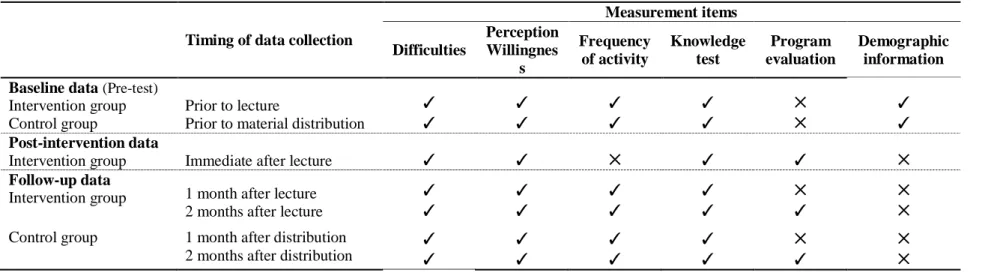
The study timeline is shown as figure one.
Study hypothesis and outcomes
The midwives who receive the educational program would become more active in immunization-promoting activities due to increasing the latest knowledge and decreasing the difficulties in providing information.
The mothers, who are provided immunization-related information during pre and postpartum period by midwives, would become more aware of immunizations and build a positive intention for initial vaccination of their infants.
Based on the above hypothesis, the outcomes of the present study were set up both for midwives and mothers. As for the maternal outcome measurement, the exact date for initial vaccination of all participants’ infants could not be traced within the limited study period. Therefore, mothers’ intention of initial vaccination for their infants at the time of one-month checkup was investigated with a questionnaire. In addition to that, the initial vaccination status of the infants at aged two-months was followed with a return postcard.
The following is the primary and secondary outcomes for midwives and mothers.
19
Table 5. Intervention detail
Figure 1. Time line of intervention and outline measurement Lecture Flyer
(Appendix 13)
Information resource list (Appendix14)
Booklet Consultation e- mail/face-to-face
Intervention group ✓ ✓ ✓ ✓ ✓
Control group ✓ ✓ ✓ ✓
20
Primary outcome.
Midwives.
The amount of change in the frequency of immunization-promoting activities between the periods of baseline and follow-up 1 (T3) is larger in the intervention group compared to the control group.
Mothers.
The proportion of mothers who intend to immunize voluntary vaccines (HB and rotavirus infections) for their infants at the time of one-month checkup is higher among those who received pre and postpartum care from the intervention group midwives compared to those who were cared for by the control group midwives.
Secondary outcome.
Midwives.
1. The amount of change in the knowledge test score between the periods of baseline and follow- up 1 (T3) is larger in the intervention group than the control group.
2. The amount of change in the willingness to provide immunization-promoting activities between the periods of baseline and follow-up 1 (T3) is larger in the intervention group than the control group.
3. The amount of change in the difficulties to provide immunization-promoting activities (hereafter difficulties) between the periods of baseline and follow-up 1 (T3) is larger in the intervention group than the control group.
4. The primary outcome (frequency of immunization-promoting activities) and the secondary outcomes 1.2.3. in the intervention group at the periods of follow-up 1 (T3) and follow-up 2 (T4) remain at the same level or show an improvement.
Mothers.
1. The mothers who received pre and post-partum care from the intervention group midwives are more aware of the need for their rubella immunization than those cared for by the control group midwives.
2. The mothers who received pre and post-partum care from the intervention group midwives are
21
more frequently provided the information and advice on immunization than those cared for by the control group midwives.
3. The mothers who received pre and post-partum care from the intervention group midwives take more preparatory action (the selection of a health facility for initial vaccination) than those cared for by the control group midwives.
4. The mothers who received pre and post-partum care from the intervention group midwives have a higher knowledge test score than those cared for by the control group midwives.
5. The mothers who received pre and post-partum care from the intervention group midwives show a higher proportion of timely initial vaccination of their infants at aged two months than those cared for by the control group midwives.
Participants.
Target facility.
Hospitals, which provide both obstetric (prenatal checkup, delivery assistance, and postpartum checkup) and pediatric services (immunization and growth development checkup), were invited to participate in the present study. In addition, as the educational program of the present study was developed based on the recommended schedule of the Japan Paediatric Society, the childhood immunization practice in participating facilities should have been in line with the policy of the Society.
Inclusion criteria.
Midwives
1. Who had opportunities to provide immunization-promoting activities for pregnant or postpartum women at childbirth class, outpatient department (OPD) or inpatient department (IPD)
2. Who were able to attend an hour educational program and to response the multiple questionnaires at baseline, post-intervention and follow up
3. Who agreed to participate in the whole process of the study with written consent after receiving an explanation of the study purpose and method
The midwives at the participating facilities who fulfilled the above criteria were included regardless of the years of clinical experience, the frequency of immunization-promoting activities, or
22
the participation in immunization-related trainings.
Mothers
1. Who visited the hospitals for the one-month checkup of their infants
2. Who were able to understand the Japanese questionnaire and to respond it in Japanese
3. Who agreed to participate in the study with oral consent after receiving an explanation of the study purpose and method
The mothers who met the above criteria were included regardless of their nationality. Since the immunization program is uniform throughout the nation, the participants’ current residential address was not taken into account. The gestational age and the birth weight of their infants were also irrelevant for the present study as they do not negatively affect the timing of initial vaccination.
Sample size.
Midwives
The sample size for midwives was determined based on the difference in the proportion of the primary outcome (the amount of change in the frequency of immunization-promoting activities) between the two arms before and after the intervention. However, the preceding provider education studies on immunization did not include the practice of participants in their outcome indicators. Thus, the following educational intervention studies for nursing personnel outside of immunization were used as the reference.
A three-arm controlled study of breast cancer education for midwives by Kataoka, Obayashi, and Suzuki (submitted) employed the amount of change in the implementation rate of educational activities as the outcome. The difference of the amount of changes between the intervention and the control groups at one month and at three months after the awareness program were 36% and 23%, respectively.
Moreover, a before-after study of provider training for smoking cessation (Borrelli, Lee, & Novak, 2008) indicated a 40% of increase in the change of counseling behavior among home health care nurses at the six months follow-up, compared to pre-training.
On the basis of these studies, the difference of the primary outcome for the present study was assumed more than 30%. The required sample size was 32 midwives for one group with a significance
23
level of five % (α = .05) and a power of 80% (β = .2). Adding 20% of expected drop-out rate to the calculation, the optimal sample size was estimated 76 in total (38 midwives for one group).
Mothers
The sample size for mothers was calculated with the deference in the proportion of the primary outcome (the intention to immunize two voluntary vaccines [HB and rotavirus infections] for their infants) between the groups of facilities at the one-month checkup.
Among the six vaccines for infants below the age of one, the HB vaccine showed the lowest coverage (28%) in the preliminary study (Endo, 2014) and was considered as the less understood vaccine from the local government (Hori, 2014). While the coverage of rotavirus vaccine in the preliminary study was higher (73%) than the estimate of national average (45%) (Ministry of Health, Labour and Welfare, Japan, 2013b), about 40% of parents had difficulty in making a decision about this vaccine due to a scheduling conflict and the expensive self-pay cost (Endo, 2014).
The limited number of studies employed patients’ immunization rate as the outcome of the educational intervention. A before-after study by Uskun, et al. (2008) showed a seven % increase on average in the four recommended vaccines after the provider training. A three-arm RCT examined the effectiveness of an educational program for parents during the perinatal period traced the coverage of three voluntary vaccines at aged three months. The result indicated a 21% of increase in the pre-partum education group and a 30% of increase in the post-partum education group, compared to the control group (Saitoh, et al., 2013).
On the basis of these studies, the difference of the primary outcome of the present study was assumed more than 20%. The required sample size was 93 mothers for one group with a significance level of five % (α = .05) and a power of 80% (β = .2). The response rate was expected to be 90%
based on the results of the preliminary study, thus the optimal sample size was estimated 204 in total (102 mothers for one group). The number of respondents in each facility was calculated based on the percentage of the participating midwives.
24
Intervention
Educational program
Purpose of educational program.
1. To obtain the necessary knowledge and up-to-date information in order to provide immunization- promoting activities for pre and postpartum women and their families
2. To increase the opportunities to provide immunization-promoting activities during perinatal and early childhood periods by obtaining the knowledge
Goal of educational program were to be able to explain the:
1. need for immunization
2. recommended vaccines of mothers, infants and their families 3. optimal timing for the recommended vaccines
4. need for voluntary vaccines
5. effectiveness and adverse event of immunization
The term “mothers” here includes women in pregnancy and postpartum period, and “infants”
means the children aged less than six months.
Method of educational program.
The program was a 75-minute lecture including a question and answer session. A fifteen-minute discussion was added at the end of the lecture with the intent of promoting motivation to put the obtained knowledge into practice. Since the participating midwives were not a vaccinator, vaccine handling and administration practice were excluded from the program. Additionally, midwives in general are skilled at information delivery as they have frequent opportunities to provide consultation and guidance in their daily practice, thus communication skill practice was not included in the program.
The form of educational program was a face-to-face lecture but not e-learning or DVD material.
The reasons for not choosing these self-learning tool are: the chance for low completion of the non- mandatory program, unable to respond immediately to participants’ questions, and the potential of difference in IT environment among the participants. An interview with midwives prior to developing
25
the program indicated that their expectations of a program were: “a concise lecture totally around one hour maximum”, including “practical content” and “readily available information and written materials”. The program was designed with incorporating these needs.
The adult learning theory of Knowles (1980) describes the characteristics of adult learners as
“increasing self-directness”, “accumulated experience becomes a rich resource for learning”,
“readiness to learn is based on the tasks of their social roles”, and “aspiring to immediate apply obtained knowledge and skill” (pp.43-44). These characteristics are thought to be common to the participated in-service midwives in considering them as adult learners. The “increasing self-directness”
suggests that the participants supposed to have acquired a certain level of self-learning skill. Besides, many of the midwives were assumed to be in “readiness to learn” about immunization responding to recent rubella outbreak in Japan (Ujiie et al., 2014). If learners are in readiness to learn the topic and have a self-learning skill, they should be able to complement the additional knowledge by their own effort after receiving a short lecture. Thus an information source list of relevant web-sites was distributed to all participants in order to facilitate their self-learning.
As obtained knowledge can be retained by use in practice, the program encouraged the participants to take advantage of every opportunity to provide information for any length of time. In order to apply the obtained knowledge into practice immediately after the program, an educational flyer designed for use in consultation and guidance was provided on request. The flyer was developed on the basis of the content of the educational program including key messages on early-childhood immunization.
With providing immunization-promoting activities in clinical place, it was expected that the participants might have questions after the program. In order to support their activities, the researcher offered as-needed e-mail consultation and face-to-face consultation at least twice during the two months of data collection period for both groups of participants.
Content of educational program.
Lecture
The program was developed by the researcher based on the existing domestic and overseas training materials (Australian Government, Department of Health, 2000; The Health Protection Agency, U.K, 2005; Immunisation Advisory Centre (IMAC) NZ, 2013; WHO, 2013; Foundation of
26
Vaccination Research Center, 2013) and modified it to suit the actual practice of midwives in Japan.
Compared to pre and postpartum periods, the level of interest of parents and available time for immunization-promoting activities are different. Therefore, the information provided in pregnancy period focuses on the following one to four, and the detailed information five to ten is additionally given in postpartum period.
Pregnancy period:
1. Need for early childhood immunization 2. Rubella antibody and the need for vaccination 3. Timing for initial vaccination
4. Preparation for initial vaccination
Postpartum period: in addition to the above1. to 4.
5. Voluntary vaccines
6. Live vaccine and inactivated vaccine
7. Recommended schedule and simultaneous vaccination 8. Completion of vaccination
9. Adverse event and side effect 10. Record keeping
An expert in the relevant field checked the validity of the program content. The feasibility of the program and the validity of the evaluation tool were assessed by a pilot test with seven researchers in the fields of midwifery and nursing. The program was finalized after incorporating their advice and the test results.
The details of the program are in appendix 12.
Motivational session
The program included a small discussion session at the end of the program, which encouraged the participants to think about the actual implementation of immunization-promoting activities in their daily work. The purpose of this discussion was to motivate the individuals to initiate (or enhance) the activities for putting the program content into practice.
27
The participants discussed the following three points.
1. The optimal timing and available time for providing immunization-promoting activities for clients during pregnancy to postpartum period.
2. The minimum information needed to be provided above one.
3. The utilization of the flyer provided by the researcher (Appendix 13)
Flyer for promoting activities.
A flyer designed for using immunization-promoting activities was provided for all participants as a handout (Appendix 13). The lecture for the intervention group was also given based on the items of the flyer. The flyer was developed by the researcher and checked by an expert in the relevant field.
All participated facilities were offered an additional supply of the flyer for their own use. Two facilities of the intervention group decided to distribute the flyer for their clients. Prior to the distribution, the original flyer was modified to respond to the request from each facility. The modified flyer was a simplified version and added a recommended vaccination schedule of each facility.
Materials for self-learning.
A list of information source (Appendix 14)
In order to facilitate the participants’ self-access, a list of immunization related web-sites were provided for both groups of participants. An expert in the relevant field checked the adequacy of the list, to make sure the list covered all important information sources.
A booklet for nursing personnel
A published booklet by a non-profit organization of “Know★VPD!” was provided for both groups of participants as a handout. The booklet was designed particularly for nursing personnel such as public health nurses, midwives and nurses. The recommended vaccination schedule by Japan Paediatric Society at the back of the booklet was referred to in the lecture for intervention group.
Program implementation.
The researcher went to each participating hospital to provide the lecture and the data collection.
A room equipped with a table and chairs for the lecture was provided by the facility and arranged as
28
described in Appendix 11. A handout (flyer), self-learning materials (booklet and information source list) and a pen were distributed for each participant.
The same lecture was to be given multiple times at each facility until all enrolled midwives to attend. Each lecture needed to be delivered by following the same procedure as it was planned for ensuring the effectiveness of the program. This is what it is called the fidelity of intervention (Chen, 2005). However, a time-dependent change could occur in the provider performance by the repetition of lecture delivery. Additionally, since the lecture took place at the on-site setting, uncontrollable factors affecting the fidelity of the program were expected. In order to monitor the fidelity of the program, two-thirds of the lecture was assessed by an observation of a third party with a fidelity checklist (Appendix 15). The checklist included Dane and Schneider’s (1998) five aspects to assess the intervention fidelity: “adherence”, “exposure”, “quality of delivery”, “patient responsiveness” and
“program differentiation” (Table 6). Each item was measured with a five-point Likert scale with five (strongly agree) to one (strongly disagree). The total score possible was 25. The raters returned the completed checklist either putting it in a collection box or sending it by mail within a week of the observation.
Table 6. Five aspects of fidelity
Adherence The extent to which the program components were delivered as prescribed Exposure The number, length, and frequency of sessions received by participants Quality of delivery The extent to which the facilitator implemented program as planned
(including attitude, enthusiasm, and preparedness) Participant responsiveness The level of engagement of the participants
Program differentiation Any particular factors influence on the effective implementation of program
Additional support for midwives Newsletter distribution
A newsletter was distributed to all participants around one month after the intervention as a reminder for immunization-promoting activities. The newsletter included the up-to date information of immunization and the details about the topics referred in the lecture.
Face-to-face consultation and e-mail access
The both groups of midwives were offered the opportunities to ask questions to the researcher
29
face-to-face at least twice during the data collection period. The researcher visited each facility around one and two months after the intervention. The face-to-face consultation was expected to have a positive effect for reminding the midwives to provide immunization-promoting activities. Additionally, the participants were informed of the researcher’s e-mail address and offered e-mail access as needed.
Procedure for study implementation.
Preparation.
With access to the Internet hospital search sites, the researcher made a list of the potential facilities, which met the inclusion criteria in the accessible regions, and approached the person responsible in each facility by phone for the first contact. After obtaining permission, the researcher sent the study outline and the related documents (Appendix 1, 2, 5, 6, 10, 11, 12) to the director of nursing or the responsible for in-service training at each facility.
After the facility agreed to enrol in the study, the researcher visited the contact personnel to explain the details of the study. The childhood immunization practice in each facility was checked if it was in line with the policy of Japan Paediatric Society. The facilities that did not practice under the Society’s recommended schedule were excluded at this stage.
Data collection.
Midwives
The researcher asked for study participation from midwives during a regular staff meeting at each facility. In order to contact all potential participants, additional briefing sessions were arranged for those who did not attend the staff meeting. A signed consent form was obtained from each midwife who agreed with participation in the study. The control group midwives were required to fill out the baseline questionnaire immediate after signing the consent form and were provided the self-learning materials after that.
The educational program was provided multiple times with a small group in each intervention facility. The intervention group midwives were required to fill out the baseline and post-intervention questionnaires immediately before and after the educational program.
The both groups of midwives were required to fill out the follow-up questionnaires one and two month after the educational program or the material distribution. The drop-off and pick-up method
30
was applied to the follow-up questionnaires.
Mothers
The researcher approached the mothers who visited the paediatric OPD for the one-month checkup and with a written request form invited them to participate in the study face-to-face. Those who agreed with the participation were given the self-administrated questionnaire and requested to fill out the questionnaire using the waiting time at OPD. The completed questionnaire was collected by the researcher or dropped in a collection box equipped at the OPD.
No written consent form was used, since responding to the questionnaires was considered as the consent for study participation.
In addition to the above, a stamped postcard addressed to the researcher with a personal information protection seal was given at the time for the questionnaire survey to all respondents.
Data collection period
The initiation of study differed according to the facility. The entire process of data collection for both midwives and mothers in the five facilities ranged from June, 2014 to May, 2015.
31