The role of ecotourism in resilience building in disaster vulnerable communities in the
Philippines
著者(英) Miriam Caryl De Luna Carada
学位名(英) Doctor of Philosophy in Global Society Studies 学位授与機関(英) Doshisha University
学位授与年月日 2019‑09‑20
学位授与番号 34310甲第1045号
URL http://doi.org/10.14988/di.2020.0000000065
The Role of Ecotourism in Resilience Building in Disaster Vulnerable Communities in the Philippines
By
Miriam Caryl De Luna Carada (4I 14 1352)
Advisor:
Hisae Nakanishi
A Dissertation Submitted to
The Graduate School of Global Studies Doshisha University
In Fulfillment
Of the Requirements for the Degree Doctor in Philosophy in
Global Society Studies
May 2019
ii ABSTRACT
The Philippine archipelago is known to be one of the world’s biodiversity hotspots with diverse natural resources. Its biodiversity is mainly appreciated by local and foreign visitors through ecotourism activities.
The Department of Tourism (DOT) identified and listed 81 ecotourism destinations nationwide on their website. In 2015, the DOT estimated that the number of travelers in the country was as many as 38 million.
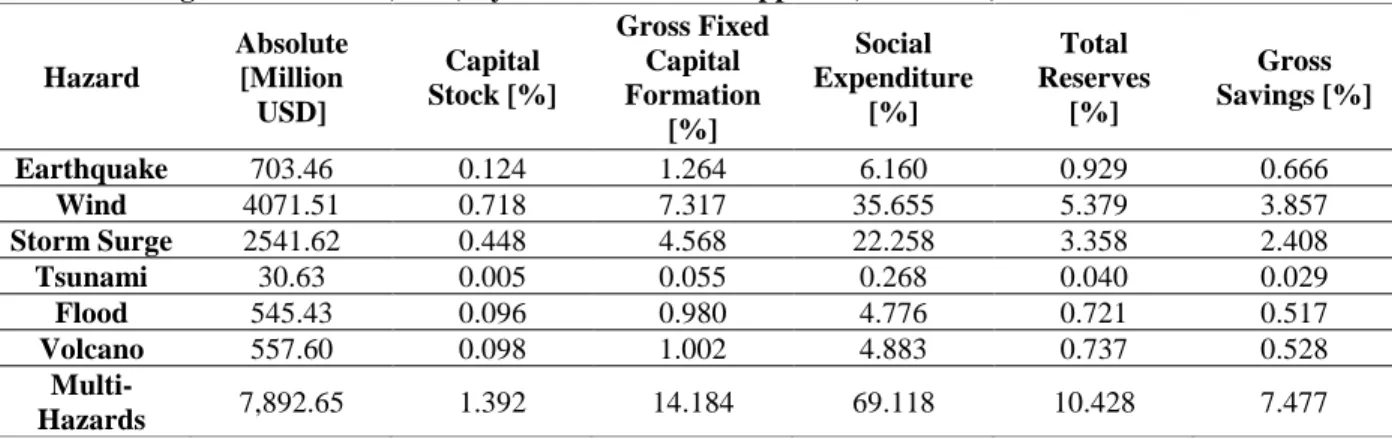
The country remains popular with travelers despite frequent natural disasters. In the 2014 World Risk Report by the UNU, the Philippines placed second after Vanuatu out of 173 countries in terms of natural disaster risk. Furthermore, in the computation of EM-DAT using a probabilistic risk assessment model, the Philippines’ average annual loss accounts to 8450.25 million USD. Among the natural disasters that the country faces are earthquakes, floods, volcanic eruptions, tsunami, and typhoons. Despite these conditions, ecotourism remains popular and is still being developed and pursued in the Philippines.
In this research, the objective is to identify and evaluate the role of the ecotourism business in building resilience in disaster-vulnerable areas. To fulfill the objective, two questions were raised: how ecotourism business is being managed, and what are the contributions of the ecotourism business to community resiliency in disaster vulnerable areas. To answer these questions, policies in disaster management, tourism (general policies) and ecotourism in the Philippines have been reviewed and analyzed, case studies have been done, including field visits, site observations, key informant interview, and focus group discussions.
There hasn’t been any framework crafted to measure the contribution of ecotourism in community resiliency in disaster vulnerable areas thus, based on the literature review of existing resilience frameworks, the “Resilience Indicators for Disaster Vulnerable Communities Engaging in Ecotourism” have been developed. The framework consists of three indicators, sustainable social development, economic sustainability of ecotourism, and environmental sustainability. The sustainable social development indicator includes secured livelihood options and stakeholder participation. The economic sustainability indicator includes business plans and financial management. The environmental sustainability includes environmental quality maintenance and resource efficiency in production and consumption systems.
Findings from the field studies were combined with secondary data, summarized and analyzed using the developed framework.
Ecological tourism, or ecotourism, in the Philippines hadn’t been formally introduced until 1992. In the ecotourism congress in 1999, the formal definition of ecotourism was defined as a form of tourism within a natural and cultural heritage area where community participation, protection, and management of natural resources, culture, indigenous knowledge and practices, environment education, and ethics, as well as economic benefits, are fostered and pursued for the enrichment of host communities and the satisfaction of visitors.
Policies relating to ecotourism have been developed and, at the same time, disaster management policies were also crafted. The policies in ecotourism and disaster management were crafted in parallel without considering the resiliency of ecotourism. Thus, disaster management, tourism, and ecotourism polices have been furthered reviewed and analyzed. Based on the findings, the Philippines have several systems of tourism, ecotourism, and disaster management rules, regulations, and policies. In the national tourism act, there is no emphasis on ecotourism although it is briefly mentioned as a kind of nature-based tourism. There is a national ecotourism strategy, however neither disaster management nor resilience are mentioned. Yet in the ecotourism accreditation requirements, resilience has been mentioned under environmental planning and impact assessment. Disaster management policies have mentioned tourism; however, ecotourism has
iii not been mentioned. Disaster management policies have mentioned resilience as part of the policies referencing international disaster management strategies.
In better understanding of the contribution of ecotourism to resilience building in disaster vulnerable communities, two case studies have been done. The first case study is the ecotourism business managed by the Indigenous People (IP), the Pamulaklakin Forest Trail (PFT). The second case study is the ecotourism business managed by the government, the Mayon Volcano Natural Park (MVNP). Although managed by different entities, both are conducting ecotourism business, and both are situated in disaster-vulnerable areas.
The first case study, the PFT, is near Mount Pinatubo, which last erupted in 1991. The disaster is one of the biggest eruptions in the Philippines. The second case, the MVNP, includes threat of an active volcano, Mount Mayon, one of the most active volcanos in the Philippines. MVNP is also situated in the region in the Philippines which is most frequented by typhoons.
The two case studies present two types of ecotourism management: a community-managed ecotourism business and a government-managed ecotourism business. Findings reveal that the government-managed ecotourism businesses are related to protected areas or ecotourism sites selected by the DOT. Protected areas engaging in ecotourism activities have guidelines to follow whilst other ecotourism businesses do not follow specific guidelines. Despite following the guidelines, a protected area conducting ecotourism business does not guarantee the benefits of increased resiliency of the community around the ecotourism destination.
In the case studies, several benefits derived from the ecotourism business have been identified to increase community resiliency. Among the identified benefits of the ecotourism are generation of job opportunities for community members; disseminating information to the community; conducting community- development programs; provision of basic needs; and serving as buffers against natural disasters. While protected areas conducting ecotourism activities follow certain guidelines, the benefits of the ecotourism business contributing to the increase of community resiliency was mainly identified in the community- managed ecotourism business.
It is imperative to say which system of management is better at maximizing the benefits from the ecotourism business, however some visible advantages and disadvantages of each system of management have been identified. In the community-managed ecotourism business, the absence of a business plan can result in stagnant growth of business and soon the question of sustainability might be raised. In a government- managed ecotourism business, there can be conflict of interest between the government agency and the LGU. In most cases, LGU is concerned about profit generation whilst government agencies, for instance, DENR, is focused on environmental protection and conservation. Furthermore, government-managed ecotourism businesses encounter difficulties and problems in management with the change in officials, whether from the government agencies or the LGUs. Job opportunities could also be limited in ecotourism businesses which are managed by government agencies as specialists are preferred. There are also visible advantages of each management. In a community-managed ecotourism business, the business is easily integrated to the community, especially if the staff are community members, as there is ease in communication. The community-managed ecotourism business, in cases, tend to have a faster and easier decision-making process. Nevertheless, government-managed ecotourism business has a wide network of government agencies, NGOs, as well as private organizations, that could be utilized to improve, promote, and market the ecotourism business.
The Philippines, despite having a growing tourism industry and showcasing its ecotourism destinations to the world, has yet to incorporate the disaster-preparedness or disaster-resilience component to the business.
As protected areas are perceived as a drain on the economy, it is wise to incorporate DRR component, not
iv only to justify cost allocated to protected areas, but to maximize the benefits of the said areas. Improvement in ecotourism business planning is recommended and must be done. Improvements should include: risk factor identification, hazard assessments, ecotourism capacity assessment, identification of failure chain, contingency funds, construction of green and blue infrastructure, and role setting for stakeholders. Further recommendations include incorporation of DRRM in ecotourism policies through: creating a joint circular, putting DRRM into ecotourism and/or making ecotourism a strategy in promoting DRRM in vulnerable but ecotourism potential areas by the NDRRMC and NEDC; issuance of planning guidelines mixing DRRM and ecotourism planning; strengthening decentralization in the ecotourism and DRRM concerns; creating regulatory measures in formulating and implementing their comprehensive land use plan or zoning ordinance and enforcing the building code and other related regulations; and through market-based instruments—ecotourism ventures that promote disaster-risk reduction and resiliency should receive grants.
v ACKNOWLEDGEMENT
I would like to acknowledge the support provided by my family specially my parents, Evelyn and Wilfredo Carada together with my brothers, Carmelo and Paulo during the whole duration of my study. I would also like to express my very great appreciation to Mr. Noel, and Dr. Nirianne Palacpac for their support and guidance while I write my dissertation. I would also like to express my gratitude to Professor Hisae Nakanishi, my research supervisor, for her patient guidance and useful critiques to my research. I would also extend my thanks to the members of my dissertation committee, Professor Eiji Oyamada, Professor Motoi Wada, and Professor Seifudein Adem for their support and insightful comments on my research.
I would like to thank the following organizations who allowed me and assisted me with my data collection: ASEAN Center for Biodiversity, Department of Environment and Natural Resources in Albay, Disaster Risk Reduction and Management Council in Sto. Domingo, Subic Bay Metropolitan Authority Ecology Department and the Tribong Aeta at the Pamulaklakin Forest Trail.
My thanks are extended to the staff of the afore mentioned organizations, Councilor Marietta Pabayan, Director Clarissa Arida, Dr. Filiberto Pollisco, Forester Patrick Escusa, Manager Nina Orohado, Mr. Cesar Valderama, Mr. Keith Dimaranan, Mr. Mark Lim, Mr. Miel Loria, Ms. Crisanta Rodriguez, Ms. Marlene Francia, Ms. Meg Lavilla, Tata Kasuy, and Treasurer Liwanag Gloria.
I would also like to thank Mr. Dalton Baltazar for technical support on the map creation. Also, an extended thanks to the Kyoto Association of Pinoy Scholars for their continuous support and guidance, specially to Glenn Fernandez, Katrina Navallo, Lani de Vera, Mark Manio, Marke Uy, and Miriam Adres.
vi TABLE OF CONTENTS
ABSTRACT ... ii
ACKNOWLEDGEMENT ... v
TABLE OF CONTENTS ... vi
LIST OF TABLES ... ix
LIST OF FIGURES ... x
LIST OF ABBREVIATIONS ... xi
CHAPTER 1 INTRODUCTION ... 1
1.1 Background of the Study ... 1
1.2 Research Objectives and Problem Statement ... 8
1.3 Literature Review ... 11
1.3.1 The Environment and Ecotourism ... 11
1.3.2. Evolution of Resilience and Community Resilience ... 17
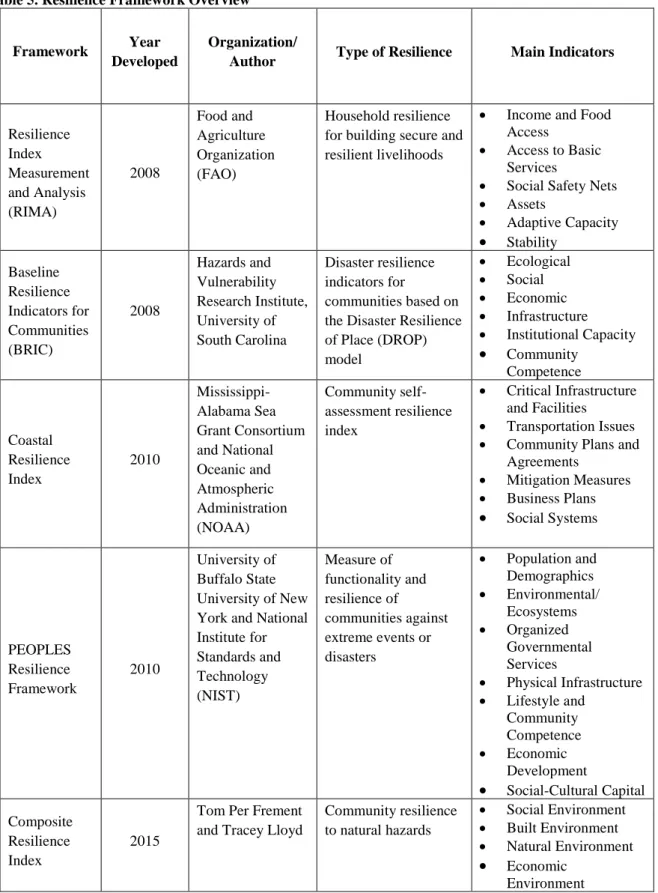
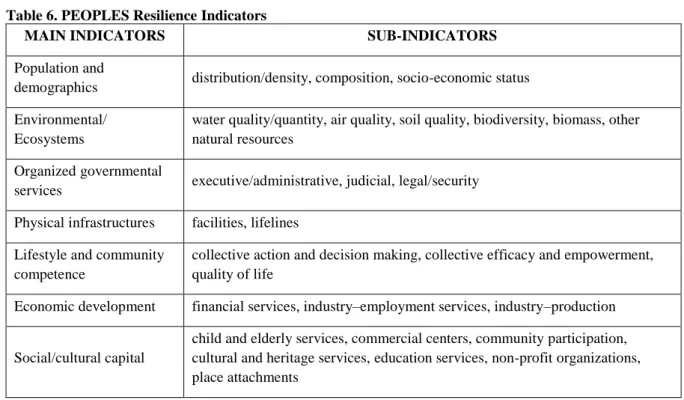
1.3.3. Measures of Resilience ... 21
1.4 Analytical Framework and Methodology ... 30
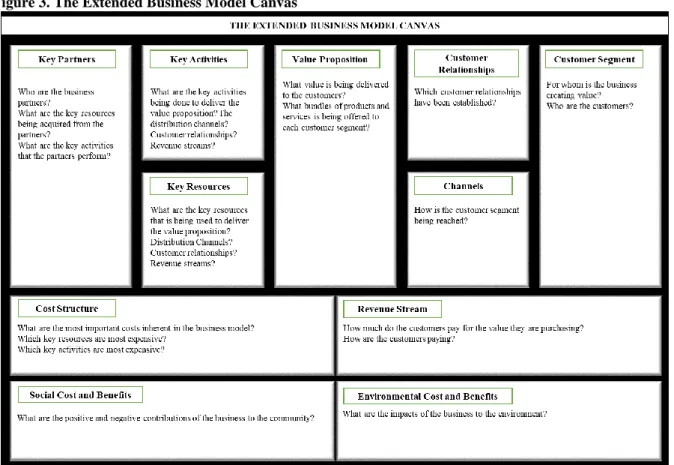
1.4.1. Data Gathering Tool: The Extended Business Model Canvas ... 32
1.4.2. Resilience Indicators for Disaster Vulnerable Communities Engaging in Ecotourism ... 35
CHAPTER 2 ECOTOURISM AND DISASTER MANAGEMENT IN THE PHILIPPINES: HISTORY AND POLICY ... 38
2.1 Introduction ... 38
2.2 Overview of Ecotourism in the Philippines ... 42
2.3 Policy Support for Ecotourism and Disaster Management in the Philippines ... 44
2.3.1. Rules, Regulations, and Policies in Disaster Management in the Philippines ... 46
2.3.2. Rules, Regulations, and Policies in Ecotourism in the Philippines ... 51
2.4 Locating Resiliency in Disaster Management and Ecotourism Policies ... 59
2.5 Conclusion ... 63
CHAPTER 3 INDIGENOUS PEOPLE (IP) MANAGING THE ECOTOURISM BUSINESS: A CASE STUDY OF THE PAMULAKLAKIN FOREST TRAIL (PFT) IN THE PHILIPPINES ... 66
3.1 Introduction ... 66
3.2 Background of the Case ... 67
3.3 Analysis ... 73
vii
3.3.1. Sustainable Social Development ... 73
3.3.2. Economic Sustainability of Ecotourism ... 82
3.3.3. Environmental Sustainability ... 91
3.4 Conclusion ... 95
CHAPTER 4 GOVERNMENT MANAGED ECOTOURISM BUSINESS: A CASE STUDY OF THE MAYON VOLCANO NATURAL PARK (MVNP) IN THE PHILIPPINES ... 97
4.1 Introduction ... 97
4.2 Background of the Mayon Volcano Natural Park (MVNP) ... 101
4.3 Analysis ... 107
4.3.1. Sustainable Social Development ... 107
4.3.2. Economic Sustainability of Ecotourism ... 111
4.3.3. Environmental Sustainability ... 119
4.4 Conclusion ... 123
CHAPTER 5 CONCLUSION AND RECOMMENDATIONS ... 125
List of References ... 132
Appendix 1 Ecotourism Destinations in the Philippines ... 141
Appendix 2 Protected Areas Map ... 144
Appendix 3 Legend: Protected Areas in the Philippines ... 145
Appendix 4 List of Interviewees in PFT ... 151
Appendix 5 List of Marketing and Promotional Materials Online for PFT ... 152
Appendix 6 PFT Log Book ... 153
Appendix 7 Biodiversity Monitoring Sites 2017 ... 154
Appendix 8 Biodiversity Monitoring Report ... 155
Appendix 9 List of Interviewees in MVNP ... 156
Appendix 10 Sto. Domingo Fault Line Map ... 157
Appendix 11 Sto. Domingo Flood and Storm Surge Hazard Map... 158
Appendix 12 Sto. Domingo Lahar Hazard Map ... 159
Appendix 13 Sto. Domingo Landslide Hazard Map ... 160
Appendix 14 Sto. Domingo Lava Flow Hazard Map ... 161
viii
Appendix 15 Sto. Domingo Ground Rupture and Liquefaction Hazard Map... 162
Appendix 16 Sto. Domingo Pyroclastic Flow Hazard Map ... 163
Appendix 17 Sto. Domingo Tephra Fall Hazard Map ... 164
Appendix 18 Sto. Domingo Tsunami Hazard Map ... 165
ix LIST OF TABLES
Table 1. IUCN Protected Area Management Type ... 12
Table 2. Ecosystems and its Role in Disaster Management ... 13
Table 3. Characteristics of Ecotourism According to UNWTO ... 17
Table 4. Various Definition of Community Resilience ... 19
Table 5. Resilience Framework Overview ... 22
Table 6. PEOPLES Resilience Indicators ... 26
Table 7. Average Annual Loss (AAL) by Hazard in the Philippines (2005-2014) ... 40
Table 8. Fees for Ecotourism Accreditation ... 53
Table 9. Package and Rates in PFT during the SBMA Management ... 71
Table 10. Tribal Council Members ... 75
Table 11. Package and Rates in the PFT (Current Management) ... 85
Table 12. MVNP Activities and Rates ... 117
Table 13. Resource Monitoring Tools ... 120
x LIST OF FIGURES
Figure 1. Disaster Cycle ... 4
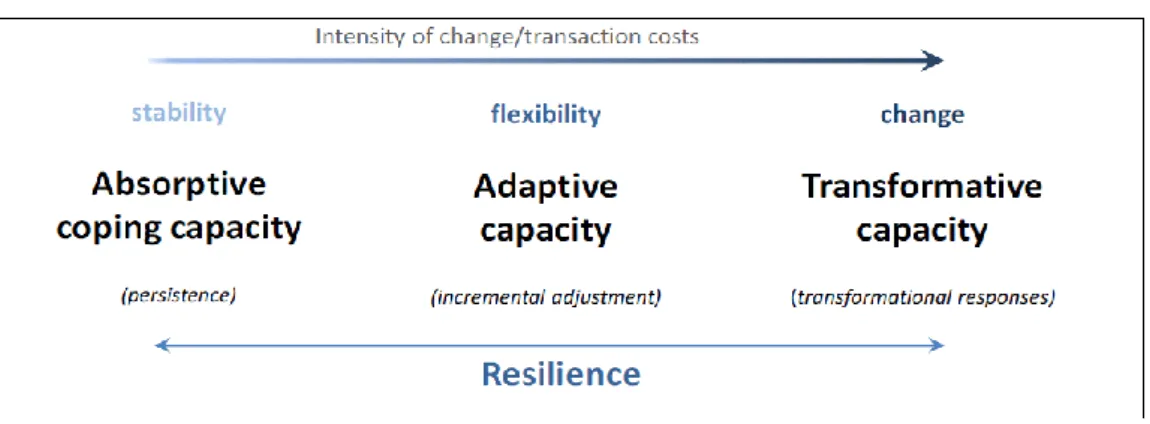
Figure 2. Capacities for Resilience ... 20
Figure 3. The Extended Business Model Canvas ... 34
Figure 4. Resilience Indicators for Disaster Vulnerable Communities Engaging in Ecotourism ... 35
Figure 5. Philippine Natural Hazard Risk Map ... 39
Figure 6. Ecotourism Map of the Philippines Based on DOT Site Listings ... 45
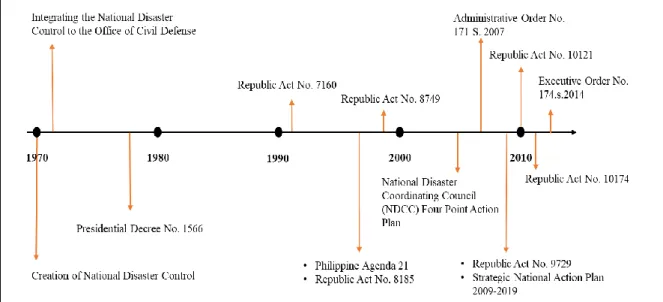
Figure 7. Development of Disaster and Climate Change Rules, Regulations, and Policies in the Philippines ... 46
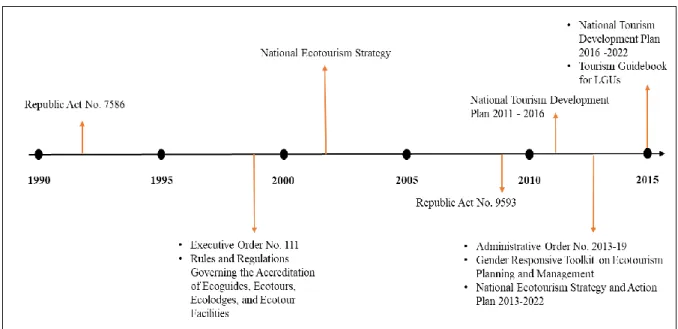
Figure 8. Development of Ecotourism Rules, Regulations, and Policies in the Philippines ... 51
Figure 9. Organizational Chart of PFT ... 74
Figure 10. Souvenir Shop at PFT ... 76
Figure 11. Photo of the Elder, Dominador Liwanag or Tata Kasuy ... 76
Figure 12. Photos in PFT ... 80
Figure 13. Photo of Jungle Survival Training ... 83
Figure 14. Tourism Arrivals in Albay ... 98
Figure 15. The Colors of Albay ... 100
Figure 16. MVNP Ecotourism Map Legend ... 102
Figure 17. MVNP Ecotourism Map ... 103
Figure 18. MVNP Vicinity Map ... 105
Figure 19. Photos in MVNP ... 106
Figure 20. PDRRMC Disaster Advisory ... 116
xi LIST OF ABBREVIATIONS
AAL Average Annual Loss
BPP Biodiversity Partnership Project
BRIC Baseline Resilience Indicators for Communities CATD Certificate of Ancestral Domain
CBD Convention on Biological Diversity
COMELEC Commission on Elections
CRED Centre for Research on the Epidemiology of Disasters DENR Department of Environment and Natural Resources DILG Department of Interior and Local Government
DOT Department of Tourism
DRM Disaster Risk Management
DRRM Disaster Risk Reduction and Management
DTI Department of trade and Industry
EbA Ecosystem-based Adaptation
Eco-DRR Ecosystem-based Disaster Risk Reduction
EM-DAT Emergency Events Database
ETAF Environment and Tourism Administrative Fee
FAO Food and Agriculture Organization
FPZ Freeport Zone
GOCC Government Owned and Controlled Corporation GSDR Global Sustainable Development Report
IPAF Integrated Protected Area Fund
ISDR International Strategy for Disaster Reduction IUCN International Union for Conservation of Nature
LGC Local Government Code
LGU Local Government Unit
MICE Meetings, Incentives, Conventions, and Exhibitions
MVNP Mayon Volcano Natural Park
NDCC National Disaster Coordinating Council
NDRRMC National Disaster Risk Reduction and Management Council NDRRMP National Disaster Risk Reduction and Management Plan NEDC National Ecotourism Development Council
NES National Ecotourism Strategy
NIPAS National Integrated Protected Areas System NIST National Institute for Standards and Technology NOAH National Oceanic and Atmospheric Administration
PA21 Philippine Agenda 21
PAO Protected Area Office
PAWB Protected Areas and Wildlife Bureau
PCB Philippine Convention Bureau
PDP Philippine Development Plan
PENRO Provincial, Environment and Natural Resources Officer
PFT Pamulaklakin Forest Trail
PFZ Free Port Zone
PTFCC Presidential Task Force on Climate Change RIMA Resilience Index Measurement and Analysis SBMA Subic Bay Metropolitan Authority
xii SNAP Strategic National Action Plan
TDP Tourism Development Plan
TRI Tourism Resilience Index
UN United Nations
UNCED United Nations Conference of Environment and Development
UNEP United Nations Environment Programme
UNESCO United Nations Educational, Scientific, and Cultural Organization UNISDR United Nations International Strategy for Disaster Reduction
UNU United Nations University
UNWTO United Nations World Tourism Organization
WCDRR World Conference on DRR
1
The Role of Ecotourism in Resilience Building in Disaster Vulnerable Communities in the Philippines
CHAPTER 1 INTRODUCTION
1.1 Background of the Study
There is an increasing number of global threats which can potentially or deliberately cause significant economic and social paralysis throughout the world. One of these global threats is climate change, the increase in the Earth’s geographic and oceanic temperature due to increasing greenhouse effect. In recent years, the whole world is experiencing significant impact of climate change that includes changing weather patterns, rising sea levels, and extreme weather events.
Risk influenced by climate change includes increasing frequency and effect of natural hazards all over the world. Natural hazards in general are a type of disaster, a naturally occurring physical phenomena either geophysical, hydrological, climatological or biological.
Natural hazards include earthquakes, landslide, tsunamis, volcanic activity, floods, droughts, cyclones, and storms. These mentioned natural hazards causes serious disruptions in the functioning of communities and societies including widespread of human, material, economic and/or environmental losses and impacts, exceeding the ability of the affected communities and societies to cope using their own resources (UNISDR, 2009).
In the Centre for Research on the Epidemiology of Disasters (CRED), it has been analyzed that over the past four decades the number of climate and weather-related disasters have more than doubled. The Emergency Events Database (EM-DAT) have recorded 3,017
2 climate related disasters in the years between 1976 and 1995 while between 1996 and 2015 the record of climate related disasters has increased to 6,392. In addition, 90% of the people affected by these climate related disasters are from low-income countries. The EM-DAT deaths per income group during 1996 to 2015 reveals 9.3% are from high-income, 22.4% are from upper middle income, 46.6% are from lower-middle income, and 21.7% are from low- income. Tallying the economic and human impacts of natural disasters from the 2005 to 2014 data of the United Nations Office for Disaster Risk Reduction (UNISDR), there have been 1.7 billion people affected, 700 000 people killed, and $1.4 trillion damages in total. These damages and casualties are mainly attributed to flooding, storms and earthquakes. Some notable cases of natural disasters in the past decade includes hurricane Katrina, Rita, and Wilma in the United States (2005); the earthquake in Sichuan in China (2008); the earthquake and tsunami in Tohoku Japan (2011); the flood in Thailand (2011); hurricane Sandy in the United States (2012); the storm surge in the Philippines (2013); the earthquake in Nepal (2015); and hurricane Harvey, Irma, and Maria in the United States (2017) (UNISDR, 2018).
These above-mentioned natural hazards along with other natural hazards have been disrupting sustainable development and their impacts are borne by the most vulnerable sectors of the society affecting livelihoods and compounding poverty. Governments and various organizations have recognized the increasing threats from natural hazards bringing about the increase in interest from various organizations on the way to disaster risk management (DRM) initiatives and resilience building. Increased interest from various organizations has resulted in the emergence of the concept of DRM as a solution-oriented academic concept as well as a public policy orientation. DRM has been defined by UNISDR as “the systematic process of using administrative directives, organizations, and operational skill and capabilities to implement strategies, policies and improved coping capacities in order to lessen the adverse impacts of hazards and the possibility of disaster” (UNISDR, 2009). DRM as per the United
3 Nations Development Programme (UNDP) aims to “avoid, lessen or transfer the adverse effects of hazards through activities and measures for prevention, mitigation and preparedness”
(UNDP, 2015).
In the first informal debate on disaster risk reduction held in the UN headquarters in Feb.
2011, the former UN Secretary General Ban Ki-moon expressed that “the more governments, UN agencies, organizations, businesses and civil society understand risk and vulnerability, the better equipped they will be to mitigate disasters when they strike and save more lives.” The more organizations know about DRM the better nations and communities can cope with natural disasters and increase their resiliency.
The conference series on disaster and climate risk management organized by the United Nations (UN) can be observed as a global response to disaster management. The latest conference, the 3rd UN World Conference on Disaster Risk Reduction (WCDRR), was held in March 2015 in Sendai City, Miyagi Prefecture in Japan. Sendai is a significant venue for the conference as it is one of the areas hit by the 2011 tsunami and earthquake. Post the 2005- 2015 Hyogo Framework for Action, the 3rd WCDRR conference resulted in the 2015-2030 Sendai Framework for Disaster Risk Reduction which highlights seven global targets and four priorities of action. The Sendai Framework relates into the 2030 Agenda for Sustainable Development Goals (SDGs), the 17 goals which were adopted in September 2015 by UN member states. Among the seventeen SDGs, ten relates to DRR and resilience and among its 169 specific targets, 25 relates to DRR and resilience.
Understanding DRM entails the understanding and knowledge of the disaster management cycle. The cycle which is being used widely today was developed by David Alexander in 2002 (see figure 1). The cycle involves four different phases. The first two phases, mitigation and preparedness occur before the disaster while response and recovery, the last two phases, occur afterwards.
4 Figure 1. Disaster Cycle
[Source: D. Alexander, 2002]
The mitigation phase pertains to the pre-disaster efforts, lessening or limiting of the adverse impacts of hazards and related disasters. In the mitigation phase, vulnerability to disaster impacts (injuries, loss of life, and properties) are reduced. Mitigation efforts include activities such as changes in building codes, land management, and zoning. The second phase is preparedness, these are the knowledge and capacities developed by governments’
organization on professional response and recovery including communities and individual’s capacity in effectively anticipating, responding to, and recovering from the impacts of likely, forthcoming or current natural hazards. The preparedness phase includes activities such as education, outreach, training, business continuity planning, and emergency planning activities.
The third phase of the disaster is response, the provision of emergency services and public assistance in time or directly right after the disaster to save lives, ensure public safety, decrease health impacts, and make sure to provide basic subsistence needs to affected people. The last phase of the disaster is the recovery phase consisting of restoration and improvement efforts, mainly of facilities, livelihoods and living conditions of affected communities. The recovery phase also includes efforts in reducing disaster risk factors.
The recovery phase can be divided into two different stages: the short-term recovery lasting for six to twelve months and the long-term recovery which can last up to decades. One
5 initiative for recovery is re-building communities to be more resilient to future adversaries.
This activity does not solely fall into one phase but also overlaps with the mitigation phase of the disaster cycle. In the inner circle of the disaster cycle in figure 1, it can be seen that what is being done in between the recovery in mitigation phase of a disaster is called reconstruction.
One of community development initiative in reconstruction is the utilization of the natural environment or the ecosystem. Over the last decade, the use of ecosystems in DRR has been receiving increased attention globally. Healthy and well-managed ecosystems have been recognized to maximize delivery of benefits from the ecosystem services including ecosystem services for DRR (Renaud et al. 2013).
Ecosystems offer four services – provision, regulating, habitat or support, and cultural.
Provision is the service which describes material and even energy output from the ecosystem (food, crops, raw materials, water, medicinal and ornamental resources). Supporting services are services/processes which enables the ecosystem to provide services. The supporting services includes, nutrient recycling, primary production and soil formation. Regulating services pertains to services/ processes such as carbon sequestration, climate regulation, waste decomposition, waste detoxification, water purification, air purification, pest control, and disease control. The last service is cultural service which is divided into several services including recreation, mental and physical health, tourism, aesthetic appreciation and inspiration for culture, art and design, and spiritual experience and sense of place.
Ecosystems can buffer climate and reduce risks and impacts of natural disasters as part of its regulating services. Furthermore, ecosystems through its regulating services can reduce risks and impacts of storms, droughts and sea-level rise which are becoming more severe and frequent due to climate change. Ecosystems managed wisely, reduces disaster risks, preventing, mitigating and/or regulating hazards. Ecosystems acting as natural buffers,
6 reduces people’s exposure to hazards, reducing vulnerability and further supporting livelihoods and providing basic needs (PEDRR, 2013).
A more formal terminology for the use of ecosystems to DRR is the ecosystem-based approaches to disaster risk reduction or Eco-DRR. In the works of Estrella and Saalismaa it is defined as “the sustainable management, conservation and restoration of ecosystems to reduce disaster risk, with the aim of achieving sustainable and resilient development” (Estrella and Saalismaa, 2013). Eco-DRR incorporates natural hazard risk management and climate change adaptation and shares common features with Ecosystem-based Adaptation (EbA) (UNEP 2015).
In regard to ecosystem services, cultural services - specifically tourism services - are some of the most common yet controversial. According to UN Environment, tourism in general has three main impact areas which are the depletion of natural resources, physical impacts of tourism development, and physical impacts from tourist activities. Over the past decades, tourism has continued to expand and diversify around the world. According to the World Tourism Organization (WTO), tourism can be defined as travel for the purposes of leisure, business or recreation. Although tourism is highly diversified, it can be characterized into categories and divided into niches such as: adventure and extreme (adventure tourism, extreme tourism and space tourism), culture and arts (cultural tourism, heritage tourism, and music tourism), medical and dental (dental tourism, medical tourism, and wellness tourism), natural (ecotourism), and rural (agri-tourism, jungle tourism and rural tourism) tourism.
In the 2013 global economic impact analysis of travel and tourism, the GDP contribution of travel and tourism outweighed automotive and manufacturing in every region in the world.
Overall, travel and tourism contribution equaled 9.5% of the global GDP generating over 266 million jobs, US$754 billion in investments and US$1.3 trillion in exports. Creating significant contributions to the global economy, tourism is continuously gaining popularity.
7 In recent studies, tourism is linked to solutions for global problems such as poverty, environmental sustainability, health, and global partnerships.
One particular niche of tourism is ecological tourism, commonly called Ecotourism. It has been described in the work of Ceballos-Lascurain as the fastest growing tourism segment globally, with annual growth of 20% to 25% (Ceballos-Lascurain, 2012). Ecotourism defined by the United Nations World Tourism Organization (UNWTO) is “a form of tourism in which the main motivation of tourists is the observation and appreciation of nature as well as the traditional cultures prevailing in natural areas”. Furthermore, UNWTO mentions that ecotourism should have educational features and features which minimizes negative impacts of activities to the natural and socio-cultural environment. UNWTO also notes that ecotourism should be generally organized by specialized tour operators for small groups and that ecotourism activities should support maintenance and conservation of natural areas used as ecotourism attractions through generation of economic benefits to host communities, organizations and authorities with ecological conservation purposes.
In the international handbook on ecotourism it is mentioned that the benefits of ecotourism fall into three main categories, the environment, local communities, and participating tourists (Ballantyne and Packer, 2013). In the handbook, it is mentioned that ecotourism provides environmental protection through provision of economic incentives for conservation and generation of funds required to implement conservation plans. Furthermore, the handbook mentions that ecotourism facilitates protection of traditional and indigenous cultures in and around the ecotourism destination and develops the visitors’ cultural and environmental awareness, appreciation and respect. Ecotourism, as it strives to provide employment and income for local communities; thus, in theory, helps alleviate poverty and aids in sustaining the well-being of local people. Ecotourism, however, does not only promise benefits. Poorly managed ecosystems can lead to increased exposure to natural hazards leading
8 to landslides or flash floods. However, the sustainable management of the ecosystems will help improve economic, social, and environmental conditions.
Leading back to DRM, ecotourism is one of the initiatives implemented in long term recovery efforts, long term development plans and reconstruction, as it can play crucial role in human security and poverty reduction. Moreover, ecotourism if sustainably managed can provide other ecosystem services such as “regulation and provision services” enabling ecotourism to be a tool for disaster mitigation similar to Eco-DRR, but with an additional feature of job and profit generation ideal for the local economy and community in and around the ecotourism site.
1.2 Research Objectives and Problem Statement
There are existing studies on ecosystems, protected areas, natural disasters, resilience, and tourism; however, in most cases, each thematic area are considered individually. For instance, ecological studies are often geared towards environmental and biological conservation. Disaster management studies focus more on mitigation, reconstruction, and psychological and emotional trauma/aid. Tourism studies, including ecotourism studies, focus on profitability, sustainability, and management. This study can be differentiated from the fore mentioned studies by its interdisciplinary approach. This study integrates themes of community development, ecotourism, business, and disaster management. The study also identifies the roles of ecotourism in resilience building in disaster vulnerable communities.
Furthermore, this study has an exploratory, descriptive, and explanatory purpose. It is
exploratory in that it investigates ecotourism as a catalyst for building resilience in communities. It is descriptive in that it examines the context, strategies, approaches and business of ecotourism. It is exploratory in that it discusses about potentials, barriers and
9 success factors of ecotourism to contribute to community resiliency in disaster vulnerable communities.
Ecotourism as mentioned in the previous section is a form of sustainable tourism which can help build community resilience, explicitly reducing disaster vulnerability through the regulating ecosystem services and generation of jobs for the community. This study aims to identify the contributions of the ecotourism business in community resiliency in disaster- vulnerable areas in the Philippines. Fulfilling this objective, two research questions were raised.
The first question being: How is an ecotourism business managed? The second question being:
What are the contributions of the ecotourism business to community resiliency in disaster vulnerable areas?
In order to fulfill the objective of the study and answer the research questions, the Philippines has been chosen as the focus of the study. There are two characteristics that led Philippines to be selected for the study. The first reason is that the Philippines is one of the most vulnerable countries in the world in terms of the risk of natural disasters. The second is that the Philippines is one of the most megadiverse countryin the world (WCMC, 2014).
The 2017 World Risk Index reported that the Philippines is the 3rd most at risk in terms of disaster risk among 171 countries (mean value calculation from 2012-2016). The ranking has been computed based on four components, exposure to natural hazards, vulnerability, coping capacities, and adapting capacities. In terms of the individual components, the Philippines have ranked 3rd on natural hazard exposure (World Risk Index, 2017).
The Philippines is one of 18 mega-biodiverse countries in the world, harboring two thirds of the world’s biodiversity and between 70% - 80% of the world’s species of plants and animals according to the Convention on Biological Diversity (CBD) and World Conservation Monitoring Center (WCMC). The unique biodiversity in the country is being supported by its
10 large and diverse variety of ecosystems, landscapes, and habitats. Furthermore, the country derives large benefits from the ecosystems in terms of livelihood such as tourism.
The Philippines, having the previously mentioned characteristics, is a fit for the study.
Furthermore, there are two case studies which have been selected to be able to answer the research problem. In the Philippines, there are 81 ecotourism sites which are listed by the Department of Tourism (DOT) and majority of the sites are considered protected areas.
Protected areas as defined by the International Union for Conservation of Nature (IUCN) are
“clearly defined geographical space, recognized, dedicated and managed, through legal or other protected means, to achieve the long-term conservation of nature with associated ecosystem services and cultural values.” According to IUCN and CBD, protected areas may be governed differently, by the government, private individuals, organizations, indigenous people, local communities, or by various stake holders/ shared governance.
In this study two case studies have been selected, a government and indigenous people/local community-managed ecotourism business. The first case is the Pamulaklakin Forest Trail (PFT), a community managed ecotourism business, and the second is the Mayon Volcano Natural Park (MVNP) managed by the government. Although different management types both are conducting ecotourism business, both have been through disasters and still have disaster vulnerabilities.
This research will be providing multi-disciplinary, multi-cultural and inter-faith perspectives on ecotourism as a catalyst of economic and disaster resilience in communities through case studies and analysis of policies revolving around ecotourism and disaster management. The business and entrepreneurial perspectives are introduced and enriched via the investigation of the ecotourism business. Policy inputs, and the way they provide a way to enable the governance mechanism, are also featured in this study. Thus, the study will give
11 recommendations as to the direction of the government and donor agencies in order to promote entrepreneurial and economic growth.
1.3 Literature Review
In order to highlight the significance of this research, this section examines the existing literature on the natural environment, ecotourism, resilience, and resilience measures.
1.3.1 The Environment and Ecotourism
The environment is the sum of all conditions affecting the life, development, and survival of an organism (World Bank, 1998). The environment has different functions which earlier studies referred to as “environmental services.” This terminology emerged in 1970s (Wilson and Mathews 1970) and was renamed “ecosystem services” in the mid-1980s (Ehrlich and Mooney 1983). In 1997, the word ecosystem services had gained momentum and the term became a standard in scientific literature. Ecosystem services, as per the Millennium Ecosystem Assessment in 2006, are the benefits obtained by people in the ecosystems delineated into four categories, supporting, provisioning, regulating, and cultural services.
Ecosystem supporting services includes nutrient recycling, primary production, and soil formation. The provisioning services includes provision of food, raw materials, genetic resources, water, biogenic minerals, medicinal resources, energy, and ornamental resources.
The regulating services includes services such as carbon sequestration, climate regulation, waste decomposition, and waste detoxification. The last is cultural services which includes the use of ecosystems for spiritual and historical value, recreational experiences including ecotourism, and outdoor sport, science and education, and therapeutic purposes. This study will be mainly discussing the two ecosystem services which are related to disaster management and
12 ecotourism, the focus of the study. The two services are regulating services and the cultural services.
Disaster Management through the Regulating Service of the Ecosystem
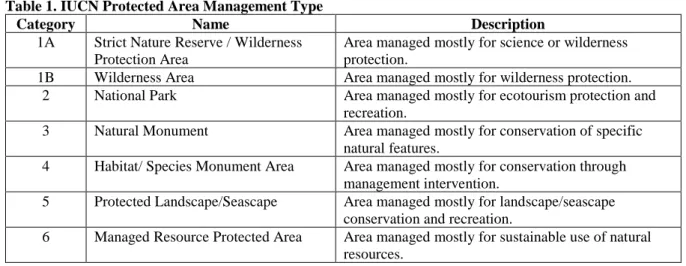
Ecosystems have been used in both research purpose, and for human and social activities as buffers against disasters. These studies and researches are grounded as one of the ecosystems regulating services is the ecosystem serving as buffer to natural disasters. Earlier studies of these cases focus mainly on protected areas. These areas are declared by the IUCN satisfying certain guidelines and is categorized based on six management types. The protected areas are categorized by numbers from one to six and have different purposes as seen in table 1. Apart from the categorization of protected areas by management types, these areas are also classified into four different governance approach. IUCN identifies four governance approach for the protected areas which are government, private, indigenous people and local communities, and shared governance (Dudley, 2018).
Table 1. IUCN Protected Area Management Type
Category Name Description
1A Strict Nature Reserve / Wilderness Protection Area
Area managed mostly for science or wilderness protection.
1B Wilderness Area Area managed mostly for wilderness protection.
2 National Park Area managed mostly for ecotourism protection and recreation.
3 Natural Monument Area managed mostly for conservation of specific natural features.
4 Habitat/ Species Monument Area Area managed mostly for conservation through management intervention.
5 Protected Landscape/Seascape Area managed mostly for landscape/seascape conservation and recreation.
6 Managed Resource Protected Area Area managed mostly for sustainable use of natural resources.
[Source: IUCN Guidelines for Protected Area Management Categories, 2018]
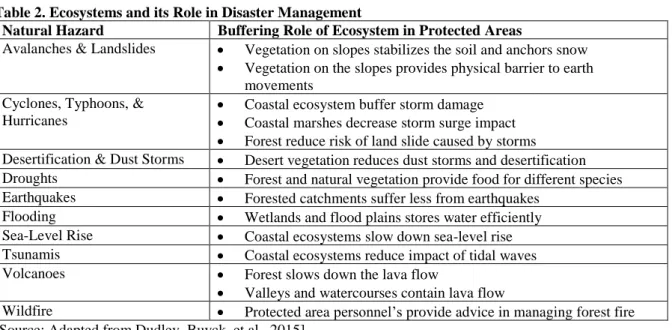
In the coming years, it is predicted that climate change would result in increased number of disasters as well as increase impact with this, protected areas could contribute to the disaster management and climate regulation. Protected areas in general could serve as natural buffers
13 reducing risks and impacts of various natural disasters. Table 2 summarizes roles of ecosystems in disaster management.
Table 2. Ecosystems and its Role in Disaster Management
Natural Hazard Buffering Role of Ecosystem in Protected Areas
Avalanches & Landslides • Vegetation on slopes stabilizes the soil and anchors snow
• Vegetation on the slopes provides physical barrier to earth movements
Cyclones, Typhoons, &
Hurricanes
• Coastal ecosystem buffer storm damage
• Coastal marshes decrease storm surge impact
• Forest reduce risk of land slide caused by storms Desertification & Dust Storms • Desert vegetation reduces dust storms and desertification Droughts • Forest and natural vegetation provide food for different species Earthquakes • Forested catchments suffer less from earthquakes
Flooding • Wetlands and flood plains stores water efficiently Sea-Level Rise • Coastal ecosystems slow down sea-level rise Tsunamis • Coastal ecosystems reduce impact of tidal waves Volcanoes • Forest slows down the lava flow
• Valleys and watercourses contain lava flow
Wildfire • Protected area personnel’s provide advice in managing forest fire [Source: Adapted from Dudley, Buyck, et.al., 2015]
Ecosystems can also protect communities during disasters. During avalanches and landslides, ecosystems help protect valley communities. In terms of cyclones, typhoons, and hurricanes, ecosystems protect communities and lessens disaster impacts. Ecosystems also protects other species during disasters providing sustenance on droughts. In general, the various roles of protected areas such as buffering vulnerable communities against natural disasters and aid in lessening the impact of natural hazards is becoming more valuable as the different climatic events becomes more severe (Stolton et al., 2008).
The protection of the ecosystems itself does not stop natural hazards or extreme events.
However, there is increasing evidence that well managed, and maintained ecosystems are likely to be more resilient to impacts of natural disasters and decreases the likelihood of ecological and humanitarian disasters (Dudley et. Al., in press). In Japan, forest protection was introduced as early as the 15th and 16th centuries to counter landslides (Kumazaki et al., 1991). Several policies have been made and now Japan has almost 9 million hectares of protection forest chosen as buffers against natural disasters. In the Middle East, there are protected areas
14 established over thousand years ago called “Hima,” its main purpose is to prevent deforestation and grassland erosion done by overgrazing (Bagader et. Al., 1994).
In 2015, the IUCN published a handbook called the “Protected Areas as Tools for Disaster Risk Reduction.” This handbook provides guidance to DRR specialists as well as protected areas managers on optimizing the use of protected areas as tools in disaster management. The IUCN is specifically promoting protected areas for DRR however, there is a wider initiative on the use of the environment for DRR which came before the promotion of protected areas for DRR, “The Partnership for Environment and Disaster Risk Reduction (PEDRR).” It has been formally established in 2008 and is a partnership between 23 organizations worldwide composed of UN agencies, NGOs, and different specialist institutes promoting ecosystem management as a key strategy to reduce disaster risk and build resilience in vulnerable communities. The IUCN is a member of the PEDRR and the United Nations Environment Programme (UNEP) is a core member.
PEDRR advocates the promotion of the Ecosystem-Based Adaptation (EbA) which became widespread around 2013. EbA is an evolving strategy in fields of community development and environmental management. EbA is grounded on the utilization of ecosystem services as aid in community adaptation to effects of climate change. A formal definition of EbA is given by the Convention on Biological Diversity (CBD) as, “the use of biodiversity and ecosystem services to help people to adapt to the adverse effects of climate change, including the exercise of sustainable management, conservation and restoration of ecosystems, as part of an overall adaptation strategy that takes into account the multiple social, economic and cultural co-benefits for local communities” (Convention on Biological Diversity, 2009).
PEDRR advocates another tool for DRR which the ecosystem-based disaster risk reduction is (Eco-DRR). This initiative aims to achieve sustainable and resilient development
15 by reduction of disaster risk through sustainable management, conservation and restoration of the ecosystem (Estrella and Saalismaa 2013: 30). This concept of the Eco-DRR has a premise that ecosystems which are well managed will be able to act as natural infrastructures which would reduce exposure to hazards and further, increase the socio-economic resilience of communities through the provision services of the ecosystem.
The use of protected areas in disaster management as well as employing EbA, and Eco- DRR are examples of regulating services of the ecosystem. An argument however is that maintenance of protected areas can be costly. Protected areas cover about 15% of land and about 10% of total waters of the world. Counting the total number of protected areas around the globe excluding Antarctica, there are 202,467 protected areas according to scientist from IUCN and the UN Environment’s World Conservation Monitoring Center in 2016 (UNEP- WCMC and IUCN,2016). Maintaining these protected areas would require an approximate 150-440 billion USD (considering all Achi targets) according to a study conducted by CBD in 2011. However, in the study of Waldron et al. the computed average annual expenditure on global biodiversity conservation amounts to only 21.5 billion USD (2001 to 2008 average) (Waldron, et.al., 2013).
Ecotourism
The other ecosystem service that will be discussed in the study as mentioned earlier is the cultural service, specifically ecotourism. Even before the terminology ecotourism began to be used in tourism studies, it was already in existence. Natural areas around the world have been tourist destinations for centuries. Geographers travelling around the world in search for new land and species in the mid-20th century could be considered as the early ecotourist. In the mid- 20th century, mass tourism became popular and the increasing global interest in the environment combined made ecotourism popular. Though early traces of ecotourism have been
16 identified there is no one definition of the term. Definitions varies, country to country and organization to organization.
The evolution and origin of ecotourism is traced back in the relationship of environment and tourism. In the mid-20th century, the relationship of the environment and tourism is co- existent. During 1950s, the mass understanding is that tourism has few impacts on the natural environment which brought up some positive and more negative issues in the relation of environmental protection and tourism development. In 1954, the International Union of Official Travel Organizations, now the United Nations World Tourism Organization (UNWTO), introduced into its general assembly a section on the preservation of “tourist heritage” that focused on the protection of tourism “capital” or resources from potentially adverse physical and social effects.
During 1960s, there was increasing environmental awareness and mass tourism became more prominent. Correspondingly, in 1970s, tourism is being advocated as an agent of conservation with the work of the Commissioner General of Tourism in Belgium and the Director of the Swiss Tourism Association. Their work tackles environmental considerations and conservation in tourism development in natural areas in which the concept and practice of ecotourism was based and developed. One of the early references to ecotourism can be identified to be the work of Hetzer (1965/1970) and Ceballos-Lascurain (1987) in characterizing and defining ecotourism.
Today, ecotourism has been evolving and developing. One of the most prominent definitions of ecotourism which is being used worldwide is the definition of the UNWTO which refers to tourism having the following five characteristics in table 3. Another prominent definition of ecotourism is the definition from The International Ecotourism Society (TIES), founded in 1990 and is the oldest ecotourism society. TIES define ecotourism as "responsible
17 travel to natural areas that conserves the environment and improves the well-being of local people" (TIES, 1990).
Table 3. Characteristics of Ecotourism According to UNWTO No. Characteristics
1 “all nature-based forms of tourism in which the main motivation of the tourist is the observation and appreciation of nature as well as the traditional cultures prevailing in natural areas”
2 “it contains educational and interpretation features”
3 “it is generally, but not exclusively organized by specialized tour operators for small groups, service provider partners at the destinations tend to be small, locally owned businesses”
4 “it minimizes negative impact on the natural and socio-cultural environment”
5
“it supports the maintenance of natural areas which are used as ecotourism attractions by generating economic benefits for host communities, organizations and authorities managing natural areas with conservation purposes; providing alternative employment and income opportunities for local communities; increasing awareness towards the conservation of natural and cultural assets, both among locals and tourists”
[Source: All quoted from ecotourism characteristics of UNWTO, 2002]
Discussed earlier is the regulating and cultural services of the ecosystem specifically climate regulation and ecotourism. It is observed that in terms of climate regulation protected areas are widely studied and is used as disaster management tool. Initiatives in disaster management and climate change with the use of protected areas are called EbA and Eco-DRR.
However, a problem arises in the use of the initiative. Maintaining ecosystems are costly.
Ecotourism nevertheless, has a business component/ finance generating component and the ecosystem component which could be a more suitable and sustainable candidate in reducing disaster vulnerabilities. This theme hasn’t been much explored and will be the focus of the study.
1.3.2 Evolution of Resilience and Community Resilience
Many authors have described resilience as an overloaded concept. The term resilience has various meaning depending on the field of studies or discipline. Etymologically speaking, the term resilience has been introduced early 17th century originating from the Latin verb
“resilire” meaning to rebound or recoil (Concise Oxford Dictionary Tenth Edition, 2001). In the academe, the concept of resilience originated in the field of ecology during 1960 to early
18 1970 as the functional response of interacting populations in relation to the theory of ecological stability (Holling, 1961; Morris, 1963; Lewontin, 1969; Rosenzweig, 1971; May, 1972).
Through the years, the definition and use of resilience in ecology has evolved and changed. Holling, in 1973, defined resilience as the measure of the ability of an ecosystem to absorb changes and still exist (Holling, 1973). There was a minor change in definition of resilience after a decade. In 1984, Pimm, redefined resilience as the speed with which a system returns to its original shape (Pimm, 1984). In 2001, resilience has been defined by Alwang et.
al., as “the ability to resist downward pressures and to recover from shock” (Alwang et. al., 2001). In, 2002, Alkers et al. defined resilience as the systems potential to stay in a configuration and maintain its functions which involves the ability of the system to reorganize after a disturbance. In 2003, Cardona used the term resilience as the ability of the ecosystem or community to absorb shocks and recover. In 2005, Resilience Alliance interpreted resilience as the ability of the ecosystem in tolerating disturbance without collapsing. In 2009, the Stockholm Resilience Centre defined resilience as the capacity of the social and ecological system to withstand perturbations and rebuild and renew itself subsequently.
The definition of resilience evolved in the field of ecology and expanded its use to various fields. The interpretation, definition, and use of resilience extended further to fields such as disaster management and social development. The time when studies on natural disasters became more prevalent, the concept of risk management and resilience became well-known to scholars, academicians and even policy-makers. Among the studies of resilience is community resilience. In general, community resilience is the ability of a community in utilizing its available resources to respond, withstand, and recover from its vulnerabilities. Like its general term, resilience, community resilience has various definitions. In table 4, various definitions of community resilience from different scholars and organization is presented from 2001-2015.
19 Table 4. Various Definition of Community Resilience
ORGANIZATION/
AUTHOR YEAR DEFINITION
Cadell, Karabanow, and
Sanchez 2001 “…the ability to adapt to, cope with and even be strengthened by adverse circumstances.” (Cadell, Karbanow, &Sanchez, 2001) Ganor and Ben-Lavy 2003
“the ability of…communities to deal with a state of continuous, long-term stress, which causes gaps between environmental stimuli and their functional coping behavior.” (Ganor &Lavy, 2003)
Doron 2005
“…is built in a process of creating and strengthening personal, familial, social, organizational and economic systems to resist and cope effectively in times of stress, threats, crisis and emergencies.”
(Doron, 2005) Frankenberger et al. 2007
“collective capacity to respond to adversity and change and maintain function. A resilient community can respond to crisis in ways that strengthen community bonds, resources, and the community’s capacity to cope.” (Frankenberger et al., 2007)
Cutter et al. 2008
“The ability of a social system to respond and recover from disasters and includes those inherent conditions that allow the system to absorb impacts and cope with an event, as well as post- event, adaptive processes that facilitate the ability of the social system to re-organize, change, and learn in response to a threat.”
(Cutter et al., 2008) Norris et al. 2008
“a process linking a set of adaptive capacities to a positive
trajectory of functioning and adaptation after a disturbance.” (Norris et al., 2008)
Walker et al. 2010
“…the general capacity of a community to absorb change, seize opportunity to improve living standards, and to transform livelihood systems while sustaining the natural resource base. It is determined by community capacity for collective action as well as its ability for problem solving and consensus building to negotiate coordinated response.” (Walker et al., 2010)
Pasteur 2011
“the ability of a …community…to resist, absorb, cope with and recover from the effects of hazards and to adapt to long-term changes in a timely and efficient manner…” (Pasteur, 2011)
DFID 2011
“…the ability of …communities… to manage change, by maintaining or transforming the living standards in the face of shocks or stresses…without compromising their long-term prospects.” (DFID, 2011)
Arbon, Gebbie, Cusack,
Perera, and Verdonk 2012
“…when members of the population are connected to one another and work together, so that they are able to function and sustain critical systems, even under stress; adapt to changes…; be self- reliant...; and learn from experience to improve itself over time.”
(Arbon et al., 2012) Béné, Wood, Newsham,
and Davies 2012 “…the ability to resist, recover from or adapt to the effects of a shock or a change.” (Béné et al., 2012)
USAID 2012
“…ability of people, households, communities, countries, and systems to mitigate, adapt to, and recover from shocks and stresses in a manner that reduces chronic vulnerability and facilitates inclusive growth.” (USAID, 2012)
UNDP Drylands
Development Centre 2013
“…a transformative process of strengthening the capacity of…communities…to anticipate, prevent, recover, adapt and/or transform from shocks, stresses and change.” (UNDP, 2013)