The Role of Social Network for Educational
Development in Rural Area of Nepal
著者
タパ サキーラ
著者別名
THAPA Sakhila
journal or
publication title
:Bulletin of the Graduate School, Toyo
University
volume
52
page range
1-23
year
2015
The Role of Social Network for Educational Development in Rural Area of Nepal
1. Introduction
The urban population consists of 19% and the rural consists of 81% of the total population in Nepal (World Bank 2010). This percentage clarify that the majority of population lives in rural areas but the aspects and conditions of the rural education are less satisfactory. About 17% (Nepal: Program Budget and Benefit Incidence Analysis in Education Sector-UNESCO 2009) of budget is allocated in every fiscal year for education under the Government of Nepal. The budget has been implemented through different various education program and activities. Particularly, to improve rural education and to reduce illiteracy, the Government of Nepal is conducting different programs as it focuses on rural areas. However, the rural education has not been progressed relatively, the causes might be the allocated budgets are not being properly operated, the conducted plans and programs are not well applied in working place. On the other hand, majority of people from rural community are below the poor economic conditions those people’s first priority are food, drinking water, electricity, housing, health and transportation. These people are less aware of the importance of education as a basic need among the other needs, so the many people of rural areas do not emphasis or give importance on receiving education. Likewise, due to lack of education awareness and poverty, people are obliged to follow and live with social superstitious traditions, which have directly and indirectly affected negatively in rural education of Nepal.
Where the government plans and policies are not successfully meeting the acquired goals, there are the different organizations such as Non-Government Organizations (NGO),
* Graduate School of Regional Development Studies, Doctoral Course of Regional Development Studies, First Year Grade, Toyo University.
The Role of Social Network for Educational
Development in Rural Area of Nepal
THAPA, Sakhila
*International Non-Government Organizations (INGO) and other community development organizations (LCDO) are working as a community facilitator and reaching the areas where the government has not paid adequate attention. They are being mediator to access education for all, giving high priority to those people who are far behind from the livelihood fundamental necessities. These organizations also known as non-profitable organizations, have also played a vital role for the development of the economic, social and educational aspects of the people in rural areas (Harihar Ghimire 2003).
From the economic point of view: The majority of people from rural areas are under the
poverty line and due to lack of education and professional work skills and training, their economic conditions are degrading more day by day. But these organizations are formulating different kinds of training, skills and provide required materials. They are also giving training to the people about saving and credit of their income and helped to operate the micro banking programs as well. It has helped to reduce some ratio of economic problems in the people of rural areas.
From the social point of view: Due to lack of education and awareness in the people of
rural areas, societies and communities are unable to escape from the orthodox practices and superstition belief. Nepalese rural communities are divided into different races, classes and there is utmost gender discrimination. Besides that, more than 100 languages are spoken in Nepal which also causes the linguistic difficulties among the people and therefore people are divided according to their ethnic languages. Nevertheless, these non-profitable organizations have conducted different programs to create public awareness to eliminate the discrimination among the people regarding different races, classes and gender, which has shown positive results in the social aspects of the people living in rural areas.
From the educational point of view: There is a very minor progress or development in
the quality of education in rural areas. Though, in those areas, these non-profitable organizations have conducted various education awareness and literacy program to improve school education and reduce illiteracy. These organizations have conducted adult learning programs for rural adults by the co-ordination with Ministry of Education. As well as, to make an effective education in schools, these organizations have help to conduct different skill upgrade activities such as teacher training programs, scholarship programs and extra curriculum activities.
The Role of Social Network for Educational Development in Rural Area of Nepal
The above context mentioned that the different non-profitable organizations such as NGOs, INGOS and local community development organization (LCDO) are working as facilitator for community development. They are promoting and trying to make them access to education where the people are far from the out-reach of education plan and programs. It explained the important role of these organizations in rural community in Nepal, even though this research describes not only about the programs of the organizations but also as a main object ‘the human social networks’ of the particular village which is created through these non-profitable organizations. Because different communities or different people are connected with other different societies and people in rural areas through these organizations. Such networks are building among villagers who are effectively working on rural community not only on individuals but for whole society.
This research considers some questions like ”how network has been built among the villagers? How different group of relevant people are connected with other group? Who helps to ties between them?” this research also tries to analyze about the question: ”Are network supporting to improve the village education and how?” The research focuses on village education development as the main goal of the study under the goal with illiteracy reduction and improve children education.
2
among the people regarding different races, classes and gender, which has shown positive
results in the social aspects of the people living in rural areas.
From the educational point of view: There is a very minor progress or development in the
quality of education in rural areas. Though, in those areas, these non-profitable organizations
have conducted various education awareness and literacy program to improve school
education and reduce illiteracy. These organizations have conducted adult learning programs
for rural adults by the co-ordination with Ministry of Education. As well as, to make an
effective education in schools, these organizations have help to conduct different skill
upgrade activities such as teacher training programs, scholarship programs and extra
curriculum activities.
The above context mentioned that the different non-profitable organizations such as NGOs,
INGOS and local community development organization (LCDO) are working as facilitator
for community development. They are promoting and trying to make them access to
education where the people are far from the out-reach of education plan and programs. It
explained the important role of these organizations in rural community in Nepal, even though
this research describes not only about the programs of the organizations but also as a main
object ‘the human social networks’ of the particular village which is created through these
non-profitable organizations. Because different communities or different people are
connected with other different societies and people in rural areas through these organizations.
Such networks are building among villagers who are effectively working on rural community
not only on individuals but for whole society.
This research considers some questions like "how network has been built among the
villagers? How different group of relevant people are connected with other group? Who helps
to ties between them?" this research also tries to analyze about the question: "Are network
supporting to improve the village education and how?" The research focuses on village
education development as the main goal of the study under the goal with illiteracy reduction
and improve children education.
Figure 1.1 Concept of the study
The non-profitable (NGOs and local community development organizations) are a mediator
in this study because these organizations help to establish ties between different culture, caste
and community relevant people. It focuses on the study of the effect (contribution) of the
villager’s network to education. Thus, this research would clarify that the social network
Reduce IlliteracyEducation development
Social Network Analysis
Adult
Develop sustainable education
Children
Verify exist organizations Villager network analysis Social network contribution to
village education
The non-profitable (NGOs and local community development) organizations are a mediator in this study because these organizations help to establish ties between different culture, caste and community relevant people. It focuses on the study of the effect
(contribution) of the villager’s network to education. Thus, this research would clarify
possible to analyze about how are these networks affecting to village education and why should social network analysis be taken? Because Social Network Analysis (SNA) is one of the tools for tackling this research, using SNA, it can be expected that the study can envisage some promising answers to resolve the following purposes:
1. How many villagers are connecting and what kinds of networks are built?
2. Does the network structure connectivity enable efficient sharing of information, ideas and resources?
3. Does social network support to education development? What significant role does the villager’s network have in the village?
2. Education in Nepal and NGOs role to build network among rural people
The common Nepalese people did not have education program or institutes till 1950 (before democracy in Nepal). After democracy (1951) the new political system was made provision for education for all Nepali people (Central Bureau of Statistics- 2002). Since then, Nepal has targeted to increase literacy rate along with educational attainment of the people in each plan. In late 1980s and 1990s, many projects were initiated to improve the access and quality of school education. Some of the major projects were: Primary Education Project (PEP), Basic Primary Education Program (BPEP) and Secondary Education Development Project (SEDP). During this period, the government had formed two high-level Commissions - the National Education Commission, established in 1992; and the High Level National Education Commission, in 1999 - for policy recommendations. Checking inconsistencies, streamlining the system, and improving education. After 2000, the government policies shifted towards ”fundamental reforms” such as decentralization and community involvement to improve school performances. All the programs were also launched accordingly. The Education for All (EFA), Teacher Education Project (TEP), Secondary Education Support Program (SESP), Community School Support Program (CSSP) and Food for Education (FfE) were the programs implemented in line with the spirit of decentralization and community support (Consolidated report MoE-2011).
Moreover, A Millennium development goal of United Nation (UN) represented some 188 countries (including Nepal) compiled the 8 major Goals have to achieve by the year 2015; under these 8 development goals the goal number 2 represented “Achieve Universal Primary Education” target define “to ensure by 2015, children everywhere boys and girls
The Role of Social Network for Educational Development in Rural Area of Nepal
alike, will be able to complete a full course or primary schooling (UN 2000). The Goal number 3 represented “Promote gender equality and empower women” target defined; eliminate gender disparity in primary and secondary education, preferably by 2005 and in all levels of education no later than 2015. (Million Development Goal, United Nation, 2000) These two development goals of United Nation focus on education development through different way, because Nepal also participating in those goals has to achieve no later than 2015.
Specially, among the new generation the general image of social network is only to relate to social network media. By the means of current technology such various network Medias like one-way communication (radio, newspaper, television, etc.) and directional communication (different internet websites or internet means) people are connected from one place to another in the world. The information flow and sharing from one place to another which shows that people of the world are increasing to connect in the same network.
These means of communication has affected specially the people of the developed cities or developed countries and connect those people each other via some mediums. But in poor countries, especially in rural areas where there's no enough basic need available, the means of communication are rare and directional communication are less likely to be available. Nepal is also equally share the problems of communication particularly in rural areas. Information technology of communication has affected mostly people of the urban areas whereas less affected to the people of rural areas. If we consider such medium of communication, people are connected on limited group, limited area or limited boundaries because in Nepalese society people are classified in different, caste, different language and different cultural society. The communication ratio of those people from rural area is very low or limited.
However, it has been seen from the studies that where these means of communication has less likely able to reach, the people from different groups, communities or different cultural background living in those areas are connected to the other people of different communities through different NGOs or non-profitable organizations. Different organization has working as mediator to connect different group and society related people in same network. Commonly even though communication is not shared between the people related to different race and different culture, but the people who are involved in different NGOs
or participate in different programs operated by NGOs are connected with each other. These connections have affected the other people related to different groups and communities and the flow of communication have helped to create mutual support, reconciliation and brotherhood among the people. It has helped to minimize the social and traditional elements like gender inequality, caste discrimination and linguistic difficulties. As a result, there is positive affect can find in the development of rural education.
3. Social Network Analysis
Social Network analysis (SNA) is a set of theories, tools and processes for understanding the relationships and structures of a network. Social Network Analysis is most important tenet is that it enables researchers, practitioners, and educators to see how actors are located or ‘embedded’ in the overall networks” (Hanneman, 2001, p.3).
Different people have described about SNA (Social Network Analysis) in different periods of time. According to Linton C. Freeman (2004) in ”A study in the sociology or science” under topic ”The development of social network analysis” Auguste Comte (Auguste
Marie Francois Xavier Comte) from 1830 to 1840 said that ”Sociology as the beginning of Science”, although Auguste Comte is not mentioned in the reviews of the history of
social network but according to Linton C. Freeman, Auguste Comte has a large, albeit indirect influence on the development of the Social Network Analysis. Ferdinand Tonnies (1855-1936) used the word genceinschaft to characterize the traditional social form that involved personal and direct social ties that linked individuals who shared values and beliefs. He contrasted that with the modern forms based on gesellscheft, where social links are formal, impersonal and instrumental. Emile Durkheim (1893-1964) described traditional societies, linked similar individuals with repressive regulations. Likewise, the research of sociologists like Sir Herbert Spencer (1897), Charles Hortan Cooley (1909-1962), George
Simmel (1908-1971), have mentioned about expansion of different methods and study of
Social Network Analysis in different way.
The ‘nodes’ of a network are the people and the ‘links’ are the relationships between people. SNA practitioners collect network data, analyze data, and often produce maps or pictures that display the patterns of connections between the nodes of the network. SNA methodology enables the analysis of relationships between individuals, groups, teams,
The Role of Social Network for Educational Development in Rural Area of Nepal
cliques, agencies and organizations. Tolga Arslan, Naim Kapucu, Farhod Yuldashev, and Faith Demiroz (2010) Social Network Analysis (SNA) is a unique methodology with its own version of data collection, statistical analysis, and presentation of the results. In villager network SNA tools can be used to (a) measure villager interaction, (b) identify the high connector in the network.
Social Network Analysis is only such method which analyses the relationship of individual, groups/organizations, team, cliques, community or society. SNA has its own methods of information collection by being in certain circumference, data is collected then, by that data the methods of analysis can be completed. For network data analysis, different SNA tools or software are used to make the analysis easy and accurate, therefore those tools and software are very important in data analysis.
4. Study Area and data
4.1 Situation
The study pilot area Luhung is one of the sector of Pokharathok Village Development Committee (VDC) which is one rural part of Palpa district. Luhung is situated approximately 1200m above the sea level. The village consists of 130 households and 870 Population. It has 1 secondary school (from elementary to grade 10) in the village which covered the children from other near 5 villages.
The major income sources of this village are agriculture, traditional ethnic works and foreign employments. Because most of the youths of the village especially men are engaged in foreign employments in different countries, it was seen that the number of children and the age group above 35-60 were relatively high than the age group of 20-30. There is rapid increase in migration of the people who are economically strong and stable to urban areas for better job and education which resulted decrease in the population of village.
The villagers are classified in three different ethnics group also known as caste system which is Magar, Bhrahman and Bishwakarma living in the village Luhung (according to survey data). The people from these caste groups are settled in different parts of the village varying geographical and cultural separation. (caste system: each of the hereditary classes of Hindu society)
socially, culturally and mentally (according to geographical structure of VDC). There are huge differences between existing superior and minor caste among the caste groups. The caste system in Nepal or in the village differs from highest to lowest which ranks Brahmin as highest and Bishwakarma ranks the lowest in order of rights and respects which is not recognized by the law of nation, but still exists in such societies due to illiteracy and superstitious belief (Bennet, Dahal, Govindasamy, 2008).
People under their caste boundaries hesitate to involve to other so-called lower castes boundaries like eating, touching or entering to the lower caste belongings and house. Thus makes the dominated castes group fail to reconcile with other caste people which ravages of backwardness. This is one of the factors that so-called lower caste people resulted more illiterate than other caste. This has caused discrimination among adults of different castes group which has affected the children going to school. Commonly villagers are less interacting or less sharing their problems to other villager cause of their classification.
But as they are involved or participated in different organizations in the village the situation has been changed. Organizationally the villagers are tied or connected with different caste or culture relevant people. Villagers participating every seminars and workshops together twice of the month which is operated by different organizations (NGOs/ LCDOs). They sharing their problems and opinion they also interacting face to face and helping each other. It has been seen the proximity created among them and such random social network has been created which help to reduce the thought of social discrimination from the society.
4.2 Data of respondent
Research consist the 168 people to represent of Luhung village out of 870 populations. Even though the village has 870 population in data statistic of VDC, for the different reasons (migrating to foreign countries and development cities) actual permanent residents are less than the population data. Among the relative data, 105 people are adults (21-60 years age group) targeting to literacy and relational data for variable analysis and network analysis, 63 students of 9-10 are targeting for educational attribute data for variable and ideational analysis. The students from grades 1-8 were also as part of informal interaction to analysis the effect of villager`s network within children education. The research also consists the 13 exist organizations, their program and activities in village. It has taken 6 NGOs and 7 local
The Role of Social Network for Educational Development in Rural Area of Nepal
― 9 ―
community development organizations as another important sample. Cytoscape, UCINET and Pajek social network analysis (SNA) software has been used to analyze the network of villager.
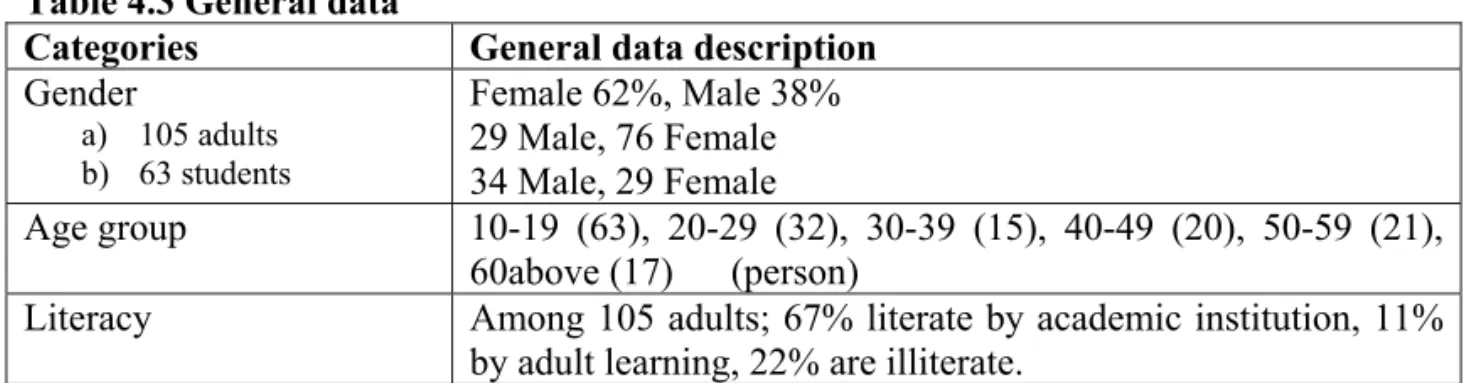
General data collection of 168 including 63 students and 105 adults are kept in table 4.3 As shown in the table, out of 105 adults 29 were male and 76 were female, likewise out of 63 students 34 were male and 29 were female. In total 105 are female (62%) and 63 (38%) were male out of 168 total data, the data shows the female are more participated more than male in this research.
6
group which has affected the children going to school. Commonly villagers are less
interacting or less sharing their problems to other villager cause of their classification.
But as they are involved or participated in different organizations in the village the situation
has been changed. Organizationally the villagers are tied or connected with different caste or
culture relevant people. Villagers participating every seminars and workshops together twice
of the month which is operated by different organizations (NGOs/LCDOs). They sharing
their problems and opinion they also interacting face to face and helping each other. It has
been seen the proximity created among them and such random social network has been
created which help to reduce the thought of social discrimination from the society.
4.2 Data of respondent
Research consist the 168 people to represent of Luhung village out of 870 populations.
Even though the village has 870 population in data statistic of VDC, for the different reasons
(migrating to foreign countries and development cities) actual permanent residents are less
than the population data. Among the relative data, 105 people are adults (21-60 years age
group) targeting to literacy and relational data for variable analysis and network analysis, 63
students of 9-10 are targeting for educational attribute data for variable and ideational
analysis. The students from grades 1-8 were also as part of informal interaction to analysis
the effect of villager`s network within children education. The research also consists the 13
exist organizations, their program and activities in village. It has taken 6 NGOs and 7 local
community development organizations as another important sample. Cytoscape, UCINET
and Pajek social network analysis (SNA) software has been used to analyze the network of
villager.
General data collection of 168 including 63 students and 105 adults are kept in table 4.3 As
shown in the table, out of 105 adults 29 were male and 76 were female, likewise out of 63
students 34 were male and 29 were female. In total 105 are female (62%) and 63 (38%) were
male out of 168 total data, the data shows the female are more participated more than male in
this research.
Table 4.3 General data
Categories
General data description
Gender
a) 105 adults b) 63 studentsFemale 62%, Male 38%
29 Male, 76 Female
34 Male, 29 Female
Age group
10-19 (63), 20-29 (32), 30-39 (15), 40-49 (20), 50-59 (21),
60above (17) (person)
Literacy
Among 105 adults; 67% literate by academic institution, 11%
by adult learning, 22% are illiterate.
5. Analysis approach and findings
The research effort to describe different networks which was found in village Luhung with
easy and understanding method. The network analysis interprets the direct and indirect
relationship of people in the village and it also find out the cause and the beginning of such
relationship and how such relationship has affected the present education of the village? The
network below is related with the common queries like, how network is building among the
villagers? Who helps to ties between people in the village? Network visualization shows that
people are tied through the different organizations and such proximity is been created among
them. This analysis process is based on 3 main approaches to define the network. The 3 main
approaches are described;
5. Analysis approach and findings
The research effort to describe different networks which was found in village Luhung with easy and understanding method. The network analysis interprets the direct and indirect relationship of people in the village and it also find out the cause and the beginning of such relationship and how such relationship has affected the present education of the village? The network below is related with the common queries like, how network is building among the villagers? Who helps to ties between people in the village? Network visualization shows that people are tied through the different organizations and such proximity is been created among them. This analysis process is based on 3 main approaches to define the network. The 3 main approaches are described;
5.1 Relations between persons and organization
This approach has defined the relation of villagers with 13 active organizations (organization involvement network) of the community. Because of these organizations have
5.1 Relations between persons and organization
Person
Organization
This approach has defined the relation of villagers with 13 active organizations (organization
involvement network) of the community. Because of these organizations have important role
to building relation or connecting people on one social network in this community, it has
been defined network of persons and organizations.
Table 5.1.1 Descriptive statistics of 13 organization-based on 105 villager involvement
Organization
Non-government Local development
R
A
R
A
PTDP REDA DIPLOS NESTO HEIFER
TRISH U LI G R O U P SURYA MUKH I G R O U P CHA NDRA MUKH I WOMEN GR O U P M O T H E R G R O U P PEACE HELP CO MTTEE DALIT UTHAN
C O M T T E E J. J YO UT H CLUB Non-involved Involvement number 20 34 41 11 10 4 12 2 1 3 1 1 1 26
Above data shows there are 120 (85%) are involved in different NGOs where 21 (15%) are
involved in LCDOs (Local Community Development Organization). The number of data has
seen greater than total adult respondent because villagers are repeatedly involved in different
organizations. Under the different organization the huge number of villagers is participated in
REDA and PTDP NGOs. After these two organizations gradually RARA, DIPLOS, NESTO
and Trishuli Group has a big number of villager’s involvement.
Most of the people are involved in NGOs rather than the local development organizations,
NGOs program activities are more actively supporting to create the network between
different people in different community. Less people are involving in others local
organizations and some local organization supporting those who are dominated from the
society (so-called lower caste villager and women) such group or network are built among
them. The villager network has been built through the organizations as long as these
organizations promoting education awareness program with educational activities.
important role to building relation or connecting people on one social network in this community, it has been defined network of persons and organizations.
7
5.1 Relations between persons and organization
Person
Organization
This approach has defined the relation of villagers with 13 active organizations (organization
involvement network) of the community. Because of these organizations have important role
to building relation or connecting people on one social network in this community, it has
been defined network of persons and organizations.
Table 5.1.1 Descriptive statistics of 13 organization-based on 105 villager involvement
Organization
Non-government Local development
R
A
R
A
PTDP REDA DIPLOS NESTO HEIFER
TRISH U LI G R O U P SURYA MUKH I G R O U P CHA NDRA MUKH I WOMEN GR O U P M O T H E R G R O U P PEACE H ELP CO
MTTEE DALIT UTHAN
C O M T T E E J. J YO UT H CLUB Non-involved Involvement number 20 34 41 11 10 4 12 2 1 3 1 1 1 26
Above data shows there are 120 (85%) are involved in different NGOs where 21 (15%) are
involved in LCDOs (Local Community Development Organization). The number of data has
seen greater than total adult respondent because villagers are repeatedly involved in different
organizations. Under the different organization the huge number of villagers is participated in
REDA and PTDP NGOs. After these two organizations gradually RARA, DIPLOS, NESTO
and Trishuli Group has a big number of villager’s involvement.
Most of the people are involved in NGOs rather than the local development organizations,
NGOs program activities are more actively supporting to create the network between
different people in different community. Less people are involving in others local
organizations and some local organization supporting those who are dominated from the
society (so-called lower caste villager and women) such group or network are built among
them. The villager network has been built through the organizations as long as these
organizations promoting education awareness program with educational activities.
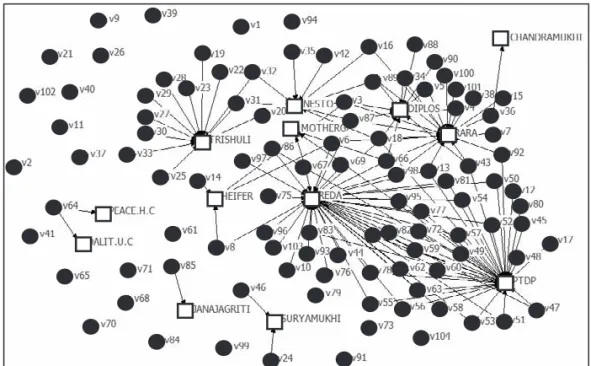
Figure. 5.1.2 Visualization of organization involvement network
Above data shows there are 120 (85%) are involved in different NGOs where 21 (15%) are involved in LCDOs (Local Community Development Organization). The number of data has seen greater than total adult respondent because villagers are repeatedly involved in different organizations. Under the different organization the huge number of villagers is participated in REDA and PTDP NGOs. After these two organizations gradually RARA, DIPLOS, NESTO and Trishuli Group has a big number of villager’s involvement.
Most of the people are involved in NGOs rather than the local development organizations, NGOs program activities are more actively supporting to create the network between different people in different community. Less people are involving in others local organizations and some local organization supporting those who are dominated from the society (so-called lower caste villager and women) such group or network are built among them. The villager network has been built through the organizations as long as these organizations promoting education awareness program with educational activities.
The Role of Social Network for Educational Development in Rural Area of Nepal
7
5.1 Relations between persons and organization
Person
Organization
This approach has defined the relation of villagers with 13 active organizations (organization
involvement network) of the community. Because of these organizations have important role
to building relation or connecting people on one social network in this community, it has
been defined network of persons and organizations.
Table 5.1.1 Descriptive statistics of 13 organization-based on 105 villager involvement
Organization
Non-government Local development
R
A
R
A
PTDP REDA DIPLOS NESTO HEIFER
TRISH U LI G R O U P SURYA MUKH I G R O U P CHA NDRA MUKH I WOMEN GR O U P M O T H E R G R O U P PEACE H ELP CO
MTTEE DALIT UTHAN
C O M T T E E J. J YO UT H CLUB Non-involved Involvement number 20 34 41 11 10 4 12 2 1 3 1 1 1 26
Above data shows there are 120 (85%) are involved in different NGOs where 21 (15%) are
involved in LCDOs (Local Community Development Organization). The number of data has
seen greater than total adult respondent because villagers are repeatedly involved in different
organizations. Under the different organization the huge number of villagers is participated in
REDA and PTDP NGOs. After these two organizations gradually RARA, DIPLOS, NESTO
and Trishuli Group has a big number of villager’s involvement.
Most of the people are involved in NGOs rather than the local development organizations,
NGOs program activities are more actively supporting to create the network between
different people in different community. Less people are involving in others local
organizations and some local organization supporting those who are dominated from the
society (so-called lower caste villager and women) such group or network are built among
them. The villager network has been built through the organizations as long as these
organizations promoting education awareness program with educational activities.
Figure. 5.1.2 Visualization of organization involvement network
The circle node in the figure denotes villager and the rectangle box denote the organizations. Among 105 villagers (node), 26 are not directly involved in any organizations or it seems they are isolated from other nodes because there are no any edges (direct connector) are shown, however they are connected with undirected connectivity the information is flowing among them via their near relatives or friends. The isolated nodes have become information receiver in this network whereas 79 (the single involved number) villagers have their direct involvement in organizations. According to the visual there is domination of NGOs over LCDOs because more people are involved in NGOs it can be presume that the NGOs have become effective mediator to ties the villagers as social network.
There are 2 motivations are found based on this approach; which encourage to involve in different NGOs rather than LCDOs they are: i) Personal Motivations and ii) Dyadic motivations.
i) Personal Motivations
Theories of self-interest suggest that individuals make rational choices and form linkages to maximize their personal benefits (Coleman, 1986; Monge and contractor, 2003). It has been seen the villagers are involved in NGOs or LCDOs for their personal benefits in different social aspects generally. As a social supporter NGOs has been dominated all over the country therefore the villagers are attracted toward NGOs with high expectations.
― 12 ―
ii) Dyadic motivations
Social exchange (Blau, 1964; Homans, 1958, 1974) individuals forge links to exchange valuable resources, such as information, materials and skills, and evaluate the links based on their costs and benefits. Dyadic motivation has applied in different organization’s activities which are one of the motivations of their programs.
5.2 Aggregation of persons
The network has been discussed under aggregation of persons, it has been mentioned that the persons are not linked via direct relationship with the villagers because they are not involved in any organizations but somewhere they have become information receiver through their family members, close friends or relatives who are connected with other villagers through organizations. It has been described in this chapter that the information shared indirectly among those persons who are not directly link with any others through organization but they have become indirect connector and information receiver of social network. Research try to described with the visual data.
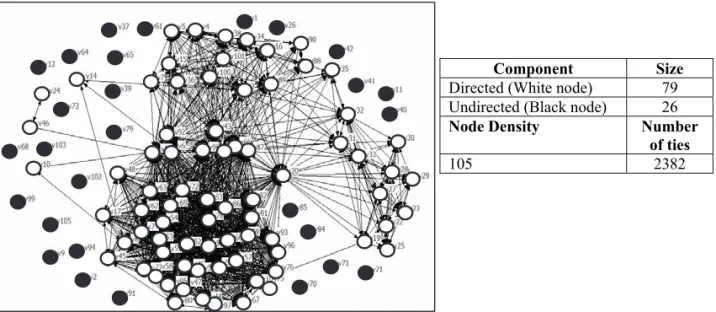
Figure 5.2.1 Network structure of connected or non-connected villagers
This approach is based on relational data analysis of villagers, in the visualization of network
there has been shown, two different node/actors indicate two components. In this network,
the connection has divided into two connectivity which are;
i) Directed connectivity (White node)
ii) Undirected connectivity (Black node)
Table 5.2.2 Description of Link type and relationship of network
Link Type
Relationship
Undirected
connectivity
V10 never give the advice to v103, but know each
other (no interaction directly)
Directed connectivity
One-way
V46 give information to v13, v13 no information to
share with v46.
Two-way
Double interaction e.g. v35 give advice to v32, v32
give advice to v 35.
The directed connectivity (white node) represents the people who are directly involved with
NGOs and LCDOs whereas the undirected connectivity (black node) represents the people
who are not directly involved in NGOs and LCDOs. But the undirected connectivity
somewhere have become information receiver because undirected connectivity is called in
such basis that even though node/actor do not connect with organizational relationship but
they may have been connected on personal relationship. And via such personal relationship, it
is assumed that the information has flow from the related node. Therefore, in this network
analysis it has been tried to show that villagers are related with each other directly or
indirectly involved in NGOs or LCDOs.
There are 79 directed connectivity in the network; directed connectivity can be seen in two
division i.e one-way or two-way. There are 2382 number of ties under directed connectivity.
The number of two-way directed connectivity is more than one-way, it can be mentioned that
between the two nodes of network there is two-way information i.e. receiving and sending or
there have been dual interactions e.g. v24 v46, v24 seeks advice from v46 and vice
versa.
In above shown Table 5.2.2 the type 2 connectivity has been discussed i.e. "Directed or
Undirected". In that point of reference, it is defined about the establishment of two
Component Size
Directed (White node) 79 Undirected (Black node) 26
Node Density Number
of ties
105 2382
This approach is based on relational data analysis of villagers, in the visualization of network there has been shown, two different node/actors indicate two components. In this network, the connection has divided into two connectivity which are;
8
The circle node in the figure denotes villager and the rectangle box denote the organizations.
Among 105 villagers (node), 26 are not directly involved in any organizations or it seems
they are isolated from other nodes because there are no any edges (direct connector) are
shown, however they are connected with undirected connectivity the information is flowing
among them via their near relatives or friends. The isolated nodes have become information
receiver in this network whereas 79 (the single involved number) villagers have their direct
involvement in organizations. According to the visual there is domination of NGOs over
LCDOs because more people are involved in NGOs it can be presume that the NGOs have
become effective mediator to ties the villagers as social network.
There are 2 motivations are found based on this approach; which encourage to involve in
different NGOs rather than LCDOs they are: i) Personal Motivations and ii) Dyadic
motivations.
i) Personal Motivations
Theories of self-interest suggest that individuals make rational choices and form linkages to
maximize their personal benefits (Coleman, 1986; Monge and contractor, 2003). It has been
seen the villagers are involved in NGOs or LCDOs for their personal benefits in different
social aspects generally. As a social supporter NGOs has been dominated all over the country
therefore the villagers are attracted toward NGOs with high expectations.
ii) Dyadic motivations
Social exchange (Blau, 1964; Homans, 1958, 1974) individuals forge links to exchange
valuable resources, such as information, materials and skills, and evaluate the links based on
their costs and benefits. Dyadic motivation has applied in different organization’s activities
which are one of the motivations of their programs.
5.2 Aggregation of persons
Person
Indirect link
The network has been discussed under aggregation of persons, it has been mentioned that the
persons are not linked via direct relationship with the villagers because they are not involved in
any organizations but somewhere they have become information receiver through their family
members, close friends or relatives who are connected with other villagers through
organizations. It has been described in this chapter that the information shared indirectly
among those persons who not directly link with any others through organization but they have
become indirect connector and information receiver of social network. Research try to
described with the visual data.
The Role of Social Network for Educational Development in Rural Area of Nepal
i) Directed connectivity (White node) ii) Undirected connectivity (Black node)
9
Figure 5.2.1 Network structure of connected or non-connected villagers
This approach is based on relational data analysis of villagers, in the visualization of network there has been shown, two different node/actors indicate two components. In this network, the connection has divided into two connectivity which are;
i) Directed connectivity (White node) ii) Undirected connectivity (Black node)
Table 5.2.2 Description of Link type and relationship of network
Link Type Relationship
Undirected
connectivity V10 never give the advice to v103, but know each other (no interaction directly)
Directed connectivity
One-way V46 give information to v13, v13 no information to share with v46.
Two-way Double interaction e.g. v35 give advice to v32, v32 give advice to v 35.
The directed connectivity (white node) represents the people who are directly involved with NGOs and LCDOs whereas the undirected connectivity (black node) represents the people who are not directly involved in NGOs and LCDOs. But the undirected connectivity somewhere have become information receiver because undirected connectivity is called in such basis that even though node/actor do not connect with organizational relationship but they may have been connected on personal relationship. And via such personal relationship, it is assumed that the information has flow from the related node. Therefore, in this network analysis it has been tried to show that villagers are related with each other directly or indirectly involved in NGOs or LCDOs.
There are 79 directed connectivity in the network; directed connectivity can be seen in two division i.e one-way or two-way. There are 2382 number of ties under directed connectivity. The number of two-way directed connectivity is more than one-way, it can be mentioned that between the two nodes of network there is two-way information i.e. receiving and sending or there have been dual interactions e.g. v24 v46, v24 seeks advice from v46 and vice versa.
In above shown Table 5.2.2 the type 2 connectivity has been discussed i.e. "Directed or Undirected". In that point of reference, it is defined about the establishment of two connectivity.
Component Size
Directed (White node) 79 Undirected (Black node) 26
Node Density Number
of ties
105 2382
The directed connectivity (white node) represents the people who are directly involved with NGOs and LCDOs whereas the undirected connectivity (black node) represents the people who are not directly involved in NGOs and LCDOs. But the undirected connectivity somewhere have become information receiver because undirected connectivity is called in such basis that even though node/actor do not connect with organizational relationship but they may have been connected on personal relationship. And via such personal relationship, it is assumed that the information has flow from the related node. Therefore, in this network analysis it has been tried to show that villagers are related with each other directly or indirectly involved in NGOs or LCDOs.
There are 79 directed connectivity in the network; directed connectivity can be seen in two division i.e one-way or two-way. There are 2382 number of ties under directed connectivity. The number of two-way directed connectivity is more than one-way, it can be mentioned that between the two nodes of network there is two-way information i.e. receiving and sending or there have been dual interactions e.g. v24 ←→ v46, v24 seeks advice from v46 and vice versa.
In above shown Table 5.2.2 the type 2 connectivity has been discussed i.e. ”Directed or Undirected”. In that point of reference, it is defined about the establishment of two connectivity.
― 14 ― 10
A.
v24
V46v64
v8
v20 v12C.
B.
Figure 5.2.3 Indirect tie with disconnected node
(Figure A and B indicate, one-way and two-way directed connectivity/Figure C indicate
undirected connectivity)
Figure A interpreted the nodes v8, v20, v46 which are directly involved in same organization
are in two-way connection with each other which means there is two-way exchange in
communication between them. The people who are involved in two or less than two
organizations, there could be one-way communication which is shown in figure B.
Even though there is no two-way information exchange between those people who are not
involved in any organizations but somewhere related to the people who are directly involved
in organization such as close friends, relative or acquaintances, etc. they might be the
information receiver of network from undirected link which is shown in figure C.
5.3 Relation among persons
Person
Direct link
The relation among persons, analysis has been interpreting about the people of community
who are directly involved in different NGOs/LCDOs and participating in different programs
and activities of organization.
Figure 5.3.1 Structure of mutual connection of different group belongings
Component Size Number of ties
Directed 79 2382
A
B
C
Figure A interpreted the nodes v8, v20, v46 which are directly involved in same organization are in two-way connection with each other which means there is two-way exchange in communication between them. The people who are involved in two or less than two organizations, there could be one-way communication which is shown in figure B.
Even though there is no two-way information exchange between those people who are not involved in any organizations but somewhere related to the people who are directly involved in organization such as close friends, relative or acquaintances, etc. they might be the information receiver of network from undirected link which is shown in figure C.
5.3 Relation among persons
A.
v24
V46v64
v8
v20 v12C.
B.
Figure 5.2.3 Indirect tie with disconnected node
(Figure A and B indicate, one-way and two-way directed connectivity/Figure C indicate
undirected connectivity)
Figure A interpreted the nodes v8, v20, v46 which are directly involved in same organization
are in two-way connection with each other which means there is two-way exchange in
communication between them. The people who are involved in two or less than two
organizations, there could be one-way communication which is shown in figure B.
Even though there is no two-way information exchange between those people who are not
involved in any organizations but somewhere related to the people who are directly involved
in organization such as close friends, relative or acquaintances, etc. they might be the
information receiver of network from undirected link which is shown in figure C.
5.3 Relation among persons
Person
Direct link
The relation among persons, analysis has been interpreting about the people of community
who are directly involved in different NGOs/LCDOs and participating in different programs
and activities of organization.
Component Size Number of ties Directed 79 2382
A
B
C
The relation among persons, analysis has been interpreting about the people of community who are directly involved in different NGOs/LCDOs and participating in different programs and activities of organization.
The Role of Social Network for Educational Development in Rural Area of Nepal 10
A.
v24 V46 v64 v8 v20 v12C.
B.
Figure 5.2.3 Indirect tie with disconnected node
(Figure A and B indicate, one-way and two-way directed connectivity/Figure C indicate undirected connectivity)
Figure A interpreted the nodes v8, v20, v46 which are directly involved in same organization are in two-way connection with each other which means there is two-way exchange in communication between them. The people who are involved in two or less than two organizations, there could be one-way communication which is shown in figure B.
Even though there is no two-way information exchange between those people who are not involved in any organizations but somewhere related to the people who are directly involved in organization such as close friends, relative or acquaintances, etc. they might be the information receiver of network from undirected link which is shown in figure C.
5.3 Relation among persons
Person Direct link
The relation among persons, analysis has been interpreting about the people of community who are directly involved in different NGOs/LCDOs and participating in different programs and activities of organization.
Figure 5.3.1 Structure of mutual connection of different group belongings
Component Size Number of ties
Directed 79 2382
A
B
C
In figure 5.3.1 it can be explained the mutual connection network is the situation where every nodes are directly connected to other different nodes. Though there are different castes in this network, they are connected mutually via one-way or two-way connection. The flow of information in not limited in one group but also in other groups via the connections (ties) in them. Nodes are seen only in directed connection therefore the directed connection is only discussed in this network. There are also 3 colors which represent 3 different castes and these 3 different castes are differentiated by these colors.
It is predicted that communication is equally sharing face to face because as shown in the visual of this network, White node is in two-way connection with Black node; likewise Black node is mutually connected with Black-dot node. Black-dot node is also in two-way connection with White node which can be seen in (v92←→v13). Thus, 3 different nodes which represent different castes of research area, these nodes are randomly connected with each other, there are two-way information sharing between them.
11
In figure 5.3.1 it can be explained the mutual connection network is the situation where every
nodes are directly connected to other different nodes. Though there are different castes in this
network, they are connected mutually via one-way or two-way connection. The flow of
information in not limited in one group but also in other groups via the connections (ties) in
them. Nodes are seen only in directed connection therefore the directed connection is only
discussed in this network. There are also 3 colors which represent 3 different castes and these
3 different castes are differentiated by these colors.
It is predicted that communication is equally sharing face to face because as shown in the
visual of this network, White node is in two-way connection with Black node; likewise Black
node is mutually connected with Black-dot node. Black-dot node is also in two-way
connection with White node which can be seen in (v92v13). Thus, 3 different nodes
which represent different castes of research area, these nodes are randomly connected with
each other, there are two-way information sharing between them.
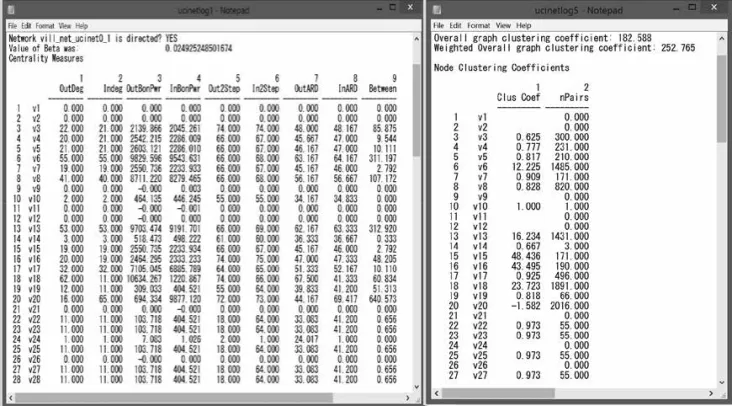
Figure 5.3.2 Centrality measure and cluster coefficient of random connection
Above figure 5.3.2 shows the edge density ratio of each node in the network, it is also
determined the Betweenness centrality (highest density node of network). According to this
centrality measure V20 (node) is the betweenness central node in this network which has
highest density of connection.
The network tried to clarify that the people who are geographically and culturally separated,
generally there has less sharing of information between them. However, the people equally
have gathered and participated in different programs operated by different organizations the
mutual network has been created. This network has helps to connect and communicate the
villager and information has been circulating among them. It can understand that the mutual
network is one of the important factors to minimize the caste discrimination from the society
and have direct effects on upgrading the lifestyles and education of the back-warded group in
village.
Above figure 5.3.2 shows the edge density ratio of each node in the network, it is also determined the Betweenness centrality (highest density node of network). According to this centrality measure V20 (node) is the betweenness central node in this network which has highest density of connection.
The network tried to clarify that the people who are geographically and culturally separated, generally there has less sharing of information between them. However, the people equally have gathered and participated in different programs operated by different organizations the mutual network has been created. This network has helps to connect and communicate the villager and information has been circulating among them. It can understand that the mutual network is one of the important factors to minimize the caste discrimination from the society and have direct effects on upgrading the lifestyles and education of the back-warded group in village.
6. Conclusion
This research focuses on social ties of particular village, which is relevant to education development. This research would clarify that the different organizations such as NGOs (Non-government Organization) and LCDOs (Local Community Development Organization) have different major role to access education for all, especially in rural areas of Nepal. Such
The Role of Social Network for Educational Development in Rural Area of Nepal
organizations help to create network or connect to different communities’ member which brings positive consequences to develop as the whole community development.
By observing the conditions of rural education of Nepal and while comparing the quality of education with other urban area, the rural education has seen very delicate. Although government of Nepal had established different effective plans to upgrade the quality of education with the equal priority to rural and urban, because of the geographical difficulties or people of the community involved in different social traditions, culture and customs the governmental plan are not able to achieve the acquired success. The slogan of Government ”Education for all” couldn't reach the rural areas, however, as facilitator of rural community or to supporter of Government different NGOs are working to formulate those plans for education in those rural areas. An objective of NGOs is to bring development for the back-warded people of the community or development to the community rather than profiting economically.
In this research, data and information were collected about active social organizations in the community of Luhung which consists of 7 active Local Community Development Organization (LCDO) and 6 Non-Government Organization (NGO). Under these NGOs and LCDOs, among the survey done in 105 adults, 79 had their participation in these organizations which is shown in the participation statistics of the community. Organization (LCDO and NGO) have worked of mediator to include people in the same web of the same social network the people related to different class and caste are connected in same social network, it can be assumed there had been sharing of information or problem directly or indirectly.
― 18 ―
In figure A and figure B, interpreted the network structure of village. Interaction with involvement in different organizations mention in figure B as well as interaction without involvement in different organizations mention in figure-A. In figure A, the people were limited in the caste group network before involving in organization of community and the ratio of interaction was also limited in the boundaries of separated group cluster. The involvement in different organizations, one social network has been created where there is face to face interaction or one-way/two-way communication has sharing.
The mutual connection network in that community had affected directly and indirectly in the education of the community as it was analyzed. This has been tried to present the possible consequence from data analysis in below figure 6.2.
ratio of interaction was also limited in the boundaries of separated group cluster. The
involvement in different organizations, one social network has been created where there is
face to face interaction or one-way/two-way communication has sharing.
The mutual connection network in that community had affected directly and indirectly in the
education of the community as it was analyzed. This has been tried to present the possible
consequence from data analysis in below figure 6.2.
Figure 6.2. Possibilities of consequences
As shown in the figure 6.2, the one social network is created in the community via different
organization. The literacy of the adults connected in the network had been directly affected;
there were indirect effect in the school education of the children which is clarified from the
statistics. There are 17% of adult were literate through adult learning program whereas 30
adults among 105 have shown their participation in adult learning program. According to that
statistics, it can be assumed that the network has helped to literate the illiterate adults.
Likewise, in context to children, the 100% participation of children in school education
clarifies that they had been receiving complete support for learning education from their
guardians or parents (related to the same network). There have been direct and indirect
positive effects in the education development via social network.
7. Recommendation/Discussion
If we inspect closely the situation of education in Nepal, the current situation is divided into
two parts, urban education and rural education because there are big differences between the
education of these two regions and thus to unite and balance these two regions, the change is
School
Village Education
Adult learningOrganization
Children Adult Villager’s social 17% Literate from adult
learning,
30 out of 105 ever joined
adult learning Only 1% of
dropout ratio
7 LCDOs and 6
NGOs are active
Adult learning conducted by NGO with the coordination of MoE, Motivating people to join education awareness program 79 villagers are connected out of 105 100% children receiving school education
As shown in the figure 6.2, the one social network is created in the community via different organization. The literacy of the adults connected in the network had been directly affected; there were indirect effect in the school education of the children which is clarified from the statistics. There are 17% of adult were literate through adult learning program whereas 30 adults among 105 have shown their participation in adult learning program.
The Role of Social Network for Educational Development in Rural Area of Nepal
According to that statistics, it can be assumed that the network has helped to literate the illiterate adults.
Likewise, in context to children, the 100% participation of children in school education clarifies that they had been receiving complete support for learning education from their guardians or parents (related to the same network). There have been direct and indirect positive effects in the education development via social network.
7. Recommendation/Discussion
If we inspect closely the situation of education in Nepal, the current situation is divided into two parts, urban education and rural education because there are big differences between the education of these two regions and thus to unite and balance these two regions, the change is expected in decades. The education in urban region is accelerated toward globalization where 90% of people are literate whereas rural education still lies in the primary stage of development. If the aspects of school are taken numerically then there has been a situation in urban area now where it has become essential to minimize or limit the number of schools whereas in rural areas, there are 3-4 primary schools and 1-2 secondary schools for one VDC which consist 9-10 villages and the conditions of these schools are unsatisfactory.
According to the yearly plan of government of Nepal, though education is given as first priority, the part of implementation is very weak whose main reasons are; political instability, corruption, lack of manpower, crisis of proper inspection and no any analysis on problems, designated teachers and staff unwillingness to work in rural areas. (Mathema, 2007). These are the weak aspects that caused unsatisfactory situations and increase in the ratio of migrating people due to lack of proper education and opportunity.
Like-wise in rural community, due to superstition, ancient beliefs, confusion in traditions and social discrimination, the quality of education is not able to be upgraded although there is educational awareness. The social customs like child marriage, caste and gender inequality etc. still dominate the community which has direct effects on education development. As Luhung is also one of the rural area of Nepal and it also consists of all the social problems as mentioned above. Even though it’s barely possible to change the governmental plan to progress the social problems but it’s possible to help in the change via society as being the
social responsibility:
1. If the thinking can be changed about the existing caste and gender discrimination in society then there would be a help in social development.
2. To get the benefits of programs by participating in the programs operated by the active organization in community.
3. As being part of responsible aware citizen of the country, the responsibility to aware the related department about the weakness and errors during the implementation of governmental programs.
4. Illiterate group could be motivated via the literate group of people living in the community.
Though different active organization have important role to bring people of the community to same network, there are weakness in the programs of organizations. In spite of these things, the network has still not been able to include all the people which have been clarified from the 26 non-involved people and 22% of illiterate adult out of 105 adults. Thus;
1. Unable to include the poorest class in the program.
2. Planning and implementation of same aspects of motives all around the country which are least effective to the different community with different traditions. 3. Though the organization were non-profitable organization, cancellation of programs
due to lack of necessary funds which are important for operating manpower and program.
Because of these factors, people are less interested toward program, leaving the program in between of operation even though participating, crisis of positive view toward the program etc. Thus to improve these conditions, the following points are suggested;
1. Even though every child from community goes to school, it is necessary to make an effort for the improvement of school's education and infrastructure which is unsatisfactory according to the present context.
2. It has been seen that many people leaving during the adult learning program in spite of their participation, it is necessary to understand the attitude of people in community and to continue operating the adult learning program.
The Role of Social Network for Educational Development in Rural Area of Nepal
3. Tough adult learning training is operated yearly, the numbers of literacy is not been increasing as accepted, so it is necessary to identify illiteracy correctly and operate effective program.
4. While organization create plans, it is essential to create program concerning the community where the programs are designated in that community rather than nationwide programs.
5. While establishing programs its essential to include all the people along with the poorest class of the community.
6. Proper estimation of the required budget and managing the budget before operating the program.
7. While co-ordination with government of Nepal, it requires proper observation and monitoring of the programs for more effectiveness.
References
Brain V. Carolan, 2014. Social Network Analysis and Education. Theory, Methods and Applications. SAGE Publications, Inc.
Rebecca Surender and Robert Walker, 2013. Social Policy in a Developing world. Edward Elgar Publishing Limited.
Linton C. Freeman, 2004. The Development of Social Network Analysis.
A Study in the Sociology of Science. Empirical Press Vancouver, BC Canada.
Patrick Doreian, Marting G Everett, 2012. Social networks, International Journal of Structural Analysis. Published quarterly, ISSN 0378-8733.
Rachel Garshick Kleit, Nicole Bohme Carnegie, 2011. Integrated or isolated? The Impact of Public Housing Redevelopment on Social Network Homophily. Social networks 33(2011) 152-165.
Naim Kapucu, Farhod Yuldashev, Fatih Demiroz, Tolga Arslan, 2010.
Social Network Analysis (SNA) applications in evaluating MPA classes. Journal of public affairs education, JPAE, 16(4), 541-563.
Kedar Bhakta Mathema, 2007. Crisis in Education and Future Challenges for Nepal. European Bulletin of Himalayan research 31:46-46.
Heather Creech, Director Knowledge Communications and Aly Ramji,
Project Consultant, 2004. Knowledge Networks: Guidelines for Assessment, International Institute for Sustainable Development.