フランス・ギメ美術館所蔵樹下鳥獣蒔絵螺鈿洋櫃[
修理報告]
著者 山下 好彦
図書名 在外日本古美術品修復協力事業 : 修理報告書 : 工
芸品/絵画[平成12年度実施事業] : Project for Conservation of Works of Japanese Art in Foreign Collections
開始ページ 107
終了ページ 135‑155
URL http://id.nii.ac.jp/1440/00005437/
Creative Commons : 表示 ‑ 非営利 ‑ 改変禁止
http://creativecommons.org/licenses/by‑nc‑nd/3.0/deed.ja
7 .
樹ート鳥限蒔絵螺釧洋櫃 13
フランス ・ ギメ必術創UiJ1·蔵
樹 下烏獣蒔絵 螺釧 洋櫃
(•ji. 成L I年 I¾'.・ 12年 l;\l:'.) 財団法人 盗術研究振,4↓財卜1H11lllJ1·J~菜
品名 :樹下島獣蒔絵螺釧 i刊載 所蔵:ギメ美術飴' フランス
品質構造:品質構造 : 木製照漆塗り、 蒔絵、螺釧 所蔵番サ: M A 5 1 5 4
時代 : 16111_紀末
請負者 修理担当者 原稿執鉛
目白漆芸文化財ii汁究所
山下好彦 ・ 松本逹弥 ・ 奥村公規
山下 如(-j彦
はじめに
在外 H本古美術1泊修似協力'ド業 ( I~滋)のうち、フランス ・ ギメ美術飴所蔵 「樹下鳥獣蒔絵螺鉗li判柏」
一合の保存修郎が、財団法人公術文化振飩財団の助成のもと、 平成 Ll年度、 12 年度の 2 ケ年に亘り、東瓜 国立文化財研究所第— 修似ア トリ工で行われた。
この報告判は、 保イf修 J用の概災をまとめたものである。
保存修理は漆 I・.をII I I'・ク{彦、 松本逹弥、令 [を奥村公規が担‘りした。
現査料の1呆イ(修 J用にあたり、各種分析晶l杏を束瓜1 叶 1'(,文化財研究所の諸仄の協力のもと行った。 '.ii( 光 X 線分析はの平尾良光氏、 1 仕川泰弘、氏、 ,)ド外綜11)文収スペク トノレ分析、 J じ索分析や鉱物分析は・州川典(氏、朽
津信11}-j 氏が行った。 クロスセクショ ンは'i'-川典 (氏の協力を得た。 また、 Victoria and Albert Museum
のMs. Shayne Rivers に合成修似材料の森料提供とW1,;
キ
をFFI いた。1 . 修理概要
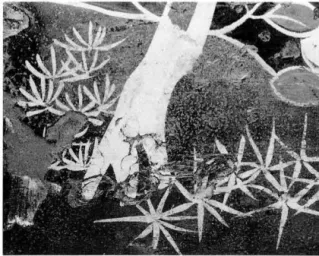
現資料は 161仕紀末、桃 ,1,11、ヤ代に11 本で作らi し、 ヽ1'1 11、'i'11本と父昴のあったポル ト ガル向けに輸出したいわ ゆる輸出漆器の一つである。 1~付載はポル トガル人の汀文によって彼らの好みに介わせて数多くイ↑られた。 洋櫃の加飾は、 当時、 II 本で流 h してい tふ切台 、1J"I!、V 絵の手法と螺釧を併用しており、たいへん'1'j'1;やかな、唸 匠に特徴がある。輸出された当11.'j:、 Iii]じ形状の肖柏は小さいものから大きいものへ人れf にされ、 船に栢 み込まれた事が知られており、視在でも呪査料とIii] じ形の洋櫃がヨーロ ッパの·,,;,,-殿や美術創,;、 I曹物§府に数 多く保管されている。 ヨーロ ッパにある漆脊料は、漆の艶が消える度に家具修雌と同 じように州祥で使わ れる塗料を何度も表面に塗布 しているものか多い。 現資料は作後400年以上が過ぎ、ヨーロ ッパに於て何 度も修復が行われ現在まで伝え られたものである。 金具は錠金具を合む多 くの金具がヨーロッパ製の後補 であり、 蓋の広い面積にヨーロ ッパに於ける金のドロ一イ ングが人っていた。 洋椙の表面にはシェラック が 4~5 回以上の塗り込まれ、 茶色く 変色していた。
2 •
品質構造及び法量木製黒漆塗り、半円筒形の蓋の付いた大殷の計':1載で、 両側血に従鉗を付け、錠金具 ・ 蝶番 ・ 1り金具を打
桔梗),り草文
K ikyokaralzusa‑mon
Jukachojusolta‑rnon ィi•'i'; ・・文
lsl,idalami- 、inon
つ。 背 1(1iを除く各面を螺細で区画、]・・・1 面は窓枠を設け、 稿、紅菜、粘梗、 松、藤、椿、枯梗的の1\\ 木 虎、{し雀、獅子等の烏獣を螺細と金の 'V·i/、Ii絵で表し、 その他の部分をィ i 悦火、琢文人し咋:繋文でJ-11!_める。 叫収い(1i 中央に雲型の幾何文が付くほか、背 l 面から甲板にかけては桔柾l州'化を廻す。 索地は柏の)がい板を 矧ぎ、 側板は糾手接ぎ、底板は木釘で側椒に裏側から判たれる。 盈甲椒は 8枚の板を矧ぎ合せ蛉側板と紺.
‘。 蒔絵技法は銀の絵梨子地風な表現と全の平蒔絵の1井川であり、 一部に枯'i'.'11]りが兄られる。 文様には飽 の,1,Jば具をふんだんに使用しており、初期の輸出漆賂の特徴をホす。 本米の令具は銅製の金銚令であるが
「番と錠金具、角金具の約三分のーが後袖である。 法: l し (mm)
総休 縦 5 6 5
.
損1蒻状態
横 1 3 1 2 I" '' J 6 5 2
①賽料仝1(1iに汚れの付料が兄られたが、特に、 1り金具),'dI川の杓れが特しく、各所に綿くずが付着してい
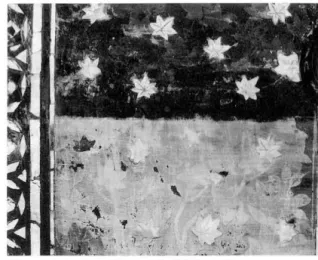
②ヨーロ ッパで施された修復飲料が表面全面に被り、荼色く変色し、 黙漆1('1や翡絵面にむらを作ってい た。 また、右佃l面では塗布された材料が劣化し、細い断文が入ることで表面が白濁化していた。塗料 は一部で剥浴していた。
③紫外線による漆塗膜の劣化が塗膜表面にみられ、細かい断紋が入っていた。 漆膜は各所で剥離し、剥 離部分の周辺で塗膜が剥落していた。
④木地の収縮や経年変化によ って素地の歪みが生 じ、 索地の矧ぎ目や接合部分周辺に亀裂が入ってい た。 櫃の内側は木地の矧ぎ目部分周辺に亀裂が入り、周囲に剥離が広がり、 一部で剥落が見られた。
⑤索地の収縮で螺釧の剥離し、 表面より突出していた。 螺釧周囲の漆塗膜も同様に剥離していた。多く の貝がすでに剥落していた。
⑥洋櫃の周辺部と甲板の四分の三にはヨーロ ッパに於ける後世修理が入っていた。修復部分は白色の下 地に、 黒色の塗料を塗り込み、 一部に金線を書き加えていた。底面と内面は全面黒色の塗料で塗り直
r r
l!) M<O .....
L L
I 8
n
;:i;;: ヽヽ
ヽ ヽ ヽ ヽ ヽ
\
、1 ヽヽ ヽヽ
\ ヽ\ ヽ\ ヽ\ ヽヽ ヽ\
.ヽ
.,.
い
1 3 1 2108 祥船の 'I勺(ij 図 (1-.1火I) と約:也構造図(ドl'J.I)
Plan of the Coffer (above) and slruclure of Lhe substrate (below)
されていた。
⑦正面の石翌文の螺釧剥裕部分に新しい具が嵌人されてい
⑧螺釧の一部に後甘修迎の跡があ り、 !'I色の 卜地で俵lj落し た貝の部分を埋め、 表1(1iを銀色の喰料で}JI暉していた。
⑨後世の復元部分に亀裂や依lj)tl!fr があり、 !'7 色の 1、地が涵出 していた。 また、底副の愈膜は紺H雅が、;粁し く、 )ムい1.ui積 に亘って、泉I]落していた。
⑩各所に打損があり、下地や木地が紅,,,,し、 一部に喰)l於の 陥没があった。
⑪各所に擦れによる1蒻があり、 ,/ぷ絵に似みがあった。
⑫蒔絵部分に金属粉の銹化による変色が兄られた。
樹下島獣蒔絵螺釧洋櫃 137
⑬角金具の上に修復の裕料がかかり、各所に修似のための金属粉が金具の上と周囲の塗膜の」:に付布し ていた。 角金具の裂側が鈷び、緑けが付杓していた。
⑭側面下の角金具に歪みがあり、釘が緩んでいた。 l卜面右の錠金具のねじ頭が一本切れ、余具が一部"7.
外れている。 錠金具に歪みが兄られた。
⑮本来の貝がいったん取り外され、 J'豆なるイ立 W,:に貼り戻されていた。
⑯かなり のi7ii積にデザイ ンの変史が行われていた
4 .
修理仕様視賓料は、ヨーロッパにおいて長い間保曾され、広い面積に亘って何度も修復されてきた。修復の表現 には蒔絵に似せた金色のドロ一イ ングが見られる事から、ヨーロッパに輸出された美術工芸品という ばか
りではなく歴史的な資料でもあると判断した。
修理は、保存修理を基本に行い、現状維持を目的とし、ヨーロ ッパにおいて行われた後世の修復部分も 保イ[の対象とした。漆部分の修理には伝統的材料を用い、後性の修復部分にはヨーロッパの美術飴等で現 在修復に使用されている合成樹脂を使うものとした。素地の欠損部分は形状のみを復元し、周辺の塗膜に
-応I,りを合わせた。後世に塗布された表面の塗膜は溶剤で出来る限り除去した。 ヨーロッパで描き加えられ
た部分の整りや金線、鋲色の途料は除去せずにそのままとし、オリジナルの蒔絵や貝に被っている箇所の みを取り除いた。劣化し艶の泊えだ漆塗膜には漆固めを行い、強化した後、摺漆をかけ艶をある程度復1 「I し、後補の部分との艶を訓整した。 1蒻んだ金具は一部を取り外し、 歪みを修I 卜した後、元の位置に取り付 けた。 錠金具の破損したねじは取り外し、形状を復元した新しいねじをもとの1立附に取り付けた。
修 rwイI:様を事前に定め、その内容の副整や変更については、 所蔵釘'[の担当‘学公it1Ms. Helene Bayou 、 束兄文化財研究所伝統技術研究室々長加藤-~芯氏、修似担当名山下好診の三者で協議し、決定するものと
した。
. 修理工程 と内 容
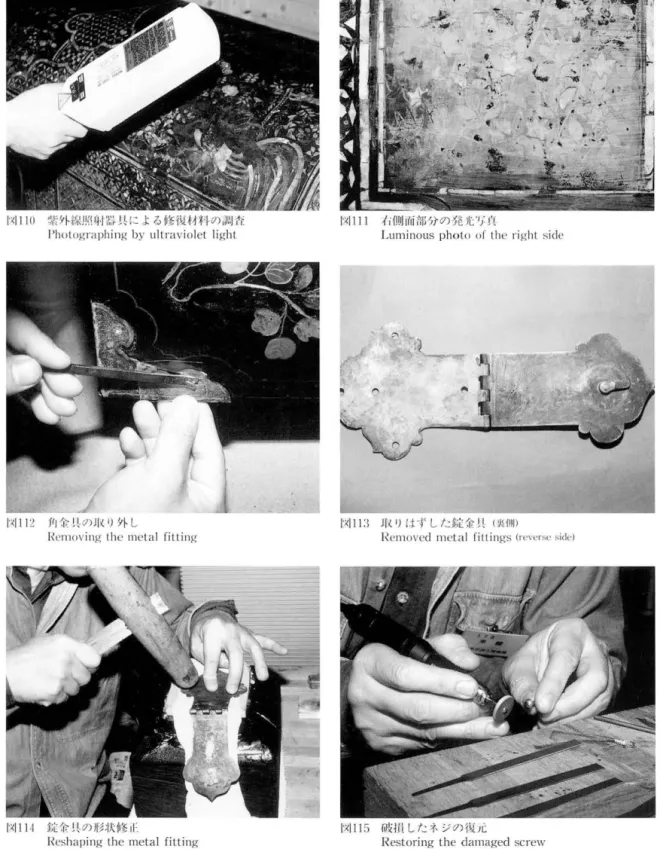
(1)訛l 杏および写真撮影
はじめに、 現資料の素地、 下地、 館り、 iiか絵をそれぞれ枝私の_I·.から批l杏し、視在の1紡みの現状を記 鉢にとどめた。また、修理前の写真撮影をし、修則後と比較出米るようにした。
(2)金具外しと榔l正
1U(1i右側の折れたねじは、ねじに切り込みを入れ丁卑に取り外した。 側 1(1i I、·1り金具の釘を外し、角金
'~-の歪みを内机lj から叩いて調正した。 錠金具の歪みは、いったん金具 卜のJI多状を樹脂朴渡で型収りしそ の利をやに台で固定 し、錠金具を置いて内側から叩いて訓整した。
(3)掃除と捉生
査料令而を設っている埃や綿くずは、毛枠やピンセット~りを 1史って取り L- り、 さらに、綿棒や洗いざ しの綿布に水を合ませ汚れを掃除した。表面に被ったシェラッ クの除ムは主にエタノールを使用し、
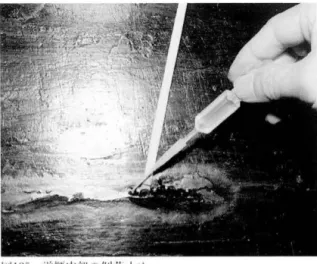
状況によ って水とエタノールを混合した溶液およびアルコールとアセ ト ンを混合した浴液を使用した。 輻除には長方形に切ったゴムに綿布を包み、溶剤を少量づつ付けながら裕料を―l卵に取り除いた。塗料 の)t/ みがある箇所は部分的に竹箆や鼈甲箆を使用して除去した。 剥洛の危険のある塗膜箇所に小片に切
た)雁皮紙を生魅糊で貼り、作業中での剥落を予防した。 (4)後世修理の除去
螺釧や蒔絵の上の補彩された後世修理をアセトンとアルコール、アセト ンのみを適宜塗布し、柔らかく なったところで竹箆で出来うるかぎり除去した。塗料の堅いところは切れ味を悪くした彫刻刀を川いた。 (5)漆同め
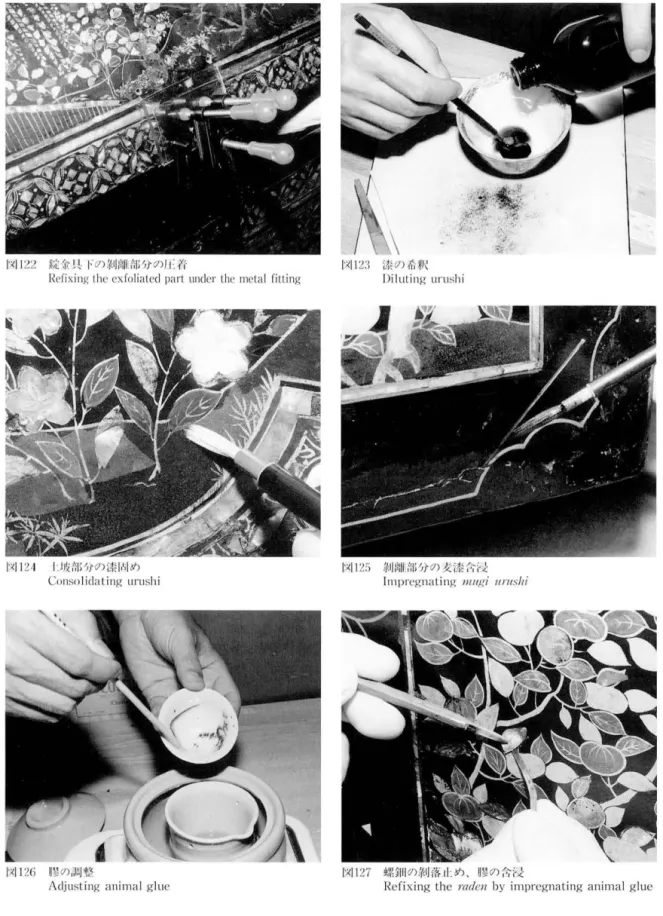
劣化した漆塗膜を補強するため漆固めを行った。蒔絵の明るさを出来うるかぎり変えないために、 jj対 絵部分と塗膜部分で異なる漆を使用 した。漆は蒔絵部分には梨子地漆、透き漆と生正味漆、 塗)l如部分に は透き漆と生正味漆を混合し、石油系の溶剤(クリーンソルG) で 10倍程度に希釈し、蒔絵筆で墜布し た。 漆は、乾燥しないうちにリグロインで完全に拭き取った。漆固めの回数は、各面の劣化状態で異な
樹下烏限蒔絵螺釧洋栢 139
り、 1 回から 5 回行った。 (6)剥離螺釧の接着
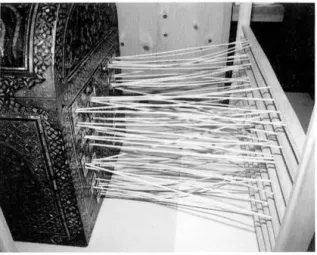
はじめに、現資料の形状や人きさを労}、他に人れ、 /1:オ't のための木枠を制作した。 木枠は11'Ui1本を二I I をボルトで組み合わせ、 一枚の)厚いベニヤ板で}和(りを作った。 各1uiには、 ii界を入れた 1り枠をII・・・イi"i 部分に 合わせてスライドできるようにした。 糾離 した螺釧には粒膠を使川 したが、液体にした)]蓼を 3.511、'f;I Illカ ら 7 時間、 超音波発牛装i 府にかけ、浸透しやすくした。貝の際に塗料が人りこんでいた部分は、いった んアルコールを合浸し、柔らか く なった塗料を除去した。その後、 20-25% の膠を具の 卜に合没し、 7 クリル板とビニ一)レ板を具の上に罹き、竹や木製のヒゴを用いて圧着した。膠が乾燥した後、余分なl膠 は水を含ませた綿布で拭き取った。
(7)剥離塗膜の接祈
剥離した漆塗膜部分を抑えるため、 接着用に調整した麦漆を リ グロイ ンで希釈し、 合:(cl:で含浸した。 愈 膜表面に残った余分な漆を丁寧に拭き取り、 リグロイ ンが揮発した後、 螺釧と同じ方法で抑えた。 錠金 具下の剥離部分はクランプを使用した。ヨーロ ッパに於て完全に塗り直された身の1村側や、底部分の塗 膜剥離箇所は、 パラロイド B72 10% 裕液で俎I]治ii·.めを行った。
(8)亀裂部の接着
素地接合部やその他の亀裂箇所に父漆を含汝し、ぷ地の接杓と 卜地や喰)j莫の補強を行った。余分な漆 は リ グロイ ンで完全に拭き収り、 一I·分収乞媒させた。
(9) 下地欠失部の形状移いじ
ート地の欠失した部分やオrm約により本地にへこみが出来ていた部分に刻やを如屈し、依IJ落の進行を抑 えた。 必要に}心 じて刻苧の I·.から 卜地をし)'i‑;J IJHの冷膜に色を合わせた。
(10) 際鈷
剥離や剥落していた喰)l災の際に極<少批の釧かい漆 ド地を施し、 触指による判剥・沿を f防した。 下地 は水練りの黄砥粉に蝋色漆と松輝を混合した:.,.'. 鈷を1史川 した。
(11)艶合わせ
漆塗)l葵に摺漆を数11111iい、黒漆部分の艶を似111 した。 漆は透き漆と 11::ート味漆を混ぜ、 ク リ ーン‘ノルで
希釈したものを使川 した。ヨーロッパの唸料で1幻じされた部分については、 "[逆性のある修似旅料を使 用 した。塗料は、アルコ ンP90をセェルゾール 321で溶ぎ、 Tinuvin292 を 1 % を添/Jil したものを使川 し た。塗料の濃度は10% から 40% まで輻)ムく使川 し、 漆部分の艶に合わせて選択した。 また、焦色部分(
シェラ ッ クのアルコール溶液にカーボンを加えた塗料で加箪した。 (12)銹の除去
角金具裏側の緑青銹を除去した。 5 % のギ酸 (HC02H) 水容液を高級水樹脂に吸収させペース ト状 の素材を作った。 緑青銹部分の上に直接ペースト素材を置き、 緑青が溶解するのを待ってペース ト索材
と共に銹を除去した。 (13)金具取付け
側面下の角金具をもとの位置に戻した。正面の錠金具も同様に取り付け、復元したねじを取り付けた。 (14)記録および写真撮影
修理記録をまとめるとともに修理後の写真撮影を行い、 現査料の修似を終 ( した。
6 . 分析
蒔絵粉および金具、修復材料や接着素材を対象に並光 X 線分析および赤外線吸収スペク トル分析、 元索
分析や鉱物分析を行った。分析の詳細は末尾に添付した。
7 . 技法分析
各種分析および視認による技法の訓究から判明した結朱をもとに洋桐の加飾工程を推定した。名称と内 容は現社の技法をもとに記述した。
名 称 内容
1 木地 柏柾 H 材 数枚矧
2 角下地付け 地の粉漆下地
3 割付け 大まかな区画線などを糾柑きする
4 そくしヽ付け 具の裏側にそく いを付ける。 米枯)l 、松煙
5 具の接舒 中駆貝の飽を文様に切り、貼り込む。
6 一辺地付け 砥石粉(荒)に生正味漆
7 下地研ぎ 砥石で軽く空研ぎする
8 二辺地付け 砥石粉(細)に j: 」:i}_味漆
,
ド地研ぎ 砥1i 水研ぎ10 下酪 り 黒蝋色漆 11 F墜 り Wf ぎ 朴炭水研き
12 中塗 り 黒蝋色漆
13 中飲 り研ぎ 朴炭水研き‘‘
14 耕iきinl=I 弁柄漆箪描き
15 下付 i ナ 絵漆 (弁柄漆) を菊<塗る
16 梨—ーr 地粉蒔き 土般、叩化などの部分に銀粉を1紺<
17 梨地粉漆固め 透漆と椋脳で粉固めする
18 」..墜り 透漆で全体を整り込む
19 」•.墜り研ぎ 駿河炭で全体を研ぐ 最後はロイロ炭を使) 11 20 摺漆 生土味漆で 3 4 阿摺漆をする
21 )JI叶摺 り 砥粉と菜種泊l を混ぜ、綿布で細い 1蒻を取る
22 摺漆 生」消.味漆で摺漆を 3 4 1111する
23 窮き 角粉で磨く
24 ド付け 絵漆(弁柄漆)
25 銀粉蒔き 菓などの部分に細い銀粉を蒔く
26 粉固め 透漆で粉固めをする
27 透漆飲り込み 粉 11かきした部分に透き漆を墜り込む
28 下付け 金粉を蒔く部分に絵漆(弁柄漆)を叫く 1蘭<
29 金粉蒔き 毛枠をつかって金粉を蒔く
30 漆!;'コii め 全休にもう 一度固める
31 磨き 全体に軽く 磨く おわりに
漆悩は、桃 III 時代から明治時代にかけて諸外国の注文に応じて制作され、数多く輸出されてきた。近年 の訓杏によって 17-世紀後半からヨーロッパで japanning と呼ぶ蒔絵に似せた技法が発展し、さまざまな 種類の」直芸品や家具が作られたことが分かってきている。今回修復したギメ美術館所蔵の洋櫃にもそれほ ど古くはないが修復部分にヨーロッパで行われた蒔絵や螺釧に似せた金色や銀色の加飾が認められた。こ のことから、この加飾を歴史的に価値のあるものと捉え、伝統的な修復索材のほかにヨーロッパで現在使 われている合成樹脂を併用し保存に努めた。輸出された漆器は保管されてきた歴史とともにさまざまな状 態であり、画ー的ではない。今後、日本に里帰りした漆器を含め、海外に保管される漆器を修復する機会 が削えると予想されるが、今回の修復事例が今後の修復に役に立つことを期待したい。
最後に、今回の修理にあたり御助言、御協力いただいた諸氏に感謝申し上げ修理報告とする。
‑
I札-I―1,· 、r.~じi犬 i1が糸全的礼11lli.'ffli'( 141
戸――---·一···-
I I ―――亡
_ 口
戸
L
I / I / I I /I=
-— — -
[― □
1アff/17!1
J
ロ[]
1/1'I I I Ttl
E x ー ニ ‑
~ 三
~
(1;77デ]
J
~ ー一/一~°/、
三
アヴ;r
-=~三
木地
ubslral
iり I'・地1、m
ji!slflce on th
具の接礼·
he lld
H應付(t
Applying foundation
下地冊ぎ
Polishing the foundation
地lit
.fisage
oration
叩) (x2) rushi coalin
rner
(x2)
札'iき闘II
Underclrawing wilh be11.Qttm 11rushi
梨(-地粉1i¥
'prinkl i ng 加sf心i
powder I
キ .
裕I)Final oaLing
I
. キ
祢リ(i)fぎ ・lttC
Final coaling polished
銀粉1i,\;'-
prinkling silver powder
透綺溝り込み
ulci urush」coating
令粉IIふき
Sprinkilng gold owdcr
朴)(])柾II材を数枚矧いでi誌。
地/紛に漆を枇ぜた漆,,・地を、 iり部分 に付ける。
叫/(])馴を文様にり)り、 米糊と松煉 を批ぜて扱右する。
批と象Ill(])漆卜地を具(]))'/みまで付ける。
貝と下地部分を砥石で半猾にfijfぐ。
伽1ずり刷毛と地の粉で、 1、地部分を玲 り)'!分ドける。
應片色漆を仝1(1iに 21,,1裕り込む。
名rll~tこ弁納漆を11'1扱惰抽 る。
透漆に介1本に裕り込む。
し、 ;;りiiIす
I)成、 1'?fr.などの部分に銀の梨(地粉 をII、I―•〈。
鄭11/以と呂色以で~~(料)fぎ、 開漆をし た後、府〈。
弁納漆(J)-,ヽ・付けで、 岱などの部分に細 しヽ銀粉を叫〈。
銀粉j/ぶきした部分に透漆を裕り込む。
弁柄漆(J)Iヽ付けで、 1'i'(化や,[.闘}~などを rn怜を使って令粉を1LV〈。
図 109 加飾工程図
Drawings of the process of decoraL1on
紫外糸梨照射悩具による修似材料の,品l杏 Pholographing by ultraviolet lighl
図I12 1り令具のJ[又リ外し
l~cmoving lhe metal fillrng
ぶ:
図114 銃令具の形状修11
Reshaping the metal fitting
図 111 小側而部分の発光 'If真
Luminous photo of the right sic!
図 115 破机したネジの似九
Restoring the damaged screw
i
杜1· 1,· 、I,ヽ,闊吠 i1、'i 糸会船g合llli'Mlit 143
ヽ
図 116 ク リーニング 図 117 ク リーニング部分の発光写具
Coffer being cleaned Lun廿 nousphoto of a cleaned part
. . ‑ ‑
,-~, ^
似1118 利l紅しiこよる仮止め
Temporarily fixing lhc coaling film wi しh Japanese paper
図 120 ヨーロッパの似元部分の除 L
Removing past treatment done in Europe
図 122 錠令具ドの依lj爵ff部分の /1・・ぶi' 漆の希釈
\
lkifxing Lhe exfoilatecl parl under the metal fitting Diluling urush1
図 125 伽J:)JH:部分の女漆含汝 Impregnating mu如 11rush1
図 126 図 127 螺釧の糾落止め、膠の合没
Refixing the raden by impregnating animal glue
L ̲ ̲ ̲ ̲
杜1・ ト-X.'.:,じ伏11ぷ糸会虻伶1,lllif札i'( 145
)l:,{i'のために使用したしんばり台
如厄baガ stand used for press‑stabil1z1ng
図 130 I、地紺l洛箇所の刻予允瑣
図 132 叩l葵の復ll=J
Repairing the coating filn
図129 螺釧と喰II如の11:祈、右側 1(1i
the 、rade、nand coating film
I'!!!""'
c . 1 1 !
C ,
z i ‑
図133 合成樹)l 詔の喰イIi'必唸
l~xpcrimcnling coaling synしhcL,cresins
必窄姜
m
ヽ 巴
~ --
図 B4 ドラフ トによる溶沿の吸•JI rn菜•I•) Aclsorplion of solvent
図1:~6 県色喰料の製竹 Making black paint
[Xll38 杜I・ ト,fふり伏IIが終全船伶 WI箇':札孔 音1化介 (修頂I!後)
Coffer (detail, after restoration)
図 l37 ギ酸による緑け銹の除).;
Removing vercliwis colored rusl wiln formic ocid
図139 樹下島獣蒔絵螺釧洋櫃 部分((1知11Tiij) Coffer (detail, after restoration)
1ふ1 1、.、r.ii将犬II、'ii糸公血架 JIiii'(才li't 147
図 140 樹下島獣蒋絵螺釧洋fli'i 部分(修 J刑後) 図 141 樹 ,,·,(り限1/ぶ絵螺釧酋':枇 部分(修即削)
Coffer (detali, after restoration) ff er (dcLali, afLcr restoration)
l:xll42 杜I ,,キ1,: 汎吠 d、Ii 係会船g1;111i'(:札'i (名II分拡“‘ 人・ (1径J り!後) 図1113 樹 /"i. り限1/ぷ絵螺鉗Ii 料li'i (部分拡大 條J用1iii) Coffer (close up of cleLail, after rcstoralio11) 'off er (close up or dcLali, bdorc rcsloralion)
図 144 蛍光 X 線分析による浦絵紛の乱';j杏
Examiring makie powder by X‑ray fluorescence
R e port on th e R es toration of "J u k ac h o j u Maki e R a d en Coffer"
in th
e Coll e ction o f t h e Guin1 e t M u se um
YAMAS HI TA Yos h i h i k
I n t r o d u c t i o n
T h e r e s t o r a t i o n o f " J u l wc h o j u M a h i
eR ad
en Co f f e r " i n t h e c o
llc c l i o n o f t h e G uim e t Mu s e um o f A r t w a s i n c l u d e d
int h e Pr o
je c t f o r Co n s e r v a t i o n o f Wor k
so f J apa n e s e A r t i n Fore
ig n Co
lle c t i o n s from t h e f i s c a l yea r 1 9 9 9 t o 2 0 0 0 , ove r a p e r i od o f two y e a r s , w
it h f i n a n c i a
ls u ppo r t from t h e Art s R e s e a r c h Fo und a t i o n . R e s t o r a L
io n wor k wa
sd o n e
inR e s t o r a t i o n S t u d i o 1 o f t h e N a t i o
na
lR e s e a r c h I n s t
it u t e f o r C u l t u r a
lP r opc r L i
cs, Tok yo . Thi
is a r e p o r t o f t h a t r e s t o r a t i o n wo r k .
Resto r a t
io n o f uru s h i was d o n e b y Ya m a s h i t a Yos h i h i ko a n d Mats u moto Ta t s u y a ; r
est o r a t
io n o f m e t a l w o r k w a s d o n e b y O kumu r a K
imino r i .
I n o r d e r t o p r e s e r ve t h e o b j e c t , v a r i o u s a n a
ly s
es wer e co ndu c l c l c
wiLh しhecoope r a t i o n o f r e s e a r c h e r s a t t h e I n s t
itut e
.X‑ r ay f l u o r e s c e n c e was a n a
ly z
ed by Dr
.Hir ao Yos h i m i t s u a nd D r . H aya k a w a Yas u h i r o ; FT‑IR s p e c t r oscopy was a n a
ly z e d by Ms. f l aya k awa Nor
iko ;
‑ r ay d i f f r a c t i o n a nd X‑ r ay f l u o r e s c e n c e we r e a n a
lyze d by Mr . K u c h i L s u No bu a k i . M H aya k awa a
ls o h e
lpe d u s w i t h c r o s s s e c t i o n a n a
ly s
is . Ms
.S h ay n e R i v e r
so [ L h e V
ic t o r i a a nd A
lbe r t Mu s e um o f f e r e d d a t a c o n c e r n i n g s y n t h e t
ic r e s t o r a t i o n m a t e r
ia
lsa n d a d v
ic e .
D e s c r i p t i o n
T h e c o f f e r was m a d e
int h e
la t e
16lhc e n t u r y J a p a n , d u r i n g l h e Mo m oya m a Per i o d , a u r u s h i wa r e f o r ex p o r t t o Po r t u ga
l, w
ith wh i c h J a p a n h e
ldt r a d e . Ma n y c o f f e r s we r e m a d b y o r d e r acco r d i n g t o t h e t a s t e o f t h e Po r t u g u e s e . D e c o r a t i o n s o n t h
ese co f f e r s a r e c h a r ュ a c t e r i
zed b y a ve r y s p l e n d i d d e s i g n u s
ing a co mbin a t i o n o f t h e p o p u l a r k o d a i j i maki
ea nd
加den
t e c hniqu e s
.At t h e t i m e o f ex p o r t t h e r e we r e c o f f e r s o f s i m i l a r s h a p e b u t o f v a r i o u s i z e s , r a n g
ing f r o m s ma
llo n e s t o
large ooes . Th e s e we r e n e s t e d
into o n e a n o t h e r and
lo ad e d o n s h i p s . Eve n n o w , t h e r e a r e m a ny
similar—shapedc o f f e r s s t o r e d
in Eu r o p e a n p a l a c e s , a r t mu s e um s a nd mu s e um s
.H owe v e r , ma n y o f t h e uru s h i o b j e c t s
in Euro p e hav e l o s t t h e g l o s s c h a r a c t e r
is t i c o f u r u s h i b e cau s e t h e i r s u r f a c e ha s b e e n r e
‑coa t e d ove r a nd ov e r with c o a t i n g ma t e r i a
lu s e d f o r r e p a i r o f wes t e r n f u r n i t u r e . Thi s c o f f e r i s ove r 4 0 0 year s o l d and
has beenr e s t o r e d s e v e r a l t i m e s i n Eur o p e . Many o f t h e n 1 e t a l f i t t i n g s
including
the lockswere added i n E u r o p e
.Mo r eove r , a
large a r ea o f t h e
lid wa s d e c o r a t e d
ing o l d . The s
urfaceo f t h e
cofferh a d b e e n coa t e d 4 t o 5 tim e s s o t h a t t h e co
lo r h a s b e c o me browni s h .
M a t e r i a l s
andStructure
Th e o b j e c t i s a
large wood e n b l a c k ‑ l a c q u e r e d c o f f e r w i t h a
dome
‑shaped lid. Therea r e
metal handles on both sides, locks, hin is divided into sections with 泣de1↑ d trees, autumn leaves, pine, wisteria tigers, peacocks, and Chine
window‑frame patterns. Th
}11l~achoju Mallie Raden Coffer 149
、 andcorner fillings. Each side exccpl Lhc backsid ralion. In Lhe front, planls like 111andari1 mellia and bellflower, and birds and animals Iii
patterns with family crcsしs inside. 〇 n the topside of the lid in the center front, there is a cloud‑shaped geometric pattern, and from the backside to the top is an arabesque bellflower design. The substrate is made of thick Japanese cypress boards; the boards of the sides ar set in connecting pieces and the bottom boards are joined by wooden nails to the boards of the sides. The boards of the sides of the lid and the top board are pieced together. For th makie decoration, silver e‑nashiji‑like expression and
parts lwliiwa五 is seen. For the raden decoration, medium thick shel lpieces of abalone ar used, showing one of the features of early exporlecl urushiware. Originally, Lhe n1.etal fittin were made of copper and gilded with gold, but about a Lhird of Lhe locks, hinges and corner fittings are later addition
Measurements (mm)
Length Width 1312 [[eiszhL 652
Condition of Damagキe
(1) The entire surface o(the coffer was soiled. Areas around the corner fittings wa pecially dirty. There were also many places where collon scraps had become attached. (2) Coating malerial applied on Lhe entire surface in Europe for restoralion had turned
brown, causing differences in color of lhe black urushi surface and lhe 航alzie surfa Also the coating material on the righl side had delerioralcd, causing fine cracks to appear so Lhal Lhe overa llimpression of the surface was whitish. Part o(Lhe coating had also peeled off.
(3) Deterioration due to ultraviolet rays was observed on the surface of the original coatin film, and fine cracks were found. r「 he urushi film had ilfted in many places and had peeled off in areas around Lhe1
(4) The substrate had become dislorled due Lo Lhe shrinking of the substrate and changr>r•
and joining par しso[Lh of the substrate, and li[Lin
ffer there were cracks in the joining partい nd falling of the coating film and foundation had spread from those area
(5) The separating of raden from Lhc [oundalion had pr that Lhe she I I pieces had Iifled from th
n lh
foundation was used on the rclouched parts. Then blacl
oating film around th had a I ready fallen off.
-「ourlhso[ the lid. Whit aling material was applied
ov e r i t . Some p a r t s w e r e d e c o r a t e d i n go l d co l o r . Th e bottom and t h e i n s i d e were t o t a l l y r e ‑ p a i n t e d w i t h a black c o a t i n g mat e r i a l .
( 7 ) N e w s h e l l p i e c e s had b e e n i n l a i d on t h e m i s s i n g r a d
en p a r t s o f t h e c h e ck e r e d d e s i g n on
o f l a t e r r e p a i r w e r e s e e n on p a r t s o f t h e r a d
en d e c o r a t i o n . Wh i t e foundat i o n was u s e d t o f i l l i n t h e a r e a s w h e r e t h e s h e l l p i e c e s had f a l l e n and t h e s hap e s o f s h e l l p i e c e s w e r e drawn w i t h s i l v e r mat e r i a l
( 9 ) Th e r e w e r e crack s a nd l i f t i n g o n a r e a s t h a t h a d b e e n r e p a i r e d a n d t h e wh i t e foundat i o n xpo s e d . I n add i t i o n , t h e r e w a s s i g n i f i c a n L l i f l i n g
o 「 Lhecoa l i n g f i l m o n t h e bottom o f t h e c o f f e r s o t h a t f a l l i n g w a s a ppar e n L o v e r a l a r
( 1 0 ) D e n t s w e r e f o und i n v a r i o u s p l a
Th e h e ad o f
( 1 5 ) Sh e l l p i e c e s h a d b e e n r e mov e d from t h e i r o r i g i n a l p o s i L i o n s and i n l a i d i n
di 「 fcrentp o s i t i o n s .
( ] 6 ) C h a n ge s h ad been d o n e t o d e s i gn s ov e r a l arg e a r e a
Restoration S p e c i f i c a t i o n s
Thi s c o f f e r h ad be e n p r e s e r v e d : f o r a l on g t i m e and a g r c a l p o r l i o n o f i l h ad b e e n r e p e a t e d l y r e pa i r e d i n E urop e . S i n c e go l d e n drawin g s i n i m i t a t i o n
o 「 ma/dew e r e mad e a s p a r t o f r e p a i r , t h i s c o f f e r i s va l u ab l e n o t on l y a s an app i l e d a r t o b j e c t ex p o r t e d t o Europe b u t a l s o a s a h i s t o r i ca l mat e r i a . l
R e s t o r a t i o n was don e o n t h e b a s i s o f con s e r v a t i o n , m a i n t a i n i n g t h e p r e s e n t c o n d i t i o n o f
t h e ob j e c t . Pa s t r e p a i r s done i n Europe were a l s o r e s t o r e d . T r a c l i l i o n a l mat e r i a l s w e r e used
f o r t h e r e s t o r a t i o n o f t h e u r u s h i p a r t , w h i l e
chen廿cals y n t h e t i c mat e r i a l s t h a t a r e p r e s e n t l y
u s e d f o r r e s t o r a t i o n i n E u r opean museums were u s e d f o r t h o s e p a r t s t h a t h ad been r e p a i r e d
i n Europ e . Only t h e s h ape o f t h e m i s s i n g p a r t s o f t h e s ub s t r a t e was r e produc e d , and t h e c o l o r
and g l o s s were matched w i t h t h o s e o f t h e s u r r o u n d i n g c o a t i n g f i l m . S u r f ace c o a t i n g f i l m
t h a t h ad been app l i e d i n l a t e r a d d i t i o n s was removed a s much a s p o s s i b l e by u s i n g s o l ve n t s .
Drawings a s we l l as go l d e n a nd s i l v e r d e c o r a t i ons t h a t were adde d i n Europe were n o t
removed, except f o r tho s e which covered t h e o r i g i n a l maki e and rad e n . Urushi gatam e was
done t o r e i n f o r c e t h e p a r t s o f t h e d e t e r i o r a t e d c o a t i n g f i l m where uru s h i h ad l o s t i t s g l o s s .
Then s u r i u r u s h i was d one t o b r i n g back i t s g l o s s t o s uch a d e g r e e t h a t i t would match t h e
J贔achoju Maltie Raden Coffer 151
surroundings. The damaged metal fittings were parLly removed and were returned Lo Lheir original positions after re‑shaping. The damaged screw of Lhe lock was a !so removed a1 replaced with a new one which was made in the same shap
Restoration specifications were made before the actual work of r It was decided that any alternation or change would be made upon
three parties concerned ‑Ms. Helene Bayou, curator in charge from the しuI rnct iv1uscum, Mr. Kato Hiroshi, head of the Technical Standard Section of the Department of Restoration Techniques of the Institute and Mr. Yamashita Yoshihiko, the conservator in char
Restoration Processes
(1) Investigating and photographinN
In order to record the present condition, investigation of the substrate, foundation, coating, and mahie was made from the point o[ view of lhcir methods. The condition of damages was also recorded. Photographs were taken of the objecl before and after restoration for comparison.
(2) Removing metal fittings and re‑shaping
Both locks were removed and the broken screw of the right lock was carefully removed by cutting into lhe screw head. The shape of the distorted lock was fixed in lhe following manner. A mold was taken of the shape of the curve of the body by using Craft Resin. This mold was fixed to a receptacle made of pine resin and lhe lock was ham mered from the inside for re‑shaping. The distorted corner fittings were also removed and hammered from the inside for re‑shaping.
(3) Cleaning and curi nN
Soil and cotton scraps lhat covered the whole coffer were removed with a brush and tweezers. They were further cleaned with moistened cotton swabs and damp cotton cloths. The shellac that covered the surface was removed mainly by ethanol; in certain cases a solution of water and ethanol or of alcohol and acetone were used. The coating was carefully removed by using a rectangular piece of rubber wrapped with cotton cloth and dipped into a solution little by little. Bamboo or tortoise shell spatula was used at places where the coating was thick. Small pieces of gamが paperwere pasted with starch glue (shofu nori) to places where there was a risk of the film falling in order to prevent exfoliation while at work.
(4) Removing past repairs
Acetone and alcohol or acetone alone was used to remove past repairs, which covered the raden and makie. After the past repairs had softened, they were removed as much ar• possible with a bamboo spatula. A dull carving knife was used for areas where th coating had hardened.
(5) Urushi gatame
To reinforce the deteriorated urushi coating film, urushi 只aLa切e was done. In order not
to change the brightness of the 叩akieas much as possible, different urushi was used for the makie part and the coating film. Nashiji urushi, suki urushi and kijomi urushi were mixed for use on the makie part, while sulii urushi and kijomi urush、i were mixed for use n the coating film. In both cases these mixtures were diluted approximately ten times with a petroleum solvent (Cleansol G) and applied with a makie brush. Urushi was then mpletely wiped off with ligroin before it dried. Urushi gaLame was repeatedly done from one Lo five times, depending on the condition of deterioration.
(6) Re‑fixing Lhe lifted raden
First, considering the shape and size of the object, a wooden frame was made. Three wooden rectangular frames were bolted together and a botlom was made of thick plywood. On each side a square bar was fitted into grooves on しhe frame so Lhal they
ould be moved in order to press the raden pieces. Pearl Gluc (par しicles of animal glue) was used Lo fix the lifted raden. This glue was made inlo ilquid form and pl
ul trasoni where th
wooden sh加baガ sticks.When the glue had dried, excess glue was wi loth.
(7) Re‑fixing the lifted coating film
To press clown the lifted urushi coating film, m、ugi urushi adjuslcd for adhesion was diluted with ligroin and impregnated with a brush. Excess urushi was carefully wiped off from the film surface. After the ligroin had evaporated, the coaling film was pressed
:
!own in the same manner as with raden. Clamps were used for the lifted portion under the lock. Lifting on the inside and the bottom of the coffer that had been completely
re・coated in Europe was restored by using a 10% solution of acetone and Paraloid B72 Lo prevent further falling off.
(8) R.e‑fixi ng the cracks
Mugi urushi was impregnated to the joints of the substrate and other cracked areas in order to fix the substrate and to reinforce the foundation and the coating film. Excess urushi was completely wiped off with ligroin and thoroughly dried.
(9) Re‑shaping the missing parts of the foundation
Missing parts of the foundation and dented portions of the substrate were filled with kokuso in order to prevent them from falling. Foundation was applied over the kokuso as needed, and the color of the coating was matched to that of the surrounding coating film. (10) Kiwasabi
A very small amount of urushi foundation was applied to the edges of the lifted or fallen coating film in order to prevent them from falling by contact. Black sabi made by
]ti!tachoju Ma/de Raden Coffer 153
mixing roげo urus加 and pine sool Lo yellow tonol,o Lhal had been kneaded wilh waler was used as foundalion material
(11) Matching the gl
Suri urushi was applied several times to the urushi coaling f‑ilm and Lhe gloss of Lh black urushi was brought back. Suki urushi and l,ijon⑰ urus厄 mixed and Lhen diluLed with Cleansol Gwas used. A reversible restoration coating material was used tor the portions where coating material had been used in past restorations done in Europe Arkon P90 (a synthetic low molecular weight resin) dissolved in Shell Sol 321 (a hydrocarbon solvent) and further mixed witn Tinuvin 292 (a hindered amine light stabilizer), 1 wt% of Arkon P90 was used for the coating. Concentration ranged from 10% to 40% and was selected accordingly to match the gloss of the urushi. A coatinN material made by adding carbon to a solution composed of shellac and alcohol was used for the black portion
(12) Removing rust
Verdigris‑colored rust on the back of Lhc corner metal fittings was removed. To do thiッ,
a 5% formic acid solulion (HCO刊I added Lo water) was made. Then a highly absorbent resin was used to absorb this solulion. The solution, which Lhcn had become a pasL, was placed directly on top of the verdigris‑colored rusし AfLer this rust had dissolved, it was removed Logether with the paste material.
(13) Attaching the mela I fi Lli n
Bottom corner melal fittings were relurned to their original positions. The front lock were similarly altached with original screws; the damaged screw was restored. (14) Documentalion and pholography
Records of the restoration were documented and pholographs of the objecl afler restoration were Laken, thereby concluding the resloralion of the coffer.
Analysis
X‑ray fluorescence spectroscopy, infrared absorption spectroscopy, elemental analysirヽ and mineral analysis were made of Lhe ma/tie powder, mclal fittings, restoration material and adhesion materials. Detalis of Lhcse analyses are allachcd at the end of this reporl.
Analysis of Techniques
The process of decorating the coffer was inferred as follows based upon results of investigation by various analyses and visual observation of the techniques employed.
Names and contents follow those of Lcchniaucs used today.
Nam
2.
3. War」tsuhe 4. Salmiこtsuhe
Fixing of shell piec
I 0. Under coating
] 1. Polishing the under coating 12
.
Middle coating.Applying so/mi on th R1— cc glue, pine soot
Contents
uLLing oul paLLerns from medium‑thick abalon キhell pieces and inlaid
owdcr and lc1jomi 四ushi
Dry polishing wiLh whclslonc
Fine whclslonc powder and lc1jo111i unィsh£ Wet polishing wilh whclslon
magnolia wood charcoal
coating Wcl polishing wilh charcoal
14. Unclcrclrawing rawing wi し h be11, ビara 11 r;rshi
15. Shila 畑ke Thinly applying e‑11r11shi (be嘔{げa ur叫,sh£)
16. Sprinkling nashzj」powder On the mound and flowerぐ J 7. Consolidating nash」j」powder Using sulci ur11shi and camphor
18. Final coating Applying s11!,i urush1 over Lhe entire surface 19. Polishing the final coating Polishing with Suruga charcoal; finishing with roげo
charcoa I
20. Suri u 加shi
21. Dozuri
22. Sur」urush」
23. Polishing 24. Shila tsuhe
25. Sprinkling silver powder
3~4 times with ltijo加 urus厖
Using a mixture of tonoko and colza oil to tak away fine cracks
3~4 times with kijo加 urushi
Polishing with powder made of deer antler E‑urushi (bengara urushi)
Sprinkling silver powder on leaves, etc.
.fulwchoju Malzie Raden Coffer 155
26. Fungatame ulii u直shi t
27. Coating suki urush、i at parts where sliver powder
28. Shitatsuhe Usin n parts where gold powder has been sprinkled
29. Sprinklin Sprinkling gold powder by using a brush nsolidation Consolidating the entire design once mor
Conclusion
From the Momoyama Period (late 16Lh century) to the Meiji Period (early 2罰 century),
urushiware was custom‑made and many were exported overseas. Recent studies reveal thal from the late 17th ccnlury, a technique similar to 竹1allie called "japanning" developed in Europe and thaL many Lypes of arl crafls and furnilurc were 1nade using this technique. Even on this coffer from Lhe Guimet Museum there were noし-so-old decorations in gold on part that were restored in Europe. Therefore, acknowledging that such decorations have historュ ical value, synthetic resins used in restorations in Europe today were employed in addition to traditional restoration materials. The condition of exported urushiware is as varied a the history of their preservation and is not standardized.