Inhibition of Allergic Bronchial Asthma by
Thrombomodulin Is Mediated by Dendritic Cells
Takehiro Takagi1, Osamu Taguchi1, Masaaki Toda2, Daniel Boveda Ruiz2, Paloma Gil Bernabe3, Corina N. D’Alessandro-Gabazza1, Yasushi Miyake2, Tetsu Kobayashi1, Shinya Aoki2, Fumiko Chiba2, Yutaka Yano4, Edward M. Conway5, Seiichi Munesue6, Yasuhiko Yamamoto6, Hiroshi Yamamoto6, Koji Suzuki7, Yoshiyuki Takei3, John Morser2,8, and Esteban C. Gabazza2
1Department of Pulmonary and Critical Care Medicine,2Department of Immunology,3Department of Gastroenterology and Hepatology,
4Department of Metabolism and Diabetes, and7Department of Molecular Pathobiology, Mie University School of Medicine, Tsu City, Mie Prefecture, Japan;5Centre for Blood Research, Department of Medicine, University of British Columbia, Vancouver, British Columbia, Canada;
6Department of Biochemistry and Molecular Vascular Biology, Kanazawa University Graduate School of Medical Science, Kanazawa, Japan; and
8Division of Hematology, Stanford University School of Medicine, Stanford, California
Rationale: Bronchial asthma is caused by inappropriate acquired immune responses to environmental allergens. It is a major health problem, with a prevalence that is rapidly increasing. Curative therapy is not currently available.
Objectives: To test the hypothesis that thrombomodulin (TM) in- hibits allergic bronchial asthma by inducing tolerogenic dendritic cells (DCs).
Methods: The protective effect of TM was evaluated using a murine asthma model. Asthma was induced in mice by exposure to chicken egg ovalbumin, and the effects of inhaled TM or TM-treated DCs were assessed by administering before ovalbumin exposure.
Measurements and Main Results: Treatment with TM protects against bronchial asthma measured as improved lung function and reduced IgE and cells in alveolar lavage fluid by inducing tolerogenic den- dritic dells. These are characterized by high expression of surface TM (CD141/TM1) and low expression of maturation markers and possess reduced T-cell costimulatory activity. The CD141/TM1DCs migrate less toward chemokines, and after TM treatment there are fewer DCs in the draining lymph node and more in the lungs. The TM effect is independent of its role in coagulation. Rather, it is mediated via the TM lectin domain directly interacting with the DCs.
Conclusions: The results of this study show that TM is a modulator of DC immunostimulatory properties and a novel candidate drug for the prevention of bronchial asthma in atopic patients.
Keywords:asthma; coagulation; dendritic cells; tolerance
Bronchial asthma affects 8% of adults and 20% of children worldwide (1). Curative therapy is not currently available (2).
Inhaled glucocorticoids, the most effective and widely used therapy for asthma, control the inflammation but do not alter the immune dysregulation that underlies the disease. Moreover, inhaled glucocorticoids have several long-term side effects.
Relative resistance to glucocorticoids in some patients leads to use of high doses of the drug, increasing the risk of side effects and underlining the need to develop novel therapies capable of modulating the abnormal immune reactivity in asthma.
Airway hyperresponsiveness (AHR) is one of the major clinical features of allergic airway diseases, including allergic asthma. There is a central role for respiratory tract dendritic cells (DCs) in the induction of AHR through the generation of lung-homing, allergen-specific effector T cells (3). In other circumstances, these DCs become tolerogenic, suppressing the bronchial asthma (4, 5). The signal(s) that causes the DCs to change from an immunogenic to a tolerogenic phenotype was unknown.
DCs are antigen-presenting cells that are generated in the bone marrow and migrate to organs, where they interrogate foreign antigens (6). After the antigens are phagocytosed, DCs move to the draining lymph node, where they present the antigen to cognate T cells to stimulate killing (7). There is no marker that can be used to uniquely identify all DCs while excluding all other cell types (8). DCs are subdivided into plasmacytoid (pDCs) and myeloid or conventional DCs (mDCs) based on their possession of the relevant lineage markers (9, 10).
Proteins from the coagulation cascade have recently been demonstrated to influence both innate (11) and acquired immunity (12). Fibrin generated by thrombin cleavage of fi- brinogen has been linked to asthma (13, 14). Thrombomodulin (TM), which is also known as CD141 or blood dendritic cell antigen (BDCA)-3, is a cell surface protein that binds thrombin, the key effector enzyme of the coagulation cascade, converting it from a procoagulant to an anticoagulant and antifibrinolytic enzyme (15). Thrombin bound to TM is inhibited from cleaving fibrinogen, protease-activated receptor (PAR)-1, and other procoagulant substrates, but activates protein C (PC) to the
AT A GLANCE COMMENTARY Scientific Knowledge on the Subject
Curative therapy is not available for bronchial asthma.
Inhaled glucocorticoids control inflammation, but they do not cure the underlying immune dysregulation.
What This Study Adds to the Field
This study provides evidence that thrombomodulin is a modulator of dendritic cells’ immunostimulatory proper- ties and a candidate drug for the prevention of bronchial asthma in atopic patients.
(Received in original form January 24, 2010; accepted in final form August 12, 2010) Supported by Grants-in-Aid (18590846, 17590788) from the Ministry of Education, Culture, Sports, Science, and Technology of Japan; Japan Society for the Promotion of Science scholarship L8020 ( J.M.); and EMC is an adjunct scientist with the Canadian Blood Services, holds a Canada Research Chair in Endothelial Cell Biology and a CSL-Behring Research Chair.
Correspondence and requests for reprints should be addressed to Esteban C.
Gabazza, Department of Immunology, Mie University School of Medicine, Edobashi 2-174, Tsu City, Mie Prefecture 514 8507, Japan. E-mail: gabazza@doc.
medic.mie-u.ac.jp
This article has an online supplement, which is accessible from this issue’s table of
32 AMERICAN JOURNAL OF RESPIRATORY AND CRITICAL CARE MEDICINE VOL 183 2011
p<O.(国1p<O.OO1
一 一
o
Mocroph.gos E凹 加 。phlll Lymphocytes ωeu1rophil
・
C
皿s此AUS昂s
吉~'O'Oi口市Y制札
E
,JESM
刊~
" ' 1 口 市 削 州
TM 1:o."1II1O¥'A
ぎ2.5
ー←DISC岬VA
‑←a1JS.¥l.
100
SO 2S
。
B
1.85
0
r
! 1.6S
@
〉
..! 1.45
@ E
Gi 1.25
師 団
3105 e 0:: 0,85
者優 SAUOVA
SAUSAl
叩
9 8 7 6 5 4 3 2 1 0
A
EEE
﹄=a﹄
司 ) 白 帆 コ 司a
B u
z z
c
凶
,
,",0帥 '
~旦L一 主主竺L
F
250 Melhachollno (mgJml
,
150
一' z
︑申
色 } 門
‑ V‑J‑ 也﹂︽由﹁
lE
11
4
制
"
ー ー ー E200
E
帥 150
~
ぎι 1∞
固
t
0 ,c,‑"心," .. λ子 、 "
~,. σ ,0-
,,'" ,"'".... "t'" ~" .... 一̲.e企史L一一
600 =‑
』E m c
凶0>
4伺 占
〉
0
. .
E.
e・
2伺 E
。 U
‑‑ E ‑ m
三凶
9‑
︒
2ZE
E‑
円a
HH U
︐ ︒
a ‑ 司 司
︐ 内
U守合ol
e
A︑ph v
︑唱
︒ v ‑
V h'
ι '
AヘF
L V
子缶︑V干もAU内U内
u a u a u
a‑
噌 ふ 内
4
・ ・
Z E B ‑
‑ 2 O E
‑ s
‑
n u ...2!生笠L
~但ーー 一一凶 銀L ‑ ...2!盟L
rhTM/SAL SALlSAL
SAυSAL
ヤも
︒
︑防VぺFv 喝
︒
︑リ
号
︑
AV
Aヲ
ι v
︐ ︑
︑
a v
LV 争&r
o o o o o
‑
‑
a M司︑d
︐ . . .
E
‑ ‑ E
h町
三事
4・
83
g
・ ・
G
rhTM/OVA SAUOVA
~企笠L ー主主主主笠̲,̲ p<O.OO乙 p<O.O笠L
-ーヰこ~ p<O.OO2
。
‑" 之、‑ .,舟 守電F 争F 皐...‑‑ ....O~ ...,..0‑
,-~-- !\.~-‘,;y _~"V'
~. ~... c,. ~'
H
~!l. 50。
S
E 柑。芭
さ300
E
~ 20
。
..c 31: '0。
詔ω 4
involve thrombin (16). As aPC protects against bronchial asthma (17), we hypothesized that TM might also be protective in bronchial asthma. Some of the results of these studies have been previously reported in the form of an abstract (18).
METHODS
Additional detail on the materials and methods is provided in the online supplement.
Proteins
Plasmids that express TM-IgG2a Fc fusion proteins were derived from mouse TM cDNA (19) and mouse IgG2a cDNA (20). Proteins were expressed in COS cells and purified on anti-mouse IgG columns.
DC Generation and Maturation
Bone marrow–derived DCs were prepared as described (21). The cells were resuspended at 53105cells/ml in RPMI 1640 with 10% heat- inactivated fetal bovine serum containing 50 ng/ml murine granulocyte- macrophage colony-stimulating factor (GM-CSF) and 3 ml/well in 6-well tissue culture plates was cultured. Recombinant human (rh)TM was added on Day 4 at a final concentration of 200 nM. CD141/TM1 and CD141/TM2DCs were separated using anti-CD141 mAb and anti- rat IgG magnetic microbeads.
Experimental Bronchial Asthma
The Mie University Committee on animal investigation approved the experimental protocols, and the experiments were performed accord- ing to the guidelines for animal experiments of the National Institute of Health. Mice that lack the lectin domain (LeD mice) and receptor for advanced glycation end products (RAGE)-deficient mice have been previously characterized (22, 23). For induction of bronchial asthma, sensitized mice were exposed to aerosolized 2% ovalbumin in an exposure chamber on Days 22, 23, 24, and 25. AHR was measured on Day 26 and rechallenged with aerosolized 2% ovalbumin before killing on Day 27 (17).
Clinical Studies
Blood samples were drawn in tubes containing ethylenediaminetetra- acetic acid from patients with stable chronic bronchial asthma (n58) (24). DCs were analyzed in whole blood after staining with anti- lineage-1–fluorescein isothiocyanate, anti-CD11c-PE-Cy5, and anti- human leukocyte antigen D-related (HLA-DR)-PE-Cy7. Informed consent was obtained from all participants before blood sampling.
The study protocol was approved by the Mie University Hospital Institutional Review Board and the investigation was performed following the Helsinki Declaration.
Treatment with rhTM
T Cell Stimulatory Activity of DCs
Before or after sorting into CD141/TM1and CD141/TM2, DCs were stimulated with 100 mg/ml ovalbumin for 24 hours, cocultured with carboxyfluorescein succinimidyl ester–labeled CD4 T cells purified from OT-II mice, and proliferation of CD4 T cells was quantified (25).
Phagocytosis and Chemotaxis Assay
Phagocytosis (26) using fluorescein isothiocyanate–dextran was ana- lyzed on a FACScan flow cytometer, and chemotaxis toward CCL3, CCL19, and CCL21 was analyzed by double-chamber assay (27).
Processing of DQ-ovalbumin by DCs
DCs were mixed with 0.1 mg/ml DQ-ovalbumin (DQ-OVA; Molecular Probes, Eugene, OR) for 15 minutes at 378C and then washed with phosphate-buffered saline three times. Phagocytosis of DQ-OVA by DCs was defined as the percentage of DCs with positive fluorescent signals by flow cytometric analysis (28).
Statistics
All data are expressed as the mean6SEM unless otherwise specified.
The statistical difference between three or more variables was calcu- lated by analysis of variance with post hoc analysis using Fisher predicted least significant difference test unless otherwise specified.
The difference between the means of two variables was calculated by the Student t test or Mann-Whitney U test, depending on the distribution of the samples. Statistical analyses were performed using StatView 4.1 (Abacus Concepts, Piscataway, NJ) for the Macintosh.
Pless than 0.05 was considered as statistically significant.
RESULTS
Inhalation of Soluble TM Inhibits Allergic Bronchial Asthma Balb/c mice were sensitized by intraperitoneal injection with ovalbumin, followed by aerosol challenge with ovalbumin. At the time of challenge, mice were treated by aerosol with rhTM (29). TM treatment reduced the severity of the disease, mea- sured functionally either by enhanced pause or airway pressure (Figures 1A and 1B). TM was also efficacious when given subcutaneously, but to a lesser extent than when given by aerosol (Figure 1B). In bronchial asthma, bronchial alveolar lavage fluid (BALF) levels of IgE and total protein are in- creased, as are the number of cells, principally eosinophils (Figures 1C–1E). Treatment with TM reduced the total and ovalbumin-specific IgE, and the number of eosinophils in BALF. TM treatment also reduced the plasma levels of both total and specific IgE. As IL-5 and IL-13 are key mediators of Figure 1. Thrombomodulin (TM) treatment of mice protects against bronchial asthma. Mice were sensitized with ovalbumin1aluminum on Days 0 and 14, and challenged with ovalbumin by inhalation on Days 22, 23, 24, and 25. (A) Inhalation of 1 mg/kg of recombinant human (rh)TM administered on each day of the challenge inhibits airway hyperresponsiveness (AHR) measured as enhanced pause induced by increasing concentrations of methacholine. (B) Subcutaneous injection of 3 mg/kg rhTM administered weekly from the first day of sensitization also inhibits AHR measured invasively as airway resistance but with lower efficacy than inhaled rhTM. (C) The number of infiltrating eosinophils in bronchioalveolar lavage fluid (BALF) is reduced in mice treated with rhTM compared with groups receiving vehicle. (D,E) The concentration of total and ovalbumin-specific IgE is decreased in BALF and plasma from mice treated with rhTM compared with control mice. (F) The secretion of Th2 cytokines IL-5 and IL-13 in the lung is significantly suppressed by inhaled rhTM. (G,H) Hematoxylin and eosin staining shows airway remodeling along with enhanced infiltration of mononuclear cells in the peribronchiolar and perivascular areas in the lungs from mice with asthma, which is reduced in rhTM-treated mice. The scale bars indicate 200mm. (I,J) Periodic acid-Schiff staining of lung sections from mice. n56 mice in each group. The scale bars indicate 100mm. Error bars indicate SEM. Results shown here are representative of three separate experiments. SAL/SAL received saline by intraperitoneal injection and by inhalation; rhTM/SAL received saline by intraperitoneal injection and rhTM by inhalation; SAL/
OVA received intraperitoneal injection of ovalbumin and inhaled saline; rhTM/OVA received intraperitoneal injection of ovalbumin and rhTM by inhalation. *P,0.001, compared with inhaled rhTM/OVA group.xP,0.05, compared with inhaled rhTM/OVA and subcutaneous rhTM/OVA groups. Raw5airway resistance.
b
Takagi, Taguchi, Toda,et al.: Thrombomodulin Inhibits Bronchial Asthma 33
secreting cells and inflammatory infiltrates (Figures 1G–1J).
These findings were much reduced in TM-treated animals. Thus administration of TM during the challenge reduces asthma measured as lung function as well as its biochemical correlates, such as IgE. However, although the inhibitory activity of TM
TM Treatment Alters DC Properties
DCs are professional antigen-presenting cells generated in the bone marrow before migrating through the blood to their target organs. On sensing a foreign body, DCs phagocytose it and then migrate to the draining lymph node where the processed Figure 2. Adoptive transfer of thrombomodulin (TM)- treated dendritic cells (DCs) causes less bronchial asthma.
(A) Ovalbumin (OVA)-pulsed DCs (106) treated with recombinant human (rh)TM in vitrowere adoptively trans- ferred to naive mice and air- way hyperresponsiveness was measured. (B–D) The degree of lung inflammation mea- sured by the concentration of total protein, IL-5, or IgE, and the number of inflammatory cells in bronchoalveolar lavage fluid (BALF). (E, F) Periodic acid-Schiff staining of lung sections from mice. The scale bars indicate 100mm. n56 in each group. Error bars indicate SEM. Results shown here are representative of three sepa- rate experiments. Phosphate- buffered saline (PBS) group received PBS by intravenous injection by tail vein; un- treated DCs group received intravenous control DCs;
OVA-pulsed group received DCs pulsed with ovalbumin;
OVA-pulsed 1 rhTM-treated DC group received DCs pulsed with ovalbumin and treated with rhTM. *P,0.001, com- pared with OVA-pulsed 1 rhTM-treated DCs.
34 AMERICAN JOURNAL OF RESPIRATORY AND CRITICAL CARE MEDICINE VOL 183 2011
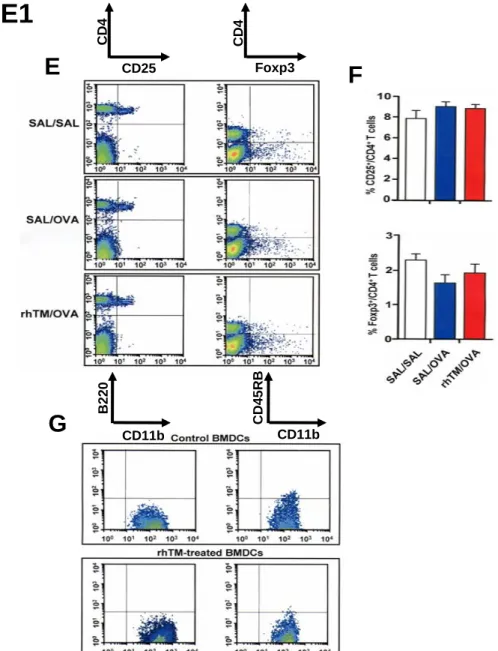
suppressive activity. The number of regulatory T cells (CD41 CD251) in the lungs, mediastinal lymph, and spleen remained unaltered by treatment with inhaled TM, suggesting that the ability of TM to reduce asthma is not mediated by regulatory T cells (seeFigures E1A–E1F in the online supplement).
Bronchial asthma can be induced in this model by treating naive DCs with a pulse of ovalbumin before adoptive transfer to naive host mice, which, on aerosol challenge with ovalbumin,
marrow cells by culturing in GM-CSF for 6 days and then matured by incubation with an ovalbumin pulse for 24 hours.
During the differentiation phase, DCs were treated with TM in vitrofor 2 days before the ovalbumin pulse, adoptive transfer, and challenge. DCs can be divided into two broad subsets in both mouse and human: mDC and pDC, which differ in their lineage markers and in the cytokines they secrete (9, 10).
Differentiated bone marrow cells displayed the characteristic Figure 3. Thrombomodulin (TM) treatment modulates the properties of dendritic cells (DCs). (A) The concentra- tion of cytokines was less in the supernatant of bone mar- row–derived DCs (BMDCs) cultured for 24 hours in the presence of recombinant hu- man (rh)TM. Bars represent the means of three indepen- dent experiments. (B) Effect of rhTM on T-cell stimulatory ac- tivity of BMDCs. BMDCs (C57BL/6) grown in the pres- ence of the indicated concen- trations of rhTM were cocultured with carboxyfluor- escein succinimidyl ester (CFSE)-labeled CD4 T cells pu- rified from OT-II mice. Prolifer- ation of CD4 T cells was quantified by flow cytometry (left) and the percentage of live nonproliferating cells is shown as mean6SD (right).
Representative results from three independent experi- ments are shown. (C, D) Sur- face expression of CD141/TM in BMDCs is increased by rhTM treatment. Cell surface CD141/TM was analyzed by flow cytometry. The mean of three independent experi- ments is shown. Error bars in- dicate SD. (E) Expression of CD141/TM mRNA in BMDCs is increased by rhTM treat- ment. TM mRNA was evalu- ated by polymerase chain reaction PCR of RNA extracted from BMDCs treated with rhTM and in BMDCs sorted into CD141/TM2 and CD1411DCs. Glyceraldehyde 3-phosphate dehydrogenase (GAPDH) mRNA was analyzed as a control. Representative results from two separate ex- periments are shown. TNF5 tumor necrosis factor.
Takagi, Taguchi, Toda,et al.: Thrombomodulin Inhibits Bronchial Asthma 35
Adoptive transfer of TM-treated DCs reduced the severity of asthma measured by lung function and resulted in diminished BALF levels of total protein, IgE, IL-5, leukocytes, and eosinophils (Figures 2A–2D). Hyperplasia of mucin-secreting cells was also reduced in the lungs of mice that received a transfer of TM-treated DCs (Figures 2E and 2F). Thus, TM treatment of DCsin vitrointerfered with their ability to induce asthma. The effect was independent of the role of TM in
(data not shown). This raises the possibility that the lectin domain of TM might be involved (30). Overall, these in vitro findings may explain howin vivoadministration of recombinant TM reduces asthma. We therefore investigated the effects of TM on the properties of DCs.
DCs treated with ovalbumin display increased expression of the surface markers of DC maturation, including major histo- compatibility complex (MHC) class II, CD80, and CD86. When Figure 4. CD141/thrombo- modulin (TM)1dendritic cells (DCs) protect from and CD141/TM2 DCs exacerbate asthma. CD141/TM1 and CD141/TM2DCs were purified by magnetic separation. DCs were stimulated with 100mg/
ml of ovalbumin for 24 hours and 106 cells were intrave- nously injected to BALB/c mice (n 56); each group of mice was challenged with 2% oval- bumin for 20 minutes on 4 consecutive days. (A) Airway hyperresponsiveness was mea- sured in response to methacho- line. (B–D) The degree of lung inflammation was measured as the concentration of total pro- tein, IL-5, or IgE, or the number of eosinophils or total cells in bronchoalveolar lavage fluid (BALF). (E) The Th1 cytokine IFN-gand Th1 antibody IgG2a were measured and compared between groups. n56 in each group. Error bars indicate SEM.
Results shown here are repre- sentative of three separate ex- periments. SAL/SAL received saline by intraperitoneal injec- tion for sensitization and by intravenous injection; PBS/
OVA group were sensitized with ovalbumin by intraper- itoneal injection and treated intravenously with phosphate- buffered saline (PBS); CD141/
TM2DCs/OVA were sensitized with ovalbumin and treated in- travenously with CD141/TM2 DCs; CD141/TM1 DCs/OVA were sensitized with ovalbumin and treated intravenously with CD141/TM1 DCs. After the magnetic separation a group of CD141/TM2DCs (CD141/
TM2DCs1rhTM) and another group of CD141/TM1DCs (CD141/TM1DCs 1 rhTM) were further treated with recombinant human (rh)TM before adoptive transfer.
36 AMERICAN JOURNAL OF RESPIRATORY AND CRITICAL CARE MEDICINE VOL 183 2011
DCs (Figures E2A and E2B). Although the inhibitory activity (Figure E2C). DCs migrate along chemokine gradients using
Takagi, Taguchi, Toda,et al.: Thrombomodulin Inhibits Bronchial Asthma 37
p'O.OI p'O.OOI
。
Chom。・CCL3 CCL 19 CCL2市
. attrac.t.:.nts
ロC014川 M' ロCO川 ITM・
p=O.OO
・
D JO
~ 2S
也,
τJ 20 v 面
g
,
s E。
叩、向
、,、
p<O.OOOI B伺
6回
u. ::E
曲 岡
田
。
υ
2∞
。
。
心 心. f S
~V A~
.f.公
.~戸、l
<>'。ー
む む p=O.0007
同
。
L
::E30
0
0国20
υ
10
0
0 む
。 . 。
~- <~
.f.公
.11. .11>'
。I ー。
心 。 p<o.oOOI
。
。 心‑ 。
.f.~令ふ
.~. 且~.
() ,() 0 心
A12閣 1似拘
2ω
比 S伺
2
5刷
工::E ・帥
p=O 0003
‑e
一時
; 一
mAP
一 凶
ム ︐
i‑昭
︑ ・
1i
︒ 一
一割
︐ 也
︑
・n
H 事‑edr・s 一 ‑ ‑
R
‑
F J U 一回dr一mJP‑e
︒ 一 川
b‑
a
﹂F一N‑
紅 ︑
.
.
︑︒
obp=0.009 15
包a
oω
0"810
φ C
ωUJ̲ a.
5E 5
。ーー
。
"Cp=0.03 p=O 8
丘日01 ど旦旦
0
。
0 .Qむ~- A 公 Lf.
1 1
>
マ 匹唱
。
σ心 。
FITC・dextranuptake
60
叫 却
23
u+
υ
ト一 比﹄
0
4r
B
p=0.04
O
COllITM' C0141ITM'
+ +
100 n u a u a u a U
8 6
2
{ ‑ E
るs h
F
・﹂ 一
p・0.02 笥 出
.0。
S
揃::?加
...J 10。
。
C.Ot4ttrw COt
・
tnw'+ +
p=0.03 50
初 初 叩
‑ E るきり
J‑
O
OC subS<!1 C0141ITM・C0141π...
N,iv
・
Tc・
11 + +40
p=0∞2 F
同
5 2 ω=
︒
υ+ト区
υ υ
4 A
V
O (J ~v I : :r ..0
.t:' 争 争. '<
.... ~. ......
() .()
v' (j
p'O.OOl 1S
同 誌
ω=
︒
ω+師匠ο υ 4 A O
o ().v V ..~v 0 .~' ~ゃ. <'
.〆 .
() ,()
v' (j p,o.o4 15
同HO
E‑
+骨oυ
w g υ
×υ
J F e
(J ~v ()V ..0
~- <~
.~' . '<
, . ' 、
l.() ,()
v' (j
C
p
。
001..." 命 令 グ 命 令
.,>c,' _c,~- ,.p‑,.f5
c,"'‑q,q,? . QC.i' .
,
p ふ や~や.
,. ..̲tt.
‑、、
。 。
む む p<O 001 p<O.OOl p<O 001 p<O 001
‑Z
C3
EE
za
話)
司︒SコE
uc
EC
凶
MH
CD141/TMφBMDCs
l 犠 @g .~
CD141/TM' BMDCs G
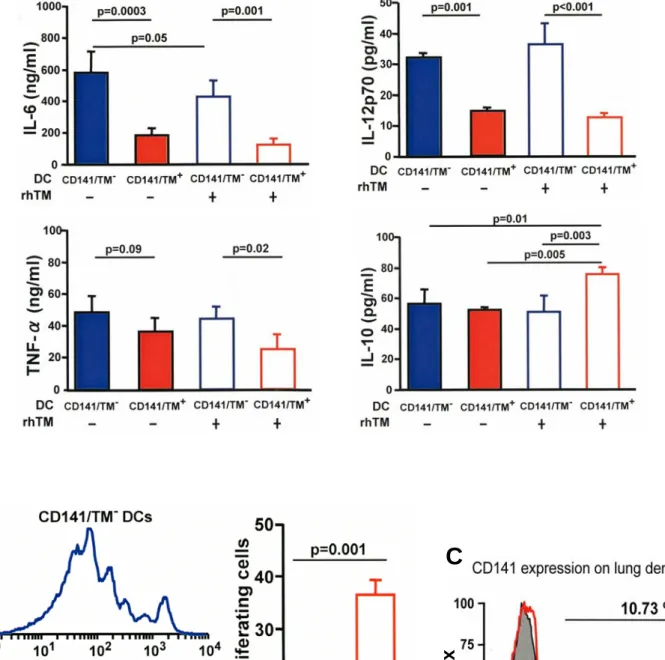
CCL21) was measured, TM-treated DCs migrated less, showing that the reduced levels of the chemokine receptors resulted in a lower response (Figure E2E). Lower amounts of proinflam- matory cytokines are secreted by rhTM-treated DCs, whereas the antiinflammatory cytokine IL-10 is increased (Figure 3A).
DCs interact with cognate T cells in lymph nodes, stimulating their clonal proliferation. DCs treated with TM suppressin vitro proliferation of cognate T cells purified from OT-II mice whose T-cell receptor is directed toward an ovalbumin peptide (Figure 3B). Interestingly, expression of TM itself (CD141) was induced on the surface of DCs by TM treatment of DCs, at least in part due to induction of TM mRNA (Figures 3C–3E, Figure E2F).
Treatment with GM-CSF induces incomplete maturation of DCs. We investigated whether induction of TM and inhibition of maturation by culturing with TM is due to the use of GM- CSF for differentiation into DCs or could be caused by TM during differentiation of DCs from bone marrow cells with Flt3-L instead of GM-CSF or with GM-CSF in the presence of lipopolysaccharide to cause further maturation. As with GM- CSF treatment, these other treatments also gave rise to less mature DCs that still were able to respond to culturing with TM by induction of CD141/TM expression and reductions in expression of the maturation markers, MHC class II, CD80, and CD86 (Figures E3A and E3B). Thus, irrespective of their state of maturation or agent used for induction of differentia- tion, TM treatment of DCs reduces expression of maturation markers and increases TM expression.
CD141/TM1DCs Are Tolerogenic; CD141/TM2DCs Are Immunogenic
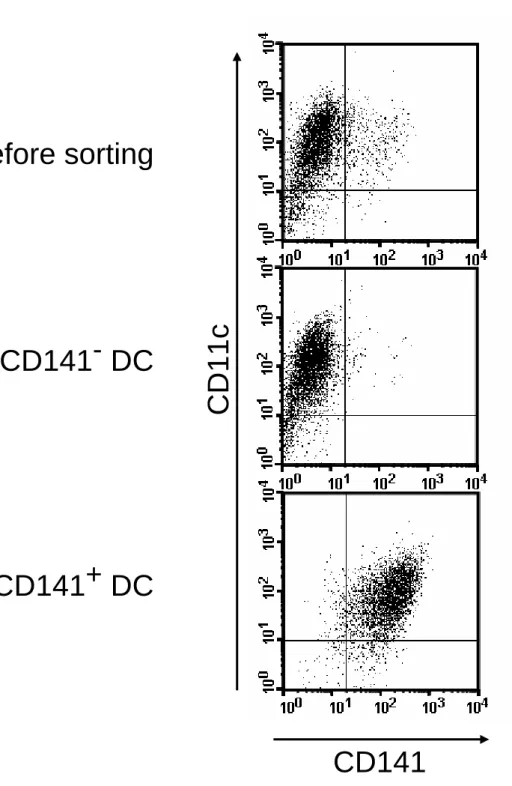
We studied the functional differences between TM1and TM2 DCs to see whether these subsets of DCs were responsible for the differences between TM-treated and control DCs. BMDCs were cultured in the presence of rhTM for 2 days before pulsing them with ovalbumin. We sorted the TM-treated DCs into CD141/TM1 and CD141/TM2 DCs before adoptive transfer into naive animals and challenging them. The purity of the sorted cells was greater than 93% (Figure E4). Mice that were adoptively transferred with CD141/TM2DCs had more disease than those transferred with control, unsorted DCs (Figure 4A).
Animals adoptively transferred with CD141/TM1 DCs were less hyperresponsive to ovalbumin, showing that DCs in which CD141/TM had been induced were tolerogenic. Adoptive transfer of CD141/TM2 DCs exacerbated the increases in BALF levels of cells and eosinophils, IL-5, IgE, and total protein, as compared with control DCs (Figures 4B–4D). In
rhTM did not affect the expression of the Th1 cytokine in- terferon-g but did significantly alter that of the Th1 antibody IgG2a (Figure 4E). Overall, these observations suggest that TM2DCs are immunogenic and the TM1DCs are tolerogenic.
To see whether CD141/TM1 and CD141/TM2 DCs could change their properties after sorting, CD141/TM1 DCs were incubated during the ovalbumin pulse without TM and CD141/
TM2 DCs with TM. Although the properties of CD141/TM1 DCs did not change, remaining tolerogenic, the immunogenic properties of CD141/TM2DCs were suppressed by 24 hours of TM treatment (Figures 4A–4E). Thus TM1 DCs did not lose their TM expression or their tolerogenic properties by 24 hours in the absence of TM in the culture medium. In contrast, some TM2 DCs had acquired a less immunogenic phenotype by treatment with TM.
As TM treatment of DCs during differentiation resulted in lower expression of maturation markers and changes in antigen presentation and T-cell stimulation, we investigated whether these properties were different in the CD141/TM1and CD141/
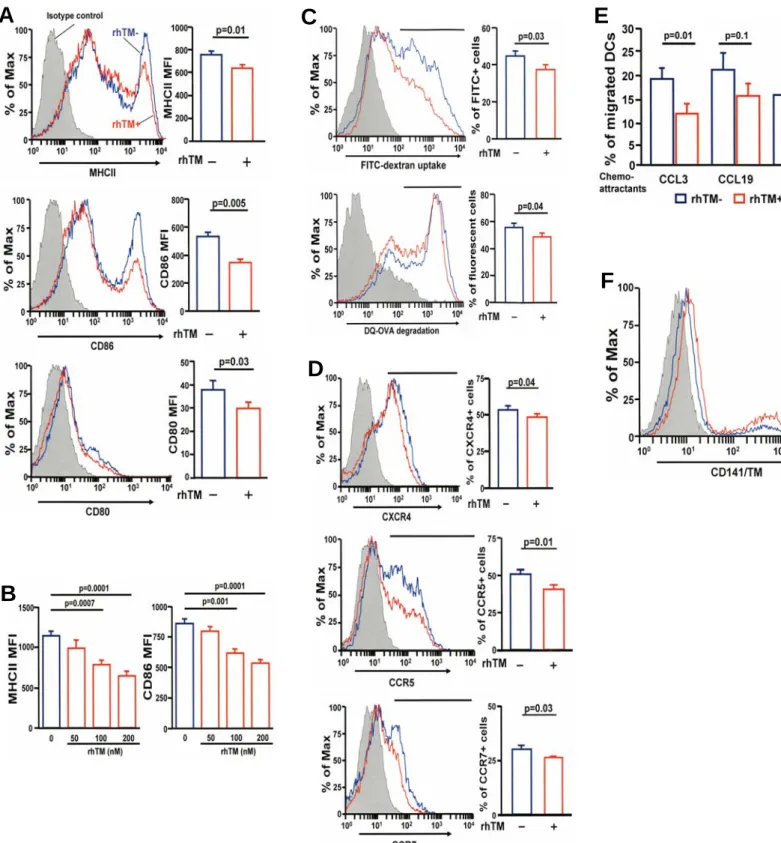
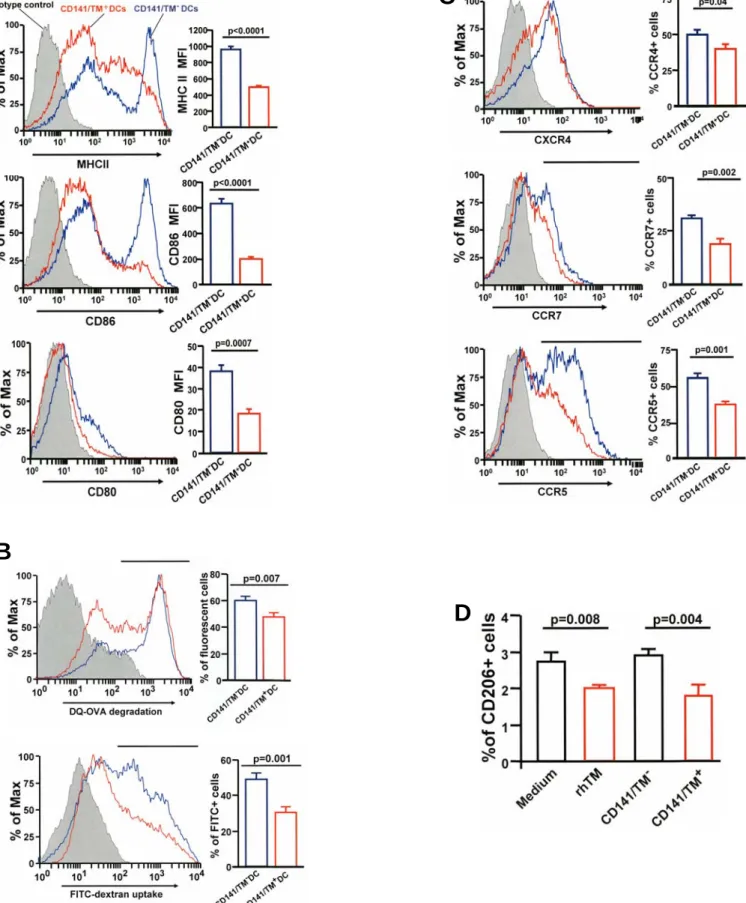
TM2DC subsets. CD141/TM1DCs have lower levels of matu- ration markers (MHC class II, CD80, and CD86); exhibited less phagocytic capacity, reduced antigen processing, and less ex- pression of the chemokine receptors CXCR4, CCR5, and CCR7; and migrated less toward the chemokines CCL3, CCL19, and CCL21 (Figures 5A–5D, Figure E5A–E5C). The decreased capacity for phagocytosis is probably due to down- regulation of the mannose receptor, CD206, by TM (Figure E4D). Because CD141/TM1DCs migrated lessin vitro, changes in migration of lung DCs in response to TM treatment were measured by challenging sensitized mice with fluorescent-la- beled ovalbumin. In mice treated with TM there were fewer total DCs that had taken up fluorescent-labeled ovalbumin in the draining mediastinal lymph node and more in the lung than in untreated animals (Figures E6A and E6B). In addition, homing of CD141/TM1 DCs to the lungs was significantly higher but lower to the mediastinal lymph nodes after adoptive transfer to sensitized mice. In naive mice, homing of CD141/
TM1 DCs to mediastinal lymph nodes was also significantly decreased after adoptive transfer (Figure 5E). CD141/TM1 DCs secrete fewer proinflammatory cytokines but more antiin- flammatory IL-10 compared with CD141/TM2 DCs (Figure E7A). CD141/TM1 DCs also stimulated cognate T cells to proliferate less (Figure E7B) and the production of Th2 and Th17 cytokines was reduced in the mixed cultures of DCs with T cells in comparison to CD141/TM2DCs (Figure 5F). CD141/
TM1 DCs are smaller and more spherical than CD141/TM2 DCs and possess fewer dendrites (Figure 5G). CD141/TM1 Figure 5. CD141/ thrombomodulin (TM)1dendritic cells (DCs) differ from CD141/TM2 DCs. (A–D) CD141/TM2and CD141/TM1DCs were stimulated with ovalbumin. The surface expression of major histocompatibility complex (MHC) II, CD80, CD86, chemokine receptors (CXCR4, CCR5, CCR7), and the antigen uptake and processing capacity were analyzed by flow cytometry. Chemotaxis toward CCL3, CCL19, and CCL21 was analyzed by double-chamber assay. Representative results from three independent experiments are shown. (E) Mice were adoptively transferred with carboxyfluorescein succinimidyl ester (CFSE)-labeled CD141/TM1DCs and CD141/TM2DCs and the number of each type of DC homing to the lungs and regional lymph nodes was calculated. Error bars indicate SD. (F) CD141/TM2and CD141/TM1DCs (C57BL/6) were stimulated with ovalbumin and cocultured with naive CD4 T cells from OT-II mice. Supernatants were assayed for IL-5, IL-13, and IL-17. Representative results from two separate experiments are shown. Error bars indicate SD. (G) Phase contrast microscopy of CD141/TM1and CD141/TM2DCs. (H) Bone marrow cells were differentiated in the presence of recombinant human (rh)TM for Days 4 to 6. On Day 7, bone marrow–derived DCs (BMDCs) were sorted into CD141/TM1and CD141/TM2DCs and pulsed with ovalbumin for 24 hours before adoptive transfer to Balb/c mice (n54 in each group) sensitized with ovalbumin. After 7 days, the mice were challenged with aerosol ovalbumin and airway hyperresponsiveness was measured. Error bars indicate SD. Results shown here are representative of three separate experiments. SAL/SAL received saline for sensitization and treatment; PBS/OVA group were sensitized with ovalbumin and treated with phosphate-buffered saline (PBS); CD141/TM2DCs/OVA were sensitized with ovalbumin and treated with CD141/TM2DCs; CD141/TM1DCs/OVA were sensitized with ovalbumin and treated with CD141/TM1DCs. FITC5fluorescein isothiocyanate.
b
38 AMERICAN JOURNAL OF RESPIRATORY AND CRITICAL CARE MEDICINE VOL 183 2011
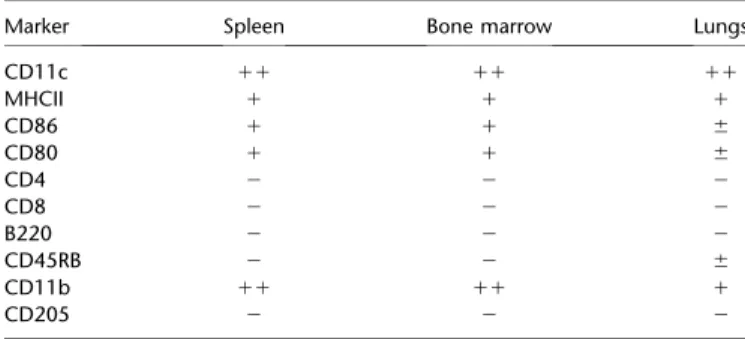
markers as well as surface markers of plasmacytoid DCs (Table 1). In the lungs of naive animals, 10.73% of the DCs were CD141/TM1DCs (Figure E7C).
CD141/TM1DCs Actively Suppress Asthma
Thein vivofindings that CD141/TM1DCs caused less asthma could be due either to CD141/TM1 DCs being passive or to CD141/TM1 DCs actively suppressing the disease. Therefore, we determined whether CD141/TM1 DCs could reduce the severity of disease after sensitization of the mice by adminis- tering ovalbumin intraperitoneally with a subsequent challenge of ovalbumin. In comparison to animals adoptively transferred with DCs matured with an irrelevant allergen, animals treated with CD141/TM1 DCs were less hyperresponsive, whereas animals treated with CD141/TM2DCs had exacerbated asthma (Figure 5H). Thus CD141/TM1DCs have the ability to actively suppress the ongoing disease process.
TM Lectin Domain Interacts with DCs
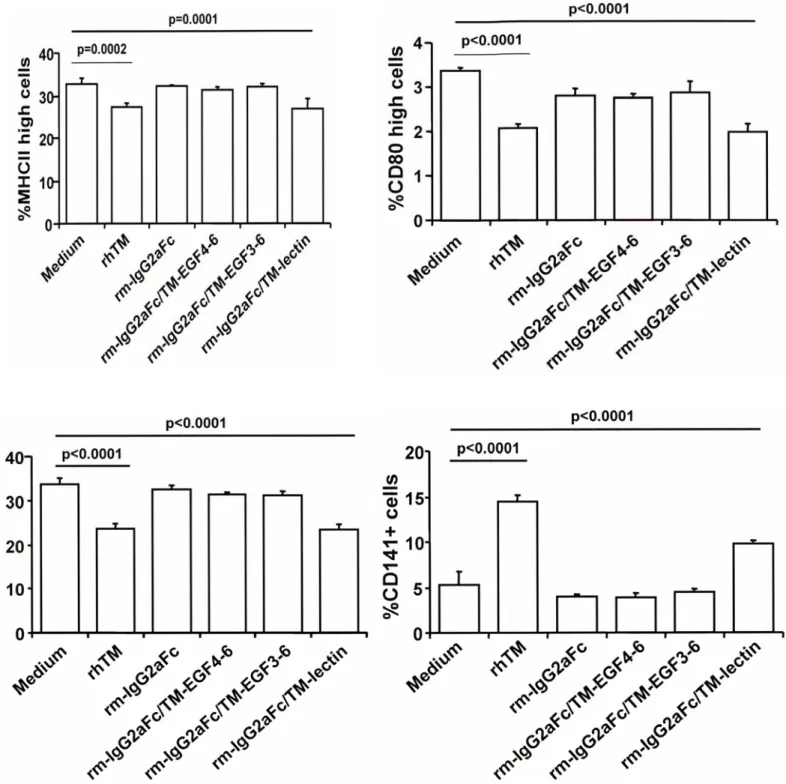
TM is a transmembrane glycoprotein, ubiquitously expressed by endothelial cells (ECs) consisting of several domains with disparate functions, including binding to thrombin (epidermal growth factor [EGF] domains 516), activation of PC (EGF 4–6) and TAFI (EGF 3–6), and antagonism of high-mobility group protein B1 (HMGB1) by the lectin domain (15, 31, 32). Use of deletion fragments of mouse TM fused to the Fc domain of mouse IgG to stimulate DCs showed that only molecules containing the lectin domain were able to decrease maturation of DCs (Figure E8), suggesting that the lectin domain was responsible for altering the properties of DCs. To further clarify the biological relevance of the TM lectin domain, DCs from LeD mice (22) were shown to have lower CD141/TM expres- sion than DCs from wild-type (WT) mice, suggesting that the lack of the lectin domain prevented expression of TM on DCs (Figure 6A). In contrast, the level of TM expression on ECs is not affected by loss of the lectin domain in these mice (22). DCs from LeD mice responded to the presence of TM during differentiation by increasing their CD141/TM expression, show- ing that cells lacking that domain still respond to exogenous TM containing the lectin domain (Figure 6A). To confirm the role of the TM lectin domain in bronchial asthma, bone marrow DCs from WT and LeD mice were prepared, pulsed with ovalbumin, and transferred intratracheally to WT mice (33). WT mice treated with ovalbumin-pulsed DCs from LeD mice had more AHR than WT mice treated with ovalbumin-pulsed DCs from WT mice (Figure 6B), suggesting that the lectin domain is probably critical for the inhibition of bronchial asthma.
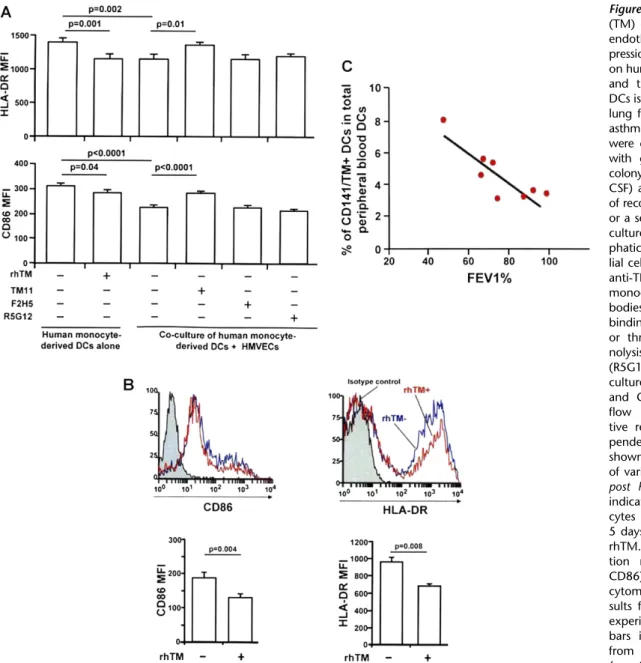
Human Monocyte-Derived DCs Respond to TM
We tested whether full-length membrane-bound TM could also modulate DCs. By incubating human DCs with human lym- phatic ECs, umbilical vein ECs, and alveolar epithelial cells, membrane-bound TM reduces the expression of maturation markers on human DCs (Figure 7A, Figure E9). This effect was reversed when we added polyclonal antibodies directed against TABLE 1. CHARACTERIZATION OF CD141/THROMBOMODULIN1
FROM MOUSE LUNGS, SPLEEN, AND BONE MARROW
Marker Spleen Bone marrow Lungs
CD11c 11 11 11
MHCII 1 1 1
CD86 1 1 6
CD80 1 1 6
CD4 2 2 2
CD8 2 2 2
B220 2 2 2
CD45RB 2 2 6
CD11b 11 11 1
CD205 2 2 2
CD11c-positive cells were isolated from the lungs and spleen of naive BALB/c mice using anti-CD11c–labeled beads, gated for CD141/thrombomodulinä1, and the presence of surface markers was assessed by flow cytometry as strongly positive (11), weakly positive (1), barely detectable (6), or negative (2) for the markers. Bone marrow–derived dendritic cells (BMDCs) derived by treatment with granulocyte-macrophage colony-stimulating factor were separated into CD141/TM1and similarly analyzed by flow cytometry.
Figure 6. The lectin domain is critical for the protective effect of thrombomodulin (TM). (A) Mouse bone marrow–derived dendritic cells (BMDCs) from wild-type (WT) mice and mice lacking the lectin domain (LeD) were separated and cultured for 6 days in the presence of granulocyte-macrophage colony-stimulating factor (GM- CSF), recombinant human (rh)TM was added from Day 4 to 6. On Day 7, BMDCs were cultured in the presence of ovalbumin (OVA) and rhTM for 24 hours and the expression of CD141/TM was evaluated by flow cytometry.
Representative results from three independent experi- ments are shown. (B) Mice with BMDCs transferred from LeD mice have more hyperres-
Takagi, Taguchi, Toda,et al.: Thrombomodulin Inhibits Bronchial Asthma 39