Diffusion and the Adaptation of Western‑style Food in Korea from the Era of Japanese
Occupation
著者(英) Fumiki Hayashi
journal or
publication title
Senri Ethnological Studies
volume 100
page range 135‑157
year 2019‑03‑12
URL http://doi.org/10.15021/00009392
135
Edited by Kazunobu IKEYA
Diffusion and the Adaptation of Western-style Food in Korea from the Era of Japanese Occupation
日占时代以来韩国西式饮食的传播和变化
Fumiki HAYASHI
林 史树 Kanda University of International Studies
(日本)神田外语大学
ABSTRACT
This study is an examination of how Western style food diffused, particularly addressing the Korean Peninsula during the period between Japanese rule and around the 1980s. The work is an attempt to think about how Korea and South Korea introduced the West, the so-called process of modernization, from a different aspect. The case of the Korean Peninsula characterizes the spread of the Western modern age via Japan. Through the process by which Japan was exerting and enhancing its effective control after the Sino–Japanese War and the Russo–
Japanese War, Japanized Western style food gradually spread. Although this can be regarded as the “West” translated by Japan, important questions persist as to the extent to which Korean people recognized it as the “West” and what they accepted and rejected.
After 1945, when Japan was defeated, the American style “West” that had direct influence was introduced to South Korea. At the same time, when the “West,”
with canned food and bread, found its way into everyday life in South Korea, foreign sailors came to call at a port. Western food restaurants opened around port cities. Since the 1980s, with the economic development of South Korea, it spread to younger generations, including office workers and students. Although sometimes creating decadent trends, Western food restaurants spread gradually through South Korea society as fashionable places for young people. In the 1990s, Western style food transformed into food that families enjoyed casually, with the advance of fast foods and in the form of family restaurants. Results show that Western style food there adapted to the changing times.
摘要
这项研究是对西式饮食如何传播的一次考察,尤其关注了日本统治时期到二十世纪八
十年代间的朝鲜半岛。这是从另一个侧面思考韩国怎样引进西方文明(即所谓的现代 化)的一次尝试。朝鲜半岛的情况以通过日本传入西方现代文明为特征。中日甲午战 争和日俄战争之后,在日本确立和加强其有效的控制的过程中,日式化的西式食物渐 渐传播开来。除了这可以看做是经日本解读过的“西方”之外,仍然存在一些重要的 问题,那就是朝鲜人民将其视为“西方”的程度以及他们在这一过程中接受了和拒绝 了什么。
1945 年之后,日本战败,美式“西方”被引入南韩,并对其产生了直接影响。同时,
凭借罐装食品和面包,“西方”这一概念也找到了进入南韩日常生活的途径。这时,外 国水手来到了港口。港口城市里开了许多西餐馆。自从二十世纪八十年代以来,随着 南韩的经济发展,西餐馆被年轻一代接受,其中包括公务员和学生。虽然有时会发展 不顺 , 但西餐馆还是随着成为年轻人眼中的时髦场所而逐渐在韩国社会扩散开来。二 十世纪九十年代,随着快餐和餐馆形式的出现,西式食物变成了普通家庭能随意享受 的食品。结果表明,在韩国,西式食物适应了时代的变化。
INTRODUCTION
In South Korea, the history of the Korean Peninsula during the period from the opening of ports to the Japanese rule is regarded as a negative legacy: all matters are discussed in connection with the history of exploitation by Japan. However, China and Russia also sought opportunities to invade the Korean Peninsula from the north. Thousands of people flowed in, seeking rights and interests. One cannot ignore that various cultural products moved largely beyond the framework of national boundaries and diffused with the crossing of people over the border.
Among such products, the diffusion of food deserves special attention.
Typical foreign foods introduced during this time to the Korean Peninsula, which had previously maintained national isolation, were Japanese and Chinese cuisine and ‘western-style food’, including Russian and French cuisine. This spread of western-style food can be rephrased as spread of the western modern age. The case of the Korean Peninsula characterizes the spread of the western modern age via Japan. Through the process by which Japan exerted and enhanced its effective control after the Sino-Japanese and the Russo-Japanese Wars, Japanified western- style food gradually spread. Although this can be regarded as the ‘west’ as translated by Japan, important questions persist regarding the extent to which Korean people recognized it as the ‘west’, and what they accepted and rejected.
Even after the end of Japanese rule, the land was devastated. Compounded by the Korean Conflict, which broke out in 1950, food shortages continued until the 1960s. The continuing era of food shortages forced changes in the style of food and caused frequent food diffusion. During the period, in contrast to the Japanese- style west, the west via the United States was introduced. Subsequently, western- style foods became increasingly accepted by younger generations; we consider that South Korea experienced this boom in the 1980s.
This study examines how western-style food diffused, focusing on the Korean
Peninsula during the period between Japanese rule and the 1980s. The work
considers how Korea and South Korea introduced the west, the so-called process of ‘modernization’, from a different perspective. This is accomplished by investigating the process by which a category of western-style food was established on the then Korean Peninsula.
INTRODUCTION OF WESTERN-STYLE FOOD IN SOUTH KOREA:
LATE 1800s TO 1945
1. First Encounters with Western-style Food
Similar to Japan, the Joseon Dynasty maintained a long period of national isolation. For that reason, it was only after the Japan-Korea Amity Treaty of 1876 that numerous foreign goods began to flow in. However, there are earlier descriptions of such goods: Ernst Jakob Oppert (1832-1903), an entrepreneur and who visited Korea three times following 1866, entertained Koreans with western- style food when visiting on his boat (Kang 2000: 384). In addition, as noted by HAN Bok-jin, a researcher of food culture, in Kankoku shokuseikatsu 100 nen
nempyo (2001: 358), that the Japanese diplomatic envoy (training delegate) KIMGi-soo recorded having western cuisine in Il-Dong-Gi-Yu in 1876. These records lead us to conclude that Korean people first encountered western-style food around 1970. Subsequently, western-style food became gradually better known throughout the Korean Peninsula through contact with westerners.
Western food restaurants qua restaurants only occurred after some time.
Although the Sontag Hotel, which opened in 1902, is usually designated the originator of western cuisine, the literary critic LIM Jong-guk confers the honour on Kaishintei, which started business shortly after Imonro, regarded as the originator of Japanese cuisine (1987: 20). Imonro, which opened in 1887, was a high-class Japanese-style restaurant opened by Imon Eitaro. Kaishintei is considered to have opened around 1890. Another perspective is that Kaishintei provided western cuisine in addition to Japanese cuisine, rather than being an authentic Western cuisine restaurant (Lim 1987: 24) (Figure 1). ‘Kairyotei, Kaishintei’ (western-style food) was said to be in Inchon around 1890. Western- style food thus seems to have already spread to a limited extent just prior to the 20
thcentury.
Keijo Hanjoki (1915) reported that a western restaurant named Café Tiger
was the only cafe in Keijo at the time. It sold drinks, including coffee, beer,
curaçao, and peppermint tea, in addition to western-style food with bread or rice
(Oka 1915: 461). ‘Modern girls’ and ‘modern boys’ were a trend in Korea at that
time; in particular, the modern girl was regarded as a new female icon that spread
into mass culture after the mid-1920s (Seo 2016: 83). A lively crowd of men and
women who enjoyed consumption activities and amusements, they enjoyed
Hon-bura: hanging around Hon-machi (present-day Myeong-dong). Ordering icedcoffee and draft beer at Japanese cafes became a fashion (Seo 2016: 30-31); bars
were also popular at night. Shinpan Dai Keijo Annai introduces numerous such places, including Maru Biru Kaikan (Meiji-machi), Kagetsu Shokudo (Hasegawa- machi), Sanyoken (Asahi-machi), Ginshotei (Kogane-machi), Akadama (Eiraku-cho), and Honmachi Bar (Hon-machi) (Yano and Morikawa ed. 1936:
188-189). Although hailed as a trend, the cafes and bars were destined to establish a kind of decadent amusement culture (Seo 2016: 245). That amusement culture later evolved into red-light districts on US military bases.
Around 1930, ‘grill’ was popular as a name for western food restaurants (Figure 2). In particular, western food restaurants with space for parties, celebrations, and encouragement rallies appear to have had such names. For example, newspaper articles of the time, such as those of the Dong-a-ilbo (9 June 1934; 21 September 1934; 3 October 1938) reported banquets held at Chiyoda Grill, Jong-ro Grill, and Hon-machi Grill. Articles also reported that Yeong-bo Grill supplied a charitable donation matching the Washin Department Store (Dong-a-ilbo 26 April 1936), suggesting the prosperity of the grills. Western food restaurants called G Grill and
H Grill appeared in conversations between an intimate couple in a serialnewspaper story (Dong-a-ilbo 21 November 1935). The grill was established as a place for people to dress up a little and go out, or to hold glamorous events.
Shinpan Dai Keijo Annai introduces the following as western cuisine: Keijo
Eki Shokudo, Aokido (Nandaimon-dori), Sakura Bar (Nandaimon-dori), Chiyoda Grill (Nandaimon-dori), Chosen Hotel (Hasegawa-machi), Kagetsu Shiten (Hasegawa-machi), Ginshotei (Kogane-machi), Bois Grand (Asahi-machi), Hon-machi Hotel (Hon-machi), Yurien (Gwancheol-dong), and Fuminkan Shokudo
Figure 1 A Tonkatsu (Pork Cutlet) in a Western Style Restaurant (Photograph by the author, October 14, 2016, Gwangju)
(Taihei-dori) (Yano and Morikawa ed. 1936: 207-208). ‘Keijo Eki Shokudo’
(present-day Seoul Station Grill), reportedly opened in 1925, is considered the pioneer of western food restaurants located in railroad stations.
1)Although it was primarily hotels that adopted western-style food and rooms, as described later, several bars in addition to the cafes described above id as well. A new culture, including confectionery, desserts, and drinks in addition to dishes, was indeed the
‘western style’. Coffee shops and department stores were places for the new culture to flow in.
2. Diffusion of Western-style Food
According to Keijo no modan garu, the modern girls of the time were characterized by accoutrements such as ‘aprons, dressmaking, and bobbed hair as well as high heels, handbags, and Western style hats’ (Seo 2016: 136). With a desire for economic improvement, people were said ‘not eat merely to eat, but to consume Western style food and drink wine as well’ (Seo 2016: 136). The western style spread steadily across the Korean Peninsula, aided by the powerful medium of hotels and department stores.
Western-style food and hotels
Introduction of western-style food in South Korea is generally related to the appearance of western-style hotels. An example is the Daibutsu Hotel, Korea’s
Figure 2 An Omurice (Omelet Containing Fried Rice) in “Seoul Station Grill”
(Photograph by the author, October 16, 2016, Seoul)
first western-style hotel, built in Inchon in 1888.
2)At the time, Inchon acted as a gateway to Korea. Under these circumstances, the Daibutsu Hotel was built by a Japanese shipping agent, Hori Rikitaro. With the increasing number of westerners visiting Korea, many patronized the hotel.
Hotels were also built in Seoul as a result of increasing western visitors to Korea. The oldest include the Seoul Hotel, opened in 1897 (S. Lee 2012: 23).
However, even earlier, personal notes confirm a visitor at the ‘Chosen Hotel (a new Corean Hotel)’ in 1884 (S. Lee 2012: 18). It is difficult to specify the oldest hotel, partly because Japanese-style inns were also built at the time, because there were numerous accommodations that could not be distinguished as either inns or hotels, and because westerners visiting Korea might have referred to any accommodations in which they stayed as a ‘hotel’.
A well-known early western-style hotel is the Sontag Hotel built in Seoul in 1902 by Antoinette Sontag, a Russian minister’s sister-in-law. According to Lee Seung-woo (2012: 17), a contemporary Korean researcher, modern accommodations for westerners such as the Imperial Hotel, the Palace Hotel, the Station Hotel, and the Sontag Hotel appeared in earnest in Seoul sometime around 1901 or 1902. The Inchon Hotel (later the Wol-mi-do Hotel) opened in 1907 (Inchon Prefectural Office 1933: 1470). This suggests that hotels in the Korean Peninsula began to be built around the 1900s with the increase in westerners visiting Korea, further spreading the western style.
As western visitors to Korea increased from around the 1910s on, Chol-do Hotels began be built in major cities along railroad lines, starting with Shin-uiju and Busan in 1912 (Rha 1991: 25). The Chosen Hotel, built in So-gong-dong in 1914, was the oldest existing hotel. The Railway Bureau conferred prestige on and prepared the best equipment in the east for this hotel (Yano and Morikawa ed.
1936: 196). By the 1930s, extremely numerous hotels stood close together, such as the Hon-machi Hotel, the Keijo Hotel, and the Gwanghwamun Hotel. These hotels were conscious of western style both interior and exterior, and offered western-style food.
Western-style food and department stores
Another facility that spread western-style food was the department store. The Japanese-owned Mitsukoshi Department Store, Minakai Department Store, Chojiya Department Store, and Hirata Department Store, and the Korean-owned Washin Department Store, were built in Korea during this period. These department stores presented ‘modernity’ to Korean people and simultaneously incorporated them into the western modern age, much of which was the western style via Japan. For example, the Washin Department Store was widely talked about because it introduced escalators before other stores. Many people came just to see them (Sawai 1996: 63); such visitors were exposed to ‘modernity’ out of curiosity.
However, ‘modernity’ in this context refers to imitation of the western style, much
of which was the ‘western style’ introduced through Japan, by no means the
‘Japanese style’ introduced by that country into Korea.
This is because those who set up the department stores, such as Mitsukoshi, Chojiya, Hirata, and Minakai, were followers of European and American style, having visited and observed European and American department stores (Hayashi 2004: 49), then added a Japanese-style arrangement. They also conspicuously laid out items that readily adopted as a fashion, such as haberdashery on the first floor and clothes on the second and third floors (Hayashi 2004: 85). This provided the opportunity for widespread westernization in food.
As a matter of course, western-style cake shops, coffee shops, general restaurants, and western food restaurants were located in the department stores.
Sawai Mariko, who lived in Keijo, relates fond memories of delicious apple pies served at a western-style cake shop located on the first floor of the Minakai Department Store. She also had curry and rice at the Mitsukoshi Department Store restaurant (Sawai 1996: 63-64). Dessert was vanilla ice cream, and they appeared to sell cream puffs as well (Sawai 1996: 64). The dining hall of the Washin Department Store also served western-style food. Similarly, Mitsukoshi offered a western-style set meal for 1 won 50 cheon (Cho 1995: 200-201).
It goes without saying that the appearance of department stores, which called to mind the coming of a new era, brought about changes in the awareness of behavioural patterns and fashion sense. Importantly, food was enjoyed not only by the modern girls and modern boys, but by the ordinary Korean people.
INTRODUCTION OF WESTERN-STYLE FOOD TO ORDINARY HOUSEHOLDS: ERA OF JAPANESE OCCUPATION
This section explains how western-style food was increasingly accepted by ordinary households using the example of ‘Seiyo ryori seiho’ from the cookbook
Chosen Muso-Shinshiki ryori seiho, by Lee Yong-gi (1924). Two majorcharacteristics that can be taken from this example are noted and analysed.
The cookbook introduced 26 Japanese cuisine items and 15 Chinese(Shina) cuisine items in addition to 781 Korean cuisine items, including seasonings such as spices and miso. Western cuisine accounted for 45 items, the most among all the foreign cuisines (Appendix). Related details are presented below.
Three characteristics can be identified from the distribution of food items: 1) confectionery accounted for about 60% of the western cuisine; 2) French-style cuisine was incorporated; and 3) similar to in Japan, cuisine that was based on rice (cooked rice) spread.
1. Western Cuisine and Confectionery
The vast majority of the western cuisine items introduced in the cookbook were confectionery items: 26 of the 43 food items (excluding the beverages, iced tea and iced coffee), or about 60%. These consisted mostly of cakes and pies.
Castella, doughnuts, jelly, cookies, and ice cream were also introduced.
At the time, sugar beets and sugar cane were not cultivated on the Korean Peninsula. Sugar was valuable because it had to be imported from Taiwan and other countries. Previously, sweetness was derived from honey or starch syrup, sometimes augmented by dried persimmons. As noted earlier, there was strong demand for western-style cakes. Modern girls may have had this keen interest in desserts not only because of their delicious sweetness, but also because of their rarity.
KANG In-hee reported the spread of bread and confectionery during Japanese rule. In the 1920s, Meijiya, the first western-style cake shop, opened in Chung- mu-ro and quickly gained popularity. More than 40 bread factories and 140 confectionery shops opened in Seoul in the 1940s (Kang 2000: 424).
It is thought that considerable space was devoted to confectionery to introduce western cuisine because of the circumstances that sweets were popular in Korea. Following the withdrawal Japanese sugar manufacturing companies after 1945, Che-il Sugar Manufacturing and Dae-han Sugar Manufacturing were established in South Korea in 1953 and 1956, respectively, to meet increasing domestic demand. Che-il Sugar Manufacturing in particular was established by Samsung C&T Corporation, the predecessor of Samsung, which had built a close relation with the LEE Seung-man government. The company made enormous profits from sugar manufacturing together with the nascent wool industry, which had similarly high demand. This shows that sugar was not commonplace in South Korean society.
In Japan, introduction of western cuisine was intended to strengthen the physique and enhance nutrition to overtake the west, which was superior to Japan in terms of national strength and military power. However, in South Korea, modernity was sought in western cuisine based on fashion. Additionally, the appearance of sugar as a new type of sweetener led to the prominent introduction of confectionery such as chocolate, cream, and cakes.
2. Introduction of French-style Western Cuisine
A hotel advertisement in the early 1900s included a catchphrase indicating that a French chef was in charge of the cooking (S. Lee 2012: 32
-33), and the ad was run in French media. As this demonstrates, many French people visited the Korean Peninsula. The Hotel du Palais opened in 1901 in front of Kyeong-un-gung Dae-an-mun (present-day Deok-su-gung Dae-han-mun) and was managed by L.
Martin. After that, J. Boher, also a Frenchman, managed the hotel and renamed the Central Hotel(S. Lee 2012: 27). The hotel was sometimes designated a French hotel because a Frenchman held the rights, even after management had changed. It also had connections with France in many respects (S. Lee 2012: 27). Similarly, Antoinette Sontag of the Sontag Hotel was French-German and came from France.
French cuisine thus seems to have spread among the hotels.
Other reasons for the spread of French-style cuisine can be inferred from the
situation of Japan, where western cuisine, particularly French-style food, had
become popular and influential. Mainstream western cuisine in Japan is said to have been French. Reasons for this include French support of the Tokugawa Shogunate at the end of the Edo period; French cuisine was rooted in Yokohama, an area adjacent to the shogun’s headquarters (Fujinaka ed. 1993: 59). According to Udagawa, a writer with profound knowledge of French culture (2014: 9), the Meiji Government included French cuisine in the Imperial family’s dinners and suppers, following the example of the UK. This suggests that the 19
thcentury was a golden age for French cuisine. The royalty, nobility, and bourgeoisie in Europe were fascinated by it (Udagawa 2014: 9). French cuisine was further spread in Japan by the Hotel New England, which was built in Yokohama as a symbol of recovery after the Great Kanto Earthquake. Its first head chef was Saly Weil, a Swiss citizen. He reportedly transmitted French cuisine and French fashion to Japanese cooks (Udagawa 2014: 11-12). In this way, French cuisine was established in Japan as ‘western-style food’ associated with the Imperial family.
Subsequently, many Japanese cooks travelled to France to learn about Western cuisine. To work in western kitchens, they had to learn French; otherwise they would not have been able even to write up menus (Iwasaki 1983: 9; 40; 44). The Grand Hotel, which opened in 1873, was a leading hotel for foreigners in Yokohama, with its French-style brick exterior and French head chef (Iwasaki 1983: 12). Gradually, the UK became involved instead of France, which had served as the basis of western cuisine in Japan (Kosuge 1994: 275). The American style joined these after the war (Iwasaki 1983: 47).
Given France’s a strong influence in culinary circles, and Japan’s strong influence on western-style food in the Korean Peninsula, it can be readily understood that French cuisine was introduced first.
3. Spread of Dishes Based on Rice
Western-style dishes in South Korea are based on consumption of rice. Of course, except Japanese-owned hotels, it seems that rice was not necessarily in the meal of hotel of early Western-owned hotels. Although a choice of either rice or bread could be found in some places, dishes grouped as ‘western light meals’ were served only with rice in many places, particularly in those days.
3)Additionally, western light meal restaurants were not necessarily specialized places for dining;
they might also have karaoke, a disco, and so on. Except at restaurants catering to foreigners, main menus were often Japanese-style western food, such as pork cutlets, omelettes, and Salisbury steak platters, all to be eaten with rice. A frequently noted characteristic of Japanese-style western food that it goes well with cooked rice (Okada 2000: 72). Another characteristic is the difference in tableware: it is served not in a rice bowl, but on a western-style plate.
According to Okada Tetsu, an expert in Japanese food culture (2000: 203
-204), western-style food in Japan can be broadly divided into three forms: 1) a
combination of fried food, such as cutlet, croquette, or fried prawn, with cooked
rice; 2) cooked rice dishes adopting a western style, such as curry and rice, hashed
rice, chicken pilaf, and omelette rice; and 3) western-style Japanese food, such as cabbage rolls, stews, and omelettes.
The first and second styles are often encountered in South Korea. These were readily acceptable because fundamental meals in Korea consisted mainly of grain- based foods. Although the third is also a western style, it had been ‘Koreanized’
to a large extent. That is to say, whereas demi-glace sauce and Worcestershire sauce are used in Japan, brown sauce is preferred in South Korea
4)to maintain the western style. This is a sauce made by stewing stir-fried vegetables, roux, tomato paste, and pot herbs from a brown roux of butter, flour, beef broth, beef, salt, pepper, and other ingredients. The demi-glace sauce is made by boiling the mixture down. In any event, western-style food in Korea largely conforms to the form of the western-style food, which appears different from dishes brought from France.
US MILITARY OCCUPATION TO THE 1970s
1. Budae Jjigae and the Red-light District in Dong-du-chon
Since the 1970s, the presence of US forces stationed in South Korea has exerted a huge influence on the country’s western-style food. ‘Give me chocolate’ incidents occurred in South Korea as well. People came to adopt the ‘western style’ around the 1960s through broad contact with US military forces. Until then, the US military existed solely as an occupation force and had influence only on the formation of red-light districts surrounding the bases. In the 1970s, South Korean soldiers who had contact with US armed forces adopted the western style and helped spread it throughout South Korean society after their discharge from service. Of course, people other than the members of armed forces also readily obtained relief goods from the US forces stationed in South Korean bases. Spam and sausages, originally emergency provisions for the US forces, became widely accepted by the private sector, mainly around the base sites. Budae jjigae was created by making use of such food materials.
Canned products were of high utility as military supplies. During the period from the Sino-Japanese War to the Russo-Japanese War, canning factory construction plans in Korea proceeded rapidly. At a cannery in Hiroshima Prefecture, Japan expanded production of beef and similar products in the southern city of Chinhae (Seol 2016: 68
-69).
5)However, Korea was merely a supply centre.
Production stagnated after Japanese engineers were withdrawn; it later resumed at the time of the Korean Conflict. In the early 1960s, canned foods that had been delivered to the army were gradually revived as foods for general consumption and foreign trade items (Yang 1991: 264).
As described above, canned food was closely associated with the military.
The demand for canned food grew when South Korea went to war itself. Demand
was further generalized through the black market. Markets selling canned food
and other similar products through illegal channels, called the kkang-tong market (tin can market), existed throughout the country.
Such markets were often found near bases in Ui-jeong-bu and Dong-du-chon, the advance bases, and Pyeong-taek, where illegally diverted US military supplies were often sold. Restaurants for the US armed forces increased, and western-style foods were spread by local South Koreans who visited those places. Furthermore, face-to-face exchange between the South Korean military and the US forces stationed in South Korea, exposed South Korean soldiers to the eating habits of the US armed forces, which were then introduced to wider South Korean society.
This process also served to spread American-style western food materials and western cuisine.
It is important to note that a powerful organization, the military, was involved in the diffusion of food. Not only does the military have enforceability, it is also a huge and well-controlled organization. A military style is highly likely to be established. The relationship between the military and food represents a theme pointing the way to the future. Another important consideration is that dishes using western food materials are not necessarily regarded as western cuisine. The point is not to determine whether budae jjigae is categorized as western or South Korean cuisine, but to note that western food materials such as Spam and sausage were accepted in South Korea society with modifications to fit people’s eating styles.
2. Spread of Bread
Similarly, bread is no longer automatically associated with ‘the west.’ As noted earlier, bread was served for breakfast at western-style hotels. This might have been a demonstration of ‘authenticity’ in comparison to Japanese-style western food, which is served in combination with cooked rice. Bread was also accepted as a food material for powdered foods, different from bao-zi and man-tou, which spread via China.
However, the baking industry in South Korea did not spread alone, but rather in combination with confectionery, as in the ‘confectionery and baking’ industry.
Haitai Confectionery was established in 1945, and Lotte Confectionery in 1967 (C.
Lee 1991a: 932).
6)Nippon Flour Mills, Hokoku Seifun, and other flour milling companies that became the supplies of ingredients for bread had already set up factories in Korea. In some cases they created their own confectionery companies, such as Hokoku Confectionery. In fact, Tongyang Confectionery (present-day Orion) was launched by buying out Hokoku Confectionery in 1956.
The bread manufacturers Koryo-Dang and Sangmi-Dang, the predecessor of SPC Samlip, started business in 1945, the year of independence and liberty.
Yeongil-Dang, the predecessor of Crown Confectionery, was subsequently founded
in 1947 (Koryo-Dang n.d.; SPC n.d.; Crown Confectionery n.d.). Many baking
manufacturers had existed from the start of Japanese rule. However, because the
supply of flour, sugar, and dry milk was insufficient, bread could not be
popularized. In all, 15 flour mills that had been established across the peninsula were destroyed during the Korean Conflict (C. Lee 1991b: 710). Bread grew popular after the conflict, when delivery of supplies began once again.
Dae-han Flour Mills and Cho-sun Flour Mills started producing flour in the country in 1952 and 1953, respectively (C. Lee 1991b: 710). After the Korea-US Agreement on Surplus Agricultural Commodities of 1955, ingredients could be more easily obtained. It is said that after Che-il Sugar Manufacturing started supplying sugar in 1953 and Dae-han Butter started supplying butter in 1957, a total of 22 flour mills were established in the country in 1959 (C. Lee 1991b:
710).
Once the ingredient supply problem was overcome, bread became very popular. Consumption of bread began to spread in the 1970s. A graph presented by YUN Seo-seok (1995: 219-220) illustrates its wider use from the late 1960s to the mid-1970s; in the mid-1980s, the percentage of bread in the food processing industry increased.
7)Shany, a former leader in the pastry industry that had been bought out by SPC, started business as Korea International Food in 1972 (SPC n.d.).
Baking was considered paired with confectionery. Bread reminiscent of the western style was seen in a wider perspective. Exotic food produced by adding sugar and sometimes eggs to a dough made of flour, fermenting, baking was sometimes collectively called ‘bread’. Bread was long grouped with castella and cakes. It sometimes included Chinese bao-zi and man-tou. As described above, bread took root in South Korea as part of a wide-ranging concept.
3. Port Cities as Points of Contact with Abroad
Western food restaurants opened prior to the 1970s had another typical characteristic: they did business with foreign people. Until that time, these were mainly located near military bases and in port cities. The former is as described in the previous paragraph; the latter included primarily ports of call for foreign visitors, such as Inchon and Busan. The Deung-dae Light Meal Restaurant, a Western food restaurant with a long history in Inchon, opened around 1970 (Figure 3). A seaman’s club was adjacent to it, which many foreign sailors were said to visit in bygone days. Although now offering only the main menu of pork cutlets, the restaurant originally served fried prawns and baked bread. Lights were installed on the ceiling so the venue could be used as a dance hall in the evening.
According to Busan-ilbo (22 November 2012), the Seamen’s Club was already established in Busan in 1959. The space, as ‘a small America’, sustained American-style western food. Menus included steaks, salads, sandwiches, hamburgers, French fries, and lobsters, which indeed reminded patrons of the American style. Coca-Cola was also a symbolic drink for the US.
Restaurants for sailors such as these, as well as cafes and bars, gradually
increased in number, mainly in port cities, and took root in South Korean society.
THE 1980s AS A TURNING POINT
Around the 1980s, South Korea developed dramatically by virtue of its rapid economic growth (Figure 4), and its people came to enjoy the associated benefits.
By that time, the country had made a complete change from the period of food shortage. Everyone, even young people in their 20s, came to enjoy a more abundant life. Such young people appeared as new entrants to western-style food.
Figure 4 A Hamburger Steak Replica in National Folk Museum of Korea (Photograph by the author, February 12, 2016, Seoul)
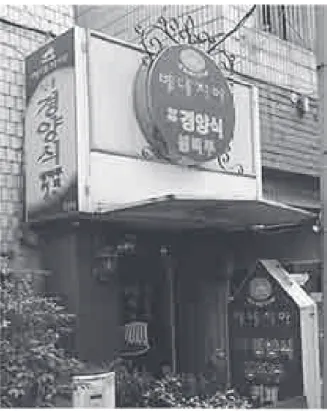
Figure 3 Early Western light meal restaurants
(Photograph by the author, October 13, 2016, Incheon)
Consumption had been suppressed under the military regime, which encouraged simplicity and frugality. However, the regime changed with the assassination of PARK Jeong-hui. CHUN Doo-hwan seized political power by military force. When martial law was lifted in 1981, South Korea gradually embraced consumption. At that time, western light meal restaurants opened in various parts of the country.
Targeting young people in South Korea, who were interested in consumption culture, western light meal restaurants spread in Seoul and other large cities as eating places with karaoke or a disco. The restaurants were used by office workers with an income as a place to relax, unlike the western food restaurants in port cities, which were visited by many foreigners (Figure 5). However, some restaurants were deemed injurious to public morals.
8)Western food restaurants started to be seen as places for a fancy meal on a date. The target customers were those in their 20s to 30s who wanted to dress up, including office workers.
Western food restaurants appeared in which the customer base and atmosphere differed completely from those of western light meal restaurants.
In the late 1980s, western light meal restaurants came to stand out for young people, mainly students, to enjoy slightly luxurious meals of pork cutlets,
Figure 5 1980s Western light meal restaurants
(Photograph by the author, October 14, 2016, Seoul)
omelettes, and Salisbury steaks. For example, the well-known western light meal restaurant Seaside in Inchon, as well as the Deung-dae Light Meal Restaurant, opened in 1989. Hidden-tonkatsu, famous in Kwangju, a central city in the southern part of the country, opened in 1993. These western light meal restaurants offered a main staple menu of pork cutlets and not many other items. The owners of Hidden-tonkatsu were formerly employed at hotels as cooks; in some cases, employees such as these became independent and opened their own restaurants.
A typical American-style food was the hamburger. At the beginning of the 1980s, hamburger chain restaurants landed on South Korean shores, one after another. In 1979, Lotte, capitalized upon by Koreans living in Japan, expanded Lotteria, which had succeeded in Japan, to the country. Burger King and Wendy’s (which has now withdrawn) established locations in 1981 and 1984, respectively.
McDonald’s, the largest hamburger chain, opened a location in 1988 (1986 by some accounts; Lim and Park 1998: 93).
Asakura Toshio reports that Italian cuisine restaurants, mainly serving pizza and spaghetti, became noticeable around the time of the Seoul Olympic Games (2005: 212). Pizza chain restaurants such as Pizza Inn and Pizza Hut landed in 1984 and 1985, respectively (Lim and Park 1998: 93).
9)THE 1990s: GOLDEN AGE OF FAMILY RESTAURANTS
As described above, by the 1990s the spread of western cuisine had familiarized it beyond the status of haute cuisine; established restaurants in contemporary South Korea offered fairly common dishes. The final stage of the western-style food’s establishment in Korea can be regarded as the rise of the family restaurant and western cuisine as fast food.
According to Introduction to Restaurant Industry 2
nd, the earliest family restaurant was Coco’s, which opened in 1988, followed by Nice Day in 1989 and TGI Friday’s in 1991. Subsequently, Skylark and Denny’s landed in 1994 (Denny’s for the second time after an initial opening in 1986), and Sizzler in 1995 (Lim and Park 1998: 98; 129). Interestingly, family restaurants that landed via Japan, such as Skylark and Coco’s, were licensed from the US. This might have been because there are many acceptable points of introduction for the Japanese style in South Korea. This parallels the initial situation in which Korea was westernized through Japan, which had established earlier contact with the west.
Most family restaurants aside from TGI Friday’s have now withdrawn from the country; even TGI Friday’s was bought by the Lotte Group. However, this does not signal the failure of the family restaurants themselves. In fact, family restaurants that recall the US, such as VIPS and Ashley, which share a common all-you-can-eat style with a sense of luxury, have won popularity. Additionally, family restaurants made an important contribution to the popularization of western-style food.
The rise of new family restaurants represents an aspect of the ‘west’ or
‘western-style food’ envisioned by the people of South Korea. Further changes are expected.
CONCLUSION: CHANGES IN WESTERN-STYLE FOOD IN SOUTH KOREA
In summary, with the opening up of Korea in the 1900s, western cuisine began to flow in, both directly from France and other western countries and also through Japan. It was accepted by modern girls and modern boys who welcomed the advent of a new society. After Japan’s military defeat in 1945, the American-style west was introduced and had direct influence in South Korea. Canned food and bread of the ‘west’ found its way into everyday life in South Korea, and foreign sailors came to call at port cities, around which western food restaurants began to open. With the economic development in the 1980s, ‘western’ style spread to younger generations, including office workers and students. Although sometimes resulting in decadent trends, western food restaurants spread gradually through South Korean society as fashionable places for young people. In the 1990s, western-style food became seen as a type to be enjoyed casually by families, with the advancement of fast food and family restaurants. Western-style food in Korea adapted to fit the changing times.
Dishes from cuisines other than Korean (South Korean), Japanese, and Chinese have been recognized simply as ‘western-style food’. However, because they were introduced and accepted under various circumstances and from various origins, they cannot accurately be grouped into a single category. In considering the style of ‘western food’ from a perspective of gradual establishment, we note that we have tried to fit it all together in the framework of ‘western-style food’
and thereby understand it (Figure 6).
Regional differences exist, even in Korea and Japan, not to mention that
‘Chinese’ is itself a broader category. Even so, the category of Chinese has continued to exist in the Korean Peninsula. With respect to ‘western-style food’,
‘Korean-style’ western food” can be considered to include Russian, French, and American items.
This differs from Japan in that Korean-style western food does not include elements strongly influenced by the Netherlands, the UK, or Germany; and it does have a strong American influence, particularly since the war. The style has followed a different route from that taken in Japan, which is typified by Worcestershire sauce. Surprisingly, croquettes are not popular. Future studies will assess the reasons for that peculiarity step by step.
How then did western-style food change in the modern era after the 2000s?
One change is the end of ‘western-style food’. Another is the movement toward
retrospective, ‘good old’ western-style food. Western-style dishes have begun to
take root not as general ‘western light meals’ of unidentified nationality, but as
dishes described by their origins, such as French, Italian, and German. In contrast,
some western-style foods have spread too much, losing connection with their nation of origin through various fusions. Finally, still other dishes gain popularity as ‘good old western light meals’ that the generation over 50 years old can and frequently does recall from their younger days.
What is ‘western-style food’ in South Korea and Korea in general? It might be food introduced by an entity with absolute power and heterogeneity; it might be unusual food to approach. Now that it is becoming a part of everyday life, people might begin to seek a new ‘western-style food’ while reflecting on the past.
NOTES
1) It suggests that when the Nan-dae-mun Station was remodelled and Keijo Station constructed in 1923, a restaurant already existed in the station. Subsequently, when Seoul Station was remodelled as a red-brick building in 1925, Keijo Eki Shokudo, opened on the second floor, had a space for parties. This is the origin of the present Seoul Station Grill.
After independence and liberty were achieved in 1945, the name was changed to the Seoul Station Restaurant; the present name was adopted on June 1, 1966, concurrent with the restaurant’s reopening after remodelling.
2) Various theories exist concerning the year when the Daibutsu Hotel opened. Some note that its presence was confirmed in 1884 (S. Lee 2012: 80-81).
3) As described in this chapter, we distinguish the western food restaurant and the western light meal restaurant by a subtle difference in nuance. The western food restaurant is a specialized place to serve ‘western style food’, functioning only as a dining place. ‘Western style food’ includes everything from Japanese-style Western style food to Western style food cooked by Westerners or South Korean chefs who trained in the west. Regarding the choice of either bread or rice to accompany the meal, bread was served at hotels. The Deung-dae
Figure 6 A Tonkatsu (Pork Cutlet) in a Japanese Style Restaurant (Photograph by the author, February 27, 2018, Seoul)
Light Meal Restaurant was proud of its bread; many customers were said to visit the hotel solely for the bread. We do not intend to suggest that western-style food in the Korean Peninsula is always paired with rice. This is merely a tendency.
4) According to Shufu no Tomo (1939: 25), sauces were developed in French cuisine. The bases of all sauces are white sauce and brown sauce. Additionally, in the case of Japan, it can be assumed that western-style food was originally based on two types of sauces. In Japan, the popularity of issen yoshoku (literally, ‘one-cent western food’) is regarded as having increased the demand for Worcestershire sauce.
5) As a result, the canning factories withdrew in about 10 years, presumably given their relation to the military. In Japan, ‘a government-owned canning factory for salmon and trout was constructed in Ishikari, Hokkaido in 1877. Their canned products’ use as military rations spread and established during the Sino-Japanese War and the Russo-Japanese War’
(Sato 1994: 177). This indeed has the strong air of a munitions factory.
6) Confectionery companies are now confectionery manufacturers representing South Korea. In addition to them, many confectionery companies were established at that time. Some manufacturers have ceased to exist due to buyouts and other reasons.
7) According to numerical values presented by YUN Seo-seok (1995: 220), bread, confectionery, and noodles accounted for 11.7% of the food industry in 1966. Although it rose to 24.7% in 1975 and 24.0% in 1985, the percentage dropped to 19.3% in 1991.
8) Dong-a-ilbo (6 July 1974) carried an article stating that authorities were cracking down on western light meal restaurants charging exorbitant prices, other than those specified by the Tourism Promotion Act, in Seoul, Busan, Inchon, Dae-gu, and other large cities. Some western light meal restaurants employed hostesses. However, as the date of the article indicates, it does not clearly divide chronological periods. The period merely suggests the trend.
9) Pizza Inn has already withdrawn from South Korea. Its opening is said to have been in 1985.
REFERENCES
Asakura, T. (朝倉敏夫)2005 Food Culture in the World, Korea. Tokyo: Nosangyoson bunkakyokai. (『世界の食 文化 韓国』東京:農山漁村文化協会。)
Busan-ilbo (부산일보)
22 Nov. 2012 ‘Little USA’ in Korea... Country Cafeteria’s Comfort. http://news20.busan.
com/controller/newsController.jsp?newsId=20121122000014 (accessed: 4 September 2017). (한국 안에 ‘작은 미국’… 시골 식당의 편안함이)
Cho, P. (趙豊衍)
1995 Korean Customs: Once Upon a Time, translated by Tong-il-Ilbo and D. Yun.
Tokyo: Nan-undo. (『韓国の風俗:いまは昔』 統一日報・尹大辰訳,東京:南雲堂。) Crown Confectionary
n.d. History / Walking path. http://www.crown.co.kr/company/road.asp (accessed: 1 September 2017). (크라운 제과 홈페이지 ‘연혁 / 걸어온 길’)
Dong-a-ilbo
9 Jun. 1934 Korea Textile General Assembly Dividend is 7%, p. 4. (동아일보 ‘조선지물 총회 배당은 7푼’)
21 Sep. 1934 We Have to Rename the Koryo Basketball Team, Baek-Hap, p. 2. (동아일보
‘고려농구단 “백합”을 개칭해야’)
21 Nov. 1935 When the Night Breaks [serial novel], p. 5. (동아일보 ‘<연재 소설> 밤이 끝날 때’)
26 Apr. 1936 Donate Money to Rush for Commerce and Industry Association’s Special Athletic Meet, p. 2. (동아일보 ‘상공연합 대운동회에 모아지는 금품 의연’)
3 Oct. 1938 Welcome Party for Bo-Jeon Basketball Team, p. 2. (동아일보 ‘보전 농구 환영회’)
6 July 1974 Regulation of Salons and Western Restaurants for High Coffee Fee, p. 7. (동 아일보 ‘살롱・양식집 비싼 커피값 때문에 단속’)
Fujinaka, Y. (ed.) (藤中義治監修)
1993 Yakisobalogy. Hiroshima: Otafuku Source. (『YAKISOBALOGY 』 広島:オタフクソ ース。)
Han, B. (한복진)
2001 Our Life 100 Years. Seoul: Hyunam-sa. (“우리 생활 100년”서울,현암사) Hayashi, H. (林葊茂)
2004 MINAKAI Department Store that Became a Phantom: The Rise and Fall of Ohmi Merchant, King of Department Store Who Swept Korea. Tokyo: Bansei-sha. (『幻の 三中井百貨店―朝鮮を席巻した近江商人・百貨店王の興亡』東京:晩聲社。)
Inchon Prefectural Office (ed.) (仁川府庁編)
1933 Under Inchon Prefectural Office. Inchon: Prefectural Office. (『仁川府史下』 仁川:
仁川府。) Iwasaki, S. (岩崎信也)
1983 The Lives of the Hotel Chef. Tokyo: Shibata-syoten. (『ホテル料理長列伝』東京:柴 田書店。)
Kang, I. (姜仁姫)
2000 Korean Food Life History: From Primitive to Modern, translated by S. Hyun.
Tokyo: Fujiwara-syoten. (『韓国食生活史―原始から現代まで』玄順恵訳,東京:藤原 書店。)
Koryo-Dang
n.d. Koryodang History. https://www.koryodang1945.com/history (accessed: 1 September 2017). (고려당 홈페이지 고려당)
Kosuge, K. (小菅桂子)
1994 Japanese Western Food Story - Full Complement. Tokyo: Kodan-sha. (『にっぽん洋 食物語大全』東京:講談社。)
Lee, C. (이철호)
1991a Confectionery. Korean Ethnic Culture Great Encyclopaedia, Volume 2, pp. 931-
932. Seoul: Ungjin-Chulpan. (‘과자’ “한국만족문화대백과사전” 2, pp. 931-932.
서울, 웅진출판)
1991b Bread. Korean Ethnic Culture Great Encyclopaedia, Volume 10, pp. 709-711.
Seoul: Ungjin-Chulpan. (‘빵’ “한국만족문화대백과사전” 10, pp. 709-711. 서울, 웅진출판)
Lee, S. (이승우)
2012 Sontag Hotel. Seoul: Hanuljae. (“손탁호텔” 서울,하늘재) Lee, Y. (이용기)
1924 Chosun Mussang New Style Cooking Method. Seoul: Han-heung Seo-lin. (“조선무쌍 신식요리제법” 서울, 한흥서림)
Lim, J. (林鍾国)
1987 Han Gang River Flows under Seoul Castle: Korean Customs Night Talk, translated by D. Kang Tokyo: Heibon-sha. (『ソウル城下に漢江は流れる―朝鮮風俗夜話』 姜徳
相訳,東京:平凡社。) Lim, B. and S. Park (임붕영, 박상배)
1998 Introduction to Restaurant Industry, 2nd Edition. Paju: Daewang-sa. (“외식사업개론 제2판” 파주, 대왕사)
Oka, R. (岡良助)
1915 Keijo Hanjo Ki. Seoul: Hakubun-sha. (『京城繁昌記』ソウル:博文社。) Okada T. (岡田哲)
2000 Birth of ‘Tonkatsu’ (Pork Cutlet): The Beginning of Western Food in the Meiji Era. Tokyo: Kodan-sha. (『とんかつの誕生―明治洋食事始め』東京:講談社。) Rha, J. (라종우)
1991 Hotel. Korean Ethnic Culture Great Encyclopaedia, Volume 25, pp. 25-26. Seoul:
Ungjin-Chulpan. (‘호텔’ “한국만족문화대백과사전” 25, pp. 25-26. 서울, 웅진출판) Sato, K. (佐藤健二)
1994 Canned Food. In H. Ishikawa (ed.) Popular Culture Encyclopaedia - Reduced version, p. 177. Tokyo: Kobun-do. (「缶詰」 石川弘義編 『[縮刷版]大衆文化事典』 p.
177,東京:弘文堂。) Sawai, R. (沢井理恵)
1996 Mother’s Keijo, My Seoul. Tokyo: Sofukan. (『母の京城・私のソウル』東京:草風館。) Seo, J. (徐智瑛)
2016 Modern Girl in Keijo: Colonial Modernization Seen from Consumption, Labour, and Women, translated by S. Kang and A. Takahashi. Tokyo: Misuzu-shobo. (『京 城のモダンガール―消費・労働・女性から見た植民地近代』姜信子・高橋梓訳,東京:
みすず書房。) Seol, Y. (蔣允杰)
2016 Beef Canning Production for Munitions and Chosun: A Case Study of a Ranch Construction Plan for Navy Land in Jinhae Bay after the Russo-Japanese War.
Nikkan sougo ninshiki, Volume 7, pp. 51-73. Tokyo: Nikkan Sougo Ninshiki
Research Society. (「軍需牛肉缶詰生産と朝鮮―日露戦争以降における鎮海湾海軍用地
の牧場建設計画を事例に」『日韓相互認識(7)』 pp. 51-73, 東京:日韓相互認識研究会。) Shufu no Tomo sha (ed.) (主婦之友社編)
1939 Shufu no Tomo’s Lecture for Brides: Western and Chinese Dishes. Tokyo: Shufu no Tomo sha. (『主婦之友花嫁講座 洋食と支那料理』東京:主婦之友社。)
SPC
n.d. History/Growth and Take-off 1945-2003. http://www.spc.co.kr/spc/group/groupHistory _leap.spc (accessed: 1 September 2017). (홈페이지 ‘연혁 / 성장과 도약 1945~
2003.) Udagawa, S. (宇田川悟)
2014 150 Years of Japan-France Exchange through French Cuisine. In Centre for Comparative Japanese Studies Annual Bulletin, Volume 10, pp. 6-14. Tokyo:
Ochanomizu Women’s University. (「フランス料理の日仏交流150年」『比較日本学教 育研究センター研究年報(10)』 pp. 6-14, 東京:お茶の水女子大学。)
Yang, H. (양한철)
1991 Canned Food. In Korean Ethnic Culture Great Encyclopaedia, Volume 23, pp.
263-264. Seoul: Ungjin-Chulpan. (‘통조림’ “한국만족문화대백과사전” 23, pp.
263-264. 서울, 웅진출판)
Yano, C. and K. Morikawa (ed.) (矢野干城・森川清人編)
1936 Great Keijo Guide - New Version. Seoul: Keijo Metropolitan Culture Institute. (『新 版大京城案内』ソウル:京城都市文化研究所。)
Yun, S. (尹瑞石)
1995 Food Culture History in Korea. Tokyo: Domes Publishers. (『韓国の食文化史』 東京:
ドメス出版。)
APPENDIX
‘Seiyo ryori seiho’ (Making Western style food) in “Chosen Muso-Shinshiki Ryori Seiho” (Chosun Mussang New Style Cooking Method)
①숩
→ Soup
②가쓸내쓰
→ Cutlet
③미뽈스
→ Meatball
④비푸미쓰
→ Beef Meat
⑤픠시뽈쓰
→ Fishball
⑥뿌리게쑤추
→ Beef Stew
⑦팡
-
케익→ Pancake
⑧이달리아숩
→ Italian Soup
⑨함풀스쿠비스
→ Hamburg Steak
⑩뽁언트빈스
→ Pork and Beans
⑪애풀넛산도위지
→ Sandwich of Apple and Nut Jam
⑫갑푸가스다
→ Cup Castella
⑬캐라메르낫쓰
→ Caramel Nuts
⑭고꼬아케익
→ Cocoa Cake
⑮꼴덴케익
→ Golden Cake
⑯떼세르
→ Dessert
⑰또오낫쓰
→ Donut
⑱조꼬렛트케익
→ Chocolate Cake
⑲찌부로만
→ Blanc-manger
⑳레쓴케익
→ Raisins Cake
㉑로르스판지
→ Roll Sponge
㉒메렌케
→ Meringue
㉓빠나나스는쎼리
→ Banana Stewed Jelly
㉔빠스다비케
→ Butter Biscuits
㉕빠다케익
→ Butter Cake (pocket part)
㉖매시데불쑵
→ Vegetable Soup
㉗도마도쑵
→ Tomato Soup
㉘푸라이라이스
→ Grilled Rice
㉙치킨라이스
→ Chicken Rice
㉚커리라이스
→ Curry and Rice
㉛치킨시주하는법
→ Making Fried Chicken
㉜도마도쌀렛하는법
→ Making Tomato Salad
㉝콜
-
키하는법→ Iced Tea
㉞콜
-
커피하는법→ Iced Coffee
㉟뻬네라아이스크림
→ Vanilla Ice Cream
㊱라이스아이스크림하는것
→ Making Rice Ice Cream
㊲오터밀쑤는법
→ Making Wheat Porridge
㊳호박파이
→ Pumpkin Pie
㊴초콜넷파이
→ Chocolate Pie
㊵레몬파이
→ Lemon Pie
㊶크림파이
→ Cream Pie
㊷건포도파이
→ Raisin Pie
㊸파이폐수트
→ Pie Pastry
㊹파이껍질
→ Piecrust
㊺사과파이