Vocabulary of Shingnyag Tibetan:
A Dialect of Amdo Tibetan Spoken in Lhagang, Khams Minyag
Suzuki, HiroyukiIKOS, Universitetet i Oslo/National Museum of Ethnology
Sonam Wangmo
IKOS, Universitetet i Oslo
Lhagang Town, located in Kangding Municipality, Ganzi Prefecture, Sichuan Province, China, is inhabited by many Tibetan pastoralists speaking varieties which are similar to Amdo Tibetan even though it is located at the Minyag Rabgang region of Khams, based on the Tibetan traditional geography. Among the multiple varieties spoken by inhabitants living in Lhagang Town, the Shingyag dialect is spoken in the south-western part of the town. It is somewhat different from other Amdo varieties spoken in Lhagang Town in the phonetic and phonological aspects. This article provides a word list with ca.
1500 words of Shingnyag Tibetan.
Keywords:Amdo Tibetan, Minyag Rabgang, dialectology, migration pattern
1. Introduction
2. Phonological overview of Shingnyag Tibetan 3. Principal phonological features of Shingnyag Tibetan
1. Introduction
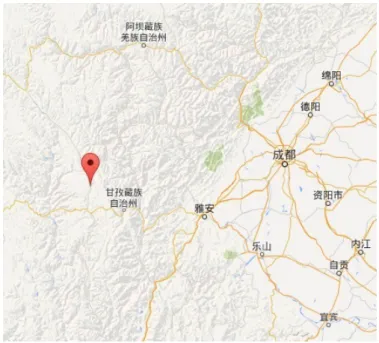
This article aims to provide a word list (including ca. 1500 entries) with a phonological sketch of Shingnyag Tibetan, spoken in Xiya [Shing-nyag]1 Hamlet, located in the south-western part of Tagong [lHa-sgang] Town (henceforth Lhagang Town), Kangding [Dar-mdo] Municipality, Ganzi [dKar-mdzes] Tibetan Autonomous Prefecture, Sichuan Province, China (see Figure 1). Lhagang Town is in the easternmost part of Khams based on the traditional Tibetan geography, however, it is inhabited by many Tibetans whose mother tongue is Amdo Tibetan.2Referring to Qu and Jin (1981), we can see that it is already known that Amdo-speaking Tibetans live in
Suzuki, Hiroyuki and Sonam Wangmo. 2016. “Vocabulary of Shingnyag Tibetan: A dialect of Amdo Tibetan spoken in Lhagang, Khams Minyag”. Asian and African Languages and Linguistics11. pp.101–127. [Permanent URL:
http://hdl.handle.net/10108/89211]
1The original Tibetan orthography in a Wylie transliteration is attached in square brackets for each proper name with a transcription of Chinese.
2For this reason, it is often misunderstood that the Amdo-speakers are the original inhabitants in Lhagang Town;
that is why Suzuki and Sonam Wangmo (2015a, b) emphasise the existence of the local vernacular of Khams spoken there.
some parts of Khams, however, varieties of Amdo Tibetan spoken in Khams have not been well investigated so far, especially those spoken in the easternmost Khams region.
Wang (2012) includes a phonological description of a Amdo variety spoken in Luhuo [Brag-’go], which is, indeed, a variety spoken in a different area from Kangding. The gSerkha dialect of Amdo Tibetan (Suzuki 2015) is a variety considered as a member of Amdo Tibetan in Kangding.
Fig. 1 Geographical position of Lhagang Town. (=marked)3
As shown in Suzuki and Sonam Wangmo (2015b), Lhagang Town is a multilingual area, and they claim that there are at least four Tibetic varieties spoken in the town: two Khams varieties and two Amdo varieties. In addition, Suzuki and Sonam Wangmo (2016b) report an existence of a newly recognised non-Tibetic language, Lhagang Choyu, spoken in a hamlet within Lhagang Town. All of them are spoken in the centre of Lhagang Town, called Lhagang Village, because it is inhabited by Tibetans who are originally sedentary settlers in the village as well as immigrants from the surrounding rural, pastoral area due to the rapid urbanisation and the governmental resettlement policy.4
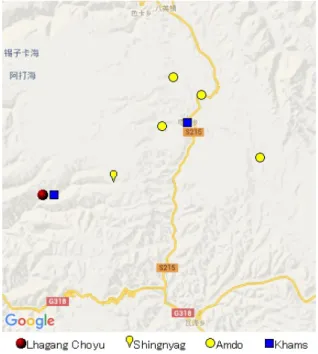
Figure 2 displays a distribution of regiolects within Lhagang Town recognised and
3Figure 1 is designed with Googlemaps (https://www.google.co.jp/maps/; accessed on 25th June 2015). Also employed in Suzuki and Sonam Wangmo (2015b, 2016a).
4See Sonam Wangmo (2013) and Suzuki and Sonam Wangmo (2017) for details.
classified by the present authors. There are threelanguages5in Lhagang Town: Khams (Tibetic; Lhagang Village and the westernmost area), Amdo (Tibetic; central area of Lhagang Town except for Lhagang Village), and Lhagang Choyu (Qiangic; the westernmost area). This figure displays that Amdo is distributed the most widely. The geographical point of Shingnyag Hamlet is given in a specific symbol. The location of Shingnyag Hamlet is far from Lhagang Village, and relatively close to another Khams Tibetan-spoken hamlet called Tage [Thabs-mkhas], where Lhagang Choyu is also distributed.6Shingnyag Tibetan, dealt with in this article, is, in fact, excluded from the two varieties of Amdo reported by Suzuki and Sonam Wangmo (2015b), and it should be regarded as a new variety of Amdo Tibetan recognised in Lhagang Town.
Fig. 2 Distribution of regiolects in Lhagang Town.7
According to the folk tradition, the element nyagin Shingnyag is related to that in Nyagchu (Yalongjiang [Nyag-chu] River) or Nyagrong (Xinlong [Nyag-rong] County), however, it awaits confirmation. This means that ancestors of Tibetans living in Shingnyag Hamlet might have immigrated from a certain place along the Yalongjiang
5As for the ‘Tibetan language’, we follow the definition of ‘Tibetic languages’ coined by Tournadre (2014).
6However, Lhagang Choyu has hardly functioned as a communication language any more. See Suzuki and Sonam Wangmo (2016b).
7Figure 2 is designed with the online geocoding system provided at the following site:
http://ktgis.net/gcode/lonlatmapping.html (accessed on 29th March 2016).
River, located at the west to Lhagang Town (present Yajiang [Nyag-chu-kha] and Xinlong counties). Amdo-speakers certainly live in the mountainous area along Yalongjiang, especially around the border area between Litang [Li-thang] and Xinlong counties. According to the oral history narrated by pastoralists in Litang, their ancestors belong to theWa shul8tribe, whose originally inhabiting place was around the present Seda [gSer-rta] County. If the relation between Shingnyag Tibetans and Litang pastoralists is confirmed, the language spoken by Shingnyag Tibetans will be related to that of theWa shultribe, which is different from the varieties spoken in Gongrima and gYukhyim hamlets within Lhagang Town.
2. Phonological overview of Shingnyag Tibetan 2.1. Phonemes and suprasegmentals
The phonological inventory, following the pandialectal phonetic transcription defined in Tournadre and Suzuki (forthcoming), adapted to the description of this article is as follows:
Consonantism
lab. alveo. retr. palatal vel. uvul. glot.
pre- post-
plosive asp. ph th
ú
h ch kh qhvl. p t
ú
c k qP
vd. b d
ã é
gå
affricate asp. tsh t
C
hvl. ts t
C
vd. dz d
ý
fricative asp. sh
ù
hC
h xhvl.
F
sù C
xX
hvd. z
ý , K H
nasal vd. m n
ő N
vl. m
˚ ˚
n˚ ő ˚ N
liquid vd. l r
vl. l
semivowel vd. w,
V ˚
j(asp.: voiceless aspirated; vl.: voiceless non-aspirated; vd.: voiced; lab.: labial;
alveo.: alveolar; retr.: retroflex; vel.: velar; uvul.: uvular; glot.: glottal)
8Generally pronounced as/,a xhu/in Lithang Amdo.
Vocalism
i u
e
@
oa
A
No contrasts between ‘short’ and ‘long’, and ‘plain’ and ‘nasalised’ are attested.
Suprasegmentals
No suprasegmental distinctions are attested as in the majority of Amdo Tibetan varieties.9 Stress, realised as a higher pitch and a clearer articulatory gesture of the initial, on the first syllable of a polysyllabic word is often prominent as a prosodic feature.
2.2. Phonotactics
The phonotactics of Shingnyag Tibetan is a little complicated. A maximum sound structure of a syllable is described by using the manner of Suzuki (2005) as follows:
CCCiGVC
However, it is rare that a double preinitial (CC) appears; hence an ordinary sound structure should beCCiGVC. A minimum structure is CiV.
All the consonant phonemes are able to appear at the position of main initial (Ci) except for/
H
/. A preinitial (C) may be prenasalised elements (i.e., homorganic nasal), bilabial nasals (m,m˚), bilabial stops (p,b), bilabial continuants (F,w), alveolar liquids (l,l
˚), retroflex continuants (ù, r), velar fricative (x), or preaspirations (h, H). A double preinitial (CC) may be a combination of a prenasalisation/preaspiration and others within the elements listed above. A final (C) can be occupied by one of /p, t, k, q, m, n,
N
, l, r/.3. Principal phonological features of Shingnyag Tibetan
We will list up principal phonological features characterising Shingnyag Tibetan below from a typological viewpoint.10
• Uvular sounds
9Wang (2012) reports that there is a variety called rMa-stod which possesses a suprasegmental distinction (pitch-tone).
10A dialectological analysis of Tibetic languages requires a diachronic view by comparing the synchronic data with Written Tibetan (WrT) forms. However, the discussion provided here concentrates on a synchronic description. An exhaustive description of a comparison with WrT will be separately provided in another article.
Shingnyag Tibetan has three uvular plosives/qh, q,
å
/and two uvular fricatives /X
,K
/. The existence of uvular plosives in a Tibetic language is noted by many scholars, such as Huang (2012) and Wang (2012).Examples of uvular plosives are following:
/qha ta/ ‘crow’, /qh
@
p/ ‘needle’, /qwar khoN
/ ‘window’, /qap/ ‘hide (oneself)’, /ðå
o/‘ride’, etc.Examples of uvular fricatives are following:
/p
ú
h@ K
a/‘shoulder’,/K
a/‘fox’,/r@ K
oN
/‘rabbit’, etc.• Labiodental semivowel
A labiodental semivowel/
V
/is a typologically rare sound within the varieties of Amdo Tibetan. Examples are following:/H
V
inNgo/‘knee’,/m˚tC
h@ V@
q/‘lip’, etc.• Labial/labiodental sounds
A labial fricative/
F
/ as a main initial rarely appears. However, as a preinitial, it appears more, and its voicing counterpart, labial semivowel/w/, also appears frequently. /F
/and/p/as a preinitial are distincive in a few cases. Examples are following:/
F
u tsh@
p/‘chili/Sichuan pepper’,/F
a ro/‘over there’;/F
ú@
n/‘cloud’ (cf./pú@N
/‘breast’),/Fs@
/‘body hair’;/wla/‘thigh’,/wri/‘snake’, etc.
• Vowel contrast between/a/and/
A
/Shingnyag Tibetan has a contrast between two vowels /a/ and /
A
/, which can form a minimal pair. Examples are following:/kha/‘mouth’ -/kh
A
/‘snow’;/Fkwa/‘order’ -/Fkw
A
/‘portion’, etc.• Contrast between/lCi/and/rCi/
This feature certainly characterises Shingnyag Tibetan. The actual difference of phonetic realisations between these two combinations is not regarding the articulation of the preinitial ([l, l
˚
] or [r, r˚
]), but regarding its articulatory manner:the preinitial of/lCi/is pronounced with a contact of the tongue tip to the alveolar, while that of/rCi/, without a contact of the tongue tip to the alveolar.11Examples are following:
/l
N
a/‘five’ -/rN
a/‘drum’;/˚lt
C@
q/‘iron’ -/ùn˚
a˚rt
C@
/‘nose ring’ -/ùtC
a/‘hair’;/˚lta/‘look’ -/m˚t
C
ho˚rten/‘st¯ u
pa’ -/ùta/‘horse’, etc.• Double preinitials (CC)
A double preinitial (CC) rarely appears. The preinitial part is a combination of either preaspiration + a labial plosive or prenasalisation +a labial plosive.
11The preinitial /˚r/ can be distinguished from /ù/, however, an accoustic analysis will be required for this phenomenon.
Examples are following:
/Hb
ã@N
/‘sugar’,/m˚pú
h@ N
a/‘beads’, etc.Word list of Shingnyag Tibetan
The entries of vocabulary are ordered following Hua ed. (2002), in which selected items are described here, as: Nouns (classified into several semantic categories, such as Astrology and Geology, Body, Person, Animals, Plants, Food, Clothings, Housing, Instrumentals, Cultural objects, Space and Time), Numbers, Pronouns, Adjectives, and Verbs.12A small number of words excluded in Hua ed. (2002) are also added. Evident loanwords are indicated by†following a word with a footnote.
Astrology and Geology sky Hnam
sun
ő@
ma light wet/wotmoon Hdz
A
/Hdza wa star hkar macloud F
ú@
nthunder thoq/m
ã@
k wind KloN
/KloN
kha rain Hnam/tC
har/tC
ha rwa rainbow ődý
asnow kh
A
hail she ra ice tC
hA
r@
m fire mő
e smoke toH
a earth sha mountain r@
river tC
h@
lake m˚tsho road lam soil sha stone rdo sand FC
e madust th
A
mud ndamb@
q water tC
h@
forest n
@
q/n@
q tsh@
l glassland ùtsa th@N
gold xser silver ù˚ N
i copper r@
q iron ˚ltC@
q rust htsa coal shu ki ash thA
place sha tC
ha Lhasa l˚
a sha
Khams kham ba sha t
C
ha AmdoP
amdo Lhagang Monastery l˚
arg
@N
Hgon ba town rdzoN
street
ú
oN
n@N
village Hde wa bridge zam ba homeland ha j@
l12Several verbs might have a stem alternation, which, however, does not regularly appear any more. Another article will be needed for a detailed description regarding this issue.
Body
body Hzu xu head mgo hair ùt
C
a front tho pa eyebrow Hdz@
ma eyelash ,ő
iFs@
eye ,ő
ik nose n˚
a ear rnA
face khaN
o mouth kha lip m˚tC
h@ V@
q moustache khaFs@
beard Hé
aFs@
re jaw ma ne neck ùkeshoulder p
ú
h@
q qa/pú
h@ K
a backő
a˚nt@
qarmpit tsh
@
k kh@N
breast pú@N
milk,
o ma belly hwa navel hte ja waist ré@
p buttocks tamHgo thigh wlaknee H
V
inNgo legő
a ji foot ùkaN
a elbow tC@
mdý@
k hand l@
q pa/lA X
a arm tsh@
k tho finger mdz@ , @
palm l@
qm˚thihcihk@
thumb mdz@
k tC
hen maindex finger ko
N
mdz@
k middle finger hcimdz@
k small finger mdz@
k tC
hoN
ma nail shen mofist kh
@
tsh@
rskin
P
o xha/l@
qHé
ep wrinkle HgeHő
er mole n@ X
o sore rma wound rma blood ch@
q pulse ùtsa brain HlA
pa bone r@
pa joint tsh@
q tho tooth sho tongue ˚ltC
e throat mő
i pha lung Hlwa heart˚ ő@N
liver ˚mtC
h@
n ba kidney m˚khwA
ma gall bladder m˚ch@
Fsa stomach pú@N
13 intestine Hé@
ma excrement hc@ X
a urine ùtC@
n fart Hj@
sweat HN
i tC
h@
sputum tC
h@
ma nasal mucus ùn˚ @
p tear ,ő
ik tC
h@
voice ùkat lifeù
hoq13This word form corresponds to WrTbrang‘breast’.
Person person m
ő@
Tibetan wo pa Han Chinese r
é
a childý
aý
i/ý@
l@
old man Hgarge maný
i l@
womaný
i mo doctor m˚
an ba military Hm@
q pastoralist mã
oX
a beggar h@
qHé
o friend roX
wa teacher rgergen lunatic˚ ő
on ba grandfatherP
amő
e grandmotherP
a ji fatherP
a pha motherP
a ma parents ha ma soný@
l@
bride Hna madaughter
ý
i mo bridegroom wo th@N
grandson tsha wo granddaughter tsha mo elder brotherP
aré
a elder sisterP
a tC
e younger brotherC
haő
i younger sisterù
h@N
mo paternal elder uncleP
a kh@
paternal elder uncle’s wifeP
a ne paternal younger uncleP
a kh@
nephew tsha wobrother woFs
@
n sister wo mohp@
nïã
i maternal uncleP
aý@N
maternal uncle’s wifeP
a ne family ch@
mHé@
trelatives
ő
eH
a husband Hga ho wife Hgan mo twins m˚tshe l@
Animals cattle zoq bull Hl
@N
mbi yak Hj@
q female yak mã@
mdzo14 mdzo female mdzo mdzo mo calf wi li/wi ox
P
a˚rqo cow mo zoq milk cow mã@
cattle’s wet dung ˚lt
C
wa horn ra tC
oskin kwa/w
@ X
a body hair Fs@
tail rN
a ma horse ùta pony htihtsi stallion hta ho mare Hgon ma sheep l@
k14A hybrid of ox and female yak.
ewe l
@
k ma goat ra ma baby goat rihtsi lamb l@ , @
wool l@
k wA
/wA
sheep’s dung ri ma mule pú
wi donkey k@
r@
pig h@
q sow h@
q mo boar ho h@
q piglet h@
qpú
h@
k dog ch@
bitch ch@
mo cat mondz@
rabbit r@ K
oN
chicken FC
a cock FC
a pho hen FC
a mo wing hC
oX
a down FC
aHã
o/Hã
o duck tC
h@
FC
a pigeon m@
hk@
tiger ht@
q lion sheN
gi dragon mã@
k claw Hrwa wamonkey
P
arge bear tom deerC
hwa mouse ts@ , @
wolf Fsw@N
kh@
foxK
abird F
C
a eagle Hl@
q vulture FC
argot swallow kh@N
FC
i spallow FC
ihtse crow qha ta peacock HmaFC
a snake wrifrog wrw
A
wa/wrwA
ñé@
fish
ő
a insect mb@
flea ldý
wa louseC
hik flyC
hamb@
mosquito htsamb@
spider mb
@
qa ra/tC
oq qa ra centipede hk@
m@N
mb@
ant coq mabee Hw
@N
mabutterfly F
C
he ma laptsePlants
tree ˚lt
C@N
ma15 root htswa leaf lo ma flower me toq conniferC
h@ ,
a pine Hã
on ma bamboo˚ ő
ik ma throne tsher mafruit
C
haN
thoq peach kham b@
lotus flower pan ma me toq saffron k
@
r g@
m me toq walnut htar gacrop lo thoq foodstuff m
ã@
rik rice mã
e15This word form corresponds to WrTlcang ma‘willow’.
seed sha w
@
n wheat cohighland barley ne chili
F
u tsh@
p garlic HgoX
wa ginger ùtC
argaedible seed kwa ts
@
/k@
mã@
pea
ù
han ma grass ùtsamushroom
C
ha mo pteridophyte root co maFood
food m
ã
e/za ma/ndu†16 porrige mã
e tshawheat flower t
C@
qHdý
e steamed bun Hdzor na noodle p@
ht@
qsteamed stuffed bun poq ts
@
breakfast n@N
tC
h@
lunch
ú
e tC
a dinner n@
p tC
h@
milk tea,
o tC
a meatC
ha lean meatC
harn˚ @
q oil ùn˚ @
m salad oil mar n@
q fat oil tshi butter mar yoghurtý
ocheese t
C
h@
rafirst milk after the birth
ý
oC@
tsampa17 ùtsam ba beef zoq
C
ha salt tsha sugar Hbã@N
Sichuan pepper
F
u tsh@
p egg rgoN
wasoup khwa alcohol t
C
h@N
hot water tC
h@
tsha tea tC
atobacco t
@
wa medicine m˚
an snuff n˚
a t@
Clothings thread hk
@
pa cloth remonk’s cloths
C
an th@
p cloths ko zeTibetan woolen cloths
C
e s@
collar n@N
koN
sleeve F
C
h@
koN
button H
é
o xo trousers tor ma hatý
abelt tor th
@
q/hke r@
q shoe xaj†18comb h
ú
apC
h@
t jewel nor w@
16Loan from Lhagang Choyu/¯ndu/‘food’. See Suzuki and Sonam Wangmo (2016b).
17It just denotes ‘fried highland barley flour’ in Shingnyag.
18Loan from Sichuanese (Southwest Mandarin) xai鞋‘shoe’.
coral F
C
e r@
turquoise Hj@
pearl m@
th@
k ivory pa sho amber hpuC
hiearring Hn
A
loN
necklace hkeré
et ring mdz@
phci bracelet l@
qhciHousing blanket htan pillow mgo˚r
˚ ő
e cushion htan house kh@
mba roof qh@N
thoq inn mã
on qh@N
kitchen tC
a qh@N
storied house tsh@
k thoq upstairs qh@N
thoq downstairs qh@N
joq store house mdzot qh@N
cowshed nor qh@N
/zoq qh@N
pigsty h@
q qh@N
horse fence ùta qh
@N
sheepfold l@
k ra chicken coop FC
a tsh@N
wall hts
@ ,
a logC
haN
plankC
haN
l@
p pillar kwa gate Hgo threshold Hgo thi entrance door Hgo tC
hin window qwar khoN
stair hkibeam Hdo
N
ma step rdoùki tent k@
ryak-woolen tent wra/wrwa garden rwa/ra wa
toilets t
C
hap qh@N
Instrumentals thing t
C
a kha table ùtC
oq tse chair ùk@
p th@
q bedőA ú
h@
box rgam cabinet tC
hwA
glassC
hel mirrorC
hergo bloom ˚mC
h@
q ma light Hluqcandle p
ú
wA
Hã@
nfirewood mb
@
tC
i coal shu ki flint mő
erdo match jAN
xwo†19 torch mő
e chu incense hpu garbage FC
h@
rge cooking stove thap kha iron panú
hofrying pan
ú
ho steamer Hloő
i19Loan from Sichuanese (Southwest Mandarin) yanghuo洋火‘match’.
lid kha l
@
p knife c@
ladle ùcoq spoon kh@
kHde gourd ladle ùcoq wooden bowlC
haN
tC
e bowl tC
aő
edish Hder ma chopsticks za th
@
r bottle tam bi pot rdza ma jar rdza ma kettle tem/tsha tem bucket tC
h@
,zi wooden tray Hý
oN
ma basket pi thutripet ùk
@N
hs@
m leather bellows khu mo suspender hk@
r th@
q steelyard ré
a ma money ta jin†20 ruler th@
ts@
needle qh@
p nale ˚ltC@
qndzer scissors ts@
n t@
q ladder hkiumbrella
C
hoqHd@
k lock Hgo˚ltC@
q key ldemő
ik wheel ˚Nkhor lo rod Hji,
a saddle ùtarga halter m˚th@
rHgo belly band Hlo bitù
hap stirrup jop tC
hen horseshoe rmik˚ltC@
q manger kha tsh@
qrein
ù
hammda whip ˚ltC@
qhtse nose ring ùn˚
a˚rt
C@
glasses
C
hemő
ik oxhide string mã@N
na ship tC@
zan airplane HnamFC
a bicycle ˚ltC@
qhta instrument tC
h@
r tC
ha axe ùta rehammer th
A
chisel mb@
k saw shoq le plough ùko ma leather bag Hé
wa carrying pole pú
h@
qC
haN
handle j@ H
agrip rdza lo
N
rope th@ K
a fertiliser l@
t sickle zo ra sieve tsh@
q millstone roN
nd@
q loom zoú
h@
conch hpe lance mdoN
sheath tc@ C
h@
p gun wu bullet mde, @
arrow mda poison t@
k netúA
present xamb@
notebook tep quilt phuHgi†21 matress than dz@
20Perhaps loan from Sichuanese (Southwest Mandarin) dayin大銀or dayang大洋‘money, cach’.
21Loan from Sichuanese (Southwest Mandarin) beigai被蓋‘quilt’.
Cultural objects script ji
,
e letter ji,
e alphabet hsaBý
it picture r@
mo book ji,
e paperC
hoK
o pen˚ ő@ , @
ink ùn˚ @
q tsha schoolC
wo thAN
knowledge jon den talk ùket tC
haSpoken Tibetan wot˚rket Written Tibetan wo jik name m
ő
aN
family name rim
ő
aN
sign ùt@
qnewspaper tsh
@
qhp@
r story Hna r@
k proverb htamX
we joke kham˚tsh@
r riddleP
a ke m@
ket voice Hã
asong Hl
@
dance pú
o drum rN
a flute Hdý
waHloN
bellú@
lwa trampet toN
/ja loN
thangka, Buddhist drawing th
@N
kha mask mb@
q/mgoreligion t
C
hu l@
k belief ta pa deity l˚
a female deity l˚
a mo ghost ïã
efemale ghost ï
ã
e mo evil bd@
tN
¯ a
ga Hl@
Buddha sh
@N
Hdý
i soul rnamC
hi spirit wla incarnation ndi next life tsheFtC
he ma reincarnation ˚Nkhor wa fortune le lamdestiny le charity Hge wa evil omen ˚lti
N
en lama wla mareincarnated lama h
ú@
lhk@
abbot m˚khwan bomonk
ú
wa/ú
wa wa nun tC
o mohousekeeper H
ő
er wamonk resuming secular life hka loq donor w
ý
enbd@
qdonation of tea m
@N
tC
a sorcererP
am˚tC
hot fortune teller mo wa hell mő
al wa monastery Hgon ba congregation l˚
a qh
@N
religious institutionú
a tsh@N
meditation cell m˚tsham qh@N
man˙
i ma ne jikú@
kburning incense Fs
@N
stu ¯
pa m˚tC
ho˚rten Buddha statue l˚
ar
˚k
@
butter lamp m˚tC
ho mar ceremonial scarf kha tar amulet box Fù
w@N
hkor release of animals tshe thar mantra mA N
ens
¯ u
tra tC
hu beads m˚pú
h@ N
a vajra rdordý
eman
˙
i wheel ma ne˚N
khor lo donation w
ý@
n baposition ko sha power H
K@N
life ˚ntsho wa salary hoq portion FkwA
market tshoN
ra priority han thoq cause ré@
m˚tshen answer lan famine m@
ge suffering Hdukr˚ N
al mistake no˚ïú
h@
l dangerő
en kha distinction chet tC
hu space hsAN
lucky p
ú
aC
hithanks Fkwa
ã
in tC
he crack ke setrace
C
hi shadow c@
p shocolour mdoq qa dream m
ő
i lam spirit jit˚Nkham idea Fsam tsh@
l appearance wzo˚lta affair ton d@
q means wlo th@
p strengthC
heC
hik order Fkwaprison Ftsw
@
n kh@N
rumour htam cher sinő
i pabare foot ˚rk
@N
rdý
in drawer ˚nthemHgam weapon m˚tshw@
n tC
ha victory ré
al kha country ré
an˚Nkham experienceő
ammő
oN
conference tshoqnd@
distance war th@
q walking ˚rk@N
n˚ @
Space and Time time ti tshot today te ra
N
yesterday khA
˚rts@N
day before yesterday khe
ő
in b@
three days before kheý
iő
in b@
tomorrow sh@N ő
inday after tomorrow Hne
ő
in three days later Hý
iő
in this evening to kho tomorrow evening shargoN
last night md@N
rgoN
daytimeő
inhk@
r morning˚ N
a mo noonő
inHgoN
sunset time hsarù
hotevening Hgo
N
mo night m˚tshan ki midnight m˚tshanFC
hit animal of year loùta mouse year ts@ , @
ox year zoq tiger year ùt@
q rabbit year jor dragon year mã@
k snake year bã@
l horse year ùta sheep year l@
k monkey year pú
w@
ji cock year FC
a dog year ch@
pig year ph
@
q day tshewza first day tshehtC
ik second day tsheHő
i month HdzA
in the morning˚ N
a mo in the afternoon FC
h@ ú
o January Hda wa t@N
bo February Hda waHő
i pa December Hda waptC@
,ő
i pa beginning of a month Hda˚rtot middle of a month HdzA
wa˚rcit end of a month HdzA
wamdý@
k birthday ùcihk@
ryear lo recently
ő
e r@N
this year ta lo last year na n@N
last two years H
ý
i n@N
lo next year sh@N
lo next two year Hn@N
lobefore
ő
i maHnaHna/Hna˚ N
a mo long time ago Hna tinow ta th
@N
/ta˚lta future maK
oN
pa beginning Ngoődý@
k Monday HzaHda wa Tuesday HzaHm@
k mar Wednesday Hza pa sh@N
Thursday Hzahpen ba Friday Hza ph@
r w@
Saturday Hza l˚ @
q pa Sunday Hzaő
i ma spring ùtC@
t ka summer Hjar kha autumn ùton kha winter rg@
n kha new year lohs@
r solar ecclipseő@
ndz@
n lunar ecclipse Hdandz@
n festival ti tC
hinNumbers 1 ht
C
ik 2 Hő
i 3 hs@
m 4 wý@
5 l
N
a 6ú@
k 7 bd@
n 8 bé
et 9 Hg@
10 ptC@
11 pt
C@
htC
ik 12 ptC@
,ő
i 13 ptC@
hs@
m 14 ptC
iwý@
15 pt
C
wA N
a 16 ptC@
hú@
k17 pt
C
ibd@
n 18 ptC
ubé
et 19 ptC@
rg@
20ő
i x@
21 ùtsahtC
ik 28ő
iC
h@
ùtsabé
et 30 sh@
m tC@
32 sh
@
m tC@
sho,ő
i 38 sh@
m tC@
shobé
et 40 wý@
ptC@
43 w
ý@
ptC@ ý
ehsum 50 lN
aptC@
54 l
N
aptC@ N
awý@
60
ú@
k tC@
65
ú@
k tC@
relN
a 70 bd@
n tC@
76 bd
@
n tC@
tonú@
k 80 bé
a tC@
87 b
é
a tC@
cabd@
n 90 Hg@
ptC@
98 Hg
@
ptC@
kobé
et 99 Hg@
ptC@
korg@
100 bé
a101 b
é
a d@
htC
ik 108 bé
a d@
bé
et 880 bé
etbé
abé
aptC@
1000 ùto
N
htC
ik 10000ú
h@
htC
ik 100000 mb@
m 1000000 FC
e wa 10000000 sha ja 100000000 toN
FC
h@
r half FC
hetfirst t
@N
bo second Hő
i paPronouns I
N
a we twoN
eHő
i we (exclusive)N
a tsho you (singular) cho you (honorific) chet yow two cheHő
i you (plural) cho tsho he/she/it kho they two khoHő
i they kho tshowe (inclusive)
N
a r@N
tsho everyone tam˚tC
het tsh@N
ma self r@N ő@
tother person m
@
wý
an ba this nd@
these nd
@
tsho here nd@
nahere around nd
@
FC
hoq these two nd@
Hő
i ka like this nd@
ïã
ait te that te those te tsho there ter
over there
F
a ro/teFC
hoq like that tehtarwho sh
@
who (plural) sh@
sh@
what tC
h@
zeïã
e where k@N
na when namhow t
C
h@
z@
ma/k@N
ïã
a how much ka tshotother H
ý
en ba each r@N
r@N
sho sho whole m˚tha t@
q all tsh@N
ma this time ta th@N
someday hkamNga reAdjectives big t
C
he small tC
hoN
wide Hbomthin p
ú
ha high m˚tho low Hmaprotruding mb
@
rmb@
r sunken HgoN
HgoN
convex mba r@
mb@
re long raN
wo short thoN
far th@
q raN
near th@
qő
e middle mã
waN N
a wide ré
a tC
hi bo narrow ré
a tC
hoN
tC
hoN
thick ˚nth@
kthin
ù
hap deep zap shallow m@
rd@N
full k@N
vacant ùto
N N
a many mAN
wo littleő
oN
squareú@
wý@
ma roundK
oK
oC
h@
flat lep lep pointed htsembuk bald mgordo level pú
haù˚ ő@N
frontú@N
mo reverse ldoqFC
hoq slanting jor horizontal m˚pú
h@
t vertical ruN
o straightú
wAN
bu curved k@
k romuch curved ja re jo re black na
K
opitch dark n
@
qHdAN
HdAN
white hka rored Hma ro
brilliant red Hmar l
@
p l@
p yellow sher poglistering yellow sherp
ú
ipú
i green Hdý@N
kh@
blue ù
˚ N@
n buskyblue ù
˚ N
o rj@
rj@
grey ùtC
a bright hsa roshining wot lam nam dark m
@
n n@
q heavy ldý@
mo light (weight) j@N
mo fast mé
o qaslow ka le early ù
˚ N
a mo late FC
h@
sharp Hno dull m@
rno clear t@N
mo muddyő
oK
o fat tshon bo thinC
ha˚rk@
m dry hkam bo wet Hl@
n ba tight tsh@
q tam bo thinù
hap ro hardù
ha mo soft ˚r˚ ő@
mo smooth ődý
am bo rough hts@
p po slippery wý@
q tight tam bo loose l˚
o bo solidù
ha mo disorderő
oqHz@N
chaotic tC
ha r@
tC
h@
re correct ïã@
kincorrect m
@ ő
en k@
trueN
o ma false Hdz@
n ma raw Hl@
n ba new hsa ra old Hő
aN
a good jiK
a badN
an ba weak Hd@
kexpensive hkon t
C
he, @
cheap hkonbde, @
old (year) Hgwarge young lo tC
hoN
beautiful jiK
a ugly htsoX
ahot (temperature)
ú
o, @
cold ñ˚ch@
qlukewarm őd
ý
am ja n@
warmú
on bu cool Fs@
l wo hard (work) ùka mo easy ùtsa mo fragrantú@ ý@
m smellyú@ N
an tastyý@
m bo sour ˚rcu ru sweet HN
ar mo bitter qha mohot (taste) kha tsha
, @
salty tsha qha, @
tasteless tsha m@
tC
hoq astringent ˚rcu ru oily ùn˚ @
mùcoN
htC
iký@
qhtC
ik not busy khom babusy p
ú
wi wa rich FC
hi,
o poor Hwol wo clean hts@N
ma dirty ptsoX
a living hson bo fresh hsar wa deadC
h@
woclear t
@N
mogood-looking hta sha j
@
q q@
noisy ùkat c@
q q@
bored shem m
@
˚rcit k@
hastily mé
oK
a colourfulú
haú
ha wiseú
ha mo foolish wlen ba honestú@N
mo sly Hjoré@
Hdý
en careful shemý@
m mo gentle khaődý
am bo arrogantN
aré
e tC
he suitable ïã@
k pa severeN
an bacourteous ndzamndzam industrious Hgo pu lazy jor co clumsy wlen ba
well-behaved khwa
ő
en mo hardworking ptsonïã
i pitiful ù˚ ő
aN
rdý
e glad Hga x@
happy bde˚rcit peaceful bdeődý@
q sad ùcord@
k proficient m˚kheFsa kind mdza˚rtse disagreeableő
a na mo single ˚ntC@ N
a/khe˚rc@N
cliffy Hzar woso-so sha r
@
sh@ , @
rare jam˚tshanVerbs love Hga decoct hku pull up w
A
arrange p
ú
wa moHã@
kswing Ngi
worship F