Planning for Improvement of Higher Education in Rural China: JICA’s Inland Higher Education Project
Christopher D. Hammond
Abstract: This paper evaluates the education planning process of the Japan International Cooperation Agency (JICA)’s Inland Higher Education Project (IHEP) in Guizhou, China. The IHEP intervention was implemented between March 2003 and July 2010, and an external evaluation was undertaken in 2013. The project was broad in scope and involved ODA financial and technical support for the construction of university buildings, the procurement of equipment and the training of teachers through an exchange programme with Japanese universities. It is this third component of teacher exchange and training that is the focus of this paper.
Based on the external project evaluation and other supporting documents, the planning process was inferred and evaluated through the application of two analytical frameworks. The first involved the identification and strategic mapping of relevant stakeholders within the framework of a Theory of Change. The second is a Results-Based Management (RBM) logic model and a logical framework (logframe) used to align project objectives with inputs, activities, outcomes and impact. The paper analyses the effectiveness of these planning processes, and discusses how these approaches may contribute to the success of higher education improvement projects such as JICA’s IHEP intervention.
Keywords: Higher education, International development, East Asian international relations
1. Introduction
1.1 JICA’s Inland Higher Education Project in Guizhou, China
Insuffi cient funding coupled with increases in demand for higher education (HE) has
raised concerns regarding educational quality at HE institutions in developing countries
(Clifford et al., 2012). The Japan International Cooperation Agency (JICA)’s Inland
Higher Education Project (IHEP) has attempted to address these concerns in rural
China. The IHEP was designed to improve higher education at eight universities in the
inland province of Guizhou through the development of educational infrastructure such
as university buildings and equipment, and by enhancing human resources through
teacher and managerial staff training and academic exchange at Japanese universities
(Murayama, 2013, p. 2). Another broader aim of the project was to foster collaboration
and mutual understanding between Japan and China. Led by JICA, the project
incorporated a number of other stakeholders, including the government of the People’s
Republic of China (CPC), the Guizhou Provincial People’s Government, and academics and administrators at universities in both China and Japan (ibid.).
1.2 JICA and higher education capacity building
JICA is a governmental organization that coordinates offi cial development assistance (ODA) for the government of Japan. JICA provides bilateral aid in the form of technical cooperation, Japanese ODA loans and grant aid (JICA, n.d.). Among its efforts in areas such as rural development, basic education, poverty reduction, and promotion of trade and investment, JICA has recognized improvement of higher education in developing countries as a challenge falling within its remit. As such, it has in place an established set of objectives specifi cally for the development of higher education. These objectives are:
1. Improvement of Educational Activities 2. Strengthening of Research Function 3. Promotion of Contributions to Society 4. Improvement of Management (JICA, 2004)
The teacher exchange and training component of the IHEP aligns with the objectives outlined above. A further argument for the inclusion of this component of the project can be found on the JICA website:
“As globalization progresses, it has become increasingly clear that higher education institutions in developing countries cannot survive in isolation from the outside.
Accordingly, there is a strong move to develop educational and research activities by forming academic exchange networks with institutions and researchers in other countries to enable the mutual utilization of respective advantages” (JICA, n.d.).
The formation of academic exchange networks and partnerships between institutions in the ‘developed’ and developing world is described by Clifford et al (2012) as a form of
‘capacity building’. Capacity building “brings various stakeholders together to bridge the gap between supply and demand in developing countries and build these countries’
domestic capacity to provide high quality tertiary education” (ibid, p. 9). The teacher training and exchange component of the IHEP can thus be described as a capacity building activity.
2. The context: The need for higher education in rural inland China
At the time of appraisal, the IHEP design aligned with some key development needs of
China. One issue was a growing demand for higher education resulting from an increase
in the number of graduates from secondary schools (Murayama, 2013). A further need
identifi ed was the problem of a growing disparity between urban coastal areas and more rural, inland areas.
To address these needs, the IHEP project focused on improving the infrastructure, quality and capacity of HE provision in Guizhou in order to produce graduates with the skills needed in key industries deemed essential for regional development. This provision would, in principle, lead to impacts that would help rectify the disparities mentioned above by fuelling sustainable economic growth in Guizhou province.
2.1 A brief histor y of higher education in modern China and the urban/rural divide
In 1976 there were 392 higher education institutions in China (Ma, 2003). By 2014, there were over 4,000 institutions enrolling over 27.64 million students, making China the largest HE provider in the world (Wang, 2009). This rapid expansion has often occurred at the expense of quality, with many institutions lacking effective assessment, accreditation, and qualifi cation systems (ibid.). The causes for this rapid but uneven development can be better understood by looking at the dramatic shifts in Chinese education policy over the last 50 years.
The Cultural Revolution that took place between 1966 and 1976 had a devastating effect on Chinese higher education. Professors and university students were forcefully removed from their posts and were sent ‘down to the countryside’ to teach in primary schools and work as farmers. This policy had paradoxical effects. On the one hand it created the means to develop widespread expansion of primary education across China.
According to Sen (1999), in many ways the results achieved in post-reform China are due in part to the foundations established during the Cultural Revolution. However, unsurprisingly those who were forcibly removed from their positions at universities were highly critical of the policy upon return to their former positions. As a result, the effects of the Cultural Revolution led to an extreme opposite reaction after 1978, in which the socialist ideals of egalitarianism were discredited in favour of the development of an elite ruling class (Vickers, 2011).
The 80s and 90s saw investment in education shift focus to the development of key schools for this elite class. These elite schools and universities tended to be located in urban areas, leading to a dramatic urban/rural divide and increasing levels of inequality.
Urban unrest culminating in the Tiananmen Square protests exacerbated this problem, as the CPC increasingly focused its attention on maintaining social stability through the promotion of economic development in the urban areas, leading to further neglect of the inland rural regions (ibid.).
Since the 2000s, the CPC has made attempts to address the disparities between inland
and coastal China through promotion of inland development in partnership with a
number of international organisations. In 2002, China received US $1.48 billion in aid,
with Japan being the largest donor nation (Vickers, 2007). However, the rapid rise of China as an economic world power coupled with a range of socio-political dilemmas between Japan and China have put strains on diplomatic relations.
2.2 Japan/China relations and the need for ‘mutual understanding’
In recent years a number of issues have arisen that have caused tensions between China and Japan and led Japan to scale back bilateral aid (ibid.). One such example can be found in the CPCs incitement of anti-Japanese nationalist sentiment as part of its programme of ‘patriotic education’ (Vickers. 2011). Japan, too, has stoked these sentiments by having its national leaders make repeated visits to Yasukuni Shrine to pay respects to the war dead, some of whom include war criminals responsible for atrocities during the era of Japanese imperialism (The Guardian, 2015). Numerous other causes for tension are often highlighted in the media, such as the disputes over ownership of the Senkaku/Daioyu islands between the two countries (BBC News, 2014). These tensions have led to displays of anger and resentment, at times manifesting in demonstrations. Thus JICA has recognised the need to work towards collaboration and improvement of ‘mutual understanding’ between China and Japan. The academic exchange component of the IHEP intervention provides a timely opportunity for citizens of Japan and China to work towards these goals.
3. The planning problem: How to build capacity for quality teaching and research at universities in Guizhou province
JICA’s IHEP intervention aimed to address the lack of quality teaching and research capacity at Guizhou HE institutions by setting up a number of exchange partnerships with universities in Japan. Through these agreements academics, managerial staff and doctoral students from Guizhou could spend six months or longer at Japanese universities studying best practices in their specialisms. Upon return to China, programme participants could impart the new knowledge and approaches to teaching, administration and research, and academics could also undertake higher quality research of their own (at times in collaboration with researchers at the Japanese universities). Combined with the other components of the IHEP such as new university buildings and equipment, improved capacity for quality teaching and research could be realised.
3.1 The challenge of creating successful partnerships
Faculty exchange and training programmes appear at fi rst glance to be a straightforward and cost-effective means to build capacity at HE institutions in developing countries.
However, some scholars point to issues that have arisen and areas for improvement in
the delivery of these programmes. In theory, collaborative research and training
partnerships should be mutually benefi cial to all partners, and move beyond the often
criticised power dynamics of the “donor-recipient aid paradigm” associated with other types of interventions (Crossley and Holmes, 2001, p, 399). However, the reality is many partnerships fall short of this ideal.
“Successful cross-cultural partnerships are diffi cult to achieve, depending as they do on a high level of cultural awareness and an understanding of the subtle political and economic dynamics of changing North-South relationships. Issues relating to colonial history, economic power, culture, language, gender, class, race and ethnicity are invariably involved, but seldom addressed or openly discussed (Tikly, 1999). This in itself may explain why such partnerships have frequently proved problematic and short-lived.” (Crossley and Holmes, 2001, p. 400).
While the ‘North-South’ relationships described in the above quote may not be geo- politically accurate in the context of Japan/China relations, the two countries undoubtedly face a range of historical and contemporary issues relating to colonialism, racial discrimination, regional economic power relations, and contrasts in culture.
Unless carefully planned, a Japan/China exchange programme could conceivably exacerbate tensions rather than lead to mutual understanding and improved relationships.
Castillo (1997, cited in Crossley and Holmes, 2001, p. 400) describes how ‘unhealthy’
partnerships are those “conceived, initiated and directed by the relatively affl uent partner”, and “lack mutual learning, shared objectives, long-term commitment and joint achievement.” In order to avoid having the teacher training exchange become an example of an unhealthy partnership, it is crucial to involve all stakeholders in the various stages of the project planning process.
A further challenge lies in the nature of capacity building projects more broadly.
International capacity building projects have been described as both complicated and complex (Rogers, 2005, p. 13). While overall programme goals may be clear at the outset, specifi c activities and causal paths are expected to evolve during programme implementation. Complicated programs may have multiple ways of achieving outcomes, and are themselves multi-levelled with local, regional, national and international layers.
Complex programmes have both emergent properties, where objectives and strategies are developed during implementation, and disproportionate relationships, where a small change can make a big difference and serve as a tipping point (ibid, p. 13).
Acknowledgement of the complicated and complex nature of capacity building projects
is thus an important fi rst step in designing a collaborative planning process. Two
frameworks to assist in this process will be discussed and analysed in the following
section.
4. Frameworks to aid in the planning process: Theor y of change system mapping and results based management
This section of the paper will infer and reconstruct JICA’s planning process through the application of two analytical frameworks. These frameworks will be applied specifi cally to the IHEP component involving academic/staff training at Japanese universities.
The fi rst framework involves a process of identifying and mapping all potential stakeholders with some level of interest and/or infl uence in the project, with the aim of involving them in the planning process from the early stages through to project completion. This activity is called System Mapping, and is a key component in the planning approach known as a Theory of Change.
Once all the relevant stakeholders are identifi ed and involved in the planning process, the actual activities of project planning can begin. This stage will be addressed by the second framework, known as a Results-Based Management (RBM) approach to planning. It involves two corresponding analytical models: the logic model and the log- frame.
4.1 Theor y of Change (TOC) – System Mapping
An approach that is increasingly used in international development and educational planning is known as a Theory of Change (TOC). This approach entails a mapping of both the logical sequence of an initiative from activities through to changes and a
“dialogue-based analysis of values, worldviews and philosophies of change that make more explicit the underlying assumptions of how and why change might happen as an outcome of the initiative” (Vogel. 2012, p. 9). It is this second component of dialogue- based analysis that can contribute to the development of mutual learning, shared objectives, long-term commitment and joint achievement characteristic of successful partnerships (Castillo, 1997; Crossley and Holmes, 2001).
“A TOC creates an honest picture of the steps required to reach a goal. It provides an opportunity for stakeholders to assess what they can infl uence, what impact they can have, and whether it is realistic to expect to reach their goal with the time and resources they have available” (Anderson and Harris, 2005, p. 12).
In addition to revealing a range of factors and conditions necessary for programme success, a discussion of underlying assumptions through the TOC approach is a useful means to unpack and acknowledge the power dynamics involved in an international collaboration.
The nature of the IHEP intervention entailed JICA collaborate with a number of external
actors in both China and Japan. Additionally, it may have been possible that other
international aid organisations were active in the Guizhou region at the time of the
intervention. Thus, an important early step in the planning process would be the
identifi cation and understanding of the system of actors and social forces that may infl uence the project’s intended outcomes both positively and negatively (KeystoneAccountability.org, 2009).
This step, known as System Mapping, is a vital stage in the process of developing a TOC and occurs after a vision and preconditions for the success of an intervention have been mapped out (ibid.). If an organisation is able to infl uence the key players in a system to support the change it hopes to bring about, there is a greater likelihood the intervention will be successful and sustainable. Furthermore, once actors and the ways in which they infl uence the system are identifi ed, it is possible to do the following:
• “Plan collaborative interventions that will enable an organization to achieve more together than it could alone
• Identify actors who might negatively infl uence the system and plan strategies to change their attitudes and practices or reduce the negative infl uence they might have” (ibid, p. 19)
JICA’s training exchange programme in Japan involved the orchestration of a number of players including academics and senior management at universities in China and Japan, and most likely involved a range of local, regional and national government departments in both countries as well. Each of these stakeholders will have different missions, purposes, cultures and values, as well as having varying levels of interest and infl uence in the potential success of the intervention. Utilisation of a system mapping activity would be a useful tool for all stakeholders involved in the project to help identify the best means to establish effective partnerships.
System mapping would provide JICA with a clear picture of the conditions necessary for each stakeholder to become effective collaborators in the successful implementation of the IHEP. Once these actors and conditions are mapped out, the planning process itself can be designed and implemented. One means to accomplish this is to apply the results- based management approach.
4.2 Results-based management (RBM)
The RBM approach consists of two corresponding frameworks intended to aid in the
planning process. The fi rst framework to be applied is a logic model. Logic models
provide a graphic overview of a programme that can be a useful tool in the early stages
of a project. The purpose of the logic model is to describe a hierarchy of intended results
by providing a “schematic illustration of the “if/then” relationships ranging from project
inputs and activities to the outcomes and broader impacts” (Farrell, 2009, p. 24). A logic
model can serve as a complement to a theory of change process, providing a simplifi ed
and easily understood representation of a programme’s theory of change (Penna and
Phillips, 2005). Key components of logic models include inputs, outputs, and outcomes,
with arrows to show relationships between components of the model (ibid, 2005).
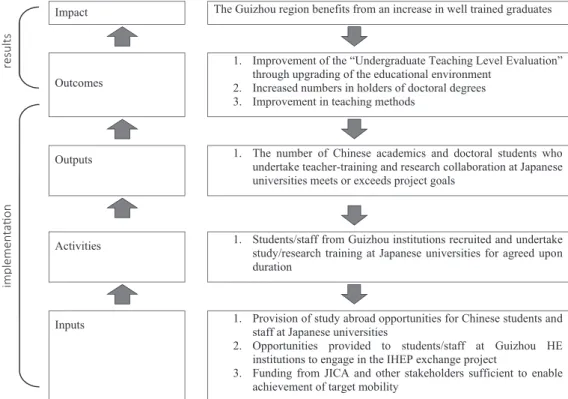
Figure 1 represents a logic model for the IHEP teacher-training project.
The logic model in Figure 1 distinguishes between implementation and results phases of the project. It is further broken down to its “if/then” components, outlining how if the inputs and activities are implemented effectively, then the desired outputs, outcomes, and impact should logically follow. The logic model does not include the many assumptions inherent in these causal statements, which would have been covered in detail during the TOC process.
“Once a precondition (or outcome) has been identifi ed through the TOC process, a logic model can be used to explain how that outcome will be produced. The TOC summarizes work at a strategic level, while the logic model would be used to illustrate the tactical, or program-level, understanding of the change process”
(Anderson and Harris, 2005, p. 19)
The next step in the planning process is to elaborate on the logic model with a more exhaustive framework. A logical framework (log frame) complements the logic model by providing a more specifi c and detailed management tool (Farrell, 2009). It includes:
• a general overview of results expected from an intervention;
Figure 1. Logic Model for describing programme results of IHEP teacher exchange project Adapted from Farrell, 2009
Impact The Guizhou region benefits from an increase in well trained graduates
Outcomes
1. Improvement of the “Undergraduate Teaching Level Evaluation”
through upgrading of the educational environment 2. Increased numbers in holders of doctoral degrees 3. Improvement in teaching methods
Outputs 1. The number of Chinese academics and doctoral students who undertake teacher-training and research collaboration at Japanese universities meets or exceeds project goals
Activities 1. Students/staff from Guizhou institutions recruited and undertake study/research training at Japanese universities for agreed upon duration
Inputs 1. Provision of study abroad opportunities for Chinese students and staff at Japanese universities
2. Opportunities provided to students/staff at Guizhou HE institutions to engage in the IHEP exchange project
3. Funding from JICA and other stakeholders sufficient to enable achievement of target mobility
impůĞŵĞŶƚĂƟŽŶƌĞƐƵůƚƐ