Potential of Adjuvant-induced Lymphangiomas in
Mice: Its dvantages as an Animal Model to
Study Lymphatic Endothelial Cells
著者名
EZAKI Taichi
journal or
publication title
東京女子医科大学雑誌
volume
89
number
E1
page range
E75-E99
year
2019-07-31
Review J Tokyo Wom Med Univ 89(Extra1): E75-E99, 2019 Jul
Potential of Adjuvant-induced Lymphangiomas in Mice:
Its Advantages as an Animal Model to Study Lymphatic Endothelial Cells
Taichi EzakiDepartment of Anatomy and Developmental Biology, School of Medicine, Tokyo Women s Medical University, Tokyo, Japan (Accepted April 15, 2019)
Studies on the lymphatic system have made remarkable progress with the discovery of lymphatic endothelial cell-specific markers. To discover lymphatic endothelial cell-specific markers, we adopted a Freund s incomplete adjuvant (FIA)-induced lymphangioma model in rodents. The tumor was used as an antigen source of mouse lym-phatic endothelium to produce monoclonal antibodies. We obtained LA102, which recognizes lymlym-phatic endothe-lial cells, but not blood vessel endotheendothe-lial cells. We found LA102 to be a homolog of mouse CD90.2 (Thy-1.2). Using LA102 and other specific markers for microvessels, including lectins, we have developed 3D-imaging techniques to characterize lymphatic networks to differentiate from blood vessels. This model has also been adopted to in-vestigate the relationship between peritoneal mesothelium and lymphatic endothelium. At three days after FIA injection, simple squamous mesothelial cells became cuboidal and detached from each other to lose their polarity and formed multi layers. Various-sized fat droplets gradually fused with each other, and the fat-storing cells be-came large fat cells or formed large chimeric follicular structures. At four weeks or later, these cell masses formed tubular structures draining the fat out of the peritoneal cavity. Taking up fat (FIA) droplets, not only po-doplanin+
mesothelial cells, but also bone marrow-derived macrophages and some interstitial mesenchymal cells were involved in tumorigenicity. We suggest a sequential change from mesothelial to lymphatic endothelial cells via fat-storing lymphangioma cells after FIA stimulation. These phenomena seem to be a defense mechanism, where mesothelial-endothelial transformation might occur via fat incorporation to drain the extrinsic adjuvant oil out of the peritoneal cavity. The significance of FIA-induced lymphangiomas and mesothelial cell diversity might be important for the interrelationship between fat cells and lymphatic endothelial cells.
Key Words: adjuvant, fat, lymphangioma, lymphatic endothelial cell, mesothelial cell
Introduction
Animal tumor models have been used to under-stand normal cellular life events, because tumors may reflect mirror images of normal cells.1
There are several tumor models to investigate various phenomena, such as tumor immunity as specific tar-gets for immune reactions,2-6
thymic nurse cell as a
thymic microenvironment in spontaneous thymo-mas,7-10
and various tumor angiogenesis.11-13
In this re-view, I introduce how an adjuvant-induced lym-phangioma rodent model was adopted and demon-strate its potential and use as various experimental strategies.
Corresponding Author: Taichi Ezaki, Department of Anatomy and Developmental Biology, School of Medicine, Tokyo Women s Medical University, 8-1 Kawada-cho, Shinjuku-ku, Tokyo 162-8666, Japan. [email protected]
doi: 10.24488/jtwmu.89.Extra1_E75
Copyright Ⓒ 2019 Society of Tokyo Women s Medical University. This is an open access article distributed under the terms of Creative Commons Attribution License (CC BY), which permits unrestricted use, distribution, and reproduction in any medium, provided the original source is properly credited.
Figure 1 Monoclonal antibodies against rat vascular en-dothelial cells.
The specific reactivity of each monoclonal antibody to vari-ous rat microvasculature is expressed as the width range of bars. For example, B1 recognizes endothelial cells of arterioles and capillaries on the arterial side, but not of ve-nous side and veve-nous-type vessels.
As an Antigen Source of Lymphatic Endothelium to Identify the Lymphatic Endothelial Cell
Specific Markers
1.Initial studies on vascular endothelial cells Blood vascular and lymphatic systems play es-sential roles in local tissue microcirculation. Mi-crovessels have characteristic structures to exhibit their special functions for local microcirculation.14
For example, arterioles are called as resistance ves-sels because they constitute the principal compo-nent of peripheral resistance to blood flow that regulates the blood pressure. Capillaries, as ex-change vessels, may exhibit marked differences in their structures and permeability properties de-pending on the functional sites in various organs. Capillaries converge to form post-capillary venules (PCVs) or venules of larger size, where cellular or macromolecular passages can take place under both physiological and pathological conditions.15
Therefore, we tried to develop strategies to in-vestigate the morphological and functional charac-teristics of each microvessel. Monoclonal antibodies (mAbs) against rat vascular endothelial cells were produced in mice to characterize and assess the functional properties of the antigens recognized (Figure 1).16
B1 recognizes rat arteriolar endothelial cells and arterial-side capillaries, but not those of venous-type vessels. Contrarily, B 110 recognizes venous-side capillaries, venules including PCVs, some sinuses and small veins, but not any arterial-type vessels (Figure 2a). B8 recognizes endothelial cells in splenic marginal sinuses and certain types of capillaries. B43 recognizes lymph node venules
and hepatic sinusoids. Immunohistochemical identi-fication of microvessels using a panel of these mAbs will provide valuable information for studies on lo-cal blood microcirculation.
Despite its critical role in tissue fluid homeostasis, macromolecule or lipid absorption, and immune or malignant cell migration, however, the lymphatic system has not received considerable attention. Lymphatic capillaries have highly permeable struc-tures, and they readily capture fluids, macromole-cules, particulate matters, and cells from the con-nective tissue spaces. However, segmental and functional studies on microvessel networks have not always been successful due to the lacks of reli-able techniques to identify these ramifications in the local tissue (Ezaki & Kotani, in this volume17
). In part this has been due to a lack of specific markers for lymphatic endothelial cells. Therefore, we first produced a mouse mAb, B27, against rat lymphatic endothelium.18
B27 strongly recognizes endothelial cells of most rat lymphatics, including lacteals, lym-phatic capillaries in the diaphragm (Figure 2b) at the absorption sites in the peritoneal cavity, collect-ing lymphatics, and thoracic duct. However, B 27 also recognizes the endothelium of some other types of blood vessels. Hence, double immunostain-ing of B27 should be combined with type IV colla-gen of basement membrane to discriminate be-tween lymphatic capillaries and blood capillaries on tissue sections (Figure 2c).
2.Requirement for more specific strategies to identify lymphatic endothelial cells
To better understand the lymphatic functions, it is important to discriminate lymphatic vessels from blood vessels and characterize lymphatic endothe-lial cells under both physiological and pathological conditions. 19-22
Furthermore, various vascular lineage-specific genes have been identified in both lymphatic and blood vascular endothelial cells in cultures.23
Therefore, mAb availability would con-tribute to immunohistochemical identification of lymphatic vessels particularly in mice and under-stand the molecular basis of their functions. In the last two decades, several useful markers for lym-phatic vessels have been reported. For example,
Figure 2 Specificity of B110 and B27 monoclonal antibodies to rat microvasculature. a: Reactivity of B110 to capillary networks continuing two accompanying arteriole (A) and venule (V) in the mesentery. Note that B110 recognizes capillaries on the venous side (*starting point and flow direction: arrows) and venule (V), but not any arterial-type vessels including arteriole (A) as shown in Figure 1.
b: B27 recognizes lymphatic endothelial cells (red) of the lymphatic sinuses (*: black car-bon ink has been absorbed by the lymphatic vessels after a peritoneal injection) underly-ing the peritoneal surface of the diaphragm. Note that peritoneal mesothelial cells are also recognized by B27 and took up some carbon particles (arrowheads), suggesting their close relationship. (from Ezaki et al., 1990)18
c: As B27 also recognizes the endothelium of some types of blood vessels, it is necessary to combine double immunostaining of B27 (red) with type IV collagen of the basement mem-brane (arrows) to discriminate lymphatic capillaries and blood capillaries in sections of sub-cutaneous tissue of the skin. Note that lymphatic capillary (LC) is strongly stained by B27 (red), whereas blood capillaries (BC) are lined with basement membranes (dark brown). (from Ezaki et al., 1990)18
LYVE-1 is a specific receptor of hyaluronic acid.24
Podoplanin is a marker for renal podocytes and is co-localized on lymphatic vessels.25,26
Prox-1 is an-other nuclear marker for developing lymphatic en-dothelial cells.27
However, most of these markers re-ported have not been originally discovered on lym-phatic vessels ; their empirical relationship with lymphatic vessels was realized accidentally.20,24,25,27
Furthermore, their immunohistochemical distribu-tion is not strictly confined to lymphatic endothelial cells, but shared with some blood vessel types.20,28-30
To discover novel lineage-specific markers of lymphatic origin, we sought to produce another mAb directed at mouse lymphatic endothelium.
However, there were several technical limitations. Firstly, the source material of lymphatics as an anti-gen for immunization is difficult to obtain. Secondly, lymphatic-specific antigens seem to have weak im-munogenicity compared with those of blood vessels, against which several specific antibodies have been raised, probably due to their relatively strong im-munogenicity. Lastly, there are no good screening procedures for selecting lymphatic-specific antibod-ies. To overcome these limitations, we applied sev-eral technical devices to obtain more confined lym-phatic vessel-specific antibodies. We induced be-nign lymphangiomas in mice by intraperitoneal in-jection of Freund s incomplete adjuvant ( FIA ) .31
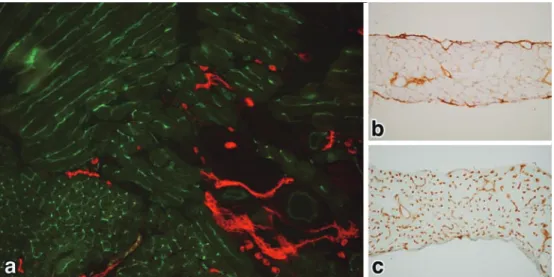
Figure 3 Reactivity of LA102 and LA5 to mouse vascular endothelial cells.
a: Double immunofluorescent staining of a C57BL/6 mouse tongue tissue section with LA102 (red) and LA5 (green). The distribution of both lymphatic and blood vessels in the tongue muscle layers is apparent.
b: Immunoperoxydase staining (DAB reaction: brown) of lymphatic vessels in the dia-phragm are strongly stained with LA102.
c: Immunoperoxydase staining (DAB reaction: brown) of blood vessels in the diaphragm are stained with LA5.
This tumor model provided considerable amount of relatively pure source material of lymphatic endo-thelium.32
Furthermore, we employed a mild en-zyme treatment followed by the neuraminidase treatment33
to expose very minor hidden cell sur-face antigens in lymphatic endothelial cells, and used a rapid differential immunization protocol to overcome the possible weak immunogenicity of lymphatic endothelial cells.34
By trial and error, we successfully produced a rat mAb, LA102 (or LEC 26), reacting predominantly with mouse lymphatics, but not with any types of blood vessel. During the immunization, we could also obtain another mAb, LA5 (or BEC12), reacting selectively with most of peripheral blood vessels, but not to any type of lym-phatic vessel (Figure 3).
These novel antibodies would prove useful for studies on mouse blood vascular and lymphatic mi-crocirculation with several advantages.34
First, the mAbs against vascular endothelial cells can be used to characterize and assess the functional properties of the antigens recognized. Second, confocal laser-scanning microscopy can be used for 3D imaging of the microvascular networks by infusing various fluorescent lectins into circulation (described later).
Third, endothelial cell proliferation can be identified by BrdU immunostaining of the tissue.35
Finally, the functional aspects of microvessels can be further in-vestigated by establishing some lymphatic endothe-lial cell lines in vitro after separating lymphatic en-dothelial cells from adjuvant-induced lymphan-giomas. Several mouse lymphatic endothelial cell lines have been successfully established using these mAbs for positive separation using magnetic-activated cell sorting (MACS) (Figure 4). These cell lines can be useful to characterize lymphatic endo-thelial cells in vitro at the molecular level.36
3.Mouse Thy-1 antigen as a specific marker for lymphatic vessels
Interestingly, the antigen recognized by LA 102 exists on not only lymphatic endothelial cells, but also some types of lymphoid cells, particularly the T-cell lineage cells. While characterizing the anti-gens recognized by this antibody, we found it to be a homolog of CD90.2 1.2), but not CD90.1 (Thy-1.1). The following evidence supports this finding.
First, 94% of thymocytes and 51.2% of spleen cells were positive for LA102. The LA102-positive spleen cells were almost all positive for CD 3. Second, T lymphocyte lineage-derived tumor cells were LA
Figure 4 Positive separation of lymphatic endothelial cells from adjuvant-induced lymph-angiomas by MACS using magnetic beads conjugated with LA102.
a: FIA-induced lymphangiomas of C57BL/6 mice were digested with collagenase D (Boer-hinger-Mannheim Biochemicals: 2 mg/mL in RPMI1640 medium with 1% fetal calf serum) for 30 min at 37 ℃ and single cell suspension was prepared. The cell mixture was cultivat-ed as the primary culture for several days to obtain single cell layers. Note that the shape of cell mixtures varies, indicating that they are heterogeneous cell populations before positive separation. b: The cells were treated with 0.05% trypsin, collagenase (200 U/mL), and 1 mM EDTA in PBS at 37 ℃ for 30 min to obtain as single-cell suspension. The cells were then incubated with LA102-conjugated Dynabeads M-450 at 4 ℃ for 30 min. c: The cell mixture was then positively separated for LA102-positive cells by MACS. Note that all separated cells bear magnetic beads. d: After positive separation, the cells appeared almost homogeneous and like a cobble stone in cultures.
102 positive, but those from B lymphocyte and fi-broblast lineages were negative.34
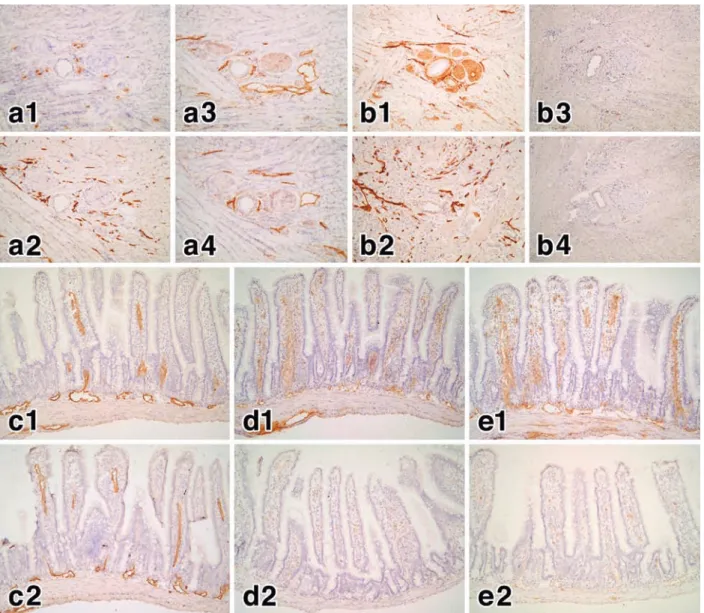
Third, LA 102 only recognized its antigens on tissues from C 57 BL/6, BALB/c, and DBA/2 mice (all Thy-1.2 ground ) , but not from AKR mice ( Thy-1.1 back-ground) (Figure 5a&b). Forth, pre-treatment of tis-sue sections with phosphatidylinositol-specific phos-pholipase C from Bacillus cereus (PI-PLC) (P5542-5 UN; Sigma-Aldrich, St. Louis, MO, USA ) substan-tially diminished the reactivity of LA102 and Thy-1 antibodies against their original targets ( Fig-ure 5c-e). This indicates that the antigen molecule recognized by LA102 is a glycoprotein anchored to the plasma membrane through a glycosylphosphati-dylinositol ( GPI ) tail covalently linked to the carboxyl-terminal amino acid. The GPI-anchored glycoproteins can be specifically cleaved off the cell
membrane by phospholipase C treatment.37
Finally, the molecular size of LA102 is approximately 26-27 kDa, which is almost equivalent to that of CD 90, with 25-29 kDa in its reduced form. We also found that Thy-1.2 ( CD 90.2 ) is a homolog of LA 102 in terms of molecular size and 45% mass-matching ra-tio in a mass-spectrogram analysis between the two molecules as well as their tissue co-localization (un-published data). These data suggest that Thy-1 (CD 90) is another specific marker for lymphatic endo-thelial cells in mice. Jurisic et al.38
also reported that mouse lymphatic endothelial cells express high lev-els of Thy-1 in situ and in vitro.
Thy-1 glycoprotein has been well characterized in rodents and other species39
since it was first de-scribed in 1964.40
Thy-1, the smallest member of the immunoglobulin superfamily, is classified as a CD90
Figure 5 Effects of Thy-1 background and phospholipase C treatment on the antigens recognized by LA102 and other antibodies.
a: Cryosections of the tongue of C57BL/6 mice (Thy-1.2 type background) were stained by the immunoperoxidase reaction (DAB: brown) with either an anti-Thy1.1 antibody (a1), LYVE-1 (a2), an anti-Thy1.2 antibody (a3), or LA102 (a4). Note that no lymphatic vessel structure is recognized by the anti-Thy1.1 antibody, whereas the lymphatic vessels in the tongue are strongly stained by other antibodies including LA102. The positive stains in a1 are non-specific background stains (mainly of plasma cells, but not lymphatic vessels). b: Cryosections of the tongue of AKR mice (Thy-1.1 type background) were stained by the immunoperoxidase reaction (DAB: brown) with either an anti-Thy1.1 antibody (b1), LYVE-1 (b2), an anti-ThyLYVE-1.2 antibody (b3), or LALYVE-102 (b4). Note that no lymphatic vessel structure is recognized by both the anti-Thy1.2 antibody and LA102, whereas the lymphatic vessels in the tongue are strongly stained by the anti-Thy1.1 antibody and LYVE-1. The positive stains in b3 and b4 are non-specific background stains, but not any lymphatic vessel struc-tures.
c-e: Cryosections of the tongue of C57BL/6 mice (Thy-1.2 type background) were treated either without (c1, d1, e1) or with (c2, d2, e2) phospholipase C (0.2 U/mL: Sigma) in 10 mM Tris buffer with 0.05% BSA for 30 min at 37℃ , and then stained by the immunoperoxidase reaction (DAB: brown) with LYVE-1 (c1, c2), LA102 (d1, d2), or an anti-Thy1.2 antibody (e1, e2). Note that phospholipase C treatment completely diminished immunostaining of both LA102 (d2) and anti-Thy1.2 antibody (e2), but not that of LYVE-1 (c2), indicating that the antigens recognized by LA102 and anti-Thy1.2 antibody are both GPI-anchored glycopro-teins.
of size 25-29 kDa in its reduced form. Surprisingly, CD 90 is differentially expressed and distributed among species and tissues of the same species. In human, CD90 is widely expressed on the surface of neuronal and various stromal cells, but only on a few blood leukocytes or lymphocytes.41
In rodent, CD90 is present on various cells including thymo-cytes, peripheral T lymphothymo-cytes, nerve cells, fibro-blasts, myofibro-blasts, epidermal cells, and bone marrow stem cells.42
As CD90 is highly expressed on rodent thymocytes, it is regarded as a differentiation marker for mouse T lymphocytes.43,44
Moreover, in human and rat, CD90 is a marker for blood vessel endothelial cells and fibroblasts.45-47
Indeed the di-verse distribution of CD 90 indicates that it plays some significant roles in different tissues and spe-cies.48
However, its exact functions and natural ligands are still unknown. Because it belongs to the Ig superfamily, it is suggested that it has acts as a cell adhesion molecule and mediates some cell-to-cell interactions. CD90 has been reported to play po-tential role in cell adhesion required for tumor pro-gression and inflammation.38
The most obvious difficulty in assigning a single function to the molecule is its unusual distribution.39
It is not only present on various cell types in a cies, but also on different cell types in different spe-cies. In mice, amino acid polymorphism exists in thymocytes and brain Thy-1 with two allelic forms-Thy-1.1 (CD90.1) and Thy-1.2 (CD90.2)―defined us-ing alloantisera.49
The only difference in amino acid in the extra membranous portions of Thy-1.1 and Thy-1.2 in mouse brain is Arg and Gln that inter-change at residue 89, respectively.50
As LA102 is a homolog of Thy-1.2, further investigation on their molecular characteristics is required.
4.Application to 3D-imaging of lymphatic ves-sels by various imaging techniques
1)Basic research using various imaging strate-gies
Although various novel lymphatic endothelial cell (LEC) markers have been discovered and informa-tion on lymphatic system has been accumulated, the distribution of each marker antigen does not necessarily coincide with each other. Therefore, it is
difficult to differentiate LECs from other cell line-ages, such as blood endothelial cells (BECs) and lym-phoid cells. Specific marker availability for LECs en-ables the characterization of lymphatic function and visualization of lymphatic vessels at the 3D level.51
Herein, I will focus on the diversity of LEC markers by immunohistochemical characterization of anti-gen distribution with mAbs and other useful mark-ers. In studies on angiogenesis or vasculogenesis, the special relationship between newly formed ves-sels and existing vesves-sels should be analyzed by 3D-imaging. This is because there is a limitation to un-derstanding the actual 3D distribution of vascular networks on usual tissue sections (Figure 6a&b). By the mid 1990s, several sophisticated techniques have been developed and applied for 3D-imaging of microvasculature, such as vascular casts observed by the scanning electron microscopy ( SEM ) (Fig-ure 6 c ) . In addition to specific mAbs, various lectins52
that recognize specific sugar chain residues can also be used to identify specific parts of BECs (Figure 6d). We have also successfully applied vari-ous lectins to identify tissue-specific vascular endo-thelial cells in mouse53
or placental villous cells in hu-man.54
Morikawa sought to define specific lectins that individually bound to vascular endothelial cells and LECs in mice.55
The results revealed that ConA and MAL-I bound strongly to LECs than to BECs and mesothelial cells. In contrast, LEL bound to BECs and mesothelial cells, but not to LECs ( Ta-ble 1). Although the binding of these lectins to endo-thelial cells is not strictly specific, the use of lectins is very useful, because these labeled lectins can be simply injected either intravenously or subcutane-ously/intraperitoneally to vitally stained blood ves-sels or lymphatic vesves-sels, respectively (Figure 7).
Furthermore, Isogai and his colleagues developed the live imaging technique56
and studied lymphangi-ogenesis in zebrafish.57
Using two-photon time-lapse imaging, they demonstrated that the thoracic duct endothelial cells are derived from primitive veins56
and provided insights into the origin of lymphatic endothelial cells ; they suggested that the mecha-nisms controlling endothelial cell differentiation dif-fered in the head and trunk of zebrafish.57
There-Figure 6 3D-imaging of uveal vascular structures and a stereoview of microvasculature in the mouse tongue using lectin.
a: A sagittal section of a mouse eye ball. Blood vessels were stained by intravenous in-jection of FITC-conjugated tomato LEL lectin (Vector Laboratories, USA) to label all the blood vessels (green). b: A whole-mount preparation of the anterior pole of a mouse eyeball. Blood vessels were stained in the same way as 6a. Note that the 3D-images of the vascular distribution patterns are completely different in each part of the uvea. c: The same view of the uvea of vascular corrosion casts by the scanning electron microscopy (SEM). Courtesy Prof. K. Toida (Kawasaki Medical School, Kurashiki, Japan). Blood vessels in the iris ( ♢ ), ciliary body ( ♧ ), and retina ( ♡ ) in a-c.
d: Stereo-pair immunofluorescent micrographs of a mouse tongue stained with FITC-con-jugated tomato LEL lectin (Vector Laboratories, USA) (green) for blood vessels and LYVE-1 (red) for lymphatic vessels. The stereo-pairs of pictures, 6° tilted (dLYVE-1 and d2), were captured with the same magnification using a Leica TCL-SL confocal laser scanning micro-scope (Leica, Wetzlar, Germany). Capillary loops in the papillae and underlying lymphatics are clearly demonstrated.
fore, the spatial relationship between newly formed and existing vessels can be easily analyzed by 3D-imaging in studies on angiogenesis during various pathological conditions or vasculogenesis during de-velopment.
2 ) Clinical diagnostic and therapeutic applica-tions
Lymphangiography has been used for clinical di-agnosis when lipiodol or indigo carmine are subcu-taneously injected, or 99 m
Tc-labeled human albumin is applied for scintigraphy of lymphatics. However,
Figure 7 Identification of lymphatic vessels by lectins.
a: Confocal double fluorescent images of a lymphatic capillary (*) in the thoracic side of the mouse diaphragm stained by intraperitoneal injections with FITC-conjugated MAL-1 (Vector Laboratories, USA) (aMAL-1: green) and LAMAL-102 (a2: red). The merged image (a3). The blind end (*) of the lymphatic capillary and subsequent collecting vessel portion with valves (arrows) are clearly seen.
b&c: Confocal fluorescent images of the macula cribriformis on the peritoneal surface of the mouse diaphragm (b) and lymphatic sinuses (c) immediately underneath the mesothe-lium of the diaphragm stained by the intraperitoneal injection of FITC-conjugated ConA (Vector Laboratories, USA) (green).
Table 1 Reactivity of various lectins to endothelial cells and mesothelial cells*.
Lectins Sugar binding to Lymphatic ECs
Blood vessels ECs
Mesothelial
cells Remarks
ConA Mannose ++ + (venules) + strong binding at stomata
LEL GlcNAc − ++ ++
MAL-II Sialic acid NT NT NT
UEA-I Fucose − − −
MAL-I ++ − + strong binding at stomata
RCA-I Galactose /GalNAc − ++ + strong binding at stomata
GSL-I B4 ++ ++ + blood vessel ECs stained with lectin i.p. *Tested by S. Morikawa (unpublished data). All lectins were purchased from Vector Laboratories, USA.
EC, endothelial cell; i.p., intraperitoneal injection; NT, not tested.
side effects of such tracer substances are a concern. In addition to the radioactive substances, lipiodol of iodine compounds derived from lipid-soluble con-trast media might cause embolization or allergic re-actions to iodine. Pigmented solutions such as
in-digo carmine or isosulfan blue remain for a long pe-riod in the subcutis. Therefore, lymphangiography using new fluorescent dyes, such as indocyanine green (ICG), and magnetic resonance imaging (MRI) are more often applied for lymphatic vessel
imag-ing. Indocyanine green was first introduced in fluo-rescent lymphangiography to assess lymphatic function in patients with edema.58
Since the proposal of the sentinel node theory by Morton et al.,59
ICG has become one of the most commonly used tracers in clinical diagnosis and navigation surgery for ma-lignant diseases.60,61
Advanced MRI for lymphatic vessels62
and real-time imaging of the lymphatic sys-tem using ultrasonography and Sonazoid63
are also reported to visualize various lymphatic vessels. Unveiling the Relationship Between Peritoneal
Mesothelium and Lymphatic Endothelium The lymphatic system plays important roles in draining of tissue fluid and transport of lipids, mac-romolecules and immune cells. The actual mecha-nisms underlying its key function, such as the selec-tive uptake of materials, are yet to be established. Both fluid drainage and cell trafficking in the body cavity, particularly peritoneal cavity, are clinically important for the pathogenesis of ascites, inflamma-tion, and malignant cell metastasis. There are sev-eral studies on lymph drainage from the peritoneal cavity.64-68
The rate and pattern of absorption of liq-uid, cells, and insoluble particulates differ with ma-terials. Fritz and Waag69
have reported the transdia-phragmatic lymphatic transport of intraperitoneally administered particulate marker. Bettendorf70,71
re-ported the peritoneal resorption of latex particles via diaphragmatic lymphatics. However, his studies have mostly focused on the normal structural and functional aspects of routes of lymph absorption of various materials under physiological conditions. Yuan et al.72
reported the lymphatic drainage of in-flammatory cells from the peritoneal cavity in a sheep peritonitis model. The obstruction of lymph drainage or other lymphatic disorders under patho-logical conditions may also be important issues in clinical treatments for ascites.
In order to establish a tumor model for studies on the lymphatic drainage from the peritoneal cavity, we induced benign lymphangiomas in rats32
and mice73,74
by intraperitoneal FIA injection according to the method of Mancardi et al..31
This tumor model could help unveil the relationship between
perito-neal mesothelium and lymphatic endothelium. 1 . General changes in the peritoneal cavity surface after FIA injection
We first performed morphological and functional characterization of FIA-induced lymphangiomas with respect to their phenotypes and effect on lymph drainage from the peritoneal cavity in rats.32
In approximately two months after the intraperito-neal FIA injections ( 1 mL emulsion ) with a two-week interval, tumors developed in the peritoneal cavity, such as the diaphragm, omentum, and liver surface. To distinguish lymphatics from blood ves-sels, various mouse mAbs against rat microvascula-ture (B27, B1, and B110) were used. We also used a tomato lectin (Lycopersicon esculentum lectin, LEL) for blood vessel staining35
and 5 -nucleotidase reac-tivity75
for lymphatic vessel staining. We found that the tumors themselves lacked the typical lymphatic phenotypes, but were partly positive for blood ves-sel markers (B1). Type IV collagen was negative or very weakly positive. The results suggest that these tumors might share some characteristics of both lymphatic capillaries ( 5 -nucleotidase : partly strong-positive ) and arterial-side capillaries ( B 1 : positive), although they showed a honey comb-like or granulomatous morphology.76
However, the draining capacity of lymphangioma via diaphrag-matic lymphatics to parathymic lymph nodes was remarkably reduced, indicating that the tumor lost its absorptive function as lymphatics.32
We then investigated the phenotype of the tumor in depth in mice.73
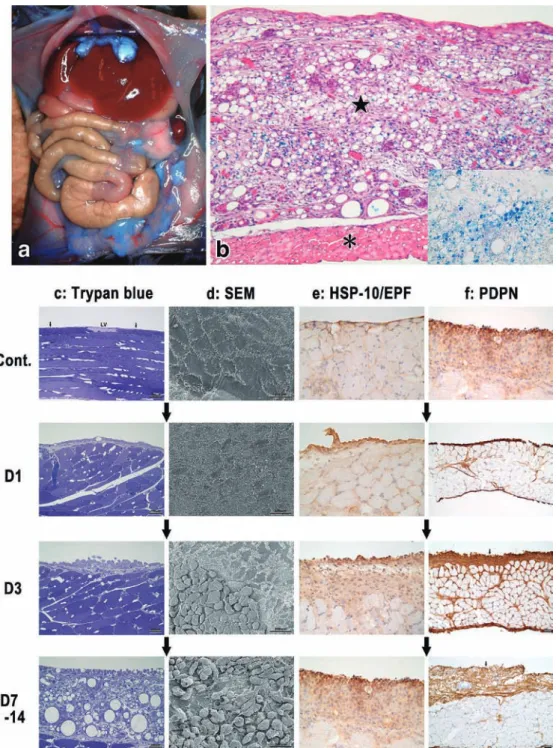
Interestingly, within three days after a single intraperitoneal FIA injection, the peri-toneal cavity surface started to change and formed typical benign lymphangiomas (Figure 8a-d). One to two weeks after FIA injection, we found that peri-toneal mesothelial cells elongated (cuboidal) and lost their polarity, and gradually formed thick stratified cell masses all over the peritoneal membrane (Fig-ure 8c&d, 9a-e). By day 3 of FIA injection, we found an increase in the early pregnant factor ( EPF or HSP-10 )77
and podoplanin expression in peritoneal mesothelial cells (Figure 8e&f). EPF has been re-ported to be produced and secreted into blood by some types of mineral-oil-induced tumor.77,78
Figure 8 Development of lymphangiomas induced by a peritoneal FIA injection in mice. a: A macroscopic view of peritoneal cavity in a mouse two weeks after a peritoneal FIA injection containing EM-blue (blue dye). Note that not only the surface of the liver, dia-phragm, and mesenteries including the omentum, but also the surface of abdominal walls colored blue, indicating FIA is taken up by lymphangiomas developed almost all over the peritoneal surface. b: Light microscopic view of the lymphangioma ( ★ ) developed on the surface of the diaphragm (*) four weeks after the FIA injection (Hematoxylin and Eosin staining). Note that FIA containing EM-blue dye is taken up by the tumor cells (inset: a higher magnification of the tumor without HE staining). c-f: Sequential changes of the abdominal surface before (Cont.) and after FIA injection (D1: day 1, D3: day 3, D7-14: day 7-14). The tumor development were observed by semithin epon sections stained with try-pan blue (c), scanning electron microscopy (d: SEM), cryosections stained by the immuno-peroxidase reaction (DAB: brown) against mouse HSP-10/EPF (R&D Systems, Inc.) (e), and also against mouse podoplanin (AngioBio Co., USA) (f: PDPN). Note that not only peritoneal mesothelial cells but also many peritoneal free cells (some of them bearing large vacuoles) are seen on the surface of the lymphangiomas (in c&d: D3, D7-14).
Figure 9 Ultramicroscopic changes of the lymphangiomas after FIA injection.
Transmission electron micrography (TEM) and scanning electron micrography (SEM) were performed to characterize the lymphangiomas at electron microscopic level. a: Normal sur-face of the peritoneal wall. The SEM image (inset) of the mesothelium. The mesothelial cells are simple squamous with short microvilli on their surface toward the peritoneal cavity. b: Three to five days after FIA injection. The SEM image (inset) of the mesothelium. Note that the mesothelial cells became taller and cuboidal, with increased microvilli all around the cell surface, indicating they have lost their polarity. Some cells take up FIA into their cytoplasm. c-d: One to two weeks after FIA injection. Mesothelial cells have loosened the cellular connections with each other, and then several peritoneal free cells attach and get further into the interstitial spaces underneath mesothelial cells (c). Some mesothelial cells formed multilayers with abundant and long microvilli on the bilateral sides of their surface. Several cells in the newly formed tumors have various sizes of fat (FIA) droplets (d). (from Ezaki and Desaki, 2012)73 e: At four weeks or later, the fat droplets fused with each other
and increase in size in the cells. The fat-storing cells became larger in size, and then some adjacent cells gradually fused with each other to form cell clusters. f-g: At two to four months or later, the fat-storing cells fused with each other and gradually formed tubular structures like lymphatic vessels. (from Ezaki and Desaki, 2012)73
model, EPF might have been induced locally (Fig-ure 8e), but its serum level was unaltered at least until seven days (unpublished data). Contrarily, the increase in local podoplanin expression was remark-able and the whole lymphangiomas became
strongly positive (Figure 8f). However, the tumor contained some LA5+
blood vessels, but not LYVE-1+
or LA102+
cells. This suggests that the tumor it-self is mesothelial in origin, rather than lymphatic endothelial cells. By day 7-14, the tumors showed
heterogeneous expression of lymphatic endothelial markers. At four weeks or later, they formed typi-cal honeycomb-like lymphangiomas consisting of various-sized fat-storing cells (Figure 8b, 9d-f). As they developed, the fat-storing cells fused with each other and gradually formed tubular structures like lymphatic vessels ( Figure 9 e-g ) or large follicles. Consequently, LYVE-1+
and LA102+
functional lym-phatic vessel structures were detected at approxi-mately four weeks after FIA injection as described later. These sequential changes appear to be unique if the phenomenon is regarded as a process in lym-phangiogenesis. Shimizu et al. also found similar vasculogenic patterns, where individual LYVE-1+
stromal cells gathering around the trabecular arter-ies gradually joined and fused together, and finally formed various tubular structures as the initial lym-phatic in developing spleen at 18.5 days of the em-bryonic age in mice (unpublished data).
2 . Morphological and functional phenotypes of cells involved in FIA-induced lymphangiomas
Although the tumors were podoplanin+
, typical lymphatic vessel-like structures expressing LYVE-1 and LALYVE-102 only appeared at the later stages (four weeks or later). Therefore, the initial name“lym-phangioma”for this animal tumor model31
might not be suitable. This idea prompted us to characterize the phenotype of the adjuvant-induced tumor.
To clarify the involvement of bone marrow-derived cells in tumor development, GFP+
bone marrow cells (1.5×10⁷
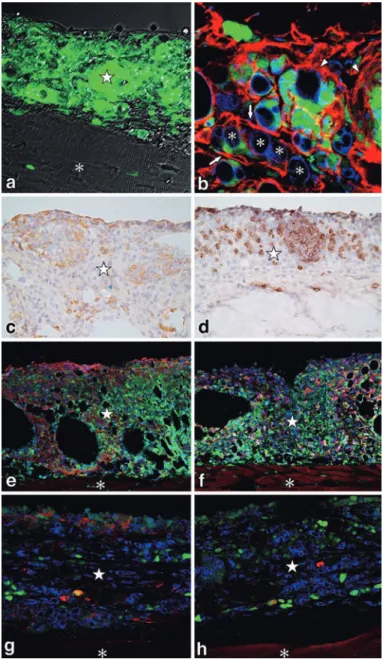
cells/100μL) from C57BL/6 (GFP-Tg) mice were intravenously injected to le-thally irradiated (12 Gy) syngeneic mice. The recipi-ent bone marrow chimeric mice were intraperito-neally injected FIA (0.2 mL) two weeks after bone marrow cell transplantation. Substantial number of GFP+
cells accumulated in FIA-induced lymphan-giomas from the beginning of tumor development (Figure 10a&b, e-h ) . We confirmed that most of these cells had some macrophage or myeloid cell markers, such as CD 68 ( Figure 10 c ) , Gr-1 ( Fig-ure 10d), and CD11c (figFig-ure not shown). We also found that some interstitial cells bearing fibroblast marker (S100A4) were involved in this tumor (fig-ure not shown). Therefore, we concluded that
lym-phangiomas of several cell origins including at least mesothelium, macrophages, and fibroblasts were formed as chimeric cell masses by fusing with each other to dispose the extrinsic FIA. In other mineral oil-induced tumors, besides granulomatous re-sponses that might correspond to our tumor model, plasmacytomas were quite common.76,79
Interest-ingly, there was a strain difference in the incidence of plasmacytomas, but there were no reports re-garding this in oil-induced granulomas.80
Further-more, the involvement of M1 (iNos+
) and M2 type macrophages (arginase+
) was compared on days 3 and 120 after the FIA injection. (Figure 10e-h) On day 3, both M 1 proinflammatory and M 2 anti-inflammatory macrophages increased in the tu-mors, whereas only a few M 2 type macrophages were found in the tumors at very late stage (day 120). However, further studies should be conducted to clarify the biological significance of M 1 / M 2 macrophage balance81,82
in this tumor model.
Gene expression levels of podoplanin, CCL2, Prox-1, TGF-β, VEGFc, and TNF-α in lymphangiomas were examined using RT-PCR at various times af-ter FIA injection (Figure 11). Considerable increase in podoplanin and CCL2 expression was observed by day 1, and an increase in TGF-β and VEGFc from day 3. However, one of the lymphatic endothe-lial markers, Prox-1, did not show any significant change. A remarkable increase in podoplanin ex-pression was also confirmed in tissue sections. As podoplanin+
cells secrete CCL 2 to recruit CD 68+
cells in wound-healing lesions,83,84
the increase in po-doplanin and CCL 2 expression in lymphangiomas might support the massive accumulation of bone marrow-derived macrophages ( CD 68+
cells ) from the peritoneal cavity into tumors.
Furthermore, we investigated the expression of various fat-storing-cell-related markers in lymphan-giomas. For example, adipophilin is known to be positive for fat-accumulating hepatocytes in alco-holic cirrhotic fatty livers or lipid-storing CD 68+
macrophages. Both adipophilin+
and CD 36+
cells might correspond to CD 68+
macrophages.85,86
We found a considerable increase in cells positive for adipophilin and CD36 (Figure 12a&b).
Fat-droplet-Figure 10 Involvement of bone marrow-derived intraperitoneal cells in FIA-induced lymphangiomas.
a: GFP+ (green) bone marrow-derived cells accumulated in lymphangiomas ( ☆ ) developed
on the muscular layer of the diaphragm (*) seven days after FIA-injection. b: Confocal triple immunofluorescent image of the cellular masses in lymphangiomas of GFP+ bone
marrow cell-reconstituted mice four weeks after the FIA injection. GFP (green), podoplanin (red), and CD68 (blue). Note that the cell masses are found to be chimeric cell mixtures (arrowheads) from different origins and many of them contain various sizes of fat droplets (*). Podoplanin+ cells (arrow) surround these cell mixtures. c: Immunoperoxidase staining
of lymphangiomas developed two weeks after the FIA injection for CD68, a macrophage marker. d: Immunoperoxidase staining of lymphangiomas developed two weeks after the FIA injection for Gr-1, a myeloid differentiation antigen (Ly-6G/Ly-6C).
e-f: Confocal triple immunofluorescent image of the cellular masses in lymphangiomas of GFP+ bone marrow cell-reconstituted mice three days after FIA injection. Both M1 (red in e:
iNos) and M2 (red in f: arginase) type macrophages (CD68: blue) were located in lymphan-giomas at a very early stage of tumor development. g-h: Confocal triple immunofluorescent image of the cellular masses in lymphangiomas of GFP+ bone marrow cell-reconstituted
mice 120 days after the FIA injection. Note that there are some M1 type macrophages (red in g: iNos) are still present in lymphangiomas, but a very few M2 type macrophages (red in h: arginase). ☆ : lymphangioma, *: muscular layer of the diaphragm in c-h.
Figure 11 Expression level of lymphatic and inflammation related factors in the dia-phragm using the RT-PCR assay.
A quantitative analysis was performed using the RT-PCR to determine the expression level of podoplanin (PDPN), CCL2, Prox-1, TGF-β, VEGFc, and TNF-α in the diaphragm at various times (control, and days 1, 3, and 14) after FIA injection. The results were normal-ized using β-actin as the internal control. To calculate the expression level of genes, the delta-delta comparative threshold method was used. Note that remarkable increases in PDPN and CCL2 expression were seen as early as day 1, and an increase in TGF-β and VEGFc from day 3. However, one of the lymphatic endothelial markers, Prox-1, did not show any significant change (*p < 0.01). (from Ezaki et al., 2018)74
storing cell accumulation in tumor might be similar to the pathogenesis of atherosclerotic plaques in the arterial wall where lipid droplet-containing macro-phages also accumulate.87,88
Interestingly, both these phenomena are closely related to lipid or oil that triggers macrophage infiltration under the endothe-lium or mesotheendothe-lium in atherosclerosis or FIA-induced lymphangiomas, respectively. However, adiponectin (Figure 12c), one of the major adipoki-nes, production was not very significant.
The massive uptake of fat (FIA) into lymphan-giomas prompted us to investigate fat metabolism in relation to fat droplets in the tumor. Fatty acid-binding proteins (FABPs) are known to be involved in promoting cellular uptake, and transporting and targeting fatty acids to specific metabolic path-ways.89,90
Therefore, we investigated the possible in-volvement of FABPs in FIA-induced tumor
devel-opment using FABP-KO mice and specific antibod-ies against mouse FABP1, FABP3, FABP4, FABP5, and FABP 7.91
In normal C 57 BL / 6 mice, a single peritoneal FIA injection induced typical honeycomb-like lymphangiomas consisting of various-sized ring-like fat-storing cells. These cells were strongly positive for podoplanin, F4/80, and FABP5 and FABP7. Contrarily, significant positive staining for FABP4 was not observed (Figure 12d). In atherosclerosis, FABP4 (aP2 or adipocyte FABP) expression by macrophages promoted atherogene-sis,89
whereas FABP 5 ( Figure 12 e ) , rather than FABP4, appeared to be more responsible in our tu-mor model, and the follicular structures mainly con-sisted of FABP7+
cells ( Figure 12 f ) . On the con-trary, in FABP3-, FABP5-, FABP7-KO mice (data not shown), there was no significant difference in the incidence of tumors when compared with that
Figure 12 Expression of various fat-related markers in lymphangiomas.
a: Immunoperoxidase staining of lymphangiomas for adipophilin (PROGEN Biotechnik GmbH, Germany), a macrophage marker relating to lipid droplet-associated proteins. b: Immunoperoxidase staining of lymphangiomas for CD36 (Cascade Bioscience, MS, USA), a macrophage marker also relating to lipid droplet-associated proteins. c: Immunoperoxi-dase staining of lymphangiomas for adiponectin (R&D Systems, Inc., USA), an adipokine. d-f: Immunoperoxidase staining of lymphangiomas for FABP4 (d), FABP5 (e), and FABP7 (f). DAB+ cells in FABP4 staining (d) are non-specific background stains. All anti-FABP
an-tibodies were gifted by Prof. Owada Y. (Tohoku University, Sendai, Japan). All cryosections of the lymphangiomas ( ★ ) developed two to four weeks after FIA injection were colored by DBA reaction in a-f.
in normal B 6 mice. However, tumors developed more vigorously in FABP7-KO mice than in other KO strains. Among FABP-KO mice, relatively smaller fat-storing cells were seen in FABP 3-KO mice, whereas the follicle-type structures were more commonly found in FABP5-KO mice. In con-trast, the tumors in FABP7-KO mice showed less fat-storing cells with more inflammatory and fi-brous components. The results suggest that a close relationship between the extrinsic FIA metabolism
and fat-storing cell mass is involved in this tumor model, because the tumor cells contain FIA in their cytoplasm as various-sized lipid droplets.74
However, the actual role and biological significance of each FABP in the tumorigenesis remain to be further clarified.
During tumor development, the tumor contained some LA 5+
blood vessels, but not LYVE-1+
or LA102+
cells until about four weeks after FIA injec-tion. This was confirmed by other vascular
mark-ers, such as blood vessels with CD31 (Figure 13a) and lymphatic vessels with Prox-1 and VEGFR-3 ( figure not shown ) . Only the typical lymphatic vessel-like structures expressed LYVE-1 and LA 102 at the late stages ( four weeks or later ) ( Fig-ure 13c-f). This corresponds to the time when the tubular structures are found after fusion of various cell masses (Figure 9e&f). Furthermore, vasohibin-2 (VASHvasohibin-2), a tumor angiogenesis-promoting factor, was detected in the tumor (Figure 13b). It was ex-pressed preferentially in mononuclear cells derived from the bone marrow and promoted angiogenesis in the mouse.92
It is also known that VASH-2 is re-quired for epithelial-mesenchymal transition of ovarian cancer cells via regulation of TGF-β signal-ing.93
As the tumors develop, the fate of extrinsic FIA might be a problem. In the tumor, we found ab-normal draining routes from the peritoneal cavity at very late stages. Once the oil droplets are stored in cells, they are gradually secreted out of these cells into, for example, follicular structures ( Fig-ure 14a&b), or through the remodeled lymphatic vessel-like structures (Figure 9g, 13c&d). They fi-nally reached either the draining lymph nodes of peritoneal cavity (Figure 14e) or abnormal collat-eral routes penetrating abdominal wall to dispose FIA to the skin subcutis (Figure 14f&g). The sig-nificance of these complementary transformations might involve tissue remodeling after acute or chronic inflammation and lymphangiogenesis to drain undesirable fat droplets in the peritoneal cav-ity.
3 . Relationship between peritoneal mesothe-lium and lymphatic endothemesothe-lium
The actual mechanisms underlying tumorigenic-ity of this tumor model is unclear. In the 1960 s, there were several reports on the development of variety of tumors after the intraperitoneal injection of some mineral oils or adjuvants.79,80
Furthermore, in 1985, Leak et al.76
reported that peritoneal meso-thelium developed granulomatous tumors in re-sponse to mineral oil or pristane. Quinn78
reported that EPF (or HSP-10 ) is involved in the initiation and maintenance of various peritoneal responses to mineral oil. We also found some mesothelial and
in-terstitial cells including fat-stored cells expressed EPF. During the first one or two weeks, a remark-able increase in EPF expression was observed in the tumors (Figure 8e). However, the biological role of EPF in tumor development after FIA injection remains unclear. As EPF is produced during vari-ous responses under both physiological and patho-logical conditions,77
there might also be some other factors involved in this tumor model; this should be further investigated.
The fact that peritoneal mesothelial cells became tall in height (cuboidal) and lost their polarity, and gradually formed thick stratified cell masses all over the peritoneal membranes one to two weeks after FIA injection may suggest the potential of the mesothelial cells to transform into benign tumors forming cell masses with other type of cells ( Fig-ure 10b, 14b). The increase in podoplanin and its gene expression in FIA-induced tumors ( Fig-ure 8f&11) might also be related to the potential di-versity of mesothelial cells and possible transforma-tion into lymphatic endothelial cells. As podoplanin correlates with ezrin redistribution to membrane projections and cytoskeleton and cell motility regu-lation,94
podoplanin might play a role in inducing these sequential changes in tumor progression by linking mesothelial and lymphatic endothelial func-tions. Leak et al.76
also found that an intraperitoneal injection of pristane, a mineral oil, induced squamous mesothelial cells to become cuboidal and lose their polarity. They reported that pristane in-duced fibrin networks, as in inflammation, involving extracellular matrices, such as fibronectin, resulting in huge granuloma-like structures attracting perito-neal free cells. Simultaneously, vigorous angiogene-sis and lymphangiogeneangiogene-sis occurred, probably due to platelet activation upon engagement by podo-planin.94,95
These results indicate that FIA-induced tumors are heterogeneous cell population forming chimeric cellular masses resulting from mutual cell fusion af-ter fat droplet uptake. In addition to podoplanin+
mesothelial cells, bone marrow-derived macro-phages (CD68+
), and some interstitial mesenchymal cells are also involved in tumorigenicity in this
tu-Figure 13 Development of functional vascular structures in lymphangiomas.
Functional vascular structures were detected 28 days after FIA injection in C57BL/6 fe-male mice. Ten-micron thick cryosections were made and immunostained with CD31 (a), vasohibin-2 (VASH2), a tumor angiogenesis promoting factor (b).
In c-f, blood vessels were labed by intravenous injection with FITC-conjugated tomato lec-tin (LEL), the mice were then perfusion-fixed with 4% PFA for 10 min, washed and frozen in OCT compound. Ten-micron thick cryosections were made and immunostained. Triple fluorescent staining with LA102 (c), LYVE-1 (d), and tomato LEL lectin (e). The merged im-age (f). All blood vessels that have blood supply are strongly stained by the FITC-LEL (e). Note that LYVE-1+ lymphatic vessels extend from the borders between the diaphragm (*)
and lymphangioma ( ☆ ) and formed various shaped lymphatic vessels, while LA102+
ves-sels mainly exist in lymphangiomas (c, f). Depending on their distribution sites, the positiv-ity of LYVE-1 and LA102 does not necessarily correspond with each other.
Figure 14 Drainage of FIA out of peritoneal cavity via the newly formed functional lym-phatics.
a: Transmission electron micrograph of a typical fat-storing follicular structure (*) on day 28 of FIA injection. b: A confocal triple immunofluorescent image of follicular structure similar to that shown in (a) on day 28 of FIA injection. Chimeric large cell masses contain-ing GFP+ bone marrow-derived cells (green), podoplanin+ mesothelial cells (red), and CD68+
macrophages (blue). Note that various sizes of fat droplets were incorporated and some were secreted inside the follicle (*).
c: The two main routes of lymphatic pathways from abdominal cavity in the normal con-trol animal. Carbon dyes injected intraperitoneally were absorbed from the diaphragm and transported into the thoracic cavity by lymphatic vessels. A main route is parasternal or anterior route (arrow heads), reaching the regional parathymic lymph nodes (*). The other is the dorsal or posterior route (double arrowheads), reaching the posterior medias-tinal lymph nodes (**). Di: diaphragm, Ht: heart, Lu: lung, St: sterna, Th: thymus. d: FIA (with EM blue) reached the parathymic lymph nodes (*) and the posterior mediastinal lymph nodes (**) within seven days after intraperitoneal injection. e: FIA (with EM blue) reached parathymic or posterior mediastinal lymph nodes more than four months after in-traperitoneal injection. Note that these regional lymph nodes swelled and fused together at the late stages of tumor development.
f: Formation of abnormal intermuscular draining routes from the peritoneal cavity (on the left) towards the subcutis in the abdominal skin (on the right). g: Higher magnification view of the abnormal intermuscular draining routes of FIA. Note that various-sized fat droplets or even whole fat-storing cells are transported in the tubular structures as shown in Fig-ure 9f&g.
Figure 15 Hypothesis: mesothelial-endothelial transformation.
The possible processes and mechanisms involved in the development of FIA-induced lymphangiomas. Sequential changes from mesothelial cells to lymphatic endothelial cells via various fat-storing lymphangioma cells are suggested. These phenomena may be inter-preted as one of the biological defense mechanisms to drain extrinsic adjuvant oil out of the peritoneal cavity.
mor model. We found the podoplanin+
cells induced a chemokine CCL2 to recruit CD68+
bone marrow-derived cells which accumulated from the perito-neal cavity.74
Both M1 and M2 type macrophages might be involved in the early stage of tumor devel-opment. Macrophages are responsible for adipose tissue remodeling96
and various pathological condi-tions, such as atherosclerosis.87,88
It has also been re-ported that the vast majority of macrophages infil-trating the obese organ are arranged around dead adipocytes, forming characteristic crown-like struc-tures (CLS).97
The large follicular structures consist-ing of podoplanin+
mesothelial cells and CD 68+
macrophages in our tumor model (Figure 14a&b) may be very close or almost equivalent to CLS. Fur-thermore, Detry et. al.98
also suggested the
possibil-ity that FIA-induced lymphangiomas formed tubu-lar structures, like lymphatic vessels.
The results demonstrated in this study suggest sequential changes from mesothelial cells to lym-phatic endothelial cells via fat-storing lymphan-gioma cells after FIA stimulations. These phenom-ena may be interpreted as one of the biological de-fense mechanisms to drain extrinsic adjuvant oil out of the peritoneal cavity. We have suggested the possibility of sequential transformation (Figure 15) from peritoneal mesothelial cells to functional lym-phatic vessels via fat-storing tumor cells after FIA stimulation.74,99
Besides sharing the same mesenchy-mal origin, both lymphatic endothelial and mesothe-lial cells have several similarities in their function and structure (as shown in Figure 2b). Moreover,
the two cell types might have some ability to trans-form into various interstitial cells under pathologi-cal conditions or in vitro. However, in vivo, there has been no clear evidence to show the relationship between the two cell types. The biological signifi-cance of FIA-induced lymphangiomas and the di-versity of mesothelial cells might be important with respect to the relationship between fat cells and lymphatic endothelial cells.
Finally, during our analyses of tumor develop-ment in the peritoneal cavity, we observed biased site difference in tumor occurrence. The tumors easily developed almost everywhere, such as the surface of the diaphragm, omentum, liver, spleen, and abdominal wall, except the ovary.99
The ovarian surface (or germinal) epithelial cells never formed any tumor mass (n ≧ 59 females), although they be-came strongly positive for podoplanin similar to other peritoneal mesothelial cells forming lymphan-giomas at different sites in the peritoneal cavity (un-published data). These results suggest that the peri-toneal mesothelial cells might have diversity in their phenotypic transformation depending on the site of peritoneal cavity. This might be due to the fact that the majority of ovarian tumors derive from the surface (or germinal) epithelial cells and the heterogeneity of the mesothelium in response to FIA.
4.Prospective for the clinical application of this tumor model
The mechanism for lymphangiogenesis is of ma-jor interest in both basic and clinical lymphology. It is clear that FIA (or mineral oil) is involved in a high degree of interrelationship between mesothelium and endothelium and is a factor that bring these two structures closer. This process has recently gained considerable attention, and studies to under-stand this process are important for explaining the mechanism of lymphangiogenesis.100
If the shift be-tween mesothelial and lymphatic endothelial cells can be controlled, it might be possible to develop treatment for chronic lymphedema and even perito-neal sclerosis in patients on peritoperito-neal dialysis. The hypothesis (Figure 15) might give some hints for the possible application of peritoneal dialysis or the
treatment of chronic edemas. Conclusions
The one of the important missions of lymphatic ves-sels is to absorb fat as well as macromolecules and lymphoid cells and transport them into the sys-temic blood circulation. Once the lymphatic vessel function is disturbed under various abnormal condi-tions, some biological defense mechanisms recover the draining capacity by involving various cell types, such as mesothelial cells and fat droplet con-taining macrophages. Therefore, adjuvant-induced lymphangiomas would provide us useful experi-mental animal models to clarify some of the unan-swered aspects17
in the lymphatic system under both normal and pathological conditions.
Acknowledgements
I received cooperation and support from several indi-viduals over 20 years while compiling this work. I thank my collaborators, Prof. Kenjiro Matsuno (Dokkyo Medi-cal University, Tochigi, Japan), Dr. Kazuhiko Kuwahara (Aichi Cancer Center Research Institute, Aichi, Japan), Dr. Junzo Desaki ( Ehime University, Ehime, Japan ) , Prof. Kouji Matsushima (Tokyo University, Tokyo, pan), Prof. Yuji Owada (Tohoku University, Sendai, Ja-pan), Prof. Nobuko Tokuda (Dokkyo Medical University, Tochigi, Japan ) , and Prof. Kazunori Toida ( Kawasaki Medical School, Okayama, Japan). In particular, I would like to express my sincere gratitude to my colleagues, the late Dr. Shunichi Morikawa, Dr. Kazuhiko Shimizu, Dr. Shuji Kitahara, Dr. Ayako Sedohara, Dr. Sachiko Kikuta, Dr. Masae Morishima, the late Mrs. Yasuko Yamazaki, Mrs. Hiromi Sagawa, Mrs. Kae Motomaru, Ms. Kazuko Nakada, and Ms. Iori Sato.
Some parts in this work were supported by Grant-in-Aid for Scientific Research (A)(2) in 2002-2003 (Grant Number: 14207001) and (B) in 2007-2009 (Grant Number: 19390053) from the Japan Society for the Promotion of Science (JSPS).
Conflicts of Interest: There are no conflicts of inter-est to declare.
References
1.Rosai J, Levine GD: Tumors of the thymus.In Atlas of tumor pathology, 2nd series, fasc.13, pp34―161, Armed Forces Institute of Pathology, Washington,
D.C. (1976)
2.Ezaki T, Marbrook J: The haemolytic plaque reduc-tion technique to measure cytotoxicity with hybri-doma cells as a target. J Immunol Methods 54: 281― 290, 1982
3.Ezaki T, Skinner MA, Marbrook J: Spontaneous cy-totoxic T cells in murine spleen-cell cultures. I. Some characteristics of effector and precursor cells. Immunology 50: 343―349, 1983
4.Ezaki T, Skinner MA, Marbrook J: Spontaneous cy-totoxic T cells in murine spleen-cell cultures. II. Dis-tinguishing between spontaneous cytotoxic T cells and NK cells according to kinetics and target selec-tivity. Immunology 50: 351―357, 1983
5.Ezaki T, Marbrook J: The use of hybridoma cells as a murine model to study tumor immunity. Int J Cancer 35: 107―111, 1985
6.Skinner MA, Thompson K, Ezaki T et al: Effects of in vivo modulation of splenic natural killer cell ac-tivity on the growth of spleen-seeking tumour vari-ants. Br J Cancer 55: 259―263, 1987
7.Ezaki T, Kawatsu R, Matsuno K et al: Characteriza-tion of intrathymic and extrathymic T cell develop-ment in spontaneous thymoma Buffalo/ Mna rats. Thymus 16: 67―87, 1990
8.Ezaki T, Matsuno K, Kotani M: Unique thymic mi-croenvironment for T-cell development in
sponta-neous thymoma BUF/Mna rats.In Lymphatic
tis-sues and in vivo immune responses ( Imhof BA, Berrih-Aknin S, Ezine S eds), pp105 ― 109, Marcel Dekker, New York (1991)
9.Ezaki T, Matsuno K, Kotani M: Thymic nurse cells (TNC) in spontaneous thymoma BUF/Mna rats as a model to study their roles in T-cell development. Immunology 73: 151―158, 1991
10.Ezaki T, Uehara Y: Thymic nurse cells forming a dynamic microenvironment in spontaneous thy-moma BUF/Mna rats. Arch Histol Cytol 60: 39―51, 1997
11.Morikawa S, Baluk P, Kaidoh T et al: Abnormalities in pericytes on blood vessels and endothelial sprouts in tumors. Am J Pathol 160: 985―1000, 2002 12.Baluk P, Morikawa S, Haskell A et al:
Abnormali-ties of basement membrane on blood vessels and endothelial sprouts in tumors. Am J Pathol 163 : 1801―1815, 2003
13.Kitahara S, Suzuki Y, Morishima M et al: Vasohibin-2 modulates tumor onset in the gastrointestinal tract by normalizing tumor angiogenesis. Mol Can-cer 13: 99, 2014
14.Ezaki T: How can we detect lymphatic vessels ? Japanese Journal of Lymphology 35: 105―107, 2012 (in Japanese)
15.Kotani M, Nawa Y, Fujii H et al: Post-capillary ve-nules as the pathway for migrating B lymphocytes. Cell Tissue Res 152: 299―303, 1974
16.Ezaki T, Matsuno K, Fujii H et al: Characterization of rat vascular endothelial cell antigens by monoclo-nal antibodies. Acta Anatomica Nipponica 64: 390, 1989
17.Ezaki T, Kotani M: Mysteries in lymph, lymphatics, and lymphoid tissues. J Tokyo Wom Med Univ 89 (Extra 1): E4―E65, 2019
18.Ezaki T, Matsuno K, Fujii H et al: A new approach for identification of rat lymphatic capillaries using a monoclonal antibody. Arch Histol Cytol 53 (Suppl): 77―86, 1990
19.Swartz MA, Skobe M : Lymphatic function, lym-phangiogenesis, and cancer metastasis. Microsc Res Tech 55: 92―99, 2001
20.Scavelli C, Weber E, Agliano M et al: Lymphatics at the crossroads of angiogenesis and lymphangio-genesis. J Anat 204: 433―449, 2004
21.Baluk P, Tammela T, Ator E et al: Pathogenesis of persistent lymphatic vessel hyperplasia in chronic airway inflammation. J Clin Invest 115 : 247 ― 257, 2005
22.Tammela T, Petrova TV, Alitalo K: Molecular lym-phangiogenesis: new players. Trends Cell Biol 15: 434―441, 2005
23.Hirakawa S, Hong YK, Harvey N et al: Identifica-tion of vascular lineage-specific genes by transcrip-tional profiling of isolated blood vascular and lym-phatic endothelial cells. Am J Pathol 162: 575―586, 2003
24.Banerji S, Ni J, Wang SX et al: LYVE-1, a new homologue of the CD 44 glycoprotein, is a lymph-specific receptor for hyaluronan. J Cell Biol 144 : 789―801, 1999
25.Breiteneder-Geleff S, Soleiman A, Kowalski H et al: Angiosarcomas express mixed endothelial pheno-types of blood and lymphatic capillaries: podoplanin as a specific marker for lymphatic endothelium. Am J Pathol 154: 385―394, 1999
26.Schacht V, Dadras SS, Johnson LA et al: Up-regulation of the lymphatic marker podoplanin, a mucin-type transmembrane glycoprotein, in human squamous cell carcinomas and germ cell tumors. Am J Pathol 166: 913―921, 2005
27.Wigle JT, Oliver G: Prox1 function is required for the development of the murine lymphatic system. Cell 98: 769―778, 1999
28.Partanen TA, Alitalo K, Miettinen M: Lack of lym-phatic vascular specificity of vascular endothelial growth factor receptor 3 in 185 vascular tumors. Cancer 86: 2406―2412, 1999
29.Mouta Carreira C, Nasser SM, di Tomaso E et al: LYVE-1 is not restricted to the lymph vessels: ex-pression in normal liver blood sinusoids and down-regulation in human liver cancer and cirrhosis. Can-cer Res 61: 8079―8084, 2001
30.Jackson DG, Prevo R, Clasper S et al: LYVE-1, the lymphatic system and tumor lymphangiogenesis. Trends Immunol 22: 317―321, 2001
31.Mancardi S, Stanta G, Dusetti N et al: Lymphatic endothelial tumors induced by intraperitoneal in-jection of incomplete Freund s adjuvant. Exp Cell Res 246: 368―375, 1999
32.Ezaki T, Kuwahara K, Morikawa S et al: Charac-terization of adjuvant-induced rat lymphangiomas as a model to study the lymph drainage from ab-dominal cavity. Japanese Journal of Lymphology 27: 1―10, 2004
33.Toshimori K, Araki S, Oura C: Masking of sperm maturation antigen by sialic acid in the epididymis of the mouse. An immunohistochemical study.
His-tochemistry 90: 195―200, 1988
34.Ezaki T, Kuwahara K, Morikawa S et al: Production of two novel monoclonal antibodies that distinguish mouse lymphatic and blood vascular endothelial cells. Anat Embryol (Berl) 211: 379―393, 2006 35.Ezaki T, Baluk P, Thurston G et al: Time course of
endothelial cell proliferation and microvascular re-modeling in chronic inflammation. Am J Pathol 158: 2043―2055, 2001
36.Sironi M, Conti A, Bernasconi S et al: Generation and characterization of a mouse lymphatic endothe-lial cell line. Cell Tissue Res 325: 91―100, 2006 37.Low MG, Kincade PW: Phosphatidylinositol is the
membrane-anchoring domain of the Thy-1 gly-coprotein. Nature 318: 62―64, 1985
38.Jurisic G, Iolyeva M, Proulx ST et al: Thymus cell antigen 1 (Thy1, CD90) is expressed by lymphatic vessels and mediates cell adhesion to lymphatic en-dothelium. Exp Cell Res 316: 2982―2992, 2010 39.Crawford JM, Barton RW : Thy-1 glycoprotein :
structure, distribution, and ontogeny. Lab Invest 54: 122―135, 1986
40.Reif AE, Allen JM : Immunological distinction of AKR thymocytes. Nature 203: 886―887, 1964 41.Kroczek RA, Gunter KC, Germain RN et al: Thy-1
functions as a signal transduction molecule in T lymphocytes and transfected B lymphocytes. Na-ture 322: 181―184, 1986
42.Williams AF: Many cells in rat bone marrow have cell-surface Thy-1 antigen. Eur J Immunol 6: 526― 528, 1976
43.Williams AF, Barclay AN, Letarte-Muirhead M et al: Rat thy-1 antigens from thymus and brain: their tissue distribution, purification, and chemical com-position. Cold Spring Harb Symp Quant Biol 41 Pt 1: 51―61, 1977
44.Pont S, Regnier-Vigouroux A, Marchetto S et al: A Thy-1.1-specific monoclonal alloantibody activates both mouse and rat T cells. Cell Immunol 107: 64― 73, 1987
45.Ishizu A, Ishikura H, Nakamaru Y et al:
Interleukin-1 alpha regulates Thy-1 expression on rat vascular endothelial cells. Microvasc Res 53: 73― 78, 1997
46.Saalbach A, Haustein UF, Anderegg U: A ligand of human thy-1 is localized on polymorphonuclear leu-kocytes and monocytes and mediates the binding to activated thy-1-positive microvascular endothe-lial cells and fibroblasts. J Invest Dermatol 115: 882― 888, 2000
47.Saalbach A, Wetzig T, Haustein UF et al: Detection of human soluble Thy-1 in serum by ELISA. Fibro-blasts and activated endothelial cells are a possible source of soluble Thy-1 in serum. Cell Tissue Res 298: 307―315, 1999
48.Dalchau R, Daar AS, Fabre JW: The human Thy-1 molecule. Immunol Ser 45: 185―196, 1989
49.Reif AE, Allen JM: The AKR thymic antigen and its distribution in leukemias and nervous tissues. J Exp Med 120: 413―433, 1964
50.Williams AF, Gagnon J: Neuronal cell Thy-1 gly-coprotein: homology with immunoglobulin. Science 216: 696―703, 1982
51.Ezaki T: Progress in imaging of lymphatic vessels and its prospects. The Cell 47 : 622 ― 624, 2015 ( in Japanese)
52.Thurston G, Baluk P, Hirata A et al: Permeability-related changes revealed at endothelial cell borders in inflamed venules by lectin binding. Am J Physiol 271: H2547―H2562, 1996
53.Nakamura-Ishizu A, Morikawa S, Shimizu K et al: Characterization of sinusoidal endothelial cells of the liver and bone marrow using an intravital lectin injection method. J Mol Histol 39: 471―479, 2008 54.Tatsuzuki A, Ezaki T, Makino Y et al:
Characteri-zation of the sugar chain expression of normal term human placental villi using lectin histochemistry combined with immunohistochemistry. Arch Histol Cytol 72: 35―49, 2009
55.Morikawa S, Shimizu K, Ezaki T : Comparative analyses of sugar chain expression on the endothe-lium between lymphatic vessels and blood vessels to characterize the function of sugar residues on the lymphatic endothelium. Inflammation & Immu-nity 24 (5): 385―390, 2016 (in Japanese)
56.Yaniv K, Isogai S, Castranova D et al: Live imaging of lymphatic development in the zebrafish. Nat Med 12: 711―716, 2006
57.Isogai S, Hitomi J, Yaniv K et al: Zebrafish as a new animal model to study lymphangiogenesis. Anat Sci Int 84: 102―111, 2009
58.Ogata F, Azuma R, Kikuchi M et al: Novel lym-phography using indocyanine green dye for near-infrared fluorescence labeling. Ann Plast Surg 58: 652―655, 2007
59.Morton DL, Wen DR, Wong JH et al: Technical de-tails of intraoperative lymphatic mapping for early stage melanoma. Arch Surg 127: 392―399, 1992 60.Kitagawa Y, Fujii H, Kumai K et al: Recent
ad-vances in sentinel node navigation for gastric can-cer : a paradigm shift of surgical management. J Surg Oncol 90: 147―151; discussion 151-152, 2005 61.Takeuchi H, Kitagawa Y: New sentinel node
map-ping technologies for early gastric cancer. Ann Surg Oncol 20: 522―532, 2013
62.Okuda I, Akita K, Irimoto M et al: Magnetic resonance-thracic ductography (MRTD): Advanced magnetic resonance imaging for the lymph vessel and clinical application. The Cell 47: 635―638, 2015 (in Japanese)
63.Kawai Y, Ajima K, Nagai T et al: Real-time imaging of the lymphatic channels and sentinel lymph nodes of the stomach using contrast-enhanced ultra-sonography with Sonazoid in a porcine model. Can-cer Sci 102: 2073―2081, 2011
64.Yoffey JM, Courtice FC : Lymphatics, lymph and lymphoid tissue, 2nd ed, Edward Arnold (Publish-ers), London (1956)
65.Rusznyák I, Földi M, Szabó G : Lymphatics and lymph circulation: physiology and pathology, Per-gamon Press, Oxford, New York (1960)
66.Yoffey JM, Courtice FC: Lymph flow from regional lymphatics. Section XV: The pleural and peritoneal
cavities. In Lymphatics, lymph and the
lympho-myeloid complex ( Yoffey JM, Courtice FC eds ) , pp295―309, Academic Press, New York (1970)