THE NATIONAL HEALTH INSURANCE SCHEME (NHIS) IN THE DORMAA MUNICIPALITY, GHANA: CHALLENGES OF ENROLLMENT AND SATISFACTION WITH THE CURRENT
NATIONAL HEALTH SYSTEM
By AMO Thompson
SEPTEMBER 2014
THESIS PRESENTED TO THE HIGHER DEGREE COMMITTEE OF RITSUMEIKAN ASIA PACIFIC UNIVERSITY
IN PARTIAL FULFILLMENT OF THE REQUIREMENTS FOR THE DEGREE OF
MASTER OF SCIENCE IN INTERNATIONAL COOPERATION POLICY, PUBLIC HEALTH MANAGEMENT
i ACKNOWLEDGEMENT
I would like to acknowledge with heartfelt gratitude to the Almighty for his protection and wisdom to carry out this study. My special appreciation also goes to Professor Ghotbi Nader, who supervised this work, gave me invaluable assistance in undertaking this project. He was inspirational, my mentor and always ready to help both within and outside classroom.
I am greatly indebted to Associate Professor, Serik Meremonav whose suggestion during seminar classes was added in making this work possible.
Much gratitude goes to the respondents who provided the needed information for the study. Special appreciations go to my able assistants who supported me to undertake the field research.
I sincerely want to express my deepest appreciations to Ms. Ichikawa Hiromi, and Japan Student Services Organization (JASSO), for their scholarship support to my education. In fact, life would have been difficult for me without your support.
Special gratitude goes to my mother, Madam Kyeremaa Mercy and Yaa Birago-Afranie, for, moral and material support throughout my two years study in this highly prestigious institution.
Finally, I thank everybody who contributed in a small way in making this project a success especially my course mate Sisca Wogono.
ii TABLE OF CONTENT PAGE(S) TITLE PAGE
ACKNOWLEDGEMENT.………….……..…………..…..………..….….i
TABLE OF CONTENT.………...………..…….ii
LIST OF TABLES...vi
LIST OF FIGURES ...vii
LIST OF ABBREVIATIONS...viii ABSTRACT.………..……….………....ix CHAPTER ONE...1 Introduction ...1 1.1 Country background ...1 1.2 Research Background ...5
1.3 The concept of user fee system ……….………8
1.4 Health insurance in Ghana...9
1.5 The success story of Japan’s health insurance system …...12
1.6 Brief profile of study area ………...13
1.6.1 Geographical location and description ……….13
1.6.2 Health sector in the Dormaa Municipality ………..16
1.6.3 The Municipal health insurance scheme ………..18
1.7 Statement of the Problem ………..…..19
1.8 Significance of the study ………..……..21
iii
1.10 Research questions ……….……….………..22
1.11 Purpose of the study ………..………23
1.12 Study limitations ………..……….24
1.13 Organization of the study ……….………25
CHAPTER TWO ………..26
REVIEW OF MAIN CONCEPTS ……..………..…26
2.1 Introduction ………..…….……...………...…26
2.2 Universal coverage obstacles …………...……….………26
2.3 The review of Health insurance coverage ………...31
2.4 Community-based health insurance schemes ………..…………...…………32
2.5 Health insurance and national development ……….….….34
2.6 The concept of health care financing in developing countries ………...35
2.7 Satisfaction in service provision ………...…37
2.8 Ghana’s health care access and status ……..……...………41
2.9 The official coverage of NHIS ………..……..44
2.9 Membership categories ………..……….45
2.10 Out of pocket expenditure ….………..……….46
CHAPTER THREE ………...48
FRAMEWORK, HYPOTHESES AND METHODOLOGY………48
3.1 Introduction ……….………...48
iv
3.3 Research Hypotheses ………..…...……….52
3.4 Research design ………..……….54
3.5 Samples and sampling procedure ………….………...…55
3.6 Technique of data collection tools and pre-testing ……….………....…56
3.7 Data gathering instrument ………...57
3.8 Data analysis plan ……….…………..57
3.8.1 The logistic multiple regression analysis ……….………....58
3.8.2 Standard Error (S.E.) ………..………..59
3.8.3 The Odds Ratio ………...….59
3.8.4 Wald statistic (Wald) and significance (sig.)……….…………..….…60
3.8.5 The Cox & Snell R2 and Nagelkerke R2…..…………..………..….…60
3.8.6 The overall chi square (χ2)model ……….……..…..…60
CHAPTER FOUR ……….61
RESULTS ……….……….………...………61
4.1 Introduction ………...……….………...………61
4.2 Socioeconomic and demographic features of respondents ………...61
4.3 The Chi square (χ2) test ……….………..64
4.4 Satisfaction with the current health care provision ………..…....67
4.5 Satisfaction categorization by age group ………..………..70
4.6 Satisfaction and NHIS subscription ………...……….72
4.7 The logistic multiple regression analysis ……….…..……….75
v
4.7.2 Testing the overall chi square (χ2) model ………...……79
4.8 Reasons for non-participation in the NHIS by respondents ………79
4.9 Respondents expectations of the NHIS and health providers ……….82
4.10 Descriptive analysis of other variables ……….…82
CHAPTER FIVE ………...………...………...………86
DISCUSSION AND HYPOTHESES TESTING………….……….………86
5.1 Introduction ………...………86
5.2 Discussion ………..…..….………...………...…86
5.3 Testing the hypotheses ……….………..……….96
5.3.1 Hypothesis one ………...…..……..…..96
5.3.2 Hypothesis two ………...………....………..……97
5.3.3 Hypothesis three ………..…..……...97
CHAPTER SIX ………...99
Conclusion, Recommendation and Suggestion for future research …………...99
6.1 Introduction ………..………..………..……..99
6.2 Conclusion ………..……….………...…………99
6.3 Recommendations ………...…...………..…101
6.4 Suggestion for future research ………..……104
References ………..……….106
vi LIST OF TABLES
Table 1.1: The general population health indicators in Ghana and other West African Countries (2011) ..……….……..…..……..…………...2 Table 1.2: The general health expenditure in Ghana and other West African
Countries (2011) ……….…..…..3 Table 1.3: The distribution of health staff in the Dormaa Municipal …...…...….17 Table 4.1: The impact of socioeconomic and demographic features over
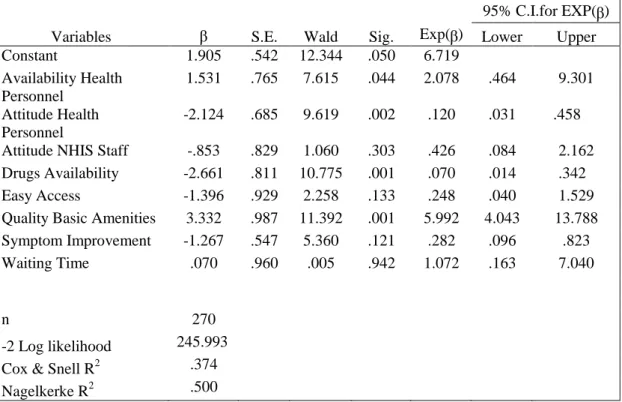
enrollment ………...………..65 Table 4.2: Satisfaction and NHIS subscription ……….73 Table 4.3: The regression analysis result of the respondents’ assessment of health
care satisfaction……..…………..………..………75 Table 4.4: Descriptive analysis of other variables ………..…..…82
vii LIST OF FIGURES
Figure 1.1 Health expenditure in Ghana (2003-2012) ………….……..…….……4
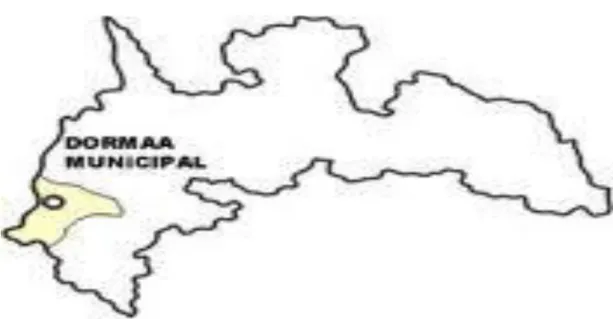
Figure 1.2: Map of the study area ……..………..………...…..13
Figure 2.1: Active membership as percent of population by region in 2011…...44
Figure 2.2: Active members of NHIS by Category in 2011………..……....46
Figure 2.3: Out of pocket expenditure as percentage total health expenditure between 2004-2011………..……….….47
Figure 3.1: The framework of the study …….………...…………..……….49
Figure 3.2: Sample and sampling procedure ……….56
Figure 4.1: Satisfaction evaluation by respondents……..…...………..……67
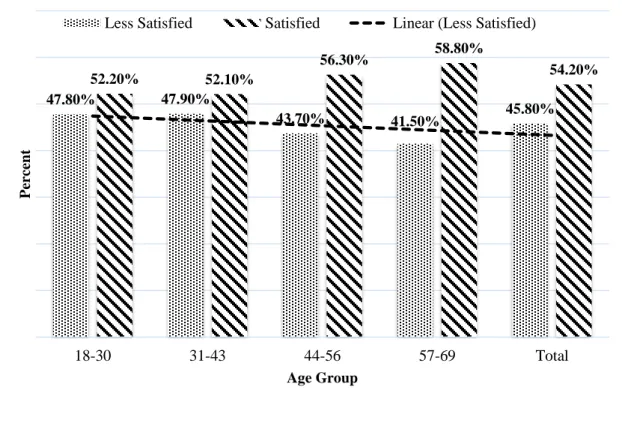
Figure 4.2: Satisfaction evaluation by age groups ………...…..………...71
Figure 4.3: Reasons for nonparticipation in the NHIS by respondents ………....80
viii LIST OF ABBREVIATIONS
CHPS Community-Health Planning And Services CIA Central Intelligence Agency
CPP Convention Peoples Party DMA Dormaa Municipal Assembly DMO Dormaa Municipal Office EU European Union
GDP Gross Domestic Product GHS Ghana Health Service GMA Ghana Medical Association HIPC Highly Indebted Poor Country
HIV/AIDS Human Immunodeficiency Virus/Acquired Immunodeficiency Syndrome ILO International Labor Organization
IMF International Monitory Fund LI Legislative Instrument MCH Maternal And Child Health MDG Millennium Development Goal MOH Ministry Of Health
NPP New Patriotic Party OPD Out-Patient Department
PNDC Provisional National Defense Council SAP Structural Adjustment Program
SSNIT Social Security And National Insurance Trust THE Total Health Expenditure
TUC Trade Union Congress
UNICEF United Nations Children’s’ Fund WB World Bank
WHA World Health Assembly WHO World Health Organization WHR World Health Report UHC Universal Health Coverage URL Uniform Resource Locator VAT Value Added Tax
ix ABSTRACT
The National Health Insurance Scheme has not seen universal coverage a little over a decade now, despite efforts by the authorities' campaign as a convenient health care financing tool. This necessitated an investigation into the challenges in enrollment and satisfaction with the current national health system to determine the underlying factors affecting residents’ participation in the scheme.
To this end, a descriptive and cross-sectional study design using three-stage sampling criteria was adopted for the study. A purposive and simple random sampling method was used in the sampling selection. Data was collected through self-administered and face-to-face interviews guided by a structured questionnaire between May and August, 2013; involving 300 members and non-members of the scheme and out of that, 270 (90%) was retrieved.
Chi square (χ2) test of independence and logistic regression analysis were used to show the strength of association between the dependent and the independent variables. The χ2
test shows a significant association between residents’ decision to enroll, and gender, education, number of children, place of residence (rural and urban), employment and income. Findings revealed that females have a higher membership rate (60.5%) compared to males (39.5%). Also, people with tertiary education have a higher subscription (78%). The evidence of marital status discovered that, widowed have a higher membership rate (70%). Respondents with 2 children have a higher subscription level (69.4%). The majority of NHIS subscribers live in the rural communities (53.5%), over the urban dwellers (46.5%). The employees’ analysis shows that apprenticeship
x subscription is very higher (74.1%). High income results in high subscription (85.0%), but reduces when income increases (39.4%).
It was also discovered that people’s ability to pay the premium is the major challenge of joining the scheme. Total satisfaction with the current health care provision is high, as it portrays 54.20% satisfied and 45.80% less satisfied. The results discovered that people who are satisfied with the current national health care system have subscription of 31.53% over 26.48% of non-subscribers. Satisfaction level shows a direct relationship with age.
The logistic regression showed that the availability and attitude of health personnel, drugs and quality of basic amenities have significant association with satisfaction with health care provision. In addition, residents expected the following improvements to guarantee sufficient coverage: premium reduction (16.30%), provision of quality health care (13.70%), easy access to health care services (12.13%) and all treatments and laboratory test must be covered (9.40%). All other factors also accounts for 48.47%.
Public education on the rights and privileges of patients must be a priority of the scheme. There must be an avenue to seek redress when patient rights are violated. This would help boost the community confidence in health care provision and a mechanism to ensure universal coverage.
1 CHAPTER ONE
INTRODUCTION 1.1 Country Background
Ghana is a Western African country. It shares borders with three Francophone countries and the Gulf of Guinea. Its boundary to the west is Côte D'Ivoire, Togo to the east, Burkina Faso to the north, and the Atlantic Ocean to the south. It has a total population of 24,658,823 (GSS, 2010). The Gross Domestic Product (GDP) wealth is 39.20 billion United States (US) dollars, and the GDP per capita is 402.26 US dollars. (World Bank, 2011).
The country’s health indicators are above average within the sub-regional comparison. The life expectancy at birth is 63.5 years, which is the 2nd highest in the sub-region as shown in table 1.1. Other health indicators such as the under-five and maternal mortality, which are also essential factors in determining and understanding the general health sector performance is among the best in the region. However, this information has the potential to weaken the policy of providing free antenatal, delivery and postnatal care to support Millennium Development Goal (MDG) 5 aim of achieving a 75% reduction in maternal mortality rate between 1990 and 2015.
The country’s population is very young as 36.5% are between 0-14 years old. The people between 15-64 years are 60% of the population, while 65 years and over constitute 3.6%. The proportion of people who live below the poverty line of 1.2 US dollars per day was 28.6 in 2006 (World Bank, 2011).
2 Almost seven out of ten, (68.8%), are employed. In absolute terms, about 9.15 million individuals are estimated to be employed in Ghana. Among the employed, two-thirds, (66.7%), are employed by the private sector (including those in the rural agricultural sector and in urban informal economies). The public sector currently employ less than a third, (28.5%), of the total workforce (GSS, 2008). The total expenditure on health as a percentage of GDP is 10.6%.
Table 1.1 The general population health indicators in Ghana and other West African Countries (2011). INDICATORS COUNTRY Life expectancy at birth (years) Under 5 years mortality rate per 1,000 live births Maternal mortality ratio per 100,000 live
birth (interagency estimate) Crude death rate per 1,000 population Benin 57.5 90 350 10.6 Burkina Faso 55.5 102 300 (2010) 11.3 Cape Verde 72 22 79 6 Cote D’lvoire 56.5 108 400 11.4 Gambia 58.2 75 360 9 Ghana 63.5 72 350 31.79 Guinea 55 101 800 12.2 Guinea-Bissau 50 129 790 15.1 Liberia 59 75 770 9.1 Mali 51.5 128 540 14.1 Niger 56 114 590 11.3 Nigeria 53 124 630 13.1 Senegal 61 60 370 (2010) 7.9 Sierra Leone 46.5 182 890 (2010) 16.3 Togo 56.5 96 370 10.9
Source: WHO, 2012 Global Health Observatory Data Repository (URL:
http://apps.who.int/gho/data/node.country.regionAFR?lang=en) Accessed: 13/03/2014
Moreover, Ghana's national health care financing system is generally
progressive and highly supported by the country’s annual budget. The progressive
nature of the health financing mechanism is driven largely by both direct and indirect
3 makes it mandatory for the government to provide health care protection for all citizens irrespective of their religion or geographic location. However, indicators such as the per capita expenditure and the general government spending on health as percentage of total expenditure on health, (table 1.1.2), does not fully represent such an important constitutional provision. This might be a reason why out of pocket payment represents the dominant source of health care financing, (66.3%) in 2012 fiscal year. It is expected that, with the introduction on the NHIS over a decade now, there must be a significant improvement, particularly, out of pocket payment to relieve any unforeseen financial burden in seeking medical care.
Table 1.2 The general health expenditure in Ghana and other West African Countries (2011). INDICATORS COUNTRY Gross national income per capita (Purchasing Power Parity international $) Total expenditure on health as % of gross domestic product Per capita total expenditure on health (Purchasin g Power Parity internation al $) General government expenditure on health as % of total government expenditure General government expenditure on health as % of total expenditure on health Out of pocket expenditure as % of private expenditure on health Benin 1,550 4.6 74.5 53.3 10.5 91.2 Burkina Faso 1,490 6.5 81.2 50.3 12.8 73.5 Cape Verde 4,930 4.8 171.7 75.1 7.9 93.8 Cote D’lvoire 1,920 6.8 119.9 26.6 6.8 87.6 Gambia 1,830 4.4 93.7 54 11.3 48.4 Ghana 1,910 4.8 90 56.1 11.9 66.3 Guinea 970 6 67.2 27.3 6.8 92.7 Guinea-Bissau 1,100 6.3 73.9 26.8 7.8 56.5 Liberia 580 19.5 112.4 31.6 18.9 25.8 Mali 1,140 6.8 73.2 45.4 12.2 99.6 Niger 760 5.3 39.3 55.1 11.1 83.8 Nigeria 2,450 5.3 139.4 36.7 7.5 95.4 Senegal 1,880 6 118.5 58.3 11.9 78.5 Sierra Leone 1,340 18.8 165.2 18 11.7 91.4 Togo 900 8 80.1 52.2 15.4 84.6
Source: WHO, 2012 Global Health Observatory Data Repository (URL:
4 Figure 1.1 Health Expenditure in Ghana (2003-2012)
Sources: World Bank (url: http://data.worldbank.org/indicator/SH.XPD.PRIV.ZS), WHO National Health Accounts (URL:
http://apps.who.int/gho/data/node.country.regionAFR?lang=en). Accessed: 23/05/2014
The private health care spending comprises direct payments (out-of-pocket expenditure) made by household, private insurance schemes, benevolent contributions, and all direct facility expenditure by private organizations of a particular nation (WB, n.d). The WHO national health accounts endorses the relative stagnation of general government expenditure on health since 2003, with the only exception being 2005. General health expenditure increased substantially in 2005 which could be related to the economic performance during that period. The statistics show that private expenditure on health account for 42.52% of total health expenditure in 2012 (figure 1). The overall ten years (2003-2012) health
4.85% 6.16% 7.02% 5.35% 6.01% 5.59% 5.12% 5.29% 5.27% 5.15% 2.49% 3.80% 4.66% 3.06% 3.75% 3.24% 2.96% 3.10% 2.94% 2.96% 2.36% 2.36% 2.36% 2.29% 2.26% 2.35% 2.16% 2.19% 2.33% 2.19% 2 0 0 3 2 0 0 4 2 0 0 5 2 0 0 6 2 0 0 7 2 0 0 8 2 0 0 9 2 0 1 0 2 0 1 1 2 0 1 2 P er ce nt Year
Total health expenditure as % of GDP
General government expenditure on health as % of GDP Health expenditure, private (% of GDP)
5 expenditure show that private spending on health accounts for 40.94%, while government expenditure accounts for 59.06% of the GDP (figure 1). The continuing stagnation of government spending on health could be linked to the decline of donor support of general budget on health care in recent years. The donor funding fell from 28% in 1992 to 14.3% in 2008 with no assigned reason (Abekah-Nkrumah et al., 2009). It is believed that the government decision to adopt the Highly Indebted Poor Country (HIPC) in 2001 is the main architect of the decline in donor supports in the health sector. Savings made under this policy allows the government to invest in social interventions, including the health sector, with less reliance of donor supports. This is why with the introduction of NHIS was very important in two folds: a) to assure a more sustainable health financing scheme; and b) to relief government from borrowing to support the health sector budget.
1.2 Research Background
The fundamental rights of mankind include the right to good health and an understanding of quality life and dignity. This was articulated in the preambles of WHO constitution in 1946 which states that “the enjoyment of the highest attainable standard of health is one of the fundamental rights of every human being without distinction of race, religion, political, economic and social condition”. Good health is the key to the sustainability of economic and social development, thereby lessening of poverty in society. Access to the required health care needs is essential and vital to maintain and improve health care.
6 Simultaneously, people need to be protected to avoid being pushed into poverty due to the costs of seeking health care (WHO, 2010). The health sector of every nation is very important especially developing country like Ghana that wants to develop her human resource base in a short moment of time. At the thirtieth World Health Assembly (WHA) in 1977, in resolution WHA30.43 stated that by the year 2000, all people in all countries should have a level of health that will permit them to lead a socially and economically productive life. This implies that the level of all people should be at least such that they are capable of working productively and participating actively in the social life of the community in which they live (WHO, 2000).
The increasing attention on the provision of basic health care informed several decision makers all over the world to devise a mechanism such as health insurance to realize this ambition. Health insurance could be provided by the central government (usually called social health insurance) or a privately owned entity. In some instances health insurance is purchased by a group of people in a community or an organization, and in some instances by an individual. In each case, the brain behind purchasing health insurance is to protect people against any financial restrictions that may arise on the account of any medical eventualities. Premiums are usually paid yearly to cater for beneficiaries’ health related needs within a specific year.
Most developing countries in the 1980’s introduced a cost recovery system via a user fee system which calls for health seekers to pay for their health expenses in reaction to severe economic constraints by government budget.
7 However, most research conducted to assess the impact of a user fee system on consumers drew the attention of policy makers to the adverse effect it has on the people who demand for health care particularly the vulnerable (WHO, 2003).
An alternative to health care financing usually allows beneficiaries to pay for their health care in advance to avoid direct payment at hospitals, especially the poor ones for not rely on borrowing or using a copayment mechanism when a medical service is accessed. In May 2005, the fifty-eighth World Health Assembly adopted a resolution (WHO, 2005) urging member states to consider using alternative mechanisms of resource mobilization including social health insurance. Health care financing based on either general tax revenue or social contributions has an objective of pooling risk in the society as a means of finding an easy way of ensuring that quality and affordable health care are made available for all (Atim, 1998). According to World Health Organization in 2003, tax funded health insurance system in developing countries would be difficult to implement because of weak tax system and compliance and low institutional capacity to collect taxes.
Ghana, mostly relies on international support for human and capital development (WHO, 2013). The slow pace of economic advancement and institutional limitations explains the need to take a robust measure to design a means to finance health care which becomes awkward and subject to important discussions.
8 1.3 The Concept of User Fee System
Ghana, under the colonial administration, adopted a user fee system in all the government owned health facilities throughout the country. However, after independence in 1957, Dr. Kwame Nkrumah’s Convention Peoples Party (CPP) took over the administration, abolished this system, and as replacement introduced a tax-funded health care system where individuals receive free medical care when they visit government-owned health facilities. Throughout this period, private medical facilities continue to remain out of pocket payment (Agyapong & Adjei, 2008).
After the Nkrumah’s regime was shown an exit by then Armed Forces in the early morning hours of 24th February 1966, the country experienced serious economic crises. This was characterized by poor maintenance of hospital equipments and infrastructure, low salaries for staff, and illegal charges for patients (Oxfam et al., 2012). Because of this, government subsidies expected to be disbursed to various facilities to run smoothly were no longer forthcoming.
The World Bank and the International Monitory Fund (IMF) advised the government on potential economic repercussions and proposed a cost recovery system known as a Structural Adjustment Program (SAP) as an alternative to cut down government spending on public health facilities. This means that users of health services must find means of paying for their health care expenses in times of need (Osei, 2004). The Government of Ghana in 1985 implemented hospital decree of cost recovery system known in a Ghanaian community as the ‘cash and carry’ system. This allows general removal of government subsidies to its health
9 care facilities. The advocates argue that this system would bring back efficiency and sustainability is assured since government is financially incapacitated. This policy was introduced at the time when almost all the economic activity in the country had come into a halt. People were confronted with high unemployment rate and the basic necessities of life. The poor had to depend on borrowing and assistance from family, friends or acquaintances which resulted in unnecessary delays and deterioration of illness. Patients who could not afford their medical bills were turned away only to suffer the consequences of death at home (Osei, 2007). The majority of the residents resort to the use of the local way of treatment, delay in seeking medical attention, self-medication, and visiting healing and prayer centers (Asenso-Okyere & Anum, 1998).
The ‘cash and carry’ system was officially introduced in 1985 in Ghana’s health care delivery system to allow residents to foot their medical expenses in time of health delivery. The idea behind this was to raise enough funds to improve health systems. It was also presumed that it would eliminate or reduce unnecessary visitations by patients who over abuse the system because it is free of charge. These ideas were not achieved according to available statistics, but rather basic health care needs were taken away from the majority of the residents (Quaye, 1991).
1.4 Health Insurance in Ghana
As noted earlier, before the introduction of the health insurance scheme in Ghana, health services were operated under cost recovery system known as ‘cash
10 and carry’ by the then provisional national defense council (PNDC) military government since 1985 to curtail the economic crises that was bordering the nation. With the repercussion of this system, policy makers were challenged with how to find the best way of ensuring that health care does not continue to be a burden to the society. This debate continued until 2003, when a newly democratically elected Government, led by John Agyekum Kuffour’s New Patriotic Party (NPP) soon passed the national health insurance ACT (650) backed by legislative instrument (LI 1809) in 2004 with the sole responsibility of ensuring that access to quality health care is free for all without any difficulties through the establishment of mutual health insurance schemes in all the districts in the country (Yevutsey & Aikens 2010). The law established the National Health Insurance Authority (NHIA) to regulate, facilitate and coordinate the activities of all the district base health insurance schemes across the country.
At the launch on the 18th of March, 2004, the then President of the Republic of Ghana, His Excellency John Agyekum Kuffour in the inaugural speech stated that it is unacceptable that 80% of ill-health and early deaths are a result of infectious diseases, pregnancy and child-related problems and accidents. He further stated that such ailments will be accommodated for under the National Health Insurance Scheme. Before the NHIS, there were pilot programs in the Dangme West District of the Greater Accra Region and Nkoranza District of the Brong Ahafo Region as a means of putting a firm substance for what eventually became the National Health Insurance Scheme in Ghana (NHIA, 2009).
11 The National Health Insurance Scheme (NHIS) covers primary health care services which constitute about 95% of frequently reported cases in the health care institutions in the country comprising the charge of drugs acknowledged in the NHIS drug list. Outpatient and inpatient services such as eye care services, maternity care, oral health services, surgical and gynecological operations and emergency care are covered under the scheme (MoH, 2004).
The NHIS premium is explicitly kept low to allow poorer people to subscribe. These premiums are determined according to the poverty indicators in every district. It is mandatory for people between the ages of 18 and 69 years to pay yearly subscription fees. Persons above the age of 70, and also Children below the age of 18 whose parents are beneficiary are also registered free of charge. The national health insurance regulation also provides that people lacking a visible financial source, no permanent residence, not living with someone who is employed with permanent residence or not having a persistent and consistent source of income from others is considered as indigent and relieved from premium payment. Pregnant women also enjoyed the same benefit as they are exempted from all financial obligations to NHIS.
It is very evident that the only viable way to pool risk in preparing equitable means of health care for all is through the introduction of national health insurance scheme. High membership would allow pooling more funds to fully finance the activities of the institution leading to its sustainability in the long run. The scheme in Ghana has successfully increased membership from 1,348,160 in 2005 to 15.8 million in 2010 out of 24,658,823 representing 64.07% of the total
12 population (NHIA, 2010). There is the need to shed more light to why it has not achieved total coverage. It is anticipated that there are some fundamental reasons why some residents are not interested in joining the scheme.
1.5 The Success Story of Japan’s Health Insurance System
Provision of several types of insurance in progressive fashion was experimented with different group of people in Japan until the balanced system was discovered which subsequently increased the number of its participants which led to the successful achievement of universal coverage.
The first health insurance (Kenko Hoken) system was introduced to industrial workers by the government in 1922. The number of applicants was modest because at the beginning, participation was not mandatory. After so many years, this was backed by law to enforce compliance on employers of certain kinds of companies in Japan. In 1938, health insurance coverage for farmers and self-employed known as the National Health Insurance (Kokumin Kenko Hoken) was instituted.
Again, participation was voluntary which lead to a small number of participants at the initial stage. After the second World War led to the establishment of universal health insurance coverage since the national government took it as one of the highest priorities. The national government offered financial assistance to municipalities in managing their own National
13 Health Insurance (NHI) funds. During this period, some villages and towns were too small to maintain independence in several respects.
This informed the government to encourage merger of smaller municipalities to overcome this obstacle. As a result, the total number of municipalities lessened from 10,500 to 3,574 between 1950 and 1960. These nationwide mergers strengthened the monitory and the human resource capabilities of small municipalities across the nation. In 1958, the NHI Law was revised and participation became mandatory for the people. After three years, almost all people who lived in Japan were covered by an insurance system (Yasuki, 2009).
1.6 Brief Profile of Study Area
1.6.1 Geographical location and description
14 The Dormaa Municipal is positioned in the Western part of the Brong-Ahafo Region of Ghana. The Jaman District and Berekum Municipal share boundary with the district on the north, on the east by the Dormaa East district, in the South and Southeast by Asunafo and Asutifi Districts respectively, in the southwest of Western Region and in the West and northwest by Cote D’Ivoire.
The Municipal Capital, Dormaa Ahenkro, is located about 80 kilometers west of the regional capital, Sunyani. The Municipality has a total land area of 1,368 square kilometers, which is about 3.5 percent of the total land area of the Brong Ahafo Region and about 0.6 percent of that of the country. It has 296 settlements out of which only two towns have a population of 5,000 and above and therefore classified as urban centers. The urban inhabitants constitute 31.30% of the total municipal population, which implies that the district is primarily rural in nature. It has one traditional authority and three constituencies, namely: Dormaa East, Central and West.
The population in the municipality according to 2010 population and housing census by the Ghana statistical service is 159,789 with male 78,270 (49.00%) and female 81,519 (51.00%), the second highest in the region after Techiman Municipal. The municipality is classified as one of the forest zones in the country; hence most of the people are mainly into cultivating of cash and food crop farming. Dormaa municipal’s population is generally youthful with those in the age group of 15 - 64 constituting 57%; age group 0 – 14 forms 36% while those above 64 years constitute 7% of the population. The male-female ratio is 1:1.07. This implies that for every 9 males in the municipality, there are 10
15 females to contend with. This phenomenon is not different from the national level where females out-number males.
The main system of transportation for the people in the municipality is by road. The lone lengthiest tarred road is the Gonokrom-Dormaa Ahenkro which connects up with Sunyani, the Brong-Ahafo regional capital. Also, the Dormaa Ahenkro main township and 5 kilometers Nkrankwanta-Nyameama-Brofoyedru and 11 kilometers Dormaa Ahenkro-Asikasu No. 1 road are tarred. Apart from these, the rest of the road networks, which are under the department of the feeder roads are not tarred.
The people in the municipality are faced with a substantial level of poverty, according to the baseline survey conducted in 2008. The results of the survey indicate that about 27% of the inhabitants are classified as poor with estimated extreme poverty of 13%. Generally poverty is considered to be high, particularly women, rural occupants and other helpless sets of individuals such as people with disabilities, human immunodeficiency virus/acquired immunodeficiency syndrome (HIV/AIDS) patients and orphans. The poverty, according to the survey was attributed to restrict the chances for middle level manpower, low education level and capability, limited opportunities to credits and low revenues because of low and unstable prices of agricultural produce (DMA, 2012).
16
1.6.2 Health sector in the Dormaa Municipality
People’s poor condition of health can be seen as an import of poverty and hence, the economic growth of the whole municipality. The millennium development goal of eliminating poverty in the municipality could not be achieved if the health of the inhabitants is not ultimately guaranteed. The consequences of these could result in low productivity, reduction of disposable income and savings as well as a drastic reduction of investment which could create jobs for the teeming unemployed youth. An attempt to develop the human resource capacity would not be materialized if the resident’s health condition is not improved through access to quality and affordable health care services. Therefore, the government and the private entities combined have 127 health facilities made up of 2 hospitals situated in the municipal capital, 4 health centers, 5 rural clinics and 2 private clinics, 2 private maternity homes, 2 community-health planning and services (CHPS) compounds. There are also 6 static maternal and child health (MCH) centers and 104 outreach points that are evenly distributed across the municipality (GHS, DMO, 2010).
Unfortunately, these facilities have huge challenges in terms of qualified personnel’s to man them. Apart from the municipal hospital, all the other 31 facilities have only one trained health personnel. In supporting the argument, the doctor-patient and nurse- patient ratios stand at 1:44,000 and 1:10,000 respectively. This condition is in no doubt affecting the efficiency and the effectiveness of health care delivery with its apparent aftermaths on low incomes
17 and less productivity. The table 1.00 illustrates the distribution of health staff in the municipality.
Table 1.3 The Distribution of Health Staff in the Dormaa Municipal
Category Number
Doctors 6
Medical Assistants 2
State registered Nurses 11
Midwives 14
Community Health Nurses 21
Ward Attendants 47
Paramedical Staff 124
Health Aids 50
Total 275
Source: Ghana Health Service, Dormaa Municipal Office, 2010
Limited logistics and equipments, insufficient housing accommodation for the workers and poor sanitary condition and above all, high incidence of preventable diseases are confronted with the health sector. This situation has grossly affected the effectiveness and efficiency of health care delivery in the entire municipality with clear aftermaths on recovery level when one seeks for health care services.
The municipality is saddled with a lot of diseases such as HIV/AIDS, hypertension, rheumatism and joint pains, pregnancy related complications and
18 malaria. But malaria continues to be the most frequently reported cases in the Out-Patient Department (OPD) and admissions. There were 52.6% cases in 2003, 55% in 2004 and 51.6% in 2005; even though efforts are underway to ensure a clean and healthy environment to prevent mosquitoes.
1.6.3 The Municipal Health Insurance Scheme
The Municipal NHIS like other schemes is a statutory institution located in the Municipal capital, Dormaa Ahenkro. It was established in the year 2004, in an effort to make health care accessible and affordable for all registered subscribers. Membership registration and renewals are open to all residents throughout the year and mostly done through the community agents/collectors. The scheme has 22 accredited health facilities that extend medical services to all subscribers in times of need. The enrollment level of the scheme has seen an appreciable increase since its inception. Available statistics showed that in 2009 membership was 31,021, 2010 it went up to 55,255 and 2011 it was 81,194; which represents 50.8% of the total population of 159,789 in the municipality (GNA, 8/11/2012).
The municipal scheme has a planned and established managerial structure bounded by the NHIS policy guideline. It is made up of the general assembly, the board of directors and the management staff. The general assembly is the highest decision making body of the scheme, and is made up of the representatives of the registered members in every community. The board of directors is responsible for the negotiation of service contracts with providers, and the identification of core poor in various locations within the municipality to grant free access to health
19 care. The day to day running of the scheme lies in the hands of the management staff made up of the scheme manager, the accountant, the management information system manager, the claims manager and the marketing and public relations manager.
An effective mobilization of residents to the scheme is hampered by abject poverty, apathy and anxiety of what one stands to benefit when he/she becomes a member of the scheme. This research seeks to investigate to confirm the authenticity of these judgments and look beyond to uncover what might be the obstacle for membership. The institution is not spared with common obstacles confronting various institutions such as inadequate staff and infrastructure, means of transport and communication among others. (GHS, DMO, 2013).
1.7 Statement of the Problem
Good health is very essential for national and human development. Living a healthy life helps people to exhibit their full potential to create more wealth and opportunities for themselves and the country at large. In general, the cost of health care services is always an obstacle to most citizenry; especially the poor and vulnerable in society. There are instances where people have died because they cannot make upfront payment in seeking medical service. Even though these are worrying situations, some significant number of the populace feels reluctant in joining NHIS, which seeks to offer support in the event of such nature.
Governments all over the world have great deals on health matters. In this regard, the Ghana Health Service (GHS) has the objectives to “implement
20 approved national policies for health delivery in the country; increase access to good quality health services and manage prudently resources available for the provision of the health services”. At the same time, the National Health Insurance Authority as the national governing body of the National Health Insurance Scheme has a mandate to “secure the implementation of a National Health Insurance policy that ensures basic healthcare services to all residents”. However, both institutions seek to collaborate effectively to achieve their ultimate goals, which drive towards improving access to quality and affordable health care in order to reduce preventable deaths and delays associated with seeking medical care in the country. But it seems the task ahead is overburden as life expectancy remains as low as 60.5 (WHO, 2012), infant mortality rate is 57% (UNICEF, 2010) and malaria cases and deaths is escalating as well (GHS, 2010).
It is evident from the available statistics that the National Health Insurance Scheme has progressively increased its membership since its inception in the year 2004, from 1.3 million in 2005 to 18 million in 2010. Notwithstanding the hard work and mechanisms by the scheme authorities to expand the subscription level to cover all residents in the municipality and the nation, there are still a large number of people who have declined membership. The question that still remains unanswered is; why for almost a decade now, a significant number of people are unwilling to register? Could this be attributed to an institutional problem or the general public?
This study aims to identify the challenges that are hampering residents’ chance of participating in the scheme. This will aid in offering credible remedies
21 based on available facts to cure the mischief surrounding health care, using Dormaa Municipality as a case study.
1.8 Significance of the Study
The accessibility, affordability and efficiency of health care of the people cannot be compromised. Awkwardly, the literature available does not specifically look at challenges in enrollment and satisfaction with the current health services, which serves as a barrier for residents who are interested in becoming beneficiaries of NHIS especially in the Dormaa Municipality. This study will deeply investigate obstacles affecting enrollment, which would aid in increasing the number of literature. This research hopes to contribute immensely to the practical and effective way of ensuring that all residents are captured under the NHIS to reduce the incidence of preventable deaths from society. This will help the scheme to accomplish their optimum objective of “health insurance for all.”
The policy makers and health care providers can nevertheless use the research results to determine priorities for improvement, and to identify areas where performance of the country’s health service system is deteriorating and might adversely affect patient satisfaction. This will help them strategically formulate and implement policies and programs that would deliver quality services to meet people’s expectations. Even though the study aims at examining the existence of a possible problem confronting the society, and the success of NHIS as an institution, it would also serve as a source of reference for future researchers. Finally, this study will be useful, and serve as a benchmark for
22 policy makers and various governments around the world who want to implement the health insurance scheme to establish the right procedure to achieve success within a limited period.
1.9 Objectives of the Research
The general aim of the study is to identify the challenges in enrollment and residents’ satisfaction with the current national health system after the introduction of NHIS in the Dormaa Municipality, Ghana. Specifically, the study seeks to achieve the following objectives.
To examine socioeconomic and demographic factors that affect residents’ participation in the scheme.
Evaluate individual satisfaction with health care provision in the Municipality.
To identify residents willingness and expectations of the NHIS. To offer policy guidelines to achieve total coverage.
1.10 Research Questions
The general question of this study is: what are the challenges in enrollment and residents’ satisfaction with the current national health system with the introduction of NHIS in the Dormaa Municipality, Ghana?
23 What are the socioeconomic and demographic factors that affect residents’
participation in the scheme?
Are the individuals in the Municipality satisfied with health care provision? What are the residents’ willingness and expectations of the NHIS?
What policy recommendations are likely to ensure universal coverage?
1.11 Purpose of the Study
Ghana and specifically Dormaa Municipality continue to face huge challenges with the health of its people. Generally, the cost of accessing medical care has always been a burden and hard to afford, especially the poor. The consequences of this can result in preventable deaths. The World Health Organization in 2010 estimated that adult mortality rate (the probability of dying between 15 and 60 years) is 332 per 1000 population for both sexes. Also, the Central Intelligence Agency (CIA) reported that there are 8.57 deaths/1,000 population (CIA, July 2012).The NHIS was officially introduced in 2004 to solve this problem, but the situation seems to be deteriorating day by day. The authorities have used several options such as community sensitization through public lectures, mass and electronic media to educate people on the need to partake in the scheme have not received the expected public endorsement. This is a worrying trend which needs to be tackled with the greatest seriousness for a nation and human development. This research focused on identifying challenges confronted by the general public in an attempt to demand insurance and make an
24 assessment of the current health care services. This will help provide better insurance coverage with higher quality for all, thus, ensuring universal health coverage.
1.12 Study Limitations
Even though some level of restrictions such as finance, transportation, and time was anticipated and solutions were provided before the actual study, yet the research was not free from such problems and also recall of some of the completed questionnaires. The study depends on having access to people in their various settlements, but access was limited due to transport.Some communities could be visited once in a week (Tuesdays) supposedly the market day in the district capital. The deplorable nature of most of the roads makes access very difficult and affected the speed of the work. Moreover, most of the respondents were farmers and traders who leave for their work early and come home late in the evening. This has in no doubt disturbed the effort of assembling all the completed questionnaires for analysis purpose. Finally, the estimated budget could not support the entire study since visitations to some places tripled which requires additional income to accomplish.
25 1.13 Organization of the study
This study is divided into six main chapters. The chapter one outlined the country and study background, the concept of a user fee system, health insurance in Ghana, the profile of the study area, problem statement, the significance of the study, objectives, research questions, the purpose of the study, limitations and the organization of the study. The chapter two provides the review of the relevant literature undertaken by experts and researchers related to this study. Chapter three put forward the conceptual framework which gives clarity and understanding of the way forward. It also contains the research the methodology applied in this research. Chapter four presents the results obtained from the field study. Chapter five shows the discussion of the results and testing the hypotheses thus revealing the reasons why universal coverage is yet to be achieved. Finally, chapter six gives the conclusion and recommendations for decision makers to incorporate in the policy direction of the scheme to realize the promised vision. This chapter ends by suggesting direction for a similar study in the future.
26 CHAPTER TWO
REVIEW OF MAIN CONCEPTS 2.1 Introduction
The Researcher used search engines such as PubMed, ProQuest, Scholar Google and ScienceDirect among others, with the following key words: problems of health insurance in Ghana; National Health Insurance Scheme in Ghana from 2003 to 2012; the challenges of the health insurance system; and obstacles of universal health insurance coverage, to implore for relevant literature related to the topic. Most of these journal articles outlined by various authors around the globe were reviewed extensively. This chapter explains the user fee system, universal coverage obstacles, health insurance coverage, community-based health insurance scheme, health insurance and national development, health care financing in developing countries and Ghana’s health care access and status.
2.2 Universal Coverage Obstacles
The fundamental principle of universal health coverage requires that every person have access to sufficient, quality and effective health services while ensuring that the public will not get any financial hardship when paying for these services. Universal Health Coverage (UHC) has thus become one of the prime targets for health care transformation in several countries and a significant objective of the World Health Organization (WHO).
27 Equity in access to health services - those who need the services should
get them, not only those who can pay for them;
That the quality of health services is good enough to improve the health of those receiving services; and
Financial-risk protection – which means that the cost of using care does not put people at risk of financial hardship.
Universal health care coverage delivers self-reliance for improved health care and protection against poverty for hundreds of millions of people, especially those in a position of greater vulnerability. Universal health coverage, according to WHO is firmly based on its constitution of 1948 declaring health care for all is a fundamental human right and everyone's health agenda set by the Declaration of Alma Ata in 1978. The achievement of the Millennium Development Goals and health goals for the next wave looking beyond 2015 will depend principally on how states manage and move towards universal coverage (WHR, 2010).
A study was carried in West African countries such as Burkina Faso and Guinea Conakry to investigate the courses of low enrollment in their insurance schemes. It was reported that low enrollment in the community health insurance in Burkina Faso was inflexibility in the collection of premiums rather than poverty. In the Guinea Conakry, the issue of low enrollment was attributed to poor quality of health care services by the insured (Basaza, Criel, & Van der Stuyft, 2008).
Metiboba, 2011, also identified that present constrained as at by several other factors in Nigeria, a West African state like Ghana are poverty, poor supply
28 of drugs or vaccines, inadequate trained health personnel and dwindling funding of health care, employers/providers’ resistance to contributing their own quota, general poor state of nation’s health care service, cultural belief and dilapidated health infrastructures.
Mershed et al. (2012) review the satisfaction with the current system and the role of national health insurance in householders,’ reported that supporting the scheme financially is a major distress and should be taken into consideration the ability to pay and relieve the poor. They were of the view that waiting times should be reduced and satisfactory coverage needed to be assured. It was mentioned that residents are willing and ready to support the scheme to pool resources if fraud and inadequacies are expressed and dealt with accordingly.
WHO, in 2003 identified quality of health care as one of the obstacles that can undermine the achievements of the universal health coverage. A study was conducted in Maliando scheme in Guinea-Conakry in a community based health insurance scheme and participants were of the view that quality of health care denotes rapid recovery, good health personnel, quality drugs and nice reception when they visit a facility. It was cited that they prefer paying a huge amount in receiving these services elsewhere rather than enrolling in the scheme which would deny them of these basic services.
Membership rates in the health insurance scheme are sometimes influenced by the size of the gap between the household's home to the nearby health facility where covered services are delivered. In a case of the Gonosasthya Kendra scheme, participation between the two socioeconomic disadvantaged
29 clusters of individuals seemed to be linked to the distance. It was discovered that 90% of the target population who subscribe are from close communities, while target population who live far away were only 35%. A project study was done in Rwanda and it was reported that families who lived within the range of 30 minutes from an accredited health facility had a considerably superior likelihood to be enrolled in the community health insurance scheme as opposed to people who lived distant away (WHO, 2003).
Health care financing either by general tax or social health insurance is one of the most powerful means to ensure that every individual is secured against unforeseen health care eventualities. Clearly, the objective of universal health care system should be in line with universal financial protection for all. This means that individuals are expected to contribute according to their financial capabilities and right to access to health care needs must be made available for everybody. In the general tax funded system of health care financing, people’s contributions were mainly indirect taxes whilst social health care system is through workers monthly contributions based on how much they earn at the end of the month (Carrin, 2003).
In the wake to achieve a universal coverage system, lower middle-income country like Ghana face a huge challenge in terms of generating enough taxes to finance health care throughout the country. This means that, accessibility to health facilities and other benefits offered are inadequate. It is obvious that, a government income highly depends on export and consumption, but the tax collection agencies have institutional challenges which affect their daily
30 operations. This poses a great danger in raising enough funds to subsidize the health care system, but this could be achieved if formal and informal workers agreed to comply with the principles of taxation (WHO, 2003).
Another obstacle confronting health insurance scheme is the struggle in a sharp change to adopt the social health insurance scheme. There have been difficulties for the stakeholders to reach consensus on the basic principles of the social health insurance scheme. Thus, notwithstanding how much one contributes to the scheme, every individual is guaranteed equal and similar health care protection. This problem is very severe in countries where an income disparity between the rich and the poor is very wide (WHO, 2003).
It was observed by Carrin, 2002 that, health expenses are considered too huge if it can send the householders consumption pattern below the standardize poverty line. It was argued that householders’ ability to pay for health care after their basic needs are met would not put much pressure on them. Similarly, Russel, 2004, discusses that a budget quota of 10% will not be classified as disastrous for high income families that can amend their expenses on luxuries or for robust householders that can marshal resources and common systems to pay for treatment. But any health financing plan that costs 5% may be considered as terrible for the poorer homes and might force them to reduce their expenditure on the basic necessities of life. It was acknowledged that any outflow required for the poor is said to be a burden since they are considered as vulnerable and struggling to meet the daily consumption desires. Therefore, any spending that consumes 1%
31 of his income is vicious enough to be considered as devastating health expenditure.
Social health insurance and tax funded health insurance scheme can be sustained if there is political will coupled with economic independence. Governments all over the world control and manage taxes; hence raising funds to support health care are a sole prerogative of the ruling government. Social or a tax based health care finance could be delayed or collapsed if there is no strong motivation for political determination (Carrin, 2003). Another important challenge identified by Oxfam, 2011, was that everybody in Ghana contributes to health insurance but few are benefiting. It is evident that one of the main sources of funds for NHIS is a National Health Insurance Levy (NHIL) added to the Value Added Tax (VAT). This means that every resident indirectly pays for NHIS through their purchases irrespective of one’s financial capacity, but only 18% are benefiting from this fund. Even though, quite a significant number of Ghanaians are living on less than a dollar a day, 20% of the poorest pay 6% of their expenditure as tax and almost 15% of this goes to government health expenses.
2.3 The Review of Health Insurance Coverage
Most health insurance schemes in the world start in a small community or formal sector of an economy with a smaller number of people before it grew to become nationwide. Japan, the Republic of Korea, Uganda, Mali, India, and Kenya are few examples. The world health organization (WHO) in 1998,
32 conducted an extensive review in 82 nonprofit health insurance schemes for people in the informal sector in some developing countries. These schemes, according to Bennet et al. (1998), are unwilling to register high proportions of the eligible population, but few of these schemes have a large proportion of the population. The data revealed that 24.9% out of 44 of these schemes cover eligible population, 13 schemes had coverage below 15%, and 12 schemes had coverage above 50%.
The review analyzed one of health insurance schemes in both Ghana and Mali and reported that there is a membership of 53% and 25% of the target population of 25,000 and 200,000 respectively. In the republic of Senegal, the coverage rate was 26% in one of the schemes over three years in existence. In Guinea, there was a decline of membership from 8% to 6% in the Maliando Health Organization (Criel, 1998). (Schneider & Diop, 2001) also reported that a project was launched in Rwanda in 1999, to establish 54 schemes in three districts, but by the end of one year, the enrollment level remained as low as 7.9% of these three districts. These facts reviewed support the argument that if necessary structures are made available, they can contribute immensely for the total achievement of health insurance for all.
2.4 Community-Based Health Insurance Schemes
Community as used in so many areas of study refers to a group of people living in an area that shares common values and principles in a given period within a specific period of time. The community with togetherness usually looks
33 for an alternative means of financing health care. In an engagements of such nature mostly depends on the community settings, their financial capabilities and most importantly, their objectives (Jütting, 2002). The bulk numbers of such communities are small scale peasant farmers with poor financial status. Therefore, an individual involvement in the scheme is based on one’s membership of a social group where contributions are made in the spirit of solidarity. The Democratic Republic of Congo’s Bwamanda scheme and Guinea-Bissau’s Abota schemes are examples of schemes that emerged in response to the failure of Government to sustain the state funded ones (Jutting, 2002).
After a long suffering by the people in the struggle to fund their medical expenses against the background of high user fee and loss of innocent lives, stakeholders realize the need to look for an alternative means to finance health care. In 1997, the ministry of health began to pilot health insurance scheme in selected communities in the eastern region of Ghana (Oxfam, 2011). These schemes were voluntary in nature and there was community involvement in the management and control of resources. All these measures were put in place to encourage people to be enrolled but according to an Oxfam report on March 2011, the coverage never exceeded 2% of the population.
The international and local organizations such as the World Health Organization (WHO), the International Labor Organization (ILO), the European Union (EU), the Ghana Medical Association (GMA) and the national body of labor union known as the Trade Union Congress (TUC) having realized the consequences of the existence of ‘cash and carry’ system proposed an
34 institutionalization of national health insurance scheme to replace the existing pilot schemes. This informed the ministry of health to establish a separate office in the 1990s for the scheme (Agyepong & Adjei, 2008).
2.5 Health Insurance and National Development
The economic development of every nation has direct linkage on the human resource base capacity of its residents. The health status of the populace serves as an indicator of the poverty level of such a nation. Efficiency, affordability and accessibility of the health care serve as a strong instrument in the fight against poverty. The health status of the residents of a nation is recognized generally as one of the biggest barriers of economic growth and development especially the less developed ones. The concept of human development has a very strong relationship with the health of the people in relation to their ability to contribute positively to the growth and total productivity of each sector of an economy (UN, 1975).
The contribution offered by the introduction of national health insurance scheme policy is seen as one of the greatest means to the nation’s development. It has now paved a way to easy access to health care for the majority of residents, job creation, increased in income level, improvement in health status of the people and improvement in education level which serves as cardinal indicators in the measurement of poverty of every nation. The focus of the national health insurance scheme policy in Ghana is efficiency and accessibility of health care
35 coupled with the high rise of government expenditure on the general infrastructure, equipment and personnel to man these facilities. This laudable achievement is identified as one of the main objectives of the Millennium Development Goal (MDG) in terms of improving quality of life of the people, reduction of mortality rates, reduction of HIV/AIDS and malaria in the country (MDG, 2002).
The United Nations development program (UNDP) report, on human development in 2007, indicated that, the overall access to health care in Ghana has improved since the introduction of national health insurance scheme in the country. The Ghana Statistical Service also reported that poverty level has also seen a significant reduction (52% to 29%) within the same period (1998-2008) and this shows a positive sign in the quest to fight against poverty (GSS, 2007).
2.6 The Concept of Health Care Financing in Developing Countries
The health care financing systems are fundamental in achieving universal health coverage. The health care financing Controls approaches for universal health coverage are in three interrelated areas:
Raising funds for health;
Reducing financial barriers to access through prepayment and subsequent pooling of funds in preference to direct out-of-pocket payments; and Allocating or using funds in a way that promotes efficiency and equity.
36 Improvements in these important sections of health care funding will explain whether or not the health services are available and accessible to all, or people can afford to use it when they seriously need it (WHR, 2010).
Health care financing has a great deal for both developed and developing countries all over the world. Policies by the policymakers on how to raise enough funds to provide quality, adequate and efficient health care services to the general public continue to be an overburden to the less developed countries. Sub-Saharan African countries are not spared in terms of funding the health care needs of the population due to stable governance, poor tax administration and good governance (WHO, 2004).
Over the last decades, health care financing has changed entirely in its perspective, especially the developing ones. Within these periods, health care, financial policies and programs were driven towards fighting only major epidemics confronting societies. Thus, making sure that the entire population lives in a disease free environment. But questions were raised on how sustainable this could be in terms of effectively and efficiently combine the limited resources, fee policies and revenue distribution in general. In the late 1990s, cost recovery system was relegated to the background and health care financing policies became the main issue for consideration (WHO, 2004).
The key component that could undermine the health status of the residents in a country is the availability and efficiency of health care financing. The developing country's portion of the global population is 84% with 90% of the disease burden, but could spend only 12% in totality of global spending on health