sustainability
ISSN 2071-1050
www.mdpi.com/journal/sustainability
Article
Place-Based Education in the Architectural Design Studio:
Agrarian Landscape as a Resource for Sustainable
Urban Lifestyle
Ana Nikezić * and Dragan Marković
Department of Architecture, Belgrade University—Faculty of Architecture, King Alexander Boulevard 73/2, 11000 Belgrade, Serbia; E-Mail: [email protected]
* Author to whom correspondence should be addressed; E-Mail: [email protected];
Tel.: +381-11-3218-727; Fax: +381-11-3370-193.
Academic Editor: Marc A. Rosen
Received: 26 April 2015 / Accepted: 13 July 2015 / Published: 22 July 2015
Abstract: This article highlights how “place-based education” can be used to raise awareness about sustainability and potentially influence design process decisions that have environmental and cultural implications. “Place-based education” is a term used to describe an educational worldview based on development of curriculum centered on the local, social, economic, and ecological resources of a community. The study shows results of Masters Students’ research on situating a housing complex in the context of the agrarian landscape of Vojvodina, Serbia, considering it as a resource for a new sustainable urban lifestyle. During the first year of Masters Studies at the Faculty of Architecture, Belgrade University, an architectural design studio with 15 students had the task of exploring the potential of expanding the city of Belgrade across the agrarian landscape, as to affirm the role of place in contemporary everyday life. Students were expected to explore the possibilities and limitations of the relationship between man and agrarian landscape via architecture, re-thinking how various architectural design approaches could balance and harmonize the impact of the built environment on the agrarian landscape. The paper shows that “place-based education”
Keywords: education for sustainable development; environmental responsibility;
place-based education; architectural design studio; agrarian landscape; urban lifestyle; Third Belgrade; Serbia
1. Introduction: Architectural Education for Sustainability
Education of architects, especially referring to development within an architectural design studio, is gradually taking on a trans-disciplinary approach, where topics considering sustainable development, environmental literacy, social responsibility and environmental awareness are increasingly of significance [1]. In the spirit of promoting the values of sustainability, the United Nations proclaimed the “Decade of education for sustainable development 2005–2014”, emphasizing universities as places of extraordinary importance for acquiring the knowledge and researching about sustainable development [2]. The need for a holistic approach, hence, the integration of a wide scope of environmental knowledge regarding architects’ education, becomes vital and urgent, taking into account the architect as one of the key agents involved in the process of creating a sustainable built environment. However, while the Decade is raising awareness of the need for Education for Sustainable Development (ESD) generally, and particularly in higher education, discussions of how this education can be effectively delivered to learners are still gaining momentum. This is especially the situation when considering ESD in higher education institutions (HEI) [3].
Education has been recognized as one of the possible tools to solve problems. It is higher education’s responsibility to continuously challenge existing ideas and engage future professionals in socio-scientific disputes [4]. Many international documents defined the objectives and priorities of accredited curricula, having a goal to find more solid grounds for the education of architects [1]. The Charter of the United Nations on Architectural Education supports the inclusion of environmental studies in the curricula of faculties of architecture, with the goal of establishing and developing awareness about the responsibility of architects to maintain ecological and cultural values. The purpose of such education is to introduce the idea of the necessity of sustainable natural and life environment as a prerequisite for a balanced development, where environmental development becomes the integral component of social wellbeing, thus, creating more sustainable communities. Although Education for Sustainability (ESD) should be a universal learning goal, there is a wide disparity in the knowledge outcomes related to sustainability that are required in HEIs in different countries and disciplines [5].
through the inclusion of elements of sustainable educational philosophy, mainly in developing a higher level of student determination rooted in the decision making process [7].
The University of Belgrade, Faculty of Architecture is an integral part of this context dedicated to promotion and providing the implementation of sustainability principles within academic curricula, and pointing out a responsible role of universities in creating a balance between economic, environmental and cultural aspects of society [2]. In addition, the faculty defines sustainability goals as integral to educational curriculum, equally examining them within all teaching modules: history and theory of architecture, optional courses, design studio, seminars and workshops.
In order to encourage a more effective implementation of ESD at the Faculty of Architecture in Belgrade, within the Master design studio, the “place-based education” method was applied, with the aim of promoting environmental literacy and responsibility, thus, to encourage students to examine the impact of their own proposals on local environmental conditions [8,9]. The main goal of the research conducted within the studio is to examine the potential and application of PBE in the context of architectural education. Thus, the natural environment within the city borders was viewed as a source, as well as a guide, for creating the sustainable architecture’s spatial and thematic concepts to establish a type of urban housing, a sustainable lifestyle; hence, taking on a responsible attitude towards the inherent values of the place.
The studio course represents a part of a broader research set directed towards examining and reflecting on the relationship between man and nature created via architecture, and it has been conducted during the past few years in the same class environment [9]. The first survey was done during the school year 2009/2010, when the topic “Visitor Center as a Viable Alternative for Cultural Landscape” examined the potentials of sustainable relationship of heritage and natural landscape through the potential of their mutual inclusion in contemporary life of the landscape [10]. Another survey conducted during the school year 2011/2012 and 2012/2013 examined the potential of an architectural intervention within the urban forest of Košutnjak and its inclusion in the cultural map of Belgrade [11]. The results of this survey were presented in the book Playing landscape—Košutnjak: Principles of architectural design in the context of climate change [12]. The first survey clearly set the natural landscape as a mentor within the process of recreating the place, and hence, established a new framework for understanding the issues of landscape and cultural sustainability, placing it within contemporary life and economic circumstances. The second survey, starting from the premise that cultural sustainability is a prerequisite for sustainable landscape creation within the condition of contemporary life and city in the XXI century, led to a change in the methodological approach of the survey; hence, the focus of the architectural design shifted from an abstract to a real spatial framework, examining all of its dimensions.
2. Conceptual Frameworks of the Desing Studio Research
Environmentally responsible design is a way of thinking about architecture [13]. According to this view, the new concept of sustainable architecture is no longer based on architecture that is spectacular and insensitive to the surroundings, but it is directed towards architecture living in harmony and protecting the environment. When talking about understanding of the contemporary urban condition, John Urry points out the importance of Simmel’s contribution in “Metropolis and the City” where he shows that motion, diverse stimuli and visual appropriations of the place are centrally important features of the modern experience [14]. At the same time, when talking about understanding of the contemporary city condition, Soria-Lopez sees it as a dialogue between man and nature, where natural circumstances can be, and should be, registered through interpretation and evaluation experience and perception that residents are achieving through daily use of architectural space [15]. Therefore, the notion of “sustainability” when used with the motif of endurance and long-term benefits has to fulfil three features mentioned in understanding both urban and natural condition: a dialog between man and landscape, diverse stimuli resourced in the landscape, as well as visual appropriation of the space.
The aim is not to include landscape as a part of architectural design, but to observe and translate landscape as a relevant tool for thinking about architecture and affecting through it. The main principle behind this approach is the fact that architectural design could be guided by people’s experience and consequently appropriation of landscape. We could be guided by observing the places that are variable, dominantly formed and evidently caused by natural forces, such as the sun, the wind, the rain and seasonal changes, but also by vegetation and shapes as the consequences of geological changes occurring over a long period of time.
In relating a particular topic—“Agrarian Landscape as a Resource for Sustainable Urban Lifestyle”—and a specific conceptual framework of the research, architecture is seen from the perspective of agrarian landscape on one side, and contemporary urban lifestyle on the other. Therefore, the general framework of the research was defined according to three categories: Cultural Landscape, Architecture for Sustainable Lifestyle and Designing through Agrarian Landscape. Cultural Landscape stresses a need for diversification of stimuli provided by agrarian landscape and their value in providing continuity and coherence of community, then Architecture for Sustainable Lifestyle covers a dialog and visual appropriation of the space from the perspective of contemporary urban identity and Designing through Agrarian Landscape focuses on environmental responsibility and literacy. Those categories represent the base guiding rules in students’ research and later their evaluation.
2.1. Cultural Landscape
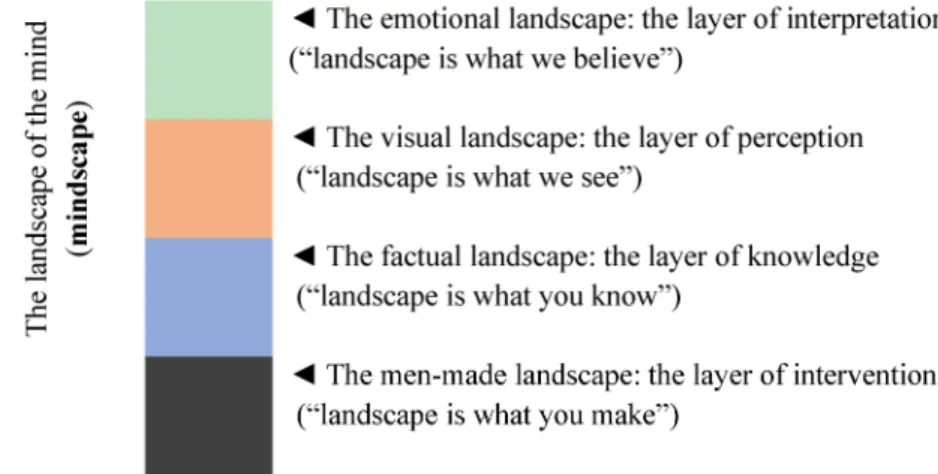
interpreting it and confirming the continuation and coherence of his identity[16]. Starting from the premise that the cultural landscape is shaped by a culture group from the natural landscape, it is clear that man marks a part of natural environment indicating the cultural values through their involvement and testimony of their cultural production [17,18]. Following his book, a diagram of interaction between man and landscape was found to be a perfect solution for our students to be able to structure this complex relationship (Diagram 1).
Diagram 1. Four layers of interaction between man and landscape, by Han Lorzing.
2.2. Architecture for Sustainable Lifestyle
We agreed on the contemporary belief that sustainable architectural design is a professional response to the concern for the consequences of negative human influences on the environment [19]. In this sense, the modern identity is not based on efficiency and functional determinism, but is expressed through mobility and flexibility. Contemporary lifestyle is not predetermined through division between private and public, open and closed, city and house, [20] but insists on permanent adaptability, diversity and overall fluidity [21]. Contemporary urban identity is not determined by the hierarchical relationship of socially favorable values, but nourishes rhizomatic network linking [22], highlighting the multi-layered, multi-dimensional and experiential value as basic criteria determining urban lifestyle.
By examining what sustainability means in the architectural discourse, Soria-Lopez argues that sustainable and good design must simultaneously satisfy all architectural dimensions: logical (scientific, technical, functional), ethical (security, low impact, protection, good use) and aesthetic (beauty, meaning, emotion) dimensions [15]. This way, sustainability becomes the means of achieving a different quality of life, a certain kind of responsibility toward other species and not a goal itself [23,24]. Bearing this approach in mind, we concluded, as Van Hal suggests, that being smart means thinking ahead, building an environment that adapts cleverly and works interdisciplinary, stressing its quality, and not just mere ecology [25].
2.3. Designing through Agrarian Landscape
enables human survival in nature. Anselm helped us to understand that creating designs that are integral to nature lies in understanding the natural environment (topography, terrain, management of climate and energy) and involving the ecosystem by way of its interactions with building design [27]. We agreed that designing with nature starts from a profound understanding of the place, careful management of local climate conditions and considering its characteristics (winds, orientation, sun reflections) in architectural design.
Landscape is understood in the same manner as Lorzing explains it, as something that we, know, see, and, consequently, on the individual level, interpret as an emotional relationship toward the landscape: “landscape is what we believe” [16]. Therefore, designing cultural landscape starts from the landscape as the major instrument of design, as landscape urbanism proposes [18], where the architect understands its diverse conditions, but also needs to take into account the potential of built structures, as well as our own needs and aspirations [19], as to be able to find the answers regarding how and by what means it is possible to comply with it.
2.4. The New Role of Architecture
The new role of the architect is to incorporate this dialogue into the project by listening-understanding-responding to the “voices of the natural and cultural context” and to intertwine it with the experience the users have in a certain place [15]. Architects should include nature in their designs as a fundamental element in order to achieve mind and body sensations; i.e., to improve and intensify our relation with the nature, through architecture—creating an experience that might increase the awareness and responsibility of the society and the urgency to preserve and respect nature [28]. One of the ways to include architecture in the process of sustainable development is to find through the housing design the new ways of achieving a balance between the values of natural landscape and everyday life. As an artificial product, it could enable the infrastructure to engage the local community and general public in an experience that might also increase the awareness of society about the urgency to preserve and respect nature [29]. Regarding this issue, the responsibility of architecture as a profession is to create conditions for enabling a large number of dialogues and integrations regarding the need to simultaneously upgrade natural landscape, within creation of a sustainable urban life style.
Space has emerged as a cohesive factor liking different sustainability domains, including cultural, natural, social and physical aspects. Hence, regardless of the individual cases, all the outcomes and goals of sustainability have their own spatial dimension. For this reason, the space becomes not only the means of achieving the sustainability goals, but also the source of knowledge that could be implemented in the process of achieving the knowledge for sustainable development in many disciplines, also including architecture. In recent years, we have been able to witness the development of specific methodologies with starting points of their work based precisely on the space. This is a teaching methodology known as “place-based education” (PBE).
resource or even as starting parameters, nor models for a new lifestyle, but rather a particular place with all its characteristics, features, qualities, potentials and obstacles.
3. Place-Based Education: Starting Points and Principles
Place-based education (PBE) is a critical response towards a conventional educational model keeping the students inside of the classes and forcing them to think about reality in an abstract sense. This concept of education is not just encouraged by a desire to overcome the division between conceptual knowledge and living experience—it also seeks to reach some of the various connections with places and community [30,31]. PBE promotes learning rooted within the local conditions. It uses the local surroundings, both human and artificial, as the context for curriculum integration into one multidisciplinary approach [32,33].
Although the term “place-based education” is relatively new, it has its roots in an over 30 year-long tradition of environmental and progressive education. Scholars often link PBE to John Dewey’s emphasis on connecting the student to his or her environment. PBE draws its starting points from concepts such as environmental education and critical pedagogy. Both discourses are concerned with the spatial, contextual and geographical conditions that shape students and the actions students take to re-shape these conditions.
Place-based educators are especially interested in the power of place as a context for diverse experiences that do not and probably cannot happen in the institution of school [34]. David Sobel regards PBE as a paradigm—more as a mind-set than as a specific kind of a curriculum. According to Sobel, “Place-based education is the process of using the local environment as a starting point to teach concepts in language arts, mathematics, social studies, science, and other subjects across the curriculum…” [35]. On the other hand, Smith points out that PBE should be used as a starting point for
curricular development and justifies this statement. Therefore, Smith argues “because place-based
education is by its nature specific to particular locales, generic curricular models are inappropriate” [36]. Grunewald thinks that the idea of PBE is radical, for the current educational discourses seek to standardize the experience of students coming from diverse geographical backgrounds [30,31].
Discussion about place-based education encourages educators and the broader community to ask questions about the true aims of education [37]. As Smith argues, PBE can provide full integration of cultural studies, nature studies, real-world problem solving and introduction into community processes [36]. This approach towards education increases academic achievement, helps students develop stronger ties to the community, enhances students’ appreciation for the natural world, and creates a heightened commitment to serving as active, contributing citizens [32]. PBE allows students to adopt a holistic view to the subject of research and to develop the ability to organize and incorporate different types of information into a coherent whole.
room for spontaneous response to stimuli from the nature [38]. According to professor and architect practitioner Lojanica, the essence of architectural intervention goes strictly beyond the programmed and designed, and much more towards coherence and balance between architecture and nature. The main premise of PBE within the context of architects’ education is that space has a great importance in the process of expanding knowledge, skills and experience, not for the commonly used argument that everything happens in space, but for the reason that knowing “where” a particular thing occurs significantly determines “how” and “why” it occurs. Therefore, PBE closely relates to the ideas of ESD and could be built-in as its new dimension [39].
4. Field of Research: Landscape of Third Belgrade
Before reporting the results of students’ research, we have to say a few words about the Third Belgrade, as well as about the key reasons for choosing this cityscape as the subject of the conducted research. Vojvodina region is a vast agrarian and natural landscape, widely open and almost perfectly horizontal. Therefore, the climate and natural processes are its most notable components. It has a complex network of irrigation channels, with a strong agricultural tradition having small, scattered settlements, not to mention that the highest wind tides in Serbia are here.
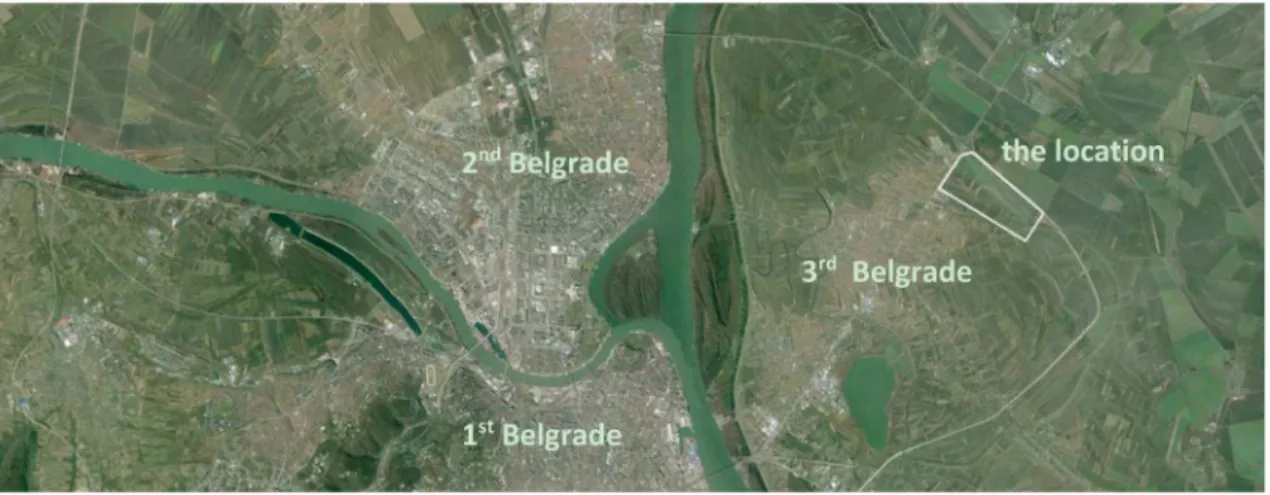
Third Belgrade is a part of Belgrade located on the left bank of the Danube. It is a marginal and poorly urbanized city area with prevailing natural ambient and agricultural activities, having the residential and industrial zones situated along main transportation routes with only few central urban functions. Another two urban macro-areas are the old city center and New Belgrade, each having a specific everyday life style and relationship with the natural environment. The old city center is highly urbanized with a built system of closed city blocks, intensive urban life and nature artificialized to the maximum limits. It is a traditional part of the city, mainly developed prior to World War II. Another part of the city, New Belgrade, on the other side of the River Sava, started its development during the middle of last century, and is composed of an open block structure system. There is an intensive relationship with the natural environment, with a clearly segregated relationship between architecture and landscape.
Figure 1. Arial view of three macro-urban parts of Belgrade (City Center, New Belgrade and Third Belgrade). Source: Bing Maps.
Observed from the point of urbanization and lifestyle patterns, the Third Belgrade remains empty, unused but also open for new ideas and possibilities in achieving sustainable urban everyday life. It is the area coexisting between the past and the future, between built and natural, and metropolitan and urban lifestyle. Regarding its authenticity, preservation of natural surroundings and vulnerability to changes, the Third Belgrade is a sensitive area; thus its remodeling and adaptation to contemporary needs should be approached carefully. Taking into account these facts, the issue of inclusion of the existing rural landscape, natural landscape, water sources and irrigation systems into the life of this part of the city and everyday life of its inhabitants gains a greater importance at a time when major infrastructural transformations are occurring in this area. The motto “Make cities more sustainable” in Berger’s article
The Unsustainable City effectively highlights the vagueness and ambiguity of the term sustainability when describing it as a picturesque white, blue, utopian pastoral [24]. In that sense, it seems as if the goal is not a sustainable city, but a sustainable culture, as well developing an environmental legacy, whether it is its natural, built or social characteristics [24]. How do we establish a better city, a responsible society, which is distinguished from the edge of the natural green-field and effectively determines the way in which natural and built environments can intertwine and overlap is an important question.
Figure 2. Relationship between 1st, 2nd and 3rd Belgrade, Source: Google Earth.
5. Place-Based Education in Action: Design Studio Case Study
Within the architectural design studio, students had the task to examine the position and scope of housing in the context of agrarian landscape and irrigation channel network of the Third Belgrade by implementing the key points of PBE. The aim of the proposed task was to explore how various architectural concepts harmonized with the environment and natural settings could contribute to the use of management strategies in increasing the connectivity of man and the environment on a sustainable basis. The students were expected to find new possibilities of interconnecting man and nature by exploring the impact and perspective that various design solutions could have on the sustainability of agrarian landscapes.
During the semester, students were expected to thoroughly learn and accept a wide range of options that promote the idea of sustainability, including environmentally responsible design, protection and enhancement of natural resources. As to enhance different forms of research, the overall theme entitled “Learning from the Landscape” was chosen. The intention was for the students’ project-based research to examine the importance and the role of landscape in the process of architectural design, and later through the analysis of complex problems related to the urban lifestyle, as well as to the agrarian landscape, to create housing models that should translate their analogies in context-specific architectural intervention. In this respect, the task consisted of three successive steps:
The first step: SENSITIZATION represented the examination of the agricultural landscape with the aim to provide different requirements for the new program framework of contemporary living, on one side, and the definition of a theoretical framework through the concept of PBE on the other. Thematic framework of this part of the research consisted of texts dealing with ecology, sustainable development, environmental aesthetics and philosophy, and thus the phenomenology of the place.
Students had the task to read various articles on the relationship between men and nature and at the same time to explore the phenomenological side of the particular context, in all its character and through its structure, looking for specificities that make it a unique place (Figure 3).
explaining experiential qualities of a particular landscape through spatial exploration of its movements, dynamics, textures, structures, colors and materiality. In trying to materialize a particular experience of the place and its qualities, students have been using a diagram and a model as tools helping to structure feelings and relate them to and position them in the architectural design process.
These two fields were then, for the purpose of developing a final architectural approach, examined simultaneously in order to emphasize the critical opinions towards the context and provide viable resources for setting the future design proposals. Therefore, there are two criteria that predominantly determined Designing toward Agrarian Landscape. The first is that the qualitative aspect of the agrarian landscape has to be used as a tool in the design process, and the second is the manner in which architecture through its texture and materiality has to be sensitive to the agrarian landscape.
Figure 3. Sensitization: the first step in the research.
The second step: VALIDATION represented development of spatial and program basis for redefining the role and character of residential function in harmony with the agrarian landscape. This step was a kind of a negotiation process between natural and built environment via architecture, where the main concerns were a misbalance between preserving agrarian landscape and protecting against the changes of its being natural, questioning the role of existing housing typology and the fact that nature and architecture represent distinct phenomena in permanent collision.
We have discussed the relation between architecture and the interpretative potential of the sensual experience had from the landscape and concluded that instead of creating mere physical objects of visual seduction, truly sustainable architecture relates, mediates and projects the meaning [19]. In this step of the research, Anselm helped students in understanding that making design integrated with nature lies in deep understanding the natural environment (topography, terrain, management of climate and energy) and involving the ecosystem by its interactions with building design [27]. We agreed that designing with nature starts from a profound understanding of the place, careful management of local climate conditions and incorporation of its characteristics (winds, orientation, sun reflections, vegetation) and rhythms into architecture through articulation of contents, structures and events.
Through discussions with students in numerous iterations, according to proposed categories and their validation and valorization, a set of key prepositions for the design proposal have been structured. Based on the defined set of prepositions, student designs were clarified, valued and categorized.
6. Students Work: New Housing Opportunities—New Modes of City Living
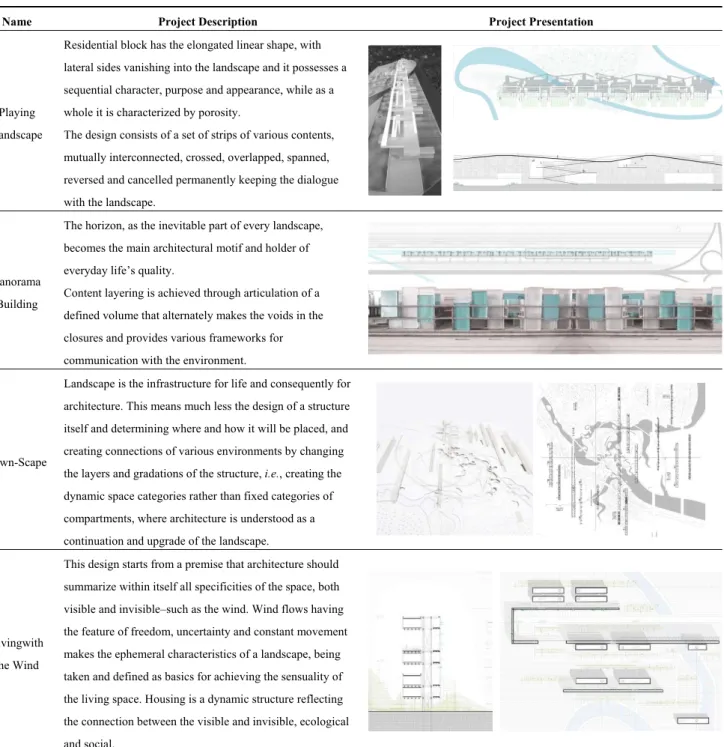
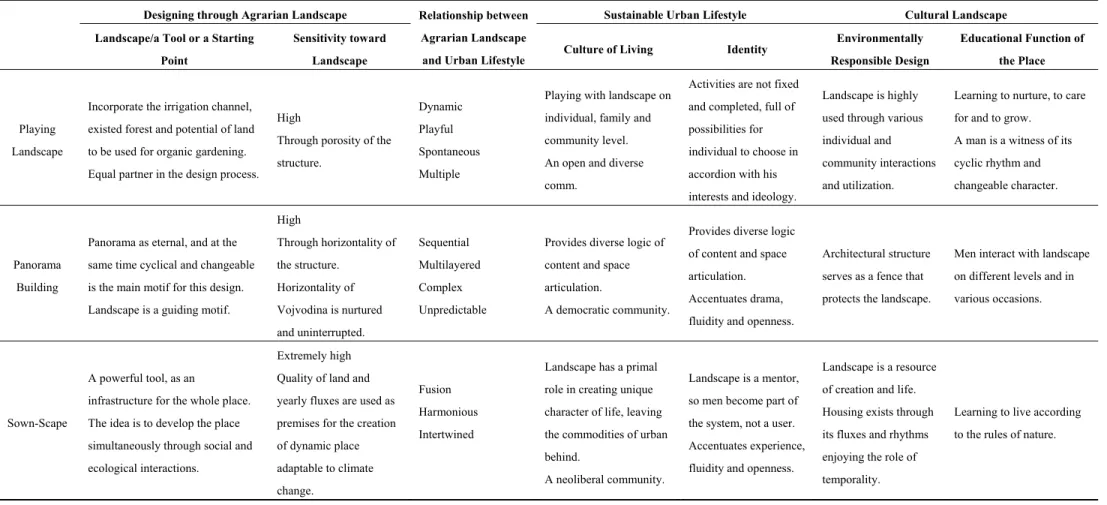
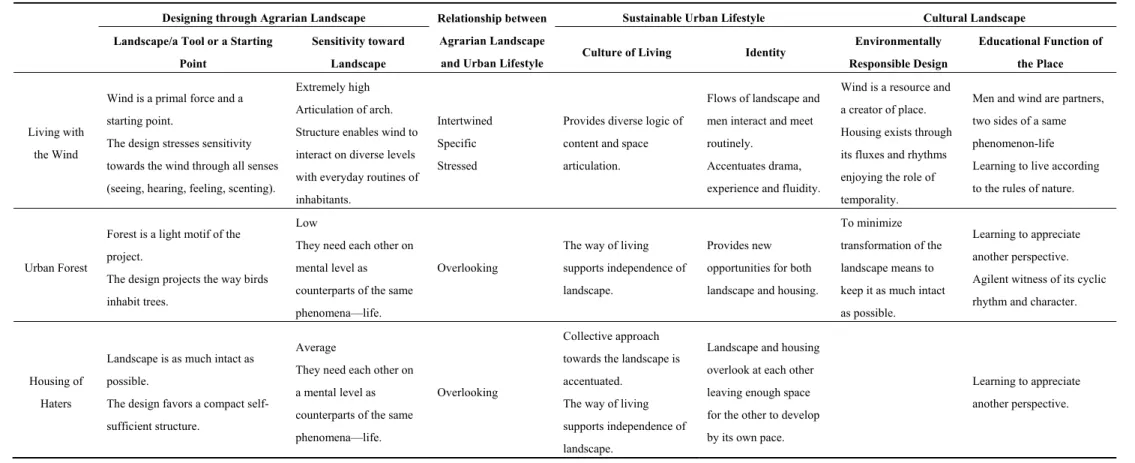
The students’ projects as shown in Tables 1 and 2 as following:
Table 1. Comparative review of students’ projects.
Name Project Description Project Presentation
Playing Landscape
Residential block has the elongated linear shape, with lateral sides vanishing into the landscape and it possesses a sequential character, purpose and appearance, while as a whole it is characterized by porosity.
The design consists of a set of strips of various contents, mutually interconnected, crossed, overlapped, spanned, reversed and cancelled permanently keeping the dialogue with the landscape.
Panorama Building
The horizon, as the inevitable part of every landscape, becomes the main architectural motif and holder of everyday life’s quality.
Content layering is achieved through articulation of a defined volume that alternately makes the voids in the closures and provides various frameworks for communication with the environment.
Sown-Scape
Landscape is the infrastructure for life and consequently for architecture. This means much less the design of a structure itself and determining where and how it will be placed, and creating connections of various environments by changing the layers and gradations of the structure, i.e., creating the dynamic space categories rather than fixed categories of compartments, where architecture is understood as a continuation and upgrade of the landscape.
Livingwith the Wind
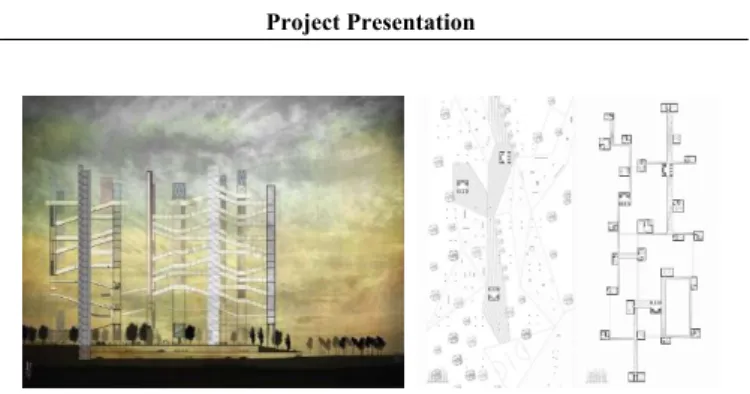
Table 1.Cont.
Name Project Description Project Presentation
Urban Forest
The basis of this design proposal is represented by the woods phenomenon and has its foundations in the idea of equilibrium and interdependence as one of the key points of sustainability. Its thematic organization is complex, with every tower summarizing one of the main residential functions. One residential unit contains a series of interconnected fragments and complex networks of movement encouraging a longer stay in the outer space – asking oneself if we can become birds.
Housing Misanthropy
Table 2. Comparative review of students’ projects—Analysis by key criteria.
Designing through Agrarian Landscape Relationship between
Agrarian Landscape and Urban Lifestyle
Sustainable Urban Lifestyle Cultural Landscape
Landscape/a Tool or a Starting Point
Sensitivity toward
Landscape Culture of Living Identity
Environmentally Responsible Design
Educational Function of the Place
Playing Landscape
Incorporate the irrigation channel, existed forest and potential of land to be used for organic gardening. Equal partner in the design process.
High
Through porosity of the structure.
Dynamic Playful Spontaneous Multiple
Playing with landscape on individual, family and community level. An open and diverse comm.
Activities are not fixed and completed, full of possibilities for individual to choose in accordion with his interests and ideology.
Landscape is highly used through various individual and community interactions and utilization.
Learning to nurture, to care for and to grow.
A man is a witness of its cyclic rhythm and changeable character.
Panorama Building
Panorama as eternal, and at the same time cyclical and changeable is the main motif for this design. Landscape is a guiding motif.
High
Through horizontality of the structure.
Horizontality of Vojvodina is nurtured and uninterrupted.
Sequential Multilayered Complex Unpredictable
Provides diverse logic of content and space articulation.
A democratic community.
Provides diverse logic of content and space articulation. Accentuates drama, fluidity and openness.
Architectural structure serves as a fence that protects the landscape.
Men interact with landscape on different levels and in various occasions.
Sown-Scape
A powerful tool, as an
infrastructure for the whole place. The idea is to develop the place simultaneously through social and ecological interactions.
Extremely high Quality of land and yearly fluxes are used as premises for the creation of dynamic place adaptable to climate change.
Fusion Harmonious Intertwined
Landscape has a primal role in creating unique character of life, leaving the commodities of urban behind.
A neoliberal community.
Landscape is a mentor, so men become part of the system, not a user. Accentuates experience, fluidity and openness.
Landscape is a resource of creation and life. Housing exists through its fluxes and rhythms enjoying the role of temporality.
Table 2.Cont. Designing through Agrarian Landscape Relationship between
Agrarian Landscape and Urban Lifestyle
Sustainable Urban Lifestyle Cultural Landscape
Landscape/a Tool or a Starting Point
Sensitivity toward
Landscape Culture of Living Identity
Environmentally Responsible Design
Educational Function of the Place
Living with the Wind
Wind is a primal force and a starting point.
The design stresses sensitivity towards the wind through all senses (seeing, hearing, feeling, scenting).
Extremely high Articulation of arch. Structure enables wind to interact on diverse levels with everyday routines of inhabitants.
Intertwined Specific Stressed
Provides diverse logic of content and space articulation.
Flows of landscape and men interact and meet routinely.
Accentuates drama, experience and fluidity.
Wind is a resource and a creator of place. Housing exists through its fluxes and rhythms enjoying the role of temporality.
Men and wind are partners, two sides of a same phenomenon-life Learning to live according to the rules of nature.
Urban Forest
Forest is a light motif of the project.
The design projects the way birds inhabit trees.
Low
They need each other on mental level as counterparts of the same phenomena—life.
Overlooking
The way of living supports independence of landscape.
Provides new opportunities for both landscape and housing.
To minimize transformation of the landscape means to keep it as much intact as possible.
Learning to appreciate another perspective. Agilent witness of its cyclic rhythm and character.
Housing of Haters
Landscape is as much intact as possible.
The design favors a compact self-sufficient structure.
Average
They need each other on a mental level as counterparts of the same phenomena—life.
Overlooking
Collective approach towards the landscape is accentuated.
The way of living supports independence of landscape.
Landscape and housing overlook at each other leaving enough space for the other to develop by its own pace.
7. Discussion
Students’ designs differ in terms of program, form and space (Table 1). Dominating over the landscape in one moment and leaving the agrarian surroundings to their own devices with changing natural conditions in another, proposed architectural solutions considered a number of factors including the irrigation channel, the fact that the wind should be a part of architectural creation, and that mud and land within themselves offer a new perspective for a more sustainable lifestyle, all in respect to providing a unique landscape adaptable to cosmopolitanism.
None of the students’ achievements should be considered for the image they represent, but for the spectrum of various performances they offer, with a relationship to the inherited structure, degree of animating the natural scenery, and the importance of establishing a dialogue about the need for protecting the local natural settings. By exploring the relationship between men and landscape through architecture, and by emphasizing their harmonization, we concluded that the meaning of any building goes beyond a mere object, becoming a sort of structured place.
Based on the analysis of students’ work, three main approaches of inhabiting the agrarian landscape, in terms of the city expansion, i.e., setting the new borders of the Third Belgrade, are distinguished
(Table 2). The first approach is named the Overlapping Approach. It stresses the importance of
intertwining diverse aspects of agrarian landscape and urban lifestyle, in creating an attractive, accessible and viable place. The second is named the Opposing Approach. It emphasizes the distinctiveness of the nature, on one side, and built structures on the other, leaving enough room for both of them, as to develop and change by their own rhythms and paces. The third is named the Dispersed Approach. It accentuates the landscape as an infrastructure for the urban lifestyle.
The Overlapping Approach stresses layering and overlapping of natural and built structures through activities and contents offered. The structure follows sequential spatial order preserving the qualities of the place and including them in daily life through play. It embraces all recognized qualities of a particular landscape in an endless and unpredicted connection with urban inhabitants. Integrating landscape is part of the overall system of the place. Environmental responsibility is stressed through sensitivity, feasibility and flexibility, and literacy is satisfied through accessibility and structuring. Sustainability could be found in endless interconnections between man and landscape.
Opposing Approaches are based on the premise that intervention has to be visibly and structurally unique in its character. Protecting the natural landscape and minimizing its transformation means keeping it as much intact as possible. An underground structure or a superstructure creates a sensation of revitalizing and valuing agriculture in a new way. Creating links between the landscape and man on a subjective level by interpreting its meaning and identity, architecture and landscape have an equal role to play. Environmental responsibility is stressed by way of the proximity between human activities and the environment, and literacy is satisfied through visual vicinity. Sustainability could be found in preserving the landscape keeping it as much intact as possible.
placed architectural elements organized within the network of events in accordance with the ecosystem and upcoming climate change, the principle of vitality and viability in the transformation of landscape could be established. Environmental responsibility is stressed through sensitivity, feasibility and flexibility, and literacy is satisfied through structuring and involvement.
All designs are directed towards harmonization between urban lifestyle and agrarian landscape, upgrading its experiential qualities of the actual place on the account of the representational ones. While the Overlapping Approach encourages playing with the landscape, providing its sustainability though
interdependence of its users and landscape, the Dispersed Approach ensures sustainability of the
landscape by proposing its life system as desirable. Unlike these approaches, the Opposing Approach
nurtures the dialectical quality of both, the built and natural, defining the ground as a backbone and a meeting place for their interaction. The relationship between men and landscape is the most intimate in the Overlapping Approach, while mutual merging is seen only in the Dispersed Approach. Although the first model is closer to the urban lifestyle, the other offers an interdependence that generates new perspectives regarding life, natural surroundings and everyday life. This model seems to enable development beyond what is conceivable; hence, it offers new freedom for development of the unforeseen.
The agrarian landscape could become a valuable resource for contemporary living. High-density housing typology can offer protection of the harmony the agrarian site has with its natural surroundings. Transformed and naturalized architecture summarizes elements and processes that could provide a balance between man, city and everyday life, on one side, and elements of the natural landscape such as water, soil and other natural resources, on the other. As architecture has the ability to communicate with the environment, we concluded that sustainable architectural design means reaching a higher quality of life and active involvement of people and their everyday life through agrarian landscapes in which changes in their relationships are dynamic and, therefore, adaptive and transparent.
We think that it is possible to balance landscape and architecture, a goal that is inherent in responsible architecture. By incorporating the new architectural paradigms as an integral approach towards vital and smart architecture, it is possible to create socially and environmentally responsible design. New paradigms include sustainability as a resource, where agrarian landscape together with architecture creates a unique place-based system in which it is not the context or background, but its structural component. Results show that design within the natural environment, with a relevant approach and guided by the synergy between nature and architecture, offers a new approach to architectural design, also emphasizing the quality of the form that it drew inspiration from and was created for—A living landscape.
structure, programs and performance, which becomes the platform for processing and promotion of sustainable forms of everyday life. In this sense, PBR should not necessarily be seen and used as a pedagogical method only, but also as an architectural design approach for the implementation of concepts of sustainability, environmentally literacy and responsibility into actual practice.
8. Architectural Education for Sustainability: How it is Understood and Applied in the Design Studio
Nowadays, the definition of sustainability is spread across different domains taking on different meanings and falling into various fields. Education is one of these fields with a focus on sustainability [41]. Reorienting education to address sustainability issues should be at the heart of formal education at all levels [39]. Facing the challenges and demands of sustainable development and environmentally responsible design requires modifying the anthropogenic and cultural patterns according to natural principles. Building of new structures within a landscape inevitably affects its shape and identity, changing the topography and relations between the basic composing elements. This is why it is necessary to create new architectural interventions within a landscape, especially the rural landscape, based on the specific place parameters, encouraging the layering of their sustainability. This research provided an opportunity to expand the idea of sustainable architectural design, referring to the fact that sustainable architecture is not solely an energy efficient building or a structure reducing the negative effects of the built environment towards nature, but it is rather a complex integration polygon of cultural, ecological and natural factors unified by the principles of balance and endurance.
PBE methodology offered the students a framework through which they were able to deal with sustainability, taking into account a variety of its aspects. Students gain confidence in their ability to use acquired skills to contribute to sustainability management issues [42]. Application of this model in practice showed that place could be the source of elements of architecture and sustainable urban everyday life, and not a simplified framework for locating an architectural intervention within the space. Tying local geography and topography to the design studio provides a launching point for heightened environmental awareness. Otherwise, students are unable to make the connection between macro environmental issues and their own lives.
On the other hand, one should not forget that the sustainability phenomenon is very complex, and its definition too general in order to precisely determine the criteria for valorization of this concept’s implementation. For this reason, we have decided to adopt a self-assessment from the Bowser research explained in the article Educating the Future of Sustainability, and to see if and in what way students through their design proposals cover the first three criteria [43].
represented a study considering the interconnection of man and nature, urban lifestyle and natural process, based on sustainable architectural design.
Table 3. Comparative review of housing approaches.
To Natural Resources To Public Lands To Climate Change
Project # 1 + − + + + −
Project # 2 − + − +
Project # 3 + + − + + +
Project # 4 + + − + +
Project # 5 − + − +
Project # 6 − + − −
In order to introduce ESD into the framework of architectural education, it is not necessary just to apply new ideas and approaches, but to limit and eliminate context-free teaching. PBE does not change the core postulates of the design studio, but it strengthens it in terms of its environmental and social relevance as the main prerequisites of education for sustainability. Because there are no ready-made solutions for environmental issues, BPE can be a valuable tool in teaching future architects how to create sustainable living environments.
The intention of the studio is not to include place and sense of place just as one part of architectural design, but to observe and introduce place as a relevant instrument of thinking about sustainability [44]. By changing the common observation scope, PBE fostered students’ critical thinking towards generic housing typologies and standardized urban settings. However, it was especially difficult for students to create architecture without a strict typology. While investigating the spatial needs of a lifestyle considering contemporary sustainable forms, the students understood that the program and space primarily refer to the character of the place and depend on its alterations.
The application of “learning from the place” in terms of architectural design studios taught us several important lessons that might be important for future research and practice. First, the space in which new architectural intervention occurs is never a simple location, but complex territory which should become a resource and a building substance. Second, local environment can be regarded as a basis for teaching the concept of sustainability. By examining the potential and opportunities of agrarian landscapes to take on contemporary urban housing programs, students showed a high level of understanding of concepts such as environmental responsibility and literacy, adopting their principles and applying them in their research and design. Third, in the case of sustainable architecture, its shape, structure and material properties derive from particular places, which means that there is no universal typology for sustainable residential architecture but tendencies that are more or less forcing individual characteristics of the place to be involved in life. Fourth, the architectural response to environmental questions will not necessarily be a concrete building, but it may propose harmonizing the relationship between man and agrarian landscape through subtle interventions in space.
architects and other experts in fields of planning and designing play an important role in their mitigation and elimination.
9. Conclusions
At a time of great global environmental challenges, universities around the world are slowly becoming the polygons for implementation of the goals of education for sustainable development. Following the imperative of sustainability, the Faculty of Architecture in Belgrade encourages research on the complexity of relationships between society, urban development and the environment by means of rethinking existing ideas of responsible architecture. This is not a new issue, but it is rooted in the reflection of what we mean by nature and our place in it, and how we strike a balance between our needs and the capacities of the environment. As design is constantly seeking the new goals, agrarian landscape could become a resource of new inputs for more balanced solutions. Therefore, this research does not aim to criticize generic housing typologies, but rather stands back and retreats, observing the relationship between landscape and man as the main criteria for the architectural intervention.
In this paper, we have tried to provide an answer to the following key questions: Is there any value to PBE when teaching architectural design? What are the possibilities of PBE for teaching principles of environmental responsibility and literacy? Results of this study showed that PBE has a wide range of domains that enables teaching of context-specific knowledge, skills and abilities that are essential for coping with the issues of the environmental awareness and literacy. Additionally, in its focus on local, ecological experience, PBE is sometimes hesitant to link ecological themes with critical themes such as urbanization and the homogenization of living environments.
When curriculum follows education regarding the environment, the boundaries between school, place and local community become more obscure; and therefore, more integrated. PBE contributes not only to overcoming the issues concerning the landscape of the Third Belgrade and contemporary architectural interventions, but it is also involved in raising general awareness on the subject of adaptive quality of places, seen through the perspective of global environmental changes. As architecture has the ability to communicate with the environment, we conclude that sustainable design means reaching a higher quality of life and an active inclusion of sources of agrarian landscape into the urban everydayness in which the changes of their relations become adaptive and transparent.
social phenomena through the inclusion of elements of sustainable educational philosophy, mainly in developing a higher level of student determination and context-rooted decision making processes.
Acknowledgments
This paper was written as a part of the project “Studying climate change and its influence on the environment: impacts, adaptation and mitigation” (43007) financed by the Ministry of Education and Science of the Republic of Serbia within the framework of integrated and interdisciplinary research for the period 2011–2015.
Author Contributions
Both authors designed and performed the research, analyzed the data, and wrote the paper. Dragan Marković performed literature review and the paper editing. Ana Nikezić contributed to interpreting the data and writing the paper. Both authors read and approved the final manuscript.
Conflicts of Interest
The authors declare no conflict of interest.
References
1. Wright, T.S.A. Definitions and Frameworks for Environmental Sustainability in Higher Education.
High. Educ. Policy 2002, 15, 105–120.
2. Blagojević, L.; Ćorović, D. Obrazovanje arhitekata na klimatske promene: razvoj modela
kurikuluma istorije i teorije moderne arhitekture. In Uticaj klimatskih promena na planiranje i projektovanje—Razvijanje optimalnih modela; Đokić, V., Lazović, Z., Eds.; Arhitektonski Fakultet: Beograd, Srbija, 2012; pp. 15–35.
3. Thomas, I. Pedagogy for Education for Sustainability in Higher Education. Sustainability 2014, 6, 1705–1708.
4. Scott, R. Education for Sustainability through a Photography Competition. Sustainability 2014, 6, 474–486.
5. Bielefeldt, A.R. Pedagogies to Achieve Sustainability Learning Outcomes in Civil and
Environmental Engineering Students. Sustainability 2013, 5, 4479–4501.
6. Francois, A.; Nussaume, Y.; Szanto, C. Teaching Environmental Issues in an Architectural Design
Studio. Description and Students’ Response. In Proceedings of the 5th WSEAS International Conference on Landscape Architecture (LA’12), University of Algarve, Faro, Portugal, 2–4 May 2012; pp. 97–102.
7. Sund, P.; Lysgaard, J.G. Reclaim Education in Environmental and Sustainability Education
Research. Sustainability 2013, 5, 1598–1616.
8. Madsen, K.D. Unfolding Education for Sustainable Development as Didactic Thinking and
9. Nikezić, A.; Marković, D. Učenje na osnovu mesta kao strategija održivog obrazovanja arhitekata. In Uticaj Klimatskih Promena na Planiranje i Projektovanje—Kreiranje Strategija i Obrazaca;
Đokić, V., Lazović, Z., Eds.; Arhitektonski Fakultet: Beograd, Serbia, 2013; pp. 199–217.
10. Nikezić, A.; Marković, D. Visitor Center as a Viable Alternative for Cultural Landscape: The Case
of the Remains of the Trajan Bridge on the River Danube. In Challenges: Sustainable Land
Management—Climate Changes. Advances in Geo-ecology; Zlatić, M., Kostadinov, S., Eds.; Catena Verlag: Reiskirchen, Germany, 2013; Volume 43, pp. 308–321.
11. Nikezić, A.; Janković, N. Kosutnjak: Landscape as a Learning System. In Design and Nature VI: Comparing Design in Nature with Science and Engineering; WIT Press: Southampton, UK, 2012; Volume 160, pp. 61–72.
12. Nikezić, A. Playing Landscape—Košutnjak: Principles of Architectural Design in the Context of
Climate Change; University of Belgrade—Faculty of Architecture: Belgrade, Serbia, 2013.
13. Goodbun, J. Gregory Bateson’s Ecological Aesthetics—An Addendum to Urban Political Ecology.
Field: Free J. Archit. 2013, 4, 35–56.
14. Urry, J. The Sociology of Space and Place. In The Blackell Companion to Sociology; Blau, J.R.,
Ed.; Blackwell Publishing: Oxford, UK, 2004; pp. 3–16.
15. Soria López, F.J. Architecture and Nature at the End of the 20th Century: Towards a Dialogical
Approach for Sustainable Design in Architecture. In Eco-Architecture— Harmonization between
Architecture and Nature; Broadbent, G., Brebbia, C.A., Eds.; WIT Press: Wessex, UK, 2006; pp. 23–33.
16. Lorzing, H. The Nature of Landscape: A Personal Quest; 010 Publishers: Rotterdam,
The Netherlands, 2001.
17. Sauer, C.O. The Morphology of Landscape. Univ. Calif. Publ. Geogr. 1925, 2, 19–53.
18. Waldheim, C. The Landscape Urbanism Reader; Princeton Architectural Press: New York, NY,
USA, 2006.
19. Pallasama, J. The Eyes of the Skin: Architecture and the Senses; Wiley: New York, NY, USA, 1983. 20. Norberg-Schulz, C. The Concept of Dwelling: On the Way to Figurative Architecture; Rizzoli: New
York, NY, USA, 1993.
21. Bauman, Z. Liquid Modernity; Polity Press: Cambridge, UK, 2000.
22. Deleuze, G. Difference and Repetition; Columbia University Press: New York, NY, USA, 1994.
23. Williamson, T. Radford, A. Bennetts, H. Understanding Sustainable Architecture; Spon Press:
London, UK, 2003.
24. Berger, M. The Unsustainable City. Sustainability 2014, 6, 365–374.
25. Van Hal, A. The Keyword is Quality Not Ecology: Harmonization between Architecture and
Nature. WIT Trans. Built Environ. 2006, 86, 35–44.
26. Van der Laan, D.H. Architectonic Space: Fifteen Lessons on the Disposition of the Human Habit;
Brill: Leiden, The Netherlands, 1983.
27. Anselm, A.J. Developing Designs in Balance with Nature, Eco-Architecture: Harmonization
between Architecture and Nature. WIT Trans. Built Environ. 2006, 86, 195–205.
29. Roter-Blagojević, M.; Milošević, G.; Radivojević, A. A New Approach to Renewal and Presentation of an Archeological Site as Unique Cultural Landscape. SPATIU Mi. 2009, 20, 35–40.
30. Gruenewald, D.A. Foundations of Place: A Multidisciplinary Framework for Place-Conscious
Education. Am. Educ. Res. J. 2003, 40, 619–654.
31. Gruenewald, D.A. Best of both Worlds: A Critical Pedagogy of Place. Educ. Res. 2003, 32, 3–12. 32. Rosenthal, J. Place-Based Education Research and Studies. PlaceBased Res. Stud. 2008, 1, 1–26. 33. Ball, E.; Alice, L. Place-Based Pedagogy for the Arts and Humanities. Pedagogy 2006, 6, 261–287.
34. Edelglass, W. Philosophy and Place-based Pedagogies. In Teaching Philosophy; Kenkmann, A.,
Ed.; Bloomsbury Publishing: London, UK, 2007; pp. 69–81.
35. Sobel, D. Place-Based Education: Connecting Classrooms and Communities; The Orion Society:
Great Barrington, MA, USA, 2004.
36. Smith, G. Place-Based Education: Learning to We Where We Are. Phi Delta Kappan 2002, 83,
584–594.
37. Truman-Sugg, S. Place-Based Education: Forcing Hard Questions. J. Cross. Discipl. Perspect.
Educ.2013, 6, 56–63.
38. Lojanica, M. Mala Sparta beogradske škole arhitekture. In Arhitektura Predela, Zbornik Radova;
Marušić, D., Ed.; Arhitektonski Fakultet: Beograd, Serbia, 1998; pp. 13–16.
39. Tamoutseli, K. Education for Sustainability and Spatial Education: Raising Awareness of Space
and Nature Values. In Proceedings of the 1st WSEAS International Conference on LANDSCAPE ARCHITECTURE (LA’08), Algarve, Portugal, 11–13 June 2008; pp. 179–182.
40. Perović, M. Iskustvaprošlosti; Plato: Beograd, Serbia, 2000.
41. Hassanpour, B. Developing Sustainable Approach in Architectural Education: Lesson from Critique
Session Experience of Architecture Studio Program. In Proceedings of the 9th WSEAS International Conference on Education and Educational Technology (EDU’10), Iwate Prefecture University, Japan, 4–6 October 2010; pp. 325–331.
42. Altomonte, S. Environmental Education for Sustainable Architecture. Rev. Eur. Stud. 2009, 1/2, 12–21.
43. Bowser, G.; Gretzel, U.; Davis E.; Brown, M. Educating the Future of sustainability. Sustainability 2014, 6, 692–701.
44. Dogan, R.K. An Education on Ecology. In Proceedings of the 9th International Conference on
Energy & Environment (EE’14), Geneva, Switzerland, 29–31 December 2014; pp.111–117.